Yearly Archives: 2013

Letter to a New Military Chaplain: Part Two The Minefields of the Heart

295_27076892058_2637_n-1

This is second part of a response to a question I had from a new Navy Chaplain. I have decided to post it here without any identification of the chaplain because I know that many men and women who are new to the military chaplaincy or who are exploring the possibilities of becoming a chaplain have the same questions. I was fortunate to have had a number of chaplains who at various points in my decision process and formation as a minister, Priest and Chaplain in both the Army and the Navy help me with many of these questions. Likewise I learned far too much the hard way and blew myself up on some of the “land mines” that almost all who serve as chaplains experience in their careers. This is the second of several parts to the letter and is my attempt to systematically explain my understanding of what it is to be a Chaplain serving in the military and in particularly the Navy. The first part is linked here:

Letter to a New Military Chaplain: Part One

“There is a twilight zone in our hearts that we ourselves cannot see. Even when we know quite a lot about ourselves-our gifts and weaknesses, our ambitions and aspirations, our motives and our drives-large parts of ourselves remain in the shadow of consciousness. This is a very good thing. We will always remain partially hidden to ourselves. Other people, especially those who love us, can often see our twilight zones better than we ourselves can. The way we are seen and understood by others is different from the way we see and understand ourselves. We will never fully know the significance of our presence in the lives of our friends. That’s a grace, a grace that calls us not only to humility, but to a deep trust in those who love us. It is the twilight zones of our hearts where true friendships are born.”Henri J. M. Nouwen

Dear Chaplain

The next section of our discussion is about the “minefields” that we so often encounter as Chaplains and to some degree as Ministers, Priests or Rabbis or other religious leaders. As I noted in the first section I am dividing these “minefields” into three major areas; the personal, the behavioral and the professional.

This section is about the “personal” minefields which I call the “Minefields of the Heart.” I call it this because it seems from the Christian and Jewish Scriptures the heart is the figurative locus of what we are, good and bad alike as human beings.

Of course there is always some spillage between the areas personal, behavior and professional areas and our behaviors and professional relationships are certainly influenced by the things that we hide deep in our hearts. As human beings we may try to compartmentalize our life to keep things apart such as keeping our personal life separate from our professional life, or hide behaviors from our friends, families, peers or co-workers; but the cold hard fact is whether we are aware of it or not each area impacts the other. If we are not aware of this fact, if we have little self awareness, if we have self awareness but try to live our lives with the illusion that we can separate our lives into neat little boxes we will most undoubtedly hurt ourselves, and as spiritual leaders harm those that come to us.

q_who

There is a scene of the last episode of Star Trek the Next Generation entitled “All Good Things” that comes to mind.  In it the being known simply as “Q” helps Captain Picard discover how his actions influence human history.

Q: You just don’t get it, do you, Jean-Luc? The trial never ends. We wanted to see if you had the ability to expand your mind and your horizons. And for one brief moment, you did.

Capt. Picard: When I realized the paradox.

Q: Exactly. For that one fraction of a second, you were open to options you had never considered. That is the exploration that awaits you. Not mapping stars and studying nebulae, but charting the unknown possibilities of existence.

You may wonder where I am going with this but it has to do with the personal minefields, those that exist inside of us, those that lurk beneath the surface which if we are unaware wreak havoc on everything else that we do. In the episode of Star Trek that I am referring to Captain Picard is allowed by Q to see the effects of his actions and to see how limited his thinking was.  The challenge for us is chaplains are to be aware of what Nouwen calls “the twilight zone in our hearts” and how what is at the depth of our heart impacts everything else that we do.

Too often though, mostly because of our own personal limitations and serious lack of real theological and pastoral formation involving self reflection and exploration we fail to see them. Like an uncharted minefield we are unaware of them until we either discover their existence through accident and “blow ourselves and others up” or until we listen to those that can see those twilight zones, those minefields better than we ourselves. Of course the latter, especially when it comes from those who love us, care for us and have our best at heart is the preferable method to learn about these things.
943043_10151694525692059_632653331_n

However, that being said part of this can be done through reading. A lot of us simply read “how to” type books when it comes to ministry. We seek direct easy answers in how to run our programs be it in the church, in a para-church ministry or in the chaplaincy. Believe me there are plenty of those kinds of books out there, not only that but a plethora of “self help” books that tell us the “three things we must know” the “five whatever’s to success” or the Seven Habits of Highly Defective People.” The sad thing is, even when these books contain nuggets of truth, they serve it like fast food and reduce it to the lowest common denominator. In a sense, even the most well intentioned of these “how to” or “self help” books promote a reductionist view of faith, spirituality, psychology and in some cases ethics and doctrine.

Reading is important, especially the hard stuff, philosophy, history, moral theology, but also things that you might not expect science fiction for example. In addition classic literature from antiquity and from non-western traditions also sheds light on those personal minefields. Heck we can even find truth in television and film, note my continued references to Star Trek. I find that God can speak to us in many ways.

As Christians we may also find lessons, insights and inspiration from the Bible that can be quite helpful. Unfortunately most of us have so many theological filters in place that we often miss the very things that would be most helpful to us. They can serve as blinders that keep us from sensing what the Spirit of God is trying to teach us. Our church, denominational or theological traditions as well as our hermeneutical methods often cloud our minds to what God is trying so hard to say. It was a problem that the religious establishment of his time had with Jesus, and often with the various prophets that preceded him whose stories we read about in the Old Testament.
1905_50393137058_7454_n

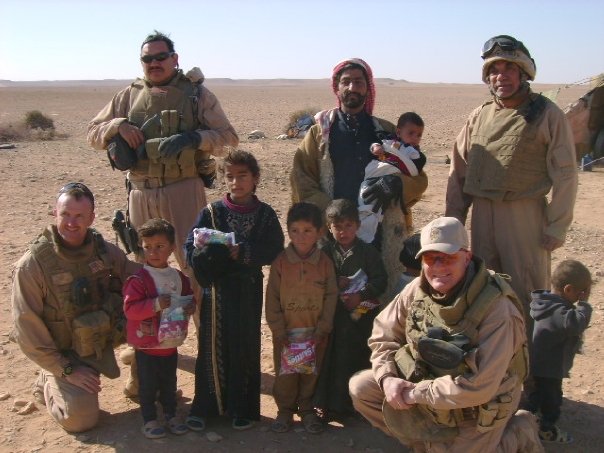
I am sure that others who are not Christians can say similar things about their faith, traditions and holy books. I remember an Iraqi General who I met who took the time to show me his well worn and read Arabic-English Bible. He was a Moslem, but he said that he learned so much from it because it was different than what was in the Koran and he meant no disrespect of his own faith by saying that. He had opened his mind to truth that others turn a blind eye to.

Some of the personal issues that prove to be deadly include what we don’t know about ourselves, usually dating back to childhood, how were raised, how we see God, if we perceive ourselves to be worthy of God’s love or worthy of the love and respect of others.  Those attitudes, especially those created as a result of negative relationships or even physical, emotional or sexual abuse, abandonment and rejection are powerful. Many of us like to pretend that we have gotten past those things but few of us actually do. Unfortunately there is a tendency for those issues to raise their heads in often very ugly ways as we minister as Chaplains.

For example: Let us say that we are distrustful of authority because of having an abuse parent, that we fear that no matter how well we do that there is always someone waiting to take us down. Let us say that we had previous experiences in the church, at work or maybe in prior military service where we were mistreated by those in authority.

I have found that if that condition is not dealt with that in a hierarchical organization such as the Chaplain Corps and the military that it is almost always fatal to the ability of the chaplain to minister in the organization. That is because the military is based on trust, our lives and mission depend on it. We have to trust the chain of command, we have to trust those that serve alongside of us and we have to trust our subordinates. There may be times when the chain of command fails and things don’t go right. There are toxic leaders and there are also toxic chaplains, one has to be aware that they are out there, know how to deal with them or survive under their command but one cannot presume that everyone is like that, trust is essential.

father

I find it interesting that Jesus commended the faith of the Roman Centurion when instead of asking Jesus to come to his house and heal his servant simply said “But just say the word, and my servant will be healed. For I myself am a man under authority, with soldiers under me. I tell this one, ‘Go,’ and he goes; and that one, ‘Come,’ and he comes. I say to my servant, ‘Do this,’ and he does it.”Matthew 8: 8b-9 Jesus told the people around that “he had not seen such faith in all of Israel.” Jesus saw the virtue of the Centurion, a virtue that many of his own people were lacking.

That is just one of a myriad of personal issues that can trip up a Chaplain in the military. The fact is that issues of the heart those things that we don’t like to admit are true about us, things that we are unaware about or in outright denial about in our lives are the things that go to the “heart” of who we are.

As fa as the minefields of my heart, they too are many. However the one that gets me time and time again is my passion for justice and my visceral reaction to those that I believe are bullies. That comes from my childhood. As a Navy brat I was always the new kid in town, and being that I was kind of the short, shy and introverted kid I was also kind of a nerd, or geek. I was not gifted with speed or great athletic abilities and it took me a while to find my academic prowess. That meant that I often didn’t fit in and though I was generally well liked that I would on occasion be bullied and I learned to defend myself, not very well at times but well enough to as the Klingons say “to die an honorable death.”

Jeremiah the prophet, who admittedly was most certainly clinically depressed if you look at his writings did note that “The heart is deceitful above all things and beyond cure. Who can understand it?” Jeremiah 17:9 Depressed or not Jeremiah did seem to understand that what he and many writers of scripture call “the heart” is hard to understand, especially when it is our own.

Thus I go back to Nouwen’s comment about the “twilight zone of the heart” that we cannot see. That it is why as Chaplains we have to develop relationships with people who can help us see what is in the twilight zone of our hearts and lovingly come alongside of us, not just as colleagues but as friends.

Those people may be clergy or other chaplains, but then they may not be. Perhaps they are senior enlisted personnel, long time friends, teachers, spiritual directors, counselors or our God forbid our spouses, I jest about the latter because my wife can see things about things about me that I cannot see, she is incredibly wise.

The minefields that exist in our hearts are so varied, so diverse and so treacherous. They have the potential to affect so many other parts of our lives. Thus for us as chaplains if we are not careful they can be destructive not only to us, but to those that we serve as well as those that we presume to love.
295_26912097058_4309_n

When I look back at my career and I am honest about it, I can say without a doubt that most of the things that hurt me were a direct reflection of the minefields that were already present in my heart. When things that happened that I felt were unjust or threatening I reacted and quite often my reactions caused problems greater than what I was reacting to. All they needed was something to set them off. What I have come to understand is even though I have had a very successful and that I am now a Senior Officer that what lies in my heart can still blow me up and that I need to always be careful of those minefields that exist in the twilight zone of my heart.

Lao Tzu said: “Watch your thoughts; they become words. Watch your words; they become actions. Watch your actions; they become habit. Watch your habits; they become character. Watch your character; it becomes your destiny.”

That is the key, those things that emanate from the deepest recesses of our hearts are full of minefields and we need to guard our hearts and minds in this ministry that we are privileged to have as military chaplains.

Peace

Padre Steve+


4 Comments

Filed under christian life, faith, Military, ministry, Pastoral Care, philosophy, Tour in Iraq, US Navy

Letter to a New Military Chaplain: Part One

185615_1857288397412_3950321_n

Note: This is a response to a question I had from a new Navy Chaplain. I have decided to post it here without any identification of the chaplain because I know that many men and women who are new to the military chaplaincy or who are exploring the possibilities of becoming a chaplain have the same questions. I was fortunate to have had a number of chaplains who at various points in my decision process and formation as a minister, Priest and Chaplain in  both the Army and the Navy help me with many of these questions. Likewise I learned far too much the hard way and blew myself up on some of the “land mines” that almost all who serve as chaplains experience in their careers. It will be the first of several parts to the letter and is my attempt to systematically explain my understanding of what it is to be a Chaplain serving in the military and in particularly the Navy.

Dear Chaplain,

“Preach the Gospel at all times, use words when necessary.” Francis of Assisi 

I thank you for writing me about the questions that you have concerning ministry as a Navy Chaplain. They are incredibly good questions and I since you first asked me two days ago I have given them much thought before responding. I find that if I take the time to mull over such questions it is much more beneficial than simply spitting out whatever comes to mind first because if I don’t get the questions right my advice however good might be wrong. Of course even well thought out advice can be wrong in a given circumstance so you must contextualize the advice and adapt it to your own circumstances at any given time.

As a prologue to the actual questions that you ask I want to point you back to the words of St Francis. I think that they are they key to success in any ministry, but especially the chaplaincy.

As chaplains we are called by our churches or religious bodies to serve in an organization that is essentially secular. Our ordinations come from our churches or religious bodies and we are to be faithful to them. However our commissions as officers come from the President and this creates a dialectical tension that is hard to resolve for some. You will hear people talk about managing the “right and left side of our collars.” That of course is the fact that we wear our military rank on the right collar and the Cross that we wear as Christians or in the case of our Jewish, Islamic or Buddhist colleagues the Tablets of David, the Crescent or the Wheel of Life on the left.

Some attempt to seek a balance between the rank and the religious symbol. That is a bad model because but what typically happens is that chaplains become fall to one side or the other. By that I mean that they either place the military side higher and forget their call or minimize the military side and find that they have no voice in the system. I have seen many chaplains who have in their attempt to fit in with the military forgotten their call as ministers. On the other hand I have seen a number place such an emphasis on their own religious traditions and their perceived rights as ministers that they neglect the vast majority of the people that they are assigned to care for as chaplains. Both options are bad because ultimately we fail to serve those that we are called and given the privilege to serve.

A few years back I saw the travesty of trying to “balance” the two sides of the collar. From my observation those who tried this always end up becoming so military that they end up losing their faith distinctions or they never adapt to the military and even if they do “good ministry” they end up frustrated, are seen as an outsiders and have relatively short careers.

295_27076762058_7573_n-1

As such I went back to Christian theology to find a model of ministry and that is in the hypostatic union of Jesus the Christ. By our understanding as Christians Jesus is both fully God and fully Human, not half and half, or any other percentage, but 100% God and 100% human. The fact is that as Navy Chaplains we are 100% ministers of our own faith group and 100% Naval Officer. As such we need to be the best we can at both and cannot allow ourselves to settle for anything less. If we attempt to “balance” we will fail in being ministers or being officers.

The military is not the church, as such  In the United States our service in such a capacity is not a right, it is a privilege. The right is not ours, it is right of the people that we serve to have the Constitutional right under the First Amendment to their “Free Exercise” of religion. As chaplains we facilitate the religious rights and freedoms of those who wear the same uniform that we wear, whether they of our faith, another faith or even of no faith. This is not about being “politically correct” but rather being faithful to two callings, both of which must be valid and respected in order for us to do what we are called to do as Navy Chaplains and there is always a tension in this. If you take a look at the chaplains that have trouble it is most often because believe that their right to free exercise is greater than the people that they are called to serve or that they lack a sufficient understanding of their call as Ministers, Priests, Rabbis or Imams. That is why Francis’ words are so important.

I think that many ministers, not just chaplains have a terrible understanding of our calling and vocation. To many the ministry is simply a job, their ordination and theological education the necessary prerequisites to perform the task. It is an attitude that I noted in seminary back in the late 1980s and early 1990s and have continued to observe over time. In seminary I had fellow students tell me that they were just thier to get a more advanced degree to help them get a bigger and better paying church. I had others friends disparage their theological education. I had one friend tell me that our degree was “only good for 5 years.” Obviously he was only thinking about the “how too classes” and not the courses that are really important to theological and pastroral formation.

But such is the state of theological education in this country. The fact is that most churches, seminaries or religious bodies do a pretty bad job at pastoral formation. We do a great job on teaching people how to manage churches, direct programs, teach doctrine, evangelize, run media empires or even become social and political activists, but a terrible job at actual pastoral formation and the latter is actually the most important task. Formation is primarily about relationships and relationships are what the Gospel is all about, beginning with the relationship of God to humanity and all of creation.

That may sound like I chased the proverbial rabbit but the attitude has a decided impact on the chaplain ministry. What happens is that this simply becomes a job and “skill sets” take priority over our calling and our service to those who were are called to serve during the time that we are allowed to serve in the Navy. We must never lose sight of who we are called to be as ministers, including the vows the we took when we were ordained as well as the oath that we swore as Naval Officers.

All that being said back to your questions. You asked first about the minefields that you might encounter as a chaplain. In a sense I have described some of them, they are very often related to who we are on the inside. It is as Lao Tzu said: “He who knows others is wise; he who knows himself is enlightened.”

The minefields that you asked are varied but most are related to what I have already described. They are often directly related to our own understanding of ourselves, our calling and our relationship to those that we are called to serve.

But to get into some detail on real, perceived and potential “minefields” you might encounter let me break them into several categories.

The first is the personal. As I stated before we have to know ourselves. This takes time and many people remain oblivious to who they are and what they are about, sometimes for most of their lives. Where this comes into play as a chaplain is that if we do not understand who we are and what we are about we will fail either in regard to our ministerial calling, our military vocation or our familial or ecclesiastical relationships.

The second is behavior. This is directly related to our personal behaviors and as we were told back during my early times as a new Army Chaplain. Most chaplains who self destruct tend to do so through SAM. Sex, alcohol or money. At any given time there are anywhere between half a dozen and dozen chaplains of all services serving time in Leavenworth or a regional Brig most having been convicted of charges involving SAM.

The third is professional. This is the nuts and bolts of what you will face as a Navy Chaplain. This includes your service to your crew, relationships with the chain of command and your fellow chaplains, your peers, your superiors and eventually those that you supervise as well as your Religious Programs Specialists or Chaplain Assistants. Likewise it includes your continuing relationships with your endorser and church that ordained you.

n671902058_1153804_6925

I will continue the discussion of these three areas in the next couple of days. After those topics are address I will discuss the particularities of promotion and assignments in the Chaplain Corps. Since my experience includes 17 1/2 years  in the Army and 14 1/2 years in the Navy including service as a junior chaplain in both as well as service as a Field Grade Officer in the Army and now as a Senior Officer in the Navy Chaplain Corps my perspectives will be quite unique.

Thank you for your patience in reading through this as well as for asking your questions.  They have forced me to think about this subject in new ways and write in down my thoughts down ways that I never have before. Yes I have set down with and discussed these ideas and concepts with various chaplains but have never written them down in a systematic format until now. I do appreciate you giving me the chance to do this. It means a lot.

Until tomorrow,

Peace

Padre Steve+

5 Comments

Filed under faith, leadership, Military, ministry, Pastoral Care, philosophy

Dreamers and the Obligation of Ideas

Lawrence_1519699c

“All men dream: but not equally. Those who dream by night in the dusty recesses of their minds wake up in the day to find it was vanity, but the dreamers of the day are dangerous men, for they may act their dreams with open eyes, to make it possible.” T E Lawrence

I am an out of the box thinker and when I am allowed to pursue my ideas I do my best. When I feel constrained or force myself to “stay between” the lines in order to fit in I get frustrated. When I was younger this lead to instances where I got in trouble for too aggressively pushing my ideas.

However as I have matured I have become more patient. When my ideas are shunned or pushed aside I will stay within the lines of the system but work through back channels, finding people who will listen and hope that they will take up the ideas, even if I do not get credit. This is often frustrating in its own right but it allows me to continue to develop the ideas and to propagate them among people who will listen and possibly will in their own way help see those dreams to fruition.

Many times I have been order to stand down and stay in my lane and been taken to task on more than one occasion for pushing too hard. This has actually happened a number of times in my military career dating back to my time as an Army Lieutenant serving in Germany, even to the point of having that noted as a point of criticism in an Officer Evaluation Report.

So over the years I have learned that the direct approach to trying to propagate ideas that are considered out of the mainstream, or even dare I say radical when compared with conventional doctrines is not always the best case. The truth is that many people consider dreamers and outside the box thinkers to be arrogant and dangerous. It took me many years to discover this fact.

Thus I have taken to being more patient and using indirect approaches to get ideas across. Part of this is in taking the time to get to know myself. Lao Tzu said “He who knows others is wise; he who knows himself is enlightened.” When I was younger I often acted on impulse thinking that my ideas needed to be implemented and fought for right then and there. Now I am willing to take more time, allow them to germinate and take form and if necessary allow other people to take credit as long as the ideas find a home.

I am a dreamer, one who dreams with my eyes open. Admiral James Stavridis said: “ overall, I think that’s an obligation to share your ideas. It’s how we move forward with innovation.”

I think both Lawrence and Admiral Stavridis are right. Innovation and dreams are the key to the future. Those trapped in outdated orthodoxies be they military, scientific, philosophical or religious will find that they will be left behind in history. One once said that the seven last words of the church were “We’ve never done it that way before.” That being said, those words are the last words of any organization or culture that refuses to dream or think outside the box. Eric Hoffer wrote “In a time of drastic change it is the learners who inherit the future. The learned usually find themselves equipped to live in a world that no longer exists.”

In an age of decreasing resources, rapid social and technological change and ever increasing challenges we must heed the words of Admiral Stavridis who said: “Because we’re in an era of declining resources, and I think we need to be unafraid of and embrace change. That means listening to more junior people, who often have the best ideas, trying new things…”

It also means listening to people from different disciplines or even cultures than our own, military from civilian, civilian from military, science from religion, religion from science and so on. It may be necessary to look to times than our own, delving into history to find answers to current challenges. Likewise it may prove wise to look to the dreamers who write science fiction for answers. It is important for the dreamers as well allow themselves and ideas to be questioned or challenged and to keep an open mind. Ideas developed in the vacuum of self seldom hold up over the course of time and stubbornness and intolerance of contradiction of one’s ideas and dreams come from a type of ego that is often as destructive to the self as it is to others.

Military historian and theorist B. H. Liddell-Hart wrote about using the indirect approach in the realm of though and ideas and not just military strategy or tactics:

“Opposition to the truth is inevitable, especially if it takes the form of a new idea, but the degree of resistance can be diminished- by giving thought not only to the aim but to the method of approach. Avoid a frontal attack on a long established position; instead, seek to turn it by flank movement, so that a more penetrable side is exposed to the thrust of truth. But, in any such indirect approach, take care not to diverge from the truth- for nothing is more fatal to its real advancement than to lapse into untruth.”

But like Lawrence said, the dreamers must be the ones who dream with their eyes open in order to make those dreams possible. However, the dreamers need to know that their ideas may not be welcome and that patience the use of the the indirect approach and willingness to let others receive credit in order to see see those dreams fulfilled is essential. Truth matters over individual success or recognition and in a sense it alone is eternal while our lives on this earth are fleeting.

Peace

Padre Steve+

Leave a comment

Filed under faith, leadership, ministry, philosophy

August 1914: The Beginning of a Century of Disasters

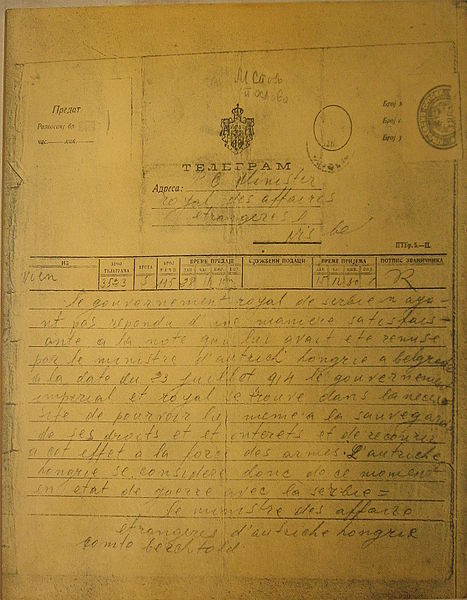
467px-TelegramWW1

The Austrian Declaration of War against Serbia

“No one starts a war–or rather, no one in his senses ought to do so–without first being clear in his mind what he intends to achieve by that war and how he intends to conduct it.” Carl Von Clausewitz

It was a war that should never have happened. It was a war for which the belligerent powers could boast many causes but for which few had any real objectives. Ninety-nine years ago this week the nations of Europe were hell bent on waging a war that all thought would be short, decisive and end in victory for their side. They were wrong and nearly a century later the world still pays the price for their misplaced beliefs and hubris of those men.

It was a war in large part brought on by the declining Austro-Hungarian Empire’s fears. Fear of neighbors, ethnic minorities and its place among regional and world powers led the leaders of the Austro-Hungarian Empire to decide for war when the very unpopular heir to the throne Archduke Franz Ferdinand was assassinated in Sarajevo, the capital of the recently annexed province of Bosnia-Herzegovina on June 28th 1914.

Baron Conrad von Hotzendorf

Conrad von Hötzendorf: War was the only means of politics

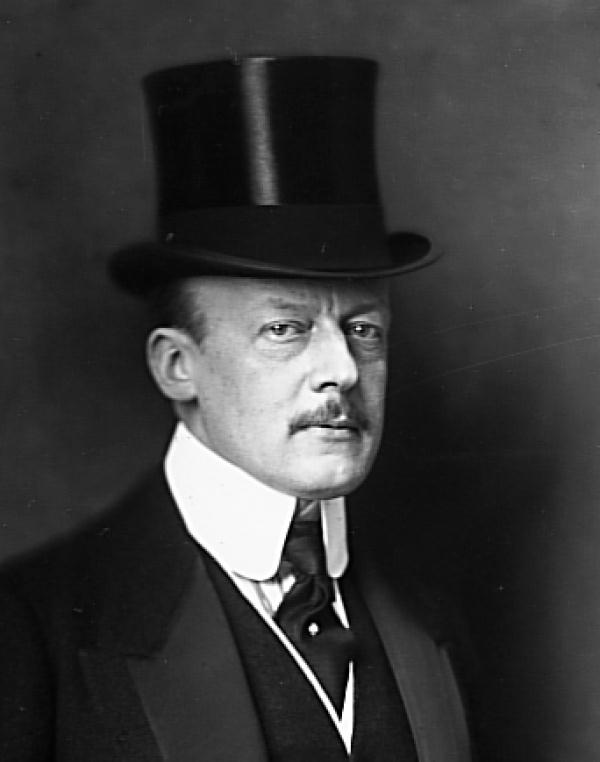
 It was a series of decisions by those in the government of the Empire that brought Europe and the world to war, a war which we still feel the effects of today. In particular it was the decisions of the Austrian Chief of the General Staff Conrad von Hötzendorf, the Foreign Minister Leopold Berchtold and the aging Emperor, Franz Joseph which plunged the world into a world war which spawned revolutions, regional wars, a second world war, a cold war and countless other wars. The decisions were based on the belief, still common today that war is the only means of politics.

WIK_Franz-Joseph_ca-1910[1]

Emperor Franz Joseph: “If we must go under, we better go under decently”

 Hötzendorf had been a continual advocate of war in every situation. He lobbied for war in 1907 against Italy and Serbia, in 1908 against Serbia, Russia and Italy, in 1909 against Serbia and Montenegro, in 1910 against Italy and the list increased in the years leading up to the war. He fervently believed that “the use of armed force alone could retard the centrifugal forces of nationalism in the ‘multinational empire’; war was the only means of politics.” The Emperor, Franz Joseph was of the same mindset by 1914 and in the days following the assassination of Franz Ferdinand he gave his approval to the actions of Hotzendorf and the diplomacy of Berchtold which doomed the Austro-Hungarian Empire and would destroy and remake Europe within a span of four years.

b305084a

Theobald von Bethmann-Hollweg: The Blank Checque

 The leadership of the Empire had decided on war within days of the assassination. Berchtold dispatched an emissary to Kaiser Wilhelm who decided in counsel with his Imperial Chancellor Theobald von Bethmann-Hollweg gave the Austrians a “blank cheque” of unconditional support for war against Serbia. Berlin was confident that “the Balkan crisis could be localized” and “advised Vienna to “proceed with all means at its disposal” and that Germany would support Austria-Hungary “come what may.” In doing so they willingly ignored the wise counsel of Otto Von Bismarck who considered the Balkans “not worth the life of a single Pomeranian Grenadier.

After they received German support the Austrians did everything that they could to ensure that war would occur. Their demands of Serbia were intentionally designed to be unacceptable to that country and they held key information from their German allies in the three weeks after they received the unconditional German support.

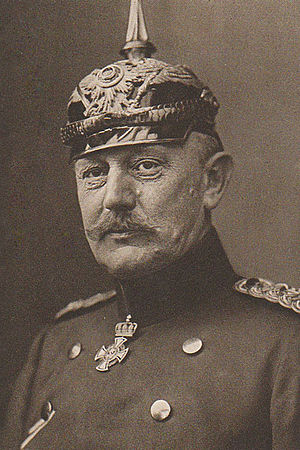
300px-Vonmoltke

Helmuth Von Molkte: “no alternative but to fight a preventive war…” 

 German militarists, particularly the Chief of the General Staff Helmuth Von Molkte the younger saw the coming conflict in racial and cultural terms. Von Molkte said that the coming war   would come “sooner or later” and be a war “primarily a struggle between Germans and Slavs” and compared Serbia to an “abscess.”  As the war cloud built Von Molkte told the Foreign Secretary von Jagrow that there was “no alternative but to fight a preventive war so as to beat the enemy while we could still emerge fairly well from the struggle” ignoring the advice of the Iron Chancellor Otto Von Bismarck who counseled “Preventive war is like committing suicide out of fear of death.”

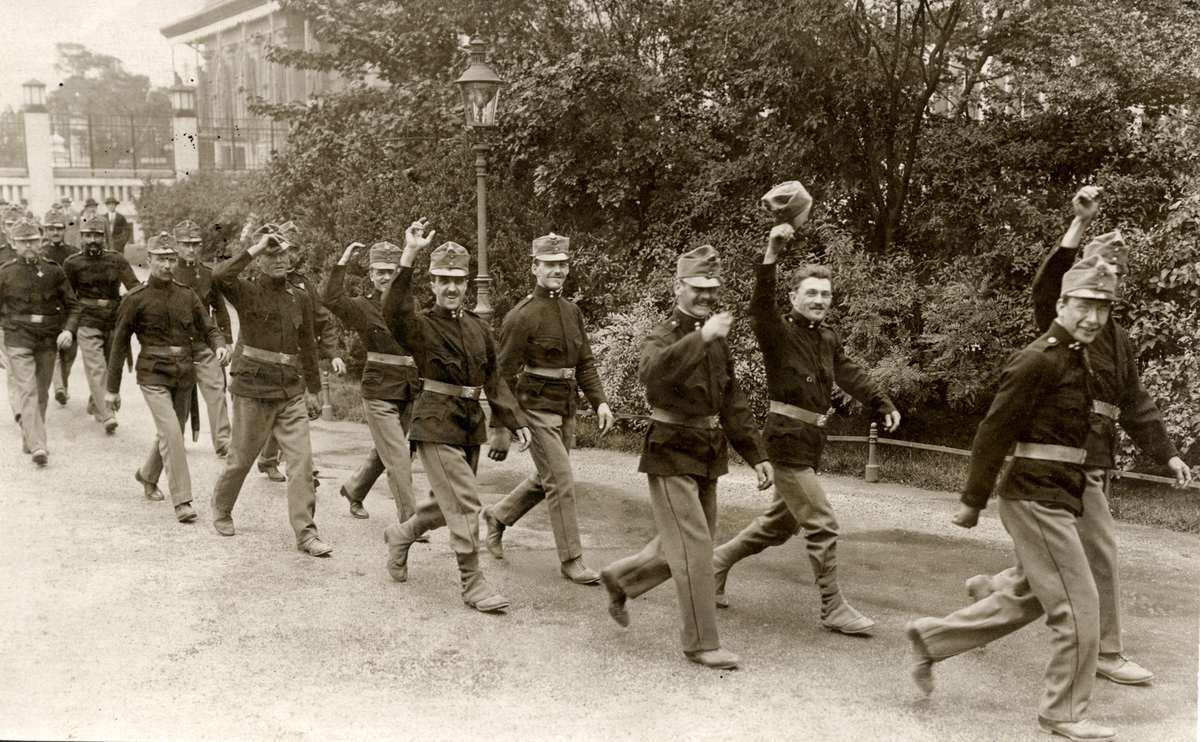
d345009d3a48

Austrian Reservists going to war

 The Austrians felt that the threat from Serbia combined with internal political factors related to the Hungarian and other Slavic regions of the Empire, and the increasing influence of Russia and Germany in the Balkans was an existential threat. At the same time they were poorly prepared for war. Their military was large but poorly trained and equipped.  Their national infrastructure, industry and railroads were ill-prepared for the demands of war. Their German allies had not planned for war either and were critically short of the required stocks of ammunition needed for a general war in Europe.

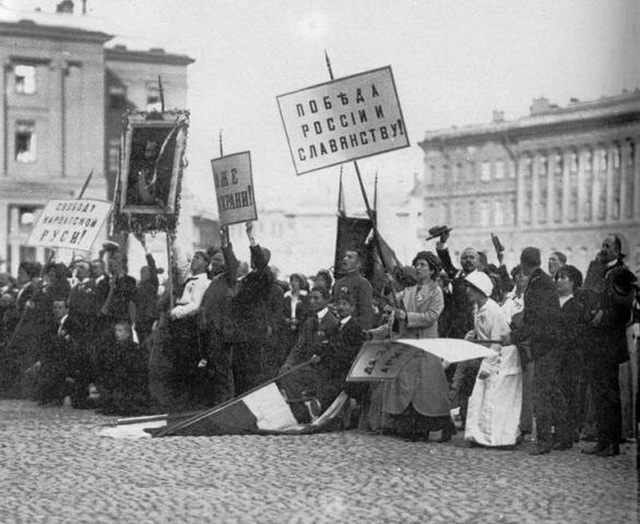
d8c27e8a26d2

Cheering crowds in Petersburg

 The Russians were heavily invested in the Balkans linked to other Slavic people by culture, language and religion. The French were bent on revenge against the Germans for the debacle of 1870 and had no stake in what happened in the Balkans. The British a few years prior to the war had told the Belgians not to expect support if they were invaded by Germany, but declared war to “protect Belgian neutrality.”

f0268cf28513

German wives and girlfriends walking alongside the Landser…

 The Austrians thought that with German support that even if Russia intervened that the war could be limited to Serbia. They were wrong. Just as the Germans had given the Austrians a “blank cheque” the French, both officially and unofficially were giving the Russians their own blank cheque. French Ambassador Maurice Paleologue assured Russian Foreign Minister S.D. Sazonov of the “complete readiness of France to fulfill her obligations as an ally in case of necessity.

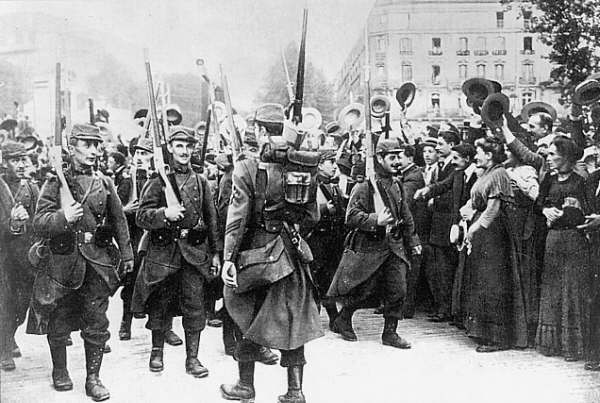
93bb04dba7d3

French Soldiers being cheered

 Austria declared war on July 28th, Russia followed by a partial mobilization to support Serbia on the 29th. Kaiser Wilhelm attempted to avert war at the last minute but Czar Nicholas II wrote “An ignoble war has been declared on a weak country. The indignation of Russia, fully shared by me, is enormous. I foresee that very soon I shall be overwhelmed by pressure to which I am exposed and compelled to take measures which will lead to war.”  This was met with German mobilization on the 30th and the French on August 1st. Declarations of war were exchanged and on August 4th in response to Germany’s refusal to respect the neutrality of Belgium Great Britain declared war against Germany.

d1d14e05247c

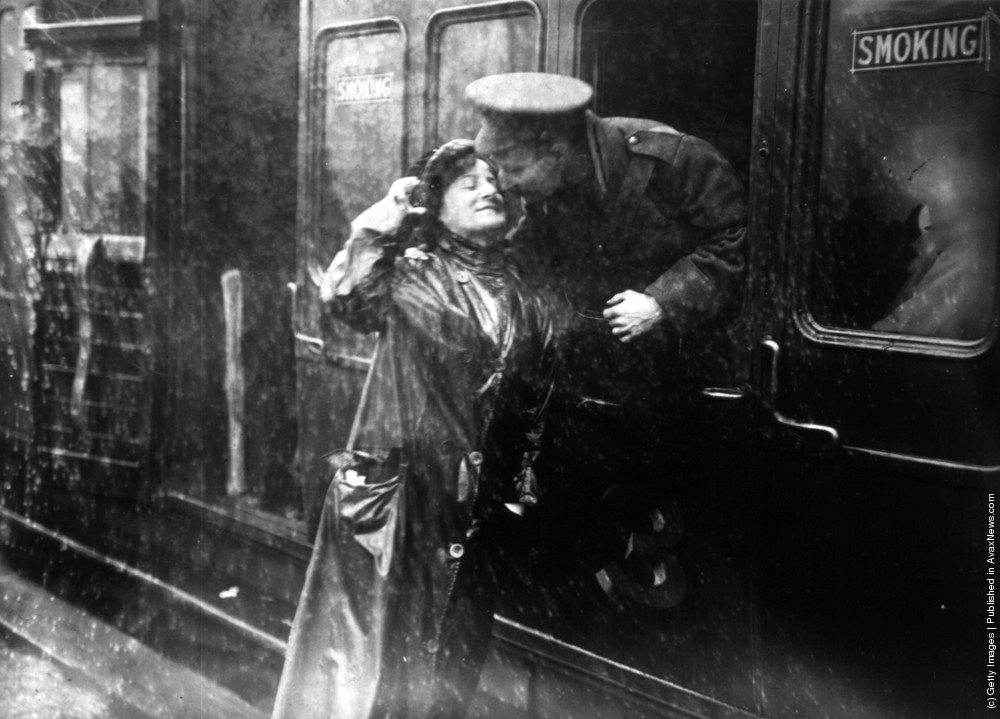
A final kiss from a British Soldier at Victoria Station

They were fateful days. Only the Austrians entered the war with any positive objectives, military or political goals. Every other power lurched into the war without clear objectives or end states. One writer noted that the war had “causes but no objectives.”

The world again finds itself perched at the edge of the abyss of war. There are people, smart and otherwise reasonable people who believe that they can wage “preventive wars” and rely on brute military force to solve nearly any problem. There are others that suggest that we should not criticize “allies” even when their decisions could be disastrous to them and the world, much as the Germans gave their Austrian brothers a “blank cheque.”  I wish that they would just look at the consequences before they commit nations and the world to more war that can only result in calamity and great suffering without benefit for anyone or any nation involved.

Those that counsel “preventive wars” need to remember the words of Otto Von Bismarck that “Preventive war is like committing suicide out of fear of death.”

Peace

Padre Steve+

3 Comments

Filed under History, Military, national security, Political Commentary

Wondering

400236_10151328400862059_541742014_n

‘You wonder what I am doing’? Well, so do I, in truth. Days seem to dawn, suns to shine, evenings to follow, and then I sleep. What I have done, what I am doing, what I am going to do, puzzle me and bewilder me. Have you ever been a leaf and fallen from your tree in autumn and been really puzzled about it? That’s the feeling.” T. E. Lawrence Letter to Eric Kennington 6 May 1935

I always am a bit morose and introspective when I transfer from one duty assignment to another. Since I have done this many times in the course of my 32 year career in the Army and the Navy it is something that I have come to expect. Since my return from Iraq this condition has become more pronounced and my thoughts much deeper and often darker.

Like T. E. Lawrence I wonder what I have done, what I am doing and what I am going to do as day folds into night and each new dawn breaks forth. So many things trigger thoughts that make me wonder.

In a week the I will be done with my current assignment and on to a new one as the Ethics faculty at the Joint Forces Staff College. I believe that I may also get to teach some military history and theory too. That excites me. It is the first assignment that I have really looked forward to since I found out I was going to Iraq. It will be a place where I will be able to do what I do best.

My current assignment at Naval Hospital Camp LeJeune has been good for me in some ways and frustrating in others. But that being said it is part of the tapestry that makes the current me who I am. It is part of my past, still a part of my present and I will carry the experiences, relationships and memories into my future.

But that is normal I think, as William Shakespeare wrote “What’s past is prologue.”

Peace

Padre Steve+

1 Comment

Filed under Loose thoughts and musings, Military, philosophy

Mementos and Memories: The Symbols of the Tapestry of Life

550094_10151467282032059_222295451_n-1

“Abruptly the poker of memory stirs the ashes of recollection and uncovers a forgotten ember, still smoldering down there, still hot, still glowing, still red as red.” William Manchester

One thing about military life is that when you serve a long time you collect mementos of your service. Some are earned, some are things you got just for showing up and some are items given to you by those that served with you. I have collected many in my 32 years and four decades of service. In those years I have come to cherish the the most the mementos that were given to me by the people that I served alongside, especially the ones with personal messages inscribed on them.

I have been moving things out of my office in preparation for my move back to Virginia for about a week now. Most of the things that I took back to my apartment before today were books, papers and articles of clothing and a few small mementos.

Today though I was different. Today I took down the mementos, my pictures, going away gifts, plaques and a few other articles. Among them were items inscribed by former Navy shipmates, Marines and Soldiers who I have served alongside dating back to 1985.

With the passage of years and assignments what I display in my office has changed. In my younger days my office was cluttered with citations for various awards, certificates, qualifications and academic degrees. In a sense it was the quintessential “I love me” wall.

When I came to Camp LeJeune three years ago that changed. I packaged up every award except for the citation to the Defense Meritorious Service Medal signed by General Raymond Odierno that I earned in Iraq. It has a great deal of meaning to me because of how much impact Iraq and my service there made on me. It changed my life and made me a different man with a new understanding of life. But unlike a dozen other personal awards I do not have it framed, it is still in the simple blue award folder that it was presented to me in Iraq.

I do not have any of my commissioning certificates, or ordination papers displayed. Of my academic degrees only my Masters Degree in Military History is displayed, like the DMSM it too is in the folder that it was presented. Of my military education I only display my certificate from the Marine Corps Command and Staff College the Army Medical Service Corps Officer Basic Course and the Army Junior Officer Maintenance Course. Both of the latter is certificates are battered and in a very ramshackle frames.

Most of what I display now are things that were given to me by the people that I served something to do with baseball, Cold War era East German or Soviet militaria or pictures of family and my dogs. I have a couple of pictures and religious symbols, I have a copy of the picture “Madonna of Stalingrad” painted by a German Army doctor who was also a pastor, a small San Damiano crucifix and a bronze St Rupert Cross from Salzburg Austria.

Each item represents part of my life, career and things that I hold dear or which provide special memories, even if some come from times that were not always pleasant. But even the painful memories are part of the tapestry of my life. Haruki Murakami wrote:

“Most things are forgotten over time. Even the war itself, the life-and-death struggle people went through is now like something from the distant past. We’re so caught up in our everyday lives that events of the past are no longer in orbit around our minds. There are just too many things we have to think about everyday, too many new things we have to learn. But still, no matter how much time passes, no matter what takes place in the interim, there are some things we can never assign to oblivion, memories we can never rub away. They remain with us forever, like a touchstone.” 

However in general what I now display has a lot less to do with me than the people, places and experiences that are important to me. They are my touchstones. Thus what I experienced today was different than other times that I took down my “mementos.”

As I took each one down various emotions flowed through me, happiness, joy, sadness and even in some cases pain. I read the various well wishes inscribed by various people on the mattes of various pictures, from junior enlisted personnel, Chiefs and non-commissioned officers, officers former commanders to people like General Peter Pace and former Secretary of State Madeline Albright as well as German officers that I have served alongside.  It is amazing the feelings

It is hard to put a finger on but it is almost like there is a metaphysical connection when I read, look at or touch some of those items. It is like I have gone back in time. In a sense maybe I have. That is the symbolic power of mementos. They are more than trinkets, more than awards or accomplishments they symbolize the ongoing power of relationships past, present and future. They are links to a past existing in the present and pointing to the future.

None of them are worth much money and to most other people they would mean nothing. But to me they are worth a great deal. They are reminders of my past and in a sense part of the tapestry that is me and hopefully on someone’s wall, on a card or a note what little I contributed will be remembered by others. As William Faulkner said:

“What matters is at the end of life, when you’re about to pass into oblivion, that you’ve at least scratched ‘Kilroy was here,’ on the last wall of the universe.”

Peace

Padre Steve+

Leave a comment

Filed under philosophy

Remembering USS Indianapolis CA-35: Disaster, Dishonor and Redemption

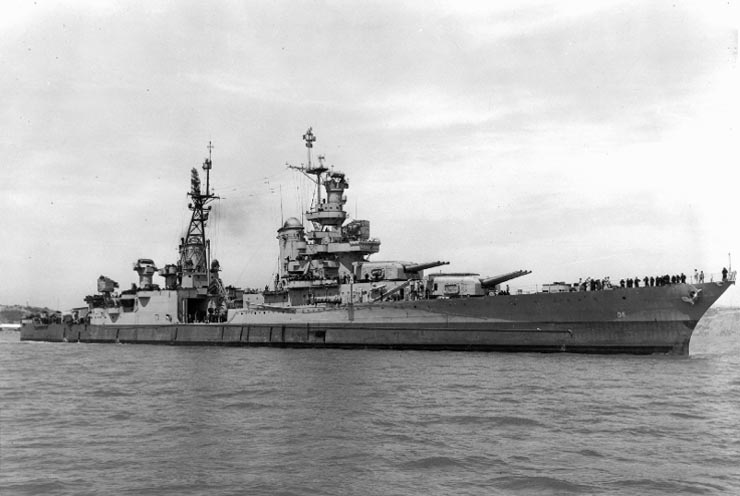
USS_Indianapolis_at_Mare_Island

“Our peoples have forgiven each other for that terrible war and its consequences. Perhaps it is time your peoples forgave Captain McVay for the humiliation of his unjust conviction.” Mochitsura Hashimoto, Captain of the I-58 to Senator John Warner

On July 30th 1945 the USS Indianapolis CA-35 was speeding from the island of Guam where she had made some personnel transfers to Leyte to join other American forces for the final campaign against Japan.

Indianapolis under the command of Captain Charles B McVay III had completed one of the most important secret missions of the war. She had delivered the component parts and enriched Uranium for the the first Atomic Bomb, Little Boy which in less than a week would be detonated over the Japanese City of Hiroshima on August 6th 1945.

Indianapolis was the second ship of the Portland Class heavy cruisers built under the terms of the Washington Naval Conference. Displacing 9800 tons and mounting a main battery of 9 8” guns she typical of the American cruisers of the era. During the 1930s she hosted President Franklin D. Roosevelt three times. When Pearl Harbor was attacked she was on gunnery exercises and from that point played an active role in combat operations in the South Pacific, the Aleutians later served as flagship to Admiral Raymond Spruance, Commander 5th Fleet. After being damaged a Kamikaze off Okinawa on March 31st 1945. She then returned to Mare Island for repairs and a rendezvous with destiny.

With the components for Little Boy aboard Indianapolis sailed unescorted to Pearl Harbor in complete secrecy and then to Tinian where she delivered her deadly cargo. After her brief port call in Guam she made haste to join Vice Admiral Jesse Oldendorf’s Task Force 95 at off Leyte. Her Captain used discretion in his use of a zig-zag course and was not employing it on the night of July 30th.

ce006i58

What Captain McVay and his crew did not know was that the Japanese Imperial Navy submarine I-58 under the command of Lieutenant Commander Mochitsura Hashimoto was stalking Indianapolis. At 2300 on the 29th while surfaced the Japanese noted a ship approaching and submerged. At 0014 after he gained firing position Hashimoto launched a spread of 6 Type 95 torpedoes, one of the most powerful type of torpedoes used during the war. Two stuck Indianapolis on her starboard side. The powerful charges caused catastrophic damage and 12 minutes later the cruiser rolled over and sank taking about 300 of her nearly 1200 man crew down with her.

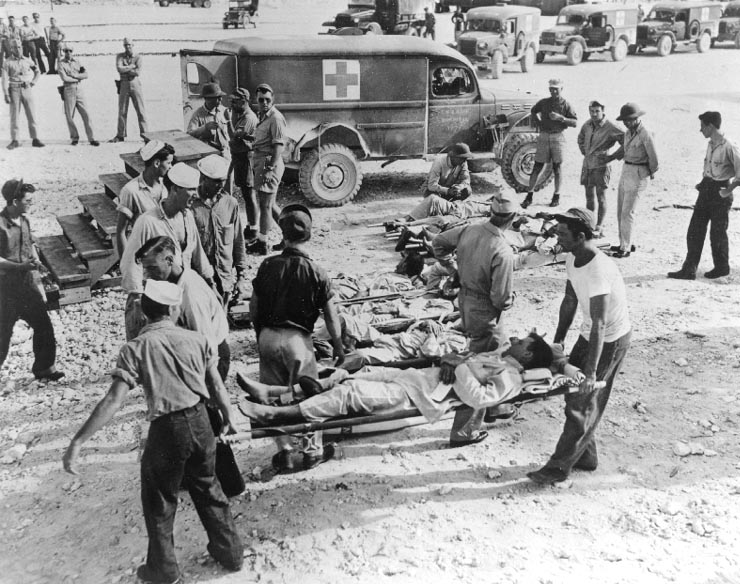
She sank so quickly that few lifeboats or rafts were launched and no distress call issued. It took the Navy nearly three days to even know that she was missing. Finally on August 2d the survivors, now decimated by exposure, dehydration and shark attacks were spotted by a patrol plane. The aircraft sent a message out and other aircraft and the USS Cecil J. Doyle DE-368 as well as a number of other ships which responded to the call. Only 321 crewmen out of the estimated 880 survivors of the sinking lived.

USS_Indianapolis-survivors_on_Guam

The tale of the sinking and the stories of the survivors would be recorded in Fatal Voyage by Daniel Kurzman and All the Drowned Sailors by Raymond Lech. It was also mentioned in the movie Jaws by Robert Shaw’s character, the fishing boat Captain “Quint” who was supposed to be an Indianapolis survivor. The made for television film Mission of the Shark: The Saga of the U.S.S. Indianapolis staring Stacy Keach as Captain McVay brought a renewed interest in the sinking and the story of the survivors.

indy4

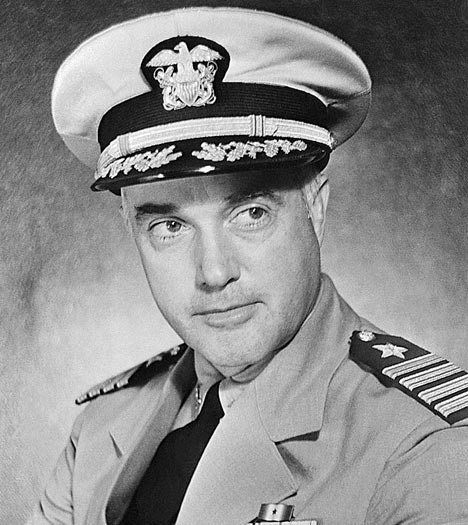
Captain McVay would be tried at court-martial and convicted of “hazarding his ship by failing to zig-zag.” The sentence was controversial as McVay was the only commander of a U.S. Navy ship lost during the war to be tried by court-martial. The true fact of the matter was that McVay was a scapegoat for the failure of several systems of reporting and communication that he did not control.

Admiral Nimitz commuted the sentence and restored McVay to active duty. He retired in 1949 after being promote to Rear Admiral. Despite the fact that many of the crew felt that he was innocent many families of those lost at sea took their revenge on McVay. He received much hate mail and was frequently threatened in writing and by phone. On November 6th 1968 McVay, despondent over the death of his wife and the continued harassment committed suicide using his Navy issued revolver in his back yard. In one hand he grasped a toy sailor doll given to him by his father when he was a child.

In the years following many survivors banded together with Captain McVay’s family and others including the commander of I-58, Mochitsura Hashimoto to clear his name. The president of the USS Indianapolis Survivor’s Association testified “Capt. McVay’s court-martial was simply to divert attention from the terrible loss of life caused by procedural mistakes which never alerted anyone that we were missing.” 

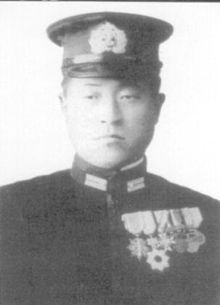
220px-Mochitsura_Hashimoto

Hashimoto, who spent much of his time after the war as a Shinto priest sought the forgiveness of survivors. He returned to a survivor reunion in 1991 and said: “I came here to pray with you for your shipmates whose deaths I caused.”   

Hashimoto wrote Senator John Warner on behalf of the late Captain McVay in 1999 when he learned of the efforts being made to clear McVay’s name. The letter is touching in its honesty and speaks of the deep respect that warriors who once fought against each other can maintain for one another. It also speaks to the deep sense of honor of Hashimoto:

“I hear that your legislature is considering resolutions which would clear the name of the late Charles Butler McVay III, captain of the USS Indianapolis which was sunk on July 30, 1945, by torpedoes fired from the submarine which was under my command.

“I do not understand why Captain McVay was court-martialed. I do not understand why he was convicted on the charge of hazarding his ship by failing to zigzag because I would have been able to launch a successful torpedo attack against his ship whether it had been zigzagging or not.

“I have met may of your brave men who survived the sinking of the Indianapolis. I would like to join them in urging that your national legislature clear their captain’s name.

“Our peoples have forgiven each other for that terrible war and its consequences. Perhaps it is time your peoples forgave Captain McVay for the humiliation of his unjust conviction.”

Finally in October 2000 Congress passed a resolution stating of Captain McVay that “he is exonerated for the loss of the USS Indianapolis.” President Clinton signed the resolution and in July 2001 Secretary of the Navy Gordon England order Captain McVay’s record cleared of wrong doing. Hashimoto would die on 25th 2000 at the age of 91.

This year, on the 68th anniversary of the sinking 17 survivors gathered to mark the occasion and pay tribute to their shipmates. The Facebook page of the association has this memorial:

Goodnight and sleep well, crew of the USS Indianapolis. On this night, sixty-eight years ago, you had no way of knowing that a Japanese torpedo would hit your ship in just a few short hours. Your floating home away from home would sink within twelve minutes. Unable to get topside in time, three hundred of you would go to the bottom of the ocean with your ship. Nine hundred of you would find yourselves in the water, about to experience a terrifying existence amid sharks, dehydration, hallucinations, and the elements. 

You were so young, Indy sailors. 

Tonight, like that night, let your minds be free from nightmares and flashbacks. Tonight, like that night, know that your families and friends miss and love you. Tonight, like that night, just be “The Crew of the USS Indianapolis” instead of “Survivors” or “Lost at Sea.”

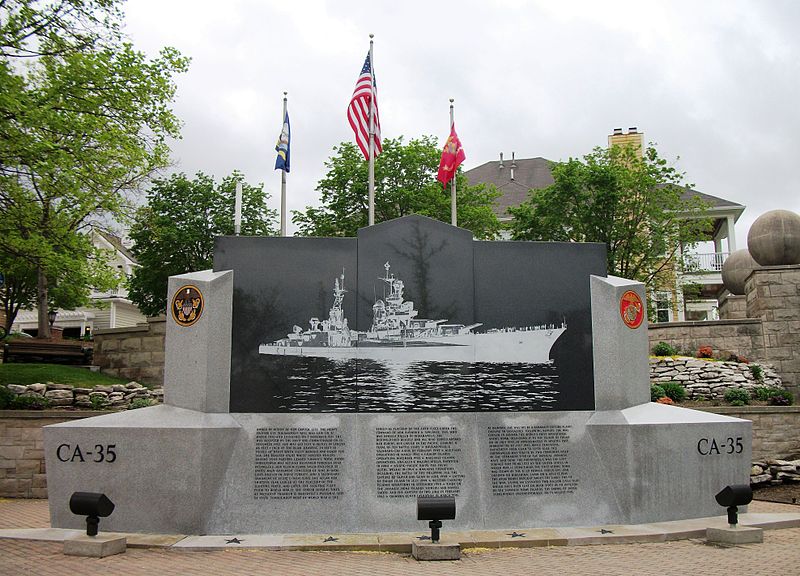
800px-USS_Indianapolis_(CA-25)_Memorial

I cannot say more.

Peace

Padre Steve+

Leave a comment

Filed under History, Navy Ships, US Navy, world war two in the pacific

The Uncomfortable Middle: The Challenge to the Certitude of Unprovable Doctrine

holy-saturday

“Man no longer lives in the beginning–he has lost the beginning. Now he finds he is in the middle, knowing neither the end nor the beginning, and yet knowing that he is in the middle, coming from the beginning and going towards the end. He sees that his life is determined by these two facets, of which he knows only that he does not know them”  Dietrich Bonhoeffer

I was watching an episode of Star Trek Voyager tonight, one called Distant Origin where a scientist of a race in the Delta Quadrant believes that genetic evidence indicated that their race originated on Earth. His thesis is challenged the doctrine of his species and he was accused of “heresy against Doctrine” for positing something different than his people believed. He ends up being persecuted and punished for his beliefs.

Now I want to be diplomatic about this. I am not someone who simply is a contrarian to established doctrines, be they theological, scientific or even military theories. That being said I think it is only right to question our presuppositions, as Anselm of Canterbury did through faith seeking understanding.

That understanding as a Christian is based on the totality of the message of the Christian faith. Hans Kung said it well:

“Christians are confident that there is a living God and that in the future of this God will also maintain their believing community in life and in truth. Their confidence is based on the promise given with Jesus of Nazareth: he himself is the promise in which God’s fidelity to his people can be read.” 

What we have to admit is that our belief is rooted in our faith, faith which is given to us through the witness of very imperfect people influenced by their own culture, history and traditions. Even scripture does not make the claim to be inerrant, and the Bible cannot be understood like the Koran or other texts which make the claim to be the infallible compendium of faith delivered by an angel or dictated by God himself. It is a Divine-human collaberation so symbolic of the relationship that God has with his people.

There is a certain sense of relationship between God and humanity within scripture and that relationship creates certain tensions between God and those people. The interesting thing is that Scripture is a collection of texts which record often in terrible honesty the lack of perfection of both the writers and their subjects. They likewise record the sometimes unpredictable and seemingly contradictory behavior of God toward humanity in the Old Testament. They bear witness to the weaknesses, limitations and lack of understanding of the people of God of the message of God but even in that those limitations and weaknesses that God is still faithful to humanity in the life death and resurrection of Jesus of Nazareth.

The real fact of the matter is that fixed doctrines are much more comfortable than difficult questions than honestly examining the contradictions that exist within Scripture, history and tradition. The fact is this makes many people uncomfortable and thus the retreat into the fortress of fixed and immutable doctrine. This is the magnetic attraction of funamentalism in all of its forms, not just Christian fundamentalism.  Yet for me there is a comfort in knowing that no matter how hard and fast we want to be certain of our doctrines, that God has the last say in the matter in the beginning and the end. We live in the uncomfortable middle but I have hope in the faith that God was in the beginning. Besides as Bonhoeffer well noted “A God who let us prove his existence would be an idol” 

Our doctrines, the way we interpret Scripture and the way we understand God are limited by our humanity and the fact that no matter how clever we think we are that our doctrines are expressions of faith. This is because we were not in the beginning as was God and we will not be at the end, at least in this state. We live in the uncomfortable middle.

We are to always seek clarity and understanding but know that it is possible that such understanding and the seeking of truth, be it spiritual, historical, scientific or ethical could well upset our doctrines, but not God himself. As Henri Nouwen wrote: “Theological formation is the gradual and often painful discovery of God’s incomprehensibility. You can be competent in many things, but you cannot be competent in God.”

Peace

Padre Steve+

1 Comment

Filed under christian life, faith, philosophy, Religion

To Iraq and Back: A Bus Ride to Carolina

Coach_USA_ShortLine_50889

This is another installment of my To Iraq and Back series.

My CRV with Judy in it pulled away and Nelson and I went about our business. We staged our gear as we waited for the buses to arrive to take us to Fort Jackson South Carolina where we were to receive our training for the deployment.  As we talked other sailors arrived and soon the gear of over 100 sailors was stacked in rows of sea bags just off of the sidewalk.

Nelson’s parents, brother and sister had come to see him off.  His brother is a Navy First Class Petty Officer. His dad a former Vietnam era Marine Recon NCO who made several deployments “in the shit” as many Vietnam vets call tours in that combat zone.  They were really nice folks. Over the years I had heard much about them. They are close to each other and all are supportive of Nelson.

Nelson is a career amateur boxer; kick boxer, martial artist and more recently MMA fighter. He is active in children’s martial arts instruction and has been on Team USA and fought internationally.  During his previous deployment to Afghanistan he helped coach the fledgling Afghan National Boxing Team. A couple of months before this deployment he won the Arnold Schwarzenegger Classic.

So we waited while the other sailors gathered, some individually and some with family.  Some stood alone as couples while others mingled with each other.  For most this was a new way to see their sailor deploy.  No pier side goodbyes, no banners, no manning the rails by the crew as the ship was nudged away from the pier by tugs.

When you have a “normal” deployment of a ship or something like a Marine battalion it is a big deal. Many times media is there, sometimes there are speeches, but most of all there is the understanding that we are all in this together. We are going in as a unit.

In such times families say goodbye to their Sailors, Marines or Soldiers who are going to war together.  When you deploy as a unit there is familiar support system for the families we leave behind. This is not so when you deploy individually.  Those leaving on this day were very much strangers. We would train together, but few would stay together on the deployment.

If you are a ship or unit chaplain and deploy with your people there is a relationship. Generally you know each other, in this case we were strangers.  I was going to war with Nelson but we would not remain with any sailors we were with today when we got to Iraq. This was also the case for others who would serve in isolated posts, mostly working with the Army in support roles. Some would serve in specialized roles such as the Electronic Warfare Officers detailed to work on defeating IEDs and roadside bombs.

As others said their goodbyes and hugged each other I thought of Judy and knew that she was going to be down for some time but I felt that for once that she had an adequate support network. I was right about her being down for a while but this deployment would be harder on her than others and the support network proved woefully inadequate. So much for assumptions.

I looked at our gear as opposed to the others. Our gear was in large and rectangular bags of coyote or sand color. Most everyone else had traditional green sea bags, or what are known in the Army as “duffle bags.”  We already had our personal protective equipment of the EOD/Special Warfare type while others would receive Army issue at Fort Jackson. There are pros and cons to such a arrangement.  The pro is that we had great gear certainly some of the best in theater. The con was that we had to lug the great gear everywhere we went going to and coming back from war.  This would get old, but the benefits do outweigh the advantages when you are actually in a combat zone.

Finally an officer came out and began calling role and giving us our signed “official” orders.  After this we loaded our gear on the buses that would take us to Fort Jackson. These were the first of many buses we would ride and the first of many roll calls and gear load outs in the coming months.

Nelson and I got on the same bus which was not full and took seats near the front.  I got a seat alone because I was the senior officer on the bus and a chaplain to boot. This was not because I asked for it or hogged the seat.  It is actually fairly typical in such a setting where young enlisted guys don’t want to sit next to an officer they don’t know and some are afraid of chaplains because of experiences that they have had in civilian churches.

Many of the sailors had ever darkened the door of a church and many of those that have been in church have been burned in relationships with pastors or religious people.  I have found that many times, even those with a vibrant faith are hesitant to approach a chaplain that they do not know. Some are afraid that the chaplain might try to convert them be judgmental about of the manner in which they live their lives. So as a chaplain I try to be cognizant of this and be friendly and caring without scaring them away.  Of course I did build relationships with a quite a number of these sailors during the next few weeks but on this bus ride I was still an unknown quantity to them.

Sitting alone however was good for me since I general despise bus travel regardless of the company I keep.  For some reason my height works against me, I can never get my feet comfortably on the ground on these new tour buses and I have a terrible time getting comfortable.  Since bus travel takes forever to get anywhere the discomfort is palpable. Now I did a three month tour on buses in 1979 while touring as a spotlight tech for the Continental Singers and Orchestra across the US and in Europe.  Somehow the old Greyhound buses were more comfortable than the new tour buses.  Maybe I’m just nostalgic but they somehow fit people like me better than the fancy new buses.

When you travel by bus with a bunch of sailors, the majority of whom are at least 20 years younger than you, the experience can be entertaining. Part of course is a generational thing. I grew up and came of age the 60’s 70’s and 80’s. The majority of these sailors from the 90’s and 2000’s.

The trip was a chance for me to observe a lot about these sailors just by watching.  Some had their portable i-pods and MP-3 players going, others spent time talking on cell phones, a few read or talked among themselves, but the sailors near me gravitated to the DVD movie which was 300 the comic book style account of the Spartan’s defense of Thermopylae against the Persians.  As the Spartans made their stand I could see the young sailors who were going to war take inspiration from King Leonditis of Sparta.   Since we were going into a place where 50-100 Americans a month were being killed and hundreds more wounded I could understand the need for inspiration along with entertainment.

The bus ride itself was a lot like what I imagine that Minor League teams take in the Carolina League. Our journey reminded me of the bus rides in the movie Bull Durham.  The older guys staying pretty quiet and to themselves and the young guys having fun, playing games and joking around with each other,  We made a couple of stops, one at some little Interstate town with a fair amount of gas stations and a few fast food places.  About half the sailors went to the McDonalds while the rest ran down the street to the Burger King and Taco Bell. Once everyone had their fill the buses pulled back out onto the interstate.

When we finally got near Columbia the buses got of the Interstate highway and onto some small two lane state highway.  We drove down this road about twenty to thirty minutes and pulled into what appeared to be a tiny out of the way base. I wondered where the hell we were. Fort Jackson is a fairly large training base where thousands of recruits are trained every year.  Where we were certainly was not the Fort Jackson that I had imagined.

Instead of the main post we were at the South Carolina National Guard training facility called Camp McCready.  It is here that the Naval Expeditionary Combat Command has a training center set up with the Army to train sailors in basic combat tasks.

Our welcome that first night was simple.  We formed up, checked in, got our linens for our standard issue military beds and were marched to dinner at the chow hall or in the Army vernacular the DFAC by our newest and bestest buddies, our Army Drill Sergeants.  We were met at the DFAC by a civilian.  I can’t remember his name but this guy was most congenial and he put the RED in “Redneck.” He joked with everyone that came through the line, asked where people were from and what they did.  When he found out that I was a chaplain he began to ask me for a joke every meal thereafter. As such nearly every meal would be entertaining.

As Nelson and I sat down for chow with a couple of other sailors we looked at each other.  He said: “Boss I don’t think some of these guys know what is coming.”  I said “I think that your right partner, hopefully they adjust and do well.”  The other sailors, both more senior petty officers nodded in agreement.

Going back to the barracks I met some of the other officers enjoying their first night at Camp McCready.  More sailors from NMPS San Diego were due in later. I introduced myself to a number of the officers near me and engaged in some rather surface pleasantries. When lights out was called lay down on the same type of Army bunk bed that I had first encountered some twenty five years before at Camp Roberts California and Fort Lewis Washington.  I swear the sheets, blankets and pillowcases were of the same vintage.

Much was still on my mind when I laid down and my mind was still thinking about the trip to base with Judy and the final kiss goodbye. I was troubled by it and how I had handed things. Despite that I fell asleep fairly quickly. It had been a long day and coupled with the lack of sleep and stress of the previous couple of days I was tired.

Peace

Padre Steve+

Leave a comment

Filed under iraq,afghanistan, Military, ministry, Pastoral Care, to iraq and back, Tour in Iraq, US Navy

To Iraq and Back: A Last Night Together and a Kiss Goodbye

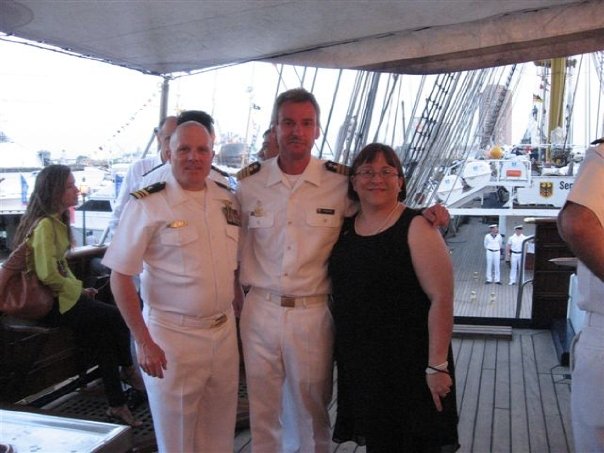
295_27076787058_8676_nJudy and I on the German Sail Training Ship Gorch Fock at the Norfolk Harbor Fest a couple of weeks before deployment

This is another of my “To Iraq and Back” articles about my deployment to Iraq in 2007 and 2008 with RP1 Nelson Lebron. 

Now the time has come to leave you
One more time Let me kiss you
And close your eyes and I’ll be on my way
Dream about the days to come, When I won’t have to leave alone
About the times, That I won’t have to say

Oh, kiss me and smile for me
Tell me that you’ll wait for me
Hold me like you’ll never let me go
Cause Im leavin’ on a jet plane
Don’t know when I’ll be back again
Oh babe, I hate to go

From “I’m Leaving on a Jet Plane” by John Denver

http://www.youtube.com/watch?v=vLBKOcUbHR0

The night before leaving on deployment and the actual day of departure are some of the hardest that any military couples or families experience. In time of war it is even more difficult. Judy and I have done this too many times in peace and war.

As I went through all of my preparations to go to Iraq in some was it was a replay of past pre-deployment situations. However, this time I was not merely deploying on a peacetime assignment or supporting a peace making operation, or even deploying on a ship and being part of a boarding team after the 9-11-2001 attacks. In that last instance  Judy did not know that I was part of the boarding team until about halfway through the deployment.

But this time going boots on ground into the most bitterly of Iraq’s contested provinces, Al Anbar. That lent at certain dark pallor to the occasion.

Our last night together was rather somber to put it mildly. Judy and I went out to dinner on Friday night. Since I knew that I would not be having a good beer for quite some time we went to the Gordon Biersch Brewery Restaurant in Virginia Beach. For us Gordon Biersch is generally a good time kind of place, it has become over the years our version of Cheers a place where everyone knows our name.

That last Friday before the deployment to Iraq it was not a festive occasion, it was almost a wake. Judy and I were both quite subdued. In between the silence Judy talked about her fears about the deployment while I tried to reassure her that everything would be fine. I am a man who is somewhat Vulcan in my use of logic. I figured that even though things were bad in Iraq that my chances of returning were quite high, even of something happened to me. I tried to be calm and reassuring and no matter what I tried it didn’t work, human emotions are quite intense at times.

I also reasoned that since I had taken out the extra life insurance that I would be okay.  For me such logic makes sense. I kind of believe that if I don’t get it I will need it and if I do get it I won’t. It’s kind of like Yogi Berra’s logic when he said “You should always go to other people’s funerals; otherwise, they won’t come to yours.”

After dinner and several half liter glasses of Gordon Biersch Märzen amber lager we went back home. Judy watched quietly while I finalized my packing. I ensured that all my field gear, uniforms and clothing were packed and rechecked my EOD issue protective gear.

I then packed my Mass kit, Bible, Prayer Book and my Marine Pattern camouflage reversible desert/woodland stole. The stole was special as Judy had made me a few years back from woodland and desert pattern shirts which were way too big for me. They are one of a kind items. I have seen similar, but what Judy made were far better than any others that I have seen. I still use that stole even when I am not deployed. It is simple but quite exquisite, adorned with an embroidered Maltese Cross in tan on the desert side and black on the woodland side it is unique and I treasure it.

The last items I packed were my books on counterinsurgency, a few DVD movies, music CDs and my hygiene items. It is funny to think that now all of this would be stored on my iPad which if I ever make such a deployment again will significantly simplify my life.

I wrestled the big bags down the stairs and put them in the back of my Honda CR-V so I wouldn’t have to fight them in the morning. That accomplished Judy and I just sat together, she was feeling pretty low, the look one of despair.

On the other hand I was a mix of conflicting emotions. I was excited by knowing that I was going to get to do what I had trained all of my life to do. However I was very cognizant of the reality that it would be tough on Judy and that it was a dangerous deployment.

My last couple of deployments had been very tough on her. When I deployed to support the Bosnia mission as a mobilized Army Reservist and newly ordained Priest three of my relatives in Huntington West Virginia where we were living died. One was my maternal grandmother “Ma Maw” who Judy had become very close to over the past couple of years. They had become buddies and Ma Maw had taken Judy in not as my wife, but as “her” granddaughter.

Ma Maw’s death hit Judy very hard and my mom and uncle in the midst of their grief over the loss of their mom they did not understood the depth of the relationship between Judy and Ma Maw. As a result, I was absent and there was much tension, misunderstanding and hurt feelings between them. In the week before Ma Maw’s death Judy tried repeatedly to get her to go to the doctor only to be ignored. The morning Ma Maw died Judy called me in Germany. She was frantic that I call Ma Maw and insist that she go to the doctor. I made the call and insisted that she go to the Emergency Room but she refused and said she would call her doctor. That night she died. I had lost my grandmother and could not go back to help and Judy had lost a woman who had become closer to her than her own grandmothers ever had been.

In 2001 during my deployment with 3rd Battalion 8th Marines to Okinawa, Japan and Korea we lost our 16 ½ year old Wire Haired Dachshund Frieda. Judy did her nest to keep Frieda alive for me, but there was nothing that could be done and finally with Judy being worn down to nothing herself, she was persuaded to have Frieda put down. The interesting thing is that after Frieda died she visited me in Okinawa and Judy about the same time in dreams. Frieda was always a weird animal and even in death has continued to find ways to remind us of her presence.

My 2002 deployment on USS HUE CITY to the Middle East and Horn of Africa came less than six months after my return from my deployment with 3/8. That deployment, coming on the heels of the 9-11-2001 attacks was also very difficult on her. In the space of 6 years we had been apart almost 4 1/2 years. Much of the time following that last deployment was spent on the road as I travelled to visit Marine Security Force and Navy EOD Mobile Units in the Middle East, Europe, the Far East and the Continental United States. In a four year period I averaged 1-3 weeks a month away from home.

With all of this in the background we spent our last night together. That night neither of us slept very well. When we got up I had a light breakfast and then accompanied by a friend from Judy’s Church choir we drove to the base.

Saturday morning traffic is generally not too bad so our trip was uneventful, but tense.  You could cut the tension between us by now with a knife.  It was about the time that we were nearing the base Judy said something about our relationship that I took really wrong. I sarcastically snapped back “Well I’ll just get blown up by an IED then.”

That sarcastic comment really hit her hard and I knew immediately that I had blown myself up with it. The words were harsh and devastating. I should have known better and should have kept my moth shut. After all I’d deployed a lot and taught pre-deployment classes talking about the emotional cycle of deployments. I was supposed to be an expert at this sort of thing, but instead my comment was very cruel.

To be sure the stress on both of us the preceding weeks had taken its toll and both of us were on edge.  For two months we had each in our own way imagined the deployment, me as a great adventure and her as a threat to our mutual existence. I wondered just what I would face when I got to Iraq and those were unanswerable questions. Judy’s great fear that something might happen to me and that she would be alone, not just for the time of the deployment but for the rest of her life.

That is one of the tensions in a military marriage that many people who have not lived it fail to understand. It is not just the wartime deployments it is the cumulative effects of multiple short and long term separations on the health of a relationship.

We got to the base pretty quick, maybe 15-20 minutes but the tension made me feel that the trip was three times as long. As we pulled up in a parking spot near the baggage drop off area we sat there for a few minutes. I got out of the car as did Judy.  I asked if she wanted to wait a while with me and with tears in her eyes said that she couldn’t handle the wait.

I unloaded my gear with the help of Nelson. He looked at Judy and said, “Don’t you worry ma’am we’ll do good and I’ll keep him safe.” Judy gave a soft “thanks” and gave him a hug.

With my gear unloaded I went back to Judy.  We looked at each other, embraced and kissed each other, each of us wondering if it was possibly the last time. We parted our embrace, and she the turned and walked back to the car, handed her friend the keys and they drove off.  It was a moment that I will not forget as long as I live. As she left I said a prayer under my breath and asked God to keep her safe while I was gone.  Then I turned to Nelson and said, “Okay partner, let’s get this done.”

Peace

Padre Steve+

2 Comments

Filed under iraq,afghanistan, marriage and relationships, Military, to iraq and back, Tour in Iraq