Monthly Archives: December 2015

Advent & the “War” on Christmas

677

Friends of Padre Steve’s World

I often talk about my struggles with doubt and faith, but in regard to faith, the season of Advent has become even more important to me than it ever was before. In fact, amid all the yearly histrionics and propaganda of the Christian Right and their Fox News Channel cheerleaders who scream about “the war on Christmas” I find Advent to be a powerful antidote.

Advent is the beginning of the liturgical year, in a sense the opening day of a new season of faith, as much as the Opening Day is to baseball. Advent is a season of new beginnings, of hope looking forward and looking back. It is a season of intense realism. It is a season where the people of God look forward to their deliverance even as they remember the time when God entered into humanity.  It was not simply entering the human condition as a divine and powerful being inflicting his will upon people but deciding to become subject to the same conditions know by humanity. As Paul the Apostle, wrote about him: “though he was in the form of God, did not regard equality with God as something to be exploited, but emptied himself, taking the form of a slave, being born in human likeness. And being found in human form, he humbled himself and became obedient to the point of death– even death on a cross.” (Philippians 2:5b-8) 

In the incarnation Jesus Christ shows his love and solidarity with people, humanity, the creation, reality. Dietrich Bonhoeffer wrote:

“God loves human beings. God loves the world. Not an ideal human, but human beings as they are; not an ideal world, but the real world. What we find repulsive in their opposition to God, what we shrink back from with pain and hostility, namely, real human beings, the real world, this is for God the ground of unfathomable love.” 

That simple fact is why Christ came. Christ did not come to found a government or even for that matter a religion. He did not come to exemplify “Christian” virtues or to condemn people that religious people condemned as sinners. He came simply to save and redeem the world and people like us from themselves.

The meaning of the incarnation, and the hope of the season of Advent is that God loves people. Yes, even the people that the supposed Christian culture warriors despise.

In the next few week there will be much written and said about Jesus. Much of it will not actually deal with Jesus or the people that he came to save but instead about the worldly power and influence of those who seek the profits of being “prophets.” Some of them will talk fervently about the “War on Christmas” as if somehow God and Christ are so small that they need government-sponsored displays in the public square in order to be real, relevant or for that matter important. What a small God they must have.

Somehow the message of Advent, the coming of Jesus is contradictory to the message of the for profit prophets. Certainly the early Christians had no government backing of any kind. These early Christians simply lived life and showed God’s love to their neighbors, often at the cost of their lives and paradoxically the message was not crushed, but spread and to be neutralized had to be coopted by Constantine. It was only when the leaders of the church became co-executors of government power that the message of reconciliation became a bludgeon to be used against those who did not agree with the theology of the clerics beholden to the Empire.

The Christ of the Season of Advent, the one who came and who promises to come again is not captive to the capricious message of the for profit prophets and their political and media allies. I would dare say that God is much bigger than them or those that they believe will somehow end the Christian faith as we know it. But then maybe the Christian faith “as we know it” is more a reflection of our culturally conditioned need for physical, economic and political power over others than it is of Jesus.

All I know is that the simplicity of the message that “God so loved the world that he gave his only begotten Son” is more powerful than any political-religious alliance.

The time of waiting in expectation during advent also helps us to focus on Jesus’ words to  “Love God with all your heart and love our neighbors as ourselves.” It also calls to mid the words of the Old Testament prophet Micah, who asked “what does the Lord require of thee? To love show justice, to love mercy and to walk humbly with thy God.”

Advent stands in stark contrast to the politically charged consumerism of the War on Christmas.  I think that the message that God loves the real world is worth repeating in such an environment. In fact I think that because the message of God’s great love for those deemed “repulsive” by so many supposedly “conservative Christians” is so amazing that it must be proclaimed. As distasteful as it is to the “for profit prophets” of our time, it is not only worth repeating, but actually believing and being acting upon.

It is a good reason for me to during this season of Advent to look forward to our celebration of the mystery of the Incarnation, the coming of the God who “emptied himself” and took “the form of a slave” in order to save his people.

Peace

Padre Steve+
3 Comments

Filed under christian life, faith, Religion

The Doomed Fleet: The Kido Butai & Pearl Harbor

Akagi_29

Friends of Padre Steve’s World

Early December is such an interesting time of year for a historian. There are a lot of events that occurred which still linger in our memories. One of those is the Japanese attack on Pearl Harbor on December 7th 1941. I find it interesting and not just from an American point of view. I can also as a career military officer also understand the thoughts of the Japanese officers who were ordered to undertake the attack.

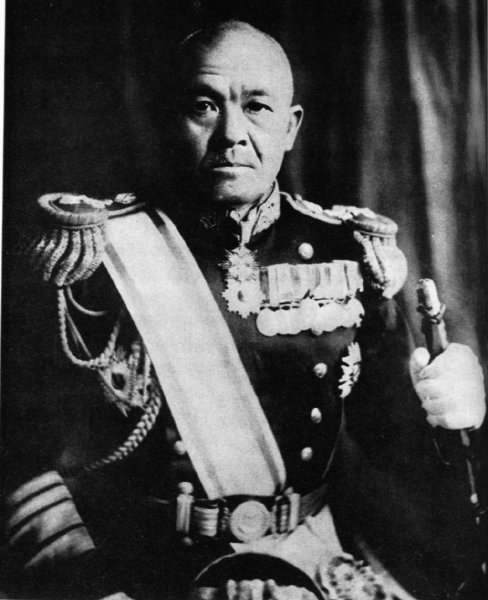
Early in the morning on November 26th 1941 the ships of the Japanese Carrier Strike Force, the Kido Butai under the command of Vice Admiral Chuichi Nagumo weighed anchor from Tankan Bay in the northern Kurile Islands of Japan. The plan was top secret and very few Japanese officers knew of the target. Many officers presumed that war was immanent but most assumed the target would be the Philippines or other targets in Southeast Asia.

PERSON JAP Nagumo1

Nagumo

The next day Nagumo expressed his personal misgivings about the attack to his Chief of Staff Rear Admiral Ryunosuke Kusaka as the task force plunged through heavy seas. He blurted out, “Mr. Chief of Staff, what do you think? I feel that I’ve undertaken a heavy responsibility. If I had only been more firm and refused. Now we’ve left home waters and I’m beginning to wonder if this operation will work.” 

Admiral Kusaka came up with the right answer:  “Sir, there’s no need to worry. We’ll make out all right.” 

Nagumo smiled. “I envy you, Mr. Kusaka. You’re such an optimist.” 

The attack on Pearl Harbor was designed to be pre-emptive in nature. It was supposed to deliver such a crushing blow to the United States Navy that the Japanese could complete their Asian conquests before it could recover. It was a plan of great risk that doomed Japan to horror never before imagined when the United States dropped Atomic bombs on Hiroshima and Nagasaki less than four years later. By then the bulk of the Imperial Navy would be at the bottom of the Pacific and millions of people killed.

yamamoto-isoroku1

Yamamoto 

The Japanese, even Admiral Yamamoto, the man behind the plan understood that it entailed great risks. A simulation of the plan conducted in early September by the senior officers of the Combined Fleet and the Kido Butai calculated that two of Japan’s precious aircraft carriers could be lost in the operation. But despite the opposition and reservations of key officers, including the Kido Butai commander, Admiral Nagumo Yamamoto pressed forward.

kagaph

The Kido Butai was the most powerful carrier strike group assembled up to that time. In fact the United States Navy would not equal the power of the force until late 1943. Comprised of six aircraft carriers, the massive flagship Akagi, and the Kaga, the fast 18,000-ton Soryu and Hiryu and the most modern Shokaku and Zuikaku. The carrier embarked over 400 aircraft, of which over 350 were to be used in the two aerial assault waves. Most of the pilots and aircrew were experienced, many with combat experience in China. The carriers were escorted by the old but fast and modernized battleships Kirishima and Hiei, the new heavy cruisers Tone and Chikuma, the light cruiser Abukuma, the new Kagero Class destroyers, Urakaze, Isokaze, Tanikaze, Hamakaze, Kagero and Shiranuhi, the Asashio class destroyers Arare and Kasumi. Two additional destroyers the Fubuki class Sazanami and Ushio were assigned to neutralize the American base on Midway Island. The submarines I-19, I-21 and I-23 and 8 oilers were assigned to the force. Five additional submarines the I-16, I-18, I-20, I-22 and I-24 each embarked a Type-A midget submarine.

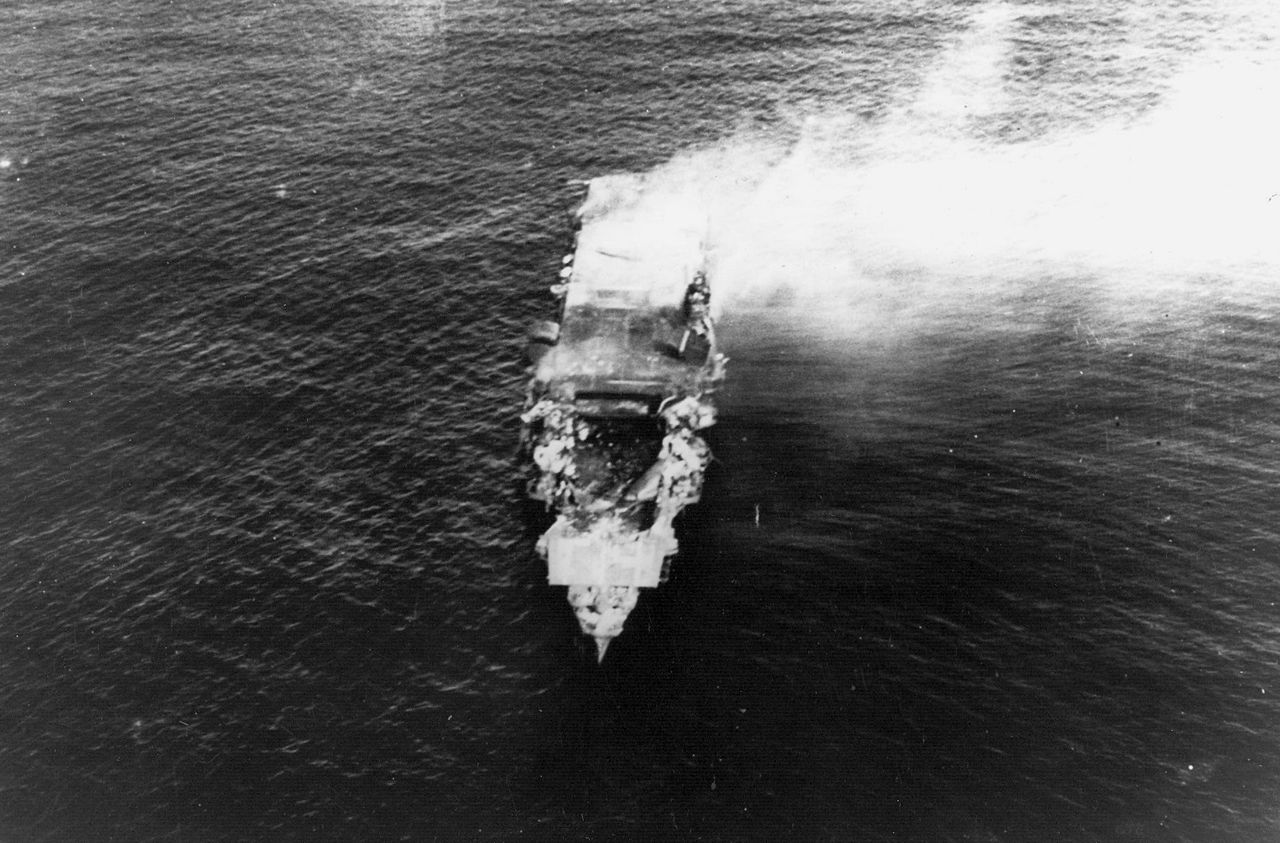
1280px-Hiryu_burning

Hiryu prior to sinking at Midway

On December 7th the force delivered a devastating blow to the American Pacific Fleet at Pearl Harbor, however no American aircraft carriers were present. It would go on for the next several months on a rampage across the Pacific and Indian Oceans. However their success would be short lived. Within a year, the carriers that were not present at Pearl Harbor sank the Akagi, Kaga, Soryu and Hiryu at Midway. Hiei and Kirishima were lost at the Naval Battle of Guadalcanal in November 1942. Over the course of the war every ship of the attack force but one was lost.

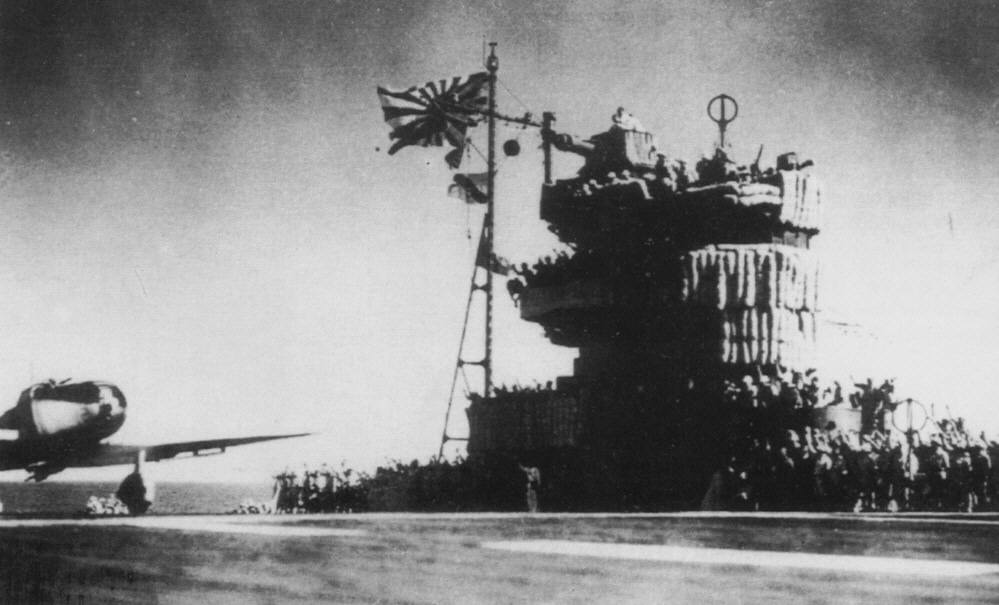
zuikaku12_usn_h73070

The Last Banzai aboard Zuikaku as she sinks at the Battle of Cape Engano (Leyte Gulf) October 25th 1944

Shokaku was torpedoed and sunk at the Battle of the Philippine Sea and Zuikaku, Chikuma and Abukuma were lost at Leyte Gulf, most of the destroyers and submarines were lost in various engagements. However three destroyers, Isokaze, Hamakaze and Kasumi accompanied the great Battleship Yamato on her suicide mission at Okinawa and were sunk on April 7th 1945. The heavy cruiser Tone was sunk at her moorings at Kure during air strikes by the US 3rd Fleet on July 24th 1945.

9d006f3b373f8e5ed86a61bad7406d6f

Heavy Cruiser Tone sunk in Kure Japan 1945

All of the submarines were lost during the war, however I-19 sank the USS Wasp CV-7 and USS O’Brien DD-415 while damaging the USS North Carolina BB-55 on September 15th 1942 off Guadalcanal. Only the destroyer Ushio survived the war and was broken up for scrap in 1948.

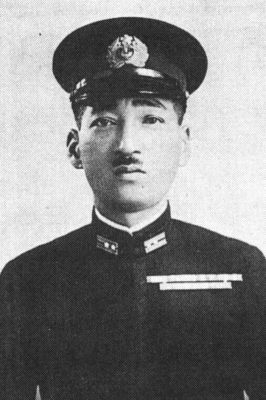
MitsuoFuchida

Fuchida (above) and Genda 

f624277ee1

Among the leaders of the Japanese strike force, Admiral Yamamoto was killed on April 18th 1943 when his aircraft was shot down at Buin.  Most of the sailors who took part in the attack would be dead by the end of the war. Nagumo who resisted the strike and was ordered to lead it realized his worst fears at Midway and during the battles around Guadalcanal and the Solomon Islands, died in the American invasion of Saipan in 1944. The two aviators who planned and executed the tactical details of the raid, Mitsuo Fuchida, and Minoru Genda, both survived the war. Genda became a general in the Japanese Air Self Defense Force and died at the age of 84 in 1989. Fuchida converted to Christianity after reading the story of Doolittle Raid survivor Jacob DeShazor. Fuchida became a Methodist pastor and evangelist and died in 1976 at the age of 73.

Few present at Tankan Bay on that fateful November morning could have expected the triumph and tragedy ahead. However Yamamoto was probably more of a realist than many in the Japanese government and military leadership when he told Prime Minister Fumimaro Konoe “In the first six to twelve months of a war with the United States and Great Britain I will run wild and win victory upon victory. But then, if the war continues after that, I have no expectation of success.” Yamamoto was eerily prophetic and those that counsel pre-emptive war need to never forget his words or the results of his decisions.

Peace

Padre Steve+

1 Comment

Filed under Loose thoughts and musings

Belief & Unbelief in Advent

2004weihnachtsbrief-2

Friends of Padre Steve’s World,

I mentioned on Sunday that I would be writing about faith and doubt during the season of Advent and Christmas.  Gospel according to Saint Mark records the story of a man that brought his son to Jesus the Christ to be cured of a deadly disease. In desperation the man cries out to Jesus, “Lord I believe, help me in my unbelief.”

I understand that impassioned cry.

That being said, for a lot of people, including me, the season of Advent and Christmas are incredibly difficult and times where faith, already difficult becomes nearly impossible.  For many the season is not a time of joy but depression, sadness and despair. I know feeling well, for it has been the reality that I have lived with since returning from Iraq.

Before Iraq, Advent and Christmas were times of wonder and mystery and I really found it difficult to understand how anyone could be depressed during the season, but that was before I came home from Iraq. After Iraq, the seasons of Advent and Christmas became almost unbearable as I struggled to believe in anything, including God.

I have faith again, but I still struggle to find the same wonder and mystery of the season that I once experienced. I think that the last time I was truly joyful at Christmas and during Advent was in Iraq, celebrating the message of hope among our advisors up and down the Iraqi-Syrian border. I think the most special moment was serving Eucharist to an Iraqi Christian interpreter who had not received the Eucharist in years that Christmas Eve of 2007 at COP South. Somehow in that God forsaken land God seemed closer than any place I have been since.

Since I returned from Iraq my life has been a series of ups and major downs. In dealing with PTSD, anxiety, depression and chronic insomnia as well as my dad’s painfully slow death from Alzheimer’s disease, I have struggled with faith.  Prayer became difficult at best and as I dealt with different things in life I knew that I didn’t have any easy answers.  Going to church was painful. Chaplain conferences even more so, except being with others who struggled like me.  About the only place that I could find solace was at a baseball park.  For some reason the lush green diamond is one of the few places that comfort me.

I find that the issue of doubt is not uncommon for a lot of people, including ministers of most Christian denominations. I am sure that this can be the case with non-Christian clerics as well, but I cannot say that with any deal of authority.

For some Christian ministers and priests the seasons of Advent and Christmas can be difficult. For those of us who are ordained and view ministry or Priesthood as a sacred vocation this can difficult to deal with.  Ministers and others who suffer a crisis in faith, depression or despair endure a special kind of hell this time of year because we are not supposed to suffer a crisis in faith, for any reason.

I believe that for many people, a religious leader who has doubts and struggles with faith is disconcerting.  I know many ministers who for a myriad of reasons experienced a crisis in faith. Sometimes this involved great personal losses such as the loss of a child, a failed marriage or being let go or fired by a church, or experiencing any number of other major traumatic events.  All of these men and women are good people. But when they experienced a crisis, instead of being enfolded by a caring community of faith they were treated as faithless failures, and and abandoned or excluded from their faith community as if they were criminals.

When I was younger I used to look askance at pastors who had given up, lost their faith, or abandoned the ministry for whatever reason.  As a young seminary student and later young chaplain I had a hard time with such situations. They made no sense to me and I was somewhat judgmental until I started to get to know a decent number of “broken” ministers from various faith traditions that a lot more went into their decision than simply not being tough enough to hang in there until things got better.

While I saw this happen to others I never thought it would happen to me. I thought I was “bulletproof” and when it occurred I was stunned. I didn’t expect what happened nor its effect on me.

When I came back from Iraq I came home to find that my office had been packed up and many mementos lost, it took months to find most and there are still important documents that have never been recovered. My wartime accomplishments went unrecognized by most of my peers in the Chaplain Corps on my return home and I found no place of comfort.

As I crashed no one asked about my faith until I met my first shrink. It was after the initial crash that my commanding officers, Captain, now Admiral, Frank Morneau and Tom Sitsch both asked me about my faith.  I told them that I was struggling and both were more understanding than the vast majority of chaplain, ministers, or Christian lay people that I knew. Commodore Sitsch asked me “Where does a Chaplain go for help?”  I could only say, “not to other chaplains.” Sadly I had no idea how much Commodore Sitsch was going through as he ended his life on January 6th 2014, suffering the effects of untreated PTSD and TBI.

On the professional side I felt tremendously isolated from much of the clergy of my former church, and many chaplains. This is something that I still feel to some extent today, although there are some chaplains who I can be completely honest with, sadly, like me, they have also experienced major faith crisis and have struggled with the same kind of abandonment and betrayal that I have felt. I was angry then because I felt that I deserved better, because I had done all that was asked of me for both my former church and chaplain corps.

In the midst of the crisis I appreciated simple questions like “How are you doing with the Big Guy?” or “Where does a Chaplain go to for help?” Those questions showed me that the people who asked them cared.

There were many times between 2008 and 2010 that I knew that I had no faith.  People would ask me to pray and it was all that I could do to do to pray and hoped that God would hear me.  Even the things that I found comforting, the Mass, the Liturgy and the Daily Office were painful, and while faith has returned, some of the of them still are.

That being said, I am still a Christian, or maybe as I noted last week a Follower of Jesus, since the Christian “brand” is so badly tarnished by the politically minded, hateful, power seeking, media whores that populate the airwaves and cyber-space. This makes Advent and Christmas difficult.

Why I remain a Christian is sometimes hard to figure.  I am certainly not a Christian because of the church, what is called Christendom, or the actions of supposed Christians who want to use the police power of government to subjugate others. At the same time like the German priest and theologian Hans Kung “I can feel fundamentally positive about a tradition that is significant for me; a tradition in which I live side by side with so many others, past and present.” Nor am I a Christian because I think that the Christian faith has all of the answers to all of lives issues. After coming home from Iraq I know that it is not so. I have to be painfully honest and say that neither the Church nor Christians have all the answers. That may sound like heresy to some, but I can live with it.

I don’t presume to know God’s will and I can’t be satisfied with pat answers like I see given in so many allegedly Christian publications, sermons and media outlets.  Praying doesn’t always make things better. I remain a Christian in spite of these things and in spite of my own doubts.  I still believe that God cares in spite of everything else, and in spite of my own doubts, fears and failures.

One of the verses of the Advent hymn O’ Come O’ Come Emmanuel is a prayer for me this year.

O come, Thou Day-Spring, come and cheer

Our spirits by Thine advent here

Disperse the gloomy clouds of night

And death’s dark shadows put to flight.

 So now, for those that like me struggle with faith, those who feel abandoned by God, or by family and friends, I pray that all of us will experience joy this season. So I do pray that the Day Spring will come and cheer, all of us with his advent here.

Peace,

Padre Steve+

2 Comments

Filed under christian life, faith, Pastoral Care, Tour in Iraq