
Friends of Padre Steve’s World,
Last night Judy and I went to see the movie Dunkirk. It was different from any war movie that I have ever seen and that was a good thing. It was a work of art that brought the terrible truth of war, of defeat, and of human courage and suffering together in a symphony. Director Christopher Nolan managed to blend three separate timelines to tie together the action on the ground, at sea, and in the air.
There was not a lot of dialogue but what there was blended well with the images and the score. The fact that the film was primarily shot in IMAX and 70mm instead of digital and used real ships and aircraft instead of massed amounts of digitally created military hardware added to the realism, as the musical score written by Hans Zimmer wrapped itself around you with the ticking of a watch ever present.
If you have ever been to war or served at sea and been shot at, the movie captured the worst fears of a soldier, sailor, or airman at war; a soldier being trapped on a beach under fire and waiting for rescue; a sailor struggling to escape a sinking ship, or an airman wondering if you have enough fuel to complete the mission and make it home. It also captured the feeling of being delivered from danger, and how that feeling can change in the blink of an eye to terror and despair.
I liked the way that Nolan and Hans Zimmer who wrote the musical score gave something we often overlook in life, the matter of time to the forefront. The ticking of the watch and the blending of an hour in the air, a day at sea, and a week on the land reminded me of how important time is, especially when you are at war. I remember traveling in Iraq by air and ground and just how different each felt in manner of time. Likewise, how different the concept of time felt being on a larger ship or a small boat in a hostile area.
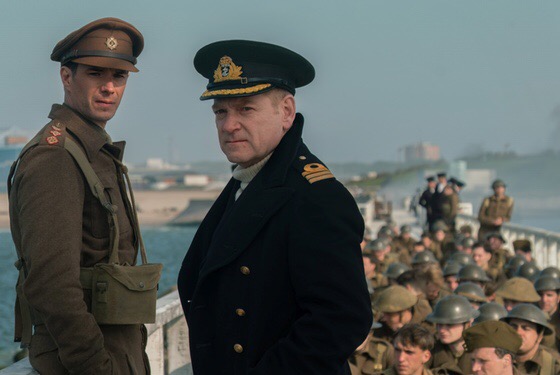
Dunkirk was a different way to look at war, and maybe because so few people in the United States or Western Europe have experienced war that is a good thing. I honestly think that a film like this, which did not focus on the Generals, Admirals, or political leaders, but rather common soldiers, sailors, and airmen, was a good thing. As far as characters in the film I found that Kenneth Branagh’s character, a Royal Navy Commander directing the evacuation of soldiers from the harbor mole, followed by Tom Hardy who played a Royal Air Force Spitfire pilot, and Mark Rylance who played a civilian mariner to be the most compelling characters.
Anyway, it is a film that I believe deserves much praise because it focused on the men who fight the war, and what they feel when under fire, rather than trying to wrap the narrative in a neat package with a happy ending. Dunkirk was a miracle that kept a disaster from ending the war. It was not a military victory, it was a nation pulling together to stave off utter defeat, and it allowed Britain to remain in the war and hold off the Nazis in the west until the United States entered the war after Pearl Harbor.
If you want to read a good book about Dunkirk that will not take too much time I recommend Walter Lord’s Miracle at Dunkirk, and for a broader perspective on the 1940 campaign in France, I recommend Alistair Horne’s classic To Lose a Battle, France 1940, and William Shirer’s The Collapse of the Third Republic, an Inquiry into the Fall of France 1940.
So until tomorrow,
Peace
Padre Steve+

 The Inglorius Padre Steve's World