Category Archives: mental health

One Faithful Harp Shall Praise Thee: The Minstrel Boy

943043_10151694525692059_632653331_n

Friends of Padre Steve’s World,

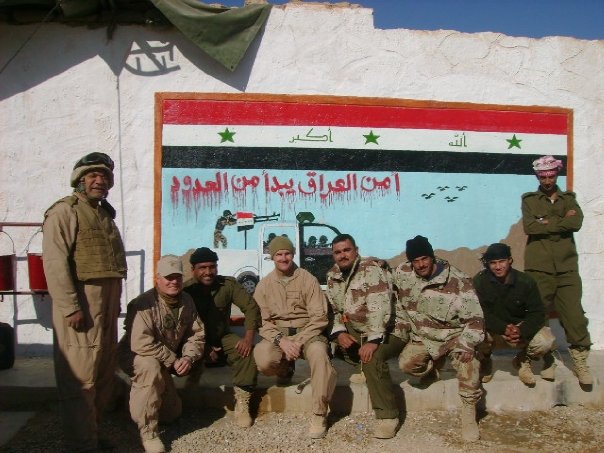
Eight years ago I was in the process of returning home from Iraq spending my last couple of days in country before flying out to Kuwait and then the United States. I was already in a rather melancholy state knowing that the Chaplain incoming higher headquarters had turned off my relief for Al Anbar Province after I had paved the way for him with all of the teams of advisers that I had worked with during my time serving them. My relief a personal friend was diverted to the Army advisers with a different Iraqi Division in the north of the country. I felt that the incoming senior chaplain had betrayed and abandoned the men that I worked so hard to care for. Later I heard that he had disregarded my heavily detailed after action reports and told at least one senior chaplain that he “had heard that I was out there but didn’t know if I  had done anything.”

It was at that point that I realized that you could do your job and sacrifice yourself to complete a mission only to have someone with their own agenda do what they could to discredit you.  I felt betrayed and still do. I was asked by my therapist about this and frankly, though I have tried to forgive the feelings always come back, especially this time of year.

Where the senior Chaplain that I worked for did all that he could to support my team’s mission and see that we were properly recognized at Multi-National Corps Iraq in Baghdad his successor dismissed our work. It was the first time in my Navy career that I had experienced that.  I think it was the fact that I worked for a non-traditional billet working for an Army led joint command outside the normal Navy-Marine Corps chain was a big part of this. Inter-service rivalries and the disdain of those bound by conventional thinking are not new and those that have done such non-conventional work have frequently been treated in a similar manner.

The Minstrel Boy (Thomas Moore)

The minstrel boy to the war is gone,
In the ranks of death ye will find him;
His father’s sword he hath girded on,
And his wild harp slung behind him;
“Land of Song!” said the warrior bard,
“Tho’ all the world betray thee,
One sword, at least, thy rights shall guard,
One faithful harp shall praise thee!”

The Minstrel fell! But the foeman’s chain
Could not bring his proud soul under;
The harp he lov’d ne’er spoke again,
For he tore its chords asunder;
And said “No chains shall sully thee,
Thou soul of love and bravery!
Thy songs were made for the pure and free
They shall never sound in slavery!”

The Minstrel Boy will return we pray
When we hear the news we all will cheer it,
The minstrel boy will return one day,
Torn perhaps in body, not in spirit.
Then may he play on his harp in peace,
In a world such as heaven intended,
For all the bitterness of man must cease,
And ev’ry battle must be ended.

(Last verse anonymous Civil War)

I think that is why the line in the song “Tho’ all the world betray thee” means so much to me and a big reason why the song touches me in the way it does. It is a song of men changed by war.

Looking back there are some songs which are particularly meaningful to me after my time in Iraq that send a chill up my spine when I hear them. One of these is the patriotic Irish song The Minstrel Boy written by Thomas Moore while a student in honor of friends killed in the Irish Rebellion of 1798.  The song was very popular among soldiers of Irish descent in the American Civil War as well as soldiers fighting in Irish Regiments in World War One and World War Two.
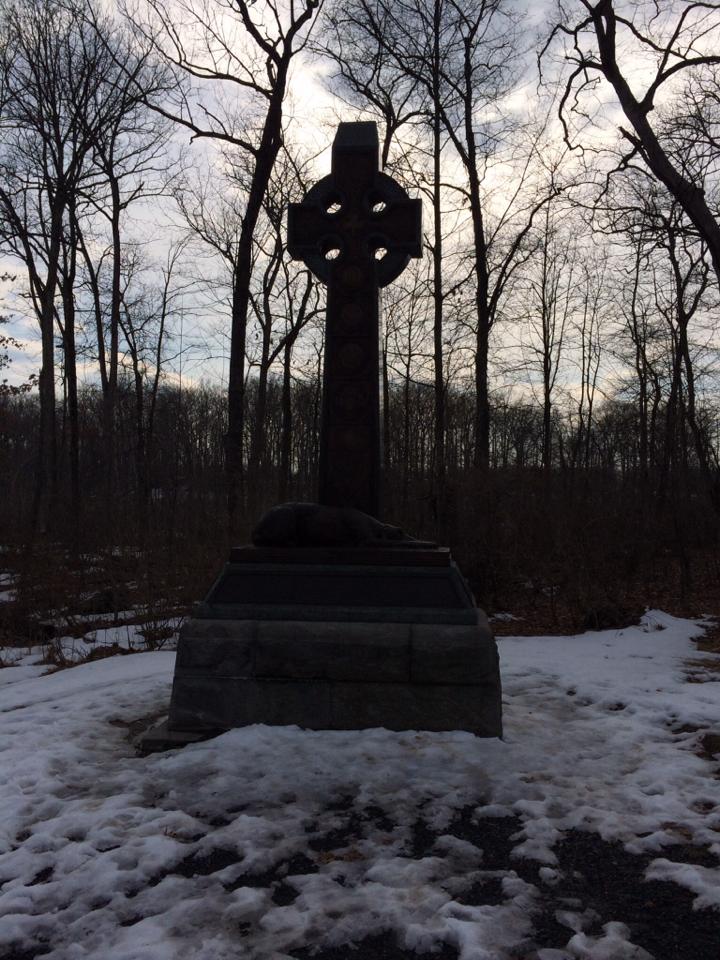
irish brigade monument

Irish Brigade Monument at Gettysburg

The song is powerful when you hear it for it speaks of the reality of war, war that changes those, even those that return home are not unchanged by it.  It speaks of the sacrifices required by those that go to war and even the effects on the community, the loss of young people.  The final verse added by an anonymous author during the American Civil War in a sense is a prayer, a prayer of return as well as reconciliation. It has been recorded a number of times including an instrumental during the film Blackhawk Down. Another rendition is in the television mini-series Rough Riders about the 1st U.S. Volunteer Cavalry at the Battle of San Juan Hill and one in the movie Gettysburg as Father Corby blesses the Irish Brigade.

My life has been changed and faith challenged. When I went to Iraq I still maintained a sense of idealism.   After Iraq and having to deal with PTSD and a psychological, spiritual and physical breakdown as well as a profound sense of abandonment by some senior chaplains, my former church and even God I am a different person. My faith which had been shattered to the point of being a practical agnostic for nearly two years has returned and even now eight years later still I struggle with belief, unbelief and faith in general, but I don’t think that is a bad thing. I believe that if we are not changed by what God allows or by what life brings I don’t think that we grow as human beings, or for that matter are of much use to anyone else. As a Priest I wonder if I could work in the environment that I work without having gone through what I did.

I see many of the “minstrel boys” and girls of our era and having also been to war and come back changed the last lines of the final verse is a prayer that I echo. One of the versions that I particularly like is the one sung in the Star Trek the Next Generation episode “The Wounded.” While it is only the first verse it deals with the lives of two officers whose lives are forever changed by war.

This is dedicated to all those who have served who have gone through the pain of war and return until war shall be no more, but until then at least one faithful harp will praise thee…

Peace

Padre Steve+
Leave a comment

Filed under faith, iraq, mental health, Military, music, Tour in Iraq

Try to Understand: The Kindest, Noblest, & Best Thing You Will Ever Do

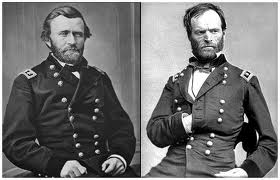
grant and sherman

Grant and Sherman

Friends of Padre Steve’s World,

The great American Civil War general William Tecumseh Sherman once said of his relationship with Ulysses S. Grant, “Grant stood by me when I was crazy, and I stood by him when he was drunk. Now we stand together.” Having been both crazy, and at times drunk, I can relate to both men, both of whom also often suffered from severe and often disabling depression at different points in their lives.

Yesterday I wrote an article about depression and I decided to follow it up with another on the same subject. Yesterday I mentioned the late Iris Chang and her comments about how depression is not rational, and C.S. Lewis who talked about how mental pain is harder to deal with than physical pain. During my worst phases of depression in the years after I came back from Iraq, I fought every day to find something to hold onto, something to keep me from ending my life. If you have never experienced real depression, the kind that slowly eats away the very fabric of your being, you might not understand. In fact it was something that I really didn’t understand until I went through years of it.

Depression is far different than being sad. It is like the difference between having a cold, which you know should pass, and having an insidious cancer which even if it goes into remission lurks for another chance to strike again.

I think that Elizabeth Wurtzel, the author of the book Prozac Nation, hit what I am describing on the head, “That’s the thing about depression: A human being can survive almost anything, as long as he sees the end in sight. But depression is so insidious, and in compounds daily, that it’s impossible to ever see the end.”

In a similar manner, J.K. Rowling, the author of the Harry Potter books noted, “Depression is the most unpleasant thing I have ever experienced. . . . It is that absence of being able to envisage that you will ever be cheerful again. The absence of hope. That very deadened feeling, which is so very different from feeling sad. Sad hurts but it’s a healthy feeling. It is a necessary thing to feel. Depression is very different.”

I have to agree with both of these writers, depression is the worst. I can live with insomnia, and night terrors, even with anxiety, but depression is the worst, it never seems like it will end. I was fortunate that I got through my most difficult times, including a period just over a year ago where I was nearly suicidal after very bad treatment in the Mental Health Department at the local naval medical center. It took the intervention of my former commanding officer, a doctor named David Lane, who had just been selected for promotion to admiral to get me the help that I needed, but not everyone has that kind of ace in the hole. I wouldn’t have thought of asking him, but his Command Master Chief, and my friend Ed Moreno, intervened, told him of how bad I was doing and that made all the difference. Ed didn’t try to fix me, he just stood beside me and when I needed help, he came through as a friend, and he is still a friend. That is what friends do.

I still struggle, sometimes with depression, but more often the nightmares and night terrors associated with my PTSD. Last night my wife woke me up when in one of my high definition nightmares I was thrashing around trying to defend myself from an enemy insurgent in Iraq. Now mind you, I was never in a close combat situation, but I took part in a number of missions where we didn’t know who the good guys or bad guys were and I was unarmed. But I can live with that, depression without end is far different.

In my worst times I had a lot of people tell me what I needed to do to get out of being depressed. Most were well meaning but didn’t have a clue as to what I really needed. I didn’t need someone to fix me. I didn’t need a checklist of things to make me well. I didn’t need to pray more, or read my Bible more. I didn’t need to work ungodly numbers of hours in ICUs where lives of people were hanging in the balance… all I needed was people who would say I love you, I care for you, and I value you for who you are, not what I want you to be, and will be there for you no matter what, or maybe, let me buy you a beer. Thankfully, there were a few people who did all of those things, and they have been there for me since I emerged from that darkness.

As for the others, who seemed more like “Job’s helpers” it is sometime embarrassing to come across them. Of course I am polite and I do not avoid them. That being said, once you have gone through this, you can see just how uncomfortable that they are to be around you. So those encounters tend to be brief and uncomfortable, as Job’s helpers quickly move along to avoid the awkwardness of the situation. The interesting thing is now I am perfectly fine with their discomfort.

I think that some of the best advice for those who live with, work with, or are friends with a person struggling with depression was written by English comedian Stephen Fry, who said, “Try to understand the blackness, lethargy, hopelessness, and loneliness they’re going through. Be there for them when they come through the other side. It’s hard to be a friend to someone who’s depressed, but it is one of the kindest, noblest, and best things you will ever do.” That is empathy in action.

I have a number of friends; classmates, and other people I have served with in the military who this very day just hope to stay alive, to find something to live for. The depression that they feel is often overwhelming. They are wonderful, talented and gifted people, people who have a strong amount of empathy for others, but they are enveloped by a darkness and fog which makes it hard for them to see any sign that the depression will ever lift. I have been there, and now I try to be there for them. For me it comes back to what Sherman said about Grant, If I don’t stand with those who suffer from depression after what I have been through, what good would I be?

Peace

Padre Steve+

2 Comments

Filed under faith, healthcare, mental health

Success, Depression & Empathy

chicken of depression

Friends of Padre Steve’s World,

I just finished reading a biography of the late Iris Chang, who wrote the book The Rape of Nanking and A History of the Chinese in America. She was a brilliant, caring, and passionate women who had a major depressive crash and ended up committing suicide. She wrote her mother about her feelings when Charles Schulz, the creator of Peanuts died, the night before the final Sunday comic came out. She wrote her mom:

Dear Mom,

I think it was Charles Schulz’s pessimism – as well as his ability to understand human failure, insecurity, heartbreak – that made millions love Peanuts.

You’re absolutely right, Schulz had no reason whatsoever to be depressed, after achieving wealth and fame at such an early age. But depression is not rational. Perhaps he did have a mental problem, or some chemically induced condition. But whatever it was, it prevented him from losing touch with the underdogs of the world.

It’s strange, but I still feel a void in my heart after Schulz’s death – even though I never knew him and didn’t particularly like him after meeting him in person, It made me wonder, what is the secret to Schulz’s magical appeal?

The answer, I believe, is simple. Schulz understands the heart of a loser. He captures those moments in life when we fell utterly unloved, unwanted, and alone. And all of us – no matter how successful- have felt like losers at some point in life.

Love, Iris

(From The Woman Who Could Not Forget: Iris Chang Before and After The Rape of Nanking, a memoir by Ying-Ying Chang, Pegasus Books, New York, 2013)

The book intrigued me and I was drawn to Iris’s story, and was so impressed with her as a person, and having suffered major depression myself, felt a certain kinship with her as I read the book, especially the chapters dealing with her success, and her collapse.

Those of you who have followed me for a while know that I have struggled a lot with major depression, anxiety, and even have occasionally been suicidal since returning from Iraq in 2008 with one hell of a case of PTSD. Thankfully over the past couple of months I have been doing pretty well. While I still suffer chronic insomnia, really weird dreams, nightmares, and night terrors, as well as anxiety in crowed places and flashbacks; but I have not been chronically depressed. I have had a few down days, but nothing like the past number of years. So all in all I think that is a good thing, I am starting to get back in better physical shape, eating better, and losing weight, so all in all I count that in the win column.

That being said, since Iraq I have developed a tremendous amount of empathy for those that suffer from depression, because it is not a rational disease. It affects millions of people in our country, and I am not referring to people who once in a while get the blues or feel a bit down, but people who live their lives in a state of clinical depression. I have known a lot of people who suffer from depression. Most are tremendously talented, witty, charming, intelligent, and caring. I have known very successful people who suffer from such depression that they cannot appreciate their own achievements and feel like failures. I have known some who have committed suicide because they saw no hope for themselves and believed that the world would be better off without them. I have friends who walk this path today, people who are battling to stay alive.

Likewise, many of my heroes, my role models, have suffered from depression, even lifelong depression. These include Joshua Lawrence Chamberlain, the hero of Little Round Top at Gettysburg, Abraham Lincoln, and T.E. Lawrence, better known as Lawrence of Arabia.

Sadly, most people, especially religious people have little long term tolerance for depressed people. If the depressed person does not get better, they abandon them, sometimes in very cruel ways.

In a Peanuts strip Charlie Brown goes to Lucy and says, “I have deep feelings of depression… What can I do about this?” Lucy does what is so common in our culture and says “Snap out of it! Five cents, please.” The fact is that if you are chronically depressed or suffer from clinical depression, you don’t simply snap out of it and I think that depression and mental pain is harder to bear than physical pain. C.S. Lewis wrote in his book The Problem of Pain:

“Mental pain is less dramatic than physical pain, but it is more common and also more hard to bear. The frequent attempt to conceal mental pain increases the burden: it is easier to say “My tooth is aching” than to say “My heart is broken.”

The reality is that depression is not rational, nor is it logical, and thus it defies the attempts of well-meaning people to help those who suffer from it. You can tell a depressed person to get involved in activities, to stay busy, work harder, to read their Bible or pray more, but most of the time this only makes things worse. The depressed person tries them and does not get better which makes the depression and feeling of failure even worse. I know this because I lived it, I did all those things. I worked harder, prayed more, and the rest of that, and I only got worse. Then I began to lose hope. It was terribly frightening and very few people understood, and even fewer stood by me. Those who did were mainly my drinking buddies and friends from the Norfolk Tides and Kinston Indians ballparks, not clergy, or chaplains. 

This makes it terribly frustrating for all concerned. The depressed person ends up feeling alone, lost, isolated, and rejected when the friends, family, and caregivers give up.

I think to me the hardest thing is that for those of us who serve in caring professions, the clergy, mental health care, medicine, and nursing; is that when we struggle there is often no-one to go to. When I was absolutely falling apart after Iraq, my new commanding officer asked me “where does a chaplain go to get help?” and I said “I don’t know, but not to other chaplains.” I know that I said that in the abyss of total despair, and that there are a couple of chaplains that I can go to and pour out my heart without fear of rejection, but they are the minority. The fact is that many caregivers, especially clergy, have no empathy for those most like them. I know this because I have known and seen so many clergy, across the denominational and theological spectrum who have been broken by the cares of life, and been abandoned by their churches and their peers.

But like, Iris Chang, I do think that some, people like Charles Schulz, the depression they live enables them not to lose touch with those who suffer, that in a sense that their suffering engenders a great empathy for others that many lack. I have been told by some that I have that kind of empathy and if I do it is not because I am such a great person, but rather because I have suffered and still suffer from the pain, and despite my own accomplishments, and achievements, that I still occasionally feel like a loser or failure. But as far as my condition goes, I am oddly comforted by the words of Raymond “Red Reddington (James Spader) in The Blacklist:

“There is nothing that can take the pain away. But eventually, you will find a way to live with it. There will be nightmares. And everyday when you wake up, it will be the first thing you think about. Until one day, it’s the second.”

I know my ongoing battle will continue, but I have determined to try to be there for others that struggle with pain that does not want to go away, and nightmares that never seem to end. As the late Henri Nouwen wrote: “Ministry means the ongoing attempt to put one’s own search for God, with all the moments of pain and joy, despair and hope, at the disposal of those who want to join this search but do not know how.”

Until tomorrow,

Peace

Padre Steve+

2 Comments

Filed under faith, History, mental health, ministry

How Many More? The Umpqua Community College Massacre

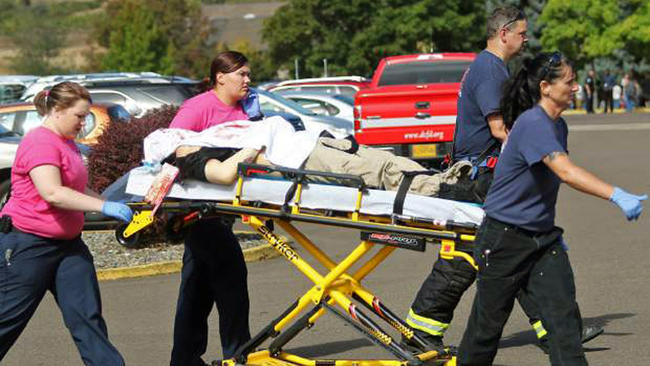
ct-oregon-college-shooting-photos-20151001

Friends of Padre Steve’s World,

Tonight just a short thought about the latest mass shooting in the United States, this one at Umpqua Community College, in Roseburg, Oregon.

I won’t say much, except that I have a hard time imagining that a society such as ours would continue to tolerate events like this on such a regular basis. Maybe I feel this way because I have been held up at gunpoint in my hometown in 1979. Maybe it is because I have been to war and been shot at by enemy forces. Maybe it is because I remember when the elementary school that I attended when I was a child, Grover Cleveland Elementary School in Stockton California became the scene of a massacre in 1989, some 17 years after I had gone there. Maybe it is because I know too many people who have be affected by gun violence.

Whatever the reason I find it troubling. For the first time in a long time I turned on the television news, and listened to President Obama speak about this. I had to agree with everything that he said; the fact is that such massacres have become routine to us, almost as routine as is the violence of the so-called Islamic State in Iraq and Syria, or the “Troubles” of Northern Ireland. The fact is that after every one of these events; Stockton, Columbine, Virginia Tech, Newtown, Tucson, Aurora, the Washington Naval Yard, San Ysidro, Fort Hood, Charleston and so many others; many of which never hit anything but local media really do not move us to do anything. We have accepted them as part of life, and despite our protestations, our “prayers” and our outward sympathy for the victims we seem unwilling to do anything about them.

Guns are certainly a part of the problem; but there is something far deeper that we should be concerned about in all of this, it is who we are as a people. These events are not new, they have been occurring for well over a century in our country; lynching, bombing, gangland shootings, some committed by individuals, some by criminal organizations. But in addition to the true murderous sociopaths, many more seriously disturbed and even mentally ill individuals, who should have no access to weapons, commit many of these shootings.

chris-harper-mercer-ucc-shooter-lead1

As yet we do not know much about the shooter, his motivations or his victims. We do know that his name is Chris Harper Mercer, a twenty-six year old student at the college. According to a dating profile said that he was a “conservative Republican” who “doesn’t like organized religion.” But most of us only care about those details to either titillate our need for information, or to back whatever our political position is regarding laws about gun ownership. The fact is that we don’t know why Mercer did this; evidently during the attack he was asking people to state their religion as he shot them. We will find out more as the investigation unfolds, but again to most of us the details won’t matter as our minds are made up, and we accept this as a way of life.

Some say we should take drastic measures to control guns; others that we should have more training and screening of potential guy buyers; others say ban certain types of weapons; still others say to eliminate all restrictions on gun ownership; while others say to increase the mental health screenings to keep mentally ill or potentially disturbed people from purchasing guns. Sadly, those who most loudly proclaim eliminating restrictions on any kind of gun ownership, even for the most lethal weapons are the same people who support politicians who constantly vote down funding for mental health care and restrictions on law enforcement in dealing with guns.

The fact is that no matter which side is argued people continue to die in gun violence everyday, and not just mass shootings like the one we saw today. I think the President is right, Americans and our legislators at local, state and federal levels need to find solutions that protect constitutional liberties for responsible gun owners with the safety of the public. Honestly, I don’t know how that happens; far too many lobbyists, special interest groups with conflicting interests, and the gun industry are involved.

But I have to say, with unfettered honesty, I really don’t think that we care, we have become used to the routine of this; we are no longer shocked, we are no longer offended, and we lack the political will, the compassion, or the courage to do anything substantive about the problem. But most of all I think that we, as a people have lost any sense of empathy for those who are killed and those who are affected by such senseless violence. In the words of the Nuremberg War Crimes Trials Psychologist, Gustave Gilbert, is the absence of empathy.

President Obama was right; we have accepted these killings as a routine part of life. We say “how terrible, someone should do something” and then turn our backs until the next time. We should politicize the issue and through our political process try to find ways to deal with this with the appropriate checks and balances; because it affects every one of us. Every year over 10,000 people in this country die of gun violence committed by others. That number does not include the 20,000- 30,000 people who use guns to kill themselves every year.

How many more people need to die for us to recover any sense of empathy? How many more people need to die?

Peace

Padre Steve+

1 Comment

Filed under crime, mental health, Political Commentary

The Uncounted Cost of War: Veteran Suicides

481801_10151367001287059_1003164983_n

Friends of Padre Steve’s World,

Marine Corps Major General Smedley Butler probably discussed the true cost of war better than anyone. Butler, a two time Medal of Honor winner wrote in his book War is a Racket:

“What is the cost of war? what is the bill? “This bill renders a horrible accounting. Newly placed gravestones. Mangled bodies. Shattered minds. Broken hearts and homes. Economic instability. Depression and all of its attendant miseries. Back -breaking taxation for generations and generations. For a great many years as a soldier I had a suspicion that war was a racket; not only until I retired to civilian life did I fully realize it….”

Mangled bodies, shattered minds. The bodies get counted, the minds do not, and when a Marine, Sailor, Soldier, Airman or former serviceman or women ends their life due to suicide their name is not included on the casualty reports.

In January 2014 the Veterans Administration released a disturbing report that male veterans under 30 years old saw a 44% increase in the rate of suicide. The rate for women veterans increased by 11%. About 22 veterans a day committed suicide in 2013. That did not count those still on active duty numbers which are still high but have dropped somewhat since 2012 and previous years.

The VA National Mental Health Director for Suicide Prevention, Jan Kemp said “Their rates are astronomically high and climbing…” Kemp postulated that reasons for the spike might include “the pressures of leaving military careers, readjusting to civilian life and combat injuries like post-traumatic stress disorder…”

I believe that the stigma that many felt about getting psychological help while they were in the military continues on when they enter civilian life. Unlike the military where there is still some sense of camaraderie and a chance that the chain of command might force a service member to get help, no corresponding structure or community exists in the civilian world. Young veterans are often isolated and face new stresses while they are already on edge. Many find that the military occupation specialties that they trained for have no direct civilian counterpart, leaving them struggling in the civilian job market. Combat injuries as well as injuries sustained in training often continue on, limiting what they can do and the unseen injuries of PTSD, Traumatic Brain Injury and Moral Injury, often undiagnosed and untreated lurk in the background.

126642_600

This is a national tragedy and crisis. Many of these young men and women are among the best and brightest. They volunteered to serve in time of war and now as the military, especially the Army and Marine Corps begin to shed large numbers of troops, many more will be thrust into a world that they may be ill equipped to survive.

They will attempt to go to work or attend school, quite often alone. There they will be surrounded by people who have no idea of the issues that they face or understanding of the military world that they left, or the places that they served. I think this social isolation will be a killer for many.

My recommendation is that people who work or go to school with these young veterans, or for that matter any veteran get to know them. Help them adjust to the world and keep an eye on them. Ask them how they are doing and just show that you care. You do not have to be a veteran to do that. Likewise get to know about the resources that are available for veterans and help direct them to them. Have the courage to care.

20131108-ArlingtonVA-MilitaryInforgraphic

Resources include the Veterans Crisis Hotline which is staffed 24 hours a day, 7 days a week. They can be reached at (800)-273-8255, press 1, or here to chat online. They also allow veterans to send a text message to 838255 to receive confidential support 24 hours a day.

Another resource is the Real Warriors Live Chat. The a trained health resource consultant is ready to talk, listen and provide guidance and resources. They can be reached by calling 866-966-1020 or going to their live chat service here http://www.realwarriors.net/livechat.

Afterdeployment.org http://afterdeployment.t2.health.mil offers wellness resources for the Military Community. Service members in transition to civilian life can contact inTransition by calling 800-424-7877 or at their website http://www.health.mil/InTransition/default.aspx

To me this is personal. I still suffer from the effects of PTSD, TBI, Moral Injury and have been to the brink of suicide. I am doing a lot better, and I love life, and I can’t imagine living it without me.

However, I have known far too many veterans who have taken their own lives, or struggle with mental health issues, physical injuries and illness, or social isolation. Last January, about the time the VA report came out a brilliant and heroic senior officer I knew, Captain Tom Sitsch who helped me when I was collapsing due to the effects of PTSD took his own life. This is something that all of us have a stake in. Please help look out for our veterans.

Peace

Padre Steve+

4 Comments

Filed under leadership, mental health, Military, PTSD, suicide

It’s Not You It’s Me: Firing Your Military Therapist

IMG_1931

Friends of Padre Steve’s World

Another week, another therapist… At least that is what it seems like to me. Those who have been following my writings for any length of time know of my struggles with PTSD and its associated maladies, as well as my struggles dealing with the military mental health system. This week is no different.

Last week I got a new “bungee-therapist” who I would have had less than three months before his rotation at the clinic is done. He is a nice young man, only 32 years old, I have been in the military longer than he he has been alive. He still in his residency; well trained, but not very experienced and it shows. Truthfully, though I don’t have as much specific education in psychology as the provider, I do have more clinical experience working with trauma and PTSD than the young man.

So on the second appointment I fired him. I think the biggest issue was what I saw as a lack of continuity in care and the mismatch in age and experience.

I was really anxious about the visit. This was based on an experience with another young provider last year. That experience caused me to crash and have some troubling thoughts about offing myself. Since I love life and am not a fan of taking the eternal celestial dirt nap; which some readers assure me will have me taking the eternal vacation on the Lake of Fire, but I digress….

6a82edf42d1de0ca5695dbc8cbf9bbcf

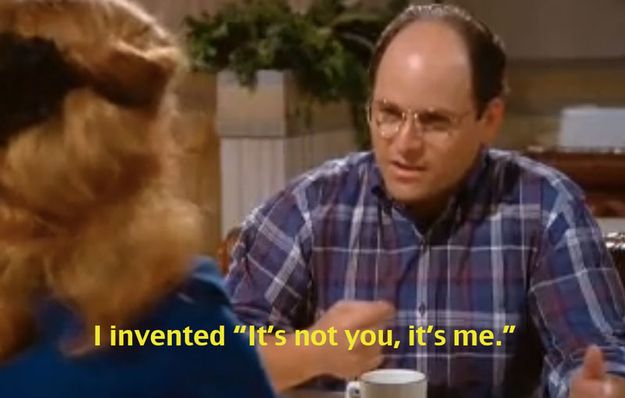
Like I said I was anxious due to the previous experience. But, the two of us handled it very well and it was an amicable parting, a clean breakup if you will. I even used the George Costanza tested “it’s not you it’s me” breakup line. But hey, Ces’t l’apres-guerre… (such is life after war)

My plan now is to get with a senior shrink that I know and have worked with to help get me someone more compatible for what I need at this point in life. I just hope that by “breaking-up” with my therapist that I won’t get shafted by the institution.

But I have learned to live with this; I realize that the military mental health system is not in the business of trying to get you better, it is in the business of trying to return young men and women to be able to go back to war. If you actually get better in the process that is kind of a twofer. Honestly I could have gone back to war with  a year of coming home. Going to war is easy, coming home intact is not.

Do not get me wrong, it is not that there are not providers willing to help; there are plenty of them. But the system , crowded with people who need more help than it can provide and without with ever shrinking budgets; almost makes it impossible to get help. If you can be patched up and sent back out, they have done their job, if you crash after you leave the service not their problem. Sadly, I have lost too many friends, some to suicide after they left the military, including men whose credentials as real American heroes were unmatched. This is not a new issue, ask any vet who has dealt with getting post-service care at the VA or anywhere.

Likewise, if you remain in service and have a chronic-long-term condition, of any kind, physical or mental the attitude seems to be “fuck you.” If you get the label as a “broke” Marine, Sailor, Soldier, or Airman your career is pretty much over, unless you are one of the lucky few like me who had some superiors who looked beyond that and protected you. I know that because it is not just my experience but the experience of hundreds of combat vets that I have dealt with.

I can live with this as long as I am on my meds, and have friends and beer, but then I am an old guy looking at retirement at the end of this tour. If I were a young guy, with my whole career ahead of me I would be fucked. So when I retire I will be a pain in the ass to the system to ensure that the young guys who will be fighting our wars in the future as well as those who are out of the military gets the care that they need.

But as far as my condition goes, I am oddly comforted by the words of Raymond “Red Reddington (James Spader) in The Blacklist:

“There is nothing that can take the pain away. But eventually, you will find a way to live with it. There will be nightmares. And everyday when you wake up, it will be the first thing you think about. Until one day, it’s the second.”

Many things haunt me; but unlike many people who have little self-awareness I might have just a bit too much. I have talked about the nightmares, night terrors and insomnia that I have many times following my return from Iraq. I used to believe, at least back in the first year or so after I returned that I thought that eventually I would get over it. I don’t believe that anymore, now I just believe that I will find a way to live with them.

I guess that is the secret to life. Instead of wishing that something would miraculously take way the pain, I guess that it is better to find a way to live with it because one day something else will replace it.

Is that an ideal way to deal with life? Probably not, but I know that I am an idealist anymore. I used to be, but that was a while back. It took time, but war and the lies of men that I voted for, men who I trusted because they professed my faith, my love of country, and some who even shared my vocation as a priest and chaplain took that from me.

Some experts call this “moral injury.” For me it is connected with my tour in Iraq, PTSD and what I experience when I came home from colleagues, and people in my former church. Betrayal and abandonment is a terrible thing, but I am learning to live with it. It is not pretty but I am learning with every passing night and morning. Alexander Dumas wrote in The Count of Monte Cristo:

“Moral wounds have this peculiarity – they may be hidden, but they never close; always painful, always ready to bleed when touched, they remain fresh and open in the heart.”

My life is full again, there is meaning and purpose, but it is tempered by realism and the expectation that every day I will wake up and still think about those painful memories until finally something else takes their place.

I guess that the secret to living with darkness and pain is simply to live with it because the saying that “time heals all wounds” is a lie, it is the fabrication of people that don’t want to deal with the real world. God might heal, but then God may not. I have learned to be okay with that. I know that there are some Christians who might disagree and even say that I do not have enough “faith,” whatever that means, but I can live with this.

So I will live with it and in doing so I will continue on and in the process hopefully be there for others that also struggle with pain that does not want to go away and nightmares that never seem to end. As the late Henri Nouwen wrote: “Ministry means the ongoing attempt to put one’s own search for God, with all the moments of pain and joy, despair and hope, at the disposal of those who want to join this search but do not know how.” Not exactly perfection, but it will work.

This now is my goal and my prayer: God grant me the courage to change the things I cannot accept; Serenity to accept the things I have changed; And the wisdom to know I’m different. Amen.

Peace

Padre Steve+

1 Comment

Filed under faith, healthcare, mental health, PTSD

The Long Strange Trip: Seven Years of PTSD, TBI & Moral Injury

lastmass2

You’re sick of hangin’ around and you’d like to travel,
Get tired of travelin’ and you want to settle down.
I guess they can’t revoke your soul for tryin’,
Get out of the door and light out and look all around.

Sometimes the light’s all shinin’ on me,
Other times I can barely see.
Lately it occurs to me what a long, strange trip it’s been.

Truckin’, I’m a goin’ home. Whoa whoa baby, back where I belong,
Back home, sit down and patch my bones, and get back truckin’ on.

From Truckin’ by the Grateful Dead

It has been seven full years since I descended into the hell of the abyss that is PTSD. Back in the late spring and early summer of 2008 just a few months after my return from what I still consider my best tour of duty in over 30 years of military service with US advisors and Iraq Army and Security forces in Al Anbar Province in 2007-2008 I was in a state of emotional and spiritual collapse.

I really couldn’t believe then what was happening to me or they way that it would end up shaping my life to the present day. In retrospect my return from Iraq marked a beginning of a personal hell that for a number of years seemed like that it would never end. It was painful, it was isolating and it marked a profound change in the way that I saw God, faith, politics and social justice. It changed me in ways that I never could have imagined when I got on a bus heading for Fort Jackson South Carolina following the July 4th holiday of 2007.

Those brave souls that have followed me on this website as well as those that are still my friends despite occasional disagreements and misunderstandings, those that may not understand me but still are my friends have seen this.

So seven years later what is it like? I kind of feel like T.E. Lawrence when he penned this thought in a letter to a friend:

“You wonder what I am doing? Well, so do I, in truth. Days seem to dawn, suns to shine, evenings to follow, and then I sleep. What I have done, what I am doing, what I am going to do, puzzle and bewilder me. Have you ever been a leaf and fallen from your tree in autumn and been really puzzled about it? That’s the feeling.” T. E. Lawrence, Letter 1935

I still have terrible trouble sleeping. It got worse last summer when I had a complete relapse and major crash.  I don’t take heavy doses of sleep meds anymore, my new doctors are working to see what will work. I now take a mild dosage of an anti-anxiety medication and an anti-depressant, I also have a new medication to help reduce the severity and violence of my nightmares. This is far better of a combination than the heavy doses of medications that made me feel like I was hung over without that benefit of sharing too many drinks with friends at the local watering hole.

As opposed to the years immediately following my time in Iraq I have to say that I am no longer self medicating with alcohol. I remember in 2009 going out for dinner, having a few beers, then going to a ball game and drinking a few more and coming home with Krispy Kreme donuts and drinking more beer on a regular basis and usually taking a couple of shots or Jaegermeister or glasses of a  nice Spanish Brandy just to get to sleep so I could go back to facing life and death situations the next day in the ICUs that I then worked in. I don’t need that anymore, even though sleep can be problematic and dreams and nightmares rivaling anything I can watch on my HD TV. I can understand the words of Union General Gouverneur Warren after the Civil War:

“I wish I did not dream so much. They make me sometimes to dread to go to sleep. Scenes from the war, are so constantly recalled, with bitter feelings I wish never to experience again. Lies, vanity, treachery, and carnage.”

I still love to pony up to the bar and share a couple of steins with friends but I don’t need it to numb myself into feeling no pain. Talking with many other vets who have served in Iraq, Afghanistan or even Vietnam I know that I wasn’t alone in those dark days.

I have become a bit less hyper-vigilant than I was just in May of 2008. However, that being said I do notice that I am more on guard on the roads and that little things, sirens, emergency vehicles. Loud noises and traffic still set me off more than when I lived in rural North Carolina while stationed at Camp LeJeune from 2010 until August of 2013.

I absolutely hate air travel. I don’t like the crowds, the stress of security or the constant delays, changes and overcrowding. Truthfully I felt more comfortable flying the skies of Iraq on Marine, Army and Air Force fixed and rotor wing aircraft and on occasion being shot at in Iraq’s Al Anbar Province than I do on any airline today in this country.

I have become exceptionally sensitive to tragedy, death and suffering. The loss of friends or major incidents where military personnel are killed in combat, training missions or just doing their job hits me hard. The worst times are when friends, or others that I know die by their own hand. When they are veterans who suffer from PTSD, TBI or Moral Injury it is like a dagger plunging into me.

Whereas in 2008 through 2010 and even until 2011 I was exceptionally sensitive to criticism to the changes that were occurring in my life including my move to the “left” both theologically and politically I have gotten to the point that I realize that it is more important to be honest and authentic as to who I am and what I believe.

I have found that those that really matter to me don’t care so much about those things and that relationships maintained with people who don’t always agree with each other where all remain their personal integrity are far more rewarding than relationships that are first and foremost decided by allegiance to political or religious orthodoxy no matter what side of the spectrum it is from. I hate group think. Thus though I have to now consider me to be on the “liberal” side of the political and theological divide I still have to be considered a moderate simply because I refuse to make people my enemy simply because I disagree with them or they with me.

When I began this site in the spring of 2009 I named it Padre Steve’s World…Musings of a Passionate Moderate. I think I did that because it actually described me then, and now, even though I am pretty passionately liberal about some things and that doesn’t bother me in any way because it comes from my wrestling with God and faith and realizing that integrity matters more than about anything else. I changed the title of the site to Musings of a Passionately Progressive Moderate last year. I did this because I am a passionately progressive moderate; a liberal committed to a Christian faith that speaks up for the oppressed. I am willing to confront those that would use faith, political or economic power to oppress the weak or those different from us.

Since I returned from Iraq in 2008 I discovered what it was to really question faith and God. To become for a couple of years a man who was for all practical purposes an agnostic praying that God still existed and cared. I discovered that in doing so that faith returned, different but more real than I had ever experienced in a life spent in the Christian faith and ministry.

My agnostic period gave me an immense empathy and appreciation for those who have lost faith, struggle with faith or reject any concept of God. I value reason as much, maybe if not more than faith now, not that reason is infallible or perfect. However, reason does allow me to evaluate my faith, and appreciate the amazing mysteries of the universe that our science and technology continue to reveal in ever more complex detail.

That brought change because my rediscovered faith brought me into conflict with people in the church denomination and faith community where I had been ordained as a priest. I was asked to leave and found a new home church and denomination that fit my life, faith experience and where I could live and minister in complete integrity. In the church that took me in during the fall of 2010 I can be faithful to the Gospel and care for the lost, the least and the lonely. This is especially the case for those who have been abused by churches and ministries, who often contact me.

I am now in the process of more medical evaluation and testing to discover the extent of the Traumatic Brian Injury and how it is interacting with the PTSD.

It has been a long strange trip and it will probably continue to go on.

Peace

Padre Steve+

1 Comment

Filed under faith, mental health, PTSD, Tour in Iraq

Coming Home: Memories of Return from Iraq

lastmass2

Almost seven years ago I returned from Iraq. It was a war that changed me forever and my return from it has been as traumatic as my experiences in Iraq.

I had a good therapy session today with my new shrink. It is a good thing, I am in the process of getting evaluated for things that should have been done years ago. However, dealing with PTSD, Moral Injury and TBI or Concussive injuries is not always an easy or straightforward task. Many of the symptoms that those affected with these injuries overlap. Unfortunately without continuity of care it takes far longer for professionals to make the connections, even very good and experienced medical and mental health professionals.

My case seems to be one of those kind of cases, and my memories seem to almost overwhelm me every year as I approach the date of my return home from Iraq. I fully understand the words of Bruce Dern in the movie Coming Home when he cries out

“What I’m saying is! I don’t belong in this house, and they say I don’t belong over there!” 

 While I no longer feel that I don’t belong in my own house, I still struggle with having to leave Iraq in 2008. I will discuss that  more in the coming days, but it will suffice for now to say that I still struggle. What has happened to that while I still struggle I manage to live with it.
What I will say tonight is that I still struggle, that I often feel alienated from fellow Chaplains and clergy as well as the “true believers” who sit in judgment over those that express their doubts and struggles. My first shrink told me that be speaking the truth that I would be “radioactive” to many of my peers. He was more right than I ever thought possible, but as most of my peers abandoned me, he did not.
I can’t go back to Iraq. Truthfully I would if I could, if nothing else to try to help those Iraqis who I knew. I feel so terrible for them, their country ravaged by a brutal dictator, and savaged by the decision of my country’s former leaders to invade it, bringing about more death, destruction and instability than a thousand Saddam Hussein’s.
The fact is that many veterans of Iraq, and to some extent Afghanistan understand this. We did our duty. We served, we saw things that we wished we could forget. When we returned to a country that the vast majority of people, including many who served in the military but did not have “boots on the ground” we found that we really didn’t fit. We didn’t fit in at home, and our country didn’t want us where we did fit. For me that was in the badlands of Al Anbar Province, where I left my heart.
For years before going to Iraq I studied the people and the country, going there I was blessed to get to know many Iraqis. I still grieve for what they are going through, and what we as a nation are in large part responsible for, the rise of ISIS or ISIL, the existence of Al Qaeda and the rise of other extremist groups. Our intentions were not bad, but they were done out of ignorance and perceived opportunity to dominate others for out own ends.
We sowed the wind and we are reaping the whirlwind.
As for me, like T.E. Lawrence I wonder. Lawrence wrote a friend not long before he died:
“You wonder what I am doing? Well, so do I, in truth. Days seem to dawn, suns to shine, evenings to follow, and then I sleep. What I have done, what I am doing, what I am going to do, puzzle and bewilder me. Have you ever been a leaf and fallen from your tree in autumn and been really puzzled about it? That’s the feeling.”
I understand that feeling.
I’ll be putting out a couple of other memories of my time in Iraq and my return over the next few days. 
Have a great night.
Peace
Padre Seve+

1 Comment

Filed under faith, History, mental health, News and current events, PTSD

Heresy, Love, and Faith: My Journey

IMG_1915

I like hard questions and hard cases. My life has been quite interesting and that includes my faith journey as a Christian and human being. It is funny that in my life I have as I have grown older begun to appreciate those that do not believe and to rather distrust those who proclaim their religious faith with absolute certitude, especially when hard questions are asked.  I was reminded of this by an Orthodox Christian internet “troll” this week.

Paul Tillich once said “Sometimes I think it is my mission to bring faith to the faithless, and doubt to the faithful.” 

I find it amusing when trolls come by to condemn my “heresy” and I realize that most have some kind of psychological need to be right, as well as a deep fear, despite their certitude, that they might be wrong, that causes them to do this.

I think that the quote by the late theologian is quite appropriate to me and the ministry that I find myself. I think it is a ministry pattern quite similar to Jesus in his dealings with the people during his earthly incarnate ministry.

Jesus was always hanging out with the outcasts, whether they be Jewish tax collectors collaborating with the Romans, lepers and other “unclean” types, Gentiles including the hated Roman occupiers, Samaritans and most dangerously, scandalous women. He seemed to reach out to these outcasts while often going out of his way to upset the religious establishment and the “true believers” of his day.

There is even one instance where a Centurion whose servant he healed was most likely involved in a homosexual relationship, based on the writer of the Gospel of Matthew’s use of the Greek word “Pais” which connotes a homosexual servant, instead of the more common “Doulos.” That account is the only time in the New Testament where that distinction is made, and Pais is used throughout Greek literature of the time to denote a homosexual slave or “house boy” relationship. Jesus was so successful at offending the profoundly orthodox of his day that his enemies made sure that they had him killed.

I think that what has brought me to this point is a combination of things but most importantly what happened to me in and after my tour in Iraq. Before I went to Iraq I was certain of about everything that I believed and was quite good at what we theologians and pastors call “apologetics.” My old Chaplain Assistant in the Army, who now recently serves as a Lieutenant Colonel in the Army Chaplain Corps called me a “Catholic Rush Limbaugh” back in 1997, and he meant it quite affectionately.

I was so good at it that I was silenced by a former Archbishop in my former church and banned from publishing for about 7 years after writing two articles for a very conservative Roman Catholic journal, the New Oxford Review.

The funny thing is that he, and a number of my closest friends from that denomination are either Roman Catholic priests or priests in the Anglican Ordinariate which came into communion with Rome a couple of years back. Ironically while being “too Catholic” was the reason I was forbidden to write it was because I questioned certain traditions and beliefs of the Church including that I believed that there was a role for women in the ordained ministry, that gays and lesbians could be “saved” and that not all Moslems were bad that got me thrown out in 2010.

However when I returned from Iraq in the midst of a full blown emotional, spiritual and physical collapse from PTSD that certitude disappeared. It took a while before I was able to rediscover faith and life and when I did it wasn’t the same. There was much more mystery to faith as well as reason. I came out of that period with much more empathy for those that either struggle with or reject faith. Thus I tend to hang out at bars and ball games more than church activities or socials, which I find absolutely tedious. I also have little use for clergy than in dysfunctional and broken systems that are rapidly being left behind. I am not speaking about belief here, but rather structure and methodology.

I think that if there is anything that God will judge the American versions of the Christian church is our absolute need for temporal power in the political, economic and social realms and the propagation of religious empires that only enrich the clergy which doing nothing for the least, the lost and the lonely. The fact that the fastest growing religious identification in the United States is is “none” or “no preference” is proof of that and that the vast amounts of money needed to sustain these narcissistic religious empires, the mega-churches and “Christian” television industry will be their undoing.  That along with their lack of care for anyone but themselves. Jesus said that his disciples would be known by their love for one another, not the size of their religious empire or temporal power.

The interesting thing is that today I have friends and colleagues that span the theological spectrum. Many of these men even if they do not agree with what I believe trust me to love and care for them, even when those most like them in terms of belief or doctrine, both religious and political treat them like crap. Likewise I attract a lot of people who at one time were either in ministry or preparing for it who were wounded in the process and gave up, even to the point of doubting God’s love and even existence. It is kind of a nice feeling to be there for people because they do not have to agree with me for me to be there for them.

In my darkest times my only spiritual readings were Father Andrew Greeley’s Bishop Blackie Ryan mysteries which I began reading in Iraq to help me get through the nights in between missions in Iraq and through the nights when I returned from them.  In one of those books, the last of the series entitled “The Archbishop goes to Andalusia” the miscreant Auxiliary Bishop to the Cardinal Archbishop of Chicago goes to Seville Spain.  In the novel Bishop Blackie makes a comment after celebrating Mass in the cathedral at Seville. He said “Every sacramental encounter is an evangelical occasion. A smile warm and happy is sufficient. If people return to the pews with a smile, it’s been a good day for them. If the priest smiles after the exchanges of grace, it may be the only good experience of the week.”  (The Archbishop in Andalusia p.77)

That is something that I try to do now on a regular basis. Sure most of my sacramental encounters as a hospital chaplain do not occur during the liturgy, but often in the life and death moments and times of deep discouragement felt by the wounded, ill and injured. In that ministry I have found that there are many hurting people, people who like me question their faith and even long held beliefs.

I like the old song by Nazareth called Love Hurts. The song always gets me. It is one of those “real” songs from the 1960s and 1970s that nails how life can be sometimes.

Love hurts, love scars
Love wounds and mars
In any heart not tough
Nor strong enough
To take a lot of pain
And love is like a cloud
Holds a lot of rain
Love hurts

I’m young and I know
But even so, I know a thing or two
I have learned from you
I’ve really learned a lot
And love is like a stove
Burns you when it’s hot
Love hurts

Some fools rave of happiness
Of blissfulness, togetherness
Some fools fool themselves, I guess
But they’re not fooling me
I know it isn’t true
Love is just a lie
Made to make you blue
Love hurts

Love does hurt, and well deciding to love can bring a lot of pain, but I do think that it is worth it. Well, that is all for tonight. Until tomorrow.

Blessings and Peace

Padre Steve+

Love Hurts lyrics © Kobalt Music Publishing Ltd., Warner/Chappell Music, Inc., EMI Music Publishing, Sony/ATV Music Publishing LLC, HOUSE OF BRYANT PUBLICATIONS


2 Comments

Filed under christian life, faith, LGBT issues, mental health, Military, ministry, Religion

I wish I did not dream that much: PTSD and Memories of Terrorism

947188_10151670056587059_1172426886_n

Those who are new to what I write on this site may not know a lot about me, nor my struggles with PTSD, Moral Injury, depression and anxiety.

The past week I have been writing about my support of LBGT rights and planned on dealing with some other social issues leading up to the Martin Luther King Jr. holiday next week.

But that was before the attack on Charlie Hebdo. That attack triggered some very unpleasant memories from Iraq and before, and since that attack I have had very little sleep. I actually dread the night.

As a historian and chronicler of the Battle of Gettysburg ands the men who fought there I find many connections with those men and what they wrote. One of them, Major General Gouverneur Warren wrote his wife after the war was over:

“I wish I did not dream that much. They make me sometimes dread to go to sleep. Scenes from the war, are so constantly recalled, with bitter feelings I wish to never experience again. Lies, vanity, treachery, and carnage.”

I feel that kind of angst, and those terrible feelings about the Iraq War, so well said by Warren, come back to the fore in January and February. For me these two months are normally the most difficult of the year as they mark my transition and return back to the United States from Iraq and since my new therapist is walking me through them again and I am in a sense reliving that trauma. It is like having the scar over a deep and unhealed wound ripped away.

January is also the anniversary of the suicide of Captain Tom Sitsch, my last Commodore at EOD Group Two. He was one of the first people to ask me where I as a chaplain would go to to get help for PTSD. Sadly, this man, a true hero died by his own hand just over a year ago suffering from so many after effects of PTSD and Traumatic Brain Injury.

Ever since returning from Iraq in February 2008 I have had a terrible time coping during those months. The reality of PTSD, Moral Injury and possibly Traumatic Brain Injury, which I will be evaluated for in the coming weeks, make sleep nearly impossible. Nightmares, terrors and anxiety are the norm for me and I can completely understand what Guy Sager, who wrote the book The Forgotten Soldier wrote:

“Only happy people have nightmares, from overeating. For those who live a nightmare reality, sleep is a black hole, lost in time, like death.

So when there is a trigger event like the Charlie Hebdo attack, things get that much worse.

This year was really no different than any since 2008, even before the attack on Charlie Hebdo, I was already struggling but all the thoughts, feelings and memories from Iraq have flooded and often overloaded my senses since the Charlie Hebdo attack. What I felt in Iraq came back full force last week as I read about the massacre of the cartoonists and writers of Charlie Hebdo. I have not had a good night sleep since that attack. I talked with this in depth with my therapist today and that discussion brought back other memories.

When I read about the slaughter of the Charlie Hebdo staff in their offices brought back strong memories of an encounter in a remote border post in Iraq in 2007 where I was the only unarmed person in a meeting where everyone had their finger on the trigger of their weapon and even the Iraqi commander did not know who was loyal. We all knew that things could go bad very quickly and the memories of that event are deeply etched in my memory. I have written about it before, but I might need to again. 

Thinking of the men and women murdered in Paris my thoughts went to that room at Al Waleed in late August or early September 2007. What happened to them, to be gunned down in a place where there was no help and no escape reminded me of what well could have happened at Al Waleed in 2007.

20130415-232418


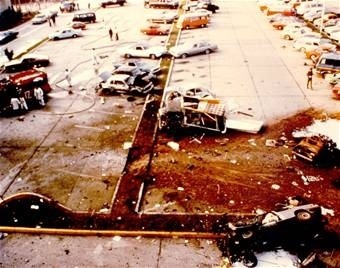
Aftermath of the Frankfurt PX Bombing and Frankfurt Airport Bombing in 1985

mqdefault

The memories buried in my subconscious have connected with other memories, about narrowly avoiding terrorist attacks by the Red Brigades and Baader Meinhof Gang in Germany at the Frankfurt PX and Airport in 1985. I fear going through the gates of military installations and breathe a sigh of relief when I get through without a bomb, improvised explosive device or other terrorist attack. I feel terribly vulnerable and I am very scared about going to places that are soft targets, especially the Main Navy Exchange at Norfolk which is off base. In such places my head is constantly “on a swivel” as we say in the military. A am hyper-vigelent and pretty likely to stay that way so long as I do not feel safe. 

So anyway, I need to stop for the night. I found out that former Negro League player, and member of the Negro League Hall of Fame, Carl Long who I knew well from my time in North Carolina passed away today. He was an amazing man and I will write about him tomorrow.

Likewise, I will  write more about my struggle soon because I know there are other veterans who like me, dread the night.

Peace

Padre Steve+

1 Comment

Filed under mental health, Military, PTSD, Tour in Iraq