Category Archives: Tour in Iraq

“Is that Truly the Path of the Lord” A Reflection on Faith, Calling, and the Christmas Truce in the Age of Trump

palmerFriends of Padre Steve’s World

As a veteran who served in the badlands of Al Anbar Province during Christmas of 2007 I can relate to Father Palmer, the British priest and chaplain in the film Joyeux Noel (Merry Christmas) when he makes the comment “I belong with those who are in pain, and who have lost their faith, I belong here.”

I again watched that film tonight. The film is the story of the amazing and exceptional Christmas Truce of 1914. It is a film that each time I see it that I discover something new, more powerful than the last time I viewed it. It reminds me of serving in Iraq, at Christmas from my perspective as a Chaplain, and thereby giving voice to those who serve now, as well as those who served God’s people in hellish places before me. It reminds me of how much I hate war, and how much I often hate the clergy who are all too often, bloodthirsty cheerleaders for war.

As a Chaplain I am drawn to the actions of the British Padre in the film, who during the truce conducts a Mass for all the soldiers, British, French and German in no-man’s land, who goes about caring for the soldiers both the living and the dead. His actions are contrasted with his Bishop who comes to relieve him of his duties and to urge on the replacement soldiers to better kill the Germans.

As the Chaplain begins to provide the last Rites to a dying soldier the Bishop walks in, in full purple cassock frock coat and hat and the chaplain looks up and kisses his ring.

As the chaplain looks at his clerical superior there is a silence and the Bishop looks sternly at the priest and addresses him:

“You’re being sent back to your parish in Scotland. I’ve brought you your marching orders.”

Stunned the Priest replies: “I belong with those who are in pain, and who have lost their faith, I belong here.”

The Bishop then sternly lectures the Priest: “I am very disappointed you know. When you requested permission to accompany the recruits from your parish I personally vouched for you. But then when I heard what happened I prayed for you.”

The Priest humbly and respectfully yet with conviction responds to his superior: “I sincerely believe that our Lord Jesus Christ guided me in what was the most important Mass of my life. I tried to be true to his trust and carry his message to all, whoever they may be.”

The Bishop seems a bit taken aback but then blames the Chaplain for what will next happen to the Soldiers that he has served with in the trenches: “Those men who listened to you on Christmas Eve will very soon bitterly regret it; because in a few days time their regiment is to be disbanded by the order of His Majesty the King. Where will those poor boys end up on the front line now? And what will their families think?”

They are interrupted when a soldier walks in to let the Bishop know that the new soldiers are ready for his sermon. After acknowledging the messenger the Bishop continues: “They’re waiting for me to preach a sermon to those who are replacing those who went astray with you.” He gets ready to depart and continues: “May our Lord Jesus Christ guide your steps back to the straight and narrow path.”

The Priest looks at him and asks: “Is that truly the path of our Lord?”

The Bishop looks at the Priest and asks what I think is the most troubling question: “You’re not asking the right question. Think on this: are you really suitable to remain with us in the house of Our Lord?”

With that the Bishop leaves and goes on to preach. The words of the sermon are from a 1915 sermon preached by an Anglican Bishop in Westminster Abbey. They reflect the poisonous aspects of many religious leaders on all sides of the Great War, but also many religious leaders of various faiths even today, sadly I have to say Christian leaders are among the worst when it comes to inciting violence against those that they perceive as enemies of the Church, their nation or in some cases their political faction within this country.

I was reminded of that last night and today as the President received the worship of his most vocally Christian cabinet members and the Vice President as they celebrated the passage of a tax cut bill that end up harming many more people than it will help, even as he edges closer to a devastating war with North Korea, a war that besides being more deadly than in since the World Wars will bring many unexpected and unintended consequences, none good, but I digress…

The Bishop who relieved Father Palmer went on to preach a sermon to newly arrived troops.

“Christ our Lord said, “Think not that I come to bring peace on earth. I come not to bring peace, but a sword.” The Gospel according to St. Matthew. Well, my brethren, the sword of the Lord is in your hands. You are the very defenders of civilization itself. The forces of good against the forces of evil. For this war is indeed a crusade! A holy war to save the freedom of the world. In truth I tell you: the Germans do not act like us, neither do they think like us, for they are not, like us, children of God. Are those who shell cities populated only by civilians the children of God? Are those who advanced armed hiding behind women and children the children of God? With God’s help, you must kill the Germans, good or bad, young or old. Kill every one of them so that it won’t have to be done again.”

The sermon is chilling and had it not been edited by the director would have contained the remark actually said by the real Bishop that the Germans “crucified babies on Christmas.” Of course that was typical of the propaganda of the time and similar to things that religious leaders of all faiths use to demonize their opponents and stir up violence in the name of their God.

When the Bishop leaves the Priest finishes his ministration to the wounded while listening to the words of the Bishop who is preaching not far away in the trenches. He meditates upon his simple cross, takes it off, kisses it hand hangs it upon a tripod where a container of water hangs.

The scene is chilling for a number of reasons. First is the obvious, the actions of a religious leader to denigrate the efforts of some to bring the Gospel of Peace into the abyss of Hell of earth and then to incite others to violence dehumanizing the enemy forces. The second and possibly even more troubling is to suggest that those who do not support dehumanizing and exterminating the enemy are not suitable to remain in the house of the Lord. Since I have had people, some in person and others on social media say similar things to what the Bishop asks Palmer the scene hits close to home.

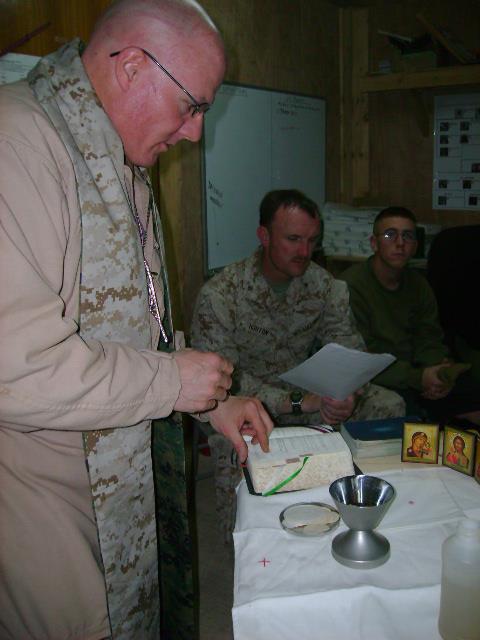
When I left Iraq in February 2008 I felt that I was abandoning those committed to my spiritual care, but my time was up. Because of it I missed going with some of my advisors to Basra with the 1st Iraqi Division to retake that city from insurgents. It was only a bit over a month after I had celebrated what I consider to be my most important Masses of my life at COP South and COP North on December 23rd as well as Christmas Eve and Christmas Day. In fact until very recently they were really the last masses that I felt the mystery and awe of the love of God that I used to so much feel.

When I left Iraq the new incoming senior Chaplain refused to take my replacement leaving our advisers without dedicated support. He then slandered me behind my back because what I was doing was not how he would do things and because I and my relief were under someone else’s operational control. It is funny how word gets back to you when people talk behind your back. Thankfully he is now retired from the Navy and I feel for any ministers of his denomination under his “spiritual” care. So I cannot forget those days and every time I think about them, especially around Christmas I am somewhat melancholy and why I can relate so much to Father Palmer in the movie. While I cannot prove it I do believe, and have heard from others who used to work at the Chief of Chaplains office that I have been shunned and punished by past and present leaders of the Chaplain Corps because of my witness in being open about my struggles with faith and PTSD. A can recount a number of incidents that would be of circumstantial evidence, but I digress. That being said I am much better off for that experience than I would be had it not occurred.

It has been ten years since those Christmas Masses and they still feel like yesterday. In the intervening years my life has been different. Just a year later I was walking home from church where my wife was to sing in the choir during the Christmas vigil mass. I couldn’t handle the crowds, the noise, and I felt so far away from God. That night I walked home in the dark looking up into the sky asking God if he still was there. If there had been a bar on the way home I would have stopped by and poured myself in.

Since Iraq I have dealt with severe and chronic PTSD, depression, anxiety and insomnia were coupled with a two year period where due to my struggles I lost faith, was for all practical purposes an agnostic. I felt abandoned by God, but even more so and maybe more importantly by my former church and most other Chaplains. It was like being radioactive, there was and is a stigma for Chaplains that admits to PTSD and go through a faith crisis, especially from other Chaplains and Clergy. It was just before Christmas in late 2009 that faith began to return in what I call my Christmas Miracle. But be sure, let no one tell you differently, no Soldier, Sailor, Marine or Airman who has suffered the trauma of war and admitted to PTSD does not feel the stigma that goes with it, and sadly, despite the best efforts of many there is a stigma.

Now that faith is different and I have become much more skeptical of the motivations of religious leaders, especially those that demonize and dehumanize those that do not believe like them or fully support their cause or agenda. Unfortunately there are far too many men and women who will use religion to do that, far too many. Unlike a few years ago they now occupy the seat of political power as sycophants of the President, offering no prophetic voice but speaking the words of death covered in the veneer of the Christian faith.

As for me as opposed to . I had the floor kicked from out from under me in the summer of 2014 and it has been a hard fight and while I am beginning to get back to some sense of normal it is a day to day thing. I still suffer the effects of the PTSD, especially the insomnia, nightmares and the nightmares which came back with a vengeance that summer. I also still have the anxiety in crowded places and bad traffic, but working with my new therapist I am coming up with some effective coping mechanisms. As for faith, I do believe again, more often than not, though at the same time I doubt. Though I believe I think I still consider myself to be a Christian Agnostic who echoes the cry of the man who cried out to Jesus, “Lord I believe, help my unbelief!” I believe and yet, I don’t and I don’t think that is a bad thing, I think it helps me understand those who no longer believe, those that struggle, and those who raised as Christians have left the faith.

Like the Priest in Joyeux Noel I know that my place is with those who are “in pain, and who have lost their faith.” For me this may no longer be on the battlefield as I will retire from the Navy in a few years, unless as I expect a major war breaks out with North Korea, and maybe Iran too.

However, that being said I will strive to be there for those that struggle with faith and believe, especially those who struggle because of what they saw and experienced during war and when they returned home. This Sunday, Christmas Eve I will preach at my chapel’s Protestant service. Likewise as I wrote last week I had the honor of conducting the Christmas service for the German contingent of the NATO headquarters here.
533506_10151366982457059_868388211_nI expect that in the coming year I will do my best to speak truth to those in power and those whose faithfulness is more a product of their comfort with the God that they create in their own mind rather than the Crucified God wise death on the Cross s a scandal. For many Christians the scandal of the cross is too easy to avoid by surrounding ourselves with pet theologies that appeal to our pride, prejudice and power. The kind of malevolent power represented by the bishop in Joyeux Noel as well as the leaders of the so called “Conservative Evangelicals” who support a President who says “Merry Christmas” even as he defecates on all who believe in the God who became incarnate as a helpless babe in a manger and who died on a cross.  In fact I saw a mocking meme of Trump saying “Merry Christmas” as he holds a bigger than life Bible to his chest from a very conservative evangelical friend on Facebook, it was blasphemous.

The French mystic Simone Weil said “He who has not God in himself cannot feel His absence.” I think that sums up the President and his ardent Evangelical supporters. I don’t think they would recognize Christ if he walked among them and would have been among those shouting “Crucify him!” but of course I could be wrong in some individual cases.

So, this Christmas, like the theologian Paul Tillich I have come to believe  that “Sometimes I think it is my mission to bring faith to the faithless, and doubt to the faithful.”  In other words I am going to be faithful to the Crucified Christ and remain a complete pain in the ass to them until the day that I die.

Praying for Peace this Christmas,

Padre Steve+

Leave a comment

Filed under christian life, faith, History, iraq,afghanistan, Military, News and current events, Pastoral Care, Political Commentary, Tour in Iraq, world war one

There Are Still Nightmares: Reliving the Inner Terror of War 


Friends of Padre Steve’s World

It was a good but exhausting weekend and yesterday at work was very busy and challenging. So this I am posting just a note today.

Saturday night, or rather early Sunday morning I had another of my high definition Iraq nightmares. Very realistic and terrifying. Once again I found myself being attacked while in a HUMMV and being thrown out of the vehicle with enemy gunmen closing in. During the nightmare I threw myself out of bed and looked up to see a gunman dressed in black with an AK pointed at me, so I tried to tackle him and when I awoke in a very groggy state I found that I was wrestling my television to the ground. All of this in my sleep. It took about thirty minutes to calm down. Minnie, Izzy and Pierre all came in to check on me and the left. Izzy gave me a short snuggle and I finally got back to sleep in enough time to get back up, go to breakfast and finish my sermon preparation. 

I find it amazing that ten years after I departed for Iraq that I still relive my greatest fears from when I was over there, traveling with small groups of American advisors and Iraqi troops throughout the badlands of Al Anbar. I was always afraid that our tiny convoys, usually just two or three HUMMVs and maybe an Iraqi vehicle or two would get ambushed by an IED and attacked. Being so small and mostly away from big concentrations of American troops with significant firepower we were very vulnerable. We got shot at from a distance a few times, mostly in Ramadi, and couldn’t return fire because we couldn’t see who was shooting at us. 

While we were there I seldom slept, even when we were back at our home base at Ta Qaddum to plan our next mission. That base was relatively secure but it had taken rocket and mortar fire before we got there. Thankfully that had ended but it was always in the back of our minds when we heard gunfire coming from the nearby town of Habbinyah. I remember doing a run around the airfield one day when I heard gunfire coming from the town with me in plain view of it. I ran faster than I think I ever have before to get out of the line of sight. T. E. Lawrence wrote of his time with the Arabs in the First World War “We lived always in the stretch or sag of nerves, either on the crest or in the trough of waves of feeling.” Those words well describe my time in Iraq. 

My nightmares include fragments of what happened as well as my fears that thankfully never materialized. Over the past three years I have ended up in the emergency room twice, once with a broken nose from these episodes. I suppose if I had been sleeping in my own bed, which I am not because my snoring has gotten so loud that Judy, who is profoundly deaf could not sleep even wearing ear plugs that took another 30 decibels off her hearing, that I would have gone to the ER again. In the guest room I didn’t run into my nightstand with my face. Even so it is not fun. 

In the past I have quoted James Spader’s character Raymond Reddington from the television series The Blacklist. Reddington told an FBI agent who had seen his fiancée murdered: “There is nothing that can take the pain away. But eventually, you will find a way to live with it. There will be nightmares. And every day when you wake up, it will be the first thing that you think about. Until one day, it’s the second.” 

That being said I am not depressed or in a funk and life is relative good. I am rather fortunate, despite the often terrifying reality of living with my PTSD and these bloody nightmares, things could be a lot worse. I do have nightmares but at least at the moment they are not dominating my waking hours.

Tonight I plan on watch the Major League Baseball All Star Game. I’ll write about that for tomorrow before moving on to other things. 

Peace

Padre Steve+ 

5 Comments

Filed under iraq, PTSD, Tour in Iraq

God In the Empty Places: Remembering Iraq

bedouin

Friends of Padre Steve’s World,

In the midst of all I have been writing lately, when I recalled yesterday that I had been writing on this site for eight years, it brought back a lot of memories. Those memories kept me up a lot of last night, and I realized that many of my newer readers don’t know about some of the events that brought me to where I am today. In December of 2007 while I was in Iraq I wrote an e-mail to my former denomination that was published in the denomination newsletter.

When I wrote it I was between missions and getting ready to head out to the Syrian border of Iraq for an extended visit with five of our Military Training Teams of advisors who were working with Iraqi Army and Border troops.

This is the unedited post from that article that I posted here in early March 2009. It is amazing to me, on this day that is also the 50th anniversary of the death of Bernard Fall who I quote in the original article, that so little has changed, except possibly for the worse.

Have a great night, tomorrow my series on civil rights and African American history continues.

Peace,

Padre Steve+

I have been doing a lot of reflecting on ministry and history over the past few months. While both have been part of my life for many years, they have taken on a new dimension after serving in Iraq. I can’t really explain it; I guess I am trying to integrate my theological and academic disciplines with my military, life and faith experience since my return.

The Chaplain ministry is unlike civilian ministry in many ways. As Chaplains we never lose the calling of being priests, and as priests in uniform, we are also professional officers and go where our nations send us to serve our Soldiers, Sailors, Marines and Airmen. There is always a tension, especially when the wars that we are sent to are unpopular at home and seem to drag on without the benefit of a nice clear victory such as VE or VJ Day in World War II or the homecoming after Desert Shield and Desert Storm.

It is my belief that when things go well and we have easy victories that it is easy for us to give the credit to the Lord and equally easy for others to give the credit to superior strategy, weaponry or tactics to the point of denying the possibility that God might have been involved. Such is the case in almost every war and Americans since World War Two have loved the technology of war seeing it as a way to easy and “bloodless” victory. In such an environment ministry can take on an almost “cheer-leading” dimension. It is hard to get around it, because it is a heady experience to be on a winning Army in a popular cause. The challenge here is to keep our ministry of reconciliation in focus, by caring for the least, the lost and the lonely, and in our case, to never forget the victims of war, especially the innocent among the vanquished, as well as our own wounded, killed and their families.

But there are other wars, many like the current conflict less popular and not easily finished.The task of chaplains in the current war, and similar wars fought by other nations is different.In these wars, sometimes called counter-insurgency operations, guerilla wars or peace keeping operations, there is no easily discernable victory. These types of wars can drag on and on, sometimes with no end in sight. Since they are fought by volunteers and professionals, much of the population acts as if there is no war since it does often not affect them, while others oppose the war.

Likewise, there are supporters of war who seem more interested in political points of victory for their particular political party than for the welfare of those that are sent to fight the wars. This has been the case in about every war fought by the US since World War II. It is not a new phenomenon. Only the cast members have changed.

dien-bien-phu6

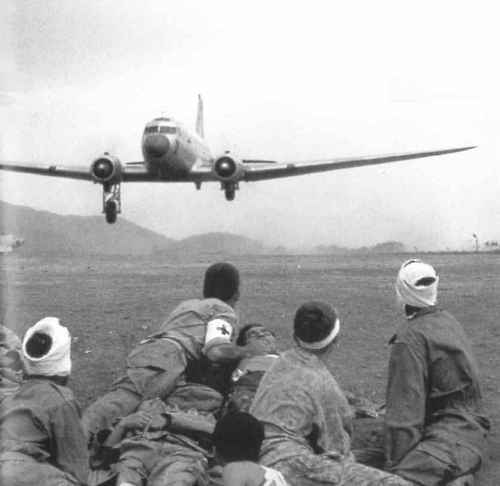
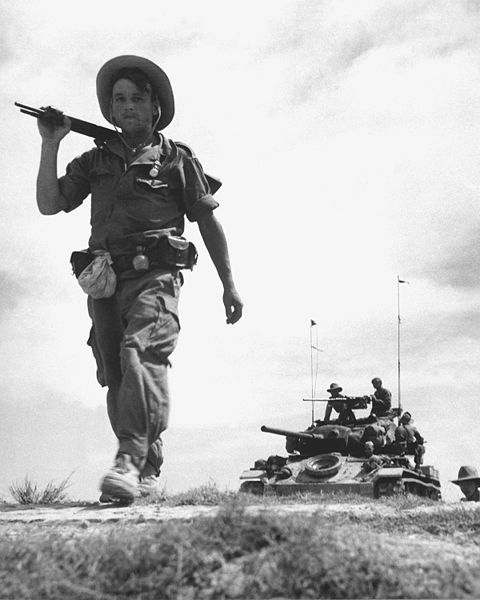
This is not only the case with the United States. I think that we can find parallels in other militaries. I think particularly of the French professional soldiers, the paratroops and Foreign Legion who bore the brunt of the fighting in Indo-China, placed in a difficult situation by their government and alienated from their own people. In particular I think of the Chaplains, all Catholic priests save one Protestant, at the Battle of Dien Bien Phu, the epic defeat of the French forces that sealed the end of their rule in Vietnam. The Chaplains there went in with the Legion and Paras. They endured all that their soldiers went through while ministering the Sacraments and helping to alleviate the suffering of the wounded and dying. Their service is mentioned in nearly every account of the battle. During the campaign which lasted 6 months from November 1953 to May 1954 these men observed most of the major feasts from Advent through the first few weeks of Easter with their soldiers in what one author called “Hell in a Very Small Place.”

Another author describes Easter 1954: “In all Christendom, in Hanoi Cathedral as in the churches of Europe the first hallelujahs were being sung. At Dienbeinphu, where the men went to confession and communion in little groups, Chaplain Trinquant, who was celebrating Mass in a shelter near the hospital, uttered that cry of liturgical joy with a heart steeped in sadness; it was not victory that was approaching but death.” A battalion commander went to another priest and told him “we are heading toward disaster.” (The Battle of Dienbeinphu, Jules Roy, Carroll and Graf Publishers, New York, 1984 p.239)

Of course one can find examples in American military history such as Bataan, Corregidor, and certain battles of the Korean War to understand that our ministry can bear fruit even in tragic defeat. At Khe Sahn in our Vietnam War we almost experienced a defeat on the order of Dien Bien Phu. It was the tenacity of the Marines and tremendous air-support that kept our forces from being overrun.

You probably wonder where I am going with this. I wonder a little bit too. But here is where I think I am going. It is the most difficult of times; especially when units we are with take casualties and our troops’ sacrifice is not fully appreciated by a nation absorbed with its own issues.

french troops indochina

For the French the events and sacrifices of their soldiers during Easter 1954 was page five news in a nation that was more focused on the coming summer. This is very similar to our circumstances today because it often seems that own people are more concerned about economic considerations and the latest in entertainment news than what is going on in Iraq or Afghanistan. The French soldiers in Indo-china were professionals and volunteers, much like our own troops today. Their institutional culture and experience of war was not truly appreciated by their own people, or by their government which sent them into a war against an opponent that would sacrifice anything and take as many years as needed to secure their aim, while their own countrymen were unwilling to make the sacrifice and in fact had already given up their cause as lost. Their sacrifice would be lost on their own people and their experience ignored by the United States when we sent major combat formations to Vietnam in the 1960s. In a way the French professional soldiers of that era have as well as British colonial troops before them have more in common with our force than the citizen soldier heroes of the “Greatest Generation.” Most of them were citizen soldiers who did their service in an epic war and then went home to build a better country as civilians. We are now a professional military and that makes our service a bit different than those who went before us.

Yet it is in this very world that we minister, a world of volunteers who serve with the highest ideals. We go where we are sent, even when it is unpopular. It is here that we make our mark; it is here that we serve our Soldiers, Sailors, Marines and Airmen. Our duty is to bring God’s grace, mercy and reconciliation to men and women, and their families who may not see it anywhere else. Likewise we are always to be a prophetic voice within the ranks.

When my dad was serving in Vietnam in 1972 I had a Sunday school teacher tell me that he was a “Baby Killer.” It was a Catholic Priest and Navy Chaplain who showed me and my family the love of God when others didn’t. In the current election year anticipate that people from all parts of the political spectrum will offer criticism or support to our troops. Our duty is to be there as priests, not be discouraged in caring for our men and women and their families because most churches, even those supportive of our people really don’t understand the nature of our service or the culture that we represent. We live in a culture where the military professional is in a distinct minority group upholding values of honor, courage, sacrifice and duty which are foreign to most Americans. We are called to that ministry in victory and if it happens someday, defeat. In such circumstances we must always remain faithful.

For those interested in the French campaign in Indo-China it has much to teach us. Good books on the subject include The Last Valley by Martin Windrow, Hell in a Very Small Place by Bernard Fall; The Battle of Dien Bein Phu by Jules Roy; and The Battle of Dien Bien Phu- The Battle America Forgot by Howard Simpson. For a history of the whole campaign, readStreet Without Joy by Bernard Fall. I always find Fall’s work poignant, he served as a member of the French Resistance in the Second World War and soldier later and then became a journalist covering the Nurnberg Trials and both the French and American wars in Vietnam and was killed by what was then known as a “booby-trap” while covering a platoon of U.S. Marines.

There is a picture that has become quite meaningful to me called the Madonna of Stalingrad. It was drawn by a German chaplain-physician named Kurt Reuber at Stalingrad at Christmas 1942 during that siege. He drew it for the wounded in his field aid station, for most of whom it would be their last Christmas. The priest would die in Soviet captivity and the picture was given to one of the last officers to be evacuated from the doomed garrison. It was drawn on the back of a Soviet map and now hangs in the Kaiser Wilhelm Memorial Church in Berlin where it is displayed with the Cross of Nails from Coventry Cathedral as a symbol of reconciliation. I have had it with me since before I went to Iraq. The words around it say: “Christmas in the Cauldron 1942, Fortress Stalingrad, Light, Life, Love.” I am always touched by it, and it is symbolic of God’s care even in the midst of the worst of war’s suffering and tragedy.

1 Comment

Filed under faith, History, iraq,afghanistan, Military, ministry, Political Commentary, Tour in Iraq

Finding my Way Home: Nine Years After Iraq


Friends of Padre Steve’s World,

I was thinking last night  as I watched an episode of the television show The Blacklist, where the lead character, Raymond Reddington, played by James Spader made a comment about Homer’s classic Greek myth The Oddesy where he said, “Odysseus spent a decade at war. But his biggest battle was finding his way home.” I can understand that. Nine years ago I was on my first long distance mission out to the Syrian border in Iraq’s Al Anbar Province. It was the first of many missions in the badlands of that war ravaged province, and seven months later I returned home, but I didn’t. Too much of me was still in Iraq, and in some ways still is, but that being said I think I can finally say that I am home. 

Now let me say, there is still a lot of Iraq in me and if I got the chance to go back I would probably jump at it. I still have issues from my tour in Iraq, the dreams, nightmares, and night terrors have caused more physical injuries than my actual time in country. Frankly, I expect that will never change, so I simply adapt to minimize risk, and to enjoy life to the utmost. That is my reality. I can dwell on the bad and hate life, or I can make the adjustments and enjoy life. 

After a major emotional crash in the spring I decided that the latter was the better choice and I have not looked back since. 

My experiences in Iraq have helped make me the man I am today, and for that I am grateful. I can admit that I am damaged and at the same time realize that I am in the process of becoming whole, maybe for the first time in my life. I have really come to appreciate life and the blessings that I have, especially my wife Judy, my two little dogs, and my friends. Things are not perfect, nor will they ever be, but I am happy and for the first time since I deployed to Iraq in July 2007 can say that I am home. Like the journey of Odysseus, mine has been a long, and for that matter, a strange trip.

Once I get at least one of my three texts dealing with the Civil War era and Gettysburg published, I’ll write my story. 

So until tomorrow I wish you peace, and the joy of making it home.

Peace,

Padre Steve+ 

1 Comment

Filed under faith, iraq, Tour in Iraq

They are Not Just Names: Remembering the Fallen

481801_10151367001287059_1003164983_n

Friends of Padre Steve’s World,

Back in October of 2001 as the United States invaded Afghanistan following the attacks on the World Trade Center and the Pentagon which killed nearly 3,000 people I began to read the casualty reports. The first name that I knew was Lieutenant Colonel Karen Wagner, who was killed at the Pentagon on September 11th 2001. She had been a training company commander at the Academy of Health Sciences when I served there as the Brigade Adjutant.

As the war spread following the Bush administration’s misbegotten invasion of Iraq those casualty lists got longer and longer, and I read them because I thought it was the least that I could do to attempt to enshrine their memory as something more than a number. Each year around Memorial Day the various publications of the Military Times, the Army, Navy, Marine Corps, and Air Force Times would publish a center section with the names, pictures and dates of death of these men and women. Some were just eighteen years old, and a few in their fifties, showing the face of an all-volunteer force that few see. Most of the time I didn’t know the individuals, but sometimes I did, and when I did, the war came home.

The other night Judy and I were watching the Star Trek Deep Space Nine episode The Siege of AR-558. At the beginning of the episode Captain Benjamin Sisko, played by Avery Brooks is looking at the latest casualty list when his executive officer, Colonel Kira walks in on him. He makes a comment that hit home with me, in fact it summed up how I came to see those lists:

“I think that’s what I’m going to remember most about this war – looking through casualty reports. Sometimes it feels like that’s all I do – stare at the names of the dead. When the war started, I read every name. I felt it was the least I could do to honor their sacrifices… But now, the names have begun to blur together.”

Of course I did two combat tours, the second of them in Iraq where I served with our advisers in Al Anbar Province. A couple of times while back in the large base camp at T’Qaddum I was called to the Trauma Platoon, a Navy medical unit designed to try to save the lives of the wounded and evacuate them to higher levels of care in Iraq, Germany, or the United States. Despite all of the protective gear worn by soldiers, the injuries caused by IEDs, bombs, anti-tank rockets, explosions, and bullets are ghastly. I still can vividly remember the faces and the wounds of the young men that I attended to as the surgeons, nurses and corpsmen valiantly tried to save their lives.

Months later I was home but the war was still real. The casualty reports from Iraq and Afghanistan kept coming, and more people I knew were on them. Of course there were others who died later, sometimes by their own hand because of the suffering that they had been through in body, mind, and spirit. I saw many of them in the naval hospitals and medical centers where I served, to see the faces scarred by bombs, bullets, and burns, to see the men and women with artificial limbs struggling down hallways, and to see the pain in their eyes is something that I will never forget.

The last couple of years in my teaching assignment I have been somewhat shielded from revisiting those times. Likewise the number of casualties in the more recent reports has slowed to a trickle, just a few a month most of the time. But I don’t forget, I still check the reports on a daily basis.

Sadly, despite the yellow ribbons bumper stickers that boldly say “I Support the Troops,” for most Americans these wars never were that important, and without the constant reminder of the dead and wounded coming home, they have been forgotten. However, they are still very real, some 6840 American military personnel have died in these wars, and close to 50,000 wounded. Those numbers do not count the contractors, diplomats, or aid-workers killed and wounded, nor those diagnosed with combat related PTSD. Likewise it does it count the losses of our coalition or NATO allies, or those of the Iraqis or Afghanis.

At the end of the Siege of AR-558 Kira gives Sisko the latest casualty list. Their conversation is something that I think that we should remember when we think of those lost in these wars, and the ones who certainly will die in the war against the Islamic State.

https://www.youtube.com/watch?v=LI2WTfB0mz4

Colonel Kira: Sir, the latest casualty reports have just been posted.

Captain Sisko: How many this time?

Colonel Kira: Including the troops lost at AR-558 – 1730.

Captain Sisko: [whispering] 1730…

Colonel Kira: It’s a lot of names.

Captain Sisko: They’re not just names. It’s important we remember that. We have to remember.

Peace,

Padre Steve+

2 Comments

Filed under afghanistan, History, iraq, shipmates and veterans, star trek, Tour in Iraq, War on Terrorism

Finding Ways to Live With It: 8 Years After Returning from Iraq

IMG_0222

Friends of Padre Steve’s World

Just a short thought on this Friday morning. It has been eight years to the day that I stepped back in country and returned from my tour in Iraq. I have written much about that tour so I won’t spend any time recounting those experiences and just share a couple of observations that come from my struggle with PTSD and other maladies associated with that tour. In fact the night before last I fell out of bed as during a nightmare I rolled to escape attacking enemy soldiers. Sadly, this is nothing new, at least this time I escaped unhurt. 

It has been a terribly difficult eight years as in addition to my own struggles I have watched friends who also served in Iraq and Afghanistan, struggle as they have tried to readjust to life out of the sandbox. Of course there are those who never came home, friends and comrades killed in action, as well as those that either died of illness or wounds incurred during their tours, and others who sadly took their lives after their return. Likewise, there is the cost born by spouses, the broken marriages, substance abuse, and so many other issues.

No wonder two-time Medal of Honor winner, Marine Corps Major General Smedley Butler noted, “What is the cost of war? what is the bill? “This bill renders a horrible accounting. Newly placed gravestones. Mangled bodies. Shattered minds. Broken hearts and homes. Economic instability. Depression and all of its attendant miseries. Back -breaking taxation for generations and generations. For a great many years as a soldier I had a suspicion that war was a racket; not only until I retired to civilian life did I fully realize it….”

I have spent years trying to make heads or tails out of my own struggles and I finally have come to the realization that I am probably about as good as I will get. I do not trust the military mental health system, even though there are some very good doctors, therapists and other providers in it. While I have had some very good therapists, all were civilians, I cannot see any of them here and to try to get back into the system is often dehumanizing. I have someone managing my medicines, for PTSD and my chronic insomnia and the combinations are working better than other attempts so I am not going to complain.

I have a wonderful wife who has neither divorced nor killed me, though she probably would have been justified a number of times. I have two wonderful little dogs who incredibly comforting. Likewise I have friends, some in the military, some at my work at the Staff College, and others at the Gordon Biersch Brewery Restaurant, my version of Cheers. I don’t know what I would have done without these wonderful people. So I am grateful, and as I said, things are about as good as they will get.

One of my favorite actors, James Spader, plays a character named Raymond Reddington on the television show The Blacklist. During one episode he told another character something quite profound, something that I began to embrace last year, and though some might find it odd, I find it comforting.

“There is nothing that can take the pain away. But eventually, you will find a way to live with it. There will be nightmares. And every day when you wake up, it will be the first thing you think about. Until one day, it’s the second.”

Have a great weekend,

Peace,

Padre Steve+

1 Comment

Filed under Loose thoughts and musings, mental health, Military, Tour in Iraq

One Faithful Harp Shall Praise Thee: The Minstrel Boy

943043_10151694525692059_632653331_n

Friends of Padre Steve’s World,

Eight years ago I was in the process of returning home from Iraq spending my last couple of days in country before flying out to Kuwait and then the United States. I was already in a rather melancholy state knowing that the Chaplain incoming higher headquarters had turned off my relief for Al Anbar Province after I had paved the way for him with all of the teams of advisers that I had worked with during my time serving them. My relief a personal friend was diverted to the Army advisers with a different Iraqi Division in the north of the country. I felt that the incoming senior chaplain had betrayed and abandoned the men that I worked so hard to care for. Later I heard that he had disregarded my heavily detailed after action reports and told at least one senior chaplain that he “had heard that I was out there but didn’t know if I  had done anything.”

It was at that point that I realized that you could do your job and sacrifice yourself to complete a mission only to have someone with their own agenda do what they could to discredit you.  I felt betrayed and still do. I was asked by my therapist about this and frankly, though I have tried to forgive the feelings always come back, especially this time of year.

Where the senior Chaplain that I worked for did all that he could to support my team’s mission and see that we were properly recognized at Multi-National Corps Iraq in Baghdad his successor dismissed our work. It was the first time in my Navy career that I had experienced that.  I think it was the fact that I worked for a non-traditional billet working for an Army led joint command outside the normal Navy-Marine Corps chain was a big part of this. Inter-service rivalries and the disdain of those bound by conventional thinking are not new and those that have done such non-conventional work have frequently been treated in a similar manner.

The Minstrel Boy (Thomas Moore)

The minstrel boy to the war is gone,
In the ranks of death ye will find him;
His father’s sword he hath girded on,
And his wild harp slung behind him;
“Land of Song!” said the warrior bard,
“Tho’ all the world betray thee,
One sword, at least, thy rights shall guard,
One faithful harp shall praise thee!”

The Minstrel fell! But the foeman’s chain
Could not bring his proud soul under;
The harp he lov’d ne’er spoke again,
For he tore its chords asunder;
And said “No chains shall sully thee,
Thou soul of love and bravery!
Thy songs were made for the pure and free
They shall never sound in slavery!”

The Minstrel Boy will return we pray
When we hear the news we all will cheer it,
The minstrel boy will return one day,
Torn perhaps in body, not in spirit.
Then may he play on his harp in peace,
In a world such as heaven intended,
For all the bitterness of man must cease,
And ev’ry battle must be ended.

(Last verse anonymous Civil War)

I think that is why the line in the song “Tho’ all the world betray thee” means so much to me and a big reason why the song touches me in the way it does. It is a song of men changed by war.

Looking back there are some songs which are particularly meaningful to me after my time in Iraq that send a chill up my spine when I hear them. One of these is the patriotic Irish song The Minstrel Boy written by Thomas Moore while a student in honor of friends killed in the Irish Rebellion of 1798.  The song was very popular among soldiers of Irish descent in the American Civil War as well as soldiers fighting in Irish Regiments in World War One and World War Two.

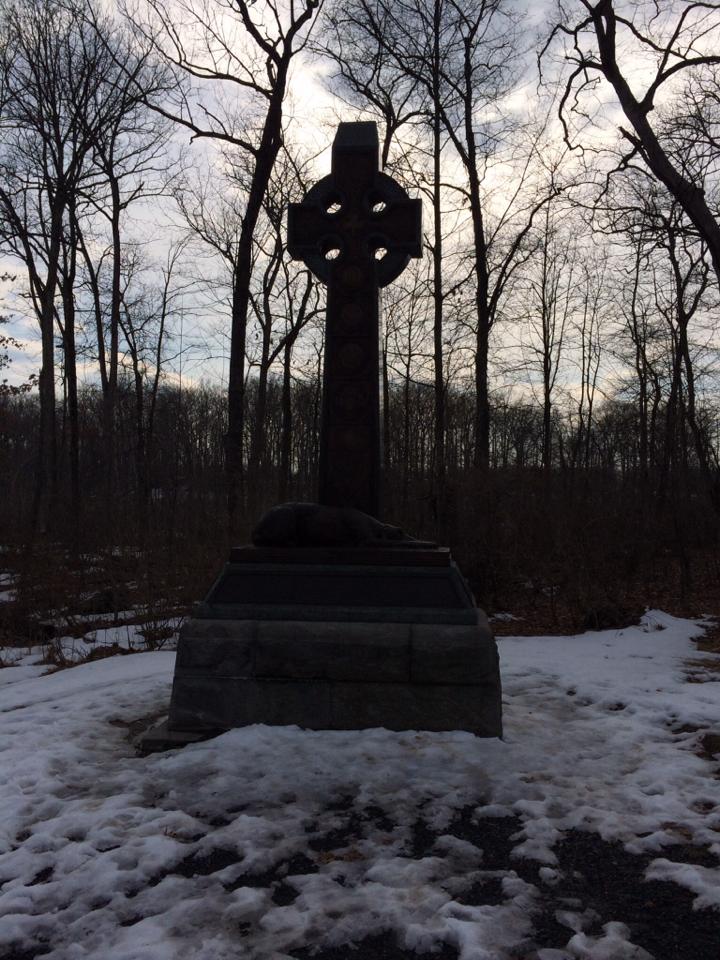
irish brigade monument

Irish Brigade Monument at Gettysburg

The song is powerful when you hear it for it speaks of the reality of war, war that changes those, even those that return home are not unchanged by it.  It speaks of the sacrifices required by those that go to war and even the effects on the community, the loss of young people.  The final verse added by an anonymous author during the American Civil War in a sense is a prayer, a prayer of return as well as reconciliation. It has been recorded a number of times including an instrumental during the film Blackhawk Down. Another rendition is in the television mini-series Rough Riders about the 1st U.S. Volunteer Cavalry at the Battle of San Juan Hill and one in the movie Gettysburg as Father Corby blesses the Irish Brigade.

My life has been changed and faith challenged. When I went to Iraq I still maintained a sense of idealism.   After Iraq and having to deal with PTSD and a psychological, spiritual and physical breakdown as well as a profound sense of abandonment by some senior chaplains, my former church and even God I am a different person. My faith which had been shattered to the point of being a practical agnostic for nearly two years has returned and even now eight years later still I struggle with belief, unbelief and faith in general, but I don’t think that is a bad thing. I believe that if we are not changed by what God allows or by what life brings I don’t think that we grow as human beings, or for that matter are of much use to anyone else. As a Priest I wonder if I could work in the environment that I work without having gone through what I did.

I see many of the “minstrel boys” and girls of our era and having also been to war and come back changed the last lines of the final verse is a prayer that I echo. One of the versions that I particularly like is the one sung in the Star Trek the Next Generation episode “The Wounded.” While it is only the first verse it deals with the lives of two officers whose lives are forever changed by war.

This is dedicated to all those who have served who have gone through the pain of war and return until war shall be no more, but until then at least one faithful harp will praise thee…

Peace

Padre Steve+

Leave a comment

Filed under faith, iraq, mental health, Military, music, Tour in Iraq

Iraq Revisited: An Unexpected Phone Call

Dundas and Fallah

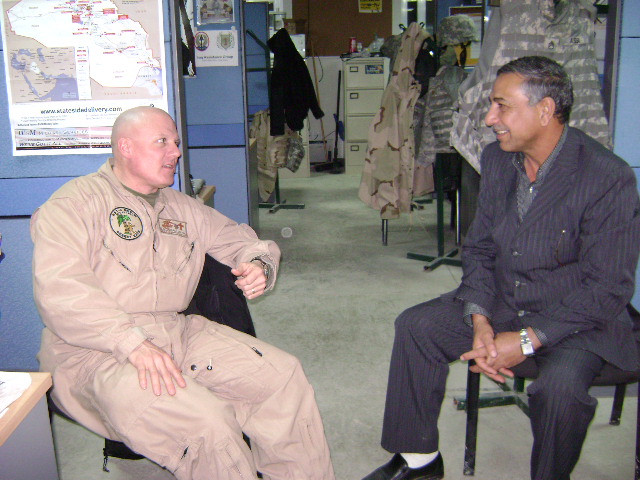
With my Friend Falah in late January 2008

Friends of Padre Steve’s World,

I often write about my time in Iraq, but today just a short thought, a good news story.

Since I left Iraq in 2008 I always prayed that those Iraqis that I knew and worked with, for them, their families, and their country. There is something that comes from having actually gotten to know these men and women and having served alongside them that those who have never done cannot understand or fathom. It is a connection that enables one to see clearly when others minds are clouded by ideology, and information about Iraq and its people, that they really do not understand, because frankly they have never really gotten to know and care for actual Iraqis.

I guess that is one of the things that was so devastating from me personally when I came home from Iraq, I actually cared for the Iraqis. Those that I knew and worked with were amazing hosts, and would do anything for you. Those who fought alongside of the United States, even after how we destroyed their country in the name of liberating it from Saddam, while unleashing a witches cauldron of violence which is spreading around the world, risked their lives then, and those still alive risk their lives today.

One of those men, my friend General Falah, called me yesterday. It was a pleasant surprise, as he is a friend. He was the first Iraqi that I met when I served with the Iraq Assistance Group, and the last that I saw as I left country. At that point he was working for the U.S. supporting the advisory forces, and staff. I wish that I could tell you more about him, his amazing story, and his family, but I cannot say too much about him because I do not want to endanger them. However, as a senior leader in the Iraqi Air Force he is actively engaged in fighting DAESH, and sadly, most Americans do not give him, or the other Iraqi troops now engaged in fighting DAESH enough credit. They are risking their lives in an attempt to defeat DAESH and reunify their country, while American politicians and pundits criticize them for having to do what they need to do to defend their country.

I pray that my friend Falah and his men will be successful, because it matters not just to Iraqis, but to us. Likewise, I pray that one day, I can go back to Iraq. But then I don’t expect most people to understand. Inshallah. (إن شاء الله)

Peace

Padre Steve+

1 Comment

Filed under iraq, middle east, Military, Tour in Iraq

I Left My Heart in Al Anbar: Memories & Nightmares

iraq-2007

Friends of Padre Steve’s World,

I have been having a lot of Iraq memories lately, and with them nightmares.

I deployed to Iraq in the summer of 2007. My experience of Iraq was far different than most Americans. I served as chaplain to a large number of teams of advisers in American advisors to Iraqi forces in Al Anbar Province. Most were teams working with the Iraqi 7th Division and 2nd Border Brigade, the 1st and 3rd Brigade of the 1st Division, Iraqi Police, Highway Patrol, and various other sundry groups.

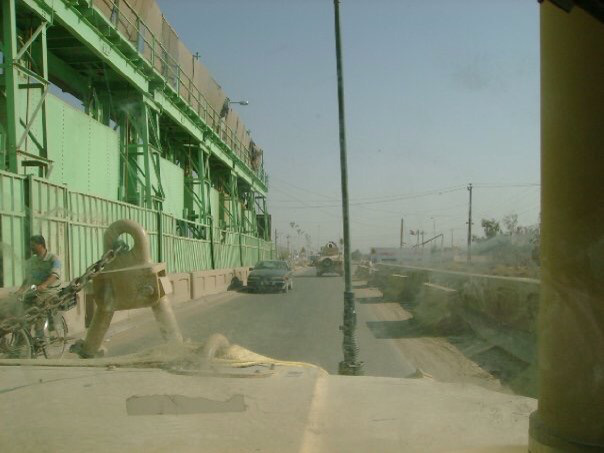
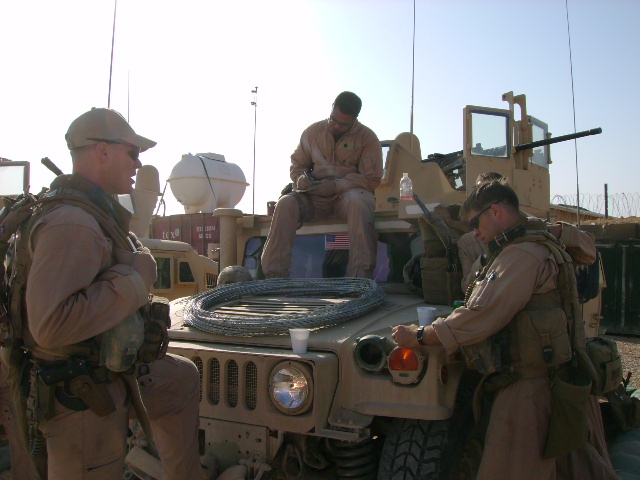
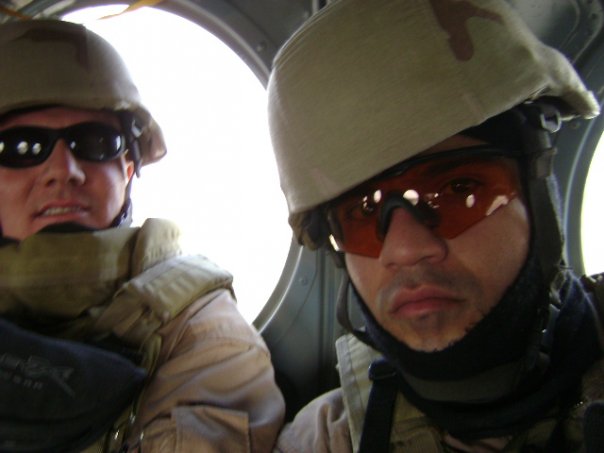
During the deployment I travelled thousands of miles hot cramped HUMMVs in tiny convoys and in tightly packed aircraft with my assistant and bodyguard RP1 Nelson Lebron. The teams consisted of 12-30 Americans who were embedded with the Iraqis in far flung locations between the Syrian border at Al Waleed, Al Qaim and various small outposts along the border, back to Fallujah and almost everywhere in between, including a lot of trips to bases in Ramadi. There were times that the convoys or helicopters that we traveled on took enemy fire, and there were other times that we were in places where we were in meetings with groups of Iraqis where we didn’t know the good guys from the bad guys, and of course I was the only person not armed.

img_2672

Crossing the Bridge on way to Camp Blue Diamond and the Snake Pit

For those unaware of geography Anbar Province is about the same size in area as the State of North Carolina. The Euphrates River runs through it, a shimmering blue swath bordered by a narrow green valley that cuts through an endless sea of yellow brown sand speckled with small towns and a few larger sized cities. The Provincial Capital, Ramadi is in the east central part of the province about 65 miles west of Baghdad. It was a city of about 440,000 people at the time of the US invasion.

In 2007 Ramadi and Al Anbar Province was the turning point for the United States in the Iraq War. The Sunni tribes of the province decided that their interests were better served by cooperating with the United States Forces rather than continue to endure the terrorism of foreign Al Qaida members. When the region fell to DAESH I was heartbroken, for I had gotten to know too many Iraqis, military, police, and civilians in the region. I had broken bread with them, been asked to pray for them, to bless their vehicles on missions.

As I said, I have been thinking a lot about Iraq lately with the retaking of Ramadi, and I am surprised by how strong the memories those memories still are. I have not slept well and have had plenty of strange dreams and nightmares, many which include surreal Iraq memories mixed in with others. PTSD is something that keeps on giving.

Mission Prep

I remember one of my experiences at a small base on the banks of the Euphrates in Ramadi. At least part of it was known as Snake Pit. The base was north of the Euphrates and included a Joint Security Operations Center run by the US Army, a Police training facility, Iraqi Military and Police forces, Marine advisers working with the Iraqi Army 7th Division, and an Iraqi Detention Facility. The base was surrounded by Hesco Barriers and walls, and immediately adjacent to a number of high-speed avenues of approach. It was an easy target for any attacker. In fact the area was overrun by DAESH and only recently retaken by Iraqi forces.

652_53210437058_4925_n

Me with RP1 Nelson Lebron on a Flight

When I visited the base Iraqi forces were in charge of the perimeter security while a small number of Americans worked at three isolated areas within it. For me strongest memories of that visit were of walking through the prison as well as getting to address the first class of female Iraqi Police cadets in Anbar.

The memories of that visit are still etched deep in my mind. When I close my eyes I can see the inside of that prison. I have been to prisons and jails in this county, but that was a wake up call, the prisoners were hard-core jihadists and the conditions were to put it mildly were harsh. But then, the nowhere in the Middle East are prisons anything near as civilized as they are here.

Neither will I forget the faces of those brave Iraqi women who risked their lives and those of their families to become Police officers in war torn Ramadi. Those women were eager to serve their people and their country and the memories of how they received me are still so strong. I wonder how many are still alive.

For most people the Iraq war is not even a memory. Most Americans are untouched by war and cannot imagine what either our troops or the Iraqi people went through and it is hard to explain.

I will stop for now but to paraphrase Tony Bennett’s immortal song I Left my Heart in San Francisco, I left my at least part of my heart in Al Anbar.

Peace

Padre Steve+

2 Comments

Filed under iraq, Military, PTSD, Tour in Iraq

Ramadi: Liberation and Destruction

iraqi-security-forces-celebrate-victory-over-isis-in-ramadi-Reuters-640x480

Friends of Padre Steve’s World,

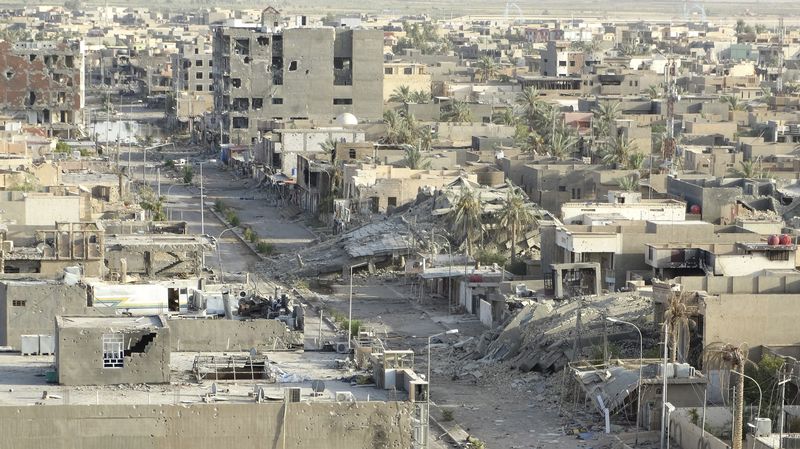
A few days ago the Iraqi military recaptured the city of Ramadi from the self-proclaimed Islamic State, or DAESH. When DAESH captured Ramadi last May it struck me very hard, I cried for the people of Ramadi as I knew that they were going to suffer terribly both from DAESH as well as in the campaign of the Iraqi military to retake the city.

Some Americans, even other military members do not understand this, but for me Ramadi is more than an Iraqi city, but a place that I have a great deal of feeling. I spent a significant amount of time in and around Ramadi, as well as the distant reaches of Al Anbar Province. I care deeply about the people of Iraq, and I grieve because the horror that they are now experiencing is mostly due to the actions of the Bush administration; first for launching a war that met no standard of the being a just war, a war that was condemned as unjust by Pope John Paul II, and a war that many of our closest allies refused to support. Then there was the totally bungled occupation policy which destroyed the country and brought about a massive insurgency and civil war. The results of that war have been devastating, for Iraq, Syria, the Middle East, and yes even for the United States.

ramadi

In fact the aftermath of that 2003 invasion opened a Pandora’s Box of chaos, and opened the door to what T.E. Lawrence warned about in 1919: “A Wahhabi-like Moslem edition of Bolshevism is possible, and would harm us almost as much in Mesopotamia as in Persia…” DAESH is exactly that, a fulfillment of Lawrence’s warning.

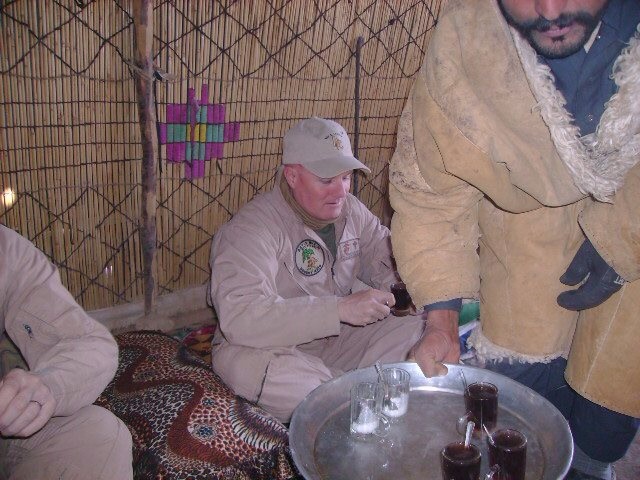
Whenever I read about Iraq I am reminded of how much of my life has been intertwined with that country and people. As I have said on more than one occasion I left my heart in Al Anbar. Back in 2007 and 2008 things were different there. Sunni’s and Shia were at least in the Iraqi military working with Sunni tribesman cooperated with American forces to destroy or drive out the forces of Al Qaida Iraq. I was meeting regularly with Iraqis who are some of the most hospitable people you would ever want to know. I remember meeting with the women who were going to become the first female Iraqi police officers in Ramadi.

Of all those people I wonder how many are still alive, how many have been driven out of their homes, lands, or have suffered the loss of family, friends, and their livelihoods. I grieve for what is happening to them and their once proud country. The towns, cities and bases that I served at have almost all been taken over by DAESH, or have been scenes of terrible fighting. Fallujah, Ta’quadum, Habbinyah, Ramadi, Hit, Haditha, Al Rutba, Rawah, Al Qaim, Al Waleed, Al Turbial, Baghdadi, and so many others devastated by invasion, insurgency, civil war, and the battle against DAESH.

When I left Iraq in 2008 I had hopes that the country might survive, as did many of the Iraqis that I met. I hoped one day to go back and travel to the places that I served, and maybe had the opportunity to see the gracious people that I love again. Maybe in 15 or 20 years there might, God willing be an opportunity. I hope and pray that those I know who were so good to me are safe. Until then I can only pray and hope that for them things will one day be better.

When I think of the Iraq war and its costs I am reminded of the words of Major General Smedley Butler in his book War is a Racket: “What is the cost of war?…this bill renders a horrible accounting. Newly placed gravestones. Mangled bodies. Shattered minds. Broken hearts and homes. Economic instability. Depression and all of its attendant miseries. Back -breaking taxation for generations and generations. For a great many years as a soldier I had a suspicion that war was a racket; not only until I retired to civilian life did I fully realize it….”

For the Iraqis, the Syrians, Americans, and so many others, the cost will be with us for at least a generation. But I do always hope and pray that things will be better.

Inshallah (إن شاء الله)

Padre

Padre Steve+

2 Comments

Filed under iraq, middle east, Tour in Iraq