Tag Archives: aegis missile defense system

High Stakes Game of Chicken on the Korean Peninsula

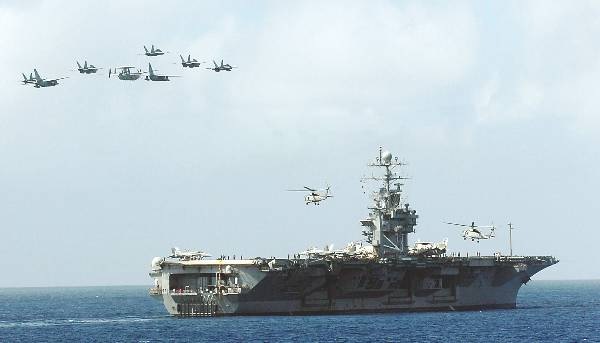
The USS George Washington and her Battle Group arrived in the Yellow Sea

The game is on.  The U.S. Navy and South Korean Navy task forces are moving into position, the South Korean Military is on its highest peacetime alert and the North Korean military is moving fresh batteries of Surface to Air and Ground to Sea missiles into place.  While diplomats from the United States, China and Japan seek to avert a war the North Koreans continue to stoke the fire with fresh artillery fire near Yeonpyeong Island which it brutally attacked earlier in the week.  In the South popular protests are rising against any soft treatment of the North and the commanding General of the South Korean Marine Corps Maj. Gen. You Nak-jun attended the funeral for the two Korean Marines killed in the attack said “Our marine corps … will carry out a hundred- or thousand-fold,” retaliation against North Korea for launching Tuesday’s attack, You said, without elaborating as to what he meant by the comment. The Defense Minister Kim Tae-young resigned after the attack on Yeonpyeong Island, and veterans of the South Korean military protested Saturday in Seoul, stating they were angry that the South Korean government had not done enough to respond to the North’s shelling.
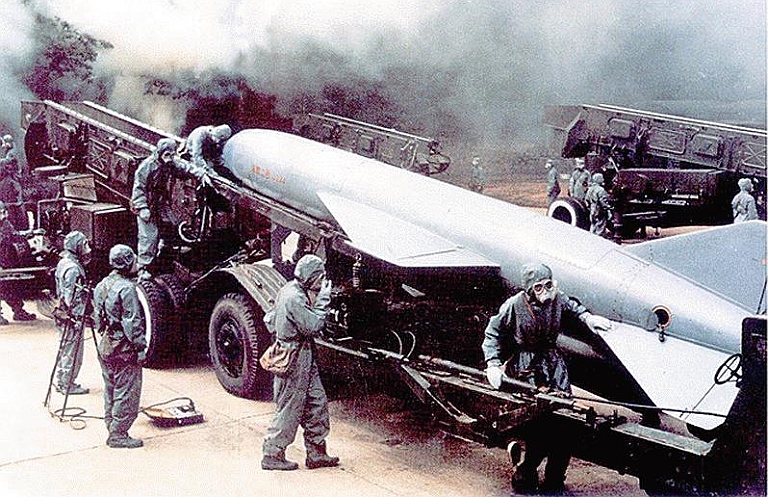
Silkworm Missile being fueled

North Korean rhetoric continues to rise in its belligerence and a North Korean State Committee for the Peaceful Reunification of Korea, the state agency in charge of relations with the South said in a statement carried by the North Korean Central News Agency (KCNA):  “Gone are the days when verbal warnings are served only, escalated confrontation would lead to a war,” and that the North Korean military was “getting fully ready to give a shower of dreadful fire and blow up the bulwark of the enemies if they dare to encroach again upon the North’s territory.”  The KCNA also said “If the U.S. brings its carrier to the West Sea of Korea at last, no one can predict the ensuing consequences.”
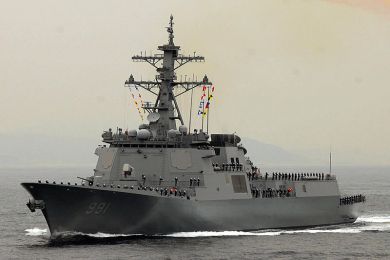
South Korean Aegis DDG

The defense drills begun today by United States and South Korean forces in the Yellow Sea involve the carrier USS George Washington as well as the Aegis Cruisers USS Cowpens and USS Shiloh and the Guided Missile Destroyer USS Stethem. South Korea has deployed one of its Aegis destroyers and two destroyers as well as frigates and anti-submarine aircraft.

North Korean forces have brought in SA-2 SAM batteries which an anonymous South Korea government source says “appear to be targeting our fighter jets that fly near the Northern Limit Line.” The source also reported that the South Korean “military is preparing for the possibility of further provocations as the North Korean military has deployed firepower near the NLL and is preparing to fire.”

Additionally the North is mounting C-201 Silkworm Ground to Sea anti-ship missiles on launchers along the coast in the disputed area which also hosts bases for submarines like the one that is believed to have sunk the South Korean Corvette Cheonan in March as well as fast attack craft mounting Styx anti-ship missiles.  If they were to attack the task force the North would likely attempt a saturation attack using ground and sea based SSMs against the Allied ships, however the task force includes at least 4 Aegis equipped guided missile cruisers and destroyers is well equipped to meet that threat.

The situation is tense and no one really knows exactly how it will develop is yet unseen but it will not take much to provoke a conflict that could engulf the region.

Peace,

Padre Steve+


3 Comments

Filed under Korean Conflicts, Military, national security, Navy Ships, US Navy

Forerunners of the Next Generation: The New Mexico Class, USS New Mexico, USS Idaho and USS Mississippi

New Mexico BB-40 in 1930 before moderization

The Battleships of the Nevada and Pennsylvania classes had established American ship design as second to none in 1916.  At the same time the US Navy was planning advances in engineering systems that would change naval engineering forever.

Idaho  BB-42 in 1931 after modernization

The ships of the New Mexico class were improvements on the preceding Nevada and Pennsylvania class half sisters.  Their hull was lengthened and beam increased. Additionally the new class was given a clipper bow to improve sea keeping capabilities.  While they maintained the same main battery layout of four turrets mounting three 14” guns each, however the guns were a higher caliber 14”/50 models that would also be mounted on the California class.  The New Mexico was also the test bed for a new power plant which featured General Electric geared turbines with electric drive which would be standard on succeeding classes of battleships as well as carriers, cruisers and destroyers.  The Mississippi and Idaho retained the older geared turbine design. The practical effect was that the New Mexico required less horsepower to attain the same speeds as the earlier design turbines.

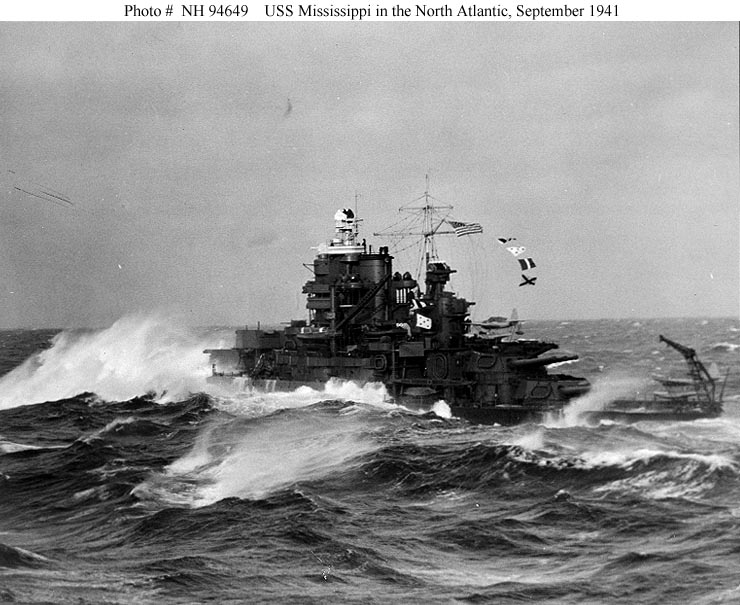
USS Mississippi BB-41 in the North Atlantic September 1941

Displacing 32,000 tons the ships were slightly larger than their predecessors.  New Mexico was launched on 23 April 1917 and commissioned on May 18th 1918.  Her sisters Mississippi and Idaho were actually launched and commissioned sooner being launched on January 25th 1917 and commissioned on December 18th 1917.  None of the ships saw action in the First World War and in 1919 the three would become the nucleus of the newly formed Pacific Fleet. They would serve in the Pacific but conduct exercises with the Atlantic Fleet in the Pacific as well as the Atlantic and Caribbean.  All three were modernized in the early 1930s receiving improvements in armor protection, anti-torpedo blisters, a modernized bridge structure to replace their cage masts, improvements to machinery and their secondary armament.

The Three Sister Moored Together, Late 1943

They would return to the Pacific but with the outbreak of war in Europe the three ships were transferred to the Atlantic Fleet where they took part in the Neutrality Patrol. When Pearl Harbor was attacked the three sisters went back to the Pacific where they spent much of 1942 escorting convoys and being prepared to repel any Japanese assault on the US Mainland.  In April 1943 they took part in the Aleutian campaign and the assaults on Attu and Kiska.  They would then sail to the Central Pacific where the provided support to the invasions of the Gilberts, Marshalls and Marianas islands by protecting the transports and providing naval gunfire support to Marines ashore.

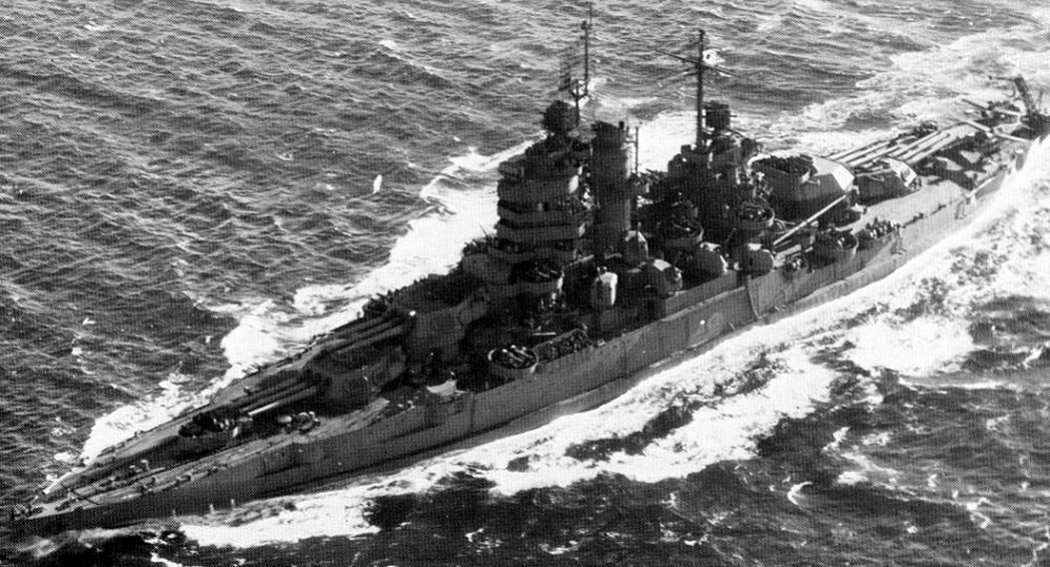
Idaho in her final 1945 configuration. Note the 5″/38 DP Guns in single enclosed mounts used by US Fletcher Class DDs. The Idaho was the only Battleship to have this type of 5″ mount

The three would again operate together during the invasion of the Philippines where the Mississippi served with other battleships of the 7th Fleet’s battle line under Rear Admiral Jesse Oldenforf at the Battle of Surigo Strait where they annihilated a Japanese force including the battleships Fuso and Yamisharo.   Both Mississippi and New Mexico were damaged by Kamikaze hits in Philippine waters, the New Mexico taking a hit on her bridge which killed her Captain and 27 crewmembers.  Both would require repairs and both would miss the invasion of Iwo Jima which Idaho took part in.  The three joined forces again at Okinawa where they provided fire support to Marines and Soldiers ashore.  They would serve until the end of the war in the Pacific and take part in Operation Magic Carpet to return military personnel from the Pacific to the United States.

Idaho at Okinawa

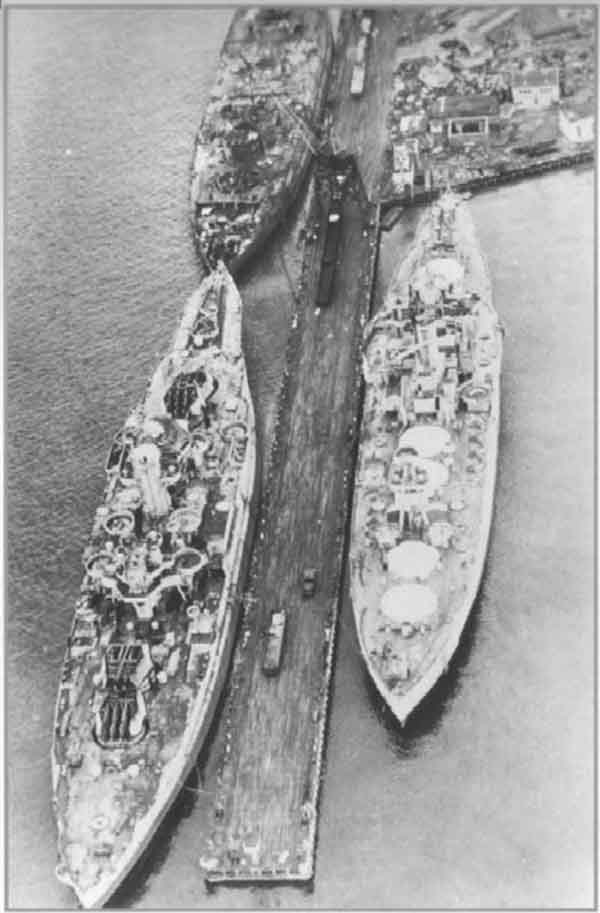
Following the war the New Mexico and Idaho were decommissioned and sold for scrap in 1948.  Mississippi however was converted into a gunnery training ship and reclassified as AG-128.

Idaho (lower left) New Mexico (top left) and Wyoming being scrapped at Newark NJ 1948

In this capacity she served as a test bed for new weapons including the Terrier guided missile systems which would be mounted on the first generation of US Navy Guided Missile Cruisers.   She was decommissioned in 1956 and sold for scrap after an abortive attempt by the state of Mississippi to acquire her as a memorial ship.

USS Mississippi AG-128 firing Terrier Missiles

The ships provided valuable service during the Second World War and the technical innovations in propulsion and protection would become standard in subsequent classes of US Navy battleships.  Additionally the post war service of the Mississippi helped propel the Navy into the missile era helping to build a foundation that is in evidence today in the Ticonderoga Class Guided Missile Cruisers and Arleigh Burke class Guided Missile Destroyers and their Aegis air defense and ballistic missile defense systems.  The ships of the New Mexico class and their stalwart crews should not be forgotten.

7 Comments

Filed under History, Military, Navy Ships, world war two in the pacific