

This is fourth part of a response to a question I had from a new Navy Chaplain. I have decided to post it here without any identification of the chaplain because I know that many men and women who are new to the military chaplaincy or who are exploring the possibilities of becoming a chaplain have the same questions. I was fortunate to have had a number of chaplains who at various points in my decision process and formation as a minister, Priest and Chaplain in both the Army and the Navy help me with many of these questions. Likewise I learned far too much the hard way and blew myself up on some of the “land mines” that almost all who serve as chaplains experience in their careers. This is the third of several parts to the letter and is my attempt to systematically explain my understanding of what it is to be a Chaplain serving in the military and in particularly the Navy. The first three parts are linked here:
Letter to a New Military Chaplain: Part One
Letter to a New Military Chaplain: Part Two The Minefields of the Heart
Letter to a New Military Chaplain Part Three: The Minefields of the Soul: Power and Arrogance
Dear Chaplain
It has been about a week since my last letter concerning the minefields that so easily ensnare those in the various Military Chaplain ministries. This section of my letter to you will be of the more practical type of advice and less philosophical and theological than the first several installments even though at the heart these observations are both theological and philosophical.
I chose the title of this section carefully because I do think that the way a number of New Testament writers deal with the subject of sin, calling it “the flesh” as opposed to “the spirit” is appropriate to the topic.
I think that people of my generation and earlier had a very high view of clergy. We didn’t think that they could do much wrong. Of course we all knew that they did but we didn’t like to talk about it, even productions such as Elmer Gantry did little to dissuade us from our beliefs that Ministers, Priests and Rabbis were somehow morally and certainly spiritually better than us. Even Hollywood maintained the myth, movies like The Bells of St Mary’s showed the essential goodness of the parish priest, while The Fighting 69th in which Pat O’Brien played the legendary Father Duffy, a man both streetwise and holy became the quintessential Chaplain of his generation.
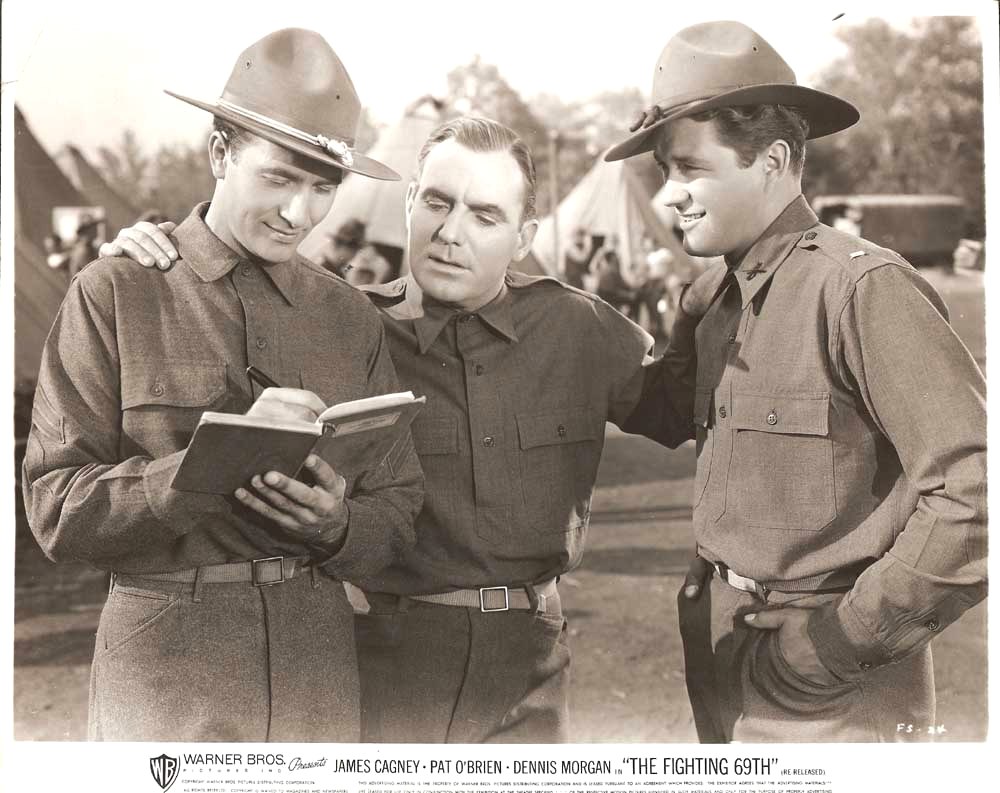
In fact the prayer that he prays in the movie is one that I have echoed in my career as a Chaplain and I am sure that many others have as well.
“Almighty God, in Thine infinite mercy grant me, thy servant, the wisdom to guide my young flock through the trials of war. Oh, Father, they’re so young. So young and they know so little of life and nothing at all of that terrible and bloody altar towards which they move, carrying so eagerly the bright sacrifice of their youth. Their need will be great, O Lord, and I am weak. Therefore, I beseech thee through Thy Son, Christ, our Lord, grant me the strength to keep them steadfast in the faith, in decency and courage to the glory of God, their country, and their regiment in the bad times to come. And if in battle you see fit to gather them to your protecting arms, thy will be done, but let them die like men, valiant and unafraid.”
Of course there is Father Mulcahy of the movie and television series M*A*S*H. I actually liked the portrayal of him by William Christopher in the series better than the movie, perhaps because he became more than a bit player, but like many real life chaplains of every denomination an integral part of the life of his unit. His struggles are the same that many of us who serve as chaplains. In one episode he says to Hawkeye “For some time now, I’ve been comparing the disparity of our callings – Doctor versus priest. You fellows are always able to see the end result of your work. I mean, you know immediately if you’ve been successful. For me, the results are far less tangible. Sometimes… most of the time… I honestly don’t know whether I’m doing any good or not.”
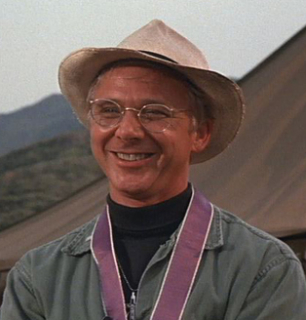
The film and television portrayals of chaplains such as Father Duffy and Father Mulcahy are inspiring, as are the examples of so many good men and women who have served as military chaplains. Some of these even gave their lives in combat so others might live, or placed themselves in harms way to be the the visible representation of God’s presence in places that God himself seems to have abandoned.
That being said there are minefields that exist which even the most noble, caring and committed Chaplains can fall victim. They primarily lie in the real of Sex, Alcohol and Money, what we referred to as “SAM” when I was an Army Chaplain. Those are general categories to which unfortunately we need to discuss, illicit drugs, disobeying lawful orders and simple rudeness. I will save the issues of disobeying lawful orders and simple rudeness for part five, or Part V as they say in Roman numerals.
At any given time there are between a half a dozen and dozen military chaplains serving time at either Leavenworth or one of the regional Brigs. Others end up in trouble, are disciplined and then discharged from the the service often after devastating the lives of those that they served with. Those numbers are not included in the numbers incarcerated.
You wouldn’t think that sex would be a big issue being that we are supposed to be better at keeping our zippers up than others, but this is not always the case. I can cite from personal knowledge case after case where chaplains that I have known from across the denominational spectrum conservatives and liberals alike. Those actions have included heterosexual and homosexual relationships, inside and outside their units and sometimes involved the spouses of their unit members or parishioners.
For some this is due to the isolation that many Chaplains experience, be they married or single. Some are sexual predators, loathsome and evil animals masquerading as good, while others in moments of weakness succumb to temptation. I have had to go into a number of billets where the chaplain just before me had been relieved of their duties for sexual misconduct. Regardless of the reason the real fact of the matter is that when a chaplain is relieved and disciplined for their sexual misconduct their actions radiate out and damage the ministry and reputations of Chaplains who are completely innocent of wrong doing. This is much like how the actions of disgraced televangelists, pastors of large churches and Bishops or Priests implicated in pedophile or other sexual crimes cause problems for others in similar positions who again are without reproach. In every case where I have had to go into such a situation the onus has been on me to help heal the wounds and rebuild the credibility of the Chaplain Corps. This is true for every Chaplain who has to take a job where his or her predecessor was a criminal.
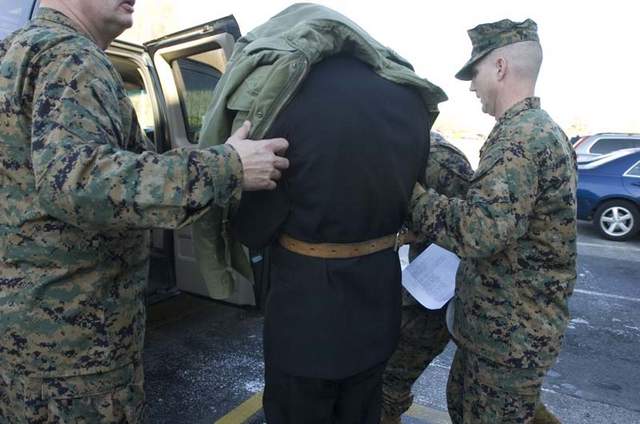
A Navy Chaplain being taken to the Brig after being convicted at Court Martial for sexual crimes (Marine Corps Times Photo)
Sexuality can be one of the greatest minefields that a military chaplain has to navigate, but there are others less visible that also trip men and women up.
The second major area is alcohol. I know a number of chaplains who have become alcoholics. I like to drink good craft beer, but I do know my limits now and am very careful about my consumption of alcohol. When I first came back from Iraq that was not the case. I did drink too much, mainly because I was in the process of coming apart with severe and chronic PTSD. I almost ended up in a bar fight one night and I am thankful that I never ended up in an accident or involved in any other alcohol related incident. There were times at various conferences that I would sit around and drink late into the night at the hotel with other chaplains going through similar problems as I was going through. For us it was safer than going to our superiors either in our churches or the chaplain corps.
That being said I have seen other Chaplains succumb to alcoholism and know one who in dealing with his own demons from service in Vietnam committed suicide while on active duty. Alcohol is also related to many of the incidents regarding sex, so even if it was not the primary issue it was a factor. I also know a number of chaplains who are involved with Alcoholics Anonymous and fight the battle of sobriety on a daily basis.
Related to alcohol are drugs. This is a relatively new phenomena and in most cases is related to prescription medicines, especially pain killers and anti-psychotics prescribed to treat the wounds of war, injuries and things like PTSD and TBI. Once again these are easy to become addicted to and chaplains are much like others when dealing with chronic pain, PTSD or TBI. Recently I saw something that I never thought I would see and that was a chaplain who tested positive for THC, the active ingredient in Marijuana. I figure that if there is one there probably are more that are using, many who battled addictions before their faith conversions and call to the ministry but when placed under the stress of this ministry go back to old friends.
The last component of SAM is money. I think this is a more difficult area in the Army than the Navy because in the Navy chaplains are not allowed to deal with the Religious Offering Fund, where in the Army a Chaplain at every installation is the Religious Offering Fund Manager. It is said by some that “money is the root of all evil” but I am not sure if that is exactly true in this case. I think that money and the power it brings sometimes reveals the inner character of a man more than anything. The great televangelist scandals of the late 1980s and early 1990s, the continuing saga of corruption at the Vatican Bank and the all too frequent revelations of ministers of all faiths misusing church finances are legend. When I had to manage a relative small installation chapel fund I lived in terror of making an innocent mistake, and thankfully I had an outstanding Chaplain Assistant and Parish Council to work with and maintained close contact with the fund manager at our higher headquarters.
Another issue dealing with money is what we are paid when in a travel status. I know that there are Chaplains who play fast and loose with this and I know people in the travel and disbursing offices who tell me about the actions of chaplains that they have to deal with who are not playing straight with the system. In my case I don’t make claims that I cannot substantiate even if it costs me money. I would rather be absolutely honest on a travel claim and lose money that claim something that I may or may not be entitled to that might cause scandal and bring disrepute to God, my church or the Chaplain Corps.
Money is a great temptation and more than one military Chaplain has fallen to it.
The sad thing about all of this is that most of our religious traditions deal explicitly with all of these matters as do our various Service Regulations and Defense Department Instructions. They are not rocket surgery but they are the downfall of far too many chaplains, many of whom actually came into the ministry and chaplaincy with good motives. Once again I lay a lot of this at the feet of our churches and theological schools which for decades have stressed how to run a church program over any real pastoral or theological formation process.
I am lucky. I have made mistakes but I have had numerous chaplains in both the Army and the Navy help me to see the blind spots and teach me about these things. They span the denominational, theological and even political spectrum. Conservatives, liberals, men and women, Protestants, Catholics, Later Day Saints, Jews and even a Moslem.
I could easily have gone into detail about the specific incidents where I knew the people involved or had to deal with them or follow in their footsteps. Some have made the national media, but somehow to do so would be unseemly, after all I do not work for the National Enquirer or for that matter the Navy or Army Times. That being said the Chaplain Corps of the various services all have by percentage among the highest incidences of misconduct of any officer branch or community and this has been a constant since I began my military career in 1981.
That should be a warning. If you know something is wrong don’t do it. If you are unsure about something ask someone. If you need help get it before your actions destroy the lives of those you serve and bring disrepute to your office, your religious body, the Chaplain Corps of your military service and yes even God. After all God does tend to get the blame for all of the actions of those in his service so be careful, guard your heart and mind and for God sakes keep your zipper up and all appearances thereof.
Until the next installment,
Peace
Padre Steve+






 The Inglorius Padre Steve's World