Tag Archives: american citizenship

The Fight for Citizenship and Suffrage: The XIV and XV Amendments and Ulyesses Grant’s Fight Against the KKK

14-amendment

Friends of Padre Steve’s World,

This is another of my continued series of articles pulled from my various Civil War texts dealing with Emancipation and the early attempts to gain civil rights for African Americans. This section that I will cover for the next few days deals with the post-war period, a period marked by conflicting political and social desires for equality, justice, revenge, and the re-victimization of Blacks who had so recently been emancipated.

I hope that you find these helpful.

Peace

Padre Steve+

The Passage of the Fourteenth Amendment

The situation for newly emancipated blacks in the South continued to deteriorate as the governors appointed by President Johnson supervised elections, which elected new governors, and all-white legislatures composed chiefly of former Confederate leaders. Freedom may have been achieved, but the question as to what it meant was still to be decided, “What is freedom?” James A. Garfield later asked. “Is it the bare privilege of not being chained?… If this is all, then freedom is a bitter mockery, a cruel delusion.” [1] The attitude of the newly elected legislatures and the new governors toward emancipated blacks was shown by Mississippi’s new governor, Benjamin G. Humphreys, a former Confederate general who was pardoned by Andrew Johnson in order to take office. In his message to the legislature Humphreys declared:

“Under the pressure of federal bayonets, urged on by the misdirected sympathies of the world, the people of Mississippi have abolished the institution of slavery. The Negro is free, whether we like it or not; we must realize that fact now and forever. To be free does not make him a citizen, or entitle him to social or political equality with the white man.”  [2]

Johnson’s continued defiance of Congress alienated him from the Republican majority who passed legislation over Johnson’s veto to give black men the right to vote and hold office, and to overturn the white only elections which had propelled so many ex-Confederates into political power. Over Johnson’s opposition Congress took power over Reconstruction and “Constitutional amendments were passed, the laws for racial equality were passed, and the black man began to vote and to hold office.” [3] Congress passed measures in 1867 that mandated that the new constitutions written in the South provide for “universal suffrage and for the temporary political disqualification of many ex-Confederates.” [4]  As such many of the men elected to office in 1865 were removed from power, including Governor Humphreys who was deposed in 1868.

These measures helped elect bi-racial legislatures in the South, which for the first time enacted a series of progressive reforms including the creation of public schools. “The creation of tax-supported public school systems in every state of the South stood as one of Reconstruction’s most enduring accomplishments.” [5] By 1875 approximately half of all children in the South, white and black were in school. While the public schools were usually segregated and higher education in tradition White colleges was restricted, the thirst for education became a hallmark of free African Americans across the county. In response to discrimination black colleges and universities opened the doors of higher education to many blacks.  Sadly, the White Democrat majorities that came to power in Southern states after Reconstruction rapidly defunded the public primary school systems that were created during Reconstruction.  Within a few years spending for on public education for white as well black children dropped to abysmal levels, especially for African American children, an imbalance made even worse by the Supreme Court’s ruling in Plessy v. Ferguson which codified the separate but equal systems.

They also ratified the Thirteenth and the Fourteenth Amendments, but these governments, composed of Southern Unionists, Northern Republicans and newly freed blacks were “elicited scorn from the former Confederates and from the South’s political class in general.” [6] Seen as an alien presence by most Southerners the Republican governments in the South faced political as well as violent opposition from defiant Southerners.

The Fourteenth Amendment was of particular importance for it overturned the Dred Scott decision, which had denied citizenship to blacks. Johnson opposed the amendment and worked against its passage by campaigning for men who would oppose it in the 1866 elections. His efforts earned him the opposition of former supporters including the influential New York Herald declared that Johnson “forgets that we have passed through a fiery ordeal of a mighty revolution, and the pre-existing order of things is gone and can return no more.” [7]

Johnson signed the Amendment but never recanted his views on the inferiority of non-white races. In his final message to Congress he wrote that even “if a state constitution gave Negroes the right to vote, “it is well-known that a large portion of the electorate in all the States, if not a majority of them, do not believe in or accept the political equality of Indians, Mongolians, or Negroes with the race to which they belong.” [8]

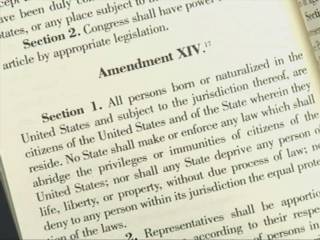
When passed by Congress the amendment was a watershed that would set Constitutional precedent for future laws. These would include giving both women and Native Americans women the right to vote. It would also be used by the Supreme Court in the 1954 Brown v. Board of Education decision that ended the use of “separate but equal” and overturned many other Jim Crow laws. It helped lead to the passage of the Voting Rights Act of 1964 and the Civil Rights Act of 1965, and most recently was the basis of the Supreme Court decision in Obergfell v. Hodges, which give homosexuals the right to marry. Section one of the amendment read:

“All persons born or naturalized in the United States, and subject to the jurisdiction thereof, are citizens of the United States and of the state wherein they reside. No state shall make or enforce any law which shall abridge the privileges or immunities of citizens of the United States; nor shall any state deprive any person of life, liberty, or property, without due process of law; nor deny to any person within its jurisdiction the equal protection of the laws.” [9]

Even so, for most white Southerners “freedom for African Americans was not the same as freedom for whites, as while whites might grant the black man freedom, they had no intention of allowing him the same legal rights as white men.” [10] As soon as planters returned to their lands they “sought to impose on blacks their definition of freedom. In contrast to African Americans’ understanding of freedom as a open ended ideal based on equality and autonomy, white southerners clung to the antebellum view that freedom meant mastery and hierarchy; it was a privilege, not a universal right, a judicial status, not a promise of equality.”  [11] In their systematic efforts to deny true freedom for African Americans these Southerners ensured that blacks would remain a lesser order of citizen, enduring poverty, discrimination, segregation and disenfranchisement for the next century.
ulysses-s-grant-book

Ulysses S. Grant and the Fight against the Insurrection, Terrorism and Insurgency of the Ku Klux Klan, White Leagues, White Liners and Red Shirts

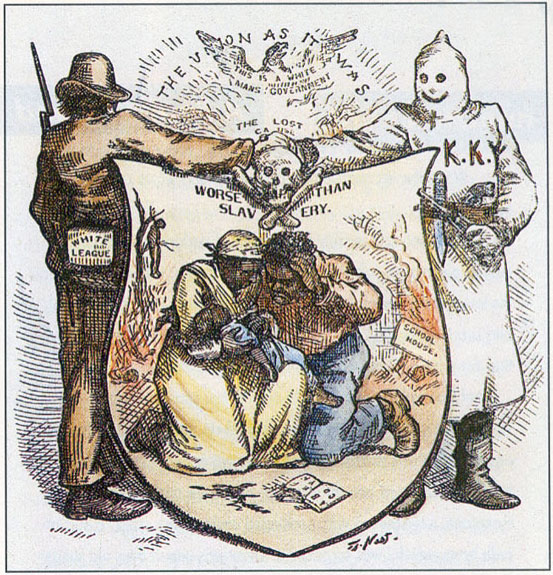
But these measures provoked even more violence from enraged Southerners who formed a variety of violent racist organizations which turned the violence from sporadic attacks to what amounted to a full-fledged insurgency against the new state governments and African Americans. Organizations like the Ku Klux Klan engaged in terroristic violence to heavily armed “social clubs” which operated under the aegis of the state Democratic Party leadership in most Southern states. Under the leadership of former Confederate general Nathan Bedford Forrest whose troops had conducted the Fort Pillow massacre, the Klan’s membership throughout the South “was estimated at five hundred thousand.” [12] The majority of these men were former Confederate soldiers, although they were also joined by those who had not fought in the war, or later those who had been too young to fight in the war but even belatedly wanted to get in on the fight against the hated Yankee and his African American allies. As the shadowy organization grew it became bolder and more violent in its attacks on African Americans, Republican members of the Reconstruction governments, and even Southern Jews. The Klan spread to every State in the South and when Congress investigated in 1870 and 1871 they submitted a thirteen volume report on Klan activities, volumes that “revealed to the country an almost incredible campaign of criminal violence by whites determined to punish black leaders, disrupt the Republican Party, reestablish control over the black labor force, and restore white supremacy in every phase of southern life.” [13]
KKK-Nast

Allegedly organized for self-defense against state militia units composed of freed blacks they named themselves “White Leagues (Louisiana), White Liners or Rifle Clubs (Mississippi), or Red Shirts (South Carolina). They were, in fact, paramilitary organizations that functioned as armed auxiliaries of the Democratic Party in southern states in their drive to “redeem” the South from “black and tan Negro-Carpetbag rule.” [14] These men, mostly Confederate veterans “rode roughshod over the South, terrorizing newly freed slaves, their carpetbagger allies, and anyone who dared to imagine a biracial democracy as the war’s change.” [15] The unrequited violence and hatred by these men set the stage for the continued persecution, murder and violence against blacks and those who supported their efforts to achieve equality in the South for the next century. In truth the activities of the Klan and other violent White Supremacist groups offer “the most extensive example of homegrown terrorism in American history.” [16]

Throughout his term in office Johnson appealed to arguments used throughout later American history by “critics of civil rights legislation and affirmative action. He appealed to fiscal conservatism, raised the specter of an immense federal bureaucracy trampling on citizens’ rights, and insisted that self-help, not government handouts, was the path to individual advancement.” [17]

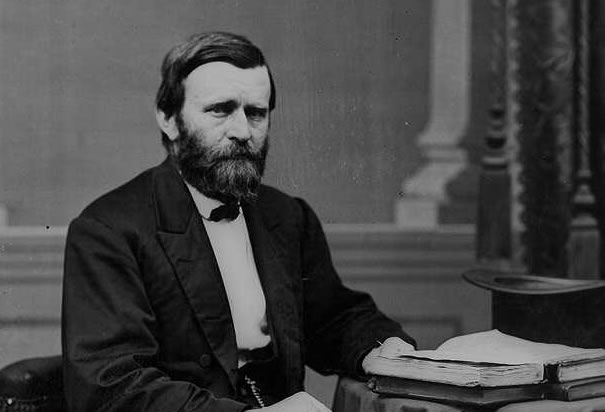
Ulysses S. Grant succeeded Johnson as President in 1869, and unlike his predecessor, he was a man who believed in freedom and equal rights, “For Grant, freedom and equal rights were matters of principle, not symbolism.” [18]Grant ordered his generals in the South to enforce the Reconstruction Act and when the Ku Klux Klan attempted to stop blacks from voting Grant got Congress to pass the “enforcement Act, which made racist terrorism a federal offense.” [19] He created the Justice Department to deal with crimes against Federal law and in 1871 pushed Congress to pass a law known as the Ku Klux Klan Act and sent in the army and federal agents from the Justice Department and the Secret Service to enforce the law.

Grant’s efforts using the military as well as agents of the Justice Department and the Secret Service against the Klan were hugely successful, thousands were arrested, hundreds of Klansmen were convicted and others were either driven underground or disbanded their groups. The 1872 election was the first and last in which blacks were nearly unencumbered as they voted until the passage of the 1964 Civil Rights Act and 1965 Voting Rights Act.

However, Grant’s actions triggered a political backlash that doomed Reconstruction. The seminal moment in this came 1873 when General Philip Sheridan working in Louisiana, asked Grant for “permission to arrest leaders of the White League and try them by courts-martial” [20] for their violent acts against blacks and their seizure of the New Orleans City Hall in a brazen coup attempt. The leak of Sheridan’s request sparked outrage and even northern papers condemned the president’s actions in the harshest of terms.

Apart from the effort to support voting rights for African Americans Grant’s efforts at Reconstruction were met mostly by failure. Part of this was due to weariness on the part of many Northerners to continue to invest any more effort into the effort. Slowly even proponents of Reconstruction began to retreat from it, some like Carl Schurz, were afraid that the use of the military against the Klan in the South could set precedent to use it elsewhere. Others, embraced an understanding of Social Darwinism which stood against all types of government interference what they called the “natural” workings of society, especially misguided efforts to uplift those at the bottom of the social order…and African Americans were consigned by nature to occupy the lowest rungs of the social ladder.” [21]

Southerners knew that they were winning the political battle and continued their pressure in Congress and in the media to demonize supporters of Reconstruction as well as African Americans. Southerners worked to rig the political and judicial process through the use of terror to demoralize and drive from power anyone, black or white, who supported Reconstruction. By 1870 every former Confederate state had been readmitted to the Union, in a sense fulfilling a part Lincoln’s war policy, but at the same time denying what the war was waged for a White led governments aided by the Supreme Court increasingly set about reestablishing the previous social and political order placing blacks in the position of living life under slavery by another name.

The Passage of the Fifteenth Amendment

Slavery had been abolished, and African Americans had become citizens, but in most places they did not have the right to vote. Grant used his political capital to fight for the passage of the Fifteenth Amendment, which gave black men the right to vote. It was one of the things that he remained most proud of in his life, he noted that the amendment was, “A measure which makes at once four million people voter who were heretofore declared by the highest tribunal in the land to be not citizens of the United States, nor eligible to become so…is indeed a measure of grander importance than any other act of the kind from the foundation of our free government to the present day.” [22]

To be continued…

Notes

[1] Ibid. Foner A Short History of Reconstruction p.30

[2] Ibid. Lord The Past that Would Not Die pp.11-12

[3] Ibid. Zinn The Other Civil War p.54

[4] Ibid. McPherson The War that Forged a Nation p. 178

[5] Ibid. Foner Forever Free p.162

[6] Perman, Michael Illegitimacy and Insurgency in the Reconstructed South in The Civil War and Reconstruction Documents and Essays Third Edition edited by Michael Perman and Amy Murrell Taylor Wadsworth Cengage Learning Boston MA 2011 p.451

[7] Ibid. Foner Forever Free p.121

[8] Ibid. Langguth After Lincoln p.232

[9] _____________ The 14th Amendment to the U.S. Constitution retrieved from https://www.law.cornell.edu/constitution/amendmentxiv 29 June 2015

[10] Ibid. Carpenter Sword and Olive Branch p.93

[11] Ibid. Foner Forever Free p.92

[12] Lane, Charles The Day Freedom Died: The Colfax Massacre, the Supreme Court, and the Betrayal of Reconstruction Henry Holt and Company, New York 2008  p.230

[13] Ibid. Foner Forever Free p.171

[14] Ibid. McPherson The War that Forged a Nation p. 178

[15] Ibid. Jordan Marching Home p.118

[16] Ibid. Foner Forever Free p.171

[17] Ibid. Foner Forever Free p.116

[18] Ibid. Lane The Day Freedom Died:  p.2

[19] Ibid. Lane The Day Freedom Died p.4

[20] Ibid. Langguth, A.J. After Lincoln p.314

[21] Ibid. Foner Forever Free pp.192-193

[22] Flood, Charles Bracelen, Grant’s Final Victory: Ulysses S. Grant’s Heroic Last Year DaCapo Press, Boston 2011 pp.78-79
Leave a comment

Filed under civil rights, civil war, ethics, laws and legislation, Military, Political Commentary

Fighting a World Wide Insurgency Part Two: The changing nature of War and the Justified Killing of Anwar al-Awlaki

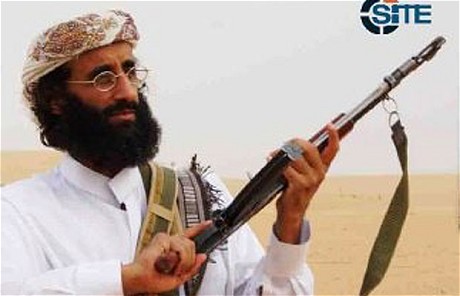
This is a belated follow up to my article Fighting a World Wide Insurgency: The Problem Fighting Revolutionary Terrorists and Insurgents- Part One . It deals with the killing of American born Al Qaeda cleric and propagandists Anwar al-Awlaki and Samir Khan by U.S. Forces in Yemen.  There is controversy in the American media, body politic and among U.S. based civil rights groups such as the ACLU.  My premise is that the killing of Awlaki and Khan was justified because of their actions and because the nature of warfare itself has changed radically since the current “Law of War” contained in the Geneva and Hague conventions the U.N. Charter and other international law standards were laid down.  The were all written with the nation state in mind, not apocalyptic terrorists that recognize no borders do not differentiate between civilians and military targets and have not regard for citizenship either their own or that of others.  Alan Dershowitz the noted jurist, legal scholar and civil libertarian wrote “The great American justice Oliver Wendell Holmes Jr once remarked that “it is revolting to have no better reason for a rule of law than that it was laid down in the time of Henry IV. It is still more revolting if the grounds upon which it was laid down have vanished long since, and the rule simply persists from blind imitation of the past.”

Awlaki and Khan were not mere criminals they were enemy combatants and the fact that they were not on a recognizable battlefield when targeted is irrelevant.  They played games with their citizenship, never officially renouncing it even as they did everything that they could from a propaganda point of view to wage war against their country and incite others including members of the U.S. Military to kill Americans. Yes, they were combatants waging war and not “victims” of an “assassination” ordered by the President.  They knew they were at war and said so quite openly.  The provided aid and encouragement to those that killed American soldiers at FortHoodand attempted to bring down a Delta Air Lines jet on Christmas Day 2009.  Derschowitz commented on the kind of strike used to kill Awlaki and contrasted it with terrorism saying “A targeted assassination is exactly the opposite of terrorism. Terrorism is untargeted assassination — you just throw a bomb in a cafeteria and you get everybody. Targeted assassination is designed to be very precise and very specific.”

Awlaki, Khan and their fellow Al Qaeda travelers fight a different kind of war than we in the West are comfortable waging. They fight a war where they make no distinction between soldiers and civilians and do not recognize the borders of sovereign nations.  Al Qaeda has defined the battlefield and it is not confined to Iraq or Afghanistan.  Using secure bases of operations in nations that are officially our “allies,” they have been able to place themselves safely out of harm’s way until the past year while planning, training and propagandizing new recruits into their terrorist cause.

Awlaki stated his opinion succinctly about the kind of war he was waging in an interview in early 2010:

“Yes. With regard to the issue of ‘civilians,’ this term has become prevalent these days, but I prefer to use the terms employed by our jurisprudents. They classify people as either combatants or non-combatants. A combatant is someone who bears arms – even if this is a woman. Non-combatants are people who do not take part in the war. The American people in its entirety takes part in the war, because they elected this administration, and they finance this war. In the recent elections, and in the previous ones, the American people had other options, and could have elected people who did not want war. Nevertheless, these candidates got nothing but a handful of votes. We should examine this issue from the perspective of Islamic law, and this settles the issue – is it permitted or forbidden? If the heroic mujahid brother Umar Farouk could have targeted hundreds of soldiers, that would have been wonderful. But we are talking about the realities of war.” Anwar a-Awlaki comments in interview supporting attempted downing of Delta Air Lines flight on Christmas Day 2009 http://www.memri.org/report/en/0/0/0/0/0/0/4202.htm

The United States killed two men who though technically a “citizens” were declared enemies of theUnited States. By his own words and actions Awlaki declared war against the land of his birth and the land that blessed him with an education that he used for years to encourage other Muslims, especially American Muslims to kill Americans wherever they are found.

The method of his killing appears to be by a targeted drone strike on his hide out in Yemen.  His killing has been condemned and it’s legality questioned by a good number of people including Republican Presidential candidate Ron Paul.  On the surface I can see their concerns.  Any reader of this site knows that I am on the whole with very few exceptions very much a civil libertarian and some will call me a hypocrite but I am okay with that.  The fact is that I do not want our government to be engaged in activities that violate the constitutional rights of Americans anywhere in the world.  Nor do I want to see Awlaki’s killing used as precedent in killing American citizens not engaged in acts of war against the United States. Critics have contended that Awlaki had not broken the law and that his killing in a country that we are not at war with made the act an illegal assassination under the 5th Amendment while ignoring his goal of mobilizing Muslims worldwide, but especially American Muslims to kill Americans at home and abroad. However even criminal courts in the United States recognize that a person that encourages murder can be charged as an accomplice or even co-conspirator as Awlaki was to the mass murderer of Fort Hood Major Nidal Hussein.

However those that decry Awlaki’s killing ignore his words that “we have to establish an important principle: Jihad is global. It is not a local phenomenon. Jihad is not stopped by borders or barriers; they cannot stand in the way of Jihad. Jihad does not recognize the colonial borders that were made in the countries in the past that were drawn by a ruler on the map; Jihad doesn’t recognize those superficial borders.” (Chapter 3: Constants on the Path of Jihad)  The critics of Awlaki’s killing as well as that of Osama Bin Laden and other men that describe themselves as combatants in a war against the United States all encourage the killing of every American because “all Americans are guilty.”   Awlaki’s fellow “American” terrorist companion Samir Khan who was killed with him in the attack wrote “I am a traitor to America because my religion requires me to be. We pledge to wage jihad for the rest of our lives until either we implant Islam all over the world or meet our Lord as bearers of Islam.”

Dershowitz noted that weapons of mass destruction in the hands of suicide terrorists with no fear of death and no home address have rendered useless the deterrent threat of massive retaliation. This threat has been the staple of military policy since the days of the Bible. Because suicide terrorists cannot be deterred, they must be pre-empted and prevented from carrying out their threats against civilians before they occur. This change in tactics requires significant changes in the laws of war – laws that have long been premised on the deterrent model.”

Yes by law Awlaki was still an American citizen at the time of his death. Despite his many calls for the destruction of this country and the killing of its citizens he never went to an Embassy or Consulate to officially renounce his citizenship and thus was still a citizen.  The fact that Awlaki was a leader and propagandist for Al Qaeda on the order of what Josef Goebbels was to the Nazis is lost in the debate.  The uncomfortable truth is that an “American” citizen Awlaki had for all recognizable purposes renounced his citizenship, and under most historical and legal precedents in the United Statesand Europe Awlaki forfeited his rights as such.

This country has revoked the citizenship of citizens for taking up arms against this country to include all officers who left the U.S. military and former government officials that took up prominent positions in the Confederate armed services and government.  They lost their citizenship rights and all had to reaffirm their allegiance to the Union to receive pardons.  Some did not and some such as the commandant of the Andersonville prisoner of war camp were executed for their crimes against other U.S. citizens.

The fact that he hid among his family’s tribal homeland inYemenis also held out as a reason that Awliki’s killing was illegal.  However Awlaki did not recognize the borders that some say should offer him protection and in my view it is unreasonable for theUnited Statesto be bound by conditions that our adversaries do not acknowledge.

The fact is that Al Qaeda and other terror groups have redefined warfare and that many of our long held notions about the nature of war are obsolete.  Al Qaeda and other militant groups understand the concept of revolutionary warfare in ways that are distinctly uncomfortable for us in the West. We talk about counterinsurgency in Afghanistanand Iraq without realizing that the actual insurgency is worldwide and not bound by our constraints.  One of the key components of revolutionary warfare is propaganda which is exactly what Awlaki and Khan were doing.  They betrayed their country, inspired who knows how many radicals to kill Americans around the world including the infamous Major Nidal Hasan who Awlaki described as a hero. He is a man of conscience who could not bear living the contradiction of being a Muslim and serving in an army that is fighting against his own people…My support to the operation was because the operation brother Nidal carried out was a courageous one.”

Roger Trinquier a French officer who served in both Indo-China and Algeria recognized this method of operation in his book Modern Warfare: http://www.cgsc.edu/carl/resources/csi/trinquier/trinquier.asp:

“Warfare is now an interlocking system of actions political, economic, psychological; military that aims at the overthrow of the established authority in a country and its replacement by another regime.  To achieve this end, the aggressor tries to exploit the internal tensions of the country attacked ideological, social, religious, economic, any conflict liable to have a profound influence on the population to be conquered.”

Unfortunately many in political and media elite as well as some civil libertarians like the ACLU are still acting if it was 1944 and there are clear lines that divide nations as well as military personal from civilians.  But for the terrorist this is not the case, Trinquier states the matter very well:

“But the case of the terrorist is quite otherwise. Not only does he carry on warfare without uniform, but he attacks, far from a field of battle, only unarmed civilians who are incapable of defending themselves and who are normally protected under the rules of warfare. Surrounded by a vast organization, which prepares his task and assists him in its execution, which assures his withdrawal and his protection, he runs practically no risks-neither that of retaliation by his victims nor that of having to appear before a court of justice. When it has been decided to kill someone sometime somewhere, with the sole purpose of terrorizing the populace and strewing a certain number of bodies along the streets of a city or on country roads, it is quite easy under existing laws to escape the police.”

Likewise the critics seem to assume that the people plotting and waging war against the United Statesand the West are poor conscripts that do not have a choice in what they are doing but they are not. Most of the leaders including Awlaki, Khan and Osama Bin Laden were the educated children of privilege as is Adam Yahiye Gadahn an American convert to Islam who like Awlaki and Khan has devoted himself to jihad against his native land. Gadahn who has been indicted on the charge of treason makes no bones about his hatred for the United Statesin a 2004 video saying “Fighting and defeating America is our first priority….” In 2009 he praised Nidal Hassan as “a pioneer, a trailblazer and a role-model who has opened a door, lit a path and shown the way forward for every Muslim who finds himself among the unbelievers.”

Yes this is an ugly conflict and it is far different than any war we have every faced. It will mean having to come to terms with methods and tactics that are effective in carrying the war to the enemy, even enemies that we have allowed to retain their citizenship even as they wage war against us.  Critics that think this war will be won or lost on the battlefields of Iraqor Afghanistanand those who condemn the killing of Awalki and Khan misunderstand the shape of warfare in the 21st century.

Trinquier and others understood this and we have to adapt if we are to defeat this world wide insurgency.  On so vast a field of action, traditional armed forces no longer enjoy their accustomed decisive role. Victory no longer depends on one battle over a given terrain. Military operations, as combat actions carried out against opposing armed forces, are of only limited importance and are never the total conflict.”

Awlaki and Khan understood what they were doing and were prepared to die to achieve their goals which they did.  I suppose that we could have risked the lives of more American troops on the ground to track them down and attempt to capture or kill them deep inside hostile territory as we did with Bin Laden.  However, such operations are so risky that they cannot be allowed to become commonplace.

Likewise even as we step up the use of drones and special operations forces and scale back in the manpower intensive theaters of Iraq and Afghanistan we must embrace the role of the media propagandizing the truth. We must define the message and not allow future Awlaki’s and Khan’s to set the narrative of the war. We must use all available media and communications technology to our advantage and not surrender that realm of operations to whomever Al Qaeda appoints to replace Alwaki and Kahn in their propaganda minister role.

It is clear that  Geneva and Hague conventions, the U.N. Charter and aspects of the U.S. Code including citizenship provisions need to be revised in light of the changing nature of war.  If they are not we will always be constrained by those rules even as terrorists use those protections as part of their overall strategy.  To counter such actions we cannot be bound by common law written at the time of Henry IV or laws that never envisioned the kind of war being waged by our enemies.  Dershowitz wrote:

“Laws must change with the times. They must adapt to new challenges. That has been the genius of the common law. Ironically, it is generally the left that seeks change in the laws, while the right is satisfied with Henry IV. Today it is many on the left who resist any changes in the law of war or human rights. They deny the reality that the war against terrorism is any way different from conventional wars of the past, or that the old laws must be adapted to the new threats. The result is often an unreasonable debate of extremes: the hard left insists that the old laws should not be tampered with in the least; the hard right insists that the old laws are entirely inapplicable to the new threats, and that democratic governments should be entirely free to do whatever it takes to combat terrorism, without regard to anachronistic laws. Both extremes are dangerous. What is needed is a new set of laws, based on the principles of the old laws of war and human rights – the protection of civilians – but adapted to the new threats against civilian victims of terrorism.” Article in “The Independent” 3 May 2006

From a more military standpoint Trinquier noted:

“In seeking a solution, it is essential to realize that in modern warfare we are not up against just a few armed bands spread across a given territory, but rather against an armed clandestine organization whose essential role is to impose its will upon the population. Victory will be obtained only through the complete destruction of that organization.

That complete destruction of such an organization begins with its leaders including its propagandists, even those that are American citizens.  Some will disagree with me on this but this war has been going on over 10 years and will not end when we withdraw from Iraq and Afghanistan. The killing of Osama Bin Laden and the intelligence garnered in the raid on his Pakistani compound was a watershed moment and has shifted momentum to the United States and its allies.  Al Qaeda’s senior leaders are being killed in ever increasing numbers with substantially fewer civilian casualties.  But we can lose it all if we fail recognize that the very nature of war has changed and that if we remain tied to law and policy written when the world in no way resembled what it is today.

Padre Steve+

P.S.  For those wondering what a Priest knows about this I hold a Masters degree in Military History and a graduate of the U.S. Marine Corps Command and Staff College. I have also studied revolutionary war and insurgency extensively since 2001.  I served with our advisers to the Iraqi Army, Police and Border and Port of Entry Police in 2007-2008. 

2 Comments

Filed under laws and legislation, middle east, Military, national security
