Tag Archives: chaplain ministry

Long Days, Lost Wallets and a Long Layover…Ministry Included

10151918_10152444030142059_7871957421917905974_nWell my friends it is after Nine PM Eastern Time and I am still enroute to Houston after leaving my home at Six AM. This means that I have been traveling for over 15 hours and since I still have about three hours before I get to Houston and maybe more before I lay my head down on my pillow that this qualifies as a long day.

Things went well enough at first until I got to what I thought was my one layover at Baltimore Washington International Airport and discovered that I did not have my wallet. Long story short after about an hour of searching, phone calls and consternation it looked like my travel to an important conference with my church and fellow denomination clergy and chaplains was not going to happen. I went to the Southwest Airlines gate agent who put my information in the computer and found that my missing wallet had been turned in to the gate agent in Norfolk. Armed with that information I called the Staff College and the industrious young man got me back to Norfolk to my wallet and connected me with flights to get me to Houston late tonight.  While in Baltimore some nice lady who overheard my near panicked conversation with people at the Staff College gave me $20 to eat. Since beer is technically bread since it is made from grain that was lunch.

To let you know I do not do airports or aircraft well. Today, even with all the craziness I am still in one peace. I attribute this to prayer and pilsner, though technically I was drinking lagers at almost every stop. I figure when it come to dealing with airports I can deal with panic mode because of the crowds by going crazy, not a good option, drugging myself with anti-anxiety meds which don’t taste good or drink beer which does taste good. Once I had my wallet back I also got food, comfort food instead of healthy food, which I will go back to tomorrow. Of course with over three hours to go before I get to Houston I have switched to lots of water since I tend not to do sodas very often.

While at the Johnny Rivers Grill and Market in Orlando Airport I had some pulled pork BBQ, it was okay, as well as a couple of beers and while there had a young man in a delay situation for another flight sit next to me at the bar. He was a Staff Sergeant in the National Guard who was being called home early from vacation to drill. He was leaving his family in Orlando. He has spent several deployments to Iraq and Afghanistan and was telling me that he still has not been able to re-set after his last deployment because in addition to his civilian commitments his Guard unit continues to push him and all of its personnel hard, without much thanks and with no support to soldiers or families. It was a similar conversation that I had with a senior Marine Corps Officer recently. The important thing for this soldier who has served his country for 15 years as a citizen soldier was that I cared to listen to him and understood.

I didn’t do much talking, mentioned that I had been to Iraq, had PTSD and had been an agnostic for a couple of years and he was grateful just for someone to listen. The sad thing is there are far to few people, especially leaders who will take the time to do that. The fact is we have to stand by our guys, they have put themselves on the line time and time again, we as leaders owe them. But the truth is as my Marine friend noted is that since 2001 the attitude is that you owe the military.

When I was training to be a Chaplain in the Texas Army National Guard, Colonel John Price, an Episcopal Priest told me that his best ministry happened in officer’s clubs and bars, being available to people who would never darken the door of a church, come to a chapel service or would be too proud to come to the office.  Father Price was right. Jesus didn’t cloister himself, he was out with people. Most religious people didn’t care much for it but he drew people to him because he was where they were.

We as Chaplains as well as leaders must change our culture or we will destroy the men and women entrusted to us by the nation and in the process destroy our armed forces. Without the people the machines don’t matter that much.

So anyway, not much longer until I will board this flight. So until tomorrow,

Peace

Padre Steve+


Leave a comment

Filed under christian life, faith, Military, ministry, PTSD

To Believe and Not to Believe, that is the Challenge

n671902058_1153804_6925

“Most priests, if they have any sense or any imagination, wonder if they truly believe all the things they preach. Like Jean-Claude they both believe and not believe at the same time.” Andrew Greeley “The Bishop and the Beggar Girl of St Germain”

When I returned from Iraq in 2008 I was a mess. I had gone to Iraq thinking that I had the answers to about anything and that I was invincible. I felt that with years of experience in the military and in trauma departments of major trauma centers that I was immune to the effects of war and trauma. Likewise I had spent years studying theology, pastoral care and ethics as well as military history, theory and practice. I had studied PTSD and Combat Stress and had worked with Marines that were dealing with it. If there was anyone who could go to Iraq and come back “normal” it had to be me.
Of course as anyone who knows me or reads this website regularly knows I came back from Iraq different. I collapsed in the midst of PTSD induced depression, anxiety and a loss of faith. For nearly two years I was a practical agnostic. What I had believed with absolute certitude before the experience of war was gone.

During that time, particularly when I was working in the ICU and Pediatric ICU at Naval Medical Center Portsmouth. I attempted to have enough faith to help others during their crisis, be they patients at the brink of death or families walking through that dark valley and our staff. It was difficult because at the time I did not have any faith to even believe that God existed.

It was during those dark days that the writings of Father Andrew Greeley, mainly his Bishop Blackie Ryan mysteries that provided me with one of the few places of spiritual solace and hope that I found. Baseball happened to be the other.
During those dark times when prayer seemed futile and the scriptures seemed dry and dead I found some measure of life and hope in the remarkable lives of the people that inhabited the pages of the Bishop Blackie Ryan novels. Through them I learned that doubt and faith could co-exist and that there was a mystery to faith in Jesus that defied the absolute doctrinal statements as well the as cultural, political and sociological prejudices that I had grown up with.

I did learn something else, something that makes many people uncomfortable and that took me a long time to accept. That was that doubt and faith could co-exist. As I read Greeley’s stories I began to see scripture in a new light. I discovered that the stories of the men and women that we venerate for their faith were more remarkable because of the doubt and unbelief that are documented in scripture. Some even disputed God and are still considered faithful. The Bible is full of these stories.

So when I hear of religious leaders who proclaim all that they say and allegedly believe as absolute truth I know that they are trying too hard. In essence they made their beliefs an idol that keeps them from facing the reality of the world and the reality of their own hearts. It such cases faith becomes fanaticism. It interjects a sense of self righteousness into all relationships and leads to the worst forms of pride, prejudice and hatred of anything that does not fit in their narrow understanding.

Eric Hoffer wrote: “A doctrine insulates the devout not only against the realities around them but also against their own selves. The fanatical believer is not conscious of his envy, malice, pettiness and dishonesty. There is a wall of words between his consciousness and his real self.”

It took losing my faith to rediscover it and life as I anointed a man in our emergency room in December 2009. I call that my Christmas Miracle. Faith returned to to me, much to my surprise and I believe again. But I also doubt, at least a couple of times a day. And for that I’m grateful. It keeps me humble and has broken down the wall that had insulated me. and I am alive again.

That also gives me a certain joy and appreciation in ministry. Greeley wrote in his last Bishop Blackie mystery:

“Every sacramental encounter is an evangelical occasion. A smile warm and happy is sufficient. If people return to the pews with a smile, it’s been a good day for them. If the priest smiles after the exchanges of grace, it may be the only good experience of the week.”  (The Archbishop in Andalusia p.77)

I guess that is how I approach ministry now, even outside the church or chapel. As a chaplain many of the people I serve may never darken the door of a church, they like me struggle with faith, belief and unbelief.

Greeley wrote that is was possible for a priest to lose their faith “no more often than a couple of times a day.” That describes me pretty well.

Peace

Padre Steve+

1 Comment

Filed under christian life, faith, ministry, PTSD

Padre Steve’s Christmas Journey of Healing

996759_10152169414832059_1833080489_n

“God weeps with us so that we may one day laugh with him.” Jürgen Moltmann

Christmas is a special time for me, it always has been but in spite of that there were times that I took the faith element for granted. I believed and my faith in God, for me the Christian God, Father, Son and Holy Spirit was unquestioned. I knew the Scriptures, the Creeds and the Councils and I felt that my faith in a sense was untouchable. I was sure of it, in fact almost cocksure or arrogant about it. That came out in published writings in a very conservative Catholic monthly, the New Oxford Review back in 2000-2001.

For me the elements of my faith were very much intellectual. I could see other points of view but if I disagreed with them enough I would engage them with the purpose of defeating them. Of course this usually went to theological methods, history and hermeneutics. As far as those that lost their faith it was something that I had difficulty comprehending. Not that I was unsympathetic or uncaring of them or their plight, but I didn’t see how it could happen to me.

But that was before Iraq. That was before PTSD, moral injury and my own crisis of faith when I returned from the Iraq War in 2008.  That changed me as war has changed so many others before. Guy Sager wrote of his return from war in his classic The Forgotten Soldier:

“In the train, rolling through the sunny French countryside, my head knocked against the wooden back of the seat. Other people, who seemed to belong to a different world, were laughing. I couldn’t laugh and couldn’t forget.” 

iraq christmas

My return instigated a crisis of faith, I felt like I still belonged in Iraq and home seemed like a foreign land.  In the crisis I was for all practical purposes I was an agnostic trying to believe and feeling abandoned by God and many of his people, especially clergy.  Commodore Tom Sitsch at EOD Group Two, a veteran of much combat asked me “where does a Chaplain go for help?” I told him “not to other Chaplains or clergy.”

That crisis etched a permanent scar in my soul which led to some fairly major changes in my life.  It forced me to enter what Saint John of the Cross called the “Dark Night of the Soul.”

I will not tell of how my great spiritual disciplines and intellect helped me get through the crisis, as they did not. I found it hard to pray or believe in anything for nearly two years as I struggled with abandonment. I felt that God, the Church and the Navy had abandoned me.  The only thing that kept me going was my profound sense of vocation as a Priest and Chaplain and commitment to others who were suffering.

I was losing my battle with PTSD during that time, depressed, anxious and despairing I threw myself into my work among the critically ill ICU patients and those that cared for them.  Christmas Eve of 2008 was spent in despair as I wandered through the darkness on a cold night after leaving Mass because I could not get through it.

Though I found a community and camaraderie among those that I worked with and tried to provide spiritual care,  my own condition grew worse.  I was so bad enough that my clinical duties had to be curtailed over my objections in September of 2009.

I still stood the overnight duty and filled in for others as needed, but for a number of months I had no clinical assignments.  That meant that others in our minimally staffed department had to fill in for me. I am sure that they resented that, especially because before this I often worked 80-90 hours a week mostly in our ICUs and the staff of the ICUs now expected that kind of intensive ministry and support.

But in my desperation I was greeted with a surprise. On one of the on call nights not long before Christmas I received a call to the ER to provide the last rites to an elderly retired Navy Medical Doctor.  The man was a saint, faithful to God, his Church and the community. For years he dedicated much of his practice to the poorest members of the community, delivering babies for women with no insurance and caring for prisoners in the Portsmouth City Jail.  He breathed his last as I prayed this prayed the prayer of commendation following the anointing and something strange happened. I felt the presence of God for the first time since Christmas of 2007 in Iraq. It is too this day hard to explain.

Something miraculous happened that night and by Christmas Eve I realized that something was happening to me. As I wrote in Padre Steve’s Christmas Miracle on Christmas Eve of 2009:

“Mid afternoon I was walking down the hall and I experienced a wave of emotion flood over me, and unlike the majority of emotions that I have felt in the past couple of years this was different.  It was a feeling of grace and I guess the presence of God.  I went up and talked with Elmer the shrink about what I was feeling and the experience was awesome, I was in tears as I shared, not the tears of sadness, but of grace.  I am beginning to re-experience the grace of God, something that has been so long absent that I did not expect it, at least right now.  I didn’t do anything differently; I certainly was not working extra hard to pray more, get more spiritual or pack my brain full of Bible verses.  I was too far gone to do those things.  It was all I could do many mornings just to get out of bed and come to work.”

Since that time I have continued to recover faith and belief. I cannot say that it is the same kind of faith that I had before Iraq. This was a different kind of faith.  It was faith born of the terrible emptiness and pain of abandonment and despair, a faith that is not content with easy answers and not afraid to ask questions.  It is a faith in Jesus Christ, the crucified one who’s image we see hanging from the crucifix and adorning icons of the Crucifixion. It is as Jürgen Moltmann wrote in The Crucified God:

“The Symbol of the Crucifix in church points to the God who was crucified not between two candles on an altar, but between two thieves in the place of the skull, where the outcasts belong, outside the gates of the city. It is a symbol which therefore leads out of the church and out of religious longing in to the fellowship of the oppressed and abandoned. On the other hand, it is a symbol which calls the oppressed and godless into the church and through the church into the fellowship of the crucified God”

My Philosophy of Religion Professor, Dr. Yandall Woodfin at Southwestern Baptist Theological Seminary told us in class that until we had “dealt with the reality of suffering and death we were not doing Christian theology.” At the time the words were offensive to me, but by the time I had graduated and also done a year of Clinical Pastoral Education they became a part of my experience. However that did not prepare me for the darkness that I lived in from February of 2008 until that Christmas Eve of 2009.  I would say that in addition to Dr Woodfin’s understanding of grappling with suffering and death that one has to add the abandonment of the outcast to the equation.

The “I Believe in God” of the Creed is no longer for me simply a theological proposition to defend, but rather an experience of God born out of pain, despair, anxiety, doubt, unbelief and abandonment. During my crisis I found almost no Christians willing to walk through the darkness with me, including clergy. The only clergy willing to were those who were walking the same path of the outcast with me, suffering from PTSD, TBI and other unseen wounds of war. It was if I was radioactive. Many people had “answers” for me, but none sought to understood my questions until my first  therapist Dr. Elmer Maggard asked me “how I was with the big guy?”

When I finally collapsed in the summer of 2008 and met with Dr. Maggard I made a conscious decision that I would not hide what I was going through.  I felt that if someone didn’t speak out that others like me wouldn’t seek help. In the nearly six years since I returned from Iraq I have encountered many people, men and women, current and former military personnel and families of veterans who came to me either in person or through this website. It led to me being interviewed in a newspaper and being featured on the Real Warriors website http://www.realwarriors.net , a program run by the Department of Defense to help reduce the stigma of getting help for PTSD which features the stories of military personnel suffering from it. My story can be found here: http://www.realwarriors.net/multimedia/profiles.php

I have had a number of military chaplains come to me also experiencing a  faith crisis. Most said that I was the first Chaplain or minister that they had met or who admitted that he struggled with faith and the existence of God.  For a minister to be open about such struggles is dangerous. When my faith returned and was different I was asked to leave my former denomination because I was now “too liberal.”

295_26912092058_3949_n

In each of those encounters with those suffering there was a glimmer of hope for me and I think for them.  It was as if for the first time we had people that we could be open with.  Co-workers and others said that I was “real.” I certainly do not boast of that because it was painful to be transparent with people while in the depths of doubt and despair while hoping that somehow God would touch them with some measure of grace when I found it hard to believe.  I guess it was the fact that I was willing to walk with them in their crisis and let them be honest even if it meant facing my own pain and doubt. I learned something about being what Henri Nouwen called a wounded healer.  Nouwen wrote:

“Nobody escapes being wounded. We all are wounded people, whether physically, emotionally, mentally, or spiritually. The main question is not “How can we hide our wounds?” so we don’t have to be embarrassed, but “How can we put our woundedness in the service of others?” When our wounds cease to be a source of shame, and become a source of healing, we have become wounded healers.”

I do still struggle with the continued effects of War and PTSD, but I am in a much better place. I also struggle with faith at times when I look at the actions of those who profess to believe but treat others with contempt. I can understand the quote from the Gospel “I believe, help my unbelief.”

379132_10150515338077059_671902058_10701625_1511457102_n

So today this wounded healer will celebrate a special Christmas at home. My wife and I will celebrate a Mass, enjoy a Christmas dinner with our dogs, Molly and Minnie. Depending on how she feels we will either go out to a movie or watch one at home.

I want to thank all of my readers, especially those who like or comment on these posts. You are appreciated, some are lengthly and you choose to take your time to read them and often share them. If you are walking the path of the outcast feel free to drop me a line here or on my Facebook page. My wish for you and for all is a Christmas of peace, reconciliation and love.

Peace and blessings,

Padre Steve+

16 Comments

Filed under faith, Military, ministry, Pastoral Care, PTSD, Religion, Tour in Iraq

Letter to a New Military Chaplain Part VI: Collegiality and Relationships

262_29132452058_529_n

With my Friend Fr Jose Bautista at  Habbaniyah Iraq 2007 

“A free theologian works in communication with other theologians…He waits for them and asks them to wait for him. Our sadly lacking yet indispensable theological co-operation depends directly or indirectly on whether or not we are willing to wait for one another, perhaps lamenting, yet smiling with tears in our eyes.” ― Karl Barth, The Humanity of God

This is fifth part of a response to a question I had from a new Navy Chaplain. I have decided to post it here without any identification of the chaplain because I know that many men and women who are new to the military chaplaincy or who are exploring the possibilities of becoming a chaplain have the same questions. I was fortunate to have had a number of chaplains who at various points in my decision process and formation as a minister, Priest and Chaplain in both the Army and the Navy help me with many of these questions. Likewise I learned far too much the hard way and blew myself up on some of the “land mines” that almost all who serve as chaplains experience in their careers. This is the fifth of several parts to the letter and is my attempt to systematically explain my understanding of what it is to be a Chaplain serving in the military and in particularly the Navy. As I wrote this tonight I thought of one more installment so I expect soon that I will write it, but not tonight. The first three parts are linked here:

Letter to a New Military Chaplain: Part One

Letter to a New Military Chaplain: Part Two The Minefields of the Heart 

Letter to a New Military Chaplain Part Three: The Minefields of the Soul: Power and Arrogance

Letter to a New Military Chaplain Part IV: The Minefields of the Flesh, Sex, Alcohol and Money

Letter to A New Military Chaplain Part V: Count it All Joy

Karl Barth’s words about how free theologians work in communication or community with other theologians is equally true for those men and women who serve in the secular and pluralistic ministry of the chaplaincy, particularly the military chaplaincy.

This was something that I learned early in my theological education in seminary as well as my more practical ministry lessons at the Army Chaplain School and during my Clinical Pastoral Education Residency.

652_55560577058_1525_n-1

Army Chaplain Officer Basic Course with LTC Rich Whaley (C) and CPT Bill Blackie (L)

Collegiality and relationships cannot be over-valued. In fact they are vital if we are to care for the people that are entrusted to us, men and women who volunteer to serve our nation in time of war and peace. Unfortunately they are probably harder to do now than they were when I first became a chaplain back in 1992. Harder but certainly not impossible.

I think part of this is due to how theological education has changed in the last 20 years. For better or worse for many people it is hard to attend seminary in residence. I did and it was painful. I would never want to do it again but it was important in my formation and I think indispensable. However many seminaries have placed much of their theological education, even the Master of Divinity online or via other distance education formats. The result is that many theological students do their seminary education isolated from collegial relationships with professors and other students. This isolation is often compounded in churches, especially mega-churches which have little use for seminary students who will leave them in order to become chaplains.

2334_63993192058_3194_n

With CAPT John Kaul and LT Romeo Biala at Camp LeJeune 1999

Another issue is the fact that the Chaplain Corps of the various services are not as reflective of the religious population of the services as they used to be. Part of this is because the mainline Protestant denominations in their cultural opposition to war and in some cases the military itself stopped sending as many chaplains as they once had done. Likewise due to the continuing clergy crisis in the Roman Catholic Church that institution has seen a marked decline in number of serving chaplains. On the other side of the coin many conservative denominations and independent churches increased their numbers of chaplains. The number of Jewish chaplains has declined and there are just a smattering of Islamic or Buddhist chaplains.

While the demographics of the Chaplain Corps have changed there has also been a shift in the religious demographic of the military population have shifted the fastest growing group being the “no religious preference” demographic. Of course I have found that in many cases that “no religious preference”  is not that they have no faith but that they go to church but are not terribly concerned about the denominational label. That being said there are lot more servicemen and women who are atheists, agnostics, free thinkers, Pagans, Wiccans or members of other groups traditionally overlooked.

295_27076762058_7573_n-2

In this setting the collegial relationships that chaplains maintain with one another irregardless of our denominational or religious traditions in order to serve and care for those men and women who volunteer to serve our country.

In my now rather lengthly career in the military as well as my time growing up as a Navy “Brat” I can say that I have been blessed by friendships and relationships with chaplains who have cared for me. Likewise I have had the chance to be there for chaplains when they needed someone to be there for them.

295_27076792058_8966_n-1

With Korean and American Chaplains 2001

The way this has worked has been fascinating. My best friends in Army Chaplain school when I was in an independent evangelical church were Roman Catholic, Orthodox and Episcopal Priests. One, Father Jim Bowman saved my ass when I was having a major meltdown and ripping my rank off after a near altercation with a numbskull in the Chaplain Officer Basic Course. Likewise the course director, Chaplain Rich Whaley an LDS (Mormon) Chaplain was there for me on more than one occasion and probably was the man that ensured that I was not tossed from the program. I stay in contact years later with these men.

As a Army Chaplain in the National Guard, Reserves and as a mobilized Reservist it was Lutherans, Catholics and Episcopalians who were there for me. As I became more seasoned and was promoted to Major and placed in supervisory billets I enjoyed good relationships with junior and senior chaplains across the denominational spectrum. Two of my enlisted assistants, one Army and one Navy both went on to become chaplains, both are much more conservative than me but stay in contact.

In the Navy due to our often very isolated duty in independent billets this is harder to do. There is a certain community that you have when you serve in the Army or as a Navy Chaplain serving with a Marine Division, or expeditionary force. However many Navy billets are stand alone billets on ships. Once again this is not impossible to do in the Navy, it is just harder.

The Chaplain Corps is a small community thus when you have good relationships with others, take the time to build friendships and care for people who are not like you there is a payback. That payback comes in the form of maintaining those relationships throughout a career. I constantly run into Navy Chaplains who I became friends with while serving in my first tour with Second Marine Division. Those guys tend to be like brothers to me and it is a good thing. Likewise some of my supervisory chaplains, men like Father John Kaul a now retired Catholic Priest and Navy Captain have been more than supervisors but mentors and friends.

As a practical matter the collegial relationships we build with other chaplains are important for a number of reasons.

First it is about caring for our people and when you have the relationships with other chaplains who are not like you you have a ready referral source. If I have a Mormon Sailor or Marine come to me I know Mormon Chaplains. If I have a Roman Catholic or Orthodox service member come to me seeking a type a Sacrament that has to come from their church I can contact people I know to help them.

In another way it is about having relationships with people who are safe to talk to and believe me this is important. I have a lot of chaplains who confide in me because they know that I am safe, that I will listen and care irrespective of any theological or even political difference. I have a number of Chaplains that I can do this with myself and it does help. There have been times where due to the isolation of my assignment or the inability to be around some of these guys that I have suffered. When I came back from Iraq and in the midst of a PTSD induced spiritual and psychological crisis I didn’t have this, in fact at that time the first person who asked me how I was doing spiritually was my first shrink. When I was able to re-connect with some of my older friends, my “go to” guys they shared similar experiences.

1905_50393032058_2131_n

Now I do work hard to build these collegial relationships. They matter to me.

Collegiality and friendship are at the heart of the military chaplain ministry. Without them we become the promoters of our agenda often at the expense of those that we serve or serve alongside. Since our Constitutional reason for being in the military is to provide for the religious and spiritual needs of our people regardless of their religious affiliation and perform the rites or sacraments of our own religious traditions it is imperative that we build these collegial relationships and friendships with any chaplain that we can.

Peace

Padre Steve+

Leave a comment

Filed under christian life, faith, Loose thoughts and musings, Military, ministry, Religion, US Navy

Letter to A New Military Chaplain Part V: Count it All Joy

20130822-235225.jpg

“The theologian who labors without joy is not a theologian at all. Sulky faces, morose thoughts and boring ways of speaking are intolerable in this field.” ― Karl Barth

This is fifth part of a response to a question I had from a new Navy Chaplain. I have decided to post it here without any identification of the chaplain because I know that many men and women who are new to the military chaplaincy or who are exploring the possibilities of becoming a chaplain have the same questions. I was fortunate to have had a number of chaplains who at various points in my decision process and formation as a minister, Priest and Chaplain in both the Army and the Navy help me with many of these questions. Likewise I learned far too much the hard way and blew myself up on some of the “land mines” that almost all who serve as chaplains experience in their careers. This is the fifth of several parts to the letter and is my attempt to systematically explain my understanding of what it is to be a Chaplain serving in the military and in particularly the Navy. As I wrote this tonight I thought of one more installment so I expect soon that I will write it, but not tonight. The first three parts are linked here:

Letter to a New Military Chaplain: Part One

Letter to a New Military Chaplain: Part Two The Minefields of the Heart 

Letter to a New Military Chaplain Part Three: The Minefields of the Soul: Power and Arrogance

Letter to a New Military Chaplain Part IV: The Minefields of the Flesh, Sex, Alcohol and Money

It has been a while since I started this series so tonight I figured that I would quickly finish what I started. The young Chaplain who I wrote this for is about to report to his new assignment and I do wish him well and pray that he will do well in it. If things go as I expect and he does well he should still be serving as a chaplain at least 15 years after I retire.

Thus for me this series is in a sense about passing the torch. I figure that in five or six years I will finally retire from the Navy Chaplain Corps. Of course that could change because I’m not God and so until I actually retire I will keep my head in the game. There is always a new generation and those of us who have labored need to be there for and be ready to do all we can to help, encourage and mentor those who follow us.

One of the things that I have learned over the course of 32 years in the military and 21 years as a military chaplain is that one must keep a sense of humor and not take oneself too seriously. In that time I have ran into many a chaplain and minister who lived their lives bereft of a sense of humor, had no ability to laugh at themselves and who were positively gloomy people. Saint Teresa of Avila made the comment “God save us from gloomy saints!” I think that she was right and she did take fire from people in the church because of her joyous spirit.

Now I have my times where I am not a happy camper. I can be morose and moody and sometimes even a bit cynical. However, that being said I try not to live my life that way and certainly do my best to keep a sense of humor, laugh at myself and even when things are not going well to try to find a silver lining in the otherwise dark clouds.

Chaplains have a unique ministry. We are not cloistered in parishes or trying to build churches. We serve in a secular institution with people who volunteer to serve their nation in often dangerous, lonely and arduous manners. Those who serve alongside of us on our ships, or in our units we in the Navy call “shipmate” and that transcends differences in religious beliefs, politics or philosophy. As the chaplain it is our duty in this secular institution to care for the people who we serve alongside. They are our parish whether they be believers or not. Pastoral care in this setting is about caring for and loving people who many times don’t believe like us (no matter what our religious tradition) respecting their faith or beliefs and treating them with the same dignity that we would want others to treat us, our families or our friends.

For me this is a joyful life. I like working outside the brick and mortar of the church because it suits my personality and way of doing life. I was a Navy “Brat” growing up. Had it not been for a Roman Catholic Navy Chaplain who helped care for my family when my dad was in Vietnam and a civilian church of our denomination made us unwelcome. I trace my calling back to that man. He was not about pushing his denominational or personal agenda, he simply cared about a military family who needed it.

I think that approaching life and ministry as a chaplain with joy is paramount. It is I think a reflection of the grace of God. As Karl Barth said: “Grace creates liberated laughter. The grace of God…is beautiful, and it radiates joy and awakens humor.”

In our military careers we chaplains will find many opportunities to lose our joy, to become graceless and to become consumed with our own status, promotion and even power. It is a temptation and danger of any kind of institutional ministry where there is an “up or out” promotion system.  Thus we must be careful to keep our focus on caring for others, doing our best in all things, build collegial relationships and real friendships with others and trust God with how everything else works out.

Joy is essential if we are to be living sacraments or vehicles of God’s grace and we have to chose joy. As Henri J. M. Nouwen said: “Joy does not simply happen to us. We have to choose joy and keep choosing it every day.”

So count it all joy.

Peace

Padre Steve+

1 Comment

Filed under christian life, faith, Military, ministry, US Navy

Letter to a New Military Chaplain Part IV: The Minefields of the Flesh, Sex, Alcohol and Money

1905_50393027058_1870_n

This is fourth part of a response to a question I had from a new Navy Chaplain. I have decided to post it here without any identification of the chaplain because I know that many men and women who are new to the military chaplaincy or who are exploring the possibilities of becoming a chaplain have the same questions. I was fortunate to have had a number of chaplains who at various points in my decision process and formation as a minister, Priest and Chaplain in both the Army and the Navy help me with many of these questions. Likewise I learned far too much the hard way and blew myself up on some of the “land mines” that almost all who serve as chaplains experience in their careers. This is the third of several parts to the letter and is my attempt to systematically explain my understanding of what it is to be a Chaplain serving in the military and in particularly the Navy. The first three parts are linked here:

Letter to a New Military Chaplain: Part One

Letter to a New Military Chaplain: Part Two The Minefields of the Heart 

Letter to a New Military Chaplain Part Three: The Minefields of the Soul: Power and Arrogance

Dear Chaplain

It has been about a week since my last letter concerning the minefields that so easily ensnare those in the various Military Chaplain ministries. This section of my letter to you will be of the more practical type of advice and less philosophical and theological than the first several installments even though at the heart these observations are both theological and philosophical.

I chose the title of this section carefully because I do think that the way a number of New Testament writers deal with the subject of sin, calling it “the flesh” as opposed to “the spirit” is appropriate to the topic.

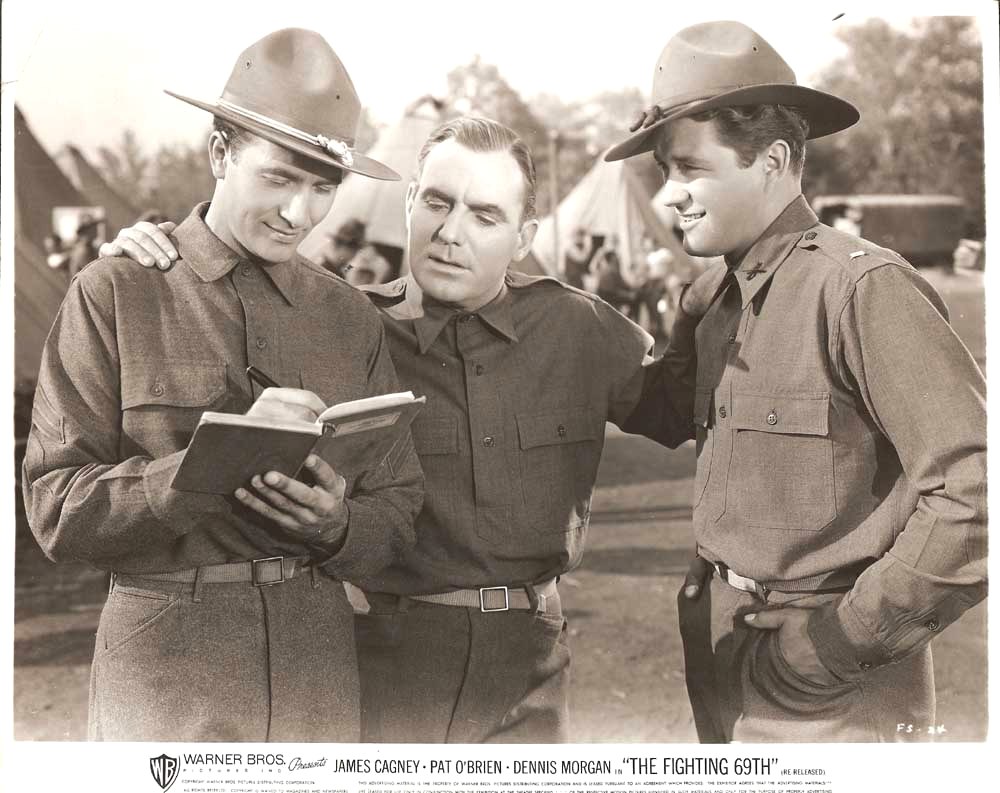
I think that people of my generation and earlier had a very high view of clergy. We didn’t think that they could do much wrong. Of course we all knew that they did but we didn’t like to talk about it, even productions such as Elmer Gantry did little to dissuade us from our beliefs that Ministers, Priests and Rabbis were somehow morally and certainly spiritually better than us. Even Hollywood maintained the myth, movies like The Bells of St Mary’s showed the essential goodness of the parish priest, while The Fighting 69th in which Pat O’Brien played the legendary Father Duffy, a man both streetwise and holy became the quintessential Chaplain of his generation.

18722 - The Fighting 69th

In fact the prayer that he prays in the movie is one that I have echoed in my career as a Chaplain and I am sure that many others have as well.

“Almighty God, in Thine infinite mercy grant me, thy servant, the wisdom to guide my young flock through the trials of war. Oh, Father, they’re so young. So young and they know so little of life and nothing at all of that terrible and bloody altar towards which they move, carrying so eagerly the bright sacrifice of their youth. Their need will be great, O Lord, and I am weak. Therefore, I beseech thee through Thy Son, Christ, our Lord, grant me the strength to keep them steadfast in the faith, in decency and courage to the glory of God, their country, and their regiment in the bad times to come. And if in battle you see fit to gather them to your protecting arms, thy will be done, but let them die like men, valiant and unafraid.”

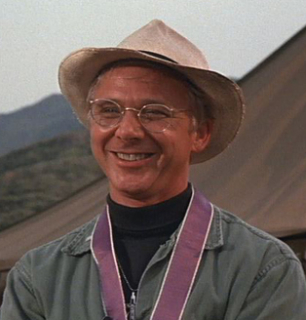
Of course there is Father Mulcahy of the movie and television series M*A*S*H. I actually liked the portrayal of him by William Christopher in the series better than the movie, perhaps because he became more than a bit player, but like many real life chaplains of every denomination an integral part of the life of his unit. His struggles are the same that many of us who serve as chaplains. In one episode he says to Hawkeye “For some time now, I’ve been comparing the disparity of our callings – Doctor versus priest. You fellows are always able to see the end result of your work. I mean, you know immediately if you’ve been successful. For me, the results are far less tangible. Sometimes… most of the time… I honestly don’t know whether I’m doing any good or not.” 

father

The film and television portrayals of chaplains such as Father Duffy and Father Mulcahy are inspiring, as are the examples of so many good men and women who have served as military chaplains. Some of these even gave their lives in combat so others might live, or placed themselves in harms way to be the the visible representation of God’s presence in places that God himself seems to have abandoned.

That being said there are minefields that exist which even the most noble, caring  and committed Chaplains can fall victim. They primarily lie in the real of Sex, Alcohol and Money, what we referred to as “SAM” when I was an Army Chaplain. Those are general categories to which unfortunately we need to discuss, illicit drugs, disobeying lawful orders and simple rudeness. I will save the issues of disobeying lawful orders and simple rudeness for part five, or Part V as they say in Roman numerals.

At any given time there are between a half a dozen and dozen military chaplains serving time at either Leavenworth or one of the regional Brigs. Others end up in trouble, are disciplined and then discharged from the the service often after devastating the lives of those that they served with. Those numbers are not included in the numbers incarcerated.

You wouldn’t think that sex would be a big issue being that we are supposed to be better at keeping our zippers up than others, but this is not always the case. I can cite from personal knowledge case after case where chaplains that I have known from across the denominational spectrum conservatives and liberals alike. Those actions have included heterosexual and homosexual relationships, inside and outside their units and sometimes involved the spouses of their unit members or parishioners.

For some this is due to the isolation that many Chaplains experience, be they married or single. Some are sexual predators, loathsome and evil animals masquerading as good, while others in moments of weakness succumb to temptation. I have had to go into a number of billets where the chaplain just before me had been relieved of their duties for sexual misconduct. Regardless of the reason the real fact of the matter is that when a chaplain is relieved and disciplined for their sexual misconduct their actions radiate out and damage the ministry and reputations of Chaplains who are completely innocent of wrong doing. This is much like how the actions of disgraced televangelists, pastors of large churches and Bishops or Priests implicated in pedophile or other sexual crimes cause problems for others in similar positions who again are without reproach. In every case where I have had to go into such a situation the onus has been on me to help heal the wounds and rebuild the credibility of the Chaplain Corps. This is true for every Chaplain who has to take a job where his or her predecessor was a criminal.

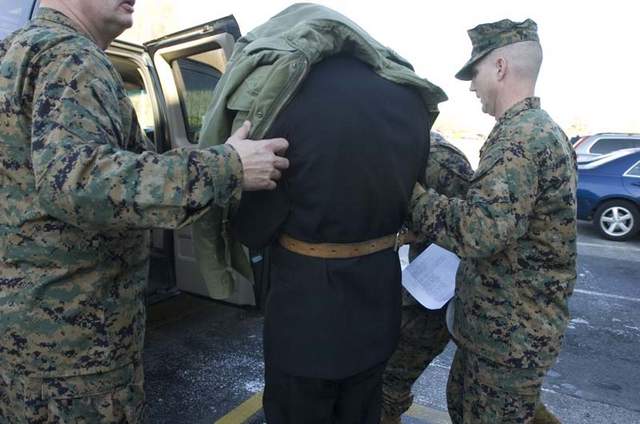
bilde-2

A Navy Chaplain being taken to the Brig after being convicted at Court Martial for sexual crimes (Marine Corps Times Photo)

Sexuality can be one of the greatest minefields that a military chaplain has to navigate, but there are others less visible that also trip men and women up.

The second major area is alcohol. I know a number of chaplains who have become alcoholics. I like to drink good craft beer, but I do know my limits now and am very careful about my consumption of alcohol. When I first came back from Iraq that was not the case. I did drink too much, mainly because I was in the process of coming apart with severe and chronic PTSD. I almost ended up in a bar fight one night and I am thankful that I never ended up in an accident or involved in any other alcohol related incident. There were times at various conferences that I would sit around and drink late into the night at the hotel with other chaplains going through similar problems as I was going through. For us it was safer than going to our superiors either in our churches or the chaplain corps.

That being said I have seen other Chaplains succumb to alcoholism and know one who in dealing with his own demons from service in Vietnam committed suicide while on active duty. Alcohol is also related to many of the incidents regarding sex, so even if it was not the primary issue it was a factor. I also know a number of chaplains who are involved with Alcoholics Anonymous and fight the battle of sobriety on a daily basis.

Related to alcohol are drugs. This is a relatively new phenomena and in most cases is related to prescription medicines, especially pain killers and anti-psychotics prescribed to treat the wounds of war, injuries and things like PTSD and TBI. Once again these are easy to become addicted to and chaplains are much like others when dealing with chronic pain, PTSD or TBI. Recently I saw something that I never thought I would see and that was a chaplain who tested positive for THC, the active ingredient in Marijuana. I figure that if there is one there probably are more that are using, many who battled addictions before their faith conversions and call to the ministry but when placed under the stress of this ministry go back to old friends.

The last component of SAM is money. I think this is a more difficult area in the Army than the Navy because in the Navy chaplains are not allowed to deal with the Religious Offering Fund, where in the Army a Chaplain at every installation is the Religious Offering Fund Manager. It is said by some that “money is the root of all evil” but I am not sure if that is exactly true in this case. I think that money and the power it brings sometimes reveals the inner character of a man more than anything. The great televangelist scandals of the late 1980s and early 1990s, the continuing saga of corruption at the Vatican Bank and the all too frequent revelations of ministers of all faiths misusing church finances are legend. When I had to manage a relative small installation chapel fund I lived in terror of making an innocent mistake, and thankfully I had an outstanding Chaplain Assistant and Parish Council to work with and maintained close contact with the fund manager at our higher headquarters.

Another issue dealing with money is what we are paid when in a travel status. I know that there are Chaplains who play fast and loose with this and I know people in the travel and disbursing offices who tell me about the actions of chaplains that they have to deal with who are not playing straight with the system. In my case I don’t make claims that I cannot substantiate even if it costs me money. I would rather be absolutely honest on a travel claim and lose money that claim something that I may or may not be entitled to that might cause scandal and bring disrepute to God, my church or the Chaplain Corps.

Money is a great temptation and more than one military Chaplain has fallen to it.

The sad thing about all of this is that most of our religious traditions deal explicitly with all of these matters as do our various Service Regulations and Defense Department Instructions. They are not rocket surgery but they are the downfall of far too many chaplains, many of whom actually came into the ministry and chaplaincy with good motives. Once again I lay a lot of this at the feet of our churches and theological schools which for decades have stressed how to run a church program over any real pastoral or theological formation process.

I am lucky. I have made mistakes but I have had numerous chaplains in both the Army and the Navy help me to see the blind spots and teach me about these things. They span the denominational, theological and even political spectrum. Conservatives, liberals, men and women, Protestants, Catholics, Later Day Saints, Jews and even a Moslem.

I could easily have gone into detail about the specific incidents where I knew the people involved or had to deal with them or follow in their footsteps. Some have made the national media, but somehow to do so would be unseemly, after all I do not work for the National Enquirer or for that matter the Navy or Army Times. That being said the Chaplain Corps of the various services all have by percentage among the highest incidences of misconduct of any officer branch or community and this has been a constant since I began my military career in 1981.

That should be a warning. If you know something is wrong don’t do it. If you are unsure about something ask someone. If you need help get it before your actions destroy the lives of those you serve and bring disrepute to your office, your religious body, the Chaplain Corps of your military service and yes even God. After all God does tend to get the blame for all of the actions of those in his service so be careful, guard your heart and mind and for God sakes keep your zipper up and all appearances thereof.

Until the next installment,

Peace

Padre Steve+

1 Comment

Filed under christian life, faith, leadership, Military, ministry, Pastoral Care

Letter to a New Military Chaplain: Part Two The Minefields of the Heart

295_27076892058_2637_n-1

This is second part of a response to a question I had from a new Navy Chaplain. I have decided to post it here without any identification of the chaplain because I know that many men and women who are new to the military chaplaincy or who are exploring the possibilities of becoming a chaplain have the same questions. I was fortunate to have had a number of chaplains who at various points in my decision process and formation as a minister, Priest and Chaplain in both the Army and the Navy help me with many of these questions. Likewise I learned far too much the hard way and blew myself up on some of the “land mines” that almost all who serve as chaplains experience in their careers. This is the second of several parts to the letter and is my attempt to systematically explain my understanding of what it is to be a Chaplain serving in the military and in particularly the Navy. The first part is linked here:

Letter to a New Military Chaplain: Part One

“There is a twilight zone in our hearts that we ourselves cannot see. Even when we know quite a lot about ourselves-our gifts and weaknesses, our ambitions and aspirations, our motives and our drives-large parts of ourselves remain in the shadow of consciousness. This is a very good thing. We will always remain partially hidden to ourselves. Other people, especially those who love us, can often see our twilight zones better than we ourselves can. The way we are seen and understood by others is different from the way we see and understand ourselves. We will never fully know the significance of our presence in the lives of our friends. That’s a grace, a grace that calls us not only to humility, but to a deep trust in those who love us. It is the twilight zones of our hearts where true friendships are born.”Henri J. M. Nouwen

Dear Chaplain

The next section of our discussion is about the “minefields” that we so often encounter as Chaplains and to some degree as Ministers, Priests or Rabbis or other religious leaders. As I noted in the first section I am dividing these “minefields” into three major areas; the personal, the behavioral and the professional.

This section is about the “personal” minefields which I call the “Minefields of the Heart.” I call it this because it seems from the Christian and Jewish Scriptures the heart is the figurative locus of what we are, good and bad alike as human beings.

Of course there is always some spillage between the areas personal, behavior and professional areas and our behaviors and professional relationships are certainly influenced by the things that we hide deep in our hearts. As human beings we may try to compartmentalize our life to keep things apart such as keeping our personal life separate from our professional life, or hide behaviors from our friends, families, peers or co-workers; but the cold hard fact is whether we are aware of it or not each area impacts the other. If we are not aware of this fact, if we have little self awareness, if we have self awareness but try to live our lives with the illusion that we can separate our lives into neat little boxes we will most undoubtedly hurt ourselves, and as spiritual leaders harm those that come to us.
q_who

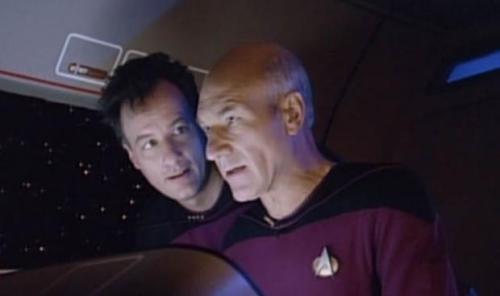
There is a scene of the last episode of Star Trek the Next Generation entitled “All Good Things” that comes to mind.  In it the being known simply as “Q” helps Captain Picard discover how his actions influence human history.

Q: You just don’t get it, do you, Jean-Luc? The trial never ends. We wanted to see if you had the ability to expand your mind and your horizons. And for one brief moment, you did.

Capt. Picard: When I realized the paradox.

Q: Exactly. For that one fraction of a second, you were open to options you had never considered. That is the exploration that awaits you. Not mapping stars and studying nebulae, but charting the unknown possibilities of existence.

You may wonder where I am going with this but it has to do with the personal minefields, those that exist inside of us, those that lurk beneath the surface which if we are unaware wreak havoc on everything else that we do. In the episode of Star Trek that I am referring to Captain Picard is allowed by Q to see the effects of his actions and to see how limited his thinking was.  The challenge for us is chaplains are to be aware of what Nouwen calls “the twilight zone in our hearts” and how what is at the depth of our heart impacts everything else that we do.

Too often though, mostly because of our own personal limitations and serious lack of real theological and pastoral formation involving self reflection and exploration we fail to see them. Like an uncharted minefield we are unaware of them until we either discover their existence through accident and “blow ourselves and others up” or until we listen to those that can see those twilight zones, those minefields better than we ourselves. Of course the latter, especially when it comes from those who love us, care for us and have our best at heart is the preferable method to learn about these things.
943043_10151694525692059_632653331_n

However, that being said part of this can be done through reading. A lot of us simply read “how to” type books when it comes to ministry. We seek direct easy answers in how to run our programs be it in the church, in a para-church ministry or in the chaplaincy. Believe me there are plenty of those kinds of books out there, not only that but a plethora of “self help” books that tell us the “three things we must know” the “five whatever’s to success” or the Seven Habits of Highly Defective People.” The sad thing is, even when these books contain nuggets of truth, they serve it like fast food and reduce it to the lowest common denominator. In a sense, even the most well intentioned of these “how to” or “self help” books promote a reductionist view of faith, spirituality, psychology and in some cases ethics and doctrine.

Reading is important, especially the hard stuff, philosophy, history, moral theology, but also things that you might not expect science fiction for example. In addition classic literature from antiquity and from non-western traditions also sheds light on those personal minefields. Heck we can even find truth in television and film, note my continued references to Star Trek. I find that God can speak to us in many ways.

As Christians we may also find lessons, insights and inspiration from the Bible that can be quite helpful. Unfortunately most of us have so many theological filters in place that we often miss the very things that would be most helpful to us. They can serve as blinders that keep us from sensing what the Spirit of God is trying to teach us. Our church, denominational or theological traditions as well as our hermeneutical methods often cloud our minds to what God is trying so hard to say. It was a problem that the religious establishment of his time had with Jesus, and often with the various prophets that preceded him whose stories we read about in the Old Testament.
1905_50393137058_7454_n

I am sure that others who are not Christians can say similar things about their faith, traditions and holy books. I remember an Iraqi General who I met who took the time to show me his well worn and read Arabic-English Bible. He was a Moslem, but he said that he learned so much from it because it was different than what was in the Koran and he meant no disrespect of his own faith by saying that. He had opened his mind to truth that others turn a blind eye to.

Some of the personal issues that prove to be deadly include what we don’t know about ourselves, usually dating back to childhood, how were raised, how we see God, if we perceive ourselves to be worthy of God’s love or worthy of the love and respect of others.  Those attitudes, especially those created as a result of negative relationships or even physical, emotional or sexual abuse, abandonment and rejection are powerful. Many of us like to pretend that we have gotten past those things but few of us actually do. Unfortunately there is a tendency for those issues to raise their heads in often very ugly ways as we minister as Chaplains.

For example: Let us say that we are distrustful of authority because of having an abuse parent, that we fear that no matter how well we do that there is always someone waiting to take us down. Let us say that we had previous experiences in the church, at work or maybe in prior military service where we were mistreated by those in authority.

I have found that if that condition is not dealt with that in a hierarchical organization such as the Chaplain Corps and the military that it is almost always fatal to the ability of the chaplain to minister in the organization. That is because the military is based on trust, our lives and mission depend on it. We have to trust the chain of command, we have to trust those that serve alongside of us and we have to trust our subordinates. There may be times when the chain of command fails and things don’t go right. There are toxic leaders and there are also toxic chaplains, one has to be aware that they are out there, know how to deal with them or survive under their command but one cannot presume that everyone is like that, trust is essential.

father

I find it interesting that Jesus commended the faith of the Roman Centurion when instead of asking Jesus to come to his house and heal his servant simply said “But just say the word, and my servant will be healed. For I myself am a man under authority, with soldiers under me. I tell this one, ‘Go,’ and he goes; and that one, ‘Come,’ and he comes. I say to my servant, ‘Do this,’ and he does it.”Matthew 8: 8b-9 Jesus told the people around that “he had not seen such faith in all of Israel.” Jesus saw the virtue of the Centurion, a virtue that many of his own people were lacking.

That is just one of a myriad of personal issues that can trip up a Chaplain in the military. The fact is that issues of the heart those things that we don’t like to admit are true about us, things that we are unaware about or in outright denial about in our lives are the things that go to the “heart” of who we are.

As fa as the minefields of my heart, they too are many. However the one that gets me time and time again is my passion for justice and my visceral reaction to those that I believe are bullies. That comes from my childhood. As a Navy brat I was always the new kid in town, and being that I was kind of the short, shy and introverted kid I was also kind of a nerd, or geek. I was not gifted with speed or great athletic abilities and it took me a while to find my academic prowess. That meant that I often didn’t fit in and though I was generally well liked that I would on occasion be bullied and I learned to defend myself, not very well at times but well enough to as the Klingons say “to die an honorable death.”

Jeremiah the prophet, who admittedly was most certainly clinically depressed if you look at his writings did note that “The heart is deceitful above all things and beyond cure. Who can understand it?” Jeremiah 17:9 Depressed or not Jeremiah did seem to understand that what he and many writers of scripture call “the heart” is hard to understand, especially when it is our own.

Thus I go back to Nouwen’s comment about the “twilight zone of the heart” that we cannot see. That it is why as Chaplains we have to develop relationships with people who can help us see what is in the twilight zone of our hearts and lovingly come alongside of us, not just as colleagues but as friends.

Those people may be clergy or other chaplains, but then they may not be. Perhaps they are senior enlisted personnel, long time friends, teachers, spiritual directors, counselors or our God forbid our spouses, I jest about the latter because my wife can see things about things about me that I cannot see, she is incredibly wise.

The minefields that exist in our hearts are so varied, so diverse and so treacherous. They have the potential to affect so many other parts of our lives. Thus for us as chaplains if we are not careful they can be destructive not only to us, but to those that we serve as well as those that we presume to love.

295_26912097058_4309_n

When I look back at my career and I am honest about it, I can say without a doubt that most of the things that hurt me were a direct reflection of the minefields that were already present in my heart. When things that happened that I felt were unjust or threatening I reacted and quite often my reactions caused problems greater than what I was reacting to. All they needed was something to set them off. What I have come to understand is even though I have had a very successful and that I am now a Senior Officer that what lies in my heart can still blow me up and that I need to always be careful of those minefields that exist in the twilight zone of my heart.

Lao Tzu said: “Watch your thoughts; they become words. Watch your words; they become actions. Watch your actions; they become habit. Watch your habits; they become character. Watch your character; it becomes your destiny.”

That is the key, those things that emanate from the deepest recesses of our hearts are full of minefields and we need to guard our hearts and minds in this ministry that we are privileged to have as military chaplains.

Peace

Padre Steve+


4 Comments

Filed under christian life, faith, Military, ministry, Pastoral Care, philosophy, Tour in Iraq, US Navy

Letter to a New Military Chaplain: Part One

185615_1857288397412_3950321_n

Note: This is a response to a question I had from a new Navy Chaplain. I have decided to post it here without any identification of the chaplain because I know that many men and women who are new to the military chaplaincy or who are exploring the possibilities of becoming a chaplain have the same questions. I was fortunate to have had a number of chaplains who at various points in my decision process and formation as a minister, Priest and Chaplain in  both the Army and the Navy help me with many of these questions. Likewise I learned far too much the hard way and blew myself up on some of the “land mines” that almost all who serve as chaplains experience in their careers. It will be the first of several parts to the letter and is my attempt to systematically explain my understanding of what it is to be a Chaplain serving in the military and in particularly the Navy.

Dear Chaplain,

“Preach the Gospel at all times, use words when necessary.” Francis of Assisi 

I thank you for writing me about the questions that you have concerning ministry as a Navy Chaplain. They are incredibly good questions and I since you first asked me two days ago I have given them much thought before responding. I find that if I take the time to mull over such questions it is much more beneficial than simply spitting out whatever comes to mind first because if I don’t get the questions right my advice however good might be wrong. Of course even well thought out advice can be wrong in a given circumstance so you must contextualize the advice and adapt it to your own circumstances at any given time.

As a prologue to the actual questions that you ask I want to point you back to the words of St Francis. I think that they are they key to success in any ministry, but especially the chaplaincy.

As chaplains we are called by our churches or religious bodies to serve in an organization that is essentially secular. Our ordinations come from our churches or religious bodies and we are to be faithful to them. However our commissions as officers come from the President and this creates a dialectical tension that is hard to resolve for some. You will hear people talk about managing the “right and left side of our collars.” That of course is the fact that we wear our military rank on the right collar and the Cross that we wear as Christians or in the case of our Jewish, Islamic or Buddhist colleagues the Tablets of David, the Crescent or the Wheel of Life on the left.

Some attempt to seek a balance between the rank and the religious symbol. That is a bad model because but what typically happens is that chaplains become fall to one side or the other. By that I mean that they either place the military side higher and forget their call or minimize the military side and find that they have no voice in the system. I have seen many chaplains who have in their attempt to fit in with the military forgotten their call as ministers. On the other hand I have seen a number place such an emphasis on their own religious traditions and their perceived rights as ministers that they neglect the vast majority of the people that they are assigned to care for as chaplains. Both options are bad because ultimately we fail to serve those that we are called and given the privilege to serve.

A few years back I saw the travesty of trying to “balance” the two sides of the collar. From my observation those who tried this always end up becoming so military that they end up losing their faith distinctions or they never adapt to the military and even if they do “good ministry” they end up frustrated, are seen as an outsiders and have relatively short careers.

295_27076762058_7573_n-1

As such I went back to Christian theology to find a model of ministry and that is in the hypostatic union of Jesus the Christ. By our understanding as Christians Jesus is both fully God and fully Human, not half and half, or any other percentage, but 100% God and 100% human. The fact is that as Navy Chaplains we are 100% ministers of our own faith group and 100% Naval Officer. As such we need to be the best we can at both and cannot allow ourselves to settle for anything less. If we attempt to “balance” we will fail in being ministers or being officers.

The military is not the church, as such  In the United States our service in such a capacity is not a right, it is a privilege. The right is not ours, it is right of the people that we serve to have the Constitutional right under the First Amendment to their “Free Exercise” of religion. As chaplains we facilitate the religious rights and freedoms of those who wear the same uniform that we wear, whether they of our faith, another faith or even of no faith. This is not about being “politically correct” but rather being faithful to two callings, both of which must be valid and respected in order for us to do what we are called to do as Navy Chaplains and there is always a tension in this. If you take a look at the chaplains that have trouble it is most often because believe that their right to free exercise is greater than the people that they are called to serve or that they lack a sufficient understanding of their call as Ministers, Priests, Rabbis or Imams. That is why Francis’ words are so important.

I think that many ministers, not just chaplains have a terrible understanding of our calling and vocation. To many the ministry is simply a job, their ordination and theological education the necessary prerequisites to perform the task. It is an attitude that I noted in seminary back in the late 1980s and early 1990s and have continued to observe over time. In seminary I had fellow students tell me that they were just thier to get a more advanced degree to help them get a bigger and better paying church. I had others friends disparage their theological education. I had one friend tell me that our degree was “only good for 5 years.” Obviously he was only thinking about the “how too classes” and not the courses that are really important to theological and pastroral formation.

But such is the state of theological education in this country. The fact is that most churches, seminaries or religious bodies do a pretty bad job at pastoral formation. We do a great job on teaching people how to manage churches, direct programs, teach doctrine, evangelize, run media empires or even become social and political activists, but a terrible job at actual pastoral formation and the latter is actually the most important task. Formation is primarily about relationships and relationships are what the Gospel is all about, beginning with the relationship of God to humanity and all of creation.

That may sound like I chased the proverbial rabbit but the attitude has a decided impact on the chaplain ministry. What happens is that this simply becomes a job and “skill sets” take priority over our calling and our service to those who were are called to serve during the time that we are allowed to serve in the Navy. We must never lose sight of who we are called to be as ministers, including the vows the we took when we were ordained as well as the oath that we swore as Naval Officers.

All that being said back to your questions. You asked first about the minefields that you might encounter as a chaplain. In a sense I have described some of them, they are very often related to who we are on the inside. It is as Lao Tzu said: “He who knows others is wise; he who knows himself is enlightened.”

The minefields that you asked are varied but most are related to what I have already described. They are often directly related to our own understanding of ourselves, our calling and our relationship to those that we are called to serve.

But to get into some detail on real, perceived and potential “minefields” you might encounter let me break them into several categories.

The first is the personal. As I stated before we have to know ourselves. This takes time and many people remain oblivious to who they are and what they are about, sometimes for most of their lives. Where this comes into play as a chaplain is that if we do not understand who we are and what we are about we will fail either in regard to our ministerial calling, our military vocation or our familial or ecclesiastical relationships.

The second is behavior. This is directly related to our personal behaviors and as we were told back during my early times as a new Army Chaplain. Most chaplains who self destruct tend to do so through SAM. Sex, alcohol or money. At any given time there are anywhere between half a dozen and dozen chaplains of all services serving time in Leavenworth or a regional Brig most having been convicted of charges involving SAM.

The third is professional. This is the nuts and bolts of what you will face as a Navy Chaplain. This includes your service to your crew, relationships with the chain of command and your fellow chaplains, your peers, your superiors and eventually those that you supervise as well as your Religious Programs Specialists or Chaplain Assistants. Likewise it includes your continuing relationships with your endorser and church that ordained you.

n671902058_1153804_6925

I will continue the discussion of these three areas in the next couple of days. After those topics are address I will discuss the particularities of promotion and assignments in the Chaplain Corps. Since my experience includes 17 1/2 years  in the Army and 14 1/2 years in the Navy including service as a junior chaplain in both as well as service as a Field Grade Officer in the Army and now as a Senior Officer in the Navy Chaplain Corps my perspectives will be quite unique.

Thank you for your patience in reading through this as well as for asking your questions.  They have forced me to think about this subject in new ways and write in down my thoughts down ways that I never have before. Yes I have set down with and discussed these ideas and concepts with various chaplains but have never written them down in a systematic format until now. I do appreciate you giving me the chance to do this. It means a lot.

Until tomorrow,

Peace

Padre Steve+

5 Comments

Filed under faith, leadership, Military, ministry, Pastoral Care, philosophy

Bringing Faith to the Faithless and Doubt to the Faithful

400236_10151328400862059_541742014_n

I like hard questions and hard cases. My life has been quite interesting and that includes my faith journey as a Christian and human being. It is funny that in my life I have as I have grown older begun to appreciate those that do not believe and to rather distrust those who proclaim their religious faith with absolute certitude, especially when hard questions are asked.  Paul Tillich once said “Sometimes I think it is my mission to bring faith to the faithless, and doubt to the faithful.” 

I think that the quote by the late theologian is quite appropriate to me and the ministry that I find myself. I think it is a ministry pattern quite similar to Jesus in his dealings with the people during his earthly incarnate ministry. He was always hanging out with the outcasts, whether they be Jewish tax collectors collaborating with the Romans, lepers and other “unclean” types, Gentiles including the hated Roman occupiers, Samaritans and most dangerously and scandalously women. He seemed to reach out to these outcasts while often going out of his way to upset the religious establishment and the “true believers” of his day. He was actually quite successful at this, so successful that his enemies made sure that they had him killed.

I think that what has brought me to this point is a combination of things but most importantly what happened to me in and after my tour in Iraq. Before I went to Iraq I was certain of about everything that I believed and was quite good at what we theologians and pastors call “apologetics.” My old Chaplain Assistant in the Army, who now recently serves as a Chaplain and was recently selected for promotion to Lieutenant Colonel called me a “Catholic Rush Limbaugh” back in 1997 and he meant it quite affectionately.  I was so good at it that I was silenced by a former Archbishop in my former church and banned from publishing for about 7 years. The funny thing is that he, and a number of my closest friends from that denomination are either Roman Catholic priests or priests in the Anglican Ordinariate which came into communion with Rome a couple of years back. Ironically while being “too Catholic” was the reason I was forbidden to write it was because I questioned certain traditions and beliefs of the Church including that I believed that there was a role for women in the ordained ministry, that gays and lesbians could be “saved” and that not all Moslems were bad that got me thrown out in 2010.

However when I returned from Iraq in the midst of a full blown emotional, spiritual and physical collapse from PTSD that certitude disappeared. It took a while before I was able to rediscover faith and life and when I did it wasn’t the same. There was much more mystery to faith as well as reason. I came out of that period with much more empathy for those that either struggle with or reject faith. Thus I tend to hang out at bars and ball games more than church activities or socials, which I find absolutely tedious. I also have little use for clergy than in dysfunctional and broken systems that are rapidly being left behind. I am not speaking about belief here, but rather structure and methodology.

I think that if there is anything that God will judge the American versions of the Christian church is our absolute need for temporal power in the political, economic and social realms and the propagation of religious empires that only enrich the clergy which doing nothing for the least, the lost and the lonely. The fact that the fastest growing religious identification in the United States is is “none” or “no preference” is proof of that and that the vast amounts of money needed to sustain these narcissistic religious empires, the mega-churches and “Christian” television industry will be their undoing.  That along with their lack of care for anyone but themselves. Jesus said that his disciples would be known by their love for one another, not the size of their religious empire or temporal power.

The interesting thing is that today I have friends and colleagues that span the theological spectrum. Many of these men even if they do not agree with what I believe trust me to love and care for them, even when those most like them in terms of belief or doctrine, both religious and political treat them like crap. Likewise I attract a lot of people who at one time were either in ministry or preparing for it who were wounded in the process and gave up, even to the point of doubting God’s love and even existence. It is kind of a nice feeling to be there for people because they do not have to agree with me for me to be there for them.

In my darkest times my only spiritual readings were Father Andrew Greeley’s Bishop Blackie Ryan mysteries which I began reading in Iraq to help me get through the nights in between missions in Iraq and through the nights when I returned from them.  In one of those books, the last of the series entitled “The Archbishop goes to Andalusia” the miscreant Auxiliary Bishop to the Cardinal Archbishop of Chicago goes to Seville Spain.  In the novel Bishop Blackie makes a comment after celebrating Mass in the cathedral at Seville. He said “Every sacramental encounter is an evangelical occasion. A smile warm and happy is sufficient. If people return to the pews with a smile, it’s been a good day for them. If the priest smiles after the exchanges of grace, it may be the only good experience of the week.”  (The Archbishop in Andalusia p.77)

That is something that I try to do now on a regular basis. Sure most of my sacramental encounters as a hospital chaplain do not occur during the liturgy, but often in the life and death moments and times of deep discouragement felt by the wounded, ill and injured. In that ministry I have found that there are many hurting people, people who like me question their faith and even long held beliefs.

On my way home from taking my little dog Molly home from a visit to the vet this afternoon I heard the old song by Nazareth called Love Hurts. The song always gets me. It is one of those “real” songs from the 1960s and 1970s that nails how life can be sometimes.

Love hurts, love scars
Love wounds and mars
In any heart not tough
Nor strong enough
To take a lot of pain
And love is like a cloud
Holds a lot of rain
Love hurts

I’m young and I know
But even so, I know a thing or two
I have learned from you
I’ve really learned a lot
And love is like a stove
Burns you when it’s hot
Love hurts

Some fools rave of happiness
Of blissfulness, togetherness
Some fools fool themselves, I guess
But they’re not fooling me
I know it isn’t true
Love is just a lie
Made to make you blue
Love hurts

In 1977 a Christian singer, Erick Nelson included that song on an album called The Misfit and used it to lead into another song of his called He Gave Me Love. The album which he did as a duet with a lady named Michelle Pillar was always and still is one of my favorite albums. It was and still is one of the few works of “contemporary Christian music” to really deal with the hard questions of faith, including hurt, doubt and betrayal and the cost of following Jesus with any measure of authenticity. The song, the lyrics of which I include here are quite remarkable, because they talk about those themes.

When I was down, they wouldn’t stay
When I was hurt, they turned away
But Jesus called me and I must obey
He gave me love

You see, His friends all let Him down
And when He healed everyone around
All He got was a thorny crown
Because of love

Because of love for you
Because of life and truth
Because of love for you
Come take his love

Sometimes they laugh and are unkind
And others smile and say I’ve lost my mind
But all I know is what I find
And I find, He gave me love…

Love does hurt, and well deciding to love can bring a lot of pain, but I do think that it is worth it. Well, that is all for tonight. Until tomorrow.

Blessings and Peace

Padre Steve+

Love Hurts lyrics © Kobalt Music Publishing Ltd., Warner/Chappell Music, Inc., EMI Music Publishing, Sony/ATV Music Publishing LLC, HOUSE OF BRYANT PUBLICATIONS

HE GAVE ME LOVE Words and Music by Erick Nelson 1977 Maranatha! Music All rights reserved.

3 Comments

Filed under christian life, faith, Pastoral Care, philosophy, PTSD, Religion

A Long Strange Trip Home from Iraq: A Five Year Trek to Healing

400236_10151328400862059_541742014_n

“Sometimes the lights all shinin’ on me;
Other times I can barely see.
Lately it occurs to me what a long, strange trip its been.” 

The Grateful Dead “Truckin’” 

http://www.youtube.com/watch?v=pafY6sZt0FE

Just over 5 years ago I returned from Iraq a changed man. But the change was not complete, it was the fact that the man that I was before Iraq was shattered. I returned vainly hoping to return to what used to be “normal.” But that was not possible. I returned to a place where I felt that I felt abandoned at at times betrayed. I thought that I would be able to get through what I was feeling by working harder, praying more and pushing myself beyond my limits. Within months of my return I was in a state of emotional, spiritual and physical collapse.

Insomnia, nightmares, hyper-vigilance, acute sensory sensitivity to sight, smell and sounds that reminded me of Iraq, rage, depression, emotional distance from those that I loved. I drank more than I should have and self medicated because of chronic pain. Driving became an adventure, my hyper-vigilance made me drive like a Jedi Knight, the “force” was with me. Slow traffic, objects that resembled items that might hide IEDs alongside the road and aggressive or threatening drivers caused outright panic and anxiety.  This led to some unsafe driving practices on my part and thankfully a lawyer got my speeding tickets on US 17 in North Carolina reduced to mechanical violations.

I had deep anger at the politicians and leaders that took us to war and the media that lied about it. I had a spiritual crisis that left me for all intents and purposes an agnostic praying that God still existed. There were few clergy that I even trusted at all because most didn’t seem to either care or understand what I was going through. The only thing that kept me going was a hope that things might get better and only my sense of call as a Priest and Chaplain allowed me to continue in spite of my crisis. During that early period of 2009 I began this site and the article God in the Empty Places…Padre Steve Remembers the Beginnings of Padre Steve’s World helps recount those early days.

At first when things began I could not label what I was going through. But by the middle of June I was falling apart and during a seminar that I was coordinating involving the author of On Killing and On Combat, Lieutenant Colonel Dave Grossman I was in such bad shape that the Medical Officer of EOD Group Two asked me “Are you okay Chaplain?” I told him “no” and after he was sure that I was not a danger to myself he set up an appointment for the next morning. Following his evaluation and subsequent evaluations at Naval Medical Center Portsmouth Virginia I was diagnosed with chronic and severe PTSD, anxiety and depression.

The road back has been long and often difficult. I mentioned that I was going through a spiritual crisis that left me for all intents and purposes an agnostic. It took nearly two years but in the act of conducting what are often called the “Last Rites” for a retired Navy doctor faith returned. It was what I call my “Christmas Miracle” though it actually occurred during Advent (see:  Padre Steve’s Christmas Miracle )

After that things still were difficult. Faith had returned but it was different, less doctrinaire and more accepting of others different than me. I still struggled with depression, anxiety and insomnia. I struggled in my marriage and it seemed that the only place that I could find peace was at a baseball park. The management of the local AAA International League team, the Norfolk Tides allowed me to come and visit the stadium and walk the concourses and be at the field during the off season as well.

In June 2010 I found out that I had been selected for promotion to Commander, the next day my father died and a week later I found that I was being transferred to my current assignment. Just before my transfer I was told by a former Archbishop of my old church that I was “too liberal” and needed to find a new church home. I did with some help and it has been for the better, I still have many friends in that church including other leaders in it and the former Archbishop himself was removed for attempting to remove the military chaplains from that church to another. Change continued as did my struggles but some things were getting better. In spite of my own struggles I was determined to make sure that others like me were cared for and the new assignment at Camp LeJeune gave me plenty of opportunity.

I wrote an article on this site entitled Raw Edges: Are there other Chaplains out there Like Me? That article led to me being contacted by a reporter from our local newspaper, the Jacksonville Daily News they published an article about my struggle and recover in April 2011. Shortly thereafter I was contacted by the DOD Real Warriors Campaign who did a feature on me. That site did a feature on me http://www.realwarriors.net/multimedia/profiles/dundas.php that helped others connect to me and be able in some cases to tell their stories, or those of family members sometimes for the first time.

I was getting better but still struggling, especially with sleep and nightmares. Due to her medical issues my wife remained in Virginia when I went to LeJeune. Last December my dog Molly decided that she was going to stay with me and that was a big help. Her cheerful unflappable personality helped me begin to engage life again. Instead of going home to an empty apartment I was greeted by a dog that welcomed me cheerfully and made me get out of my shell. We ended up a couple of months later getting a new puppy for Judy, a puppy who has added a new dimension to all of our lives.

Finally last year I began some more therapy that was extremely helpful and about a month ago I stopped doing sleeping pills that did not help me sleep and left me feeling almost hung-over every morning, making it hard to function and even to get out of bed. Over the course of nearly 5 years I had been on a number of different medications and all had the same effect, even those designed to not leave the patient that way. My therapist suggested trying Melatonin on duty nights when I needed to be able to drive to work if there was an emergency at the hospital. I noticed a difference. My sleep was no worse and when I got up in the morning I actually felt somewhat rested.

n671902058_1153793_4043

For the first time since I returned from Iraq I feel that I am functioning like a normal human being. Hope has returned and people that know me can tell the difference. Judy says that I am the man that she fell in love with again. In ministry I have found that what I went through assists me in caring for those going through great difficulties, any do to PTSD, TBI or Combat Stress, but others that are struggling with their place in life in the military institution, particularly caregivers including chaplains and medical personnel. At work I have more energy and connection to people than in years and I have developed more relationships with people on the island as well.

Do I still have days that I struggle? Yes. Is my sleep perfect? No. Do I still have nightmares and strange dreams? Yes. All that being said I know that for the first time in years I approach the Lenten Season feeling good, not just hoping things get better.

430244_10150660298597059_1430020993_n

It has been as Jerry Garcia and the Grateful Dead once sang “a long strange trip” but it continues to get better. If you know someone struggling from the effects of PTSD or other combat trauma there are a lot of resources, sometimes they are hard to find and in some places due to the numbers of personnel suffering they are in short supply, but they are still can be found. My encouragement to others is not to give up, not to lose hope and to keep seeking help. It took me five years to get back to what is my “new normal.” I can’t go back to what I used to be and I don’t want to, my definition of what is “normal” has changed and that is okay.

My views on life, faith, politics, ministry and social issues have changed over the years, I think for the better. Some might disagree, but that is okay, I have been called a lot of things by people that do not understand over the past few years, but I would rather have that than be where I was before Iraq. Iraq changed me in ways I did not expect. When I left for Iraq in 2007 I thought that I was immune to PTSD because of my experience in dealing with trauma and death both in the military and the civilian world. I was wrong, but despite what I have gone through I am glad for the experience.

There is still one constant in my life, besides my wife Judy who has suffered much during my ordeal, and that is baseball. I can only echo the words of James Earl Jones in Field of Dreams “The one constant through all the years has been baseball. America has rolled by like an army of steamrollers. It’s been erased like a blackboard, rebuilt, and erased again. But baseball has marked the time. This field, this game, is a part of our past. It reminds us of all that once was good, and what could be again.”

Peace

Padre Steve+

2 Comments

Filed under Baseball, faith, iraq,afghanistan, marriage and relationships, Military, Pastoral Care, PTSD, Tour in Iraq