Tag Archives: chief miles o’brien

“Tho’ all the world betray thee” The Minstrel Boy

lastmass2

The Minstrel Boy (Thomas Moore)

The minstrel boy to the war is gone,
In the ranks of death ye will find him;
His father’s sword he hath girded on,
And his wild harp slung behind him;
“Land of Song!” said the warrior bard,
“Tho’ all the world betray thee,
One sword, at least, thy rights shall guard,
One faithful harp shall praise thee!”

The Minstrel fell! But the foeman’s chain
Could not bring his proud soul under;
The harp he lov’d ne’er spoke again,
For he tore its chords asunder;
And said “No chains shall sully thee,
Thou soul of love and bravery!
Thy songs were made for the pure and free
They shall never sound in slavery!”

The Minstrel Boy will return we pray
When we hear the news we all will cheer it,
The minstrel boy will return one day,
Torn perhaps in body, not in spirit.
Then may he play on his harp in peace,
In a world such as heaven intended,
For all the bitterness of man must cease,
And ev’ry battle must be ended.

(Last verse anonymous Civil War)

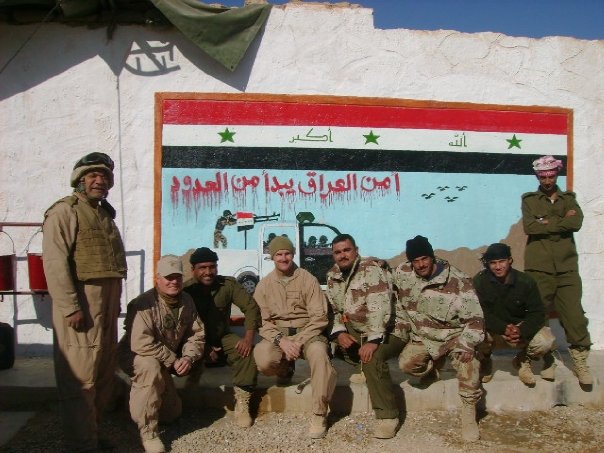
Seven years ago I was in the process of returning home from Iraq spending my last couple of days in country before flying out to Kuwait and then the United States. I was already in a rather melancholy state knowing that the Chaplain incoming higher headquarters had turned off my relief for Al Anbar Province after I had paved the way for him with all of the teams of advisors that I had worked with during my time serving them. My relief a personal friend was diverted to the Army advisors with a different Iraqi Division in the north of the country. I felt that the incoming senior chaplain had betrayed and abandoned the men that I worked so hard to care for. Later I heard that he had disregarded my heavily detailed after action reports and told at least one senior chaplain that he “had heard that I was out there but didn’t know if I had done anything.”

It was at that point that I realized that you could do your job and sacrifice yourself to complete a mission only to have someone with their own agenda do what they could to discredit you.  I felt betrayed and still do. I was asked by my therapist about this and frankly, though I have tried to forgive the feelings always come back.

Where the senior Chaplain that I worked for did all that he could to support my team’s mission and see that we were properly recognized at Multi-National Corps Iraq in Baghdad his successor dismissed our work. It was the first time in my Navy career that I had experienced that.  I think it was the fact that I worked for a non-traditional billet working for an Army led joint command outside the normal Navy-Marine Corps chain was a big part of this. Inter-service rivalries and the distain of those bound by conventional thinking are not new and those that have done such non-conventional work have frequently been treated in a similar manner.

I think that is why the line in the song “Tho’ all the world betray thee” means so much to me and w.a big reason why the song touches me in the way it does. It is a song of men changed by war.

Looking back there are some songs which are particularly meaningful to me after my time in Iraq that send a chill up my spine when I hear them. One of these is the patriotic Irish song The Minstrel Boy written by Thomas Moore while a student in honor of friends killed in the Irish Rebellion of 1798.  The song was very popular among soldiers of Irish descent in the American Civil War as well as soldiers fighting in Irish Regiments in World War One and World War Two.

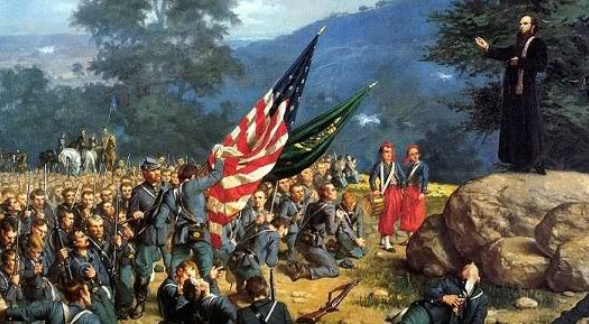
The song is powerful when you hear it for it speaks of the reality of war, war that changes those, even those that return home are not unchanged by it.  It speaks of the sacrifices required by those that go to war and even the effects on the community, the loss of young people.  The final verse added by an anonymous author during the American Civil War in a sense is a prayer, a prayer of return as well as reconciliation. It has been recorded a number of times including an instrumental during the film Blackhawk Down. Another rendition is in the telvision mini-series Rough Riders about the 1st U.S. Volunteer Cavalry at the Battle of San Juan Hill and one in the movie Gettysburg as Father Corby blesses the Irish Brigade.
william_corby_reformat

My life has been changed and faith challenged. When I went to Iraq I still maintained a sense of idealism.   After Iraq and having to deal with PTSD and a psychological, spiritual and physical breakdown as well as a profound sense of abandonment by some senior chaplains, my former church and even God I am a different person. My faith which had been shattered to the point of being a practical agnostic for nearly two years has returned and even now seven years later I struggle with belief, unbelief and faith in general, but I don’t think that is a bad thing. If we are not changed by what God allows or by what life brings I don’t think that we grow. As a Priest I wonder if I could work in the environment that I work without having gone through what I did.
hqdefault1

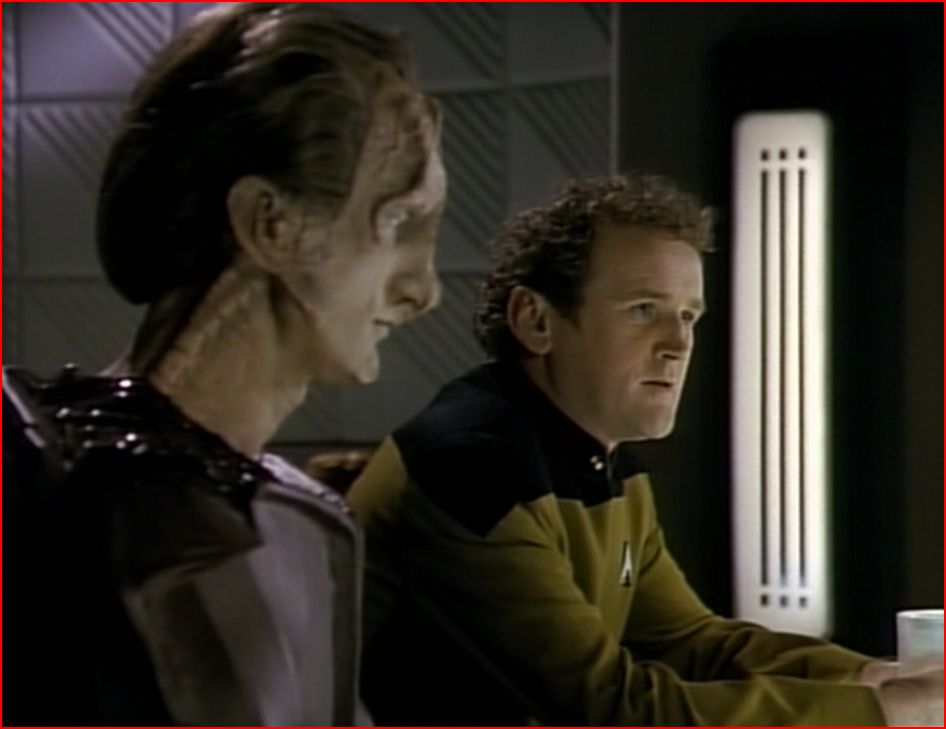
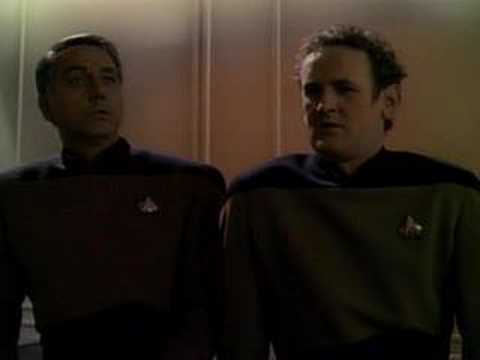
I see many of the “minstrel boys” and girls of our era and having also been to war and come back changed the last lines of the final verse is a prayer that I echo. One of the versions that I particularly like is the one sung in the Star Trek the Next Generation episode “The Wounded.” While it is only the first verse it deals with the lives of two officers whose lives are forever changed by war. http://www.youtube.com/watch?v=RJudJ9S579A

This is dedicated to all those who have served who have gone through the pain of war and return until war shall be no more.

Peace

Padre Steve+
Leave a comment

Filed under civil war, History, Military, movies, music, PTSD, Tour in Iraq

Learning to Live with PTSD and Moral Injury through the Lens of Star Trek

CBS_STAR_TREK_TNG_178_thumb_640x360

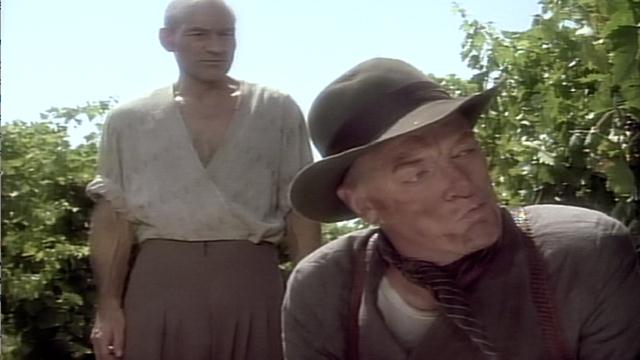
“So – my brother is a human being after all. This is going to be with you a long time, Jean-Luc. A long time. You have to learn to live with it. You have a simple choice now: live with it below the sea with Louis – or above the clouds with the Enterprise.” Robert Picard to Jean Luc Picard 

http://www.youtube.com/watch?v=SFnxJYLOcus

I am a big fan of the various Star Trek television series for many reasons. Perhaps the biggest reason is how I see the series speak to real issues, including things like PTSD and Moral Injury. That is a wonderful thing about the genre of science fiction, good writers can make a fictionalized future relatable to those that read or watch their creation.  I think this especially valuable because the presentations are realistic, but at the same time because they are science fiction are less threatening.

In Star Trek the Next Generation and Star Trek Deep Space Nine there are a number of episodes that deal with the effects of PTSD, moral injury and combat stress injury.  They include some that deal with Captain Jean Luc Picard, Chief Miles O’Brien, Captain Benjamin Sisko and Ensign Nog. The ones dealing with Picard and Sisko deal with senior leaders, which makes them interesting to me.

The one about O’Brien deals with moral injury in a senior enlisted leader, and the episode about Ensign Nog, the effect of physical and emotional trauma on an idealistic junior officer. Today I am focusing on the senior leader aspect, looking at the experience of Picard after his abduction by the Borg and that of Chief O’Brien when he meets former Cardassian enemies that he fought in a desperate battle at an isolated outpost.

The Wounded

In the episode called The Wounded Chief O’Brien expressed what so many of us know about war, and voices what PTSD and Moral Injury does to us when he says to a Cardassian officer: “It’s not you I hate, Cardassian. I hate what I became, because of you.” It is a sentiment that I have encountered in other veterans, including some that I knew who served in World War II, Korea and Vietnam.

http://www.youtube.com/watch?v=Owyj_5TuHQw 

Senior leaders afflicted with PTSD are among those least likely to seek help for it, even when the effects on them are evident to most.  It is our culture, it is our personality, it is how we do life. Most of us are overachievers who for most of our lives been able to compartmentalize even the worst experiences in order to move ahead in our career and vocation as military leaders.

When we, that is senior leaders experience things that are troubling we seldom have the luxury of dwelling on them. We frequently have to keep things running, take care of our people and move along. So because we are not able to deal with these experiences and the emotions that they engender, we box them up, put them on a shelf and move on. This is important because the mission has to be fulfilled, even if there is a terrible price to be paid later.

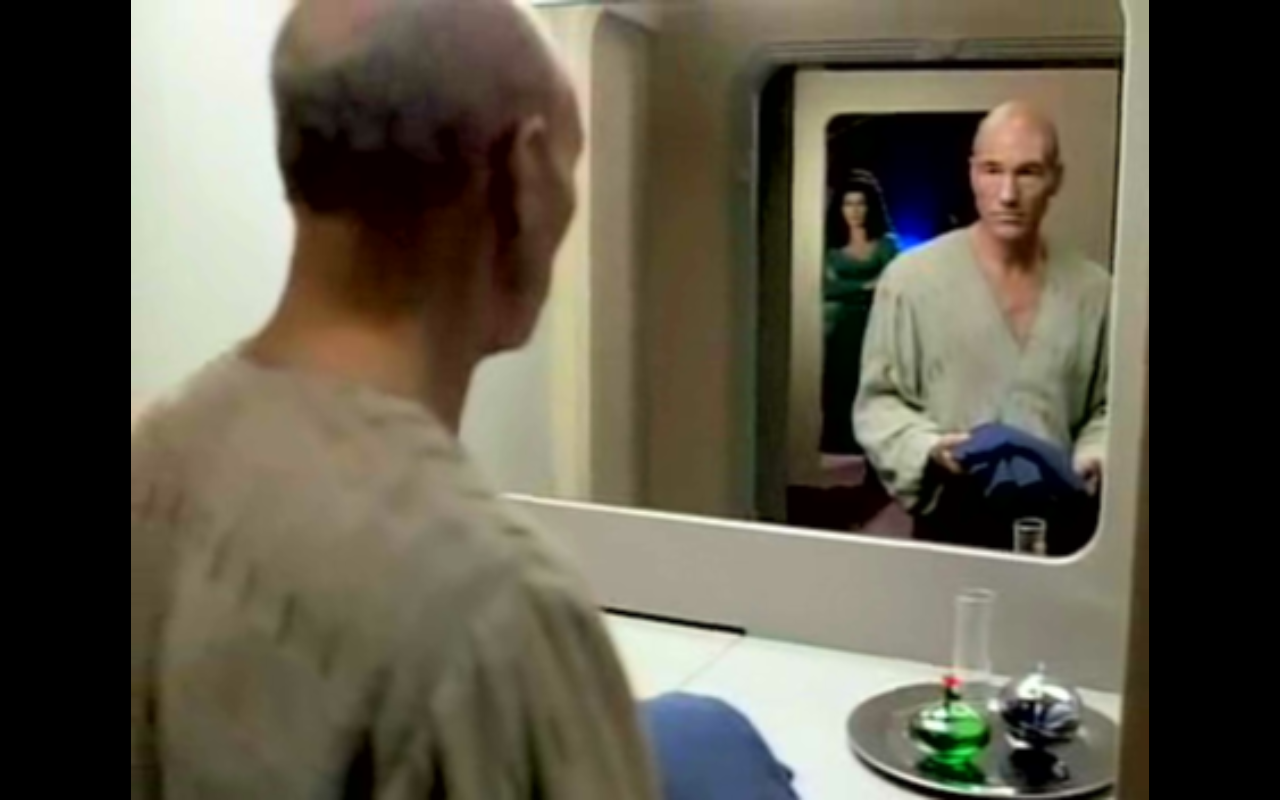
Picard tells counselor Troi before going on leave: “Your help has been invaluable during my recovery, but… look, I’m, uh… I’m better! The injuries are healing.” Of course he is not better, he is simply in denial.

Unfortunately the traumatic experiences that we package and put into storage are often quite toxic. I like to use the term radioactive, it just sounds more sinister. They are corrosive, and like radioactive or other toxic waste quite often breach the containment vessels that we construct in our minds to store them.

Likewise since senior leaders have often spent years, or even decades dealing with trauma the effects are cumulative, it may not be a single incident of trauma, but multiple instances or trauma, and experiences that leave scars on our soul, things that cause us to wonder, and doubt the things that we believe in the most.

I have seen this happen all too often. I know, have known or am personally aware of numerous cases where senior leaders afflicted with PTSD, TBI or Moral Injury continue on, even get promoted to high command and then crash and burn. Sometimes it means the end of their upward mobility, for others the end of their career and for some a condition that eventually destroys them. Unfortunately, most don’t get help because of the stigma associated with it and the fear of what it will do to their career aspirations.

The truth of the matter is that these traumatic injuries remain with us. If we deny them, or try to contain them without dealing with them they are like highly toxic waste that eventually escapes containment. When they do breach containment they create devastation in our lives, careers and of the lives that we care about, our families, and those that we lead.

That help begins with us, we have to admit that we need help and seek it out. We also need colleagues, seniors and subordinates to be honest with us.  But even while getting help we have to decide to go on with life, that is a choice that we must make.

We have to know that even as we get help and even get some relief from the symptoms of PTSD, TBI, Combat Stress Injury or Moral Injury that the memories will remain. Feelings and images of trauma that we think we have gotten through are still lodged deep in our psyche, and sometimes it doesn’t take much for them to return, bigger than life. The memories can be triggered by sights or images, smells, music, or something someone says or does. They can be relived when we experience a new trauma that reminds of us of the past.  That is why trauma experienced even decades before can still be as vivid to soldiers as the day that they were first experienced.

f001

Counselor Deanna Troi told Picard after his encounter with the Borg: “Captain, you do need time. You cannot achieve complete recovery so quickly. And it’s perfectly normal, after what you’ve been through, to spend a great deal of time trying to find yourself again.”

I write in the hopes that all of us who have seen or experienced things in war are able to get the help that we need. But in the words of Robert Picard to his heroic yet traumatized brother; This is going to be with you a long time, Jean-Luc. A long time. You have to learn to live with it. You have a simple choice now: live with it below the sea with Louis – or above the clouds with the Enterprise.” 

Yes, we do have to learn to live with it, but we can. Maybe not easily, but we can, and in doing so still do great things.

Peace

Padre Steve+

2 Comments

Filed under Military, PTSD, star trek