Tag Archives: christmas

The Wrong Shall Fail… I Heard the Bells

fightforthecolors2la

Friends of Padre Steve’s World,

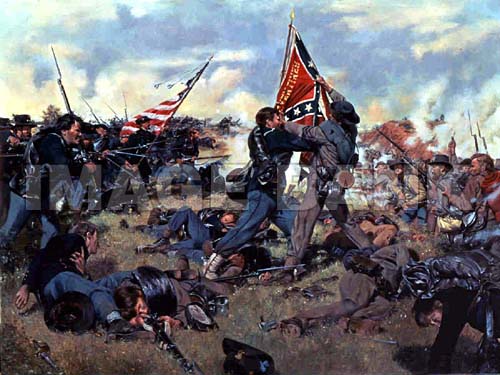
The great American poet Henry Wadsworth Longfellow penned these words of hope on Christmas Day, 1863, “God is not dead, nor doth He sleep; The wrong shall fail, the right prevail With peace on earth, good will to men.”

While it is not Christmas yet I felt that his words are as pertinent today as when he first penned them.

His words became the heart of the song I Heard the Bells on Christmas Day.  I have heard it a number of times in the past few days and each time it really touches me.

The song has been recorded in a number of versions by different artists over the years. However, the words of the song go back to the American Civil War. It began as a poem written by Henry Wadsworth Longfellow on Christmas Day 1863 following the serious wounding of his son Charles, a Lieutenant in the Union Army at the Battle of New Hope Church, and the death of his wife in a fire two years before.

The words are haunting. Probably because they demonstrate the profound tension that lies at the heart of the Incarnation, which is the heart of Christmas and the Christian faith. the tension, played out so well in the song is the existence of a message of peace and reconciliation in a world where war and hatred of many kinds tear human beings apart and the tragic inability of Christendom to even come close to the message of Christmas.

I heard the bells on Christmas day

Their old familiar carols play,

And wild and sweet the words repeat

Of peace on earth, good will to men.

I thought how, as the day had come,

The belfries of all Christendom

Had rolled along th’ unbroken song

Of peace on earth, good will to men.

gburg dead2

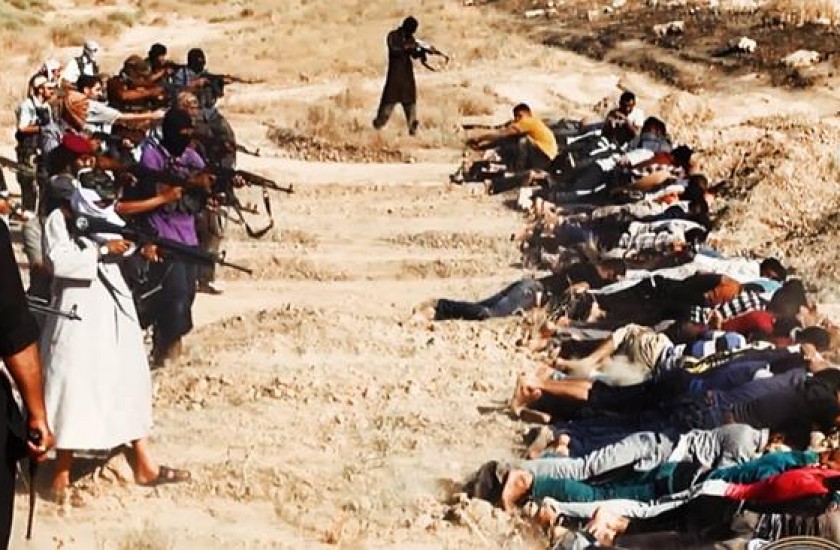
The reality of this is seen in the third verse. It is a verse that echoes throughout history and seems to be true even today, in fact it seems to be the most real as we deal with war, hatred, terrorism, killing in the name of God, and political fratricide.

And in despair I bowed my head

“There is no peace on earth,” I said,

“For hate is strong and mocks the song

Of peace on earth, good will to men.”

isis3-840x550

The interesting part about the songs as opposed to the poem is that they omit three of Longfellow’s verses that admittedly in a reunited country would not help record sales. Those verses speak to the heart of the Civil War.

Till ringing, singing on its way,
The world revolved from night to day,

A voice, a chime,

A chant sublime

Of peace on earth, good-will to men!

Then from each black, accursed mouth
The cannon thundered in the South,

And with the sound

The carols drowned

Of peace on earth, good-will to men!

It was as if an earthquake rent
The hearth-stones of a continent,

And made forlorn

The households born

Of peace on earth, good-will to men!

But Longfellow hears in the bells something more powerful. It is the message of Christmas and the incarnation. The message that justice and peace will finally embrace.

Then pealed the bells more loud and deep:

“God is not dead, nor doth He sleep;

The wrong shall fail, the right prevail

With peace on earth, good will to men.”

Till ringing, singing on its way

The world revolved from night to day,

A voice, a chime, a chant sublime

Of peace on earth, good will to men.

The song has been recorded many times by many artists. I like the version sung by Frank Sinatra, which the music was composed by Johnny Marks, composer of Rudolph the Red Nosed Reindeer. Another earlier version composed by John Baptiste Calkin has been recorded by Elvis Presley and Johnny Cash among others.

As wars rage in the Middle East, tensions rise in Asia, Africa and even Eastern Europe while the Unholy Trinity of Politicians, Pundits and Preacher rage as we go into another, and even more divided election season, people look for hope. Longfellow, who lost so much in a short time in the midst of a terrible Civil War, reminds us that in such times, “God is not dead, nor doth He sleep; The wrong shall fail, the right prevail With peace on earth, good will to men.”

Peace

Padre Steve+

Leave a comment

Filed under faith, History

We’ll Have to Muddle Through Somehow: Christmas 2015

Friends of Padre Steve’s World

There are some songs at Christmas that despite their relative newness as compared to ancient carols seem to strike a chord that resonates deep in the hearts of people. One of those for me, and probably many others is the song Have Yourself a Merry Little Christmas. The music was written by Ralph Blane and the lyrics by Hugh Martin for the musical Meet Me in St Louis and first performed by Judy Garland in that film. In the movie Garland’s character sings the song to her younger sister after their father announces plans to move from their home of St Louis to New York for a job.

The lyrics for the musical were changed because Garland’s director Vincent Minnelli and co-star Tom Drake felt that Martin’s original lyrics which began with “Have yourself a Merry Little Christmas, it could be your last. Next year we may all be living in the past” were too depressing. The lyrics were changed to “let your heart be light, Next year all our troubles will be out of sight” in response to their request. The words sung in the musical by Judy Garland have a haunting but very real feel for people who face uncertainty at Christmas, as such they were very meaningful to the US military personnel who heard them at the front in the Second World War.

As originally produced they reflect a hope for a better future as opposed to a carefree present. As such they are probably much more appropriate to our current time than in the mid-1950s when Frank Sinatra recorded a modified version of the song for his album A Jolly Christmas.

Sinatra asked Martin to “jolly up” the line “we’ll have to muddle through somehow” and Martin changed it to “Hang a shining star upon the highest bough.”

When Frank Sinatra recorded the song in 1957 it too became a hit and the focus on present happiness rather than a hope for a better future fit the times in which it was recorded. Sinatra’s version also notes that “faithful friends gather near to us once more” instead of “will be near to us once more.”

The song was re-written by Martin a number of times including a “Christian” version which included the words “if the Lord allows” instead of “if the fates allow.” Though I am a Christian I think that change was kind of lame, but then if there are a few dollars to be made off religious people who otherwise won’t listen to a song why not?

The song is one is one of the most recorded Christmas songs ever written and can be heard being sung by artists as diverse as Bing Crosby, Ella Fitzgerald, Rod Steward, the Carpenters, Kelly Clarkson, John Denver with the Muppets, the Pretenders, Olivia Newton John, Kenny Loggins, and even Twisted Sister.

The song as recorded by Judy Garland is actually my favorite, though I also love the Sinatra version. Somehow “muddling through somehow” seems to be more appropriate in my experience.

So enjoy these versions of a song that has touched the hearts of hundreds of millions of people since it was first recorded. May it be an inspiration in these uncertain times of a hope for a better future. Maybe that makes it a better Advent song, but I digress….

For me it is kind of a sad song, but mixed with hope…and I always try to live in hope.

Here’s to muddling through somehow…

Peace

Padre Steve+

Leave a comment

Filed under faith, film, movies, music

Christ & Christmas

996759_10152169414832059_1833080489_n

Friends of Padre Steve’s World,

Just a short thought today as we get ready for Christmas. Of course it is still the season of Advent, but no time like Advent to talk about faith, but as I mentioned at the beginning of the month, I plan on sharing some of my faith experience, and this is another one of those posts.

The great author and novelist Anne Rice wrote after leaving the Catholic Church a few years ago, “My faith in Christ is central to my life. My conversion from a pessimistic atheist lost in a world I didn’t understand, to an optimistic believer in a universe created and sustained by a loving God is crucial to me. But following Christ does not mean following His followers. Christ is infinitely more important than Christianity and always will be, no matter what Christianity is, has been, or might become.”

I can understand that feeling, and now over five years after being asked to leave my former church I am in a good place, and for the most part I am over the pain, hurt, and bitterness that I felt in the immediate aftermath of that experience. While I still experience a sense of loss due being rejected by men I thought were friends, I don’t feel the terrible pain that I used to feel, especially this time of year. But that being said what I feel now is much more about other people who may be going through similar experiences in their own churches or faith communities.

The fact is that I do not want others to have to go what I went through. I know that such things happen every day, but I would never wish what I went through on anyone. 

Sadly, it will happen. It will happen in churches across the theological and ecclesiolgical  spectrum. In one breath church leaders and members will extoll the love of God, and in the next condemn and reject people for a myriad of reasons; and they will use the most hate filled and vile terminology covered with a thin veneer of theological and biblical justification. They will turn their backs on people who simply want to be loved, cared for, accepted, and listened to in their spiritual quest. 

Dietrich Bonhoeffer said:

“Many people are looking for an ear that will listen. They do not find it among Christians, because these Christians are talking where they should be listening.”

This Advent I am thankful that I have a number of friends, including some Christians from variety of backgrounds, as well as some chaplains who have stood by me even if they disagree with my theology, politics, or my favorite baseball teams. That being said, with the exception of such people who have been with me through thick and thin I am mostly terrified of being around conservative Christians, and most of my closest friends are people who are not welcome in most churches due to their beliefs or lifestyles. But they are genuine and we honestly care for each other. 

Most churches are frightening places for me, and the sad fact is that if I were not already a Christian there is little in American Christianity that would ever cause me to be interested in Jesus. I can totally understand why churches are hemorrhaging members, especially young people whose religious preference is “none,” for I too am in some sense an outcast. I guess that is why I can relate to Anne when she wrote, “following Christ does not mean following His followers. Christ is infinitely more important than Christianity and always will be, no matter what Christianity is, has been, or might become.”

Have a great day,

Peace

Padre Steve+

2 Comments

Filed under christian life, faith, Pastoral Care, philosophy, Religion

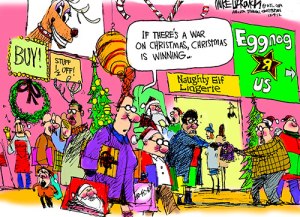
The War on Christmas

lk120912dAPR-losing-the-war-500

Friends of Padre Steve’s World,

This time of year as the war on Christmas heats up I am reminded of the immortal words of Doctor Seuss:

“The Grinch hated Christmas! The whole Christmas season!

Now, please don’t ask why. No one quite knows the reason.

It could be his head wasn’t screwed on just right.

It could be, perhaps, that his shoes were too tight.

But I think that the most likely reason of all

May have been that his heart was two sizes too small…”

Dr Seuss How the Grinch Stole Christmas


Yes my friends I hate to admit it there is a war on Christmas. However unlike those that want to blame it on all of those Godless types, I have to say that some Christians have waged a real war on Christmas for centuries.

Now I have to be fair. There are some people in the secularist camp who file lawsuits against municipalities that have Christmas displays on public property and even some who will push those lawsuits to exhibits on private property.  However, despite the media attention these are nothing in comparison to what the Christian Grinches have done over centuries. So despite the efforts of some I do not fear for Christmas because the celebration of Christ’s Incarnation and Nativity has survived far worse even from those within the faith.
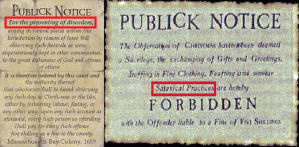
PURITAN-BAN-ON-CHRISTMAS-WAS-TO-PREVENT-DEMONIZATIONS-OF-CITIZENS-IN-COMMUNITY

Puritan Anti-Christmas Laws

Now let me be fair here. Some of the things that the Christian Grinches have protested are frivolous and not very spiritual. But that tends not to be the case today. Today’s Christians seem perfectly at home with the crass materialism and consumerism of our modern Christmas celebrations even within the walls of Christian churches. It seems that as long as we are willing to put a nativity scene made by Third World slave laborers in the middle of an otherwise completely capitalistic consumer orgy we don’t care. But God forbid an Atheist object or a member of a minority religion demand equal time and space for their display in the otherwise crassly materialistic celebration, those things are a declaration of war against the very holiday that we as Christians wantonly desecrate.
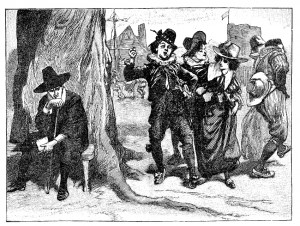
frowning-puritan-300x226

The Puritans hated Christmas…

Let us go back and look at some history. Not the kind of “history” promoted by David Barton and Glenn Beck, but real history. You know, stuff that actually happened and that we have documentary evidence to support, not stuff that we pull out of thin air.

Back in the 1600s a Christian group that was tremendously influential in our nation’s early development hated the celebration of Christmas. I am not kidding. These were the Puritans.

The Puritans believed that they were the “elect” based on their theology. The Calvinist doctrine of double predestination ensured that they as the elect knew they knew they were right. For those that do not understand this doctrine, let me explain. The Puritans and other strict Calvinists believed that they were the elect. They believed that they were pre-ordained by God before the foundation of the world to go to heaven, and the rest of us were created to live and die, and then go to Hell because God decided so before the creation of the world.

But that is not all. The Puritans also believed that as the elect that they had a “Biblical Mandate” to rule for God on earth and as such they established a theocracy in the Massachusetts Bay Colony. If the Puritans had simply died out and gone away this might not be an issue. However, their theology has continued and their modern successors in the modern Christian Dominion or 7 Mountains Theology movements believe the same thing. They believed that sine it was God’s will that they rule that whatever they said that others needed to obey, after all God put them in charge.

The Puritans came out of the Protestant Reformation in England. Unlike the Englishmen of today, the English of that period took their religion pretty seriously.  Now despite the cultured accent that we hear on the BBC or CNN World the English religionists of that day were actually more like unruly football fans only worse. When it came to matters of religious tolerance and loving their neighbors they were rather un-Christian.

English Protestants of the non-monarchical Reformation type like the Puritans did their best to rid the Church of England of anything that appeared to even look Catholic, especially anything to do with Christmas. Of course this cleansing of the church often included killing real people including the few remaining stick in the mud Roman Catholics as well as Anglicans who still liked Catholic stuff.

But to be fair to the Puritans back then the English of all Christian denominations tended to be a bit intolerant. They would lop off the heads, burn at the stake, or crush with heavy stones anyone that deviated from their beliefs. They killed first first and asked questions later. It was kind of like the fans of the Premier League only without professional officials to regulate the game.

Early in their history the Puritans were a persecuted group. They were militant, intolerant and exclusive, so who could not find reasons not to like them? But when the Puritans took power after Oliver Cromwell overthrew the monarchy they took their revenge with great gusto. They didn’t just decide to lop, crush and burn their opponents of all denominations, but they also decided to outlaw the celebration of Christmas.

Of course they did so for the noble reason of purifying England of heresy. In fact if you want to compare them to a modern religious group, they would be pretty similar to the Taliban. When the Puritans took over the government they did their best to ensure that everyone was as miserable as them. This included banning the celebration of Christmas.
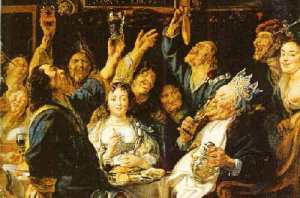
Wassail 03

Wassailers 

The Puritans were not content with inflicting their beliefs on church going people, they inflicted them on the majority of the people who simply wanted some relief for the drudgery of daily life in 17th Century England. The Puritans even banned the poor from the tradition of Wassailing. Wassailing was a custom in which the rather pungent poor would go from house to house, begging for treats in exchange for drinking a toast to the family.  The drink they called wassail was a hot-spiced wine.  Now this was not a vintage Napa Valley or French wine but a rather pungent and rancid English wine, thus the need for spices and heat.
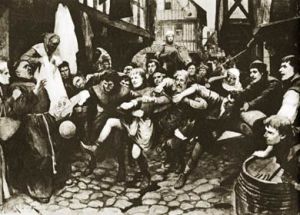
SPSC1115-Mob-Football-14t

Mob Football

Wassailing sometimes ended up with episodes of drunken revelry, much like current English Football match celebrations, which is why the Puritans objected so strenuously. They didn’t like football either. No kidding, then it was called “Mob Football” and it didn’t have very many rules. Since it was particularly popular at Christmas, the Puritans suspected that it must have been from the Devil.

The Puritans had no sense of fun as we know it. They viewed any religious practice that might include something that might be fun harmful, as such anything fun needed to be completely removed from public life.

Oliver Cromwell by Samuel Cooper

Oliver Cromwell

This miserable situation lasted until 1660; a year after the Lord Protector and head of the army and police Oliver Cromwell kicked the bucket. The anti-Christmas laws were quickly overturned and everyone was happy. Well sort of, the populace went back to simply lopping, burning and crushing heretics, especially Roman Catholics. That being said, people were so happy to bring Christmas back that the new rulers in England exhumed Cromwell’s body from Westminster Abbey and executed him posthumously. Since decorating was allowed these rulers lopped off Cromwell’s head and displayed it outside Westminster Hall for about four years. A popular verse of the time said:

Now thanks to God for Charles’ return,

Whose absence made old Christmas mourn;

For then we scarcely did it know,

Whether it Christmas were or no.

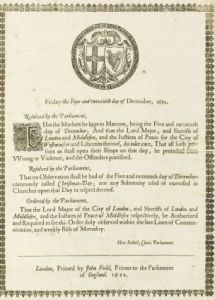
Not to be outdone the Puritan colonists in the Massachusetts Bay Colony decided that what was going on in their homeland was not to their taste. So in 1659 under Governor Sir Edmund Andros they enacted laws like those of Cromwell. The laws remained on the books until 1681. During the time that the laws were in force everyone had a grand time. To keep the festivities going the General Court of the Massachusetts Bay Colony banned the celebration of Christmas and other such holidays at the same time it banned gambling and other lawless behavior.

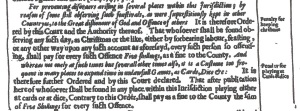
Grouping all such behaviors together the court placed a fine of five shillings on anyone caught feasting or celebrating the holiday in a manner that might be construed as fun. Things like taking time off from work, feasting, partying, wassailing, playing Mob Football, or anything else that might be construed as fun were criminalized. The law stated:

“For preventing disorders, arising in several places within this jurisdiction by reason of some still observing such festivals as were superstitiously kept in other communities, to the great dishonor of God and offense of others: it is therefore ordered by this court and the authority thereof that whosoever shall be found observing any such day as Christmas or the like, either by forbearing of labor, feasting, or any other way, upon any such account as aforesaid, every such person so offending shall pay for every such offence five shilling as a fine to the county.”
article-1332096124019-12390FC5000005DC-933373_304x425

That sounds lovely doesn’t it? To their credit the Puritans of the Massachusetts Bay Colony didn’t go lopping, burning or crushing heretics with heavy stones unless they were proven to be a Christmas celebrating witch.
Christmas law 1658

Unlike England where the lifting of the ban was celebrated with the aplomb given to a World Cup championship the Puritans in the Massachusetts Bay Colony and their descendants frowned upon the celebration of Christmas until the 1820s. That was when enough Irish showed up in Boston to turn the place around and make it the fun town that it is now.  Coincidently the last State Church in the United States was the Congregational Church in Massachusetts. It wasn’t disestablished until 1833.

So the next time you hear about the war on Christmas, remember that a lot of the people ranting about the supposed “war on Christmas” actually want to re-establish a very harsh and sterile Puritan view of faith that led to the celebration of Christmas being criminalized in England and in Massachusetts. Of course they would have a hard time doing that now since they so connected to the corporations and retailers who make big time bucks off of Christmas.

Thankfully for now we only have to suffer from the yearly rants of the fun deprived army of Christian Grinches, who without the religious flair of the Puritans attempt to crush the spirit of Christmas. Thankfully, today, more people like all the tinsel, bells, lights, decorations, the presents and time off regardless of their religion or lack thereof to want to abolish Christmas. So the Christmas celebration as we know it will survive, at least until next year. One can always hope.

Peace

Padre Steve+

2 Comments

Filed under christian life, faith, History, News and current events, Religion

Advent & the “War” on Christmas

677

Friends of Padre Steve’s World

I often talk about my struggles with doubt and faith, but in regard to faith, the season of Advent has become even more important to me than it ever was before. In fact, amid all the yearly histrionics and propaganda of the Christian Right and their Fox News Channel cheerleaders who scream about “the war on Christmas” I find Advent to be a powerful antidote.

Advent is the beginning of the liturgical year, in a sense the opening day of a new season of faith, as much as the Opening Day is to baseball. Advent is a season of new beginnings, of hope looking forward and looking back. It is a season of intense realism. It is a season where the people of God look forward to their deliverance even as they remember the time when God entered into humanity.  It was not simply entering the human condition as a divine and powerful being inflicting his will upon people but deciding to become subject to the same conditions know by humanity. As Paul the Apostle, wrote about him: “though he was in the form of God, did not regard equality with God as something to be exploited, but emptied himself, taking the form of a slave, being born in human likeness. And being found in human form, he humbled himself and became obedient to the point of death– even death on a cross.” (Philippians 2:5b-8) 

In the incarnation Jesus Christ shows his love and solidarity with people, humanity, the creation, reality. Dietrich Bonhoeffer wrote:

“God loves human beings. God loves the world. Not an ideal human, but human beings as they are; not an ideal world, but the real world. What we find repulsive in their opposition to God, what we shrink back from with pain and hostility, namely, real human beings, the real world, this is for God the ground of unfathomable love.” 

That simple fact is why Christ came. Christ did not come to found a government or even for that matter a religion. He did not come to exemplify “Christian” virtues or to condemn people that religious people condemned as sinners. He came simply to save and redeem the world and people like us from themselves.

The meaning of the incarnation, and the hope of the season of Advent is that God loves people. Yes, even the people that the supposed Christian culture warriors despise.

In the next few week there will be much written and said about Jesus. Much of it will not actually deal with Jesus or the people that he came to save but instead about the worldly power and influence of those who seek the profits of being “prophets.” Some of them will talk fervently about the “War on Christmas” as if somehow God and Christ are so small that they need government-sponsored displays in the public square in order to be real, relevant or for that matter important. What a small God they must have.

Somehow the message of Advent, the coming of Jesus is contradictory to the message of the for profit prophets. Certainly the early Christians had no government backing of any kind. These early Christians simply lived life and showed God’s love to their neighbors, often at the cost of their lives and paradoxically the message was not crushed, but spread and to be neutralized had to be coopted by Constantine. It was only when the leaders of the church became co-executors of government power that the message of reconciliation became a bludgeon to be used against those who did not agree with the theology of the clerics beholden to the Empire.

The Christ of the Season of Advent, the one who came and who promises to come again is not captive to the capricious message of the for profit prophets and their political and media allies. I would dare say that God is much bigger than them or those that they believe will somehow end the Christian faith as we know it. But then maybe the Christian faith “as we know it” is more a reflection of our culturally conditioned need for physical, economic and political power over others than it is of Jesus.

All I know is that the simplicity of the message that “God so loved the world that he gave his only begotten Son” is more powerful than any political-religious alliance.

The time of waiting in expectation during advent also helps us to focus on Jesus’ words to  “Love God with all your heart and love our neighbors as ourselves.” It also calls to mid the words of the Old Testament prophet Micah, who asked “what does the Lord require of thee? To love show justice, to love mercy and to walk humbly with thy God.”

Advent stands in stark contrast to the politically charged consumerism of the War on Christmas.  I think that the message that God loves the real world is worth repeating in such an environment. In fact I think that because the message of God’s great love for those deemed “repulsive” by so many supposedly “conservative Christians” is so amazing that it must be proclaimed. As distasteful as it is to the “for profit prophets” of our time, it is not only worth repeating, but actually believing and being acting upon.

It is a good reason for me to during this season of Advent to look forward to our celebration of the mystery of the Incarnation, the coming of the God who “emptied himself” and took “the form of a slave” in order to save his people.

Peace

Padre Steve+
3 Comments

Filed under christian life, faith, Religion

Christmas 2007 in Anbar: My Last Mass to Love…

lastmass

“It’s my last mass, my last mass to love…”

It’s funny how a slight twisting of the lyrics of a classic Disco song can blend with one’s wartime experience, instead of my last dance, it was my last mass, to love….

I was in Iraq in December 2007 on an 11 day expedition to American advisors to Iraqi Army and Border units in Al Anbar Province toward the end of my tour in Iraq. The mission was to provide chaplain support and spiritual succor to the American soldiers, marines, sailors, airmen and civilians, as well as the Iraqi and other Arab interpreters and contractors serving in incredibly isolated parts of the province near the Syrian border.

For me it was one of the last magical times in my life. I was exhausted and already suffering from insomnia and nightmares caused by PTSD that I was unaware of having, but while I was there that didn’t matter, in fact if I would have been allowed to extend in Iraq back then I would have. It was my life and the men and women that I served mattered more to me than anything. It still does…

copsouth

COP South

After a number of visits with other elements we traveled out to a small base near the Syrian border called COP South. It was the location of two teams of advisors, one which supported elements of the Second Border Brigade and one which supported the 3rd Battalion of the 3rd Brigade of the 7th Iraqi Army Division. We were not strangers to either team. Following the vista there we made our way to COP North, also along the Syrian border to do the same for two other advisor teams, one supporting a different Border unit and and the 2nd battalion of the 3rd Brigade of the 7th Division.

10400534_29132407058_7347_n

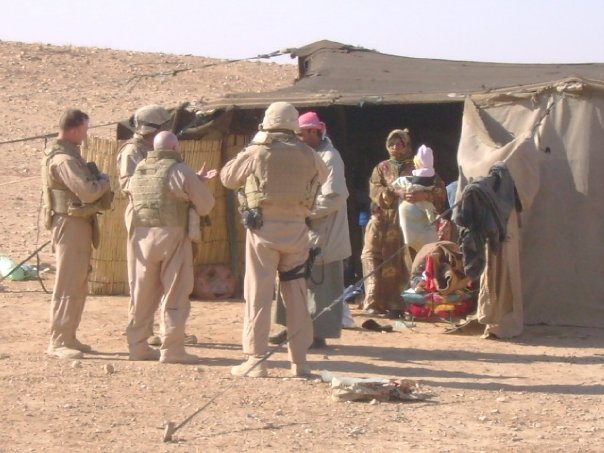
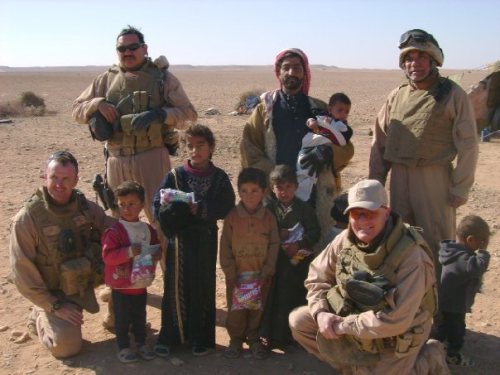
With the Bedouin on the Border, I’m the bald guy without the helmet. 

These outposts were terribly isolated. The men who served there served in incredibly austere conditions where danger lurked just beyond the sand berms that were the boundaries between them and the Islamist extremists of Al Qaeda Iraq and their supporters. The berms were not much comfort to anyone on either of the two most west most COPs in theater. Just to the west was Syria, a haven and support to the Al Qaeda Iraq insurgents and their supporters. All around were Iraqi Sunnis who many only recently had changed their allegiance to support the Americans against the largely foreign AQI forces.

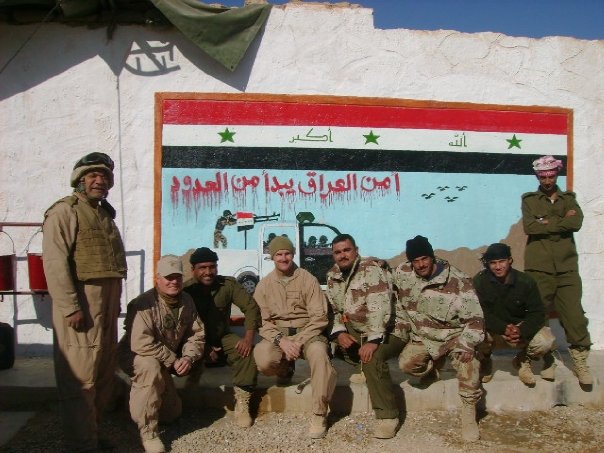
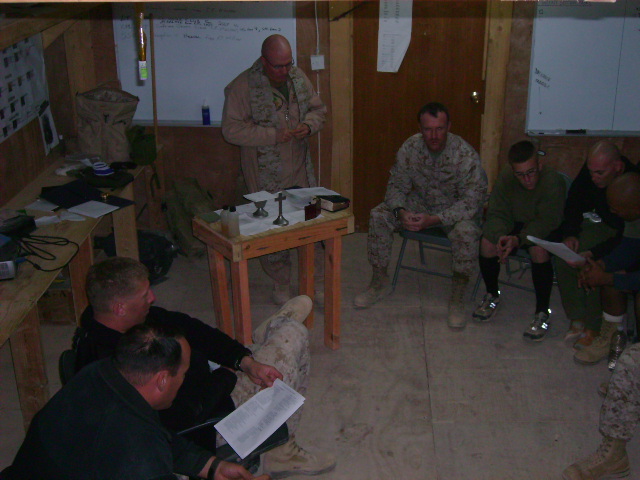
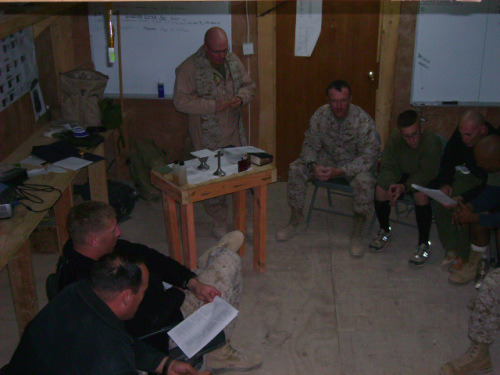
The men that I served were not a typical congregation that you would find in the states. Methodists, Baptists, Presbyterians, Charismatics, Catholics, non-denominational types, Latter Day Saints and even a few Iraqi Christians, some who had not received Eucharist from any priest for years gathered for mass at COP South and COP North that Christmas of 2007. Iraqi Moslems wished us well. Peace on earth in the midst of war.

lastmass2

At Border Fort Five on the Syrian Border

As I mentioned I was exhausted. We had been on the road, flying and in small convoys of just a few vehicles since we arrived in theater, I was also on my last legs. I had stood with and stayed with the wounded, I had seen the destruction wrought on Iraqi facilities and people by both sides. All that mattered was to get out with the men and women who had no other formal spiritual support. I would have stayed another year to provide that support, but I knew that would not happen.

When they were done and we headed back to Ta’Qaddum, the base that we operated from I realized that the support we had provided was the high point of my military Chaplain career as well as my priesthood. Instead of my “last dance” as Dona Summer’s song said, it was my “last mass” to love.

Since then things have not been the same for me. I have talked and written about this before on this site, but those masses with those small groups of Americans and Iraqis meant more to me than any I have ever celebrated, especially those after my return from Iraq in 2008. For me, the magic and mystery have disappeared. I struggle with faith and belief even as I chose to believe in spite of my doubts.

There are times I wonder if it would have been better to have been killed by a rocket, an IED, an ambush or to have been shot down in Iraq, rather than to have to deal with this seemingly endless crisis of faith and to inflict my shit on those that I love. But then such is life and such is war.

Honestly I have to say that I believe again, but I am not sure why. I have to say that while I believe my doubts encompass me.

Christmas will never be the same for me. Yes, I have celebrated man masses since I returned, but to quote the Barry Manilow song, I’m “trying to get the feeling again” and sadly, despite my efforts I don’t think that will ever happen. If it does I will rejoice. If it doesn’t I will persevere just hoping and praying that feelings and facts matter less than faith and doing the best that I can.

Anyway. I am tired and just hoping that this Christmas will be different and that maybe I will get that feeling again, if not now, maybe someday….

Peace

Padre Steve+


Leave a comment

Filed under christian life, faith, iraq,afghanistan, Military, ministry, Pastoral Care, Religion, Tour in Iraq

I Belong Here With Those in Pain and Who Have Lost Their Faith

iraqchristmas

Christmas Eve at COP South 2007, the Most Important Mass of My Life

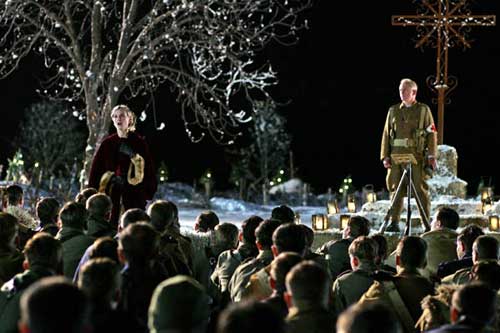
“I belong with those who are in pain, and who have lost their faith, I belong here.” Father Palmer, the Chaplain in Joyeux Noel (Merry Christmas)

In the next day or two, certainly by Christmas I will again watch the film classic Joyeux Noel (Merry Christmas) which is the story of the amazing and exceptional Christmas Truce of 1914. It is a film that each time I see it that I discover something new, more powerful than the last time I viewed it. I will also be writing about Christmas from my perspective as a combat veteran and giving voice to those who serve now, as well as those who served God’s people in hellish places before me.

As a Chaplain I am drawn to the actions of the British Padre in the film, who during the truce conducts a Mass for all the soldiers, British, French and German in no-man’s land, who goes about caring for the soldiers both the living and the dead.  His actions are contrasted with his Bishop who comes to relieve him of his duties and to urge on the replacement soldiers to better kill the Germans.

palmer

Father Palmer Tending the Wounded

As the Chaplain begins to provide the last Rites to a dying soldier the Bishop walks in, in full purple cassock frock coat and hat and the chaplain looks up and kisses his ring.

As the chaplain looks at his clerical superior there is a silence and the Bishop looks sternly at the priest and addresses him:

“You’re being sent back to your parish in Scotland. I’ve brought you your marching orders.”

Stunned the Priest replies: “I belong with those who are in pain, and who have lost their faith, I belong here.”

The Bishop then sternly lectures the Priest: “I am very disappointed you know. When you requested permission to accompany the recruits from your parish I personally vouched for you. But then when I heard what happened I prayed for you.”

The Priest humbly and respectfully yet with conviction responds to his superior: “I sincerely believe that our Lord Jesus Christ guided me in what was the most important Mass of my life. I tried to be true to his trust and carry his message to all, whoever they may be.”

The Bishop seems a bit taken aback but then blames the Chaplain for what will next happen to the Soldiers that he has served with in the trenches: “Those men who listened to you on Christmas Eve will very soon bitterly regret it; because in a few days time their regiment is to be disbanded by the order of His Majesty the King. Where will those poor boys end up on the front line now? And what will their families think?”

They are interrupted when a soldier walks in to let the Bishop know that the new soldiers are ready for his sermon. After acknowledging the messenger the Bishop continues: “They’re waiting for me to preach a sermon to those who are replacing those who went astray with you.” He gets ready to depart and continues: “May our Lord Jesus Christ guide your steps back to the straight and narrow path.”

The Priest looks at him and asks: “Is that truly the path of our Lord?”

The Bishop looks at the Priest and asks what I think is the most troubling question: “You’re not asking the right question. Think on this: are you really suitable to remain with us in the house of Our Lord?”

With that the Bishop leaves and goes on to preach. The words of the sermon are from a 1915 sermon preached by an Anglican Bishop in Westminster Abbey. They reflect the poisonous aspects of many religious leaders on all sides of the Great War, but also many religious leaders of various faiths even today, sadly I have to say Christian leaders are among the worst when it comes to inciting violence against those that they perceive as enemies of the Church, their nation or in some cases their political faction within a country.

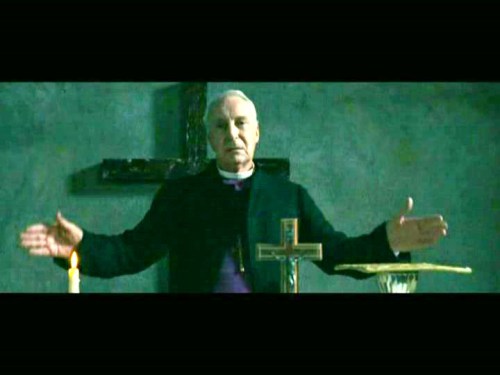
bishop

The Bishop Leads His “Service” 

http://www.youtube.com/watch?v=fMPxjUE40iw

“Christ our Lord said, “Think not that I come to bring peace on earth. I come not to bring peace, but a sword.” The Gospel according to St. Matthew. Well, my brethren, the sword of the Lord is in your hands. You are the very defenders of civilization itself. The forces of good against the forces of evil. For this war is indeed a crusade! A holy war to save the freedom of the world. In truth I tell you: the Germans do not act like us, neither do they think like us, for they are not, like us, children of God. Are those who shell cities populated only by civilians the children of God? Are those who advanced armed hiding behind women and children the children of God? With God’s help, you must kill the Germans, good or bad, young or old. Kill every one of them so that it won’t have to be done again.”

The sermon is chilling and had it not been edited by the director would have contained the remark actually said by the real Bishop that the Germans “crucified babies on Christmas.”  Of course that was typical of the propaganda of the time and similar to things that religious leaders of all faiths use to demonize their opponents and stir up violence in the name of their God.

When the Bishop leaves the Priest finishes his ministration to the wounded while listening to the words of the Bishop who is preaching not far away in the trenches. He meditates upon his simple cross, takes it off, kisses it hand hangs it upon a tripod where a container of water hangs.

The scene is chilling for a number of reasons. First is the obvious, the actions of a religious leader to denigrate the efforts of some to bring the Gospel of Peace into the abyss of Hell of earth and then to incite others to violence dehumanizing the enemy forces. The second and possibly even more troubling is to suggest that those who do not support dehumanizing and exterminating the enemy are not suitable to remain in the house of the Lord. Since I have had people, some in person and others on social media say similar things to what the Bishop asks Palmer the scene hits close to home.

iraq-bedouin1

Christmas Eve 2007 with the Bedouin 

When I left Iraq in February 2008 I felt that I was abandoning those committed to my spiritual care, but my time was up. Because of it I missed going with some of my advisors to Basra with the 1st Iraqi Division to retake that city from insurgents. It was only a bit over a month after I had celebrated what I consider to be my most important Masses of my life at COP South and COP North on December 23rd as well as Christmas Eve and Christmas Day. In fact they were really the last masses that I felt the mystery and awe of the love of God that I used to so much feel.

When I left the new incoming senior Chaplain refused to take my replacement leaving our advisors without dedicated support. He then slandered me behind my back because what I was doing was not how he would do things and because I and my relief were under someone else’s operational control. It is funny how word gets back to you when people talk behind your back. Thankfully he is now retired from the Navy and I feel for any ministers of his denomination under his “spiritual” care.  So I cannot forget those days and every time I think about them, especially around Christmas I am somewhat melancholy and why I can relate so much to Father Palmer in the movie.

It has been seven years since those Christmas Masses and they still feel like yesterday. In the intervening years my life has been different. Just a year later I was walking home from church where my wife was to sing in the choir during the Christmas vigil mass. I couldn’t handle the crowds, the noise, and I felt so far away from God. That night I walked home in the dark looking up into the sky asking God if he still was there. If there had been a bar on the way home I would have stopped by and poured myself in.

Since Iraq I have dealt with Severe and Chronic PTSD, depression, anxiety and insomnia were coupled with a two year period where due to my struggles I lost faith, was for all practical purposes an agnostic. I felt abandoned by God, but even more so and maybe more importantly by my former church and most other Chaplains. It was like being radioactive, there was and is a stigma for Chaplains that admits to PTSD and go through a faith crisis, especially from other Chaplains and Clergy.  It was just before Christmas in late 2009 that faith began to return in what I call my Christmas Miracle. But be sure, let no one tell you differently, no Soldier, Sailor, Marine or Airman who has suffered the trauma of war and admitted to PTSD does not feel the stigma that goes with it, and sadly, despite the best efforts of many there is a stigma.

Now that faith is different and I have become much more skeptical of the motivations of religious leaders, especially those that demonize and dehumanize those that do not believe like them or fully support their cause or agenda. Unfortunately there are far too many men and women who will use religion to do that, far too many.

As for me, I thought that I was in a better place a year ago. I had the floor kicked from out from under me this summer and it has been a hard fight and while I am beginning to get back to some sense of normal it is a day to day thing. I still suffer the effects of the PTSD, especially the insomnia, nightmares and the nightmares which came back with a vengeance this summer. I also still have the anxiety in crowded places and bad traffic, but working with my new therapist I am coming up with some effective coping mechanisms. As for faith, I do believe again, though at the same time I doubt. I would have to consider myself a Christian Agnostic who echoes the cry of the man who cried out to Jesus, “Lord I believe, help my unbelief!” 

Like the Priest in Joyeux Noel I know that my place is with those who are “in pain, and who have lost their faith.” For me this may no longer be on the battlefield as I will retire from the Navy out of my current billet teaching at the Joint Forces Staff College in a couple of years. However, that being said I will strive to be there for those that struggle with faith and believe, especially those who struggle because of what they saw and experienced during war and when they returned home.

3670064wxkyb

Joyeux Noel Christmas Eve

Likewise I expect that I will do my best to speak truth to those in power and those whose faithfulness is more a product of their comfort with the God that they create in their own mind rather than the Crucified God wise death on the Cross s a scandal. For many Christians the scandal of the cross is too easy to avoid by surrounding ourselves with pet theologies that appeal to our pride, prejudice and power. The kind of malevolent power represented by the bishop in Joyeux Noel. Thus I take a measure of comfort in the words of Simone Weil who said “He who has not God in himself cannot feel His absence.” 

Thus, like Paul Tillich I have come to believe that “Sometimes I think it is my mission to bring faith to the faithless, and doubt to the faithful.”  In other words to become a complete pain in the ass until the day that I die.

Praying for Peace this Christmas,

Padre Steve+

1 Comment

Filed under christian life, faith, film, History, Military, PTSD, Tour in Iraq, world war one

An Advent of Doubt, Faith and Struggles

Lord I believe, help me in my unbelief.

A new liturgical year is upon us and with the season of Advent Christians look forward to the “Advent” of Christ both in looking forward to the consummation of all things in him as well as inviting him back into our lives as we remember his Incarnation, as the Creed says “For us and for our salvation he came down from heaven: by the power of the Holy Spirit he became incarnate from the Virgin Mary, and was made man.”

At the same time for a lot of people the season of Advent and Christmas are incredibly difficult and times where faith, already difficult becomes nearly impossible.  For many the season is not a time of joy but depression, sadness and despair. I know feeling well, for it has been the reality that I have lived with since returning from Iraq.

Before Iraq,  Advent and Christmas were times of wonder and mystery and I really found it difficult to understand how anyone could be depressed during the season.  Until I came home from Iraq. Now while I have faith again I struggle to find the same wonder and mystery of the season that I once experienced. I think that the last time I was truly joyful at Christmas and during Advent was in Iraq, celebrating the message of hope among our advisors up and down the Iraqi-Syrian border. I think the most special moment was serving Eucharist to an Iraqi Christian interpreter who had not received the Eucharist in years that Christmas Eve of 2007 at COP South. Somehow in that God forsaken land God seemed closer than any place I have been since.

Since I returned from Iraq my life has been a series of ups and major downs. In dealing with PTSD, anxiety, depression and chronic insomnia as well as my dad’s painfully slow death from Alzheimer’s Disease, I have struggled with faith.  Prayer became difficult at best and as I dealt with different things in life I knew that I didn’t have any easy answers.  Going to church was painful. Chaplain conferences even more so, except being with others who struggled like me.  About the only place that I could find solace was at a baseball park.  For some reason the lush green diamond comforts me.

I find that the issue of doubt is not uncommon for a lot of people, including ministers of all faiths. For those of us who are ordained and view our ministry or our Priesthood as a sacred vocation this is difficult to deal with.  Ministers and others who suffer a crisis in faith, depression or despair endure a hell because it is not supposed to happen to us. I do believe that for many people a religious leader who has doubts and struggles with his or her faith is disconcerting.  I can remember a myriad of situations where pastors due to a myriad of reasons experienced a crisis in faith many of which involved great personal loss such as the loss of a child, a failed marriage, being let go or fired by a church, or experiencing a major traumatic event.  These were good people and quite often instead of being enfolded by a caring community of faith they were treated as faithless, failed and worthless, often abandoned or excluded from their faith community as if they were criminals.

When I was younger I used to look askance at pastors who had given up, lost their faith, or abandoned the ministry for whatever reason.  As a young seminary student and later young chaplain I had a hard time with this, it made no sense to me and I was somewhat judgmental until I started to get to know a decent number of “broken” ministers from various faith traditions that a lot more went into their decision than simply not being tough enough to hang in there until things got better.  At the same time I never thought it would happen to me. I thought I was “bulletproof,” that it could never happen to me. And it did and I was stunned.

When I came back from Iraq I came home to find that my office had been packed up and many mementos lost, it took months to find most and there are still important documents that have never been recovered. My accomplishments went unrecognized on my return home.  As I crashed no one asked about my faith until Elmer the shrink did when he met me.  Later my Commodores, first Frank Morneau when he found out about my condition and Tom Sitsch when he took command of EOD Group 2 both asked me about my faith.  I told them that I was struggling. Commodore Sitsch asked me “Where does a Chaplain go for help?”  Sadly I had no idea how much Commodore Sitsch was going through as he ended his life on January 6th of this year, suffering the effects of untreated PTSD and TBI.

On the professional side I felt isolated from much of the clergy of my former church and many chaplains, something that I still feel to some extent today. I was angry then because I felt that I deserved better, because I had done all that was asked of me and more for both church and chaplain corps.  The Chaplains that I knew cared all worked in different commands and were not immediately available and I was ashamed to go ask them for help.

I appreciated simple questions like “How are you doing with the Big Guy?” or “Where does a Chaplain go to for help?” It showed me that people cared.  When I went to the medical center I dealt with many difficult situations and was haunted by my dad’s deterioration, the latter which I still deal with today.  To have a close family member mock my vocation, service and person and provoke me into rages was equally taxing.  Likewise the absolute hatred and divsion in the American political debate tore my heart out.  I felt like, and in some ways still feel like we are heading down a path to being “Weimar America.”

There were many times that I knew that I had no faith.  People would ask me to pray and it was all that I could do to do to pray and hoped that God would hear me.  Even the things that I found comforting, the Mass, the Liturgy and the Daily Office were painful, and they often still are.

That being said, I am still a Christian, or maybe as I noted last week a Follower of Jesus, since the Christian “brand” is so badly tarnished by the politically minded, hateful, power seeking, media whores that populate the airwaves and cyber-space.

Why I am is  sometimes hard to figure.  I am not a Christian because of the Church, though I love the Church, church bodies have often has been for me a sourse of pain and rejection.  I am not a Christian because of what is called “Christian.” Nor can I ignore the injustice, violence and oppression wrought by those who called themsleves Christian throughout history, including that wrought by current Christian leaders.  Slavery, the subjectation and conquest of who peoples to take their land and resources and wars of agression blessed by “Christian” leaders are all part of history.

At the same time much progress has come through the work, faith and actions of Christians and the Church. Despite all of the warts and the many sins and crimes committed by Christians, even genocide, I can like Hans Kung “I can feel fundamentally positive about a tradition that is significant for me; a tradition in which I live side by side with so many others, past and present.” (Kung, Hans Why I am Still a Christian Abingdon Press, Nashville 1987 p. 36)

Neither am I a Christian because I think that the Christian faith has “all” of the answers.

In fact after coming through Iraq and returning home I know that it is not so.

I have to be painfully honest and say that neither the Church nor Christians have all the answers, and those who think that they do, and claim that in the name of God or Jesus, are fundamentally deceived, and that I would not follow them across the street.

I now understand what my Church History Professor, Dr Doyle Young said in class that “all of people’s deepest needs are not religious.”  Likewise I certainly not a Christian because I think that Christians are somehow better or more spiritual than others.  In fact I find the crass materialism and self centered “What can God to for me?” theology and way of life to be deeply offensive.

People get sick, young children die, innocents are subjected to trauma even from their parents or siblings.  Good people endure unspeakable trials while sometimes it seems that evil people get away with murder.  I can’t chealk it all up to a naive “it’s God’s will” kind of theology.  I don’t presume to know God’s will and I can’t be satisfied with pat answers like I see given in so many allegedly Christian publications, sermons and media outlets.  Praying doesn’t always make things better. I remain a Christian in spite of these things.  I still believe that God cares in spite of everything else, in spite of my own doubts, fears and failures.

I still believe, Lord help me in my unbelief.

One of the verses of the Advent hymn O’ Come O’ Come Emmanuel is a prayer for me this year.

O come, Thou Day-Spring, come and cheer
Our spirits by Thine advent here
Disperse the gloomy clouds of night
And death’s dark shadows put to flight.
Rejoice! Rejoice! Emmanuel
Shall come to thee, O Israel.

So now, for those that like me struggle with faith, feel abandoned by God, family and friends.  For those who have experienced the crisis of faith or even a loss of faith I pray that all of us will experience joy this season.

I’m sure that I will have some ups and downs, I certainly don’t think that I am over all that I am still going through.  However I know that I am not alone to face my demons and pray that by opening up that others who are going through similar experiences will find hope.  O come, Thou Day-Spring, come and cheer, our spirits by Thine advent here. Disperse the gloomy clouds of night, and death’s dark shadows put to flight.

Peace,

Padre Steve+

2 Comments

Filed under christian life, faith, Religion, Tour in Iraq

Padre Steve’s Christmas Journey of Healing

996759_10152169414832059_1833080489_n

“God weeps with us so that we may one day laugh with him.” Jürgen Moltmann

Christmas is a special time for me, it always has been but in spite of that there were times that I took the faith element for granted. I believed and my faith in God, for me the Christian God, Father, Son and Holy Spirit was unquestioned. I knew the Scriptures, the Creeds and the Councils and I felt that my faith in a sense was untouchable. I was sure of it, in fact almost cocksure or arrogant about it. That came out in published writings in a very conservative Catholic monthly, the New Oxford Review back in 2000-2001.

For me the elements of my faith were very much intellectual. I could see other points of view but if I disagreed with them enough I would engage them with the purpose of defeating them. Of course this usually went to theological methods, history and hermeneutics. As far as those that lost their faith it was something that I had difficulty comprehending. Not that I was unsympathetic or uncaring of them or their plight, but I didn’t see how it could happen to me.

But that was before Iraq. That was before PTSD, moral injury and my own crisis of faith when I returned from the Iraq War in 2008.  That changed me as war has changed so many others before. Guy Sager wrote of his return from war in his classic The Forgotten Soldier:

“In the train, rolling through the sunny French countryside, my head knocked against the wooden back of the seat. Other people, who seemed to belong to a different world, were laughing. I couldn’t laugh and couldn’t forget.” 

iraq christmas

My return instigated a crisis of faith, I felt like I still belonged in Iraq and home seemed like a foreign land.  In the crisis I was for all practical purposes I was an agnostic trying to believe and feeling abandoned by God and many of his people, especially clergy.  Commodore Tom Sitsch at EOD Group Two, a veteran of much combat asked me “where does a Chaplain go for help?” I told him “not to other Chaplains or clergy.”

That crisis etched a permanent scar in my soul which led to some fairly major changes in my life.  It forced me to enter what Saint John of the Cross called the “Dark Night of the Soul.”

I will not tell of how my great spiritual disciplines and intellect helped me get through the crisis, as they did not. I found it hard to pray or believe in anything for nearly two years as I struggled with abandonment. I felt that God, the Church and the Navy had abandoned me.  The only thing that kept me going was my profound sense of vocation as a Priest and Chaplain and commitment to others who were suffering.

I was losing my battle with PTSD during that time, depressed, anxious and despairing I threw myself into my work among the critically ill ICU patients and those that cared for them.  Christmas Eve of 2008 was spent in despair as I wandered through the darkness on a cold night after leaving Mass because I could not get through it.

Though I found a community and camaraderie among those that I worked with and tried to provide spiritual care,  my own condition grew worse.  I was so bad enough that my clinical duties had to be curtailed over my objections in September of 2009.

I still stood the overnight duty and filled in for others as needed, but for a number of months I had no clinical assignments.  That meant that others in our minimally staffed department had to fill in for me. I am sure that they resented that, especially because before this I often worked 80-90 hours a week mostly in our ICUs and the staff of the ICUs now expected that kind of intensive ministry and support.

But in my desperation I was greeted with a surprise. On one of the on call nights not long before Christmas I received a call to the ER to provide the last rites to an elderly retired Navy Medical Doctor.  The man was a saint, faithful to God, his Church and the community. For years he dedicated much of his practice to the poorest members of the community, delivering babies for women with no insurance and caring for prisoners in the Portsmouth City Jail.  He breathed his last as I prayed this prayed the prayer of commendation following the anointing and something strange happened. I felt the presence of God for the first time since Christmas of 2007 in Iraq. It is too this day hard to explain.

Something miraculous happened that night and by Christmas Eve I realized that something was happening to me. As I wrote in Padre Steve’s Christmas Miracle on Christmas Eve of 2009:

“Mid afternoon I was walking down the hall and I experienced a wave of emotion flood over me, and unlike the majority of emotions that I have felt in the past couple of years this was different.  It was a feeling of grace and I guess the presence of God.  I went up and talked with Elmer the shrink about what I was feeling and the experience was awesome, I was in tears as I shared, not the tears of sadness, but of grace.  I am beginning to re-experience the grace of God, something that has been so long absent that I did not expect it, at least right now.  I didn’t do anything differently; I certainly was not working extra hard to pray more, get more spiritual or pack my brain full of Bible verses.  I was too far gone to do those things.  It was all I could do many mornings just to get out of bed and come to work.”

Since that time I have continued to recover faith and belief. I cannot say that it is the same kind of faith that I had before Iraq. This was a different kind of faith.  It was faith born of the terrible emptiness and pain of abandonment and despair, a faith that is not content with easy answers and not afraid to ask questions.  It is a faith in Jesus Christ, the crucified one who’s image we see hanging from the crucifix and adorning icons of the Crucifixion. It is as Jürgen Moltmann wrote in The Crucified God:

“The Symbol of the Crucifix in church points to the God who was crucified not between two candles on an altar, but between two thieves in the place of the skull, where the outcasts belong, outside the gates of the city. It is a symbol which therefore leads out of the church and out of religious longing in to the fellowship of the oppressed and abandoned. On the other hand, it is a symbol which calls the oppressed and godless into the church and through the church into the fellowship of the crucified God”

My Philosophy of Religion Professor, Dr. Yandall Woodfin at Southwestern Baptist Theological Seminary told us in class that until we had “dealt with the reality of suffering and death we were not doing Christian theology.” At the time the words were offensive to me, but by the time I had graduated and also done a year of Clinical Pastoral Education they became a part of my experience. However that did not prepare me for the darkness that I lived in from February of 2008 until that Christmas Eve of 2009.  I would say that in addition to Dr Woodfin’s understanding of grappling with suffering and death that one has to add the abandonment of the outcast to the equation.

The “I Believe in God” of the Creed is no longer for me simply a theological proposition to defend, but rather an experience of God born out of pain, despair, anxiety, doubt, unbelief and abandonment. During my crisis I found almost no Christians willing to walk through the darkness with me, including clergy. The only clergy willing to were those who were walking the same path of the outcast with me, suffering from PTSD, TBI and other unseen wounds of war. It was if I was radioactive. Many people had “answers” for me, but none sought to understood my questions until my first  therapist Dr. Elmer Maggard asked me “how I was with the big guy?”

When I finally collapsed in the summer of 2008 and met with Dr. Maggard I made a conscious decision that I would not hide what I was going through.  I felt that if someone didn’t speak out that others like me wouldn’t seek help. In the nearly six years since I returned from Iraq I have encountered many people, men and women, current and former military personnel and families of veterans who came to me either in person or through this website. It led to me being interviewed in a newspaper and being featured on the Real Warriors website http://www.realwarriors.net , a program run by the Department of Defense to help reduce the stigma of getting help for PTSD which features the stories of military personnel suffering from it. My story can be found here: http://www.realwarriors.net/multimedia/profiles.php

I have had a number of military chaplains come to me also experiencing a  faith crisis. Most said that I was the first Chaplain or minister that they had met or who admitted that he struggled with faith and the existence of God.  For a minister to be open about such struggles is dangerous. When my faith returned and was different I was asked to leave my former denomination because I was now “too liberal.”

295_26912092058_3949_n

In each of those encounters with those suffering there was a glimmer of hope for me and I think for them.  It was as if for the first time we had people that we could be open with.  Co-workers and others said that I was “real.” I certainly do not boast of that because it was painful to be transparent with people while in the depths of doubt and despair while hoping that somehow God would touch them with some measure of grace when I found it hard to believe.  I guess it was the fact that I was willing to walk with them in their crisis and let them be honest even if it meant facing my own pain and doubt. I learned something about being what Henri Nouwen called a wounded healer.  Nouwen wrote:

“Nobody escapes being wounded. We all are wounded people, whether physically, emotionally, mentally, or spiritually. The main question is not “How can we hide our wounds?” so we don’t have to be embarrassed, but “How can we put our woundedness in the service of others?” When our wounds cease to be a source of shame, and become a source of healing, we have become wounded healers.”

I do still struggle with the continued effects of War and PTSD, but I am in a much better place. I also struggle with faith at times when I look at the actions of those who profess to believe but treat others with contempt. I can understand the quote from the Gospel “I believe, help my unbelief.”

379132_10150515338077059_671902058_10701625_1511457102_n

So today this wounded healer will celebrate a special Christmas at home. My wife and I will celebrate a Mass, enjoy a Christmas dinner with our dogs, Molly and Minnie. Depending on how she feels we will either go out to a movie or watch one at home.

I want to thank all of my readers, especially those who like or comment on these posts. You are appreciated, some are lengthly and you choose to take your time to read them and often share them. If you are walking the path of the outcast feel free to drop me a line here or on my Facebook page. My wish for you and for all is a Christmas of peace, reconciliation and love.

Peace and blessings,

Padre Steve+

16 Comments

Filed under faith, Military, ministry, Pastoral Care, PTSD, Religion, Tour in Iraq

Padre Steve’s Easy Listening Classic Christmas

uncomon-christmas-songs

“In the old days, it was not called the Holiday Season; the Christians called it ‘Christmas’ and went to church; the Jews called it ‘Hanukkah’ and went to synagogue; the atheists went to parties and drank. People passing each other on the street would say ‘Merry Christmas!’ or ‘Happy Hanukkah!’ or (to the atheists) ‘Look out for the wall!” Dave Barry 

I love Christmas music of all types and I have a somewhat sick sense of humor that appreciates Dave Barry’s humor. Over the past few days I have been going through some classic Christmas season songs from the Rock, R & B and Country Western genres. Tonight is a popular but not talked about feature of songs that might be best called “easy listening.” They encompass a period from the 1950s through early 1980s and include recordings from some of the most popular artists of the last half century.

National-Christmas-Tree

What I find interesting about Christmas in the United States is that it is not just for Christians. In fact some of the most popular Christmas tunes have been written or performed by men and women who are Jewish, Agnostic or sometimes even avowed Atheists.  Actually that is part of the magic of the Christmas holidays in this country. I have many friends who span the spectrum of religious diversity in the United States. Various forms of Christians from the most Orthodox, Conservative and Fundamental to the most ecumenical, progressive or liberal. I also have friendships with Jews, Moslems, Buddhists, Hindus, Wiccans, followers of Native American religions, as well as Atheists, Agnostics and Free Thinkers.

However despite their religious or philosophical differences most of my friends have a respect for others. Generally, be they Christians or not they want to be kind to others and enjoy the Christmas holiday season regardless of if they believe in the distinctive Christian understanding of the Incarnation.  I think that is commendable because that doesn’t happen in most of the world. In some places some Christians are happy with killing other Christians at Christmas for reasons of dogma, race or tribe.

These songs the implicitly Christian ones as well as the more festive and less than religious  traditional are sung by a wide variety of artists. Many are legendary for their accomplishments.

434320

Here Barbara Streisand sings Ave Maria http://www.youtube.com/watch?v=0wFtXvt8TOQ

Merry_Christmas_Darling

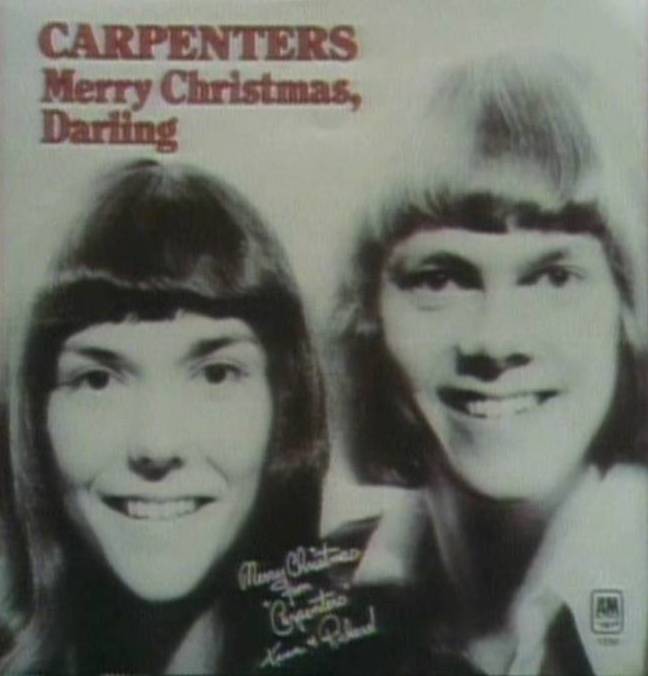
But not all Christmas songs are religious in nature. Many speak of human relationships. Barry Manilow wrote and performed Because it’s Christmas http://www.youtube.com/watch?v=QHRi6nAZZWE ,Mel Torme, nicknamed “the Velvet Fog” sang Christmas Time is Here  http://www.youtube.com/watch?v=phHwxK064RM, the Carpenters recorded and performed Merry Christmas Darling http://www.youtube.com/watch?v=nR34VJ7HWqU while Steve Lawrence and Eydie Gourmet did Hurry Home for Christmas http://www.youtube.com/watch?v=nR34VJ7HWqU, and Bing Crosby did the playful Mele Kalikimaka (Hawaiian Christmas Song) http://www.youtube.com/watch?v=hEvGKUXW0iI.

hqdefault-6

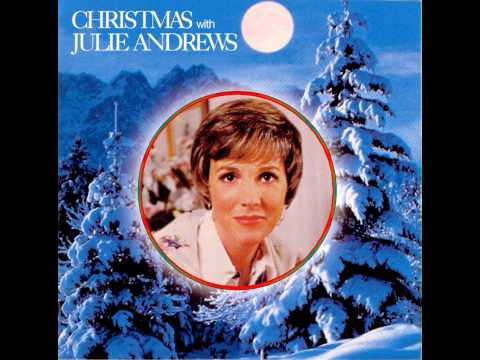
But then some are and because of the theological message of Christmas cannot be otherwise. Julie Andrews version of O Come All Ye Faithful  http://www.youtube.com/watch?v=GdJ6ZdHaFvg, Jim Neighbors http://www.youtube.com/watch?v=bQKPIplA8Gc and Andy Williams both performed Do You Hear What I Hear? http://www.youtube.com/watch?v=Em0P9zb3a3k all epitomize that part of the music of the season.

Some singers, in fact many were able to perform religious and non-religious Christmas songs. Vicki Carr sang It Came Upon a Midnight Clear http://www.youtube.com/watch?v=Yd4qLxVv_9I and I Still Believe in Christmas  http://www.youtube.com/watch?v=kFsel3waJkM.

0-11

Judy Garland sang a memorable version of Have Yourself a Merry Little Christmas http://www.youtube.com/watch?v=5g4lY8Y3eoo in the movie Meet Me In St Louis. The song has been recorded by many others including Helen Reddy  http://www.youtube.com/watch?v=hXKQYXiXBqA and Billy Joel, an avowed Atheist who has recorded a number of Christmas or Christmas themed songs including his version of this same song http://www.youtube.com/watch?v=B4LQmQompMs 

Engelbert Humperdinck sang Star of Bethlehem http://www.youtube.com/watch?v=rBLOJce1EvY and the Ray Conniff Singers performed a version of the Carol of the Bells http://www.youtube.com/watch?v=mQBpmaIRaiU . Sammy Davis Jr recorded Christmas All Over the World http://www.youtube.com/watch?v=CW8WyWkV-Gk and Carly Simon did Christmas is Almost Here http://www.youtube.com/watch?v=O0fG9d3y99c

101109_141135_25961858

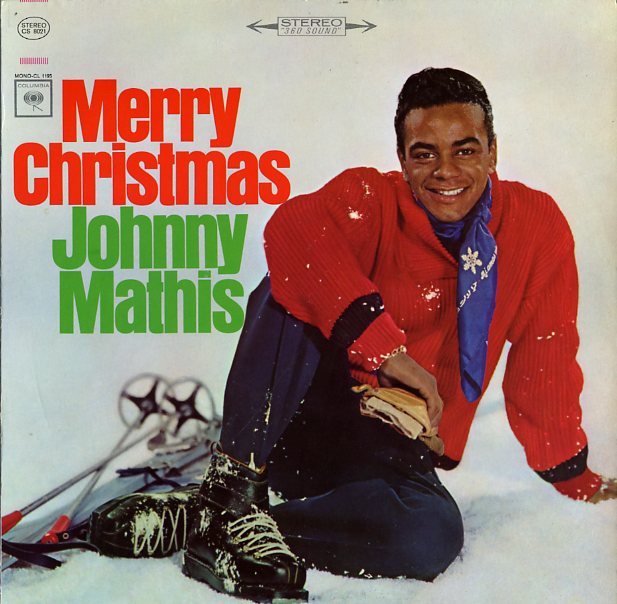
Of the more implicitly Christian hymns recored Judy Collins performed Joy to the World http://www.youtube.com/watch?v=q_JyZUnMzDQ while Johnny Mathis performed What Child is This? http://www.youtube.com/watch?v=YwNb3RQYIAQ and Anne Murray who I have always loved to hear, sang O Come All Ye Faithful http://www.youtube.com/watch?v=_oUAnGcT–A while James Taylor performed the spiritual Go Tell it on the Mountain http://www.youtube.com/watch?v=ifEUn1AxDYo.

buble-xmas-bundle_1_1

Other songs that speak of the more human and universal aspects of missing loved ones at Christmas include Roberta Flack’s The 25th of Last December http://www.youtube.com/watch?v=RwuscC7VowY Michael Buble did Christmas, Baby Please Come Home http://www.youtube.com/watch?v=iIOFMmkrfmo and Joni Mitchell who performed the haunting River http://www.youtube.com/watch?v=fCwlEnuXYsE. Robert Goulet sang The Christmas I Spend With You http://www.youtube.com/watch?v=Fko2GVOPbXI Carole King did Love for Christmas http://www.youtube.com/watch?v=8jgsQKJwcdQ

holidayinn

Perhaps the most famous and popular easy listening Christmas song is Bing Crosby’s White Christmas, which he performed in the movie of the same name http://www.youtube.com/watch?v=9Yg5g_Xl-uU Many others have sung this classic including Tony Bennett who teamed up to sing it in concert with Placido Domingo http://www.youtube.com/watch?v=jd0QQmXKAqY . The song is the most popular Christmas song ever written and has been recorded by thousands of artists.

Irving+Berlin+-+White+Christmas+Soundtrack+-+LP+RECORD-496843Irving_Berlin

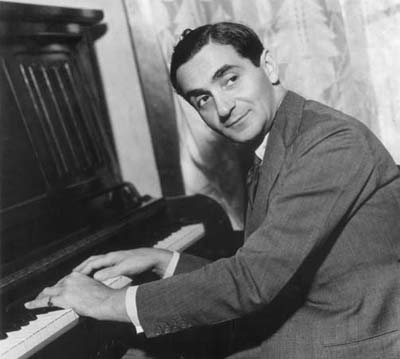
I think the irony behind White Christmas which makes it such a unique part of the American Christmas story is that it was written by Irving Berlin a Jewish immigrant from Russia. The song is not religious at all, but an almost sorrowful longing for bygone days. The fact that it was released just over two weeks after the attack on Pearl Harbor made it even more poignant.  Honestly I can’t think of any country where the most popular Christmas song of all time would be written by someone who was not a Christian. I don’t about you but that is something that makes me thankful to be an American. Now if we American Christians could only accord others the same respect and appreciation.

I could go on, in fact as I listen to different artists and songs I can think of many more that could be mentioned. The fact that all cannot be mentioned, including some that may be actually better than some on this list points to the amazing diversity of Christmas and the holiday season in the United States.

So with that I will say good night and until tomorrow my friends,

Peace

Padre Steve+
Leave a comment

Filed under film, movies, music