
Friends of Padre Steve’s World
Those of you who follow this blog or know me understand that I have served in the military since 1981. In that time I have served as an enlisted man, a Medical Service Corps Officer and Chaplain in the Army and a Navy Chaplain. I am coming up on 34 years service. In that time I have had a chance to see the military justice system up close and personal, when I was a company commander and later a brigade Adjutant the military prosecutors were my best friends, defense attorneys, not so much.
Sometimes, the military judicial system is better than the civilian system, but other times it is hopelessly prejudiced, especially against Gays and Lesbians.
This was especially true when I first entered the Army in 1981 before the implementation of Don’t Ask Don’t Tell, as well as after that policy was enacted during the Clinton Administration. I cannot tell you how many men and women that I saw, or heard about being railroaded out of the military simply because they were gay.
Before DADT the process was incredibly brutal. Gays and lesbian could simply be accused of being such, even with no corroborating evidence and put out of the military with a discharge that ensured that they would have difficulty finding employment when they were thrown out of the military. Military officials of the Army Criminal Investigation Division (CID), the Naval Criminal Investigation Service (NCIS) and Air Force Office of Special Investigations (OSI) had free reign to use all means, fair and unfair to ferret out and prosecute anyone suspected of being gay.
I never was a fan of such tactics even though at the time I would have considered myself a Christian conservative who believed that gays were sinners and if they did not repent would go to Hell. But that being said, I never believed that gays were un-patriotic or unworthy of serving in the military so long as they conducted themselves in a manner that heterosexual service members should. Since I knew that homosexuals could not legally marry I figured that their sex life, so long as it did not interfere with their duties was not my concern.
When I was a company commander I knew that I had a number of gays and lesbians in my unit. They were all outstanding soldiers and unlike many of my heterosexual soldiers were never on the military police blotter. You see when I was made a company commander the unit I took command of had the highest drug positive rate in Europe and so many un-adjudicated criminal cases that I spent countless hours after normal duty hours do dealing with them. I had no reason to go after people who were not causing problems and who always could be counted on to go beyond what was required to accomplish the mission. The were great and it would make me proud to hear from them again.
That being said, one could December day the CID came knocking. The two special agents said that they wanted to put an undercover investigator in my company, allegedly to uncover someone suspected of trafficking American cigarettes that they had obtained with their ration cards on the local economy. I asked if they had a warrant or even probable cause for their action. They could produce neither. So I told them that I would not consent because a “spy” in the unit would destroy moral and esprit that I had been working to restore and told them if they could not show me a good reason why I should allow them to do this to get out of my company. After threatening me with investigation for harboring “black marketers” they never came back, so I doubt that they had anything.
However, when they left I wondered if there were any other motives, especially since they had no warrant and no probable cause. I wondered if they were fishing. Since medical units were known to have more homosexuals than other units I wondered if this was a reason, after all I wasn’t kicking anyone out for being homosexual, which back in those days was pretty big business.
When AIDS was finally recognized as a problem, long after it had already killed over 20,000 people, I helped develop some of the Army’s personnel policies for those infected with HIV, and did the counseling and support from an personnel point of view for officers who were infected. I also reviewed
After DADT was passed I was a Chaplain, first in the Army and then the Navy. Sadly, though over-zealous commanders and investigators no longer had carte-blanche to investigate suspected homosexuals, Gays and Lesbians still had to live under-cover. They could serve, but they could not admit that they were homosexual. As such they lived constantly under threat that the slightest mistake could cost them their military careers. I provided pastoral care for a number of those service men and women.
During the DATD era, thousands of Gay and Lesbian service members were drummed out of the service. Others, including a young man who had come to me for counsel, could not handle the pressure or the shame of losing their careers because of being identified as Gay killed themselves.
Even after the end of DADT the stigma of being homosexual has resulted in the prosecution of personnel who were guilty of nothing. I had to testify at the court-martial of a Marine Corps Officer who was the target of one of these witch hunts. I testified during his sentencing that the only reason that he had been prosecuted was because he was Gay. That made it into the record of the trial and I am proud that I could testify on his behalf. It was a travesty of justice engineered by the policies of the former Commandant of the Marine Corps, General James Amos. It was a shame and dishonor to the Marine Corps that a distinguished combat veteran be tried and convicted even though every command and civil police authority up to the Commandant refused to charge him of any crime.
I know several who managed to make it through their career until they could retire. They included distinguished combat veterans and senior officers and non-commissioned officers. One Chief Petty Officer I knew came out at his retirement ceremony, he was so nondescript in his behavior that no-one ever suspected that he was Gay. I do have to admit that coming out at his retirement ceremony had a certain amount of panache which I admired. I have a friend who spent eighteen of 21 years of service before DADT was overturned under constant threat. She gets to retire this summer. I hope to do the invocation and benediction at her retirement.
But I digress…
I have been reading Randy Shilts’ book Conduct Unbecoming: Gays and Lesbians in the U.S. Military. The book came out the month that Shilts, who had written the book that defined the tragedy of the AIDS crisis in its first years died of AIDS. The book is the most comprehensive treatment of the persecution of Gays and Lesbians in the military ever written. However, the book, published shortly after the establishment of DADT when Shilts was dying does not deal with what the Gays and Lesbians who served under DADT went through.
I want to write that book.
If you or anyone you know served in the military after DADT experienced the persecution that still occurred during that time I would like to hear from you. You can contact me by e-mail. I will maintain your confidentiality, after all, I am a priest.
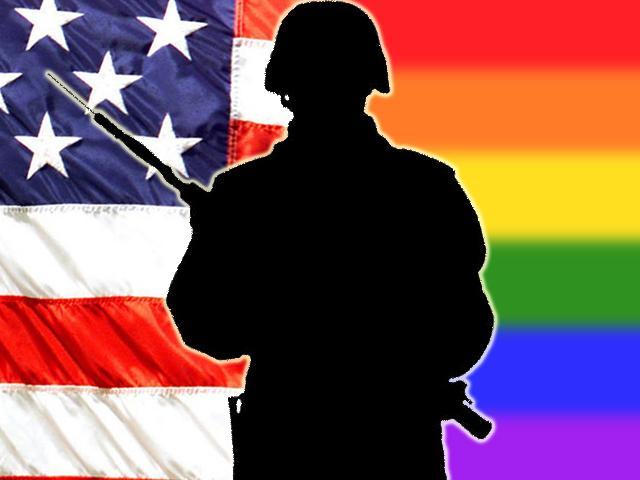
That being said, the story of the Gays and Lesbian patriots who served during the DADT era needs to be told. That era encompassed more deployments and combat than any time since the Vietnam War. Many homosexuals put their lives on the line and even so still suffered great stigma and sometimes persecution. Under DATD 14,346 Soldiers, Sailors, Marines and Airmen were thrown out of the military.
You may e-mail me, contact me through this site, Facebook or Twitter and I will contact you. Please spread the word. This part of history should not be forgotten, otherwise it may be repeated.
Peace and blessings
Padre Steve+



 The Inglorius Padre Steve's World