Tag Archives: counselor deanna troi

Learning to Live with PTSD and Moral Injury through the Lens of Star Trek

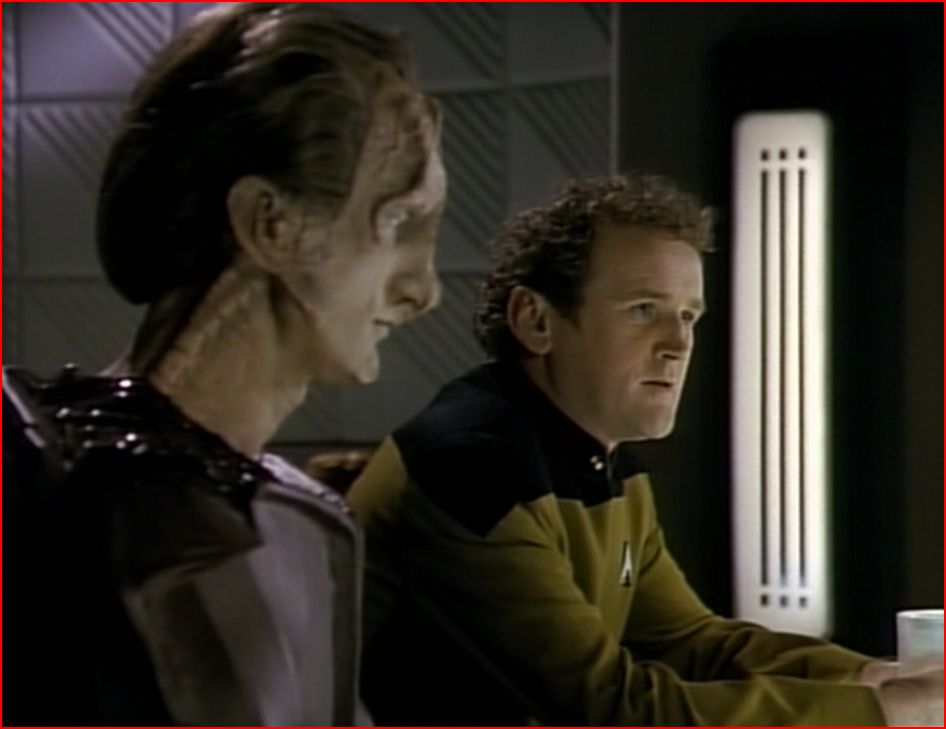
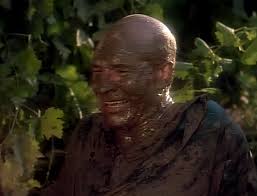
CBS_STAR_TREK_TNG_178_thumb_640x360

“So – my brother is a human being after all. This is going to be with you a long time, Jean-Luc. A long time. You have to learn to live with it. You have a simple choice now: live with it below the sea with Louis – or above the clouds with the Enterprise.” Robert Picard to Jean Luc Picard 

http://www.youtube.com/watch?v=SFnxJYLOcus

I am a big fan of the various Star Trek television series for many reasons. Perhaps the biggest reason is how I see the series speak to real issues, including things like PTSD and Moral Injury. That is a wonderful thing about the genre of science fiction, good writers can make a fictionalized future relatable to those that read or watch their creation.  I think this especially valuable because the presentations are realistic, but at the same time because they are science fiction are less threatening.

In Star Trek the Next Generation and Star Trek Deep Space Nine there are a number of episodes that deal with the effects of PTSD, moral injury and combat stress injury.  They include some that deal with Captain Jean Luc Picard, Chief Miles O’Brien, Captain Benjamin Sisko and Ensign Nog. The ones dealing with Picard and Sisko deal with senior leaders, which makes them interesting to me.

The one about O’Brien deals with moral injury in a senior enlisted leader, and the episode about Ensign Nog, the effect of physical and emotional trauma on an idealistic junior officer. Today I am focusing on the senior leader aspect, looking at the experience of Picard after his abduction by the Borg and that of Chief O’Brien when he meets former Cardassian enemies that he fought in a desperate battle at an isolated outpost.

The Wounded

In the episode called The Wounded Chief O’Brien expressed what so many of us know about war, and voices what PTSD and Moral Injury does to us when he says to a Cardassian officer: “It’s not you I hate, Cardassian. I hate what I became, because of you.” It is a sentiment that I have encountered in other veterans, including some that I knew who served in World War II, Korea and Vietnam.

http://www.youtube.com/watch?v=Owyj_5TuHQw 

Senior leaders afflicted with PTSD are among those least likely to seek help for it, even when the effects on them are evident to most.  It is our culture, it is our personality, it is how we do life. Most of us are overachievers who for most of our lives been able to compartmentalize even the worst experiences in order to move ahead in our career and vocation as military leaders.

When we, that is senior leaders experience things that are troubling we seldom have the luxury of dwelling on them. We frequently have to keep things running, take care of our people and move along. So because we are not able to deal with these experiences and the emotions that they engender, we box them up, put them on a shelf and move on. This is important because the mission has to be fulfilled, even if there is a terrible price to be paid later.

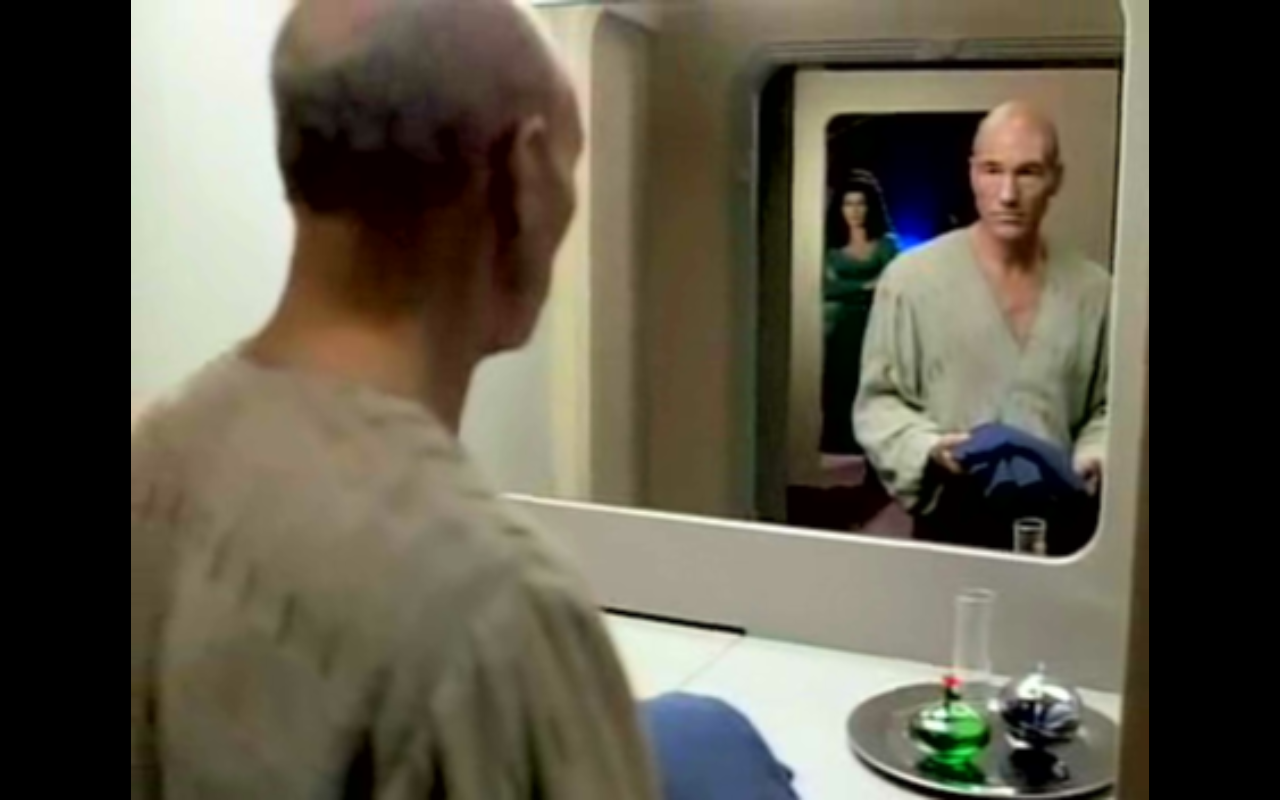
Picard tells counselor Troi before going on leave: “Your help has been invaluable during my recovery, but… look, I’m, uh… I’m better! The injuries are healing.” Of course he is not better, he is simply in denial.

Unfortunately the traumatic experiences that we package and put into storage are often quite toxic. I like to use the term radioactive, it just sounds more sinister. They are corrosive, and like radioactive or other toxic waste quite often breach the containment vessels that we construct in our minds to store them.

Likewise since senior leaders have often spent years, or even decades dealing with trauma the effects are cumulative, it may not be a single incident of trauma, but multiple instances or trauma, and experiences that leave scars on our soul, things that cause us to wonder, and doubt the things that we believe in the most.

I have seen this happen all too often. I know, have known or am personally aware of numerous cases where senior leaders afflicted with PTSD, TBI or Moral Injury continue on, even get promoted to high command and then crash and burn. Sometimes it means the end of their upward mobility, for others the end of their career and for some a condition that eventually destroys them. Unfortunately, most don’t get help because of the stigma associated with it and the fear of what it will do to their career aspirations.

The truth of the matter is that these traumatic injuries remain with us. If we deny them, or try to contain them without dealing with them they are like highly toxic waste that eventually escapes containment. When they do breach containment they create devastation in our lives, careers and of the lives that we care about, our families, and those that we lead.

That help begins with us, we have to admit that we need help and seek it out. We also need colleagues, seniors and subordinates to be honest with us.  But even while getting help we have to decide to go on with life, that is a choice that we must make.

We have to know that even as we get help and even get some relief from the symptoms of PTSD, TBI, Combat Stress Injury or Moral Injury that the memories will remain. Feelings and images of trauma that we think we have gotten through are still lodged deep in our psyche, and sometimes it doesn’t take much for them to return, bigger than life. The memories can be triggered by sights or images, smells, music, or something someone says or does. They can be relived when we experience a new trauma that reminds of us of the past.  That is why trauma experienced even decades before can still be as vivid to soldiers as the day that they were first experienced.

f001

Counselor Deanna Troi told Picard after his encounter with the Borg: “Captain, you do need time. You cannot achieve complete recovery so quickly. And it’s perfectly normal, after what you’ve been through, to spend a great deal of time trying to find yourself again.”

I write in the hopes that all of us who have seen or experienced things in war are able to get the help that we need. But in the words of Robert Picard to his heroic yet traumatized brother; This is going to be with you a long time, Jean-Luc. A long time. You have to learn to live with it. You have a simple choice now: live with it below the sea with Louis – or above the clouds with the Enterprise.” 

Yes, we do have to learn to live with it, but we can. Maybe not easily, but we can, and in doing so still do great things.

Peace

Padre Steve+

2 Comments

Filed under Military, PTSD, star trek

Muddling Through PTSD Recovery: A Chaplain’s Story of Return from War

400236_10151328400862059_541742014_n

“Captain, you do need time. You cannot achieve complete recovery so quickly. And it’s perfectly normal after what you’ve been through, to spend a great deal of time trying to find yourself again” Counselor Troi to Captain Picard in Star Trek the Next Generation after his encounter with the Borg.

Coming home from war can be harder than going. At least it was for me. I have always been a hard charger. When I was at war in Iraq I was at the top of my game but when I came back I was broken. I experienced things there that changed me forever and it has taken a long time to find myself again.

I came home with chronic, severe PTSD, anxiety and depression. I suffer severe Tinnitus and pathetic speech comprehension. The ringing in my ears is non-stop and in any kind of group setting or conference I struggle to understand what is going on even though my hearing loss measured in decibels is minimal. The loss is neurological and when tested I measured in the third percentile of people, meaning that 97% of people understand speech better than me.

I still suffer from chronic insomnia, vivid nightmares and night terrors. I still struggle with agoraphobia, hyper-vigilance and occasional road rage. Thankfully none of them are as bad as they used to be but they are ever present. I have had my ups and downs with prescription medications that were used by my doctors to manage my PTSD symptoms and sleep disorders.  For a while drank too much just to help me make it through the nights. I am told that this is common for many who return from war.

When I came home I felt abandoned, especially by church leaders and many chaplains, many who I had thought were my friends. That is understandable as I was radioactive.  My faith had collapsed and for two years I was an agnostic desperately hoping to find God. As such I have a certain bond with those that struggle with God or even those that do not believe. This makes a lot of religious people uncomfortable, especially ministers. I think the reason for this is that is scares the hell out of people to think that they too might have a crisis of faith because they too have doubts. 

The first person who asked me about how I was doing spiritually was not anyone from my church or a chaplain, but rather my first shrink, Elmer Maggard. When faith returned around Christmas 2009 it was different and so was I. I tried to express it and began to write about it. For my openness I got in trouble with my old denomination and asked to leave because I was “too liberal.” Thankfully a bishop from the Episcopal Church who knew me recommend that I seek out Bishop Diana Dale of the Apostolic Catholic Orthodox Church. Thanks to that I have a loving new denomination and since we do not have a local parish of the ACOC I have found  St James Episcopal Church in Portsmouth Virginia as a place of refuge. It is the historically African American parish in the area and I love the people there. They helped me when I was in my deepest times of struggle. 

6095_128718107058_2713239_n-1

My struggle was really hard on my wife Judy. Before I deployed I was the strong one. Afterward my contribution to our marriage was minimal and I was often a complete ass. I was in survival mode and and barely making it. I couldn’t reach out to her, I was collapsing on myself and she felt it as rejection. Our marriage suffered terribly and both of us thought that it might not survive. But over the past 18 months or so it has been getting better. I can share with her again and she has become a source of added strength. We enjoy being together again and we recently celebrated our 30th anniversary with many of the friends who helped us make it through the hard times. 

In time I gathered a support network. There are some Chaplains that I can be absolutely honest with, as well as my Command Master Chief, Ed Moreno. Likewise I have friends outside the military, including people I have known for years who still, despite all my flaws care for me. I have found other places of refuge where I have relationships with people, one is Harbor Park, home of the Norfolk Tides Baseball team, another was Grainger Stadium, former home of the Kinston Indians. I have a couple of places as well that are like my real life version of the TV show Cheers

Baseball brings me a great deal of peace, especially when I can go to the ballpark. When I was in dire straits the management of the Tides allowed me to go wander Harbor Park during the off season, just to take it in.  Running on the beach is something that I have come to cherish here in North Carolina, I will miss the easy access that I have here when I return home to Virginia in two weeks. 

Writing on my blog has been good therapy. As an introvert I process information by taking things in. Being constantly around people wears me out. I am good at what I do but it takes a great deal of effort to do it. 

941704_10151661130572059_1706100059_n

My unflappable little dog Molly has been a life saver, she insisted on coming to stay with me about halfway through my tour. She helped me recover my humanity and her presence gave me something outside of me to care for and because of that I ended up seeking out people again instead of holing up in my apartment.

My spiritual life still has its ups and downs and I discovered that I am far from perfect, and I hate that sometimes. However, that being said I do feel more connected with God, people and at peace despite my ongoing struggles.

images-53

Picard breaking down

It has not been an easy road, but it has been worth it. I find it interesting that the Star Trek the Next Generation, Deep Space Nine and Voyager series help me process many of my feelings, thoughts and emotions. I quoted part of a Next Generation episode at the beginning of this article, one where Captain Picard is recovering from the trauma of being abducted by the Borg. I find the episode compelling on many levels. Part of that episode deals with Picard trying to figure out his life again. After a tumultuous visit with his family he and his older brother engage in a fight, during which he breaks down. Picard’s brother realizing the importance of what was happening said to him “So – my brother is a human being after all. This is going to be with you a long time, Jean-Luc. A long time. You have to learn to live with it…”

Peace

Padre Steve+

3 Comments

Filed under faith, iraq,afghanistan, Military, PTSD, Tour in Iraq

Star Trek the Next Generation: Captain Jean-Luc Picard Deals with PTSD

Counselor Deanna Troi: Interesting.
Captain Jean-Luc Picard: Counselor…
Counselor Deanna Troi: I just find it interesting. Captain Jean-Luc Picard, the man who couldn’t be pried out of his seat for a vacation for three years!
Captain Jean-Luc Picard: It’s Earth. It’s home. Do I need another reason?
Counselor Deanna Troi: I don’t know, what do you think?
Captain Jean-Luc Picard: Your help has been invaluable during my recovery, but…look, I’m, uh…I’m better! The injuries are healing.
Counselor Deanna Troi: Those you can see in the mirror.
Captain Jean-Luc Picard: The nightmares have ended. All I need now is a little time to myself.
Counselor Deanna Troi: I agree. In fact, I’m delighted you’re going. It’s just that…the choice of where you’re going could stand some scrutiny.
Captain Jean-Luc Picard: If you wish to believe my going home is a direct result of being held captive by the Borg, be my guest.
Counselor Deanna Troi: Is that what you believe?
Captain Jean-Luc Picard: I hate it when you do that.
Counselor Deanna Troi: Captain, you do need time. You cannot achieve complete recovery so quickly. And it’s perfectly normal after what you’ve been through, to spend a great deal of time trying to find yourself again.
Captain Jean-Luc Picard: And what better place to find oneself than on the streets of one’s home village.
Counselor Deanna Troi: Interesting.

I have always found the Star Trek TNG episode Family quite compelling.  The episode (Season 4 Episode 2) deals with Captain Jean Luc Picard’s return home following his capture and assimilation by the race known as the Borg during The Best of Both World’s Part 1 and II (Season 3 Episode 26 and Season 4 episode 1.)

The story is interesting because it deals with some of the issues that people traumatized in combat deal with as they try to find themselves again.  In the story Captain Picard, in a very typical manner of someone traumatized by combat believes that his injuries are healing.  His counselor, Deanna Troi who serves as the Ship’s “Counselor” challenges him on his belief that he has recovered and his choice of where he wants to go to find himself again.

I saw the episode when I was in Seminary not long after completing the Chaplain Officer Basic Course and then saw it again when I was going through my Clinical Pastoral Education Residency.  It was during that process, one in which I was trying to find and define what “home” was, that it really caught me.  I was Captain Picard, the brother who left home to explore and travel while serving in the military.   My brother Jeff was Picard’s brother Robert.  He is the one who stayed home and minded family business.  The parallels then got me and even more so now.  My Residency Supervisor used this to good effect during that time in dealing with the issues of home, but the post combat and PTSD part was yet to come.

Back in the days of my residency I struggled with another of issues related to being a military brat and having begun a career in the Army.  In a sense I was a nomad.  I had lived a lot of places but none were really home, even where I had spent all of junior and senior high school.  Like Picard my eyes were set on far horizons of exploration and adventure of military life.  My brother Jeff on the other hand like Picard’s brother was content at staying at home, being near our parents, getting established in the school district and taking care of his family.   We both chose our own paths and both were right for us.  I still long for adventure and exploration but have begun to settle down.

When it came to the placement of the PTSD in this picture it was after Iraq that I had a crisis in a number of areas in my life and every time I thought that I was doing better and maybe even “getting well” that there was always something that could trigger the memories, bring back the dreams and keep me from sleep.  I can say that a year and a half after my return from Iraq I am doing better in a lot of ways but still having struggles with anxiety insomnia and hyper-vigilance.  I did find out that there is one thing that does not evoke a startle reflex is a foul ball that comes back against the screen in from of me in Section 102 at the Church of Baseball Harbor Park Parish.  Last night while taking pictures right up against the screen I had several balls that hit within a couple of feet of me, one of which hit my camera and knocked it out of my hand.  Anywhere else loud noise, unexpected crashes, things flying past me sends me into a hyper-alert status.

picard familyPicard Meets His Family after Many Years and Wounds Away

When Picard goes home it is not the confident Starship Captain who returns, but a man unsure of himself and where he fits in life.  His encounter with the Borg has changed him and he contrary to assurances to Counselor Troi is still wounded.  When I returned from Iraq I wondered where I fit, I felt like I had abandoned my advisers in Al Anbar when I returned because my relief had to be sent elsewhere do to circumstances beyond my control.  I did not feel a part of my own unit as nothing was the same when I came back.  I felt weak, useless and at the end of my rope after having completed incredible tour in combat of my then 26 years in the military.  Physically I was falling apart; I had several nagging injuries from Iraq that caused chronic pain.  I was flashing back with every moment, fires burning in the Great Dismal Swamp had turned our air the color of an Iraq sand storm while the smell was like that of the ever present burn pits, both military and Iraqi.  Walking out the door one morning with my neighborhood shrouded in smoke I began to melt down.  That day we had a seminar done by a nationally known speaker dealing with trauma and combat with the associated feelings and emotions.  At the end of the day I was a wreck.  My Unit Doctor, Chris Rogan looked at me and said “Chaplain you don’t look good, are you okay?”  I said “no I’m not, I’m losing it and I’m scared.”  That was the place where I finally began to get help.  It has been about 14 months since I started and it is still a process.  We made a trip home that summer and I did not do well.  It was painful and I had great difficulty both in the travel as well as the visit.  When I hear fellow vets talking about the surreal and often painful times that they experience I can understand.  The fact is that you can be with a hundred friends and family members and be totally alone when you return home because it is something that you cannot really share and that they usually don’t understand.  Once again I have been fortunate.  My little brother actually listens to me and lets me vent when I need to.  Of course dealing with our family’s stuff this is a two way street.

not a happy camperVisiting Home and not Doing Well

In the story Picard is offered a chance to leave Starfleet and go to work on a project under the ocean on Earth.  He is sorely tempted to take it but before he can he has an encounter with his brother who challenges his decision.  They exchange words and Captain Picard feeling picked on starts a fight.  During the fight he breaks down about his experiences sobbing in his brother’s arms.  “His brother then said: So – my brother is a human being after all. This is going to be with you a long time, Jean-Luc. A long time. You’ll have to learn to live with it. You have a simple choice now. Live with it below the sea with Louis, or above the clouds with the Enterprise.”

In a sense that is something that all of us who serve after having been traumatized by the experience of wart have to deal with, the physical as well as the psychological and spiritual wounds.  For me it was the realization that I was human after all and the slow realization that this will be with me a long time.  The choice is how I choose to live my life and where I do so.

In the series and subsequent Star Trek: The Next Generation films Picard is forced to deal with his psychological wounds from the encounter with the Borg culminating in the second of those films Star Trek: First Contact. In it Starfleet Command leave Picard and the Enterprise out of the battle leading to this exchange between Picard and his First Officer which deals with the stigma associated with such an injury.

Cmdr. William Riker: Captain, why we are we out here chasing comets?
Captain Jean-Luc Picard: Let’s just say Starfleet has every confidence in the Enterprise and her crew – they’re just not sure about her Captain. They believe that a man who was once captured and assimilated by the Borg should not be put in a situation where he would face them again. To do so would introduce “an unstable element to a critical situation.”
Cmdr. William Riker: That’s ridiculous. Your experience with the Borg makes you the perfect man to lead this fight.
Captain Jean-Luc Picard: Admiral Hayes disagrees.

The stigma associated with psychological injuries is far greater than that of physical injuries.  The unseen injuries are not as well understood and those who suffer them often are broken down by the system as they try to get help and many simply go underground and self medicate.  Last year two Army Generals opened up about their struggles with PTSD. I was fortunate to have people come alongside of me when I went down hard.  People who did not give up on me and kept faith by caring about me when I was and still get down.

See the article at: http://edition.cnn.com/2009/HEALTH/03/06/generals.ptsd/

Despite this and the efforts of many in the Military to help those with PTSD and other “unseen” injuries, to include medical conditions brought on by exposure to toxins in the combat zone, there is still the stigma.  As the young officer suffering from a rare and eventually fatal pulmonary condition acquired in Iraq as well as yet untreated PTSD “I squarely wish I had lost my legs then than the lung function that I have lost!”

Captain Picard’s story of course is fictional, but it demonstrates to some degree what those who experience the psychological and spiritual wounds of war face when they “come home.”  This stuff doesn’t go away.  Here are some of the comments that I have had from readers who deal with their own or a family members PTSD.

Australian Vietnam Veteran who wrote me said:  “As an Australian Vietnam Veteran with PTSD, I find these articles fascinating. I long wondered why the world had to be such a hostile mongrel place. Then 30 years later I was diagnosed with PTSD and I can now relate to why I have the condition but the world has not changed and medication is of limited use. There are many of us who are still very isolated and have to limit our social contacts. I recently started a Vietnam Veterans group, for members of our small unit, on the web and I found men who were relieved to be part of something and someone they could relate to as they had all but withdrawn from society. Sadly a few of them refuse to take any medication for their medical conditions as they see that as prolonging their miserable existence.”

A family member of a WWII veteran said: “thank you. It’s really needed for women to read articles/memoirs like that. It’s easy to say someone has PTSD, but another to live with and love who has it. I come from a family with rich military history and this is an everyday issue. Never goes away, even after 40 – 60 years.”

A USMC Vietnam Vet that I know wrote: “It’s a bitch at times, and the sleep, or lack of will eventually come, although it will never be a fully restful sleep. The Hyper vigilance seems never to go away. Yes it could be good, but eventually it can be bad…. well do I know both.”

An Army Chaplain from Iraq noted: “I too am a chaplain who felt that he and his assistant were the best equipped to handle the horrors of war – just to find out after being home for about a year just how much I had changed. I was sitting with my daughter in my lap one weekend afternoon when she asked, “Daddy, why don’t you play and laugh with us like you use to before you went to Iraq?” It was the key event that brought everything to a point where I could get help. In the months since there have been good days and definitely bad days – however, my faith remains strong….”

I run into people like this every day in the course at work who deal with this and sometimes it spills over into my stuff.  However I am glad to know that I am not alone.  To those who have helped me since I have be back, Chris, Two Feathers, Limey, Greg, Jesse, Jeff, Elmer, my longsuffering wife the Abbess of the Abbey Normal Judy and my brother Jeff, Colonel P and Janet, the folks I work with, the people at Harbor Park, especially Ray, Charlie and the Vietnam Veterans of America who man the beer stand on the concourse behind home plate and all the others who have come alongside I am grateful.  It is my sincere wish and prayer that all veterans will have such fine people there for them when they hit the wall.

Peace, Steve+

Leave a comment

Filed under iraq,afghanistan, PTSD, star trek