

“Great Odysseus woke from sleep on native ground at last- he’d been away for years- but failed to know the land.” Homer, The Odyssey
War changes the men and women that fight them. This is a truth that dates to antiquity. It does not matter the age or era, where the war was fought or what weapons were used, the pathology is similar, the scars of war, physical, The trauma of war, as Jonathan Shay notes in his book Odysseus in America, “shows ugly deformities of character that trauma can cause, but these deformities are fully human such as might happen to ourselves….” The fact is that the does happen is normal, but how we deal with it is not.
One of the most difficult things that many returning combat veterans face is being re traumatized upon returning home. As the Odyssey shows, for many returning combat veterans it is as if they are returning to an alien planet, which looks familiar, but feels like an alternate universe. It looks the same, but it is profoundly different. Erich Maria Remarque in his classic All Quite on the Western Front wrote:
“I imagined leave would be different from this. Indeed, it was different a year ago. It is I of course that have changed in the interval. There lies a gulf between that time and today. At that time I still knew nothing about the war, we had been only in quiet sectors. But now I see that I have been crushed without knowing it. I find I do not belong here any more, it is a foreign world.”
Shortly before his death in a motorcycle crash T.E. Lawrence, the great Lawrence of Arabia wrote a friend. Lawrence certainly suffered from PTSD and other afflictions that lingered long after the war. The words are haunting and they so describe how many veterans feel, even long after they left the combat zone. For Lawrence and so many others the war after the war never ended.
Lawrence wrote:
“You wonder what I am doing? Well, so do I, in truth. Days seem to dawn, suns to shine, evenings to follow, and then I sleep. What I have done, what I am doing, what I am going to do, puzzle and bewilder me. Have you ever been a leaf and fallen from your tree in autumn and been really puzzled about it? That’s the feeling.”
This has been a facet of life for American military personnel ever since the Vietnam War. Much of the trauma comes from the unnatural and ahistorical manner of how we send men and women to war and bring them home. Now generally we prepare people for war fairly well. However, we send many to war as individual augments, away from their units and people they know, place them in units or organizations where they are relatively isolated and sometimes face great danger, then we bring them back alone, with barely any time to decompress, tell their story and face the consequences of war with those that they know.
Guy Sager, writer of the classic The Forgotten Soldier wrote of his return from war:
“In the train, rolling through the sunny French countryside, my head knocked against the wooden back of the seat. Other people, who seemed to belong to a different world, were laughing. I couldn’t laugh and couldn’t forget.”
The result is that most don’t get the help that they need to make the adjustment. The fact is that the best help is usually found among our comrades who have shared our experience. Before trans-ocean air travel, soldiers came home on troopships, with those that they served and the voyage home lasted anywhere from two weeks to a month. That gave these soldiers the opportunity to process what they had been through, and while they might not have had much in the way of “professional” mental health care, they did have each other. Likewise, they returned to a country where many if not most of the citizenry had shared at least some of the sacrifice of war, and many of whom had family members who had served at war, or who had lost people they knew.
A survivor of World War I’s “Lost Battalion” wrote after the war:
“We just do not have the control we should have. I went through without a visible wound, but have spent many months in hospitals and dollars for medical treatment as a result of those terrible experiences.”
Today soldiers are sent from the United States or United States military bases in Europe or Asia into harms way, and when their tour of duty is done, are sent home in a process that seldom takes more than a week, usually less. Apart from a few airport greeters and their family, if they have a family, their return goes almost unnoticed. They return to a world where there has been no shared experience and people go about their business untouched by war. The return is often overwhelming, and many times disorienting and frightening to the combat veteran who no longer feels connected to the country or people that sent him or her to war. The normal issues faced by redeploying soldiers, especially with their families are often even more pronounced, they and their families struggle.
The general feeling of social isolation is often made worse when they return to their home bases, stations or units and discover that instead of being welcomed home, that they are treated as if they made the life of those who did not deploy harder. “Welcome back, now you can get back to real work, now you can be back on the duty roster.” Within weeks they are submerged in routine, often mind numbing tasks among people who have not shared their experience. Alone they try to cope, quite often not very successfully. For those suffering from combat trauma, especially the unseen injuries of PTSD and Traumatic Brain Injury the experience is magnified. There is a sense of isolation and meaninglessness as they attempt to put their lives back together. For those that seek help, on the active duty side of the house there is a stigma to getting mental health care, which is so pronounced that many either avoid treatment or stop shortly after starting, instead self-medicating with alcohol or drugs. The same is often true for those who seek help in the Veterans Administration system, except they, having finished their active service do not have to endure the shame of being called or considered “broken” by their superiors or their peers. For those that have not served, to be labeled as “broken” is one of the worst things that can happen to you in the military, it is to say that you have no intrinsic value, no matter what you have accomplished to that point or what you have suffered in the line of duty.
Those that do decide to take the risk in going to get mental health care are often then traumatized by the very system that supposedly is there to help them. While there are many gifted, caring and skillful psychiatrists, psychologists and therapists working for the military and the VA, the process of getting care can be brutal and dehumanizing. The intake process is often impersonal and quite often the ordeal dissolutions those going through it. As a personal note, when I transferred back to the area that I previously had been treated it was like I had never been in the system. It was starting from scratch, and while I had gone back to the system seeking basic follow up care, the process broke me and made me worse. Due to the intervention of so very caring people including a former commanding officer who is being promoted to Admiral, I am getting some help and may even be able to contribute to a solution. But it should not be so hard, the system in overwhelmed, undermanned, underfunded and broken, despite the best efforts of some in leadership. The result is that combat veterans are further traumatized and marginalized.
The combination of new trauma, that of no longer feeling a part of society, that of being disconnected from friends and family; that of being isolated at work and treated as a number by those in the medical and mental health system. All of those things add further injury and contributes to the sense of betrayal, the sense of betrayal that goes to the heart of Moral Injury.
Moral Injury involves the breaking of trust, confidence and core beliefs. That can encompass everything from what a person believes about God, the idealism about one’s country, the military that one serves and even the society and family. Moral Injury is an abiding sense of loss of faith and confidence in the things, the beliefs and ideals that one held dear. It is a layer of trauma that adds to what one has experienced in combat, it is another layer of trauma on top of PTSD, TBI and other Combat Stress related issues. It increases the severity of other psychological conditions including depression, anxiety and the risk of suicidal, or other risk taking behaviors.
But it doesn’t seem to me that anyone gets this, and those that do are not in a position to influence policy. Neither are they in a position to ensure that mental health providers are trained to recognize, care for and not increase the chance of further traumatizing those in their care. Instead those coming home from war seem to be condemned to a sort of hell where they do not feel they matter, are treated as numbers or even worse, feel that they no longer can contribute, because they are “broken.”
My experience is that it takes far too much effort to get the basic care that one requires, and most people after being beaten down simply give up. A person should not be reduced to tears and seriously consider suicide to get attention. A person should not have to know a doctor who is going to be an Admiral to get someone to listen to them. Honestly most people will neither endure the ignominy or pain of seeking help in such an environment, much less skyline themselves but writing and speaking about I like I do. For most any of that is far too dangerous or risky.
Some, including people that I know and love and respect have lost their families, careers and lives simply because they did not want to have the stigma of being considered “broken” or deal with the impersonal and machine like bureaucracy that is our mental health system. The sad thing is that this encompasses not only the military and VA systems, but the civilian system as well. I have known far too many people who have ended their lives after being further traumatized by the system. These people include senior officers and even chaplains, most who risked their lives in combat multiple times only to return home broken. I know too many of them, men who were real heroes, who died at their own hand, or others who lost their families and careers.
I know PTSD, I live with that reality daily, the depression, anxiety, hyper vigilance, paranoia, nightmares, night terrors, insomnia and fear of of crowds, traffic, and normal relationships. That is life and I do my best to deal with it, sometimes more successfully than others. My marriage has suffered because of my madness, and I have experienced the rejection of many of my peers in the Chaplain Corps. Likewise my former church and bishop, after two knowing that for two years I was for all practical purposes an agnostic and knowing my life was a wreck, kicked me out when my faith, though very fragile and mixed with doubt, returned. I asked hard questions, and when I asked them publicly I was tossed for being “too liberal.” That rejection, the rejection of a faith community also contributes to Moral Injury. Sadly I know too many others who have returned from war to be rejected by faith communities that advertise how the “love, pray for and support the troops.”
In spite of that I continued to seek help, and at Camp LeJeune my commanders and others ensured that I got what I needed. It helped and when I returned to Hampton Roads a year ago I really thought that I was doing better. That changed last month. I went back, seeking follow-up care, which I assumed was just to download my issues with once in a while and manage my medication. Instead that attempt to re-enter the military mental health care system did me considerable harm, hell I considered suicide just last week after this. I no longer think that what I need is simple occasional follow up care, instead my experience shattered me. I had no idea just how fragile that I was, it was as if the floor had been kicked out from under me.
That my friends is what Moral Injury does to someone. Those are the kind of experiences that break a person’s faith and trust in the things, ideals, institutions and people that they grew up trusting and believing in. That loss of faith and trust, combined with the other layers of Combat Stress Injury can be devastating, and it doesn’t seem to matter because most people are neither aware, nor do they care. Not because they are bad people, but because there is such a gulf between the military and society at large that such issues are distant and incomprehensible to most people not in the military.
Yes, my trust in the system and my country is broken and I don’t know if I will ever regain the faith that I have lost. I honestly want to, I want to believe. God I want to believe. Now it does look like I will be getting help, and maybe even a chance to help being a part of the solution, and that will be a good thing. Today I got a call from the Admiral at the Medical Center, unfortunately it went directly to voice mail, but he did sound like he cared and wanted to listen. For that I am grateful.
Pray for me as I get a chance to speak with leaders who have some influence to make things better, not just for me, but for all of us.
Peace
Padre Steve+
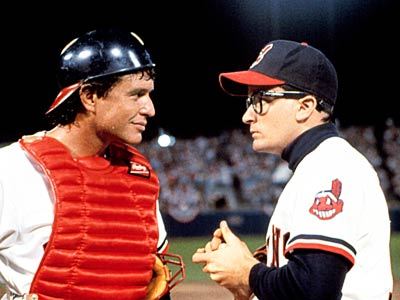 Tom Berenger and Charlie Sheen in Major League
 Molly Giving Me Advice on My Work
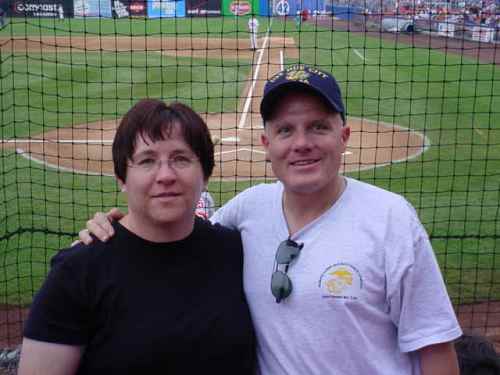 Judy and I in Harrisburg PA on our 23rd Wedding Anniversary in between trips and deployments
 The Inglorius Padre Steve's World