Tag Archives: iraq

The Results of Ignoring History: The Implosion of Iraq

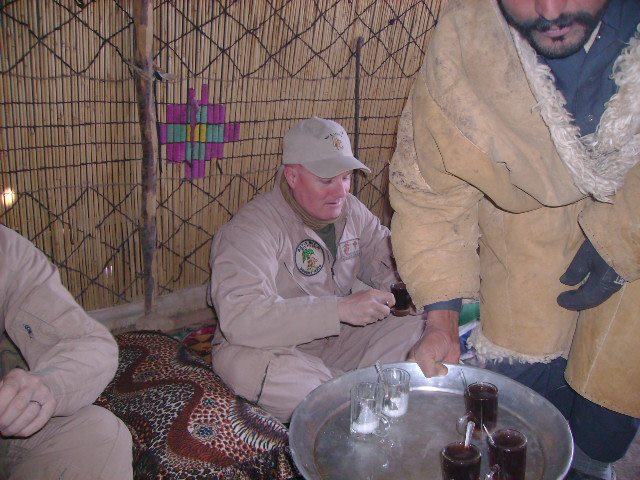
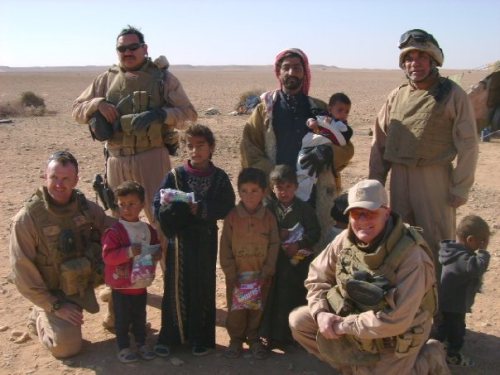
bettertimes

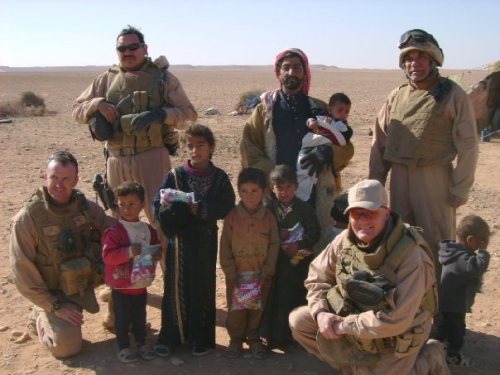
Better Times: With the Bedouin in December 2007

Inshallah, (إن شاء اللهGod willing… or so say my Iraqi friends.

It is now 2014, over eleven years since the Bush administration launched its ill advised, preemptive and probably war against Saddam Hussein’s Iraq. That war, illegal under any definition of international law which violated most of the components of traditional Just War Theory and condemned by Pope John Paul II was a disaster for the United States and the unfortunate people of Iraq that we are only now beginning to the full negative implications.

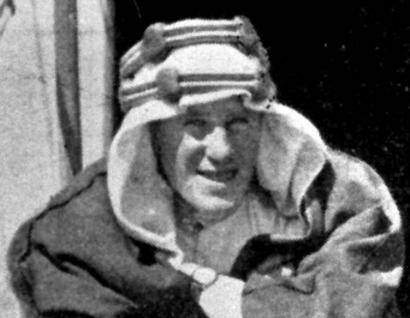
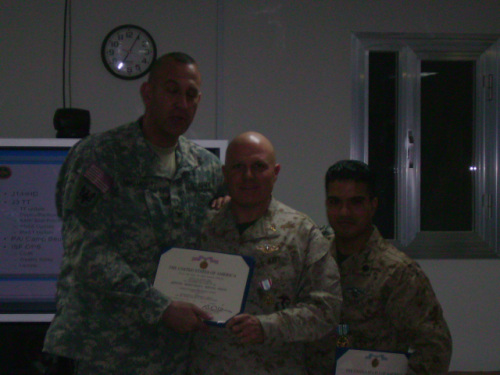
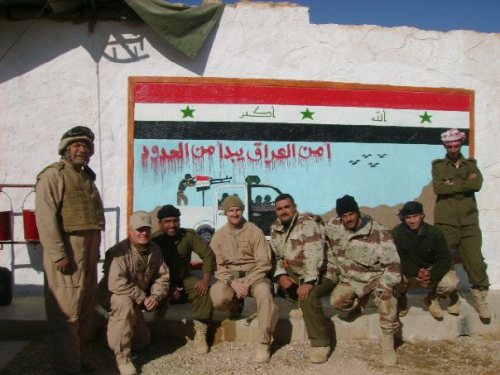
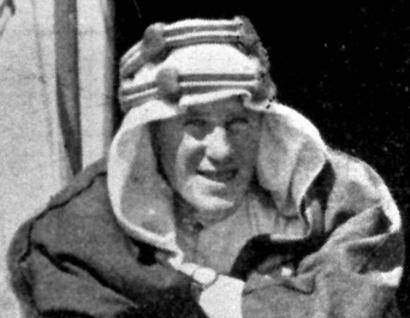
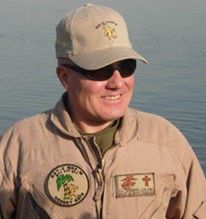
For me the past week has been gut-wrenchingly painful as I watched the forces of ISIL/ISIS rampage through Iraq and the demoralized Iraqi military, no longer trusting Prime Minister Maliki throwing down their weapons and running away. I left Iraq over six years years ago. When I left Iraq, I was in Baghdad at the Headquarters of the Iraq Assistance Group, on my way out of country, being awarded a Defense Meritorious Service Medal for my work with our advisors and the Iraqis in Al Anbar. That night was a melancholy night. I was wearing my last serviceable uniform, which I had preserved for the trip home by wearing flight suits and baseball caps with no badges of rank, throughout most of the deployment. Like Lawrence’s donning of the Bedouin robes, my uniform choice, done purely by necessity made me stand out conspicuously among other Americans in country.

I was heading home but didn’t really want to leave, but in the process I left a big part of me in that long suffering country.  I have written much about my experience there and how even today I have a deep regard for the Iraqi people and their hopes for a better future. However, I sense that what Lawrence wrote will be true:

“We had been hopelessly labouring to plough waste lands; to make nationality grow in a place full of the certainty of God… Among the tribes our creed could be only like the desert grass – a beautiful swift seeming of spring; which, after a day’s heat, fell dusty.” 

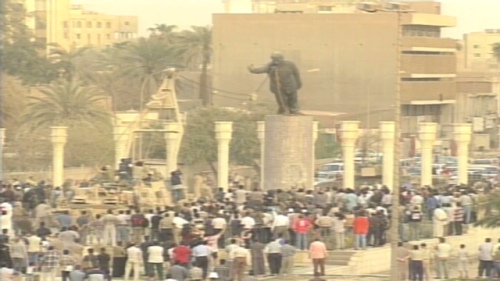
In 2003 the United States invaded Iraq and made short work of that country’s military. That military, defeated in 1991 and crippled by years of sanctions and bombings was no threat to its neighbors and couldn’t even defend itself against the U.S. and coalition forces.

When we entered the country, many Iraqis of all creeds looked upon the US and coalition forces as liberators, but within a few months the illusion was over. Within weeks of the overthrow of Saddam, the US military personnel and leaders who were working with Iraqi officials, both military and civilian to get the country back on its feet were replaced by the Bush administration.
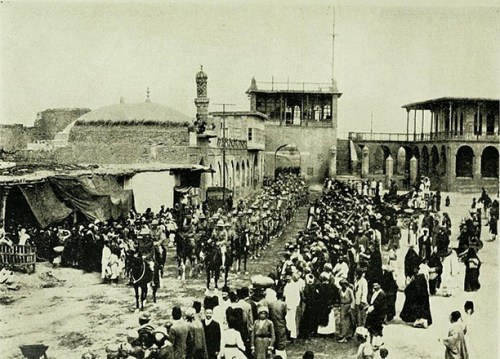
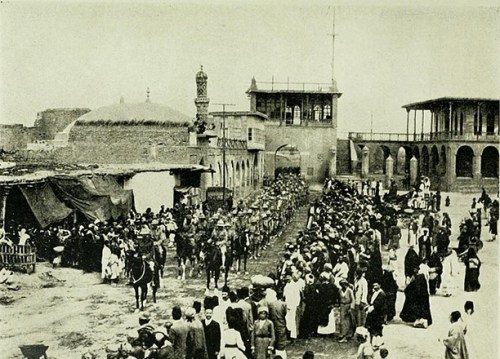
imperialpast

British Troops enter Baghdad 1919

In their place a new entity, the Coalition Provisional Authority was created and staffed. The first administrator of the entity was retired Army Lieutenant General Jay Garner. He had much experience in Iraq but was sacked quickly by Secretary of Defense Donald Rumsfeld for not conducting an immediate purge of members of the Baathist Party from key positions in the civil service or security forces, or implementing the agenda of the administration, an agenda that only saw Iraq as a stepping stone for future operations against Iran.

After Garner’s dismissal the CPA was led by Ambassador L. Paul Bremer, a man who had no experience in the Arab world, much less in Iraq. Bremer and his staff, most of who had little experience or knowledge of the country created conditions that directly led the the Iraq insurgency, the sacrifice of thousands of American and allied lives and the loss of friendship of the Iraqi people. They also gave a a bloodless strategic victory to Iraq’s traditional enemy and oppressor Iran, which became a dominant regional power without having to worry about their traditional Arab nemesis. It is deeply ironic that because of the terrible policy missteps of the Bush administration that the current crisis is forcing Iran and the United States to consider cooperation with one another to prevent the implosion of Iraq.


T.E. Lawrence wrote of the British incursion into Turkish Mesopotamia in 1915, managed by the British Indian Office:

“By brute force it marched then into Basra. The enemy troops in Irak were nearly all Arabs in the unenviable predicament of having to fight on behalf of their secular oppressors against a people long envisaged as liberators, but who obstinately refused to play the part.”

The actions of the CPA destroyed the plans pragmatists in the Pentagon and State Department to incorporate the existing civil service, police and military forces in the newly free Iraq.  Instead Bremer dissolved the Iraqi military, police and civil service within days of his arrival. Since the military invasion had been accomplished with minimal forces most Iraqi weapon sites, arsenals and bases were looted once their Iraqi guardians were banished and left their posts. The embryonic insurgency was thus provided by Bremer a full arsenal of weapons to use against American forces; many of whom were now mobilized Reservists and National Guardsmen that were neither trained or equipped to fight an insurgency or in urban areas.

It was as if Bremer, the leaders of the Bush administration and their neoconservative allies knew nothing of history. If they did they decided to ignore its lessons, believing that they were smarter than other occupiers. It was an act of unmitigated hubris and arrogance brought about by those who believed that they were above history. Whether it was ignorance of history, or a wanton disregard for it, it and the country we invaded it was immoral, unethical and probably criminal.

vault-von-saddam-statue-fall-itn-640x360-1

The reaction of the Iraqi Arabs to US occupation should have been anticipated. Lawrence wrote in 1920 a letter that could have easily been written in 2004:

“It is not astonishing that their patience has broken down after two years. The Government we have set up is English in fashion, and is conducted in the English language. So it has 450 British executive officers running it, and not a single responsible Mesopotamian. In Turkish days 70 per cent of the executive civil service was local. Our 80,000 troops there are occupied in police duties, not in guarding the frontiers. They are holding down the people.”

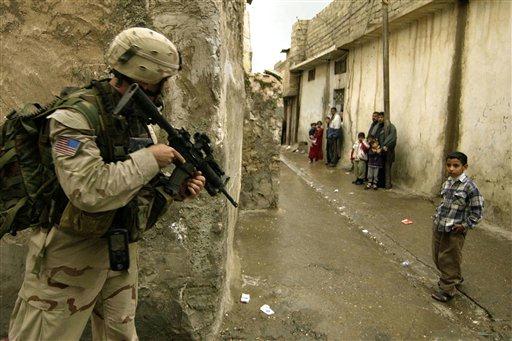
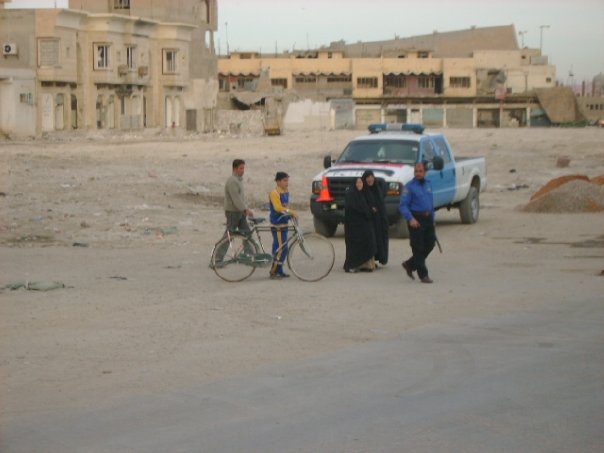
The actions of Bremer’s incompetent leadership team led to a tragic insurgency that need not have taken place. The now unnumbered US forces had to fight an insurgency while attempting to re-create an army, security forces and civil service from the wreckage created by Bremer’s mistakes; as well as its own often heavy handed tactics in the months following the invasion.


Nearly 4500 US troops would die and over 30,000 more wounded in the campaign. Hundreds of thousands of Iraqis were killed, wounded or died of disease during the war.  Lawrence wrote about the British administration of Iraq words that could well have been written about Bremer’s Coalition Provisional Authority:

“Meanwhile, our unfortunate troops, Indian and British, under hard conditions of climate and supply, are policing an immense area, paying dearly every day in lives for the willfully wrong policy of the civil administration in Bagdad.”

It took dramatic efforts in blood and treasure to restore the some modicum of security in Iraq, something that was only accomplished when the Sunni tribes of Anbar Province turned against the Al Qaeda backed foreign fighters. The surge under the command of General David Petreus achieved the desired result. It gave the Iraqis a chance to stabilize their government and increase their own security forces, however it can hardly be called a triumph.

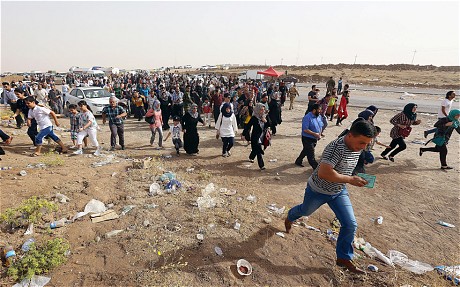
Unfortunately many of those that remained in power of the Shia sect refused to share power in meaningful ways with Iraq’s Sunni and Kurds leading to a political crisis. The US military mission ended in December 2011 and since then Iraq security forces and civil authorities, often divided by tribal or sectarian loyalties have struggled to maintain order. The result is that by 2013 that Iraq was again heading toward the abyss of civil war. Most of this has to be laid at the feet of Prime Minister Nouri Al-Maliki who has done everything that he can to break promises made to Sunnis and Kurds, and dishonor the Sunnis who fought to save his government in 2007-2008. Sunni protestors in Anbar and other provinces conducted frequent protests which were met by brute force. Sectarian violence spread, and ISIL/ISIS a move violent and vicious offshoot of Al Qaida gained control of Fallujah and parts of Ramadi. In the north, Mosul and Tikrit have fallen and there are reports that some ISIL/ISIS fighters entered Baghdad this evening. Casualties in Iraq are continuing to mount and a humanitarian crisis is developing as hundreds of thousands of Iraqis flee the violence, feeling threatened by both the fighters and the Maliki government.

iraq-border_2939075c


To the west in Syria a brutal civil war has been going on for three years. Like Iraq it pits Sunni against Shia, as well as Kurd and foreign fighters from a score of nations, some fighting as part of a Free Syria movement, others as part of the Al Qaeda coalition and others beside Syria’s government. Now many of the Iraqi elements of ISIS/ISIL have breached the border with Syria and are attempting to redraw the political map of the Middle East, ravaging the vestiges of the Sykes-Picot agreement.

In 1920 Lawrence wrote of the British intervention and occupation of Iraq:

“The people of England have been led in Mesopotamia into a trap from which it will be hard to escape with dignity and honour. They have been tricked into it by a steady withholding of information. The Bagdad communiqués are belated, insincere, incomplete. Things have been far worse than we have been told, our administration more bloody and inefficient than the public knows. It is a disgrace to our imperial record, and may soon be too inflamed for any ordinary cure. We are to-day not far from a disaster.”

His words have a sadly familiar tone. The US invasion of Iraq did have a different outcome than we imagined, one that is far worse than we bargained for and potentially cataclysmic in its impact.

Sykes-Picot-Map-1024x576


That being said, many if not most Arabs in all of these lands simply desire to live in peace and enjoy some amount of freedom for themselves and future for their children. The Iraqis are on the whole decent and honorable people. One has to remember that the freedom for which many are striving, and dying to attain is for them, not for the United States or any other power.

Lawrence’s words and wisdom concerning the Arabs who rebelled against the Turkish Ottoman Empire are as true today as when he wrote them after the war:

“The Arabs rebelled against the Turks during the war not because the Turk Government was notably bad, but because they wanted independence. They did not risk their lives in battle to change masters, to become British subjects or French citizens, but to win a show of their own.”

That is the case in Iraq and many other Arab countries today. One can only hope that for Iraq, Syria and those countries as that somehow peace will come. I do hope that we will do better in helping them achieve that than we have over the past dozen years of conflict, or than the British or French did almost 100 years ago.

But all of that being said, this situation is going to take at least a generation to settle. There are no easy answers and certainly sending troops in to restore the situation when Maliki and his regime make no attempt to reconcile with their Sunni and Kurdish countrymen, is not the answer. In fact if there is any answer that maintains Iraq as a unified state it has to be brought about by the Iraqis, particularly Maliki, who has shown no inclination to do this since the United States military left in 2011.

It is also very possible that what is happening, as bloody, horrible and painful as it is may be, is what is needed to correct the blunder of Sykes-Picot. Perhaps it should be left to the Arabs to redraw the natural boundaries of their regions, tribes and religions and let the chips fall where they may. In Iraq, the Sunni Sheikhs once the Shi’ite influence is diminished and they have regained some autonomy will drive out and destroy ISIL/ISIS as they did to AQI in 2007-2008.  The ISIL/ISIS fighters will not be welcome once they have achieved their goals.
lawrence12

Lawrence wrote in 1920:

What is required is a tearing up of what we have done, and beginning again on advisory lines. It is no good patching with the present system….We are big enough to admit a fault, and turn a new page: and we ought to do it with a hoot of joy, because it will save us a million pounds a week.

We should listen to him.

As my Iraqi friends say Inshallah, (إن شاء الله) God willing.

Peace

Padre Steve+


1 Comment

Filed under Foreign Policy, History, iraq,afghanistan, middle east, News and current events

Sacrifice, a Broken Heart and No Closure: Thoughts of an Iraq Veteran

400236_10151328400862059_541742014_n-2


Call em up
Dust em off
Let em shine
The ones who hold onto the ones, they had to leave behind
Those that flew, those that fell,
The ones that had to stay,
Beneath a little wooden cross
Oceans away

Elton John “Oceans Away”

For me and from what I am hearing many veterans like me, the last week has been terribly haunting and filled with anxiety regarding the situation in Iraq. I can when needed detach myself from my emotions and compartmentalize them to attempt to provide good analysis of the situation and place it in its historical, diplomatic, military, cultural and religious context. However, the emotions that I feel for Iraq and what is happening there are strong and I will own my sense of grief, loss and brokenness that I feel right now as the ISIL/ISIS fighters drive through Iraq conquering city after city as the Iraqi Army abandons the field. I wish I could say that things will turn around, but I don’t know if that is possible now. That fact troubles me because I love the Iraqis and left part of me in that country. As I have written before, I left my heart in Al Anbar.

During my tour in Iraq I got to see a part of the country and meet people that the average American never met. I got to know Iraqis because I served with our advisors in country, and I got to know some on detained ships in the Arabian Gulf back in 2002. Most are good people, who have hopes and dreams much like any of us. The vast majority are not extremists and relatively secular, regardless of their religious affiliation in comparison to others in the Middle East. They hope for better for their families, their future and in simple for a normal life after over 30 years in various states of war, with us, the Iranians and with themselves. I worry for them, and pray that by some miracle that they are able to get their families out of the country to safety or be able to get to an area of the country where their safety is assured. For some that may be that may be more possible than others. I worry for them because of the reports of how the ISIL/ISIS forces are wantonly executing officers, soldiers and police officials that they capture alongside the road.

I won’t be doing any real analysis today because this essay is more about my feelings about the situation, and I really don’t want to be mixing those with some kind of analysis. What I can say is that I am grieving for all who have been affected by this cruel war, Iraqis and Americans alike. Far too many people died during and after the ill-advised and most likely illegal invasion of that country by the Bush administration in 2003.

I am the kind of person who wanted to believe the best about the reasons the Bush administration took us to war, but as each of those reasons was proved untrue based on the evidence on the ground it was disappointing. However, I volunteered to serve in Iraq in 2006 and finally went in 2007, with a goal of helping in the effort to restore and reunited the country, something that despite everything I believed was a worthwhile goal. It became apparent while I was over there that for many, especially those managing the massive support contracts to U.S. bases were not there for any noble purpose but for their profits. I saw how KBR/Halliburton subsidiaries engaged in what was for all intents and purposes human trafficking as they exploited third country nationals who did the menial work that supported U.S. and coalition forces. I saw the massive destruction in the country, some caused by the U.S. invasion, and some attributable to the civil war that followed.

I felt betrayed by my leadership and I have a fair amount of anger about this, anger toward the Bush administration, the Congress that shirked its duties and allowed this as well as the war profiteers. But I am also angry at the power mongering Iraqi Prime Minister Nouri Al Maliki, whose actions to disenfranchise the Sunnis and others have brought about the current situation, without his idiotic power mania those Sunnis would be fighting against ISIL/ISIS, just as they did against AQI.

Because of this, especially the actions of the war profiteers, I have to agree with Major General Smedley Butler who wrote the classic book War is a Racket and that it is the soldiers that fight the wars and the innocent civilians whose lands, homes and families suffer as a result of it. Butler wrote:

“What is the cost of war? what is the bill? This bill renders a horrible accounting. Newly placed gravestones. Mangled bodies. Shattered minds. Broken hearts and homes. Economic instability. Depression and all of its attendant miseries. Back -breaking taxation for generations and generations. For a great many years as a soldier I had a suspicion that war was a racket; not only until I retired to civilian life did I fully realize it….”

My world has changed. I am not the same person I was that I was when I deployed to Iraq. PTSD, nightmares and terrors and anxiety are still a regular part of my life, as is a certain distance from parts of my life that once were important. When we went to war I didn’t believe that it would end this way. Like Erich Maria Remarque wrote in his classic All Quiet on the Western Front:

“I imagined leave would be different from this. Indeed, it was different a year ago. It is I of course that have changed in the interval. There lies a gulf between that time and today. At that time I still knew nothing about the war, we had been only in quiet sectors. But now I see that I have been crushed without knowing it. I find I do not belong here any more, it is a foreign world.”

imagesCA580JS0

Last night I attended the Elton John concert in Virginia Beach. He shared a song that he and Bernie Taupin wrote in honor of the members of the Greatest Generation on the 70th anniversary of the D-Day landings. The song, Oceans Away is about their sacrifice, and Sir Elton also paid tribute to those who fought and died in World War One as well as those that serve today. When I listened to the song I wondered if people like me will ever be able to go back to the battlefields that we served on.

Anyway, that is all for today. I have a number of writing projects in the works. The link to the song is here: http://www.youtube.com/watch?v=Izma0gpiLBQ

Peace

Padre Steve+

2 Comments

Filed under iraq,afghanistan, middle east, News and current events, PTSD

Iraq 2014: A Disaster Long in the Making

bilad ash shaam

Map of the ISIL/ISIS Vision

“A Wahabi-like Moslem edition of Bolshevism is possible, and would harm us almost as much in Mesopotamia as in Persia…” T.E. Lawrence, Memorandum to Foreign Office 15 September 1919

As the British and French divided up the Middle East following the collapse of the Ottoman Empire, the young Lieutenant Colonel, T.E. Lawrence wrote a warning to the British Foreign Office. He was quite concerned about what was happening and saw the dangers to the region inherent in the British and French division of it. Lawrence understood the religious and ethnic divisions of the region and saw the lack of wisdom in how both the British and French policies, which in order to prop up their gains used those divisions to establish ruling elites in Syria and Iraq, in each case pitting Sunni against Shia, Christian against Moslem and Kurd against Arab.

Iraq_mosul_refugee_2939832c

Mosul Refugees

In spite of the efforts of the Europeans and later the Americans to prop up strongmen in the region, or in the case of Saddam Hussein, destroy his regime opening a Pandora’s Box of chaos that was only contained by a massive amount of U.S. Military power and an alliance with Iraqi Sunni tribesmen and their sheikhs during the “Anbar Awakening.” The Sunnis expected after they had helped the U.S. and the Iraqi Shia led Central Government to destroy the forces of Al Qaida Iraq, to be brought back into the government and given a reasonable amount of autonomy. Instead, when the U.S. departed in 2011 at the behest of the Shia government those Sunnis became persecuted and alienated. Now many of them are actively aiding, supporting or acquiescing to the forces of the Islamic State of Iraq and the Levant (ISIL) which also known by the name Islamic State of Iraq and the Shaams (ISIS). We forget the lesson that Lawrence learned about the Arabs who fought against the Turks in the First World War: “The Arabs rebelled against the Turks during the war not because the Turk Government was notably bad, but because they wanted independence. They did not risk their lives in battle to change masters, to become British subjects or French citizens, but to win a show of their own.” The Iraqi Sunni who allied themselves with the U.S. military in Anabar in 2007 did so for the same reason, they wanted independence.

The American administration of Iraq was even more disastrous than that of the British following the First World War. Lawrence wrote of that occupation in words that could have well described the American efforts in 2003-2006.

“The people of England have been led in Mesopotamia into a trap from which it will be hard to escape with dignity and honour. They have been tricked into it by a steady withholding of information. The Bagdad communiqués are belated, insincere, incomplete. Things have been far worse than we have been told, our administration more bloody and inefficient than the public knows. It is a disgrace to our imperial record, and may soon be too inflamed for any ordinary cure. We are to-day not far from a disaster.” T. E. Lawrence, ‘Mesopotamia’ By ex.-Lieut.-Col. T. E. Lawrence (Fellow of All Souls College, Oxford) Sunday Times, 22 August 1920

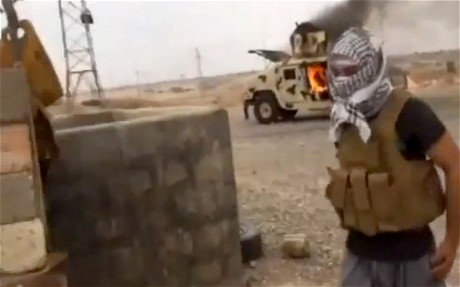
iraq-isis-thursday_2939167c

ISIL Fighter in Tikrit

Unlike the loosely organized insurgents and militants of AQI and its allies, many of whom were foreign fighters; while there are still good numbers of foreign fighters, most of the ISIS forces are Syrian or Iraqi Sunni, connected by tribe, religion and culture to the land that they are fighting on. These units are well trained, organized as proper military units and have fought both savagely and effectively in Syria and Iraq. Many are led by former professional officers of the old Iraqi Army who when Saddam fell, were thrown out of the military and not even provided for with the smallest of pensions. To demonstrate how close some of these are one only has to read the reports out of Al Jazeera and Al Arabiya, one of which quoted a tribal leader near Tikrit who said of the ISIL forces: “They came in hundreds to my town and said they are not here for blood or revenge but they seek reforms and to impose justice. They picked a retired general to run the town.”

The ISIL or ISIS fighters are strict Islamists and have been issuing decrees in Mosul regarding what citizens can and can’t do. Women are ordered to be completely veiled and covered if they go outside, which they are told that they should not do. People are being ordered to go to Mosques 5 times a day, sheikhs are being ordered not to cooperate with the government and the only people allowed to be armed are the militants. There are videos of ISIL fighters executing captured government officials.

Many of the Sunni Iraqi Nationalists, professional military officers who returned to the Army following the disastrous performance of it prior to 2007 also expected better treatment for their service. They too were not rewarded and it is possible that the collapse of Iraqi security forces could be in part due to the fact that these men hold grievances against the Baghdad regime of Maliki, which many view as a puppet to Iran, or as they call it “Persia.” Maliki claims that there was a conspiracy in the wholesale collapse of Iraqi forces in the north, and he may be right, but it is a problem that he created and made worse by his divisive policies and politics.

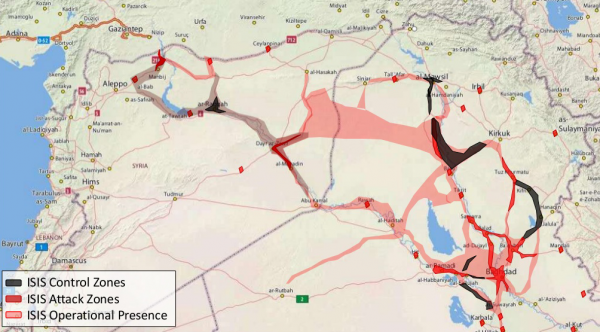
20140610_IRAQ1_0

The ISIL forces, though small are effective and efficient. In a sense they are a throwback, albeit a more hardened and ideological one to the Arabs that Lawrence advised and helped direct as they routed the Turkish Army in the Hajaz, Transjordan and Syria in 1917-1918. Lawrence wrote of that army:

“The Arab army, created in the field, grew from a mob of Bedouins into an organised and well-equipped body of troops. They captured thirty-five thousand Turks, disabled as many more, took a hundred and fifty guns, and a hundred thousand square miles of Ottoman territory.” From T. E. Lawrence, ‘France, Britain, and the Arabs’ by Col. T. E. Lawrence The Observer, 8 August 1920

What happens next I do not know. The ISIL forces have stated that: “Our final destination will be Baghdad; the decisive battle will be there…” I do not know if they have the ability to take and hold it, but they should be able to maintain their gains in Mosul and Tikrit. They have captured large numbers of armored HUMMVs as well as Iraqi military helicopters, including U.S. supplied UH-60 Blackhawk and MH-58 Kiowa at the Mosul airbase. To further complicate the situation the semi-autonomous Kurdish region seized the city of Kirkuk, which it considers its ancestral capitol. Those troops however are reportedly reading for a counter-attack on the ISIL forces absent any presence of regular Iraqi units.

iraq-Peshmerga-for_2939387c

Kurdish Forces outside Kirkuk

The loss of all of these areas is a disaster to a unified Iraq and shows the incredible short-sightedness of the Bush administration to overthrow Saddam and leave a power vacuum in his place after disbanding the Iraqi military, police and civil service, the only institutions that had kept Iraq together.

If Maliki has any sense he will welcome moderate Iraqi Sunni nationalists back and actually give them the autonomy within Iraq that they were promised while the U.S. was still there, a policy that now Vice President Joseph Biden articulated as early as 2007. A policy that unfortunately was ignored by Maliki as he consolidated power as the U.S. withdrew from Iraq. However, it may be too late for this. The more probable thing that Maliki will do is to rely on Shi’ite militias or even the Iranians to buttress his regime. There are reports that Iranian Al Quds commandos may have been deployed to Iraq, something that may in the vacuum of outside support from other Arab states, the U.S, U.N. Or the international community widen the conflict significantly.
This will likely lead to a bloody stalemate and civil war, similar to what has been happening in Syria, that could last for years throwing the entire region into chaos.

iraq-border_2939075c

A Border no More… the berm between Iraq and Syria

ISIL has removed the border between the areas that it controls in Iraq and Syria. They have controlled most of the Euphrates valley in Anbar since last year, and now with the seizure of Mosul and Tikrit are in control of much of the Tigris river valley. Lawrence wrote in his essay The Changing East in 1920 that:

“The cultivated districts, Mesopotamia and Syria, have, however, language, race, and interests in common. Till to-day they have always been too vast to form a single country: they are divided, except for a narrow gangway in the north, by an irredeemable waste of flint and gravel: but petrol makes light of deserts, and space is shrinking to-day, when we travel one hundred miles an hour instead of five. The effect of roads, railways, air-ways and telegraph will be to draw these two provinces together, and teach them how like they are…”

In effect the ISIL forces are creating that Sunni dominated and quite possibly radicalized Wahabi state that Lawrence warned of in 1919. This could well be the end of the duplicitous and disastrous Sykes-Picot agreement which divided the Middle East irrespective of into its current form. Those who implemented that agreement sowed the wind, and now the region and the world are reaping the whirlwind.

It is interesting to recount Lawrence’s observations of the Arab peoples in the Changing East essay published in 1920 which I quoted above. Lawrence wrote:

“The fate of the Arabs is more difficult to prophesy… they have been a government twenty times since the dawn of history, and as often after achievement they have grown tired, and let it fall: but there is no record of any force except success capable of breaking them. The history of their waves of feeling is significant in that the reservoir of all ideas, the birth of all prophecies are shown in the deserts. These empty spaces irresistibly drive their inhabitants to a belief in the oneness and omnipotence of God, by the very contrast of the barrenness of nature, the lack of every distraction and superfluity in life. Arab movements begin in the desert, and usually travel up the shortest way into Syria – for it is remarkable that whereas all prophets go to the desert, yet none of them are ever desert-born. It is the Semitic townsman or villager who receives the revelation. For this reason, for what seemed to be the immemorial finger-sign of history, this present Arab movement, the craving for national independence and self-government, was started in the desert. It, too, took the traditional road to Damascus, the traditional first centre of new movements, and with the successful establishment of Feisal there the second phase was finished. This is not, however, the proper end of the Arab movement: the weight and importance of the Semitic states have always lain in Bagdad, for very sound reasons of economics and population. Syria is a poor country, small and mountainous, dry, lacking in minerals and in arable land. There is no probability that her native population will ever be very dense. Mesopotamia has big rivers, and a huge area of irrigable land. Her wealth in grain and cotton will be very great, and nature may have bestowed on her abundance of cheap fuel. Should that be the case, she will inevitably take the headship of the Arab world in the future, as so often in the past. Damascus may hold an interim pre-eminence: Bagdad must be the ultimate regent, with perhaps five times the population of Syria, and many times its wealth. Mesopotamia will be the master of the Middle East, and the power controlling its destinies will dominate all its neighbours.”

If the politicians, diplomats, businessmen and bankers or the West fail to comprehend this we will never understand or successfully deal with the Arabs of Syria and Mesopotamia. This is not going to get better anytime soon and poses a danger to the region and also the world economy as oil prices are already going up as the oil markets anticipate losing access to Iraq’s oil reserves. In a sense what happens in Iraq will likely make the situation in Syria look like child’s play and will have far more long lasting effects, not only for the region, but the world.

Actions have consequences, and the failure of people, leaders and governments to understand the complex nature of Iraq and Syria have brought the world to a crisis. Barbara Tuchman said it well: “Confronted by menace, or what is perceived as menace, governments will usually attempt to smash it, rarely examine it, understand it, define it.”

Peace

Padre Steve+

1 Comment

Filed under Foreign Policy, History, iraq,afghanistan, News and current events

D-Day at 70 Years and Forever: Courage, Sacrifice and Reconciliation…

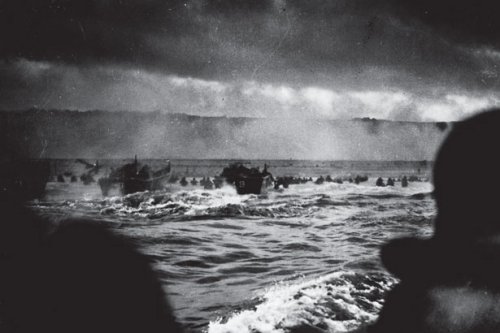
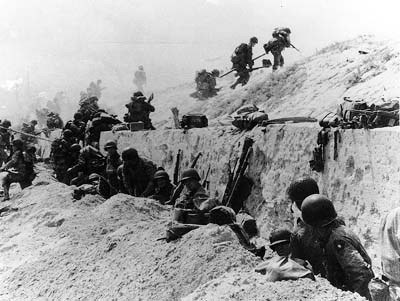
d-day-opener1Omaha Beach

“We are on this Earth for only a moment in time.  And fewer of us have parents and grandparents to tell us about what the veterans of D-Day did here 70 years ago.  As I was landing on Marine One, I told my staff, I don’t think there’s a time where I miss my grandfather more, where I’d be more happy to have him here, than this day.  So we have to tell their stories for them.  We have to do our best to uphold in our own lives the values that they were prepared to die for.  We have to honor those who carry forward that legacy, recognizing that people cannot live in freedom unless free people are prepared to die for it.” President Barack Obama at the 70th Anniversary of the D-Day Landings, June 6th 2014

Seventy years ago the liberation of France began on the beaches of Normandy.  Soldiers from 6 Allied Infantry and 3 Airborne Divisions supported by an Armada of over 5000 ships and landing craft and several thousand aircraft braved weather, heavy seas and in places fierce German resistance to gain the foothold on beaches named Omaha, Utah, Gold, Sword and Juno.  Over the next seven weeks the Allied soldiers advanced yard by yard through the hedgerows and villages of Normandy against ferocious German resistance before they were able to break out of the lodgement area and begin the drive across France.

dday371

The fighting was bloody, most American, British and Canadian infantry battalions and regiments suffered nearly 100% casualty rates in Normandy.  Replacements were fed in at a cyclic rate to make up the losses even as fresh divisions flowed ashore, but the losses were terrible.  By the time the landings took place, the British having been at war for nearly five years were bled out.  They had little left to replace their losses.  From Normandy on the British were losing combat power at a rate that they could not make up.

For the Americans there was another problem.  The US High command decided to limit the Army to 90 Divisions.  Many of these were committed to the Pacific and Mediterranean theaters.   Likewise, American Infantry units were generally made up of the lowest caliber of recruits, led often by the poorest officers, the best went to either the Air Corps or technical branches of the Army.

Now this is not to criticize veterans, but it is a factor in the campaign.  Most US Infantry Divisions with the exceptions of those previously blooded in North Africa and Sicily often performed badly in action.  Some, after being manhandled by the Germans had their leadership replaced and became excellent combat units.  However, every new division that arrived in France after D-Day always got the worst of their initial engagement against German forces.

While performance suffered there was another problem for the Americans.  With the limitation in number of divisions, they stopped building infantry divisions, upon whom the bulk of the campaign depended. Thus they had little in the way of trained infantry replacements to make up heavy losses in Normandy.  By late 1944 during the Battle of the Bulge the American infantry crisis was so bad that 30,000 Air Corps candidates were trained as infantry and soldiers support units such as Ant-Aircraft battalions were used to bolster infantry units.

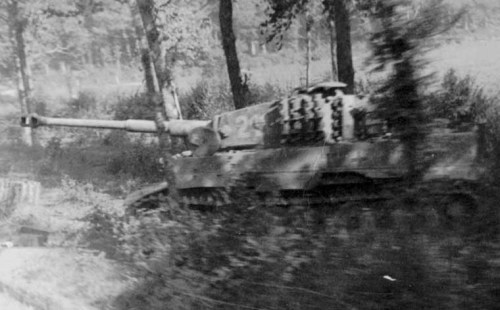
tiger2falaise16hh1

Had the Germans been able to hold out and had they not been bled white by the Red Army on the Easter Front, had they not lost the nearly their entire Army Group Center in the Red Army offensive of 1944 it is conceivable that the British and American offensive in the West would have ground to a halt for lank of infantry in 1945.  In spite of this there was no lack of individual courage among the troops engaged; the courage and sacrifice of all who fought there should not be forgotten.

caen_ruins1The Ruins of Caen

The human toll among the combatants both Allied and German, as well as the local populace was especially traumatic.  While the American, Canadian and British people are keen to remember the sacrifices made by our soldiers we often forget the toll among the French civilian population of Normandy as well as the German soldiers, mostly conscripts, sacrificed by the Nazi regime.  Normandy suffered more than any part of France during the liberation.  In the months leading up to D-Day Allied Air Forces unleashed hell on Normandy to attempt to lessen potential German resistance.  The Allied Naval bombardment added to the carnage ashore and once the campaign began the combined fires of both Allied and German forces devastated the region.  Whole cites such as Caen were destroyed by Allied Air forces and an estimated 30,000 French civilians were killed during the Normandy campaign, 3000 on D-Day alone.  I think it can be said that the blood of the civilians of Normandy was shed for the freedom of all of France.

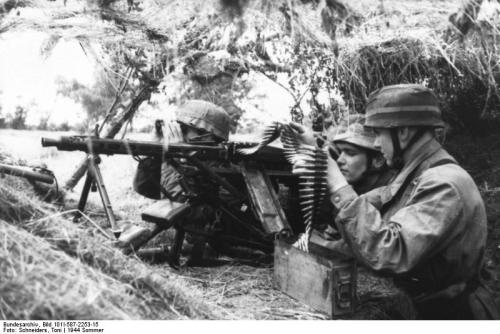
Normandie, Fallschirmjäger mit MG 42

The campaign in Normandy was one of the most viciously contested in western military history.  German forces, especially Paratroops of the 2nd, 3rd, 5th and 6th Fallschirmjager Divisions, German Army Panzer Divisions such as the 2nd, 21st, 116th and Panzer Lehr and those of the Waffen-SS, especially the 1st, 2nd and 12th SS Panzer Divisions held the line against ever increasing Allied forces.  As they sacrificed themselves Hitler refused to commit more forces to Normandy and insisted that his Army contest every meter of ground.  He forbade his commanders to withdraw to more defensible positions along the Seine.

Hitler’s decisions actually shortened the campaign.  Whatever the crimes of the Hitler Regime and Nazism, which were among the most heinous in history, one can never question the valor, courage and sacrifice of ordinary German soldiers.  For those Americans who lump all Germans who fought in World War II with the evil of the Nazi regime, please do not forget this fact:  There are those today, even in this country that make the same charge against Americans who have fought in Iraq and those at home and abroad who have labeled the US as an aggressor nation.  When you judge others, know that the same standard will be applied to you someday. It is as Justice Robert Jackson who served as the Chief Prosecutor at the Nuremberg War Crimes Tribunal wrote:

“If certain acts of violation of treaties are crimes, they are crimes whether the United States does them or whether Germany does them, and we are not prepared to lay down a rule of criminal conduct against others which we would not be willing to have invoked against us.”

Normandy was a near run thing for the Allies.  First the weather almost delayed it by 2 to 4 weeks.  Had that happened the Germans might have been even better prepared to meet the invasion.  Likewise, the Red Army’s devastating offensive which annihilated Army Group Center in June kept the Germans from transferring additional forces from the Russian Front to Normandy.  On D-Day itself there were a number of times where Lady Luck, or maybe the Deity Herself, saved the Allies from disaster.

Any person who has seen Saving Private Ryan, The Longest Day or Band of Brothers knows a little bit about how close Overlord came to failure.  Allied Airborne units were dispersed throughout the region after they drooped.  Many units were not fully operational for more than a day as they sought to organize themselves and gather their troops.  At Omaha Beach the Americans had not counted on the presence of the first rate German 352nd Infantry Division.  This division, despite being pounded by naval and air forces almost cause General Bradley to withdraw from Omaha.  At Utah the soldiers of the 4th Infantry division escaped a similar mauling by landing on the wrong beach.  Had they landed at the planned beaches they would have ran into the same kind of resistance from well dug in German forces.  At Gold Juno and Sword British forces benefited from confusion in the German command which kept the 21st Panzer Division from descending on the British forces and quite possibly splitting the British zones.

The Allies benefited from the absence of Field Marshall Erwin Rommel, Commander of Army Group B who because of the ad weather assumed no invasion was possible and traveled to German to celebrate his wife’s birthday.  Finally, and perhaps most important they benefited by Hitler’s refusal to immediately commit forces, including his Panzer reserve to defeat the invasion at the beachhead.

For those who fought in Normandy and those civilians who lived through it the memories are still vivid. Many suffer the effects of PTSD, grief and other wounds, physical, emotional and spiritual.  When one is exposed to the danger and destruction of war, the smell of death, the sight of burned out cities, vehicles and the suffering of the wounded and dying, it makes for a lifetime of often painful memories.

For some of the German, British and American veterans, the struggle in Normandy has given way to long lasting friendships.  Many of those who fought against the Allied onslaught became fast friends after the war. Those who fought against each other were soon allies as part of NATO and soldiers of nations which were once bitter enemies serve together in harm’s way in Afghanistan.  The generation that fought at Normandy is rapidly passing away, their numbers ever dwindling they remain a witness to courage, sacrifice and reconciliation.

In the end it is reconciliation and healing that matters. Some scars of war never pass away; some memories are far too painful to release.  Yet we strive to reconcile.  In 2002 while deployed at sea for Operation Enduring Freedom I was an advisor to a boarding team from my ship.  It was our job to make sure that impounded ships which were breaking the UN embargo on Iraq were not in danger of sinking, and that their crews had food, water and medical care.  Since many of these ships remained at anchor for 2-4 weeks in the heat of the Arabian Gulf, this was important.

The delays imposed by UN rules sometimes meant that the sailors of these ships grew resentful.  It was my job to spend time with the Master’s of these ships to keep things calm and work out any issues that arose.  On one of these ships I met an Iraqi merchant skipper.  The man was well traveled, educated in the U.K. in the 1960s and in his career a frequent visitor to the US. In 1990 he was the senior captain of the Kuwaiti shipping line.  Then Saddam Hussein invaded Kuwait.  As a result of this when Kuwait was liberated he lost his job.  His nation was an international pariah.  Since his life was the sea he took up the only job possible to support his family, what he knew best, captaining ships.  He was most apologetic for the trouble that he and others like him caused us.  We shared much during those visits.   One of his daughters was in medical school and other children in university.  He longed for the day when Iraq would be free.  On our last talk before his ship was released he remarked to me “I hope one day we will meet again.  Maybe someday like the American, British and German soldiers after the war, we can meet in a pub, share a drink and be friends.” 

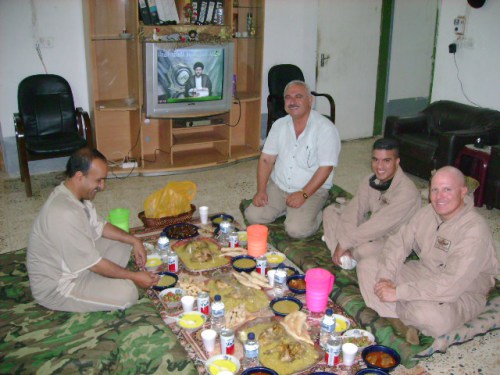
dinner-w-bg-sabah1Me with Iraqi General Sabah in his Quarters in Ramadi 2007

I too pray for that, especially after my tour in Al Anbar five years after I encountered that Iraqi Merchant Captain.  Maybe someday we will. I thought of him almost every day that I was in Iraq. I only hope that he and his family have survived the war, the continuing violence in Iraq and are doing well. There is hardly a day that goes by that I do not think of this man or the Iraqis that I had the honor of serving alongside in Al Anbar in 2007 and 2008.

President Obama remarked in Normandy last week about the veterans of the 9-11 Generation of service members, of which I and so many others like me are part:

“And this generation — this 9/11 Generation of service members — they, too, felt something.  They answered some call; they said “I will go.”  They, too, chose to serve a cause that’s greater than self — many even after they knew they’d be sent into harm’s way.  And for more than a decade, they have endured tour after tour.”

God bless all those who fought at Normandy and give your peace to all who have served since then. Be with our troops as they serve in Afghanistan. Heal the wounds of war and bring your peace to the nations. Amen

Peace, Steve+

1 Comment

Filed under History, iraq,afghanistan, Military, News and current events, world war two in europe

Frightened by Christians

10151918_10152444030142059_7871957421917905974_n

“I like your Christ, I do not like your Christians. Your Christians are so unlike your Christ.” Mahatma Gandhi

I expect that this article might make some people uncomfortable but it is something that I need to write.

I am a Christian. I am a Priest and I am a Navy Chaplain. But for the most part I am afraid of Christians. There are many reasons for this. Some are more general in the way I see Christians treat others; their own wounded as well as non-believers, the political machinations of pastors and “Christian” special interest groups masquerading as ministries.

But most of why I am afraid is because what I have experienced at the hand of many Christians, some of whom I had counted as friends many of whom are pastors, priests or chaplains. To experience rejection or being shamed by people that you thought were friends is very hard, especially when that at one time you trusted them implicitly to care for you. However to be rejected by those that you trusted “in the name of God, ” or rather because you violated supposedly “correct” doctrinal beliefs about God is frightening.

It seems to me that with many Christians and churches that the “unconditional” love of God that they proclaim not really unconditional. It is totally conditional on believing what they believe or behaving in the way they think that you should.

For those that do not know me or my story I am a career military officer with over 30 years of service between the Army and Navy. I have been a chaplain since 1992 and served in the National Guard, Army Reserve, Active Duty Army and the Navy. I am a trained hospital chaplain; I have a great academic background. I went to Iraq in 2007 and came home with a terrible case of severe chronic PTSD. I still suffer from some anxiety, depression and plenty of insomnia. I find mental health care hard to get in my new assignment and I realize how woefully unprepared that our medical system, military, VA and civilian is to care for that vast numbers of veterans like me.

After Iraq I suffered a collapse of my faith and for close to two years was a practical agnostic. Only my deep sense of call and vocation kept me going and there were times that I wondered if I would be better off dead.

When faith returned through what I call my Christmas miracle it was different. I totally relate to author Anne Rice who said:

“My faith in Christ is central to my life. My conversion from a pessimistic atheist lost in a world I didn’t understand, to an optimistic believer in a universe created and sustained by a loving God is crucial to me. But following Christ does not mean following His followers. Christ is infinitely more important than Christianity and always will be, no matter what Christianity is, has been, or might become.”

I have always questioned a lot but after my crisis of faith I began to see through the bullshit. I began to not only question things my former church taught, but openly stated my convictions about how we treat others as Christians, the equality of people in general and tolerance for those different than us including gays and Moslems who for some Christians are rather low on the scale of those that God might love.

After Iraq I was sickened by the crass politicization of conservative American Christianity and many of its leaders. Men and women who advocate war without end, be it real wars against “enemies” of American, or promote a culture war even against other Christians that they do not like or agree with. Of course this is all done in “Jesus name.”

Likewise I question the opulence and materialism of the church. I question the nearly cult like focus and near worship accorded to the Pastor-CEOs of the megachurches and the television preachers and teachers. I wonder in amazement about how many of these leaders live like royalty and have devoted followers who despite repeated scandals treat them as the voice of God.

Along with the that I question the preference of many American Christian leaders for the rich and their disdain for the poor, the alien and the outcasts among us. I don’t know where where they get it.

All of that got me thrown out of a church that I had served 14 years a priest and chaplain back in 2010. I thought I had a lot of friends in that church. I still have some that keep in contact with me but after my dismissal most abandoned me. That hurts worse than anything.

In fact when I came home from Iraq in crisis and falling apart the first person who asked about how I was doing with God was not clergy. It was my first shrink. I was asked by a commanding officer after Iraq “where does a chaplain go for help?” I told him “not to other chaplains.”  The sad thing is that man who did care about me suffered untreated terrible PTSD and Traumatic Brain Injury and committed suicide earlier this year.

I have had a few experiences this week that have opened that wound again and reminded me of why I am afraid of many that call themselves Christians. I had a friend comment on some coarse language I used in a rant on a social media site, the friend noted a certain word that I used was used to silence others.

I replied that he was wrong, that the ultimate way to silence others was to invoke God and shame them. That is the ultimate trump card because no one is bigger than God.

The good thing is that when he realized why I had said the word and realized what he said had further wounded me and understood a bit of what I was going through he was quite gracious, sympathetic and apologetic. He is still a friend and he means a lot to me. Thankfully there was not another broken relationship.

But my friend’s initial comment made me realize how many of us as Christians, even well meaning people, focus on outward behaviors, words or actions of others without understanding what they are going through. Like Dietrich Bonhoeffer said:

“Many people are looking for an ear that will listen. They do not find it among Christians, because these Christians are talking where they should be listening.”

I am thankful that I have a number of friends including a good number of Christians from various backgrounds who have stood by me even if they disagree with my theology, politics or favorite baseball team.

That being said with the exception of such
people who have been with me through thick and thin I am almost terrified of being around Christians. Church in most cases is a frightening place for me, and the sad fact is that if I were not already a Christian there is little in American Christianity that would ever cause me to be interested in Jesus.  I can totally understand why churches are hemorrhaging members, especially young people and why the fastest growing religious preference in our society is “none” for I too am in some sense an outcast.

As Pedro Cerrano (Dennis Haysbert) said in the movie Major League: “I Like Jesus very much, but he no help with curveball.”

Pray for me a sinner,

Peace

Padre Steve+

13 Comments

Filed under christian life, faith, Military, ministry, Pastoral Care, Political Commentary, PTSD

Moral Injury: The Silent Killer of Veterans

1622612_10152232336042059_727365308_n

This morning I woke up and got ready to go to work. My wife was up. She had been up most of the night because unbeknownst to me I had been fighting something in my sleep. Judy tried to wake me up, but I didn’t wake up, and evidently the episode lasted much of the night. I do remember some dreams, or rather nightmares last night dealing with a particular situation that I experienced in Iraq, but such nightmares are so common that unless there is something really unusual about them I really don’t think much about them.

I first heard of Moral Injury in 2009 about a year after I was diagnosed with severe and chronic PTSD. However, that being said as a military historian I have to admit that I have read about it time and time again in less clinical language. What I had more experience with were the memoirs of common soldiers and officers, as well as the experiences of Sailors, Marines and Soldiers who had confided in me at various times as their chaplain.

Marine Major General and two time Medal of Honor recipient Smedley Butler wrote in his book War is a Racket:

“Boys with a normal viewpoint were taken out of the fields and offices and factories and classrooms and put into the ranks. They were remolded; they were made over; they were made to “about face”; to regard murder as the order of the day. They were put shoulder to shoulder and through mass psychology, they were entirely changed. We used them for a couple of years and trained them to think of nothing but killing and being killed.

The suddenly, we discharged them and told them to make another “about face”! This time they had to do their own readjusting, sans mass psychology, sans officers’ aid and advice, sans nation-wide propaganda. We didn’t need them anymore. So we scattered them about without any “three minute” or “Liberty Loan” speeches or parades.”

Last year I was interviewed by David Wood of the Huffington Post for a series of three articles that he just published on moral injury.* If PTSD and TBI are considered “invisible wounds” then moral injury must be included. It is a condition as old as war itself and can be seen even in the most ancient of writings about war, Homer’s Iliad, King David’s grief over the loss of his friend Jonathan and many others.

I came home from Iraq forever changed. I served with Marine and Army advisers to Iraqi Army, Border Troops, Police, Highway Patrol and Port of Entry Police in Al Anbar Province in 2007 and 2008. That assignment, which took me throughout the province brought me into contact with a part of the war that many Americans, even those serving in Iraq were shielded from, a part of the war that was never shown in the media that exposed me to realities that before serving there I was unaware.

They were uncomfortable truths. The tensions between the various Iraqi factions, the real hopes for a better Iraq held by many Iraqis and the absolute devastation that the American invasion of Iraq had brought to that unfortunate country. I saw some of the disrespectful and insulting things done by American troops that had to be dealt with by the advisors, men who were as much diplomats as they were Soldiers and Marines. I saw the damage inflicted by bombing campaigns that had little to do with winning a war, but more with destroying infrastructure that even our own war plans had determined was vital to Iraq’s recovery after the success of our campaign. I saw children wounded in fire fights, as well as ministered to the wounded coming through the Fleet Surgical Facility at Ta’Qaddum on their way elsewhere.

I have spent time with Marines and Soldiers who feel real guilt from the actions that they saw or participated in both in Iraq and Afghanistan. Likewise I have dealt with the grief of men and women, Corpsmen, Doctors and Nurses who wish that they could have done more to save the lives of others or done more to prevent suffering. I have also dealt with those who have attempted suicide after taking part in actions that they could not live with or due to what they saw or experienced in Iraq or Afghanistan.

Unfortunately Moral Injury is not taken seriously by the military. This despite the fact many military physicians, mental health providers and chaplains are on the cutting edge of dealing with it. We are doing research, writing and treating those afflicted the services themselves do not even acknowledge it. Even as we do this some in the military, including Chaplains want to call it something more ambiguous using the Orwellian term “inner conflict” to describe something that is far more damaging and insidious.

I suppose that a big part of the reason is that all of the services do an amazing amount of work to built a set of moral values in those that serve. In the Navy we talk about courage, honor and commitment. We talk about being men and women of principle, doing what is right. Such ideas are a part of who we are, Douglas MacArthur spoke of “Duty, Honor Country” and our military academies have long taught the principle that “I will not lie, cheat or steal, or tolerate those that do.”

We teach our Soldiers, Marines, Sailors and Airmen values that are often more rigorous than what they grew up with at home or in school. Then we send them to war and they see and sometimes do things that are at odds with those values as well as the values that we as Americans cherish. We place them in situations where the moral values we teach them contradicted by what we teach and train them to do, and the real unvarnished truth about war, it is hell. Smedley Butler wrote:

“But the soldier pays the biggest part of this bill.
If you don’t believe this, visit the American cemeteries on the battlefields abroad. Or visit  any of the veterans’ hospitals in the United States….I have visited eighteen government hospitals for veterans. In them are about 50,000 destroyed men- men who were the pick of the nation eighteen years ago. The very able chief surgeon at the government hospital in Milwaukee, where there are 3,800 of the living dead, told me that mortality among veterans is three times as great as among those who stayed home.”

How we expect anyone to retain their soul and their sanity when we teach them a set of values that we as a nation fail to uphold is beyond me. The fact that the politicians, pundits and preachers who constantly insist on using the under one percent of the population that serves in the military to bear such burdens to satiate their bloodlust and then refuse to recognize their injuries and then deny them care or benefits is abhorrent.

One of the survivors of the famed World War One “Lost Battalion” wrote:

“We just do not have the control we should have. I went through without a visible wound, but have spent many months in hospitals and dollars for medical treatment as a result of those terrible experiences.”

While I was impacted very much by what happened to me and what I saw. The sad thing is that I was far better prepared and seasoned to survive what I experienced than most of my younger counterparts. After years of training and experience I felt that I was immune to PTSD or Moral Injury. Sadly, I was wrong and today, more than six years after I returned from Iraq I deal with the consequences of war, in my life and those of those that I serve.

I don’t pretend to have answers, but I do expect that our country takes responsibility for the injuries and suffering that its policies have created. Specifically I am speaking to that Trinity of Evil, the Politicians, Pundits and Preachers who constantly lobby for war and refuse to take personal responsibility for it when it comes, and who then for matters of political expediency throw aside the volunteers who went to war for far higher ideals and motives than those that sent them.

Okay, it is time for me to take a deep breath. But I do get really spun up about this, because I have lived this reality and I get angry when I see look around and realize that for most people in this country, the plight of veterans doesn’t matter. We are just another “special interest group” to use the words of a member of a committee appointed by former Secretary of Defense Donald Rumsfeld that wants to decimate military benefits. But even now people like Bill Kristol who have never served a day in the military and never seen a war that they didn’t like, urge that we send more men and women to war over Crimea. But I digress…

Moral injury is a silent killer of the soul and it is high time that we recognize just how deadly it is.

Guy Sager, author of the classic The Forgotten Soldier wrote: “Only happy people have nightmares, from overeating. For those who live a nightmare reality, sleep is a black hole, lost in time, like death.”

I don’t know what nightmares I will have tonight, hopefully at least for Judy’s sake I won’t have any.

With that, I will sign off for the night.

Peace

Padre Steve+

Wood’s Articles can be found here: http://projects.huffingtonpost.com/moral-injury/the-grunts
http://projects.huffingtonpost.com/moral-injury/the-recruits
http://projects.huffingtonpost.com/moral-injury/healing

6 Comments

Filed under iraq,afghanistan, Military, PTSD

Sweet Dreams: The Desire of Those that Return Traumatized by War

947188_10151670056587059_1172426886_n

Sweet dreams are made of this

Who am I to disagree?

I travel the world and the seven seas

Everybody’s looking for something… (Sweet Dreams- Eurythmics) 

The night before last Judy woke me up as I was screaming. For her it was very real, her husband was screaming in his sleep. For me, I do remember her waking me, and I remember parts of the ream. I was being attacked in a small space and somehow it related to my time in Iraq. Unfortunately it was not an isolated occurrence. It is

My dreams are strange, parts are logical, other parts disjointed and disturbing, while other parts are frightening. My dreams and nightmares, the two are frequently indistinguishable have increased in intensity since I returned from Iraq in 2008. Sleep at best is fitful. Some nights I get a few hours of decent sleep, but most nights that is not the case.

The night before last the dreams, or as they might better be described as nightmares dealt with Iraq. They were not logical, parts of my tour blended into others but in my dreams, in my subconscious I was back in Iraq, with people familiar and unfamiliar. When Judy woke me I was screaming a a woman dressed in a hajib. The last place I encountered women dressed in such apparel I was at the border crossing between Iraq and Syria at Al Waleed.

Actually I don’t know why that incident and memory triggered my nightmare. At Waleed the scariest thing occurred when I was in a meeting where the senior Iraqi Officer and senior American officer. They had to confront and relieve of his duties the Iraqi senior logistics officer who had been selling coalition and Iraqi military fuel to the insurgents who were killing Americans and Iraqis in great numbers. No women were at that meeting, but many were at the crossing point. However, I was at the meeting and was the only unarmed man in a room which resembled a Mafia meeting more than anything I hand been trained to do or experienced before that time.

It was an interesting experience. I was one of three Americans in the room along with an interpreter. There were Iraqi officers and soldiers, most believed to be allies, but also the man who was playing both sides of the street and others that might or might have not been his confederates. The really scary thing that I remember to this day was the accused officer’s appeal to me as the Chaplain, Priest and Imam. It was the first time in my life where someone who was doing something so wrong appealed to me as a representative of God to defend him. I felt soiled, dirty and dishonored. How could a man involved in criminal activity appeal to an representative of God to defend his actions?

I did my best to to deflect the conversation back to the Iraqi Commander and his American, but to this day the incident haunts me. I am disturbed by how the man appealed to me as a representative of God to vouch for his malfeasance. That still frightens me because of how often I see religious people from every tradition and faith appeal to any representative of God to justify their misdeeds. It almost felt like I was a new Priest stuck in the middle of a meeting of Mafia types, each appealing to me as the representative of God. It makes me distrust all who would do the same to this day.

Sweet dreams would be so nice. A full night sleep without being woken up screaming would be incredible. Unfortunately it seems that my brain has been re-wired by PTSD. I know that there are studies that suggest that PTSD is both a psychological as well as physical condition, the physical being the changes wrought in the brain of the afflicted.

How often I long for a good night sleep. Unfortunately no matter what I do I do not think that I will ever enjoy sweet dreams again. That is something that I wold never want to contemplate, but six years after returning from Iraq I see little reason to thing that things will change. Nonetheless I will do my best.

Maybe the upcoming baseball season will help soothe my demons and allow me to sleep again.

At least I can hope…can’t I?

Peace

Padre Steve+


2 Comments

Filed under iraq,afghanistan, Pastoral Care, PTSD, Tour in Iraq

The Long Strange Trip: Six Years After Returning from Iraq

295_26912117058_5652_n

It is hard to believe because it seems like it was yesterday, but six Years ago tonight I got off a plane, home from Iraq. The final flight on a commercial aircraft going from Philadelphia to Norfolk was crowded, but the people on board were polite to us, both the flight crew and the passengers, but it was like I had returned to a different world. What I entered was the same as it always had been, but I was different.

Guy Sager, an Alsatian who served in the German Army in World War Two wrote at the end of his book The Forgotten Soldier:  

“In the train, rolling through the sunny French countryside, my head knocked against the wooden back of the seat. Other people, who seemed to belong to a different world, were laughing. I couldn’t laugh and couldn’t forget.” 

About a year after my return, actually on February 16th 2009 I began writing on this site. I began it in large part to express my inner angst and as a means to my own healing as well as to help others. The beginnings came out of my initial therapy with Dr Elmer Maggard, who I sometimes refer as “Elmer the Shrink.” Elmer asked me if I was willing to open up and share my story even though I was still very broken and vulnerable, feeling abandoned by God, the church and most clergy.

At the time I was a practical agnostic. My collapse from PTSD and the moral injuries that I had sustained in Iraq were severe, it was if God had abandoned me, and try as I might nothing worked. In the months before I began writing I had hit bottom. That was then.

The last five years of writing my journey home has been illuminating. As I look back at things that I wrote, surveyed my moods, emotions, intellectual and spiritual development since the beginning of Padre Steve’s World I am reminded of the words to the Grateful Dead song Truckin’ because my life, especially since Iraq has been “a long strange trip.” 

That may seem kind of flippant, but it is true. My journey has been strange and I could not have predicted it back when I got my orders to go to Iraq in May of 2007. I was a volunteer for the mission and what I experienced changed me forever.

I don’t know what the future holds. I was shaken when my Captain Tom Sitsch, my former Commodore at EOD Group Two committed suicide a month ago. I know far too many men and women who have died by their own hand due to the after effects of the trauma they sustained in Iraq Afghanistan, or even Vietnam. What I experience is not unique to me, and that comforts me.

I have been busy this week, between storm recovery, home restoration and catch up at work I have had little time to muse about what the years have been like. I still feel a sense of melancholy as I do every time this year. My difficulty sleeping, nightmares and night terrors still plague me, some nights are better than others but the insomnia that has plagued me since my time in country is still all too real. My anxiety and panic attacks, though diminished still remain.

Faith, which had disappeared has returned, but even that has changed. What I knew to be sure in 2007 is often at best doubt plagued in 2014. For me faith is still often a struggle. Thus I have great empathy for those who do not believe, those who have lost their faith or struggle with doubt, and I cannot condemn them. Sometimes this puts me at odds with other Christians who strongly believe, but who have no tolerance for differences of opinion regarding things which cannot be proven without reference to faith in things that we cannot see. I am okay with that. What I believe about God is more open and less doctrinaire than it was before I left for Iraq. I agree with the late Father Andrew Greeley who wrote:

“I don’t think Jesus was an exclusivist. He said, and we believe, that He is the unique representation of God in the world. But that doesn’t mean this is the only way God can work.”

I am thankful that I have had the chance in a number of venues to share my story. That is a gift that has been given to me and I am thankful for those who at various times have reached out to me, encouraged me and shared their stories of service, faith, struggle, doubt and loss.

In the past five years I walked with and have heard the stories of many people, veterans and their families, both in person and comments made on this site who like me still struggle, with PTSD and moral injury, as well as others who suffer from TBI and other physical injuries. They are comrades. Erich Maria Remarque wrote in his book  All Quiet on the Western Front:

“I am no longer a shuddering speck of existence, alone in the darkness;–I belong to them and they to me; we all share the same fear and the same life…I could bury my face in them, in these voices, these words that have saved me and will stand by me.”

In the next week or so I will share some more including my first article, written for my former church while I was still in Iraq around Christmas of 2007.

295_26912012058_78_n

Faith, doubt. War, peace. Madness, sanity. Isolation, community, loss and gain. So much still to learn, explore and experience despite everything that has happened. It has been a long strange trip and I expect that the long strange trip will continue. T. E. Lawrence wrote to a friend years after his war in the desert:

“You wonder what I am doing? Well, so do I, in truth. Days seem to dawn, suns to shine, evenings to follow, and then I sleep. What I have done, what I am doing, what I am going to do, puzzle and bewilder me. Have you ever been a leaf and fallen from your tree in autumn and been really puzzled about it? That’s the feeling.”

That is all for tonight as I have much to ponder as I sit with Judy. Our dogs Molly and Minnie passed out beside us, and I hope that tonight I will sleep.

Peace

Padre Steve+

6 Comments

Filed under christian life, faith, iraq,afghanistan, Military, PTSD

A Night of Memories: Syria, Iraq and The Middle East in 2014, Echoes of T. E. Lawrence

410w-1-2

Inshallah, (إن شاء اللهGod willing…

It is now 2014, almost eleven years since the Bush administration launched its ill advised, preemptive and probably war illegal under international law, against Saddam Hussein’s Iraq. Tonight instead of watching the State of the Union Address, and the four separate Republican responses, or a sporting event, or some thing more frivolous I am watching Lawrence of Arabia.  

award-ceremony-dundas-31

It is fitting that I do so. I left Iraq just six years ago. In fact six years ago tonight I was in Baghdad at the Headquarters of the Iraq Assistance Group, on my way out of country, being awarded a Defense Meritorious Service Medal for my work with our advisors and the Iraqis in Al Anbar. It was a melancholy night. That night I was wearing my last serviceable uniform, which I had preserved for the trip home by wearing flight suits and baseball caps with no badges of rank, throughout most of the deployment. Like Lawrence’s donning of the Bedouin robes, my uniform choice, done purely by necessity made me stand out conspicuously among other Americans in country.

399202_10151366970802059_725286976_n-2

I was heading home but didn’t really want to leave, but in the process I left part of me in that long suffering country.  I have written much about my experience there and how even today I have a deep regard for the Iraqi people and their hopes for a better future. However, I wonder if what Lawrence wrote will be true:

“We had been hopelessly labouring to plough waste lands; to make nationality grow in a place full of the certainty of God… Among the tribes our creed could be only like the desert grass – a beautiful swift seeming of spring; which, after a day’s heat, fell dusty.” 

vault-von-saddam-statue-fall-itn-640x360

In 2003 the United States invaded Iraq and made short work of that country’s military. Many Iraqis of all creeds looked upon the US and coalition forces as liberators but within a few months the illusion was over. Within weeks of the overthrow of Saddam, the US military personnel and leaders who were working with Iraqi officials, both military and civilian to get the country back on its feet were replaced by the Bush administration.

rumsfeld-bremer-2

In their place a new entity, the Coalition Provisional Authority was created and staffed. The first administrator of the entity was retired Army Lieutenant General Jay Garner. He had much experience in Iraq but was sacked quickly by Secretary of Defense Donald Rumsfeld for not conducting an immediate purge of members of the Baathist Party from key positions in the civil service or security forces, or implementing the agenda of the administration.

After Garner’s dismissal the CPA was led by Ambassador L. Paul Bremer, a man who had no experience in the Arab world, much less in Iraq. Bremer and his staff, most of who had little experience or knowledge of the country created conditions that directly led the the Iraq insurgency, the sacrifice of thousands of American and allied lives and the loss of friendship of the Iraqi people. They also gave a a bloodless strategic victory to Iraq’s traditional enemy and oppressor Iran, which became a dominant regional power without having to worry about their traditional Arab nemesis.

It was as if Bremer, the leaders of the Bush administration and their neoconservative allies knew nothing of history. If they did they decided to ignore it. Whether it was ignorance of history, or a wanton disregard for it, and the country we invaded it was immoral, unethical and probably criminal.

baghdad1917-2

T.E. Lawrence wrote of the British incursion into Turkish Mesopotamia in 1915, managed by the British Indian Office:

“By brute force it marched then into Basra. The enemy troops in Irak were nearly all Arabs in the unenviable predicament of having to fight on behalf of their secular oppressors against a people long envisaged as liberators, but who obstinately refused to play the part.”

The actions of the CPA destroyed the plans pragmatists in the Pentagon and State Department to incorporate the existing civil service, police and military forces in the newly free Iraq.  Instead Bremer dissolved the Iraqi military, police and civil service within days of his arrival. Since the military invasion had been accomplished with minimal forces most Iraqi weapon sites, arsenals and bases were looted once their Iraqi guardians were banished and left their posts. The embryonic insurgency was thus provided by Bremer a full arsenal of weapons to use against American forces; many of whom were now mobilized Reservists and National Guardsmen that were neither trained or equipped to fight an insurgency or in urban areas.

mosul-41

The reaction of the Iraqi Arabs to US occupation should have been anticipated. Lawrence wrote in 1920 a letter that could have easily been written in 2004:

“It is not astonishing that their patience has broken down after two years. The Government we have set up is English in fashion, and is conducted in the English language. So it has 450 British executive officers running it, and not a single responsible Mesopotamian. In Turkish days 70 per cent of the executive civil service was local. Our 80,000 troops there are occupied in police duties, not in guarding the frontiers. They are holding down the people.”

The actions of Bremer’s incompetent leadership team led to a tragic insurgency that need not have taken place. The now unnumbered US forces had to fight an insurgency while attempting to re-create an army, security forces and civil service from the wreckage created by Bremer’s mistakes; as well as its own often heavy handed tactics in the months following the invasion.

OLYMPUS DIGITAL CAMERA

Nearly 4500 US troops would die and over 30,000 more wounded in the campaign. Hundreds of thousands of Iraqis were killed, wounded or died of disease during the war.  Lawrence wrote about the British administration of Iraq words that could well have been written about Bremer’s Coalition Provisional Authority:

“Meanwhile, our unfortunate troops, Indian and British, under hard conditions of climate and supply, are policing an immense area, paying dearly every day in lives for the willfully wrong policy of the civil administration in Bagdad.”

It took dramatic efforts in blood and treasure to restore the some modicum of security in Iraq, something that was only accomplished when the Sunni tribes of Anbar Province turned against the Al Qaeda backed foreign fighters. The surge under the command of General David Petreus achieved the desired result. It gave the Iraqis a chance to stabilize their government and increase their own security forces.

26iraq_image1-articleLarge

Unfortunately many of those that remained in power of the Shia sect refused to share power in meaningful ways with Iraq’s Sunni and Kurds leading to a political crisis. The US military mission ended in December 2011 and since then Iraq security forces and civil authorities, often divided by tribal or sectarian loyalties have struggled to maintain order. The result is that by 2013 that Iraq was again heading toward the abyss of civil war. Sunni protestors in Anbar and other provinces conducted frequent protests, sectarian violence spread, and an Al Qaeda affiliated group gained control of Fallujah and parts of Ramadi. Casualties in Iraq are continuing to mount.

Syria

To the west in Syria a brutal civil war has been going on for three years. Like Iraq it pits Sunni against Shia, as well as Kurd and foreign fighters from a score of nations, some fighting as part of a Free Syria movement, others as part of the Al Qaeda coalition and others beside Syria’s government.

In 1920 Lawrence wrote of the British intervention and occupation of Iraq:

“The people of England have been led in Mesopotamia into a trap from which it will be hard to escape with dignity and honour. They have been tricked into it by a steady withholding of information. The Bagdad communiqués are belated, insincere, incomplete. Things have been far worse than we have been told, our administration more bloody and inefficient than the public knows. It is a disgrace to our imperial record, and may soon be too inflamed for any ordinary cure. We are to-day not far from a disaster.”

lawrenceguerrillas1

His words have a sadly familiar tone. The US invasion of Iraq did have a different outcome than we imagined. The Arab Spring erupted and the consequences of it will be far reaching and effect much of the Middle East and the world. The internal conflicts in Iraq and Syria threaten every country that borders them, and the instability has the potential of bringing on an regional war.

295_26912097058_4309_n-4

That being said, many if not most Arabs in all of these lands simply desire to live in peace and enjoy some amount of freedom for themselves and future for their children. One has to remember that the freedom for which many are striving, and dying is for them, not for the United States or any other power.

Lawrence’s words and wisdom concerning the Arabs who rebelled against the Turkish Ottoman Empire are as true today as when he wrote them after the war:

“The Arabs rebelled against the Turks during the war not because the Turk Government was notably bad, but because they wanted independence. They did not risk their lives in battle to change masters, to become British subjects or French citizens, but to win a show of their own.”

That is the case in many Arab countries today. One can only hope that in those countries as well as in Afghanistan where our troops are embroiled in a war that cannot end well, that somehow peace will come. I do hope that we will do better than we have over the past dozen years of conflict, or than the British or French did almost 100 years ago.

As my Iraqi friends say Inshallah, (إن شاء الله) God willing.

Peace

Padre Steve+
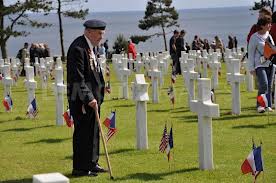
1 Comment

Filed under ethics, Foreign Policy, History, iraq,afghanistan, middle east, Tour in Iraq

My Heart Remains in Al Anbar

262_29132382058_5961_n-2

I keep a close watch at what happens in Iraq, especially Al Anbar Province.  I was there in 2007-2008 in the midst of the Anbar Awakening.  I had the honor of working with our advisors and the Iraqis of the 1st and 7th Divisions, 2nd Border Brigade and local police and Iraqi Highway Patrol. In my time there, traveling the entirety of the province, getting to work with and know Iraqi military officers and tribal leaders I gained a great appreciation for them as people and sympathy for the people there who in the course of over 30 years of war have suffered so much.

295_26912097058_4309_n-3

To do so I have to use the English language services of various Arab and Iraqi news sources as well as some German and French services to get decent information. American media tends to ignore Iraq until it cannot be ignored because to be truthful most Americans don’t give a damn about Iraq or its long suffering people. Come to think of it, as I look at the voting records and actions of those that they elect to Congress of both parties, they don’t seem to give a damn about the Americans who served in Iraq or Afghanistan either. But then it is easy to buy a “I support the Troops” bumper sticker and then elect Congressmen who instead of cutting unnecessary and wasteful defense spending in their districts, cut the benefits to the troops.

n671902058_1153829_4642-2

The situation in Al Anbar now with Al Qaida ISIL militants gaining strength and attempting to seize both Fallujah and Ramadi has brought back many memories. It has also given me great concern for the Iraqi people who I served among and Iraqi military personnel who not only risk their lives in combat but whose families are often targeted by terrorists. They are true patriots because deciding to serve not only endangers them but their families.

185615_1857288397412_3950321_n

When I came home from Iraq I was a changed man. My life, faith, politics and values were  challenged by what I experienced. I came home afflicted with chronic and serve PTSD, something that while I do better in managing the symptoms now still affects me in many ways.

295_26912117058_5652_n

Nearly six years after I left Iraq it is amazing to me how much it still permeates my soul, my thoughts and life. I can close my eyes and I can be back there, on the Syrian border, in Ramadi, and in dozens of different camps and settlements. The kindness and hospitality of the Iraqis I met is something that I shall not forget.

399202_10151366970802059_725286976_n

I do pray that the Tribal leaders in Al Anbar can take the fight to the militants and defeat them with the help of the Iraqi Army, perhaps the most trusted institution in the country. I hope and pray that the Shia leaders of the Maliki government stop the heavy handed and undemocratic tactics they have been using against the Sunni in Al Anbar. It looks that after his last meeting with President Obama that Maliki might be getting the hint.

295_26912057058_2651_n-2

Too many people, Iraqis as well as Americans have shed their blood in a war of choice launched by the Bush Administration where Bush appointees squandered any good will after the invasion through sheer hubris and incompetence. Iraq will take years to recover even if a full fledged civil war does not erupt.

533506_10151366982462059_34997654_n

The costs have been so great and I do pray that the Iraqis will find a way to unite and defeat both Sunni and Shia extremists so that they may one day again live in peace with themselves and their neighbors.

481801_10151367001287059_1003164983_n-2

I would go back again, because I did leave a big part of me in Iraq. I left my heart in Al Anbar. I can echo the words of T. E. Lawrence in his opening sentences of Seven Pillars of Wisdom: 

“I loved you, so I drew these tides of men into my hands
and wrote my will across the sky in stars
To earn you Freedom” 

Peace

Padre Ste

2 Comments

Filed under History, iraq,afghanistan, Tour in Iraq