Tag Archives: military suicides

Memorial Day 2012: The Perpetual Cost in Human Lives, PTSD, Suicide and Other Issues

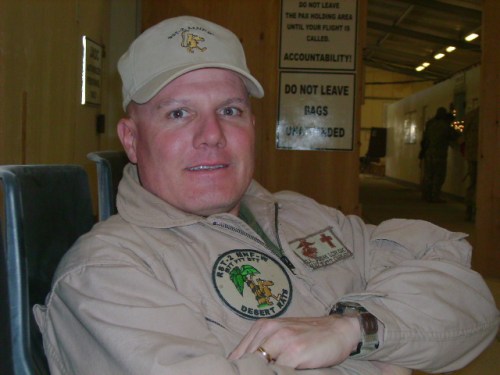
Al Waleed Border Crossing 2007

On Memorial Day there will be many official observances at various Military and Veterans cemeteries to honor the members of the United States Military that have died in the service of our country throughout our history. Many died directly in battle while many more died to combat related injuries, illness, suicide as well as substance abuse and addiction.

In addition to the more than 6000 US Soldiers, Sailors, Marines and Airmen killed in battle there have been tens of thousands more who have died of causes related to their service in combat.  That is nothing new, the same was true in Vietnam, Korea, the World Wars and before.  War changes people and the wounds incurred, physical, psychological, spiritual and moral impact those that served as well as their loved ones for years, sometimes for the rest of their life. The problem is exacerbated when the society in which the soldiers return is itself not invested in the war being fought.

The fact is that no matter how well individual soldiers train and prepare for combat and combat conditions there is nothing that truly prepares that one can never fully expect what will happen to them in theater or after they return.  I can speak personally to this as well as testify about the things that I learn from others that have served. Likewise I know what others have written or shared.

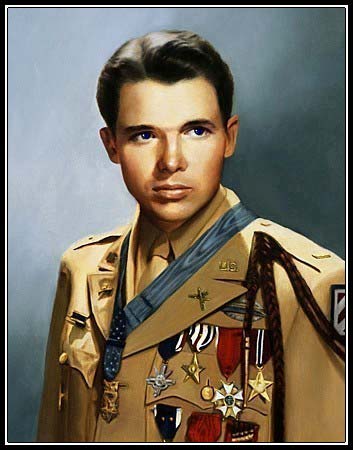
Audie Murphy 

One of the most prominent soldiers ever to share his experiences of what was then called “battle-fatigue” was America’s most decorated soldier, Audie Murphy. Murphy served in North Africa and Europe in the Second World War and was awarded the Congressional Medal of Honor, Two Silver Stars and Two Bronze Stars in addition to 28 other US and foreign awards for service and for valor. When he returned from the war he suffered from depression, chronic insomnia slept with a loaded pistol under his pillow and became addicted to prescription sleeping pills. In the immediate aftermath of the war following his discharge from active duty he struggled to find employment and slept in a gym before finally finding work as an actor. He starred in 44 films including the biographical film about his life To Hell and Back. He spoke up for Vietnam vets returning from war with similar problems before he was killed in a plane crash on May 28th 1971.

I have also found that Chaplains and others that provide care to those in combat become particularly isolated when they return with PTSD or other combat stress related issues. One of the biggest reasons for this is that in many churches and religious bodies a chaplain that suffers from these issues has nowhere to turn and is isolated in his or her denomination. In the past few years a number of chaplains, Army and Navy have committed suicide following tours in Iraq. I knew a couple of them, one who had also served as an Marine infantryman in Vietnam. I have know others including medical personnel that have suffered from PTSD, depression, substance abuse and known a couple that have attempted suicide following their return from combat. I know others that have lost their faith or suffered a spiritual crisis brought about by their time in combat. I read today about Army Chaplain Darren Turner who left the Army following his time in Iraq suffering from combat stress issues, faith and readjustment to life back at home and for a time was separated from his wife. He has since returned to the Army but his path was not easy and I am sure based on my knowledge of others that more are out there afraid to tell their story.  (See the article on CNN http://religion.blogs.cnn.com/2012/05/26/battlefield-chaplains-war-unfolded-on-many-fronts/?hpt=hp_c2

Former Army Vice Chief Of Staff General Peter Chiarelli has fought the American Psychological Association to have the diagnostic term PTSD changed to PTSI, Post Traumatic Stress Injury to reduce the stigma that often prevents servicemen and women from seeking help. His request was recently rejected but it has merit. Other countries such as Canada treat it as such for their veterans.

I wrote about my experience of this on a number of occasions one of which I wrote in 2010 I asked if there were other chaplains like me. That article Raw Edges: Are there other Chaplains out there Like Me? attracted the interested of the local newspaper in Jacksonville North Carolina which did an article on me. (See http://www.jdnews.com/articles/cmdr-89433-stephen-military.html ) That article in turn led to my involvement with the DOD Real Warriors Campaign http://www.realwarriors.net/  They did a video on my story and interviewed me last week as part of a DOD Military Bloggers live forum.

I don’t feel alone anymore. I still have my struggles and I have talked about them a lot in other articles and plan to continue to do my best to help others who are struggling with the effects of war and return from it, especially chaplains, medical personnel and those that now struggle with faith and belief after their time at war. My encouragement is to just say that in spite of everything you are not alone.

Peace

Padre Steve+

2 Comments

Filed under film, healthcare, iraq,afghanistan, PTSD, vietnam

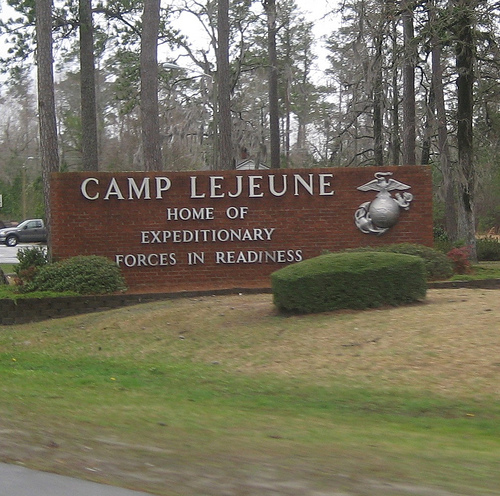
A Base at War: First Impressions of Camp LeJeune Nine Years after my First Tour

This is just a brief post on some first impressions on my assignment to Camp LeJeune after a nine year absence from the base. When I left LeJeune and my assignment with the Second Marine Division I had just completed twenty years in the military though I was not even three years into my service as a Naval Officer.

Today I was part of a Casualty Assistance Team meeting with the family of a young Navy Corpsman and Afghanistan veteran who killed himself in his apartment last night.  The Corpsman was part of a family with a long tradition of Naval Service who in his time in the Navy had gone to war with a Marine Battalion in Afghanistan’s Helmand Province and returned home changed by the war and struggling with PTSD and all the related symptoms of it.  This is something that I can understand having come back from Iraq in a rather bad way about two and a half years ago.  In my time with this young man’s parents today I found a young man that loved life but was wracked by his experiences of war.  He was well liked at his Marine Battalion as well as at the hospital and his death shocked the community almost as much as it did his family.  The sad thing is that this young man is emblematic the suicide problem in the military.  He is not alone, far too many Soldiers, Sailors, Marines and Airmen on active duty, in the Reserves or those that have left the service suffer so much from the unseen wounds of war that they commit suicide.  Since I have been here just a bit under two weeks this was a confirmation of what I knew just walking around the hospital, getting around the base and the local area.  Camp LeJeune is a base at war with Marines and Sailors fighting in Afghanistan and unfortunately many suffering from deep wounds of war at home living with physical, psychological, spiritual and moral injuries that don’t go away just because they return home.

When I left LeJeune in compliance with orders to the USS Hue City CG-66 in December 2001 we were just 3 months into the current war and barley two months into the Afghanistan campaign.  Marine morale was high though most Marines had not been to combat and those that had were veterans of Operation Desert Shield and Desert Storm, Somalia or the Balkans. Of course none of these actions lasted as long nor caused the amount of deaths as either the campaign in Iraq or Afghanistan.  Marines wanted to get a shot at the Al Qaeda terrorists that had attacked the United States and killed nearly 3000 Americans.

The Marines answered the call and have performed magnificently in every theater of the current war but the Corps has changed. Back in the late 1990s and early 2000s the Marines had a swagger that was typical of the work hard; train hard and play hard attitude of the Corps.  The Corps is now composed of many battle hardened veterans that have made deployment after deployment to the hottest combat zones in both Iraq and Afghanistan in which they took the initiative in both offensive operations in taking the battle to the enemy and employing solid counterinsurgency techniques especially in Al Anbar Province where the Iraqi Army performed quantitatively better under their tutelage in helping to turn the tide during the Anbar awakening.  Navy Corpsmen, Doctors and Chaplains serve alongside the Marines as they have done throughout our history.

I served with Marine and Army advisors in Al Anbar in 2007 and early 2008 in many of the remotest parts of the province and have dealt with individual Marines since. The Marines still have much of their swagger but it seems more fatalistic now.  An expert in trauma and moral injury told me of a recent visit to Camp Pendleton where Marines referred to themselves as “the walking dead” in an almost cavalier manner. The sad thing is that for many Marines this is only half a joke. The Corps in 2009 had the highest suicide rate in the military at 24 per 100,000 and suicides continue at a similar pace in 2010.  http://www.yuma.usmc.mil/desertwarrior/2010/03/11/feature6.html One occurred on Camp LeJeune where a Marine Sergeant pulled out a pistol and shot himself after being pulled over by Military Police in front of the base Fire Station.

As I made my way around the base the past week or so, I saw a lot more Marines with canes and obvious physical injuries from their combat injuries incurred in Iraq or Afghanistan. The Marines as always were professional but appeared to be much more serious than 9 years ago, many seeming to be old beyond their years. I love serving with and around Marines because they have a unique sense of professionalism combined with humor that is unlike almost any found in any part of the United States Military. However that positive is sometimes offset by a need to maintain an image of toughness even when they are dying on the inside which leads many not to seek help because it might make them look weak or broken, terms that no self-respecting Marine wants associated with his or her name.

In addition to the obvious injuries I noticed that while there was a much more serious tenor around the base that the Staff Sergeants and Gunnery Sergeants are a lot younger than they used to be back 9 years ago. With the war lasting as long as it has and the coupled with the expansion of the Marines during the war coupled with casualties and attrition by other means these young men and women are being promoted sooner than they were in the prewar days. Their leadership experience is mostly combat-related and they are in general superb combat leaders. However, this does not always translate well in a garrison setting especially if they are dealing with their own untreated PTSD or TBI nor is it helpful on the home front. As a result many of these young leaders are suffering the breakups of families at a record rate as well as substance abuse when they return home.

As Secretary of Defense Robert Gates noted in a speech at Duke University on September 29th of this year:

“There are a number of consequences that stem from the pressure repeated of deployments – especially when a service member returns home sometimes permanently changed by their experience.  These consequences include more anxiety and disruption inflicted on children, increased domestic strife and a corresponding rising divorce rate, which in the case of Army enlisted has nearly doubled since the wars began.  And, most tragically, a growing number of suicides.

While we often speak generally of a force under stress, in reality, it is certain parts of the military that have borne the brunt of repeat deployments and exposure to fire – above all, junior and mid-level officers and sergeants in ground combat and support specialties.  These young men and women have seen the complex, grueling, maddening face of asymmetric warfare in the 21st century up close.  They’ve lost friends and comrades.  Some are struggling psychologically with what they’ve seen, and heard and felt on the battlefield.  And yet they keep coming back.” http://www.defense.gov/speeches/speech.aspx?speechid=1508

These young men and women have forged a bond in combat and in many cases multiple combat tours. The have served well with honor and many don’t feel that people who have not been “in the shit” understand them or what they have been through.  There is a comradeship that comes out of war. There is segment at the end of the Band of Brothers mini-series where a German Commander is speaking to his soldiers after they have surrendered to the Americans. As the German Commander speaks to the survivors of his unit Corporal Joe Liebgott is asked to translate by another American. As he translates the German officer’s words the Americans know that he also speaks for their experience of war:

“Men, it’s been a long war, it’s been a tough war. You’ve fought bravely, proudly for your country. You’re a special group. You’ve found in one another a bond that exists only in combat, among brothers. You’ve shared foxholes, held each other in dire moments. You’ve seen death and suffered together. I’m proud to have served with each and every one of you. You all deserve long and happy lives in peace.”

I think that sums up what many feel today except unlike the Germans our war drags on with no end in sight.

The Marines are still tough and a force to be reckoned with on any battlefield. They, especially the Marine Divisions are an elite force but I believe that many are losing some of their resilience as the war goes in Afghanistan goes on.  Many from reports that I have read as well as those that I have talked with are concerned that much of the country doesn’t support the war nor appreciate their sacrifice. Many are concerned that their sacrifices as well as those of their friends, those killed and wounded will be wasted and the suffering that goes on after the war will be swept aside by politicians, the media and the public at large. They are also concerned that the people that they have worked with against the Taliban and Al Qaeda in Afghanistan and those that they have tried to protect and care for will suffer even more if the Taliban return to power.  I can say that I worry about my Iraqi friends and fear for them when I hear news of more attacks.

In the midst of this war we went through a number of elections and it troubles me that in the last election that the war and those fighting it were hardly ever mentioned by candidates from either party.  We mentioned it was usually for show to help politicians gain favor with voters.  We deserve better, we are not just a something to talk about at political rallies that when the election is over simply budget item to be slashed because the country is in a mess. These young men and women, as well as old guys like me are the sons, daughters, husbands and wives and brothers and sisters that have volunteered to serve this country.  The wounds that these young men and women, their experiences in combat that have left their souls scared will not go away when the last American leaves Iraq or Afghanistan.

This young man that we lost last night will be buried by his family and we will have a memorial service in his honor.  His many friends will grieve and those of us who are caring for his family will not forget them. I don’t want this young man or any other to be forgotten like so many who have returned from war before them.

Peace,

Padre Steve+


Leave a comment

Filed under iraq,afghanistan, Military, PTSD

Suicide isn’t Painless: The Epidemic of Suicide in the Military

I leave the Naval Medical Center Portsmouth Virginia tomorrow and toward the end of October report as the Command Chaplain for Naval Hospital Camp LeJeune North Carolina. My last time at Camp LeJeune was as part of the Portsmouth SPRINT (Special Psychiatric Rapid Intervention Team) mission to care for Emergency Department personnel at the Naval Hospital and Base Fire/EMS responders to a particularly gruesome suicide of a young Marine who had recently served in Iraq and was preparing for another tour.

As a Chaplain and in my previous life as a Medical Service Corps officer commanding a Medical Company in Germany and Brigade Adjutant in Texas I have dealt with a lot of suicides, attempted suicides and the lives left shattered by suicide.  Likewise I have seen the results of suicide attempts as a trauma, emergency and critical care chaplain in major medical centers. I have attended the DOD Suicide Prevention Conference on a number of occasions and gotten to know many of the experts working in the field.

As I said I began my career as an officer in the Army Medical Service Corps. We had a close connection to the movie and television series M*A*S*H and the theme music to that movie is emblematic of the feelings of many combat vets who continue to deploy even after making many combat deployments. http://www.metacafe.com/watch/3444418/suicide_is_painless_johnny_mandel/

Through early morning fog I see
visions of the things to be
the pains that are withheld for me
I realize and I can see…
[chorus]:

That suicide is painless
It brings on many changes
and I can take or leave it if I please.

I try to find a way to make
all our little joys relate
without that ever-present hate
but now I know that it’s too late, and…
[Chorus]

The game of life is hard to play
I’m gonna lose it anyway
The losing card I’ll someday lay
so this is all I have to say.
[Chorus]

The only way to win is cheat
And lay it down before I’m beat
and to another give my seat
for that’s the only painless feat.
[Chorus]

The sword of time will pierce our skins
It doesn’t hurt when it begins
But as it works its way on in
The pain grows stronger…watch it grin, but…
[Chorus]

A brave man once requested me
to answer questions that are key
‘is it to be or not to be’
and I replied ‘oh why ask me?’

‘Cause suicide is painless
it brings on many changes
and I can take or leave it if I please.
…and you can do the same thing if you choose.

Last week four soldiers, one a highly decorated senior NCO and all combat veterans are believed to have committed suicide at Fort Hood Texas.  The base which has already seen more than its fair share of tragedy with 14 confirmed suicides this year is stunned that these occurred in one weekend.

Defense Secretary Robert Gates commented about the stress on the all-volunteer force: “No major war in our history has been fought with a smaller percentage of this country’s citizens in uniform full-time — roughly 2.4 million active and reserve service members out of a country of over 300 million, less than 1 percent,” as a result the wars have been fought by a small proportion of the country, for many they are “a distant and unpleasant series of news items that does not affect them personally.” While the distance grows between those that serve and the general population military families are under even more stress, with anxiety and disruption inflicted on children, increased domestic strife and a growing number of suicides. Divorce rates in the Army have doubled since the wars in Afghanistan and Iraq began.

In the years prior to about 2004-2005 the military suicide rate was almost always below civilian rates in all demographics.  This is something that we took legitimate pride in.  That began to change as the war in Iraq shifted from a “Shock and Awe” campaign to a rather nasty and intractable insurgency this began to change as the deployment tempo increased and the Army increased its “boots on ground” time from a year to 15 months with a one year dwell time between deployments. Even as Iraq calmed down and the US role shifted many troops remain and Afghanistan has become a much more difficult war than it was even a few years ago. The Marines retained a 6-7 month deployment schedule but as the war went on and personnel requirements increased many Marine units were doing 6 months in country and 6 months home.  The difficult of what was described as “dwell time” for the Army and Marines was that for all intents and purposes it wasn’t. The units would get a few weeks leave and stand down time on their return home and then begin preparing for their next deployment. These preparations out of necessity entailed much time in the field training including trips to the Fort Irwin National Training Center (NTC) or the Marine Corps Air Ground Combat Training Center at 29 Palms.  Speaking from experience before 9-11 I can say that a Marine battalion going to 29 Palms in reality makes a short but intense deployment which is taxing on the organization even as it sharpens combat skills.  The same can be said for Army units going to NTC.  Thus the time that is nominally considered time at home to recuperate is not that and instead serves to keep the pressure on already stressed units, leaders and soldiers/Marines.  In the intervening time those that present to mental health providers or chaplains are provided with care to get them back in shape for the next deployment but never really get to deal with the deeper psychological and spiritual wounds. These include “moral injury”  which often involves unresolved grief for the loss of comrades and real or imagined guilt for their own actions in war.  Such wounds ultimately create despair, loss of faith and eventually cause some service members to make attempts on their life with varying degrees of “success” in “completing” the suicide.

The result is that those who have experienced the moral injuries that come as a result of combat, seeing comrades killed and wounded, participating in actions where they are directly or indirectly involved in killing the enemy, see the “collateral damage” of civilians, including children killed and maimed go right back into to fight.  Since this war has now gone on longer than any war in US history and we are fighting it with an all volunteer force of limited numbers with many making multiple deployments, some as many as 5 or more these wounds are pushed aside.  The effect of this is a cumulative grinding down of those that serve in harm’s way. Many suffer from some form of psychological, neurological or even spiritual injury that in combination with other life stressors make them particularly vulnerable to taking their lives.  In regard to moral injury “Many of the troops kill themselves because they feel that those kinds of experiences have made them unforgivable,” said Dr. William Nash, a top PTSD researcher. “It’s a lot harder for most people to forgive themselves than to forgive others.”

Unfortunately there is a stigma attached to seeking treatment or admitting that one is suffering from depression, anxiety or any other condition associated with either seeking help on their own or being “command referred” for psychological/psychiatric help.  Since that stigma is real many war fighters don’t seek help and take “refuge” in destructive behaviors such as alcohol abuse, drug abuse (to include prescription drugs) and risky behaviors.  One wonders how many of the single vehicle accident fatalities that occur late at night to combat vets are not accidental at all but are suicides by another more “socially acceptable” means.  If a forensic psychological profile was done on every service member that dies in such events I would guess that the finding would be a lot more suicides not an accidental deaths as we would like to believe. Yes all of these deaths are tragic but it is far easier to rationalize death in an auto accident than death by gunshot, knife wounds, overdose or hanging.

I am not proposing any solutions for this problem.  I do believe that somehow the deployment tempo needs to be slowed down to allow troops to actually recover and get help.  This is one of the suggestions of the DOD Suicide Prevention Task Force.  Their report is linked here: http://www.health.mil/dhb/downloads/Suicide%20Prevention%20Task%20Force%20report%2008-21-10_V4_RLN.pdf

When I go to LeJeune I know that as a Chaplain at the Naval Hospital I will be collaborating with our mental health professionals to provide care to Marines, Sailors and their families that are living this daily.  The Marine situation is poignantly show in this article: http://www.nctimes.com/news/local/military/article_3dc03ec3-6a37-5608-8563-aca88f635271.html

I have served with the Marines almost 6 years and from what I see the Corps has changed.  It is battle hardened but less resilient than it used to be.  The Marine Corps’ suicide rate has reached 24 per 100,000, a rate that surpasses all the other services. The rate was 13 per 100,000 in 2006 when I finished my tour at Marine Security Forces. The latest available figures put the civilian suicide rate at 20 per 100,000.  The problem extends past active duty as Veterans Affairs Secretary Eric Shinseki, the former Army chief of staff, said the suicide rate for men aged 18-29 who have been discharged had gone up by 26% from 2005-07. Likewise, “of the more than 30,000 suicides in this country each year, fully 20% of them are acts by veterans.” This means as Shinseki said “on average 18 veterans commit suicide each day. Five of those veterans are under our care at VA. So losing five veterans who are in treatment every month, and then not having a shot at the other 13 who for some reason haven’t come under our care, means that we have a lot of work to do.”

There is also an effect on military health care providers of all kinds and chaplains. These individuals not only have to deal with their trauma but the trauma and hopelessness that they see in many of their patients or parishioners. These caregivers have no respite between deployments because their reason for being is to care for the Soldiers, Marines, Airmen and Sailors that present to them be they deployed or back in a military hospital or clinic.

The work will be hard and long after the last Marine, Sailor, Soldier or Airman leaves Iraq and Afghanistan we will be dealing with this for years to come.

Peace

Padre Steve+

3 Comments

Filed under healthcare, iraq,afghanistan, Military, Pastoral Care, PTSD

Getting ready to Fly and Fort Hood Update IV

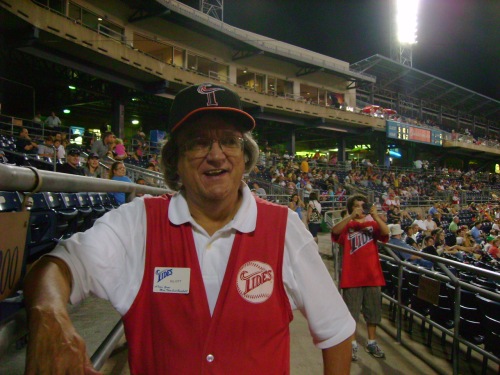
042My Buddy Elliott the Usher

I’m getting packed for my trip out to California, need to get some things together and leave in a couple of hours.  I saw Elliott the Usher and a couple other friends from Harbor Park at  Baseball Card show not far from my home. It was my first time to go and I was blow away by the stuff there.  It took me down memory lane.

Emotionally I’m still trying to sort out the Fort Hood attack and pray that the shooter, Major Hasan will cooperate with investigators.  I am hoping and praying it was an isolated incident and not something more insidious.  However, it makes me wonder about safety on bases if someone like Major Hasan, or heck, someone just pissed at the military or the medical system after returning from war goes off.  There are a good number of people that I have had to deal with who not only have had suicidal thoughts and plans, but also homicidal ones, and none of them are Moslem.  Almost all had access to means to accomplish their plans and were suffering from severe PTSD or other trauma.  A few years ago while at Camp Lejuene as the duty Chaplain I was called to a house on base where a Staff NCO was threatening to kill himself and his wife.  The MPs had the place surrounded.  The individual would only talk to a chaplain so I got to go in and talk him down.  He had a Glock which he surrendered to me and then let EMS take him to the ER for a psychological evaluation.  The guy was  a mess from deployment after deployment and this was just as the present war was beginning.  We have a decent number of folks who are on the edge, and I’m sure there are others like Major Hasan who may have religious and ideological motives for what they do.

Anyway, pray for all concerned and for our Nation and its leaders.

Peace,

Padre Steve+


Leave a comment

Filed under Baseball, PTSD, traumatic national events

Revisiting the Demons of PTSD: Returning to Iraq in Virginia a Year and a Half Later

Today I am attending a conference on Caregiver Operational Stress Control.  This brought out my “demons” as I was faced with the stories of others who had been to the same places that I have been in Iraq, and experienced similar things that I experienced on my return.  This is a re-posting of something that I wrote in March at the very beginning of this blog.  At that time I had very few readers.

I am glad to be at this training today.  I needed to take a Xanax when I arrived because I don’t do well with these kind of events anymore.  The intial session and a video of Dr Heidi Kraft talking about her expereinces at Al Taqaduum where I was based out of.  I was scheduled for another meeting but I knew that I needed to be here.  So I asked my Department Head who was going to the meeting if I could stay and he allowed me to do so. God bless him.

I received a note from a new friend in another country’s military, a physician with multiple tours in Afghanistan.  He is dealing with many of the things that I discuss in this essay and had a bad day that took him back to Afghanistan.  I am sure that he is not alone as I deal with many people in my Medical Center who have similar experiences.  Yesterday I was walking down a hallway near our Operating Room and I saw a pretty good sized blood spill on the floor. I was surprised at my reaction as I kept seeing it in my mind the rest of the day and flashbacks to Iraq and the TQ Shock Surgery Trauma platoon where I was pulled into a couple of the last major mass casualty events where 10-15 Marines or soldiers came in at a time. I began to see those wounder Marines on the tables and can visibly see those Marines, their wounds, even tattoos… I hope this helps break the code of silence.  I wrote this on a particularly rough day and will repost some of those early essays as they are still very relevant.  Peace, Steve+

964Trying not to Show my Stress and Exhaustion after 2 weeks out while in between flights at Al Asad

The feeling of abandonment and aloneness, separation and disconnection run deep for those returning from unpopular wars in which the majority of the citizens take no part.  The effects are devastating.  It is estimated that at least 100,000 Vietnam veterans have taken their lives in the years after that war.  Last year the Army had its highest number of active duty suicides ever recorded, January and February of 2009 have been banner months for Army suicides.  Of course as I noted in my previous post these numbers don’t include reservists and Guardsmen who have left active duty or veterans dischaged from the service.  Neither do they include the host of service men and women who died from causes undetermined.

Many veterans attempted to return to “normal life” and family following the war. Many only to have marriages fall apart, continue or leave untreated alcohol and drug addictions acquired in country which often follow them back destroying lives, families and careers.  Most felt cast aside and abandoned by the goverment and society. Many got through and return to life with few visible effects, but the scars live on.  My dad would never talk about his experience in the city of An Loc in 1972 where he as a Navy Chief Petty Officer was among a small group of Americans operating an emergency airstrip in the city which was besieged by the North Vietnamese and Viet Cong for 80 days.  I do know that it affected him, he wasn’t the same when he returned, he was a lot more tense and had some problems initially with alcohol.  He never talked about his time there.

I have seen the effects of this in so many lives,  I remember a Vietnam vet who attempted to kill himself with a shotgun blast to the chin in Dallas during my hospital residency.  He forgot to factor in recoil and blew off his face without hitting his brain or any major arteries.  He survived…talk about having something to be depressed about later.  I have seen the tears as veterans rejected by the country during and after than war begin to seek community with their wartime brothers, men who had experienced the same trauma followed by rejection and abandonment by the people that sent them to Southeast Asia.  One only has to talk to veterans of the Ia Drang, Khe Sahn, Hue City, the Central Highlands and Mekong Delta or read their stories to know what they have gone through.  LTG Hal Moore and Joseph Galloway in We Were Soldiers Once..and Young and We are Soldiers Still have deeply penatrating and soul searching views of Vietnam as does Bing West in The Village. Bernard Fall does the same from a French perspective in Hell in a Very Small Place and Street Without Joy. Alistair Horne’s book A Savage War of Peace discusses and tells the story of many French soldiers in Algeria, who fought a war, won it militarily and had their government abandon them, bringing out a mutiny and coup atempt by French Soldiers who had fought in Indochina, were almost immediately back in action in Algeria with little thanks or notice from thier countrymen.  Abandonment is an ever present reality and “demon” for many of us who have served regardless of our nationality, French, Canadien or American who have fought in wars that have not engaged the bulk of our fellow citizens. Go to the Vietnam Veterans Memorial in Washington DC and tocuh it, trace the outline of a name, look upon the makeshift memorials and tokens of remembrance left by comrades who came home and understand the sorrow and the sacrifice.

Unfortunately we would like to think that this is something out of history that we have learned from and applied the lessons and in doing so no longer have an issue.  Unfortunately this is not the case.  There are many, depending on the study anywhere from8-20 percent of returning Iraq and Afghanistan veterans who suffer from some type of PTSD, Combat Stress reaction or other psychological malady incurred during their tour. Similar numbers are reported by the Israeli Armed Forces in from the 1973 War forward.   The British are seeing the same now as their veterans return from war.  Canadian Forces assigned to the UN command during the Rwanda genocide suffer horribly from PTSD. The mission commander, LTG Romeo Dalliare now a Senator in the Canadian Parliament is a leading spokesman for those who suffer from PTSD. His book Shake Hands with the Devil is a study of how military professionals were exposed to atrocities that they either were forbidden to stop or lacked the combat power to do so even if they wanted to.  These men and women tell their story in a video put out by Canadian Armed Forces.

105Convoy along Route Uranium

I am not going to rehash stories that I have recounted in my other posts dealing with PTSD here, but both I and many men and women that I know are scarred by the unseen wounds of this war.  We gladly recognize, and rightfully so, those who suffer physical wounds.  At the same time those who are dying inside are often ignored by their commands or if they come out are shunted into programs designed to “fix” them.  In other words make them ready for the next deployment.  I am not saying here that there is an intentional neglect of our service men and women who suffer from PTSD and other issues.  I do not think that is the case, but it is a fact of life. The military is shorthanded and stretched to the breaking point. Many Army Soldiers and US Marines have made 3-5 deployments since 2003. The Navy has sent over 50,000 sailors, not including those assigned with the Marines into “Individual Augmentation” billets in support of operations in Iraq, Afghanistan, the Horn of Africa and other fronts in this war.  The Navy personnel, as well as Air Force personnel who perform similar missions often do not have the luxury of going to war and coming home with a particular unit.  We serve often in isolation and incredibly disconnected from our commands, our service is often misunderstood.  Now there are efforts by the services and some commands to do things better to support our sailors, some of these at my own hospital.  However as an institution the military has not fully made the adjustment yet.

Many sailors feel abandoned by the country and sometimes, especially when deployed by the Navy itself.  I have debriefed hundreds of these men and women.  Almost all report anger and use terms such as being abandon, cut off and thrown away by the service and the country.  Those from all services who work in unusual joint billets such as advisers to local military and police forces in Afghanistan and Iraq feel a sense of kinship with each other, often feel a connection to the Iraqis and Afghans but are often not promoted or advanced at the same rate as others who have served in conventional forces in traditional jobs.  There was a film called Go tell the Spartans staring Burt Lancaster about Army advisers in the early stages of Vietnam.  If you see it and have been to Iraq with our advisers you can see some of the same dynamics at work.

At this point we are still engaged in Iraq and Afghanistan.  These wars divided the nation and the veterans, though better treated and appreciated by society than most of thier Vietnam counterparts have no memorial.  Words of thanks uttered by politicans and punits abound, our Vietnam era and other fellow veterans in their latter years come to the airports that we fly in and out of to say thank you, but our numbers are rising, the war rages on both in country and in our minds and lives are being lost long after soldiers have left the battlefield.

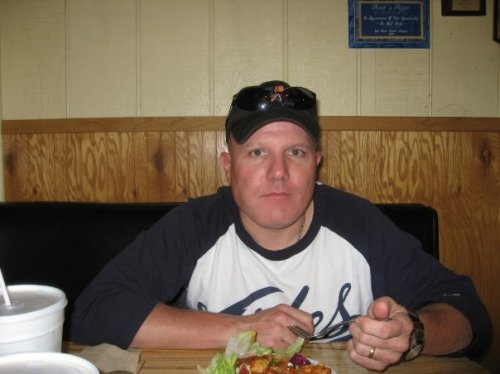
not a happy camperNot Doing Well on Leave about 5 months After my Return from Iraq

We have to do a better job of ensuring that those who sacrifice so much do not feel that they have been cut off and abandoned while they are in theater and especially when they return. When it is time we need a memorial on the Capitol Mall for those who served in these wars.  I don’t know when that will be, but I do hope to see it in my day.  Sure it’s only symbolic, but symbols can be healing too, just look at the black granite wall rising up from the ground and going back down into it, filled with the names of those who gave their lives and made the supreme sacrifice in Southeast Asia.  Simply known by most as “the Wall” it has become a place of healing and rememberance.  A place to say thank you, goodbye and amen.

Peace and blessings, Steve+

5 Comments

Filed under healthcare, iraq,afghanistan, Military, PTSD, Tour in Iraq, vietnam