Tag Archives: ministerial vocation

Letter to a New Military Chaplain: Part Two The Minefields of the Heart

295_27076892058_2637_n-1

This is second part of a response to a question I had from a new Navy Chaplain. I have decided to post it here without any identification of the chaplain because I know that many men and women who are new to the military chaplaincy or who are exploring the possibilities of becoming a chaplain have the same questions. I was fortunate to have had a number of chaplains who at various points in my decision process and formation as a minister, Priest and Chaplain in both the Army and the Navy help me with many of these questions. Likewise I learned far too much the hard way and blew myself up on some of the “land mines” that almost all who serve as chaplains experience in their careers. This is the second of several parts to the letter and is my attempt to systematically explain my understanding of what it is to be a Chaplain serving in the military and in particularly the Navy. The first part is linked here:

Letter to a New Military Chaplain: Part One

“There is a twilight zone in our hearts that we ourselves cannot see. Even when we know quite a lot about ourselves-our gifts and weaknesses, our ambitions and aspirations, our motives and our drives-large parts of ourselves remain in the shadow of consciousness. This is a very good thing. We will always remain partially hidden to ourselves. Other people, especially those who love us, can often see our twilight zones better than we ourselves can. The way we are seen and understood by others is different from the way we see and understand ourselves. We will never fully know the significance of our presence in the lives of our friends. That’s a grace, a grace that calls us not only to humility, but to a deep trust in those who love us. It is the twilight zones of our hearts where true friendships are born.”Henri J. M. Nouwen

Dear Chaplain

The next section of our discussion is about the “minefields” that we so often encounter as Chaplains and to some degree as Ministers, Priests or Rabbis or other religious leaders. As I noted in the first section I am dividing these “minefields” into three major areas; the personal, the behavioral and the professional.

This section is about the “personal” minefields which I call the “Minefields of the Heart.” I call it this because it seems from the Christian and Jewish Scriptures the heart is the figurative locus of what we are, good and bad alike as human beings.

Of course there is always some spillage between the areas personal, behavior and professional areas and our behaviors and professional relationships are certainly influenced by the things that we hide deep in our hearts. As human beings we may try to compartmentalize our life to keep things apart such as keeping our personal life separate from our professional life, or hide behaviors from our friends, families, peers or co-workers; but the cold hard fact is whether we are aware of it or not each area impacts the other. If we are not aware of this fact, if we have little self awareness, if we have self awareness but try to live our lives with the illusion that we can separate our lives into neat little boxes we will most undoubtedly hurt ourselves, and as spiritual leaders harm those that come to us.

q_who

There is a scene of the last episode of Star Trek the Next Generation entitled “All Good Things” that comes to mind.  In it the being known simply as “Q” helps Captain Picard discover how his actions influence human history.

Q: You just don’t get it, do you, Jean-Luc? The trial never ends. We wanted to see if you had the ability to expand your mind and your horizons. And for one brief moment, you did.

Capt. Picard: When I realized the paradox.

Q: Exactly. For that one fraction of a second, you were open to options you had never considered. That is the exploration that awaits you. Not mapping stars and studying nebulae, but charting the unknown possibilities of existence.

You may wonder where I am going with this but it has to do with the personal minefields, those that exist inside of us, those that lurk beneath the surface which if we are unaware wreak havoc on everything else that we do. In the episode of Star Trek that I am referring to Captain Picard is allowed by Q to see the effects of his actions and to see how limited his thinking was.  The challenge for us is chaplains are to be aware of what Nouwen calls “the twilight zone in our hearts” and how what is at the depth of our heart impacts everything else that we do.

Too often though, mostly because of our own personal limitations and serious lack of real theological and pastoral formation involving self reflection and exploration we fail to see them. Like an uncharted minefield we are unaware of them until we either discover their existence through accident and “blow ourselves and others up” or until we listen to those that can see those twilight zones, those minefields better than we ourselves. Of course the latter, especially when it comes from those who love us, care for us and have our best at heart is the preferable method to learn about these things.
943043_10151694525692059_632653331_n

However, that being said part of this can be done through reading. A lot of us simply read “how to” type books when it comes to ministry. We seek direct easy answers in how to run our programs be it in the church, in a para-church ministry or in the chaplaincy. Believe me there are plenty of those kinds of books out there, not only that but a plethora of “self help” books that tell us the “three things we must know” the “five whatever’s to success” or the Seven Habits of Highly Defective People.” The sad thing is, even when these books contain nuggets of truth, they serve it like fast food and reduce it to the lowest common denominator. In a sense, even the most well intentioned of these “how to” or “self help” books promote a reductionist view of faith, spirituality, psychology and in some cases ethics and doctrine.

Reading is important, especially the hard stuff, philosophy, history, moral theology, but also things that you might not expect science fiction for example. In addition classic literature from antiquity and from non-western traditions also sheds light on those personal minefields. Heck we can even find truth in television and film, note my continued references to Star Trek. I find that God can speak to us in many ways.

As Christians we may also find lessons, insights and inspiration from the Bible that can be quite helpful. Unfortunately most of us have so many theological filters in place that we often miss the very things that would be most helpful to us. They can serve as blinders that keep us from sensing what the Spirit of God is trying to teach us. Our church, denominational or theological traditions as well as our hermeneutical methods often cloud our minds to what God is trying so hard to say. It was a problem that the religious establishment of his time had with Jesus, and often with the various prophets that preceded him whose stories we read about in the Old Testament.
1905_50393137058_7454_n

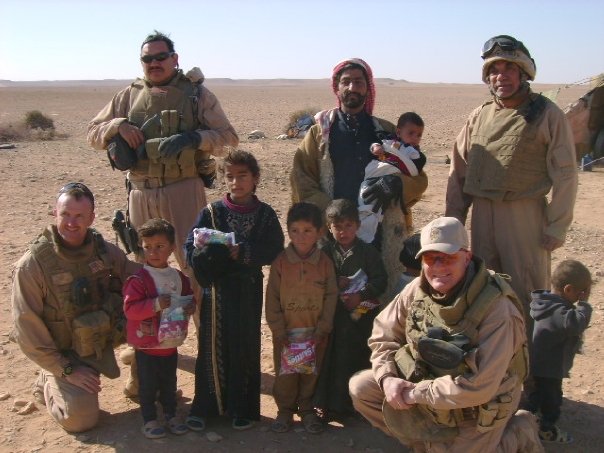
I am sure that others who are not Christians can say similar things about their faith, traditions and holy books. I remember an Iraqi General who I met who took the time to show me his well worn and read Arabic-English Bible. He was a Moslem, but he said that he learned so much from it because it was different than what was in the Koran and he meant no disrespect of his own faith by saying that. He had opened his mind to truth that others turn a blind eye to.

Some of the personal issues that prove to be deadly include what we don’t know about ourselves, usually dating back to childhood, how were raised, how we see God, if we perceive ourselves to be worthy of God’s love or worthy of the love and respect of others.  Those attitudes, especially those created as a result of negative relationships or even physical, emotional or sexual abuse, abandonment and rejection are powerful. Many of us like to pretend that we have gotten past those things but few of us actually do. Unfortunately there is a tendency for those issues to raise their heads in often very ugly ways as we minister as Chaplains.

For example: Let us say that we are distrustful of authority because of having an abuse parent, that we fear that no matter how well we do that there is always someone waiting to take us down. Let us say that we had previous experiences in the church, at work or maybe in prior military service where we were mistreated by those in authority.

I have found that if that condition is not dealt with that in a hierarchical organization such as the Chaplain Corps and the military that it is almost always fatal to the ability of the chaplain to minister in the organization. That is because the military is based on trust, our lives and mission depend on it. We have to trust the chain of command, we have to trust those that serve alongside of us and we have to trust our subordinates. There may be times when the chain of command fails and things don’t go right. There are toxic leaders and there are also toxic chaplains, one has to be aware that they are out there, know how to deal with them or survive under their command but one cannot presume that everyone is like that, trust is essential.

father

I find it interesting that Jesus commended the faith of the Roman Centurion when instead of asking Jesus to come to his house and heal his servant simply said “But just say the word, and my servant will be healed. For I myself am a man under authority, with soldiers under me. I tell this one, ‘Go,’ and he goes; and that one, ‘Come,’ and he comes. I say to my servant, ‘Do this,’ and he does it.”Matthew 8: 8b-9 Jesus told the people around that “he had not seen such faith in all of Israel.” Jesus saw the virtue of the Centurion, a virtue that many of his own people were lacking.

That is just one of a myriad of personal issues that can trip up a Chaplain in the military. The fact is that issues of the heart those things that we don’t like to admit are true about us, things that we are unaware about or in outright denial about in our lives are the things that go to the “heart” of who we are.

As fa as the minefields of my heart, they too are many. However the one that gets me time and time again is my passion for justice and my visceral reaction to those that I believe are bullies. That comes from my childhood. As a Navy brat I was always the new kid in town, and being that I was kind of the short, shy and introverted kid I was also kind of a nerd, or geek. I was not gifted with speed or great athletic abilities and it took me a while to find my academic prowess. That meant that I often didn’t fit in and though I was generally well liked that I would on occasion be bullied and I learned to defend myself, not very well at times but well enough to as the Klingons say “to die an honorable death.”

Jeremiah the prophet, who admittedly was most certainly clinically depressed if you look at his writings did note that “The heart is deceitful above all things and beyond cure. Who can understand it?” Jeremiah 17:9 Depressed or not Jeremiah did seem to understand that what he and many writers of scripture call “the heart” is hard to understand, especially when it is our own.

Thus I go back to Nouwen’s comment about the “twilight zone of the heart” that we cannot see. That it is why as Chaplains we have to develop relationships with people who can help us see what is in the twilight zone of our hearts and lovingly come alongside of us, not just as colleagues but as friends.

Those people may be clergy or other chaplains, but then they may not be. Perhaps they are senior enlisted personnel, long time friends, teachers, spiritual directors, counselors or our God forbid our spouses, I jest about the latter because my wife can see things about things about me that I cannot see, she is incredibly wise.

The minefields that exist in our hearts are so varied, so diverse and so treacherous. They have the potential to affect so many other parts of our lives. Thus for us as chaplains if we are not careful they can be destructive not only to us, but to those that we serve as well as those that we presume to love.
295_26912097058_4309_n

When I look back at my career and I am honest about it, I can say without a doubt that most of the things that hurt me were a direct reflection of the minefields that were already present in my heart. When things that happened that I felt were unjust or threatening I reacted and quite often my reactions caused problems greater than what I was reacting to. All they needed was something to set them off. What I have come to understand is even though I have had a very successful and that I am now a Senior Officer that what lies in my heart can still blow me up and that I need to always be careful of those minefields that exist in the twilight zone of my heart.

Lao Tzu said: “Watch your thoughts; they become words. Watch your words; they become actions. Watch your actions; they become habit. Watch your habits; they become character. Watch your character; it becomes your destiny.”

That is the key, those things that emanate from the deepest recesses of our hearts are full of minefields and we need to guard our hearts and minds in this ministry that we are privileged to have as military chaplains.

Peace

Padre Steve+


4 Comments

Filed under christian life, faith, Military, ministry, Pastoral Care, philosophy, Tour in Iraq, US Navy

Letter to a New Military Chaplain: Part One

185615_1857288397412_3950321_n

Note: This is a response to a question I had from a new Navy Chaplain. I have decided to post it here without any identification of the chaplain because I know that many men and women who are new to the military chaplaincy or who are exploring the possibilities of becoming a chaplain have the same questions. I was fortunate to have had a number of chaplains who at various points in my decision process and formation as a minister, Priest and Chaplain in  both the Army and the Navy help me with many of these questions. Likewise I learned far too much the hard way and blew myself up on some of the “land mines” that almost all who serve as chaplains experience in their careers. It will be the first of several parts to the letter and is my attempt to systematically explain my understanding of what it is to be a Chaplain serving in the military and in particularly the Navy.

Dear Chaplain,

“Preach the Gospel at all times, use words when necessary.” Francis of Assisi 

I thank you for writing me about the questions that you have concerning ministry as a Navy Chaplain. They are incredibly good questions and I since you first asked me two days ago I have given them much thought before responding. I find that if I take the time to mull over such questions it is much more beneficial than simply spitting out whatever comes to mind first because if I don’t get the questions right my advice however good might be wrong. Of course even well thought out advice can be wrong in a given circumstance so you must contextualize the advice and adapt it to your own circumstances at any given time.

As a prologue to the actual questions that you ask I want to point you back to the words of St Francis. I think that they are they key to success in any ministry, but especially the chaplaincy.

As chaplains we are called by our churches or religious bodies to serve in an organization that is essentially secular. Our ordinations come from our churches or religious bodies and we are to be faithful to them. However our commissions as officers come from the President and this creates a dialectical tension that is hard to resolve for some. You will hear people talk about managing the “right and left side of our collars.” That of course is the fact that we wear our military rank on the right collar and the Cross that we wear as Christians or in the case of our Jewish, Islamic or Buddhist colleagues the Tablets of David, the Crescent or the Wheel of Life on the left.

Some attempt to seek a balance between the rank and the religious symbol. That is a bad model because but what typically happens is that chaplains become fall to one side or the other. By that I mean that they either place the military side higher and forget their call or minimize the military side and find that they have no voice in the system. I have seen many chaplains who have in their attempt to fit in with the military forgotten their call as ministers. On the other hand I have seen a number place such an emphasis on their own religious traditions and their perceived rights as ministers that they neglect the vast majority of the people that they are assigned to care for as chaplains. Both options are bad because ultimately we fail to serve those that we are called and given the privilege to serve.

A few years back I saw the travesty of trying to “balance” the two sides of the collar. From my observation those who tried this always end up becoming so military that they end up losing their faith distinctions or they never adapt to the military and even if they do “good ministry” they end up frustrated, are seen as an outsiders and have relatively short careers.

295_27076762058_7573_n-1

As such I went back to Christian theology to find a model of ministry and that is in the hypostatic union of Jesus the Christ. By our understanding as Christians Jesus is both fully God and fully Human, not half and half, or any other percentage, but 100% God and 100% human. The fact is that as Navy Chaplains we are 100% ministers of our own faith group and 100% Naval Officer. As such we need to be the best we can at both and cannot allow ourselves to settle for anything less. If we attempt to “balance” we will fail in being ministers or being officers.

The military is not the church, as such  In the United States our service in such a capacity is not a right, it is a privilege. The right is not ours, it is right of the people that we serve to have the Constitutional right under the First Amendment to their “Free Exercise” of religion. As chaplains we facilitate the religious rights and freedoms of those who wear the same uniform that we wear, whether they of our faith, another faith or even of no faith. This is not about being “politically correct” but rather being faithful to two callings, both of which must be valid and respected in order for us to do what we are called to do as Navy Chaplains and there is always a tension in this. If you take a look at the chaplains that have trouble it is most often because believe that their right to free exercise is greater than the people that they are called to serve or that they lack a sufficient understanding of their call as Ministers, Priests, Rabbis or Imams. That is why Francis’ words are so important.

I think that many ministers, not just chaplains have a terrible understanding of our calling and vocation. To many the ministry is simply a job, their ordination and theological education the necessary prerequisites to perform the task. It is an attitude that I noted in seminary back in the late 1980s and early 1990s and have continued to observe over time. In seminary I had fellow students tell me that they were just thier to get a more advanced degree to help them get a bigger and better paying church. I had others friends disparage their theological education. I had one friend tell me that our degree was “only good for 5 years.” Obviously he was only thinking about the “how too classes” and not the courses that are really important to theological and pastroral formation.

But such is the state of theological education in this country. The fact is that most churches, seminaries or religious bodies do a pretty bad job at pastoral formation. We do a great job on teaching people how to manage churches, direct programs, teach doctrine, evangelize, run media empires or even become social and political activists, but a terrible job at actual pastoral formation and the latter is actually the most important task. Formation is primarily about relationships and relationships are what the Gospel is all about, beginning with the relationship of God to humanity and all of creation.

That may sound like I chased the proverbial rabbit but the attitude has a decided impact on the chaplain ministry. What happens is that this simply becomes a job and “skill sets” take priority over our calling and our service to those who were are called to serve during the time that we are allowed to serve in the Navy. We must never lose sight of who we are called to be as ministers, including the vows the we took when we were ordained as well as the oath that we swore as Naval Officers.

All that being said back to your questions. You asked first about the minefields that you might encounter as a chaplain. In a sense I have described some of them, they are very often related to who we are on the inside. It is as Lao Tzu said: “He who knows others is wise; he who knows himself is enlightened.”

The minefields that you asked are varied but most are related to what I have already described. They are often directly related to our own understanding of ourselves, our calling and our relationship to those that we are called to serve.

But to get into some detail on real, perceived and potential “minefields” you might encounter let me break them into several categories.

The first is the personal. As I stated before we have to know ourselves. This takes time and many people remain oblivious to who they are and what they are about, sometimes for most of their lives. Where this comes into play as a chaplain is that if we do not understand who we are and what we are about we will fail either in regard to our ministerial calling, our military vocation or our familial or ecclesiastical relationships.

The second is behavior. This is directly related to our personal behaviors and as we were told back during my early times as a new Army Chaplain. Most chaplains who self destruct tend to do so through SAM. Sex, alcohol or money. At any given time there are anywhere between half a dozen and dozen chaplains of all services serving time in Leavenworth or a regional Brig most having been convicted of charges involving SAM.

The third is professional. This is the nuts and bolts of what you will face as a Navy Chaplain. This includes your service to your crew, relationships with the chain of command and your fellow chaplains, your peers, your superiors and eventually those that you supervise as well as your Religious Programs Specialists or Chaplain Assistants. Likewise it includes your continuing relationships with your endorser and church that ordained you.

n671902058_1153804_6925

I will continue the discussion of these three areas in the next couple of days. After those topics are address I will discuss the particularities of promotion and assignments in the Chaplain Corps. Since my experience includes 17 1/2 years  in the Army and 14 1/2 years in the Navy including service as a junior chaplain in both as well as service as a Field Grade Officer in the Army and now as a Senior Officer in the Navy Chaplain Corps my perspectives will be quite unique.

Thank you for your patience in reading through this as well as for asking your questions.  They have forced me to think about this subject in new ways and write in down my thoughts down ways that I never have before. Yes I have set down with and discussed these ideas and concepts with various chaplains but have never written them down in a systematic format until now. I do appreciate you giving me the chance to do this. It means a lot.

Until tomorrow,

Peace

Padre Steve+

5 Comments

Filed under faith, leadership, Military, ministry, Pastoral Care, philosophy

Flickering Flames: Clergy Burnout in America in 2010

Father Mulcahy: What an ordeal. 72 hours straight. I’m prayed out – absolutely prayed out.
Hawkeye: Don’t forget, Father, God was on six days straight.
Father Mulcahy: He was a lot younger then
.

It doesn’t matter whether you feel useful or not when you’re moving from one disaster to another. The trick, I guess, is to just keep moving. Father Mulcahy, William Christopher M*A*S*H

A few days ago I read an article in the New York Times ( the link is here: http://www.nytimes.com/2010/08/02/nyregion/02burnout.html?_r=1&hp&adxnnl=1&adxnnlx=1280746899-Fj4AG+SysGvlJ/xdTT+ZZg ) about the large number of civilian clergy experiencing burnout, discouragement, disillusionment to the point that they end up developing chronic physical illnesses, psychological or psychiatric conditions, experience marriage or family difficulties or are so beaten down that they leave the ministry entirely.   Many clergy now suffer from high rates of obesity, hypertension and depression more so than most Americans. In the last decade, the use of antidepressants by clergy has risen and their life expectancy has fallen. Job satisfaction is down and many clergy would leave the ministry if they felt that they could. The issue cuts across denominational and even religious lines and is not bound by the depth of faith or the fervency of the minister in his or her pursuit of “doing good ministry” in whatever venue they are in.  It also impacts those of all sides of the theological spectrum from fundamentalists to progressives or in old time parlance “liberals” and everything in between.

Actually I am not surprised by the studies or the conclusions of the article. When I was in seminary back in the late 1980s and early 1990s the school that I attended was filled with pastors either those in ministry or those recovering from nasty church splits, or being fired for often trivial reasons. These were by and large good men, I say men because the Southern Baptist Convention then and now has few women in parish ministry.  Many of the men that I knew were broken; they had come back to school as a way to see if there was some way to find a safe place of ministry.  In the last years of seminary and the year prior to entering my clinical pastoral education residency I worked for a nationwide ministry and was assigned the task of assisting clergy that came to us for help or counsel.  One of the interesting things to note was that during this time the average longevity of a Southern Baptist pastor in his church was a dismal 18 months. Later I had a friend in another Baptist denomination accept a call to a church that had been through 33 pastors in 30 years.  He thought that he would be the exception, less than 8 months later a time that he and his new wife were harassed, abused and hounded by the congregation he quit. He ended up in my denomination as he was moving in a more liturgical and sacramental way of life and is now in the process of becoming a married Roman Catholic priest.

When I left the active duty Army to go to seminary I was under the impression that most clergy were relatively satisfied with life but the men that I met in seminary and those that I dealt with later showed me that all was not well for many good men and women doing their best to serve Christ and the people of God committed to their charge.  I never will forget men saying to me that they struggled with depression, alcoholism, sexual addiction, were being divorced by their wives or considering either leaving the ministry or changing the type of ministry that they served or even their denominational home.  Nearly all reported the stress that they experienced in their ministry, the unmanageable tasks of trying to compete for numbers, and in many churches it is all about numbers, see Chuck Colson’s book “The Body” cater to the nearly insatiable “needs” of parishioners who demanded more time, and investment in programs to keep them in the church, pressures resulting from the financial costs of trying to manage building programs, special ministries and programs and an every growing desire for more excitement and “thrills” in the church program.  Add to this the unrealistic expectation of parishioners, local and denominational leaders and the constant upbraiding to be more like Reverend so and so on television or the guy that wrote the latest book on church growth, spiritual warfare or whatever as the list goes on ad infinitum. Add to this the intrusiveness brought about by cell phones, texting, the internet which place clergy in a place where they have no place to go when they need a rest because there is always one more need to satisfy many of  which cannot be satisfied. One minister of a wel-known Mega-Church when confronted by Colson about not preaching on more controversial moral topics told Colson that “they pay me to get them in the door and keep them coming.”

The pastor of our age must become a teacher, preacher, counselor, evangelist, financer, program director, personnel manager, marketing executive and most of all be able to reinvent himself at a whim in order to remain relevant and in tune with the current “move of God.”  Those that don’t keep pace with whatever the latest “move of God” (read marketing ploy) is finds that they are out of a job faster than a Mob hit-man with ad aim. It is a recipe for disaster, not only for clergy and their families but for congregations which when their pastors burn out, divorce or become compromised do to sex, alcohol or money suffer the consequences of their own making  often losing members and sometimes even collapsing.

The pressures are immense and not just for married or single Protestant pastors but for Catholic Priests, Jewish Rabbis and even Moslem Imam’s all under some kind of unreasonable pressure.  It does not matter of it is trying to balance the competing theological factions present in their faith tradition from fundamentalists to progressives and everything in between, trying to meet unattainable goals set by congregational or denominational leaders or just to attempt to be all things to all people just to survive it is amazing that that any survive at all.  This is not the life of clergy even a generation ago, a generation that reported high job satisfaction, good health and congregations that would if possible strive to serve their pastor as much as he served them.

The world has changed and clergy are not doing well.  When a big name pastor, evangelist or leader of a church or denomination screws up perfectly the good men and women serving in ministry that don’t do those things are lumped in with those that commit various crimes or ethically challenged behavior.

In my chosen vocation within the vocation of being a priest and minister, that of a military Chaplain the pressures of service often exceed those that our civilian counterparts face. In a time where we have been at war almost 10 years with many chaplains making multiple deployments to the various combat zones the pressures are immense. The pressures on chaplains, their families as well as the men and women that they serve are unparalleled in civilian ministry, which as I describe above is no picnic, unless perchance you serve the fabulously well to do.

While I do not know statistics on Chaplains and burnout I can assure you that it is a concern of mine based on some that I have met.

In my service, the Navy we have battled shortages of Chaplains and the increasing demands necessitated by the war.  Likewise Chaplains in the Navy and Air Force face personnel cuts or elimination of billets due to cuts in their services personnel and more cuts are coming, at least to the billets that at one time offered chaplains the chance to recover from deployments and still serve God’s people. Most of the billet cuts are in shore commands, the places that at one time were the places that one could serve and recuperate after having done multiple operational tours.  As the force gets smaller and mission requirements increase these chaplains are deployed more often to combat zones and stress and family separation take their toll of chaplains.  Chaplains serving at bases and hospitals now serve large numbers of men and women traumatized by war and their families but have seen their own numbers shrink.  I work in a major medical center like all of the chaplains that serve in similar billets are caring for our wounded (in body, mind or spirit) warriors, their families those deploying or returning from deployment, are subject to deployment during our shore tours as Individual Augments to the operating forces all while dealing with life and death on a daily basis. In fact yesterday I came home from work at 5:30 PM after going to work at 6 AM Tuesday nearly 36 hours on duty in which time I was involved in multiple crisis situations, baptized a baby that was to removed from life support and care of patients their families and our staff.  This is not uncommon. What I described for me is typical of many Chaplains of all our military services serving in health care institutions.  It requires a tremendous sense of discipline to manage all of these competing demands and maintain ones physical, emotional and spiritual balance.

In fact when I came to my assignment I was suffering from PTSD and in an emotional and spiritual nosedive and in trying to meet the demands of the job did not take care of me and I fell apart physically, spiritually and emotionally.  It took a year and a half to start the recovery and I am now moving forward on all counts but some others don’t recover. I was fortunate, my boss knew well enough to shield me and let me recover and get the help that I needed to do so. Nonetheless it was not and is not easy to recover.

Add to this the pressure to perform and get promoted to stay in the military chaplain ministry.  Chaplains like all officers have to get promoted to stay in the military.  The promotion rate from the Captain/Navy Lieutenant rank to Major / Lieutenant Commander has been consistently in the 50-60% range for those being looked at the first time.  This basically means that 40-50% will not be retained on active duty long enough to qualify for retirement unless they had prior active service before becoming a Chaplain. Even if they have this the stigma of not being selected is something that is incredibly hard on chaplains just as it is for other officers.  Non-selection is considered failure even for those that have great ministries and are awesome ministers. Sometimes failure to select has nothing to do with how well you care for God’s people but simply comes down to numbers. When a military service contracts as all of our Armed Services did following Vietnam, the Cold War and today as personnel numbers are cut the respective Chaplain Corps or Services take their share of the cuts and this often means that men and women worthy of promotion are not selected and are eventually let go.  I have been fortunate during the cutbacks following the Cold War I was selected for Major in the Army Reserve and though I reduced in rank in 1999 to enter the Navy was promoted to Lieutenant Commander and recently selected for Commander and I am very grateful for the opportunity of both increased responsibility as well as the chance to care for God’s people in the Navy and Marine Corps.  Not everyone gets that chance.

Being a minister is no easy way of life if you are seeking to love and serve God and God’s people. Burnout, discouragement and depression are not uncommon.  Health problems for many are increasing and at younger ages. Many no longer have safe places that they can go for counsel and care because doing so might hurt their ministry.  I have seen much of this, good men and women doing their best to serve God and God’s people broken, depressed and sometimes addicted to behaviors that ultimately are destructive to their lives, families, congregations and ministries.

It is my opinion that while those that take on military ministry sort of ask for this because we know going in that we may be deployed to combat zones or separated from family for extended periods of time when we sign up. However many on the civilian side have no idea of the pressures that they will face and the tasks that will become theirs when they begin to work at a parish.  It is a tough life and I am not surprised to see so many broken, discouraged and disillusioned ministers just trying to survive instead of thriving in the field that God called them to serve.  I am blessed. Despite the hard work, separations from my wife and family and even the PTSD that I came back from Iraq with I am doing well. I get to serve people in a community that I love and in which I was born into.  I get to do what I believed that I am called to do in a venue that I am very comfortable in serving.  No everyone is so lucky or blessed. As Lou Gehrig said “I am the luckiest man alive.”

Please pray for your ministers and support them. Give them grace to serve knowing that they will not always make the right decisions, preach the best sermons or compete with the minister with the “hot hand” and latest “word from God” down the street or on television.  Ministers are certainly not perfect, some of us are pretty earthy. Don’t impose the culture of corporate America into the local church.  The vast majority of clergy really do care about the people that they serve even when they make mistakes and screw up. Give them the grace that you wish that your boss would give to you.  Of course there are exceptions, men and women with few people skills, with their own agendas and even with their own dark-side which shows up in how they abuse God’s people. However these people are the exception.  Don’t let the foibles or crimes of such people lead you to turn you back on good men and women that make mistakes common with the rest of humanity.

Peace

Padre Steve+

3 Comments

Filed under christian life, faith, Pastoral Care, philosophy, PTSD, Religion