Tag Archives: Pastoral Care

The Evolving Faith of a Miscreant Priest

“Practically speaking, your religion is the story you tell about your life.” Andrew A Greeley 

Three years ago I had an emotional physical and spiritual breakdown as the life and faith that I had known for many years came apart at the seams as I was overcome with the full blown effects of PTSD a bit over four months after my return from Iraq.  I should have seen the collapse coming as a vainly struggled to maintain control of my emotions, thoughts and faith.  Nothing made sense as I drifted in and out of flashbacks, night terrors and sunk into depression isolated from my faith community which by and large did not understand and other clergy who didn’t seem to care enough to listen.

I tried; I maintained the discipline of praying the Daily Office and reading the Scriptures, I tried to attend church but it was too much. Church with all the people and crowded noisy space with lots of light and sound was too much. I was hyper-vigilant and didn’t feel safe in crowds except at the ballpark where somehow the sight of that magical diamond brought me peace.

June 16th 2008 was the day that the wheels came off. The nightmares, night terrors and flashbacks came together with fires in the Great Dismal Swamp which shrouded the Tidewater in a thick brown haze which looked and smelled like Iraq and a seminar on battlefield trauma.  At the end of the day when the seminar was over my unit Medical Officer looked at me and said “Chaplain are you okay?” I replied in a broken voice “no, I’m not.” I briefly explained what I was going through and he asked if I was safe to go home. When I assured him that I thought that I could make it to the next day he agreed to let me leave and saw me the next morning. After his evaluation he set me up to see a Psychologist at the Naval Medical Center Portsmouth Deployment Health Center.

Looking back he made the right choice. I was very apprehensive as I had never been to a shrink before though I had referred many service members and their families to shrinks when I knew that I was in over my head.  I was lucky because I got Dr. Elmer Maggard from Hazard County Kentucky. I soon developed a rapport with him because I knew that he was real. What convinced me was when he asked me “Well there Padre how are you doing with the Big Guy?” I hadn’t expected that question because no ministers, Priests or chaplains had ever broached the subject.  I was falling apart and when I brought things up to ministerial colleagues about what I was going through including my assessment of my spiritual life I was ignored.  It was like I was radioactive.  I simply told Elmer that “I didn’t even know if the Big Guy even cared about me or existed anymore.”  He didn’t flinch and he walked with me through the darkness until and after what I call my “Christmas Miracle” in December of 2009.

During that painful and lonely time where I was for all intents an agnostic struggling with faith and even the existence of God it seemed that contact with the Divine was sporadic at best and either came through baseball or the Fr. Andrew Greeley Bishop Blackie Ryan murder mysteries. I had started reading them in Iraq because I was somewhat familiar with Greeley’s writing although I had never read any of the Blackie Ryan series. The first book that I read was The Bishop Goes to the University and others rapidly followed as I rummaged through the giveaway paperbacks in the small MWR library at Al Taqaddum in between missions to the hinterland of Al Anbar Province.

It was the grace and love of God in those books that even in the worst of times gave me a fragment of hope as my life collapsed.  I found in Bishop Blackie a kindred though fictional spirit who embodied what I thought the Priesthood should be.  In those books I came to understand that the grace of God along with the practical expressions of compassion, mercy and love were much more compelling than pounding people into submission with my rather rich knowledge of theology, philosophy and Church history. I also found that they were necessary for me to be healed.

My recovery of faith came unexpectedly much like how it happens to the characters in the Bishop Blackie mysteries.  It came in the middle of giving the last rites to a patient in our Emergency Department at Portsmouth.  The man a physician was a veritable saint whose life and faith had touched his community for over 50 years.  As I prayed the commendation prayers at the close of the rite following the anointing he breathed his last and it was almost if the cloud of unbelief melted away and the realization that God indeed was a God of love and that Jesus was actually to quote the Gospel exactly what his opponents called him “a friend of sinners.” In that moment it was if I had been reborn.

Now since then my faith has been evolving, not that I have surrendered the faith proclaimed in the Gospel or the Creeds but in the way that faith works itself out in relationship to others.  I have to say that it hasn’t been easy and I still have times where I doubt but not like when I was falling apart. I think that the doubt is there to remind me not to become arrogant or exude a toxic triumphalism in my faith or proclamation.  I read something that Greeley wrote which perfectly expressed my understanding of Christian witness going back to the persecuted Catholic Church of the Roman Empire.  “People came into the Church in the Roman Empire because the Church was so good-Catholics were so good to one another, and they were so good to pagans, too. High-pressure evangelization strikes me as an attempt to deprive people of their freedom of choice” or as Saint Francis said “Preach the Gospel at all times, use words when necessary.” It is amazing the diverse people, many hurt and wounded by war, abuse or even the Church and its ministers wander into my life at work and here on Padre Steve’s World. It doesn’t matter if they are conservative or liberal, Christian or not they tell me that “you’re different” and “I know that you will listen to me.” These people have become my parish. Greeley said it well “I wouldn’t say the world is my parish, but my readers are my parish. And especially the readers that write to me. They’re my parish. And it’s a responsibility that I enjoy.” 

I used this site to work through many of the things that I struggled with during the process and eventually that ran me afoul of my former Church, the Charismatic Episcopal Church which through my Bishop asked me to leave in September 2010 because I was “too liberal.”  I knew that it had been coming for some time and had been making preparations and had been working with the local Episcopal diocese but the transition to that church could not be accomplished for at least a year and a half.

I was referred to my present Church, the Apostolic Catholic Orthodox Church an Old Catholic denomination by the Episcopal Church which once again seemed to be a miracle. Though small the Church embodies the faithfulness to the Gospel and the Catholic Faith with an inclusiveness and love of God for people that was exactly what I had become during my “dark night of the soul” and rebirth.  There are still things that I am working out both in the personal aspects of my faith and how it works itself out in life.

But I do have faith again; faith in Jesus the Christ and the Triune God reveled in Scripture, Tradition and Reason and in the lives of the faithful.  This belief is that God is love and is present and active in the world.  This love of God is seen in the Sacraments, the Eucharist and in the lives of those dear to us, our families, friends, neighbors and those that we seem to randomly encounter.  It is shown in the care of people who will sit with us in our pain and doubt, listen, care and lovingly put their arms around us or hold our hand.  It is shown in the faith that others show to us when others are willing to cast us aside, those that see the potential of God’s creation in each of us in a rediscovered love that God is there.

Yes my faith is still evolving but I think that is what Paul meant when he said “I want to know Christ and the power of his resurrection and the sharing of his sufferings by becoming like him in his death, if somehow I may attain the resurrection from the dead. Not that I have already obtained this or have already reached the goal; but I press on to make it my own, because Christ Jesus has made me his own.” (Phil. 3:10-12)

Peace and Blessings

Padre Steve+

2 Comments

Filed under christian life, faith, Pastoral Care, PTSD, Religion, Tour in Iraq

Deadly Chatter: The Danger of Talking and not Listening

“Christians, especially ministers, so often think they must always contribute something when they are in the company of others, that this is the one service they have to render. They forget that listening can be a greater service than speaking.” Dietrich Bonhoeffer

I am a man of words sometimes many but mostly in writing but when I am in the company of others, unless I know them well or feel an exceptional need to add to a conversation I tend not to say much. In fact many times what I contribute is nothing more than something funny or witty to break tension or point out irony, speaking of which I need to do my Summer White uniform shirt in the next couple of days because we have an inspection next week but I digress.

Since I happen to be a minister I often get to experience the incessant droning and chatter of many Christians especially ministers who seem to believe that God would have them pounce on every opportunity to prattle on feeling that they must contribute something even if they have nothing to say.  Since I have on occasion been guilty of this myself I must always remember to take the Lincoln Log out of my eye before I go pointing out the Sequoia in someone else’s eye.  But we Christians and especially those of the ministerial type can really be a pain in the ass about this and I speak from experience on both the giving and receiving end of this proposition. What I fin amazing is for some ministers, especially the really popular ones on television or the mega-mart, I mean mega-church variety can take a small section of the Bible, usually the most insignificant ones like The Prayer of Jabez and turn them into a series of sermons each lasting nearly an hour complete with the DVD and the book, or series of books on the subject.

I remember a pastor of a mega-church that would begin sermon series on various topics and never complete them. He had one that was on “mission, vision and passion” which died somewhere around the eighth week of hour-long sermons into the mission section.  The sad thing is I can’t even remember what his primary Scriptural texts for this. Likewise I have endured many other sermon series to nowhere by various pastors or simply been held hostage by pastors that won’t shut up even when they know that they are beating a dead horse.  As for me I try to spend no more than 15 minutes on a sermon and usually shoot for about 12 minutes and focus on one thing either from the Gospel lesson or tying that lesson in with either the Old Testament or Epistle reading.  I just hope that in that time I don’t put anyone to sleep and that somehow by the miraculous work of the Holy Spirit that at least someone in the congregation takes a nugget from the message and that it is helpful.

Judy helped me in this when I was the Base Chaplain at Fort Indiantown Gap Pennsylvania.  The congregation had an unwritten rule that the service would begin promptly at 1100 and end promptly at 1200.  Judy and I know some American Sign Language since she went to California State University at Northridge because of her rather significant hearing loss and as any boyfriend who was passionately in love and lust would do I followed her.  As a result I became fairly well versed in sign language though I have lost most of that capability over time.  However she was good to let me know during a sermon how much time that I had before I had to be done and if I waxed too poetically she would let me know that I was boring something that I should have figured out by the sleeping members of the congregation.  But what the heck, none of them were sitting on a window ceil. No harm no foul.

I have found in the ministry of Priest and Chaplain that more often than not people don’t really want me to pontificate about everything that I know and would much rather that I take the time to listen to them. I actually try hard to notice the words as well as the inflection and the non-verbal aspects of communication when I spend time with people because it is all a part of listening.  I don’t always do it well and many times I have to catch myself before I interject a comment, idea or suggestion that might not be what the person needs at all in order to ensure the sanctity of the moment.  I know that when I am not doing well, which I spent the better part of the past three years not doing after my return from Iraq that the last thing that I want is someone who spouts “answers” and pushes their agenda without ever taking the time to care for or listen to what I am actually saying.  I think that I am not alone in this.

Bonhoeffer made this amazingly succinct comment about just what I am saying here and he does it far better than I could have done. “Many people are looking for an ear that will listen. They do not find it among Christians, because these Christians are talking where they should be listening.”  Therein lays the danger for both the person seeking someone that will listen to them as well as the one with all the answers.    The danger is that when we are in constant transmission mode we not only fail to listen or to really hear the other but also become deaf to the still small voice of God. Bonhoeffer noted this danger saying “he who can no longer listen to his brother will soon be no longer listening to God either; he will be doing nothing but prattle in the presence of God too.”  I figured due to the wisdom of my long-suffering wife Judy that God stopped taking theology lessons from me a long time ago, if indeed the Deity Herself ever took them from me. Of course back in my younger days I knew everything but since I have learned that I really know very little but I am definitely sure that I prattle in the presence of God as much as anyone else, and that is reality. Taking the time in the Daily Office and Scripture is something that I struggled with on my return from Iraq when I even struggled with the existence of God.  I am aware of this and I am trying to take some time every day to “be still and know.”

Unfortunately our media and information obsessed culture beats us senseless throwing more information, much of which is useless, deceptive or destructive in terms of content that it dulls our senses to the reality of others around us and keeps us from listening and seeing those who cry out for someone that will just take the time to listen even if they cannot “fix” the problem. You see in much of Christianity we suffer the same ailment of the culture around us in that we would rather “fix” someone than care for them. You see care takes loving nurture and patience especially the latter. Fixing is a “fire and forget” kind of thing, the kind of thing that “miracle workers” do for a living even if they are miracles faux no miracles at all. However the real act of care by a minister appropriately called “pastoral care” or the spiritual care of souls by a lay person takes time and involves a relationship and that requires listening when the answers are not apparent.  It is standing near the cross and not abandoning Jesus in the crisis something that nearing Good Friday we should remember with fear and trembling. I’m no fool when it comes to knowing my limitations especially when it comes to something like survival and I would have probably much more like Peter who went into hiding after denying Jesus than John on that day when the sky turned black.

You see to care involves love and as the Apostle Paul so aptly described love and what it is not in 1 Corinthians 13: “If I speak in the tongues of mortals and of angels, but do not have love, I am a noisy gong or a clanging cymbal. And if I have prophetic powers, and understand all mysteries and all knowledge, and if I have all faith, so as to remove mountains, but do not have love, I am nothing.”

Paul got it, even though he put a young man to sleep when preaching. The man fell out a window and died but thankfully the Holy Spirit wrought a miracle and raised the young man from the dead as he does so many weeks for so many of the faithful who suffer injury when passing out in the middle of a tedious sermon.  Maybe Paul wrote the epistle after that incident.

But simply to preach with no end is one thing but to fail to care or fail to really listen is worse.  Providing “answers” without understanding the question and to impatiently wait our opportunity to jump in and push our agenda no matter how noble or even “Biblical” it is is not faith nor is it Christian, insofar as Jesus would have understood it to be.

I remember an associate pastor of a mega-church that we attended in the late 1980s as I was getting ready to begin seminary. This pastor who was very charismatic and a wonderful preacher could not be bothered to care for or listen to the questions and struggles of a budding seminarian.  He would cross his arms and tap his foot to signal that his time was better spent doing anything other than listening to someone else. I had another senior pastor at a different mega-church who was one of my ordaining pastors back in my Evangelical Protestant days who told the congregation that someone asked him how sick that he would have to be for him to visit them in hospital he said “you don’t want to be that sick.” Of course he told the story during a sermon so the clear message was “if you are sick don’t expect a visit and don’t even bother calling me.”

Unfortunately this attitude has been all too common throughout the history of the Church and today it almost seems epidemic among pampered pastors who appear to be more intent on their personal gain than on caring for the flock that God has given them. Likewise it is all too common in church life. To  again quote from Bonhoeffer “This is the beginning of the death of the spiritual life, and in the end there is nothing left but spiritual chatter and clerical condescension arrayed in pious words. One who cannot listen long and patiently will presently be talking beside the point and be never really speaking to others, albeit he be not conscious of it. Anyone who thinks that his time is too valuable to spend keeping quiet will eventually have no time for God and his brother, but only for himself and for his own follies.”

This is a much bigger danger to Christians and the Christian faith than many if not most active clergy and laity alike across the denominational spectrum imagine.  The fact is if people don’t believe that we care about them and fail to show them the unconditional love that God shows us instead seeking to provide fixes that gel with our agenda then we will lose a generation. Perhaps we are already well on the way to this and it will be our fault.

Peace

Padre Steve+

1 Comment

Filed under christian life, faith, Pastoral Care, philosophy, Religion

Raw Edges: Are there other Chaplains out there Like Me?

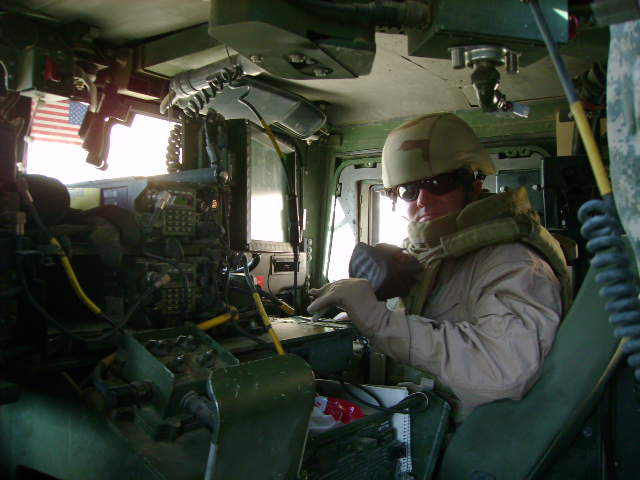
Before a Convoy

The past week or so I have had to go back and revisit my Iraq experience. Part of this is due to work, we have had seminars on the spiritual and moral affects of trauma, the challenge of forgiveness and most recently discussing best spiritual care practices for those who suffer from PTSD or Traumatic Brain Injury (TBI).  The training has been excellent but has kicked up a lot of stuff in me.  Added to this have been reports out of Afghanistan about more casualties in particular of a helicopter that crashed that killed 9 Americans, the Taliban claim credit for downing the aircraft but the circumstances are not fully known.

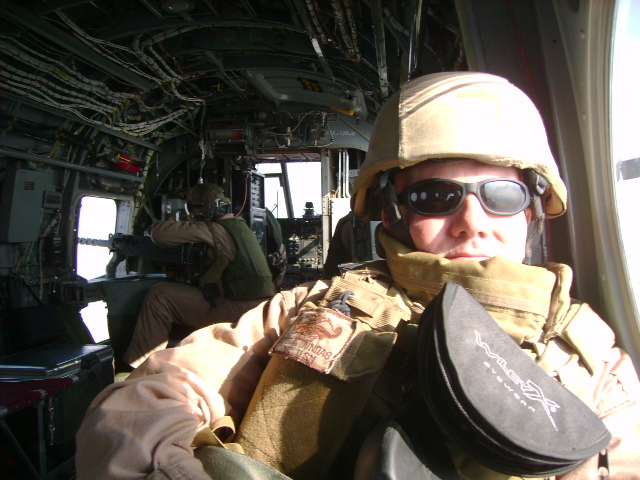
One of many helicopter flights, this a daylight flight in a Marine CH-46

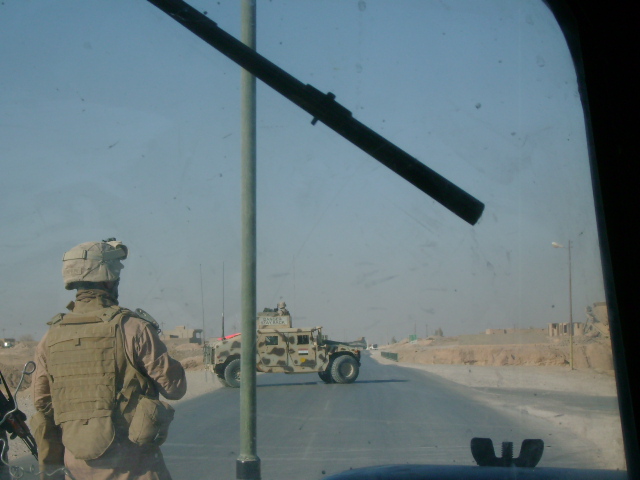
The course last week on the spiritual and moral affect of trauma and the challenge of forgiveness brought up issues from Iraq but not upsetting.  In fact the seminar taught by Dr. Robert Grant author of The Way of the Wound was helpful to me in sorting out what I have been going through for the past couple of years.  The training this week is also good, good information but for me it is more unsettling because it deals with images, videos of convoys, burning vehicles and other things like that.  The convoy images coupled with the news of the helicopter crash actually had me pretty shaken as I spent a large amount of time in small convoys with small groups of Americans and Iraqis in pretty dangerous areas of Al Anbar Province stretching from Fallujah to the Syrian border as well as a couple of hundred hours in the air, usually at night in various Marine and Army helicopters as well as the MV-22 Osprey.  During those experiences we took fire a couple of times and had a few experiences on some of our flights that were a bit sporty.  So for a while I was lost in my own stuff but was able to pull out in not too long of time.

Convoy stopped near Al Qaim

Some of our discussions revolved around how trauma and war can impact a person’s image and relationship with God, whatever that may be.  The focus was on us as pastoral care givers caring for those in our charge.  Once again this really good information for me as I will be dealing with a lot of PTSD and TBI cases are Camp LeJeune.  But there was one thing that got me.  I came back from Iraq as most of my readers know in pretty bad shape dealing with PTSD and issues of abandonment feeling disconnected with the Navy and my church.  Part of that was what amounted to be a loss of faith so severe that I was for all practical purposes an agnostic for almost two years because I couldn’t make sense of anything to do with God, I felt God forsaken it was to use the image of St. John of the Cross, my Dark Night of the Soul.  I am doing better now and feel like my faith has returned to some degree, certainly not like it was before but while I have doubts I am okay with that part of the journey now.

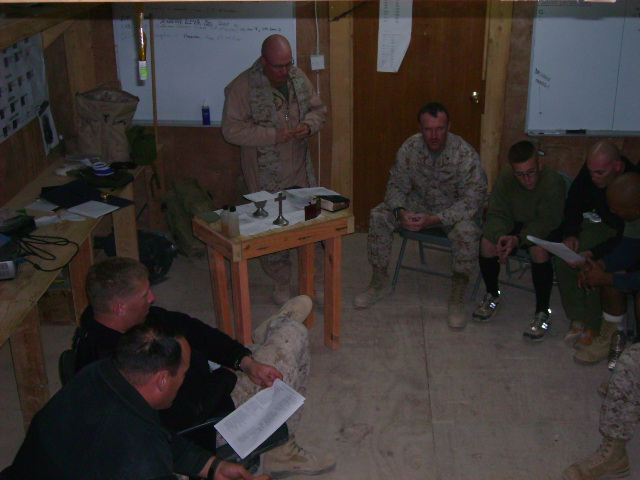
Christmas Eve not far from Syria

I know a number of military Chaplains from the Navy and Army that have returned from Iraq or Afghanistan in some sort of faith crisis many suffering from PTSD or TBI.  I am actually wondering how many are out there.  I know that I am not alone, but I need to know if others are going through this experience too.  It was for me a desperate feeling to be the Chaplain, Priest, Pastor and spiritual care giver when I was struggling having no answers and only questions, when people asked me about God and I didn’t even know if God existed.  This is the unspoken cry of at least some and possibly quite a few Chaplains and other ministers who have experienced trauma and moral injury.  One thing my incoming CO at my old unit asked me was “where does the Chaplain go for help?”  At that point I said that I didn’t know.  The sad thing is that I know many chaplains and ministers that have a basic lack of trust in their fellow clergy and do not feel safe confiding in them because they feel that they will be judged, not listened to or blown off.

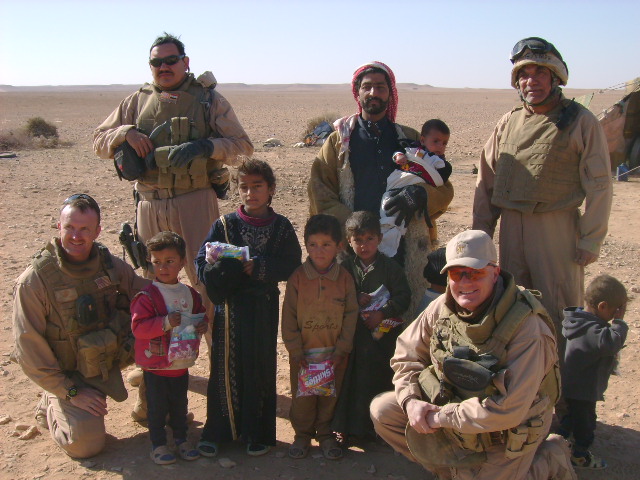
A different war with the Bedouin in the western desert of Iraq about 5 km from Syria.

When I was diagnosed with PTSD in the summer of 2008 I made it my goal to grow through this and hopefully as I go through this to be there for others. Part of my recovery came through sharing experiences, the good and the bad on this site.  Elmer the Shrink asked me back when I started this if I thought that it would be helpful to me in my recovery, but he also asked if I was okay in opening up about this topic.  Since I didn’t see many people writing about this from the perspective of being a “wounded healer” I told him that I thought that I had to do it.  The experience has been terribly painful but at the same time I think that it has been worth it because as a Priest and Chaplain I think now more than ever in my weakness I can be with people in their difficult times without trying to “fix” them.

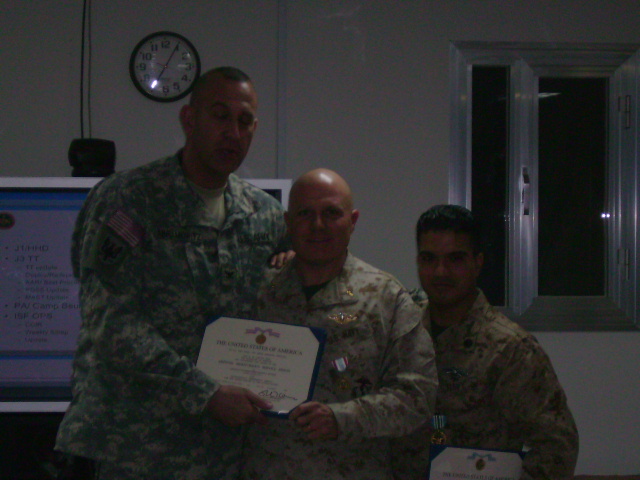
Colonel David Abramowitz with me and RP2 Nelson Lebron after presenting me with the Defense Meritorious Service Medal and Nelson the Joint Service Commendation Medal for our service with our advisors and Iraqis in Al Anbar with the Iraq Assistance Group. After this we both dealt with abandonment and other issues on our return home.

So who is there for “damaged” Chaplains? Who takes care of us? I was lucky or maybe blessed. I had Dr Chris Rogan ask me if I was okay. I had Elmer the Shrink do a lot of the hard work with me. At Naval Medical Center Portsmouth I had a Command Chaplain that was wise enough to protect me while I went through the deepest and darkest valley of my life.   As I recovered he challenged much like a Baseball Manager would challenge a pitcher who had been very successful on other clubs coming off the disabled list to regain his self confidence and ability to get back on the mound with a winning attitude. Not every Chaplain gets what I got and I am blessed.  I still have work to do and I need to recognize my limits, much as a pitcher who has recovered from Tommy John surgery makes adjustments.

So this is my question:  Are there others other there like me?  Are there other Chaplains experiencing such feelings after Iraq or Afghanistan? I’d really like to know because I believe that in what might be termed “a fellowship of the forsaken” that we can rediscover faith, belief and hope again and in doing so be there for others.

If you want please let me know if this encourages you or feel free to comment. Prayer is still hard for me but I promise that if someone asks that I will pray and to the best of my ability be available for them as others were for me because I don’t want any Chaplain to experience the abandonment that I felt went I returned from Iraq having felt that it was the pinnacle of my military career. To those Chaplains I just want to say that you are not alone.

Peace

Padre Steve+

4 Comments

Filed under faith, iraq,afghanistan, Military, Pastoral Care, philosophy, PTSD, Religion, Tour in Iraq, US Navy

Marriage Killers: The Pitter Patter of Little Annoyances

I performed a marriage ceremony yesterday for a wonderful couple out on the beach near “First Landing” memorial and historic Cape Henry lighthouse on Fort Story, or what is now part of Joint Expeditionary Base Little Creek-Fort Story.  It was a wonderful time despite having my pristine bald head sunburned and looking like a tomato by the end of the ceremony and pictures. I should have worn my Giants cap up to the beginning of the actual ceremony or slapped on some sunscreen before I went out but no I couldn’t do any such thing.  But anyway I digress.

In my years as a Priest and a Chaplain in both the Army and the Navy I have done a lot of pre-marriage, marriage and post marriage counseling.  In that time I have come to realize that of the 50% or so of marriages that end up in divorce that most are not due to the “big things” like adultery or abuse. Instead it is the pitter patter of little annoyances and an inability to communicate or be emotionally intimate with one another that are the leading causes of why so many marriages fail.  Now admittedly in the context of things the “big things” like adultery and abuse are nearly impossible for a marriage to recover from because they are betrayals of trust and safety with the people that we have chosen to be vulnerable with and commit ourselves to, hopefully for life.

Now I really don’t think that most people enter into marriage be it a religious or civil marriage go into it with the expectation or hope that it will fail.  Instead I am want to believe that the vast majority of people that enter into marriage want it to work but really have no clue of what they are getting into.  The marriage rite in the Book of Common Prayer is quite rightly marriage is “not to be entered into unadvisedly or lightly, but reverently, deliberately…” in other words with due prudence, preparation and discernment.

One thing that I always tell the young male sailors and Marines that I have counseled when they are hot to trot and madly in lust is to remind them of the seal on the flag of the Commonwealth of Virginia.  The flag shows a woman, “Virtus” or Virtue dressed as an Amazon standing over a man with her foot on him and a spear thrust down beside him.  I tell them that it is symbolic of the divorce laws here in the Old Dominion.  But anyway I digress.

Virginia Divorce Laws as portrayed of the State Flag

The big things are most difficult to survive in the short term; however it is the constant beating of the little things, those annoyances that married couples experience from each other that kill marriages just as dead as the big things even though it usually takes longer for this to happen.  A friend of my mother’s dropped her divorce papers on her unwitting and clueless husband on their 50th wedding anniversary which I must confess earns her a high score for both technical merit and artistic achievement.  Of course most people don’t wait that long to do this and the papers are filled with stories about couples that file for divorce citing “irreconcilable differences.”  What are these differences?  Well I’m glad that you asked that question but if you are married or were married I am surprised that you have to ask. It is the little things, annoying habits, nervous ticks, crumbs left on the counter, underwear draped on the banister, clothing strewn around the house, spending habits on hobbies deemed unnecessary by one spouse or another, personality differences maybe one is an introvert and one an extrovert or similarities that are so close that one or the other realize that what they find annoying in their spouse is just like what they do leading to a rather unique form of self loathing.   Likewise there are the spouse’s friends and friendships that date back well before the couple met that one or the other spouse finds bothersome or feels threatened by and then there of course are the things that couples don’t communicate about, the things that are allowed to build up until they explode like a volcano or even a massive pimple.  For some reason and I don’t know why it seems that a nearly universal occurrence in marriage is that couples cannot communicate their needs and desires and are woefully unable to bear any criticism from their spouse.  For some reason, I don’t know maybe fear of rejection by their spouse if they own up to their needs or put voice to their criticism will instead let things build up until the discontent reaches such a level that it can no longer be held in and they erupt.  Of course the damage done by the eruption of pure and unabated negative energy the explosion causes such damage that it is about as repairable as the battle cruiser HMS Hood or perhaps the battleship USS Arizona.   The only difference is that the damaged and explosive build up takes a lot more time in these types of situations.

You see since the Abbess of the Abbey Normal and I have been married for almost 27 years we now understand this.  Not that is it always fun as certainly the two of us have done enough annoying things to each other over the course of the years to throw each other under the bus on innumerable occasions and sometimes our love has been tested but somehow we choose to remain committed to one another sometimes in spite of our better sensibilities.  However we do love each other and somehow in spite of the many often idiot things that I have done to include my sometimes brazen insensitivity we stay together.  It is like the Bible says; love bears all things, believes all things, hopes all things and endures all things.  I think that the endurance thing doesn’t get enough play but still as for the Abbess anyone who can endure me for almost 27 years has a lot to brag about as I am not always the most sensitive person in the world, after all I am a Meyers-Briggs INTJ which basically means that my baseline is pretty much on the anti-social side of life. I guess that love does endure all things.  Our marriage is one where love somehow finds a way to triumph especially in spite of me. As I said to the Abbess once when watching an early episode of the TV show House …”House is like me without Jesus” and she said “Honey, House is you with Jesus.”

So the sometimes good and sometimes not so good padre is for couples that might be looking for love in all the wrong places and looking for love in too many faces to take some time before they tie the know and as the Book of Common Prayer Marriage Rite says to not to enter it marriage is not to be enter into it unadvisedly or lightly, but reverently and even might a say deliberately with all due discernment, preparation, counsel and even dare I say….say it say it, okay I must I must with trepidation fear and trembling and not give way to a surge of testosterone or hormones.  After all, this isn’t a movie it is real life and the failure to take simple stuff like this into account will certainly make things a lot more complicated and possibly painful later on and by the way for my more spiritual or religious readers, just because you guys think that the lust that you have for each other is God’s will because it makes you feel good, you can take those feelings and your checkbook to the divorce attorney who will certainly try his best to make all the bad feelings go away as fast as your bank account will let him.

Peace

Padre Steve+

Leave a comment

Filed under christian life, marriage and relationships, Pastoral Care

I Think I Feel a Sermon coming on…How Some Churches Stopped Caring and the Neglect of Pastoral Care

“When they had finished breakfast, Jesus said to Simon Peter, ‘Simon son of John, do you love me more than these?’ He said to him, ‘Yes, Lord; you know that I love you.’ Jesus said to him, ‘Feed my lambs.’ A second time he said to him, ‘Simon son of John, do you love me?’ He said to him, ‘Yes, Lord; you know that I love you.’ Jesus said to him, ‘Tend my sheep.’7He said to him the third time, ‘Simon son of John, do you love me?’ Peter felt hurt because he said to him the third time, ‘Do you love me?’ And he said to him, ‘Lord, you know everything; you know that I love you.’ Jesus said to him, ‘Feed my sheep.” John 21: 15-17

“Take care that you do not despise one of these little ones; for, I tell you, in heaven their angels continually see the face of my Father in heaven.” Matthew 18.10

Back when I was doing my Clinical Pastoral Education Residency at Parkland Memorial Hospital I was astounded to hear my pastor make a comment which I think was one of the most heartless that I have ever heard said from a pulpit.  The church was a large and trendy Evangelical-Charismatic Church which I had attended throughout seminary and had ordained my in October 1991.  The Pastor was recounting an incident where one of our members had been critically ill in hospital and had not been visited by him.  After the parishioner was released from hospital he asked the pastor: “How sick do I have to be for you to visit me in the hospital?”  The pastor told us his response: “Sir, you don’t want to b e that sick.”  The congregation laughed at the pastor’s story and he went on to talk about how he and other senior pastors should not be doing that kind of work because it “distracted them from bigger Kingdom tasks.”  You see according to the pastor the care of sick parishioners did not contribute to the “growth” of the church and thus was a “distraction and better left to others.”  The comment struck a raw nerve now that I was dealing with the suffering and death every day of people who had been abandoned by the churches and pastors.  I lost all respect for him as a man and pastor during that sermon.  The words of my Philosophy of Religion Professor at Southwestern Baptist Seminary Dr. Yandall Woodfin said: “You have not done Christian Theology until you have dealt with suffering and death.”  This pastor had stopped doing Christian Theology in order to be an “Apostle” and CEO.  He was “growing” the church and managing programs, but had for the most part stopped caring as in being a pastoral care giver.

Now this pastor is not alone and nor is the issue confined to Evangelical or Charismatic churches. The trend has has found its way across the denominational spectrum.  Sometimes this is by design as is the case of the Mega-churches.  Pastors of mega-churches are for all practical purposes CEOs of large organizations and have a multiplicity of specialized staff, but often which do little for pastoral care. Sometimes it is by default in cases such as the Roman Catholic Church.  Here the ever worsening shortage of Priests is forcing the closure of smaller parishes and the increase of large parishes with a corresponding decrease in what Priests can do for their people.   Even very good Priests cannot keep pace with the demand of both Sacramental needs as well as pastoral care.  No matter if it is by design or default the result is similar.  The least, the lost and the lonely those “lambs” that Jesus talks about who need care and feeding are shunted aside.  In one case, that of the Catholic Church it is simply a lack of Priests, Deacons and Sisters to provide this care.  The other is more troubling as the focus of the church is growth, sustaining numbers, programs and buildings.  This requires that pastors spend their time with members who can supply the vast financial need that those plans require.  I have seen this in numerous congregations across the spectrum, which sometimes as was the case at a church that I attended in Florida results in a financial meltdown and collapse of the congregation, many of whom gave up and went elsewhere when the extent of the scandal became known.  Likewise the ripple effects that this caused in the denomination were like a Tsunami, it was disastrous and the church is still in recovery mode.  Going back to my pastor back when I was in residency I got the feeling that had he been the shepherd in the Parable of the lost sheep (Luke 15) that he would have let it go as hunting for it might have distracted him from the others.

When I was in seminary there were quite a number of my fellow students who chafed about having to take courses on pastoral care.  I remember friends and fellow students complaining that what they needed were more “practical courses” such as “church growth, evangelism and Sunday School program management.”  Course such as Pastoral Care were seen as a bother and distraction.  Not to mention academic courses such as Systematic Theology, Philosophy of Religion and Church History.  One friend talked about his Master of Divinity only having a “shelf-life of 5 years” because what he learned would be outdated.

Well in a way he was right.  His focus was on classes that dealt with programs and methods of church growth, programs and management.   From that perspective his degree would rapidly be obsolescent as soon as the next trend in church growth came along and everyone jettisoned the last method in favor of the new.  With the ubiquity of the Mega-church which unlike the Leisure Suit is not going away anytime soon.  The rise of the “Superstar” Pastors such as Bill Hybels, Joel Osteen and Rick Warren and the proliferation of massive “Ministry Media” conglomerates and stand-alone television ministries are actually dangerous to the vitality and health of the Christian Church in the United States.  They propagate methods which have the sole intent of getting people into church or giving to a ministry and keeping them there, doctrine, worship, sacraments or ordinances, and pastoral care of the least, lost and lonely be damned.  The methods are pragmatic and impersonal.   Numbers and crowds define expertise, credibility and worth. The bigger the church the better the church, it’s that simple.

Unlike others who pick these ministers apart for their theology or business practices my problem with what is happening is what happens to regular people in these large and often very impersonal churches.  It is easy for people to get lost, forgotten and when they are going through difficulty abandoned when the church stops making a conscious effort to do real pastoral care and focus purely on the programs which lend to growth.  Often the substitute for pastoral care is found in the home cell group, or care group or whatever cute name a church can pin on a meeting at a member’s house.  The cell groups have a noble intention.  They attempt to build community in an otherwise very impersonal organization.  There are some really good things that can come out of healthy home groups as well as long lasting friendships.  We have a couple from our time in San Antonio that is still a very real part of our lives, they showed us genuine love and care and we remain friends.  Of course this couple had an advantage over most home group leaders; he was a Clinical Social Worker by trade who was heading off to seminary.  Most home groups are not that fortunate.  At the same time there are unhealthy groups which are led by people who are poorly trained and equipped to deal with broken people.  The good group leaders recognize their limitations and try to get help for those who are really hurting.  Others who do not know their limitations end up abusing these dear lambs of God. Often this is because sick, depressed or lonely people take too much time, are too needy, or that their problems don’t match up with their church theology.  We know this from personal experience as my wife suffered from a number of ailments throughout seminary and we were going through tremendous health and financial difficulties and in some places we felt cast aside and like we did not matter.  We were fortunate that some people did care and we did make it through, however it was not something that I would ever want to repeat.  I have heard similar stories from hundreds of people that I have come across in my life and work over the years.  Another thing some churches do is to either add a “Christian Counseling” program or refer members to “Christian Counseling” services instead of doing pastoral care.  In a sense it is the outsourcing of one of the most vital missions entrusted to a church, the pastoral care of the flock of God.

I don’t care what you call it, but any church which has multiple services of several thousand or a major service of close to 20,000 as occurs at Osteen’s Lakewood Church is no longer focused on caring for people but sustaining their growth and market share.  I remember reading Charisma Magazine back in the mid-1990s when I still read it regularly about a church in North Dallas that has a period of incredible church growth in which it grew from 1,200 members to well over 7,000.  In the article the pastor touted the church programs which drew people to the church.  What the dirty little secret which was not mentioned was that two exits south of this church a Mega-church of some 10,000 members imploded when the Pastor, one Bob Tilton got caught doing some pretty bad stuff.  This church despite its claims of great programs simple picked up about 6,000 of these people because they were close by and a similar type of church.

All of this is dangerous as to its impact on people.  One only has to look at the latest Barna Polls about what is going on in churches to see that these large churches are alienating people even as they grow.  People come, but others either burn out trying to keep pace with the manic pace of programs proliferated by these churches or they get lost in the crowd and forgotten.  I meet a least a person every day who is a displaced Christian, often hurt, lonely and broken, not only by what they have experienced in life, but by the cold emptiness that they feel when a church surrounded by thousands of people who don’t even know their name.  Some churches do recognize that people have issues that need to be addressed and have in-house “Christian Counseling” programs or refer members to “Christian Counseling” services.   I think that there certainly is a place for clinically trained therapists in the life of a church; however this is not really pastoral care, even when they use “Biblical” methods.   In a sense it is the outsourcing by pastors of one of the most vital missions entrusted to a church, the pastoral care of the flock of God to others, in a sense, “hirelings.”  Again my issue is not with the therapists or Christian counselors, but rather pastors who refuse to do pastoral care as part of their ministry.

Ultimately it is people that are important, even those who are not rich, powerful and who have problems that don’t fit nicely into theological boxes or paradigms promoted by church growth experts. It is high time that churches start reclaiming one of the most vital missions given by Jesus to his Disciples, to care for the least, the lost and the lonely. The onus for this falls on pastors who cannot simply outsource one of their primary missions as given by Jesus himself to others.  If pastors do not set the example of being caring pastoral care givers, it will not matter that they are supposedly “empowering” laypeople to do ministry.  Instead it sends another more ominous message, that if it is not important for the pastor, why should it be important to me?  Every member of the church at some time goes through a crisis when their faith, family, health or vocation.  Sometimes these are not isolated events but rather prolonged periods of anguish, as what Saint John of the Cross described as “the Dark Night of the Soul” where it seems that God has even abandoned the person.  Unfortunately people in this situation are often abandoned by their church as things fail to improve.  Despairing they become the lost sheep whose shepherd has abandoned.  This is the hardest time for pastoral care, the times where we as pastors are called to stand with someone as Mary the Mother of Jesus did at the Cross, just simply being there though nothing else can be done.

Now do I understand that the demands of running a large church can be sometimes become such that pastors have difficulty making time for pastoral care?  Of course I understand this, at the same time pastors, even those who function primarily as pastor-teacher/CEOs still have the responsibility of caring for people, not simply administering programs and preaching.  Pastors need to set the example of care for people, real people, the regular Joes and Jane’s who populate their pews, by their books and give to their ministry, even if it is only in small ways, not just the super-givers or the wealthy and powerful.  James’s “right strawly epistle” (Martin Luther’s words) has much to say about favoring the rich and powerful and neglecting the poor and seemingly insignificant people hanging about the peanut galleries of their large “Worship Centers.”  Even if the pastor has limited time he or she must be about the flock, or they will forget what the needs of the flock really are and instead of the People of God, the lambs who Jesus says to care for they will simply be the consumers of a religious message who we have to keep coming back to keep the operation going.

My sermon is over and I do hope that there will be more “amen’s” than calls for burning me as a heretic.

Peace, Steve+

3 Comments

Filed under Pastoral Care, philosophy, Religion