Tag Archives: prime directive

The Oath of Office: What Kim Davis Doesn’t Get

DSCN0016

Friends of Padre Steve’s World

Kim Davis, the Recalcitrant County Clerk of Rowan County, Kentucky remains in jail. She has supporters around the country, one of whom I had to ban from commenting on my site. I didn’t want to do it but after fair warning he gave me little choice. The man was taking advantage of my graciousness to hijack the comments section to preach at me and treat me and other commentators with a contempt that the Pharisee’s would have admired. When I informed him of this he played the aggrieved persecuted Christian victim of vile liberal oppression routine; but I digress…

Lost to many of Mrs. Davis’ supporters, including a number of presidential candidates, some who are sitting United States Senators, is the sacred importance of oath of office. All who serve in public office swear an oath to uphold the law taking office, even laws that we may not like. These oaths, be they local, state or federal all prescribe the conduct and duty of the oath taker. People who take these oaths often swear before God that they will faithfully uphold the laws of the land.

Kim Davis swore an oath, actually two of them and she is in violation of both of them. This is the oath that she took less than nine months ago when she took office as the Clerk of Rowan County Kentucky, it is prescribed by law in the State of Kentucky and applies to all who hold that office:

“I do solemnly swear (or affirm, as the case may be) that I will support the Constitution of the United States and the Constitution of this Commonwealth, and be faithful and true to the Commonwealth of Kentucky so long as I continue a citizen thereof, and that I will faithfully execute, to the best of my ability, the office of ——————— according to law; and I do further solemnly swear (or affirm) that since the adoption of the present Constitution, I, being a citizen of this State, have not fought a duel with deadly weapons within this State nor out of it, nor have I sent or accepted a challenge to fight a duel with deadly weapons, nor have I acted as second in carrying a challenge, nor aided or assisted any person thus offending, so help me God.”

The Kentucky legislature also stipulated in 1978:

Every clerk and deputy, in addition to the oath prescribed by Section 228 of the Constitution, shall, before entering on the duties of his office, take the following oath in presence of the Circuit Court: “I, ….., do swear that I will well and truly discharge the duties of the office of ………….. County Circuit Court clerk, according to the best of my skill and judgment, making the due entries and records of all orders, judgments, decrees, opinions and proceedings of the court, and carefully filing and preserving in my office all books and papers which come to my possession by virtue of my office; and that I will not knowingly or willingly commit any malfeasance of office, and will faithfully execute the duties of my office without favor, affection or partiality, so help me God.” The fact that the oath has been administered shall be entered on the record of the Circuit Court.

Effective: January 2, 1978 History: Created 1976 (1st Extra. Sess.) Ky. Acts ch. 21, sec. 2, effective January 2, 1978. 

I am no stranger to taking an oath of office, and as a Navy Chaplain also signing a document binding me to support people of all religions and their religious liberty. The first oath I took was an oath of enlistment in the California Army National Guard. I took that oath 34 years ago on August 25th 1981. It stated:

I, ________ do solemnly that I will support and defend the Constitution of the United States and the State of California against all enemies, foreign and domestic; that I will bear true faith and allegiance to the same; and that I will obey the orders of the President of the United States (Ronald Reagan) and the Governor of California (Jerry Brown)  and the orders of the officers appointed over me, according to law and regulations. So help me God.
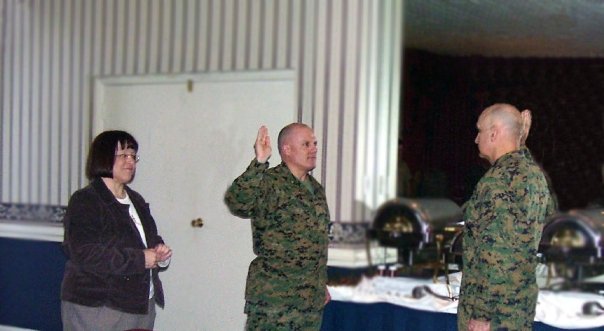
lcdr oath

Re-taking the oath of office in 2006 on being promoted to Lieutenant Commander

That was the beginning. On June 19th 1983 I took an oath as a Commissioned Officer in the United States Army. This is an oath that I renewed with every promotion, and every new appointment in the different components of the military in which I have served; the Army, the Texas and Virginia Army National Guard, and finally the United States Navy. That oath states:

I, _________, do solemnly swear that I will support and defend the Constitution of the United States against all enemies, foreign and domestic; that I will bear true faith and allegiance to the same; that I take this obligation freely, without any mental reservation or purpose of evasion; and that I will well and faithfully discharge the duties of the office on which I am about to enter. So help me God.

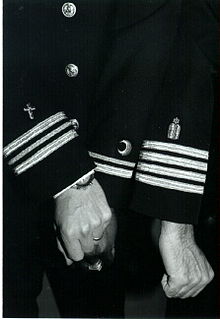
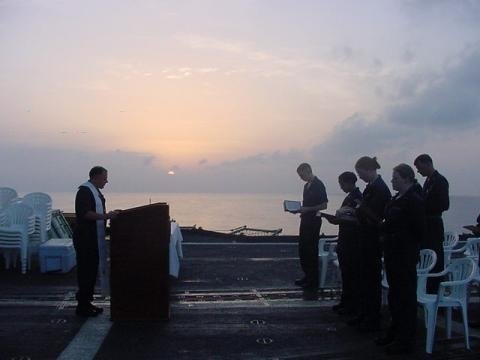
I and all other military chaplains also sign a letter when appointed in which each of us agree to serve in a pluralistic environment and to treat each person with dignity, respect, and compassion, irrespective of differences in religious beliefs. For Chaplains that is kind of like the Star Fleet’s Prime Directive.

I have been in the military officer for 34 years, an officer for 32 years and a chaplain for 23 of those years. In that time I have served different Christian denominations, two of which were very conservative, but even so recognized the need to care for all in our charge. I have done my best to care for my soldiers, sailors and marines for all of those years regardless of their beliefs, which span the spectrum of America.

If I cannot in good conscience do something, or if I cannot meet their particular religious need because they need a specific person of their faith group to conduct that rite, sacrament or other ritual, it is my duty, my obligation, to help them find the right person. Likewise, if they come to me seeking counsel or an administrative matter that the service dictates that they see me for, I cannot and will not turn them away. Sadly, I have had to take care of some service members’ non-religious administrative needs that the service required the chaplain to do, because their chaplains refused them based on their chaplain not approving of their faith, or lifestyle. In this case, these service members had me to go to and did not have to seek a court order, like the people in Rowan County Kentucky who were refused by Kim Davis.

This is what so many of Mrs. Davis’ supporters do not understand. Public office is not a private business nor is it a religious office or church. Likewise, all Federal and State appointed chaplains are officers of the state who happen to be religious ministry professionals whose training, and endorsement by their religious bodies is to serve in secular institutions and to protect the liberty of those they serve.

Likewise, judges, clerks, officers of the military, or police all take oaths to serve. Supreme Court Justice Antonin “Big Tony” Scalia said in regard to judges:

“[I]n my view the choice for the judge who believes the death penalty to be immoral is resignation, rather than simply ignoring duly enacted, constitutional laws and sabotaging death penalty cases. He has, after all, taken an oath to apply the laws and has been given no power to supplant them with rules of his own.”

President John F. Kennedy who faced severe criticism from Protestants because of his Catholic faith told the Houston Ministerial Association:

“I do not speak for my church on public matters; and the church does not speak for me. Whatever issue may come before me as President, if I should be elected, on birth control, divorce, censorship, gambling or any other subject, I will make my decision in accordance with these views — in accordance with what my conscience tells me to be in the national interest, and without regard to outside religious pressure or dictates. And no power or threat of punishment could cause me to decide otherwise. 

But if the time should ever come — and I do not concede any conflict to be remotely possible — when my office would require me to either violate my conscience or violate the national interest, then I would resign the office; and I hope any conscientious public servant would do likewise.”

That is the true test of a public official in a pluralistic country. Sadly, like Mrs. Davis, some of her biggest name supporters do not understand that, and truly that is dangerous. Like all public officials, elected, appointed, or commissioned, Mrs. Davis took an oath of office to the state, not her church. If, less than nine months ago, she took those oaths knowing that she would break them then she lied. In doing so lied by swearing with her hand on the Bible and in the name of God.

Please do not preach to me about her relgious rights, if she is willing to lie with her hand on the Bible in the name of God, then she is not worthy of the office.

Have a great day,

Peace

Padre Steve+
11 Comments

Filed under civil rights, ethics, faith, History, laws and legislation, News and current events, Political Commentary, Religion

Letter to a New Military Chaplain Part Three: The Minefields of the Soul: Power and Arrogance

295_27076762058_7573_n-1

This is third part of a response to a question I had from a new Navy Chaplain. I have decided to post it here without any identification of the chaplain because I know that many men and women who are new to the military chaplaincy or who are exploring the possibilities of becoming a chaplain have the same questions. I was fortunate to have had a number of chaplains who at various points in my decision process and formation as a minister, Priest and Chaplain in both the Army and the Navy help me with many of these questions. Likewise I learned far too much the hard way and blew myself up on some of the “land mines” that almost all who serve as chaplains experience in their careers. This is the third of several parts to the letter and is my attempt to systematically explain my understanding of what it is to be a Chaplain serving in the military and in particularly the Navy. The first two parts are linked here:

Letter to a New Military Chaplain: Part One

Letter to a New Military Chaplain: Part Two The Minefields of the Heart 

Dear Chaplain

The late great Hall of Fame Manager of the Baltimore Orioles Earl Weaver said “It’s what you learn after you know it all that counts.”

The first two parts of this letter dealt with aspects of the chaplain ministry that were very much philosophical and theological in their emphasis. This part is more direct and will deal with things that are more associated with behaviors, mostly bad behaviors. I call them minefields of the soul because they are common to all human beings. They are dark parts of the soul that lurk within us that none of us like to admit exist.

220px-3ChaplainSymbols

Sometimes they are merely weaknesses, but sometimes they are pathological or in some cases sociopathic. There is no restriction on such maladies of the soul, ministers are just as prone, if not more prone to them than others. It goes with the territory. One only has to look at the Christian and Jewish scriptures as well as the history of religious leaders of all religions throughout history to see this fact. Religious leaders, especially ones whose ministry involves some form of temporal power, be it in the religious structures of their religion, behinds the scenes in secular government and the political process or those whose ministries are in the secular arena of the chaplaincy often find themselves compromised by behaviors that others might not even consider that loathsome.

As I talked about in the first two parts of this letter, all of these behaviors are linked to who we are as human beings, as ministers and have a lot to do with our theological, ministerial and pastoral formation. They also have a lot to do with our upbringing, our cultures, family backgrounds and the family systems that were formative in our upbringing as well as the prejudices that we hold deep in our hearts.

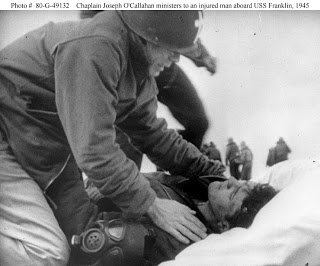
CMH Chaplain O'Callahan

This part of the letter focuses on things that are more observable to most people, especially those who see us in action. When I was leaving active duty as an Army Captain back in 1988 to attend seminary, an Army Chaplain Major Wayne Lura took the time to pull me aside and preach to me a warning sermon about the minefields that existed in the chaplain ministry. It was a warning that I took to heart.

Likewise my Executive Officer at the Academy Brigade of the Academy of Health Sciences Colonel James Wigger gave me this warning: “Steve, you think that the Army Medical Department is political and backstabbing. Let me tell you, we can’t hold a candle to the brutality of Chaplain Corps.” Unfortunately he was right. In my 21 years as an Army and Navy Chaplain I have seen this often up close and personal. I have had senior Line Officers and officers from other Staff Corps of the Navy talk about how bad of reputation many senior Chaplains have, especially in promotion boards.

The warnings of Chaplain Lura and Colonel Wigger hit me hard as a young officer, especially in the ideals that I held out about the Chaplain Corps. I took their warnings to heart but did not want to believe that they could be true. The sad fact was that they were all too true, Chaplains like all ministers and people often have feet of clay and at times hearts of stone.

Even so I had to find out the hard way about how destructive the “minefields of the soul” were in the lives of my fellow chaplains and and the Chaplain Corps of the Army and Navy.

I will first address the issues of power and arrogance. These issues plague institutional ministry and those minister within institutions. I think a part of this is that many who wind up in Chaplain ministry because of their lack of pastoral formation readily grasp at the apple of power, like the fruit of the tree of the knowledge of good and evil, that fruit is a powerful elixir. Yet even those that have a more thorough formal pastoral formation can fall prey to the lust of power.

Power is a great temptation and a minefield. The military chaplaincy is unique in ministry in that chaplains also hold commissions as officers in whatever military branch we serve. As I mentioned in my first article we have to be fully clergy of our own faith tradition and at the same time fully a commissioned officer if we are to succeed in the military chaplain ministry.

gettysburg-blog-photo-1

Unfortunately there are some that embrace the fullness of the commission and leave behind their ministerial identity, and even more unfortunately when they do they do this they are neither aware of it, nor very good at it. They forget with the exception of a couple of billets or positions, one being the Commanding Officer of the Navy Chaplain School that all the rest of us are staff officers. We are officers but we have no command authority. That does not mean that we cannot supervise chaplains, chaplain assistants or religious program specialists and civilian or contract staff. But when we do so we function under the authority of our commanding officer. I have seen some in both the Army and Navy who have forgotten this and have become tyrants and used the power that they have to destroy the lives and careers of those that they do not like, or have somehow offended them. They are toxic and if they were serving in a denominational structure they would be the ones abusing that power as well.

The temptation of power is great, but just is dangerous is the temptation of arrogance. A Kenyan prayer says: From the cowardice that dare not face new truth, From the laziness that is contented with half truth, From the arrogance that thinks it knows all truth, Good Lord, deliver us.

Arrogance usually shows up in the Chaplain ministry in the way we advertise our selves and our beliefs. Arrogance comes in the form of deciding that whatever truth we proclaim trumps the rights of others to their beliefs. One of the chief complaints of people about chaplains is that some of us, perhaps even many of us are more intent on promoting our agendas, religious, social and even political than we are actually listening to and caring for the people whose religious rights that we are constitutionally mandated to protect. Yes, even those people that we do not agree with on doctrine or anything else. Our mission is to provide or perform ministry and care for the people we have been given to serve. That is a sacred trust. If there is something that we cannot do for someone by virtue of what our church or personal beliefs mandate we don’t have to do it, but we do have the legal and moral obligation to help them find someone who can.

schluter

Our Navy Chaplain Corps motto of “Cooperation without Compromise” should be the bedrock of how we minister and how we respect the rights of others, both other chaplains and those that we serve. Sadly, there are horror stories about how some chaplains of various traditions, liberal and conservative, Christian, Jewish and Moslem have run roughshod over the rights of others. I have seen it first hand and there is no excuse for it. But that being said none of us can allow our own arrogance to dictate how we treat others nor can we allow the mistreatment we may have experienced from other Chaplains to justify doing the same to others.

The Navy policy is quite clear and when we apply for a commission we agree to do this, and in fact all of our religious bodies have agreed that their chaplains will do the same. SECNAV INSTRUCTION 1730.7D is quite clear on this. Like the Prime Directive in Star Trek it is non-negotiable.

(1) Chaplains are qualified Religious Ministry Professionals’ (RMPs) endorsed by a DoD-listed RO and commissioned as Naval officers in the CHC.

(2) Per reference (d), as a condition of appointment, every RMP must be willing to function in the diverse and pluralistic environment of the military, with tolerance for diverse religious traditions and respect for the rights of individuals to determine their own religious convictions. Chaplains must be willing to support the free exercise of religion by all Service members, their families, and other authorized persons. Chaplains are trained and expected to cooperate with other chaplains and RMPs and work within the specialized environment of the military while not compromising the tenets of their own religious traditions. 

(3) To meet the requirements of religious accommodation, morale and welfare, and to facilitate the understanding of the complexities of religion with regard to its personnel and mission, the DON has designated four core CHC capabilities: care, facilitate, provide, and advise. Chaplains care for all Service members, including those who claim no religious faith, facilitate the religious requirements of personnel of all faiths, provide faith-specific ministries, and advise the command. 

In my next installment I will discuss what I call “The Minefields of the Flesh” also known as Sex Alcohol and Money.

Until the next time,

Peace

Padre Steve+

2 Comments

Filed under faith, Military, ministry, Religion