
Friends of Padre Steve’s World,
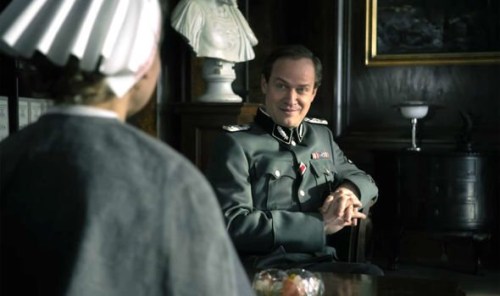
Last night I decided rewatch the German medical mini-series Charité at War. It is about the famous Charité hospital in Berlin, which along with the Robert Koch Institute is one of the most important hospitals and medical research centers in the world. It had begun as a hospital for patients infected with the plague in 1710. When the plague bypassed Berlin, it became a charity hospital for the poor and destitute and named by the order of Friedrich of Prussia. In 1727 King Frederick Wilhelm I when he named it Charité and its mission became threefold, to care for the poor and indigent, a state hospital, and as a training center for military physicians. It would also become a teaching hospital associated with Humboldt University and the University of Berlin and it became a hub where some of the premier physicians, researchers, and clinicians in the world practiced. These included Dr. Rudolf Virchow, the founder of modern pathology, Dr. Robert Koch one of the founders of modern Bacteriology whose discoveries included the causative agents of anthrax, cholera, and tuberculosis and experimental support for the study of infectious disease. He was awarded the Nobel Prize for his research on tuberculosis. It also hosted Dr. Otto Binswanger who decried a condition defined as subcortical dementia characterized by loss of memory and intellectual faculties, which is now known as Binswanger’s Disease. He also authored numerous works on Epilepsy, Dr. Emil von Behring who developed a vaccine for Diphtheria antitoxin for which he won a Nobel Prize, and Dr. Paul Erlich who who worked in the fields of hematology, immunology, and antimicrobial chemotherapy. He is credited with finding a cure for syphilis in 1909. He invented the precursor technique to Gram staining bacteria. The methods he developed for staining tissue made it possible to distinguish between different types of blood cells, which led to the capability to diagnose numerous blood diseases. Over half of German Nobel Prize winners have worked at or with Charité.
Now Charité is one of the world’s finest medical centers, schools, and research centers in the world, but things were different in the 1930s and 1940s during the reign of Hitler and the Nazis. while much of its good work would continue, members of its staff would participate in the T-4 Euthanasia program and others that would follow.
In my studies of the Third Reich and the Holocaust I have read a number of volumes dealing with Nazi medicine, eugenics, human experimentation, and the murder of those deemed “life unworthy of life.” I have read The Nazi Doctors and the Nuremberg Code: Human Rights in Human Experimentation, edited by George Annas and Michael Gordon, and previously read The Nazi Doctors by Robert J. Lifton, The Nazi War on Cancer, by Robert Proctor, the Nuremberg transcripts of the Doctors Trial, Hitler’s American Model: the United States and the Making Of Nazi Race Law, by James Whitman, The Nazi Connection: Eugenics, American Racism, and German National Socialism by Stefan Kühl and made visits to Dachau, Buchenwald, and the Hadamar T-4 Euthanasia Center.
In my career I have served as a member, or the head of ethics committees at major civilian and military medical centers. As such I have also had to read and study much about medicine, disease, and medical ethics. Much of my hospital time was done in ICUs and dealing with end of life matters, consulting with physicians and nursing staff. So I don’t take the subjects involved lightly, and I found the German television series Charité at War, which is available on Netflix to be fascinating.
My life has been deeply involved with history, Ministry, Medicine, and Ethics for decades. The series which is set in Berlin’s Charité hospital, a leading research center and major medical center is so interesting. It shows how even the most decent and idealistic people can be compromised in a medical system of an authoritarian and racist state.
The characters in the series are all based on real people. They are not composites, or factionalized versions. They include the true believers like SS Colonel and Psychiatrist Max de Crinis, who helped write the euthanasia laws of the Reich and used his position as Professor Of Psychiatry at Charité to turn wounded soldiers over to Court Martial as deserters, and to persecute homosexuals. He took cyanide to escape capture by the Soviets. Then there was Doctor and Professor Ferdinand von Sauerbruch, Professor Of Surgery at Charité who walked a thin line but publicly opposed the T-4 Euthanasia program and attempted to protect members of the German resistance. Sauerbach remained at the hospital treating patients until the Red Army captured it. He was known for his work with, tuberculosis, prosthetics, and the diagnosis of Graves Disease. He died in 1951. Then there was Professor Artur Waldhäusen, a pediatrician who became head of pediatrics at Charité who attempted to have his own daughter sent to a Euthanasia center, only to be found out by his wife who saved her daughter with the help of her brother. But of all the characters was the nurse Christel, who was so devoted to the Nazi message that she turned over nurses, physicians, and patients who she deemed traitorous to Professor de Crinis and the Gestapo, including Hans Dohnanyi, Brother in law of Dietrich Bonhoeffer.
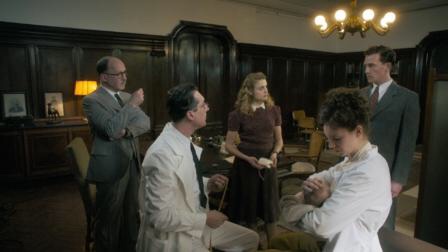
The series is interesting because it shows ordinary people, even brilliant people can compromise their ethics and reputations serving an unjust regime. Some of these medical professionals were completely utilitarian in their ethics and had no empathy for those that they treated or sent to their deaths. Sadly, they are no different from people today. Bureaucrats, Physicians, Nurses, and yes even ministers can surrender their ethics, faith, and simple human decency, even those who claim to be Pro-life to serve regimes which are bent on the extermination of life unworthy of life and those that they consider to be subhuman.
Dr. Robert J. Lifton, the author of The Nazi Doctors wrote:
“In all fundamentalisms, and they are usually religious or political, there is the sense of profound threat to what are considered fundamental beliefs and symbols, and a compensatory invocation of a sacred text (the Bible, the Koran, Mein Kampf) as a literal guide to every form of action. History stops so that murderous therapy can be applied. While medicine does not provide the sacred text, one can revert to ancient practices of shamans, witch doctors, and tricksters who could be expected to kill in order to heal. For physicians as well as charismatic spiritual physicians, there is a release from Hippocratic restraint.”
That happened in Nazi Germany and other authoritarian states, as well as in our country around the same time of the Nazis. In our case the effort was led by Eugenicists whose ideas the German Eugenicists of Weimar promoted and which some of them and their students during the Nazi period would take to their logical extreme. In the Nazi era German physicians engaged in some of the most criminal and unethical experiments and behaviors in history. Their examples were the American Eugenicists, and physicians who their experiments on living human beings at the Tuskegee Institute and other facilities. Since human nature is the one constant in history, do not be surprised if ideologically motivated physicians and scientists do the same thing the Nazi Doctors and the American Eugenicists did a century ago. Syphilis
The series Charité at War is as brilliant as it is disturbing. I recommend it highly, and if you watch it before going to bed I suggest that you start drinking heavily.
So until tomorrow,
Peace,
Padre Steve+

 The Inglorius Padre Steve's World