It was another ignominious day in the life of Longinus the Centurion. Posted to the troubled outpost of Judea he commanded a unit composed of locally recruited troops mostly Samaritans and some Syrians. How he wished that he commanded elite troops of the Italian Cohort or any of the European Legions stationed in nearby Syria. Normally he and his men were posted to the Roman capital of Judea Caesarea on the Mediterranean coast of Judea, though his troops were not elite the location was not bad so far as amenities, especially for Judea.
However, today’s mission was another distasteful assignment away from Caesarea back to the always troublesome city of Jerusalem. Since the Jewish Passover was coming and with it thousands of Jewish pilgrims from around the world were in the city and in there was always the potential for trouble. Longinus had heard around the headquarters that tensions in Jerusalem were increasing due to the presence of some itinerant preacher from up in Galilee which according to the agents and spies in the city allegedly had healed the sick, raised the dead and restored sight to the blind. Evidently he had even stirred things up on a previous visit by chasing money changers out of the Temple. Longinus had to admire that, this Jesus was pretty ballsy. Since the worldly and seasoned Longinus didn’t think much of religious zealots, Jewish or otherwise he could only chuckle when thinking of some bumpkin raising hell in the Temple and pissing off the religious elite.
He led his unit as part of the mixed Cohort which provided security for the Imperial Legate, Pontius Pilate. He remembered a previous mission where Pilate had posted the Imperial Standards with the Image of Caesar as God outside the Fortress Antonia very close to the Jewish Temple caused a riot and Pilate had the Standards returned to Caesarea under heavy escort the next day. This time there was a rebel named Barabbas who had been causing no end of trouble and Pilate had sentenced him to death. But then the Jewish High Council brought Pilate another case, the case of this itinerant preacher, Jesus of Nazareth. It seemed to Longinus and the other Centurions present that the case was a simple religious disagreement that the Romans should not get involved in. However Pilate took the case fearful of the threat to his job if he allowed another “king” to live. Yet Pilate had found this Jesus innocent but caved to the pressure of the mob, even ignoring the pleas of his wife Claudia to spare the preacher. Pilate was a typical politician and cut a deal which allowed King Herod, the Sanhedrin and himself to meet the demands of their various constituencies or in the case of Pilate his boss to end this Jesus of Nazareth problem once and for all.
On the day before the Passover one of the preacher’s own men turned him in to the Council for the paltry sum of 30 pieces of silver. That alone proved to Longinus that this Jesus was no threat to anyone. The Temple Police brought Jesus to the Sanhedrin which condemned him to death, but since they were not authorized by the Roman administration to carry out the death sentence they took the case to Pilate. Longinus saw Pilate use every trick that he could to make the decision the responsibility of someone else and if Longinus had been Pilate he would have told those religious types to pound sand and get the hell out of his headquarters, but he was a soldier not a politician with greater aspirations like the legate.
Instead Pilate complicated his life and those of his fellow Roman officers in charge of their local troops. One Centurion had the duty of supervision the torture of this Jesus. The troops were brutal, Samaritans and Syrians they hated the Jews and torturing a Jew for any offense was just too much fun, but for the Roman officers it was unseemly and lacked the honor of a true battle against other soldiers. After the brutal scourging with a barbed whip those soldiers placed a rough hewn “crown” of thorns on the unfortunate man’s head and robed him in purple to mock his claims to be a “king.” Longinus felt that the whole exercise was a cruel joke but the order had been given and by Roman law had to be carried out. After the scouring Pilate tried one last time to get out of killing this man offering to spare him for the life of Barabbas, a man who was a legitimate terrorist threat to the Empire’s interests in Judea. Instead the weak willed Pilate caved and spared the life of the terrorist for a man who couldn’t even control his own people. It was sad what was done in the name of the Emperor.
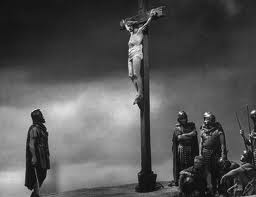
When final sentence was pronounced Longinus was assigned to the crucifixion detail. Normally with such inflamed passions he would have assigned much of his unit to the task of the execution and related security measures. However it seemed that the usually surly population had little interest in stopping this execution of one of their own. With that in mind Longinus took just four soldiers with him to conduct the execution, security did not seem to be a problem. After a rather tumultuous parade through Jerusalem where the condemned man was heckled and abused they arrived at a hill just outside of the city called Golgotha, the place of the Skull. Longinus felt that the place was grotesque but it did work for the execution. Any visitor to the city would see the condemned man as well as two common thieves who were being executed at the same time.
His men performed the execution in the prescribed manner and he allowed the men to divide the condemned man’s clothing among them. For three hours the men along with a number of observers those that were obviously mourning the scene including a woman that appeared to be the itinerant preacher’s mother and a young man who he might be one of his followers. They were balanced out by a group of hecklers who mocked the condemned men, especially the preacher. Even one of the common thieves joined in the heckling. Yet in spite of this the preacher responded with grace and love to those who mocked him in his dying hours offering forgiveness to his men and promising eternal life to one of the condemned men who hung on either side of him. The only real trouble came when some of the Council members noticed that the placard above the preacher said “The King of the Jews.” They immediately send men to Pilate to change the wording but Pilate finally told them to pack sand saying “I have written what I have written.” Longinus kept his silence when he heard this he and the other Centurions arrived back in Caesarea and had a chance to share drinks and a meal in a local pub.
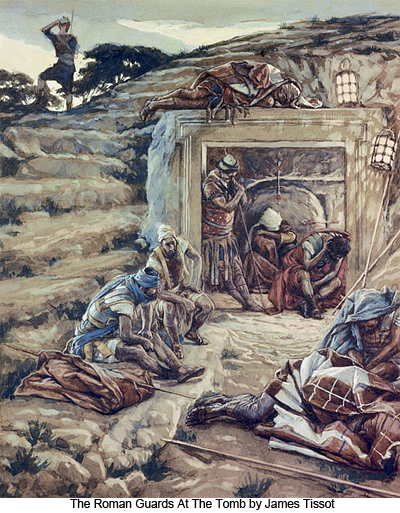
It was an unusual day, the skies grew black as noon approached and the preacher made a number of chilling statements from his place on the cross the most poignant being where he cried out “my God my God why have you forsaken me?” That struck Longinus, this man was not really guilty of anything in Roman Law but was being killed and Longinus was part of the process. A tear came to his eye when the preacher cried out “it is finished” and died. Without thinking he called out to his men and to those remaining at the site “truly this man was the Son of God” drawing the ire of those cheering the execution and the bewilderment of those that appeared to be there to support this man. So when a runner came from Pilate came to order the deaths be speeded up to accommodate the religious traditions of the Jews he was relieved. His men broke the legs of the men on either side of the preacher but when they came to the limp body of the preacher they found that he was dead. Just to ensure that this was the case he had a soldier drive a spear into the side of the man. Blood and water flowed from the wound. The man was dead and the job was complete. Another Centurion came with a detail of soldiers to remove the bodies and to ensure the security of the preacher’s tomb, yet another concession to the religious people.
Longinus was glad that the day was done. He cast a glance at a number of women and one young man that remained. They obviously were his friends and the older women might have even been the preacher’s mother. He shook his head marched his troops back into the city and reported that the mission was complete when he reached Fortress Antonia. He felt hollow inside and hoped beyond hope that time could be altered to allow him to save the many before it ever got to this point.
Arriving at Antonia he joined a number of fellow officers and as they chatted about the day he felt his anger and frustration rise. That preacher didn’t deserve to die and it was too bad that he could not be restored to life. But the Centurion in change of the Tomb Guard detail reported that the body had disappeared from the tomb. Longinus was tired. He hoped that it might be true. He asked the bartender for another drink and wondered just what was going on in this hellhole called Judea and he thought again “truly this man was the Son of God.”
Peace
Padre Steve+
Note: Longinus is the name attributed to the Centurion at the Cross during the crucifixion by early church tradition. Likewise this is true of Claudia the wife of Pilate. This story is simply my versions of what might have happened that fateful Friday when a Centurion named Longinus became an actor in a play that he could not imagine.



 The Inglorius Padre Steve's World