Today I am attending a conference on Caregiver Operational Stress Control. This brought out my “demons” as I was faced with the stories of others who had been to the same places that I have been in Iraq, and experienced similar things that I experienced on my return. This is a re-posting of something that I wrote in March at the very beginning of this blog. At that time I had very few readers.
I am glad to be at this training today. I needed to take a Xanax when I arrived because I don’t do well with these kind of events anymore. The intial session and a video of Dr Heidi Kraft talking about her expereinces at Al Taqaduum where I was based out of. I was scheduled for another meeting but I knew that I needed to be here. So I asked my Department Head who was going to the meeting if I could stay and he allowed me to do so. God bless him.
I received a note from a new friend in another country’s military, a physician with multiple tours in Afghanistan. He is dealing with many of the things that I discuss in this essay and had a bad day that took him back to Afghanistan. I am sure that he is not alone as I deal with many people in my Medical Center who have similar experiences. Yesterday I was walking down a hallway near our Operating Room and I saw a pretty good sized blood spill on the floor. I was surprised at my reaction as I kept seeing it in my mind the rest of the day and flashbacks to Iraq and the TQ Shock Surgery Trauma platoon where I was pulled into a couple of the last major mass casualty events where 10-15 Marines or soldiers came in at a time. I began to see those wounder Marines on the tables and can visibly see those Marines, their wounds, even tattoos… I hope this helps break the code of silence. I wrote this on a particularly rough day and will repost some of those early essays as they are still very relevant. Peace, Steve+
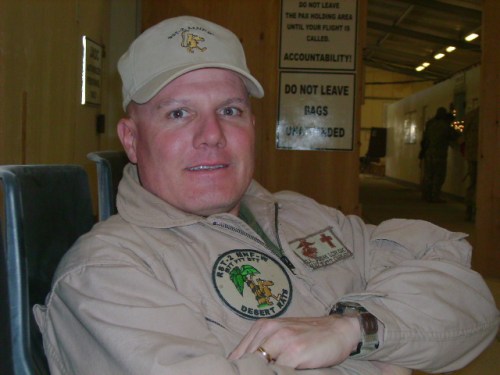 Trying not to Show my Stress and Exhaustion after 2 weeks out while in between flights at Al Asad
The feeling of abandonment and aloneness, separation and disconnection run deep for those returning from unpopular wars in which the majority of the citizens take no part. The effects are devastating. It is estimated that at least 100,000 Vietnam veterans have taken their lives in the years after that war. Last year the Army had its highest number of active duty suicides ever recorded, January and February of 2009 have been banner months for Army suicides. Of course as I noted in my previous post these numbers don’t include reservists and Guardsmen who have left active duty or veterans dischaged from the service. Neither do they include the host of service men and women who died from causes undetermined.
Many veterans attempted to return to “normal life” and family following the war. Many only to have marriages fall apart, continue or leave untreated alcohol and drug addictions acquired in country which often follow them back destroying lives, families and careers. Most felt cast aside and abandoned by the goverment and society. Many got through and return to life with few visible effects, but the scars live on. My dad would never talk about his experience in the city of An Loc in 1972 where he as a Navy Chief Petty Officer was among a small group of Americans operating an emergency airstrip in the city which was besieged by the North Vietnamese and Viet Cong for 80 days. I do know that it affected him, he wasn’t the same when he returned, he was a lot more tense and had some problems initially with alcohol. He never talked about his time there.
I have seen the effects of this in so many lives, I remember a Vietnam vet who attempted to kill himself with a shotgun blast to the chin in Dallas during my hospital residency. He forgot to factor in recoil and blew off his face without hitting his brain or any major arteries. He survived…talk about having something to be depressed about later. I have seen the tears as veterans rejected by the country during and after than war begin to seek community with their wartime brothers, men who had experienced the same trauma followed by rejection and abandonment by the people that sent them to Southeast Asia. One only has to talk to veterans of the Ia Drang, Khe Sahn, Hue City, the Central Highlands and Mekong Delta or read their stories to know what they have gone through. LTG Hal Moore and Joseph Galloway in We Were Soldiers Once..and Young and We are Soldiers Still have deeply penatrating and soul searching views of Vietnam as does Bing West in The Village. Bernard Fall does the same from a French perspective in Hell in a Very Small Place and Street Without Joy. Alistair Horne’s book A Savage War of Peace discusses and tells the story of many French soldiers in Algeria, who fought a war, won it militarily and had their government abandon them, bringing out a mutiny and coup atempt by French Soldiers who had fought in Indochina, were almost immediately back in action in Algeria with little thanks or notice from thier countrymen. Abandonment is an ever present reality and “demon” for many of us who have served regardless of our nationality, French, Canadien or American who have fought in wars that have not engaged the bulk of our fellow citizens. Go to the Vietnam Veterans Memorial in Washington DC and tocuh it, trace the outline of a name, look upon the makeshift memorials and tokens of remembrance left by comrades who came home and understand the sorrow and the sacrifice.
Unfortunately we would like to think that this is something out of history that we have learned from and applied the lessons and in doing so no longer have an issue. Unfortunately this is not the case. There are many, depending on the study anywhere from8-20 percent of returning Iraq and Afghanistan veterans who suffer from some type of PTSD, Combat Stress reaction or other psychological malady incurred during their tour. Similar numbers are reported by the Israeli Armed Forces in from the 1973 War forward. The British are seeing the same now as their veterans return from war. Canadian Forces assigned to the UN command during the Rwanda genocide suffer horribly from PTSD. The mission commander, LTG Romeo Dalliare now a Senator in the Canadian Parliament is a leading spokesman for those who suffer from PTSD. His book Shake Hands with the Devil is a study of how military professionals were exposed to atrocities that they either were forbidden to stop or lacked the combat power to do so even if they wanted to. These men and women tell their story in a video put out by Canadian Armed Forces.
 Convoy along Route Uranium
I am not going to rehash stories that I have recounted in my other posts dealing with PTSD here, but both I and many men and women that I know are scarred by the unseen wounds of this war. We gladly recognize, and rightfully so, those who suffer physical wounds. At the same time those who are dying inside are often ignored by their commands or if they come out are shunted into programs designed to “fix” them. In other words make them ready for the next deployment. I am not saying here that there is an intentional neglect of our service men and women who suffer from PTSD and other issues. I do not think that is the case, but it is a fact of life. The military is shorthanded and stretched to the breaking point. Many Army Soldiers and US Marines have made 3-5 deployments since 2003. The Navy has sent over 50,000 sailors, not including those assigned with the Marines into “Individual Augmentation” billets in support of operations in Iraq, Afghanistan, the Horn of Africa and other fronts in this war. The Navy personnel, as well as Air Force personnel who perform similar missions often do not have the luxury of going to war and coming home with a particular unit. We serve often in isolation and incredibly disconnected from our commands, our service is often misunderstood. Now there are efforts by the services and some commands to do things better to support our sailors, some of these at my own hospital. However as an institution the military has not fully made the adjustment yet.
Many sailors feel abandoned by the country and sometimes, especially when deployed by the Navy itself. I have debriefed hundreds of these men and women. Almost all report anger and use terms such as being abandon, cut off and thrown away by the service and the country. Those from all services who work in unusual joint billets such as advisers to local military and police forces in Afghanistan and Iraq feel a sense of kinship with each other, often feel a connection to the Iraqis and Afghans but are often not promoted or advanced at the same rate as others who have served in conventional forces in traditional jobs. There was a film called Go tell the Spartans staring Burt Lancaster about Army advisers in the early stages of Vietnam. If you see it and have been to Iraq with our advisers you can see some of the same dynamics at work.
At this point we are still engaged in Iraq and Afghanistan. These wars divided the nation and the veterans, though better treated and appreciated by society than most of thier Vietnam counterparts have no memorial. Words of thanks uttered by politicans and punits abound, our Vietnam era and other fellow veterans in their latter years come to the airports that we fly in and out of to say thank you, but our numbers are rising, the war rages on both in country and in our minds and lives are being lost long after soldiers have left the battlefield.
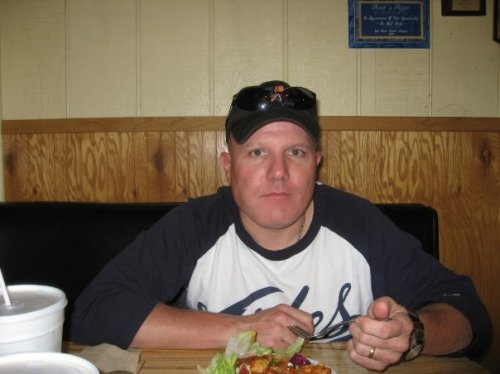 Not Doing Well on Leave about 5 months After my Return from Iraq
We have to do a better job of ensuring that those who sacrifice so much do not feel that they have been cut off and abandoned while they are in theater and especially when they return. When it is time we need a memorial on the Capitol Mall for those who served in these wars. I don’t know when that will be, but I do hope to see it in my day. Sure it’s only symbolic, but symbols can be healing too, just look at the black granite wall rising up from the ground and going back down into it, filled with the names of those who gave their lives and made the supreme sacrifice in Southeast Asia. Simply known by most as “the Wall” it has become a place of healing and rememberance. A place to say thank you, goodbye and amen.
Peace and blessings, Steve+

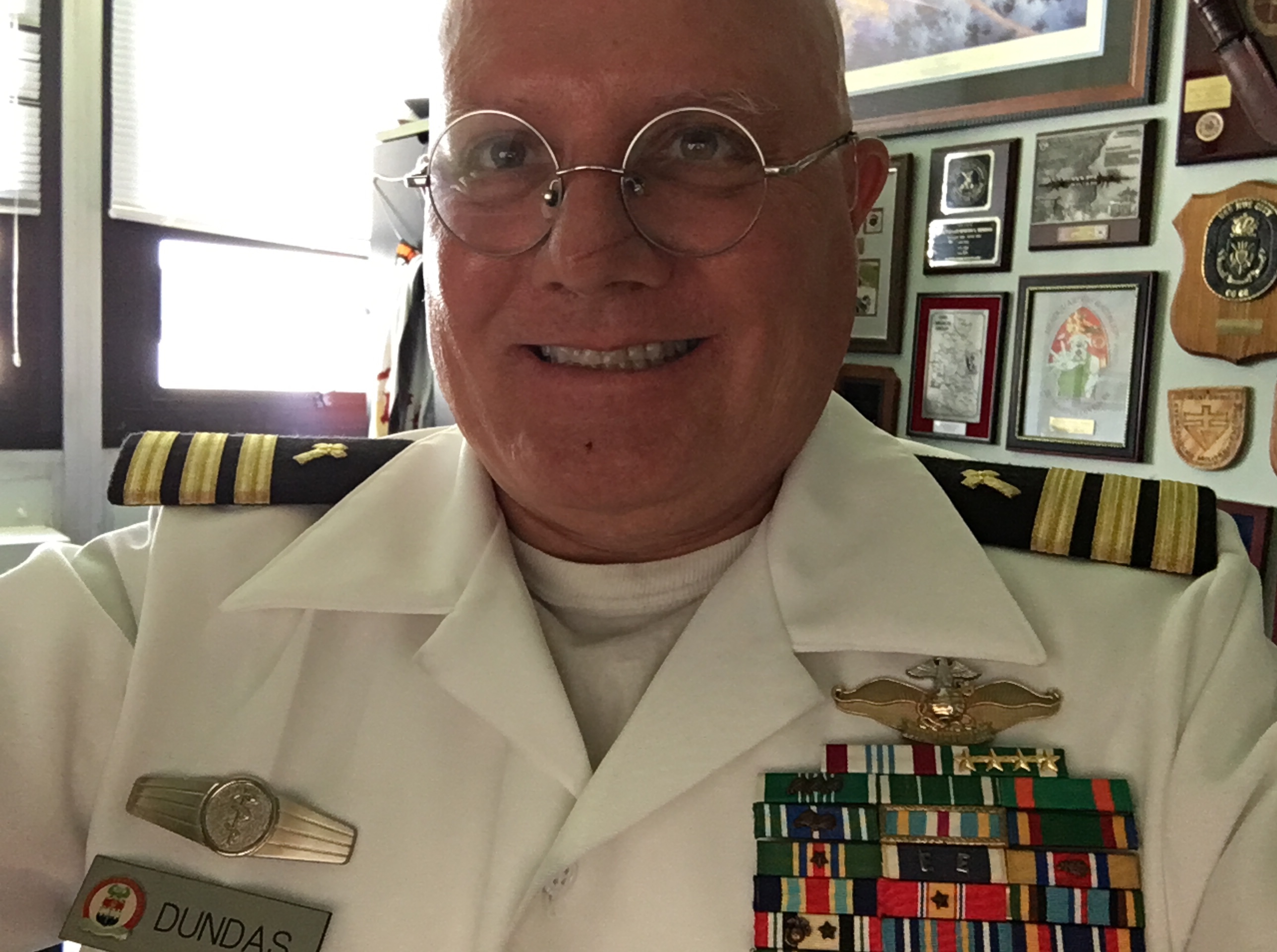

 The Inglorius Padre Steve's World