Tag Archives: ss normandie

Salvaging the Costa Concordia: An Immense and Potentially Impossible Task

The wreck of the giant cruise liner Costa Concordia could be in danger of sinking deeper into the sea off of Giglio Island or even breaking up.  As of the moment the Italian authorities are still calling the operation a rescue operation but that could change to a salvage operation in the coming days.
The Salvaged Seawise Giant

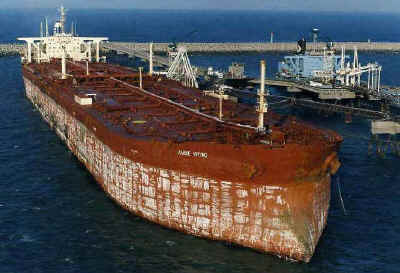
Provided that the wreck stays intact and does not sink in deeper water the chance of salvaging the ship will be immense. It will not be an easy task.  Only one ship larger than Concordia has been salvaged, the massive oil tanker Seawise Giant which was sunk in very shallow water off of Kharg Island Iran during the Iran-Iraq war.  That ship was only salvageable because she was intact and in the placid shallow waters of the Persian Gulf.
Wreck of the ex SS Normandie

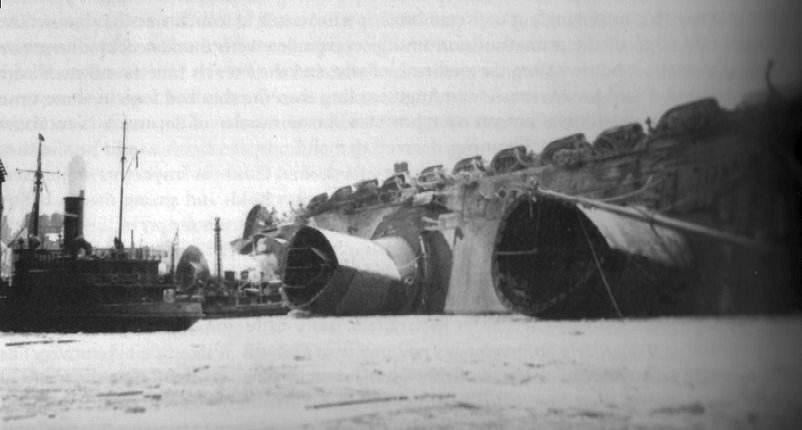
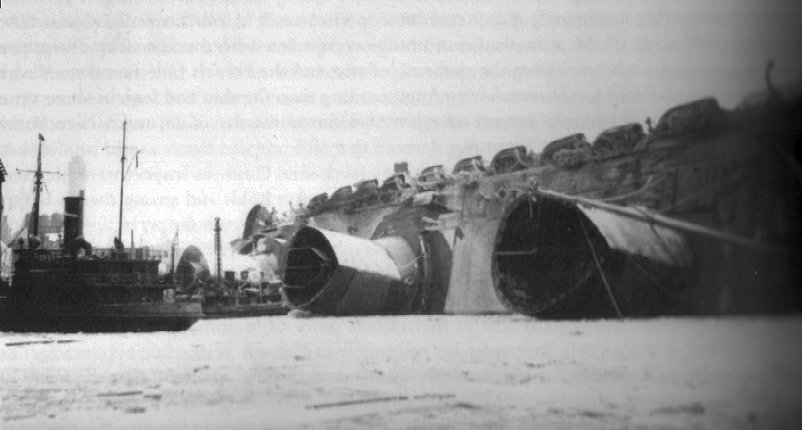
The other ships successfully salvaged and returned to service were the US Navy Battleships USS West Virginia and USS California which were sunk at Pearl Harbor.  Both ships had settled upright in the shallow and calm waters of Pearl Harbor.  The battleship Oklahoma which capsized was refloated but never returned to service.  Other large ships have been salvaged but not returned to service, the great French liner Normandie which burned and sank pier side in New York Harbor was raised but the damage caused by the fire made her not economical to put repair and put back into service.  The battleships and battle cruisers of the German High Seas Fleet were salvaged over a period of nearly 20 years following the “Great Scuttle” following the signing of the Treaty of Versailles in a remarkable operation at Scapa Flow.  Many were difficult to salvage and although all were scrapped  the fact that they were raised was engineering triumph.

Raising the USS Oklahoma

One thing that works against a successful salvage operation is the fact that she is on her side and perched atop a number of rocks fully exposed to wind and waves.  Ships, especially merchant ships which are more lightly built than the great battleships do not tend to hold up well when in such a position.  They tend to get battered and break up due to the great stress put on their hulls which they were not designed to endure.

Drawings of High Seas Fleet wrecks at Scapa Flow

Those trying to save the Costa Concordia will first need to ensure that she does not sink into deeper water or break up. If they can do that they will then need to remove her fuel and other hazardous materials.  Once that is completed the massive gash in the hull will need to be repaired and and the hull checked for other damage.  Then she will have to be successfully righted and pumped out. This will not be easy, every step will have to be carefully done to ensure that they salvers do not want her to sink again.  Working against them will be the forces of nature, wind, tides and waves.  These factors will complicate any salvage efforts and it is entirely possible that the wreck will need to be scrapped in place.

The immediate concern is the search for survivors and next the avoidance of an environmental disaster should the ships diesel fuel leak into the ocean and preventing the ship from sinking into deeper water or breaking up. Only then will it be possible to begin salvage operations.  From a technical perspective it is interesting to think about just how the massive ship will be raised.

Peace

Padre Steve+

5 Comments

Filed under Navy Ships, News and current events

The Costa Concordia Disaster Compared with Other Maritime Tragedies

The story of the sinking of the RMS Titanic with the loss of nearly 1500 souls mesmerizes those that imagine the worst disasters involving cruise liners or other passenger vessels.  Conveyed by motion pictures the story reaches into the hearts of people, especially romantics and maritime enthusiasts a century after her demise.  The story is legend. The largest ship then in existence, called “unsinkable” she was the symbol of pre-World War One hubris. The arrogance of her owners, the hubris of her Captain and the storied passenger list which included some of the wealthiest and most famous people of her time lend themselves to a romantic tragedy at sea brought to us by Hollywood.

RMS Titanic

However as great of tragedy as was the Titanic disaster the great liner was neither the largest passenger vessel to sink nor the most souls lost at sea. The Costa Concordia now has the dubious distinction of being the largest passenger vessel to ever sink but comes in very low on the scale for number of fatalities.

SS Sultana disaster

The ships with the greatest number of lives lost came in much more obscure disasters.  The greatest loss of life on a passenger vessel during peacetime was the SS Sultana, a side-wheel steamer returning Union Soldiers home following the end of the Civil War. Grossly overcrowded, the ship which was designed to carry under 400 passengers had nearly 2400 souls aboard when one of her boilers exploded causing a fire which consumed the ship. Only 741 people were rescued.

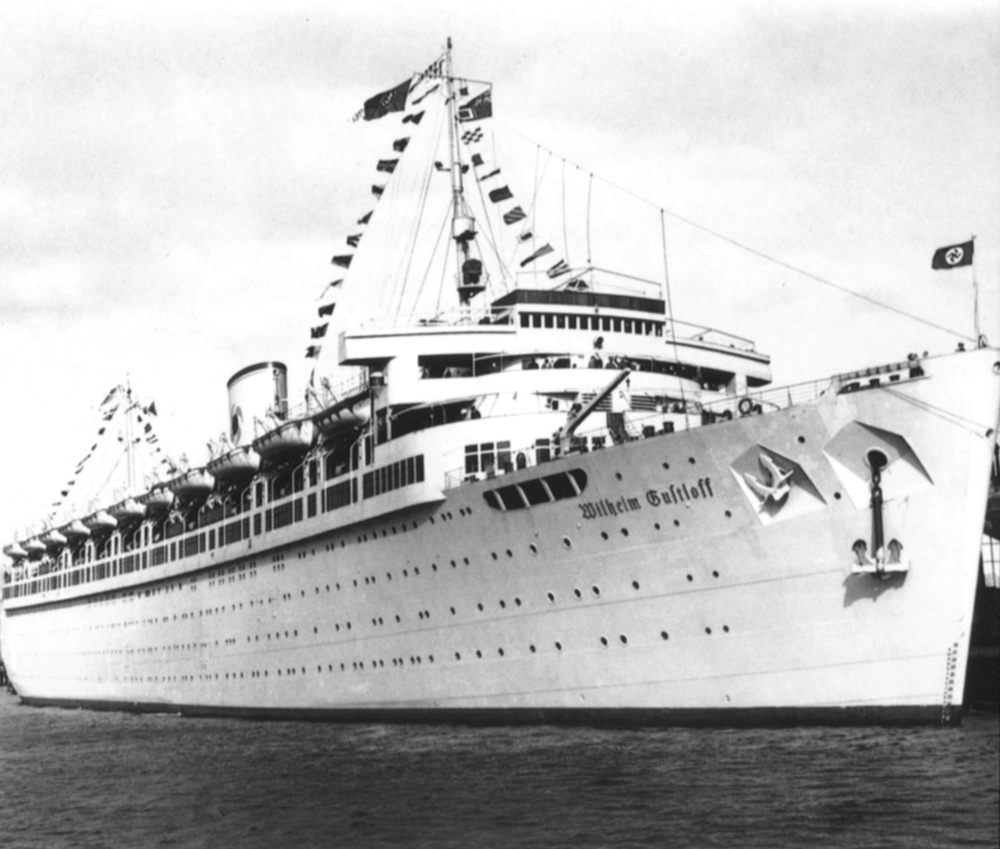
Yet as bad as this tragedy was the worst disaster in maritime history occurred near the end of the Second World War when the SS Wilhelm Gustlaff, a 26,000 ton 684 former cruise liner in the service of the German Navy was torpedoed by the Soviet Submarine S-13 on the night of 30 January 1945. Over 9000 souls, the vast majority civilians or military dependents fleeing the Red Army went down with the ship.  Another great ship, the 38,000 ton RMS Lusitania was sunk by the German U-boat U-20 on May 7th 1915 with the loss of 1198 lives including 128 Americans.

RMS Lusitania (above) and MV Dona Paz (below)

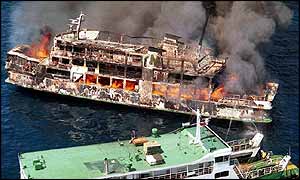
The MV Dona Paz, a ferry with Sulpicio Lines in the Philippines collided with the tanker MT Vector on 27 December 1987 with a loss of over 4000 souls. Called the “Asian Titanic” it was one the worst maritime disasters of modern times.

HMHS Britannic

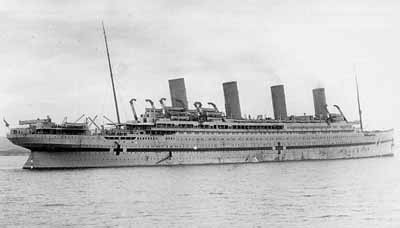
Titanic’s sister the RMS Britannic was serving as a hospital ship in the First World War when she struck a mine in the Aegean Sea sinking in 55 minutes with the loss of only 30 of over 1100 souls aboard.

Andrea Doria sinking off of New York-New Jersey

Another well known wreck was that of the beautiful Italian liner Andrea Doria which collided with the MV Stockholm and sank on July 26th 1956 with the loss of 46 passengers. The sinking was one of the most memorable of all time because of how it was filmed and the heroism of her Captain who unlike Captain Schettino of the Concordia did not leave the ship until he was sure that all passengers and crew were off  and was willing to go down with the ship.

RMS Queen Elizabeth

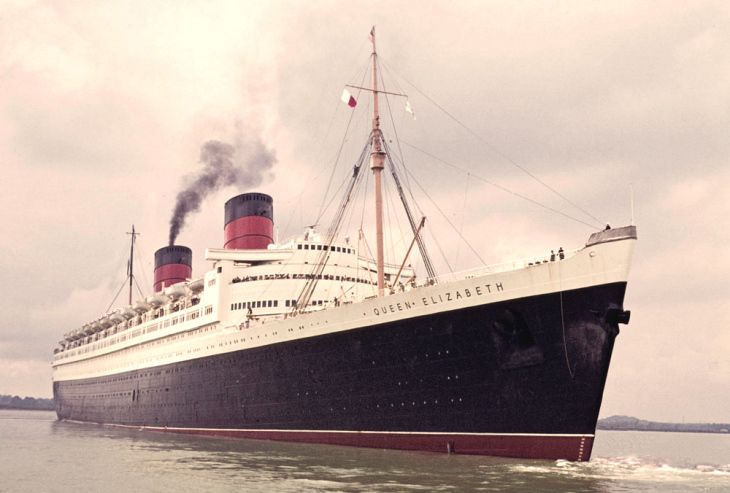
Yet the largest liners ever sunk were two of the most glorious of their era the RMS Queen Elizabeth and the French SS Normandie.  Both sank under different names and both were due to fires while in port. The the 83,673 ton Queen Elizabeth was retired from the Cunard Line in the late 1960s and taken to Hong Kong where she was renamed SS Seawise University and burned and sank in Hong Kong harbor on 9 January 1972.

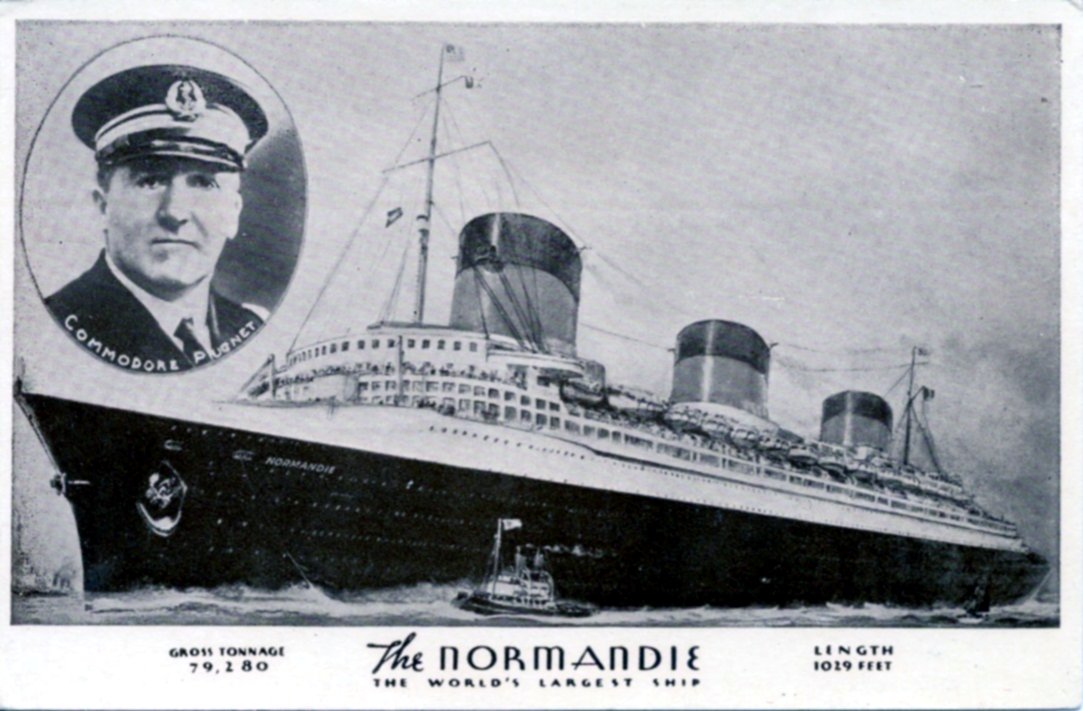
The 83,423 ton SS Normandie, one of the most beautiful ships ever to grace the sea and was the first ship of over 1000 feet long. She was taken over by the US Navy after the French surrender to the Germans. She was renamed was renamed USS Lafayette and while undergoing conversion to a troopship in New York on burned and capsized on the 9-10 February 1942.

SS Normandie/USS Lafayette sunk 

Costa Concordia now lies a few hundred yards off Giglio Island and could either break up or sink into deeper water before she can be salvaged.

All of these events were tragic in their own way be they in war or peace.  Some claimed vast numbers of lives while others resulted in the loss of the most significant ships of their day.  The Costa Concordia is the largest liner ever to go down and things being what they are may not be the last.  Her loss was avoidable by all accounts and hopefully will result in owners, captains and governments doing more to ensure the safety of all that sail the high seas.

For those in peril on the sea….

Peace

Padre Steve+

4 Comments

Filed under History, Navy Ships, News and current events