Tag Archives: tbi

Monday Musings: The War at Home

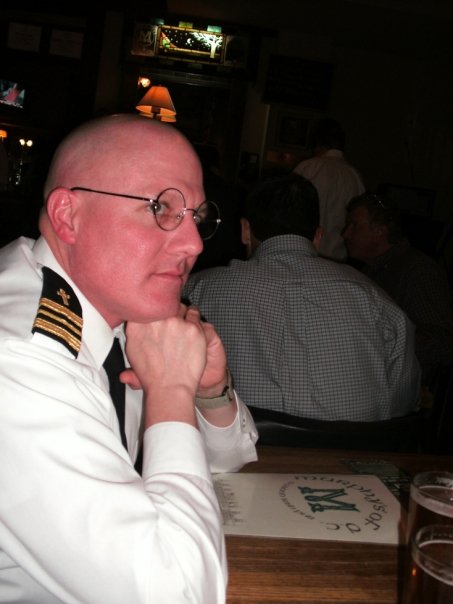
me contemplative

Last week was quite challenging at work with sequester and other things going on. Needless to say I was busy but it was at the same time quite rewarding, though not without pain of seeing a number of people that I know, respect, care for and even love go through their own various hell on earth. That I guess is part of ministry, being connected to people in good times and in bad and even when you have no answers, can provide no healing or effectively change their situation. All I could do in each case was to be there for them, with them and where possible provide assistance however limited.

The events of the week coupled with my own impending transfer to a new duty assignment have left me even more introspective than usual. I have been thinking about those times in my life where things were happening that I had little control of, or where maybe even my my choices or decisions brought about difficult times.

I began to think about the time just before I reported to my current billet. I was still struggling with PTSD and though faith had returned it was still quite fragile. I was selected for promotion on the 22nd of June, my dad died of complications of Alzheimer’s Disease on the 23rd, we had his memorial in California on the 26th and the day before I returned to Virginia I was told that I was coming to Camp LeJeune and that I had no choice in the matter. Promotion sometimes brings unexpected change.

At the time I really didn’t want to come. I wanted to finish my last year at the old billet and move on to a ship or possibly something that would get me to Afghanistan, where I believed that I would be “back in the fight.” Instead I went from one hospital serving as a staff chaplain to another serving as the director of Pastoral Care. It was a move up, but not the one that I wanted.

However I was in the front lines, just in a different way. Camp LeJeune and the Marines and Sailors who serve aboard it has been part of the war since the beginning. We have many wounded warriors, men and women, wounded in mind, body and spirit. To see the young men and women with prosthetic limbs, walking in pain with canes or crutches, others with facial disfigurement, blindness, massive scars from burns is humbling. To see these young men and women wearing the Purple Heart Medal, or awards with a “V” device for valor in combat action is truly humbling. To see others suffering in mind and spirit, many struggling with PTSD, TBI, and dealing with various forms of depression, despair and sometimes succumbing to alcohol or drug abuse, including prescription pain medications for chronic pain and even attempting or completing suicide has shown me that the effects of war extend far beyond the battlefield and that this war will go on far longer than the wars in Iraq or Afghanistan.

Major General Smedley Butler wrote in 1932:

“But the soldier pays the biggest part of this bill.

If you don’t believe this, visit the American cemeteries on the battlefields abroad. Or visit  any of the veterans’ hospitals in the United States….I have visited eighteen government hospitals for veterans. In them are about 50,000 destroyed men- men who were the pick of the nation eighteen years ago. The very able chief surgeon at the government hospital in Milwaukee, where there are 3,800 of the living dead, told me that mortality among veterans is three times as great as among those who stayed home.” 

Yes this will be with us a very long time.

In a sense I was again in the front lines, this time seeing a part of war that will need to be addressed for a very long time. It has made me much more sensitive to the victims of war and suspicious of people who have no “skin in the game” who constantly advocate war as first response. This will be with me and influence my life and ministry for the rest of my life even after I retire from the Navy in a few years.

I am down to a few weeks left in this assignment before I go to teach mid-grade and senior officers going on to important Joint billets, men and women who have been likewise in the fight for the past dozen years and many of whom will rise to senior leadership before their careers are over. It is a once in a lifetime opportunity. I hope to make the most of it.

Anyway, I have an earlier than normal day tomorrow I shall close for the night.

Until tomorrow,

Peace

Padre Steve+

1 Comment

Filed under iraq,afghanistan, leadership, Military, ministry, Pastoral Care, PTSD, Tour in Iraq

A Memorial Service as Tragedy Strikes Camp Lejeune on the 10th Anniversary of the Beginning of the Iraq War

9-11b

“God didn’t put us here for that pat on the back. He created us so he could be here himself. So he could exist in the lives of those he created, in his image.” Chaplain (Captain) Fr Francis Mulcahy M*A*S*H 

The past week has been difficult at Camp LeJeune. We lost a sailor, a hospital corpsman who died by his own hand last Monday. He was a veteran of Afghanistan and his death came as a surprise to his friends, family and shipmates. Today we conducted his memorial service. It was a full house. His family travelled to be here and his friends, those that served with him while he was assigned to the Marines as well as his current shipmates were there in abundance.

It was a time to grieve. The young man was beloved by his friends, respected and cared for. However something that none of us will ever know or understand overwhelmed him. It may have been the trauma of war, maybe something else, but he maintained a facade that kept his friends, family and shipmates away from whatever despair drove him to take his life.

It was a time for all of us to grieve. It was as William Shakespeare wrote in McBeth a time to “Give sorrow words; the grief that does not speak knits up the o’er wrought heart and bids it break.”

But even as we grieved the news filtered to the base that 7 Marines assigned to the Second Marine Division were killed, and a number of others injured when a mishap occurred where they were training in Nevada. Evidently either a mortar round either exploded in the tube or as it was being handled during a live fire exercise. They join the thousands of men and women who have died or been wounded in preparation for, the conduct of or the aftermath of their service in Iraq or Afghanistan. The death of each one leaves a void in the heart of a loved one, friend or shipmate.

Ergin-Osman1

Staff Sergeant Ergin Osman KIA Afghanistan

I have lost friends and shipmates in all phases of both wars and their aftermath. Some have died in combat, others while supporting combat operations of natural causes or accidents, some have committed suicide, including a Priest and Chaplain who served in both Vietnam and Iraq. Still countless others endure injuries or illnesses that will eventually kill them.

Likewise there are far too many more who have sustained terrible injuries to their minds, bodies and spirits that time will never heal. The young men and women that I see every day, those with the physical wounds of war and those with the unseen but sometimes even more disabling injuries such as PTSD, Traumatic Brain Injury or Moral Injury remain in the fight, sometimes with the sole mission of recover or remaining alive.

saddam0978

Ten years after the war in Iraq began and twelve and a half years after 9-11 and the invasion of Afghanistan the costs continue to build in lives and treasure. In Iraq almost 4500 American and over 300 other coalition casualties, more than 500 contractors and nearly 10,000 Iraqi Soldiers and Police and countless thousands of Iraqi civilians have died. US wounded alone number almost 35,000 in Iraq. In Afghanistan there are over 2100 US dead and about 1100 NATO and Coalition dead, hundreds of contractors, and thousands of Afghans with over 17,000 more American military wounded. Every day nearly 20 veterans take their lives while thousands of others struggle with physical, psychological and spiritual wounds of war, wounds that don’t heal even as they find that they no longer fit in the country that went shopping when they went to war. The costs of both wars now are building into trillions of dollars, costs that will continue to grow even after the wars wind down.

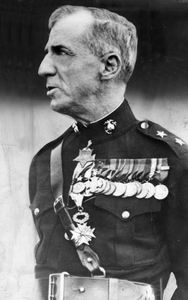
Butler-medals

Two time Congressional Medal of Honor Winner Major General Smedley Butler, US Marine Corps wrote:

“What is the cost of war? what is the bill? Major General Smedley Butler wrote: “This bill renders a horrible accounting. Newly placed gravestones. Mangled bodies. Shattered minds. Broken hearts and homes. Economic instability. Depression and all of its attendant miseries. Back -breaking taxation for generations and generations. For a great many years as a soldier I had a suspicion that war was a racket; not only until I retired to civilian life did I fully realize it….” (See War is a Racket: Remembering Major General Smedley Butler USMC and Why He Matters

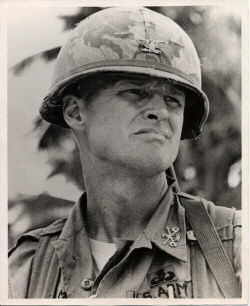
23_QU_18_d_HM_012ps

Likewise Lieutenant General (US Army Retired) Hal Moore, who is immortalized in the film We Were Soldiers and book We Were Soldiers Once…and Young told West Point Cadets in 2005:

The war in Iraq, I said, is not worth the life of even one American soldier. As for Secretary Rumsfeld, I told them, I never thought I would live long enough to see someone chosen to preside over the Pentagon who made Vietnam-era Defense Secretary Robert McNamara look good by comparison. The cadets sat in stunned silence; their professors were astonished. Some of these cadets would be leading young soldiers in combat in a matter of a few months. They deserved a straight answer.

The expensive lessons learned in Vietnam have been forgotten and a new generation of young American soldiers and Marines are paying the price today, following the orders of civilian political leaders as they are sworn to do. The soldiers and those who lead them will never fail to do their duty. They never have in our history. This is their burden. But there is another duty, another burden, that rests squarely on the shoulders of the American people. They should, by their vote, always choose a commander in chief who is wise, well read in history, thoughtful, and slow-exceedingly slow-to draw the sword and send young men and women out to fight and die for their country. We should not choose for so powerful an office someone who merely looks good on a television screen, speaks and thinks in sixty-second sound bites, and is adept at raising money for a campaign.

If we can’t get that part right then there will never be an end to the insanity that is war and the unending suffering that follows in war’s wake-and we must get it right if we are to survive and prosper as free Americans in this land a million Americans gave their lives to protect and defend.”

Needless to say, Moore, a West Point graduate has not been asked back.

n671902058_1153828_4309

Thousands of young Americans, as well as NATO or other Allied nation soldiers, including Iraqi soldiers that I knew and Afghans that I have not worked with have died or been mangled by these wars. Yet too many Americans, Europeans and others that have sent young men and women to these wars have no stake in the game.  Most people continue with the mundane aspects of peacetime life while their political, religious and business leaders plot even more war. Syria, Mali, North Korea, Iran…where will it end?

Today we mourned a shipmate and friend at Camp LeJeune even as we wait to see who else that we know have been killed or injured in this latest training accident. I was honored to be a part of the memorial and happy to be of help to the families and friends of my sailor. At the same time I too grieve and wonder just how many more will have to die before the madness ends.

I left the base after the ceremony, and saw the massed trucks of the local and national news networks parked outside the gate like vultures. When I got home I hugged my dog Molly, I love that little dog, she has helped save my life after my time in Iraq. I then went for a four mile run on the beach and then had a couple of beers with my dinner while at the bar with my friends at my local watering hole.

father

The old regulars there have nicknamed me “Father Mulcahy” a name that some people at the hospital have also given me. Maybe it is that I ear round steel rimmed glasses. Maybe it is because I will join in the occasional poker game , football, basketball or NASCAR pool, which by the way I won the NASCAR pool this week. Or maybe it is just because they didn’t know I was a Chaplain or Priest until a mutual friend and co-worker told one of them. Until then I was just Steve, the guy that wore the Orioles and Giants baseball gear. Now I have become their Priest and Chaplain, funny how that works. Regardless, it is a nickname that I cherish, because when I was growing up Fr Mulcahy symbolized so much of what I thought was good in a Priest and Chaplain. The writers of M*A*S*H made him very human. But I digress…

As we mourned today I was reminded of something that Helen Keller said, something that I think no matter what any of us grieve is true. “We bereaved are not alone. We belong to the largest company in all the world–the company of those who have known suffering.”

Pray for me a sinner.

Peace

Padre Steve+

Leave a comment

Filed under faith, iraq,afghanistan, Military, Pastoral Care, philosophy, PTSD

Modern Baseball Magic: Chin Music by Lee Edelstein Padre Steve’s Review for TLC Book Tours

ChinMusic-cvr-thumb


Chin Music, Lee Edelstein Sela House Publishers Boca Raton Florida 2012

“I’ll promise to go easier on drinking and to get to bed earlier, but not for you, fifty thousand dollars, or two-hundred and fifty thousand dollars will I give up women. They’re too much fun.” Babe Ruth

I don’t read much in the way of fiction but when I do there is a good chance it has something to do with baseball. In fact someday I hope to publish my own baseball fiction fantasy novel someday but I digress….

I guess that it is fitting that I am watching the Semi-Final game of the World Baseball Classic between the Netherlands and the Dominican Republic on television and that my brother Jeff and nephew Nate are in attendance at AT&T Park as I write this tonight. Baseball is a big part of my life as anyone that is a regular reader of this site knows.

Chin Music by Lee Edelstein is actually the first work of fiction of any genre that I have reviewed. Thus I found that reviewing it was a different task than biographic, historic or policy books that I have done in the past.  I write about baseball a lot and do a lot of reading regarding baseball history. To me baseball is something of a religion. To quote the irrepressible Annie Savoy (Susan Saradon) in Bull Durham “the only church that truly feeds the soul, day in, day out, is the Church of Baseball.”

It is hard to compare this book to other great works of baseball fiction such as W P Kinsella’s Shoeless Joe Comes to Iowa, which became the Kevin Costner film Field of Dreams or his less known but perhaps more metaphysically interesting The Iowa Baseball Confederacy; Bernard Malamud’s The Natural or Michael Shaara’s Pulitzer Prize winning novel The Perfect Game which became the Kevin Costner film For the Love of the Game.

Those books are all classics in their own right; Edelstein’s work has the potential to become a classic in its own right. Now days a book becoming a baseball classic may be harder than in previous times. It is sad to sad but Baseball is no longer America’s game. Baseball is timeless but somehow it seems that for many Americans the sport is neither violent or “fast” enough to warrant their attention. The long season and intricacies of the game seem beyond a society addicted to speed, violence and instant gratification. To me that is sad, but this book though a modern look at baseball fiction and fantasy reaches back to a time when it was the dream of almost every American boy to be a professional Baseball player.

Edelstein weaves together the stories of the legendary Babe Ruth, a notorious drunk and womanizer and the Buck family over a period of 85 years.

It is a story that begins in St Petersburg Florida in 1926 when a young woman becomes a barber and ends up with one of the most famous men in America as a customer. The relationship, without concludes in a hotel room, the only records of which are the young woman’s diary, a couple of pictures of her with the Babe in the barber shop and a fair amount of unique and highly valuable baseball memorabilia.

The woman, turns out to be the great grandmother of a gifted but underperforming young high school baseball player named Ryan Buck. The book begins with a motor vehicle accident in which Ryan’s father dies, his brother loses a leg and he suffers what we understand as a Traumatic Brain Injury. Ryan suffers from survivor’s guilt and does not live up to his full potential. His mother, now a working mom and widow embarks to sell her grandmother’s Babe Ruth memorabilia at a baseball card show to help pay the bills and to pay for the costs of Ryan’s brother Michael’s prosthetic leg replacements.

Now I am well acquainted with baseball card shows and memorabilia. My house, much to the chagrin of my wife Judy is filled with objects, none as valuable as original Babe Ruth merchandise portrayed in the book, but for me just as valuable if for nothing else because of my love for the game.

The story that Edelstein paints is fascinating and I do not want to give away too many spoilers because unlike the biographical and historical works I have previously reviewed my audience does not know the ending. As such I will limit the discussion of the plot. I will simply note that it deals with a young man’s miraculous climb from high school to the Major Leagues and reconnection with his late father, the healing of the soul of a woman who has lost her husband who has seen the struggles of her children and held on to the hopes of her late grandmother; a woman considered by her mother a tramp and whore. It includes their interaction with an elderly widower who saves the mother from a bad deal at the card show which leads to the discovery of her grandmother’s diary and other items that lead to an interesting search, not just for memorabilia but also for a family heritage. If you don’t get my drift look back at the Babe Ruth quote that begins this review.

Edelstein did what I did not think possible. He got me interested in a fictional work about baseball that was not already a classic. It grew on me as I read it and even though I began to anticipate the ending about three quarters of the way through I had to keep reading and in doing so was captivated by the story.  No it is not Shoeless Joe, The Perfect Game, or The Natural. Those books stand on their own as classics, but Chin Music has the potential to become a baseball classic for a new generation. It is a story of redemption, healing and hope, something that among all sports that baseball seems to embody. As Walt Whitman said:

“I see great things in baseball.  It’s our game – the American game.  It will take our people out-of-doors, fill them with oxygen, give them a larger physical stoicism.  Tend to relieve us from being a nervous, dyspeptic set.  Repair these losses, and be a blessing to us.”

tlc-tour-host

I hope that it does and hope that in reading it people will regain their love for what is rightly called “America’s game.” I highly recommend Chin Music by Lee Edelstein to my readers.

Peace

Padre Steve+

3 Comments

Filed under Baseball, books and literature

Thoughts after Springing Forward: A Symposia, Time with Family and Miscellaneous Thoughts

602843_10151494689514490_2075182584_n

Sprung forward

Last night most of us that observe Daylight Savings Time “sprang forward” losing an our of sleep but gaining added daylight with which to enjoy life. As usual I was “one of us” and though it was my last night home following a week at a Navy Medicine Chaplain Training Symposia, which happened to be where my wife is, I did get some sleep.

The week was interesting because for the past two and a half years I have been stationed in Camp LeJeune North Carolina while my wife has been in Virginia Beach Virginia. So the week was kind of like one of those weird make up baseball games where the visiting team, which I was got to be the home time, or more fitting the home team playing as the visiting team.

A Symposia

The training was well worth it and featured speakers from both the Pastoral Care and Psychological disciplines who spoke on how Chaplains work as part of the interdisciplinary team in health care, mental health and other aspects of caring for wounded warriors. One thing that was nice to see that the Navy Hospital that I serve at is on the cutting edge of much of what was discussed and that what the speakers discussed was not really news to me. Most of that is because I work with a wonderful team of Physicians, Chaplains, Mental Health Professionals and Pastoral Counselors who are not threatened by each other and who work together for the good of those that we serve. We are not perfect, we are all still learning; I guess that is why they call it “practicing” medicine but we are constantly moving forward. For me it was nice to see just how far along we are compared to other military, VA and civilian health care and mental health care services.

Family

The week also allowed me to spend time with Judy and both of our dogs. For those that have not experienced military life, it is not only deployments where you are apart but quite often due to health, family or professional concerns military personnel are forced to serve in locations away from their families, sometimes after deployments and injury that affect their family relationships.

Like many, if not most returning veterans, especially those suffering from PTSD or TBI injuries our relationship suffered and there were times that we wondered if our marriage would survive. I can say now that despite the fact that we are still apart that we are enjoying our life together again. Our times together, mostly limited to long weekend or unusual situations like the past week are becoming sweet again, times that we both look forward to whenever they are possible. It will be about two and a half weeks before we are together again when I take a bit of leave in conjunction with the Easter Holiday to celebrate my birthday with her.

While we were together we were able to spend a lot of time together and saw the new film The Great and Powerful Oz and take Judy to her first hockey game watching the Norfolk Admirals defeat the Hershey Bears by a score of 4-1 in an American Hockey League game at Norfolk’s Scope Arena. The sad thing was there were no fights in the hockey game and I missed the bench cleaning brawl between Canada and Mexico in the World Baseball Classic.

dm_130309_wbc_canada_mexico

Miscellaneous Thoughts on Krazy Karzai, North Korea Nukes, Sequester, a Papal Conclave, NASCAR and the World Baseball Classic

Kim and Karzai

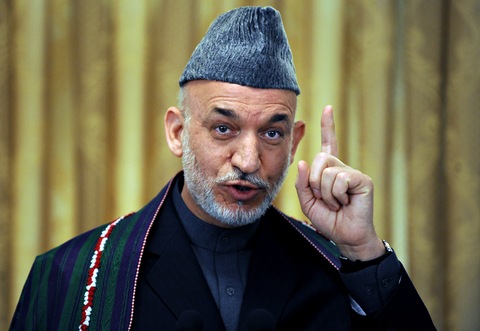
Hamid-Karzai

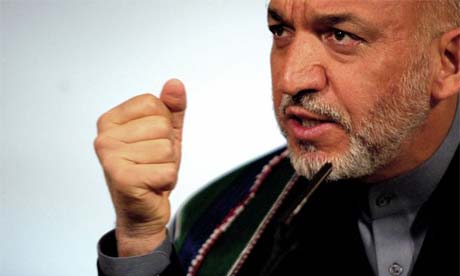
I have been watching with mixed feelings as I have caught bits and pieces of the news. First in my mind has been the continued nutty rantings of Hamid Karzai, President and First Buffoon of Afghanistan. I wonder how long before someone in his own government does away with him.

rodman-kim_2496070b

Then there was Kim Jun Number One and his new nuclear threats against the US and South Korea mixed in with a You-Tube video combining nuclear explosions going off to the tune of We are the World. http://www.youtube.com/watch?v=hK8zQIsMmnk But who can blame him for wanting to destroy us after spend a weekend with Dennis Rodman?

Seaquest-ration 

caot

Amid this the continued Sequester nonsense continues to amaze me. First of all because I thought the series Seaquest DSV was positive stupid but especially when I realize that if it happens that I won’t be getting much time off. This is because my civilian Pastoral Counselors will not be able to keep their place in our on call chaplain duty rotation. The limitations on hours that they can work, overtime and comp time will keep them from doing this, not to  mention that we will have to do what we can to make up for the 32 hours per pay period that they cannot work. If it happens as planned it looks like I will have the after hours and weekend duty pager 15-16 days a month and still work 5 days a week. The same will be true for my other Navy Chaplain. Yes sequester will be a pain in the ass. I challenge anyone in the civilian world to work 50 plus hours a week and be on call 24 hours a day 15-16 days a month dealing with life and death issues on a base heavily impacted by the war with suicides, murders, drug and alcohol abuse and mental illness. So if you are one of those “I hate the government types” please don’t tell me how overpaid I am, or for that matter anyone else dealing with this working for the Federal Government. If you think that then you can blow it out your ass. With all due respect.

Papal Conclave

anglican_darth_vader

484670_10151342912806840_136883395_n

The Cardinals arrive

Of course I have written about the upcoming Conclave to elect the next Pope in Rome so I won’t say much more about it now except to say that if elected I will turn down the job, I have such a hard time keeping white uniforms clean. My money is on one the the old European guys dressed in red to be elected as the next Pope.

NASCAR

daytona-500racing1

Then there are sports. Living in North Carolina is starting to wear me down. I am getting interested in NASCAR and am now doing strange things like read about the technical specs of the cars and the types of tracks. I think that part of this is because I think that Danica Patrick is hot, something that I can’t say about any of the men racing the other cars.

Baseball

WBC13_PRIMARY_LOGO_H

I have also gotten a chance to follow more baseball this week with Spring Training and the World Baseball Classic going on. What is nice is finally to have baseball on TV again. Tonight I am watching Puerto Rico play the Dominican Republic following the victory of the United States over Canada in their elimination game. The really cool thing about the game I am watching now is to see how much energy the fans of the Puerto Ricans and Dominicans bring to the game. It makes it a joy to watch.

Site Notes 

I have done some updates to a number of the pages on this site and added pages titled Baseball and Life, Shipmates Veterans and Friends and TLC Book Tour Reviews as well as the addition of several new links. 

Coming this Week

This week, Lord willing and the creek don’t rise I expect to do some baseball writing, and write about the Conclave and the new Pope. whoever he may be. Tomorrow I will publish a book review for TLC Book Tours on Cecil Williams and Janice Mirikitani’s memoir Beyond the Possible about Glide Memorial United Methodist Church in San Francisco. Of course I will also write about other events as they break or others as I inspired.

Have a great week.

Peace

Padre Steve+


Leave a comment

Filed under Baseball, healthcare, laws and legislation, Military, News and current events

349: Active Duty Military Suicides Hit New High in 2012

220px-Tom_Lea_-_2000_Yard_Stare

The 2000 Yard Stare by Thomas Lea

The Defense Department released the numbers for what Secretary of Defense Leon Panetta has described as “epidemic” of military suicides. The total of 349 active duty personnel includes 182 Soldiers, 48 Marines, 59 Airmen and 60 Sailors. It does not include Coast Guard personnel. The last statistics for that service showed 5 active duty suicides for 2012 as of mid-August, the service had only seen 6 in 2011.

As of November there were 124 Army Reserve and National Guard suicides not on active duty, 6 Naval Reservists. I have not been able to find the data for Air Force Reserve and National Guard or the Marine Corps Reserve.  The reserve figures are of drilling reservists not of those in the Individual Ready Reserve (inactive reserve) who do not attend drill but have served their obligated active time and can be recalled to active duty until the end of their service obligation.

The Veterans Administration estimates that nearly 6,500 veterans take their lives yearly. The numbers include veterans of all wars not just those of Iraq and Afghanistan nor are they complete because sometimes death certificates do not record a veteran’s service.

It is growing problem that unfortunately will not get any better anytime soon. Part of the issue is that despite service attempts to change the culture there is still a stigma attached to those that seek mental health care. There are other reasons that factor into the equation, deployments, high operational tempo, lack of enough mental health care providers to meet the demands as well as the effects of combat stress injuries, PTSD,

Traumatic Brain Injury as well as what is now called “moral injury. One definition of Moral Injury “the lasting psychological, biological, spiritual, behavioral, and social impact of perpetrating, failing to prevent, or bearing witness to acts that transgress deeply held moral beliefs and expectations.” 

Marine Corps Major General Smedley Butler who was awarded the Congressional Medal of Honor twice wrote a moving of those afflicted with what we now call Moral Injury after World War One:  “Boys with a normal viewpoint were taken out of the fields and offices and factories and classrooms and put into the ranks. They were remolded; they were made over; they were made to “about face”; to regard murder as the order of the day. They were put shoulder to shoulder and through mass psychology, they were entirely changed. We used them for a couple of years and trained them to think of nothing but killing and being killed.

The effects are as chilling now as they were in Butler’s day when he wrote:

“These have already been mentally destroyed. These boys don’t even look like human beings. Oh, the looks on their faces! Physically they are in good shape but mentally they are gone….There are thousands and thousands of these cases and more and more are coming in all the time…”

I know. I see it every day but I see it in a number of ways. I see it in the faces of the Marines and Sailors going back and forth between Afghanistan, Iraq and now North Africa and also among those in the medical, mental health and chaplain services that care for these men and women.

Provider burnout, including suicide is a problem. Just recently a former Army Psychologist who had served in Iraq during the surge and had been treating veterans in the VA committed suicide. Less than two years ago, this man was the lead author of a article that dealt with burnout and suicide of caregivers. Peter Linnerooth who was awarded the Bronze Star in Iraq committed suicide on January 2nd 2013. His widow, also a mental health professional commented:

“He was really, really suffering…And it didn’t matter that he was a mental health professional, and it didn’t matter that I was a mental health professional. I couldn’t help him, and he couldn’t help himself.”

Linnerooth’s faculty advisor commented: “When he went in and when he came out, it was shockingly different…”

That was a problem then and it is a problem now. The thing is that these active duty 349 men and women, as well as the others I have mentioned where the numbers are not well defined are not just numbers. They are people. Real men and women, sons and daughters, husbands and wives, fathers and mothers. Their deaths at their own hand are more than the combat deaths in Afghanistan this year.

Dr Larry Shellito the Commissioner for Veterans Affairs in Minnesota said something that is dead on:

“Oftentimes, you have to look at the people that surround the people with (PTSD) to make sure they are also OK, because it’s got a multiple impact…It’s not just the individual who suffers, it’s the people who care for him.”

I see it all the time. Butler’s description of the men who served in the trenches that were in veterans hospitals and facilities nearly 20 years after the war ended are as true today as they were then. Ask any caregiver in the service or in the VA system and they will tell you how overwhelming this epidemic is.

It cannot be wished away and assuaged by people simply doing the bumper sticker “I support the troops” thing without looking deeply at what is causing this and investing in the lives of these men and women before their lives are completely destroyed. It also means that politicians and their think tank and media advisors who constantly beat the drums of war, without fully funding it and without caring for those that are sent to fight them must be held accountable by voters.

I know how this is on a real live up close personal basis as a chaplain. I went to Iraq and came back changed. The PTSD, depression, anxiety and hopelessness that I felt were overwhelming. Thankfully I am doing a lot better and I did get the therapy and assistance needed, but it took a while to get it and thankfully at my present command I had people that I worked with help me get the help that I needed. But I have been back almost five years. A lot of that time was spent in the wilderness wondering if there was hope, if I would ever get better and sometimes wondering if God even existed and if he did, did he care. During the whole time I continued to work with and care for others like me. Their injury also impacted me in ways that I could not imagine before I was afflicted.

I care about this issue, because it affects those that I serve as well as their families, communities and those that serve with them. 349 active duty suicides. Think about it. One is too many. 349 is inexcusable and that does not count all those that we cannot count because we don’t know the numbers or the full story.

349: Keep that number in your mind and do something about it.

Peace

Padre Steve+

4 Comments

Filed under healthcare, Military, Pastoral Care, PTSD

The Uncomfortable Truth about the Rise in Military Suicides

The truth can be uncomfortable and truthfully most people don’t like to deal with uncomfortable things.  Suicide is one of those things that tend to make us uncomfortable.  Occasionally someone will demand the truth and when they finally get, the truth becomes a very uncomfortable thing and frankly many people cannot handle the truth. It reminds me of the exchange in the movie A Few Good Men where Colonel Jessup played by Jack Nicholson tells Lieutenant Dan Caffey played by the Tom Cruise: “You want the truth, you can’t handle the truth!”

The United States Military has been struggling with an upsurge of suicides and suicide attempts among its personnel since 2005.  Before that point military suicide rates were comparable or lower than comparable civilian populations. That is no longer the case, the military suicide rate is now higher than the civilian rate by a statistically significant percent.

The Associated Press reported a Defense Department report noting that in the first 155 days of 2012 that 154 active duty service members had killed themselves. That number is going up, I know of at least two at my base that have occurred since this report was released including a murder suicide committed by a Staff Sergeant who had recently returned from Afghanistan.

The military has tried to stem the tide. It has bolstered its mental health services and suicide prevention programs but the numbers despite leveling out in 2010 and 2011 have been rising. These numbers are reaching staggering proportions in the active duty, reserve and discharged veteran ranks.

A Veteran’s Administration Crisis line reported that in in 2011 it had received over 164,000 calls last year. It reported 6760 rescues and noted that 2300 self reported Active Duty personnel had called their hotline as well as over 12000 calls from family members or friends of veterans regarding their loved ones.

The rise in suicides particularly as the mission in Iraq has ended and Afghanistan is beginning to draw down has surprised many both inside and outside the military. While many of the men and women who committed or   attempted suicide even more have done so who have not deployed. People are speculating about the reasons for this and we know a lot of the answers and underlying causes.

First and foremost is the stress put on the force by 10 years of non-stop deployments to combat zones and fighting two major insurgencies at the same time and the resultant effects: Soldiers, Sailors, Marines and Airmen killed and wounded, combat stress injuries, PTSD, TBI, moral injury, family issues, divorce, infidelity, financial problems, domestic violence, sexual assault, alcoholism and drug abuse. As a Chaplain I know many young men and women who grew up in Christian homes and had what they described as a deep faith who after war have lost their faith. I see an increasing number of these young men and women.

An additional factor is the fact that we are entering a period of time where Soldiers and Marines and to a lesser degree Sailors and Airmen are being threatened with a massive drawdown in numbers.  This will force many to leave the military in the midst of a long term economic downturn that could get worse based on the precarious economy of the Eurozone which threatens the US economy.

There is the perception on the part of many in the military that they fight the war alone. There is a real lack of understanding in the civilian population as a whole about what is involved in going to war. Since only about one half of one percent of the American population is in the military at any given time this should not be a surprise. Finally there is a widely held belief among those that fight the war, no matter what sacrifices they make in Afghanistan that it will not matter in the end, that the war cannot be won. No one wants to admit this but the fact of the matter is that it is true because neither political reads history.

However as important as all of those factors are they are now joined by another factor that was not a factor in the early part of the war. The bond of unit cohesion which was a positive factor is eroding. Prior to the war and during the first few years of it unit cohesion was strengthened by seasoned and mature Staff NCOs, Petty Officers. These men and women had risen through the ranks and were seasoned by years of training, well rounded careers, combat experience and deployments. Many had some amount of college education. They dealt with their own stress well and were excellent leaders and mentors to junior personnel and the young officers that they helped to train.

I was at a training conference in March attended by a couple of hundred Chaplains and Mental Health Professionals. One of the seminars dealt with a program to train the young NCOs and Petty Officers to be first responders who could care for their Marines and Sailors. During the question and answer portion I decided to bring this up. I said that “the program would be great if we had the same force that we started the war with and that the men and women that we were depending on to do this job were themselves among the injured.” I said that the force was “hardened but brittle.” A number of people including the Subject Matter Expert agreed with me, others, mostly those who were relatively new to the military looked at me like I had gone off the reservation. I brought this up at another conference this month with a similar response.

That seasoned core is gone. In their place are younger, combat hardened veterans. Unfortunately many of these young men and women, charged with leading and training the new Soldiers, Marines, Sailors and Airmen are damaged goods themselves. They have been back and forth to war so many times that they bear unspeakable burdens. Many suffer from unreported PTSD, struggle with alcoholism and have pressing personal or family problems. Some of them take out these issues on the new troops, something that I think is directly related to the suicide epidemic and other problems. The attitudes of some have become poisonous to good order and discipline and actually compromise the trust of of service members to the chain of command. That trust was essential and helped get the military through the first part of this war but I see it being eroded on a daily basis.

A glaring example of this comes not from a NCO but a Army General, the Commander of the 1st Armored Division at Fort Bliss Texas, Major General Dana Pittard at Fort Bliss Texas. General Pittard wrote on his blog: “I am personally fed up with soldiers who are choosing to take their own lives so that others can clean up their mess. Be an adult, act like an adult, and deal with your real-life problems like the rest of us.”  His attitude serves as a reminder that for many that some leaders see those suffering from PTSD, TBI or other psychological conditions as ‘broken.” Ask any Marine, Soldier, Sailor or Airmen what what it is to be labeled as “broken.” There is still a stigma attached to mental illness, depression, PTSD, suicide and being “broken” that is not helped by statements of leaders like General Pittard.

As a result the resiliency of the force is at stake. Anyone who served in the years following the Vietnam War and the beginning of the all volunteer military can see similarities then and now.  We have not reached the point where the force is broken but the situation will not show much improvement until some point of stability is reached.

I cannot state with certainty the actual proportions of this factor, just my own observations that come from counseling and listening to Marines and Sailors every day. I’m sure that the same is true in the Army where judging by what I read it seems to be worse. The Army suicide rates are the highest in the military.

What has to be done is bigger than the military itself can do. There has to be a national commitment to both finding a way to lessen the stress on the force and to do more than offer platitudes about “supporting the troops.” The truth is that as a nation we refused to pay the cost of these wars and tried to fight them on the cheap. Political leaders after September 11th 2001 told people to “go back to normal” or “go shopping” and did not call the nation to war. The nation was untouched, no one paid a dime in extra taxes and no one was forced to join the military. The burden was placed squarely on those who volunteered. That burden has not been removed and unless the American people and Congress do more than telling the military to “do more with less” while lining the pockets of defense contractors who cannot seem to produce weapons systems without major production problems, cost overruns that are never produced in the promised numbers as well as the war profiteers of the military industrial complex, the lobbyists and Wall Street.

Of course that is just my opinion. It is an opinion formed by serving over 30 years in the military and having gone to war myself. It is an opinion of someone that has been involved with suicide prevention in the military for close to 20 years. It is an opinion based on conversations that I have every day with the young Marines and Sailors that I encounter. It is quietly shared by many leaders.

I have seen what has happened first hand and if anyone actually wants to do something to change the suicide epidemic they need to look at the whole problem. It is a national problem that needs a national solution. As a nation we have burdened a comparatively small part of or population with fighting our wars without a true national commitment to either winning the wars or supporting them.

Military Medicine, Mental Health Services and Chaplains are performing heroic work to care for our troops. Many leaders “get it” and are trying to build a culture where those suffering can get help without suffering the stigma and pain of alienation that comes from being “broken.” Yet despite increases in funding, numbers and emphasis the problem continues to escalate. That is the truth and it will not significantly change until the causes that I have listed are addressed, not simply by the military but the nation.

God help us.

Peace

Padre Steve+

2 Comments

Filed under History, iraq,afghanistan, Military, national security, News and current events, Pastoral Care

Failing to Learn from History: The Lesson of the First Anglo-Afghan War and Questions about the US-NATO Campaign

“The Americans in Afghanistan are Demons. They claim they burned Korans by mistake, but really those were “Satanic acts that will never be forgiven by apologies.” Afghanistan President Hamid Karzai

It seems that we in the West seldom learn from history nor do certain Afghan leaders like Hamid Karzai. The situation in Afghanistan has taken on a more ominous tone as the situation continues to spiral downward with Afghan President Hamid Karzai’s demand for the US and NATO to redeploy their troops to large bases and leave the countryside to Afghan control. Even more ominously he said that the Afghan-NATO relationship was “at the end of the rope.”  Karzai alluded that he did not believe that US and NATO account of the killing of 16 Afghan villagers near Kandahar.

This should come as no surprise to any observer of Afghanistan or anyone familiar with the relationship of Afghan leaders with western occupiers.  Karzai knows that the US-NATO era is coming to an end and even though he rules only because he is buttressed by western military power he is now trying to ensure his political and literal survival when we leave be it in 2013 or 2014.  The one thing that Karzai needs to keep in mind is that like his predecessors who turned on their western supporters be they British or Soviet he will be dangling from the end of the rope when we leave. He and his corrupt band of thieves who have alienated and plundered their own people will not survive their wrath once the protective cordon of American and NATO troops is withdrawn.

Karzai’s anti-American stance is further reinforced by the growing number of killings of US and NATO troops by Afghan police, soldiers and other personnel. Even this week an attack was made by an interpreter who drove a stolen pickup truck at a Marine Corps General and his British Brigadier assistant commander at Kandahar while awaiting the arrival of Secretary of Defense Panetta. Likewise the death of a Marine in February was officially announced as being at the hand of an Afghan soldier. The death occurred before the Afghan reaction to the burning of the Koran and was the 7th NATO service member who died at the hands of Afghan forces in February.

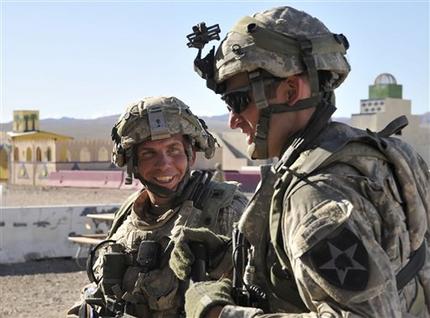
Staff Sergeant Robert Bales at the National Training Center in 2011 (US Army/DoD Photo)

The final nail in the coffin for the campaign occurred last week when Staff Sergeant Robert Bales for unknown reasons went on a shooting rampage killing 16 Afghan civilians including 9 children when they were asleep in their homes.  Bales actions whether attributable to a psychological breakdown, being drunk or if he was simply a cold blooded killer have effectively destroyed any chance of the United States and NATO recovering the situation in Afghanistan. It is already said that Bales attorney plans to use the case to also put the US war effort on trial. Since Bales reportedly has a Traumatic Brain Injury or TBI and possibly PTSD who allegedly was told that he would not be deployed again expect that the Army Medical Department and Madigan Army Medical Center will be raked over the coals. Those institutions and the Commanders of Joint-Base Lewis McChord are already being investigated for downgrading PTSD diagnosis to other mental illnesses that do not qualify for medical disability payments.

Staff Sergeant Bales appears to be a man who appeared until this incident to be an honorable and professional soldier with a distinguished combat record. However he had a number of potentially troubling legal and personal situations occur over the past number of years and had not been selected for promotion. How those events play into this and what may have happened to push him over the edge or to unleash an evil in him that no one knew was there will be the subject of much debate in the coming weeks.  None of it will be good for the United States.

At the same time the question will have to be asked how and why a soldier with injuries of PTSD and TBI was deployed as part of a small team supporting Special Forces troops instead of with his own unit even after allegedly being told that he would not redeploy.  That is a question that must be answered.  Why would the Army deploy a soldier with known PTSD and TBI as an Individual Augment with different unit than which he was assigned? In this environment he would not be in a place to have the same camaraderie of being part of his own unit probably suffer much more isolation with the inherent dangers of such a situation. Having served on small bases in Iraq with the small teams of advisors and having worked with Sailors, Soldiers, Marines and Airmen assigned to commands as Individual Augments (IAs) and having been one myself I can say that these assignments are often much more dangerous for those with preexisting trauma.

The result of this latest incident coming on the heels of the burning of the Koran and other religious texts at Bagram Air Base, the release of a You Tube video of a US Marine Scout Sniper team urinating on the corpses of Taliban fighters and the revelation of the “Kill team” in 2010 has for all practical purposes ended any chance of making a successful transition in Afghanistan.

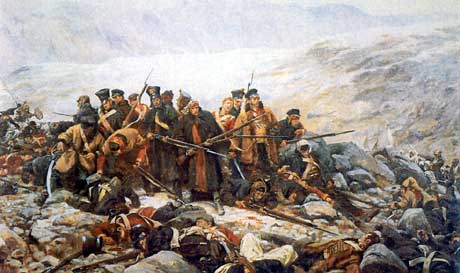
Last Stand of the 44th Regiment of Foot 1842

Afghanistan was supposed to be the “good war” and for a couple of years that is what it was. US forces had taken down the Taliban regime with minimal effort in 2001 and appeared to be well on their way to finishing off Al Qaeda and banishing the Taliban from Afghanistan. However in 2003 the US took its focus off of Afghanistan by invading Iraq. We also had placed our trust in Hamid Karzai to guide Afghanistan into a new and democratic era. Karzai has proven to be much like Sujah Shah Durrani who the British imposed on Afghanistan in 1838 when they could not get Emir Dost Mohammed Khan to do their bidding in trying to keep Russia and Persia from dominating Afghanistan. That was a mistake of epic proportions that led to one of the greatest British military, diplomatic and political disasters of the Empire.

A survivor to the First Anglo-Afghan War Chaplain G.R. Gleig wrote about that war something that may be said about our campaign there in years to come:

“a war begun for no wise purpose, carried on with a strange mixture of rashness and timidity, brought to a close after suffering and disaster, without much glory attached either to the government which directed, or the great body of troops which waged it. Not one benefit, political or military, was acquired with this war. Our eventual evacuation of the country resembled the retreat of an army defeated.” 

We can pray that it doesn’t happen that way. What started as an attempt to find and kill Osama Bin Laden and his Al Qaeda leadership in Afghanistan in October of 2001 has turned into a long term occupation that serves no strategic interest of the United States.  Nearly 100,000 US troops are tied down in a country where they can do little conduct local operations against an intractable enemy to support a corrupt government that the people of Afghanistan loathe.  It is so similar to the British experience that it makes one wonder if anyone has ever read a book about the country before invading it.

Bin Laden is dead and Al Qaeda is still reeling from continued strikes on its leadership. The goal of the war was achieved. Afghanistan is Afghanistan. It will not change and any threats brought by terrorists that may try to use it as a base can be defended so long as we are able and willing to whack a mole whenever they raise their head up, just as we are in the Horn of Africa, Yemen and even Pakistan. That does not require 100,000 tied down in Afghanistan where they are exposed to local threats as well as the possibility of being cut off from supplies should Pakistan or the Russian Federation cut supply lines or should hostilities break out with Iran.

Peace

Padre Steve+

4 Comments

Filed under counterinsurency in afghanistan, Foreign Policy, iraq,afghanistan, Military, national security, News and current events

The Brotherhood: Veterans Day 2013

I am always a bit on the melancholy side on Veterans Day.  This year is no different but is a bit different because for the United States the war in Iraq is over, at least for now while the war in Afghanistan grinds on as we prepare to transition.

For me our wars are more about the incredibly small number of Americans who for the past 12 years have borne the burden of these wars.  They are my brothers and sisters, the 0.45% of Americans that serve in the military.  While this is a terribly low number it is only marginally lower than most of our previous wars.

In fact for most of our history it has always been a small minority of Americans that have fought our wars.  Kind of funny when you think about how much our culture worships militarism. World War II was an anomaly as just over 16.1 million people or 9% of the population served in the military then.  That number while large pales in comparison with percentages of those that served in other nations involved in the Second World War. The reason that I point this out is just to say that as a nation it has always been the few that have borne the cost of war. We are “the few.”

This story shall the good man teach his son;
And Crispin Crispian shall ne’er go by,
From this day to the ending of the world,
But we in it shall be remembered-
We few, we happy few, we band of brothers;
For he to-day that sheds his blood with me
Shall be my brother; be he ne’er so vile,
This day shall gentle his condition;
And gentlemen in England now-a-bed
Shall think themselves accurs’d they were not here,
And hold their manhoods cheap whiles any speaks
That fought with us upon Saint Crispin’s day.

From the Speech of King Henry V at Agincourt in Shakespeare’s “Henry V” 1599

In the midst of the petty politics surrounding the Afghan War so so ponderously and pompously purveyed by politicians and pundits of all strains I feel the need to speak up for that small band of brothers that has served in these wars. They are to steal a phrase applied to a previous generation the “New Greatest Generation” something that I am loathe to apply to much of the population at large.  You see the cost of these wars is finally beginning to sink in, at least the financial cost. The real fact of the matter is that these ill advised wars have harmed us as a military and as a nation, our superpower status which was uncontested before 9-11-2001 is challenged because our military is hollowed out, economy weakened and our moral authority questioned by those wars, war crimes and spy scandals.

I’m not so sure that the human cost factors in for most Americans because the tiny percentage of the population that serve in the wars. The fact is that the volunteer military is an insular community which for the most part is based on bases away from most of the population. We have become a society apart from the society.

We used to have big bases in or near major cities, the New York Naval Yard, the Presidio of San Francisco, Long Beach Naval Shipyard, Fort Devens Massachusetts near Boston, Fort Benjamin Harrison Indiana at Indianapolis.  But after the Cold War they and hundreds of other bases were eliminated and with them a connection to the active duty military.  That is not the fault of the people in the big cities it just happened that way, no the military with a few exceptions is based away from most of the population. As a result people may support the troops but most have no idea what they do, how they live and what they suffer.

In spite of that this many of the new Greatest Generation’s accomplishments will largely go unheralded by history. Unlike the “Greatest Generation” of World War Two they will probably not receive the full honors and accolades due them.  This brotherhood of war who have served in the current War on Terror, Iraq and Afghanistan campaigns have now been serving in a war that is now twice as long as the American involvement in World War Two.  Many, like me have been in this since the beginning and many have made multiple deployments to the combat zones.  And many of us, if not most of us would go again. I know that I would because part of me is still in Iraq; for me this war is still un-won and un-finished.

The battles, Fallujah, Ramadi, Haditha, Mosul, Baghdad, Tal Afar, Marjah, Kandahar, Anaconda, Wanat and thousands of other places significant and insignificant are vivid in the minds of those that were there. Unfortunately for most of their countrymen they might as well be on a different planet.

With no disrespect to the Greatest Generation of World War Two, most who were drafted, all of the current Soldiers, Sailors, Marines, Airmen and Coast Guardsmen volunteered to serve in time of war.

At any given time only about one half of one percent is in uniform.  In the three years and ten months of the Second World War about 16.1 Million Americans served in the military, the vast majority being draftees.  Likewise the current generation has fought the war alone.  The vast bulk of the country has lived in peace untouched by any inconvenience to daily life such as gas and food rationing, requirements to work in war industries and the draft as were citizens in World War Two.

In the Second World War Americans shared the burden which in large part has not occurred in this war.  While many have pitched in to help and volunteered to help veterans and their families the vast majority of people in this country are untouched by the war, not that there is anything wrong with that.  This is simply a comparison of the situation that those who served in World War Two and the present conflicts faced.  So I have to say that our current “Greatest Generation” is only a small part of the generation, as the line in Henry V “we few, we happy few who fought together….”

These Soldiers, Sailors, Marines and Airmen from the United States as well as our Allies who serve alongside of us are my brothers and sisters.  They too are volunteers and represent a miniscule portion of their countries population. I am friends with military personnel from the UK, Canada and Germany who have served in the various combat zones or at sea and met quite a few others from France, the Netherlands and Australia. Of course my Iraqi friends who I served with while with our advisers in Al Anbar province who are not only trying to bring peace and stability back to their country but have to worry about the possibility that their families become the target of terrorists.

There are a number of things that unite us in this relatively small brotherhood.  However, I think that this brotherhood could also be extended to our brothers who fought in Vietnam, French, Vietnamese, Australian, South Korean and American, the French who served in Algeria and the Americans and others that served in Korea.  All of these wars were unpopular. All had little support on the home front and often returning veterans found themselves isolated and their sacrifices ignored or disrespected.  For those Americans who serve in the current wars I can say that at least to this point the public has been much more supportive than they were to our Vietnam brothers, many of who were even disrespected by World War Two vets who had fought in “a real war.”  I cannot count the Gulf War in this list as it was hugely successful and the returning vets were hailed as conquering heroes with ticker tape parades.

Our shared brotherhood includes our scars, physical, psychological, neurological and spiritual.  Those who served on the ground in Iraq and Afghanistan as well as those who served in Vietnam, French Indo-China and Algeria have a common shared experience.  All fought people who didn’t or don’t like foreigners no matter how noble our intentions and who by the way have a long history of outlasting people that they believe to be invaders or occupiers.  We have had to fight wars with no front lines, no major units arrayed against us, but rather asymmetrical threats propagated by creatively devious foes who use low tech easily available technology and a willingness to sacrifice themselves and others to force attempt to kill us.  Thus we have cleverly designed and often quite powerful IEDs or Improvised Explosive Devices which can obliterate a HUMMV.

These threats create a situation where there is no front line and thus where every excursion outside of a FOB (Forward Operating Base) or COP (Coalition Outpost) is automatically a trip into a potential danger zone.  Enemies can infiltrate bases posing as local nationals in either military uniform or as workers, rockets and mortars can be lobbed onto even the largest and most secure bases at any time and any vehicle driving by you on the road could be loaded with explosives and just waiting to blow you up while insurgents with automatic weapons and Anti-Tank Rocket Propelled Grenades (RPGs) have taken down helicopters.  When you have taken fire on the road, in the air and had rockets whiz over your head you this becomes a reality that you never forget.

As a result we many men and women with physical wounds as well as wounds that have damaged the psyche or the soul.  PTSD is very common either from a direct encounter or the continual wear and tear of being in a danger zone wondering if you were to get hit that day every day of a tour.  I have lost count now of people that I know who have mild to severe symptoms of PTSD.  Traumatic Brain injury is another condition men and women attacked by IEDs, mortars and rockets experience. Likewise there are the injuries that shatter the soul.  These are the images of ruined buildings, burned out vehicles, wounded bodies, injured children, refugees and wars desolation that can leave a person’s faith in God, or ideals that he or she believes in weakened or even destroyed.  There are the smells of smoke, death, diesel, garbage and sewage that when encountered far away from the combat zone send us back.

The wars have been costly in lives and treasure.  The “up front” casualty numbers are below; they do not include those with PTSD or mild to moderate TBI. They also do not count those that have died later after their service in VA or other civilian care, those that did not report their injuries and those that have committed suicide.

Iraq                   KIA    US  4483       UK 179    Other  139           Total  4801

Afghanistan     KIA  US  2290         UK 446     Other 659        Total  3395

US Wounded   Iraq  32224      Afghanistan   17674

The financial cost: over 1.2 trillion dollars and counting.

As many idealistic and patriotic military personnel question God, their National Leadership and even themselves because of their experience in Iraq or Afghanistan.  I cannot get the image of a refugee camp on the Iraqi Syrian border full of Palestinian refugees who have nowhere to go; they had been invited to Iraq under Saddam and have been sitting on the border trying to get home for years now.  The Palestinian authority wants nothing to do with them. I cannot smell smoke or hear a helicopter or pass a freshly fertilized field without being reminded of Iraq.

These men and women are my brothers and sisters.   I have seen quite a few of my colleagues at the Naval Medical Center and Naval Hospital deploy and deploy, the medical personnel don’t get much of a break.  These are my friends and I do get concerned for them and pray earnestly for their safe return.  I wish that I could go with them because I know them and have already walked with them through the dark valley of the shadow of death in the Medical Center ICU or the wards and clinics of the Naval Hospital.  We already have a bond that will not be broken.

It is now six years since I served in Iraq and five years since my PTSD crash.  However, I still would do it again in a heartbeat.  There is something about doing the job that you were both trained to do and called to do that makes it so.  Likewise the bonds of friendship and brotherhood with those who you serve are greater than almost any known in the human experience.  Shared danger, suffering and trauma bind soldiers together, even soldiers of different countries and sometimes with enemies.

I remember the conversation that I had with an Iraqi Merchant Marine Captain on a ship that we had apprehended for smuggling oil violating the United Nations sanctions.  The man was a bit older than me, in his early 60s.  He had been educated in Britain and traveled to the US in the 1960s and 1970s. He had the same concerns as any husband and father for his family and had lost his livelihood after Saddam invaded Kuwait in 1990.   He was a gentleman who provided for his crew and went out of his way to cooperate with us.  In our last meeting he said to me: “Someday I hope that like the Americans, British and the German soldiers at the end of the Second World War can meet after the war is over, share a meal and a drink in a bar and be friends.”  That is my hope as well.

In the final episode of the series Band of Brothers there is a scene where one of the American soldiers, Joseph Liebgott who came from a German Jewish family interprets the words of a German General to his men in the prisoner compound.  The words sum up what the Americans had felt about themselves and likewise the bond that all soldiers who serve together in war have in common, if you have seen the episode you know how powerful it is, I ended up crying when I heard it the first time and cannot help but do so now that I have been to the badlands of Al Anbar Province.

“Men, it’s been a long war, it’s been a tough war. You’ve fought bravely, proudly for your country. You’re a special group. You’ve found in one another a bond that exists only in combat, among brothers. You’ve shared foxholes, held each other in dire moments. You’ve seen death and suffered together. I’m proud to have served with each and every one of you. You all deserve long and happy lives in peace.”

As do we.

Peace

Padre Steve+

3 Comments

Filed under History, Military, shipmates and veterans

Reaching the Lost Christian Generation

“God weeps with us so that we may one day laugh with him.” Jürgen Moltmann

Over the past couple of weeks I have been thinking about encounters that I have had with Christians of various denominations who have suffered a crisis in faith or loss of faith due to some kind of trauma in their lives.  These people are the unseen, unheard and ignored part of our religious landscape.  In theUnited Stateswe have a very vibrant religious culture which finds its way into much of everyday life.  In fact listening to most of our Presidential candidates you would think that most are in fact Evangelical Christian preachers.

The fact is that despite the popularity of the mega-church and pop-psychology driven church world directed by “pastors” that function more as CEOs, motivational speakers and authors that churches are losing adherents at an increasing rate.  Many of those that are being lost are those that have suffered silently doing everything that is supposed to fulfill a Christian and make them healthy, wealthy and popular get left in the dust because they don’t “get better.”  I call them the “Lost Christian Generation.” There are many times that I totally empathize with author Anne Rice in saying that she has left Christianity yet still has faith in Christ.  For Rice it was the lack of love shown by the institutional church for people that are marginalized and treated as if they were unredeemable by often well meaning Christians.

For the wounded the church itself becomes their little acre of Hell on earth.  Having known plenty of these people I can say that this phenomenon is one of the more tragic aspects of life.  Those that at one time felt the presence of God in their life only sense emptiness and aloneness.   But most remain in the church for years living in pain thinking that they must be doing something wrong, that maybe they have angered God or that God has abandoned them.  In fact I would challenge my readers that attend church to take a look around the pews and see that person sitting alone, maybe staring into space, maybe with an expression of deep sadness on their face even as people talk and laugh around them.  The problem is most of us have very little situational awareness and don’t see them and of we do feel uncomfortable or inadequate so we leave them hoping that maybe they’ll get their act together or just go away.

I know what it feels like to be marginalized after I came back fromIraqbecause many of my Christian friends seemed, at least in my view to be tied to the absolute hogwash that spews from talk radio hosts and allegedly “Christian” politicians.  I remember having some Christians question my patriotism and even my faith because I disagreed with them regarding certain aspects of the war, despite the fact that I had been on the ground in harm’s way serving with our advisors and Iraqis in Al Anbar province.  The fact that not a clergyman, civilian or military, took time to care for me when I was in a major PTSD meltdown and crisis of faith before I went to Naval Medical Center Portsmouth didn’t seem to matter because a political agenda was given primacy over the simple truths and hard demands of the Gospel.

I went through a period after Iraq where feeling abandoned and isolated from those of a like faith that I was for all practical purposes an agnostic.  That was a really difficult time in my life and if you think that anything sucks try to be a Chaplain when you no longer know if God exists and the only person asking how you are doing with “the Big Guy” is your therapist. I can say without a doubt that it sucks and I know that I am not alone in my feelings.  I have met others whose experience is similar to mine but those that are struggling right now, caught between our faith and the feeling of being abandoned by God and his people because our experience of seeing the human suffering caused by war has shaken us.  That experience changed me enough that my former church told me to leave because I had become “too liberal.”

This “God Forsakenness” sometimes leads those people that are part of the “lost Christian generation” to believe that death appears more comforting than life in the present. For such people, they live “Good Friday” everyday feeling that they are truly God Forsaken.   I write this because I really believe that these often very sensitive and wonderful people are either ignored or not even seen by most of their fellow church members. Likewise I believe that many if not most pastors and priests are either unaware of them, uncomfortable around them or irritated by them because they don’t respond like “normal” people do.   I have found from my own experience returning from Iraq that Easter despite the message of resurrection and hope often triggers a despair of life itself when one no longer senses the presence of God and feels alone against the world, especially in church.

Many times the crisis of faith is caused by prolonged depression, PTSD or other trauma often involving family members, clergy or other trusted authority figures in their lives.  Sometimes the trauma is due to a physical injury, perhaps a near death experience due to an illness, combat or accident and can be neurological as in the case of Traumatic Brain Injury or TBI not something that routine counseling either psychological or pastoral or an anti-depressant medication will correct.  In my case it was PTSD and chronic pain and insomnia which overwhelmed me and along with a crisis of faith triggered such hopelessness that I barely held on for almost two years.

I remember when I first started dealing with this in others while in seminary that I was of the mind that if someone was in the midst of a crisis in faith if they read the Bible more, prayed more and made sure that they were in church that things would work out.  I believed then that somehow with counseling, the right concept of God and involvement in church activities that God would “heal” them.  Call me a heretic but that line of thinking is nice for people experiencing a minor bump in their life but absolutely stupid advice for people who are severely traumatized or clinically depressed and suicidal who no longer perceive the presence of God in their lives.

I cannot condemn those who have lost their faith or are wavering in their faith due to trauma, abuse or other psychological reason. So many people like this have been victimized by family, teachers, clergy other authority figures or physical trauma related to accidents, near death experiences or combat that it is mind numbing.  The fact that I went through a period for the nearly two years where I was pretty much an agnostic praying to believe again because of my PTSD injury incurred in Iraq that felt hopelessly isolated for the first year after my return until I finally reconnected with others and began to feel safe again gives me just a bit of an idea at what these people are going through.  My isolation from Christian community and sense of despair during that time showed me that such a loss of faith is not to be trifled with or papered over with the pretty wallpaper or neat sets of “principles” drawn up in the ivory theological towers by theologians and “pastors” who refuse to deal with the reality of the consequences of a fallen world and their impact on real people.

Sometimes the damage wrought on people makes it nearly impossible to comprehend a God who both cares about them and who is safe to approach.  My experience was due to from my time in Iraq and the trauma of my return.  That time was absolutely frightening.  Church was no longer a comfort and my long established spiritual practices no longer brought peace or a feeling of communion with God. It was so bad that I left a Christmas Eve Mass in 2008 and walked through the dark wondering if God even existed.

For those clergy this is an even deeper wound one in which the very concept and understanding of God becomes skewed in the minds and hearts of the victims.  It becomes worse when church institutions deny or ignore their claims which has been an unfortunate occurrence in many Roman Catholic dioceses around the world, particularly in Europe and North America where new revelations of clerical abuse seem to show up with alarming frequency.

The feeling that people who go through a crisis or loss of faith almost always mention to me is that they feel God feel cut off and even abandoned by God.  This is not simply depression that they are dealing with but despair of life itself when thoughts of death or just going to sleep are much preferable to living.  This overwhelming despair impacts their relationships especially with their family and frequently will destroy families as the spouse grows weary and loses hope seeing their loved one get better.  It is if they never are able to leave the “God forsakenness” of Good Friday and cannot climb out of the tomb.   For some the pain is so much the last and previously unthinkable alternative of suicide becomes the only course of action that they think will help.  Such thoughts are not simply narcissism as some would believe but from the “logical” belief that their family, friends and loved ones would be better off without them.  I have seen this too many times to count.

It is hard to reach out to people in this situation.  I have to admit in my case that it was only people who chose to remain with me and walk with me through the ordeal in spite of my frequent crashes, depression, anger and even rage that helped get me through the worst of this.  However I’m sure that my condition burned some people out.  There are some that would not walk with me as I first began to go down and the sad thing is that many were ministers and fellow chaplains.  In some ways I don’t blame them at the same time the first person that asked me how my spiritual life “or how I was with the Big Guy” was my therapist.  When I reported to my current duty station I was shocked to find Chaplains who were willing to come alongside of me, even when they didn’t have the answers and remain with me.

The topic of a loss of faith or the reality of feeling God forsaken is had to deal with.  It is seldom dealt with in many seminaries or Bible schools because it is not comfortable or something that you can “grow your church” with.  But the reality is there are more people going to church praying for an answer who no one reaches out to; in fact they are often invisible amid the busyness of program oriented ministry.

I do not think that it is enough simply to tell them that “God won’t give you more than you can bear” or quote other scriptures when they have been pushed beyond the “red line” and are breaking down.  They want to believe that scriptural principle but no longer believe because God is no longer real to them.

Yet scripture plainly teaches that we are to “bear one another’s burdens, and in this way you will fulfill the law of Christ.” As Dietrich Bonhoeffer said “We must learn to regard people less in light of what they do or omit to do, and more in the light of what they suffer.”  It is our willingness to be with people in their suffering that is one of the true marks of the Christian.  Being with someone in triumph is far easier than with those who suffer the absence of God.  It is presence and love not sermons that people who have lost their faith need as Bonhoeffer so eloquently said “Where God tears great gaps we should not try to fill them with human words.”

We have to be honest and not turn a blind eye to the transgressions of Christians over the centuries.  We cannot turn a deaf ear to the cries of those that are living their own dark night of the soul or have given in to despair.

I do pray that as we celebrate the joy of the Resurrection that we will not forget those who despair of live and feel as if they are “God-forsaken.”  It is not easy as those who walked with me can testify but in doing so there is the chance that such action will prevent tragedy and maybe, just maybe give hope to this “Lost Christian Generation” that may allow them to return.

Peace

Padre Steve+

7 Comments

Filed under christian life, faith, Pastoral Care, PTSD, Religion

The Tapestry of Life: How PTSD and Combat Stress is a Part of Who and What We Are

I have been dealing with the effects of Post Traumatic Stress over 3 ½ years.  In that time I have had my struggles going ranging from falling into the abyss to a measure of recovery and occasional relapses.  It has been a difficult time which has stretched me in ways that I never dreamed and given me perspective on what it is to live, to have faith and to experience life in ways that I could not have imagined before I deployed toIraq.

Within a few weeks of beginning therapy I was asked by my therapist what I wanted to do with my experience.  I really didn’t know, I was in the midst of a complete emotional breakdown and crisis of faith.  When my therapist asked me “well Padre how are you with the Big Guy” I could only answer “I don’t know if God exists anymore or if he does if he cares about me.”  My therapist was the first person that asked me about my spiritual life after I returned.  No clergy of any kind asked that question.  I guess that they assumed quite wrongly that I hadn’t really changed.  There is a tendency among clergy to ignore the obvious when a colleague begins to fall apart.

In fact it is really a cultural problem.  Often the advice to someone dealing with trauma and the experience of grief which often compounds traumatic experience is to “forget about it” or “put it behind you and move forward.”  Some therapists and pastors seem to have burying the experience, reliving it time and time again until you are numb or simply try to expunge it from memory as their goal.

The problem with all of these “methods” is that they label the person who has been traumatized and the complex grief that they experience as a result of the trauma as ill, damaged or broken.  But it the opposite is true, people that have experienced trauma especially in a combat zone are simply having a normal reaction to experiences that are not normal.

We adapt to war and the experience becomes part of who we are.  It is a survival tool that humans have had ever since the first skirmishes between primitive tribes.  However primitives actually have an advantage over the modern human.  They went to war to defend their families and homes.  The warriors would be sent out with fanfare, religious ceremonies and ritual. When they returned they would be brought back into the tribe, new warriors who had distinguished themselves would be noted, sometimes marked in some physical manner.  Rituals marked the re-entry of the warriors and they would be reincorporated into the community. Some societies would incorporate rituals for individuals to do as they re-entered the community. Their stories would become part of the tribe’s oral tradition and passed down to successive generations.

Today’s modern American warrior doesn’t go to war with his neighbors.  These warriors go to war with men and women that come from many parts of the country, US territories or immigrants and when they leave service they often return to neighbors, friends and families that care about them but do not understand them or their experience. The reactions that they developed in combat and their response to perceived threats are considered dangerous or abnormal.  People tell them that they need to go back to what they were before the war experience but they can’t because they have been changed by their experiences.

We live in a culture of denial. All too often it seems that society simply wants the traumatized and grieving veteran just be quiet, see a shrink, go to a PTSD group and “get well.”  Many times churches and religious institutions treat the problem as some kind of spiritual shortcoming.  Many Christian veterans come home and find that they are shunned because they have doubts or because they don’t “get better” after people pray for them.  I was reading a faux news article which was more like an infomercial for a CD that promotes a method as “Be still and know….”  It was developed by a reserve Army Chaplain and Christian therapist. It is designed to make it all go away.  Do the method right and you get better, God heals you and you live happily ever after until something breaks the cycle of denial and you crash.  I do believe that God heals but I don’t believe that God makes everything magically go away like it never happened.  Such a belief is not supported in Scripture, the testimony of the early Church or for that matter most of the Christian tradition.

This week I was being filmed for a Department of Defense program called The Real Warriors Campaign   http://www.realwarriors.net/which is designed to de-stigmatize Combat Stress injuries including PTSD and Traumatic Brain Injury.  They picked up the article that was written about me in the Jacksonville Daily News in April of this year and asked if I would be willing to participate.   http://www.enctoday.com/articles/cmdr-89433-jdn-stephen-military.html

It was a hard week for me. I went to a functioned hosted by our hospital Wardroom at the base Officer’s Club Saturday night and while I enjoyed myself I hit sensory overload. When I got hope I was pretty edgy and to add to the situation we had some Marine helicopters flying in the area I live that night. As I tried to calm down I realized that I was going to be interviewed Tuesday and the thought scared the shit out of me.  Yes I had agreed to do it and yes I thought I needed to do it but my heavily introverted and relatively anti-social personality type now seasoned with reactivated PTSD symptoms couldn’t handle it.  I couldn’t sleep and had the firstIraqrelated dreams I have had in many months. I did not even open the front door of my place on Sunday.  I couldn’t sleep Sunday night and got permission of my boss to get some assistance.  Since I couldn’t get a no-notice appointment with my current psychiatrist I called my first therapist and he was helpful. I went to a ball game and that helped calm me down.  I was still anxious but functional.

The two days of filming went pretty well for me, although I know with the possible exception of “COPS” there is no such thing as reality television.  This was not “reality television” but the goal was to try to show how I live life, work and relate to people after deployment.  The crew was really good and handled things professionally but even so it was packaged and things had to be have lighting, have different camera angles and required me to repeat things sometimes because of the privacy issues of patients in the hospital.  But it is what it is.  By the end of the two days I was pretty wiped out and simply rested last night.

However on Monday night before the interview I had an epiphany.  That simple illumination came from an episode of Star Trek the Next Generation called Tapestry I won’t ruin it for you but the final segment of the episode is linked here:

http://www.youtube.com/watch?v=hZeGzaJiP6g&feature=related

The epiphany was very simple.  All of our life, the good, the bad, the enjoyable and even the traumatic are part of a rich tapestry.  Those painful threads, the ones that we cause ourselves or the ones that are the result of trauma, grief and loss are part of who we are as human beings.  If we try to remove them we damage the tapestry and if we try or are persuaded by those that deny the reality of pain and suffering to remove the really painful and deep hurts, those which are the most tightly wound into the fabric of our lives, especially for the combat veteran we risk long lasting damage to our very soul.

The challenge is not to be “healed” or to compartmentalize the trauma and put it in some deep closet in our brain.  Nor is it to deny the trauma or for that matter keep trying to relive the trauma so that we are desensitized to the pain.  The real challenge is to allow our experiences of war, grief, loss and trauma to have their place in our lives knowing that without them we are not who we are.

I’m not saying that I have any real answer to what all of us that experience combat stress injuries deal with.  All I know is that I just want to be real and there are risks in opening up to people and reaching out to get help.  At the same time it is important to find a way to get help so we can adapt to our new reality.

As for me I went through some terrible times that still affect me.  Yes I went through a period of profound spiritual crisis and even a loss of faith and when I began to recover faith people that had been okay with me being broken ended up asking me to leave my church because the faith that I have now didn’t fit the narrow box that defined that church.

All that being said I am glad that my therapists or my supervisors allowed me and continue to allow me to work through the issues that still impact me and my ability to function in society, deal with others and even effect my marriage.  I wish every combat vet and survivor of trauma had that support.  I just hope that I can be worthy of the trust that they have place in me and that I will care for those entrusted to me with the same care and compassion that I was and am being shown.

Peace

Padre Steve+
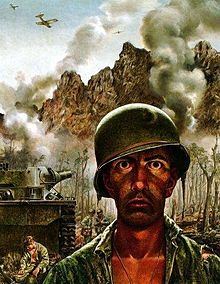
3 Comments

Filed under faith, Military, Pastoral Care, philosophy, PTSD, Religion, star trek, Tour in Iraq