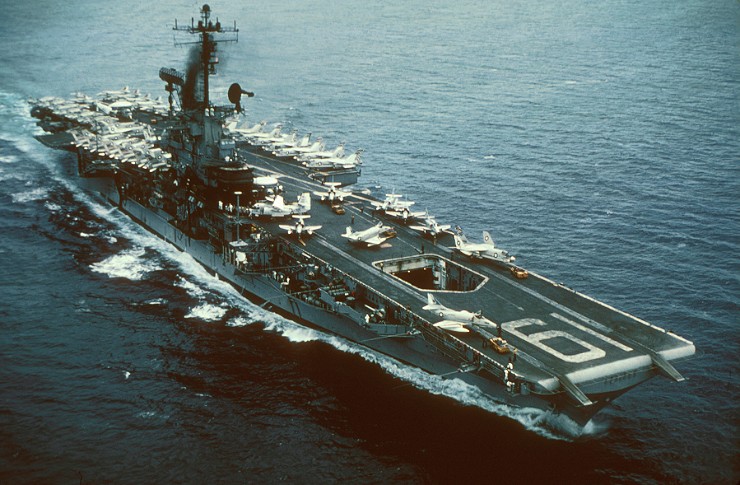
Tag Archives: US Navy

PT and Bumping into Old Friends at Camp Swampy and Getting Carded at Applebee’s

The Main Gate at Camp Swampy

One nickname that Camp LeJeune North Carolina bears is “Camp Swampy.” This is because of the marsh like conditions of some of the base, the normally abundant rainfall and the propensity of said rainfall to accumulate wherever it falls. It is somewhat like the Tidewater, a polite name for “swamp” is in Virginia, only with more rain and in the spring and summer the humidity, mosquitoes and other vermin that love the conditions.  However, because it is a Marine Corps base one can find people doing PT at any time of the day or night in a variety of forms.  Of course the Marines at Camp LeJeune PT in any weather and Chaplains assigned here, even those with the Navy are kind of expected to do the same. Of course each Chaplain does so within his or her physical constraints. Despite being 50 years old I am still in pretty good shape and have the psychological need to try to keep up with people 20 to 30 years my junior so when I do my PT I am serious about it.  In fact when I was stationed with Navy EOD I did so well on the physical readiness test that an EOD tech asked my assistant Nelson Lebron “what kind of ‘roids is the Chaplain on?”  I found this funny since I don’t do this but I can tell you at the age of 50 and being subject to all sorts of minor bumps, dings and nagging injuries I can understand why some professional athletes would use substances such as HGH, but like the rest of the Navy-Marine Corps team I survive on “Vitamin M” or as it is commonly known to laypersons as 800 mg Motrin.

My normal or abnormal regimen is to do what I call “distance interval training.” Interval training usually entails combining some kind of cardio with exercises that work various muscle groups interspersed throughout. I first did interval type training in high school football practice, back then we called them “grass drills” where we ran in place and whenever the coach blew his whistle we would drop for pushups, sit-ups, flutter kicks or any other exercise that could put us on the ground.  I saw a variation with the Marines early in my Navy career that entailed sprinting and then dropping for whatever kind of punishment the leader determined.  Back then I preferred to run long distances up to 20 miles in training for half-marathons and marathons.

However a series of nagging overuse injuries took me down to 5-8 miles a run before I went to Iraq. In Iraq I picked up a few more injuries and it took me a while to recover so after I was assigned to Naval Medical Center Portsmouth I built my runs back up to 3-5 miles but I didn’t find that this was working for me anymore. So I went back to something that I hadn’t done since high school, interval training but I didn’t want to give up running.  I devised a plan that works for me and what I need it to accomplish.  I am now adding the P90X fitness program to fit in on alternate days.

Now I run about 3 miles but every 100-200 yards I drop for a set of 15-25 pushups get up and then do one of 5 different sets of abdominal exercises, 15-30 regular crunches, 40 oblique’s, 15-20 crunches with legs up at a 90 degree angle, 60-100 bicycle crunches and 50-100 flutter kicks with sets of pushups between each of them.
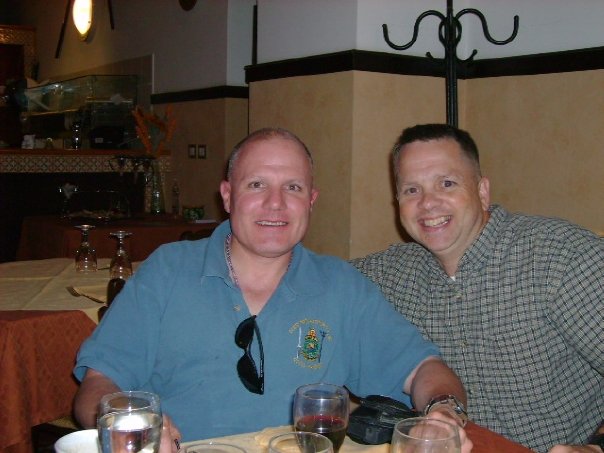
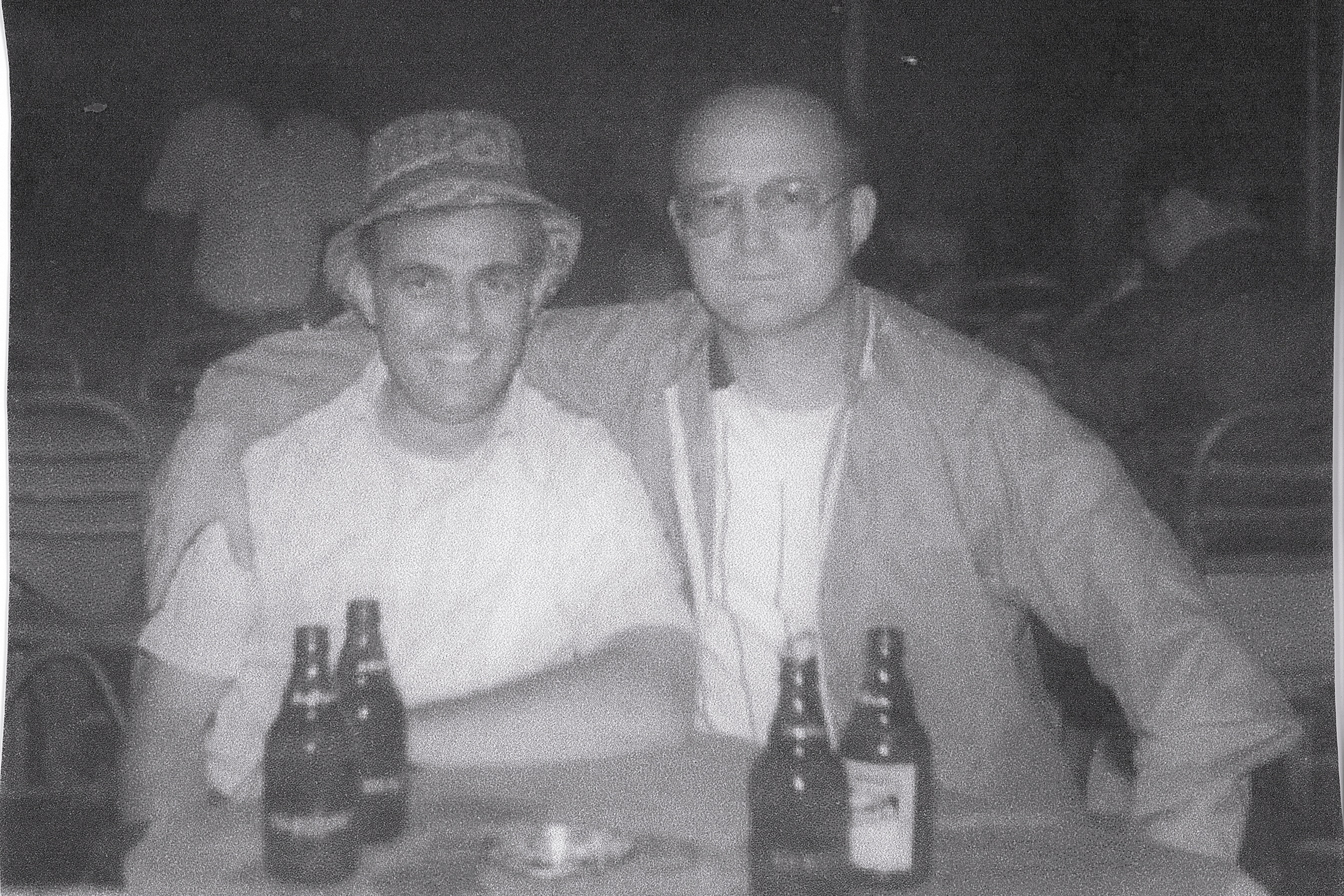
With Paul Rumery in Sicily, he has the hair

It has taken me a while to get settled at Camp LeJeune and begin to plan safe routes to run this and I am just getting back into the groove. Today I went out at lunch amid threatening rain. About a third of the way into the workout the rain came down and I continued to run, the rain was actually quite refreshing and by the two third point of the run I was soaked, my orange Baltimore Orioles t-shirt and gray running shorts must have weighed 5-6 pounds.  As I got up from a set of crunches I wiped off my sunglasses, no I didn’t need them I just like to look cool and as I wiped them off on my previously mentioned soaked Orioles t-shirt I started to run and a car pulled alongside where I was running, the window rolled down and I heard a familiar voice, LCDR Paul Rumery, the Chaplain who had relieved me on USS Hue City in 2003 and who had taken me to dinner the last time I was in Sicily with EOD called out “Hey Steve wild man I knew that it had to be you!” I pulled up and went over to the car, we had a brief talk. Paul had a brand new Chaplain with him who he told that I was a “wild man.” Paul let me know that he didn’t know that I was aboard Camp LeJeune and said that we needed to get together.  It was good to see him and I hope that we do get together soon. I picked up the run again and took it back in to the hospital where my now squishy running shoes and waterlogged clothing dripped of my mud stained body. A Marine Staff Sergeant came up to me and said that I had leaves on the back of my head. I laughed, said “I’m not surprised” and commented “if it ain’t raining we ain’t training.” The Staff Sergeant asked about my workout and was suitably impressed. I then ran into a Corpsman who had been assigned with me at 3rd Battalion 8th Marines back in 2000-2001.  He and I talked for a while. It’s funny what a small world it is when you are stationed in a place like Camp LeJeune.

After work I stopped by the local Applebee’s for a beer and a burger and I was carded by the server. I thanked the server who told me that they and to card anyone that looked under 30 and when he saw my ID and age he was surprised. I must say that since there are so many Marines and Sailors here it is not uncommon to be carded and since I don’t dress my age I can see why I get carded. I must say that it appeals to my vanity.  I guess part of this must be due to good genes as well. Whatever it is I will take it.

Tomorrow I will drive up to Virginia as I have a specialty appointment and assessment to figure out what might be causing my auditory processing disorder.  I haven’t understood speech well since returning from Iraq and the additional Tinnitus is at times deafening.  Hopefully they will figure it out and find something that will make it better.

So anyway, until tomorrow….

Peace

Padre Steve+
 

2 Comments

Filed under Military, sports and life

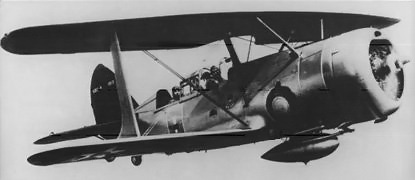
Wings of Gold: U. S. Navy Carrier Aircraft 1935-1941

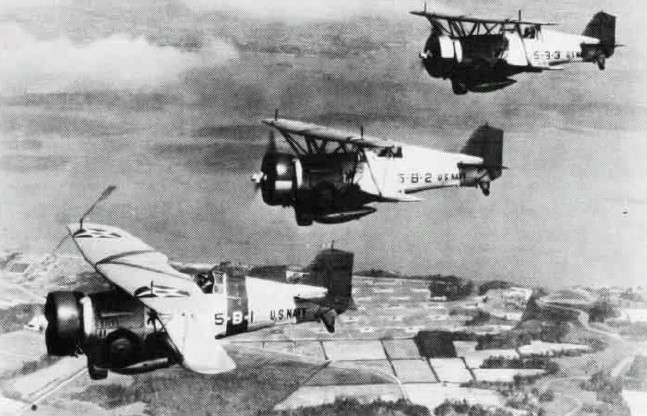
Curtiss BF2C Goshawks (US Navy Photo)

As the United States Navy built up its Carrier Force in the mid to late 1930s it continued to develop aircraft specifically designed to operate from aircraft carriers.  It continued its development of fighter, dive bomber and torpedo bomber aircraft.  In 1935 the Navy was operating the Grumman FF-1 biplane fighter which it had began using in 1933 and the Curtiss F11C and BF2C Goshawk. The Curtiss aircraft were built in fighter and bomber variants and while initial aircraft had an open cockpit and fixed landing gear later aircraft had an enclosed cockpit and retractable landing gear. They had top speed of 157 miles an hour and due to limited success and were retired from service by 1939.  The Goshawk was operated against the Japanese by Nationalist China and also served in a number of air forces including Thailand where they were used against the French and Japanese.

Grumman FF-1 (US Navy Photo)

The Grumman FF-1 was a two-seater that had a enclosed cockpit with retractable landing gear and a top speed of 201 miles an hour.  The FF-1 was faster than any naval aircraft of its era, a follow-on variant designated the SF-1 followed and 120 aircraft were built. Most of the operational aircraft served aboard the USS Lexington CV-2 in a fighter and scouting role. The FF-1 and SF-1 were withdrawn from first line service and placed with the reserve as well as being used in aviation training commands. The aircraft was manufactured under license by the Canadian Car and Foundry Company and served in the Canadian Air Force until 1942 as the Goblin and 40 of the Canadian aircraft were used by the Spanish Republican forces in the Spanish Civil War.

Grumman F2F-1 (US Navy Photo)

The FF-1/SF-1 was followed by the Grumman F2F a single-seat model with improved speed and maneuverability over is predecessors.  54 F2F’s were ordered in 1934 with the production models being delivered between April and August 1935.  The aircraft were armed with 2 .30 machine guns mounted above the cowl and had a top speed of 231 miles an hour and maximum range of 985 miles.  The aircraft would remain in service until they were replaced in 1939 with the Grumman F3F. However they remained in service as utility and training aircraft until retired from service toward the end of 1940.

Grumman F3F (US Navy Photo)

The Grumman F3F followed the F2F with 157 production models. It was more aerodynamic and had a more powerful engine that the F2F which enabled it to achieve a top speed of 264 miles an hour.  It was operated by seven Navy and Marine Corps Squadrons and entered service in 1936 and would serve aboard carriers until replaced in late 1941. It continued with 117 aircraft being stationed at naval air stations and used for training until 1943.

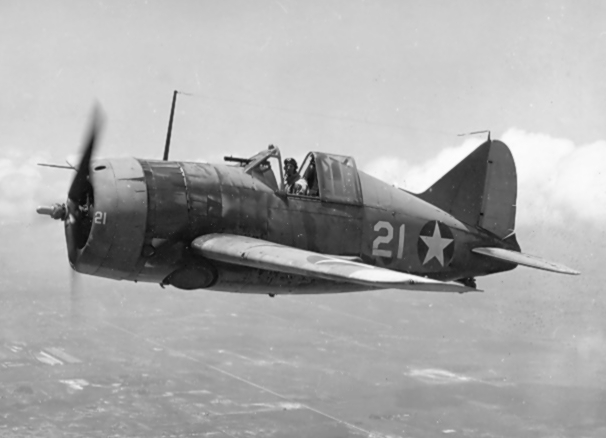
F2A Brewster Buffalo (U.S. Navy Photo)

The first monoplane fighter developed and placed in service by the Navy was the F2A Brewster Buffalo. The Buffalo served with Navy and Marine Corps squadrons and was purchased by Great Britain for service in the Royal Australian and Royal New Zealand Air Forces which received 202 Buffalos. They would also serve with the Royal Navy. The Royal Netherlands Air Force received 144 most of which served in the East Indies. The final nation to receive the Buffalo was Finland which received 44 aircraft.  Buffalo was underpowered and the addition of armor and added fuel capacity further diminished the speed and performance of the aircraft.  The Navy placed its Buffalo’s in advanced training squadrons in early 1942 and one of the two Marine Corps squadrons (VMF-221) operated it at the Battle of Midway where they endured fearful losses at the hands of Japanese Zero fighters.

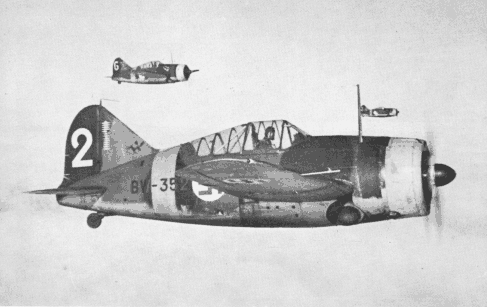
Brewster Buffalo 239s of the Finnish Air Force

Despite the lack of success in U. S. service the Buffalo performed in a heroic manner for the Finns destroying over 500 Soviet and German aircraft and producing 36 Buffalo Aces.  The highest scorer was Captain Hans W. Wind with 39 of 75 victories flying a Buffalo.  British Commonwealth and Dutch aircraft did not fare as well as the Finns as the tropical climate degraded the aircraft considerably.

Martin T4M over Lexington or Saratoga (US Navy Photo)

The Navy also developed aircraft for bombing missions as well as that could launch aerial torpedoes. The first aircraft built were dual purpose in that they could be used in level bombing and torpedo missions. In 1935 the primary aircraft of this type was the Martin T4M which had entered service in 1928 and replaced the Douglas DT and Martin T4M aircraft.  The T4M was a biplane with a crew of three that had a maximum speed of 114 miles an hour (I have driven much fast than this on the German Autobahn but I digress) and it could carry a torpedo or bombs.  155 were purchased by the Navy and the Marine Corps between 1928 and 1931.  They were operated from the Lexington and Saratoga until 1938 as no replacement aircraft offered enough improvements for the Navy to purchase and were instrumental in the development and demonstration of the capabilities of naval air power.  They were finally replaced by the Douglas TBD Devastator.

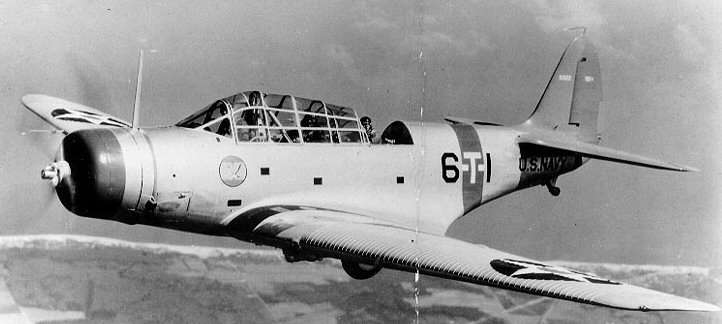
TBD Devastator (US Navy Photo)

The TBD which first flew in 1935 entered service in 1937 and at the time was possibly the most modern naval aircraft in the world and was a revolutionary aircraft. It was the first monoplane widely used on carriers and was first all-metal naval aircraft.  It was the first naval aircraft with a totally enclosed cockpit, the first with hydraulic powered folding wings.  The TBD had crew of three and had a maximum speed of 206 miles an hour and carried a torpedo or up to 1500 pounds of bombs (3 x 500) or a 1000 pound bomb.  129 were built and served in all pre-war torpedo bombing squadrons based aboard the Lexington, Saratoga, Ranger, Yorktown, Enterprise and Hornet with a limited number embarked aboard Wasp.  The Devastator saw extensive service prior to the war which pushed many airframes to the end of their useful service life and by 1940 only about 100 were operational.  They were still in service in 1942 as their replacement the TBF Avenger was not ready for service.  They performed adequately against minor opposition at Coral Sea and in strikes against the Marshalls but the squadrons embarked on Yorktown (VT3), Enterprise (VT-6) and Hornet (VT-8) were annihilated at Midway with only 6 of 41 surviving their uncoordinated attacks against the Japanese Carrier Strike Force.  They were too slow, had poor maneuverability, insufficient armor and defensive armament.  Only a few were able to launch their torpedoes as the Japanese Combat Air Patrol tore through them. Their sacrifice was not in vain as the Dive Bombers arrived facing no opposition and sank three of the four Japanese carriers getting the fourth later in the day. After Midway the remaining aircraft were withdrawn from active service in the Pacific. The Ranger’s VT-4 operated them until September 1942and Wasp’s VT-7 operated them in the Atlantic until she was transferred to the Pacific in July 1942.   By 1944 all remaining aircraft had been scrapped.

Vought SBU Corsair

In the mid 1930s the Navy began to develop Scout and Dive Bombers for use in carrier scouting (VS) and bombing (VT) squadrons.  The first of these aircraft types were biplanes.  The Grumman SF-1 was used in a scouting and bombing role and was joined by the Vought SBU Corsair in 1935 and by 1937 both were being replaced by the Curtiss SBC Helldiver, a biplane with a 234 mile an hour maximum speed, retractable landing gear, enclosed cockpit which could carry a 1000 bomb.

Curtis SBC Helldiver

However the era of the biplane was drawing to a close and the Helldiver would be relegated to training squadrons based in Florida.  Although they had a brief service career they were instrumental in develop dive bombing tactics at which the U.S. Navy excelled and which were copied by the German Luftwaffe with the Junkers JU-87 Stuka and the Japanese with the Aichi 99 Val naval dive bomber.  50 aircraft were transferred to the French and served aboard the carrier Bearn but due to the French surrender in June of 1940 saw no action and spent the war rotting in Martinique.

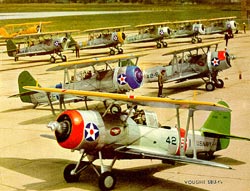
Vought SB2U Vindicator

The Helldiver’s were joined by the first monoplane dive bomber in U.S. service the Vought SBU2 Vindicator in 1937. The Vindicator was used by the Navy and the Marine Corps serving aboard the Lexington, Saratoga, Ranger and Wasp. They would remain in service until September 1942. The Marine aircraft equipped two squadrons VMSB 131 and VMSB-241, VMSB 241 suffered heavy casualties at Midway as the aircraft were underpowered and were limited to glide bombing missions.  After they were taken out of the operational squadrons the Vindicator served as a training aircraft until retired in 1945.   A French Naval Air Squadron was equipped with the Vindicator but they served ashore against the German invasion.  Most were lost to enemy action.  The Douglas SBD Dauntless was introduced in 1940 and 1941 but I will cover that aircraft in the World War II aircraft article that will follow this in a week or two.

These aircraft helped pave the way to aircraft that would be the mainstays of the Navy in the Second World War, aircraft with names such as Dauntless, Helldiver, Avenger, Hellcat and Corsair.  Naval aviation earned its “wings of gold” in these early years wings that continue to shine in the 21st Century.

Peace

Padre Steve+
9 Comments

Filed under aircraft, Military, US Navy, world war two in the pacific

Veterans Day 2010: Counting the Cost of War

“It is well that war is so terrible, or we should get too fond of it.” General Robert E. Lee

Veterans Day had become a rather somber occasion for me over the past decade and since returning from Iraq in 2008 has taken on added personal significance.  I have noticed that I have become much more reflective about the sacrifices made by our military and the terrible coasts of war on our Soldiers, Marines, Sailors, Airmen and their families in this age of the all volunteer military.  The military which has about 2,225,000 members including the Reserves and National Guard is just 0.7% of the total population, the lowest percentage of military personnel compared to total population during any war in our history.  As a result this force has borne the brunt of a war that no politicians or bureaucrats figured would last half as long as it has.  As a result the “few” have been asked to do more for longer than and military that this nation has ever fielded during a war.

Thus for me Veterans Day has become a rather somber and reflective occasion as I ponder all the sacrifices made by our military and their families. In Afghanistan the U.S. Military has lost 1378 killed and our allies another 825.  In Iraq 4427 U.S. Military personnel have died along with 318 allied soldiers, not including the Iraqi military losses.  For each of the killed there are about 8 more wounded a total of over 38,000 wounded.  Of course the wounded numbers do not include 170,000+ cases of hearing damage; 130,000+ cases of mild traumatic brain injuries; and 200,000+ cases of serious mental health problems, over 30,000 serious disease cases, including a disfiguring, parasitic disease called Leishmaniasis, which results from bites of sand flies; thousands of cases of respiratory disease linked to exposure to toxic burn pit smoke and hundreds of suicides.  Then there are the injuries related to road and aviation accidents not in direct combat.  In my recent assignments in Iraq and Naval Medical facilities I have seen the human cost of the war.  I have friends who suffer as the result of Traumatic Brain Injury, PTSD and Pulmonary diseases as well as those that have been wounded as the result enemy action.  I have a dear friend with a rare and irreversible pulmonary condition from two tours in Iraq. He is 41 his lungs are those of a 70 year old man.  My best friend, a senior Naval Officer is still suffering from the effects of TBI and PTSD incurred while serving with the Marines in Al Anbar Province.

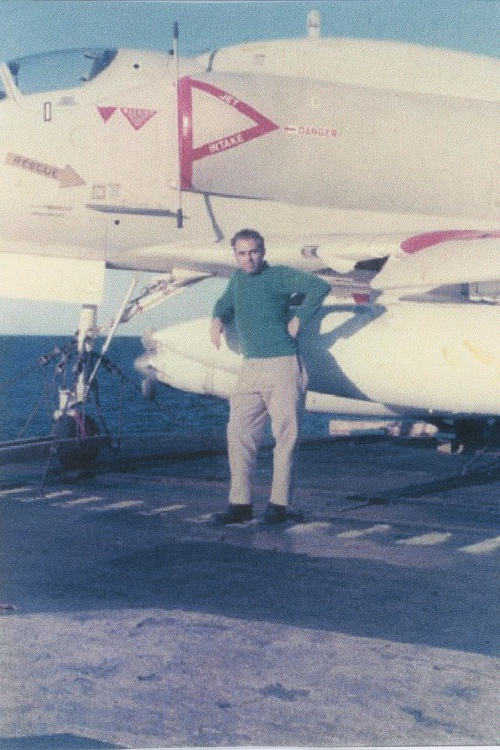
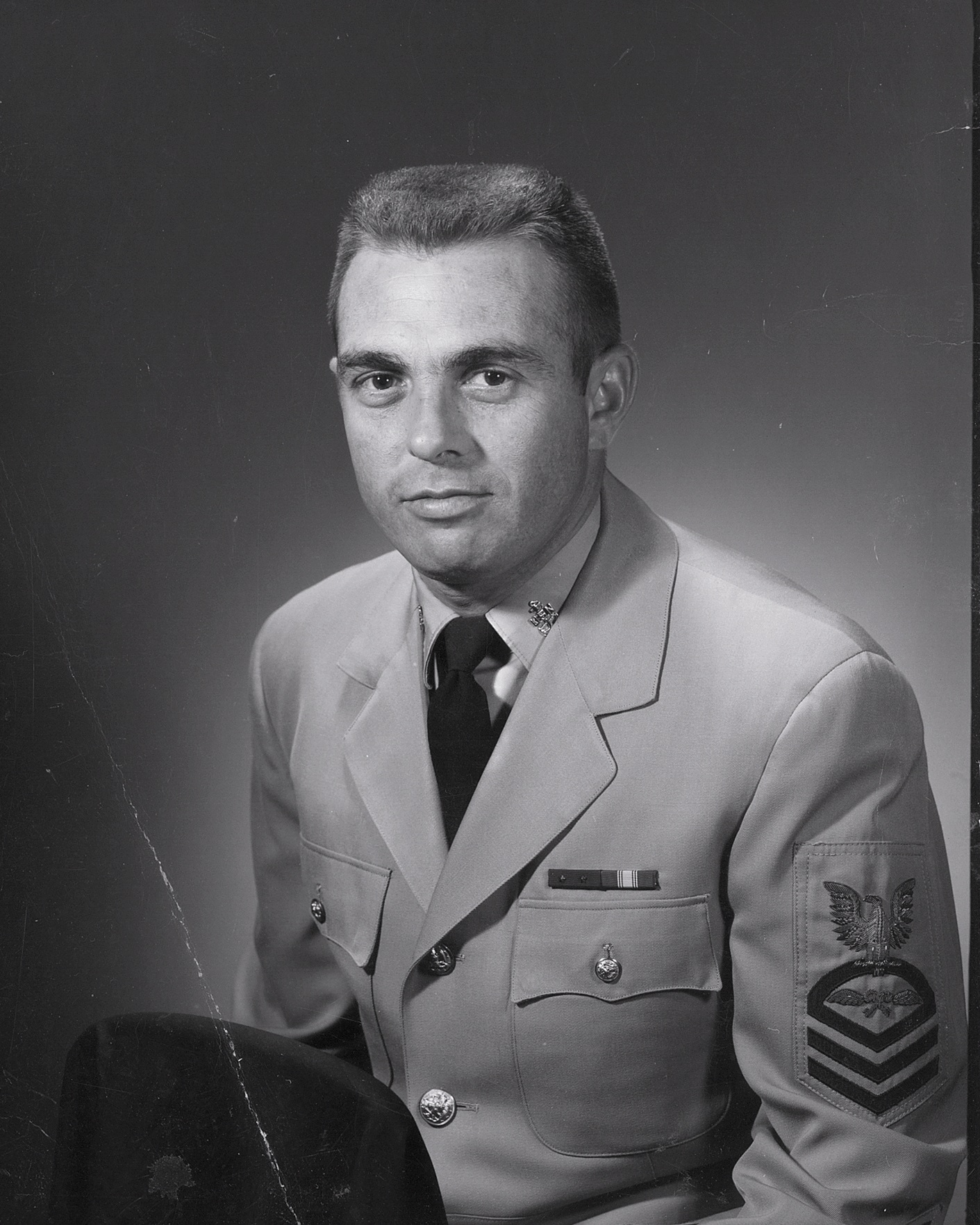
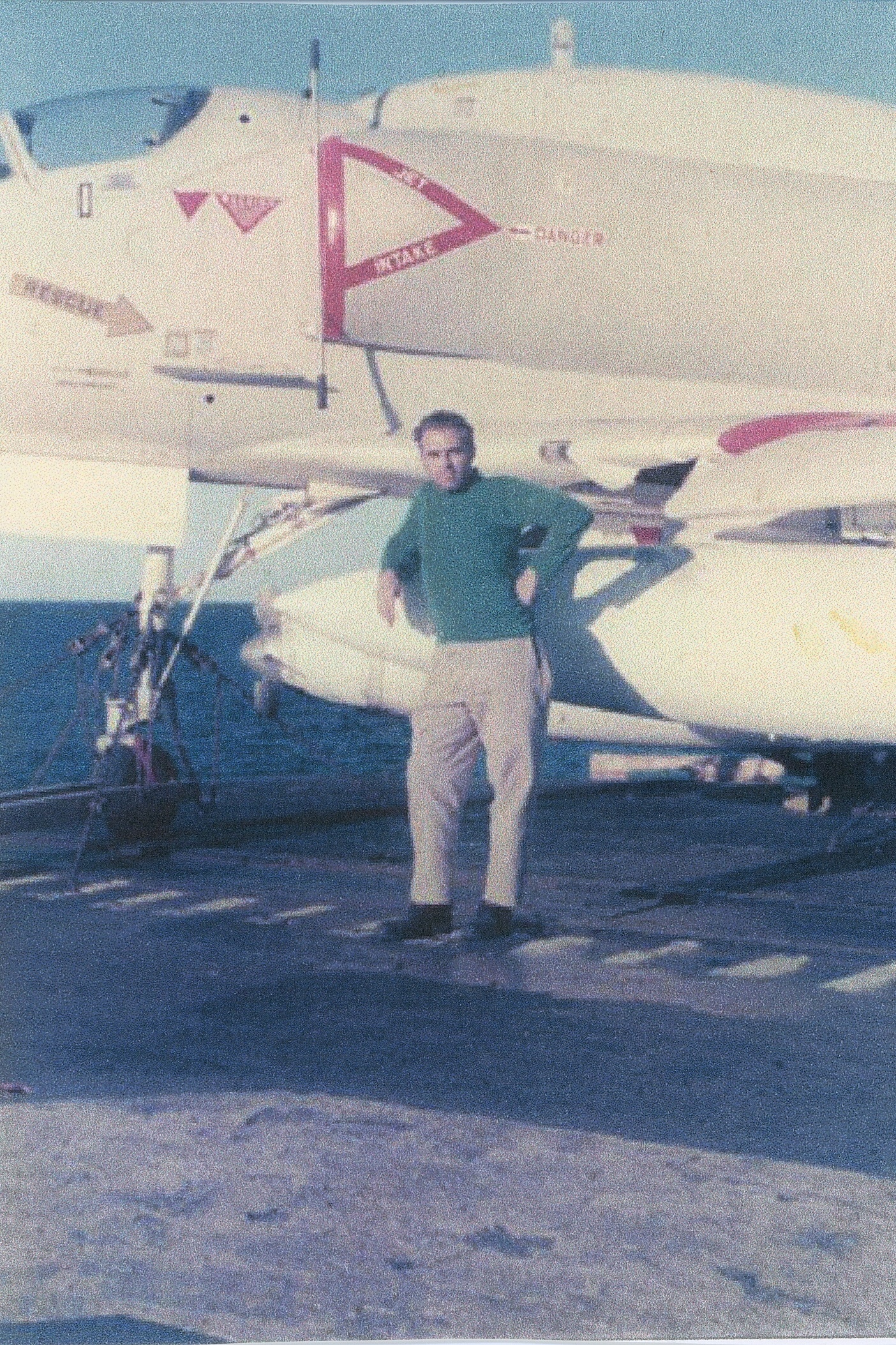
My Dad Aviation Storekeeper Chief Carl Dundas aboard USS Hancock CVA-19 off Vietnam circa 1971-72

A year ago on Veterans Day I was at with my parents in Stockton California to visit my mom and my dad who was then in a nursing facility due to the ravages of Alzheimer’s disease.  It was a terrible visit conflict with my mother due to witches’ brew of my PTSD and grief for my dad and my mother’s struggles with my dad’s condition and her own physical condition.  I visited my dad every day when in two and unfortunately he did not know who I was, Alzheimer’s had robbed him of everything that made him my dad.  He died on June 23rd of this year a day after I found out that I had been selected for promotion to Commander.  My dad was a retired Navy Chief Petty Officer who served in Vietnam on a beach detachment manning an emergency airfield in the besieged city of An Loc in 1972.  He never talked about that tour or what happened there except to tell me that he saw the Communists executing civilians in the city from his observation point.  He came home a changed man.  Thankfully he is now out of his suffering and our family is beginning to find its way back from the abyss of his illness.

I have served for over 29 years in the Army and the Navy and have witnessed many things and been blessed to have my life enriched by many veterans.  Unfortunately many of these brave men have since passed away, some having lived many years and others that have died far too young as a result of service connected injuries.

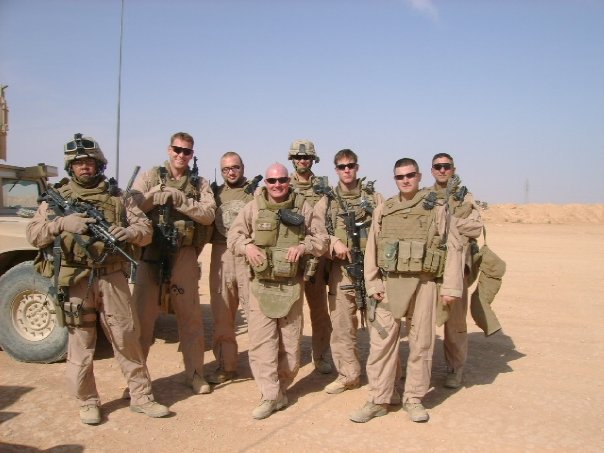
With advisors to the 3rd Bn, 3rd Brigade 7th Iraq Division COP South 2008

In my current work I see many young men that wear the Purple Heart for being wounded in combat. I see those that need assistance to walk, amputees, men with obvious scars from burns and others suffering blindness from their injuries. Our hospital’s Medical Board sees 40-60 Marines and Sailors a day, quite a few of whom that will be medically retired due to their injuries.  There are also those that have died by their own hand suffering from psychological and spiritual injuries too deep to fathom, we had one of our own Corpsman suicide last week.

The cost of war is terrible, as General William Tecumseh Sherman so eloquently put it: “War is Hell.”

Despite this our brave men and women that serve in all branches of the military as well as those that have gone before us in the 235 year history of our military have shouldered the load, for most of that history depending on volunteers who often served in obscurity often derided by their fellow Americans who believed that the military was a place to go if you could not be successful in the civilian world. The pay was low, the duty arduous and benefits few. In the Civil War, the World Wars and up until 1974 the professionals were augmented by draftees who outnumbered the professionals by a huge margin.  Since 1974 the force has been an all volunteer force.

Health and Comfort Board Team USS Hue City, Northern Arabian Gulf May 2002

Regardless of whether our Veterans were draftees or volunteers they have served this country well and on the whole to use the current Navy description are “A Global Force for Good.” The countries liberated from oppressors and helped in humanitarian operations by American Soldiers, Sailors, Marines and Airmen are many and varied.  They have represented the spectrum of our society and represent the best the country has to offer.  Unfortunately they have not always been honored by some of their our countrymen and women and sometimes the children and grandchildren of the peoples that they liberated from Nazi, Fascist or Communist oppressors who often use the wrongdoing of a few military personnel or the decisions or actions of American politicians or businessmen to label American military personnel as criminals.

Unfortunately since the military is such a small part of our population and concentrated in a few large bases it is invisible to most Americans as they live their daily lives. Often in isolated from the bulk of America such as Killeen Texas home of the U.S. III Corps and Jacksonville North Carolina the home of the 2nd Marine Expeditionary Force and Second Marine Division are quintessential military towns but neither are near major population centers and thus the sacrifice of these Soldiers, Marines and Sailors goes unnoticed by most of the nation.  In a sense the human cost of the war falls inordinately upon these military communities where there are few strangers.

In spite of this the current men and women of the American Military train, deploy, fight and return every day as they have since the 9-11-2001 attacks, many if not most have made multiple combat tours.  I have been pleased to see more support of the military in the media, especially sports media and leagues.  Many businesses are taking time to offer things of value to servicemen and women and those businesses should be commended and patronized.  I was touched by many stories that I saw about our veterans on ESPN over the past few days.  http://www.espnmediazone3.com/us/2010/11/espn%E2%80%99s-weeklong-salute-to-veterans-day/

Many of our Reserve component personnel give up civilian employment and chances for promotion to serve in the military, particularly when they are mobilized for service. When they return home most return to towns and cities that have little of the support afforded to active duty members when they return.  I pray that our political leaders in the future will exercise discernment and wisdom before committing us to another war. Otto Von Bismarck said: “Anyone who has ever looked into the glazed eyes of a soldier dying on the battlefield will think hard before starting a war.” Unfortunately the current members of the House, Senate and Executive branch have little connection to the military as very few have served and I wonder if any really comprehend this maxim.  In the 111th Congress 120 members had some form of military service.  The number of veterans in the 111th Congress reflects the trend of a steady decline in the number of Members who have served in the military. For example, there were 298 veterans (240 Representatives, 58 Senators) in the 96th Congress (1979-1981); and 398 veterans (329Representatives, 69 Senators) in the 91st Congress (1969-1971).  Those who have served a full military career are far fewer; the number of congressmen with military careers will remain relatively constant for the 112th Congress. In the Senate there will be one (as compared with two in 2006 and one in 2008) and in the House there will be eight (as compared with four in 2006 and six in 2008).  Some of these Congressional Veterans have been vilified by some broadcasters and pundits of the extreme right wing media most of whom who have never served in the military.  On the positive side nine members of the new Congress will have served in the current wars which hopefully will help promote the sacrifice of our current Veterans and help with programs that will help returning Veterans.

I have seen the cost of war up close and personal in Iraq and back here in the States. I suffer some the afflictions described as a result of my service and see the young men and women many of whom were not yet born when I enlisted in the Army, or when I was commissioned as an Army Officer, when I was a Company Commander or when I was a senior Captain in the Army. These young men and women are heroes.

Please take a moment to thank a Veteran.  If you have time volunteers are always welcome at organizations such as the USO and American Red Cross working with our troops, join or support organizations which promote the causes of Veterans including the Iraq Afghanistan Veteran’s Association www.iava.org the Veterans of Foreign Wars http://www.vfw.org/, American Legion http://www.legion.org/ , Marine Corps League http://www.mcleague.org/, the Fleet Reserve Association http://www.fra.org/, the Association of the U.S. Army http://www.ausa.org and the Disabled American Veterans http://www.dav.org/. There are also many charitable organizations that provide assistance to Veterans and their families’ one of the best being the Fisher House Foundation http://www.fisherhouse.org/ which provides comfortable and free lodging to the families of wounded, injured or sick military personnel on bases adjacent to military hospitals. I found these ten ways that you can help on Yahoo.com:

1. At 11 a.m., observe a moment of silence for those who’ve fought and died while in service to the country

2. Display an American flag

3. Attend a Veterans Day parade

4. Thank a vet for his/her service

5. Send a letter to troops through the U.S. Department of Defense Website

6. Work in a homeless shelter or soup kitchen

7. Visit a veteran’s grave or pick up trash at a veterans cemetery

8. Visit with the family of a veteran who’s serving overseas

9. Visit with a wounded vet at a local VA facility

10. Donate to the USO, the American Legion, Veterans of Foreign Wars USA or other organizations that honor and assist vets

Keep us all in your prayers and please when Veterans Day is past do not forget those of us that serve and our families, especially those men and women serving in harm’s way.  To my friends and comrades I echo the words of the German commander to his troops in captivity at the end of the Band of Brother’s mini-series:

“Men, it’s been a long war, it’s been a tough war. You’ve fought bravely, proudly for your country. You’re a special group. You’ve found in one another a bond that exists only in combat, among brothers. You’ve shared foxholes, held each other in dire moments. You’ve seen death and suffered together. I’m proud to have served with each and every one of you. You all deserve long and happy lives in peace.”

Peace

Padre Steve+
3 Comments

Filed under iraq,afghanistan, Military, PTSD, shipmates and veterans

100 Years of Navy Aviation: Part One the Aircraft Carriers

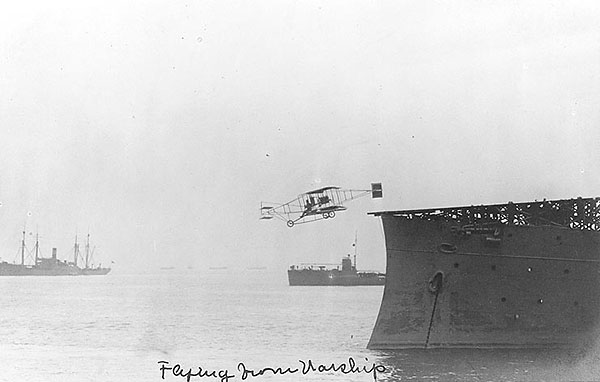
Eugene Ely makes the first takeoff from USS Birmingham on November 14th 1910

On a blustery November 14th in the year 1910 a young civilian pilot hailing from Williamsburg Iowa became the first man to fly an aircraft off the deck of a ship.  At the age of 24 and having taught himself to fly barely 7 months before Eugene Ely readied himself and his Curtis biplane aboard the Cruiser USS Birmingham anchored just south of Fort Monroe in Hampton Roads.  Ely was there because he was discovered by Navy Captain Washington Irving Chambers who had been tasked with exploring how aircraft might become part of Naval Operations. Chambers had no budget or authority for his seemingly thankless task but hearing that a German steamship might launch and aircraft from a ship hustled to find a way to stake a claim for the U.S. Navy to be the first in flight. Weather was bad that day as is so typical for Hampton Roads in November and between rain squalls Ely decided to launch even though Birmingham did not have steam up to get underway to assist the launch.  Ely gunned the engine and his biplane rumbled down the 57 foot ramp and as he left the deck the aircraft nosed down and actually make contact with the water splintering the propeller and forcing him to cut the flight short and land on Willoughby Spit about 2 ½ miles away not far from the southern entrance to the modern Hampton Roads Bridge Tunnel is.  Chambers would talk Ely into making the first landing on a Navy ship the Armored Cruiser USS Pennsylvania in San Francisco Bay on January 18th 1911.  Ely died in a crash at the Georgia State Fairgrounds on October 11th 1911.

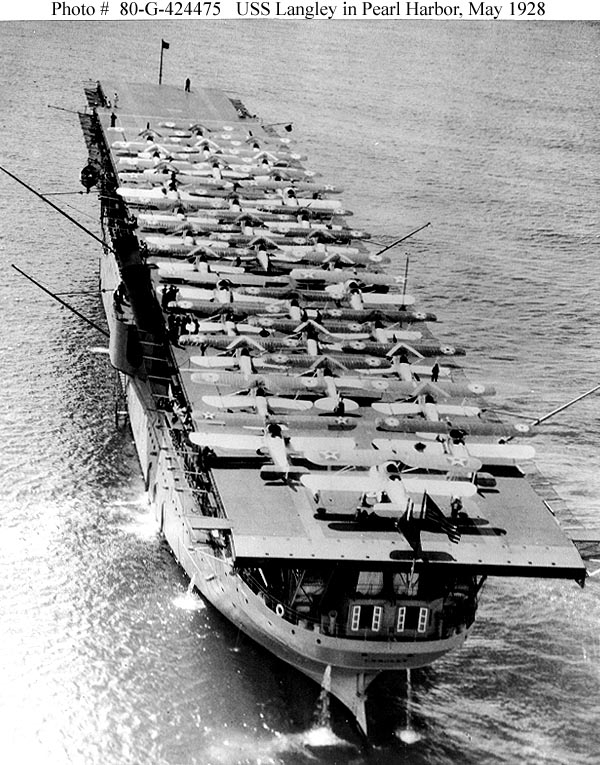
USS Langley CV-1

The Naval was slow to build upon the early achievements and the British and France would commission Aircraft Carriers well before the USS Langley CV-1 a converted Collier was commissioned.  After Langley the Navy commissioned the converted Battlecruisers USS Lexington CV-2 and USS Saratoga CV-3 in the mid 1920s.

USS Lexington CV-2 October 1941

The three ships formed the nucleus of the Navy’s embrace of aviation and the pilots that they trained and the experience gained would be the foundation of the Navy’s success in the Second World War.  They would be joined by the USS Ranger CV-4 the first U. S. Navy Carrier designed as such from the keel up in 1934.

USS Enterprise CV-6

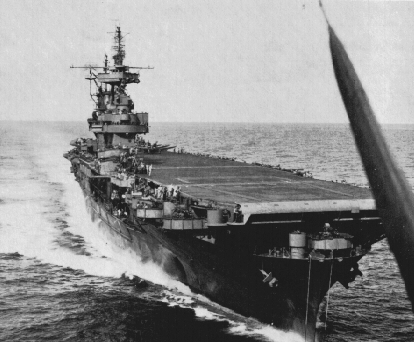
In 1937 the Navy commissioned the first of its true Fleet Carriers the USS Yorktown CV-5 which was followed by the USS Enterprise CV-6 in 1938, the USS Wasp CV-7 an improved version of Ranger in was commissioned in 1940 and the USS Hornet CV-8 in 1941.   These ships would bear the brunt of US Navy operations in the first year of the war following the disaster at Pearl Harbor. Of these ships only the Enterprise and Saratoga would survive the first year of the war in the Pacific.  Langley now a Seaplane Carrier was sunk during the Battle of the Java Sea in February 1942. Lexington would go down at Coral Sea in May 1942.  Hornet would launch the Doolittle Raid against Japan on April 18th 1942.  Yorktown, Enterprise and Hornet would take on and defeat the Japanese Carrier Strike force and sink the Akagi, Kaga, Soryu and Hiryu at Midway to avenge Pearl Harbor. Yorktown was sunk in the battle but Midway stopped the Japanese advance in the Pacific.

The U. S. went on the offensive in August invading Guadalcanal in the Solomons Islands. The Guadalcanal campaign and the numerous sea battles in the adjacent waterways would claim many American and Japanese ships. Wasp was sunk by a Japanese submarine on September 15th 1942 and Hornet was sunk at the Battle of Santa Cruz on 27 October 27th 1942.  Saratoga spent much of 1942 in the yards having been torpedoed twice leaving the often battered Enterprise as the sole U. S. Navy Carrier facing the Japanese until Saratoga was repaired and the first of the Essex Class Fleet Carriers and Independence Class Light Fleet Carriers entered service and arrived in the Pacific.

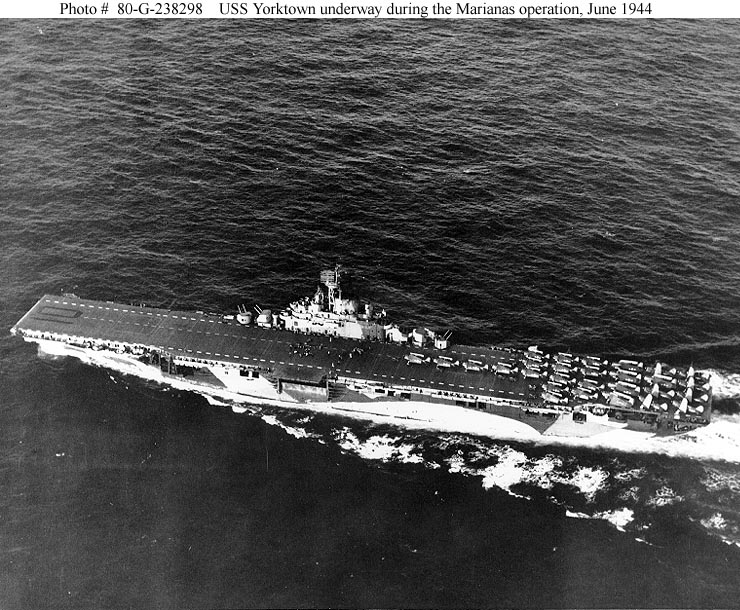
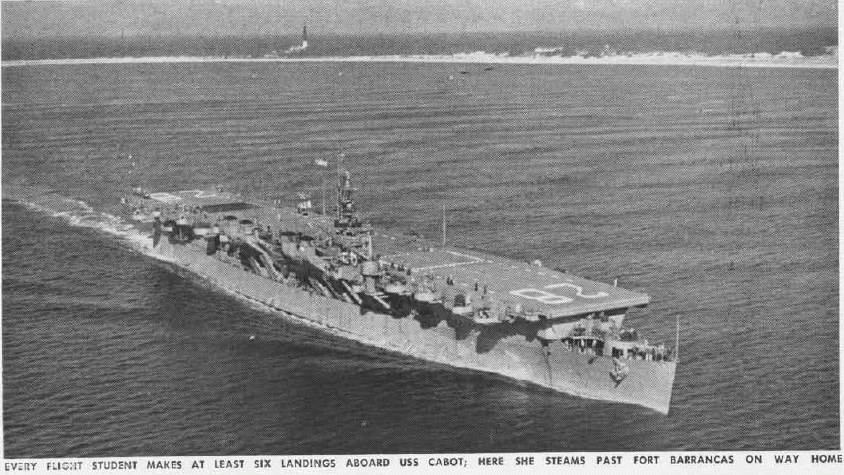
USS Yorktown CV-10 1944 a good example of the wartime Essex class ships  below USS Cabot CVL-28 an Independence Class Light Fleet Carrier


The Essex Class ships became the nucleus of the Fast Carrier Task Forces in the Pacific and with their smaller consorts of the Independence Class would dominate operations at sea from 1943 on.  The Essex class would eventually number 24 ships with several more canceled before completion becoming the most numerous of any class of Fleet Carriers produced by the U. S. Navy.  The Essex class would figure prominently in all offensive operations including the Battle of the Philippine Sea, Battle of Leyte Gulf, the campaigns at Iwo Jima and Okinawa and raids on the Japanese home islands.  In the process they and their air groups would be instrumental in sinking hundreds of Japanese ships including the Battleships Yamato and Musashi and destroying thousands of aircraft.  A number were heavily damaged by Kamikazes but none were lost with the epic story of the USS Franklin CV-13 and her survival after being hit by two bombs from a Japanese plane that slipped through the Combat Air Patrol. The resultant explosions and fires amongst her fueled and armed aircraft nearly sank her but for the heroic efforts of her crew including Chaplain Joseph O’Callahan who won the Medal of Honor caring for the wounded and dying and directing damage control teams. The ship lost 724 men killed and 265 wounded in the attack but survived though without power and dead in the water 50 miles off the Japanese coast.

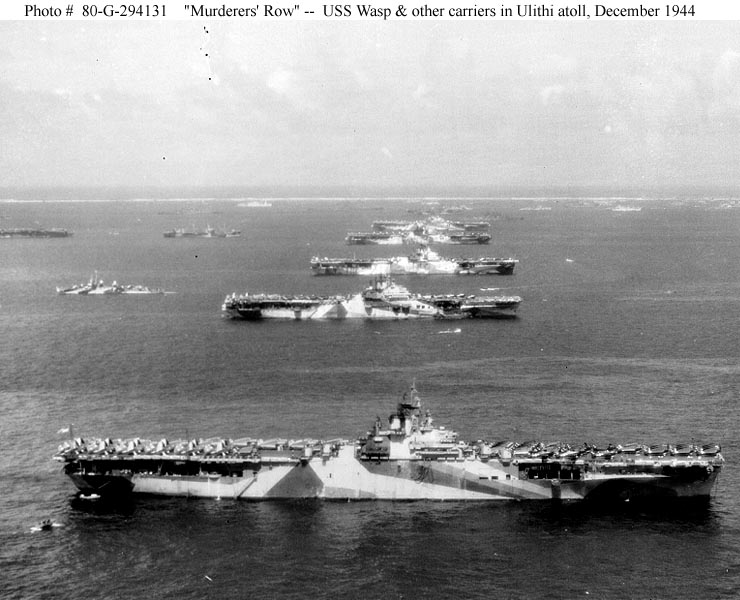
Murderers’ Row

The Essex class were iconic and the ships etched their names in naval history. The Essex, Yorktown, Hornet, Wasp, Hancock, Ticonderoga, Franklin, Bunker Hill, Intrepid, Lexington and the other ships of the class had legendary careers. These ships became known as “Murderers’ Row” for their expertise in killing off Japanese ships and aircraft.  Fittingly four of the ships, the Hornet, Yorktown, Lexington and Intrepid have found a second life as museum ships and Oriskany was sunk as an artificial reef off the coast of Florida where she is a favorite of recreational divers.

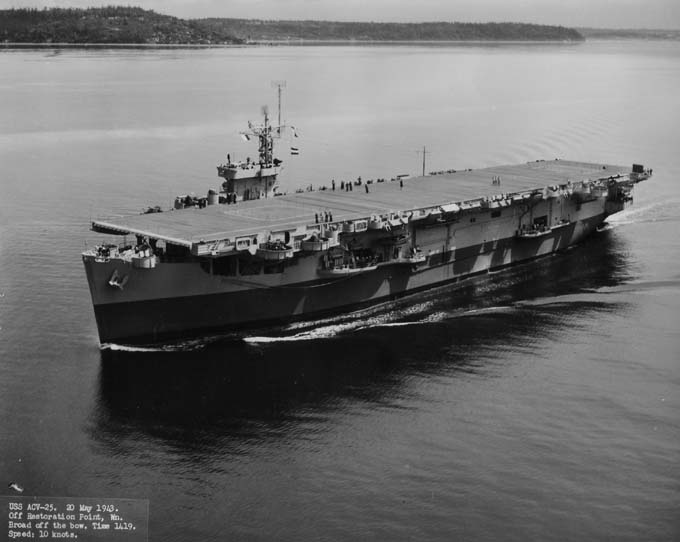
USS Croatan CVE-25 a Bogue Class Escort Carrier

During the war the Navy also built 118 Escort Carriers converted from merchant ships for use as convoy escorts, anti-submarine warfare and close air support for amphibious operations. 38 of these ships saw service in the British Royal Navy during the war.

USS Hancock CVA-19 in 1969 showing the extent of the modernizations that brought the Essex Class into the jet age

In the post World War II drawdown many carriers were decommissioned and the oldest, the Saratoga and Ranger disposed of.  The three ship Midway class entered service after the war and incorporated design improvements learned from combat operations in the war. As the Navy entered the jet era it was found that the existing carriers would need significant modernization to handle the new aircraft. Among the improvements made to the Midway and Essex class ships was the angled flight deck, steam catapults, hurricane bows and improved landing systems.  These improvements allowed these World War II era ships to remain front line carriers into Vietnam and in the case of the USS Midway and USS Coral Sea into the 1990s.

Artists’ conception of USS United States CVA-58 a victim of Truman Era Air Force politics

The Navy began its first super-carrier the USS United States in 1949 but the ship and class was cancelled by Secretary of Defense Louis A. Johnson, not a fan of the Navy or Marine Corps due to opposition by the Army and the newly founded Air Force.  The ship would have carried 12-18 nuclear capable bombers as well as 45-50 jet fighters and attack aircraft and been 1090 feet long and displaced 65,000 tons.  It would not be until after the Korean War that the Navy would begin construction of its first super-carriers.

USS Midway CVA-41 in 1971

During the Korean War most of the Essex class ships were called back into service with 15 modified to conduct jet operations while others were converted to serve as ASW Carriers and Helicopter Carriers (LPH) to support Marine amphibious forces. Likewise the Midway’s were modernized as the Navy began to construct the four-ship Forrestal Class which were 1036 feet long and displaced 56,000 tons and designed to carry 100 aircraft. The four ships, Forrestal CVA-59, Saratoga CVA-60, Ranger CVA-61, and Independence CVA-62 would all serve into the early 1990s before being decommissioned. In the past few months Forrestal and Saratoga have begun the journey to be scrapped, sold for a penny each to scrapyards in Brownsville, Texas.

USS Ranger CVA-61

They were all heavily involved in the Vietnam War on Yankee and Dixie Station and both the Atlantic and Pacific during the Cold War. All four have been stricken from the Navy List and are awaiting disposal.  Forrestal was programmed as an artificial reef but she, like Saratoga which had been on donation hold was approved for scrapping. Ranger is still on donation hold and the USS Ranger Foundation is attempting to raise the money to save her. Independence which had been programmed as an artificial reef project was approved for scrapping in 2008.In the past few months Forrestal and Saratoga began the journey to be scrapped in 2014, sold for a penny each to scrapyards in Brownsville, Texas.

USS John F Kennedy CV-67 a modified Kitty Hawk class ship

These ships were followed by the Kitty Hawk class consisting of Kitty Hawk CVA-63, Constellation CVA-64, America CVA-66 and John F. Kennedy CVA-67 which were improved versions of the Forrestal Class with a 60,100 ton displacement and 1047 foot length with the ability to carry 100 aircraft. Kitty Hawk had the distinction of being the last fossil fuel carrier in active U. S. Navy service being decommissioned and placed in reserve in 2009. Her sister the Constellation CV was decommissioned in December 2003 and in 2008 was programmed to be scrapped in the next five years.  America was decommissioned in 1996 after not being given a Service Life Extension Program (SLEP) refit in the 1990s due to budget cuts.  America was involved in much of the Cold War, Gulf War and Vietnam including responding to the Israeli attack on the USS Liberty in 1967, the Intervention in Lebanon in 1983 and the conflict with Libya in the Gulf of Sidra in 1985.  She was sunk as a test bed to see how modern carriers would be affected by battle damage and to incorporate those lessons into future carrier design in May of 2005.  John F. Kennedy was originally planned to be a nuclear ship equipped with 4 A3W reactors.  This plan was shelved and she was completed as a fossil fuel ship. “Big John” served in Vietnam as well as throughout the Cold War and Gulf War and also engaged the Libyans in 1985.  She was placed in the Reserve Force in the 1990s to save money and also served as a training carrier.  Like America she did not receive the necessary maintenance and by 2002 she needed emergency repairs in order to deploy in support of Operation Enduring Freedom. Kennedy made three deployments in support of the War on Terror and decommissioned in 2007.  She was placed in donation hold and currently two groups are making progress to acquire her as a Museum ship. Like the Forrestal’s the Constellation’s served in Vietnam, the Cold War, Operation Desert Shield and Desert Storm and three continued their service into Operation Iraqi Freedom. Constellation began her journey to the scrapyard in August 2014.

USS Enterprise CVN-65

As the Navy continued to develop the capabilities of the aircraft carrier it commissioned the nuclear powered USS Enterprise CVAN-65.  The added capability of nuclear power enabled her to operate without dependence on fossil fuel which in addition to her range and speed allowed her to carry more aviation fuel and munitions than the fossil fuel ships.  Unique among the Nuclear Carriers she produces 280,000 SHP and is powered by 8 Westinghouse (A2W) Reactors driving geared turbines, 4 screws with a classified top speed in excess of 35 Knots and is the quickest carrier going from all stop to full speed. At 1101 feet long and 75,700 ton (93,000 Full Load) displacement she was larger than any other carrier. She served in Vietnam, the Cold War, the Gulf War and Operation Enduring and Operation Iraqi Freedom. She was and was decommissioned in 2013.

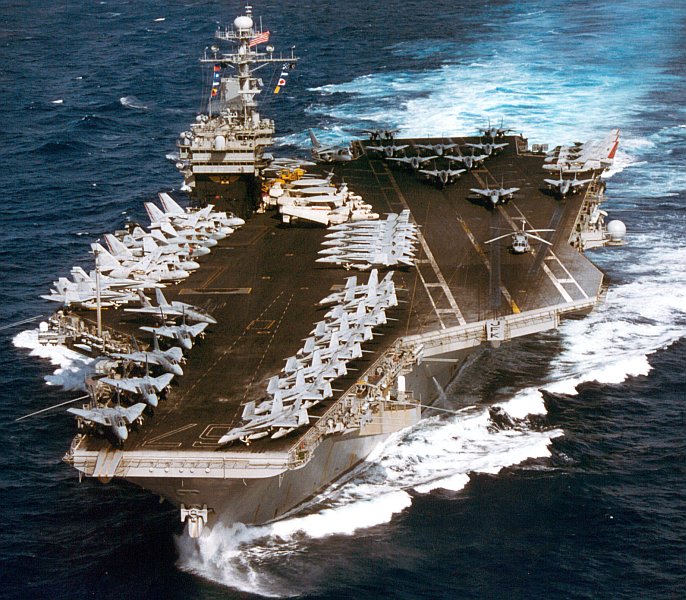
USS Theodore Roosevelt CVN-71 of the Nimitz class

The Nimitz Class of nuclear powered carriers is the most numerous class of capital ship in the U.S. Navy since the Essex Class.  Slightly smaller than Enterprise with a 1088 overall length and 91,000 full load displacement the Nimitz CVN-68 and her sister ships are the mainstay of the U. S. Navy carrier force.  These ships have been the symbols of American naval power for three decades and will continue to be for the foreseeable future.  Each of the ships has embodied successive improvements gained from the previous ships and the latest ships of the class the USS Ronald Reagan CVN-76 and USS George H. W. Bush CVN-77 incorporate technologies that were not known when Nimitz was on the drawing board. Thus whenever a ship is taken in for their Refueling and Complex Overhaul (RCOH) it is upgraded to the capabilities of the newest ship.  The class consists of the Nimitz, the USS Dwight D. Eisenhower CVN-69, USS Carl Vinson CVN-70, USS Theodore Roosevelt CVN-71, USS George Washington CVN-72, USS Abraham Lincoln CVN-73, USS John C. Stennis CVN-74, USS Harry Truman CVN-75 as well as the previously mentioned Reagan and Bush. They can carry 90% more fuel and 50% more ordnance than the Forrestal class. Carrying 90 or more aircraft they pack a mobile offensive punch that is not matched by any other surface ship.  The have served in every major military and many humanitarian missions since Nimitz was commissioned in 1974.

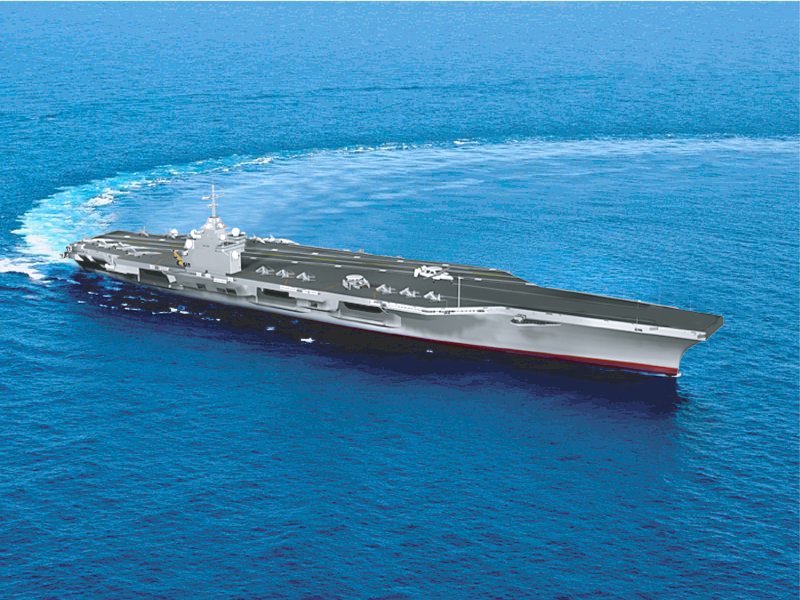
Artist conception of USS Gerald R Ford CVN-78

The Nimitz class will be joined by the USS Gerald R. Ford CVN-78.  The Ford is the first ship of an entirely new class. While approximately the same size as the Nimitz class at 1092 feet long and approximately 100,000 tons full load displacement the Ford class of which three are currently authorized and one under construction will feature many improvements over their predecessors. Among improvements are an advanced arresting gear, automation, which reduces crew requirements by several hundred from the Nimitz class carrier, the updated RIM-162 Evolved Sea Sparrow missile system, the AN/SPY-3 dual-band radar (DBR), as developed for Zumwalt class destroyers an Electromagnetic Aircraft Launch System (EMALS) in place of traditional steam catapults for launching aircraft, a new nuclear reactor design (the A1B reactor) for greater power generation, advanced stealth features to help reduce radar profile and the ability to operate the new F-35C Lightning II. If the class is built as programmed on a one ship every five year rate with the Ford commissioning in 2015 then 6 ships of the class will be in commission by 2040. The next two ships have been named, the John F Kennedy and Enterprise. 

Of course as with any military technology the future never is certain. In 1918 no one would have thought that the all-big gun Dreadnought Battleships would be eclipsed by the Aircraft Carrier in less than 25 years. While the Carriers have ruled the waves since Midway there are threats to them both military and financial.  Countries such as China while building their own carriers have are developing weapons such as guided ballistic missiles designed to destroy carriers.  As of now there is no defense against such a weapon if a carrier is within range. While China has not yet deployed the weapon it could be a game changer in the Western Pacific. Likewise there is the ever present threat posed by new and advanced submarines even those deployed by 2nd and 3rd world nations.  Finally there is the financial cost which could derail the procurement of more carriers in an era of austerity. The cost of the Ford is currently estimated to be $9 Billion Dollars which if stretched end to end would probably reach Vulcan where the Vulcans would come up with an answer to our current problems.

At the same time the carriers have defied those who predicted their demise since the Truman administration.  Currently no sea based platform has the multitude of capabilities of a carrier and its associated air wing and battle group and thus they should remain the Queens of the Sea for some time to come and the United States Navy which has led the world in their development and operation should continue to lead the way.

The next installment which will appear later this week will discuss the aircraft employed by the United States Navy not only those from carriers, but seaplanes, rotor-wing aircraft and lighter than air ships.

Peace

Padre Steve+
6 Comments

Filed under History, Military, Navy Ships

Suicide isn’t Painless: The Epidemic of Suicide in the Military

I leave the Naval Medical Center Portsmouth Virginia tomorrow and toward the end of October report as the Command Chaplain for Naval Hospital Camp LeJeune North Carolina. My last time at Camp LeJeune was as part of the Portsmouth SPRINT (Special Psychiatric Rapid Intervention Team) mission to care for Emergency Department personnel at the Naval Hospital and Base Fire/EMS responders to a particularly gruesome suicide of a young Marine who had recently served in Iraq and was preparing for another tour.

As a Chaplain and in my previous life as a Medical Service Corps officer commanding a Medical Company in Germany and Brigade Adjutant in Texas I have dealt with a lot of suicides, attempted suicides and the lives left shattered by suicide.  Likewise I have seen the results of suicide attempts as a trauma, emergency and critical care chaplain in major medical centers. I have attended the DOD Suicide Prevention Conference on a number of occasions and gotten to know many of the experts working in the field.

As I said I began my career as an officer in the Army Medical Service Corps. We had a close connection to the movie and television series M*A*S*H and the theme music to that movie is emblematic of the feelings of many combat vets who continue to deploy even after making many combat deployments. http://www.metacafe.com/watch/3444418/suicide_is_painless_johnny_mandel/

Through early morning fog I see
visions of the things to be
the pains that are withheld for me
I realize and I can see…
[chorus]:

That suicide is painless
It brings on many changes
and I can take or leave it if I please.

I try to find a way to make
all our little joys relate
without that ever-present hate
but now I know that it’s too late, and…
[Chorus]

The game of life is hard to play
I’m gonna lose it anyway
The losing card I’ll someday lay
so this is all I have to say.
[Chorus]

The only way to win is cheat
And lay it down before I’m beat
and to another give my seat
for that’s the only painless feat.
[Chorus]

The sword of time will pierce our skins
It doesn’t hurt when it begins
But as it works its way on in
The pain grows stronger…watch it grin, but…
[Chorus]

A brave man once requested me
to answer questions that are key
‘is it to be or not to be’
and I replied ‘oh why ask me?’

‘Cause suicide is painless
it brings on many changes
and I can take or leave it if I please.
…and you can do the same thing if you choose.

Last week four soldiers, one a highly decorated senior NCO and all combat veterans are believed to have committed suicide at Fort Hood Texas.  The base which has already seen more than its fair share of tragedy with 14 confirmed suicides this year is stunned that these occurred in one weekend.

Defense Secretary Robert Gates commented about the stress on the all-volunteer force: “No major war in our history has been fought with a smaller percentage of this country’s citizens in uniform full-time — roughly 2.4 million active and reserve service members out of a country of over 300 million, less than 1 percent,” as a result the wars have been fought by a small proportion of the country, for many they are “a distant and unpleasant series of news items that does not affect them personally.” While the distance grows between those that serve and the general population military families are under even more stress, with anxiety and disruption inflicted on children, increased domestic strife and a growing number of suicides. Divorce rates in the Army have doubled since the wars in Afghanistan and Iraq began.

In the years prior to about 2004-2005 the military suicide rate was almost always below civilian rates in all demographics.  This is something that we took legitimate pride in.  That began to change as the war in Iraq shifted from a “Shock and Awe” campaign to a rather nasty and intractable insurgency this began to change as the deployment tempo increased and the Army increased its “boots on ground” time from a year to 15 months with a one year dwell time between deployments. Even as Iraq calmed down and the US role shifted many troops remain and Afghanistan has become a much more difficult war than it was even a few years ago. The Marines retained a 6-7 month deployment schedule but as the war went on and personnel requirements increased many Marine units were doing 6 months in country and 6 months home.  The difficult of what was described as “dwell time” for the Army and Marines was that for all intents and purposes it wasn’t. The units would get a few weeks leave and stand down time on their return home and then begin preparing for their next deployment. These preparations out of necessity entailed much time in the field training including trips to the Fort Irwin National Training Center (NTC) or the Marine Corps Air Ground Combat Training Center at 29 Palms.  Speaking from experience before 9-11 I can say that a Marine battalion going to 29 Palms in reality makes a short but intense deployment which is taxing on the organization even as it sharpens combat skills.  The same can be said for Army units going to NTC.  Thus the time that is nominally considered time at home to recuperate is not that and instead serves to keep the pressure on already stressed units, leaders and soldiers/Marines.  In the intervening time those that present to mental health providers or chaplains are provided with care to get them back in shape for the next deployment but never really get to deal with the deeper psychological and spiritual wounds. These include “moral injury”  which often involves unresolved grief for the loss of comrades and real or imagined guilt for their own actions in war.  Such wounds ultimately create despair, loss of faith and eventually cause some service members to make attempts on their life with varying degrees of “success” in “completing” the suicide.

The result is that those who have experienced the moral injuries that come as a result of combat, seeing comrades killed and wounded, participating in actions where they are directly or indirectly involved in killing the enemy, see the “collateral damage” of civilians, including children killed and maimed go right back into to fight.  Since this war has now gone on longer than any war in US history and we are fighting it with an all volunteer force of limited numbers with many making multiple deployments, some as many as 5 or more these wounds are pushed aside.  The effect of this is a cumulative grinding down of those that serve in harm’s way. Many suffer from some form of psychological, neurological or even spiritual injury that in combination with other life stressors make them particularly vulnerable to taking their lives.  In regard to moral injury “Many of the troops kill themselves because they feel that those kinds of experiences have made them unforgivable,” said Dr. William Nash, a top PTSD researcher. “It’s a lot harder for most people to forgive themselves than to forgive others.”

Unfortunately there is a stigma attached to seeking treatment or admitting that one is suffering from depression, anxiety or any other condition associated with either seeking help on their own or being “command referred” for psychological/psychiatric help.  Since that stigma is real many war fighters don’t seek help and take “refuge” in destructive behaviors such as alcohol abuse, drug abuse (to include prescription drugs) and risky behaviors.  One wonders how many of the single vehicle accident fatalities that occur late at night to combat vets are not accidental at all but are suicides by another more “socially acceptable” means.  If a forensic psychological profile was done on every service member that dies in such events I would guess that the finding would be a lot more suicides not an accidental deaths as we would like to believe. Yes all of these deaths are tragic but it is far easier to rationalize death in an auto accident than death by gunshot, knife wounds, overdose or hanging.

I am not proposing any solutions for this problem.  I do believe that somehow the deployment tempo needs to be slowed down to allow troops to actually recover and get help.  This is one of the suggestions of the DOD Suicide Prevention Task Force.  Their report is linked here: http://www.health.mil/dhb/downloads/Suicide%20Prevention%20Task%20Force%20report%2008-21-10_V4_RLN.pdf

When I go to LeJeune I know that as a Chaplain at the Naval Hospital I will be collaborating with our mental health professionals to provide care to Marines, Sailors and their families that are living this daily.  The Marine situation is poignantly show in this article: http://www.nctimes.com/news/local/military/article_3dc03ec3-6a37-5608-8563-aca88f635271.html

I have served with the Marines almost 6 years and from what I see the Corps has changed.  It is battle hardened but less resilient than it used to be.  The Marine Corps’ suicide rate has reached 24 per 100,000, a rate that surpasses all the other services. The rate was 13 per 100,000 in 2006 when I finished my tour at Marine Security Forces. The latest available figures put the civilian suicide rate at 20 per 100,000.  The problem extends past active duty as Veterans Affairs Secretary Eric Shinseki, the former Army chief of staff, said the suicide rate for men aged 18-29 who have been discharged had gone up by 26% from 2005-07. Likewise, “of the more than 30,000 suicides in this country each year, fully 20% of them are acts by veterans.” This means as Shinseki said “on average 18 veterans commit suicide each day. Five of those veterans are under our care at VA. So losing five veterans who are in treatment every month, and then not having a shot at the other 13 who for some reason haven’t come under our care, means that we have a lot of work to do.”

There is also an effect on military health care providers of all kinds and chaplains. These individuals not only have to deal with their trauma but the trauma and hopelessness that they see in many of their patients or parishioners. These caregivers have no respite between deployments because their reason for being is to care for the Soldiers, Marines, Airmen and Sailors that present to them be they deployed or back in a military hospital or clinic.

The work will be hard and long after the last Marine, Sailor, Soldier or Airman leaves Iraq and Afghanistan we will be dealing with this for years to come.

Peace

Padre Steve+
3 Comments

Filed under healthcare, iraq,afghanistan, Military, Pastoral Care, PTSD

Iconic and Heroic: The Fletcher Class Destroyers

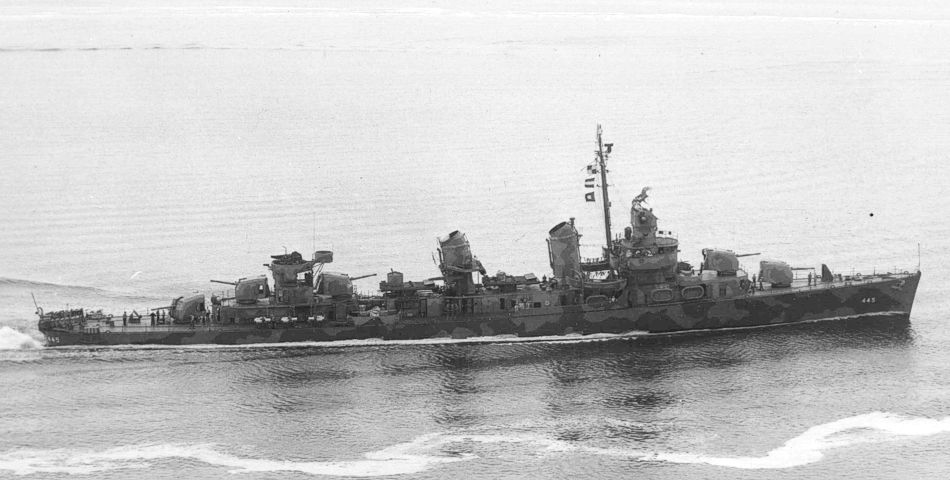
The USS Fletcher DD-445

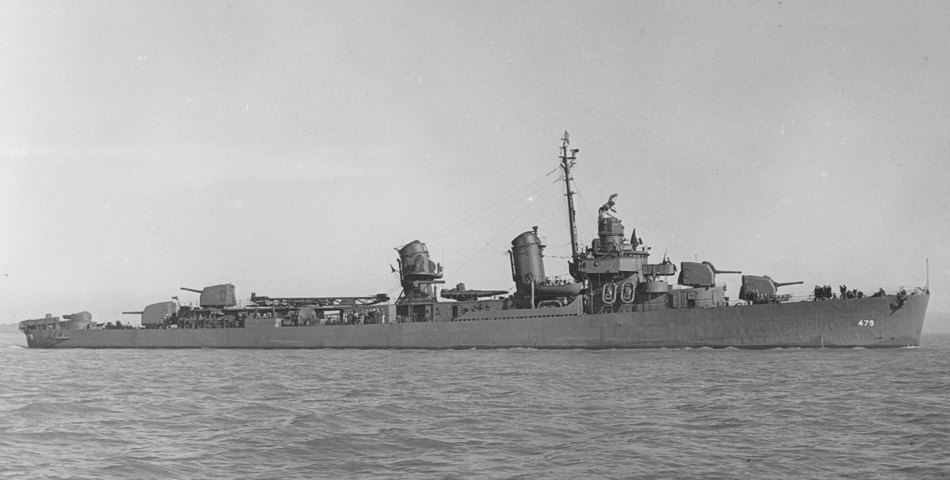
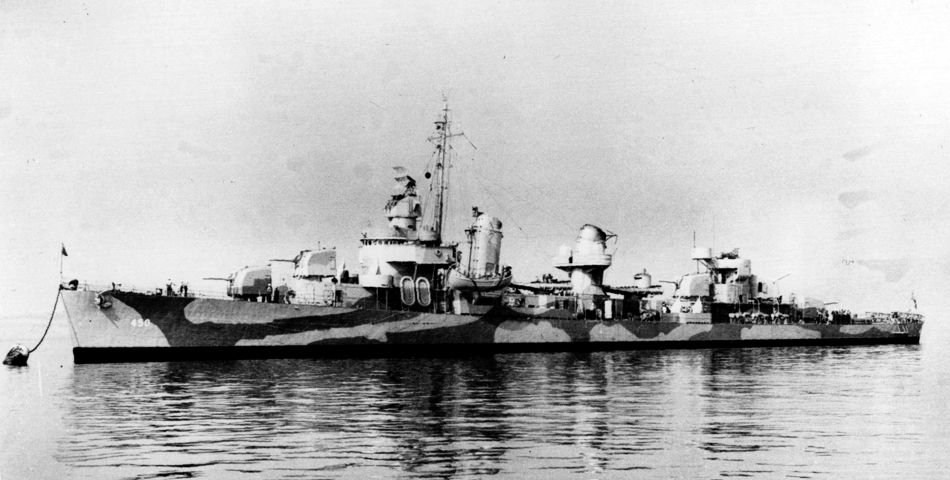
If ever a class of warships can define a ship type the destroyers of the Fletcher Class were that. The most numerous of all United States Navy destroyer classes the Navy commissioned 175 of these ships between June 1942 and February 1945.  There were two groupings of ships the 58 round or “high bridge” ships and the 117 square or “low bridged” ships. It was a sound design that would be modified for use in the later Allen M. Sumner and Gearing Class destroyers.  Eleven shipyards produced the ships fast, heavily armed and tough the ships would serve in every theater of the war at sea but would find their greatest fame in the Pacific where many became synonymous with the courage and devotion of their officers and crews.

USS Stevens one of the 6 Fletchers equipped with an aircraft catapult

The ships were a major improvement on previous classes of destroyers and were equal or superior to the destroyers of our allies and our enemies in the war.  At 2050 tons displacement and 2900 tons full load the ships were significantly larger than preceding classes and were designed to mount a superior anti-aircraft armament to compliment their main battery of five 5” 38 caliber dual purpose guns and ten 21” torpedo tubes. 376 feet long and flush decked they were an exceptionally tough class of ships which was demonstrated often in the brutal surface battles in the South Pacific, Leyte Gulf and in the battles with Kamikazes off the Philippines, Iwo Jima, Okinawa and the Japanese mainland.  They were the first destroyers of the US Navy which were built with radar as part of the initial design.

USS O’Bannon DD-450 in 1961

The anti aircraft armament was increased throughout the war. Initially this was composed of: 4 x 40mm Bofors in two twin-mounts and 6 to 13 x 20mm Oerlikon in single-mounts. By June of 1943 new ships of the class mounted 10 x 40mm Bofors in five twin-mounts 7 x 20mm Oerlikon in single-mounts. As the Kamikaze threat became dire ships returning to the United States for refit lost one of their torpedo tube mounts and had their AA armament increased to 14 x 40mm Bofors in three twin and two quad mounts and 12 x 20mm Oerlikon in six twin mounts.  One of the more unusual experiments was to equip six ships with a catapult for a float plane. This eliminated some of their AA guns and one torpedo tube mounting. It was not successful and the mounts were removed before the end of the war.

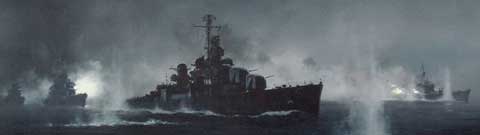
USS Nicholas in action at Kula Gulf

The first ships of the class saw action in the Solomons during the Guadalcanal campaign.  Fletcher and O’Bannon took part in the Naval Battle of Guadalcanal where O’Bannon was one of several destroyers that ganged up on the Japanese Battleship Hiei at ranges as low as 500 yards causing heavy damage to the Battleship which was sunk by naval aircraft the following day.  The O’Bannon would be awarded the Presidential Unit Citation for her actions around Guadalcanal which read:

O’Bannon

“For outstanding performance in combat against enemy Japanese forces in the South Pacific from October 7, 1942, to October 7, 1943. An aggressive veteran after a year of continuous and intensive operations in this area, the U.S.S. O’BANNON has taken a tremendous toll of vital Japanese warships, surface vessels and aircraft. Launching a close range attack on hostile combatant ships off Guadalcanal on the night of November 13, 1942, the O’BANNON scored three torpedo hits on a Japanese battleship, boldly engaged two other men o’ war with gunfire and retired safely in spite of damage sustained. During three days of incessant hostilities in July 1943, she gallantly stood down Kula Gulf to bombard enemy shore positions in coverage of our assault groups, later taking a valiant part in the rescue of survivors from the torpedoed U.S.S STRONG while under fierce coastal battery fire and aerial bombing attack and adding her fire power toward the destruction of a large Japanese naval force. In company with two destroyers, the O’BANNON boldly intercepted and repulsed nine hostile warships off Vella Lavella on October 7, 1943, destroying two enemy ships and damaging others. Although severely damaged, she stood by to take aboard and care for survivors of a friendly torpedoed destroyer and retired to base under her own power. The O’BANNON’s splendid acheivements and the gallant fighting spirit of her officers and men reflect great credit upon the United States Naval Service.

DESRON 23

Fletcher’s composed DESON 23 the Little Beavers” commanded by Commodore Arleigh “31 knot” Burke. The squadron which covered the initial landings at Bougainville in November 1943 fought in 22 separate engagements during the next four months. During this time the squadron was credited with destroying one Japanese cruiser, nine destroyers, one submarine, several smaller ships, and approximately 30 aircraft.  Under Burke the squadron was composed of USS Foote (DD-511), USS Charles Ausburne (DD-570), USS Spence (DD-512), USS Claxton (DD-571), USS Dyson (DD-572), USS Converse (DD-509) and USS Thatcher (DD-514).  At the Battle of Cape St. George the squadron intercepted a Japanese force of 5 destroyers sinking 3.  At the Battle of Empress Augusta Bay the ships were in action as part of Task Force 39 based around Cruiser Division 12 comprised of the Cleveland Class Light Cruisers Montpelier, Cleveland, Columbia and Denver the took part in the sinking of the Japanese Light Cruiser Sendai and a destroyer.  For their efforts DESRON 23 would be awarded the Presidential Unit Citation which stated:

“For extrordinary heroism in action against enemy Japanese forces during the Solomon Islands Campaign, from November 1, 1943, to February 23, 1944. Boldly penetrating submarine-infested waters during a period when Japanese naval and air power was at its height, Destroyer Squadron TWENTY THREE operated in daring defiance of repeated attacks by hostile air groups, closing the enemy’s strongly fortified shores to carry out sustained bombardments against Japanese coastal defenses and render effective cover and fire support for the major invasion operations in this area. Commanded by forceful leaders and manned by aggressive, fearless crews the ships of Squadron TWENTY THREE coordinated as a superb fighting team; they countered the enemy’s fierce aerial bombing attacks and destroyed or routed his planes; they intercepted his surface task forces, sank or damaged his warships by torpedo fire and prevented interference with our transports. The brilliant and heroic record achieved by Destroyer Squadron TWENTY THREE is a distinctive tribute to the valiant fighting spirit of the individual units in this indomitable combat group and of each skilled and courageous ship’s company.”

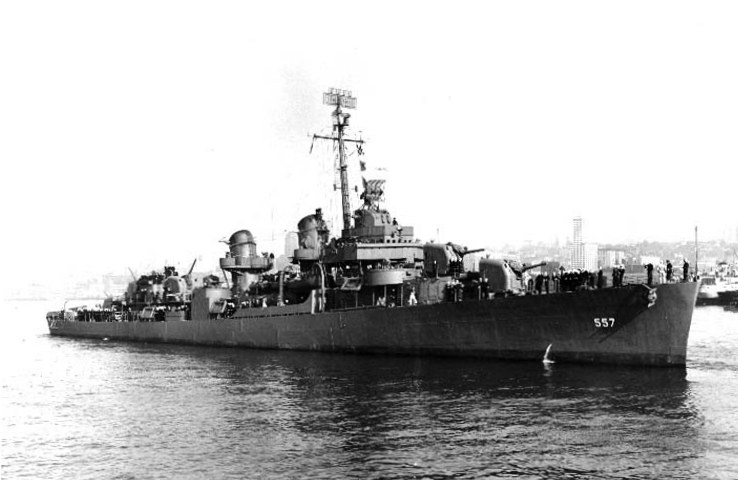
USS Johnston DD-557

Fletcher’s served heroically with “Taffy-3” in the Battle of Samar at the Battle of Leyte Gulf.  Taffy-3 which was composed of 6 escort carriers, the Fletcher Class destroyers Hoel, Johnston and Heermann and 4 destroyer escorts was assigned the task of providing close air support for troops ashore and anti-submarine protection for transports.  On the morning of October 25th Admiral Halsey took Third Fleet north to engage a Japanese carrier force believing a Japanese surface force of battleships and cruisers to have withdrawn after being heavily hurt by submarine and air attacks.  The carrier force had few aircraft and was considered a decoy by the Japanese. This left the San Bernardino Strait unguarded and the Japanese surface force which by now was comprised of 4 battleships including the Yamato as well as 6 heavy and 2 light cruisers and 11 destroyers doubled back going through the strait during the early morning hours of the 25th.  Just before dawn a patrol aircraft spotted the Japanese force and at 0659 Yamato opened fire on the task group.

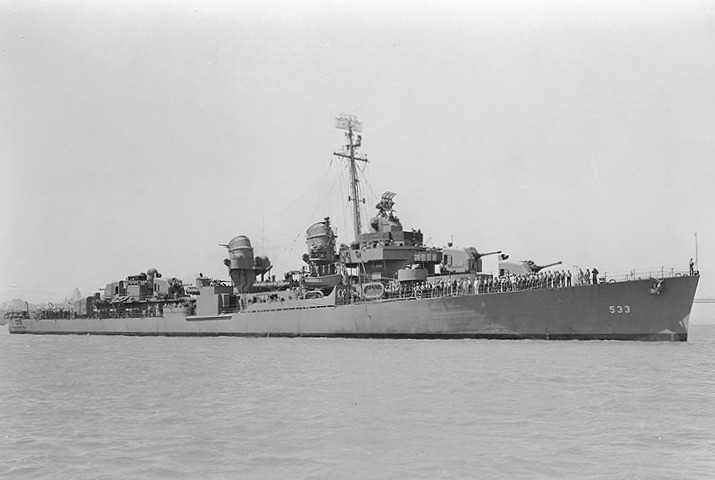
USS Hoel DD-533

The three Fletcher’s and the Destroyer escort Samuel B Roberts were launched into a suicidal counter-attack against the Japanese force. Led by Johnston under the command of Ernest E. Evans the little ships engaged their vastly superior foe as the escort carriers edged away as they launched and recovered their aircraft to keep a continuous air assault on the Japanese force.  Johnston scored numerous hits with her 5” guns on the Heavy Cruiser Kumano and when she reached torpedo range launched her 10 “fish” one of which blew off Kumano’s bow and another of which crippled Kumano’s sister Suzuya before she was hit in quick succession by a 14” shell from the Battleship Kongo which hit her engine room and three 6” shells from Yamato which struck her bridge.  Evans kept the crippled ship in the fight drawing fire away from other attacking destroyers and fending off a Japanese destroyer squadron that was trying to flank the carriers. Johnston continued to be hit and was abandon at 0945 sinking 25 minutes later with 186 of her crew.  Evans did not survive and was awarded the Medal of Honor.

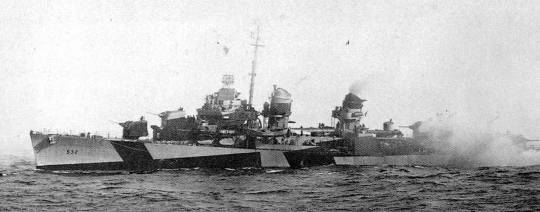
USS Heermann DD-532 in action at Samar

Hoel under the command of Commander Leon S. Kintberger took on the Battleship Kongo and a column of cruisers lead by the Heavy Cruiser HaguroHoel’s torpedo attack on Kongo forced that ship to turn away and torpedo hits were claimed on the Haguro, although that ship remained in action and the Japanese denied any torpedo damage from the attack. The Japanese concentrated on Hoel sinking her at 0855 taking all but 86 of her crew to a watery grave.

Heermann under Commander Amos Hathaway threw herself into the fight engaging Japanese battleships and cruisers. Heermann engaged Heavy Cruiser Chikuma with her guns while mounting a torpedo attack on Haguro. She then attacked the Japanese battleships directly engaging Haruna and forcing Yamato to head away from the action for 10 minutes as she was bracketed by two of Heermann’s torpedoes running on a parallel course.  She engaged the other battleships at such close range that they could not hit her and broke off to intercept a column of cruisers.  Once again she engaged Chikuma in a bloody duel with both ships taking heavy damage. Crippled by a series of 8” shell hits from the heavy cruisers Heermann was down heavily at the bow, so much so that her anchors dragged the water. Carrier aircraft joined the battle and Chikuma withdrew from the fight and sank during her withdraw. Heermann then engaged Heavy Cruiser Tone before that ship, also damaged by air attack withdrew from the fight.  Though she was heavily damaged the Heermann was the only destroyer to survive the action.  Despite their terrible losses the ships and aircraft of Taffy-3 sank 3 heavy cruisers and a destroyer and heavily damaged 3 battleships and 3 heavy cruisers.

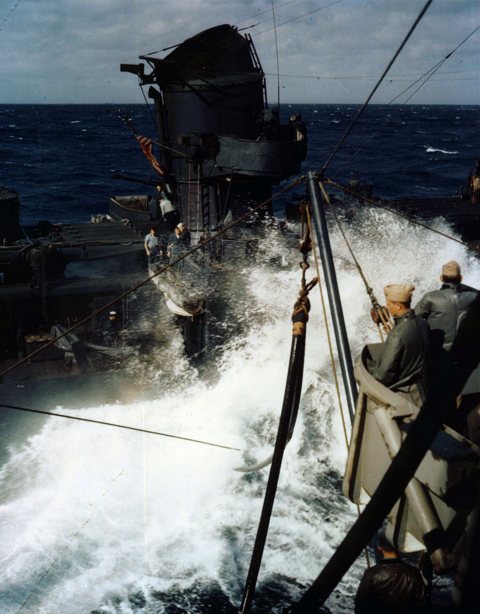
Just a bit wet, USS Halsey Powell unrep with USS Wisconsin

For their heroic actions which kept the Japanese from getting to the vulnerable transports Taffy-3 including the valiant destroyers Johnston, Hoel, Heerman and Destroyer Escort Samuel B Roberts was awarded the Presidential Unit Citation which read:

“For extraordinary heroism in action against powerful units of the Japanese Fleet during the Battle off Samar, Philippines, October 25, 1944. Silhouetted against the dawn as the Central Japanese Force steamed through San Bernardino Strait towards Leyte Gulf, Task Unit 77.4.3 was suddenly taken under attack by hostile cruisers on its port hand, destroyers on the starboard and battleships from the rear. Quickly laying down a heavy smoke screen, the gallant ships of the Task Unit waged battle fiercely against the superior speed and fire power of the advancing enemy, swiftly launching and rearming aircraft and violently zigzagging in protection of vessels stricken by hostile armor-piercing shells, anti-personnel projectiles and suicide bombers. With one carrier of the group sunk, others badly damaged and squadron aircraft courageously coordinating in the attacks by making dry runs over the enemy Fleet as the Japanese relentlessly closed in for the kill, two of the Unit’s valiant destroyers and one destroyer escort charged the battleships point-blank and, expending their last torpedoes in desperate defense of the entire group, went down under the enemy’s heavy shells as a climax to two and one half hours of sustained and furious combat. The courageous determination and the superb teamwork of the officers and men who fought the embarked planes and who manned the ships of Task Unit 77.4.3 were instrumental in effecting the retirement of a hostile force threatening our Leyte invasion operations and were in keeping with the highest traditions of the United States Naval Service.”

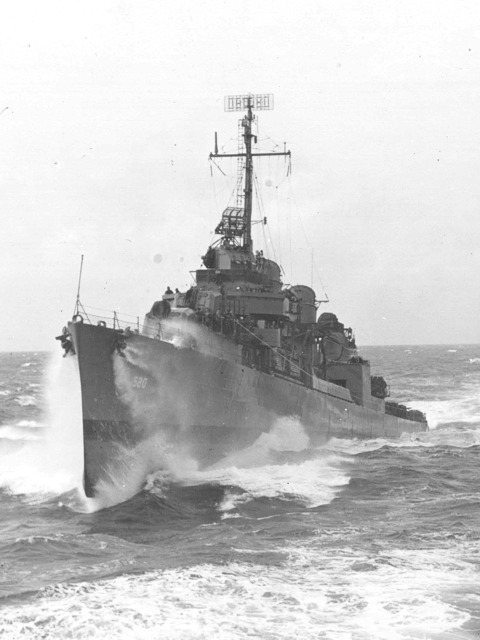
USS Isherwood (DD-520) underway in heavy weather as she comes alongside the heavy cruiser USS Tuscaloosa (CA-37) in August 1943. National Archives and Records Administration. Photo # 80-G-79429. [Navsource]

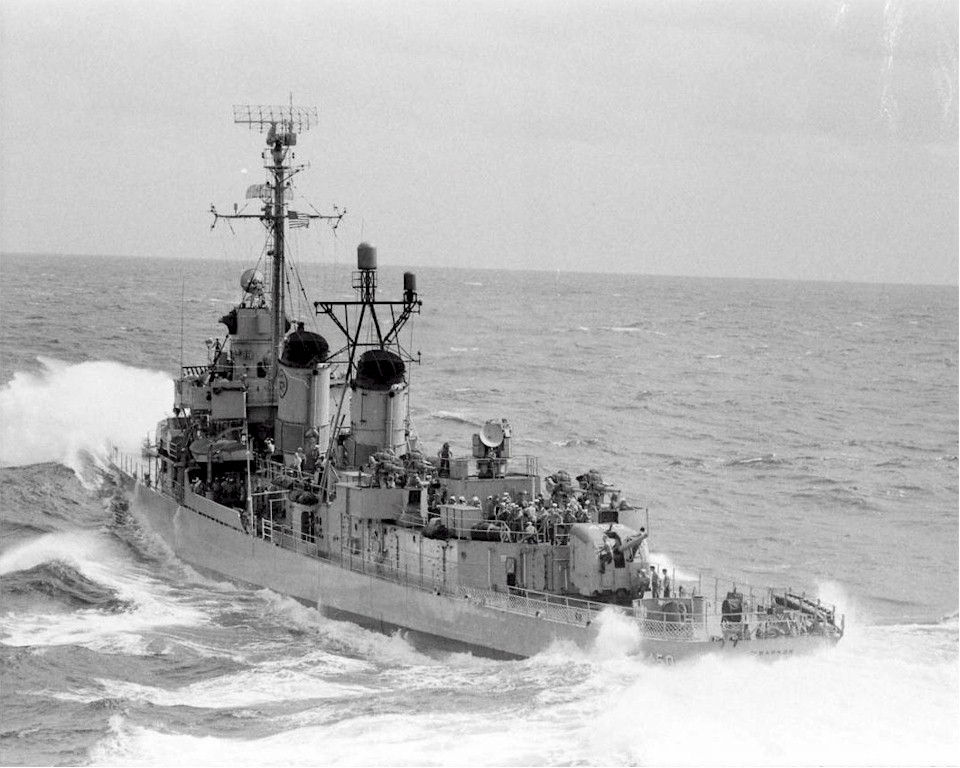
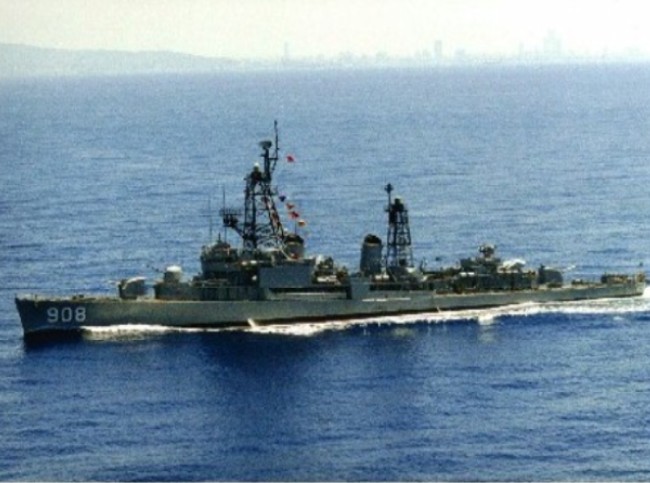
During the war 19 of the class were lost and 6 damaged so badly that they were not repaired. 44 of the ships were awarded 10 battle stars or more while 19 were awarded Naval Unit Commendations and 16 Presidential Unit Citations.  Following the war all were decommissioned and placed in reserve. Many were re-commissioned during the Korean War and served through Vietnam. Some of these ships were modernized with newer ASW weapons and re-designated Escort Destroyers (DDE) while others had their air search radar modernized and were re-classified as Radar Picket Destroyers or (DDR). The last Fletcher in US Service decommissioned in 1971.  52 were sold or transferred under military assistance programs to other navies in the 1950s.  The ships served well and the last one in active service the Mexican Navy Destroyer Cuitlahuac the former USS John C Rodgers DD-874 was decommissioned in 2001.

Ex USS Twinning in Republic of China Navy Service, note weapon modifcations

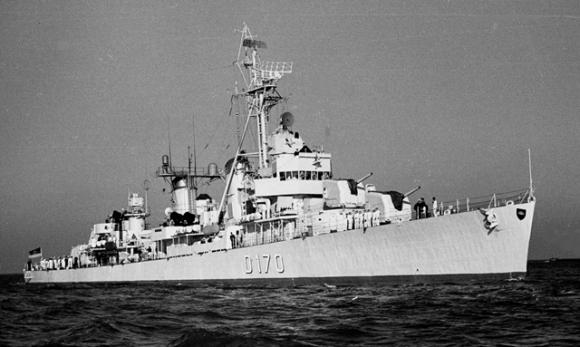
Zerstörer Z-1 Rommel

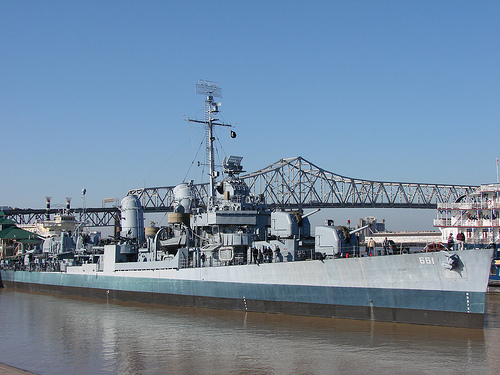
USS Kidd as Museum and Memorial

Four are currently open as memorial ships the USS Cassin Young DD-793 at Buffalo NY, the USS The Sullivans DD-537 at Boston MA and USS Kidd DD-661 at Baton Rouge LA can be seen in the United States. The Cassin Young is berthed at the old Charlestown Naval Yard in Boston across the pier from the Frigate USS Constitution.  The former the Greek destroyer Velos the ex-USS Charette DD-581 is located in Athens.  The John Rodgers has been purchased by a group in the US but is currently laid up in Mexico and her fate is undecided. I hope that she too will be saved for future generations.

The Fletcher Class really symbolizes more than any class of destroyer the classic look of what a destroyer should be. Their clean lines and classic design are iconic not just in this country but in the 15 other countries that they would serve in during the following years.  Their amazing record and service in World War Two and in the following years in both the US Navy and the navies of our Allies is one that will probably never be surpassed.

I have visited the Cassin Young in Boston; it is well worth the time to see. I hope that I might see The Sullivans and Kidd in the coming years.

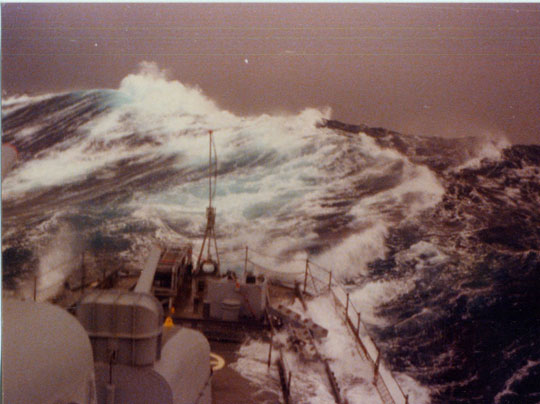
The Zerstörer Z-4 ex USS Dyson in heavy seas

I salute the ships of the class and the officers and sailors that served on them in peace and war.

Peace

Padre Steve+

5 Comments

Filed under History, Navy Ships, US Navy, world war two in the pacific

29 Years in the Military and still Going Strong

“It’s a mere moment in a man’s life between the All-Star Game and an old timer’s game.” Vin Scully

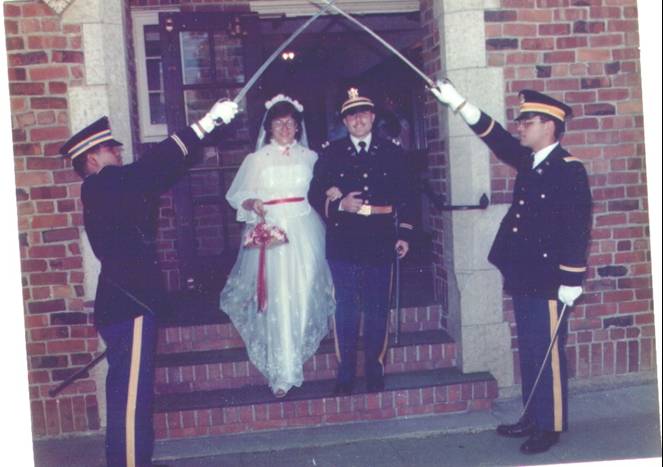
Padre Steve in 1982

They say that “time flies when you’re having fun” and I cannot believe that I have been in the military now for 29 years. On August 25th 1981 a 21 year old college kid with long Southern California “surfer” hair walked into the California Army National Guard Armory on Van Nuys Boulevard to enlist in the National Guard after having just sworn into the Army ROTC program at UCLA.   Back then I enlisted in what was or is called the Simultaneous Membership Program or SMP program.  My initial military training came through the ROTC program as well as on the job training in the National Guard as a Field Artillery Forward Observer and Intelligence Specialist.

Like Cal Ripken Jr commenting about his career “So many good things have happened to me in the game of baseball. When I do allow myself a chance to think about it, it’s almost like a storybook career. You feel so blessed to have been able to compete this long.” I can say the same thing just substituting the words “military career” for “the game of baseball.”

On the day that I enlisted I met with Major Charles Armagost the S-1 of 3rd Battalion 144th Field Artillery and full time advisor for the battalion filled out my enlistment papers and raised my right hand. I still remember the day when I enlisted. It was a hot smoggy Los Angeles day where you could see the air.  I walked down the hall after I swore in to see the supply Sergeant who outfitted me with four sets of Olive Green fatigues and ordered me two sets of the brand new BDUs.  I was issued my TA-50 gear and taken to the motor pool where I was given cursory training on the M151A1 “Jeep” and issued a military drivers license.  The three weeks later I was driving one of those venerable machines to Fort Irwin on a Friday through Sunday drill with the advanced party. It was the beginning of a 29 year career spanning two services, the active and reserve components and now multiple trips to combat zones.

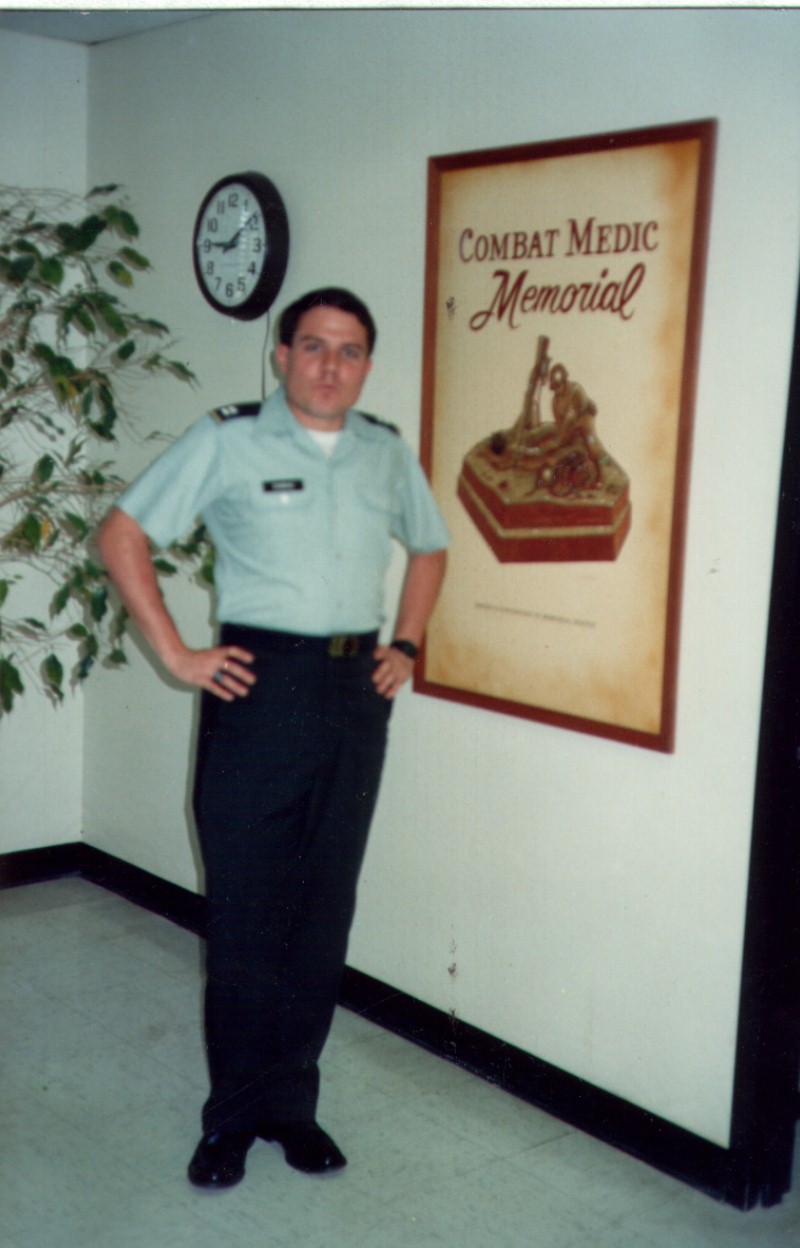
Army Captain 1987

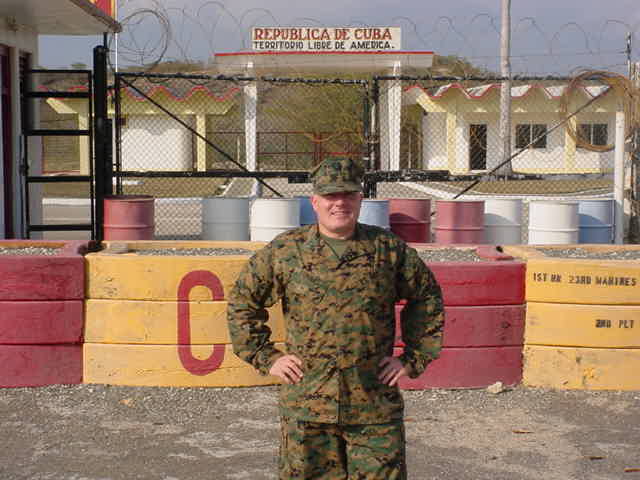
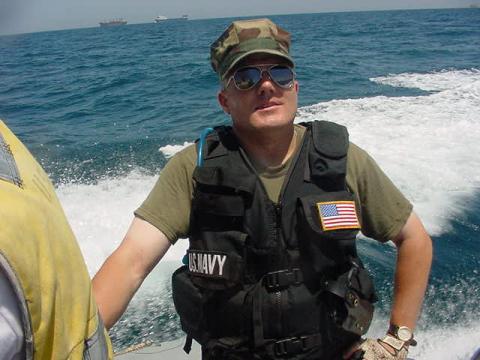
It has to quote Jerry Garcia of the Grateful Dead “a long strange trip” spanning the Army and the Navy, active and reserve components as well as two tours with the Marine Corps while serving in the Navy and the beat goes on with my selection for promotion to Commander and my Senate nomination to that grade on August 21st.  I have served on the Fulda Gap in the Cold War, been to what was then East Berlin driving the Helmstedt-Berlin corridor sharing the road with Soviet armored columns.  I supported the Bosnia Operation in 1996-97 and the Korean DMZ with the Marines in 2001. I served in Operation Enduring Freedom and Southern Watch in 2002 where I was on a boarding team, boarding 75 Iraqi and other country smuggling ships while serving aboard the USS Hue City.  That was followed by multiple trips in and out of theater with the Marine Security Forces from 2003-2006 as well as time on the Cuban fence line at Guantanamo Bay before serving in Iraq with our Marine and Army advisors and their Iraqi Army and Security forces.  I’ve served with Infantry, Armor, Combat Engineer, Artillery, Medical and Ordnance units, Security forces, support elements, bases and training centers, hospitals and ships.

Berlin Wall November 1986

When I enlisted I thought that once I was commissioned that I would serve my entire career in the Army and retire as a Lieutenant Colonel. I did not anticipate becoming a Chaplain nor leaving the Army for the Navy. When I am officially promoted to Commander it will be the first rank since I was an Army First Lieutenant that I have not held twice.  When I first enlisted and had no ribbons I used to look at wonderment at the Korea and Vietnam veterans who had tons of ribbons and tell Judy that I wish I had what they had. Now that I am working on 9 rows of the things I cringe every time I have to remount ribbons and ribbons and my wallet screams in agony.  Judy is quick to remind me of my whininess back then and tell me that I asked for it.

She didn’t know what she was getting into

As an Army and Navy Officer I have served or done some kind of military duty in Germany, France, Great Britain, Greece, Italy, Croatia and Turkey, Spain, Malta, Korea, Japan, Jordan, Bahrain, Kuwait and Iraq.  I’ve done what I call the “Commie Trifecta” the Berlin Wall, Korean DMZ and the Cuban Fence Line. At the same time I have spent 16 of 27 wedding anniversaries away from home and lost count of birthdays and other important occasions that I missed while serving the country.

Guantanamo Bay Cuba 2004

I have served 5 different Presidents. In that time I have seen changes in the political, social and economic conditions of the country and the world that I could not have imagined at the time of my enlistment.  The Soviet Union had just invaded Afghanistan and the Iranian hostage crisis had just ended but within the Soviet Union had been defeated the Berlin Wall taken down and collapse of the Soviet Union.  Twenty years after I enlisted the people that defeated the Soviets were attacking us on our own soil.

Boarding Party Arabian Gulf May 2002

I lived in Europe and went through the Chernobyl radiation cloud which is obviously the cause of my glowing personality.  While in Europe I ate enough beef to be labeled by the Red Cross as a potential carrier of Mad Cow disease. I worked on military personnel policies at the beginning of the AIDS epidemic and saw the beginning of Don’t Ask Don’t Tell policy.  I saw the Reagan build up and the post Cold War drawdown.  When I was a Company XO and Company Commander we had landlines and typewriters with carbon paper and did not get internet in my office until 1997.  It is hard to believe the changes even in the quantum leaps in computer and communication technology in the past few years where I can check e-mail on my Blackberry and work from almost anywhere with my laptop.

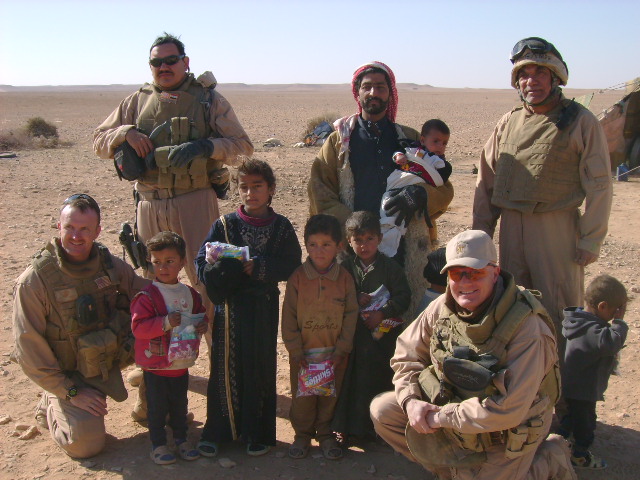
With Advisors and Bedouin on Iraqi-Syrian Border December 2007

Looking back here are some of the things that I have seen since I entered the military:

October 23rd 1983: Beirut Bombing: BLT 1/8 barracks and French 1st Parachute Regiment destroyed by suicide bombers 241 Americans and 58 French Paras killed.  I was at the Junior Officer Maintenance Course at Fort Knox watching CNN late at night when they broke the news.

December 12th 1985:  Arrow Air Charter Boeing 707 crashed in Gander Newfoundland killing 248 American Soldiers returning from Peacekeeping duty in Sinai Peninsula. Among the dead was Sergeant Charles Broncato who had been one of my Squad Leaders in 2nd Platoon 557th Medical Company Ambulance. I was then serving as the Company Commander.

January 28th 1986: The Space Shuttle Challenger blows up 73 seconds into flight killing 7 Astronauts.  I was in my office at the close of the day getting ready to adjudicate an Article 15 when my Charge-of Quarters SPC Lisa Dailey ran into my office and said “Lieutenant Dundas, the Space Shuttle just blew up!” My response was “Come on, Space Shuttles don’t blow up.”

February 15th 1988: The Soviet Union withdraws from Afghanistan. I was a National Guard Officer in Texas attending Seminary and thought this was a good thing.  Now I wish that they had done better and at least killed Osama Bin Laden, then a relatively minor commander.

December 21st 1988: Pan Am 103 downed by Libyan operatives over Lockerbie Scotland killing all 270 passengers and crew. The aircraft a Boeing 747 named the Maid of the Seas was the same aircraft that we had flown home from Germany on December 28th 1986.

October 17th 1989: the Loma Prieta Earthquake causes massive damage in San Francisco and Oakland. I was watching pregame activities of game 3 of the World Series between the A’s and Giants on television when it happened.

November 9th 1989: The Berlin Wall Fell. In November of 1986 we had been to East Berlin and like most Americans never thought that we would see this day.

August 2nd 1990: Iraq Invades Kuwait: At time few people believe it well end in war. I was deputy course leader for Army Chaplain Officer Basic Course, tell my classmates to get ready to go to war.

December 31st 1991: The Soviet Union is dissolved.

April 19th 1993: FBI and other Federal Law Enforcement personnel using Combat Engineering Vehicles from the 111th Engineer Battalion, the unit that I serve as a Chaplain assault the Branch Davidian compound outside Waco Texas. Davidian leader David Koresh and dozens of followers die in fire and shoot out.

June 17th 1994:  Police arrest O. J. Simpson after nationally televised low speed chase charging him with murder in the death of his wife Nicole and Ronald Goldman. NBC splits screen between NBA championship series game between Houston Rockets and New York Knicks and the chase. I watch in back of M577 Command Vehicle on 9 inch television in the field at Fort Hood.

August 12th 1994: Baseball strike cancels season, playoffs and Worlds Series.

April 19th 1995: Timothy McVeigh and Terry Nichols blow up Alfred P. Murrah Federal Building

January 26th 1998: Bill Clinton states that “I want you to listen to me. I’m going to say this again: I did not have sexual relations with that woman, Miss Lewinsky.”

December 31st 1999: The world awaits the end of life as we know it due to the Y2K flaw sthat supposedly causes computers to malfunction and bring calamity to the earth.

January 1st 2000:  People including me wake up from hangovers to find that computers still work.

September 11th 2001: Al Qaeda terrorists hijack four commercial airliners crashing two into the World Trade Center Towers in New York collapsing them and one into the Pentagon. A fourth is brought down by passengers before it can reach Washington DC and its target, the US Capital killing 2976 people and injuring another 6000+. I am at Camp LeJeune North Carolina and remained locked down on base the next 4 days.

March 19th 2003: US and Allies launch attack on Iraq known as Operation Iraqi Freedom to remove Saddam Hussein from power and disarm his stocks of weapons of mass destruction. I am assigned to USS Hue City and the ship is in dry dock. The rest is history.

I also saw a lot of baseball mostly from afar, Pete Rose’s epic hit, Cal Ripken’s consecutive games record, Nolan Ryan’s 5000th strike out and 7th no-hitter as well as all of the now steroid tainted home run records including Barry Bond’s 756th home run which I saw live in a chow hall in Baghdad.

Somehow it is all worth it. Judy has not divorced me although I have probably given her reason on more than one occasion to do so and I love what I do and the people that I get to serve. It really is amazing to look back and think about all the events that I have either witnessed or been a part of in the military as well as all of the great people that I have been associated with. Those friendships and relationships mean more than about anything to me and I am grateful to God and to Judy, my family and all of my friends who have helped me, sometimes in very dark times to go as far and as long as I have in both the Army and Navy.

I was selected for promotion to Commander in June and confirmed by the Senate on August 23rd. I now am about to enter a new phase of life, military service and ministry as the supervisory Chaplain at Naval Hospital Camp LeJeune North Carolina.  Lord knows what the future hold, but whatever happens I feel that things will be fine.

I hope that whatever you do that you will experience good things and be able to look back in life and say “wow that was something else.” So here is to all of us and the long strange trips that we embark upon in life.  In the words of Lou Gehrig, “I am the luckiest man alive.”

Peace,

Padre Steve+

Leave a comment

Filed under Baseball, History, Military, Tour in Iraq, US Navy

Goodbyes and Prayers: Sending Friends off to War

My little war within the war, Christmas with the Bedouin

Yesterday I was honored to be at a pre-deployment ceremony for a number of my shipmates from Portsmouth Naval Medical Center about half of I know fairly well.  There were physicians, nurses and hospital corpsmen in the group, some going to Afghanistan with the Marines, NATO or the Army while others were going to Guantanamo Bay or Djibouti, the country rejected by both Eritrea and Ethiopia. I already have seen a good number of friends and colleagues from our Medical Center deploy and in some cases return and I know of one corpsman that came back wounded while serving with the Marines in Afghanistan.

COP South

I have done many of these send offs since coming to Portsmouth but I think that today I knew a higher percentage of the personnel deploying than normally is the case.  At these ceremonies it is customary for the chaplain to pray for our shipmates as well as their family members.  This deployment comes in the midst of monthly casualties reaching their highest point in the war and shortly after two US Navy sailors being killed when for whatever reason they left their base in Kabul in an up armored Toyota Land Cruiser and proceeded to drive alone to one of the most dangerous areas of the country.  With that in mind the safety of our shipmates is something that I and those that serve are ever mindful of when we send our people to deploy.  Yesterday I spent more time with the deploying sailors before and following the ceremony because so many were friends or close colleagues. The goodbyes from me this time were different as I will not be at Portsmouth when my friends return. My assignment as the Command Chaplain at Naval Hospital Camp LeJuene means that I won’t be there but I will continue to keep them in my prayers and stay in contact with as many as I can through e-mail or Facebook.  At LeJuene I will meet old friends from Portsmouth as well as from my Marine tours.  I will also get to deal with a lot more Marines and Sailors dealing with physical as well as psychological injuries resulting from their time in harm’s way in either Iraq or Afghanistan or in many cases both countries.

Pause for possible IED

It has been three years since I deployed to Iraq, in fact three years to the day yesterday that I arrived in Kuwait to complete final training before going into country.  When I was over in Iraq I was blessed my many expressions of support of many people, churches, schools and veterans groups.  At the same time I did not sense the overwhelming support of the people for our troops and that included many members of the political establishment that seemed more interested in using the war to advance their political objectives and unfortunately that was truly a bi-partisan endeavor.  Since we are an all volunteer force it seems to me that the only people really paying attention are people with sons, daughters, mothers or fathers or other family members or friends in harm’s way.  For others supporting the troops is little more than a bumper sticker affirmation, which I appreciate as at least most people aren’t damning us as so many did in Vietnam, a war that my dad served in and which as a Navy dependant experienced in the way that military families were treated by the protest set.

On Syrian Border with Iraqi Border Troops

Today I saw an article about an Army Lieutenant one Christopher Babcock http://gen-reading.blogspot.com/ at a tiny base in Afghanistan.  I often felt this way when in Iraq, especially those times that I came back into the large base that I operated from and saw various news channels on AFN including Fox News, CNN, and MSNBC.  Much of what I saw coming out of the mouths of reporters or politicians, showed me just how out of touch and how little our leaders on both sides of the political divide, the media and the American public understood this war.

Convoy in Ramadi shortly before we took fire

My war experience was different. The places I went were the places most people never heard of or will ever hear about.  My assistant and I travelled thousands of miles in fixed and rotor wing aircraft as well as in many tiny poorly armed convoys in the badlands of Al Anbar Province to the small Iraqi bases where our advisors to the Iraqi Army and security forces worked.  In the assignment I got to know a decent number of Iraqi officers and even spoke to the first class of female Iraqi Police officers in training at Ramadi.  I believed then and now that Iraq will do well in the long run.  Back in 2007 very few people believed that, but having gotten to know many fine Iraqis I know that they will repair their country and move on with life. They have been at war in some way shape or form since 1980 and are war weary and most want to move on to live in peace and raise their children.

Guests of Major General Sabah of 7th Iraqi Division

I do not believe this to be the case in Afghanistan. History tells me that we will have no better outcome than the Soviets.  We lost our opportunity when we let up on the pressure in Afghanistan to concentrate on Iraq. The Taliban were able to rebuild and regain control of much of the country between the Iraq invasion and 2010.  I honestly don’t know if we as a nation have the wherewithal to win this war or the resources to do so.  Many outstanding Soldiers, Sailors, Marines and Airmen as well as personnel from the CIA perform heroic work on a daily basis but they do not have the numbers or resources to fight a successful counter-insurgency campaign when the Afghan people by and large hate the Karzai regime and cast their lot with the Taliban despite their miserable life under that brutal, medieval fundamentalist Islamic regime.

But we go on with each service sacrificing needed equipment and personnel to fund the war. Even now the Navy is going to be cut maybe up to 25,000 sailors without any mission decrease. Likewise there will be no let up of the use of Navy personnel as Individual Augments to Marine, Army or NATO forces in the Middle East and in other locations.  As it is the force seems to be stretched beyond belief with many sailors not only deploying in traditional at seas, Fleet Marine Force, Seabee or Special Operations billets but when they are supposedly on the downhill side in a shore billet are pulled to serve as an Individual Augment.   The Army and the Marines are worn down by constant deployments with no end in sight.  There are no new drafts of personnel, end strength is limited and the same people go back time and time again.  If I was told I needed to head to Afghanistan I would because that is where many of my friends are and as a Priest and Chaplain I could do no other, but I would go with no illusions about the mission, the risk or the likely outcome of the war. It would be the place to care for God’s people serving in harm’s way.

Brotherhood of War

While this is going on there is the ever present threat of war on the Korean Peninsula or with Iran. A war in either location would open yet another front in a worldwide conflict, when we are already stretched to the breaking point elsewhere.  Any conflict in those areas could generate more casualties in a short period of time than all the personnel that we have lost in Iraq or Afghanistan.

Goodbyes and prayers… I am sure that there will be more of both in my future.  I just ask my readers to keep their head in the game when it comes to the wars that we are in.  Don’t leave the troops on a bumper sticker but keep them in your hearts and prayers and serve them through your actions.

Peace

Padre Steve+
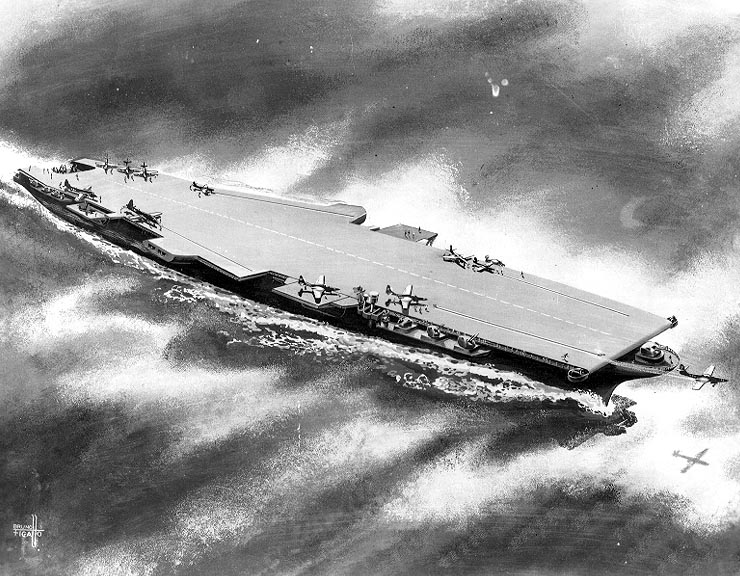
Leave a comment

Filed under counterinsurency in afghanistan, iraq,afghanistan, Military, shipmates and veterans, US Navy

North Korea Tensions: One Misstep could mean War what the US can deploy to the Theater

The USS George Washington

The tensions on the Korean Peninsula following the North Korean sinking of the South Korean Corvette Cheonan on March 26th and the North’s continued bellicose actions are now the highest in years.  Since the United States and South Korea announced naval exercises in the Yellow Sea and the Sea of Japan the North has gone on a propaganda offensive condemn the exercises as a threat to peace and “nothing but outright provocations aimed to stifle the Democratic People’s Republic of Korea [North Korea] by force of arms.” North Korean spokesman Ri Tong Il claimed that the exercise “is a grave threat to the Korean peninsula and also to the region of Asia as a whole,” and “another example of a hostile policy” toward North Korea.

One of a number of Naval Clashes between South and North Korean Navy vessels

The North Koreans announced also that “The army and people of the DPRK will start a retaliatory sacred war of their own style based on nuclear deterrent any time necessary in order to counter the US imperialists and the South Korean puppet forces deliberately pushing the situation to the brink of a war,” and while threats of war are common from the DPRK the situation is now so tense that any miscue from either side could spark a war.

The US State Department dismissed the North Korean threats spokesman P J Crowley stated “North Korea has a habit of trying to deflect, you know, responsibility onto others.”  He noted that some U.S. officials were concerned that North Korea might use the heightened tensions and exercises to make further provocations against the South and US Forces.  Some speculate that such measures might include missile tests or nuclear tests or other military measures.  In response to questions that North Korea might take aggressive steps Crowley noted:  “Are they capable of these kinds of steps? Tragically, the answer is yes….And the very kind of actions that we’ve announced in recent days, including military exercises that will be conducted in the near future, are expressly to demonstrate that we will be prepared to act in response to future North Korea provocations. We hope it won’t come to that.”

South Korean Navy LHD Dokdo

Secretary of State Hillary Clinton remarked at a conference regarding the South China Sea in Vietnam that “an isolated and belligerent North Korea has embarked on a campaign of provocative, dangerous behavior…”

The US Forces Korea Commander General Walter Sharp stated:  “These defensive, combined training exercises are designed to send a clear message to North Korea that its aggressive behavior must stop, and that the ROK and U.S. are committed to enhancing our combined defensive capabilities.”

The Exercise “Invincible Spirit” will include the USS George Washington carrier battle group including the Guided Missile Destroyers USS McCampbell, USS John S. McCain and USS Lassen, as well as South Korean Navy assets including the largest ship in the South Korean Navy the Landing Ship Dokdo. A total of 20 ships 200 aircraft and 8,000 sailors will take part in the exercise which according to the South Korean newspaper Chosun Ilbo “will consist of an electronic warfare simulation with members of the US Cyber Command, an aerial refueling and bombing exercise by the Air Force, command control training by the Marines, and a navy anti-submarine exercise.”  It is also likely that the converted former Trident Missile submarines USS Ohio, USS Michigan and possibly the USS Florida are in the area each armed with up to 154 Tomahawk cruise missiles.  The 4th of these submarines USS Georgia is also deployed and its whereabouts are not known. It is the first time that all 4 subs have been deployed at the same time.   The US Air Force has deployed the F-22 Raptor for the first time to Korea and elements of the 7th Air Force will take part in the exercise.  Invincible Spirit is the first in a series of scheduled summer exercises between the US and South Korea. Admiral Robert F Willard commander of the 7th Fleet said that at the end of the exercise, there will be a counter special-forces exercise. He added “These occur with some frequency in both the East and West Seas, conducted by the [South Korea] and U.S. Navy.” North Korea has a large special-forces establishment and capability.

North Korean YJ-62 Anti-Ship Missile on mobile launcher

The US Navy has additional assets that could be deployed in the event of a major crisis on the peninsula as the USS Ronald Reagan is involved with the RIMPAC 2010 exercises in the Pacific and the carriers USS Carl Vinson and USS Abraham Lincoln are underway off the west coast involved in exercises or deployment work ups.  At this time 123 (43%) of the navy’s 289 ships are deployed and a total of 184 (64%) are underway away from their homeport. Of the submarine force 23 (43%) are deployed and 30 (55%) are underway.  This is a sizable amount of the fleet and represents a significant surge potential should a conflict break out.  In the midst of the current wars in Iraq and Afghanistan many forget that a significant amount of our national military power can be deployed quickly from the sea to danger spots like Korea where their assets based on history can have a decisive affect.

The USS Ohio and her sisters USS Michigan and USS Florida could play a deterrent role

Ground forces are more spares, the major component of land based forces are those of South Korea, the US now has just a Brigade Combat Team stationed in South Korea although other assets not engaged in Operation Iraqi Freedom or Operation Enduring Freedom could be deployed from the 25th Division in Hawaii and Alaska and the 2nd Division based at Ft Lewis Washington.  As of now 1 brigade the 4th BCT of 25th Infantry Division is deployed to Afghanistan as well as the 5th BCT of 2nd Division which also has its 4th BCT deployed to Iraq. The 2nd BCT of 25th Division is schedule for deployment and may already be deployed this summer. The 3rd BCT of the 25th Division is now in a post-deployment cycle after having just returned from Iraq. The deployment of uncommitted assets would take time and the only immediate reinforcements could be a limited number of Marine units from the 3rd Marine Division and III MEF in Okinawa and Kaneohe Bay Hawaii that are not currently engaged in Operation Enduring Freedom.

The North Korean threat of a “retaliatory sacred war” may be the usual propaganda hyperbole used by the North or it may be their “line in the sand.”  It also could be more bellicose than usual because of internal tensions in the North regarding potential successors to the ailing Kim Jong Il. US and South Korea operational planning has contingencies should there be unrest in the North following Kim’s death but a conflict brought on by one of the rival factions the North could plunge Northeast Asia into a regional war. We don’t know what it is but the week ahead could become rather sporty.   China has warned that the exercise could make matters worse on the peninsula and the US apparently in response to China will keep the George Washington in the Sea of Japan.  There are also good tactical measures for doing so to protect the carrier by keeping it out of constricted waters in the vicinity of a good number of North Korean assets should fighting actually break out and the fact that the USS John S. McCain already is equipped with the Aegis Ballistic Missile Defense System.

The Japanese Naval Self Defense Force (Navy) is sending 4 observers to the exercise a tacit measure of support for them and the Japanese have several ships fitted for the Aegis Ballistic Defense System.

With all of this said we now have to wait and see what happens. Will the North do something to instigate a conflict or will it back down?  We don’t know as it is a very unpredictable country with a penchant for raising the ante in the high stakes world of geopolitical dominance in Northeast Asia. The Obama administration seems to be walking a narrow line between war and appeasement, not that we would consider what we do appeasement but what the North would certainly take it to be. The stakes are high and only God knows what will happen in the next several days. An actual conflict could kill hundreds of thousands or even millions of people; especially should the North successfully deploy and use a nuclear weapon. Thousands of American lives are at stake should a conflict break out and besides our Soldiers, Sailors Marines and Airmen standing in harm’s way many of them are non-military citizens that live and work in South Korea and Japan.

That is all for now, pray for peas.

Peace

Padre Steve+
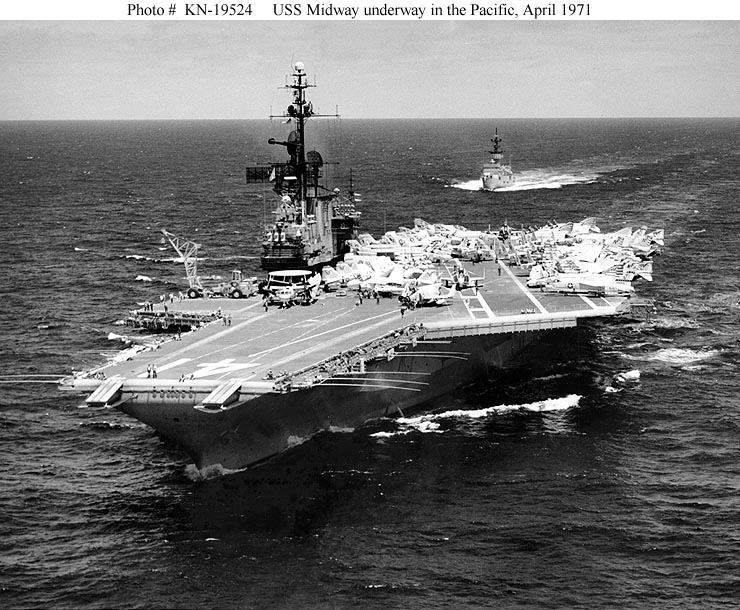
3 Comments

Filed under Foreign Policy, Military, national security, Navy Ships, US Navy

In Memory of My Dad: Aviation Storekeeper Chief Carl Dundas, Husband, Father, Grandfather and Navy Chief 27 July 1935- 23 June 2010

Aviation Storekeeper Chief Carlton (Carl) Dundas

My dad passed away last week and today we held his memorial service with full military honors in De Young Shoreline Chapel in Stockton California.  The past couple of days leading up to this have been hectic as we thought of things that we needed to do for the service and it was a team effort to get everything done. My brother had handled the initial tasks immediately following dad’s death early Wednesday morning and when I arrived I helped coordinate the honors with the funeral director, the Navy Chaplain performing the service and the Military honors team leader as well as digging through dad’s briefcase to try to find life insurance policies as well as try to deal with the Social Security Administration on the phone, which if you read my last post you’ll know exactly what I went through dealing with the cheerful automated attendant from the pits of Hell.

Dad on the Flight Deck of USS Hancock, CVA-19 deployed to Vietnam with A4-J Skyhawk

With that being said we went to work yesterday, my brother and his wife took care of everything for the reception while one of my sister in laws’ aunts burned a CD with some of dad’s favorite music by Willie Nelson, Anne Murray and John Denver along with renditions, I think my the Naval Academy Chorus of Anchors Aweigh and the Navy Hymn, Eternal Father Strong to Save.  The fact that she did this on short notice took a great weight off of my shoulders as I dug through well over a thousand and probably close to 2000 photos to put together two collages representing the fullness of dad’s life as best as I could do.  After laying them out last night I knew that there were some that needed to be reproduced and since I am not at home where the Abbess has all of her high speed gear to do such work off to the local Target I went to have the kind people there use their Kodak machines to digitalize and print them of course after I picked up my large cup of 7-11 French Vanilla Coffee with French Vanilla creamer and Splenda, I do think that they should be paying me for advertising right now but until that time I have no problem mentioning them because I do like their coffee.  The young Mexican girl helping me was a gem, she knew exactly what to do and in no time had all of the pictures digitalized, printed and burned on CDs even as I realized that I needed a decent pair of white socks to wear with my summer white uniform to which I walked over to the Kohl’s down the way, picked up my socks and went back to pick up the CDs which were ready when I returned. The girl wished me well as I thanked her again and as I left as is my custom I told her to be safe and added “after all this is Stockton and I lived here when they invented the drive-by” to which she thanked me, laughed and said that she would try to be safe.

Dad on Liberty most likely in the Philippines in the 1971-1973 time frame

After that is was the usual chaos that families experience trying to get ready and out the door, what to wear for my mom and to finish up the collages, get a shower and get into my Summer Whites, or as I refer to them around my Marine friends as the FWUs or Faggoty White Uniform as Colonel Nathan R Jessup (Jack Nicholson) referred to them in the movie A Few Good Men but I digress.

Mom Dad and Me probably in San Diego 1964

My mom and I got the funeral home chapel about 1215 and Captain Gerry Seely, a Navy Chaplain, the members of the Naval Military Honors team, a Captain with Fleet Marine Force experience, two Commanders, a Naval Flight Officer and a Surface Warfare Officer, a BUC or Chief Builder, a Seabee Chief as well as a Electronics Mate First Class who served as the bugler. Chaplain Seely was in his Summer Whites matching me and the Honors team in their Full Dress Whites. Additionally a ceremonial honors team from Travis Air Force Base composed of a young Sergeant and three young Airmen in their Air Force Dress Blues looking very sharp were there for the rendering of honors, the ceremonial rifle volleys that would precede the playing of Taps.

Flag Folding Ceremony

As friends and family gathered I worked with the Honors team, Chaplain Seely and the funeral director to ensure that everyone was read in on the sequence of events before the service. My mom was taken by the number of military personnel present to honor my dad this last time. The service began promptly as scheduled with Chaplain Seely offering the condolences of the Chief of Navy Chaplains Admiral Bob Burt as well as the Deputy Chief of Chaplains and Chaplain of the Marine Corps Rear Admiral Mark Tidd. Chaplain Seely did a marvelous job in weaving the intersections of my dad’s life together with the understanding of the Navy being a family, discussing my dad’s career while talking about Navy life, particularly the effect on families of the frequent moves and separations cause by deployments as well as the specialness and importance of dad being a Chief. You see in the Navy the Chief Petty Officer occupies a unique position, it has been said and is largely true that Chief’s run the Navy, good Chiefs teach, mentor and discipline young sailors in the ways of the Navy, their rating and life.  Gerry also shared about our hope in Christ the hope of the resurrection and the faith that we have that Jesus has gone before us to prepare a place for us as well as send the Holy Spirit to comfort us. He did the service so well you would have thought that he knew dad and obviously as he shared with us felt the connections with dad through service on similar aircraft carriers, duty stations and hobbies.

Chaplain Gerry Seely (right) along with the OIC of the Honors Detail

He invited Jeff and I to say some words about dad and I led off talking about what dad meant to me, how good of a father he was, how he inspired me in my military career and brought me to love the game of baseball. Jeff talked about how dad influenced him in values and teaching him right from wrong, I do think that despite being the clergyman that I probably was more of a pain in the ass to my dad as despite for all of my innocent charm and introversion I am a bit of a rebel, believing that while there are definitely 10 Commandments most everything else is more of a suggestion and that there are a lot of gray areas.  Jeff is a teacher and definitely a no-nonsense kind of guy much like my dad, though I think Jeff is a bit more serious than dad who could be a jokester and was much of the time which is where I think that I get some of my humor from. I think that Jeff is like dad in a lot of ways and me in some, but both of us benefited from his love, care, discipline and values.  It is funny how much Jeff and I am alike despite our age differences and much of that has to be from the influence of dad. Jeff talked about dad’s love of golf as well as his ability to sit down and enjoy a beer and go to the casinos in the area.  That reminded me of something that both of us had not mentioned which was my dad’s love of horse racing and going to the track to bet on “the ponies.”  Jeff has taken that up having a part interest or ownership in a thoroughbred horse which races at Santa Anita.

So many memories came back during the service as well as while putting the collages together, memories of good times and the realization that dad was always there for us. After Jeff concluded his remarks Chaplain Seely talked about what we in the military call “PCS orders” and what in dad’s passing from this life was his final PCS move to heaven where he will wait for us. It was touching the way that he made that connection in terms of the military service.  When his remarks were concluded Eternal Father Strong to Save was played followed by the military honors which were led off by the Captain leading the detail explaining what would happen. Following this the two Commanders took the flag from the stand on which they were displayed and unfolded them laying them out flat. The room was called to stand and active and former military asked to render the appropriate salutes as the rifle volleys were fired and Taps was played. Following taps we were asked to be seated while the two Commanders then very sharply refolded the flag with great preciseness and passed it off to the Chief who came up and after rendering honors to the flag moved deliberately to my mom, took a knee and presented the flag on behalf of a grateful Navy, Nation and his and dad’s fellow Chief Petty Officers.

Dad’s last Navy assignment USS Hancock CVA 19 1971-1974 where he did two 11 month deployments

There were a good number of people there, some that I knew and others that I had heard about from my mom, dad or Jeff. My friend from high school and Navy Junior ROTC Jeff Vanover was there with his family as were numerous others. The sad thing is that when you get to be my parent’s age many of their closest friends have either passed away or are no longer capable of traveling however my mom’s phone has been ringing off the hook while her e-mail in box and snail mail box are filled with expressions of sympathy and friendship.

To all of those that attended the services today as well as those that have helped in various ways during my dad’s long and difficult battle with the ravages of Alzheimer’s disease, especially all of my mom and dad’s friends and Jeff’s wife Melissa’s family those present and those separated by distance or physical affliction I offer you my thanks. To the members of the Navy Military Honors team for Northern California and honors team from Travis Air Force Base you were all great. I have seen many teams and yours was outstanding. To Chaplain Gerry Seely your kind words of comfort and the celebration of my dad’s life went beyond measure.  To the Chief that presented my mother Old Glory thank you, it meant so much to her and I know to my dad that a Chief presented this token of the Nation’s gratitude.  To my boss Chaplain Jesse Tate who got the ball rolling to make this happen, Admiral Burt and Admiral Tidd for your support, to my fellow Chaplains, fellow shipmates and all of my friends around the world that have offered words of encouragement and prayer I cannot thank you enough.  The same is true for my Bishop and fellow priests as well as the Rector and parishioners of St James Episcopal Church in Portsmouth Virginia where I worship.

Dad was a good husband, father and grandfather. He was a devoted friend to many, loyal shipmate to others and a man who worked hard to set his family up for success in life.  I miss him, I have for years because of Alzheimer’s disease, but now while I am thankful that he is no longer suffering nor trapped in the shell that once was him, I miss him. Maybe someday like Kevin Costner’s character in Field of Dreams, Ray Kinsella, I too will be able to once again have a catch with my dad on the lush green diamond in heaven.

Since this is starting to sound like one of those actors that can’t stop talking after getting an Oscar, so I will just say thank you and God bless. My mom appreciates everything as does my brother. Keep us in your prayers as we attempt to help mom navigate the sea of paperwork generated by various bureaucracies both governmental and the private sector that she will need to work with over the coming days and weeks. I return to Virginia on Wednesday.

Peace and blessings,

Padre Steve+

5 Comments

Filed under alternative history, remembering friends, US Navy