Tag Archives: war is a racket

“A Foreign World”: The High Cost of Coming Home from War

295_26912117058_5652_n

For me it began in February 2008 when on the way back from Iraq the military charter aircraft bringing us home stopped in Ramstein Germany. After a few hour layover we re-boarded the aircraft but we were no longer alone, the rest of the aircraft had been filled with the families of soldiers and airmen stationed in Germany. Just days before most of us had been in Iraq or Afghanistan. The cries of children and the intrusion of these people, not bad people by any means on our return flight was shocking, it was like returning to a world that I no longer knew.

I think that coming home from war, especially for those damaged in some way, in mind, body or spirit is harder than being at war. In that thought I am not alone. Erich Maria Remarque in his classic novel All Quiet on the Western Front wrote:

“I imagined leave would be different from this. Indeed, it was different a year ago. It is I of course that have changed in the interval. There lies a gulf between that time and today. At that time I still knew nothing about the war, we had been only in quiet sectors. But now I see that I have been crushed without knowing it. I find I do not belong here any more, it is a foreign world.” Erich Maria Remarque in All Quiet on the Western Front

Likewise, Guy Sager a French-German from the Alsace and veteran of the Grossdeutschland Division on the Eastern Front in World War II noted at the end of his book The Forgotten Soldier: 

“In the train, rolling through the sunny French countryside, my head knocked against the wooden back of the seat. Other people, who seemed to belong to a different world, were laughing. I couldn’t laugh and couldn’t forget.” Guy Sager in The Forgotten Soldier

I have been reminded of this several times in the past week. It began walking through a crowded Navy commissary on Saturday, in the few minutes in the store my anxiety level went up significantly. On Tuesday I learned of the death of Captain Tom Sitsch my last Commodore at EOD Group Two, who died by his own hand. His life had come apart. After a number of deployments to Iraq as the Commander EOD Mobile Unit 3 and of Task Force Troy he was afflicted with PTSD. Between June of 2008 and the end of 2009 he went from commanding an EOD Group to being forced to retire.  Today I had a long talk with a fairly young friend agonizing over continued medical treatments for terminal conditions he contracted in two tours in Iraq where he was awarded the Bronze Star twice.

I have a terrible insomnia, nightmares and night terrors due to PTSD. My memories of Iraq are still strong, and this week these conditions have been much worse. Sager wrote:

“Only happy people have nightmares, from overeating. For those who live a nightmare reality, sleep is a black hole, lost in time, like death.”

Nearly 20 years after returning from war, a survivor of the 1st Battalion 308th Infantry, the “Lost Battalion” of World War One, summed up the experience of so many men who come back from war:

“We just do not have the control we should have. I went through without a visible wound, but have spent many months in hospitals and dollars for medical treatment as a result of those terrible experiences.”
Bradley-12-2

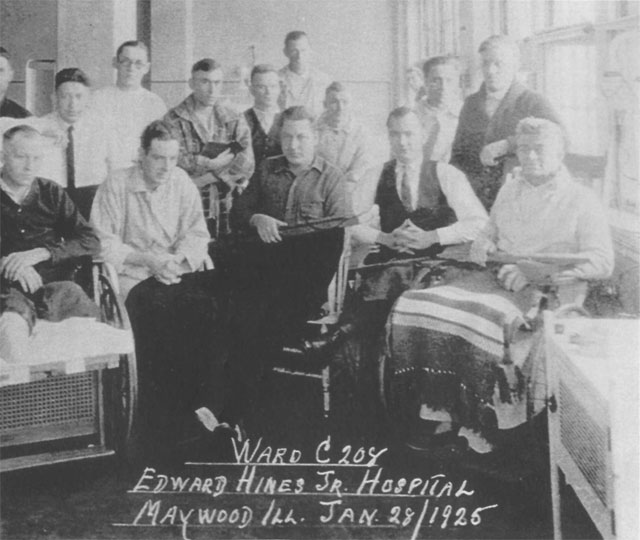
Two time Medal of Honor winner Major General Smedley Butler toured Veterans hospitals following his retirement from the Marine Corps. He observed the soldiers who had been locked away. In his book War is a Racket:

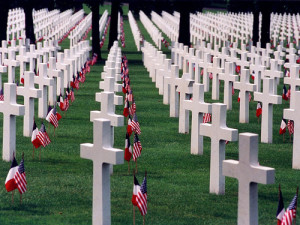
“But the soldier pays the biggest part of this bill. If you don’t believe this, visit the American cemeteries on the battlefields abroad. Or visit  any of the veterans’ hospitals in the United States….I have visited eighteen government hospitals for veterans. In them are about 50,000 destroyed men- men who were the pick of the nation eighteen years ago. The very able chief surgeon at the government hospital in Milwaukee, where there are 3,800 of the living dead, told me that mortality among veterans is three times as great as among those who stayed home.”

Similarly Remarque wrote in All Quiet on the Western Front:

“A man cannot realize that above such shattered bodies there are still human faces in which life goes its daily round. And this is only one hospital, a single station; there are hundreds of thousands in Germany, hundreds of thousands in France, hundreds of thousands in Russia. How senseless is everything that can ever be written, done, or thought, when such things are possible. It must be all lies and of no account when the culture of a thousand years could not prevent this stream of blood being poured out, these torture chambers in their hundreds of thousands. A hospital alone shows what war is.”
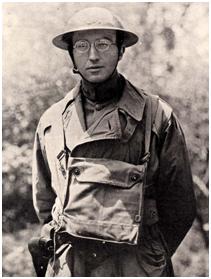
Lt.ColonelCharlesWhiteWhittlesey

Sometimes even those who have been awarded our Nation’s highest award for valor succumb to the demons of war that they cannot shake, and never completely adjust to life at “home” which is no longer home. For them it is a different, a foreign world to use the words of Sager and Remarque. Lieutenant Colonel Charles Whittlesey won the Congressional Medal Medal of Honor as Commander of 1st Battalion 308th Infantry, the “Lost Battalion” in France. After the war he was different. He gave up his civilian law practice and served as head of the Red Cross in New York. In that role, and as the Colonel for his reserve unit, he spent his time visiting the wounded who were still suffering in hospitals. He also made the effort to attend the funerals of veterans who had died. The continued reminders of the war that he could not come home from left him a different man. He committed suicide on November 21st 1921not long after serving as a pallbearer for the Unknown Soldier when that man was interred at Arlington National Cemetery.

In the eulogy Judge Charles L. Hibbard noted:

“He is sitting on the piazza of a cottage by the sea on a glorious late September day but a few weeks ago. . . He is looking straight out to sea, with naught but sea between him and that land where lie so many of his boys. The beating surf is but an echo, the warm, bright sunshine, the blue sky, the dancing waves, all combine to charm. But a single look at his face and one knows he is unconscious of this glory of Nature. Somewhere far down in the depths of his being or in imagination far off across the waters he lives again the days that are past. That unconscious look has all the marks of deep sorrow, brooding tragedy, unbearable memories. Weeks pass. The mainspring of life is wound tighter and tighter and then comes the burial of the Unknown Soldier. This draws the last measure of reserve and with it the realization that life had little now to offer. This quiet, reserved personality drew away as it were from its habitation of flesh, thought out the future, measured the coming years and came to a mature decision. You say, ‘He had so much to live for – family, friends, and all that makes life sweet.’ No, my friends, life’s span for him was measured those days in that distant forest. He had plumbed the depth of tragic suffering; he had heard the world’s applause; he had seen and touched the great realities of life; and what remained was of little consequence. He craved rest, peace and sweet forgetfulness. He thought it out quietly, serenely, confidently, minutely. He came to a decision not lightly or unadvisedly, and in the end did what he thought was best, and in the comfort of that thought we too must rest. ‘Wounded in action,’ aye, sorely wounded in heart and soul and now most truly ‘missing in action.’”

Psychologist and professor Dr Ari Solomon analyzed the case of Colonel Whittlesey and noted:

“If I could interview Whittlesey as a psychologist today, I’d especially have in mind … the sharp discrepancy between the public role he was playing and his hidden agony, his constant re-exposure to reminders of the battle, his possible lack of intimate relations, and his felt need to hide his pain even from family and dearest friends.”

I wish I had the answer. I have some ideas that date back to antiquity in the ways that tribes, clans and city states brought their warriors home. The warriors were recognized, there were public rituals, sometimes religious but other times not. But the difference is that the warriors were welcomed home by a community and re-integrated into it. They were allowed to share their stories, many of which were preserved through oral traditions so long that they eventually were written down, even in a mythologized state.

But we do not do that. Our society is disconnected, distant and often cold. Likewise it is polarized in ways that it has not been since the years before our terrible Civil War. Our warriors return from war, often alone, coming home to families, friends and communities that they no longer know. They are misunderstood because their experience is not shared by the population at large. The picture painted of them in the media, even when it is sympathetic is often a caricature.  Their camaraderie with the friends that they served alongside is broken by distance and the frenetic pace of our society. Remarque wrote “We were all at once terribly alone; and alone we must see it through.”

If we wonder about the suicide epidemic among veterans we have to ask hard questions. Questions like why do so many combat veterans have substance abuse problems and why is it that approximately one in ten prisoners serving time are veterans? It cannot be simply that they are all bad eggs. Many were and are smart, talented, compassionate and brave, tested and tried in ways that our civilian society has no understanding for or clue about. In fact to get in the military most had to be a cut above their peers. We have to ask if we are bringing our veterans home from war in a way that works. Maybe even more importantly we have to ask ourselves if as a culture if we have forgotten how to care about each other. How do we care for the men and women who bear the burden of war, even while the vast majority of the population basks in the freedom and security provided by the soldier without the ability to empathize because they have never shared that experience.

For every Tom Sitsch, Charles Whittlesey or people like my friend, there are countless others suffering in silence as a result of war. We really have to ask hard questions and then decide to do something as individuals, communities and government to do something about it. If we don’t a generation will suffer in silence.

Peace

Padre Steve+
2 Comments

Filed under History, iraq,afghanistan, Military, PTSD

My Melancholy Memorial Day Thoughts

Remembrance_Day___Poppy_Day_by_daliscar

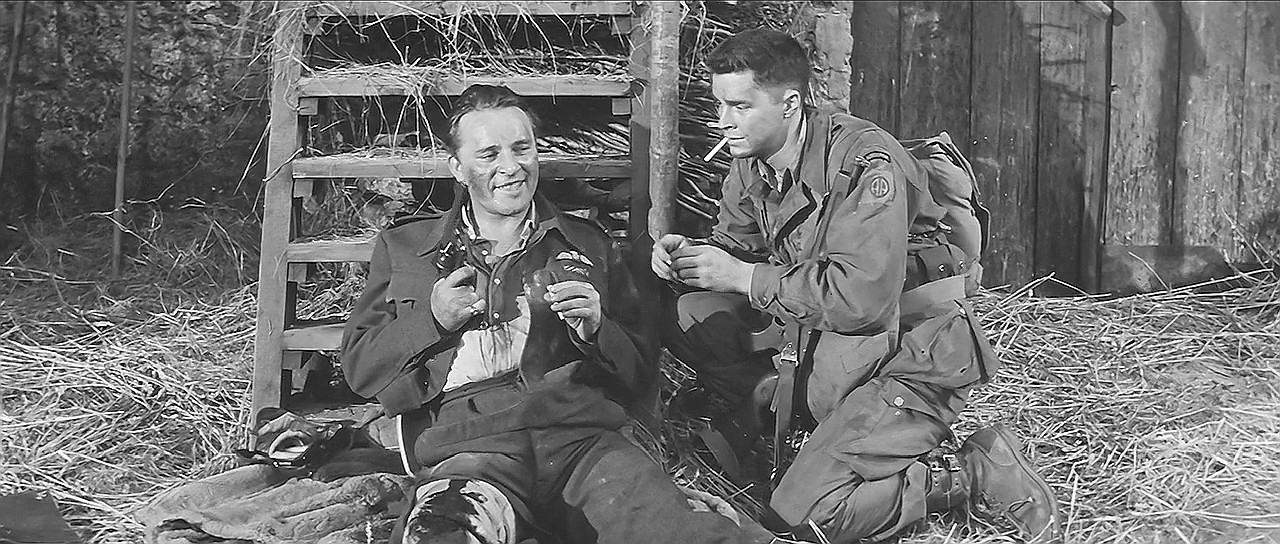
“It’s funny isn’t it. He’s dead, I’m crippled, you’re lost. Suppose it’s always like that. I mean war.” Flying Officer David Campbell played by Richard Burton in “The Longest Day” 

LD20

I came back a different man from Iraq. It seems that for me with every passing year Memorial Day becomes more of a melancholy observance. It is a weekend and observance that I feel deeply having lost friends in war and served in Iraq as well as Operation Enduring Freedom. It is also a day in which I feel more and more disconnected from the vast majority of my fellow Americans. I don’t know, but just from my observation it seems that for most Americans the weekend serves as not much more than the end of the school year and the beginning of the summer holiday and vacation season.

I could be wrong, but it seems to me that for most Americans, the vast majority who have themselves never served a day in uniform and who have no more than a passing relationship with anyone who is either serving in our current wars or has served in any war that war is at best a spectator sport. It is an attitude that has been nurtured by our politicians of all parties, political pundits and preachers for decades. As a result there is a grave disconnect between the society at large and the men and women who serve in the military and in our wars.

To be fair I don’t think it is a matter of ordinary people not caring, not that at all, just that no one has really called the nation to war, as such we have been at war but only a small amount of the population is called on to serve. The real fact of the matter is that the wars that we have fought since World War II have not been national affairs. If they were we would not be continually fighting wars that most people neither understand and which in many if not most cases we would be better off staying out of completely.  That being said I am appreciative of those who do things to care for and honor our veterans, honor our fallen and do practical things for the survivors. There are some really wonderful people, many who have never served who do what they can for those who fight and die in or come back forever changed from these misbegotten and unpopular wars.

What I do find offensive are the war mongers and profiteers who have never served. I feel this way about those who did all that they could to avoid serving in the military and those who did the very minimum to satisfy outward appearances of service while avoiding anything difficult, especially deployment to combat zones. Of the latter I can think of five to six currently serving and very outspoken conservative members of the House of Representatives and the Senate that fit the description. I shan’t mention the members of the previous Presidential administration who through their willing lies caused the deaths of nearly 4500 American military personnel in Iraq. I speak about men who in their writings, their appearances on news networks and their think tanks and corporations that do nothing but profit off of war. Some are current or former politicians, others supposedly “academics” and others men who smell a profit in war.

memorial-day1-300x225

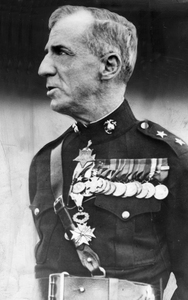
I find such people to be loathsome and wonder how on Memorial Day weekend they can show their faces. But then they are rather shameless. Sometimes their actions make me wonder if the sacrifices made by those who serve are in vain. However, I strive to resist that and pray that our sacrifices will not be in vain. While they profit from war others pay the bill and it has always been this way. Marine Corps Major General Smedley Butler, a two time winner of the Congressional Medal of Honor wrote after World War One in his book War is a Racket:

“This bill renders a horrible accounting. Newly placed gravestones. Mangled bodies. Shattered minds. Broken hearts and homes. Economic instability. Depression and all of its attendant miseries. Back -breaking taxation for generations and generations. For a great many years as a soldier I had a suspicion that war was a racket; not only until I retired to civilian life did I fully realize it….”

Maybe I feel this way because I grew up in a military family where my dad was frequently deployed and served in Vietnam, a place where some of my friends fathers died, and because I have been in the military 32 years between the Army and the Navy. Maybe it is partly because I am a military historian, theologian, priest and chaplain who has seen the horrors of war and the wounds that remain for life in the bodies, minds and spirits of those that fight in them.  I cannot speak of how my heart feels when I see young men and women, wounded in war, their lives forever changed bravely struggling to go on even as the war mongers, war profiteers and chicken-hawks profit off of their suffering.

481801_10151367001287059_1003164983_n-1.jpg

So for me this is a rather melancholy time. A time where I struggle. I honor the fallen, my brothers and sisters who have given the last full measure of devotion in serving this country, those that I know personally or have served with and those who did so before I was every born.

Until tomorrow.

Peace

Padre Steve+
3 Comments

Filed under History, iraq,afghanistan, Military, News and current events, shipmates and veterans

Armed Forces Day 2013: A Sober Reflection on a Nearly Invisible Holiday

2013ArmedForcesDayHiRes

Today is Armed Forces Day and unfortunately most of the country will not notice unless they are attending a Baseball game where it is being observed or some special event on a base, national cemetery, monument or VFW hall. There are also protests, sometimes involving veterans. Last year at the NATO Summit in Chicago which coincided with Armed Forces Day a number of veterans protested by throwing away their Global War on Terror Medal. I actually have little problem with people protesting wars, even the current one so long as they direct their protest at the appropriate target, the politicians, pundits, think tank wonks and lobbyists that profit from war and not the soldiers that fight them.

Now there are a fair number of local celebrations to honor members of the Armed Forces across the country. As a career officer and son of a Vietnam veteran Navy Chief I appreciate those events and the people that put them together. Being a veteran of Operation Iraqi Freedom and Operation Enduring Freedom, especially those that have taken the time to honor Iraq and Afghanistan veterans.

DSC_0028

Likewise there are wonderful people that honor the Armed Forces every day. I think especially about the Maine Troop Greeters of Bangor Maine and the Pease Troop Greeters of New Hampshire. These men and women, many veterans themselves or related to veterans are amazing. They have been welcoming veterans back since early in the war and provide many services to the men and women of the Armed Forces that pass through Bangor Maine International Airport and the Portsmouth International Airport, the former Pease Air Force Base in Pease New Hampshire.  I have had the honor of passing through both locations, Bangor on more than one occasion. While I know that there are many others that do this they are in the minority in this country.

At any given time less than 1% of Americans are serving in all components of the military. For over 10 years we have been at war in Afghanistan and Iraq as well as other locations that we don’t like to talk about too much like Pakistan. However this has not been the effort of a nation at war. For the most part the war effort is that of a tiny percentage of the population.

As a nation we are disconnected from the military and the wars that have been going on for so long. The fact is that most Americans do not feel that they have a personal or vested interest in these wars because they have been insulated by political leaders of both parties from them. There is no draft, and no taxes were raised to fund the wars and the military is worn out while taking 50% of the cuts of the Congressional Sequester.

295_26911892058_4301_n

We have now been at war continuously for nearly 12 years and truthfully there is no end in sight. In that time every single Soldier, Sailor, Marine and Airman volunteered for duty or reenlisted during this time period. Motives may have varied from individual to individual, but unlike the World Wars, Korea and Vietnam every single one volunteered to serve in time of war. I think that this makes the current generation of veterans quite unique.

Many of these volunteers served in Iraq and Afghanistan. Neither war was popular, except in the very beginning when casualties were low and victory appeared to be easy and quick. We like short wars. We left Iraq in December 2011 and Afghanistan is still going to be with us for God knows how long, even though we are drawing down or forces there.

In Afghanistan we followed the same path trod by the British and Soviets in trying to topple regimes and plant our respective versions of civilization in that land of brutal Pashtun, Tajik, Hazara and Uzbek warlords who war on each other as much as any foreign infidel.  It is a path that leads to heartbreak which ties down vast amounts of manpower without any significant strategic gain for the United States or NATO.  This even as war drums beat across the Middle East and nuclear armed Pakistan slips into political and social chaos and keeps a major supply route for the US and NATO to Afghanistan shut down.

The fact is that American and for that matter other NATO and coalition military personnel who have served in Iraq, Afghanistan, the Horn of Africa or at sea are in the minority in all of our countries. Thus when a few of the few of these veterans choose to make a public spectacle of themselves by tossing a medal away they get cheered and lots of media attention. Some liberals applaud the medal throwers and conservatives vilify them without getting what is really going on. Both miss the tragic disconnection between the military and civilian society that is the result of public policy since the end of the Vietnam War. A relatively small professional military in comparison to the population is sent to fight wars while the bulk of the population is uninvolved and corporations, lobbyists and think tanks get rich.

Rachel Maddow the MSNBC host of the Rachel Maddow Show wrote in her outstanding book Drift: The Unmooring of American Military Power:

“The reason the founders chafed at the idea of an American standing army and vested the power of war making in the cumbersome legislature was not to disadvantage us against future enemies, but to disincline us toward war as a general matter… With citizen-soldiers, with the certainty of a vigorous political debate over the use of a military subject to politicians’ control, the idea was for us to feel it- uncomfortably- every second we were at war. But after a generation or two of shedding the deliberate political encumbrances to war that they left us… war making has become almost an autonomous function of the American state. It never stops.” 

Now, going back to the protestors for a minute. The right to protest and disagree with policy and the politics of war is important and for Americans is protected under the First Amendment. That being said I think it is important that when one protests a war that they direct their protest at the appropriate target, the army of lobbyists and think tank wonks that promote the politics of war regardless of who is President and not the soldiers. The fact is that the lobbyists, pundits that promote war don’t care about the protesters or the troops. This is because no matter who is in office or who controls Congress they will promote policies that keep them employed and their businesses enriched. Marine Major General and Medal of Honor winner Smedley Butler was quite right when he said:

“War is a racket. It always has been. It is possibly the oldest, easily the most, surely the most vicious. It is the only one international in scope. It is the only one in which the profits are reckoned in dollars and the losses in lives. A racket is best described, I believe, as something that is not what it seems to the majority of the people. Only a small ‘inside’ group knows what it is about. It is conducted for the benefit of the very few, at the expense of the very many. Out of war a few people make huge fortunes.”

I may disagree with the manner of how and when veterans protest wars that they have served like those that threw their medals away in Chicago last year. However, I am not going to question their motives, integrity or honor even if I disagree with their manner of protest because I came back different from war.

bannerfans_4309565 (3)

When a society sends off its sons and daughters to fight in wars that no one understands, and the vast majority of people no longer support it is no wonder that some veterans make such displays. Likewise it is understandable why other veterans have major issues with such protestors, just as many Vietnam veterans still feel the hurt of how a nation turned its back on them. For example I still have a terrible time even thinking about Jane Fonda, the images of her manning a North Vietnamese anti-aircraft gun when my dad was serving in Vietnam.

295_26912097058_4309_n

Protests may make some feel good, but they often miss the bigger point of why wars like these go on for so long.  That they do is because misguided policies have brought about a chronic disconnection in our society between those that serve in the military and those that do not. But how can there not be when in the weeks after 9-11 people like President Bush and others either directly or in a manner of speaking told people to “go shopping”* as we went to war in Afghanistan? When I returned from Iraq I returned to a nation that was not at war whose leaders used the war to buttress their respective political bases.

295_26912012058_78_n

I think that Armed Forces Day should be better celebrated but I am grateful to those people that do things every day to thank and support military personnel in thought, word and deed like the Maine Greeters and Pease Greeters. The interesting thing about these groups is that they are made up of citizens from across the political spectrum, veterans and non-veterans who simply care for and appreciate the men and women that serve in and fight the wars that no-one else can be bothered to fight.

dscn0064

I just hope and pray that the end in Afghanistan does not turn into an even worse historic debacle than suffered by the British or the Soviets during their ill fated campaigns. Of course the politicians, pundits, preachers and the defense contractors, banks and lobbyists will find a way to profit from this no matter how many more troops are killed, wounded or injured and how badly it affects military personnel or their families. After all, to quote Smedley Butler, “war is a racket.”

481801_10151367001287059_1003164983_n

Peace

Padre Steve+
President Bush’s actually words were “Now, the American people have got to go about their business. We cannot let the terrorists achieve the objective of frightening our nation to the point where we don’t — where we don’t conduct business, where people don’t shop…” http://georgewbush-whitehouse.archives.gov/news/releases/2001/10/20011011-7.html

2 Comments

Filed under History, iraq,afghanistan, Military, national security, philosophy

Red Lines… Syria and Sarin and United States Military Intervention: A Warning from History

chemical-weapons-490x326

Updated August 23rd 2013: Since this article was written back in April of this year the situation in Syria, not to mention the rest of the region has continued to get worse. This past week there appear to be credible new reports of the Syrian government using chemical weapons against their own people. It appears that the US and other powers are cautiously moving military forces into the region closer to Syria and that Lebanon, Turkey, Jordan, Iraq and Israel could be drawing closer to involvement in the war. Hundreds of thousands of Syrians of all ethnic groups and faiths are fleeing the country, primarily to Iraq, Jordan and Turkey. Lebanon is beginning to collapse and Israel launched air strikes into Lebanon after being hit by rockets fired by the Assad regime’s ally Hezbollah. This is all taking place as Egypt is perched at the abyss of civil war, and much of North Africa, the Horn of Africa and the Arabian Peninsula is in the throws of war, civil war or the collapse of any governmental order.

Needless to say it is not a good situation and the United States as well as many other governments and international bodies are trying to find a way through the eye of the needle to keep the multitude of problems from coalescing into a truly disastrous regional conflict which could effect the political, economic and military security of countries in the region and yes, like us on the far side of the globe. 

Carl von Clausewitz wrote: “No one starts a war–or rather, no one in his senses ought to do so–without first being clear in his mind what he intends to achieve by that war and how he intends to conduct it.” 

Personally I don’t think that there is anyone who has a clear understanding of what they think their country should do or accomplish in Syria of the Middle East. 

That being said here is what I wrote in April.

Peace

Padre Steve+
 

For the past number of weeks various news agencies and governments have reported the use of Sarin nerve gas by the Bashir Assad led Syrian government against rebels in that country’s civil war. The use of such weapons would be in defiance of international law and the law of war. The confirmed use of such weapons has been defined as a “red line” by the Obama administration. Israel, NATO and Turkey have all warned of the danger of the use of such weapons. Sarin has been banned and almost all nations have signed the 1993 treaty, but Syria is not one of them and reportedly has one of the largest stockpiles of Sarin in the world.

Today US Secretary of Defense Chuck Hagel stated:

“the U.S. intelligence community assesses with some degree of varying confidence that the Syrian regime has used chemical weapons on a small scale in Syria, specifically the chemical agent sarin.”

Last week both Britain and France wrote the Secretary General of the United Nations that they had evidence that the Syrian government had used chemical weapons against their own people. The Russians, a long term traditional ally of Syria have accused the West of attempting to “politicize” efforts to determine whether chemical weapons have been used and compared such efforts to the pre-Iraq War hunt for alleged Iraqi WMDs.

It is a dangerous time. The United States and NATO have deployed a number of Patriot Missile batteries to Turkey, which is harboring tens of thousands of Syrian refugees and a small number of US troops are in Jordan assisting with refugees and working with the Jordanians on other security matters. Lebanon is becoming involved in the conflict due to the activities of Hezbollah and Israel has stepped up its security along its border with both Syria and Lebanon. In Syria the civil war has claimed an estimated 70,000 lives with hundreds of thousands more displaced or living as refugees in other countries.

It is a human rights disaster and in a perfect world the international community would come together to right the situation. That will likely not happen. Instead I expect that hawks in the United States Congress and press and potentially Israel and its Washington lobby will force President Obama to intervene in the Syrian Civil War, perhaps unilaterally or as part of a relatively small coalition. Both Senators John McCain and Diane Feinstein made statements today on the need for intervention.

The fact is that as terrible as the situation is that an even worse situation will most likely develop should such a limited intervention take place to secure the chemical and possible biological weapons stored by the Syrian regime. Before Iraq I would have probably been on the bandwagon urging intervention, but I did learn something from Iraq. The fact is that though our intelligence agencies may believe that Sarin has been used in small quantities we need to be absolutely sure before any intervention is made. Some in the Defense Department are concerned because of what happened regarding supposedly good and solid intelligence. As such the Miguel Rodriquez of the White House Office of Legislative Affairs noted:

“Our intelligence community does assess with varying degrees of confidence that the Syrian regime has used chemical weapons on a small scale in Syria, specifically the chemical agent sarin. This assessment is based in part on physiological samples. Our standard of evidence must build on these intelligence assessments as we seek to establish credible and corroborated facts. …

“Given the stakes involved, and what we have learned from our own recent experiences, intelligence assessments alone are not sufficient — only credible and corroborated facts that provide us with some degree of certainty will guide our decision-making …”

I know what Sarin and other nerve gasses can do. I trained extensively as an Army Medical Service Corps Officer in NBC (Nuclear Chemical and Biological) weapon defense. The Soviets called Sarin GB and it was something that we trained to defend against during the Cold War. Back then we trained extensively to defend ourselves against chemical weapons, we practically lived in our MOPP (Mission Oriented Protective Posture) suits and protective masks. We trained to decontaminate personnel and equipment, we trained on knowing how such weapons were used, fallout patterns and half-life of the agents. We trained with atropine injectors in case we were contaminated and we learned that the triage of wounded was different when they were contaminated with chemical agents.

poison5

However, since 9-11 and our counter-insurgency efforts in Iraq and Afghanistan the general preparedness of most units in this type of warfare has been neglected because those wars did not require them.  With the exception of highly specialized units organized with the mission of Chemical, Biological and Nuclear weapon defense and response in the Continental United States few units are trained to the level that we were in the Cold War and even then most of us expected that if such weapons were used in the quantities amassed by the Soviets that most of us would die.

That being said we had damned well be absolutely sure that we know a lot more than we know now before committing a single American Soldier, Marine, Sailor or Airman to the mission of securing these weapons. Securing them in the existing environment in Syria would take tens of thousands of troops and based on the geography of Syria, the potential for Iranian intervention and the use of these WMDs against our troops by Syria should we intervene.

The question that I would ask anyone advocating military intervention now is “what is the cost in lives and treasure you are willing to make to do it? and what is your endgame?” The fact is that in two “low intensity” counterinsurgency campaigns we have lost over 6500 US troops killed and over 50,000 wounded not counting the hundreds of thousands afflicted with Traumatic Brain Injury and and PTSD. How many more would be sacrificed in a campaign in Syria and what will be the long term cost to them, their families, the military, national security and the economy?

The easy answer for the Hawks in Congress, the Beltway pundits and lobbyists is to send in the military. I think that it is a reflexive response now, send in the troops, damn the costs. That is easy for them to say because “the troops” are less than 1% of the US population. They can win elections without our vote. Sending in the troops looks strong and patriotic and people applaud when they see us on television doing a great job. But it is unrealistic. The military has been worn down by nearly 12 years of war. Equipment is wearing out, troops are tired, suicide rates skyrocketing, medical costs increasing. Add to this the fact that operational units are being squeezed by the budget fiasco forced by Congress in 2011 known as the sequester. But few will say this and that is as close to criminal negligence as one can get on the part of those advocating intervention in Syria.

I am offended by the knee jerk reactions of Congressmen and Senators as well as their enablers in the media and the beltway who seem to be advocating US involvement in yet another civil war in a Middle Eastern country. What is the legal basis for such an invasion or intervention? What is the human cost and what is the economic cost and who pays the bill?

Smedley Butler, Marine Corps Major General and two time Medal of Honor winner said it well when writing about the costs of war in his book War is a Racket following World War One, which by the way was the last time that US troops faced Chemical weapons:

“But the soldier pays the biggest part of this bill.

If you don’t believe this, visit the American cemeteries on the battlefields abroad. Or visit  any of the veterans’ hospitals in the United States….I have visited eighteen government hospitals for veterans. In them are about 50,000 destroyed men- men who were the pick of the nation eighteen years ago. The very able chief surgeon at the government hospital in Milwaukee, where there are 3,800 of the living dead, told me that mortality among veterans is three times as great as among those who stayed home.”

In another part of his book Butler wrote:

“In the government hospital at Marion, Indiana 1,800 of these boys are in pens! Five hundred of them in a barracks with steel bars and wires all around the outside of the buildings and on the porches. These have already been mentally destroyed. These boys don’t even look like human beings. Oh, the looks on their faces! Physically they are in good shape but mentally they are gone.” 

There are thousands and thousands of these cases and more and more are coming in all the time…

That’s a part of the bill. So much for the dead-they have paid their part of the war profits. So much for the mentally and physically wounded- they are paying now with their share of the war profits. But others paid with the heartbreaks when they tore themselves away for their firesides and their families to don the uniform of Uncle Sam- on which a profit had been made….”

Before any military actions are taken against Syria someone had better ask the hard questions that were so buried and ignored in the build up to the Iraq War. What is the cost? What is the legal basis? What is the endgame? If those questions cannot be answered in a satisfactory manner then not no American military forces be committed and not a dime spent.

Yes the situation in Syria is a tragedy, but intervention would likely make it even more so. As terrible as this conflict is, it is a Syrian affair. Yes we will have to deal with whatever comes out of it, but is American military intervention to secure the Syrian Chemical weapons the wise course of action, especially in light of how much that we do not know?

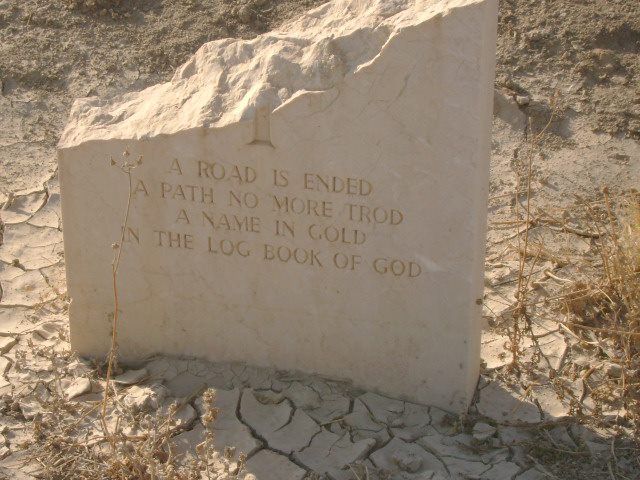
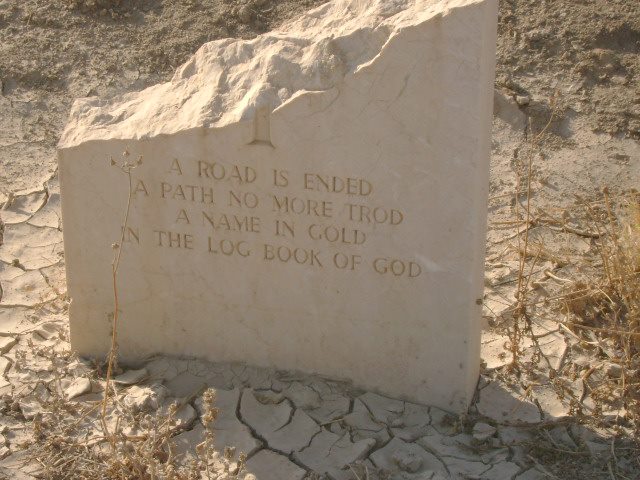
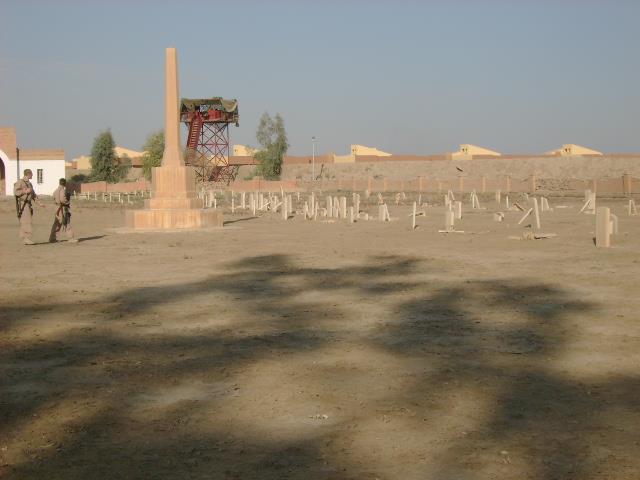
How many more coffins containing the bodies of US military personnel need to be shipped back from yet another war? Oh wait, I’ll bet you didn’t know that the bodies of soldiers killed by chemical agents are contaminated and most would not come home because of that risk. Somehow I don’t think that a military cemetery in Syria would be as well maintained as those in France, Belgium and Luxembourg where so many Americans lay in final repose following the First and Second World War. I know this because I have seen the British military cemetery in Habbaniyah Iraq.

429423_10151366999012059_698864942_n

Yes this is a big deal for all of us. It is much too important to be made without a full accounting before a single American Soldier, Marine, Sailor or Airman is committed to action.

Peace

Padre Steve+

1 Comment

Filed under History, iraq,afghanistan, middle east, national security, News and current events

Irrelevant Incidents and Un-winnable Wars: Thoughts on Returning from War 5 Years Later

6Fi9832

Just shy of five years ago in February 2008 I returned from Iraq after a tour with our advisors to the Iraqi Army and Security forces in the far reaches of Al Anbar Province. I flew back to the United States on a chartered flight with about 200 other men and women, individual augments from the US Navy who had served in Iraq and Afghanistan. We had a few days in Kuwait to “decompress” and then were on our way home. Those that conducted our training in that time had been in Kuwait, at large bases, separated from home but enjoying creature comforts that made it feel that we were in “Little America.”

Our aircraft stopped at Ramstein Air Base in Germany for a crew change and refueling. While there the aircraft was filled to its capacity with servicemen and their families returning from Germany to the United States. Crying babies and screaming kids greeted us as we boarded the aircraft. Most of us had not slept in the 24 hours before we left Kuwait and were exhausted. I was wearing my last serviceable uniform.

The remaining part of the flight from Germany to Philadelphia was difficult. The new arrivals were coming from a peacetime world and we were coming our of combat zones, often isolated even from other Americans. When we landed we went from our aircraft, got our civilian tickets, clad in our desert camouflage and dragging our gear we were made to removed our belts and boots by the TSA agents. It was obvious from we had come but instead of a welcome we we treated as potential hijackers. We each flew back to our respective bases on different flights into the arms of waiting families that loved us but did not understand us and units, who had not shared our experience simply sent us back to work without recognition while those that had not deployed griped about how hard things were.

FrenchForeignLegionaireVtNamDOD

Today I was doing some counseling with a sailor and as we talked about life and the war a passage from Bernard Fall’s classic account of the French war in Indochina, Street Without Joy, came to mind. It reminded me of our experience returning from war, which could be seen as seemingly irrelevant incidents, but which pointed to a larger problem. It was so powerful that I decided to post much of it here.

In October 1953, Fall a journalist was covering the French war in Indochina. In between his stints with various French and allied units fighting the Viet Minh he made a travel stop over in Cambodia. He wrote of it:

“Sometimes, there occurs an almost irrelevant incident which, in the light of later developments, seems to have been a sign of the gods, a dreamlike warning which if heeded, could have changed fate- or so it seems.

One such incident occurred to me in October 1953 in Cambodia, at Siem-Reap, not far from the fabulous temples of Angkor-Wat…

A few French officers were still around, mainly as advisors to the newly-independent Cambodian Army….

When I went to the Transportation Office that afternoon at 1530, the Cambodian orderly told me apologetically that “le Lieutenant est alle au mess jouer au tennis avec le Capitaine” and that they might well stay there all afternoon. Since the convoy which I was expected to catch was supposed to leave at dawn, I decided to stroll over to the mess in order to get my travel documents signed there.

The Siem-Reap officers’ mess was a pleasant and well kept place; with its wide Cambodian-type verandahs, its parasol-shaded tables and the well-manicured lawns and beautifully red-sanded tennis court, it was an exact replica of all the other colonial officers’ messes from Port Said to Singapore, Saigon or even Manila, wherever the white man had set his foot in the course of building his ephemeral empires.

I found the two officers at the tennis court, in gleaming white French square-bottomed shorts…matching Lacoste tennis shirts and knee-long socks…

Since the men were in the midst of a set and I had little else to do, I set down at a neighboring table after a courteous bow to the ladies and watched the game, gladly enjoying the atmosphere of genteel civility and forgetting for a moment the war…

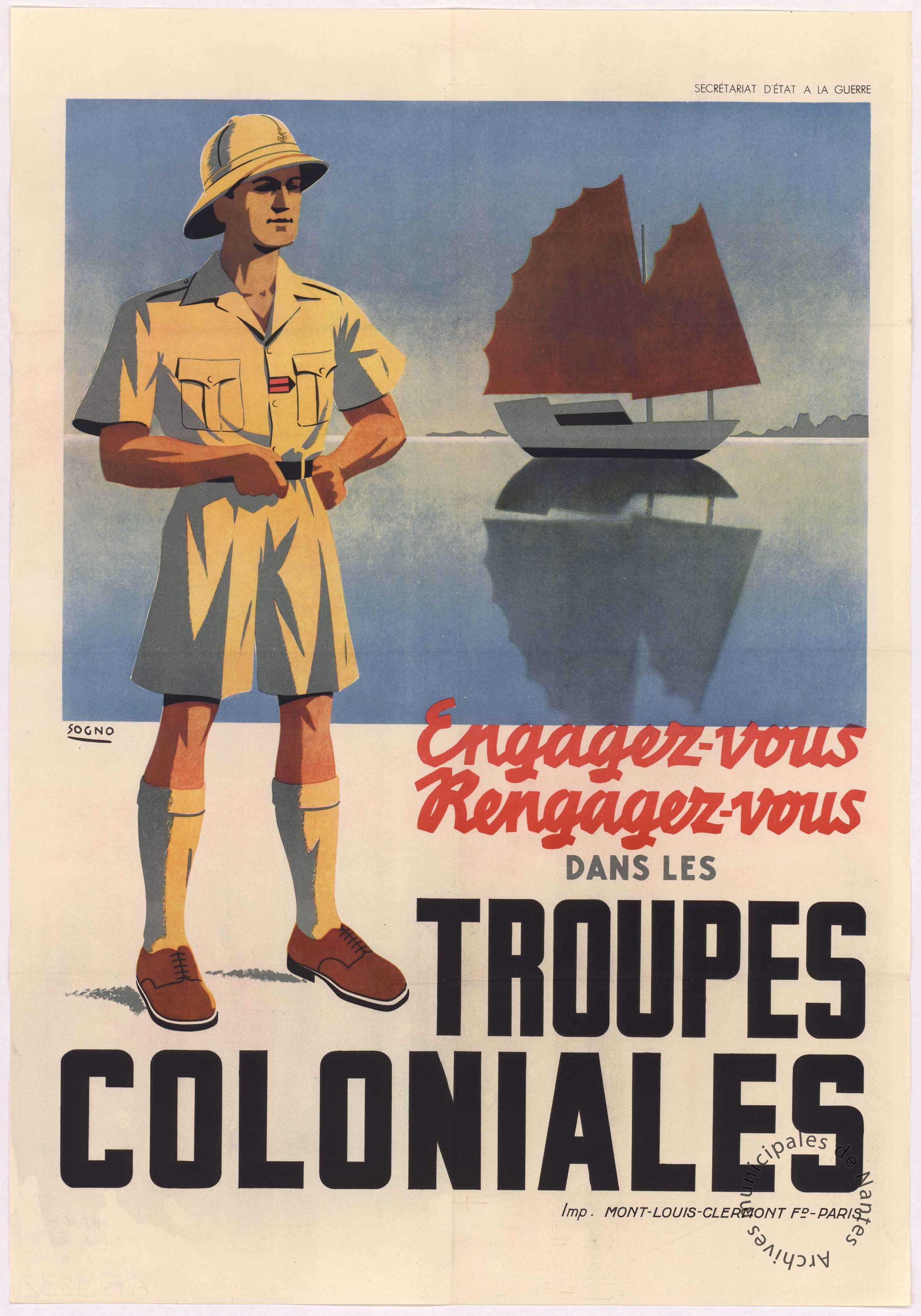
Then emerged from the verandah a soldier in French uniform. His small stature, brown skin and Western-type features showed him to be a Cambodian. He wore the blue field cap with the golden anchor of the Troupes Coloniales- the French “Marines”- and three golden chevrons of a master-sergeant. On his chest above the left breast of his suntan regulation shirt were three rows of multi-colored ribbons: croix de guerre with four citations, campaign ribbons with clasps of France’s every colonial campaign since the Moroccan pacification of 1926; the Italian campaign of 1943 and the drive to the Rhine of 1945. In his left hand, he carried several papers crossed diagonally with a tri-colored ribbon; travel orders, like mine, which also awaited the signature of one of the officers.

He maintained in the shadow of the verandah’s awnings until the officers interrupted their game and had joined the two women with their drinks, then strode over in a measured military step, came stiffly to attention in a military salute, and handed the orders for himself and his squad to the captain. The captain looked up in surprise, still with a half smile on his face from the remark made previously. His eyes opened suddenly as he understood that he was being interrupted. Obviously, he was annoyed but not really furious.

“Sergeant, you can see that I’m busy. Please wait until I have time to deal with your travel orders. Don’t worry. You will have them in time for the convoy.”

The sergeant stood stiffly at attention, some of his almost white hair glistening in the sun where it peeked from under the cap, his wizened face betraying no emotion whatsoever.

“A vous ordres, mon Capitaine.” A sharp salute, a snappy about face. The incident was closed, the officers had their drink and now resumed their game.

The sergeant resumed his watch near where the Cambodian messboys were following the game, but this time squatted down on his haunches, a favorite Cambodian position of repose which would leave most Europeans with partial paralysis for several hours afterwards. Almost without moving his head, he attentively followed the tennis game, his travel orders still tightly gripped in his left hand.

The sun began to set behind the trees of the garden and a slight cooling breeze rose from the nearby Lake Tonle-Sap, Cambodia’s inland sea. It was 1700.

All of a sudden, there rose from behind the trees, from the nearby French camp, the beautiful bell-clear sounds sounds of a bugle playing “lower the flag”- the signal, in which the French Army, marks the end of the working day as the colors are struck.

Nothing changed at the tennis court; the two officers continued to play their set, the women continued their chatter, and the messboys maintained their silent vigil.

Only the old sergeant moved. He was now standing stiffly at attention, his right hand raised to the cap in a flat-palmed salute of the French Army, facing in the direction from which the bugle tones came; saluting, as per regulations, France’s tricolor hidden behind the trees. The rays of the setting sun shone upon the immovable brown figure, catching the gold of the anchor and of the chevrons and one of the tiny metal stars of his ribbons.

Something very warm welled up in me. I felt like running over to the little Cambodian who had spent all of his life fighting for my country, and apologizing to him for my countrymen here who didn’t care about him, and for my countrymen in France who didn’t even care about their countrymen fighting in Indochina…

And in one single blinding flash, I knew that we were going to lose the war.”

Bernard Fall, Street Without Joy, Fourth edition, May 1967, Stackpole Books Harrisburg PA, pp. 291-294

481801_10151367001287059_1003164983_n

I hadn’t thought about the passage in a long time, until it came to me today. When I read it I began to understand the feelings that I had in 2008 but could not comprehend. The fact is that a very few men and women, a small segment of the population, less than one half of one percent of Americans have been fighting the wars in Iraq, Afghanistan while the rest of the country, even parts of the military have been on the sidelines.

I realized when I came home that those that crammed the families from Germany onto our plane to save a few dollars, the TSA airport security agents and some of those in the units that we returned to didn’t understand. In fact it was as if they were not at war. I think I began to realize at that point that no matter how ardently that some of us served that our sacrifices would not produce the planned intent of those that sent us to war. I knew at that point, but couldn’t quite put my finger on it that we could not win this war. A war that only a portion of the military, was fighting while the bulk of the population lived in peace without any “skin in the game.”

We are so much like the French, the British and every other colonial or imperial power that it is frightening. We claim not to be an empire but we act like empires have throughout history. We place our footprint large of the globe, creating bastions of American culture in the midst of lands far different than us. Then we send a small percentage of our people to fight the wars that our nation’s leaders as well American and multinational businesses deem to be in our national interest, especially natural resources and commerce.

n671902058_1153793_4043

As the expeditionary forces fight the wars the bulk of the public is shielded from the horror of it. Many people are sympathetic to the war fighters but because they have not served are ignorant of what we face. Beguiled by the slick, high tech media presentations in the news and entertainment industry of war; they do not understand the cost. The representations in the media make war another spectator sport. At least the news no longer shows a nightly “body count” as was done in Vietnam.

Marine Major General Smedley Butler, a man awarded the Congressional Medal of Honor twice wrote shortly after his retirement in 1932:

“What is the cost of war? what is the bill? Major General Smedley Butler wrote: “This bill renders a horrible accounting. Newly placed gravestones. Mangled bodies. Shattered minds. Broken hearts and homes. Economic instability. Depression and all of its attendant miseries. Back -breaking taxation for generations and generations. For a great many years as a soldier I had a suspicion that war was a racket; not only until I retired to civilian life did I fully realize it….”

It is amazing what going to war will do to you. This is especially true when you can recognize what too few people see or even want to even think about. But then why should we expect anything different? There was no national call to arms after 9-11-2001 and our leaders told the people to do what they normally would do, and most importantly to “go shopping.”

Pray for Peace,

Padre Steve+

4 Comments

Filed under iraq,afghanistan, middle east, Military, national security, News and current events, Tour in Iraq

“We Built This” Part One: Smedley Butler Tells Just How Big Business Did it All by Themselves

I am amazed at the hubris of the Romney campaign doubling down on this “we built it” crap. The fact is that many of if not most of the “American” corporations that now in fact are multinationals that couldn’t give a crap about Americans were and are made much of their profits off of war and the sacrifices made by American military personnel for over 100 years. Politicians of both parties have been in on this game since the beginning and while I mention the Romney campaign he is not the first nor the last that will play it.

Now don’t get me wrong. I am a big fan of how American business and ingenuity can get things done. Nor am I against people making money, even lots of money especially if they produce something worthwhile and they earn their money honestly. Nor am I jealous of those that were born into money, so long as they are honest about it and admit that that it was the product of those that gave it to them or provided them the opportunity to succeed. Nor do I criticize those small business owners that invest their heart, soul and treasure into becoming successful and doing great things, often against the odds and government regulations which are written to favor the big players and multinationals.

At the same time I also know that despite the rhetoric none of our major corporations or their CEOs got there all by themselves. Despite all the hype the facts are that our major corporations including the banks have subsisted on the government and American taxpayers for years. Bailouts, subsidies, government loans and all sorts of other perks are part of this history, but nowhere more glaring is how many in business got where they are by being war profiteers.

While these corporations have produced some the the best weapons systems ever seen. However they have also produced a lot of crap that failed the military, or which was not needed, or which were so bad or problem laden that they were rejected by the military. However they still got paid or are still getting getting paid for by the taxpayer.

To me there is something unseemly in saying “we built it ourself” when the profits are made off the taxpayer and with the blood of American military personnel. What is even more obscene is that some of these companies make money from our enemies  by supplying them even while those enemies use the weapons and materials paid at least in part by American taxpayers against our troops.

Major General Smedley Butler, US Marine Corps who was awarded the Medal of Honor twice wrote about how American business engorged themselves at the cost of Americans during the First World War, often without any positive result, apart from their profits. The fact is that little has changed since then.

Butler’s book, War is a Racket should be required reading for all voters if nothing else to demonstrate the absolute cynicism and moral bankruptcy of the “we built this ourselves” argument. The book was written after the war and Butler’s retirement during the Great Depression. The monetary figures are those of the period. One can adjust them for inflation if they want to, but it suffices to say that the big banks and corporations didn’t do it all by themselves.

Chapter Two of the book is entitled Who Makes the Profits. If you believe that these companies got where they were all by themselves then you need to read this. This article only discusses World War One. Volumes can be written about how American business has made much of its profit from none other than Uncle Sam, and our tax dollars.  The interesting thing is that many of the corporations named by Butler are still doing this today, sometimes under different names because of mergers but still the same companies.

I am already thinking about doing some more articles on just how various corporations made their money and exploited the government and taxpayers in order to do it. That is the wonderful thing about history. It shows when people are lying in order to increase their power.

So enjoy Chapter Two of War is a Racket

Who Makes The Profits?

The World War, rather our brief participation in it, has cost the United States some $52,000,000,000. Figure it out. That means $400 to every American man, woman, and child. And we haven’t paid the debt yet. We are paying it, our children will pay it, and our children’s children probably still will be paying the cost of that war.

The normal profits of a business concern in the United States are six, eight, ten, and sometimes twelve percent. But war-time profits — ah! that is another matter — twenty, sixty, one hundred, three hundred, and even eighteen hundred per cent — the sky is the limit. All that traffic will bear. Uncle Sam has the money. Let’s get it.

Of course, it isn’t put that crudely in war time. It is dressed into speeches about patriotism, love of country, and “we must all put our shoulders to the wheel,” but the profits jump and leap and skyrocket — and are safely pocketed. Let’s just take a few examples.

Take our friends the du Ponts, the powder people — didn’t one of them testify before a Senate committee recently that their powder won the war? Or saved the world for democracy? Or something? How did they do in the war? They were a patriotic corporation. Well, the average earnings of the du Ponts for the period 1910 to 1914 were $6,000,000 a year. It wasn’t much, but the du Ponts managed to get along on it. Now let’s look at their average yearly profit during the war years, 1914 to 1918. Fifty-eight million dollars a year profit we find! Nearly ten times that of normal times, and the profits of normal times were pretty good. An increase in profits of more than 950 per cent.

Take one of our little steel companies that patriotically shunted aside the making of rails and girders and bridges to manufacture war materials. Well, their 1910-1914 yearly earnings averaged $6,000,000. Then came the war. And, like loyal citizens, Bethlehem Steel promptly turned to munitions making. Did their profits jump — or did they let Uncle Sam in for a bargain? Well, their 1914-1918 average was $49,000,000 a year!

Or, let’s take United States Steel. The normal earnings during the five-year period prior to the war were $105,000,000 a year. Not bad. Then along came the war and up went the profits. The average yearly profit for the period 1914-1918 was $240,000,000. Not bad.

There you have some of the steel and powder earnings. Let’s look at something else. A little copper, perhaps. That always does well in war times.

Anaconda Copper for instance. Average yearly earnings during the pre-war years 1910-1914 of $10,000,000. During the war years 1914-1918 profits leaped to $34,000,000 per year. (One should read their history of strip mining massive pollution, ARCO bought them in the 1970s but was stuck with massive environmental problems, such that the company is only on the books to show the losses)

Or Utah Copper. Average of $5,000,000 per year during the 1910-1914 period. Jumped to an average of $21,000,000 yearly profits for the war period.

Let’s group these five, with three smaller companies. The total yearly average profits of the pre-war period 1910-1914 were $137,480,000. Then along came the war. The average yearly profits for this group skyrocketed to $408,300,000. A little increase in profits of approximately 200 per cent.

Does war pay? It paid them. But they aren’t the only ones. There are still others. Let’s take leather. For the three-year period before the war the total profits of Central Leather Company were $3,500,000. That was approximately $1,167,000 a year. Well, in 1916 Central Leather returned a profit of $15,000,000, a small increase of 1,100 per cent. That’s all.

The General Chemical Company (now part of Honeywell) averaged a profit for the three years before the war of a little over $800,000 a year. Came the war, and the profits jumped to $12,000,000. a leap of 1,400 per cent.

International Nickel Company — and you can’t have a war without nickel — showed an increase in profits from a mere average of $4,000,000 a year to $73,000,000 yearly. Not bad? An increase of more than 1,700 per cent.

American Sugar Refining Company (largest Sugar refining company in the world, name brand Domino Sugar) averaged $2,000,000 a year for the three years before the war. In 1916 a profit of $6,000,000 was recorded.

Listen to Senate Document No. 259. The Sixty-Fifth Congress, reporting on corporate earnings and government revenues. Considering the profits of 122 meat packers, 153 cotton manufacturers, 299 garment makers, 49 steel plants, and 340 coal producers during the war. Profits under 25 per cent were exceptional. For instance the coal companies made between 100 per cent and 7,856 per cent on their capital stock during the war. The Chicago packers doubled and tripled their earnings.

And let us not forget the bankers who financed the great war. If anyone had the cream of the profits it was the bankers. Being partnerships rather than incorporated organizations, they do not have to report to stockholders. And their profits were as secret as they were immense. How the bankers made their millions and their billions I do not know, because those little secrets never become public — even before a Senate investigatory body.

But here’s how some of the other patriotic industrialists and speculators chiseled their way into war profits.

Take the shoe people. They like war. It brings business with abnormal profits. They made huge profits on sales abroad to our allies. Perhaps, like the munitions manufacturers and armament makers, they also sold to the enemy. For a dollar is a dollar whether it comes from Germany or from France. But they did well by Uncle Sam too. For instance, they sold Uncle Sam 35,000,000 pairs of hobnailed service shoes. There were 4,000,000 soldiers. Eight pairs, and more, to a soldier. My regiment during the war had only one pair to a soldier. Some of these shoes probably are still in existence. They were good shoes. But when the war was over Uncle Sam has a matter of 25,000,000 pairs left over. Bought — and paid for. Profits recorded and pocketed.

There was still lots of leather left. So the leather people sold your Uncle Sam hundreds of thousands of McClellan saddles for the cavalry. But there wasn’t any American cavalry overseas! Somebody had to get rid of this leather, however. Somebody had to make a profit in it — so we had a lot of McClellan saddles. And we probably have those yet.

Also somebody had a lot of mosquito netting. They sold your Uncle Sam 20,000,000 mosquito nets for the use of the soldiers overseas. I suppose the boys were expected to put it over them as they tried to sleep in muddy trenches — one hand scratching cooties on their backs and the other making passes at scurrying rats. Well, not one of these mosquito nets ever got to France!

Anyhow, these thoughtful manufacturers wanted to make sure that no soldier would be without his mosquito net, so 40,000,000 additional yards of mosquito netting were sold to Uncle Sam.

There were pretty good profits in mosquito netting in those days, even if there were no mosquitoes in France. I suppose, if the war had lasted just a little longer, the enterprising mosquito netting manufacturers would have sold your Uncle Sam a couple of consignments of mosquitoes to plant in France so that more mosquito netting would be in order.

Airplane and engine manufacturers felt they, too, should get their just profits out of this war. Why not? Everybody else was getting theirs. So $1,000,000,000 — count them if you live long enough — was spent by Uncle Sam in building airplane engines that never left the ground! Not one plane, or motor, out of the billion dollars worth ordered, ever got into a battle in France. Just the same the manufacturers made their little profit of 30, 100, or perhaps 300 per cent.

Undershirts for soldiers cost 14¢ [cents] to make and uncle Sam paid 30¢ to 40¢ each for them — a nice little profit for the undershirt manufacturer. And the stocking manufacturer and the uniform manufacturers and the cap manufacturers and the steel helmet manufacturers — all got theirs.

Why, when the war was over some 4,000,000 sets of equipment — knapsacks and the things that go to fill them — crammed warehouses on this side. Now they are being scrapped because the regulations have changed the contents. But the manufacturers collected their wartime profits on them — and they will do it all over again the next time.

There were lots of brilliant ideas for profit making during the war.

One very versatile patriot sold Uncle Sam twelve dozen 48-inch wrenches. Oh, they were very nice wrenches. The only trouble was that there was only one nut ever made that was large enough for these wrenches. That is the one that holds the turbines at Niagara Falls. Well, after Uncle Sam had bought them and the manufacturer had pocketed the profit, the wrenches were put on freight cars and shunted all around the United States in an effort to find a use for them. When the Armistice was signed it was indeed a sad blow to the wrench manufacturer. He was just about to make some nuts to fit the wrenches. Then he planned to sell these, too, to your Uncle Sam.

Still another had the brilliant idea that colonels shouldn’t ride in automobiles, nor should they even ride on horseback. One has probably seen a picture of Andy Jackson riding in a buckboard. Well, some 6,000 buckboards were sold to Uncle Sam for the use of colonels! Not one of them was used. But the buckboard manufacturer got his war profit.

The shipbuilders felt they should come in on some of it, too. They built a lot of ships that made a lot of profit. More than $3,000,000,000 worth. Some of the ships were all right. But $635,000,000 worth of them were made of wood and wouldn’t float! The seams opened up — and they sank. We paid for them, though. And somebody pocketed the profits.

It has been estimated by statisticians and economists and researchers that the war cost your Uncle Sam $52,000,000,000. Of this sum, $39,000,000,000 was expended in the actual war itself. This expenditure yielded $16,000,000,000 in profits. That is how the 21,000 billionaires and millionaires got that way. This $16,000,000,000 profits is not to be sneezed at. It is quite a tidy sum. And it went to a very few.

The Senate (Nye) committee probe of the munitions industry and its wartime profits, despite its sensational disclosures, hardly has scratched the surface.

Even so, it has had some effect. The State Department has been studying “for some time” methods of keeping out of war. The War Department suddenly decides it has a wonderful plan to spring. The Administration names a committee — with the War and Navy Departments ably represented under the chairmanship of a Wall Street speculator — to limit profits in war time. To what extent isn’t suggested. Hmmm. Possibly the profits of 300 and 600 and 1,600 per cent of those who turned blood into gold in the World War would be limited to some smaller figure.

Apparently, however, the plan does not call for any limitation of losses — that is, the losses of those who fight the war. As far as I have been able to ascertain there is nothing in the scheme to limit a soldier to the loss of but one eye, or one arm, or to limit his wounds to one or two or three. Or to limit the loss of life.

There is nothing in this scheme, apparently, that says not more than 12 per cent of a regiment shall be wounded in battle, or that not more than 7 per cent in a division shall be killed.

Of course, the committee cannot be bothered with such trifling matters.

Smedley Butler, War is a Racket 

Peace

Padre Steve+

1 Comment

Filed under History, News and current events

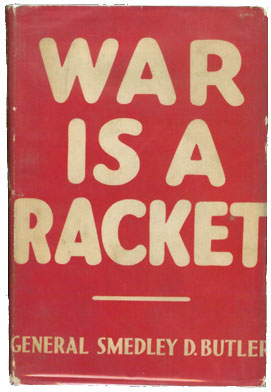
War is a Racket: Remembering Major General Smedley Butler USMC and Why He Matters

What is the cost of war? what is the bill? Major General Smedley Butler wrote: “This bill renders a horrible accounting. Newly placed gravestones. Mangled bodies. Shattered minds. Broken hearts and homes. Economic instability. Depression and all of its attendant miseries. Back -breaking taxation for generations and generations. For a great many years as a soldier I had a suspicion that war was a racket; not only until I retired to civilian life did I fully realize it….”

With all the domestic political news and the apocalyptic talk and actions surrounding John Roberts the Supreme Court and Obamacare it is hard to believe that we are at war for over 10 years and are at war or now preparing for war all over the Middle East. Iran, Syria, Afghanistan, Yemen, Somalia, the Persian Gulf, Libya, Egypt, Pakistan, you name the place there is a real a present danger of US forces becoming involved in even more war.

Maybe it is just me but it doesn’t seem that anybody in Washington has a damned bit of sense. I saw the “tweet” of a Michigan Republican party leader asking if “armed revolt was now justified” because of the Supreme Court ruling on Obamacare. That makes my blood boil, we are at war and this idiot wants to have a real live civil war and he is not alone. The process is to win elections if you want to change laws not to threaten civil war or revolution when the cause that you are against and take to the Supreme Court gets upheld for whatever reason. Anyone with a half a grain of sense knows that if you take something to the Supreme Court that you need to ask yourself the “Dirty Harry” question: “Do you feel lucky? Well do you punk?” When you go to the Supreme Court you put your case in front of nine Justices and not the electorate. That goes for Liberals as well as Conservatives.

The simple act of working together in the legislative process has been sabotaged by both parties over the years.  This finally hit the culminating point when GOP pushed through the self inflicted wound of the Budget Control Act of 2012. It is this act which now threatens the military which is at war with “sequestration.”  This threatens deep cuts in the military beyond those already anticipated and planned for by DOD. The Republicans are now trying to change it and the Administration is refusing to budge on the issue. Again this didn’t need to happen but brinksmanship is the order of the day.

There are no statesmen left in Washington DC only shills of the Right and Left and their masters from Wall Street to K Street. The only people profiting from this are the war profiteers who even if the budget gets cut and they fail to deliver usable weapon systems on time or in budget will still get paid. The losers will be the military personnel who must fight the wars who will get tossed onto the street by those that claim that personnel costs are the problem. Of course those that make this point are almost always the same lobbyists that shill for the defense industries and the banks. But enough about them.

Right now over 100,000 American military personnel and tens of thousands of other Department of Defense, Federal law enforcement, intelligence, diplomatic, humanitarian workers as well as contractors are fighting a war in Afghanistan. Tens of thousands more (mostly contractors)  are helping to shore up the Iraqi government or are fighting wars by other names in Pakistan, Yemen, the Horn of Africa or are deployed to counter Iran or standing by to assist Turkey if it comes into conflict with Syria. Of course this does not take into account the instability in Egypt, Libya, Eastern and Central Africa that threatens even more war or the potential of turmoil in Europe should the Euro Crisis bring about more financial disaster or even revolution in countries that are our allies. By the way let’s not forget about the nutcase leaders of North Korea who could provoke war on that side of the world in a heartbeat.

But never mind this, let’s fight each other instead threaten insurrection when we don’t get our way. But wait, I digress…

Did you know that while Americans stand in harms way almost every real or potential enemy has been armed, subsidized or assisted by American corporations and paid for by American tax dollars.  We have armed much of the world with weapons that have already in Iraq and Afghanistan killed thousands of American military personnel. But those were small time weapons compared to what we have provided to Egypt, Pakistan, Saudi Arabia and yes even Israel. F-15, F-16 and F-18 fighter planes, Tomahawk cruise missiles and Harpoon Anti-Ship Missiles, M-1 Tanks, M113 Fighting vehicles, Patriot Air Defense systems, you name the weapons system the war profiteers will sell it and US taxpayers will pay for it. These are weapons that very easily could be used with great effect to attack American interests should leaders in any of those countries decide to use them against us. I only include Israel because in 1967 its forces viciously attacked the USS Liberty which was operating in the Eastern Mediterranean Sea as Israel launched its pre-emptive war against Egypt. Although all of these countries are “allies” we must remember that alliances are only as good as the interests and values that unite nations.

Our defense industries with the support of the government sell advanced weapons to nations that often are less than trustworthy allies, allies of convenience that have little love for the United States but welcome the weapons and training that we provide.  They often use them to suppress the aspirations of their own people and plant the cultivate the seeds of radicalism and revolution.  It is hard not to cringe when pro-democracy protestors are killed by totalitarian regimes whose police and military are armed to the teeth with American made weapons. When those totalitarian regimes fall as did that of the Shah of Iran in 1979 those weapons fall into the hands of people radicalized against us by our support of their former oppressors.

Certainly nobody seriously believes that the angry masses in the countries that we have armed to the teeth with the latest in American weaponry would not use that weaponry against us should they desire.  But wait…. our politicians, arms dealers, bankers and their political, religious and financial backers certainly wouldn’t put Americans in harms way? Perish the thought, but not so quickly. They have done so before and will do it again.

Smedley Butler is one of under two dozen American military personnel to win the Congressional Medal of Honor twice. He saw the dangers of Fascism as well as the danger of unlimited corporate and business power to profit by war. Butler was not only a  valiant Marine he was also a commander that in war and peace cared about those who served. He saw how American finance and banking interests helped drag us into the Fist World War, the promises broken by the government and the lives destroyed by war.

In his book War is a Racket Butler wrote eloquently about how the heads of corporations and their political supporters in both parties were the only benefactors of war. He wrote of the plight of the soldiers that served and returned wounded and often changed by war and he did not mince words in what he saw. He became an anti-war activist. He was a supporter of the Bonus Army, the veterans that “occupied” Washington DC during the last year of the Hoover Administration to get the bonuses promised for their service and were violently evicted by troops under the command of General Douglas MacArthur. If he was alive today I have no doubt that he would be an active supporter of the current “Occupy” movement and opponent of politicians, political activists, lobbyists and even preachers that advocate even more war.

Butler’s War is a Racket as well as other published works are a worthwhile read and should make the most rabid fan of war think twice. Butler’s patriotism and devotion to the United States and the Constitution is unquestioned. His warnings are strong, he was a prophet in regard to the dangers of the Military-Industrial Complex well before President Eisenhower coined the term as he left office. He detailed how corporations made obscene profits often by selling the US Military vast amounts of materials that it could not possibly use and which taxpayers bought while business leaders and bankers made their fortunes that they never had realized when the nation was at peace. He reminds us of the dangers that our founders recognized about entwining ourselves in other people’s wars. While his answers on how to end war are now utopian dreams because of advances in technology and the wars which now rage without end in sight they are nonetheless not a bad place to start a debate.

Butler writes movingly about the price paid by veterans years after the war, men broken in body, mind and spirit from their war service.

“But the soldier pays the biggest part of this bill.

If you don’t believe this, visit the American cemeteries on the battlefields abroad. Or visit  any of the veterans’ hospitals in the United States….I have visited eighteen government hospitals for veterans. In them are about 50,000 destroyed men- men who were the pick of the nation eighteen years ago. The very able chief surgeon at the government hospital in Milwaukee, where there are 3,800 of the living dead, told me that mortality among veterans is three times as great as among those who stayed home.” 

One would think that things would be better now but our veterans’ health care system is a train wreck and there is an epidemic of suicide among active duty troops and veterans. In 2005 after years of hand wringing the Bush administration grudgingly increased the number of Soldiers and Marines even while cutting Navy personnel and ships to the  minimum that they could despite ever increasing operational tempos. The Navy was reduced by over 50,000 sailors during the Bush years and now when the Navy is needed more it has been reduced to the point that 8-10 month deployments with short turn arounds will be normal.

Now the Obama administration is cutting back partly due to the withdraw from Iraq but mostly because of the economic crisis. However the bulk of these cuts are falling on the military personnel and not the war profiteers. The Army will be cut by nearly 80,000 in the coming years the Marines by 20,000 and that may increase if the budget takes the sequestration hit without any reduction in operational tempo. These Soldiers and Marines will enter a bleak job market where many employers give little value to military experience or training, which has resulted in a vastly higher unemployment rate for Iraq and Afghanistan veterans than the general population.

It wasn’t much different in Butler’s day. He writes:

“Boys with a normal viewpoint were taken out of the fields and offices and factories and classrooms and put into the ranks. They were remolded; they were made over; they were made to “about face”; to regard murder as the order of the day. They were put shoulder to shoulder and through mass psychology, they were entirely changed. We used them for a couple of years and trained them to think of nothing but killing and being killed.

The suddenly, we discharged them and told them to make another “about face”! This time they had to do their own readjusting, sans mass psychology, sans officers’ aid and advice, sans nation-wide propaganda. We didn’t need them anymore. So we scattered them about without any “three minute” or “Liberty Loan” speeches or parades.”

Butler recounted another visit to a different veterans’ hospital:

“In the government hospital at Marion, Indiana 1,800 of these boys are in pens! Five hundred of them in a barracks with steel bars and wires all around the outside of the buildings and on the porches. These have already been mentally destroyed. These boys don’t even look like human beings. Oh, the looks on their faces! Physically they are in good shape but mentally they are gone.” 

There are thousands and thousands of these cases and more and more are coming in all the time…

That’s a part of the bill. So much for the dead-they have paid their part of the war profits. So much for the mentally and physically wounded- they are paying now with thier share of the war profits. But others paid with the heartbreaks when they tore themselves away for their firesides and their families to don the uniform of Uncle Sam- on which a profit had been made….”

I could go on but I think that Butler says it quite well and with the passion of a Marine who was wounded on more than one occasion and won the Medal of Honor twice.

The only people that want war are those that profit from it and don’t have to pay the price paid by those that have to fight them and pay for them. When I see pictures of Mitt Romney protesting in support of the Vietnam war while getting deferment after deferment to avoid service it makes my head spin. My head spins even more when I hear him talking brazenly about committing US troops to even more war. For me the pictures of Romney’s pro-war protests as a college student avoiding war on educational and religious service deferments as millions of other Americans went to war are up there with the pictures of “Hanoi” Jane Fonda giving aid and comfort to those that were killing our troops.

Butler’s detractors and they are legion on the political right attempt to paint him as an isolationist or appeaser of Hitler. However they misunderstand him and his work. They don’t understand as Butler understood that there would not have been a Nazi Germany without Versailles and that was not possible without the American intervention on the side of Britain and France in 1917. That involvement was driven by the bankers and industrialists who had supplied raw materials, weapons and technical patents to the British and French, and had done so before with the Germans who believed that they would lose their investments if the Germans won the war. That would have happened in late 1917 or early 1918 had not the Americans declared war and entered the war on the side of the British and French.

Most of Butler’s current critics have never served a day in uniform much less a day in a combat zone. They make their livings and profits by the sacrifice of others and other than a few of his quotes have never read anything about him.

If you sense indignation in my voice it is real. I have lived the nightmare of PTSD for over 4 years. I see and work with the young men and women that have bravely endured the hardship of combat deployments and come home physically, mentally and spiritually wounded. To our credit we are trying to do better but for the war profiteers that will be too much. If military spending is cut you can bet that they will not take the hit that military personnel, their families and our veterans will take. They and their political benefactors will not allow it.

I am a military man through and through. I have spent nearly my whole life associated with the military as a dependent of a Navy Chief who served in Vietnam and a career of over 30 years divided between the Army and Navy. Some of my friends dads did not return from Vietnam, other friends and those who I have served with have paid with their lives in Iraq or Afghanistan while others suffer the continuing wounds of war.

This is personal for me and it is also motivated by my faith as a Christian. Butler chided the pro-war clergy propagandists of the Great War. He wrote:

“So vicious was this war propaganda that even God was brought into it. With few exceptions our clergymen joined in the clamor to kill, kill, kill. To kill Germans. God is on our side…it is his will that the Germans be killed.”

Such preaching is not much different from the right wing pro-war preachers who advocate killing Moslems simply because they are Moslems and that go out of their way to preach the value of “pre-emptive war” despite such wars being against the Christian understanding of the  “Just War” or international law against such war that we as Americans helped develop after World War Two at Nuremberg and to which we hold the leaders of what we call “rogue nations.”

I only wish that our leaders; political leaders of both parties, religious leaders, and even business leaders would see the folly of this course and their responsibility for the results.

Someone has to say it.

Peace

Padre Steve+

Note: All quotations from “War is a Racket” by Smedley Butler copyright 1935 and 2003 by the Butler family. Amazon Kindle edition. 

6 Comments

Filed under faith, History, iraq,afghanistan, Military, national security, News and current events, Political Commentary, PTSD, shipmates and veterans