Tag Archives: world war one

Nothing is as Clear and Certain as it Appears to Be: The Ukraine Crisis

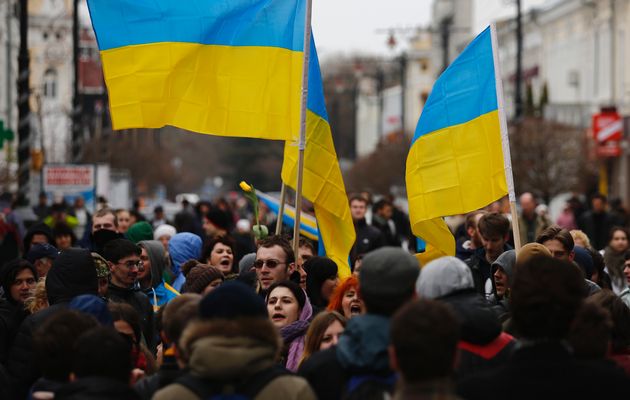
_73179624_021282371-1

“in the midst of war and crisis nothing is as clear or as certain as it appears in hindsight” Barbara Tuchman The Guns of August

There is nothing more uncertain than how leaders and people will react in crisis. We would like to think that we can be certain in our predilections, but we cannot because the reality is that human nature is always at play, and human beings have a penchant for doing things that are not expected.

030114_Breaking_ObamaPutin_640

It did not take long after the showcase of the Sochi Olympic Games for Vladimir Putin to move against the Ukraine and for all practical purposes annex the Crimea. But now after a few weeks it seems that the West is beginning to galvanize in its opposition to the Russian action. Germany is leading the charge from the side of the European Union, with Chancellor Merkel taking the lead. President Obama and Secretary of State John Kerry have been taking a hard diplomatic line while military forces gather.

It appears that targeted economic sanctions are in the offing while the European Union prepares to help supply the Ukraine’s energy needs.

140307064907-02-ukraine-0307-horizontal-gallery

The Russians have blockaded the small Ukrainian Navy in its Crimean ports, it has an estimated 30,000 soldiers in the Crimea and other forces are conducting “exercises” near the Ukrainian border. The Provisional Government of the Ukraine has called up its reserve forces, the United States is deploying naval and air force units to the Black Sea, the Eastern Mediterranean as well as Poland and the Baltic States.

But at the same time this is not the Cold War where two ideological blocks wrestled for domination. Instead the motivations, geopolitical and economic factors that connect the West and Russia make this much more complicated. Money is a big factor and it is of interest to note that a good amount of the resupply of US and NATO forces in Afghanistan is conducted over what is called the Northern Route, which goes through Russia and the Ukraine.

Ethnolingusitic_map_of_ukraine

The situation in the Crimea and the Ukraine is potentially volatile. Any situation that costs the lives of Ukrainians of either Ukrainian or Russian background could spiral out of control. Passions on both sides are running high. We in the West also need to remember that many Russians and men like Putin still feel the humiliation of the end of the Cold War, the collapse of the Warsaw Pact and end of the Soviet Union. Many Russians who even now are not fans of the Soviet system long for the days of empire and Russian hegemony in Eastern Europe.

In 1914 France was motivated by the humiliation that she suffered in 1871 at the hands of Prussia and the loss of Alsace Lorraine. The Russians have a similar attachment to areas where sizable ethnic Russian populations live, including the Eastern Ukraine and the Baltic. One has to remember the words of Otto Von Bismarck who said: “A generation that has taken a beating is always followed by a generation that deals one.”
2014-03-08T151114Z_01_TPE13_RTRIDSP_3_UKRAINE-CRISIS-CONVOY-08-03-2014-17-03-33-245

When looking at why this is happening we have to remember history.  Likewise we have to also remember the historic Russian paranoia when it comes to the influence of Europe and the West on areas that they believe are still part of Greater Russia. Their memory is long and past wounds are still fresh. Thus the blundering of the EU during the Fall of 2013 in its dealings with Ukraine, dealings which looked to the Russians like an attempt to draw Ukraine further away from them helped cause this situation. Likewise the Eastward expansion of NATO in the 1990s and early 2000s following the collapse of the Soviet Union and Warsaw Pact is considered both an insult and threat. The same is true of the presence of the American Anti-Ballistic Missile system in Poland, which is considered by many Russians to be directed at them, not Iran.

The situation is complex and influenced by many factors, and unlike some American politicians and pundits say, it has nothing to do with Benghazi or even what they claim is the “weakness” of President Obama. The roots of this crisis are long standing and diverse and have almost everything to do Russia’s relationship with Europe and very little to do with the United States. Thus for American politicians and pundits to demonstrate their woeful ignorance of history by blaming this all on President Obama is so self serving and transparent that it is embarrassing. But then American politics is almost always a demonstration of ignorance and arrogance.

The problem for the United States is that we have little credibility when it comes criticizing nations like Russia when they do the same as we do. Our actions to invade Iraq in 2003, actions which under the criteria that we laid down at Nuremberg violated international law make it hard for any American leader to criticize another power. This is true even when Putin’s actions, also illegal under international law are no worse and certainly by the historic ties of Crimea to Russia are more justifiable than what we did in Iraq.

Thus the outright hypocrisy of the architects of that invasion like Dick Cheney and Donald Rumsfeld shamelessly attack President Obama for his “weak” response to Putin’s actions are in large part to blame for them. They squandered our international standing and credibility, broke the military and bankrupted the country. They then lay the blame on Obama. By the decisions that they made and the subsequent consequences they tied Obama’s hands.
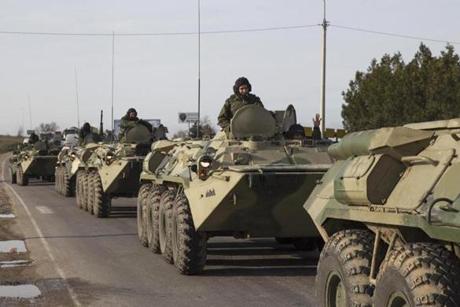
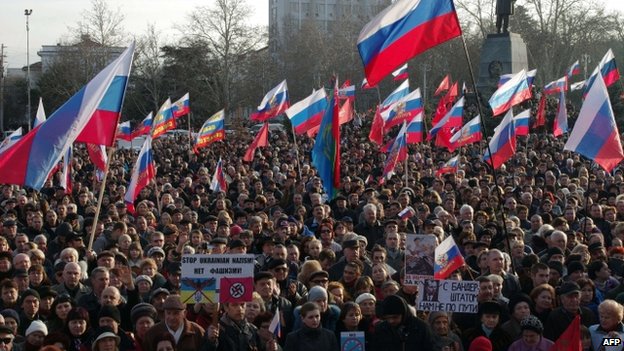
2014-03-10T173616Z_1863090881_GM1EA3B04DT01_RTRMADP_3_UKRAINE-CRISIS-CRIMEA.r

Sometimes these crisis blow over. Sometimes they stabilize but cause problems that continue for some time after the initial crisis. But there are some times that they take on a life of their own and that the people who think they are directing events end up being caught up in them, often with tragic results. While I do not think this will end in war, the possibility of such cannot be dismissed.

Tuchman in her book The March of Folly: From Troy to Vietnam wrote:

“A phenomenon noticeable throughout history regardless of place or period is the pursuit by governments of policies contrary to their own interests. Mankind, it seems, makes a poorer performance of government than of almost any other human activity. In this sphere, wisdom, which may be defined as the exercise of judgment acting on experience, common sense and available information, is less operative and more frustrated than it should be. Why do holders of high office so often act contrary to the way reason points and enlightened self-interest suggests? Why does intelligent mental process seem so often not to function?”

Peace

Padre Steve+
3 Comments

Filed under Foreign Policy, History, national security, News and current events

Remembering Armistice Day: A Day of Conscience

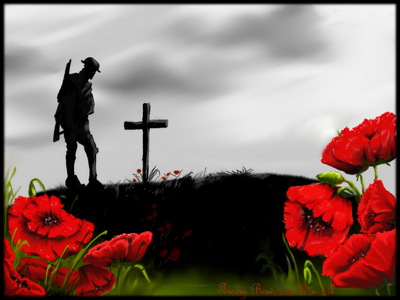
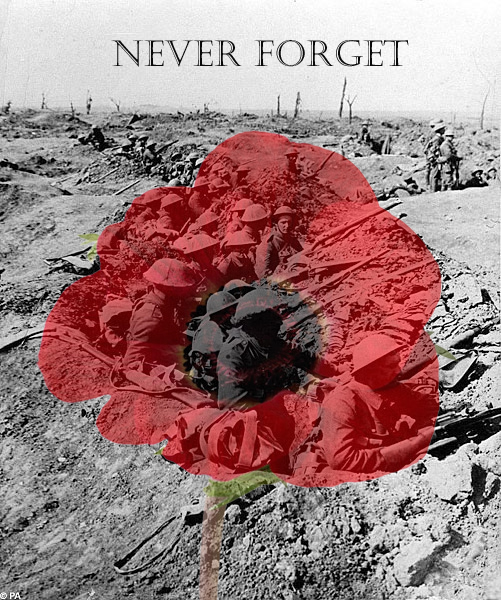
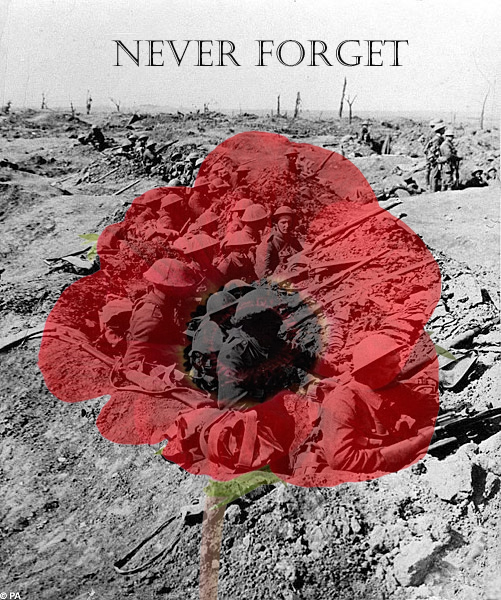
remembrance_day___poppy_day_by_daliscar-1

“Tomorrow is our day of conscience. For although it is a monument to victory, it is also a symbol of failure. Just as it honors the dead, so must it humble the living. Armistice Day is a constant reminder that we won a war and lost a peace…” General Omar Bradley November 10th 1948, Boston Massachusetts. 

It was the “War to End All War” or so thought President Woodrow Wilson and other American idealists. However that war to end all wars birthed a series of wars which made the losses of the First World War fade into insignificance as wars of ideology replaced wars for the preservation of the state.

In the First World War there were over 22 million casualties including over 5 million dead of which over 116,000 were Americans. President Woodrow Wilson established what we know now as Veteran’s Day as Armistice Day in November 1919, a year after the guns went silent.

Wilson wrote: “To us in America, the reflections of Armistice Day will be filled with solemn pride in the heroism of those who died in the country’s service and with gratitude for the victory, both because of the thing from which it has freed us and because of the opportunity it has given America to show her sympathy with peace and justice in the councils of the nations…

That initial proclamation was followed nearly 40 years later by one of President Dwight D. Eisenhower. Eisenhower signed into law what we now know as Veteran’s Day in 1954. In a sense I wish we had two holidays, one for Veterans from all wars in general and this one which we should never forget. It seems that in combining them we have lost some of the sacredness of the original. As Kurt Vonnegut wrote: “I don’t want to throw away any sacred things.” I will remember all who served this weekend but I will not forget why we do so.

All that being said for many in the United States and Western Europe the experience of  or even the thoughts of such a bloodletting is unimaginable. Yet to those of us who have gone to war and studied past wars the end result is not so distant. It is a part of our lives even today.

This weekend marks the 95th anniversary of the end in World War One.  For the United States the cost in the short time that its forces went into action and the armistice it was costly, though not nearly as costly as it was for the nations of Europe. From the time United States forces went into action in 1917 116,516 Americans were killed, 204,002 wounded, and 4,500 missing; 7.1% of the force of 4,355,000 the nation mobilized for war. (PBS the Great War UNC TV http://www.pbs.org/greatwar/resources/casdeath_pop.html)

However our costs pale in comparison with the European nations who had for over four years bled themselves dry.  If one wonders why Europeans seem to have so little desire for involvement in war one only needs to see how the concentrated killing of the First World War decimated the best and brightest of that generation. Out of nearly 8.5 million Frenchmen mobilized lost 1,357,000 killed, 4,266,000 wounded and 537,000 missing, 6,160,000 casualties or 73.3% of its forces. Other nations has similar casualty figures.

The human costs were horrifying. In all over over 65 million men served under arms in the war. Over 8.5 million were killed, over 21 million wounded, 7.75 million missing or prisoners or almost 37.5 million casualties. That total would be roughly equivalent to every citizen of the 30 largest American cities being killed, wounded or missing.

Much of Europe was devastated, mass numbers of refugees the dissolution of previously stable empires, civil wars, border conflicts between new states with deep seated ethnic hatreds, economic disasters and the rise of totalitarian regimes which spawned another even more costly world war and a 40 year cold war. The bitter results of the First World War are still felt today as conflicts in the Middle East in part fueled by the decisions of Britain and France at the end of the war rage on.

The epic war poem In Flanders Fields written by Canadian Lieutenant Colonel John McCrea symbolizes the cost of that war and the feelings of the warriors who endured its hell.

In Flanders fields the poppies blow
Between the crosses, row on row,
That mark our place; and in the sky
The larks, still bravely singing, fly
Scarce heard amid the guns below.

We are the Dead. Short days ago
We lived, felt dawn, saw sunset glow,
Loved and were loved, and now we lie
In Flanders fields.

Take up our quarrel with the foe:
To you from failing hands we throw
The torch; be yours to hold it high.
If ye break faith with us who die
We shall not sleep, though poppies grow
In Flanders fields.

Yes there are always consequences to actions. This weekend as we remember what we now call Veteran’s Day, or Remembrance Day in Britain let us not forget that the genus of these holidays was the blood shed by so many in places like Verdun, Gallipoli, Caporetto, Passchendaele, the Marne, the Argonne, Tannenberg, Galicia and on Flanders Fields.

flanders field

President John F Kennedy said: “As we express our gratitude, we must never forget that the highest appreciation is not to utter words, but to live by them.”

In the hope of peace and an end to war.

Peace,

Padre Steve+

Leave a comment

Filed under History, Military

The “Buddy” Poppy: Symbol of Memorial Day

flanders_field

In Flanders Fields

John McCrae, 1915.

In Flanders fields the poppies blow

Between the crosses, row on row

That mark our place; and in the sky

The larks, still bravely singing, fly

Scarce heard amid the guns below.

We are the Dead. Short days ago

We lived, felt dawn, saw sunset glow,

Loved and were loved, and now we lie

In Flanders fields.

Take up our quarrel with the foe:

To you from failing hands we throw

The torch; be yours to hold it high.

If ye break faith with us who die

We shall not sleep, though poppies grow

In Flanders fields.

 1144221_orig

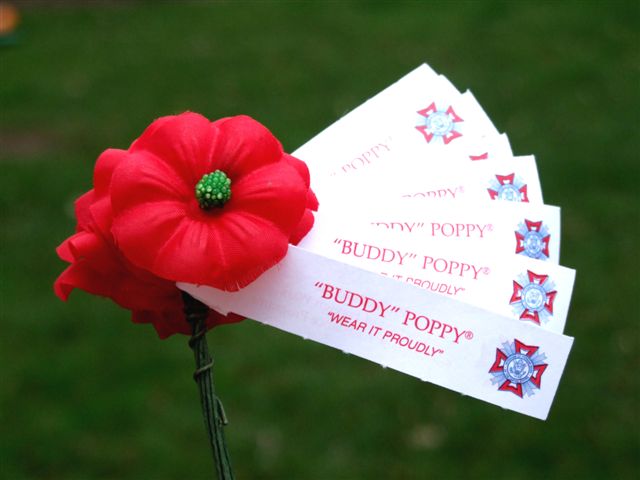
Besides the American Flag the Buddy Poppy is perhaps the most ubiquitous symbol of Memorial Day.  This poppy as we know it came about when Mrs Moina Michael read McRea’s poem and inspired wrote this verse:

We cherish too, the Poppy red

That grows on fields where valor led,

It seems to signal to the skies

That blood of heroes never dies.

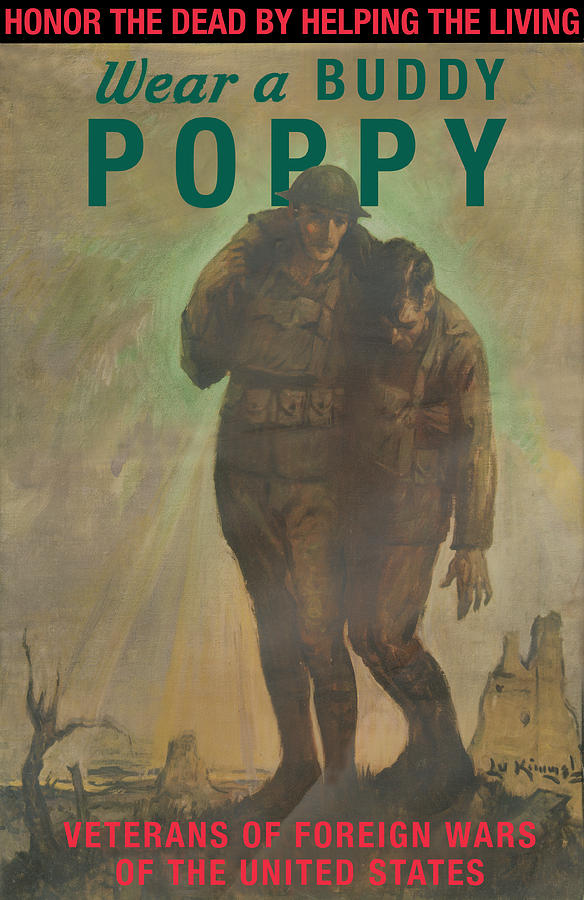
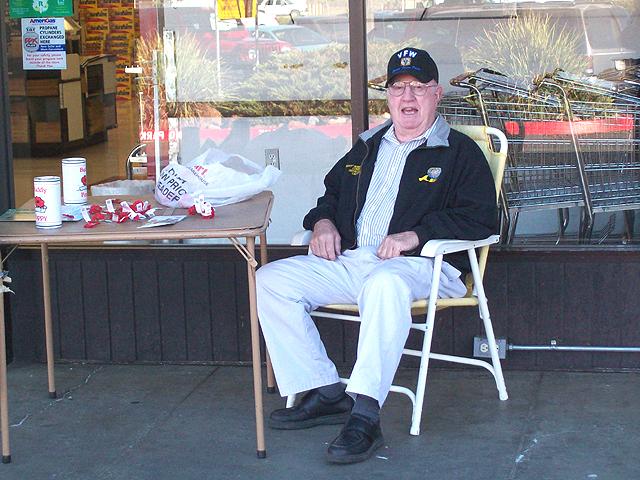
She then had the inspiration to begin wearing Red Poppies on Memorial Day and sold the poppies to friends and others with the money going to those in need. A French woman visiting the United States, a Madame Guerin discovered the new custom and took it back to France where she began to make artificial red poppies to sell with the proceeds going to the widows and orphans of the First World War. The custom spread to other countries and in 1921 the Franco-American Children’s League sold the poppies but disbanded in 1921. Madame Guerin approached the newly formed Veteran’s of Foreign Wars, the VFW in 1922 for assistance and in 1922 the VFW became the first American organization to sell poppies. Two years later the Buddy Poppy program began. The artificial poppies were made by disabled veterans who were paid for their work in order to provide them some form of income and distributed by other veterans across the country.  Today the VFW continues to distribute the Buddy Poppies which are still produced by disabled Veterans at the nation’s Veteran’s Administration Hospitals.

I remember the first Buddy Poppy that I every received. It was just before Memorial Day 1970, before it became a 3 day weekend falling on the last Monday of May. We were living with my Grandparents in Huntington West Virginia as my dad sought suitable housing for us in Long Beach California while he was in the Navy.

wear-a-buddy-poppy-lu-kimmel

Our initial move from the small town of Oak Harbor Washington, where my dad had been stationed at Naval Air Station Whidbey Island to Long Beach had not gone well. The first place we lived was in a dangerous neighborhood and with my dad traveling frequently to Naval Shipyards around the country to help commission new ships the stress on the family, especially my mother in dealing with that and two young boys was too much. Dad sent us back to Huntington where my Grandparents and numerous other relatives still lived for the duration of the school year as he sought better housing.

Memorial Day then was filled with visits to cemeteries to place flowers on the graves of departed relatives as well as flags on the graves of relatives who had served in the military. We made a number of stops that day at the Bowen and Dundas cemeteries as well as others where relatives were interred. Afterward we had a home cooked meal prepared by my maternal grandmother Christine and then made a trip on a city bus to my paternal grandmother Verdie.

Holidays, were much like that for us during that time that we lived in Huntington, until my dad came back and brought us back to Long Beach in June. Just before my dad arrived to take us back to Long Beach my mom, her cousin Valerie and I were shopping downtown, which at the time before I-64 took traffic around the town and led to a new mall and shopping complex being built just out of town, was a bustling place of commerce and activity. Major retailers all had their stores downtown, while the best movie theaters and restaurants were there as well.

Poppies_Rocky-Brunos

We were coming out of the old SS Kresge store on Fourth Avenue and an elderly man wearing a VFW cap approached us and handed me a poppy. He had to be in his 70s so I presume that he was a Veteran of the First World War. He chatted briefly with my mom and Valerie and I am sure my mom gave him a bit of money for the poppy. I kept it for many years and it was eventually lost in one of our moves. But I will not forget it and any time I see a Veteran distributing them I make sure that I get one.

Babe-Ruth_MAIN

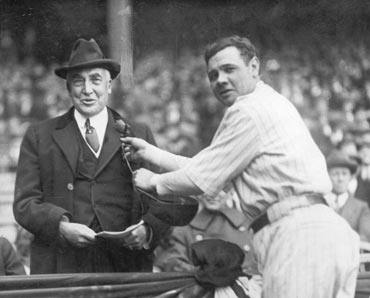
Babe Ruth and President Warren G Harding with the first official Buddy Poppy of 1923 

For me the Buddy Poppy is a symbol of thanks for the sacrifices made by so many, those who did not come home from wars being killed or missing in action, as well as the wounded and the families of the dead and those that came home forever changed by their time in war. This year marks the 90th anniversary of it being the official flower of remembrance for those who died in our nation’s wars.

The poppy has even more significance for me now having served in Iraq. Seeing war’s devastation and knowing so many who have either been killed or wounded in the wars that we have engaged since September 11th 2001 has impacted me in ways that I could not have imagined before the war. Likewise having come back changed by my experience and having to deal with the affliction of severe PTSD I sense a camaraderie with those men who came home changed from war and in many cases returned to a country that did not understand them.

Remembrance_Day___Poppy_Day_by_daliscar

I will be observing the “Go Silent” moment at 12:01 today with the Iraq Afghanistan Veterans Association to honor those who have given the last full measure.

Peace

Padre Steve+

4 Comments

Filed under History, News and current events