Monthly Archives: July 2009

Revisiting the Demons of PTSD: Returning to Iraq in Virginia a Year and a Half Later

Today I am attending a conference on Caregiver Operational Stress Control.  This brought out my “demons” as I was faced with the stories of others who had been to the same places that I have been in Iraq, and experienced similar things that I experienced on my return.  This is a re-posting of something that I wrote in March at the very beginning of this blog.  At that time I had very few readers.

I am glad to be at this training today.  I needed to take a Xanax when I arrived because I don’t do well with these kind of events anymore.  The intial session and a video of Dr Heidi Kraft talking about her expereinces at Al Taqaduum where I was based out of.  I was scheduled for another meeting but I knew that I needed to be here.  So I asked my Department Head who was going to the meeting if I could stay and he allowed me to do so. God bless him.

I received a note from a new friend in another country’s military, a physician with multiple tours in Afghanistan.  He is dealing with many of the things that I discuss in this essay and had a bad day that took him back to Afghanistan.  I am sure that he is not alone as I deal with many people in my Medical Center who have similar experiences.  Yesterday I was walking down a hallway near our Operating Room and I saw a pretty good sized blood spill on the floor. I was surprised at my reaction as I kept seeing it in my mind the rest of the day and flashbacks to Iraq and the TQ Shock Surgery Trauma platoon where I was pulled into a couple of the last major mass casualty events where 10-15 Marines or soldiers came in at a time. I began to see those wounder Marines on the tables and can visibly see those Marines, their wounds, even tattoos… I hope this helps break the code of silence.  I wrote this on a particularly rough day and will repost some of those early essays as they are still very relevant.  Peace, Steve+
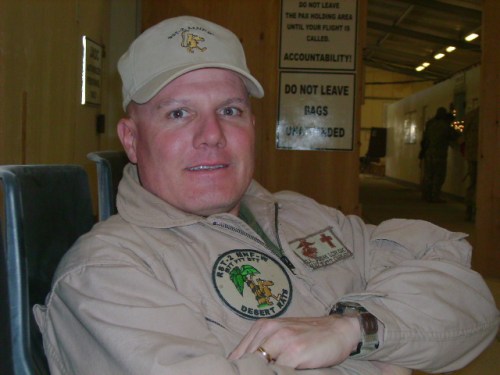
964Trying not to Show my Stress and Exhaustion after 2 weeks out while in between flights at Al Asad

The feeling of abandonment and aloneness, separation and disconnection run deep for those returning from unpopular wars in which the majority of the citizens take no part.  The effects are devastating.  It is estimated that at least 100,000 Vietnam veterans have taken their lives in the years after that war.  Last year the Army had its highest number of active duty suicides ever recorded, January and February of 2009 have been banner months for Army suicides.  Of course as I noted in my previous post these numbers don’t include reservists and Guardsmen who have left active duty or veterans dischaged from the service.  Neither do they include the host of service men and women who died from causes undetermined.

Many veterans attempted to return to “normal life” and family following the war. Many only to have marriages fall apart, continue or leave untreated alcohol and drug addictions acquired in country which often follow them back destroying lives, families and careers.  Most felt cast aside and abandoned by the goverment and society. Many got through and return to life with few visible effects, but the scars live on.  My dad would never talk about his experience in the city of An Loc in 1972 where he as a Navy Chief Petty Officer was among a small group of Americans operating an emergency airstrip in the city which was besieged by the North Vietnamese and Viet Cong for 80 days.  I do know that it affected him, he wasn’t the same when he returned, he was a lot more tense and had some problems initially with alcohol.  He never talked about his time there.

I have seen the effects of this in so many lives,  I remember a Vietnam vet who attempted to kill himself with a shotgun blast to the chin in Dallas during my hospital residency.  He forgot to factor in recoil and blew off his face without hitting his brain or any major arteries.  He survived…talk about having something to be depressed about later.  I have seen the tears as veterans rejected by the country during and after than war begin to seek community with their wartime brothers, men who had experienced the same trauma followed by rejection and abandonment by the people that sent them to Southeast Asia.  One only has to talk to veterans of the Ia Drang, Khe Sahn, Hue City, the Central Highlands and Mekong Delta or read their stories to know what they have gone through.  LTG Hal Moore and Joseph Galloway in We Were Soldiers Once..and Young and We are Soldiers Still have deeply penatrating and soul searching views of Vietnam as does Bing West in The Village. Bernard Fall does the same from a French perspective in Hell in a Very Small Place and Street Without Joy. Alistair Horne’s book A Savage War of Peace discusses and tells the story of many French soldiers in Algeria, who fought a war, won it militarily and had their government abandon them, bringing out a mutiny and coup atempt by French Soldiers who had fought in Indochina, were almost immediately back in action in Algeria with little thanks or notice from thier countrymen.  Abandonment is an ever present reality and “demon” for many of us who have served regardless of our nationality, French, Canadien or American who have fought in wars that have not engaged the bulk of our fellow citizens. Go to the Vietnam Veterans Memorial in Washington DC and tocuh it, trace the outline of a name, look upon the makeshift memorials and tokens of remembrance left by comrades who came home and understand the sorrow and the sacrifice.

Unfortunately we would like to think that this is something out of history that we have learned from and applied the lessons and in doing so no longer have an issue.  Unfortunately this is not the case.  There are many, depending on the study anywhere from8-20 percent of returning Iraq and Afghanistan veterans who suffer from some type of PTSD, Combat Stress reaction or other psychological malady incurred during their tour. Similar numbers are reported by the Israeli Armed Forces in from the 1973 War forward.   The British are seeing the same now as their veterans return from war.  Canadian Forces assigned to the UN command during the Rwanda genocide suffer horribly from PTSD. The mission commander, LTG Romeo Dalliare now a Senator in the Canadian Parliament is a leading spokesman for those who suffer from PTSD. His book Shake Hands with the Devil is a study of how military professionals were exposed to atrocities that they either were forbidden to stop or lacked the combat power to do so even if they wanted to.  These men and women tell their story in a video put out by Canadian Armed Forces.

105Convoy along Route Uranium

I am not going to rehash stories that I have recounted in my other posts dealing with PTSD here, but both I and many men and women that I know are scarred by the unseen wounds of this war.  We gladly recognize, and rightfully so, those who suffer physical wounds.  At the same time those who are dying inside are often ignored by their commands or if they come out are shunted into programs designed to “fix” them.  In other words make them ready for the next deployment.  I am not saying here that there is an intentional neglect of our service men and women who suffer from PTSD and other issues.  I do not think that is the case, but it is a fact of life. The military is shorthanded and stretched to the breaking point. Many Army Soldiers and US Marines have made 3-5 deployments since 2003. The Navy has sent over 50,000 sailors, not including those assigned with the Marines into “Individual Augmentation” billets in support of operations in Iraq, Afghanistan, the Horn of Africa and other fronts in this war.  The Navy personnel, as well as Air Force personnel who perform similar missions often do not have the luxury of going to war and coming home with a particular unit.  We serve often in isolation and incredibly disconnected from our commands, our service is often misunderstood.  Now there are efforts by the services and some commands to do things better to support our sailors, some of these at my own hospital.  However as an institution the military has not fully made the adjustment yet.

Many sailors feel abandoned by the country and sometimes, especially when deployed by the Navy itself.  I have debriefed hundreds of these men and women.  Almost all report anger and use terms such as being abandon, cut off and thrown away by the service and the country.  Those from all services who work in unusual joint billets such as advisers to local military and police forces in Afghanistan and Iraq feel a sense of kinship with each other, often feel a connection to the Iraqis and Afghans but are often not promoted or advanced at the same rate as others who have served in conventional forces in traditional jobs.  There was a film called Go tell the Spartans staring Burt Lancaster about Army advisers in the early stages of Vietnam.  If you see it and have been to Iraq with our advisers you can see some of the same dynamics at work.

At this point we are still engaged in Iraq and Afghanistan.  These wars divided the nation and the veterans, though better treated and appreciated by society than most of thier Vietnam counterparts have no memorial.  Words of thanks uttered by politicans and punits abound, our Vietnam era and other fellow veterans in their latter years come to the airports that we fly in and out of to say thank you, but our numbers are rising, the war rages on both in country and in our minds and lives are being lost long after soldiers have left the battlefield.
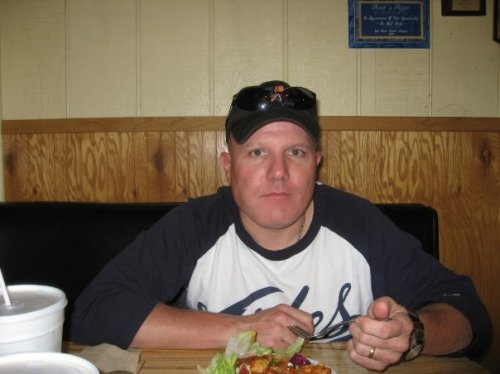
not a happy camperNot Doing Well on Leave about 5 months After my Return from Iraq

We have to do a better job of ensuring that those who sacrifice so much do not feel that they have been cut off and abandoned while they are in theater and especially when they return. When it is time we need a memorial on the Capitol Mall for those who served in these wars.  I don’t know when that will be, but I do hope to see it in my day.  Sure it’s only symbolic, but symbols can be healing too, just look at the black granite wall rising up from the ground and going back down into it, filled with the names of those who gave their lives and made the supreme sacrifice in Southeast Asia.  Simply known by most as “the Wall” it has become a place of healing and rememberance.  A place to say thank you, goodbye and amen.

Peace and blessings, Steve+

5 Comments

Filed under healthcare, iraq,afghanistan, Military, PTSD, Tour in Iraq, vietnam

Roster Moves: No Game, Series or Season in Baseball or Life Goes Without Them

046Norfolk Tides Manager Gary Allenson making a Slight Adjustment to the Outfield with 1 Out in the 9th Inning

Larry: Who’s this? Who are you?
Crash Davis: I’m the player to be named later.

From Bull Durham

Sometimes I feel like the player to be named later.  I am amazed at the changes on a baseball team’s roster during the course of a season.  At the same time being in the military for almost 28 years I have some understanding of them in daily life.  This season with the Norfolk Tides and my place of work at a Major Naval Medical Center has been a perfect example of how no roster survives intact.

Now this is nothing new, as long as there have been baseball teams and militaries there have been personnel changes.  In baseball as in the military there is constant moves of personnel as people are transferred, promoted, demoted, are injured or retire from either the service or the game.  Sometimes roster moves are part of a natural process as an organization decides how it wants to chart its future. Other times they are dictated by a need that occurs that has not been anticipated such as injuries, trades, transfers, retirements or personnel or budget constraints, either expected or unexpected.

In the Minor Leagues the Minor League affiliates exist to supply their Major League organization with young talent, player development, rehabilitation and depth to meet the demands of a long season.  It is similar in the military where support and training organizations exist to meet the needs of the operating forces.  This is true regardless of military branch of service.   When the Major League Team or the operating forces are stretched, experience losses or suffer setbacks it is common for them to draw upon the support and training organizations to fill the holes and meet the needs of the larger organization.

I have watched this close up in two worlds this year both where I work and where I watch the Tides play ball.  At work this has occurred where due to retirements and transfers our department has lost a lot of people who have not yet been replaced, creating a lot of pressure on those who remain, likewise we are tasked with more missions to support the operating forces.  The same is true of the rest of the Medical Center where many physicians, nurses, corpsmen and other sailors have been deployed to meet the demands of the expanding war in Afghanistan while still supporting other worldwide commitments and our own home town mission.  While this is going on other needs have come up in caring for returning warriors, wounded warriors and their families as well as the rest of the military community that depends on us for their primary and specialized medical care.  I have seen more colleagues and friends than I can count be deployed from what is supposedly a pretty safe “non-deploying” shore billet to support the operating forces, Navy, Marines and Joint or NATO.  I have watched the organization adapt to the call ups by moving people around as well as finding people to fill the void, even if they are only on contract.

Our Norfolk Tides began the season with a very solid roster and within two months the big club, the Baltimore Orioles had called up several pitchers as well as the heart of the batting order, Outfielder Nolan Reimold, Catcher Matt Wieters and Infielder Oscar Salazar.  Meanwhile the Tides lost several players to injuries which forced Manager Gary Allenson and the Orioles organization to fins personnel both within and outside of the organization to fill the gaps created by call ups to the big team and injuries.  To do this they brought up players from AA Bowie, moved players down from Baltimore and found and traded for players outside of the Orioles system.  At first the adjustment was difficult but now the new players and those who were left are coming together to keep the team, at least for now in first place in the International League South.   Yet with every move the organization has to decide how to best utilize the players that it has.  In the case of the Tides this comes down to Manager Gary Allenson and his coaches working together with the rest of the Orioles organization.

Even in the midst of a game there are roster changes, sometimes for pitchers, sometimes hitter and sometimes even for running or defense.  Some of the changes are for injuries, or situational based on statistics of what you have empirical evidence to show that one course of action is better than another.  Thus you have relief pitchers and pinch hitters or runners.  No at bat or even pitch is the same, which is like life, nothing remains the same so you must make the adjustments on every play.

At the personal level changes affects everyone in the organization even if their job in the organization does not change.  At the minimum the changes affect the dynamics of the work environment, the chemistry between teams and the concern for friends who have left the organization with whom we have invested significant amounts of time and emotional energy.  Thus when Oscar Salazar was called up by Baltimore it left a huge hole in the team because Salazar was not only a leading contributor on the field but his tremendously positive attitude off the field in energizing the team and working with younger players.  Individual losses while seemingly statistically insignificant can be magnified by the intangibles of what a person brings to the team.  Some who seem to have all the right stuff may not be missed, while others who maybe don’t have the same talent level as others might be more sorely missed.  Since a team depends on the efforts of everyone, especially in baseball where the game is both immensely individual and absolutely interdependent personnel changes must be weighed carefully in the overall mission of the team or organization.  The Tides are fortunate to be with Baltimore as the organization is not only scouting talent for the O’s but their Minor League affiliates.  I met a Baltimore Scout at a Tides game over the weekend who said they were out seeking hitters for Norfolk due to call ups to the O’s and injuries to members of the Tides.  The larger organization, though a work in progress recognizes that its future lies in its Minor League system.  Thus over the past couple of weeks they have picked up Michael Aubrey from the Cleveland organization and Victor Diaz, a former Tides Outfielder when they were in the Mets organization and who later played in New York, Texas and the Houston organization before playing with the Hanwha Eagles in South Korea before being signed by the Orioles and assisted to the Tides.  A good organization not only looks to the situation they are currently facing u to the future.  A bad organization does not plan for the future but only concentrates on the present.  In the case of the Tides we are prospering under Baltimore but suffered for almost 20 years under the Mets, who have continued to neglect and abuse their farm system, especially their AAA affiliates.  The fans in Buffalo despise the relationship.

On the personal level this also means that individuals can be moved around to meet the needs of the organization.  This does not always make players happy be they ball players or military personnel.  There have been times in my career that I did not like what was happening to me in the organization, not so in the Navy but definitely in hte first part of my Army career. Such unhappiness when left unchecked can lead to blow ups.  The movie Bull Durham has a great example where Crash Davis, played by Kevin Costner complains about his reassignment from an AAA team back to a single A team.

Crash Davis: You don’t want a ballplayer; you want a stable pony.
Skip: Nah.
Crash Davis: Well, my triple-A contract gets bought out so I can hold some flavor-of-the-month’s dick in the bus leagues, is that it? Well, f— this f—ing game!
[pause]
Crash Davis: I quit, all right? I f—ing quit.
[Crash exits the office and stands in the clubhouse for a minute before sticking his head back through the door]
Crash Davis: Who we play tomorrow?
Skip: Winston-Salem. Batting practice at 11:30.

I cannot say that in my Navy career I have ever felt like Crash Davis,  in fact I have even when doing a lot of “relief” work and been moved around sometimes faster than I wanted to be because I was needed to put out a fire. At the same time I have  always been dealt with well.  I have not been sent back down in the organization, but have been moved up or laterally to do different jobs, like I said often on short notice like the time when two different chaplains were fired and I went from one job to the next and ended up nine or ten weeks at 29 Palms prior to a 7 month deployment in two different battalions. Those were stressful, but not bad and the organization treated me well.  Some people don’t have that experience however and roster moves on short notice can be a source of consternation, anger and discord if not handled well by the team manager or the command.

However I did come into the Navy at a lower rank than I left the Army in 1999 just to get back in the show that was the cost of getting back in the game full time, something I am amazed that I got the chance to do and every grateful to the Navy, my Bishop and the Deity Herself.   In my current billet I love what I do and who I do it with, but the organization will be making some changes as we graduate our current residents, gain new residents, gain and lose other personnel and adjust to meet an ever changing and increasing mission.  While we do this we seek to set the standard of professional competency not only in the Navy but the civilian world.  For me this will involve changes, changes that on one level I resist, but on another level completely understand and agree with as the way to help the organization move forward.  Come September those changes will be made.  I can say that I don’t feel like Crash because this involves things that I have always wanted to do but unless I am adaptable will not be able to do, unless the Deity Herself creates a couple extra days to the week and makes every day a 32 hour day.  Thus I will adjust as will the rest of the organization as we collectively work together to ensure that we are taking care of those that God has given us.

So far as the story goes tonight, the one constant in the season is change, teamwork and adjustment to change. As Sparky Anderson once said “If a team is in a positive frame of mind, it will have a good attitude. If it has a good attitude, it will make a commitment to playing the game right. If it plays the game right, it will win—unless, of course, it doesn’t have enough talent to win, and no manager can make goose-liver pate out of goose feathers, so why worry?”  Thankfully, our leadership seems to be rising to the task and and we have the talent, so why worry?

Peace, Steve+

2 Comments

Filed under Baseball, leadership, Loose thoughts and musings, Military, philosophy

Beating Bartolo Colon

bartolo colonBartolo Colon Pitching at Norfolk 19 July 2009

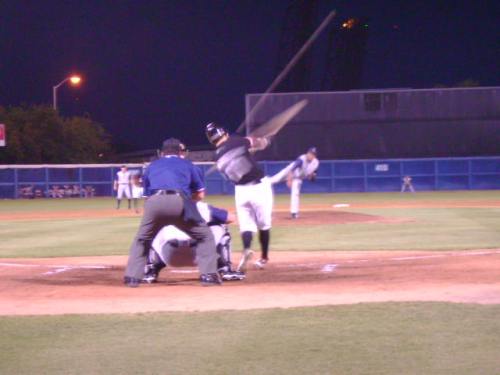
Tonight the Tides beat the Knights of Charlotte 4-3 defeating Chicago White Sox pitcher Bartolo Colon.  Colon who has pitched in two All Star Games, won the Cy Young Award in 2005 with the Angelsby going 21-8 with a 3,48 ERA  and is in the 100 MPH club was pitching in a Rehab start against the Tides.  He was rocked on the second pitch of the game by Tides Shortstop Blake Davis who went yard to the right field picnic area.  The Tides scored a second run that inning and in the bottom of the 5th nJeff Fiorentino who hit a three run shot last night went yard again with a two run blast off Colon.  Colon took the loss while Andy Mitchell pitched 7 inning for the Tides improving to 8-2 on the year.  I was fortunate to get two great photos tonight one of Colon pitching and one of Fiorentino’s home run.

Fiorentino HR against ColonTides OF Jeff Fiorentino Going Yard Against Bartolo Colon at Norfolk 19 July 2009, this would be the winning hit
Peace, Steve+

Leave a comment

Filed under Baseball

Tom Watson: Gentleman, Champion and Supporter of the Troops

Tom Watson and Me

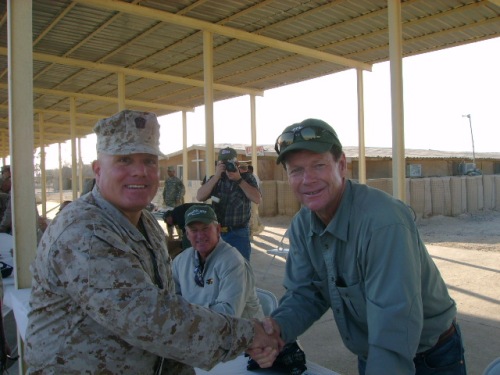
Shaking the Hand of Legendary Golfer and True Champion Tom Watson at Al Taqaddum Iraq 24 Nov 2007

My dad was a golfer.  He began golfing as he was in his last few years in the Navy.  Before he started golfing he was constantly watching it on TV when no baseball was on.  When he retired he began golfing in earnest.  It remained a lifelong passion of his even after he contracted Alzheimer’s disease.  He developed as a golfer and by his early 50’s had developed a decent handicap.  He also would help out as a volunteer at major tournaments at Pebble Beach.   Dad loved golf, but as with everything in his life he took it very seriously.  Sometimes when I visited home on leave dad would take me golfing and let me use his old clubs.  Well, since I would golf once every three to five years I would not do very well.  Before long he would be preaching at me and berating me because he said I had natural talent to hit the ball well and was wasting it.  Those were always interesting outings, as my brother Jeff can testify to himself.

Anyway, back in the 1970s when I was still living at home dad would frequently watch golf on TV.  One of his favorite players was Tom Watson.  Back in those days because of dad I was familiar with almost every major figure in the sport.  However they were not the same to me as like baseball players.  Baseball was more of my sport, though I did and still do appreciate golf and now that my shoulder is getting healed up from the beating it took in Iraq I am going to be getting out on the course on a much more frequent basis once the Minor League Baseball season is over.  The last time I was out in California my brother told me the same thing that my dad did about my ability to hit them ball.  I trust Jeff as he is a very good golfer and had coached golf at the high school level.  I think I am even more attuned to what I’m doing on the golf course because of Iraq and my PTSD.  I am much more in tune with what my body is doing at any given point of time.  I can now feel when a shoulder dips or I pull up on a shot as well as a number of other things that I never noticed before when I would go out on the course.

Because of dad I have retained a latent interest in golf.  So when I heard that Tom Watson was in the lead at the British Open while listening to my local ESPN Sports Radio 1310 on the way home from having the Undead Tooth of Terror extracted my ears perked up.  I had met Tom as well as a number of other golf legends in between missions at Al Taqaddum Air Base which was my home away from home while deployed to Iraq.  Tom and several others came through on a tour.  Now celebrities would make the rounds of Iraq and Afghanistan and I am grateful for them coming to visit, especially when things were not going well and a lot of guys were still getting killed and wounded.  Many times I was out in the far reaches when people would come through so I didn’t see many of them.  My friend Father Jose Bautista-Rojas was an escort for some dignitaries who accompanied the Chairman of the Joint Chiefs of Staff, Admiral Mike Mullen on his tour which included Lance Armstrong and Robin Williams.  Jose got to spend some time with them and got me baseball hat signed by both.  He said that Robin said that “I had better be praying for him.”  I thought that was both funny and kind.  I did meet Chuck Norris when he made his 2007 trip through Al Anbar visiting Marines.  He shook about every person’s hand and had pictures taken with them and he didn’t just go to the big bases, but some of the little remote places that I went. I would have liked to meet Robin. I have heard from a number of folks that he is great to military folks.  One thing that I noticed about the celebrities that came out, no matter who they were or what their politics, they were generally very friendly and seemed to care.  Celebrities take a lot of knocks for many reasons, some justified and others not, but when they come out to a combat zone it is appreciated.  I remember my dad talking about the Bob Hope tour that came to his ship off of Vietnam which included Sammy Davis Junior and Charro.

Anyway, I met Tom at Al Taqaddum in between mission’s right after Thanksgiving on November 24th 2007.  He and his group comprised of him David Feherty, Butch Harmon, Joe Inman, Tom Lehman and Howard Twitty were some of the finest and kindest men I have ever met while deployed.  These men took time with every Marine, Soldier and Sailor who came to see them.  They not only signed items but they gave away more things to our folks than I have seen given anywhere.  I received a hat signed by Tom and the others from the Rider Cup Team, and a picture signed by all, personalized to me.  That was really cool.  While talking with Tom I told him about my dad and his condition as well as my brother.  I asked if it would be possible to get something signed for them.  Tom got with the other guys and had a hat signed for my brother and each of the golfers inscribed a person message to my dad on the pictures.  They all expressed their well wishes to him and prayers for his health.  I was really touched by what gentlemen all of these men were.

I watched the last part of the British Open today pulling for Tom, but unfortunately he lost in the playoff to Stewart Cink after making bogey on 18. The golf miracle story ended with Tom finishing in second place, but even still he was not expected to do what he did even a week ago.  I really felt bad for him as he stood with tears in his eyes.  Despite the fact that he finished second Tom Watson to me is a gentleman, sportsman, a supporter of us who serve in unpopular wars, a man of compassion and a true Champion.  God bless you Tom and thank you for what you did for my dad while I was in Iraq.

Peace, Steve+

1 Comment

Filed under alzheimer's disease, celebrities, golf, iraq,afghanistan

Three Run Home Run off the bat of Jeff Fiorentino

I got a great picture tonight, the first time I have actually caught a ball coming off the bat for a home run. This was courtesy of Jeff Fiorentino of the Norfolk Tides who went yard in a big way with a 3 run blast in the 2nd inning at Harbor Park against the Charlotte Knights. The Tides won the game 8-5. As Earl Weaver once said “The key to winning baseball games is pitching, fundamentals, and three run homers.” Last night is was pitching and tonight that home run. three run homer by fiorentino

Leave a comment

Filed under Loose thoughts and musings

Crossing the Mendoza Line: It’s not All about the Lifetime Batting Average

Hammock Grand SlamRobby Hammock Crossing the Plate after his Grand Slam in the Bottom of the 6th against Charlotte
When I was playing baseball I hit somewhere around the Mendoza line.  I was never much of a hitter but I made up for my lack of hitting by being pretty solid defensively, a pretty versatile utility player and hustling on every play.  Likewise I would be the guy encouraging other players.   On two different teams in two different sports I was named the “Most Inspirational Player” by my teammates.  Being the most inspirational player does not mean that you are a particularly good ballplayer but rather that you add something else to the team dynamic.  In fact you may not be admired for how well you play, but rather how hard you try and how you get along with your team mates.  I was talking to my dad who is now in a nursing home with end stage Alzheimer’s disease on my last visit.  In a rare moment I had him back talking baseball I thanked him for how he helped me learn to love the game, pitch and field, especially fielding.  I said to him, the only thing that you didn’t do was teach me to hit.  He looked up at me and said “Son, there are a lot of people who can’t hit, it’s a gift.”  So I guess I was doomed to be a Mendoza Line player.

Mario Mendoza played for the Pirates and Mariners.  To be kind he was an amazing defensive shortstop but he as my dad would have said” Couldn’t hit his way out of a wet paper bag.”  His career average was .215 although he often flitted and flirted with the .180 – .200 level. He never played in an All Star game or World Series.  He never hit more than two home runs in a season, in fact one was an inside the park job playing for the Mariners and he hit below .200 in five of his nine major league seasons.   However, despite that Mario Mendoza lives on in baseball, his name forever associated with a low batting average.  In modern baseball parlance the Mendoza line is considered a batting average of .200.  Credit for who coined the term goes depending on your source to either George Brett, the All-Star Third Baseman of the Kansas City Royals or fellow Seattle Mariners Tom Paciorek or Bruce Bochte from whom Brett may have heard the term.  Either way the term stuck after ESPN commentator Chris Berman who used the term in 1988 to describe the hitting struggles of a star power hitter.  Once Berman made the comment it became a pretty standard way of denoting guys who struggle at the plate.  Mexican sportscaster Oscar Soria corroborates the Paciorek and Bochte version referencing a conversation with Mario Mendoza while Mendoza was managing the Obregon Yaquis in the Mexican Pacific League who stated that Mendoza said “that Tom Paciorek was the first to mention the phrase “Mendoza Line” when he read the Sunday paper” and that “then George Brett heard about that.”  Soria then discussed how Mendoza was initially angered by Berman’s use of the term but now “he enjoys the fame of the phrase Mendoza line.”  For a really good discussion of the Mendoza Line see the article in the Baseball Almanac at: http://www.baseball-almanac.com/books/mendozas_heroes_book.shtml, from which the information above is gleaned.

Now my buddy Elliott the Usher and I have frequent discussions about the game discussing pitching, hitting, fielding, base running, prospects, scouting and strategy.  Elloitt is one of those gems of Baseball knowledge, his love and knowledge of the game shows in the way he deals with people including Major League Scouts, players from the Tides and visiting team who are charting the game and others.  I really think that he should be hired as a commentator or color man on some baseball broadcast.  This season we have enjoyed a lot of laughs as well as had a lot great talks amid the joys and sorrows of the season.  One of our frequent subjects of discussion is players on our team as well as the visiting teams who are hitting near or below the Mendoza Line.  We have a few on the Tides who are hovering at or below the Mendoza line.  A couple of these players are former Major Leaguers and a couple career minor league guys.  Last night I decided to venture out for the first time in two days since I was now getting a case of “cabin fever” and my cocktail of Vicodin, Motrin and Amoxicillin seemed to have my pain and swelling a bit more under control.  Judy said my cheek still looks “like a squirrel’s” but at least I wasn’t in too bad of pain, though when I got up in the morning and until 2 or 3 PM I was still pretty sore and tired.  At least for the majority of the game the pain was manageable and of course as soon as I got home I dumped a butt load of meds down me and went to sleep.

Last night the Tides swept a double header from the Charlotte Knights who are the AAA affiliate of the Chicago White Sox.  Since the game was rain delayed after a series of severe storms raked the area in the two hours prior to the first pitch it was not well attended.  Because of this I was able to flit between my buddies Barry down in section 102 and Elliott.   It was good to be able in a fairly relaxed atmosphere to talk about the game.  The Tides had lost the last game prior to the All Star Break in Durham and then the first game back from the break.  In those two games their hitting died and they were outscored 16-3.  Last night Chris Tillman was throwing an outstanding game having given up just one run in the first inning.  It wasn’t until the 6th inning until the Tides scored their first run with one out when Michael Aubry doubled to score Justin Turner to tie the game 1-1.  The Tides then loaded the bases and Brandon Pinkney struck out for the second out.  At this point with the bases loaded, Elliott and I gave a mutual groan.  One of our “below the Mendoza Line” batters, catcher Robby Hammock was coming to the plate.  Robby is a good defensive catcher and while playing for the Arizona Diamondbacks caught Randy Johnson’s perfect game in 2003.  However this year has seen Robby really struggle at the plate.  The count went to two and from the way Robby had been swinging the bat tonight Elliott turned to me and said “I can’t look.”  Robby then fouled off the next pitch.  I said “Elliott he’s dragging this out.” Then I yelled “Hey Mendoza! Get a hit!”   At this point Robby who is currently hitting .190 stood back into the batter’s box.  The pitch from Knight’s reliever John Link was a slider that didn’t cut and Robby planted it in the picnic area in Left Center for a Grand Slam home run.  Elliott and I rejoiced, Robby had maybe gotten the hit that would re-ignite the team for the second half of the season.  This blew the game open and the Tides went on to win 5-1.  Robby was quoted in the Virginia Pilot today about the hit “I closed my eyes and put my bat in the spot” and “I felt decent today, I just got lucky and that’s all there was to it.”  Tides fans are not complaining even if it was lucky, I’m happy for you Robby, you helped get us back on track enjoy the moment and keep hanging in there.

The hitting surge continued in the second game.  Jeff Fiorentino and Michael Aubrey, who are .300 hitters, Fiorentino about .325 right now and way above the Mendoza Line each had 2 hits and drove in two runs while our other way below the Mendoza Line players had a good night. Infielder Carlos Rojas was in at Third due to injuries that forced Manager Gary Allenson to reshuffle the line up.  Carlos is a pretty good defensive player with pretty good range.  However he was only hitting .156 going into the game but went 2-3 with two singles in what I think was his first multi-hit game of the season.  Catcher Chad Moeller who has struggled at the plate since coming down from Baltimore when Matt Wieters was called up also doubled and scored a run as the Tides took the second game 5-1 with Chris Waters getting the win.

All in all it was not a bad night for our guys living below the Mendoza line; hopefully they will all get themselves up above it.  As a member of the Mendoza Line club myself I hope that they all do well and that last night is a harbinger of things to come.  Today my mouth feels a bit better than yesterday though I woke up in some pain.  I plan on seeing tonight’s game with Judy as the Tides hopefully will extend their International League South Division lead over the Durham Bulls by defeating the Knights here again.

Coming back to the Mendoza Line itself the way that guys like Mendoza make their mark is by the intangibles that they bring to the game.  Some of the “Mendoza’s” went on in other ways to make a difference in the game through coaching, managing, scouting at the Major or Minor League level, as well as in sports media, announcing or writing.  Some would include guys like Tony LaRussa career .199 average in 10 seasons, Charlie Manuel .198 in 6 seasons, Bob Uecker career .200 in 6 Major League seasons, Sparky Anderson who hit .218 in one season in the Majors and once said “I led the league in “Go get ’em next time.” Tommy Lasorda was a pitcher and had a 0-4 record and 6.48 ERA in three major league seasons as well as Earl Weaver who never made it to the Majors.  All made lasting marks on the game and all were way below the Mendoza line.

The application to baseball players and non-ball players alike when you find yourself at the Mendoza Line is to make the most out of what you have.  Play to your strengths and know that if you do this you will make a mark, even if it is not at the plate.  I figure as a somewhat well trained and experienced theologian, historian, military officer and Priest that the Deity Herself understands bad days, and lackluster careers and still helps us get through life.  So anyway, as a Mendoza Line alumnus I say to all those hovering around the line, find a way to make your mark and do well, I’m cheering for you as are all the other Mendoza’s among the Saints in Heaven.

Peace, Steve+

1 Comment

Filed under Baseball, philosophy

Going to War: A Bus Ride to the Carolina Countryside

This is part four in my “Going to War” series. Previous parts are noted here:

Part One:Going to War: Reflections on My Journey to Iraq and Back- Part One

Past Two: Going to War: Interlude July 4th 2007

Part Three: Going to War: Wills, Living Wills, Immunizations Gone Bad and Christmas in July

Part Four: Going to War: Last Night together and a Kiss Goodbye

Nelson and I staged our gear as we waited for the buses to arrive to take us to Fort Jackson South Carolina where we were to receive our training for the deployment.  As we talked other sailors arrived and gear was stacked in rows of sea bags just off of the sidewalk.  Nelson’s parents, brother and sister were on hand to see him off.  His brother is a First Class Petty Officer and his dad a former Vietnam era Marine Recon NCO who made several deployments “in the shit” as many Vietnam vets call tours in that combat zone.  They were really nice folks.  Over the years I had heard much about them.  They are close to each other and all are supportive of Nelson.

Nelson is a career amateur boxer; kick boxer, martial artist and more recently MMA fighter.  He is active in children’s martial arts instruction and has been on Team USA and fought internationally.  During his Afghanistan deployment before he and I hooked up again he helped coach the fledgling Afghan National Boxing Team.  His last major title was just this year when he won the Arnold Schwarzenegger Classic.  The guy has more titles than you can imagine, his title belt collect could fill a room.  However, he was raised by a boxer, his dad.  His dad taught him and coached him growing up and helped Nelson win multiple New York State Golden Gloves titles.  His dad is a congenial man and who was very friendly, speaking English with a heavy Puerto Rican accent.  Nelson’s mom speaks some English.  Nelson tells a great story of the only time he was knocked out in a fight.  This happened at the Fort Apache Gym in the Bronx after Nelson had gone picking on his little sister when Nellie was about seventeen.  Nelson’s dad found out, told him to put on his gloves and get in the ring.  Nelson proceeded to talk trash to his dad as he got ready to fight and the first round got quite a few hits in on his dad.  In between rounds according to Nelson’s account he told his dad to quit, that he was too old to be in the same ring with him.  Nelson said that his dad simply commented “I was just letting you taste the water.”  The second round began and Nelson was hit by a combination from his dad, which he says “rung his bell” and made him “see stars.”  He remembers trying to get up and not being able to while his dad was talking trash to him.  I cannot do the story justice but meeting Nelson’s family was a joy.

So we waited while the other sailors gathered, some individually and some with family.  Some stood alone as couples while others mingled with each other.  For most this was a new way to see their sailor deploy.  No pier side goodbyes, no banners, no manning the rails by the crew as the ship was nudged away from the pier by tugs.  When you have a “normal” deployment of a ship or something like a Marine battalion it is a big deal.  Media is there, sometimes there are speeches, but most of all there is the understanding that we are all in this together.  The families say goodbye to their Sailors, Marines or Soldiers who are going to war together and leaving some kind of familiar support system for the families.  This is not so when you deploy individually.  We may have been going off to train together, but few would stay together on the deployment.  Normally as a chaplain you are a known quantity to the people that you go to war with.  I was going to war with Nelson but we would not remain with any sailors who were going through this process with us.  I know that was the case for others who would serve in isolated posts, often without any other Navy personnel, mostly working with the Army in support roles, and specialized roles such as the Electronic Warfare Officers detailed to work on defeating IEDs and roadside bombs.  As others said their goodbyes and hugged each other I thought of Judy and knew that she was going to be down for some time but I felt that for once that she had an adequate support network.

I looked at our gear as opposed to the others.  Our gear was in different deployment bags, ours were large and rectangular and more of a coyote or sand color while most everyone else had traditional green sea bags, or what are known in the Army as “duffle bags.”  We had all of our personal protective equipment or the EOD/Special Warfare type while others would receive some variation of Army issue at Fort Jackson.  There are pros and cons to such a arrangement.  The pro is that we had great gear certainly some of the best in theater.  The con was that we had to lug the great gear everywhere we went going to and coming back from war.  This would get old, but the benefits do outweigh the advantages when you are actually in a combat zone.

Finally an officer came out and began calling role and giving us our signed “official” orders.  After we were accounted for we were told to load our gear on the buses that would take us to Fort Jackson. I think there were four or five of these chartered tour buses  which as it turned out would be the first of many tour buses, roll calls and gear loads in the coming months, especially as we entered and exited theater.  Nelson and I got on the same bus which was not full and took seats near the front.  I got a seat alone because I was the senior officer on the bus and a chaplain to boot. This was not because I asked for it or hogged the seat.  It is actually fairly typical in such a setting where young enlisted guys don’t want to sit next to an officer and some are afraid of chaplains because of experiences that they have had in civilian churches.  Some of the young folks have never darkened the door of a church and many of those that have been in church have been burned in relationships with pastors or really over the top religious people.  I have found in my career that until they get to know a Chaplain a lot of them will be very careful in how they approach a chaplain, even those with a vibrant faith.  Some are afraid that the chaplain might try to convert them or disapprove of the manner in which they live their lives. So as a chaplain I need to be cognizant of this fact and be friendly and caring without scaring them away.  Of course I did build relationships with a quite a number of these sailors during the next few weeks but on this bus I was still an unknown quantity to them.  Sitting alone however was good for me since I general despise bus travel regardless of the company I keep.  For some reason my height works against me, I can never get my feet comfortably on the ground on these new tour buses and I have a terrible time getting comfortable.  Since bus travel takes forever to get anywhere the discomfort is palpable.  Now I did a three month tour on buses in 1979 while touring as a spotlight tech for the Continental Singers and Orchestra across the US and in Europe.  Somehow the old Greyhound buses were more comfortable than the new tour buses.  Maybe I’m just nostalgic but they somehow fit people like me better than the fancy new buses.

When you travel by bus with a bunch of sailors, the majority of whom are at least 20 years younger than you, the experience can be entertaining to say the least.   Part of course is a generational thing.  I am from the 60’s 70’s and 80’s.  These guys and gals are from the 90’s and 2000’s.  Music is different, culture is different, and the internet, cell phones, i-phones and Blackberries have revolutionized communications and life.  The trip was a chance for me to observe a lot about these sailors just by watching.  Some had their portable i-pods and MP-3 players going, others spent time talking on cell phones, a few read or talked among themselves, but the sailors near me gravitated to the DVD movie which was 300 the comic book style account of the Spartan’s defense of Thermopylae against the Persians.  As the Spartans made their stand I could see the young sailors who were going to war taking inspiration from King Leonditis of Sparta.   Since we were going into a place where 50-100 Americans a month were being killed and many others wounded and maimed I could understand the need for inspiration along with entertainment.

The bus ride itself was a lot like what I imagine that Minor League teams take in the Carolinas like in the movie Bull Durham, the coaches and older players mixed in with a lot of young guys.  The older guys staying pretty quiet and to themselves and the young guys having fun, playing games and joking around with each other,  We made a couple of stops, one at some little Interstate town with a fair amount of gas stations and a few fast food places.  About half the folks went to the McDonalds where we pulled in while the rest ran down the street to the Burger King and Taco Bell.  Once everyone had their fill the buses pulled back out onto the interstate.  When we finally got near Columbia the buses got of the Interstate highway and onto some small two lane state highway.  We drove down this road about twenty to thirty minutes and pulled into what appeared to be a tiny out of the way base.  I wondered where the hell we were.  Fort Jackson is a fairly large training base where thousands of recruits are trained every year.  Where we were certainly was not the Fort Jackson that I had imagined.

Instead of the main post we were at the South Carolina National Guard training facility called Camp McCready.  It is here that the Naval Expeditionary Combat Command has a training center set up with the Army to train sailors in basic combat tasks.

Our welcome that first night was simple.  We formed up, checked in, got our linens for our standard issue military beds and were marched to dinner at the chow hall or in the Army vernacular the DFAC by our newest and bestest buddies, our Army Drill Sergeants.  In the chow hall or DFAC we were met by a civilian running the line.  I can’t remember his name but this guy was really nice and put the RED in “Redneck.”  He made jokes with everyone that came through the line, asked where people were from and what they did.  When he found out that I was a chaplain he began to ask me for a joke every meal thereafter.  As Nelson and I sat down for chow with a couple of other sailors we looked at each other.  He said: “Boss I don’t think some of these guys know what is coming.”  I said “I think that your right partner, hopefully they adjust and do well.”  The other sailors, both more senior petty officers nodded in agreement.

Going back to the barracks I met some of the other officers enjoying their first night at Camp McCready.  More sailors to fill out the class were due later coming in from San Diego.  I introduced myself to a number of the officers near me and when lights out was called lay down on the same type of bed that I had first encountered some twenty five years before at Camp Roberts California and Fort Lewis Washington.  I swear the sheets, blankets and pillowcases were of the same vintage.  Despite that I fell asleep fairly quickly.

Leave a comment

Filed under iraq,afghanistan, Military, Tour in Iraq

Killing off the Undead Tooth of Terror

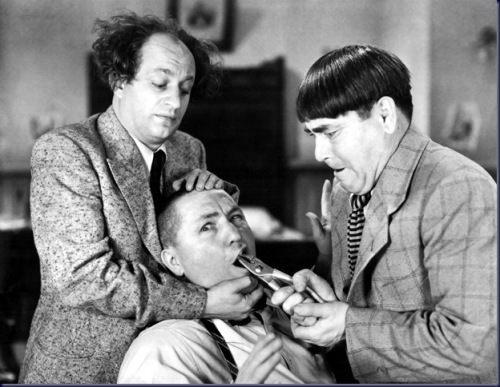
stooges dentist 2Yesterday I Might have taken these Guy’s Offer

The battle was brutal.  Yesterday the Undead Tooth of Terror held me in its grip more tightly than any time in the past several days.  Judy drove us home from West Virginia and last night as soon as we got back I was met by the on-call dentist and oral surgeon.  They bought me some relief for the night but I still didn’t sleep much having been tanked up on caffeine just to make it through the trip, the whole yin and yang of uppers and downers together.  This morning I got up and went in to work, my tooth and mouth in a bit of pain but not the 10.5 to 12.9 on the scale of 10 that I had yesterday.  The Undead Tooth of Terror may have been down but he was not yet out.

I met the dentist from last night as well as the Oral Surgeon who is the department head.  The people at the desk had no clue that I was coming in and were trying to figure things out by calling to the back when the dentist from last night came out, told them exactly what the plan was and had them check me in.  I was sent to wait and waiting 5 minutes a nurse came out the get me and ushered me into the oral surgery pavilion. Now you might wonder what difference there is in this and a normal dentist chair and treatment room.  So let me tell you.  I work at a large teaching hospital and this includes the Dental Department.  In fact the dentist who worked on me last night was a first year resident by you would not have known by how well he did and how considerate he was of any possible pain or discomfort that I might experience.  Anyway, back to the pavilion.  It is large with a number of oral surgery suites.  In the suite sits a dental chair. Not just any chair but one that looks like a first class airline seat and much more comfortable than a standard dental chair. The arms were a bit different as they had straps to hold down your arms as well as an IV line for the times they put someone to sleep when doing the surgery.  It looked like it could have been like a set up for prison lethal injection room.  I guess if we move to a Soylent Green end of life deal these would be in your neighborhood.  Since I had no need of lethal injection or for that matter being put to sleep for the procedure these meant nothing to me.  However when I have my implant they will do this.  The rest of the room has a good amount of equipment not seen in a normal dentist treatment room.

I got in the chair and they went through the checklist to make sure that I was me and want procedure was being done.  I was read the consent form which asked of potential complications of the surgery.  These were interesting, thankfully I did not expect complications although because the tooth was so weak there was a strong possibility that it could shatter and would have to be cut out.  Preliminaries completed I was given a topical anesthetic followed by about four or five shots into the right side of my mouth, which because of the local I did not feel.  Then they went to work.  I couldn’t see anything but could hear and feel, albeit without pain what they were doing.  Things didn’t take too long, maybe 20 minutes to remove the tooth if that.  It had come out in several pieces as they suspected, but thankfully the roots were straight and they didn’t have to do any real gymnastics to get it out.  I looked at the damned thing which was in several pieces on the small instrument table in front of me.  It was like looking at Dracula after you had staked him and before he turned to dust.  I amazement I asked if I could take it home with me and was told that I could not because it was now “hazardous waste.”  Hell I thought it was hazardous before it was waste.  I told the dentist and nurse that I was hoping to take it home so I could put it under the pillow for the tooth fairy.  The dentist said that he didn’t think that she would give very much for it but I said I thought that it was worth a try.  When all was said and done I was given an SIQ chit for two days.  SIQ means “sick in quarters” and is basically the Navy’s way of saying “Go home dummy.  Follow the doctor’s directions and take care of yourself.” I really only expected one day, but as I started hurting again some tonight I realized that I could not do my 24 hour on call shift tomorrow without making things much worse for me.   Following the surgery the site of the now really dead Undead Tooth of Terror was packed with gauze to soak up the blood.  I ended up changing the gauze three times before the site stopped bleeding.

When I got home I realized that I had forgotten to drop off a prescription for more Vicodin so I had to drive back and drop it off at our pharmacy. Thankfully traffic was light and I got there and back pretty quick and will get the prescription tomorrow as the line was huge and I was in no condition to wait an hour to get it as I had a couple left.  Once I was home I fell asleep for about 3 hours. I got up, had a light dinner and took it easy.  The pain started back up about 9 PM and so I took my meds and am getting ready to go to bed.  I expect that I should sleep well for the first time tonight.  The Undead Tooth of Terror is no more but I still bear the scars of my encounter with the beast from the pit of hell.  Patently the Deity Herself was with me through this and will take care of me tonight even if I don’t get a visit from the tooth fairy.

Thank you for your prayers encouragement and support.  Thanks especially to Judy who threw herself on the proverbial grenade yesterday to drive me home even though she was extremely tired and not feeling that well herself. I have a follow up next week for this procedure and my initial visit for the implant in six weeks.

Peace, Steve+

1 Comment

Filed under healthcare, Loose thoughts and musings, Military

My Home World Visit: Some things Change and some don’t….and the Terror of the Undead Tooth

The last time that I visited the Home World, aka West Virginia was before I left for Iraq.  While this is my family’s Home World it is only mine by default having worked there briefly after my residency.   Now because I was a West Virginia resident when I entered active duty in 1999 it is our home of record for all of my military administrative and pay purposes.  This means that we maintain our West Virginia driver’s licenses, vote in West Virginia elections and since we are out of state have no state income tax liability.

West Virginia, in the heart of Appalachia is an interesting place.  It was became a state in 1863 when the western counties of Virginia, which had seceded from the Union, seceded from Virginia and were recognized by the Federal Government.  My family goes back on both sides to the late 1700s in the state where they were early pioneers having moved west from Pennsylvania.  The Dundas side of the family had emigrated from Scotland in the late 1740s settling initially in Philadelphia where the early settlers served as suppliers of the Continental Congress and Army in the War for Independence and are buried in Christ Church cemetery near Independence Hall, the same cemetery where Benjamin Franklin and other notables from the early history of the United States are buried.  The family which settled in Cabell County owned a great deal of property along the Mud River and the James River Turnpike where they prospered by not necessarily being nice.   They built a plantation and owned slaves, the exact number I do not know.  They also sort of acted as highwaymen charging travelers along the turnpike to go through their land, in a sense they were the progenitors of the toll booths on the West Virginia Turnpike.  Their prosperity last through the Civil War in which they sided with the Virginians who seceded from the Union and not those that seceded from Virginia.  When the war ended the family patriarch decided that he didn’t like the results and as a Lieutenant in the 8th Virginia Cavalry Regiment refused to sign the loyalty oath when the Confederacy surrendered.  Of course Officers like Robert E. Lee did so, so the refusal was kind of stupid.  As a result the Federal Government seized almost all of the family land save for the homestead and a parcel donated to Mud River Baptist Church and the Blue Sulfur cemetery where as my cousin by marriage Betty says “all the good Dundas’s are buried.”  Thus my family became just another working family.  My parents were born in Huntington in the 1930s.  At that time Huntington was a booming city.  It was a rail hub as well as the site of many heavy industries including the manufacture of railroad cars, steel, nickel, glassware, chemicals and automotive parts.  It was also the home of Marshall University.   This boom lasted until the 1960s and early 1970s as industries moved out or shut down, the population which once numbered about 100,000 dwindled to barely 50,000 in 2008.  The city did nothing to help itself when it refused to let the Interstate Highway go down through the waterfront. The diversion of I-64 helped destroy the downtown and contributed to the move of many people to the outlying areas of the county.  As a result the areas along the Mud River gained both business and population leaving the city with fewer business, people and tax revenue.  Of course had my ancestor decided to sign the loyalty oath all of this would have been on our family land and the family would be wealthy.  The sins and stupidity of the previous generations do truly affect their descendants.  What a Dumb-Ass.

So my dad joined the Navy and I was the first one of my family born out of West Virginia.  Now we would go back often to visit my grandparents as well as other relatives and I have some fond memories of visits to Huntington in the 1960s and early 1970s.  Back then Huntington was still fairly affluent by West Virginia standards.  When I moved back after my residency in late December 1994 Huntington was a different town.  The city was smaller and areas that had once been nice were run down.  Gangs and drug lords from Detroit and Columbus made Huntington, which once had a very low crime rate a pretty sporty place.  Instead of industry service industries like telemarketing became major employers joining Marshall University, Cabell-Huntington Hospital and Saint Mary’s hospitals as the economic base of the city. The few remaining heavy industries were much smaller than they had been even a decade before.  Since I left to join the Navy in 1999 the city has continued its decline.  In spite of major expansions of the University, both Hospitals the opening of a new campus and University medical center a revitalized downtown much of the city is in disrepair and once nice neighborhoods are blighted.  There are signs of hope as the city and state are making concerted efforts to fight the drugs and gangs, while corrupt officials who allowed the infrastructure to collapse leaving the city in violation of EPA and other federal agency regulations.

The decline has affected everything, even churches.  The church that I was baptized at as a infant, Southside Methodist is shut down, the congregation merged with several others at another location.  Other formerly influential congregations of various denominations have shut down and in some cases the buildings demolished.   The city lost its Minor League baseball franchise in 1994 and it has not been replaced.  The population is now significantly older and poorer.  One only has to visit stores like Wal-Mart and see how poor people look and how bad their state of health is to understand how the city has fallen.

One thing that surprised me was walking down 3rd Avenue after departing the Marshall Hall of Fame Café and seeing two young let’s say late teens, early twenties girls wrapped around each other at a bus stop French kissing and pawing all over each other.   For a second I thought someone had turned on Cinemax, this was definitely not the West Virginia that I remembered growing up.  Now I know that Huntington is a college town but I still was not expecting this.  Had my paternal grandmother, God rest her soul been there she would have probably taken her cane and forcibly separated them while giving them a piece of her mind.  Granny was not to be messed with and even long haired men drew her wrath as what she would have termed improperly clad women who showed more skin than she thought was proper.   I’m sure the display of the two young women would have sent her into orbit. Of course I make no judgment on the young women, save perhaps their choice of venue to express their affection for one another.  Heck if they had been a hetro-sxcual couple I would have had a similar reaction and Granny would have at least accosted the young man had it been that situation.

Huntington has changed in a lot of ways, but some things remain constant.  For me these have been the parks, such as Ritter Park as well as eateries such as Stewarts Hot Dogs and the Frost Top Root Beer stand both of which take one back in time to when things were better.  I still like to go back; the pace of life is relaxing if you aren’t in pain.  Our trip this time was marked by a nice visit with our friend Patty a couple of visits to Stewarts and a visit to the Marshall Hall of Fame Café.  At least the beer at least gave me a bit of relief from the constant pain in my mouth.

As far as the matter of the “undead” tooth goes beginning Sunday night the pain was unmanageable.   I could not sleep and no matter how many 800 mg Motrin and Ultram that I took I was still in pain. I might have gotten two hours of bad sleep Sunday night.  Monday morning I got up, ate breakfast, took more medicine and went to back to bed.  After I got up at noon I went to the Hall of Fame Café for a salad, chili and beer, after which I saw the aforementioned Cinemax girls.  Monday night was more of the same and I was wishing for my regular boring insomnia.  Tuesday morning I woke up gave up and called our hospital dental clinic.  They referred me to the office that approves visits to non-military providers.  It took me a while to reach them but when I did they gave me permission and I went to the dentist who took over the practice of our old and recently retired dentist in Huntington.  I was x-rayed and the dentist said that the tooth was infected.  He wrote a couple of prescriptions, one for amoxicillin and the other for Darvecet a pain reliever.  Unfortunately they had no effect on Tuesday night and by the time that we left today I was in worse pain than any time previously.  The tooth was making groaning and popping noises throbbing and shooting out sharp pain.  By the time we got to the western section of Virginia I knew I had to get some help so I called our dental department.  The person at the desk told me to report to sick call in the morning.  About an hour later the pain was even worse so I called again about 40 minutes before the clinic closed.  I got the automated answering system that told me “thank you for your patience, we value you and you are number one in the queue.” I waited in the “queue” or 40 minutes, my call dropping twice due to bad cell coverage but each time I was still “the first in the queue.” Finally, after the clinic was officially closed I called m ICU and Stacie one of our Critical Care RN’s paged the on-cal dentist.  He called me back and told me to come in as soon as I got back in town.  When we finally got home we went directly to the hospital where the young dentist waited.  He consulted the on-call Oral Surgeon and the two decided to open the tooth back up and grind it down as well as give me a long lasting anesthetic that will take me through the night as well as some good drugs, Vicodin to keep the pain down not the Darvocet which was crap and didn’t touch the pain.  So tomorrow I go in early and the dentists will fit me in and excavate the remains of the tooth from my mouth and do some site preservation so I can get the implant later.  Thus, my saga completed I will try to get some sleep, unfortunately I am so wired from all the caffeine I took on board today that sleep, even if I am not in pain will be problematic.  Thankfully I have been assured that they will send me home when this is done.

Pray for me a sinner,

Peace, Steve+

2 Comments

Filed under Loose thoughts and musings, travel, west virginia

Going to War: Last Night together and a Kiss Goodbye

This is part four in my “Going to War” series. Previous parts are noted here:

Part One:Going to War: Reflections on My Journey to Iraq and Back- Part One

Past Two: Going to War: Interlude July 4th 2007

Part Three: Going to War: Wills, Living Wills, Immunizations Gone Bad and Christmas in July

Now the time has come to leave you
One more time Let me kiss you
And close your eyes and I’ll be on my way
Dream about the days to come, When I won’t have to leave alone
About the times, That I won’t have to say

Oh, kiss me and smile for me
Tell me that you’ll wait for me
Hold me like you’ll never let me go
Cause Im leavin’ on a jet plane
Don’t know when I’ll be back again
Oh babe, I hate to go

From “I’m Leaving on a Jet Plane” by John Denver

The night before leaving on deployment and the actual day of departure are some of the hardest that any military couples or families experience.  This has certainly been the case with us and this was no different.  This time I was not merely going on a ship and being part of a boarding team, the latter which Judy did not know until about halfway through the deployment, but this time going boots on ground into the most bitterly of Iraq’s contested provinces, Al Anbar.  The last night together was rather somber to put it mildly.  Judy and I went out to dinner on Friday night.  Since I knew that I would not be having a good beer for quite some time we went to Gordon Biersch.  For us Gordon Biersch is generally a good time kind of place. That last Friday it was not a festive occasion, it was almost like a wake.  Judy and I were both quite subdued.  In between the silence Judy talked about her fears about the deployment while I tried to reassure her that everything would be fine. My reasoning was that since I had taken out the extra life insurance that I would be okay.  For me such logic makes sense.  If I don’t get it I will need it and if I do get it I won’t.  It’s kind of like Yogi Berra who said “You should always go to other people’s funerals; otherwise, they won’t come to yours.”

After dinner and for me three half liter glasses of Märzen we went back home where I finalized my packing. I ensured that all my field gear, uniforms and clothing were packed and rechecked my EOD issue protective gear. I then packed my Mass kit, Bible, Prayer Book and my Marine Pattern camouflage reversible desert/woodland stole.  The stole was special as Judy had made me a few years back from woodland and desert pattern shirts which were way too big for me.  My final check were my books on counterinsurgency, a few DVD movies and music CDs and my hygiene items.  I wrestled the big bags down the stairs and put them in the back of my Honda CR-V so I wouldn’t have to fight them in the morning.  That accomplished Judy and I just sat together, she was feeling pretty low. On the other hand I was a mix of conflicting emotions.  I was excited by knowing that I was going to get to do what I had trained all of my life to do, but very cognizant of the reality that it would be tough on Judy.  The last couple of deployments had been very tough on her. When I deployed to support the Bosnia mission as a mobilized Army Reservist and newly ordained Priest we had three of my relatives in Huntington West Virginia die.  One was my maternal grandmother “Ma Maw” who Judy had become very close to over the past couple of years.  They had become buddies and Ma Maw had taken Judy in not as my wife, but as “her” granddaughter.  Ma Maw’s death hit Judy very hard and my mom and uncle in the midst of their grief over the loss of their mom understood the depth of the relationship between Judy and Ma Maw and as a result pretty much treated Judy as an unwanted outsider.  In the week before Ma Maw’s death Judy tried repeatedly to get Ma Maw to go to the doctor only to be ignored.  The morning of Ma Maw’s death Judy called me in Germany to call Ma Maw and insist that she go to the doctor.   I called and insisted that she go to the Emergency Room but she refused and said she would call her doctor.  That night she died. I had lost my grandmother and could not go back to help and Judy had lost a woman who had become closer to her than her own grandmothers ever had been.  In 2001 during my deployment with 3rd Battalion 8th Marines to Okinawa, Japan and Korea we lost our 16 ½ year old Wire Haired Dachshund Frieda.  Judy did her nest to keep Frieda alive for me, but there was nothing that could be done and finally with Judy being worn down to nothing herself, she was persuaded to have Frieda put down.  My 2002 deployment on USS HUE CITY to the Middle East and Horn of Africa came less than six months after my return from Okinawa and was also very difficult on her.

With all of this in the background we spent our last night together.  I barely slept as did she.  I had a light breakfast and then accompanied by a friend from choir we drove to the base.   Saturday morning traffic is generally not too bad so our trip was uneventful, but really tense.  You could cut the tension between us by now with a knife.  It was about the time that we were nearing the base Judy said something that I took really wrong and sarcastically snapped back “Well I’ll just get blown up by an IED then.”  That really hit her hard and I knew immediately that I had blown myself up with the comment.  I should have known better, after all I’d deployed a lot and taught pre-deployment classes talking about the emotional cycle of deployments.  But the stress on both of us the preceding weeks had taken its toll and both of us were on edge.  For two months we had ach in our own way imagined the deployment  wondering just what I would face when I got to Iraq, the unanswerable questions of what might happen over there and Judy’s great fear that something might happen to me.

We got to the base pretty quick, though the tension made me feel that the trip was three times as long as it was.  As we pulled up in a parking spot near the baggage drop off area we sat there for a few minutes.  I got out of the car as did Judy.  I asked if she wanted to wait a while with me and with tears in her eyes said that she couldn’t handle the wait.  After I unloaded my gear with the help of Nelson who was already there with his gear stacked.  He looked at Judy and said, “Don’t you worry ma’am we’ll do good and I’ll keep him safe.”  Judy gave a soft “thanks” and gave him a hug.  With my gear now next to Nelson’s I went back to Judy.  We looked at each other, embraced and kissed each other.  We parted and then she went back to the car, handed her friend the keys and they drove off.  As she left I said a prayer under my breath and asked God to keep her safe while I was gone.  Then I turned to Nelson and said, “Okay partner, let’s get this done.”

1 Comment

Filed under iraq,afghanistan, Tour in Iraq