Monthly Archives: August 2009

The Battlefield of Jabez’s Mind: The Prayerfully Purpose Driven Five Love Languages for the Late Great Planet Earth

pub2Pondering the Imponderable

Since selves are very hard to help I am amazed daily with the latest self help books “baptized” with a smattering of Bible verses which are marketed to the hungry hordes that inhabit our Late Great Planet Earth. At the risk of offending everyone who knows and loves these books and yea verily even patterns their life after them as if they were the Scriptures themselves I have decided to write about this subject.  I have seldom discussed this with anyone outside my wife, the Abby Normal Abbess and a few brother miscreant Priests and un-named heretical co-conspirators.   As heretics who buck the party line we generally keep these conversations among ourselves in order not to offend the brethren and the sisteren. But today I just decided to say the heck with it all and be bold, yet hopefully funny in looking at these phenomena.

What really drove this was seeing friends Romans and countrymen flock to these baptized self-help books as if they were the latest editions of the Word of God printed in heaven and distributed by the Archangel Gabriel himself.  Now this may be a bit of an over-reach on my part for literary purposes but I think in some cases it is not far off the mark.  I don’t for a moment presume that everyone who finds meaning and value in these books has crossed this line into obsession but I am amazed with the almost cultic hold that they have over some people and ministries.  I cannot count the number of times when people have asked me as a Priest if I have read….fill in the blank.  Since my theological or inspirational reading usually deals with Church History, Ethics, Christology written by German theologians whose names start with “B” as well as books by Henri Nouwen or one of the plethora of Father Andrew Greeley “Bishop Blackie Ryan” mysteries that I own, I have to no recourse but to say “no” as my interests lay elsewhere.  Another line that I might use is that I’ve heard from people that name the book is supposed to be good.  In either case I am being honest.  This being said the next line from the person asking me is “well, you should, you’d really like it” or something similar.  I am always polite as I genuinely hope that they are getting something good out of these works and that the Deity Herself is using them in their lives.  I would after all patently hope that they have not wasted their hard earned money in light of our current economic difficulties.

What gets me in most cases is not the actual content of the books in question which especially in the case of the Purpose Driven Life or the Five Love Languages to be pretty benign, though I have heard some folks really hammer these books and their authors.  My concern is the almost hypnotic grip that these and other “method” promoting books have on their readers.  I have seen places where there are extended classes and seminars that go through the Purpose Driven Life or The Five Love Languages or any one of a number of other books where week after week people drag out their notebooks, Palm Pilots or whatever means of electronic note taking that they have and studiously listen and share about the book in question.  While Bible study is an ingrained feature of Evangelical Protestant life, it seems to me that these books are almost replacing Bible study with the study of what someone says that the Bible teaches.  Now this isn’t new at all as one only has to look at the number of books on the Rapture and Second coming by the multitude of “prophecy experts” to see this.  Again, I say that I find the contents of the Purpose Driven Life and the Five Love Languages to be rather benign, my concern is the importance being given to them which sometimes to me seems to border on cultic.

My feeling in regard to the Prayer of Jabez industry is another matter.  This is simply narcissistic prosperity gospel teaching repackaged for a new audience.  This book takes an incredibly minor prayer by an equally minor character (1 Chronicles 4: 9,10) and turns it into a revolutionary means of getting God to bless us.  It has spun off a whole line of targeted versions for kids and even a women’s Study Bible. Likewise it has spun off an array of merchandise apparently modeled on Yogurt’s marketing of Spaceballs merchandise.  The merchandise could be found in the “Jabez Junk” section of your local Christian book, music and novelty shop and included key chains, mugs, backpacks, Christmas ornaments, scented candles, mouse pads, and a framed artist’s conception of Jabez himself. A line of jewelry was introduced in 2002.  I found the whole thing deeply offensive and felt it to be a crass attempt by the author and the publishers to make money off of the flock of God.  I knew of pastors who spent years with their congregations dealing with the Prayer of Jabez. I wonder what they would have accomplished had they actually been teaching their congregations actual Christian doctrine, ethics and responsibility.

Fortunately for me and maybe unfortunately for others I have a rather twisted way of looking at life, which some of kindred spirit find amusing and those not find offensive.  I cannot for the life of me get around odd thoughts that occur when I see these books which is nowhere more evident than when I hear the words the Five Love Languages. Unfortunately my mind goes to the movie A Fish Called Wanda where Jamie Lee Curtis (who I have always found to be hot) plays an American in England who is let us say sexually excited by her lovers speaking in foreign languages.  In the case of the movie Kevin Kline speaking faux Italian and John Cleese who speaks Russian.  Thus when my office mate in Iraq was running a series of Five Love Language seminars for Marines and Sailors who were stationed at the base that I operated from I had a hard time keeping a straight face.  The chaplain was a very good guy and eventually I confessed what had been running through my mind and he did have a good sense of humor about it and began to laugh when he recalled the movie.  I guess my five love languages would be German, Dutch, Gaelic , Klingon and Romulan, I’ll have to try them sometime.

Until then I’ll just have to wage a battle in my mind to discover the purpose that drives my life while I extend my tent out to cover the five love languages on this the late great planet Earth.

mental floss

Peace, Steve+

2 Comments

Filed under Loose thoughts and musings, philosophy, Religion

Minor League Road Trips

grainger stadiumGrainger Stadium Kinston NC

“The one constant through all the years has been baseball. America has rolled by like an army of steamrollers. It’s been erased like a blackboard, rebuilt, and erased again. But baseball has marked the time. This field, this game, is a part of our past. It reminds us of all that once was good, and what could be again.” – James Earl Jones in Field of Dreams (1989)

There is something about baseball that is healing.  It is part of the fabric of our American culture something that somehow overcomes the political and religious divisions that so divide our country right now.  We were at Gordon Biersch watching the last couple of innings of a qualification game for the Little League World series between a team from Peabody Massachusetts and one from Rhode Island.  It was one of those magical games that ended with a walk-off Grand-Slam home run in the bottom of the 6th.  It triggered a flood of memories for me and ait got Judy, the Abby Normal Abbess and I talking about some of our own expereinces travelling the country and watching baseball.

I love the game of baseball especially going to a ballpark and seeing a game.  The experience of this for me has been life-long though difficult to continue from about 1983-1999 due to a tour in Germany with the Army a very difficult four years of seminary followed by residency, my first hospital job where I worked the second shift, a mobilized tour in Germany prior to coming in the Navy in early 1999.  During those years getting to games was a rare event, either due to time or money.  Despite this we as a couple got to a few games and I got in a couple on my own when traveling.  Thankfully, Judy, the Abby Normal Abbess tolerates and even joins me in my own baseball journey.

When I went into the Navy and moved to North Carolina that began to change.  North Carolina of course is the setting of the classic baseball movie Bull Durham and once can visit some of the same ballparks as are shown in the movie. The adventure of going to the ballpark again became a regular part of our lives.  It began in a little town in Eastern North Carolina called Kinston, the home of the Kinston Indians.  Kinston is a town that has seen better times, but the Indians, or the K-Tribe as they are known is part of the lifeblood of the community.  They play in Grainger Stadium, which though an older ballpark is still a great place to watch a game.  The Indians Carolina League which is advanced “A” ball and for a number of years dominated that League. When were stationed in Camp LeJeune we would make the trip to Kinston on a regular basis when I was in town. At the time the Indians farm system was producing a lot of great prospects, many who now are major leaguers, including Grady Sizemore, Jhonny Peralta Shane Victorino and Victor Martinez.  When we left LeJeune we were stationed a brief time in Jacksonville Florida, where we lived very close to the Baseball Grounds of Jacksonville, home of the Jacksonville Suns then the Los Angeles Dodgers AA affiliate in the Southern League.  The ballpark is a great venue to see a game and the Suns management led by Peter Bragan and Peter Bragan Jr. who are part of a great baseball family run a great show, and the Dodgers staff was a class organization.  I got to meet Tommy Lasorda in Jacksonville as well as Steve Yeager.  I have 2 game worn special issue jerseys from the Suns.  When we moved to Norfolk in 2003 the season was already over but beginning on opening day of 2004 I began to worship at the Church of Baseball, Harbor Park Parish.  This if you follow this site is the home of the Norfolk Tides.  Ever since then I have had the opportunity to see the game close up on a very regular basis.

In addition to attending the games near us we would travel and see other games. We would make trips down to Kinston from Virginia.  Once we went to a reunion of a singing group, the Continental Singers and Orchestra that I ran spotlight for back in 1979 which was being held in Kansas City.  On the way we saw a game in Louisville with the Louisville Bats, followed by a game in Cedar Rapids Iowa where we saw the Cedar Rapids Kernels play the Battle Creek Yankees and followed it with a trip to the “Field of Dreams” outside Dyersville, where that film was made.  Judy indulged me by playing catch with me on the field and taking my picture coming out of the cornfield.  It was almost; well it was a spiritual experience.  Occasionally when we visit Huntington West Virginia we try to see the West Virginia Power in Charleston.

Until I went to Iraq Judy and I used to take trips to Minor League ballparks around our Wedding anniversary.  We would take about four or five days and travel city to city to see some of the most fascinating baseball venues around.  We haven’t made a trip like that, even outside the wedding anniversary in a while mainly due to time as my much leave time has been spent going home to assist with my parents, especially the past 18 months where my dad’s Alzheimer’s Disease has progressed to the point of him being in a nursing home on palliative care.  Despite that I would always try to find time to see a game when in Stockton.  Before Iraq we would see the Stockton Ports in Billy Herbert Field.  The Ports now play in Banner Island Ballpark which is a great place to see a game.  If the Ports have not been in town we have occasionally been able to see the Giants, the A’s or the Sacramento River Cats, the AAA affiliate of the A’s.

The anniversary trips took us to some of the most interesting places to see games.  I have already mentioned Kinston where on one of our anniversaries we got to throw out the first pitch.  We have also travelled to Winston-Salem, when they were the Warthogs and Charlotte home of the Knights, the AAA affiliate of the White Sox.  Actually, Charlotte’s stadium is just down the road a way in Round Rock South Carolina.  We got rained out in Winston-Salem as a major storm hit at game time.  To our north we have been up to Frederick Maryland, home of the Frederick Keys, the Carolina League affiliate of the Orioles and Harrisburg Pennsylvania to see the Harrisburg Senators, the Montreal Expos-Washington Senators AA Eastern League affiliate at Metro-Bank Park on City Island.  This park was used in the movie Major League II as the Spring Training facility. There were two really cool things that happened at Harrisburg which was on our anniversary.  First we saw Phillies Slugger Ryan Howard about tear the cover off a ball hitting a double down the right field line and the General Manager had a ball autographed for us by the team.  That was really cool.  Likewise when Atlanta still had its Richmond affiliate, the Richmond Braves, we made a number of trips to “The Diamond” in Richmond.  This was the worst stadium I had ever watched a game in, though the team was always good.  We saw a playoff game there in 2004 between the Braves and the Columbus Clippers, who were then the Yankees AAA affiliate.  Sitting behind home plate I saw Jason Giambi play for the Clippers on a rehab assignment.

I have done some parks on my own when travelling.  Any time I have been on the road in baseball season and have the chance I try to see the local team if circumstances permit.  I have seen a number of games in the Pacific Northwest seeing two Seattle Mariners short season single A Northwest League affiliate the Everett Aquasox and AAA Pacific Coast League affiliate the Tacoma Rainiers.  Everett is an especially interesting place to see a game.  The games are well attended and the team management has some great promotions including “Frogfest” where the team wears tie-dyed jerseys and there is a kind of 1960s hippy theme.  The Rainiers play in Cheney Stadium in Tacoma.  In Tacoma I saw Mariners pitcher Felix Hernandez pitch his first AAA game. Both Everett and Tacoma are nice places to see a game.  While on the USS Hue City at the Maine Lobster Festival I worked a deal with festival organizers to get tickets for our sailors for two games watching the Portland Seadogs the AA affiliate of the Boston Red Sox.  When the Seadogs hit a home run a lighthouse rises up from behind the fence and a foghorn sounds.

However the two most interesting place that we have seen games together are Ashville North Carolina, the home of the Ashville Tourists and Zebulon North Carolina home of the Carolina Mudcats.  Ashville has quite a history with McCormack Field dating back until 1919.  The grandstand was rebuilt a number of years back, but the playing field is the same.  The outfield wall backs up into a tree covered hillside into which home runs hit at night almost seem to dissolve.   Zebulon is another matter.  The stadium is about a mile out of town surrounded by farm fields.  When you drive to it down US 64 from Raleigh the stadium almost seems to emerge from nowhere as if it were beamed down from a orbiting starship.  It is a fairly new stadium and very modern a great place to see a game.  We went there to see the Mudcats, who were then the Marlins AA Southern League affiliate play the Mississippi Braves.  We got to the stadium and found that somehow I had left our tickets at home.  Since the game was in an hour and home was bout a 6-8 hour round trip I knew that going home to get them was not an option.  So I went to the ticket manager and explained the situation.  He had remembered taking my ticket order by phone as we had talked about shared military experiences.  He was able to print us duplicates for the seats that we had previously purchased and we saw the game, as always from down behind home plate.  In this game we saw Braves All Star catcher Brian McCann play the week before he was called up to Atlanta.

I hope that we have some time next year to make at least one trip out to see some other Minor League venues.  They are a lot of fun and part of the fabric of our country and somehow I believe if we reconnect in these locations, watching this timeless game that maybe just maybe we can overcome the emnity of all that divides our country and learn to be Americans again.  We will never all agree on politics, religion, domestic, foreign or economic policy.  No Americans ever have, but we can discover what it means again, through this wonderful game called baseball.  I do think that the Deity Herself approves of all of these local parishes of the Church of Baseball scattered about our land.  At the same time I always have my place in Section 102, Row B Seat 2 at Harbor Park.

Peace, Steve+

Leave a comment

Filed under Baseball, Loose thoughts and musings, marriage and relationships, travel

Dad’s Gift of Baseball to Me

Note:  This is a substantial re-write of a post that I did toward the beginning of this site. At the time I had very few readers and of course it had very few views.  I think sometimes there are times in life when you have to go back to things that are important.  Revisiting the better times in the past is sometimes a way for me to get through the more difficult days of the present. My dad has been in End Stage Alzheimer’s Disease for some time now. He is down to 112 pounds and when I last saw him in May was only occasionally able to have any meaningful communication and I was blessed to get a few minutes on a couple of consecutive days where we had conversation s that bordered on better times.  The funny thing they revolved around baseball for for dad and me was a point of connection through most of our lives.  If we could talk about nothing else, there was always baseball. I have been kind of down about his condition lately as he for all intents and purposes hangs between life and death, not really the man that I knew, the man who taught me to love the game of baseball.  My mom and I talked this week and she asked when I was coming out next.  The thing is I don’t know.  I just had to tell her that we would wait and see.

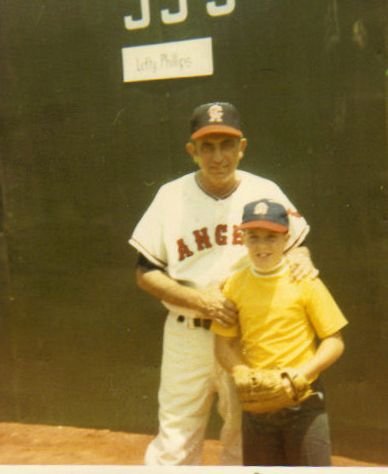
Me and Lefty PhillipsMe with Lefty Phillips of the California Angels in 1970

Baseball, it is said, is only a game. True. And the Grand Canyon is only a hole in Arizona. Not all holes, or games, are created equal.” George Will

Baseball has always been a source of enjoyment for me.  I’ve noted in numerous other posts that God speaks to me through baseball.  For me there is something mystical about the game.  It extends beyond the finite world in some respects and there is symmetry to the sport unlike any other.  George Will’s quote at the beginning of this post is dead on.  Not all holes or games are created equal.

Oak Harbor Little LeagueMy First Ball Field, Oak Harbor Washington

Though I had played Little League Ball in the 1960s and well as a lot of backyard or sandlot games, it was  1970-1971 when my dad began taking us to California Angels games while stationed in Long Beach California that the game really captured me.  The seed of course had been planted long before games on a black and white TV, playing catch, teaching me to throw, field and run the bases.  We even saw the Seattle Pilots in person while stationed in Washington State. While my dad thrived on all sports, baseball was the one that he gave me as a gift.  He gave my brother golf, another spiritual game, which Zen masters love, but which is not to be compared with baseball because it is not in its purest form a team sport.

1972 Oak Park AL RamsOak Park Little League 1972 American League “Rams” I am at top left

Growing up with baseball was something that I cannot imagine have not done.  It was part of life from as far back as I can remember and this was because dad made it so.  It kind of reminds me of the beginning of the movie For the Love of the Game where home movies of a child playing ball with dad are shown during the opening credits and score.  I can close my eyes and remember vivid details of ball fields and backyards where dad would play catch with me play pepper and fungo and teach me to pitch.  He never did much with hitting.  When I had him in a brief lucid moment when I visited in May I thanked him for teaching me to love the game, told him I still heard his voice telling me to keep my butt down on ground balls and that he did not teach me to hit.  He simply said “you can’t teach someone to hit, it’s a gift, lots of people can’t hit.”

Binkley and baseballI wonder if my Dad felt this way at times?

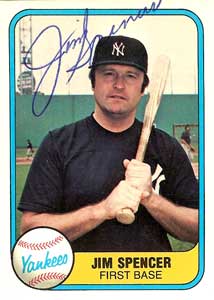
Those days at Anaheim Stadium when it was called “the Big A” due to the scoreboard shaped like a large “A” with a halo ringing the top were magical.  I met players, got signed balls and hats, and was even selected as a runner up in the “My Favorite Angel” contest.  For that I met my favorite Angel, First Baseman Jim Spencer a Golden Glove Winner who later played for the White Sox and Yankees, and two tickets behind home plate.  I met Spence at the game as well as an autograph signing at a local Von’s grocery store.  When trying to look him up in 2003 I found that he had passed away on February 10th 2002 while I was deployed.  He wasn’t very old, only 54 dying of a heart attack. Before his death he was lending his expertise to the Naval Academy baseball team. In 15 years in the majors in which he played in 1450 games and only made 55 errors, a .995 fielding percentage, one of the best in baseball.  During the 1970’s he was considered one of the premier defensive First Basemen in the game.  He played in the 1973 All-Star Game, won the Gold Glove in 1970 and 1977 and played on the Yankee’s 1978 World Series team. He was one of my favorite players growing up. I think that is why I like sitting behind the plate in my little world of Section 102, Row B, Seat 2 at Harbor Park so much now.

jim_spencer_autographJim Spencer’s 1979 Signed Yankee Card, I have one of these

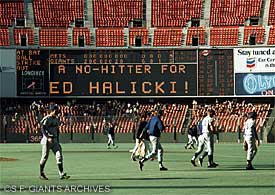
When we moved to northern California we reconnected with the San Francisco Giants and the Oakland A’s.  This was during the A’s dynasty years and we saw a number of games including an ALCS game against the Tigers.  Seeing the greats like Catfish Hunter, Reggie Jackson, Rollie Fingers, Campy Campaneris and Vida Blue was awesome.  However our first love was the Giants.  We only occasionally got to Candlestick Park where they played in those days.  Candlestick if you have ever been there is a miserable place to see a game for nothing else that it is colder than hell, if hell were cold.   One game we did see was Ed Halicki’s no-hitter against the Mets in 1975.

halicki no hitterEd Halicki’s No-Hitter, Dad took me to this

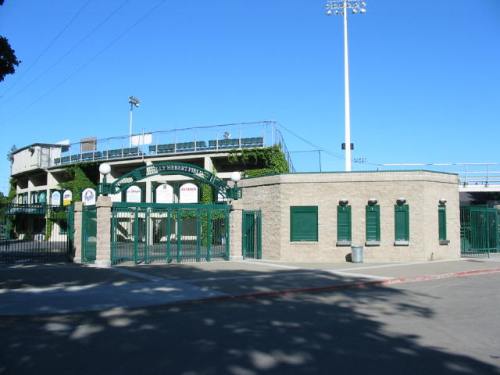
While dad was deployed to Vietnam my mom would drop me off at Billy Herbert Field in Stockton California where we lived and let me see the Stockton Ports who were then the California League single A affiliate of the Baltimore Orioles.  Those games were always fun.  I remember talking to Orioles great Paul Blair when he visited a military base that I was serving and he told me how he remembered playing in Stockton as a minor leaguer.

billy hebert fieldMy Childhood Haunt, Billy Hebert Field, Stockton CA, former home of the Stockton Ports

In high school and college due to other diversions I stopped playing baseball and did not have as much contact with it.  However it never completely left me, I always longed to be either playing in or watching a game.

Other major sports do not hold me captive the way baseball does.  I think there is the nearly spiritual dimension that the game has which makes it timeless.  Other sports such as football, basketball, hockey and soccer are limited to rectangular playing surfaces of set dimensions determined by their leagues. With the exception of a few old hockey rinks there are no individuality to these venues, save perhaps for team or sponsor logos.  Likewise all of the other sports play a set time clock.  If a team gets way ahead early, it is likely that the game will be over.  While it is possible that a game could go into “overtime” the overtime in these games has different rules than regulation time.  “Sudden death” “Shootouts” and truncated times show that these games are not meant to go past regulation time.  It is an aberration from what is considered “normal.” In these games a team with a big lead can simply sit on the ball and run out the clock. Earl Weaver put it well: “You can’t sit on a lead and run a few plays into the line and just kill the clock. You’ve got to throw the ball over the damn plate and give the other man his chance. That’s why baseball is the greatest game of them all.”

Baseball is not like that.  In order to win you have to throw the ball over the plate and give the other team a chance to come back. The nine innings could in theory go on for eternity, as they nearly do in W.P. Kinsella’s The Iowa Baseball Confederacy, A story which is patently eschatological, though not in a pre-millennial dispensationalist manner.  Foul lines in theory go on for eternity, only the arbitrary placement of the outfield wall and the physical limitation of hitters keep the game within earthly limits.  I’m sure that outfields are a lot more spacious and have a wonderful playing surface in heaven.

Save for the late 1960s and early 1970s when fascists took over the design of stadiums in order to make them suitable to play football on, baseball parks have had their individuality.  Outfield dimensions, type of grass, the kind of infield and warning track soil which is used, are all determined by the team.  Some fields cater to hitters, others pitchers.  And with the overthrow of the stadium fascists at Baltimore’s Camden Yards, the baseball park regained its dignity.  Gone were the ugly, drab oval stadiums, fields covered in often shoddy artificial turf.  The unsightly and even hideous venues such as Riverfront, Three Rivers, Veteran’s Stadium and others, even dare I say the Astrodome and Kingdome were demolished and made nice piles of rubble, replaced by beautiful ballparks each with its own unique character that reflect the beauty of the game.

three run homer by fiorentinoJeff Fiorentino Hits Three Run Homer at Harbor Park, my view from 102

This year for the first time in my life I bought season tickets for my local AAA team, the Norfolk Tides who are the AAA Affiliate of the Baltimore Orioles. I also went Norfolk’s Harbor Park to see the Commonwealth Classic an exhibition game between the Baltimore Orioles and Washington Nationals.  Harbor Park was one of the first of the new generation of minor league parks and a wonderful place to see a game, or as I like to say “Worship at the Church of Baseball.”   When Harbor Park was built the Tides were affiliated with the New York Mets. As such the outfield dimensions are nearly identical to the former Shea Stadium, making it a very large yard and pitchers playground.  The outfield backs up to the East Fork of the Elizabeth River, shipyards and bridges dominate the view.  There is not a bad seat in the house. Since coming back from Iraq the ballpark is one of the few places that I have been able to consistently go where I am at peace, not hyper-vigilant and anxiety free.  In a way my season ticket has been both therapeutic and pretty essential to me getting a bit better in the past year.  Last year when the minor league season ended  it was difficult.  I am not looking forward to 6 months without a ball game here.

harbor park opening dayOpening  Day at Harbor Park: One of the few places of peace in dealing with my PTSD

With every home game the gift that my father gave me begins to unfolds again as I gaze in wonderment at the diamond.  This year is different; my dad is in a nursing home in the end stage of Alzheimer’s disease.  Last year he still knew enough of what was going on to talk about baseball, especially the San Francisco Giants and bad mouth the American League. Dad was always National League fan and he loathes the designated hitter. He used to call the American League the “minor league.”  He told me stories about the greats of his childhood and he was an avid fan of Pete Rose, he loved his high intensity play and hustle, something that he passed on to me. I can still recall him yelling at me to “get your butt down,” “stay in front of the ball,” “hustle down the line any time you hit the ball” and “don’t be afraid to run over a catcher or go in hard to break up a double play.”   Rose’s banishment from baseball for gambling hit him hard.  I guess it was for him like the banishment of “Shoeless Joe” Jackson and for me the agony of the Steroid Era which was a stain on game but now is now history. Unfortunately it is being used by self-righteous politicians a bureaucrats to make baseball and baseball players look bad so they can look good.   At this point I say reinstate Shoeless Joe and Pete Rose and stop with the endless illegal leaks of documents and alleged positive tests of players whose names are being leaked out one or two at a time.  I think my dad would say the same now, if only he could.

Me and last last picMy Dad Carl and I, May 2009 Giants fans to the end

Dad gave me a gift, a gift called the game, the game of baseball.  Sure, it’s only just a game.  Right… Baseball is only a game in the sense of the Grand Canyon just being a hole in the ground and the Pacific Ocean a pond.  I’m sure that the Deity Herself must agree.

Peace, Steve+

Leave a comment

Filed under alzheimer's disease, Baseball, Loose thoughts and musings

Has Anyone Seen a Big Wooden Boat and a Lot of Animals? Floods and Rain Outs in Norfolk

rain at harbor parkFlooding at Harbor Park Wednesday- Norfolk Tides Fan Photo Facebook.com

I have never been a big fan of rain.  Yes I know we need it to live, for plants to grow, birds to sing, fish to drink and all of that.   I also know that rain means water coming from the sky and that water coming from the sky usually means that I end up wet or that the baseball game that I want to see get’s rained out.  If I had been a soldier in World War Two I would have stunk up the works a Guadalcanal or any of the other rain and vermin infested hell holes of the South Pacific.  On the other hand I would have done pretty well in North Africa out in the desert with the Afrika Corps.

Now the Hampton Roads area has two basic seasons, cold and wet and warm and wet.  The operative word is wet. In the cold and wet phase which general lasts through April and even May when you are out in the rain you get soaked to the skin and freeze your ass off.  On the other hand in the summer when it is warm and wet or even hot and wet, and I don’t mean like married couple or significant other kind of hot and wet, but the miserable sticky humid and hot weather that makes you feel like a wet postage stamp on a credit card bill.  Unfortunately we are in this part of the year now in Hampton Roads and though we were graced with an incredibly cool and dry May through July, the steam has been turned back on, I’m sloshing through mud to get my garbage out and having a field day using legal biological agents to kill mosquitoes.

A one who worships at the Church of Baseball, Harbor Park Parish, I patently pray to the Deity Herself that no rain will ever cancel a game here, especially now that I am a season ticket holder.  Yesterday it seemed that not only had the Deity not answered my prayers but in fact our adversary the Devil himself seemed to be out to ruin the rest of this short home stand against the Scranton Wilkes-Barre Yankees.  Yesterday not long before the close of business I was readying myself for the jaunt over to Harbor Park for game three in the series.  Just before I was to leave I was talking with my deputy department director when  the heavens opened and unleashed a deluge of which proportions I have not seen since my days at Fort Sam Houston Texas where deluges like this would bring rapid flash flooding inevitably leading people to drive into raging torrents of water that were plainly marked as to how high the water was.  If you have lived in San Antonio you know what I am talking about, I think they have a special segment on hte local news just for such occurrences.

The rain came so hard and fast in Norfolk, Portsmouth as well as parts of Chesapeake and Virginia Beach that flood warnings were issued.   Some places in Norfolk and Portsmouth reported standing water 2-5 feet high after 4-6 inches of rain came down in a relatively short period of time.  Figuring that this deluge had to let up and knowing that the game was already canceled I set out from work for the trip home.  Patently this was the first really bad really bad storm that I have had to commute home from in what seemed to be an event of biblical proportions.  I was beginning to look for a big wooden boat with an old guy looking like John Huston standing at the door beckoning pairs of animals to come in.  What greeted me were roads, including the ground floor of our parking garage flooded.  Trusting the Deity Herself I set out knowing that things would be bad, but not this bad.

There is a reason our area is called “the Tidewater.”  It is simply that it is very low lying, adjacent to the ocean and the word Tidewater is a lot nicer sounding than swamp.  When we get a lot of rain in a short time, there is simply nowhere for it to go.  Low lying areas with which the area abounds flood quickly and low lying intersections and roads with poor drainage become small rivers in which vehicles can become immersed in.  Thankfully I have a good idea where the higher roads are in the area of the hospital and zigged and zagged to avoid deep waters and areas where other drivers were sinking. Only once having to go down a very wide sidewalk to avoid what some rather deep water which I did not feel my 2001 Honda Cr-V could not traverse since it is not amphibious.  I figured that since the sidewalk was as wide as my CR-V and was a good 8-10 inches higher than the flooded intersection that it would do, I drove up and over the curb, drove down my elevated roadway about 100 yards before using a driveway to re-enter the road at a better fording site.  Just before I had left work I had checked the weather and traffic conditions, especially the “Jam Cams” at the Downtown Tunnel.  The cameras showed traffic moving well and only the normal rush hour backlog to get in.  However, by the time I got to the entrance road to the tunnel I saw that it had been closed and traffic divert off of I-264. I decided to pick my way down another main street only to see cars immersed ahead of me.  I made a quick U-turn and headed back to I-264 and headed west away from my house.  I used it to get to I-64 west, which actually is heading east through Chesapeake in order to pick up I-264 to get back to Virginia Beach.  The trip took me about an hour and forty-five minutes.  I understand that some people took 3-4 hours to go less distance than I had traveled.  One amazing thing that I noticed was the lack of accidents on the Interstate highways.  Normally in good weather people around here can’t drive nails much less motor vehicles. Thank the Deity for small favors.

norfolk floodingFlooded Streets in Norfolk- Virginia Pilot Photo

The game was long postponed and Judy and I went to Gordon Biersch and then came home, both exhausted from our day.  It is amazing what nearly two hours on the road fighting downpours and floods will do to you. Today the Tides and Yankees were scheduled for a double header.  Game one had a rain delay but despite this the game was played with the Tides winning 4-2 with solid pitching by Chris Waters, Dennis Safrate, Kam Mickolio and Alberto Castillo.  As Earl Weaver said “Nobody likes to hear it, because it’s dull, but the reason you win or lose is darn near always the same – pitching.”  A bit after 3 PM with the game over and a 40 minute break between games I left work to try to see game two.  Once again I looked at the weather radar and saw a bit of rain coming up from the southwest.  However, it looked like it would not be heavy and pass by quickly.  When I got to the tunnel it started to rain pretty hard but nothing like the other day.  As I got to the stadium parking lot the rain was already beginning to let up.  I got my Tides Dog with Chili and a beer, found Elliott the Usher and Chip the Usher sitting on the concourse and pulled up a seat.  We talked about our travels yesterday; Elliott the Usher had gotten stuck on a bridge because or water at the foot of it which had flooded a viaduct and Chip the Usher had had to turn around due to high water as well.  As we chatted the grounds crew came out and began to remove the tarp from the field and with the skies lightening we all thought that the game was going to be played.  As the crew moved equipment to mark the batter’s box and foul lines into position an Umpire came out of the Yankees dugout and gave some kind of signal.  When that happened the grounds crew began to put back the tarp and about 10 minutes later we were informed that the game had been canceled.  After the game I picked up a signed card of Tides infielder Justin Turner, who had a double and two RBIs in the first game and is the team leader in hits for the Tides.   I also made my next installment on the 1967 signed Willie Mays that he has reserved for me.

This was disappointing to me to have two chances to see the Tides play be rained out on consecutive days.  I decided to question the Deity about this and was once again informed that “the rain falls on the just and the unjust alike.”  With that I shut up, walked back to the car and started home, with almost no rain whatsoever.  The way I understood things was that the field was not deemed safe to play on due to the latest round of rain.  Next week the Tides come back in town after making a road trip to Charlotte.  The Tides moved back into a game and a half of Durham and three and a half of Gwinnett in the IL South.

Peace, Steve+

Leave a comment

Filed under Baseball, hampton roads and tidewater, Loose thoughts and musings

Going to War: Flying Into Baghdad and a Blast from the Past

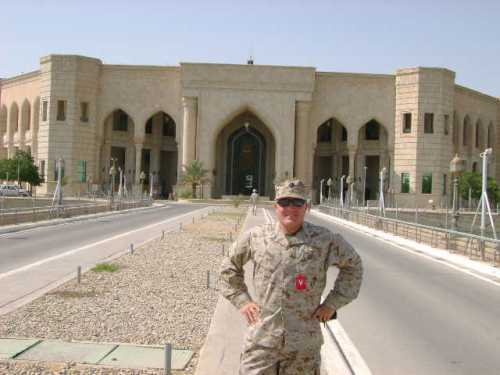
050Outside the Al Faw Palace, Camp Victory the HQ of US Forces and Former Haunt of Saddam Hussein, the Palace was Named after the Victory of the Iraqis over the Iranians on the Al Faw Peninsula toward the end of the Iran-Iraq War.  The Palace sits in the middle of a lake

We made the trip from Camp Virginia to the Ali Al Salim airbase to catch our flight to Baghdad.  As usual there was the seabag drag to the waiting baggage trucks, an accountability formation in the blazing sun and the shuffle, this time in full protective gear to our buses.  Riding in a foreign tour bus in full “battle rattle” is even more uncomfortable than the regular ride.  Packed tightly into the buses the air conditioning of which did little to help after coming in out of the heat, we took our places jammed into the bus and once again with armed personnel in the bus and convoy escorts as we pulled out of the high security entry control point at Camp Virginia and drove to Ali Al Salim.  The trip was uneventful and rather boring as there is not much to see between the two bases except sand and occasional nondescript buildings.

Ali Al Salim is a large Kuwaiti and American air base and logistics hub for air movement operations in the Arabian Gulf.  We arrived there and once again formed up, went through a staging area where were we were able to pick up some water from one of the ubiquitous pallets of bottled water and waited inside the terminal.  Some folks grounded their packs and used them as pillows or recliners, others found seats in the waiting area and others looked around to see how the Air Force lived.  A couple of TVs set to AFN played as we chatted, wandered or dozed.  It was not long before we were moved to yet another staging area and began to get our aircraft briefing and manifested for the flight.  Our group that had began the trip at Fort Jackson was a lot smaller now as the sailors who had gone on to the Horn of Africa, Afghanistan and those assigned to Kuwait were no longer with us.  As we trundled down the tarmac we were guided into position directly behind the aircraft.  We filed into a waiting C-17 Globemaster and sat down in airline style passenger seats which can be added or subtracted by in 10 passenger pallets as needed for the particular mission.  Additional permanent seats lined the bulkhead.  Our gear was loaded at the aft end of the aircraft as we took our seats.  We pretty much filled the seating which at maximum load is 134 passengers and we waited for the aircraft to load.  A loadmaster came through to check that we all were wearing our personal protective gear and had our seat belt fastened.  The C-17 unlike many military aircraft has at least an asthmatic air conditioning capability once the cargo door is closed.   Unfortunately when the door is open it is pretty much like whatever conditions are outside, in our case 130 degree heat with the exception that the sun was not beating down on our heads and that there was no air movement.  It was just a tad hot inside the aircraft.  Eventually the cargo ramp and door were closed and the aircraft prepared for takeoff.  With the door closed we began to feel a little bit of relief from the air conditioning.

For a large cargo aircraft the C-17 has a pretty smooth take off, the four Pratt and Whitney PW2040 engines producing 40,400 pounds of thrust each pushing the hug aircraft which is capable of transporting an M1A2 Abrams Main Battle Tank or 3 Bradley Fighting vehicles into the blue Kuwaiti sky.  In a few minutes the pilot announced that we had crossed into Iraqi Airspace and that it would take us about 45 minutes to arrive in Baghdad.  When the announcement was made there was an almost collective deep breath knowing that we were now going into the war, this was no longer in our future we were there.  I could feel the adrenalin being released into my body and can remember how quickly I became instantly aware of every noise or movement on the aircraft.

Arriving in the skies above Baghdad International Airport our aircraft circled and received permission to land.  Due to the possibility of enemy fire the approach to airports in Iraq is not like you would experience at a commercial airport in the United States, Europe or most other parts of the world.  Unlike most airports where there is a long and slow approach to the runway the descent is a steep spiral as the aircraft comes down from altitude to land.  If the airfield is under fire the aircraft will not land.  Once we were down we had been briefed to be able to move at a brisk pace in case the airfield came under fire, something that was happening on a relatively frequent basis in 2007.

The tail ramp and door opened as if they were a gigantic rearward facing mouth, or maybe like one of those weird fish that have teeth in their ass.  I think I remember some weird science show that talked about such a creature, if there isn’t one there should be.  As soon as the ass-backward maw opened a rush of hot air killed any semblance of what had been an almost bearable air conditioned compartment. Gear in hand we filed out of the aircraft heading for the ramp. Just for your information, it is easy to slip on these ramps; I came close to such an event but caught myself just in time so I didn’t go ass over tip down the ramp.  Nelson certainly would have made me pay for such a breach of protocol.  As we left the aircraft a ground crewman directed us out of the jet blast area and another led us to the terminal.  At the terminal we were greeted by Staff Sergeant Assi, the Chaplain assistant for the Iraq Assistance Group and an RP assigned to the Multi-National Corps Iraq Chaplain Office.  Sergeant Assi was a mobilized reservist  originally from Nigeria.  At least here our gear was palletized and was brought to a gear staging area.  Once it arrived we gathered a total of 4 EOD Issue super-seabags, two regular seabags, our packs, Nelson’s rifle case and my computer bag.  We were assisted by Sergeant Assi and the RP who helped load our stuff into the back of the white Chevy SUV that they were driving.  One thing about military vehicles in Iraq that are not tactical vehicles  is that there is a strong chance that they are the color white. The white paint contractor at GM must be making a killing on vehicles destined for the Middle East.  Once we were checked off the manifest as having a ride were able to depart walking out through rows of Califonia and Jersey barriers.

The ride was interesting as we wove our way around the ever present California and Jersey Barriers as well as “HESCO’s,” which are large wire and canvas containers standing anywhere from5 to 8 feet tall filled with dirt, rock and sand.  All of these are designed to minimze the effects of incoming ordnace by preventing the explosive force of them and teh associated shrapnel from spreading outward. We transitioned through a number of checkpoints where armed soldiers kept a wary eye out on our way to Camp Victory.  Victory which is the home of Multi-National Force and Multi-National Corps Iraq lies next to  Camp Liberty.  They are on the north side of Baghdad International Airport.  As we looked across the runway the only aircraft visible were military transports and contracted cargo carriers.  Unlike a major airport its size anywhere else in the world Baghdad did not have regularly scheduled airline service from any major carrier yet.   We wound our way around the compounds which blended together almost as one, much like the suburbs of the San Fernando Valley in Los Angeles.  Passing palaces and villas that ringed a lake in the center of the compound we continued on.  In the center of the lake connected by a causeway sat the massive Al Faw Palace, built by Saddam Hussein to commemorate Iraq’s victory in retaking the Al Faw Peninsula at the close of the Iran-Iraq War, a victory that resulted in Iran deciding to cut a peace deal with the Iraqis.  Despite a Shi’te majority in Iraq there is no love lost between Iraqis and Iranians.  Iraqi Arabs refer to the Iranians almost contemptuously as the Persians. This goes back centuries to the times when Persian occupied parts of Iraq and treated the Arabs badly.

We turned down an asphalt road which quickly became a packed clay and gravel road over which a tanker truck sprayed water to keep the dust down.  into a pulled up to a wooden building near a tent city where personnel coming in and out of theater were billeted at Camp Victory.  Row upon row of tents, each surrounded by a HESCO barriers were to our right. The ground was a mixture of hardened clay and rock which when driven over or walked upon emitted a cloud of dust which Sergeant Assi told us turned to a sticky goo which is almost impossible to get off of boot when it rains. Overhead helicopter gunships patrolled the skies occasionally flying quickly to the sounds of gunfire just off the base not far from where we were. In the background we could hear the sound of heavy machine guns and automatic weapons.  Not far from our billeting area sat a Navy Manned CWIS, or as we call tehm Sea Whiz.  This is a 20mm gatling gun which directed by radar is designed to shoot down incoming missiles or rockets. Nelson and I looked at each other and almost on cue he said, “Chaps I think there might be a war going on out there.”  I looked back and said, “Don’t you know it partner.”   The area to the east of the tent city was bordered by a line or shower trailers and heads, all protected by the large 15 foot high California barriers.  To the north of the tents lay a large Dining facility or as the Army calls them, a DFAC.  After getting signed in we drew an odd mixture of linen for our beds. I ended up with a couple of sheets, pillow cases and a multi-colored comforter. If I recall Nelson got some superhero on his blanket, which suits him fine as he is a big comic fan and can tell you more than you can imagine about all the different super-heroes. Instead of being together Nelson was assigned to a tent for NCOs and I ended up further away in a tent for field grade officers.

Once we had secured our stuff we met back together and walked to the DFAC for dinner.  This DFAC was not as large as it appeared as it had a large protective roof designed to keep mortar shells and rockets from impacting the building itself.  Two Ugandan soldiers working for security on the base checked our ID’s after which we washed our hands as we entered the building.

Upon entry we were almost overwhelmed by the amount of food present.  These DFAC’s were definitely feeders and the number of soldiers that should have been wearing wide-load signs across their asses was amazing.  But then who could blame them, many were on a second or third trip to Iraq of 12-15 months each. Maybe for the first time they were not in some isolated FOB with a poor quality of life, in a place which all things considered safe except for the occasional incoming rockets and mortars.  The quality of the food was better than in Kuwait as was the dinning area.

As I was finishing stuffing my gear underneath my bed a young Army Major came into the tent.  He looked at me and I looked at him as if we had met before and we greeted on another politely.  I saw his shoulder patch which identified him as a member of the Maryland Army National Guard.  We struck up a conversation and I asked to what unit he was assigned.  He replied  that he worked at the National Guard Bureau and had been attached to the Maryland unit as an operations officer for the deployment.  He remarked that I looked somewhat familiar and I asked if he had ever served in the Virginia National Guard.  He replied that he had and I asked what unit.  His response about floored me “1st Battalion 170th Infantry” located at Fort Belvoir, Virginia just south of D.C.  I told him that I too had been in the battalion and then he figured out where he knew me from.  With a look of near amazement on his face he replied “You were our Chaplain back in 1995!”   I patently acknowledged this fact  while he continued saying that he had been the TOW Anti-Tank Missile  Platoon Leader in our Headquarters Company. Our conversation meandered through old times at AP. Hill Virginia, talking about our careers, people that we knew and life in general.  After a couple of hours we both realized that we needed to take care of a few personal things to settle in for the night.  Eventually my old lieutenant fell asleep and I began what was to become a persistent pattern of insomnia which plagues me to this day.  Since I couldn’t get to sleep I walked through the darkness to the DFAC which had a late meal.  I was standing  in line amid a few Americans, some British soldiers and contractors when Nelson appeared beside me. He said “Hey boss, can’t you sleep?”  I said “nope” he said “me too, so I thought I would get some chow in this place.”  We had our meal together and when we were done picked our way through the darkness over the rough ground to our tents aided by our red lens flashlights.  After looking for about 5 minutes we found Nelson’s place and I headed off to my hooch only becoming disoriented once. Patently the Deity Herself must have kept me from tripping on a tent rope or some hole in the ground and I arrived back in my place at about 0145 and finally got to sleep.

Leave a comment

Filed under iraq,afghanistan, Military, Tour in Iraq

Obituary for HMCS Hayes-Jones

Shipemates and Friends of HMCS Hayes-Jones

The Link to the obituary is here:

http://2672.dignity.mem.com/Story.aspx?ID=3127157

The text alone follows should the link notr work.  I had trouble with the funeral home link yesterday.

HMCS D’juna Marie Hayes-Jones

Born:
May 3, 1965
Died:
August 5, 2009

MCS D’juna Marie Hayes-Jones, 44, passed away suddenly on Wednesday August 5, 2009 in Portsmouth, VA. She was a resident of Chesapeake, VA and was born in New Orleans, LA on May 3rd 1965. She joined the Navy on March 28th, 1983. Throughout her distinguished career, she received numerous Letters of Commendation and Appreciation for her superior performance. Her educational achievements included Occupational Therapy Assistant School, Senior Enlisted Leadership, Executive Medical Department Enlisted Course, Career Information Program Advisor, Senior Enlisted Academy, Patient Administration Course, Command Management Equal Opportunity Program Manager, and Bachelors Degree in Management from American Intercontinental University.

Her duty assignments include Recruit Training Command, Orlando, FL; Hospital Corps “A” School, Great Lakes, IL; Naval Hospital Beaufort, SC; Naval Hospital Camp Pendleton, CA; Naval School of Health Sciences Bethesda Detachment AHS, Fort Sam Houston, TX; Naval School of Health Sciences San Diego, CA; Naval Hospital Yokosuka Japan; Naval Hospital Millington, TN; Naval School of Health Sciences Portsmouth, VA; Leading Chief Petty Officer, Physical /Occupational Therapy, Naval Hospital Camp Pendleton, CA; Instructor Training School, Norfolk, VA; Senior Enlisted Leader, Administrative Directorate, Naval School of Health Sciences Portsmouth, VA; Senior Enlisted Leader, Patient Administration Naval Hospital Guantanamo Bay, Cuba; Senior Enlisted Leader, Directorate for Nursing Services, Portsmouth, VA.

HMCS Hayes-Jones’ personal awards include the Navy and Marine Corps Commendation Medal (three awards), Navy and Marine Corps Achievement Medal (two awards), Military Outstanding Volunteer Service Medal, Good Conduct Medal (six awards), National Defense Medal (two awards), Global War on Terrorism Service Medal, Meritorious Unit Commendation (two awards), Overseas Service Ribbon. She also distinguished herself as Enlisted Technical Leader for Physical/Occupational Therapy Technicians and Sailor of the Quarter on two occasions.

She had a passion for jazz music and art & crafts. Senior Chief Hayes-Jones would have had her retirement ceremony on August 28th, 2009. She leaves behind two children, her husband and her shipmates. She was a great Sailor, mentor, and friend who will be deeply missed by all who knew her.

“Fair Winds and Following Seas, Shipmate” Survivors include her husband, Earnest Jones, Sr.; a son, Earnest Jones, Jr.; a daughter, Danika Jones; her father, Gerald Hayes, Sr.; her brothers, Gerald Hayes, Jr. of Knoxville, TN, Aristede A Hayes of New Orleans, Jarrett G. Hayes, Sr. of Jacksonville, FL, Rubien M. and wife Roshanda Hayes of LaPlace, and a step-brother, Capt. Kapell Eugene USMC of Lexington, KY.; her sisters, Yunaka Gerrell Baham of Katy, TX and Gerilyn Michele Hayes of San Marcos, TX; a Godchild, Bradley Stokes of New Orleans; her Aunts, Gail Vessell of San Francisco, CA, Yolanda Vessel, Lou Vanna Pope and Holly Jarrell; her Uncles, Rudolph Hayes, Sammuel Hayes, Floyd Summers of Los Angeles, CA and Rogers Vessel, Sr.
Preceded in death by her mother, Evelyn Summers Hayes, maternal grandparents, Calvin and Dorothy Adler Summers; Paternal grandparents, Willie Hayes, Jr. and Samuel and Ruby Hayes McCray; Great grandparents, AC and Mable Williams and godmother, Dorothy Stokes.
The visitation and funeral services will be at Greenoaks Funeral Home in Baton Rouge, LA on Thursday from 6 p.m. until 8 p.m. and on Friday from 8:30 a.m. until time of services at 10 a.m. Burial will be in Port Hudson National Cemetery in Zachary, LA.

1 Comment

Filed under Uncategorized

A Tale of Two Organizations: How Major League Performance Impacts Minor League Systems

“We’re so bad right now that for us back-to-back home runs means one today and another one tomorrow.”  Earl Weaver

165Russ Ortiz Bearing Down on a Tides Batter

This is a hard blog to write and while things are not as nearly as bad for the Norfolk Tides as they were for Earl Weaver’s Orioles things are not going well at the present time.  The Tides are not nearly the quality of team that they were in the first half of the season.   On the positive side they are still doing better than any time in the past 4 years and still have a shot at making the International League playoffs as either the Southern Division champion or wild card. At the same time they have fallen off their torrid pace of winning in April May and early June where they were almost playing .700 ball and up anywhere from 6-10 games over their competitors.

People are wondering what has happened and the answer is all too obvious.  While the Orioles have remarkably improved every level of their farm system they have no real depth at the Major League level.  They have some potentially great players, but a lot are still relatively young and inexperienced.  The Orioles began the year as a marginal Major League franchise with a great farm system. Unfortunately the big team was so bad early that the Orioles elected to raid their minor league system of their best players, both pitchers and hitters.  The Tides lost pitchers Jim Johnson, David Hernandez, Chris Tillman, Matt Albers, Brad Bergeson and Jason Berken.  Unfortunately I think some were called up before their time, however this is certainly not the case with starters David Hernandez, Brad Bergeson who need just a bit more seasoning and relievers Jim Johnson and Matt Albers. As for hitting the Tides lost the center of their order to the big club, Nolan Reimold, Matt Wieters and Oscar Salazar.  Salazar was traded to the Padres while hitting well over .400 of the bench and providing solid hitting and fielding percentages.  The Orioles also brought pitcher Brain Matusz up from AA Bowie without bringing him up to the AAA team.

170Another Strike for Ortiz

Do not get me wrong, all of these players are good, but they are all still very young.  While they will get better and are getting valuable Major League experience it is not contributing to the current success of the Orioles nor helping the minor league system. An example of what happens when a Major League team raids its farm system is the 2005 Atlanta Braves, the year of the “Baby Braves” where Atlanta almost made it to the World Series based on incredible performances by their rookies.  Unfortunately the call up of all of these players decimated the minor league system and it has only been in the last couple of years that the Braves minor league system, which is consistently one of the best in baseball to restock and rebuild.  Now the Orioles are fortunate to have a deep farm system, however the risk in doing what they have done is to potentially sacrifice the future for the present.

As I said the Tides are not the same team they were a month or two ago.  They seem to  have lost the edge, the swagger and self confidence is gone, frustration shows on many players faces. They do not look relaxed or like they are having fun anymore.  Tonight they dropped their second game in a row to the Scranton Wilkes-Barre Yankees, who won the International League last year and who they New York Yankees have built into a formidable AAA franchise.  The Yankees, despite all the criticism they have received for “being the best team money can buy” with huge contracts for free agents and a massive payroll nonetheless invest a considerable amount in their farm system.  They are deep both in prospects as well as talented former Major Leaguers such as Shelly Duncan and recently acquired Russ Ortiz.  The Yankees have also used their minor league system to raise their own middle relievers Phil Hughes, Phil Coke, David Robertson and a reliever converted to a starter Joba Chamberlain.  Say what you will that is home grown quality.

Last night the Tides lost 6-1 and were thoroughly out classed by the Yankees.  Tonight was even worse as Russ Ortiz pitched 7 innings of 1 hit ball in 90 degree weather making the Tides, even their .300 plus hitters Justin Turner, Joey Gathright and Jeff Fiorentino look bad.  The Tides lost the game 9-0 getting their second hit with 2 outs in the bottom of the 9th.  If I wasn’t a big fan of Russ Ortiz tonight would have absolutely no redeeming value except to have worshiped in the Church of Baseball, Harbor Park Parish.  In two starts for the Yankees Ortiz is 2-0 with a 0.00 ERA.  Ortiz has a career Major League Record of 113 wins and 88 losses.

188Joey Gathright is Victimized by Ortiz in the 6th in which he struck out the side

I was talking with Elliott the Usher as well as Barry the Scorekeeper about what was happening and we all agreed.  The difference between the teams is that the Major League Yankees have held together with only minor bumps in the road due to injury.  Their pitching staff aided by the home grown middle relievers has done a masterful job in shutting down opponents as their hitters have been on fire.  By doing this they have allowed their minor league clubs to become very good, in particular the Scranton Wilkes-Barre team.  They have talent and depth and players at the minor league level who are proven major leaguers.  The Tides on the other hand have been hampered by the Orioles descent and the resultant decimation of the minor league rosters to fill the gaping holes on the Major League team.  What would have been a very even match up a month and a half ago now was not even close.  The Tides were out-classed and out played by the Yankees. Ortiz in particular made the Tides hitters look bad putting on a major league performance that hopefully will help get him up to the Yankees as they make their pennant run.  I still think that Dusty Baker blew the 2002 World Series by taking Russ out with 1 out in the 7th and a 5-0 lead against the Angels.  If Ortiz gets back up and the Yankees win the World Series I will be happy for him.

On a positive note the Orioles led by former Tides pitcher David Hernandez beat the Oakland A’s 3-2, their first win against the A’s since 2008.  Hernandez improved his record to 4-4 with a 3.96 ERA.

So tomorrow is another day.  The Tides are only 3 ½ behind the Gwinnett Braves and 2 ½ behind the Durham Bulls in the International League South.  They still have a lot of talent and have a shot at getting in the playoffs, but need to come up big tomorrow to reverse this slide and keep in the playoff race.  I will be back in section 102 row B seat 2 tomorrow come what may.  Hopefully the Deity Herself will help us get through this stretch.

Peace, Steve+

Leave a comment

Filed under Baseball

Trust in God and Keep a Strong Bullpen

“A fellow has to have faith in God above and Rollie Fingers in the bullpen.” Alvin Dark

043Tides Reliever Alberto Castillo against Charlotte

Organizations often face time when due to either talent, injuries or staffing shortages that they must make adjustments in mid-stride in order to continue to function.  Nowhere is this more apparent than on a baseball team, especially in relationship to the pitching staff.  The bullpen must be good in order for a team to weather the ups and downs of a season as well as the ups and downs of the starting rotation. When the starters are doing well and being supported by good hitting a good bullpen is what ensures the win.  When a starter slips up and has a bad outing a good bullpen steps up and gets the game back under control to give their offense a chance to win.  Conversely if a starting rotation is not doing well, either due to injuries, lack of talent or lack of experience the bullpen has to take up the slack.  In such cases even a good bullpen staffed with experienced relievers can get worn down by being forced to pitch too many innings too many times.  This became apparent to me last night as I watched the Yankees beat the Red Sox.  The Red Sox starter, in fact the last three starters had pitched well, unfortunately due to a number of times during the past few weeks the starters had been beaten up force the relief staff to do a lot more work than they are programmed to do.  Thus when the game got into the deep innings, particularly on when the teams went over 14 scoreless innings, the Red Sox bullpen was ground down.  In the end they ended up losing games to the Yankees despite good performances from the starters but lousy hitting, Yankees pitching blanking the Red Sox for 31 innings before the Red Sox Victor Martinez managed a two run home run in top of the 8th in Sunday night’s game. It was then that the Red Sox bullpen fell apart with Daniel Bard and Hideki Okijima combining to give up 4 runs on 5 hits including 2 home runs, all with two outs and no one on base.

To have an effective bullpen you have to have a staff that knows their roles and are comfortable coming on in relief. By way of analogy my military career has been marked where I have had to go into a situation in relief of someone who had been fired, transferred early or was hurt, I experienced this as a Company Commander and a good number of times as a chaplain.  All of these came with little or no notice, much the way a relief pitcher is called upon to do.  If you have worked in some institutional setting such as the military, this is a common occurrence.   The key to such situations, just like baseball, is that the person coming in relief needs to know what their role is.  Is this a short relief outing, to get a specific task done, like a pitcher might be put in to face one batter and no one else?  Or is it to recover a situation and stay in the game for an extended period of time, or even to come on in the final inning to close out the game?  No matter what it is the reliever must know his role, just as someone being brought in a institutional setting to take over in a difficult situation needs to know what he or she is expected to accomplish and how much time they are expected to be in.  Thus the onus is on the organization, in particular the leadership to know what the abilities of their “relievers” are and be forthright in telling them what they need to accomplish.

In building an organization you need people on your staff that are suited to change gears in the middle of something and go into a relief situation.  It is true in baseball as well as life.  As a season ticket holder for the Norfolk Tides Baseball Club, the AAA affiliate of the Baltimore Orioles I watch a lot of baseball from my seat in section 102, row B seat 2.  The Tides started out the year with a great starting pitching rotation most of who have been called to the majors as well as relief staff.  The still have decent pitching but it is not up to the level that it was at the beginning of the season. Whereas earlier in the season up until the All-Star break the starters we getting good starts and relievers were able to come in later in the game in roles that they were ready to fulfill.  Now with our losses and the addition of pitchers called up from AA or A ball we are struggling in this department.  With starters not getting quality starts or not going deep into the game the relief staff has been worn down. Pitchers who were solid earlier in the year are not as dependable, and this comes often from having to come in too early, too often in situations where the games are already out of hand.  Yet even so tonight I saw relievers Kam Mikolio and Alberto Castillo regain control of the game in the 8th and 9th inning, but too late to do any good because the damage had been done earlier against Andy Mitchell the statrer and Jim Miller who came on in middle relief.

In the majors a staff needs a couple of guys who can come in to do long or middle relief, a couple of set up pitchers and a good closer.  Ever since the Oakland A’s used Rollie Fingers in this role the relief pitchers have become an vital part of any pitching staff and good managers know when the right time to pull a pitcher and put in the right reliever is.  Good managers also know to let the relief know what is expected.  In places that I have done well in relief I knew what my mission was, how long it was going to be and set myself to accomplish that mission.  When the relief appearance was ill defined and I did not have much experience I would do well for a while and then get in trouble because I had to use the baseball term gone beyond my pitch count or overmatched.

Sometimes even excellent relievers get beat up. Everyone has a bad day and even guys like Mariano Rivera, Francisco Rodriguez and Jonathan Papelbon occasionally get roughed up.  However, most of the time these pitchers have enjoyed success because they were part of a pitching staff that was strong in both starters and relievers.  A good reliever on a bad team often gets worn down.  Likewise when organizations suffer significant losses the people left, experienced and inexperienced, strong and weak are put into situation after situation where they have to do more on less rest.

russ ortizRuss Ortiz

Tonight I met pitcher Russ Ortiz who has played a good number of years in the majors.  He was recently picked up by the New York Yankees after being released by the Astros.  He was assigned to the Scranton Wilkes-Barre Yankees and is making a start tomorrow night.  This evening he was charting the game for the Yankees in section 100.  Now Russ was with the Giants in 2002 when they went to the World Series against the Angels.  With one out in the bottom of the 7th leading 5-0 Ortiz gave up two hits and was replaced by Manager Dusty Baker with set-up man Felix Rodriguez.  Rodriguez gave up a 3 run home run to Scott Spiezio.  The Angles picked up three more off Rodriguez and closer Rob Nen to go ahead and win the game.  I told Ortiz that I still curse the day that Baker pulled him and told him how much I thought that he deserved the win.  Ortiz is a gentleman and nice guy.  Standing back with Elliott the Usher I meet a decent number of players and Ortiz is a class act.  I asked Russ if he would do me a favor and sign a baseball card for me, he said gladly.  So Marty the Card Dealer sold me a card with Ortiz in his Giants uniform and in the top of the 9th Russ signed it for me on the concourse.  It goes into my kitchen baseball shrine where so many of my other signed cards, balls and memorabilia are on display.

Without going into a sermon it is important to remember that many businesses and organizations are going through difficult times with many trying to do more with less.  In the military we are seeing our numbers go up a bit but with mission increases that stress our system.  These are like teams where there are gaps in the starting rotation and where guys and gals have to come in to relieve folks more often that should be the case.

Yes we do trust God, and patently the Deity Herself tells me that such is necessary especially for a miscreant Priest like me.  At the same time we need to have a strong bullpen in order to weather difficult situations. May we all have our Rivera’s, Papelbon’s, and guys like Rollie Fingers and Dennis Eckersly on our team with some good set up guys as well as some long and middle relievers.

Peace, Steve+

On a side note I was charged with an error by Barry the Scorekeeper when I lost track of my beer and kicked it over when it was still 2/3 full.  Since to waste good beer is a sin, I’m sure that Martin Luther believed this to be the case, I had to buy another and trust that the Deity would forgive me.

Leave a comment

Filed under Baseball, leadership, Loose thoughts and musings, philosophy

Operation “Dachs” My First Foray into the Genre “Alternative History”

For a change of pace I have pulled up something that one of my professors allowed me to do in my Military History Masters Program.  This was my first foray into historical fiction, or as it is known sometimes as “Alternate History.”  This is actually a growing genre among military writers and others who have vivid imaginations as to what might have happened if….

I hope you enjoy.  Peace, Steve+

This is an alternative history of how the Germans might have avoided the disaster at Kursk. It looks at what might have happened if an actual assassination attempt on Hitler had succeeded in March 1943 and how Manstein might have been able to execute the “backhand” strategy that he favored using a mobile defense.  This is predicated by Hitler’s death, based on Hitler’s actions and control of operational decisions Manstein would never have been allowed the freedom to conduct operations in this manner.  In eliminating Hitler I have also included personnel changes and the overall strategy for the German High Command, and the probable response of Stalin to Hitler’s death had it occurred in the spring of 1943. I have tried to be faithful to known historical opinions and actions of the participants and likely reactions to such a situation although one cannot predict precisely what people would have done.  Thus I have documented the article with footnotes as if it were an actual history. It would have been interesting to be able to lengthen this and included sections on tactical actions based on memoirs of German and Russian soldiers.

hitlers fw-200Hitler’s FW-200 Prior to his Ill-fated vist to Army Group Center

Background: The Strategic Situation Spring 1943

In April 1943 the German High Command faced a decision on which the fate of Nazi Germany would hinge, but for the first time in the war it was not under the thumb of Adolf Hitler. Following Manstein’s counter-stroke following the Stalingrad disaster there was considerable pressure to follow up with that success with a continued offensive. Manstein himself had proposed this but Field Marshal Von Kluge refused to agree to an immediate offensive because he felt his troops needed rest and refitting. On March 13th Hitler flew out to meet with Von Kluge at Army Group Center HQ at Smolensk.  On the flight back Hitler’s FW-200 was racked by an explosion crash landing near Minsk, taken down by a bomb planted on the plane by Colonel Henning Von Trescow of Kluge’s staff.[i] While Hitler survived, he remained in critical condition, barely alive at a SS hospital until his death on 20 April 1943, his 54th birthday. The crash landing was reported by the escorting ME-109s of JG-53, and a Alarm Company from a Security Division at Minsk rescued Hitler but were driven off the crash site by a large force of Soviet Partisans who destroyed the aircraft and any evidence to the cause which the escorting fighters attributed to mechanical problems.  There were no other survivors. Von Kluge, expecting to be implicated the Fuhrer’s death committed suicide after visiting troops on the front line, and was succeeded at Army Group Center by Field Marshal Model the commander of 9th Army. The other conspirators were frozen into inaction when Hitler survived the crash and made no attempt to take over the government, realizing that “our plans for seizing power in Berlin and other large cities were still not adequate to the task.”[ii] In the absence of Hitler Reichsmarschall Goering, Hitler’s designated successor, took action to secure his power and using contacts in the GESTAPO accused Himmler of treason for making contact with Neutral intermediaries in Sweden[iii] and replaced him with SS General Kurt Wolfe, and reappointed Rudolf Diels, the former head of the GESTAPO when it was still under his control[iv], to head it again.  Himmler attempted to flee and was caught near Luneburg when he committed suicide with a cyanide capsule before he could be interrogated. Other potential rivals were eliminated; Martin Bormann, who Goering hated, was arrested on charges of exceeding his authority, embezzlement, and harming the war effort and was executed.[v] Joseph Goebbels swore his loyalty to Goering even before Hitler’s death.  He and Albert Speer were directed to arrange the state funeral for the late Fuhrer. Berlin Radio announced the Fuhrer’s death on the 21 April, Hitler’s body was prepared and lay in state at the Chancellery.   A period of mourning was declared 21 April to 1 May on which the State Funeral took place. On 2 May Goering announced that Field Marshal Von Rundstedt was the new Chief of OKW and would coordinate strategy on all fronts. The next day Goering called together a meeting of the heads of OKH, OKW, the Inspector General of Panzer Troops, and the commanders of the Eastern Front Army Groups, Western Europe and Africa as well as Reichsfuhrer Karl Wolff, Admiral Donitz and Field Marshal Von Richthofen[vi] representing the Luftwaffe to decide on a course of action for the summer. It was the first time that all had been called together to discuss the overall situation since Barbarossa began in 1941, and the first true attempt to formulate a grand strategy during the war.

Options and Decision: The Zossen Conference 3 May 1943[vii]
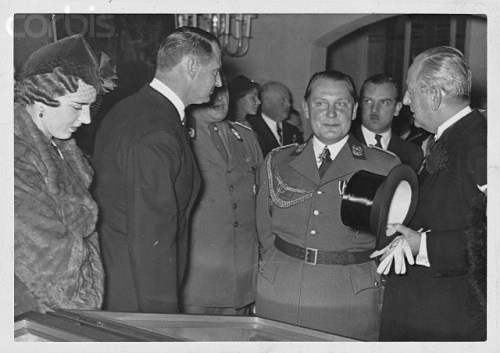
HU010919Goering meeting Diplomats following Hitler’s State Funeral

Herman Goering looked up from the maps spread out on the conference table.  He looked surprisingly fit, somehow between the crash of Hitler’s aircraft and his death he had pulled himself together and out of his drug induced malaise.  It was as if he again had a purpose. Field Marshal Von Rundstedt now Chief of OKW following Goering’s relief of Field Marshal Keitel, and General Jodl had just finished briefing the situation in western and southern Europe, following briefings by Colonel General Zeitzler of OKH, the Inspector General of Armored Troops, General Guderian and Field Marshal Von Manstein of Army Group South.  Albert Speer briefed tank and aircraft production numbers while the Chief of the Army personnel office noted the requirement for 800,000 replacements “but even the most ruthless call-up was able to produce only 400,000.”[viii] Looking from the table he spoke: “Gentlemen, the situation is critical and I have to admit that I have thought so for a number of months but have been unable to speak out.   Our political situation is perilous, the Italians are ready to abandon our cause. Our forces in North Africa will soon be unable to hold out as our Italian friends have let us down again.[ix] I expect that if Jodl and Kesselring are right about Allied intentions that we will have our hands full in the west shortly.  Kesselring and Arnim, you need to evacuate as many German soldiers from Africa as possible,[x] use all air and naval forces that you can, I know it will be difficult, especially with the heavy losses we have taken in transport aircraft and the pathetic Italian Navy.”  Goering paused, his gaze passing around the room.  “In the west we need to assume that the Allies will invade and the ‘very real danger that the enemy may turn against Brittany and Normandy,’ Field Marshal Rommel will take command of OB West to build up the Atlantic Wall in these sectors.”[xi] “Zeitzler, Manstein, we need to shore up the eastern front.”

“Herr Reichsmarschall, the Fuhrer had approved the plan called ZITADELLE, to attack the Russians here in the Kursk salient.” responded Zeitzler.[xii] “We should be ready to begin the offensive this month.”  Goering raised his hand stopping Zeitzler.  “I know, but I have considered that plan and I cannot support it. Richthofen briefed me on it prior to the Fuhrer’s death and general, we must have another plan, and an attack on Kursk is so obvious the Russians will be ready to meet it.  I have considered what the General Guderian and Minister Speer said regarding tank production and the state of the Panzer arm.  I cannot approve Zitadelle, but we must find a way to deal the Russians a defeat without squandering our strength attacking such an obvious target. Model too is dubious of the prospects; he believes that the Russians know our intentions and has requested a delay to strengthen his forces.”[xiii] “Reichsmarshall.” chimed in Jodl. “You are correct, the premature commitment of central reserves in such an offensive will not help our cause, in fact only local success is what can be expected from Zitadelle.”[xiv]

“But Reichsmarshall, we must recapture the initiative in the east, we must take the offensive!” retorted Zeitzler. “Our new units of Panthers and Tigers will give us a decisive technical advantage.”[xv] Guderian now joined in. “But the Panthers still have many technical problems, it would be better to wait until they are worked out before we commit them to a major offensive, and besides, how many people do you think even know where Kursk is?”[xvi]

“Zeitzler, I appreciate your zeal.” Interrupted Goering, “But Jodl and Guderian are correct, even a successful attack at Kursk will not alter the strategic situation. We must work to stave off defeat.  Manstein has a plan that may help, there is some risk, but I see no other way. An offensive at Kursk would require tanks and aircraft that must be used to combat the Allied bombing of the Reich and to safeguard withdraw of our units from Africa, it would force us to commit everything with little gain.” Goering paused and said to Manstein, “Go ahead Manstein.”

“Reichsmarshall, Gentlemen.  Our situation in the east is not hopeless, in March I felt that an immediate offensive would succeed in pinching off the Kursk bulge, but I think now that the moment of opportunity has passed for such an attack.  Instead we should fight a defensive battle of maneuver as called for by Truppenführung that we have developed from the days of the Reichswehr.  We should build up our forces; give ground where we can, and when we have the chance strike the enemy on the backhand, as we did at Kharkov.”[xvii]

Zeitzler jumped in. “But how can we do that? If we don’t strike now while we have the opportunity the Russians will grow stronger, and how can we know where they will strike?”[xviii]

“General Zeitzler, the Russians are already building up heavy armored forces in the area of Kursk, and diverting forces from other sectors of the front to that area.  The south offers them the best opportunity to finish what they started in the winter.  They will come and it will be in the south, they will want Kharkov and they will again attempt to envelop our forces in the south. If they succeed they will follow up and rapidly move into the Balkans, Romania and Hungary will turn on us and it will be a disaster, we cannot afford that.”  Manstein looked up, Jodl nodded and Model said “Once that is done they will push to Kiev and Poland.” Goering interjected “Thank you Model, you are right, Field Marshal Manstein; please go on with your plan.”
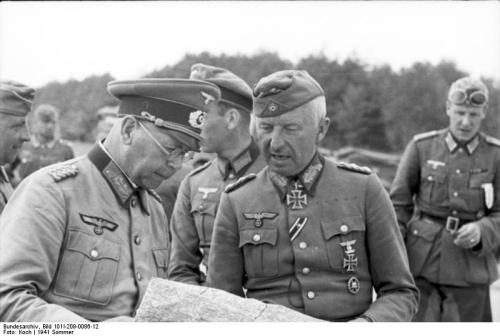
Bild 101I-209-0086-12Erich Von Manstein at the Front

Motioning to the map Manstein continued. “We will concentrate the majority of our Panzer forces here, just west of Kharkov and another group here west of Orel.  We will also build fall back positions for our infantry forces here along the Dnieper.  We should be ready to withdraw from the Crimea should the need arise, we cannot afford another encirclement.  When the Russians attack we will give ground, even Kharkov if needed. Our infantry divisions will fight a delaying action supported by Jagdpanzer and Sturmgeschutzen, the Luftwaffe will need to give us good close air support from Stukas and as the Russians outrun their supply depots and their offensive loses momentum we will attack, like a badger defending itself.  Our Panzers will cut off their spearheads west of Kharkov while we bleed them dry in the north; we will then roll them up, stabilize the line and prepare for the winter.”  Manstein sounded confident; those in the room began to sense that his plan could work.  Rundstedt spoke up: “That will give us the chance to transfer forces to other fronts and, maybe, since Hitler is dead there might be a chance for Reichsmarschall to negotiate a settlement,[xix] otherwise gentlemen the Allies will destroy our cities from the air and grind our armies down until we have no recourse but surrender.”

“Right” added Goering, making eye contact with each man in the room. “We must have success in the defense, we must buy time and we must work to end this war before Germany is destroyed. ‘We will have reason to be glad if Germany can keep the boundaries of 1933 after the war.”[xx] He paused and said “General Zeitzler, you are relieved of your duties at OKH, General Guderian, you are now the Chief of OKH.[xxi] Manstein, you will command the East, General Hoth will take your Army Group. You will work with Guderian and Model to flesh out this plan.  We must get the Panther, Tiger and Ferdinand units operational as soon as possible.  I believe that the Russians will attack by June. Richthofen, I need you to look to the Luftwaffe. We have not had a good year and we have to succeed in defending the Reich from Allied bombers and provide support to the ground forces. Of course flak needs to be built up. The Luftwaffe Field Divisions with the exception of the Fallschirmjaeger and Herman Goering Panzer Division need to be transferred to Army control.”  He looked at Speer: “Herr Speer, the Fuhrer entrusted you with our war production program, you must increase production of tanks and aircraft. Speed the production of the ME-262 and cancel all programs that take away from the panzers, fighters and ground support aircraft that we need now.” He put his hands on his hips and took a deep breathe. He looked at Wolfe, Himmler’s successor.  Wolff, the Reich needs the Waffen SS, the Panzer troops are exceptional, but I want all Waffen SS Formations, with including the Panzers turned over to Army control, we cannot keep dividing our resources. With the personnel from the Luftwaffe Field Divisions we should be able to provide the Army with excellent troops to rebuild experienced formations.”  Goering looked around the room; “Are there any questions Gentlemen?” Putting his arm across Manstein’s soldier and said: “I think that Badger is a fitting name for your plan. Our little Dachs will tear them to pieces.”   Later, Goering met with Foreign Ministry officials emphasizing the need to strengthen German Allies and seek peace with the west. He “admitted that he was worried about the future. ‘It’s not quite clear to me how we are going to end this war.’”[xxii] Those present could not believe how Goering had conducted himself, and all left the meeting thinking that it might be possible to stave off defeat.  It was an incredible performance. After Hitler’s crash he had secretly undergone a “systematic withdraw cure which had ended his drug addiction.”[xxiii] The change was marked.

STAVKA Headquarters Moscow: 7 May 1943

Josef Stalin was ecstatic.  His agents reported that Hitler was dead even before the announcement from Berlin.  Partisans had confirmed that it was Hitler’s aircraft that they found and recovered some of Hitler’s personal belongings, including his cap, which they presented to Stalin.  Intelligence reported that Goering had taken power, and Stalin was sure that his position was weak and many believed that Goering, was not up to the task, and that a renewed offensive could bring down the Nazi regime.  Now was the time to bring the Nazi terror to an end and Stalin called his key leaders together.  While Stalin wanted an immediate offensive his generals wanted to wait just in case the Germans attacked Kursk.  “Zhukov, Vasilevsky, and various General Staff officers urged caution and recommended that the Red Army remain on the defensive until the Germans expended their offensive strength.”[xxiv] Stalin supported by commanders, like Vatutin, “argued for a resumption of offensive action in early summer to preempt German action and regain the momentum lost in March 1943.”[xxv] In the end a compromise was reached and despite the temporary defensive stand “Russian strategic planning in the summer of 1943 was inherently offensive in nature.”[xxvi] The new offensive would be launched on 15 June if the Germans had not attacked before.  It would be named Operation Kutuzov[xxvii] and be aimed at the Orel salient and Kharkov.  The northern prong under Rokossovsky’s Central Front would destroy the Germans around Orel and drive west while Vatutin’s Voronezh and Konev’s Steppe Front would take Kharkov and drive toward the Dnieper.[xxviii] The Southwest Front and South Fronts would attack and destroy the German forces along the Mius, the goal: “collapse of the German defenses and an advance to the line of the Dnieper River from Smolensk in the north southward to the Black Sea.”[xxix]

German Preparations
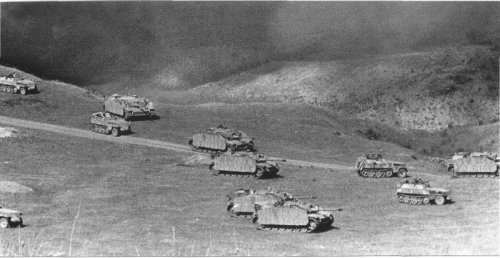
sturmgeschutzSturmgechuten and SdKfw 251 APCs moving into position

Manstein met with Model, Hoth and Guderian to develop DACHS. They had  to play for time and deceive the Russians as to their true intent so they could build up their forces.  Deception operations were mounted on both sides of the Kursk bulge to give the impression of attack preparations.  1st Panzer Army and Army Detachment Kempf  were to launch a diversion called Operations HABICHT and PANTHER southeast of Kursk  “designed to push the Soviets back from the industrial area of the Donets River.”[xxx] The defensive plan called for the infantry supported by tank destroyers, assault guns the heavy Ferdinands as well as mobile Pioneer units to conduct a withdraw to delay and disrupt the Russian attack.  Bridges were prepared for demolition, defensive positions constructed at choke points which would be defended and then abandoned when no longer defensible, and minefields laid to slow the Russian advance.  This was critical for 9th Army now commanded by General Henrici in the Orel salient north of Kursk.  Henrici, a defensive master constructed a series of defensive belts to allow his army to withdraw from the bulge without being cut off and inflict heavy casualties on the Russians through skillful deployment of anti-tank weapons, especially self propelled guns.[xxxi] In the south 4th Panzer Army, now commanded by SS General Paul Hausser[xxxii] and Army detachment Kempf made preparations to allow the Russians to advance past Kharkov using the same defend and delay tactics and then counterattack. As the armies prepared, Speer and Guderian’s efforts to rebuild the Panzer force were bearing fruit.  By 15 May the first brigade of Panther tanks was activated and began training west of Kharkov.[xxxiii] Two battalions of Ferdinands, one for 9th Army and one for 4th Panzer Army were activated.[xxxiv] Sturmgeschutz battalions were assigned to each infantry corps. Panzer divisions built up so that all had an average of 130 tanks, with the SS Divisions and Gross Deutschland receiving more.  Tiger battalions were assigned to each Panzer Corps.

The Summer Campaign

On 1 June Operations PANTHER and HABICHT hit the unfortunate Soviet 6th Army, which had been victimized by Manstein’s counter-stroke in March.  III Panzer Corps of Army Detachment Kempf supported by Corps Raus (IX Corps) linked up with 1st Panzer Army at Kupiansk on 3 June.  The Russian counterattacked with 8th Guards Army and the 2nd and 23rd Tank Corps. The battle of Kupiansk resulted in the destruction of 6th Army and the 23rd Tank Corps which was surprised by the 503rd Panzer Detachment’s Tigers. 2nd Tank Corps received a similar mauling at the hands of the 6th Panzer Division.  On 9 June the Germans returned to their start positions.
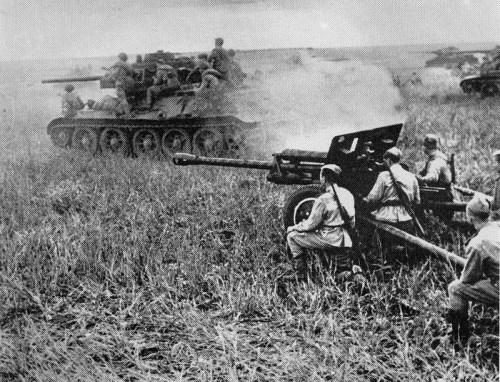
Kursk_T34_and_Fieldgun-px800Soviet Tanks and AT Guns at Kupiansk

The attack at Kupiansk surprised STAVKA which had been deceived by the build up of Panzers around the Kursk salient.  Stalin continued to hound his generals to begin Kutuzov on time, but the generals were “chastened” by the defeat at Kupiansk and “earlier experiences”[xxxv] and wanted to delay. Stalin forced them to begin Kutuzov on 22 June, the 2nd Anniversary of Barbarossa.  Manstein and his Eastern Front commanders held their breath.  Teams of Brandenburger commandos operating in the Soviet rear and Luftwaffe reconnaissance aircraft reported Russian units moving to advanced positions to the north and south of Kursk.  Vatutin commanding the Voronezh Front was ambushed and killed by a Brandenburger detachment supporting Ukrainian irregulars[xxxvi] as he returned from visiting 69th Army near Prokhorovka station on 19 June and was replaced by Lieutenant General Katukov of 1st Tank Army.  Katukov “was one of the Red Army’s most accomplished and experienced armor officers.”[xxxvii]
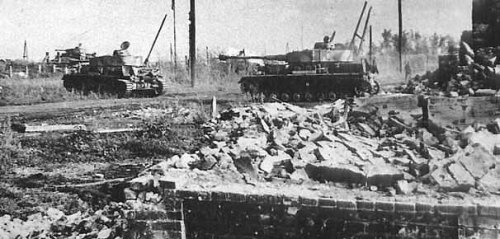
kursk_tanksMk IV Panzers

In the north Rokossovsky’s Central Front and Popov’s Bryansk Front supported by 11th Guards Army[xxxviii] began concentric attacks on the German 9th and 2nd Panzer Armies and ran into Henrici’s labyrinth on 22 June.  They hit the first line they found it empty, the Germans having repaired to secondary positions,[xxxix] German 88’s and self propelled guns took a heavy toll on the tanks of 2nd Tank Army.  The 3rd Tank Army under General Rybalko’s army committed after the initial assault “attempted a fresh penetration instead of exploiting the earlier efforts of the 3rd and 63rd Armies… Rybalko’s force included 698 serviceable tanks…but lacked the artillery and engineers for such a deliberate assault.”[xl] Popov telephoned Stalin at noon on 25 June “to report that Rybalko was practically stalled and suffering heavy losses in tanks.”[xli] The Germans committed the 5th and 8th Panzer divisions[xlii] against 3rd Tank Army. The fresh Panzers inflicted painful losses on Rybalko.  On 27 June Stalin called to complain about the handling of the army, demanding a direct assault.[xliii] The battle turned into a “grinding battle of armored attrition.”[xliv] After “a few bloody days bereft of any success, Rybalko’s tank formations had to be pulled out of the line into reserve.”[xlv] The “battle for the Orel salient ended three weeks later with a German defensive victory, as Army Group Center extricated its two armies from the box prepared for them while inflicting heavy casualties on three Soviet Fronts.”[xlvi] The Soviets lost over 629,000 men and 3,500 tanks.[xlvii] In comparison German losses were light and by falling back they shortened their line freeing units for other operations.  Stalin had Orel but failed to destroy the Germans and lost heavily in the attempt.

In the south Konev’s Steppe and Katukov’s Voronezh Fronts prepared their assault on Kharkov.  They attempted to deceive the Germans by simulating the massing of a “notional tank and combined-arms army” in the western side of the Kursk bulge.[xlviii] The deception was unsuccessful as reconnaissance by Luftwaffe aircraft and Brandenburgers failed to uncover any troop concentrations and Russian deserters, talked of a strike at Kharkov. The offensive “Rumiantsev” was opened by the 5th and 6th Guards armies supported by 53rd and 69th Armies on 21 June; a day later 7th Guards Army jumped off, two additional armies supported the west flank of the offensive.[xlix] The Russians in the two fronts began the operation with 980,000 men and 2,500 tanks.[l] Opposing them were 4th Panzer Army and Army Detachment Kempf’s 350,000 men and 1,750 tanks and assault guns including 100 Tigers and 192 Panthers.[li]
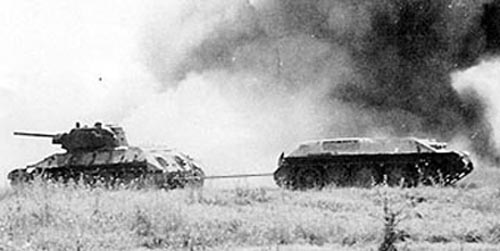
Sovietic_T34_battle_of_kurskT-34 towing disabled T-34 near Orel

STAVKA “chose to strike the strongest portion of Hoth’s defense head-on, to engage and defeat the German force and avoid the problems of flank threats.”[lii] Unfortunately they complicated the attack by focusing it at “precisely the boundary between the Voronezh and Steppe Fronts, causing increased coordination problems from the start of the operation.”[liii] The Germans used Ferdinands, Jagdpanzers and Sturmgeschutz in a mobile defensive role, as infantry fought delaying actions as they withdrew to successive defensive lines, inflicting brutal losses on the Russians.  Aided by massive artillery preparation the Russians broke through the weakened Army Detachment Kempf near Belgorad[liv] taking the city on 24 June.  Corps Raus’ 167th Infantry Division was taken on its exposed left flank forcing Raus to “fight a delaying action…until the withdraw reached Kharkov.” [lv] The Germans reacted to the threat by committing the “veteran 5th SS Panzer Grenadier Division Wiking” to reinforce Army Detachment Kempf.[lvi] Despite the success “the German defenses proved so tenacious that the leading brigades of the two tank armies had to enter the fray.”[lvii]

As the Russians advanced the German fell back.  Hoth directed Hausser to wait before counterattacking with XLVIII Panzer Corps and II SS Panzer Corps.  Katukov pushed the 1st and 5th Tank Armies into the hole in the German lines and moved toward Kharkov which was liberated by the 89th and 183rd Guards Divisions[lviii] on 2 July.  The liberation of Kharkov and Belgorad while exhilarating had cost Katukov over 250,000 casualties.  Skillful employment of mobile defense and local counterattacks by mixed Panzer battlegroups, such as one by Grossdeutschland on the flank of 5th Tank Army caused panic and some units withdrew “leaving behind masses of equipment of every description.”[lix] The tank armies had lost upwards of 50 percent of their tanks, infantry divisions were now down to half strength, some down to 3000 men.[lx] Yet the Soviets attempted to drive south to trap the Germans.  They were hit by XLVIII Panzer Corps and II SS Panzer Corps, both of which had seen little action thanks to Hoth’s conservation of strength. XLVIII Panzer Corps hit the 1st Tank Army at the “key road junction of Bogodukhov, 30 kilometers northwest” of Kharkov “severely mauling the leading three brigades”[lxi] forcing 1st Tank Army to withdraw towards Kursk. 5th Tank army moved to support but was taken in the flank by II SS Panzer Corps.  The SS Corps encircled the remainder of 5th Tank Army. Hunted by the SS on the open steppe the survivors slipped through gaps in the encirclement but both armies were ravaged.  By 15 June 1st Tank Army was down to 120 tanks and 5th Tank Army had “50 of its original 503 tanks and self-propelled guns serviceable.”[lxii] XLVII Panzer Corps took Kharkov on 18 July.

Totenkopf-Kursk-01SS Panzer Troops and Tigers prepping for battle

The victory paid dividends for the Germans. The Front held and the Russians had taken nearly a million casualties and lost almost 6000 tanks and self-propelled guns.  Three Tank Armies had been smashed, 5th Tank Army would not be fit for field duty for two months.[lxiii] 3rd Tank Army earned a Guards designation but was withdrawn from combat.[lxiv] 6th Army, victimized by PANTHER was destroyed while the 5th, 6th and 7th Guards Armies were shattered. Additionally, the Germans decimated two independent tank corps.  Stalin reacted by halting operations, cancelling follow on offensives and rebuilding the Red Army’s tank armies and mechanized forces.  He realized that his Generals had been right in not wanting to undertake offensive operations until the Germans had been weakened, but the German insistence on not going on the offensive caused him to ignore their arguments. He decided to wait until winter to launch his next offensive, but that offensive would never be launched as by the time he was ready the war was over.

Bild 101III-Zschaeckel-206-34German Tank Commader as Panzers mop up

The elimination of the Russian threat enabled Italy to be reinforced as well as the reinforcement of the Atlantic Wall.  The Salerno landings were a disaster, the Allies driven into the sea by Panzer Divisions released from the Eastern Front.  The disasters at Salerno and the Russian debacle brought overwhelming domestic political pressure on Roosevelt and Churchill to end the war. Clandestine talks began in Switzerland between Avery Dulles and Karl Wolff[lxv] while Walter Schellenberg met with Count Bernadotte.[lxvi] Despite the previous demand for unconditional surrender the Allies decided to negotiate with the new German leadership might end the war in Europe.  Goering surrendered power to General Beck and gave himself and other accused war criminals up to the Allies. Beck took power, withdrew to 1939 borders, dismantled the death camps and disbanded the Nazi Party, and its police apparatus.[lxvii] Peace came to Europe on 9 November 1943, 25 years after Kaiser Wilhelm’s abdicated his throne.
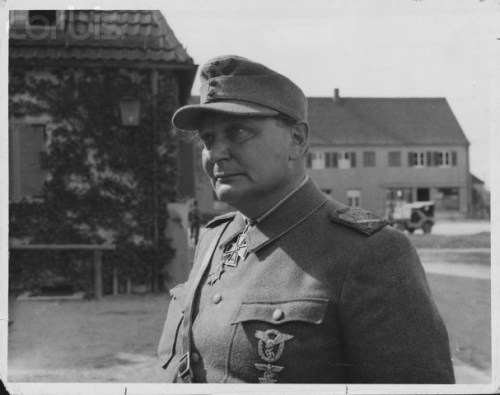
HU048801Goering Surrenders himself


[i] Clark, Alan. Barbarossa: The Russian German Conflict, 1941-45. Harper Collins Publishers, New York, NY 1965. Pp.307-311. There was an attempt on Hitler’s life on his return from Kluge’s headquarters.  Only the bomb did not go off, all components had worked but the detonator did not fire.  Clark notes that “the Devil’s hand had protected Hitler.” (p.311)

[ii] Galante, Pierre. Operation Valkyrie: The German Generals’ Plot Against Hitler. Translated by Mark Howson and Cary Ryan. Harper and Row Publishers, New York, NY 1981. Originally published as Hitler est il Mort? Librairie Plon-Paris-Match, France. 1981. p.167 

[iii] Padfield, Peter. Himmler. MJF Books, New York. 1990. p.474.  Himmler had a number of contacts and intermediaries who he used to attempt contact with the Allies as early as 1943.

[iv] Höhne, Heinze. The Order of the Death’s Head: The Story of Hitler’s SS. Translated by Richard Barry. Penguin Books, New York and London, 2000. First English edition published by Martin Secker and Warburg Ltd. London 1969. Originally published as Der Orden unter dem Totenkopf, Verlag Der Spiegel, Hamburg 1966.  Diels remained an ally of Goering even marrying his sister in 1943.

[v] Von Lang, Jochen. The Secretary: Martin Bormann: The Man Who Manipulated Hitler. Translated by Christa Armstrong and Peter White. Random House Inc. 1979. Originally published as Der Secretär. Deutsche-Verlags-Anstalt, Stuttgart. 1977 p.9.  At his trial Goering remarked to other defendants. “If Hitler had died sooner, I as his successor would not have had to worry about Bormann. He would have been killed by his own staff even before I could have given the order to bump him off.”

[vi] Irving, David. Göring: A Biography. William Morrow and Company, New York, NY 1989. Richthofen had succeeded Jeschonnek in March when Goering relieved him. Goering believed that Jeschonnek “was too pliable at the Wolf’s Lair.” Goering had actually considered this a number of times but postponed it several times. p.388

[vii] Guderian, Heinz. Panzer Leader. (abridged) Translated from the German by Constantine Fitzgibbon, Ballantine Books, New York 1957. pp.244  Hitler conducted a similar conference involving many of the same people in Munich.

[viii] Carell, Paul. Scorched Earth: The Russian German War 1943-1944. Translated by Ewald Osers, Ballantine Books, New York, NY 1971, published in arrangement with Little-Brown and Company. p. 336

[ix] Ibid. Irving. pp. 377-379.

[x] Ibid. Guderian. p.243

[xi] Ibid. Irving. p.378

[xii] Glantz, David M and House, Jonathan. The Battle of Kursk.  University Press of Kansas, Lawrence, KS. 1999. pp.21-25.  Operations order 5 had been approved by Hitler on and issued by OKH on 13 March. It was followed by Operations Order 6 on 15 April.

[xiii] Ibid. Clark. p.324.

[xiv] Warlimont, Walter. Inside Hitler’s Headquarters 1939-45. Translated by R.H. Berry, Presido Press, Novato CA, 1964. p.334 These objections of Jodl were from June, but indicate the feeling of Jodl for the Zitadelle as planned and when would have likely been his response in such a situation.

[xv]Glantz, David M. and House, Jonathan. When Titans Clashed: How the Red Army Stopped Hitler. University Press of Kansas, Lawrence, KS. 1995. p.157 Zeitzler had been a consistent advocate for Zitadelle since he heard Manstein’s initial proposal in March.

[xvi]Macksey, Kenneth. Guderian: Creator of the Blitzkrieg. Stein and Day Publishing, New York, NY 1975 p.206

[xvii] Ibid. Clark. p.322

[xviii] Ibid. Clark. p.323.  Zeitzler made this argument with Jodl during a briefing in April 1943.

[xix] Shirer, William L. The Rise and Fall of the Third Reich. A Touchstone Book published by Simon and Schuster, 1981, Copyright 1959 and 1960. p.1115.  Hitler had told Keitel and Jodl that “When it comes to negotiating [for peace]…Goering can do much better than I. Goering is much better at those things.”

[xx] Speer, Albert. Inside the Third Reich. Collier Books, a Division of MacMillan Publishers, Inc. New York, NY 1970. p.245.  From a conversation with Speer in late 1942.

[xxi] Ibid. Glantz and House. Clash of Titans. pp. 216-217. Hitler would replace Zeitzler with Guderian in June 1944.

[xxii] Ibid. Irving. p.379 From a conversation with State Secretary Ernst von Weizäcker 11 February 1943.

[xxiii] Ibid. Speer.  p.512. The ending of the addiction took place at Nurnberg and Goering surprised many of his co-defendants with his “remarkable energy.”

[xxiv] Ibid. Glantz and House. Kursk. p.28

[xxv] Ibid. Glantz and House. Kursk. p.28.

[xxvi] Ibid. Glantz and House. Kursk. p.264

[xxvii] Overy, Richard. Russia’s War: A History of the Soviet War Effort: 1941-1945. Penguin Books, New York NY and London, 1997. pp.211

[xxviii] Erickson, John. The Road to Berlin. Cassel Military Paperbacks, London, 2003. First Published by Weidenfeld and Nicholson, 1983. p.76

[xxix] Ibid. Glantz and House. Kursk. p.265

[xxx] Ibid. Glantz and House. Kursk. p.23.

[xxxi] Liddell-Hart, B.H. The German Generals Talk. Quill Publishing, New York, NY. 1979. Copyright 1948 by B.H. Liddell-Hart. p.215  Henrici describes the methods that he used in 1944 as Commander of 1st Panzer Army and as Commander of Army Group Vistula during the defense of Berlin.

[xxxii] Hausser would actually command 7th Army in Normandy in 1944.

[xxxiii] Ibid. Glantz and House Kursk. p.53 This was the 10th Panzer Brigade assigned to XLVIII Panzer Corps.  Additionally Clark notes production figures for Panthers from Speer that indicate that 324 Panthers would be available by 31 May. (Clark. p.325)

[xxxiv] Ibid. Glantz and House. Kursk. p.52.  At Kursk the two Ferdinand detachments were both assigned to 9th Army.

[xxxv] Ibid. Glantz and House. Kursk. p.28.

[xxxvi] Ibid. Carell. p.510.  Vatutin was killed by Ukrainian irregulars in April 1944.

[xxxvii] Ibid. Glantz and House. Kursk. p.62

[xxxviii] Newton, Steven H. Hitler’s Commander: Field Marshal Walter Model, Hitler’s Favorite General. DeCapo Press, Cambridge MA 2005. p. 256

[xxxix] Ibid. Liddell-Hart. p.215.

[xl] Ibid. Glantz and House. Kursk. p.236

[xli] Ibid. Erickson. p.113. At Kursk the call took place on 20 July when Rybalko was in this situation.

[xlii] Ibid. Newton. p.256

[xliii] Ibid. Erickson. p.114

[xliv] Ibid. Glantz and House. Kursk. p.236

[xlv] Ibid. Erickson. p.114

[xlvi] Ibid. Newton. p.256

[xlvii] Ibid. Glantz and House. p.345. The actual losses were 429,000 men and 2,500 tanks against a German force significantly weakened by Zitadelle.  Had the Russians attacked the Germans rather than receiving the German attack first their losses in men and machines would have been far higher.  I have reflected that in the alternative numbers.

[xlviii] Ibid. Glantz and House. When Titans Clashed. p.168  The Soviets did try this in their counter offensive following Zitadelle.

[xlix] Ibid. Glantz and House. When Titans Clashed. p.169

[l] Ibid. Glantz and House. Kursk. p.344. Actual figures for beginning of offensive.

[li] Ibid. Glantz and House. Kursk. p.338.  Figures from beginning of Zitadelle.

[lii] Ibid. Glantz and House. Kursk. p.244 The actual text reads “Manstein’s defense” not Hoth’s.

[liii] Ibid. Glantz and House. Kursk. p.244

[liv] Von Mellenthin, F.W. Panzer Battles: A Study of the Employment of Armor in the Second World War. Translated by H. Betzler, Ballantine Books, New York, NY, 1971. Originally Published University of Oklahoma Press, 1956. p.286

[lv] Raus, Erhard. Panzer Operations: The Eastern Front Memoir of General Raus, 1941-1945. Compiled and Translated by Steven H Newton. Da Capo Press a member of the Perseus Book Group, Cambridge, MA 2003. p.214

[lvi] Ibid. Glantz and House. Kursk. p.247

[lvii] Ibid. Glantz and House. When Titans Clashed. p.169

[lviii] Ibid. Erickson. p.121  These were the actual divisions that liberated Kharkov.

[lix] Ibid.  Von Mellenthin . p.287

[lx] Ibid. Glantz and House. p.252

[lxi] Ibid. Glantz and House. When Titans Clashed. p.170

[lxii] Ibid. Glantz and House. Kursk. p.252

[lxiii] Ibid. Glantz and House. Kursk. p.252

[lxiv] Ibid. Glantz and House. Kursk. p.237

[lxv] Ibid. Hohne. p.572

[lxvi] Ibid.  Hohne. p.570

[lxvii] Ibid. Galante. pp 69 and 207

Bibliography

Carell, Paul. Scorched Earth: The Russian German War 1943-1944. Translated by Ewald Osers, Ballantine Books, New York, NY 1971, published in arrangement with Little-Brown and Company

Clark, Alan. Barbarossa: The Russian German Conflict, 1941-45. Harper Collins Publishers, New York, NY 1965

Erickson, John. The Road to Berlin. Cassel Military Paperbacks, London, 2003. First Published by Weidenfeld and Nicholson, 1983

Galante, Pierre. Operation Valkyrie: The German Generals’ Plot Against Hitler. Translated by Mark Howson and Cary Ryan. Harper and Row Publishers, New York, NY 1981. Originally published as Hitler est il Mort? Librairie Plon-Paris-Match, France. 1981.

Glantz, David M and House, Jonathan. The Battle of Kursk.  University Press of Kansas, Lawrence, KS. 1999.

Glantz, David M. and House, Jonathan. When Titans Clashed: How the Red Army Stopped Hitler. University Press of Kansas, Lawrence, KS. 1995

Guderian, Heinz. Panzer Leader. (abridged) Translated from the German by Constantine Fitzgibbon, Ballantine Books, New York 1957

Höhne, Heinze. The Order of the Death’s Head: The Story of Hitler’s SS. Translated by Richard Barry. Penguin Books, New York and London, 2000. First English edition published by Martin Secker and Warburg Ltd. London 1969. Originally published as Der Orden unter dem Totenkopf, Verlag Der Spiegel, Hamburg 1966.

Irving, David. Göring: A Biography. William Morrow and Company, New York, NY 1989

Liddell-Hart, B.H. The German Generals Talk. Quill Publishing, New York, NY. 1979. Copyright 1948 by B.H. Liddell-Hart

Macksey, Kenneth. Guderian: Creator of the Blitzkrieg. Stein and Day Publishing, New York, NY

Newton, Steven H. Hitler’s Commander: Field Marshal Walter Model, Hitler’s Favorite General. DeCapo Press, Cambridge MA 2005

Overy, Richard. Russia’s War: A History of the Soviet War Effort: 1941-1945. Penguin Books, New York NY and London, 1997

Padfield, Peter. Himmler. MJF Books, New York. 1990

Raus, Erhard. Panzer Operations: The Eastern Front Memoir of General Raus, 1941-1945. Compiled and Translated by Steven H Newton. Da Capo Press a member of the Perseus Book Group, Cambridge, MA 2003

Shirer, William L. The Rise and Fall of the Third Reich. A Touchstone Book published by Simon and Schuster, 1981, Copyright 1959 and 1960.

Speer, Albert. Inside the Third Reich. Collier Books, a Division of MacMillan Publishers, Inc. New York, NY 1970.

Von Lang, Jochen. The Secretary: Martin Bormann: The Man Who Manipulated Hitler. Translated by Christa Armstrong and Peter White. Random House Inc. 1979. Originally published as Der Secretär. Deutsche-Verlags-Anstalt, Stuttgart. 1977

Von Mellenthin, F.W. Panzer Battles: A Study of the Employment of Armor in the Second World War. Translated by H. Betzler, Ballantine Books, New York, NY, 1971. Originally Published University of Oklahoma Press, 1956.

Warlimont, Walter. Inside Hitler’s Headquarters 1939-45. Translated by R.H. Berry, Presido Press, Novato CA, 1964.

2 Comments

Filed under alternative history, History, Military, world war two in europe

Oh Lord Stuck in Lodi Again….Gordon Klingenschmitt does Lodi

gjkGordon Klingenschmitt after his Court-Martial Conviction (Virgina Pilot Photo)
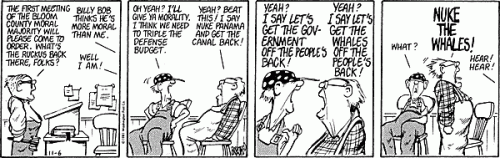
Just about a year ago, I set out on the road,
Seekin’ my fame and fortune, lookin’ for a pot of gold.
Things got bad, and things got worse, I guess you will know the tune.
Oh ! Lord, Stuck in Lodi again.

“O Lord Stuck in Lodi Again” Credence Clearwater Revival, words and music by John Fogarty

Failed Navy Chaplain defrocked Evangelical Episcopal Priest, Convicted Criminal, Right Wing D-Lister and narcissistic professional protester Gordon James “Chaps” Klingenschmitt pops up in the most unlikely of places.   If it was not pathetic it would be really funny.

The reason that I write this today is irony of  Gordon getting stuck in Lodi and the my relationship to Lodi.  You see Gordon showed up at yet another protest in a small town to battle a city council about people praying “in Jesus Name” as part of official city events such as city council meetings.  The city is Lodi California, just up the road from where I went to junior and senior high school, where I got my one high school football tackle in a real game and where my dad is finishing his days in a nursing home going through the ravages of end-stage Alzheimer’s disease.  Lodi is a small town, with historic German and Italian communities which is famous for wines and sits in the heart of the San Joaquin valley.  It is the home of the very popular Lodi Grape Festival. It was a pretty conservative town; well let’s say it used to be a town that had strong ties to the John Birch Society and other ultra-conservative organizations.  It was not very welcoming to outsiders and minorities.  Well times are changing in Lodi.  It mow has significant Hispanic and Asian populations as well as other minorities including Moslems.  Lately tension has been building and once again a battle is going on about faith in the public square.

nuke the whales

Now I’m an easy guy.  I really don’t get offended by anyone praying in whatever name they choose to do so as long as they are respectful of others and don’t try to use the government to promote or enforce their particular religious views on others.  Unfortunately this happens all of the time and people who do it world-wide to be on the more evangelical and fundamental wings of their religion.  Personally  I wish the climate were such that anyone of any faith could pray in whatever name that they chose to do without everyone  getting their BVD’s in a wad.

opus & krishna

Until the advent of the Moral Majority and other conservative Christian political-social activist groups there was an understanding in the United States of getting along in the public square.  Protestant-Catholic-Jew we were all Americans.  Only groups such as the Ku Klux Klan had problems with this.  Our tolerance extended to others who came to this country as immigrants resulting in what was called the “Melting Pot.”  We were an amazing society and our ability to have people of widely differing religious and political beliefs living together in peace was the envy of the rest of the world.

Our societal demographics have changed.  Minority populations have increased and with them a corresponding increase of religions which were not part of the historical “Protestant-Catholic-Jew” paradigm of American religious and cultural life.  This has brought about a clash between the more conservative and fundamental Christians who see this as a threat to the United States being a “Christian Nation” and undercutting its historical and cultural foundation.  My purpose here is not to argue that at all.  I can see the positive benefits of and want to maintain the underlying western cultural foundation of our country. At the same time I want others to enjoy the right to practice their own religion freely and not have individuals of any religion use the government to enforce their religious or non-religious beliefs on others.  I think what made us such a great country was our ability work through these things peacefully.  The greatest example in my mind of religious people working together were the “Four Chaplains” of the troopship Dorchester when it was torpedoed by a German U-Boat in 1943. There were two Protestants, a Catholic Priest and a Jewish Rabbi on the ship.  At the time most Protestants either did not believe Catholics to be Christians and saw them as an Alien and possibly hostile religion. Catholics had not yet admitted that Protestants were “separated brethren” and Jews where just kind of tolerated.   When the ship was torpedoed and began to sink there were not enough life jackets.  So the chaplains gave theirs to soldiers in need and were last seen praying with arms linked as the ship went down.  Such actions as this are what made our country great.  We need men and women like the Four Chaplains and not Gordon “Chaps” Klingenschmitt.  On a side note to this you can call me a heretic but I doubt that God is sending any one of these men to hell because they did not fit somebody’s theology of how someone is saved when they died doing what Jesus said: “Greater love has no one than this, that he lay down his life for his friends.” (John 15:13 NIV)  I think anyone who has served in combat understands this better than people who enjoy the fruit of liberty without ever having paid more than taxes for it.

four chaplainsThe Four Chaplains

I have served in an ecumenical setting with a wide variety of ministers for almost twenty years.  In the setting that I work mutual respect of each other as clergy, respect and toleration of differing views are essential to ensuring that those who serve together in war are not trying to kill each other in peace.  For the most part we do this pretty well and it is a joy to serve with clergy from different faiths and care for God’s people regardless of their faith.  I heard the story of a man who is a bishop in his church who when he was in Navy basic training received a phone call from his mother at the administrative office.  While talking to her she died.  He credits a Jewish Chaplain with caring for him and helping him through that difficult time.  When my dad was deployed to Vietnam and I had a Sunday school teacher tell me that he was a “baby killer” it was a Roman Catholic Navy Chaplain that cared for me and my family and helped me not give up my faith and a Latter Day Saint (Mormon) Chaplain who ensured that I didn’t get thrown out of the Army in Chaplain School due to my big mouth and temper.  In none of these cases did the clergyman attempt to use the opportunity of crisis to convert us or to denigrate our faith.  Unfortunately this is what Gordon did in his Navy career and other like him do in whatever environment the live and serve.

What I see happening today is that the extremes, be they religious fundamentalists or all varieties, strident secularists or aggressive atheists all want the government to enforce their beliefs on everyone else. Such is a recipe for disaster.  One only has to look to Nazi Germany, Theocratic Iran, Saudi Arabia, the former Yugoslavia and the ex-Soviet Union and post invasion Iraq to see what happens when one group or another chooses to use the government or violence to enforce or propagate their religious, political, social or racial beliefs on others.  Having been to the Balkans and Iraq I have seen the results of this.  If you go to the Rhine River Valley in Germany you can still see the ruins of castles destroyed during the 30 years war, a war based on governments using religion or region using government to enforce their will on others.  We are now seeing a rise in private militia groups and others who are arming themselves for conflict.  Likewise there are those stoking the fire by urging secession or even revolt and these include people who call themselves Christians.  A current of discontent kind of like the toxic sludge under New York in Ghostbusters II is bubbling under our feet and is now beginning to burst to the surface as people from the left and right clash at their Congressional representative’s town hall meetings.  The fact that these are turning violent means that we are crossing a line that we may not be able to turn back from.  Voices of moderation and those seeking compromise, accommodation and tolerance are being drowned out, just as they were in Wiemar Germany when Nazis and Communists battled in the streets and attempted to take over the power of government.

Now I do see how people can feel threatened when there is rapid sociological and demographic change in a country.  So in some ways I can understand why people are protesting in Lodi.  My problem is that the leaders of this “movement” are fringe players using fear to fan the flames of their cause.  This is the case with Klingenschmitt who has routinely obfuscated, distorted and spun things to promote a fiction that he has been persecuted for his beliefs when in fact he was constantly using his public office to promote himself, his personal (not even his church’s) beliefs and denigrate those of others while giving lip service to toleration.  Since being convicted by court-martial, not for “praying in Jesus Name” but for disobeying a lawful order not to speak at a partisan political event, Klingenschmitt has constantly painted himself as a victim of persecution and spokesman for a movement. In doing so he has engaged in character assassination of former commanding officers and command chaplains and launched a campaign of “imprecatory prayer” (prayers of harm and judgment) upon his opponents.  I am sure that he has significant financial benefactors who make these possible; benefactors who share his goals of a Christian theocracy among them the Ultra-conservative “News” site World Net Daily.

The irony and sadness of Gordon’s trip to Lodi is that like the character in the song Oh Lord, Stuck in Lodi Again he is stuck and will unfortunately pursue this until he destroys himself, his families and others.  Unfortunately, Gordon and those like him as well as his opposites on the extreme left are leading us to destruction as a society unless the moderate majority that wants to live in peace begins to stand up before it is too late. God help us all and bless our Great Country.

Peace, Steve+

Leave a comment

Filed under History, Lies of World Net Daily, Loose thoughts and musings, philosophy, Religion