Daily Archives: January 18, 2012

The Costa Concordia Disaster Compared with Other Maritime Tragedies

The story of the sinking of the RMS Titanic with the loss of nearly 1500 souls mesmerizes those that imagine the worst disasters involving cruise liners or other passenger vessels.  Conveyed by motion pictures the story reaches into the hearts of people, especially romantics and maritime enthusiasts a century after her demise.  The story is legend. The largest ship then in existence, called “unsinkable” she was the symbol of pre-World War One hubris. The arrogance of her owners, the hubris of her Captain and the storied passenger list which included some of the wealthiest and most famous people of her time lend themselves to a romantic tragedy at sea brought to us by Hollywood.

RMS Titanic

However as great of tragedy as was the Titanic disaster the great liner was neither the largest passenger vessel to sink nor the most souls lost at sea. The Costa Concordia now has the dubious distinction of being the largest passenger vessel to ever sink but comes in very low on the scale for number of fatalities.

SS Sultana disaster

The ships with the greatest number of lives lost came in much more obscure disasters.  The greatest loss of life on a passenger vessel during peacetime was the SS Sultana, a side-wheel steamer returning Union Soldiers home following the end of the Civil War. Grossly overcrowded, the ship which was designed to carry under 400 passengers had nearly 2400 souls aboard when one of her boilers exploded causing a fire which consumed the ship. Only 741 people were rescued.
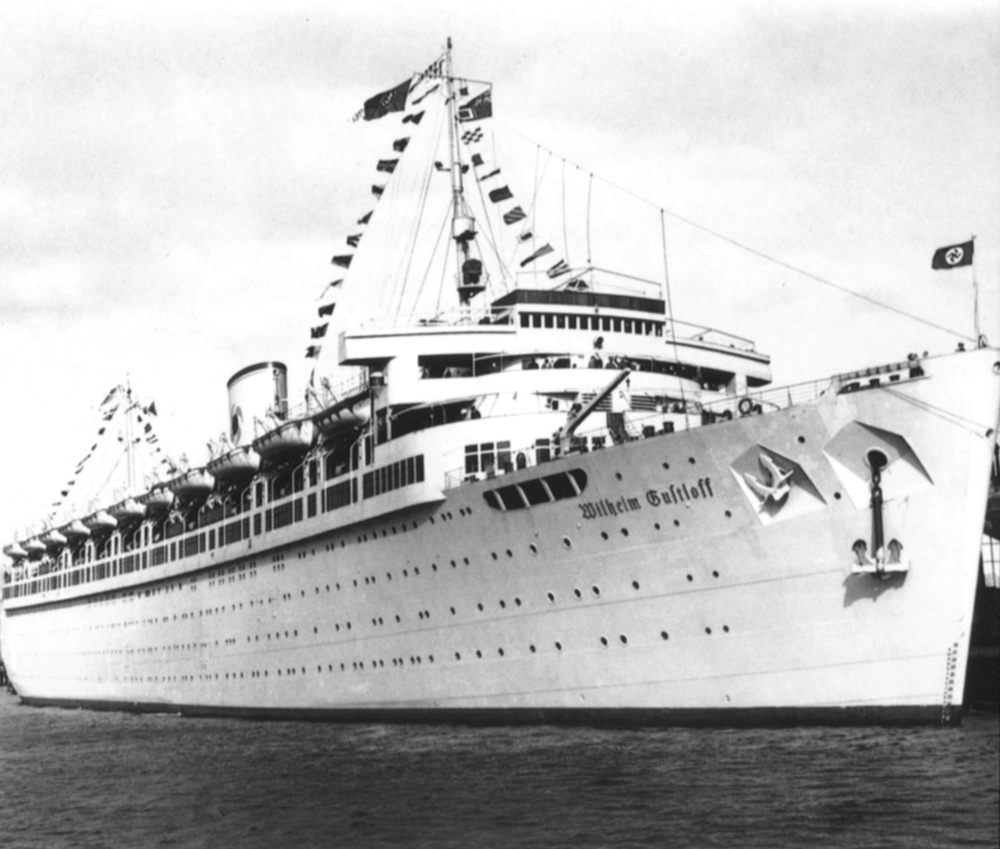
Yet as bad as this tragedy was the worst disaster in maritime history occurred near the end of the Second World War when the SS Wilhelm Gustlaff, a 26,000 ton 684 former cruise liner in the service of the German Navy was torpedoed by the Soviet Submarine S-13 on the night of 30 January 1945. Over 9000 souls, the vast majority civilians or military dependents fleeing the Red Army went down with the ship.  Another great ship, the 38,000 ton RMS Lusitania was sunk by the German U-boat U-20 on May 7th 1915 with the loss of 1198 lives including 128 Americans.

RMS Lusitania (above) and MV Dona Paz (below)
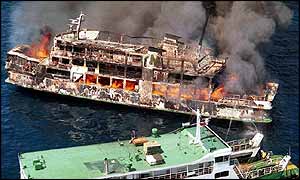
The MV Dona Paz, a ferry with Sulpicio Lines in the Philippines collided with the tanker MT Vector on 27 December 1987 with a loss of over 4000 souls. Called the “Asian Titanic” it was one the worst maritime disasters of modern times.
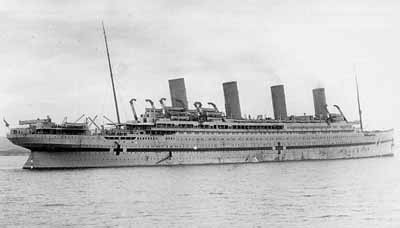
HMHS Britannic

Titanic’s sister the RMS Britannic was serving as a hospital ship in the First World War when she struck a mine in the Aegean Sea sinking in 55 minutes with the loss of only 30 of over 1100 souls aboard.

Andrea Doria sinking off of New York-New Jersey

Another well known wreck was that of the beautiful Italian liner Andrea Doria which collided with the MV Stockholm and sank on July 26th 1956 with the loss of 46 passengers. The sinking was one of the most memorable of all time because of how it was filmed and the heroism of her Captain who unlike Captain Schettino of the Concordia did not leave the ship until he was sure that all passengers and crew were off  and was willing to go down with the ship.
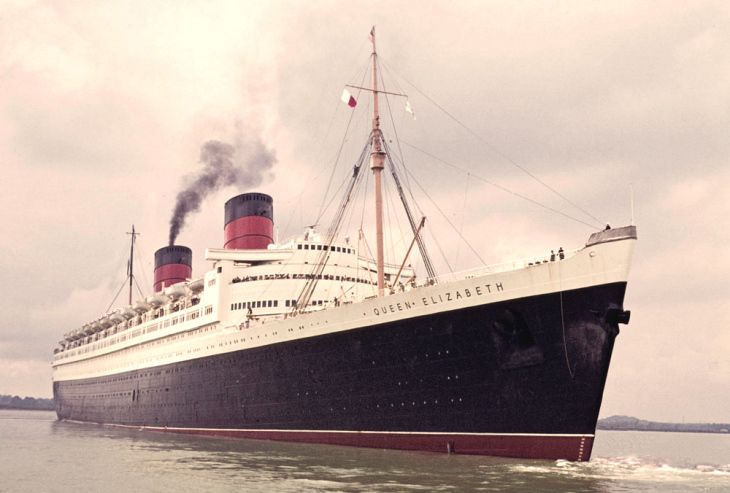
RMS Queen Elizabeth

Yet the largest liners ever sunk were two of the most glorious of their era the RMS Queen Elizabeth and the French SS Normandie.  Both sank under different names and both were due to fires while in port. The the 83,673 ton Queen Elizabeth was retired from the Cunard Line in the late 1960s and taken to Hong Kong where she was renamed SS Seawise University and burned and sank in Hong Kong harbor on 9 January 1972.
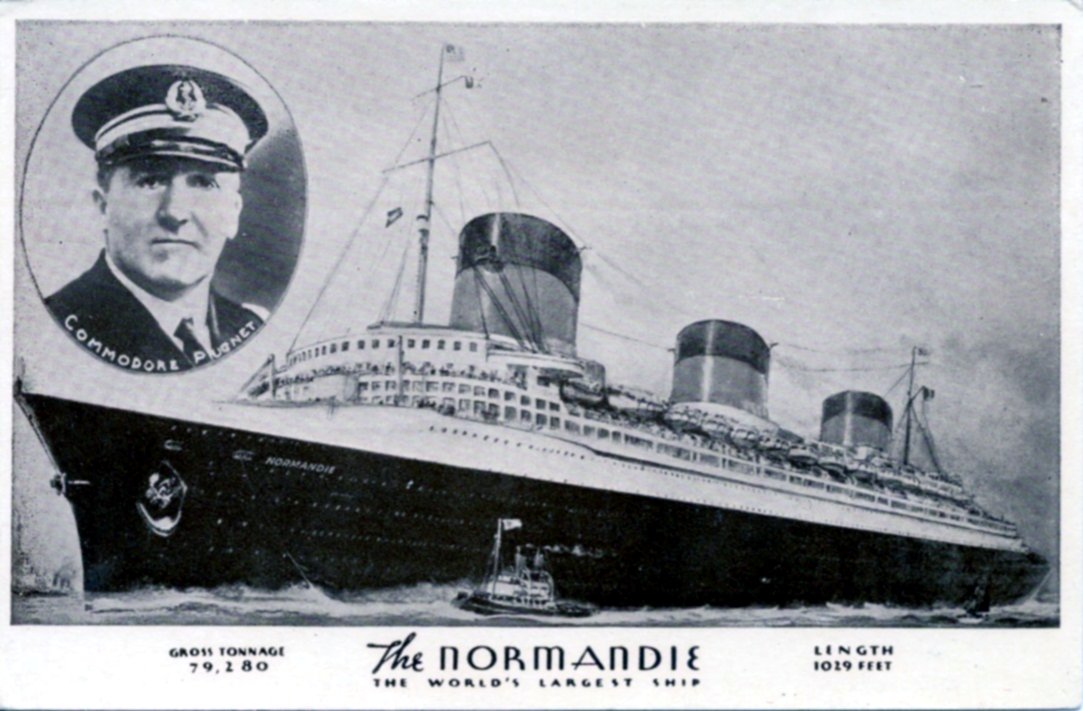
The 83,423 ton SS Normandie, one of the most beautiful ships ever to grace the sea and was the first ship of over 1000 feet long. She was taken over by the US Navy after the French surrender to the Germans. She was renamed was renamed USS Lafayette and while undergoing conversion to a troopship in New York on burned and capsized on the 9-10 February 1942.
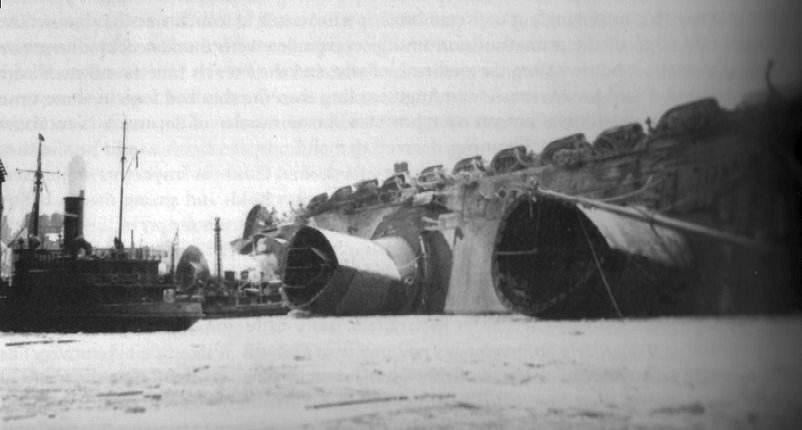
SS Normandie/USS Lafayette sunk 

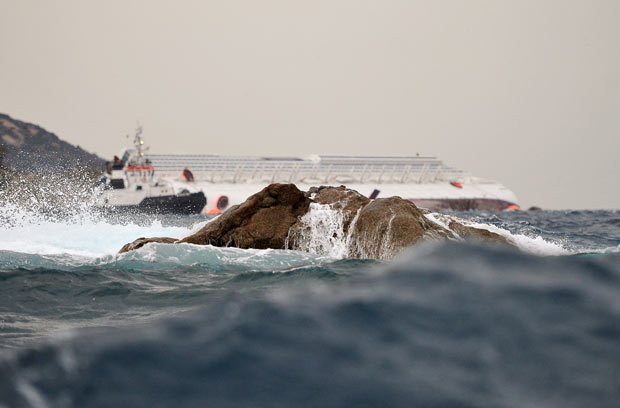
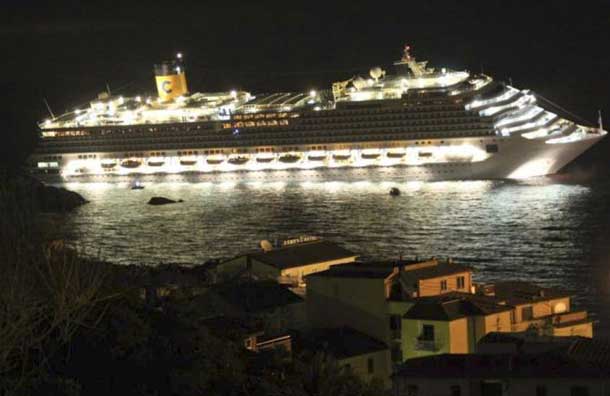
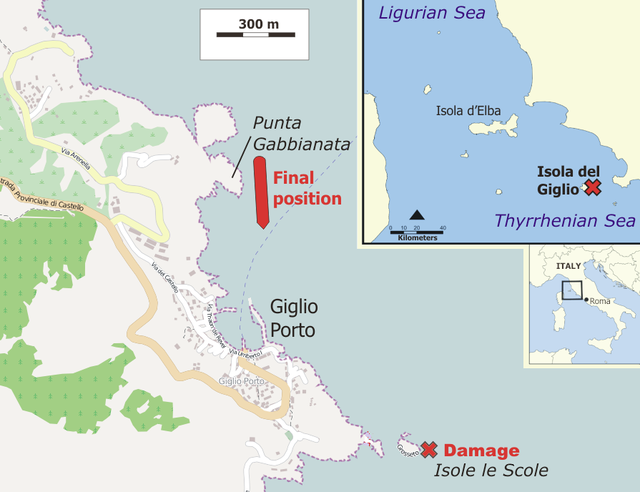
Costa Concordia now lies a few hundred yards off Giglio Island and could either break up or sink into deeper water before she can be salvaged.

All of these events were tragic in their own way be they in war or peace.  Some claimed vast numbers of lives while others resulted in the loss of the most significant ships of their day.  The Costa Concordia is the largest liner ever to go down and things being what they are may not be the last.  Her loss was avoidable by all accounts and hopefully will result in owners, captains and governments doing more to ensure the safety of all that sail the high seas.

For those in peril on the sea….

Peace

Padre Steve+
4 Comments

Filed under History, Navy Ships, News and current events

Sinking the Costa Concordia: A Lesson in Hubris and Cowardice

“You go up that ladder and get on board the ship. You go on board and you then tell me how many people there are. Is this clear? I am recording this conversation, Commander Schettino.” Commander Di Falco, coastguard

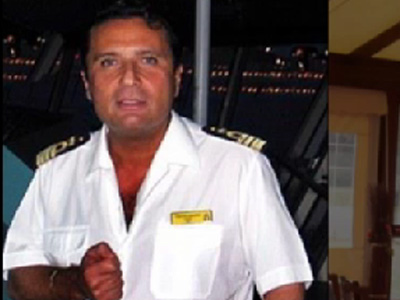
Captain Francesco Schettino acted with hubris and demonstrated cowardice in the sinking of his ship the Costa Concordia.  He has denied taking his ship the massive 114,500 ton Costa Concordia too close to to the island of Giglio but evidence is showing that this is a bold faced lie.  From the what we know now the ship passed too close to a rocky outcropping under 300 meters from the main island but much closer to a smaller rocky island just offshore. The ship based on its AIS tracking system was sailing at about 15.3 knots when she struck the rock on her port quarter at 2137 local time.

Captain Francesco Schettino

Damage was massive and within moments of impact the ship suffered a power outage but evidently still had some power and Schettino or one of his officers attempted to turn the ship toward Giglio harbor, presumably to get her into shallow water so she would not go down in deep water.  Investigators have found the exact point of impact with the rocks off the Le Scole Shoal (42° 21′ 20″ N, 10° 55′ 50″ E)

See map  http://toolserver.org/~geohack/geohack.php?pagename=Costa_Concordia_disaster&params=42_21_20_N_10_55_50_E_ )

If you look at the track charts and diagrams it is easy to see how short of distance the ill fated liner travelled before sinking. She struck the rocks and turned slightly to starboard as she rapidly listed 20 degrees to port. The track shows that Casta Concordia slowed and turned rapidly to port (left) and slowed to a near standstill in the space of about 1000 meters as she lost power as Captain Schettino attempted to get her closer inshore.

The visible damage shows a massive gash of about 150 feet in her port side beginning just aft of midships to her port quarter.  The extent of the damage indicated that her double bottom was pierced and that numerous watertight compartments were breached including her main engineering spaces. The power failure experienced by the ship was most likely due to the flooding in the engineering spaces which powered its electrical generators.

The damage itself was catastrophic and probably mortal, but when she turned to sharply to port she heeled back to starboard as the ship’s center of gravity shift and water in the flooded compartments shifted to starboard.  At 2145 the Chief Engineer informed the captain that the breach could not be repaired and was impossible to manage. Schettino should have ordered the ship abandoned at that moment but waited until 2258 to sound the alarm.   The rapidity with which the ship heeled to starboard could have also been affected by winds and the ship’s proximity to shore.  It is also possible that the very design of such large ships can make them vulnerable to such damage in that with such high superstructures they could be more prone to instability when flooding rapidly.

Concordia rolled over on her starboard side on the rocks off of Point del Lazzaretto eventually settling to the bottom at an 80 degree list. 11 people are known to have died and many more are still missing with hope fading for their rescue.

The situation is made worse by the actions of the Captain of the Concordia, Captain Schettino.  First based on the evidence of previous sailings that this is not the first time that Schettino took the ship close inshore. Apparently he did this to allow show off the ship to the relatives of the Maitre d’hotel of the ship to see the ship pass close to the island. Another report said that Schettino called a former commander now retired who lives on Giglio to let him know that he was coming close to the island.  The fact is that taking a ship the size of Costa Concordia so close to a rocky shore at night for the purpose of showing off is reckless endangerment and an act of hubris.

The second concern is the fact that Schettino abandoned ship and despite repeated orders from a Italian Coast Guard officer to return to the ship did not and that junior officers on their own initiative began to evacuate the ship well before Schettino gave the official order to abandon.

see transcript of the exchange between Schettino and the Coast Guard Officer here http://news.sky.com/home/world-news/article/16150968

After his rescue Schettino claimed that the rock was uncharted and that he was farther out to sea than he actually was.  The fact that Schettino and his First Officer abandoned ship while hundreds of not thousands of passengers were still in danger and refused orders to return to the ship shows cowardice.

The will be more on this but Captain Schettino bears the ultimate responsibility for what happened to his ship and the loss of life.

Peace

Padre Steve+

3 Comments

Filed under Navy Ships, News and current events