Yearly Archives: 2013

Kindred Spirits

400236_10151328400862059_541742014_n

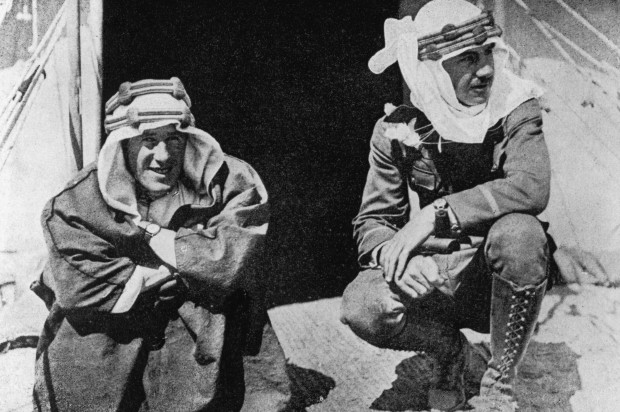
“All men dream: but not equally. Those who dream by night in the dusty recesses of their minds wake in the day to find that it was vanity: but the dreamers of the day are the dangerous men, for they may act their dreams with open eyes, to make it possible. This I did.” T. E. Lawrence

52086880-e1359135444105-620x412

I am an introvert, an academic and a circuitous thinker versus a linear thinker. I am also a dreamer, thinking about possibilities, alternate realities and going beyond the possible. I often discover answers to situations that I face in unrelated subjects. Usually something else that I have read, studied, watched or heard often from history, literature, film, music and sports, especially baseball. I tend to be an outside of the box thinker and I am sure that some that know me consider me quirky or sometimes even off the reservation. I like to ask, ponder and muse about hard questions, sometimes playing Devil’s Advocate.

Frankly I am okay with that.

I love writing and writing has become an extension of me as much as it has been part of my recovery, spirituality and psychological health. In a sense writing has been part of my post Iraq redemption.

I like dealing with people individually and find that I can be as at ease with the a person of most humble means with no power or influence as I can with those of great power, means and influence.

I feel most comfortable teaching and prefer, even as a Naval officer to avoid the limelight. When I was younger that was not the case. I sought promotion and remember hoping to be a Army Colonel or maybe even a General. When I gave up my rank as a Major in the Army Reserve to enter active duty in the Navy in 1999 it was as if that burden was removed. While I have done well in the Navy and have been promoted to the rank of Commander in the Chaplain Corps, I do not seek higher rank. If in a few years I get promoted that is okay, but I almost wonder due to the nature of the jobs at that level if I was promoted if I would be really happy.

I am a Priest and cannot see myself as a Bishop. I am a historian, a teacher, a bit of a counselor, I do ethics well and function very well serving as a chaplain in hospital Intensive Care Units and Trauma departments. While I have served as a company commander in the Army and had other positions where I supervised good numbers of people with a fair amount of responsibility I have found that I prefer to be in less visible positions where my influence is used helping others achieve success.

Thus I really am looking forward to my next assignment at the Joint Forces Staff College where I will be teaching ethics and probably some military history to men and women going to positions of great authority, some of whom will become Generals or Admirals. If I do my job right these men and women may learn something from me that helps them do good things for our nation, their soldiers and even the populations of countries that they be serving in, or occupying.

I think in some ways I am becoming a spiritual director and guide to some people as a Priest and Chaplain. The latter is something that was not sought, nor something that I could ever imagine.  Despite my dual callings as both a Priest and military officer, great experience, education and training I have found that I frequently have felt totally inadequate when people ask me difficult questions.

295_26912097058_4309_n

I am fortunate that I can admit to people that I have questions, doubts and that much of my success is due to other people who took the time to mentor me, teach me and care for me throughout my life and career. Some were teachers, some coaches, some military officers, Navy Chiefs, or NCOs from the Army or Marine Corps, and a few clergymen.

I also have some people that I consider kindred spirits. I think that we all need to have people like that, those that we know personally and those that we know from history, literature, sports, films or whatever. I think that since everyone is different and that we learn in different ways, understand God in different ways that somehow God is not bound to any particular means of speaking to us and reveals himself to us in various ways and that one of those ways is through people that are kindred spirits.

In my case I find such men and women are those that like me march to a different drummer, those that think outside the box and those not threatened by ideas, discoveries or philosophies different than their own. Those who can see the humanity and value in people who are not necessarily like them. Those who in their lives often failed before they succeeded and whose journeys were not easy and those who did not seek the highest office or aspire to be a celebrity even when they had the chance.

I think that the one man who I can call a kindred spirit is T. E. Lawrence, known as history as Lawrence of Arabia. As I read his autobiography I found a complicated and often contradictory man who after achieving fame laid it down even though he could have held any of a number of great positions of power. He really was an amazing person. Lawrence wrote:

“The rare man who attains wisdom is, by the very clearness of his sight, a better guide in solving practical problems than those, more commonly the leaders of men, whose eyes are misted and minds warped by ambition for success….”

That is what I have been learning since Iraq.

Peace

Padre Steve+

Leave a comment

Filed under History, philosophy

The Return of “The Freak”: Tim Lincecum Pitches Second No-Hitter of 2013 MLB Season

Tim Lincecum

“It’s pretty surreal for me to be a part of that, obviously I’ve gotten to see a couple of those, but to be in the middle of one is a little different. I’m still kind of pinching myself right now.” Tim  Lincecum 

Last night in San Diego San Francisco Giants pitcher Tim Lincecum added another accomplishment to his career. The two time National League Cy Young Award winner and Most Valuable Player pitched his first no hitter against the San Diego Padres.  It happened 11 days after the Giant’s were the victims of the first no-hitter of the season pitched by Homer Bailey of the Cincinnati Reds.

I tuned in late to the MLB channel when I saw a tweet that Lincecum was pitching a no-hitter through 6 innings. Watching Lincecum, his shirt drenched in sweat shut down the Padres over the next three innings was nothing short of amazing. Now shorn of the long hair that was a part of his image since his first year in the majors Lincecum showed his mettle and with each batter dominated the Padres, striking out 13 during the game.

Giants_Padres_Lincecum_No-hitter

It was good to see. Lincecum, a pitcher who is a class act and well liked around the league had fallen on hard times since helping lead the Giants to their first World Series title in San Francisco in 2010. In 2011 he went 13 and 14 despite keeping a respectable 2.74 ERA but in 2012 he struggled, eventually being regulated to the bullpen when to the surprise of many he went about his business in a stellar fashion pitching middle relief including during the playoffs and World Series where he was a key part of the Giant’s success in winning their second World Series title in three years.

He has struggled again as a starter in 2013 but has begun to break out of his funk through dogged perseverance. Last night Lincecum, nicknamed “the Freak” no-hit the Padres on 148 pitches. It was the second highest number of pitches served up by a pitcher completing a no-hitter since Edwin Jackson did so with 149 pitches for the Diamondbacks in an inter-league game on June 25th 2010 and the second highest pitch count total in a no-hitter since 1988.

hunter-pence-tim-lincecum-no-hitter-570x418

Hunter Pence makes a Diving Catch to Save the No Hitter in the 8th Inning

I am hoping that this really marks the return of the “old” Tom Lincecum, both for his sake and that of the Giants. No matter what it was a magical night where “the Freak” made history and was backed up by the outstanding defense of his team, especially Hunter Pence who made the defensive play of the game to end the 8th inning snagging Alexi Amarista’s sinking liner with a full dive to end the inning. Lincecum said “I thought for sure it was a hit. You see Hunter flying out of nowhere making the flying grab. That was a really impressive big play for us.”

Coming off their 2012 World Series title the first half of the 2013 season has been miserable to say the least. Yet despite a being in 4th place with a 43-51 record the Giants are only 6.5 games behind the NL West leading Arizona Diamondbacks. If Lincecum and his fellow starting pitchers can get back to their old form the Giants could still take the West.

19d3af0b0f674e4c8079e48f24b4e1a7-a87bef547d254c9b9456a8dec18403b6-4

If nothing else last night was something to celebrate, and I like many if not the vast majority of Giants fans hope that this signals the return of “The Freak” to greatness.

Peace

Padre Steve+

Leave a comment

Filed under Baseball, News and current events

Trayvon Martin and the Pro-Life Movement: Do the Post-Born Matter at All?

trayvon-grave

I am perplexed tonight. I see people, many of whom are friends fight stridently against all abortion. I am not for abortion, but I do not think that it should be banned. That aside what I think the pro-life movement as a whole in the United States has become is simply an anti-abortion movement. Sometimes one where demented individuals in it feel justified in killing people who work in abortion clinics, even murdering them in church.

I am perplexed because I seldom see any of the high level culture warriors that fight the abortion battles ever raise a cry about issues of justice concerning people that are already born.

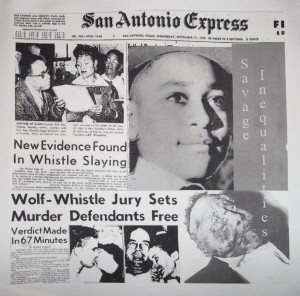
The Trayvon Martin murder and acquittal of the man that killed him should send a chill down anyones spine. In some places like Florida all someone has to claim is that they “felt threatened” to justify the use of deadly force against unarmed people. That is the law, and if there are no videos of the incident or eyewitnesses willing to lay it all on the line then there is a strong chance that the killer will go free. That is a fact and I will not go deep into the racial component of this but it doesn’t seem to me that we have advanced that much since young Emmett Till was murdered and his murderers also acquitted.

emmett-till-news-square-300x296

But going back to my main point I don’t think that we really have a true “pro-life” movement in this country. We have an anti-abortion movement which to some degree say that they are fighting for the lives of unborn babies. One does not have to agree with the theology, philosophy or science that they use, but that certainly has to be considered a part of a comprehensive pro-life ethic, abortion for the sake of eugenics including the selection of the sex of an unborn child or solely as a means of birth control are ethically problematic. That being said there are many times, more so than we would want to admit that abortions are tragically necessitated for the life and health of the mother. Sorry, the woman carrying the child should also have the right to her life.

You see I don’t think that simply being anti-abortion is being pro-life, unless you are willing to apply that right to life to already living people.

I have a hard time with people that claim to be pro-life not fighting against the death penalty, against unjust wars of aggression, against targeted assassinations, against the use of drones to kill supposed militants in the remote parts of Pakistan notwithstanding the fact that many infants and pregnant women carrying unborn babies are killed as well. But then I guess that they are just collateral damage and don’t count. After all they are all Moslems and not Americans.

I have a hard time with those that are anti-abortion who would fight against government programs designed to care for pregnant women such as good pre-natal care for the child and primary care for the medical needs of the mother.  I wonder why they are not fighting for the medical and nutritional needs of babies born to poor people and assist young families from impoverished areas get decent jobs and ensure that affordable child care is available. I wonder why supposedly “pro-life” people are not out marching against gun violence, why many will not lift a finger to help the poor, care for the needy, care for the sick and dying, including the elderly who our society seems to be throwing under the bus in every imaginable way unless they are fabulously well off.

Why does it seem that many pro-life leaders are not concerned about issues that effect the lives of pro-life people who happen to be poor, or members of racial or ethnic minorities? But what seems to be the case is that the most vocal and prominent leaders that call themselves “pro-life” or “family values” conservatives both the preachers and the politicians are more concerned about low taxes for the wealthiest people and corporations than they are about people.

Some conservatives and libertarians will say that these are not government responsibilities but the responsibility of churches and charities. I understand the philosophy and in fact I would love to see more churches doing more to alleviate the need for the government to step in. But by and large churches in general and especially conservative evangelical Christian churches have abdicated this responsibility which is mandated in the Gospels and exemplified in the lives of people like Saint Francis of Assisi and so many others. But now even churches that run hospitals frequently subordinate care to the insurance industry and while considered “not for profit” are as for profit as any non-religious hospital.  If evangelicals put half the money that they did into Sunday morning entertainment sessions masquerading as worship and building massive mega-church, media and television empires dominated by the families and friends of their pastors maybe I would have some faith that they were indeed “pro-life.”

I know that some of my conservative friends will see this as some sort of liberal screed. I get that but please, I ask that if people only want to be anti-abortion and not rest of the pro-life ethic then be honest and say that.

The fact of the matter is we are not a pro-life society now in any way shape or form and from our history including slavery, the genocide committed against native Americans, the exploitation of poor countries for the sake of our economy I have a hard time believing the myth that we ever were such a society.

Trayvon Martin is dead. The Florida law was followed, but justice was not done. A young black man was denied his right to life and it doesn’t seem to matter to the “pro-life” movement as a whole. I can’t wait to hear some of the political preachers and politicians that claim to be pro-life defend this verdict.

I guess that is why I am perplexed. It just doesn’t seem to me that the post-born matter to supposedly pro-life people.

Peace

Padre Steve+


Leave a comment

Filed under christian life, civil rights, healthcare, News and current events, philosophy, Political Commentary, pro-life anti-abortion

Writing My Way Home: Iraq, Faith PTSD and Life

295_26912012058_78_n

“Many people are looking for an ear that will listen. They do not find it among Christians, because these Christians are talking where they should be listening.But he who can no longer listen to his brother will soon be no longer listening to God, either; he will be doing nothing but prattle in the presence of God, too. This is the beginning of the death of the spiritual life, and in the end there will be nothing left but spiritual chatter and clerical condescension arrayed in pious words… never really speaking to others.” Dietrich Bonhoeffer

Since I returned from Iraq I have grown weary of Christians that have all the answers and are more interested in promoting their agenda than actually listening or caring for those wounded in spirit from various forms of trauma including war. I returned from Iraq and went through what amounted to a crisis in faith, belief and experienced what I felt to be abandonment by God and many Christians.

481801_10151367001287059_1003164983_n

As such I elected to travel down a path that has been one of paradox. I have benefited from this but the path has been filled with much difficulty and pain. I walked through the psychological, spiritual and physical effects of my time in Iraq as well as the moral injuries that I incurred.  Over the years I have seen the effects of these crisis on my life and relationships. It has become important to tell my story, in as sense as a Canadian Chaplain in our Pastoral Care residency said to “write my way home.”

After Iraq I began to write. I did so initially because it was therapeutic and helped me to begin to start sorting out what was going on with me. It also helped me, especially when I went public on this site about my experience to get outside of my normally severely introverted self. As I began to write regularly it became a part of my life as I struggled to deal with PTSD and the spiritual and emotional crises following my tour in Iraq.

I began to understand the importance of my stories, in fact all of our stories in the way that we understand reality what we believe to be true and what really is true about ourselves and the universe that we are a part.

I experienced this to some degree in my own pastoral care residency at Parkland Memorial Hospital in the 1990s. My supervisor challenged be to stop living in the past and begin to imagine a future that was not a prisoner of my past disappointments and failures. That was a watershed experience for me and I began to realize that I did not need to live my life in a constant repetition of the past. That realization did not always find a place in my life but in a gradual process I began to escape that past and begin to live in the moment with an eye to the future.

Iraq changed that to a large degree. What I experienced there and upon my return to the States shook many of my beliefs about the world, faith and life. The images of American Marines wounded by IED attacks, wounded children and destruction of vast areas of cities, towns and villages coupled with having HUMMVs and Helicopters that I traveled on shot at and having rockets fly over my head changed me.  That was magnified when I saw how the war was being covered by both the liberal and conservative media which bore little resemblance to my first hand observations.

Even worse was the feeling of being isolated and abandoned when I returned home.  I experienced a crisis in faith that left me a practical agnostic even as I desperately prayed for God to show up.  In fact my psychotherapist was the first person to even address my spiritual life after my return.

When Elmer Maggard asked me: “How are you and the big guy?” I could only say “I don’t know I don’t even know if he exists.”

For a priest and chaplain that was a harrowing admission. I had entered a world of darkness that I did not believe was possible. I would struggle for another year and a half until during Advent of 2009. It was then, after what I refer to as my “Christmas Miracle” that things began to change and I began to sense the presence of a loving God again.  My faith began to return but it was and is not the same as before I went to Iraq.  I still struggle at times, though not as much. I still question God, the Church and faith in general. I believe and often must pray “Lord help my unbelief.” My faith is still in the realm of Christian orthodoxy but more negotiable.

This might sound confusing so let me explain. I admit that I do not have the answers that I used to think that I had. The late great manager of the Baltimore Orioles, Earl Weaver once said “it’s what you learn after you know it all that counts.”

The fact is I know a whole lot less than I used to. This has made me more apt to actually listen to people when they tell their stories and when they ask questions that I can’t answer I say “I don’t know” or “I struggle with that too” people trust me with their faith struggles or even the existence of God.

dinner-w-bg-sabah

I refuse to pass judgment on someone’s faith journey, even if they question God’s existence because I have been there and it is not a comfortable place to live.  I am far more willing to walk with someone thorough that valley of doubt or unbelief because I lived in that valley for over a a long time and sometimes pay it a return visit.

I don’t like to attribute normal experiences in life to being “God’s will” or “an attack of the Devil.” I recognize that as human beings that we live in a fallen state and that sometimes things just happen. To put in in the vernacular “Shit Happens.”

That being said I believe that the real miracle is that God can give us the grace to go through the most difficult times even when we have no faith at all.  I think that the experience of Jesus on Good Friday and the testimony of many saintly people tells me that this is true. The miracle in my mind is not being “delivered” from crisis or unbelief but making it though the crisis and return to faith, even if that faith takes a different form.

For me the act of writing both about my experiences, writing about history, faith, ethics and even baseball has been therapeutic and forced me out of my comfort zone.  When I  began to tell my story my friend Elmer the Shrink asked me if I was really sure that I wanted to open up and become vulnerable.

I said that I thought that I needed to because people needed to know the reality of what many Iraq and Afghanistan veterans experience.  He told me that what I was doing was risky but let me make the call. Almost 1500 posts later, not all of course dealing with what I and other veterans have gone through I can say that it was the right decision.

295_26912097058_4309_n

My story is paradoxical. I am a man of faith, a Christian and Priest. I believe but I also question and doubt and sometimes still feel a twinge of agnosticism. I am much more prone to give the benefit of the doubt to people who struggle with life, faith and the existence of God. Andrew Greeley wrote that is was possible for a priest to lose their faith “no more often than a couple of times a day.” I figure that God is big enough to handle doubt and unbelief while still loving and caring for the person experiencing them, even those whose beliefs that may not fit the definition of Christian orthodoxy.

I am a passionate introvert in an extroverted world both in ministry and the military. I am an intuitive “out of the box” thinker and somewhat a rebel. Yet in spite of this I willingly volunteer to serve the church and the military. It is interesting because both institutions prize loyalty to the institution, obedience and staying within the lines of prescribed beliefs and traditions. I believe yet question.

I think that there is a healthy tension in this type of life. Though I fully subscribe to the Creeds, the first 7 Ecumenical Councils of the Church an Old Catholic understanding of the Christian faith tempered by some Anglican flavors, I am not a legalist when it comes to faith.

This also applies to the rest of life because I don’t think that faith should influence how we treat people, even in politics. I cannot allow any political ideology to hold my faith captive, nor can I cast aside the essence of the Christian faith even when I doubt. My political views could be described as a moderate progressive liberalism tempered with the demands of the Gospel, the top two commandments that Jesus talked about, the whole love God and love your neighbor thing.

I have discovered that for the most part I can comfortably live in this tension and actually believe that writing about it has been a big part of my recovery. The fact is that I think that it is okay to live life in balance and with a health appreciation of creative tension.

262_29132382058_5961_n

I continue to emerge from the darkness of my post Iraq experience and I know that I am still wounded. I still struggle but I now see this as a gift from God. My faith is not the same as it was and I am not satisfied with simplistic answers or the party lines of people that only care about their agenda especially when they decide that their agenda is God’s will, even if it has nothing to do with the Gospel. That may sound snarky but I really want to be an authentic Christian not some caricature that is more a picture of the American perversion of the faith than anything found in Scripture or the 2000 year history of the Church.

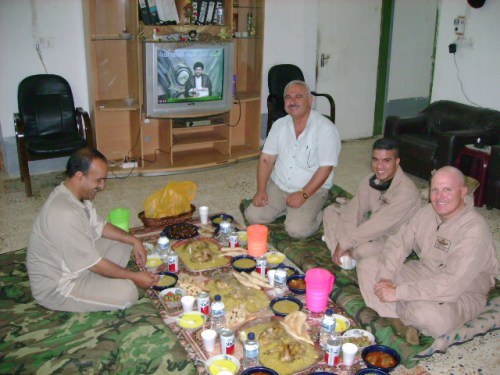
I believe but I struggle. I will listen to other points of view, including those of people that are not Christian. In fact when I was in Iraq I found that my Iraqi Muslim friends were much easier to dialogue with and have deep and respectful theological discussions with than many American Evangelicals. That was a watershed moment.  T. E. Lawrence wrote in Seven Pillars of Wisdom that “The Beduin could not look for God within him: he was too sure that he was within God.” After having been with the Bedouin I think that I understand.

This is the dialogue that has been going on in me since my return from Iraq. I know other Chaplains and other people of faith that have returned from Iraq or Afghanistan who have experienced similar feelings.

Unfortunately many do not have a safe place in their churches to heal and are afforded little time to do self care. I am concerned for our caregivers that care of veterans like me.  I wonder how many can be real in their faith community without having people run away from them as if they were radioactive, a feeling that many veterans and other trauma victims experience when they attempt to tell their story.

6095_128718117058_1466465_n

I just hope that I will be able to be there for others who are wounded and suffering as a result of what they experienced in war. T. E. Lawrence wrote: “The rare man who attains wisdom is, by the very clearness of his sight, a better guide in solving practical problems than those, more commonly the leaders of men, whose eyes are misted and minds warped by ambition for success….”

Maybe that is why I went through what I did in Iraq and after my return. If that is the case it is a good thing and I will continue to write.

That is all for tonight.  Blessings and peace my friends,

Padre Steve+

5 Comments

Filed under christian life, faith, iraq,afghanistan, Military, Pastoral Care, Tour in Iraq

Sequester Is Here and I Feel a Sermon Coming On: Padre Steve Hammers the War Profiteers and their Political and Religious Supporters

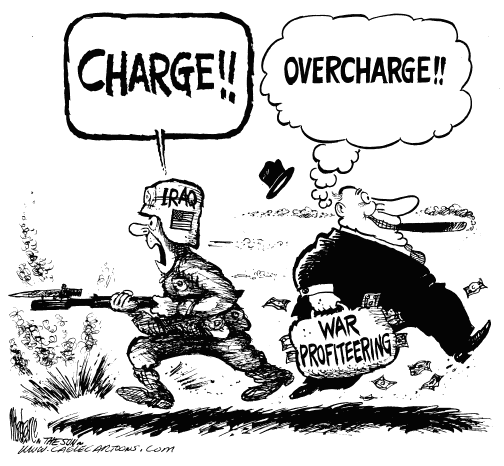
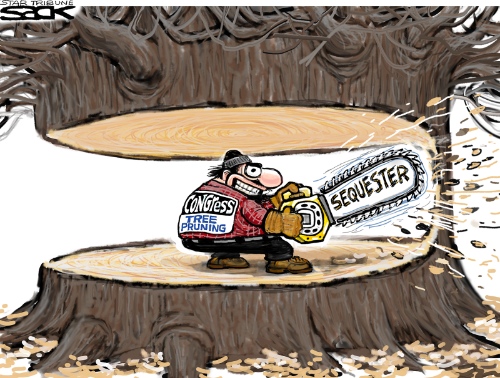
url Well the effects of the great sequester foisted on us by Congress in 2011 are finally starting to be felt. In my little part of the world they are impacting the health care needs of Marines and Sailors and their families. In fact our hospital will be having to cut over 800 mental health appointments in the next 11 weeks. Many other services will be impacted. The probability is that should this continue that the effects will be even more severe on the current active duty force as well as veterans being care for in military or VA facilities, this my friends is just the beginning.

So much for supporting the troops who are dealing with PTSD, Traumatic Brain Injury, crippling wounds that leave them dependent on pain killers, narcotics which in previous wars they would not have survived. Let’s not forget the suicide epidemic and sexual assault crisis, as well as collapsing families due to to the repeated stress of deployments and a system that is already struggling to cope with all of this. But that doesn’t really matter as long as corporate profits from war remain high and political contributions come rolling in. Thank you Congress, while you continue to get the best health care imaginable, take no cuts to your salary, and get more vacation days than anyone else employed by the government, even deciding when to not do business so you can take a paid holiday at taxpayer expense while the people that you have sent to war for the last 12 years pay the price, but I digress…

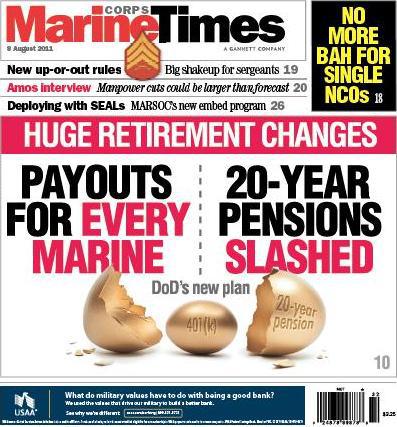
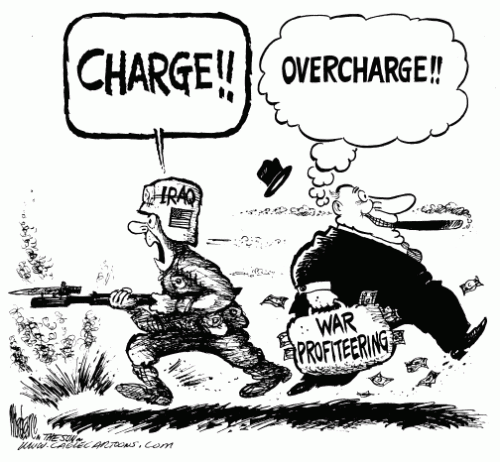
The K Street Lobbyists that advocate for all of the big defense industries whose programs and profits are getting relief from sequestration at every turn because their Congressional lackeys ensure it happens aren’t suffering. Their stocks and profits are going through the roof, even as they still sell things to the military that quite often we neither do not want or do not need. However, because the contractors and lobbyists have made sure that they located their programs in every Congressional district it takes an act of Congress that you can’t get to cut them. profiteering Meanwhile, those poor districts that only service the people of the military get hammered. Yes, all of those troop laden bases that don’t require big aerospace or shipyard investments in those southern Red States that take the hardest hits. You know, the really patriotic ones North Carolina, Texas, Georgia, Louisiana, Missouri, Kentucky and South Carolina where such bases as Fort Hood, Fort Bragg, Fort Bliss, Fort Polk, Fort Benning, Fort Knox, Fort Campbell, Fort Jackson and Camp LeJeune are located. It is they who take the biggest cuts to personnel and programs both the active duty military as well as our DOD civilian workers and personnel working for us employed by contractors. Of course these cuts affect other areas in Blue States or Swing States but I find the irony that those pushing hardest for sequester affecting military personnel and operations tend to be from those same Red States and those fighting hardest for the benefits to troops and veterans over weapons programs and industry are those that are traditionally called anti-military liberal Democrats. mct_cover_080811 Likewise those pushing for the most severe cuts in personnel and benefits are mostly men appointed to their advisory positions by Donald Rumsfeld. Men who have a decided interest in pushing for the profits of corporations that they are connected. The sad thing is that some of these men are former senior officers. (See my article The Disdain of American Business for Military Personnel and their Benefits and Follow the Money: The Real Motives behind those Seeking to Radically Change the Military Retirement System). There is more irony. Back in the early days of the Bush administration even after we went to war in Afghanistan and Iraq Defense Secretary Rumsfeld worked hard to civilianize military positions, especially medical billets. Those medical personnel billets were downsized and replaced by civilians or contractors. Of course the Federal civilians are now sequestered meaning that military personnel including wounded warriors will face even more hurdles to obtain needed medical care. Throw in the fact that even without the sequester the Veteran’s Administration system is broken and that many “conservative” politicians and their business allies want to reduce the Tricare health insurance coverage for service members, retirees and their families and it all adds up to betrayal.
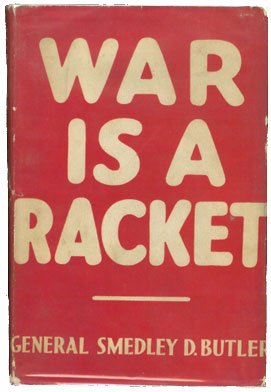
But the sad thing is that none of this is new. The irony is that Marine Corps icon and two time Medal of Honor winner Major General Smedley Butler wrote about the very same thing when he retired from the Marine Corps in 1932. He wrote a little book that I highly recommend called War is a Racket. It is a damning indictment of American politics and business. It shows just how callous, brutal and truly traitorous political and business interests can be when it comes to the trust of the nation and those that serve it in time of war. I quote the entirety of Chapter Two of Butler’s Book because rings so true today.
Who Makes the Profits


The World War, rather our brief participation in it, has cost the United States some $52,000,000,000. Figure it out. That means $400 to every American man, woman, and child. And we haven’t paid the debt yet. We are paying it, our children will pay it, and our children’s children probably still will be paying the cost of that war.
The normal profits of a business concern in the United States are six, eight, ten, and sometimes twelve percent. But war-time profits — ah! that is another matter — twenty, sixty, one hundred, three hundred, and even eighteen hundred per cent — the sky is the limit. All that traffic will bear. Uncle Sam has the money. Let’s get it.

Of course, it isn’t put that crudely in war time. It is dressed into speeches about patriotism, love of country, and “we must all put our shoulders to the wheel,” but the profits jump and leap and skyrocket — and are safely pocketed. Let’s just take a few examples.

Take our friends the du Ponts, the powder people — didn’t one of them testify before a Senate committee recently that their powder won the war? Or saved the world for democracy? Or something? How did they do in the war? They were a patriotic corporation. Well, the average earnings of the du Ponts for the period 1910 to 1914 were $6,000,000 a year. It wasn’t much, but the du Ponts managed to get along on it. Now let’s look at their average yearly profit during the war years, 1914 to 1918. Fifty-eight million dollars a year profit we find! Nearly ten times that of normal times, and the profits of normal times were pretty good. An increase in profits of more than 950 per cent.

Take one of our little steel companies that patriotically shunted aside the making of rails and girders and bridges to manufacture war materials. Well, their 1910-1914 yearly earnings averaged $6,000,000. Then came the war. And, like loyal citizens, Bethlehem Steel promptly turned to munitions making. Did their profits jump — or did they let Uncle Sam in for a bargain? Well, their 1914-1918 average was $49,000,000 a year!

Or, let’s take United States Steel. The normal earnings during the five-year period prior to the war were $105,000,000 a year. Not bad. Then along came the war and up went the profits. The average yearly profit for the period 1914-1918 was $240,000,000. Not bad. There you have some of the steel and powder earnings. Let’s look at something else. A little copper, perhaps. That always does well in war times.

Anaconda Copper for instance. Average yearly earnings during the pre-war years 1910-1914 of $10,000,000. During the war years 1914-1918 profits leaped to $34,000,000 per year. (One should read their history of strip mining massive pollution, ARCO bought them in the 1970s but was stuck with massive environmental problems, such that the company is only on the books to show the losses)

Or Utah Copper. Average of $5,000,000 per year during the 1910-1914 period. Jumped to an average of $21,000,000 yearly profits for the war period.
Let’s group these five, with three smaller companies. The total yearly average profits of the pre-war period 1910-1914 were $137,480,000. Then along came the war. The average yearly profits for this group skyrocketed to $408,300,000. A little increase in profits of approximately 200 per cent.

Does war pay? It paid them. But they aren’t the only ones. There are still others. Let’s take leather. For the three-year period before the war the total profits of Central Leather Company were $3,500,000. That was approximately $1,167,000 a year. Well, in 1916 Central Leather returned a profit of $15,000,000, a small increase of 1,100 per cent. That’s all.
The General Chemical Company (now part of Honeywell) averaged a profit for the three years before the war of a little over $800,000 a year. Came the war, and the profits jumped to $12,000,000. a leap of 1,400 per cent.

International Nickel Company — and you can’t have a war without nickel — showed an increase in profits from a mere average of $4,000,000 a year to $73,000,000 yearly. Not bad? An increase of more than 1,700 per cent.

American Sugar Refining Company (largest Sugar refining company in the world, name brand Domino Sugar) averaged $2,000,000 a year for the three years before the war. In 1916 a profit of $6,000,000 was recorded.

Listen to Senate Document No. 259. The Sixty-Fifth Congress, reporting on corporate earnings and government revenues. Considering the profits of 122 meat packers, 153 cotton manufacturers, 299 garment makers, 49 steel plants, and 340 coal producers during the war. Profits under 25 per cent were exceptional. For instance the coal companies made between 100 per cent and 7,856 per cent on their capital stock during the war. The Chicago packers doubled and tripled their earnings.
And let us not forget the bankers who financed the great war. If anyone had the cream of the profits it was the bankers. Being partnerships rather than incorporated organizations, they do not have to report to stockholders. And their profits were as secret as they were immense. How the bankers made their millions and their billions I do not know, because those little secrets never become public — even before a Senate investigatory body.

But here’s how some of the other patriotic industrialists and speculators chiseled their way into war profits.
Take the shoe people. They like war. It brings business with abnormal profits. They made huge profits on sales abroad to our allies. Perhaps, like the munitions manufacturers and armament makers, they also sold to the enemy. For a dollar is a dollar whether it comes from Germany or from France. But they did well by Uncle Sam too. For instance, they sold Uncle Sam 35,000,000 pairs of hobnailed service shoes. There were 4,000,000 soldiers. Eight pairs, and more, to a soldier. My regiment during the war had only one pair to a soldier. Some of these shoes probably are still in existence. They were good shoes. But when the war was over Uncle Sam has a matter of 25,000,000 pairs left over. Bought — and paid for. Profits recorded and pocketed.

There was still lots of leather left. So the leather people sold your Uncle Sam hundreds of thousands of McClellan saddles for the cavalry. But there wasn’t any American cavalry overseas! Somebody had to get rid of this leather, however. Somebody had to make a profit in it — so we had a lot of McClellan saddles. And we probably have those yet.
Also somebody had a lot of mosquito netting. They sold your Uncle Sam 20,000,000 mosquito nets for the use of the soldiers overseas. I suppose the boys were expected to put it over them as they tried to sleep in muddy trenches — one hand scratching cooties on their backs and the other making passes at scurrying rats. Well, not one of these mosquito nets ever got to France!

Anyhow, these thoughtful manufacturers wanted to make sure that no soldier would be without his mosquito net, so 40,000,000 additional yards of mosquito netting were sold to Uncle Sam.

There were pretty good profits in mosquito netting in those days, even if there were no mosquitoes in France. I suppose, if the war had lasted just a little longer, the enterprising mosquito netting manufacturers would have sold your Uncle Sam a couple of consignments of mosquitoes to plant in France so that more mosquito netting would be in order.
Airplane and engine manufacturers felt they, too, should get their just profits out of this war. Why not? Everybody else was getting theirs. So $1,000,000,000 — count them if you live long enough — was spent by Uncle Sam in building airplane engines that never left the ground! Not one plane, or motor, out of the billion dollars worth ordered, ever got into a battle in France. Just the same the manufacturers made their little profit of 30, 100, or perhaps 300 per cent.

Undershirts for soldiers cost 14¢ [cents] to make and uncle Sam paid 30¢ to 40¢ each for them — a nice little profit for the undershirt manufacturer. And the stocking manufacturer and the uniform manufacturers and the cap manufacturers and the steel helmet manufacturers — all got theirs.

Why, when the war was over some 4,000,000 sets of equipment — knapsacks and the things that go to fill them — crammed warehouses on this side. Now they are being scrapped because the regulations have changed the contents. But the manufacturers collected their wartime profits on them — and they will do it all over again the next time.
There were lots of brilliant ideas for profit making during the war.

One very versatile patriot sold Uncle Sam twelve dozen 48-inch wrenches. Oh, they were very nice wrenches. The only trouble was that there was only one nut ever made that was large enough for these wrenches. That is the one that holds the turbines at Niagara Falls. Well, after Uncle Sam had bought them and the manufacturer had pocketed the profit, the wrenches were put on freight cars and shunted all around the United States in an effort to find a use for them. When the Armistice was signed it was indeed a sad blow to the wrench manufacturer. He was just about to make some nuts to fit the wrenches. Then he planned to sell these, too, to your Uncle Sam.

Still another had the brilliant idea that colonels shouldn’t ride in automobiles, nor should they even ride on horseback. One has probably seen a picture of Andy Jackson riding in a buckboard. Well, some 6,000 buckboards were sold to Uncle Sam for the use of colonels! Not one of them was used. But the buckboard manufacturer got his war profit.
The shipbuilders felt they should come in on some of it, too. They built a lot of ships that made a lot of profit. More than $3,000,000,000 worth. Some of the ships were all right. But $635,000,000 worth of them were made of wood and wouldn’t float! The seams opened up — and they sank. We paid for them, though. And somebody pocketed the profits.
It has been estimated by statisticians and economists and researchers that the war cost your Uncle Sam $52,000,000,000. Of this sum, $39,000,000,000 was expended in the actual war itself. This expenditure yielded $16,000,000,000 in profits. That is how the 21,000 billionaires and millionaires got that way. This $16,000,000,000 profits is not to be sneezed at. It is quite a tidy sum. And it went to a very few.

The Senate (Nye) committee probe of the munitions industry and its wartime profits, despite its sensational disclosures, hardly has scratched the surface.
Even so, it has had some effect. The State Department has been studying “for some time” methods of keeping out of war. The War Department suddenly decides it has a wonderful plan to spring. The Administration names a committee — with the War and Navy Departments ably represented under the chairmanship of a Wall Street speculator — to limit profits in war time. To what extent isn’t suggested. Hmmm. Possibly the profits of 300 and 600 and 1,600 per cent of those who turned blood into gold in the World War would be limited to some smaller figure.

Apparently, however, the plan does not call for any limitation of losses — that is, the losses of those who fight the war. As far as I have been able to ascertain there is nothing in the scheme to limit a soldier to the loss of but one eye, or one arm, or to limit his wounds to one or two or three. Or to limit the loss of life. There is nothing in this scheme, apparently, that says not more than 12 per cent of a regiment shall be wounded in battle, or that not more than 7 per cent in a division shall be killed.

Of course, the committee cannot be bothered with such trifling matters.

But still even so the real costs of the actions of the vultures of business and their political lackeys in both major parties impact military personnel and their families and devastate the nation as a whole. Butler wrote: “What is the cost of war? what is the bill? Major General Smedley Butler wrote: “This bill renders a horrible accounting. Newly placed gravestones. Mangled bodies. Shattered minds. Broken hearts and homes. Economic instability. Depression and all of its attendant miseries. Back -breaking taxation for generations and generations. For a great many years as a soldier I had a suspicion that war was a racket; not only until I retired to civilian life did I fully realize it….” warracket1-1 The sad thing is that the “racket” that Butler wrote about hasn’t changed an iota. In fact it has gotten worse because the profiteers and politicians have shuffed off the actual war fighting on a tiny part of the population, barely half a percent. They don’t even need to draft people to serve in war anymore and risk a political blowback.
It’s really quite a system, the profiteers get the profits and political support and have almost no risk because it is other people’s money, you know, the taxpayers money and when the cuts come they still make a profit while the military personnel get thrown under the bus. It is wonderful business but really quite immoral even if they have the blessing of the political preachers.

Butler talked about those guys too. Butler wrote: “So vicious was this war propaganda that even God was brought into it. With few exceptions our clergymen joined in the clamor to kill, kill, kill. To kill Germans. God is on our side…it is his will that the Germans be killed.”

Substitute “Islamists” for “Germans” and the message from the Right Wing Preachers is the same. Not very Jesus like, but hey, the peace and love stuff doesn’t rake in the big bucks for the big politically driven “ministries.” Get people angry, sow fear and distrust, convince people that they are threatened and even civilized “Christian” people will commit genocide, all in the name of Jesus.

Enough for tonight.

Peace Padre Steve+

2 Comments

Filed under Military, national security, News and current events, Political Commentary

The Uneasy Alliance: The Army and Government during the German Revolution and Civil War 1919-1922

Thinking of the relationship of the Egyptian Army to its government I am always brought back to the influence of the German General Staff and the Reichswehr to the Weimar government in the days following the abdication of Kaiser Wilhelm II and the early days of the Weimar Republic. The relationship is somewhat similar. At least interesting to think about. Peace, Padre Steve+

padresteve's avatarThe Inglorius Padre Steve's World

Introduction

bundesarchiv_bild_146-1970-051-65_kapp-putsch_berlinThe Kapp Putsch

The German Revolution of 1919 and civil war is important for those who study highly developed states when they enter a period of social and political upheaval. Often such upheavals occur following military defeats or economic crisis that cause the society to question or even overthrow the established order.  The end of Imperial Germany and the establishment of the Weimar Republic on November 9th 1918 is a prime example.  Following the declaration of the Republic the Majority Socialists who had assumed power had no military force of any caliber to support it. The Army had melted away following the end of the war and the units which remained were unreliable and heavily infiltrated by Soviet style “workers and soldiers councils.”

Chaos ruled the streets, Communists and Independent Socialists of The situation being chaotic the Majority Socialists under the leadership of Friedrich Ebert joined forces with…

View original post 6,046 more words

Leave a comment

Filed under Loose thoughts and musings

The More Things Change and What You Leave Behind…

images-50

“It’s like I said. The more things change, the more they stay the same.” Quark (the final line of Star Trek Deep Space Nine)

Today has been one of those weird, somewhat challenging, a bit difficult on an emotional level and at the same time rewarding days. It was a day that involved dealing with people that I care for, that work for me that within a bit over a month I will be leaving. Men and women that have impacted my life and from what I understand will miss me, as one said “my quirkiness and all.”

This happened to be the second day of the sequester which will impact me and my staff and will ensure that my last month in my current billet will be challenging and meaningful. What I hope is that the things that I am able to do in the next month will not only survive me but help provide the resources, structure and environment to allow my successor to take things to the next level in providing spiritual care for the diverse population of Sailors, Marines, their families, veterans, retirees and their families, as well as our civilian employees.

You see ultimately, the show here will go on without me and the best that I can do besides caring for those in my charing in the here and now is to help ensure that I leave something behind that others can build on. That too is something that you learn in this military life, that what you do is not ultimately about you.  It is about service to the nation and to the people that you have the privilege to serve alongside no matter what the duty station.

When one lives their life in the military these transitions happen all too often. In a sense our lives in the military are very transitory, maybe more so than many would be comfortable with. For relatively short periods of our lives, maybe months, or a few years or in the case of deployments in combat zones sometimes days, hours or even minutes. But in those transitory times our lives can be bound together in ways unimagined by most people that do not share this military life or experience.

My regular readers know that I grew up in this environment as a child and that as an adult I have always felt the strange call to serve. What I find amazing is that after nearly 32 years of service between the Army and the Navy, active, reserve and National Guard around the world in peace and war is that I am still serving and will be, Lord willing for a number of years more and truthfully God only knows when this rather lengthly chapter of my life ends and another begins.

In light of the events of the past few days, the situations that I am dealing with at work, what I am trying to wrap up even as next month promises to be busy I found it fascinating that I was completing the viewing of the final episode of Star Trek Deep Space Nine called What You Leave Behind. I found the title of the episode to be serendipitous with my recent experiences and feelings about my impending transfer.

Despite how much I have moved around in life I find that I do not do “goodbyes” well. I like to imagine that I will see people again and I do, as many of the people that I have gone to school with, served with in the military or in the ministry together know I am one that treasures relationships. Heck, I look on my Facebook page there are people from almost every era of my life, many who I have served alongside dating to the very beginning of my military career. There are many others that I would dearly love to find and meet again.

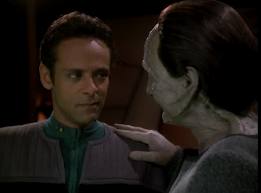
In one of the final scenes of the episode Dr Bashir and the Cardassian tailor and former spy Garak part ways after a devastated Cardassia is liberated from the Dominion. Bashir as is typical of many of us is attempting to off some consolation to his friend who is grieving what has happened to his planet.

images-51

BASHIR: You and I both know that the Cardassians are a strong people. They’ll survive. Cardassia will survive. 

GARAK: Please, Doctor. Spare me your insufferable Federation optimism. Of course it will survive, but as not the Cardassia I knew. We had a rich and ancient culture. Our literature, music, art were second to none. And now, so much of it is lost. So many of our best people, our most gifted minds.
BASHIR: I’m sorry, Garak. I didn’t mean
GARAK: Oh, it’s quite all right, Doctor. You’ve been such a good friend. I’m going to miss our lunches together.
BASHIR: I’m sure we’ll see each other again.
GARAK: I’d like to think so, but one can never say. We live in uncertain times.

As I approach my last month before my transfer I will certainly be experiencing many feelings that tend to bring a certain amount of sentimental melancholy. I will miss the people I have come to know here even as I rejoice in being able to return home and live with my wife Judy again full time.

There are times that I feel like Garak and Bashir. I like to believe, I like to be optimistic like Bashir, but there is a certain amount of sometimes cynical realism that pervades my thoughts, like Garak. I can understand both men. But as much as I understand them I also understand the military and like Quark have to admit “that the more things change the more they stay the same.”

But regardless of that, I can say about those that I have the the honor of working with, like Captain Sisko in that last episode of Deep Space Nine: “This may be the last time we’re all together, but no matter what the future holds, no matter how far we travel, a part of us, a very important part, will always remain here…”

Peace

Padre Steve+

Leave a comment

Filed under leadership, Military, philosophy, remembering friends, star trek

The Coming Egyptian Civil War: Disaster Beckons

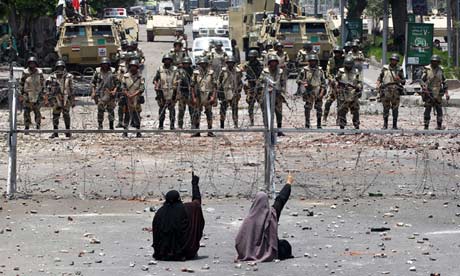
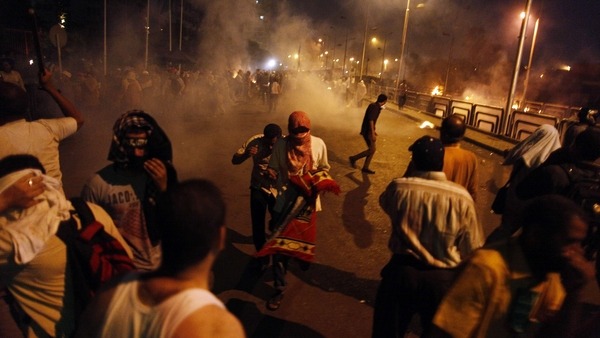
Cairo protesters

History has a strange way of playing itself out in the lives of individuals, nations and peoples. I wish that I was wrong bit as I look at the situation in Egypt today I see a situation which is as fluid as the shifting sands of the desert and as dangerous as the legendary Biblical plagues of the time of Moses.

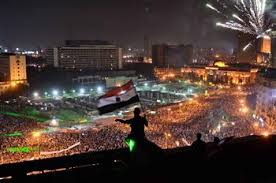
When the dictatorship of Hosni Mubarak was overthrow by the military in 2011 it was hoped by many that Egypt would defy he odds of history, not Islamic or Egyptian history, but human history in that a revolution of a people without their own history of freedom and representative democracy seldom in its initial stages produces freedom and representative democracy.

images-49

In Europe alone Britain, France, Spain, Germany and Russia have endured bloody civil wars following the overthrow of autocratic regimes. Likewise the same is true of the history of South America, Africa, Asia and the Middle East the history of most successful oppressed peoples who do not have practical experience in democratic government tend to fight things out and even endure more oppressive governments before eventually, often at great cost to themselves and their neighbors achieve peaceful, stable and representative democratic rule.

egypt-coup-morsi-3_2609447b

Egypt has great potential, many of its people have exactly in temperament, education and wisdom what is needed to become a leading democracy in the region. That being said there are many obstacles to this. First is the longstanding tension between the radical Islamists of the Moslem Brotherhood, secularist military leaders, Social Democrats and others. Second the underlying religious and social tensions between rival Islamic denominations as well as Coptic Christians with generations of internecine bloodshed being played against one another by outside powers, the Ottoman Turks, the French, the British and even to a lesser extent the Soviets and Americans.

571825-Abdel_Fattah_alSisiAFP-1372840335-993-640x480

The fact is that Egypt as much as I do not want it to admit is that I believe that there is little that can save Egypt from a bloody civil war with unknown outcomes. The only thing that is sure is that thousands, possibly hundreds of thousands of Egyptians will die before the end of it and that Egypt’s instability will exponentially increase the violence and instability of the region.

egypt-morsi_2608190b

I think the best outcome is that a coalition of Social Democrats and militarists will cobble together enough of a government to stabilize the situation, but it will not be without much bloodshed. It will likely be like the early days of Weimar Germany when an unlikely coalition of military leaders and Social Democrats fought a Civil War against the extreme Soviet style Communists and then resisted Right wing extremist putsch attempts. Unfortunately that democracy died as the economies of the world melted down and the cost of reparations levied by Allied Powers at Versailles and radicals of the extreme Right and Left eventually leaving Hitler in power. It took another World War to eventually end that tyranny.

Muslim-Brotherhood-Clash-Getty

I guess that a best prospect is pretty much as bad as the worst prospect.

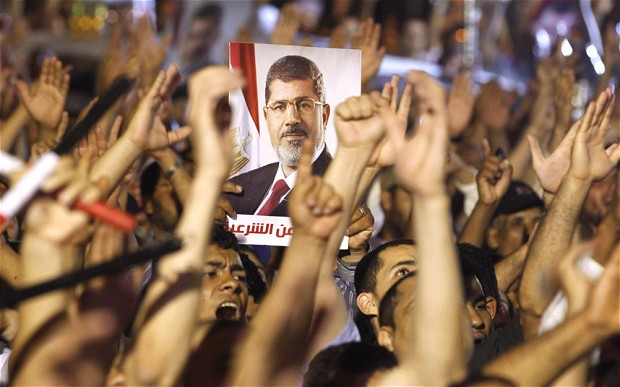
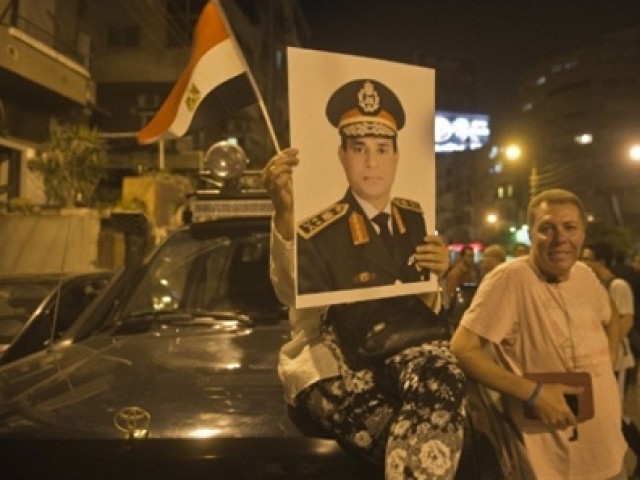
The ouster of the Moslem Brotherhood’s elected President Mohammed Morsi by the Egyptian military follow the protests of the vast majority of the Egyptian electorate is as much of a bad thing as it is a good thing. Morsi was to be sure democratically elected but he governed as an autocrat with increasing dictatorial tendencies. The reaction of the people and the Army was a natural reaction, as one Egyptian boy put it we did not overthrow a dictatorship to replace it with a dictatorial theocracy.  In effect both sides killed the democratic process, Morsi and the Moslem Brotherhood for the sake of Islamic religious power, the military for the sake of their place in society, stability and control and the protestors and democrats the sake of democracy and freedom.

EGYPT-POLITICS-UNREST-ARMY

The situation is much like the days following the the Army High Command’s forced abdication of Kaiser Wilhelm II, when in the face of a Communist revolution the German military establishment represented by Field Marshal Paul Von Hindenburg wrote to the new Socialist Chancellor Friedrich Ebert:

“I am convinced that only the following measures can help us overcome the present difficulties: 

  1. Summoning of the National Assembly in the course of December.
  2. Until then, or until the decision of the National Assembly can be carried out, conduct of the administration solely by the government and legitimate administrative organs. 
  3. So as to fulfill the justified wishes of the working class… qualified people of working class origin should be attached to the administrative authorities in an advisory capacity….
  4. The security service must be solely in the hands of the legal police organs and of the armed forces.
  5. Safeguarding of the orders of government by a reliable police force and, after the restoration of discipline, by the army.   

   In your hands lies the fate of the German nation. It will depend on your decision whether the German nation will rise once more. I am persuaded, and with me the whole army, to support you without any reservation…” (Letter from Field Marshal Hindenburg, likely written by General Groener to Chancellor Ebert December 8th 1918. In The Reichswehr and Politics 1918-1933 by F.L. Carsten, Oxford University Press, London 1966 pp.13-14)

The unfortunate thing is that no one will be happy until they achieve their goals and that will probably not only mean bloodshed, but a full scale civil war. No matter what the talking heads and experts say this has little chance of ending well. Centuries of injustice, dictatorship, colonialism, religious intolerance and economic inequities argue against other eventualities.

n_50238_4

The fact of the matter is that whether or not advocates of democracy like it at the present time no elected government in Egypt can survive without the support of the military. Like Weimar Germany, the fate of Egypt’s democracy will in large part lie in the hands of a military that at its heart is not democratic. It is a conundrum that we would rather not see, but it is reality.

All that being said there is always hope that things can turn out differently and we had better hope, for the people of Egypt, the region and the world that it does, because an Egyptian Civil War now will be disastrous.

Peace

Padre Steve+

1 Comment

Filed under Foreign Policy, History, middle east, national security

It’s What You Learn After You Know It All That Counts: Thoughts on the Occasion of 17th Anniversary of Being Ordained a Priest

163017_10150113444907059_3944470_n

“It’s what you learn after you know it all that counts.” Earl Weaver

It is hard to believe that it has been 17 years since I was ordained to the Priesthood. A lot has happened since then, much struggle and difficulty but also many blessings, which I think far outweigh the struggles.

I find that over the years I have matured. As a young Priest my goal was to be a great apologist for the faith using theology and history to drive home the points that I wanted to make, often in quite bombastic terms. A dear friend, an Army Chaplain who was once my enlisted Chaplain Assistant in the Army said that I was like a Catholic “Rush Limbaugh.” At the time I wore the moniker with pride, but over the years I see that no mater how sincere my faith, beliefs and arguments were that they were often more a reflection of my own insecurity and need to show that I and my former church were as valid and relevant as the Roman Catholics, Orthodox or Anglicans and certainly much more than Protestants not in Apostolic succession.

Looking back all these years later I have to admit that was quite arrogant. It is from what I understand a common failing in young Priests, Ministers or Rabbis as well as Navy Ensigns, and Army, Marine Corps and Air Force Second Lieutenants. But sometimes, not always in some cases, age and experience sometimes kick the hell out of arrogance and make you a better minister or military officer.

Since I have been through various renditions of the “young minister” or “young officer” phase of life, and each time had my arrogant tendencies exposed and learned that I knew a whole lost less than I thought that I knew. I guess that Earl Weaver was right, it is “what you learn after you know it all that counts.”

My faith journey since being ordained as a Priest has been full of ups and downs. I figure that between deployments, field exercises, underway periods aboard ship, schools and geographic bachelor assignments, not including the numerous overnights as a hospital chaplain while stationed at home that since July of 1996 I have spent about ten of those 17 years apart from my wife Judy. Next month I return home to Virginia to be with her and take a teaching assignment at the Joint Forces Staff College and with any luck and God willing I will spent the next three years with her and our dogs, Molly and Minnie while teaching, writing and serving as the Chaplain at the small chapel that is part of the Staff College. As my Iraqi friends say “Inshallah.”

Likewise my faith journey has been fascinating when I look back on it. Back in the early days I had an absolute certainty about my beliefs. Those beliefs would be shaken by experiences at war and in my former church. Those experiences were the bombs that blew up my theological playground and I really haven’t been the same since and for that I am actually glad.

The experiences of being used and abused by several bishops of my former church made me wary in a way that I had not been before about those in authority. Coincidentally those men are no longer part of that church having used it for their own gain and through their machinations ruined many lives and destroyed many parishes. Those men at various times forbid me from contact with their diocesan priests, banned me from writing and one finally told me to leave the church. They were not good examples and none are associated with that Church now. Thankfully there are many people, clergy and laity alike in my former church who are doing great things and attempting to put the pieces back together of what the men that mistreated me, and others like them did to that church.

The result of being asked to leave was being received into an an Old Catholic Denomination with a very similar ministry model and ethos to the Old Catholic Church of the Netherlands. I am blessed for nearly the past three years to be a Priest in the Apostolic Catholic Orthodox Church. It is where I need to be and a church that embodies what I have come to believe.

Over time my ecclesiology (doctrine of the Church) went from a monarchical monstrosity to a belief that true Apostolic authority is not just a matter of having a correct or valid apostolic succession but also is bound up in the whole people of God, that consensus, collegiality and charity are of the essence in our relationships as Christians as well as our witness to the world. The prayer of Jesus that his people “may be one” is part of my daily life and personal prayer.

n671902058_1153804_6925

Back in May of 2011 I wrote: “I think a lot of this is simply that many of us clergy types become so invested in “defending” what we believe that we forget that the call of Jesus is to care for those that are the least, the lost and the lonely. Without getting preachy it seems to me that Jesus preferred to be with such people and often castigated the clergy of his day for doing exactly what we do.  The whole “woe to you Scribes and Pharisees…” passage should send chills up any minister’s spine because we are often no different than them.”

Likewise my experiences in war and my return from Iraq with a severe case of chronic PTSD also shook the core of my faith. For almost two years I have to admit that for all practical purposes that I was an Agnostic who was praying that God was still around. It took some time before faith returned and when it did it was different. It was questioning, not absolutist and much more willing to be accepting of those different than me and willing to show grace to those whose faith, lifestyle or beliefs that I would have treated much more judgmentally or harshly as new Priest.

One of the authors that helped my through the most difficult of times was the late Father Andrew Greeley whose Bishop Blackie Ryan novels I began reading in Iraq and were about the only spiritual reading that I had during the darkest, most difficult at painful days of my life. One thing that Greeley said which was something that I have come to believe was:  “I don’t think Jesus was an exclusivist. He said, and we believe, that He is the unique representation of God in the world. But that doesn’t mean this is the only way God can work.” (The Life of Meaning: Reflections on Faith, Doubt, and Repairing the World Edited by Bob Abernathy) 

Such an understanding has impacted my ministry as a Priest and Navy Chaplain since my return from Iraq. I have come to believe that the high pressure manner in which many American Christians market their faith under the misnomer of “evangelism” is doing more damage than good and is actually something that the early Church would not have recognized. Greeley put it well:

“People came into the Church in the Roman Empire because the Church was so good — Catholics were so good to one another, and they were so good to pagans, too. High-pressure evangelization strikes me as an attempt to deprive people of their freedom of choice.”

But apart from that I rediscovered my humanity during those dark days and it is something that helps me when I encounter people who are suffering, in crisis, ostracized or struggling and questioning God and their faith. I have learned through my own struggle and despair that simply being preached at told that I didn’t have enough faith, to pray more, read my Bible more or give more money to the church (the latter is quite a popular American way of getting God’s favor) actually drove me away from the grace of God and made me resentful of those that preached at me.

As such I have changed my ministry model. Jesus was about town and hobnobbing with all the wrong kinds of people, often offending both the religious establishment and his own disciples. As a Priest I began to realize while deployed on a Guided Missile Cruiser and in Iraq that I was too protective, much like the post Apostolic era Christians of the Eucharist, which is at the center of my faith. I realize now that Jesus both actively shared bread and wine with those considered to be “unclean” or sinners and never turned away those who sought his presence.

barmherzigkeit

I also realize that anything I do as a Priest, be as simple as an encounter with a person in a hallway or parting lot, with friends at a ball game or bar, at the bedside of a dying man or woman, sitting with the family of a young man one woman that has taken their life, holding a stillborn baby with a grieving mother, administering the Sacrament of Reconciliation, Baptism or the Eucharist that what matters is being being authentic and showing the love of God to people.

One of the most powerful things that I remember reading from Greeley was in his final Bishop Blackie Ryan novel. In it Bishop Blackie notes:

“Every sacramental encounter is an evangelical occasion. A smile warm and happy is sufficient. If people return to the pews with a smile, it’s been a good day for them. If the priest smiles after the exchanges of grace, it may be the only good experience of the week.”  (Andrew Greeley: The Archbishop in Andalusia p.77)

Seventeen years. It doesn’t seem that long. I assume that I still have much to learn.

Peace

Padre Steve+

5 Comments

Filed under christian life, faith, Military, Pastoral Care

To Iraq and Back: Prelude: I was Born for This

295_27076757058_7361_n-1

Me in 1982 

This is the first actual chapter in my series “To Iraq and Back: Padre Steve’s War and Return.” I wrote last night that I was going to be doing this and I figure that there is no time like the present to start. Just about 6 years ago I was preparing to deploy to Iraq as an individual augment supporting the US Marine and Army advisors to Iraqi Army and Security Forces in Al Anbar Province. After 6 years I think I can finally complete my literary account of my experiences in Iraq, my return and subsequent struggle with Post Traumatic Stress Syndrome (PTSD). 

Though I am not certain, I do think that many of us were born for what we feel called to do. As bit of a theologian I can honestly say that I am not a Calvinist or strict Augustinian who believes that we are simply playing out some predetermined role or fate on earth. Neither am I a fatalist but I really do feel, that whether it was something God ordained, something genetic or a product of my environment growing up, that I was born to do what I do.

As one who has some training as well in psychology and pastoral care I also understand that the human mind is a very complicated lump of gray matter. I know that we as human being as products of our genetic make up, our upbringing and environment, education, spiritual formation, relationships ad infinitum, ad nauseum.

So I know what I believe about my calling to serve in the military and the priestly vocation cannot be scientifically proven. That being said, I believe and that belief in my calling survived even in my times of unbelief.  A paradox for sure, belief and unbelief coexisting at the same time in the same person, but Father Andrew Greeley said it well in his novel The Bishop and the Beggar Girl of St Germain: “Most priests, if they have any sense or any imagination, wonder if they truly believe all the things they preach. Like Jean-Claude they both believe and not believe at the same time.”

My tour in Iraq in a sense was the culmination of my calling, a call that I felt at a very early age, to serve in the military and later to be called to serve as a Priest in the military. I have long figured that to have served a full career in the military in time of war and not to have gone forward into danger to do what I have trained all my life to do.

I have a hard time not remembering when I wanted to serve in the military and serve in combat. That may sound strange but for some reason, even though I was not encouraged to follow this path it was something that growing up as the son of a Navy Chief Petty Officer who served at the Battle of An Loc in the Vietnam War that I felt was my destiny. Maybe it is faith, maybe it is some sort of mysticism or even fatalism, but I do believe that for good or for bad that I am doing what I was born to do.

George Patton commented: “A man must know his destiny. if he does not recognize it, then he is lost. By this I mean, once, twice, or at the very most, three times, fate will reach out and tap a man on the shoulder. if he has the imagination, he will turn around and fate will point out to him what fork in the road he should take, if he has the guts, he will take it.”

I am sure that my family and my earliest friends can testify to my love of all things military and the nearly romantic calling that soldiering had on my life. At nearly every turn in life I have responded to the military calling by volunteering for assignments that would place me closest to the action. There were times that my wishes were thwarted and my desires placed on hold, but they never died.

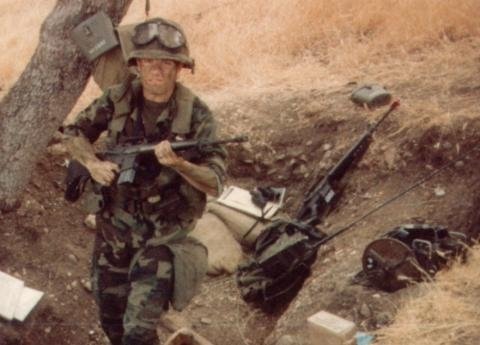
I served on the Fulda Gap in the Cold War and missed serving in ht First Iraq War because I had left active duty to attend seminary and my National Guard unit just missed being mobilized. I did support the Bosnia operation as a mobilized Army Reserve Major and during that mobilized period of service was told that I was not a place for me in the Regular Army. However, a few months after my last active reserve posting I was given the chance to apply for active duty as a Navy Chaplain. Less than 7 weeks after the first talk with the Navy I resigned my Army Reserve commission as a Major and accepted a lower rank, that of a Navy Lieutenant to enter active duty in February 1999.

The Marine unit that I was serving with in 1999 came very close to being sent to the Kosovo crisis and had Slobodan Milosevic not made a last minute peace deal after a 70 day air campaign I am sure I would have ended up there.

555306_316970661755579_1118848704_n

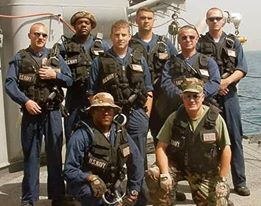
With my Boarding Team, April 2002 aboard USS Hue City

However it was 9-11-2001 that changed everything. I was in Camp LeJeune North Carolina with the 2nd Marine Division when the hijacked aircraft hit the Twin Towers and the Pentagon. Shortly after those attacks I was transferred to the USS Hue City, a Aegis Guided Missile Cruiser. My first wartime deployment was in 2002 aboard Hue City supporting Operation Enduring Freedom and Southern Watch. On that deployment I served as an advisor to one of our boarding teams and took part in over 70 boarding party operations against Iraqi and other oil smugglers who were breaking the United Nations oil sanctions against Iraq.

We were in the yards when Operation Iraqi Freedom began and in the fall of 2003 I was assigned to the Marine Security Force Battalion. In my time at Security Forces I travelled around the world and often to the Middle East and Europe, but not to Iraq or Afghanistan. Because the elements that we sent to Iraq were too small to rate an organic chaplain I did not deploy with them, though I heard about the experiences of many of those Marines and Navy Corpsmen as they came to me for counsel when they came home.

Despite having spent time of the boarding teams and having deployed numerous other places in my career there were times that I felt like William Tecumseh Sherman, who missed the war with Mexico having been sent to California who wrote: “I have felt tempted to send my resignation to Washington and I really feel ashamed to wear epaulettes after having passed through a war without smelling gun-powder.”

In October 2006 I was assigned to Navy EOD Group Two and shortly thereafter my life which had been very active with more time spent away from home than with my wife since my call up in 1996 to support the Bosnia operation became much more complicated. While at EOD I was supporting very skilled sailors most of whom had deployed multiple times in the always dangerous work of defusing and defending against Improvised Explosive Devices, or IEDs, the signature weapon of the wars in Iraq and Afghanistan. I also was called to support sailors either preparing to go to Iraq or Afghanistan as Individual Augments or those that were returning home.  As I heard their stories, especially those serving as advisors with Iraqis or Afghani soldiers I knew that was what I needed to be doing.

In early 2007 a call went out seeking chaplains to serve in Iraq and Afghanistan in various roles that were not supported by unit chaplains. With the permission of my supervisory Chaplain, Captain Deborah McGuire who was at the Navy Expeditionary Combat Command I put my name in the hat and was notified that I would be sent overseas. I explained to Judy that despite her misgivings that I felt that Nelson and I were the most ready, qualified and prepared team to take on the mission. Needless to say that did not assuage her fears and concerns and an emotional distance began to grow between us.

Initially we thought it would be sent to Iraq, then it was Afghanistan, and finally the first week of June 2007 the orders came down for Iraq. My faithful assistant, Religious Program Specialist Nelson Lebron would go with me. It was the first time that an existing Religious Ministry Team had been tagged to take on an independent mission of this nature.

Our orders were to support Marine Corps and Army advisors in Al Anbar Province, a mission that was new because when the advisory teams were first formed no one thought about organic religious or spiritual support. It was assumed that chaplains from nearby units would suffice but the Army and Marines learned that the assumption was wrong and that the advisors needed their own chaplain support.

The next few weeks would be a whirlwind as we prepared to go. They would be weeks that were trying both individually and for our families and neither of us would realize how much we would be impacted by our time in Iraq, but in June of 2007 that was still a part of our yet uncharted future.

Peace

Padre Steve+

Next: The Preparations


Leave a comment

Filed under PTSD, to iraq and back, Tour in Iraq