Yearly Archives: 2013

The Story of Longinus the Centurion: A Visit to Death Row

MLPPT_CenturionCross_1

This is the third chapter of a prequel to my series on Longinus the Centurion, who according to tradition was the Centurion in charge of the execution of Jesus. The Previous chapters as well as the original series can be found at the links supplied below. 

A Centurion’s Sunday in Jerusalem: The Story of Longinus

The Story of Longinus the Centurion: A Meeting of Friends

Good Friday Special: The Long Good Friday of Longinus the Centurion

Holy Saturday Special: A Centurion Reflects on a Days Work

Easter Special: Trouble in River City the Centurion’s Easter: An Empty Tomb, Duplicitous Politicians and a Lingering Question

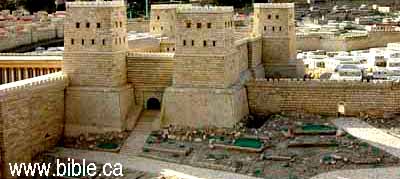
The next morning a messenger knocked on the door to Longinus’s quarters in Fortress Antonia. He told Longinus that Pilate wanted to speak to him and to report as soon as possible to Pilate’s headquarters in the fortress.
bible-archeology-jerusalem-temple-mount-antonia-fortress

Longinus, who had been discussing the day with Decius in order to ensure his soldiers were ready for any contingency but also conduct some training was bothered by the request. He had discussed the situation in the city and about Jesus in particular the previous afternoon with Pilate and figured that unless there was some sort of incident that he would meet again later in the day to discuss the latest events.

Instead Longinus, was being ordered to report to Pilate again and it was interfering with his conduct of military business. Longinus hated dealing with politicians and diplomats and though he respected Pilate who he felt to be as decent of man as any politically appointed diplomat as any Pilate was still not a military man. He did not always understand military matters.

Longinus looked at the messenger and asked: “Tell me. what would the Governor need of me at this hour?”

“Centurion,” the messenger replied. I was only told to have you report as soon as possible.”

Bothered by the lack of detail Longinus told the messenger to go and tell Pilate that he would be there shortly. He then looked at Decius, and shook his head. “My friend, I am afraid that I will be delayed. Take care to conduct today’s training and be ready in case any trouble arises.” With that he put on his armored breastplate and cape and left the room.

When he arrived at Pilate’s headquarters the Governor greeted him cheerfully. “Centurion, it is good to see you.”

“Likewise sir…” Pilate stopped him before he could continue.

“I don’t suppose that you know why I called you here do you?” Pilate asked, irritating Longinus who feeling even more irritated by Pilate’s levity kept his feelings to his self and simple replied: “No my Lord, your messenger only told me to report here, he did not give me a reason.”

Pilate smiled. “It was with good reason, had he done so I am sure that you, like any other Centurion in the province would have found some “pressing military duty,” isn’t that what you call it? to avoid coming here.”  He paused for just a moment and before Longinus could respond continued: “Of course I know the answer, you need not say anything and I suppose if I was in your position that I would feel the same way.”

Longinus knew this was the case and had no answer to Pilate who continued.

“Centurion, this week will unfortunately be a week where we must conduct some rather unpleasant business, less than soldierly business but necessary.” Pilate paused again and motioned for Longinus to take a seat at his desk and Longinus did so, looking about the room and noticing Pilate’s civilian staff and several soldiers assigned as his personal bodyguard.

Longinus, decided to hasten the length of the visit and asked: “My Lord, may I ask why I am here? After all I do have pressing military business to attend to.”

Pilate immediately caught the sarcasm in Longinus’s words and smiled. “Centurion, you amuse me, because I know how you military types think. You see I may not have served with a Legion, but I have served with enough officers to know that you would rather be fighting the enemies of the Empire than doing police work, but we are in Palestine, not the Teutonic Forrest.”

Longinus stared back at Pilate and said nothing.

“Centurion, this week we will dispense justice to three Jewish prisoners. Men of your unit will conduct the crucifixions this Friday.”

“Yes my Lord.” Longinus’s muted response spoke more than any protest could.

Pilate continued. “Centurion, I want you to see the prisoners and in doing so know in your heart why this must be done. These men are violent criminals, and one of them is the infamous Bar-Abbas.”  Longinus looked at Pilate, and asked “the insurgent who has attacked and killed our soldiers and officials?”

Pilate nodded and replied “so you know why this is important, in an environment as volatile as Judea we cannot let a man like this remain unpunished, it would only encourage more men to rise up like him.” Pilate smiled and continued. “We cannot forget how the Jews rose up and overthrew the Seleucid rulers underestimated these Jews when that Judas Maccabee fellow led that bloody revolt.”

Longinus replied “No we could not let that happen on our watch.”

Pilate nodded in agreement and continued. “So you understand Centurion, it is an unpleasant duty, but mind you history will thank us for it, as will any God that you believe in.” Pilate finished by telling Longinus to visit the prison for himself and begin to choose his soldiers for the crucifixion detail with care.

Longinus rose and saluted Pilate, turned and left the room without another word. He was not happy but proceeded to the dungeon where he met the Jailer of the Fortress, a rather obese and dirty looking man named Alexander, a Roman citizen of Greek origin hailing from Antioch.

When Longinus reached the dungeon he immediately noticed the stench and again realized why he was a Legionnaire and not a policeman. The prison was dark, and by Palestinian standards dank and moist smelling of human excrement and body odor.

“Well Centurion, welcome to my kingdom” said Alexander, a smile pressing through his grimy face.

“Thank you Alexander, where are the condemned?” asked Longinus icily.

They are in the cells to your left. Bar-Abbas is in the first and the other two, neither as notorious as he are in the next cell.”

“What are their names?”

“Dismas and Gestas, they are violent criminals of their own accord, but they were only out for personal gain. I think that one feels some remorse, but the other seems to be a rather hardened and unrepentant man.” The words came effortlessly to the unkempt jailer

“Thank you warden, I will see them now” said Longinus as he turned to look over these men as quickly as possible so he could return to his unit.

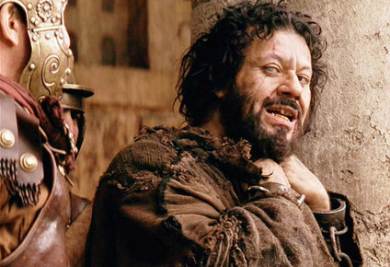
He walked past Bar-Abbas without making eye contact and went to the second cell. The two prisoners could not appear more different. One, seemed to accept his fate while the other looked at Longinus without remorse. After about a minute Longinus asked their names. The remorseful looking one answered, “I am Dismas, I stand condemned for robbery and murder. I accept my fate Centurion.” The other prisoner glared at his mate and with hatred in his voice and eyes said to Longinus “I am Gestas, and I am not sorry for anything that I did you Roman swine.”

Longinus stared back saying nothing, his continued lack of respect for such people seemed vindicated. He turned to the other cell and looked at the burley prisoner in it. “So you are Bar-Abbas?”
barabbas

The prisoner snarled “So what is it to you Roman?”

Longinus began to feel better about his mission. “Well, Bar-Abbas, it seems that you have killed one too many of my comrades and it is I who will get to exact justice on you.”

Bar-Abbas smiled an evil smile and said, “The Roman that can kill me has not been born.” He laughed at Longinus who stood silently for a moment. Then, quietly Longinus replied, “We’ll see about that.” With that Longinus motioned to Alexander the Jailer to let him out. The jailer unlocked the door and Longinus walked up the steps and into the courtyard of the fortress where his unit was practicing battle drills.

Calling Decius to his side, he said. “We have a second mission this week, the mission of executing some dangerous prisoners, including Bar-Abbas the insurgent.”

“Bar-Abbas sir?” replied the junior officer.

“The same, but we have to wait until Friday. It seems that our governor wants to make a show if his generosity to the people here. If it was up to me I would have killed them in the dungeon and been done with it, we could have said that they died of the plague.” Longinus looked at his assistant and then continued “Of course that is not how we Romans do things, they will be executed in public to show these Jews that they cannot engage in such conduct, but it will only build more resentment.”

“Sir, are you saying that our methods are wrong?” asked Decius.

“Young man, look around you. You know the history of these people. They will continue to rise up until they regain their independence or we kill them all.” He paused. “That is their history and they can do no other. After all, if they were occupying our homes, establishing their God in cities and forcing our people to serve them how would we respond?”

Decius nodded his understanding and looked at the Legionnaires practicing close combat tactics that might be necessary in a pitched battle if the city was to erupt in revolt.

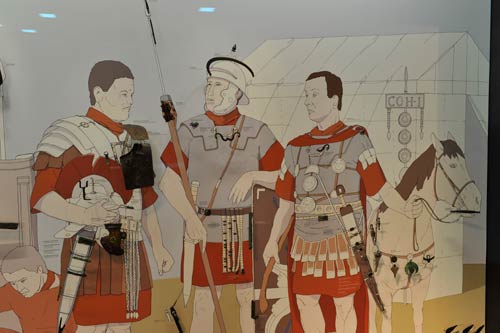
Longinus continued “Decius, choose a squad of men as the execution team and another as the escort. The rest of the Century is to be trained to maintain a secure perimeter and ensure that no Jews attempt to interfere with our mission.

“Sir, where is the execution to take place?” asked Decius.

images-36

Longinus motioned to a hill visible just outside the city walls. “Over there, that barren hill. The locals call it Golgotha.” He paused. “Fitting name, the place of the Skull. I perfect place to kill people that don’t want us here wouldn’t you say?” He chuckled and continued, “don’t answer, it is a rhetorical question.”

His assistant nodded and Longinus gave the order “Carry on with training, let me know which men you think should be on the execution team later tonight.”

Longinus turned and walked away wondering what else might happen, after all, the best laid plans of men sometimes don’t work out. He silently cursed under his breath the day that he was assigned to this place, which despite its history and splendor seemed forsaken by the Gods
4 Comments

Filed under faith, History, Military, Religion

The Story of Longinus the Centurion: A Meeting of Friends

14_2009_da_02_int

This is another in the historical fiction series that I am writing with the Centurion Longinus, who according to tradition was the Centurion at the Cross who put his lance in the side of Jesus and who would exclaim “Surely this was the Son of God” as Jesus breathed his last.

That series began with a prequel that I published last night as well as three that I published over the last couple of years. Those chapters can be found at the links below:

This chapter takes up where after the Triumphant Entry of Jesus into Jerusalem.

A Centurion’s Sunday in Jerusalem: The Story of Longinus

Good Friday Special: The Long Good Friday of Longinus the Centurion

Holy Saturday Special: A Centurion Reflects on a Days Work

Easter Special: Trouble in River City the Centurion’s Easter: An Empty Tomb, Duplicitous Politicians and a Lingering Question

The day after the entry of this Jesus character into Jerusalem was uneventful for Longinus and his fellow Roman officers. Jesus had returned to Bethany after driving out the money changers and other assorted riff-raff out of the Temple but had returned without the tumult of the preceding day, Instead, Jesus with a number of his disciples went to the Temple where he engaged the people and some of the Pharisees in a time of teaching culminating in a series of what Longinus’ Jewish spy said were comments that could be interpreted as threats against the Temple establishment and veiled allusions to Jesus being the Messiah of the Jews.

Jesus left the Temple at the end of the day without incident but Longinus’ spy indicated that the Priests and other religious authorities were discussing ways by which they might rid themselves of this Galilean would be Messiah. Now Longinus and his fellow officers couldn’t care a whit about Jewish religious disputes so long as it did not make their job keeping the peace any more difficult than it already was.

p-063-1

When his spy reported back Longinus briefed Pilate of the simmering tensions. Pilate was with his wife Bernice when he received the report. Pilate did not like what was going on but had no contact with any of the religious leaders from any faction since his arrival and was troubled. His wife warned him in the presence of Longinus “not to have anything to do with that man” and he told Longinus to continue monitoring the situation, He also dispatched a messenger to the commander of the Legion in Caesarea to send reinforcements to Jerusalem just in case things got out of hand. Until then, Longinus, the Primus Pilus, or senior Centurion of the Legion was to help him maintain a close watch on the situation and hopefully keep the situation from boiling over.

After his meeting with Pilate and Bernice, Longinus sat around the tavern in Fortress Antonia with several others of his officers and Centurions from the Legion currently in Jerusalem. His Optio, or second in command Decius, a Roman from his former unit who had accompanied him to Palestine was there, as were two Decurio officers from the cavalry detachment and his Tesserarius, Quentin, a man who held a position much like a First Sergeant. Late in the evening another Centurion came to the tavern. This Centurion, was accompanied by his young servant was in charge of the Century based in Capernaum in Galilee.

The Centurion, Flavius by name ordered an ale from the barkeeper and walked over to the table where Longinus and the other officers sat. After the exchange of formalities Flavius sat with them. His young servant remained at the bar sitting alone.

Longinus had known Flavius for several years and known him to be an honorable man, though he did not necessarily approve of the very “Greek” arrangement that he had with his Pais,* which was common in the Roman and Greek military units, he respected Flavius’s soldiering abilities, leadership and integrity. Flavius and his Century had arrived in Jerusalem the previous night after Jesus had made his entry into the city. Longinus was glad to see Flavius because he felt that an officer stationed in Galilee might be able to shed more light on this man of mystery who had Jerusalem up in arms and so troubled Pilate.

Flavius asked what Longinus knew about Jesus, and Longinus told him what he had seen the day before as well as the information that he had obtained from his own Jewish spy.

Flavius, nodded and then began to tell Longinus and the other officers of his encounter with Jesus a couple of years before in Capernaum of Galilee.

Flavius began: “Longinus my friend, I met this Jesus in Capernaum and he is no ordinary man.” He paused to take a drink and continued as Longinus nodded for him to continue.

“It was a difficult time my friend. My Pais was very ill, sick to the point of death, He lay in our quarters and I heard that the miracle working Rabbi named Jesus was in town. Now, you know my friends that I care not a thing about what these Jews believe but I was desperate and from what I had heard and seen I believed that the Gods had to be with this man.”

Longinus continued to listen and then asked “Why didn’t you go to our Temple and have our Gods intercede for your Pais?”

“My friend I had already done that but my Pais’ condition had worsened. So I found this Jesus fellow as he was entering the city and sent some Jews that I had befriended to him.” He paused. “Those Jews convinced Jesus that I was a friend of the Jews and had done many good things for their community, and this my friend is true.”

“So the Jews helped you contact this Jesus fellow?” asked Decius. Longinus looked at his subordinate disapprovingly and asked Flavius to continue.

“I tell you my friends, this man is like no one that I have ever met, the Gods are certainly with him, whether our Gods or the Jewish God I know not which but he is not a normal Rabbi.”

The officers looked around the table as Flavius continued.

centurion1

“Gentlemen, when this Jesus came to me I felt something that I have never felt in my life. Jesus asked what he could do for me and I told him of the sickness of my Pais and he asked if he could come to my quarters. I replied that I didn’t need him to come, because I was not worthy for him to come under my roof but to only say the word and my Pais would be healed.”

Longinus looked at his fellow Centurion in disbelief. Flavius sensing this continued. “My friend, I could not believe that I uttered those words but Jesus peered into my eyes and I knew that he knew all about me. Then he replied that “your servant is healed” and then exclaimed to all of the Jews around us that he “had not seen such faith in all of Israel.” Then, he put his hand on my shoulder, blessed me with some Hebrew blessing and walked away with his friends. When I returned to my quarters, my Pais, the young man over at the bar was well.”

Longinus saw the deep emotion that Flavius was expressing and raised his mug. “A toast to this Jesus!, whatever and whoever he he is.”

“Here here” replied those at table as Flavius looked on and several laughed. He had not expected such a reaction and said softly.

“My friends I don’t think you understand.” He paused a second and looked Longinus in the eyes. “I do hope that whatever happens in the next few days that no harm will come to this man. I would hate that my spear could bring harm to him.”

Longinus responded. “I hope that nothing happens to cause any of us any problems. The city is boiling with emotion and unlike your friend Jesus, most of them hate us and would rather see us dead, and some of their leaders from what I understand wouldn’t mind seeing him dead either.” Longinus paused and emptied his mug, drinking the ale to the last and then continued “My friend, I appreciate what you have to say, but we have to do our duty for the Empire regardless of our personal feelings. We are outnumbered here and this Jesus, as much as we may find him fascinating is the source of much of the current discord.” He looked at Flavius. “You do understand this?”

Flavius looked down at his drink and looked back up at Longinus and then at the officers around the table.

“I do understand my duty my friend, but you have to know what he did for me.”

“We do understand my friend” replied Longinus, “but our honor is loyalty to Caesar, not any other man.”

“I know Longinus, I do know, more than you think, but what if he is more than just a man?”

Longinus and the other officers sat silently pondering Flavius’s words. The silence was deafening and slowly the junior officers individually asked to be excused, begging pressing duties to attend to leaving Flavius and Longinus at the table. The bartender brought each man another ale and they continued to drink silently.

The Greek word Pais is the word used in many Greek texts to to describe a homosexual relationship. The use by Matthew in his account of the healing of the servant of the Centurion used the word Pais to describe the servant, not the typical Doulos which is used for slave or bond servant as is most common throughout the New Testament. In fact this is the only use of the word in the New Testament. Many Biblical scholars and linguists, though not completely certain do entertain that possibility that the Centurion that I call “Flavius” and his servant were a Gay couple.

4 Comments

Filed under faith, History, Loose thoughts and musings, Religion

A Centurion’s Sunday in Jerusalem: The Story of Longinus

triumphal-entry


This article is the prequel to a trilogy that I wrote about Longinus the Centurion who according to tradition commanded the detail in charge of the crucifixion of Jesus. I find a special affinity to this soldier who while serving his country in a land far from home whose people detested the occupiers of their country by a foreign power that most considered infidels. I don’t think that anyone can really understand the plight of the Roman officers assigned to the occupation of Judea and Samaria in the First Century until they have  done their time in Iraq or Afghanistan. These peoples, though not Jewish have similar divisions,  contradictions and prejudices against foreigners as those that lived in First Century Palestine. Those American, NATO or coalition troops that served in Iraq or Afghanistan, especially those who actually worked alongside or came to know the people in those countries understand the plight of the Roman soldiers assigned to occupation duty throughout the Empire, but especially in the volatile provinces of Judea and Samaria like Longinus. 

The others in the trilogy are linked below: 

Good Friday Special: The Long Good Friday of Longinus the Centurion

Holy Saturday Special: A Centurion Reflects on a Days Work

Easter Special: Trouble in River City the Centurion’s Easter: An Empty Tomb, Duplicitous Politicians and a Lingering Question

MLPPT_CenturionCross_1

Longinus and his men were tired. Pilate, the Governor had decided that he would travel from his Provincial capital of Caesarea in order to maintain a close watch on the Jews of Jerusalem during the annual celebration of Passover. During such times that city, the largest in the province would see its population expand exponentially as Jews from the diaspora, that is those living around the known world would make pilgrimage to the holy city.

Longinus’s men had helped provide the escort as Pilate travelled the nearly 80 miles moving up from the coastal plain where Caesarea was up to the hill country of Judea. The trip took three days as Pilate wanted to be in the city in plenty of time. The weather was conducive to the march, but though well trained Longinus’ men were not Romans but primarily recruited locally from drafts of Syrian’s and Samaritans.

Longinus never really enjoyed this assignment. He had served in other areas as a young officer and much preferred serving with and commanding Italians, Greeks, Macedonians and others to the men that he now commanded, but his duty was to serve wherever he was sent. He thought at times of his family in Italy near his home in Lanciano in the Abruzzo region near the Adriatic, missing his wife and children.

vespasian-judea-capta-sestertius

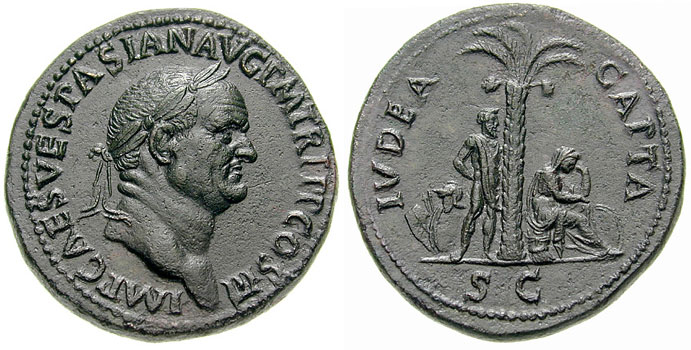
The duty of Longinus and other Romans in the region chiefly consisted of helping police the region and protecting the much despised tax collectors. One of those tax collectors, a Jewish man named Matthew had left the employ of Caesar a few years back and was now a “disciple” of some itinerant Jewish preacher named Jesus. He had heard a story from another Centurion about this preacher that made him chuckle. Evidently some Jews of the sect know as the Pharisees, a particularly strict group tried to trap the Jesus with the question of whether it was lawful to pay taxes to the Romans. They thought that they had trapped him because if he answered in the affirmative he would be rejected by them and discredited among the people, while if he answered that it was not they would have him on record as urging the people to disobey Caesar. The Centurion who told the story said how with him standing in the background watching and listening that Jesus asked one of the Pharisees to bring him a coin. Looking at the coin he asked the man whose image was on it. The Pharisee, a bit hesitantly replied that it was “Caesar” to which Jesus, who supposedly was an unlearned but charismatic bumpkin from Galilee replied “give to Caesar what is Caesar and to God that which was God’s.” Longinus’ colleague, an outsider looking in at this curious religious dispute was amazed with the acumen of Jesus in dealing with a question that someone less intuitive could have botched with potentially fatal consequences.

images-35

The march through Samaria was particularly uneventful but as the Legionaries entered Judea, a region seething with hostility toward the Romans he and his men became more guarded, very aware of the hostility that sometimes invited violence.

They arrived about noon on Friday in order not to stir up the Jewish faithful on their sabbath and took up residence in the Fortress Antonia, the symbol of Roman might in this always rebellious city. That evening and the next day were uneventful, but on Sunday, Longinus was told to have his troops stand by in case of violence. The man named Jesus was entering the city and pandemonium was expected. According to rumor this Jesus had raised a many from the dead in Bethany the day before and was being greeted as a potential King and liberator.

The Roman presence was muted, Pilate and senior commanders not wanting to do anything that might provoke an insurrection. The troops remained on alert at the fortress while Longinus and a number of other officers went to observe events at a distance.

Longinus was amazed at what he saw. Thousands of people singing and throwing cloaks and palms along the street as Jesus, mounted on a white donkey accompanied by his disciples as well as numerous people from Bethany where he had been staying paraded down the street.

The procession moved toward the Temple where an understandably nervous delegation of Pharisees and the Priests of the Temple wondered what Jesus might do. If he was the “Messiah” that they preached about it could be a direct threat to their positions of power and provoke a Roman crackdown against them.

Jesus dismounted from the donkey and entered the Temple area, now crowed with thousands of pilgrims coming to offer sacrifice where he began to condemn the moneychangers. The moneychangers were in charge of selling animals for sacrifice to pilgrims, many of whom who could not bring their own animals for sacrifice. They were not according to what Longinus knew from his previous visits to the city at Passover and other Holy days men of good repute. They were believed to make their profit off the poor and widows and even the Romans that knew of the practice considered it less than honorable, and certainly the religious authorities were making money from their efforts.

Jesus_temple

As Jesus went into the Temple Longinus and his fellow officers stayed back. As Gentiles their presence would create a crisis so they remained outside entrusting a Jew who worked with them to make the observation. They could hear commotion in the Temple and as they watched money changers and others came spilling out of the Temple grounds, many surrounded by their animals, lambs, doves and oxen. Longinus wondered what in the name of Jupiter was going on and soon his spy came running out of the Temple to make his report.

Slowing down as he approached Longinus he breathlessly gave his report. Jesus had taken a whip and driven out the moneychangers, condemning their activities and those of the religious leaders. Longinus had never heard of Jesus ever doing anything remotely violent before and this shocked him. He asked what else had happened and the spy reported that the Temple police and authorities did nothing and that Jesus left without further incident.

Pontius-Pilate

Longinus knew that the coming days could prove interesting. Going to Pilate that evening he gave his report. Pilate was quite concerned about the situation and considered it volatile. He ordered Longinus and the other officers to maintain an elevated state of readiness in case there was some sort of protest or even civil strife between the followers of Jesus and the Jewish authorities.

Longinus left Pilate and he and his fellow officers discussed the situation, briefed their subordinates and as night fell met in the tavern in the fortress where they quietly drank and wondered what the coming days might bring.

5 Comments

Filed under faith, History, Religion

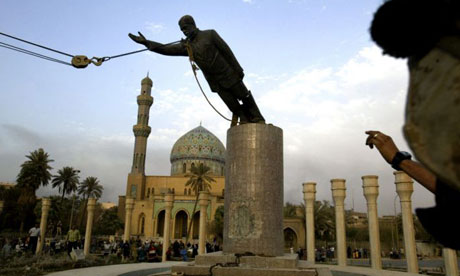
Reflections on the Invasion of Iraq: 10 Years Later in Light of Nuremberg

saddam0978

“If certain acts of violation of treaties are crimes, they are crimes whether the United States does them or whether Germany does them, and we are not prepared to lay down a rule of criminal conduct against others which we would not be willing to have invoked against us.” Justice Robert Jackson International Conference on Military Trials, London, 1945, Dept. of State Pub.No. 3080 (1949), p.330.

In March 2003 I like many of us on active duty at the time saw the nation embark on a crusade to overthrow an admittedly thuggish criminal head of state, Saddam Hussein. The images of the hijacked airliners crashing into the Twin Towers of the World Trade Center and the Pentagon were still relatively fresh in our minds. The “evidence” that most of us had “seen,” the same that most Americans and people around the world were shown led many of us to believe that Saddam was involved in those attacks in some manner and that he posed a threat to us.

Now it wasn’t that we didn’t have doubts about it or even the wisdom of invading Iraq. It didn’t matter that there was also credible evidence that maybe what we were being told was not correct, and it didn’t matter that some of our closest allies voted against a mandate to invade Iraq in the United Nations Security Council. We were emotionally charged by the events of 9-11 and “we knew” that Saddam was a “bad guy.” We also believed that we could not be defeated. We had defeated the Iraqis in 1991 and we were stronger and they weaker than that time.

We really didn’t know much about Iraq, its history, people, culture and certainly we paid little attention to the history of countries that had invaded and occupied Iraq in the past. T.E. Lawrence, the legendary Lawrence of Arabia wrote in August of 1920 about his own country’s misbegotten invasion and occupation of Iraq, or as it was known then Mesopotamia.

“The people of England have been led in Mesopotamia into a trap from which it will be hard to escape with dignity and honour. They have been tricked into it by a steady withholding of information. The Bagdad communiqués are belated, insincere, incomplete. Things have been far worse than we have been told, our administration more bloody and inefficient than the public knows. It is a disgrace to our imperial record, and may soon be too inflamed for any ordinary cure. We are to-day not far from a disaster.”

The sad thing is that the same could have been written of the United States occupation by 2004.

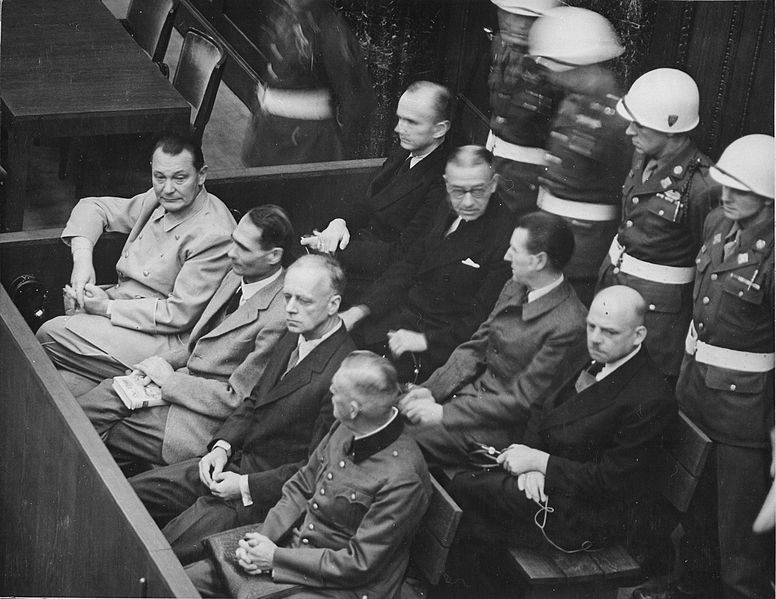
But even more troubling than the words of Lawrence are the Nuremberg War Crimes Trials. Somehow as a historian who has spent a great deal of time studying the Nazi period and its aftermath I cannot help but look back in retrospect and wonder what Supreme Court Justice Robert Jackson and the other Nuremberg prosecutors would have done had they had some of our leaders in the dock instead of the Nazis.

776px-Nuremberg-1-

The indictments against the Nazis at Nuremberg are chilling if we were to be held to the same standard that we held the Nazis leaders at Nuremberg. True, we did not have massive death camps or exterminate millions of defenseless people, nor did we run slave labor factories, but we did like they launched a war of aggression under false pretense against a country that had not attacked us.

At Nuremberg we charged twenty top Nazi political officials, as well as police and high ranking military officers with war crimes. The indictments included:

Count One: Conspiracy to Wage Aggressive War: This count addressed crimes committed before the war began, showing a plan by leaders to commit crimes during the war.

Count Two: Waging Aggressive War, or “Crimes Against Peace” which included “the planning, preparation, initiation, and waging of wars of aggression, which were also wars in violation of international treaties, agreements, and assurances.”

Count Three: War Crimes. This count encompassed the more traditional violations of the law of war already codified in the Geneva and Hague Conventions including treatment of prisoners of war, slave labor, and use of outlawed weapons.

Count Four: Crimes Against Humanity, which covered the actions in concentration camps and other death rampages.

While count four, Crimes Against Humanity would be difficult if not impossible to bring to trial because there was nothing in the US and Coalition war in Iraq that remotely compares to that of what the Nazis were tried, some US and British leaders could probably have been successful prosecuted by Jackson and the other prosecutors under counts one through three.

The fact is that none of the reasons given for the war by the Bush Administration were demonstrated to be true. Senior US and British officials knowing this could be tried and very probably convicted on counts one and two. We also know that some military and intelligence personnel have been convicted of crimes that would fall under count three.

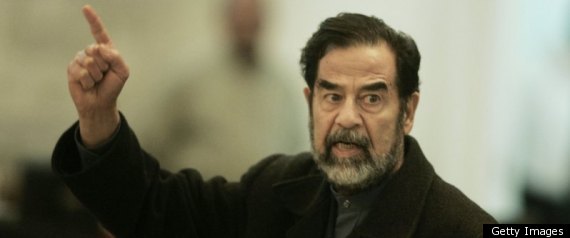
r-SADDAM-HUSSEIN-large570

Saddam Hussein was a war criminal. He was also a brutal dictator who terrorized and murdered hundreds of thousands of his own people. But we went to war over his alleged ties to Al Qaeda and WMDs and he had not attacked us. Looking back at history and using the criteria that we established at Nuremberg I have no doubt that had Dick Cheney or Donald Rumsfeld been in the dock that Justice Jackson would have destroyed them and the court would have convicted them.

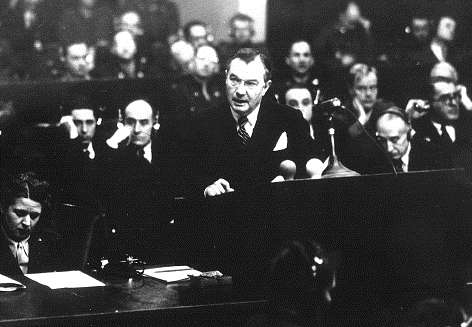
So 10 years, nearly 5000 US military personnel dead, 32,000 wounded, over 100,000 afflicted with PTSD, and other spiritual and psychological injuries, with an estimated 22 veterans committing suicide every day; somewhere between 1 and 2 trillion dollars spent, hundreds of thousands of Iraqis dead, wounded and displaced from their homes and a country destroyed and still in turmoil. And somehow those that decided to take us to war roam free. They write books defending their actions and appear on “news” programs hosted by their media allies who 10 years ago helped manipulate the American public, still traumatized by the events of 9-11-2001 to support the war.

nuremberg-jackson-10400

http://www.youtube.com/watch?v=No06Lwk_TAg

Saddam and many of his henchmen are dead or rotting in Iraqi prisons for their crimes against the Iraqi people. However good this may be one has to ask if how it happened was legal or justified under US or International Law, if it was worth the cost in blood, treasure or international credibility. Likewise why have none of the men and women who plotted, planned and launched the war been held the standard that we as a nation helped establish and have used against Nazi leaders and others?

If we cannot ask that and wrestle with this then we as a nation become no better than the Germans who sought minimize their responsibility for the actions of their leaders, and in doing so enable future leaders to feel that they can do the same with impunity. That is a terrible precedent.

Peace

Padre Steve+

1 Comment

Filed under History, iraq,afghanistan, middle east

Padre Steve’s NCAA Basketball Tournament Mascot Picks

NCAA-2013-bracket1

I don’t always follow basketball but every year I am drawn to the NCAA Men’s Basketball Tournament like a vulture drawn to fresh roadkill. This year I have entered a couple of different brackets to pick who I think will win the tournament. I did one based on records and conferences, statistics and coaches. I will not reveal the secrets of that bracket because unlike baseball I know almost nothing about basketball except that it is played by people a lot taller than me who can both jump and actually throw a basketball through a hoop. Thus those picks are under lockdown. If I win the pool I’ll beat on my chest and say what an expert that I am, get hired by ESPN as an analyst and live happily ever after at least for a season or two until I get fired because I really don’t know what I am talking about. But then there are guys that have been doing that for decades why can’t I join them? But I digress….

Now I know that there are a lot of people who use various means to pick the tournament winners. But this is not baseball and none of these people are Bill James the Saber metrics guru. Again as I said I am not an expert when it comes to basketball. However I do know something about mascots and it happens that every team has one. Some are animals of various types, others some kind of human hero, others something to do with mountains, nature and even the supernatural. I figure that why not do another bracket based on my intuition of how the mascots would do. Unfortunately a lot of the teams had the same mascots so in picking I had to make sure that none of the mascots ended up facing their alternate universe self.

So to make the simple difficult I will break this up into the geography of the NCAA tournament which generally corresponds to the regions of the United States, the Midwest, the West, the South and the East. Obviously there is no such thing as the North in our country otherwise the Glenda the Good Witch of the North would have made sure that it still existed.

The Midwest Regional

In the NCAA Midwest the Louisville Cardinals meet the Aggies of North Carolina A&T. Cardinals are pretty mean birds and Aggies are not well known for outsmarting things. So Cardinals beat Aggies. The Colorado State Rams will play the Missouri Tigers and as anyone knows a Tiger beats a Ram any day of the week. In the second round it comes down to nature. Cats eat birds, thus Missouri goes to the Sweet Sixteen.

The Oklahoma State Cowboys play the Oregon Ducks in the first round and while Cowboys may do great against Indians and Buffalo they are no match for a Ducks. The St Louis Billikens, which are some kind of weird doll will meet the New Mexico State Aggies. Yes I know that I said that Aggies are not known to be the swiftest or the toughest, but even the most limp wristed Aggie can break a china doll with no problem. But in the second round humans again are confounded by Ducks and Oregon moves on the the Sweet Sixteen.

The Memphis Tigers will play the St Mary’s Gaels. Now “what the hell is a Gael” you ask? A Gael is someone that speaks Gaelic. Tigers eat people, even Gaelic speaking ones, unless they are drunken Irishmen, but they are in a different Region. Memphis wins. The Michigan State Spartans play the Valparaiso Crusaders and this was a tough one to pick. Crusaders are tough but motivated by religion and ideology, while Spartans are just badass, kickass fighters. Spartans win. Did you see the movie 300? They move on, unless by chance a traitor comes in behind them. Still Michigan State to the Sweet Sixteen.

The Creighton Blue Jays play the Cincinnati Bearcats. Blue Jays are tough birds and mean, while no one knows if a Bearcat is a bear or a cat. Actually a Bearcat is some kind of weird looking animal like a Giant Panda found in Southeast Asia. Anyone knows that Panda are an endangered species while Bluejays are not. That in mind and the fact that the game is being played in the United States and not the Mekong Delta leads me to pick Creighton. Finally in the Midwest the Duke Blue Devils play the Albany Great Danes. This one comes down to metaphysics and spirituality. Devils only lose to God and a Great Dane is not God despite dog being God spelled backward. Thus the Blue Devils take on the Blue Jays who can’t beat the Devil. Duke to the Sweet Sixteen.

In the Sweet Sixteen Oregon’s Ducks will beat the Missouri Tigers because Ducks can both fly and go in the water and Tigers can do neither. Likewise Blue Devils beat Spartans. Spartans may be tough but they ain’t God. This means that in the regional final that the Ducks will face the Blue Devils and though Ducks may have the evil qualities of a witch, because like wood both float (see Monty Python and the Holy Grail http://www.youtube.com/watch?v=yp_l5ntikaU ) a witch and therefore a Duck is no match for the Devil. So the Duke Blue Devils go on to the Final Four.

The West Regional

The West Region will start with a surprise, the number one seeded Gonzaga Bulldogs will be defeated by the Southern University Jaguars. Let’s face it. Bulldogs look tough but are pretty slow and probably no match for a big cat. Southern wins. The Pittsburgh Panthers play the Wichita State Shockers. Now I know what you are thinking Panthers are a big cat, but if I recall a Shocker has something to do with electricity and cats do not do with with electricity. Wichita wins against them  and repeats against the Jaguars for the same reason, electricity kills cats. In a Shocker, Wichita moves to the Sweet Sixteen.

The Wisconsin Badgers play the Ole Miss Rebels and as anyone knows Badgers are tough and crafty and love feeding on Southern food. Badgers win. The Kansas State Wildcats will play the La Salle Explorers and Wildcats like to eat unsuspecting Explorers. K-State wins and moves on. This sets up a classic match up of the Mutual of Omaha’s Wild Kingdom as the Badgers kill the Wildcats and move to the Sweet Sixteen.

The Arizona Wildcats play the Belmont Bruins and while normally I would take a Bruin over a cat of any kind any day of the week these Bruins used to be called the Rebels until 1995 and just the scenario described above Rebels don’t do well against wild animals. Even Rebels that have changed their name, it was a crafty name but nature knows the real thing. Arizona wins. The New Mexico Lobos, which is like a New Mexican Wolf play the Harvard Crimson, and crimson will be the color of the court when the Lobos devour Harvard. New Mexico Wins.

The Notre Dame Fighting Irish will play the Iowa State Cyclones. Drunken Irishmen like to fight and are not bothered by bad weather. Notre Dame wins. The Ohio State Buckeyes play the Iona State Gaels, yet another team with an obscure mascot that is in the tournament twice. But this time the Gaels win, because anyone knows that if there is no Haggis around that any Scots-Irish-Welshman will eat whatever vegetation is available, and since a Buckeye is a tree and most parts are edible, the Iona Gaels I win.

In the West region of the Sweet Sixteen the Fighting Irish play the Lobos and once again drunken Irishmen win and move on to face the winner of the Wisconsin-Wichita State match up. In this the Shockers finally spark out because their cord won’t get deep enough into the cave of the Badgers. Wisconsin wins. In the West Regional final The Fighting Irish win again, like I said, they aren’t afraid of anything and will defeat Wisconsin.

The South Regional

In the South the Kansas Jayhawks play the Western Kentucky Hill Toppers. Now to my knowledge a Hill Topper is someone at the top of a hill but birds, particularly Hawks fly high, over hills and for me altitude is the key in the match up. Kansas wins. The North Carolina Tar Heels play the Villanova Wildcats. Now everyone knows that Tar is bad for you, and if you get too much of it on your feet or in your lungs you end up with bad diseases. Since Wildcats tend to be healthier than people stuck in tar Wildcats win. Since I live in North Carolina and don’t even know where Villanova is, I wish this was not the case, but working in healthcare settings for many years means that I have to go with science and Villanova wins to go to the Sweet Sixteen.

The VCU Rams play the Akron Zips and since Zip is the mascot of the US Postal Service Zip Code and the Postal Service is in trouble one has to go with VCU. VCU wins. The Michigan Wolverines, named after the Marvel Comics super hero play the South Dakota State Jackrabbits. Sorry Wolverine has those nasty knife like claws and that will carve up a Jackrabbit any day of the week. Michigan wins. Likewise I don’t think I don’t think that the Wolverines can lose to Rams and will make Mutton of them. Michigan to the Sweet Sixteen.

The UCLA Bruins play the Minnesota Golden Gophers and anyone with any sense knows that a Gopher will do anything to avoid a bear and thus UCLA Wins. The Florida Gators play the Northwestern State Demons. Now we all know that Demons are pretty badass beings, but these are not Demons from a major conference thus kind of minor Demons. Gators live in the water and anyone that knows their Bible knows what happens when Demons get in the water, they lose. Jesus showed us that when he chased those pigs into a lake. Florida wins but when they have to battle the Bruins, who can fight in land and water the lose. UCLA to the Sweet Sixteen.

The San Diego State Aztecs play the Oklahoma Sooners, and sooner rather than later we all know that the Aztecs will carve up the Sooners. The Georgetown Hoyas, the basketball team of a Jesuit school, which are named after a Latin Term Hoya Saxa, which means “What rocks” play the Florida Gulf Coast Eagles. Anyone knows that no Jesuit is killed by an Eagle, Jesuits are much more crafty than that and Jesuits throwing rocks, they are dangerous. Georgetown wins. However, the Hoya’s have to face the Aztecs and the Aztecs have been waiting for revenge ever since Cortez came knocking at the Halls of Montezuma. San Diego State to the Sweet Sixteen.

In the Southern Region Sweet Sixteen the Villanova Wildcats mix it up with the Wolverines and despite the claws I think by now that the Wolverines are tired and the Wildcats win. The UCLA Bruins, because they are cool Southern California type Bruins with no love for San Diego beat the Aztecs who really don’t have anything against the Bruins because they like nature. However the Bruins finally lose when they face the Villanova Wildcats. Wildcats do better on the high plains of North Texas than large bears and so they have the advantage and thus Villanova goes to the Final Four.

The East Regional

In the East Regional the number one seeded Indiana Hoosiers face the JMU Dukes. Now no one knows what a Hoosier is, which makes them hard to define and the Dukes are named after minor nobility, totally out of place in the United States. Hoosiers win. The North Carolina State Wolfpack plays the Temple Owls. Now I give you the fact that Owls are great hunters, but they are night hunters and this game is being played in the afternoon, giving the Wolfpack the advantage. Yes wolves like the night too, but they do well in the day too. NC State wins.

The UNLV Running Rebels of the Vegas strip play the California Bears. In this case I give the Rebels the edge, these are Berkley Bears and far too mellow for this kind of fight, and anyone knows that the Rebels that moved to Vegas after the great War Between the States are much more crafty than other Rebels. UNLV wins. The Syracuse Orangemen who I am reliably informed are named after Speaker of the House John Boehner play the Montana Grizzlies, yet another Bear, but Boehner, the Orangeman himself controls the budget and Montana Grizzlies tend to live on National Parks, and if there is no funding these bears die. Syracuse wins.

The Butler Bulldogs will play the Bucknell Bison. This was a hard pick, but dogs are used to herd Bison, I think anyway and if that is true then the Bulldogs of Butler have to win. The Davidson Wildcats play the Marquette Golden Eagles and cats eat birds, even highly seeded birds. The Wildcats then move on to defeat the Bulldogs.

Finally the Illinois Fighting Illini play the Colorado Buffaloes. History is the key in this. You always see the Indians hunting down Buffalo and not the other way around. Illinois wins. But the big surprise is the University of the Pacific Tigers defeating the Miami Hurricanes. Now one might ask how that could be, but Tigers don’t live in Hurricane zones and thus are safe. Pacific wins. However, the Illini are pretty good hunters and will kill off the Tigers to advance to the Sweet Sixteen.

In East Region Sweet Sixteen match ups the Hoosiers of Indiana defeat the Running Rebels of UNLV because even Rebels on the Vegas Strip have a hard time figuring out what a Hoosier is and how to defeat it. Illinois moves on to defeat Davidson, once again using their superior hunting skills, but the Fighting Illini meet their match when the run up against the Hoosiers, who like everyone else they have no idea how to defeat because they don’t know what they are. This sends the Indian Hoosiers to the Final Four.

The Final Four

In the Final Four the Fighting Irish of Notre Dame come up against the Devil in the form of the Duke Blue Devils and even drunken Fighting Irishmen don’t beat the Devil. Indiana will defeat Villanova because like everyone else even Wildcats don’t know what a Hoosier is, but the Devil does and this means that the Duke Blue Devils are my Mascot Pick for the NCAA Men’s Basketball Tournament.

Is this a logical way to pick a bracket? Not at all, but I bet that it works pretty well.

Have fun with your brackets.

Peace


Padre Steve+

Leave a comment

Filed under basketball, News and current events, sports and life

A Memorial Service as Tragedy Strikes Camp Lejeune on the 10th Anniversary of the Beginning of the Iraq War

9-11b

“God didn’t put us here for that pat on the back. He created us so he could be here himself. So he could exist in the lives of those he created, in his image.” Chaplain (Captain) Fr Francis Mulcahy M*A*S*H 

The past week has been difficult at Camp LeJeune. We lost a sailor, a hospital corpsman who died by his own hand last Monday. He was a veteran of Afghanistan and his death came as a surprise to his friends, family and shipmates. Today we conducted his memorial service. It was a full house. His family travelled to be here and his friends, those that served with him while he was assigned to the Marines as well as his current shipmates were there in abundance.

It was a time to grieve. The young man was beloved by his friends, respected and cared for. However something that none of us will ever know or understand overwhelmed him. It may have been the trauma of war, maybe something else, but he maintained a facade that kept his friends, family and shipmates away from whatever despair drove him to take his life.

It was a time for all of us to grieve. It was as William Shakespeare wrote in McBeth a time to “Give sorrow words; the grief that does not speak knits up the o’er wrought heart and bids it break.”

But even as we grieved the news filtered to the base that 7 Marines assigned to the Second Marine Division were killed, and a number of others injured when a mishap occurred where they were training in Nevada. Evidently either a mortar round either exploded in the tube or as it was being handled during a live fire exercise. They join the thousands of men and women who have died or been wounded in preparation for, the conduct of or the aftermath of their service in Iraq or Afghanistan. The death of each one leaves a void in the heart of a loved one, friend or shipmate.

Ergin-Osman1

Staff Sergeant Ergin Osman KIA Afghanistan

I have lost friends and shipmates in all phases of both wars and their aftermath. Some have died in combat, others while supporting combat operations of natural causes or accidents, some have committed suicide, including a Priest and Chaplain who served in both Vietnam and Iraq. Still countless others endure injuries or illnesses that will eventually kill them.

Likewise there are far too many more who have sustained terrible injuries to their minds, bodies and spirits that time will never heal. The young men and women that I see every day, those with the physical wounds of war and those with the unseen but sometimes even more disabling injuries such as PTSD, Traumatic Brain Injury or Moral Injury remain in the fight, sometimes with the sole mission of recover or remaining alive.

saddam0978

Ten years after the war in Iraq began and twelve and a half years after 9-11 and the invasion of Afghanistan the costs continue to build in lives and treasure. In Iraq almost 4500 American and over 300 other coalition casualties, more than 500 contractors and nearly 10,000 Iraqi Soldiers and Police and countless thousands of Iraqi civilians have died. US wounded alone number almost 35,000 in Iraq. In Afghanistan there are over 2100 US dead and about 1100 NATO and Coalition dead, hundreds of contractors, and thousands of Afghans with over 17,000 more American military wounded. Every day nearly 20 veterans take their lives while thousands of others struggle with physical, psychological and spiritual wounds of war, wounds that don’t heal even as they find that they no longer fit in the country that went shopping when they went to war. The costs of both wars now are building into trillions of dollars, costs that will continue to grow even after the wars wind down.

Butler-medals

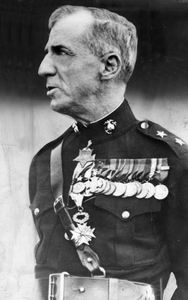
Two time Congressional Medal of Honor Winner Major General Smedley Butler, US Marine Corps wrote:

“What is the cost of war? what is the bill? Major General Smedley Butler wrote: “This bill renders a horrible accounting. Newly placed gravestones. Mangled bodies. Shattered minds. Broken hearts and homes. Economic instability. Depression and all of its attendant miseries. Back -breaking taxation for generations and generations. For a great many years as a soldier I had a suspicion that war was a racket; not only until I retired to civilian life did I fully realize it….” (See War is a Racket: Remembering Major General Smedley Butler USMC and Why He Matters

23_QU_18_d_HM_012ps

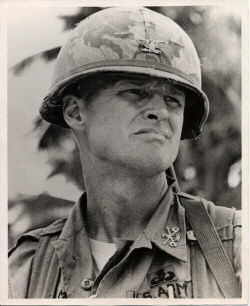
Likewise Lieutenant General (US Army Retired) Hal Moore, who is immortalized in the film We Were Soldiers and book We Were Soldiers Once…and Young told West Point Cadets in 2005:

The war in Iraq, I said, is not worth the life of even one American soldier. As for Secretary Rumsfeld, I told them, I never thought I would live long enough to see someone chosen to preside over the Pentagon who made Vietnam-era Defense Secretary Robert McNamara look good by comparison. The cadets sat in stunned silence; their professors were astonished. Some of these cadets would be leading young soldiers in combat in a matter of a few months. They deserved a straight answer.

The expensive lessons learned in Vietnam have been forgotten and a new generation of young American soldiers and Marines are paying the price today, following the orders of civilian political leaders as they are sworn to do. The soldiers and those who lead them will never fail to do their duty. They never have in our history. This is their burden. But there is another duty, another burden, that rests squarely on the shoulders of the American people. They should, by their vote, always choose a commander in chief who is wise, well read in history, thoughtful, and slow-exceedingly slow-to draw the sword and send young men and women out to fight and die for their country. We should not choose for so powerful an office someone who merely looks good on a television screen, speaks and thinks in sixty-second sound bites, and is adept at raising money for a campaign.

If we can’t get that part right then there will never be an end to the insanity that is war and the unending suffering that follows in war’s wake-and we must get it right if we are to survive and prosper as free Americans in this land a million Americans gave their lives to protect and defend.”

Needless to say, Moore, a West Point graduate has not been asked back.

n671902058_1153828_4309

Thousands of young Americans, as well as NATO or other Allied nation soldiers, including Iraqi soldiers that I knew and Afghans that I have not worked with have died or been mangled by these wars. Yet too many Americans, Europeans and others that have sent young men and women to these wars have no stake in the game.  Most people continue with the mundane aspects of peacetime life while their political, religious and business leaders plot even more war. Syria, Mali, North Korea, Iran…where will it end?

Today we mourned a shipmate and friend at Camp LeJeune even as we wait to see who else that we know have been killed or injured in this latest training accident. I was honored to be a part of the memorial and happy to be of help to the families and friends of my sailor. At the same time I too grieve and wonder just how many more will have to die before the madness ends.

I left the base after the ceremony, and saw the massed trucks of the local and national news networks parked outside the gate like vultures. When I got home I hugged my dog Molly, I love that little dog, she has helped save my life after my time in Iraq. I then went for a four mile run on the beach and then had a couple of beers with my dinner while at the bar with my friends at my local watering hole.

father

The old regulars there have nicknamed me “Father Mulcahy” a name that some people at the hospital have also given me. Maybe it is that I ear round steel rimmed glasses. Maybe it is because I will join in the occasional poker game , football, basketball or NASCAR pool, which by the way I won the NASCAR pool this week. Or maybe it is just because they didn’t know I was a Chaplain or Priest until a mutual friend and co-worker told one of them. Until then I was just Steve, the guy that wore the Orioles and Giants baseball gear. Now I have become their Priest and Chaplain, funny how that works. Regardless, it is a nickname that I cherish, because when I was growing up Fr Mulcahy symbolized so much of what I thought was good in a Priest and Chaplain. The writers of M*A*S*H made him very human. But I digress…

As we mourned today I was reminded of something that Helen Keller said, something that I think no matter what any of us grieve is true. “We bereaved are not alone. We belong to the largest company in all the world–the company of those who have known suffering.”

Pray for me a sinner.

Peace

Padre Steve+

Leave a comment

Filed under faith, iraq,afghanistan, Military, Pastoral Care, philosophy, PTSD

Modern Baseball Magic: Chin Music by Lee Edelstein Padre Steve’s Review for TLC Book Tours

ChinMusic-cvr-thumb


Chin Music, Lee Edelstein Sela House Publishers Boca Raton Florida 2012

“I’ll promise to go easier on drinking and to get to bed earlier, but not for you, fifty thousand dollars, or two-hundred and fifty thousand dollars will I give up women. They’re too much fun.” Babe Ruth

I don’t read much in the way of fiction but when I do there is a good chance it has something to do with baseball. In fact someday I hope to publish my own baseball fiction fantasy novel someday but I digress….

I guess that it is fitting that I am watching the Semi-Final game of the World Baseball Classic between the Netherlands and the Dominican Republic on television and that my brother Jeff and nephew Nate are in attendance at AT&T Park as I write this tonight. Baseball is a big part of my life as anyone that is a regular reader of this site knows.

Chin Music by Lee Edelstein is actually the first work of fiction of any genre that I have reviewed. Thus I found that reviewing it was a different task than biographic, historic or policy books that I have done in the past.  I write about baseball a lot and do a lot of reading regarding baseball history. To me baseball is something of a religion. To quote the irrepressible Annie Savoy (Susan Saradon) in Bull Durham “the only church that truly feeds the soul, day in, day out, is the Church of Baseball.”

It is hard to compare this book to other great works of baseball fiction such as W P Kinsella’s Shoeless Joe Comes to Iowa, which became the Kevin Costner film Field of Dreams or his less known but perhaps more metaphysically interesting The Iowa Baseball Confederacy; Bernard Malamud’s The Natural or Michael Shaara’s Pulitzer Prize winning novel The Perfect Game which became the Kevin Costner film For the Love of the Game.

Those books are all classics in their own right; Edelstein’s work has the potential to become a classic in its own right. Now days a book becoming a baseball classic may be harder than in previous times. It is sad to sad but Baseball is no longer America’s game. Baseball is timeless but somehow it seems that for many Americans the sport is neither violent or “fast” enough to warrant their attention. The long season and intricacies of the game seem beyond a society addicted to speed, violence and instant gratification. To me that is sad, but this book though a modern look at baseball fiction and fantasy reaches back to a time when it was the dream of almost every American boy to be a professional Baseball player.

Edelstein weaves together the stories of the legendary Babe Ruth, a notorious drunk and womanizer and the Buck family over a period of 85 years.

It is a story that begins in St Petersburg Florida in 1926 when a young woman becomes a barber and ends up with one of the most famous men in America as a customer. The relationship, without concludes in a hotel room, the only records of which are the young woman’s diary, a couple of pictures of her with the Babe in the barber shop and a fair amount of unique and highly valuable baseball memorabilia.

The woman, turns out to be the great grandmother of a gifted but underperforming young high school baseball player named Ryan Buck. The book begins with a motor vehicle accident in which Ryan’s father dies, his brother loses a leg and he suffers what we understand as a Traumatic Brain Injury. Ryan suffers from survivor’s guilt and does not live up to his full potential. His mother, now a working mom and widow embarks to sell her grandmother’s Babe Ruth memorabilia at a baseball card show to help pay the bills and to pay for the costs of Ryan’s brother Michael’s prosthetic leg replacements.

Now I am well acquainted with baseball card shows and memorabilia. My house, much to the chagrin of my wife Judy is filled with objects, none as valuable as original Babe Ruth merchandise portrayed in the book, but for me just as valuable if for nothing else because of my love for the game.

The story that Edelstein paints is fascinating and I do not want to give away too many spoilers because unlike the biographical and historical works I have previously reviewed my audience does not know the ending. As such I will limit the discussion of the plot. I will simply note that it deals with a young man’s miraculous climb from high school to the Major Leagues and reconnection with his late father, the healing of the soul of a woman who has lost her husband who has seen the struggles of her children and held on to the hopes of her late grandmother; a woman considered by her mother a tramp and whore. It includes their interaction with an elderly widower who saves the mother from a bad deal at the card show which leads to the discovery of her grandmother’s diary and other items that lead to an interesting search, not just for memorabilia but also for a family heritage. If you don’t get my drift look back at the Babe Ruth quote that begins this review.

Edelstein did what I did not think possible. He got me interested in a fictional work about baseball that was not already a classic. It grew on me as I read it and even though I began to anticipate the ending about three quarters of the way through I had to keep reading and in doing so was captivated by the story.  No it is not Shoeless Joe, The Perfect Game, or The Natural. Those books stand on their own as classics, but Chin Music has the potential to become a baseball classic for a new generation. It is a story of redemption, healing and hope, something that among all sports that baseball seems to embody. As Walt Whitman said:

“I see great things in baseball.  It’s our game – the American game.  It will take our people out-of-doors, fill them with oxygen, give them a larger physical stoicism.  Tend to relieve us from being a nervous, dyspeptic set.  Repair these losses, and be a blessing to us.”

tlc-tour-host

I hope that it does and hope that in reading it people will regain their love for what is rightly called “America’s game.” I highly recommend Chin Music by Lee Edelstein to my readers.

Peace

Padre Steve+

3 Comments

Filed under Baseball, books and literature

St Patrick’s Sunday Night Musing: So Many Topics So Little Time

st-pat-driving-snakes

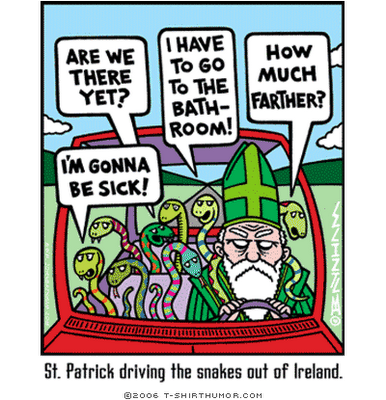
Well, here we are the end of St Patrick’s Day and I have to say that I have basically took the weekend off. I slept more than I was awake and did as little as possible. I read a book, a baseball novel called Chin Music by Lee Edelstein which I will review tomorrow Monday night for TLC Book Tours. I also spent a good amount of time with my dog Molly, giving her walks and enjoying her joyfulness.

I did go over to the Emerald Isle St Patrick’s Festival, braving the crowds, which some say might have been 20,000 or more to take my place at Rucker John’s. What amazed me was the manner of how many people celebrate St Patrick’s Day. I am not a tea-totaler by any means and do enjoy my time at the bar with friends. By I go for the fellowship, the friendship and the relationships. I enjoy good beer, wine or the occasional whiskey, brandy or Jaegermeister, but cannot understand why people would come out with the sole purpose of getting drunk and acting like fools. There were very few of us that were regulars there last night as the festivities commenced and I was embarrassed to watch Marines from our local bases act completely foolish, being vulgar, rude and causing the management of have to cut them off.

military-suicides

Last week was difficult, very busy and dealing with the effects of yet another suicide of a young sailor. I will be working in the early part of the week to conduct the memorial service for the young man, a veteran of Afghanistan whose demons were evidently more than he could bear, and to care for his shipmates. That suicide angered me. Not that I am angry with that young man and his choice to kill himself, but it angered me that so many young men and women, active duty, reserve, national guard as well as retirees and veterans who have left the service die every day.

The fact is that I don’t think that we as individuals, the military, the veterans administration or society are doing enough. I am tired of it and have resolved to do whatever I can to do what I can do to as an individual, a Chaplain and military officer to stem this tide. I may be pissing into the wind, but having been to the brink and stared into the abyss of hopelessness after I returned from Iraq I cannot just stand by and lament the situation anymore.

262_29132382058_5961_n

I have also been thinking about Iraq and all of the lives lost or destroyed, American, Iraqi and others, the treasure spent and the promises broken. As a veteran of that war I hope and pray that all the lives lost and treasure wasted will not be a complete waste. I pray that some good will still come from our misbegotten invasion of Iraq. Iraq remains a part of my thoughts and my dreams, and rarely a night goes by that my mid does not go back to Iraq, the men that I served with and the Iraqis that I got to know.

tumblr_mgszpffQIu1s1483mo1_500

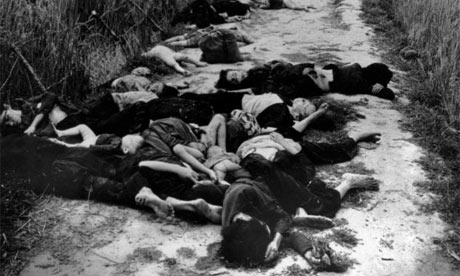
In the midst of Iraq I was reminded that yesterday was the anniversary of the My Lai Massacre and my distant connection to it. Of course that massacre was one of the most disgraceful episodes in the history of the US Army. I remember when the news broke about it and then remember what my first class advisor in Army ROTC at UCLA had to say about it. He was there after the massacre, his unit providing protection for those investigating it. His words about it and how bad it was remained with me.

In 1997 I was serving as the Chaplain at Fort Indiantown Gap Pennsylvania when I was requested to conduct the funeral for Colonel Oran Henderson, the man who commanded the brigade to which the men that conducted the massacre belonged. Henderson was tried and acquitted of a cover up at the longest running court-martial in US history. However, his career, which before My Lai appeared that he was destined to be a general. That destiny died at My Lai.

$T2eC16FHJHYE9nzpcDiuBQWg3T)P0g~~60_35

The tragic thing is, a that Henderson, who was a hero in many ways, a man who in World War II, Korea and Vietnam was wounded and conducted himself honor, failed in this crisis. At the time a thorough  investigation conducted by him that sought justice rather than a whitewash may have helped the county and changed his legacy. When I think of him I know that what we do matters, especially as military officers. Ethics is and has to be a central part of our life and faith. When we forget that, when we allow the utilitarian necessities of careerism and defend the institution even when it is wrong we like Henderson fail. That may be one of the lessons that we did not learn in Vietnam, Iraq or Afghanistan which will continue to haunt us. I’ll probably write something about My Lai and its relation to current conflicts and the necessity of military professionals to always seek the higher level of ethics in how they approach war.

Like I said, there is so much to write about and to discuss. I want to write some on the upcoming NCAA Basketball Tournament, a bit about baseball as well as some of the things happening in regard to North Korea, Iran, Syria and Afghanistan and the first days of the new Papacy of Pope Francis, which may turn out to be as surprising papacy as we have seen in decades, at least since Pope John XXIII.

Well, that is enough for tonight. Tomorrow I will post the review of Chin Music and we’ll see what the rest of the week portends.

Peace and blessings

Padre Steve+

Leave a comment

Filed under Loose thoughts and musings, Military

“Et Tu Brute” Beware of the Ides of March

murder_julian_cesar_b

Et tu Mitch? I mean Brute

Well it is March 15th, the Ides of March according to the Ancient Romans. It was a day sacred to them as the big uber-feast day of the Roman God Jupiter, where the Ides sheep was sacrificed to make all things right in the universe, or something like that.

It was also a day where Julius Caesar, long before he had an Orange drink named after him was warned about by a seer. Never ignore a seer or the machinations of political opponents is what I say, but that’s just me.

orange-julius-free-smoothie

However old Julius Caesar never quite got this, after all he had been named Dictator in Perpetuato, which is kind of like for all time by the Roman Senate. He also forgot that no matter what that definition of “for all time” actually means, that for Senators it generally equates to “until the next election cycle.” Since an election was coming up the Senators realized that “for all time” was rapidly running out and decided to act.

So on March 15th of 44 BC Julius Caesar ignored the warnings of a seer and went to see a gladiator match in the well of the Roman Senate. Eight Senators, sometimes referred in Roman history as the Group of Eight concocted a bi-partisan plan to rid themselves of Caesar. It was a very “pointed” plan if you get my drift by which they would stab Julius to death when he came to see them and the gladiator match that they were hosting. When Caesar passed the seer on the way to the Senate he basically dissed him saying something like “dude it’s the Ides of March baby and I’m still standing” and thumbed his nose giving a Bronx jeer. The seer’s response was not recorded but if one can assume, and I will, he probably said something like” up yours buddy, rot in hell” and gave him the evil eye.

william_shakespeare1

William Shakespeare: Trust him because he’s English

Needless to say Julius Caesar ended up getting the Senator’s point, or actually 23 points based on the number of stab wounds on his cold dead body. Caesar’s last words are disputed, but William Shakespeare, who must be believed because he was English and not Italian and who lived over 1500 years after the events has to have the most accurate account. Shakespeare, who depended on Wikipedia for his knowledge of the time declared that Caesar said to Brutus, a Senator Et tu Brute?” which means something like “Dude how could you?” when he saw Brutus sticking his K-Bar into him. Shakespeare however does not record what he said to Mitch McConnell.

Of course historians will debate this, but if you can’t believe an Englishman why would you believe and Italian when it comes to knowing how do get rid of a head of state? The English, despite the quaint accent have proven themselves to be experts at this.

godfather_2111499i

Likewise, there is something else to be said about the Ides of March and the assassination of Julius Caesar. That is this. The assassination was a community thing. There wasn’t a lone assassin with a curious name like Lee Harvey, James Earl or John Wilkes, no this was a real live Italian style mob it, sans automatic weapons. Imagine if they had guns, Julius Caesar would have ended up like Sonny Corleone in The Godfather. The fact is that we are lacking in community now days and if there is anything about the Ides of March that we need to remember is that community matters. Lone gunmen, they are kind of boring, but mobs of enraged people or Senatorial conspirators, that is hard to do now days.

So now with less than an hour left on the Ides of March, I have made sure that I have not let the Senate or anyone else name me a dictator for life and have avoided sharp pointy objects and Senators of any kind. So far I am doing well. I haven’t seen a seer and have settled in for the evening on the eve of the eve of St Patrick’s Day.

So until tomorrow, Happy Ides of March!

Peace

Padre Steve+

1 Comment

Filed under History, Just for fun, purely humorous

Padre Steve’s Favorite Story Songs

625696_10151179483627059_1009630985_n

I like songs that tell good stories. Unfortunately many of them are sad stories, which makes them somewhat different than sad love songs. Sad love songs generally don’t really have to have a story other than what Lieutenant Frank Drebin said in the Naked Gun: “It’s the same old story. Boy finds girl, boy loses girl, girl finds boy, boy forgets girl, boy remembers girl, girls dies in a tragic blimp accident over the Orange Bowl on New Year’s Day.”

However these songs are about life, disappointment, tragedy as well as real events and people. Sometimes they deal with love, other times loss and sometimes real world events and people. Some are songs that appeal to simpler times, but all tell stories.

I think that songs that tell stories speak to us in ways that we might not otherwise expect. But then for me music is something that can reach my heart in ways that written words cannot. Most of these songs come out of the 1960s and 1970s, which I really think was the time where such songs were most influential and popular. There are others that I could list her but for now I will leave you with these.

Please enjoy them.

Peace

Padre Steve+

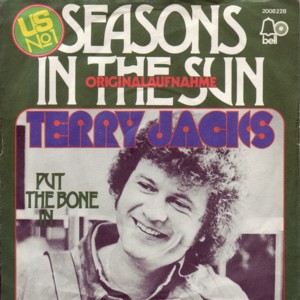
terry_jacks-seasons_in_the_sun_s

Terry Jacks Seasons in the Sun http://www.youtube.com/watch?v=rhQ13geD2OA is an English adaptation of Jacque Brel’s song Le Moribond.

220px-WreckEdmundFitzgerald

3817466563_ddc72dbb21_z

Gordon Lightfoot The Wreck of the Edmund Fitzgerald http://www.youtube.com/watch?v=Q0DqPSF2fyo is about the loss of the large bulk carrier SS Edmund Fitzgerald on Lake Superior in 1975.

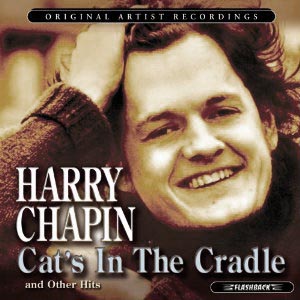
harry-chapin_cats

Harry Chapin’s Cat’s in the Cradle http://www.youtube.com/watch?v=GCpsD0ZDfus is a song that speaks about a father who is too busy for his son as the son is growing up and finds that when he is old that his son has “grown up just like me.”

Goodnight_Saigon

Billy Joel Piano Man http://www.youtube.com/watch?v=gxEPV4kolz0 tells the story of a bar musician and is a fictionalized retelling of his life before he became famous. His song Goodnight Saigon http://www.youtube.com/watch?v=CJFmRA7ousE is an ode to the Vietnam Veterans that came out as the Vietnam Veteran’s Memorial was being constructed.

barry-sadler

Staff Sergeant Barry Sadler’s The Ballad of the Green Beret http://www.youtube.com/watch?v=34CXcgJURbg was written after Sadler recovered from wounds that he received in Vietnam.

660425

One song that has always gotten me is the Nitty Gritty Dirt Band’s Mr Bojangles http://www.youtube.com/watch?v=j3YMyW0SqmU was written by Jerry Jeff Walker and recounted his meeting a street performer in a New Orleans jail.

elton_john_marilyn_monroe_candle_in_the_wind_17pkffj-17pkfg1

Elton John’s Candle in the Wind http://www.youtube.com/watch?v=NoOhnrjdYOc was written in honor of the late Marilyn Monroe.

0001693580_500

Gilbert O’Sullivan’s Alone Again http://www.youtube.com/watch?v=D_P-v1BVQn8 is a really sad and introspective song about a man who struggles with life.

the beatles yesterday

The Beatles Yesterday http://www.youtube.com/watch?v=ZIc6AH_2TEs is about the break up of a relationship and was the first Beatles song that only one member sang, in this case Paul McCartney.

Janis-Joplin-Bobby-McGee-Half-Moon

Janis Joplin’s Me and Bobby McGee http://www.youtube.com/watch?v=oHkBv-AtKDA was written by Kris Kristofferson and recorded by others before it became a number one hit for Joplin after her death to a heroin overdose in 1970.

abba-fernando-300x300

Abba’s Fernando http://www.youtube.com/watch?v=Xv_-6XQyIq0 is a song of two veteran’s of the Mexican Revolution remembering their younger days in that conflict.

JoniMitchellBothSides(This)

I have always liked Joni Mitchell’s Both Sides Now http://www.youtube.com/watch?v=bcrEqIpi6sg

Sierra Exif JPEG

Bo Donaldson and the Heywoods Billy Don’t Be a Hero http://www.youtube.com/watch?v=H0lKmznjgfQ is an anti-war song that they recorded and released just before Paper Lace in the United States and deals with a love story set amid the Civil War.
paper-lace-the-night-chicago-died-philips

Paper Lace’s The Night Chicago Died http://www.youtube.com/watch?v=ryVh9BuwOs4 tells a fictional story of a police shoot out with the Al Capone gang.

images-32

Cher’s Gypsies Tramps and Thieves http://www.youtube.com/watch?v=TOSZwEwl_1Q is the story of the daughter of a Gypsy family and her struggles to survive.

joan-baez-the-night-they-drove-old-dixie-down-vanguard-4

Joan Baez’s The Night they Drove Old Dixie Down http://www.youtube.com/watch?v=nnS9M03F-fA was originally written and recorded by Robbie Robinson and Levon Helm of The Band. It tells the story of a Confederate soldier in the closing days of the Civil War.

Bobbie-Gentry-Ode-

Bobby Gentry’s Ode to Billie Joe http://www.youtube.com/watch?v=rDHpkYI5_FY is a Southern Gothic type song about suicide, grief, emotional separation and other tragedies set alongside the banal happenings of everyday life.

coven2ndlpfinalformyspace-1-1

Coven’s One Tin Soldier http://www.youtube.com/watch?v=qswm7lHp7oY is another anti-war song but is a story about tow peoples and the desire of one people to attain the treasure held by the other, a treasure that was to be shared, that of peace on earth.

arlo-guthrie-the-city-of-new-orleans-reprise-2

Arlo Guthrie’s City of New Orleans http://www.youtube.com/watch?v=OfxoM6trtZE was written by Steve Goodman and is set on a nostalgic and bittersweet ride on the Illinois Central Railroad’s City of New Orleans. It was released in 1971 at a time when my family still road the railroads to cross the country and I can feel the emotion of those trips when I hear the song.
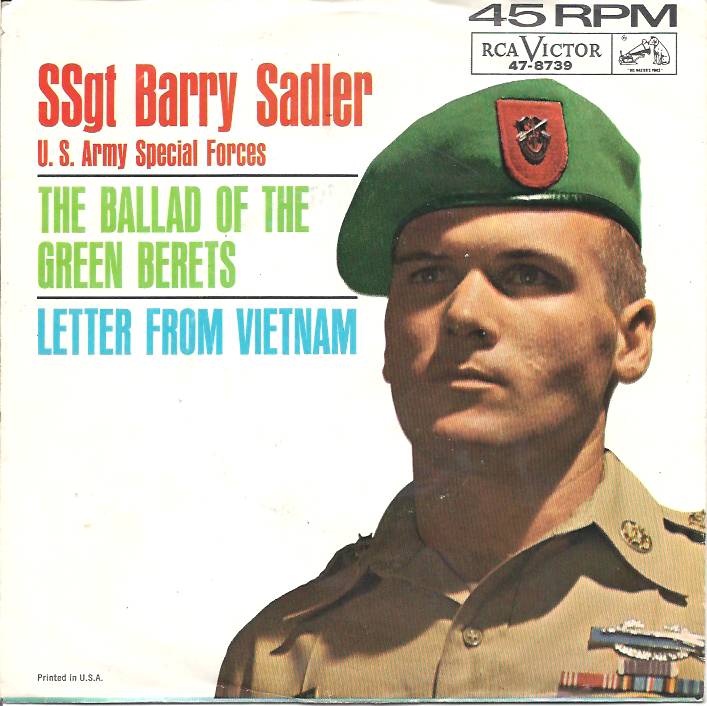

images-33

Barry Manilow’s Copacabana http://www.youtube.com/watch?v=oU8TAkl7Tbg is the story of a tragedy that unfolds in the lives of a singer named Lola and her bartender boyfriend Tony in a clash with a mafia don named Rico at the famed New York nightclub Copacabana. Unlike most of Manilow’s songs and for that matter most of these story songs, it is a Disco song.

images-34

Kenny Rogers’ The Gambler http://www.youtube.com/watch?v=Jj4nJ1YEAp4 became the epitome of a story song that spawned a number of movies.

onjpleasemr

Olivia Newton-John’s Please Mister Please http://www.youtube.com/watch?v=ULJ3KrFwdbA is a song about a woman who cannot bear hearing a song that she associates with her lost love when people play it on the bar jukebox.

the-eagles-usa-lyin-eyes-asylum-2

Linda Ronstadt’s Blue Bayou http://www.youtube.com/watch?v=58id5JIzFao is a sad song about a woman who has lost her love and is away from home longing to return.

The Eagles Lyin’ Eyes http://www.youtube.com/watch?v=nk1g6jJTsXY is one of a number of story songs by that super-group and is the story of a woman who has married a rich old man, but unfulfilled enters into an affair while lying to her husband about it.

dawn-featuring-tony-orlando-tie-a-yellow-ribbon-round-the-ole-oak-tree-bell-3

I think the way to end this list is with Tony Orlando and Dawn’s Tie a Yellow Ribbon ‘Round the Old Oak Tree http://www.youtube.com/watch?v=c3ouKAhxZbQ


1 Comment

Filed under music