Monthly Archives: August 2015

Some are More Equal than Others: The Hatred that Will not Die

John_Lewis_t580

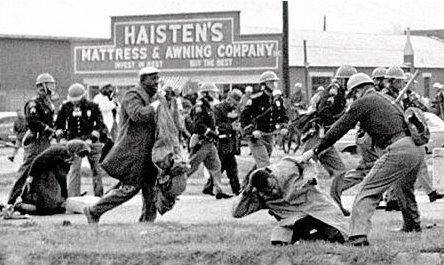
Bloody Sunday

Friends of Padre Steve’s World

I am back from Gettysburg and recuperating from the trip. I took my wife Judy to get the staples removed from her abdomen following her surgery and things are looking really good. She will be monitored and tested regularly every three months for the next two years to ensure that the cancer has not returned but the odds are it will not.

Anyway, while I while I was at Gettysburg something happened that took me aback. It was not anything from any of my students who were absolutely awesome, but it was something else.

I always end the staff ride by taking the students to the National Soldier’s Cemetery. There we talk about terrible human cost of the battle and I introduce them to a number important topics related to the cemetery. I talk about the rural cemetery movement and the Greek revival in America in the 1820s, which is culturally important to us. Then I move on the dedication of the Soldier’s Cemetery. I discuss the layout of the cemetery and how it was designed so that the grave of every soldier is of equal importance and then I read some of the comments of the keynote speaker, Edward Everett. Following this I discuss the writing of the Gettysburg Address, the way Lincoln used it to universalize the Declaration of Independence and then I recite it, and remind my students, especially my American officer students why this is so important to us as we remember our oath of office and our duty.

1880_Anti-Chinese_Riot_in_Denver_anagoria

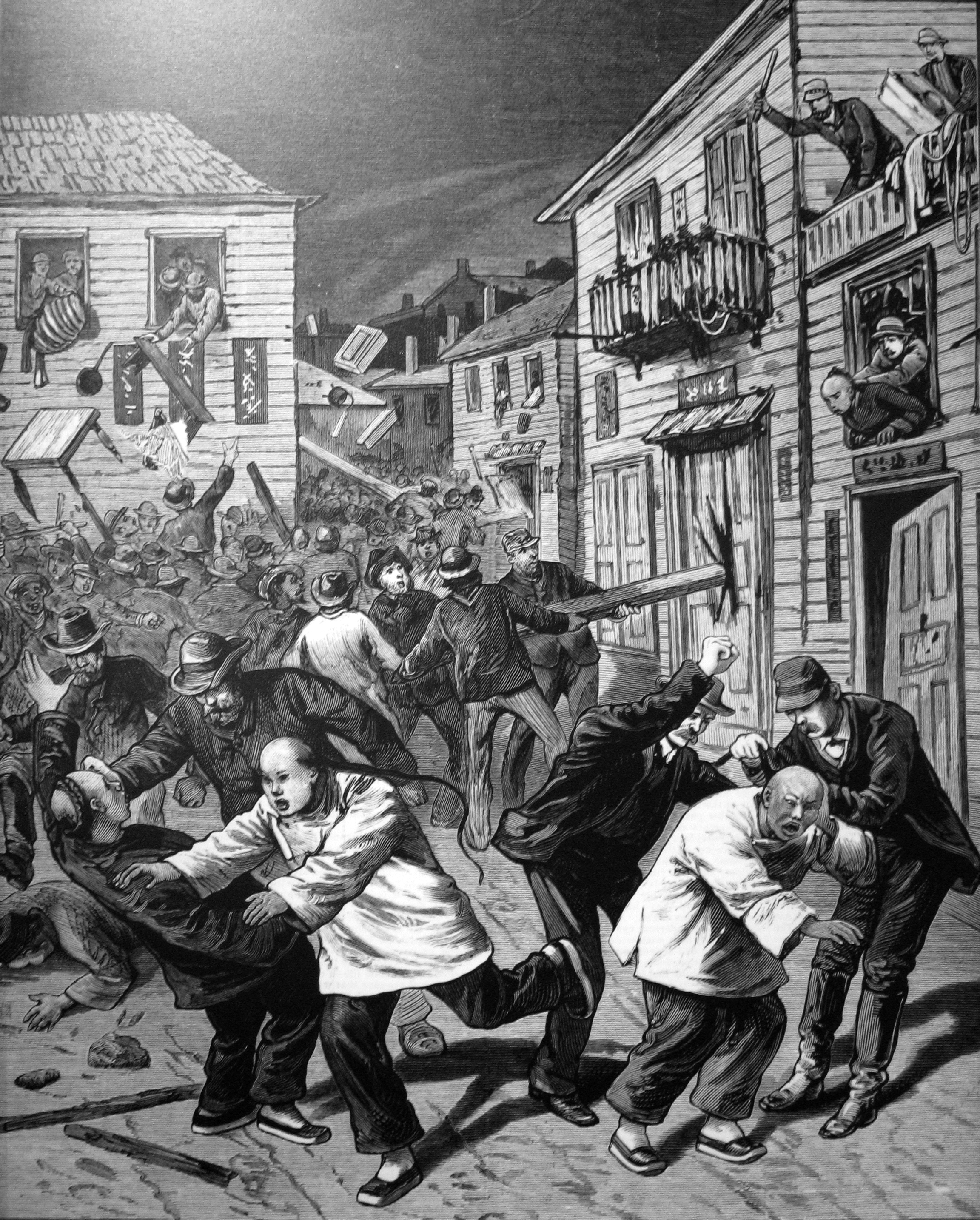
Violence Against Chinese Immigrants in Denver 1880s

While we were gathering near the spot where Lincoln gave his address, an elderly white couple, which appeared to be in their early eighties, was on a bench where my students gathered. I invited them to stay if they wanted and let them know why we were there. They were very attentive as were my students and when we concluded and my students began to head back to our vans or to their own vehicles for the trip back to Norfolk, the man approached me and asked directions on how to get to the Chambersburg Road which I gladly gave him; and then he said: “You know that when they say that “all men are created equal” that some are more equal than others.”

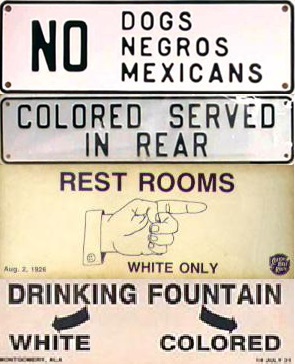
9587864_orig

I was stunned and attempted to deflect the man’s obvious racist comment with humor, referring to the rivalry of UCLA where I did my Army ROTC training about thirty-three years ago with that of the University of Southern California. The man looked at me and said that he was from Georgia and wished that California would just drop off into the ocean, and then walked away.

I thought to myself: “you corpulent old racist bastard.” I was really tempted to follow him and confront him, but I backed off. I realized based on his age, and that he probably opposed everything about the civil rights movement and supported Jim Crow and that there was nothing that could change his mind. He was old enough that he may have actually taken part in some of the anti-civil rights actions of the 1950s and 1960s. I don’t know, but it is possible.

know-nothing_flag

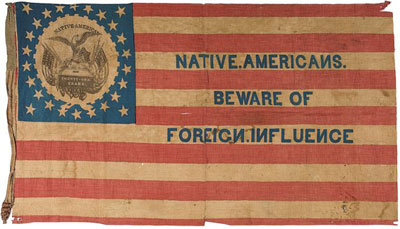
The Flag of the Know Nothing Party

Sadly, there are a lot of people in this country who believe exactly what that man voiced. Some are racist, and not just towards African Americans but to Latinos, Native Americans, Asians, Arabs and others. There are those who believe that women and gays are not equal. Many of these people are leading politicians at the federal, state and local levels, media personalities and corporate leaders who have significant political and economic clout and if they ever had complete power would overturn or nullify every law that protects the civil rights of those they believe are less than equal, in some extreme case even less than human.

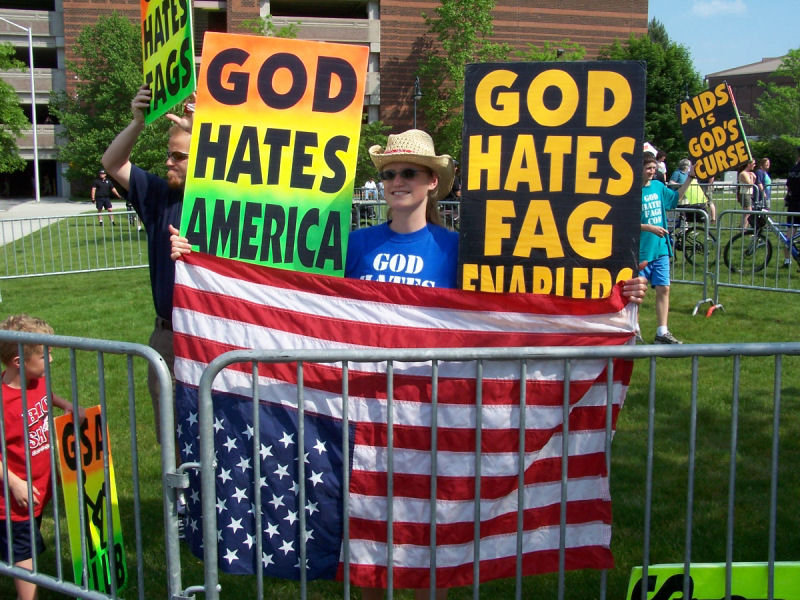
GodHatesFags-TsongasArena043

There are many reasons that people use to justify these attitudes; some pseudo-scientific, some religious, some economic, and many based on a crude Social Darwinism emphasizing the “survival of the fittest.” I heard someone else in a restaurant this weekend say exactly that when they were talking about the poor. Again, lest we want to simply use this to beat on Southerners, this is not simply an attitude confined to the South; it is all over the country, and that was the often the case throughout our American history.

It really does grieve me when I see this. The ghosts of our past intrude on so many parts of our national life, condemning the living to have to relive them in our own time. Historian George Santayana said it so well: “Those who cannot remember the past are condemned to repeat it.”

Have a good night.

Peace

Padre Steve+

2 Comments

Filed under civil rights, Gettysburg, History, Political Commentary

The Unfinished Work of the New Birth of Freedom

Friends of Padre Steve’s World

I am on the way back from another Staff Ride with my students to Gettysburg. For me the place is incredibly important, when I go it is not just a trip back into history, it is an intensely spiritual trip, especially when I visit the National Soldier’s Cemetery where Abraham Lincoln delivered the Gettysburg Address. For me, like Lincoln, this is hallowed ground, and a place from which I always recommit myself to the unfinished work of the New Birth of Freedom, a work that has all too often suffered due to those who for whatever reason, be it racial, economic or political are willingly to work against freedom and equality. The message of the address takes us back to those words of the Declaration of Independence, that all men are created equal and endowed with certain unalienable rights; among them life liberty and the pursuit of happiness. 

Sadly these noble words of our founders in the Declaration were not meant for all. They were only applicable to White men and not to African Americans, Native Americans or women. In fact the Constitution was explicit in treating blacks as less than human. For eight-seven years blacks awaited some form of redemption, and that came initially in the Emancipation Proclamation. Six months later Robert E. Lee was defeated at Gettysburg. When the Cemetery was dedicated Lincoln recalled and made the first steps by an American President, all but two of whom before him had been slaveowners to begin to universalize the promise of those words in the Declaration. He talked of a new birth of freedom, and reminded his audience that the mission was not finished and that “It is rather for us to be here dedicated to the great task remaining before us — that from these honored dead we take increased devotion to that cause for which they gave the last full measure of devotion…” 

The following is a chapter of my Gettysburg text which deals with that event and that speech. 

Have a great weekend.

Peace

Padre Steve+
gburg address

I am always humbled when I travel to Gettysburg. It is hard to believe in that now peaceful pastoral setting that over 157,000 Americans, almost 82,000 Union and 75,000 Confederate met in a three day battle. In those three days over 28,000 Confederates and 23,000 Union soldiers were killed, wounded, missing or captured. It was the greatest number of casualties inflicted in one battle on American soil in history.

The places that the battle was fought have become legendary, for they are “hallowed ground” as President Abraham Lincoln so eloquently put it. The places, McPherson’s and Herr’s Ridge, Seminary Ridge, the Railroad Cut, Barlow’s Knoll, Cemetery Hill, Culp’s Hill, The Wheat Field, Devil’s Den, the Peach Orchard, Little Round Top, Cemetery Ridge, the Apse of Trees, the Angle and the High Water Mark are in a sense holy, or hallowed, consecrated by those who struggled there, those who lived and those who gave the last full measure of devotion to their country. When I take my students there I always finish at the Soldier’s Cemetery where Abraham Lincoln delivered the Gettysburg Address.

I think about those men of both sides, fully convinced of the rightness of their cause who fought valiantly in the struggle. That being said when I go there though my family predominantly fought for the Confederacy my heart is drawn to those men who remained loyal to the Union and those who answered the call of Abraham Lincoln to serve in a cause greater than their own interests, the great and the small alike.

Lincoln was a masterful orator who managed to rally the Union and bring hundreds of thousands of men volunteer before Gettysburg. They came for an ideal an ideal which Lincoln’s oratory was probably the most effective at articulating in a way that men would volunteer to suffer hardship, fight and die to bring about. It was well put in the movie Gettysburg where Colonel Joshua Chamberlain, played by Jeff Daniels said:

“This is a different kind of army. If you look at history you’ll see men fight for pay, or women, or some other kind of loot. They fight for land, or because a king makes them, or just because they like killing. But we’re here for something new. This has not happened much, in the history of the world: We are an army out to set other men free. America should be free ground, all of it, from here to the Pacific Ocean. No man has to bow, no man born to royalty. Here we judge you by what you do, not by who your father was. Here you can be something. Here is the place to build a home. But it’s not the land. There’s always more land. It’s the idea that we all have value, you and me. What we’re fighting for, in the end… we’re fighting for each other…” [1]

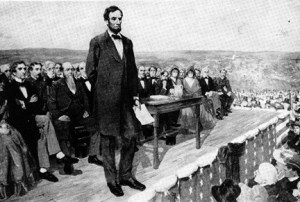
On November 19th 1863 Lincoln delivered a “few words” at Gettysburg which were in all practical aspects a benediction at the dedication of the battlefield cemetery. Lincoln was the second speaker at the ceremony following former Pennsylvania Congressman Edward Everett who spoke for more than two hours, a typical speech from the period.

Everett was one of the leading orators of his day. Everett was “a scholar and Ivy-League diplomat who could hold mass audiences in thrall. His voice, diction, and gestures were successfully dramatic, and he always performed his carefully written text, no matter how long, from memory.” [2]

The 270 words of Lincoln’s address are perhaps the most important of any speech or document in American history save the Declaration of Independence and the Constitution of the United States, in those words “Lincoln, nevertheless managed to justify the ways of democracy more than anyone, then or now.” [3]

The speech was so powerful that Everett wrote Lincoln the next day:

“Permit me also to express my great admiration of the thoughts expressed by you, with such eloquent simplicity & appropriateness, at the consecration of the Cemetery. I should be glad, if I could flatter myself that I came as near to the central idea of the occasion, in two hours, as you did in two minutes.” [4]

The speech is short, but its eloquence is unmatched. Lincoln wrapped ideas, concepts and ideals that men have written volumes about into a speech so powerful that many have memorized it.

But few realize the context that it must be placed. Though the Union had defeated Lee’s Army at Gettysburg and Grant had taken Vicksburg to cut the Confederacy in half the North was growing war weary. During the fall of 1863 after a series of inconclusive battles in northern Virginia both Lee and Meade’s armies had sent significant numbers of troops to the west, to support operations in eastern Tennessee.

Lee sent Longstreet’s First Corps, which took part in the bloody battle of Chickamauga, which “is a Cherokee word meaning “river of death.” [5] where on September 19th and 20th the Federal Army of the Cumberland under General Rosecrans “were soundly whipped at …and driven back into the strategic point of Chattanooga.” [6] The number of casualties on both sides, over 16,000 Federal and 18,000 Confederate, a “combined total of 34,634 was exceeded only the three day slaughter at Gettysburg and by the week-long series of five battles known collectively as the Seven Days.” [7] Despite the number of casualties it was one of the biggest Confederate victories of the war. A clerk in Richmond wrote “The whole South will be filled again with patriotic fervor, and in the North there will be a corresponding depression.” [8] That changed rapidly when the Union reacted quickly and reversed the strategic situation. One action taken was to deploy Oliver Howard’s XI Corps and Henry Slocum’s XII Corps west, where “they would be commanded by Joe Hooker, who was conveniently at hand and unemployed.” [9]

In the east during the following weeks “Lee and Meade, like two wounded, spent gladiators, sparred listlessly along the Rapidan. It seemed to Northerners that the fruits of Gettysburg had been thrown away.” [10] Lee sensed an opportunity to go back on the offensive against Meade’s weakened army, but his offensive was stopped on October 14th when “the Union Second Corps shattered a reckless attack by A.P. Hill’s corps at Bristoe Station, five miles south of Manassas.[11]

There was a faction in the North, the Copperheads, who were willing even after Gettysburg and Vicksburg to end the war on terms favorable to the Confederacy, even allowing for Confederate independence and the continuation of slavery. They “clamored for negotiations with the Confederacy to restore the Union on the basis of status quo antebellum and, until the closing months of the war charged that as long as the antislavery party remained in power the restoration of the Union could not be achieved.” [12] They believed that the war was a failure and that military action could not be achieved by force of arms.

The leading Copperheads included Clement Vallandigham of Ohio and George W. Woodward of Pennsylvania were typical, both opposed the use of force against Confederate secession; Woodward had written in 1860 that “Slavery was intended as a special blessing to the people of the United States,” that “Secession is not disloyalty” and “I cannot condemn the South for withdrawing….I wish Pennsylvania could go with them.” [13] The efforts of the Copperheads to gain governorships in Ohio and Pennsylvania met defeat in November 1863, as the Union victories at Gettysburg and Vicksburg “undercut their theme of the war’s failure.” [14] Their efforts would persist through the 1864 Presidential election, but instead of preaching the war’s failure they would concentrate on defeating emancipation. The Copperheads, “labeled all Republicans, including Lincoln, as radicals bent upon destroying the Union and undermining the Constitution.” [15]

However, the anti-abolitionist and racist views espoused by the northern Democrat Copperheads had begun to lose their potency in the North after July of 1863 with the onset of “the New York draft riot, which shocked many northerners into a backlash against the consequences of virulent racism” [16] and the sacrifice of the African American 54th Massachusetts Infantry when it assaulted Fort Wagner outside of Charleston South Carolina, which occurred “just after the Democratic rioters in New York had lynched black people and burned the Colored Orphan Asylum. Few Republican newspapers failed to point the moral: black men who fought for the Union deserved more respect than white men who fought against it.” [17]

It is also important to understand how Lincoln’s address at Gettysburg is reflective of the various intellectual and philosophical movements of the time. Even the location of the cemetery and the burial plots within it was significant. A Gettysburg lawyer, David Wills proposed to “Governor Andrew Curtain of Pennsylvania the establishment of a soldiers’ cemetery where the Union dead could be reburied with dignity and honor.” [18] The place was then outside the city, a plot of 17 acres purchased by Wills adjacent to the existing town cemetery on Cemetery Hill. That was significant culturally, for the Gettysburg Cemetery was part of a movement called the Rural Cemetery movement. The movement was part of the Greek revival in the United States and connected with the Transcendentalist movement.

The Rural Cemetery movement was launched at Cambridge’s Mount Auburn Cemetery, and Edward Everett was a key figure in it. Mount Auburn “took Athens’s Kerameikos as its model, since that ancient burial ground existed outside the city proper, near the groves of the Akademy, in what was still countryside.” [19] In his speech at Mount Auburn’s dedication, U.S. Supreme Court Justice Joseph Story noted:

“The Greeks exhausted the resources of their exquisite art in adorning the habitations of the dead. They discouraged internments within the limits of their cities; and consigned their relics to shady groves, in the neighborhood of murmuring streams and merry fountains, close by the favorite resorts of those who were engaged in the study of philosophy and nature, and called them, with the elegant expressiveness of their own beautiful language, cemeteries or “places of repose.” [20]

He further noted:

“Our cemeteries, rightly selected and properly arranged, may be made subservient to some of the highest purposes of religion and human duty. They may preach lessons to which none may refuse to listen and which all that live must hear. Truths may there be felt and taught, in the silence of our meditations, more persuasive and more enduring than ever flowed from human lips.” [21]

Everett in his Gettysburg oration linked what they were doing at the Soldiers’ Cemetery with the Greek tradition:

“It was appointed by law in Athens, that the obsequies of the citizens who fell in battle should be performed at the public expense, and in the most honorable manner. Their bones were carefully gathered up from the funeral pyre where their bodies were consumed, and brought home to the city. There, for three days before the interment, they lay in state, beneath tents of honor, to receive the votive offerings of friends and relatives,–flowers, weapons, precious ornaments, painted vases (wonders of art, which after two thousand years adorn the museums of modern Europe),–the last tributes of surviving affection. Ten coffins of funereal cypress received the honorable deposit, one for each of the tribes of the city, and an eleventh in memory of the unrecognized, but not therefore unhonored, dead, and of those whose remains could not be recovered….” [22]

The layout of the cemetery, and the manner in which the dead were buried was also significant when one considers the messages of both Everett and Lincoln that day. “The cemetery at Gettysburg was arranged so that every grave was of equal importance; William Saunders’s design, like Lincoln’s speech, affirmed that every dead soldier mattered equally regardless of rank or station.” [23] In this place “some 3,577 Union soldiers (half of them unknown) from eighteen states are buried.” [24]

The speeches of Everett and Lincoln are deeply connected with Romanticism, the Greek revival and the Transcendentalist movement in the United States. Both were children of the enlightenment, and Everett, a former President of Harvard was well versed in these subjects and Lincoln, though a politician who appealed to the tenets of the Enlightenment, the Declaration of Independence and the Constitution. Lincoln appealed to the “sacred principles of the laws of nature,” and hailed “the constitution and laws” as “hewn from the solid quarry of sober reason.” For Lincoln, the war was a test of the practical worth of liberalism.” [25]

Everett had been a mentor to some of the leading Transcendentalist thinkers of his era including Ralph Waldo Emmerson who found that the experience of “Everett’s classroom gave him an entirely new direction in life. He wrote:

“Germany had created [literary] criticism in vain for us until 1820, when Edward Everett returned from his five years in Europe, and brought to Cambridge his rich results, which no one was so fitted by natural grace and splendor of his rhetoric to introduce and recommend….The novelty of the learning lost northing in the skill and genius of its interpreter, and the rudest undergraduate found a new morning opening to him in the lecture room at Harvard.” [26]

Everett, who had previously dedicated battlefields at Bunker Hill, as well as Lexington and Concord, was at his best when dedicating battlefields and cemeteries. He spent weeks preparing his speech. Everett had studied the battle and knew it well from official reports and talks with those who fought it. Everett painted a vivid picture of the battle for his audience and connected the sacrifice of those who fought and died to preserve the Union form antiquity and from those who founded the nation. He noted why they had gathered:

“We have assembled, friends, fellow-citizens, at the invitation of the Executive of the great central State of Pennsylvania, seconded by the Governors of seventeen other loyal States of the Union, to pay the last tribute of respect to the brave men who, in the hard-fought battles of the first, second, and third days of July last, laid down their lives for the country on these hillsides and the plains before us, and whose remains have been gathered into the cemetery which we consecrate this day. As my eye ranges over the fields whose sods were so lately moistened by the blood of gallant and loyal men, I feel, as never before, how truly it was said of old that it is sweet and becoming to die for one’s country. I feel, as never before, how justly, from the dawn of history to the present time, men have paid the homage of their gratitude and admiration to the memory of those who nobly sacrifice their lives, that their fellow-men may live in safety and in honor. And if this tribute were ever due, to whom could it be more justly paid than to those whose last resting-place we this day commend to the blessing of Heaven and of men?” [27]

In his narrative Everett aspired to more than mere accuracy. Along “with Bancroft and other romantic historians of his time, he meant to create a tradition that would inspire as well as inform. Like the Attic orators- and dramatists- he knew the power of symbols to create a people’s political identity.” [28]

Lincoln was sick when he delivered the address having what was mostly likely a mild form of Smallpox when he gave the address. Thus the tenor, simplicity and philosophical depth of the address are even more remarkable. It is a speech given in the manner of Winston Churchill’s “Blood sweat toil and tears” address to Parliament upon being appoint Prime Minister in 1940. Likewise it echoes the Transcendentalist understanding of the Declaration of Independence as a “test for all other things.”

Many in the United States and Europe did not agree and argued that no nation found on such principles could long survive. The more reactionary European subscribers of Romanticism ridiculed the “idea that a nation could be founded on a proposition….and they were not reluctant to point to the Civil War as proof that attempting to build a government around something as bloodless and logical as a proposition was futile.” [29]

But Lincoln disagreed. He believed that the “sacrifices of Gettysburg, Shiloh, Murfreesboro, Chancellorsville, and a hundred other places demonstrated otherwise, that men would die rather than to lose hold of that proposition. Reflecting on that dedication, the living should themselves experience a new birth of freedom, a determination- and he drove his point home with a deliberate evocation of the great Whig orator Daniel Webster- “that government of the people, by the people, for the people, shall not perish from the earth.” [30]

The Unitarian pastor and leading Transcendentalist Theodore Parker wrote:

“Our national ideal out-travels our experience, and all experience. We began our national career by setting all history at defiance- for that said, “A republic on a large scale cannot exist.” Our progress since that has shown that we were right in refusing to be limited by the past. The practical ideas of the nation are transcendent, not empirical. Human history could not justify the Declaration of Independence and its large statements of the new idea: the nation went beyond human history and appealed to human nature.” [31]

Likewise Lincoln’s address echoes the thought of George Bancroft who wrote of the Declaration:

“The bill of rights which it promulgates is of rights that are older than human institutions, and spring from the eternal justice…. The heart of Jefferson in writing the Declaration, and of Congress in adopting it, beat for all humanity; the assertion of right was made for the entire world of mankind and all coming generations, without any exceptions whatsoever.” [32]

Parker’s words also prefigured an idea that Lincoln used in his address, that being: The American Revolution, with American history since, is an attempt to prove by experience this transcendental proposition, to organize the transcendental idea of politics. The ideal demands for its organization a democracy- a government of all, for all, and by all…” [33]

Lincoln delivered these words on that November afternoon:

Four score and seven years ago our fathers brought forth on this continent, a new nation, conceived in Liberty, and dedicated to the proposition that all men are created equal.

Now we are engaged in a great civil war, testing whether that nation, or any nation so conceived and so dedicated, can long endure. We are met on a great battle-field of that war. We have come to dedicate a portion of that field, as a final resting place for those who here gave their lives that that nation might live. It is altogether fitting and proper that we should do this.

But, in a larger sense, we cannot dedicate — we can not consecrate — we can not hallow — this ground. The brave men, living and dead, who struggled here, have consecrated it, far above our poor power to add or detract. The world will little note, nor long remember what we say here, but it can never forget what they did here. It is for us the living, rather, to be dedicated here to the unfinished work which they who fought here have thus far so nobly advanced. It is rather for us to be here dedicated to the great task remaining before us — that from these honored dead we take increased devotion to that cause for which they gave the last full measure of devotion — that we here highly resolve that these dead shall not have died in vain — that this nation, under God, shall have a new birth of freedom — and that government of the people, by the people, for the people, shall not perish from the earth.[34]

In a time where many are wearied by the foibles and follies of our politicians, even wondering about our form of government can survive Lincoln’s words matter. Dr. Allen Guelzo, Professor of Civil War Studies at Gettysburg College wrote in the New York Times:

“The genius of the address thus lay not in its language or in its brevity (virtues though these were), but in the new birth it gave to those who had become discouraged and wearied by democracy’s follies, and in the reminder that democracy’s survival rested ultimately in the hands of citizens who saw something in democracy worth dying for. We could use that reminder again today.” [35]

Dr. Guelzo is quite correct. Many people in this country and around the world are having grave doubts about our democracy. I wonder myself, but I am an optimist. I do believe that we will recover because for the life of me I see no nation anywhere else with our resiliency and ability to overcome the stupidity of politicians, pundits and preachers.

The amazing thing was that in spite of everything the Union survived. Lincoln was a big part of that but it was the men who left lives of comfort and security like Joshua Chamberlain and so many others who brought about that victory. Throughout the war, even to the end Southern political leaders failed to understand that Union men would fight and die for an ideal, something greater than themselves, the preservation of the Union and the freedom of an enslaved race. For those men that volunteered to serve, the war was not about personal gain, loot or land, it was about something greater. It was about freedom, and when we realize this fact “then we can contemplate the real meaning of “that cause for which they gave the last full measure of devotion.” [36]

Now I for one do not think that we are currently living up to the ideals enunciated by Lincoln that day at Gettysburg. I can understand the cynicism disillusionment of Americans as well as those around the world who have for over 200 years looked to us and our system as a “city set on a hill.” That being said, when I read these words and walk that hallowed ground I am again a believer. I believe that we can realize the ideal, even in our lifetime should we desire.

Notes

[1] Shaara, Michael. The Killer Angels, Ballantine Books, New York. 1974 p.28

[2] Wills, Garry. Lincoln at Gettysburg: The Words that Remade America Simon and Schuster Paperbacks, New York 1992 p.25

[3] Guelzo Allen C. Fateful Lightening: A New History of the Civil War Era and Reconstruction Oxford University Press, Oxford and New York 2012 p.407

[4] Everett, Edward Letter from Edward Everett to Abraham Lincoln, (Transcription) 20 November 1863 retrieved from http://www.in.gov/judiciary/citc/files/everett-to-lincoln.pdf July 18th 2014

[5] Ibid. Guelzo Fateful Lighteningp.352

[6] Hebert, Walter H. Fighting Joe Hooker University of Nebraska Press, Lincoln and London 1999. Originally published by Bobbs-Merrill, New York 1944

[7] Foote, Shelby, The Civil War, A Narrative. Volume Two Fredericksburg to Meridian Random House, New York 1963 p.758

[8] Ibid. Foote The Civil War, A Narrative. Volume Two p.757

[9] Ibid. Foote The Civil War, A Narrative. Volume Two p.764

[10] Sears, Stephen W. Gettysburg Mariner Books, Houghton Mifflin Company Boston, New York 2004 p.513

[11] McPherson, James M. Tried by War: Abraham Lincoln as Commander in Chief Penguin Books, New York and London 2008 p.200

[12] Harris, William C. With Charity for All: Lincoln and the Restoration of the Union The University Press of Kentucky, Lexington KY 1997 p.7

[13] McPherson, James. The Battle Cry of Freedom: The Civil War Era Oxford University Press, Oxford and New York 1988 p.685

[14] Ibid. McPherson The Battle Cry of Freedom p.685

[15] Ibid. Harris With Charity for All p.7

[16] Ibid. McPherson The Battle Cry of Freedom p.686

[17] Ibid. McPherson The Battle Cry of Freedom p.687

[18] McPherson, James M. This Hallowed Ground Crown Publishers, New York 2003 p.137

[19] Ibid. Wills. Lincoln at Gettysburg p.63

[20] Ibid. Wills. Lincoln at Gettysburg p.64

[21] Ibid. Wills. Lincoln at Gettysburg p.65

[22] Everett, Edward Gettysburg Address retrieved from http://voicesofdemocracy.umd.edu/everett-gettysburg-address-speech-text/ 21 August 2014

[23] Faust, Drew Gilpin, This Republic of Suffering: Death and the American Civil War Vintage Books, a division of Random House, New York 2008 p.100

[24] Ibid. McPherson This Hallowed Ground p.137

[25] Ibid. Guelzo. Fateful Lightening pp.406-407

[26] Ibid. Wills. Lincoln at Gettysburg p.45

[27] Ibid. Everett Gettysburg Address

[28] Ibid. Wills. Lincoln at Gettysburg p.51

[29] Ibid. Guelzo. Fateful Lightening p.409

[30] Ibid. Guelzo. Fateful Lightening p.408

[31] Ibid. Wills. Lincoln at Gettysburg p.110

[32] Ibid. Wills. Lincoln at Gettysburg p.105

[33] Ibid. Wills. Lincoln at Gettysburg p.105

[34] Lincoln, Abraham The Gettysburg Address the Bliss Copy retrieved from http://www.abrahamlincolnonline.org/lincoln/speeches/gettysburg.htm

[35] Guelzo, Allen C. Lincoln’s Sound Bite: Have Faith in Democracy New York Time Opinionator, November 17th 2013 retrieved from http://opinionator.blogs.nytimes.com/2013/11/17/lincolns-sound-bite-have-faith-in-democracy/?_php=true&_type=blogs&_r=0 July 18th 2014

[36] Ibid. McPherson This Hallowed Ground p.138

2 Comments

Filed under civil rights, civil war, History, Political Commentary

The Heritage is Hate

Friends of Padre Steve’s World

  
I am honored to be at Gettysburg this weekend leading a group of my students on another Staff Ride. This is hallowed ground at which the forces of a rebellion founded on the principles of White Supremacy and the enslavement of African Americans were decisively defeated when they attempted to invade Free States to secure their right to enslave others.

When you come to Gettysburg you can buy all sorts of crap with the Confederate Battle Flag or the national flags of the Confederacy emblazoned on them. You can also see the Confederate Battle flag in the windows or hung outside businesses ride alongside the American flag. In some ways I can understand this. Lots of people come to this place, many of who had ancestors who fought for the Confederacy. Heck my ancestors did and at one time I was proud of that Confederate “heritage” until I actually got beyond the history of the Lost Cause which I had assumed was true and the whitewashing of the school textbooks that were part of my education, and not just in the South, mostly on the west coast.

I often get asked questions by my non-American students, my students from NATO or other allied countries on how a flag that symbolized treason and a failed rebellion can fly next to our own national flag, the Stars and Stripes. Part of this is heritage, and in fact the Confederate Battle Flag disappeared for a while after the Civil War except as a marker placed by grieving families on the graves of fallen Confederate soldiers. Truthfully I have no issue with that because they did not die fighting for Old Glory. However, when that flag became the chief symbol of the Ku Klux Klan in its terror campaign against newly free African Americans and their supporters it ceased to be simply a symbol a failed rebellion and of fallen soldiers, but became a symbol of race hatred.

Now let me make this clear. If a family who had a Confederate ancestor wants to fly the flag from their house or put one on a grave, I may disagree with them but they can do it. However, when I have that flag stuffed in my face by people who drive big-assed pickup trucks with massive Confederate Battle Flags flying from mounts on their truck beds my blood boils, especially when they drive through the streets of Gettysburg with it flying like the one that drove past me last night. Likewise one of the popular items sold by the souvenir stores is the t-shirt with the Battle Flag that says “Heritage not Hate” but I digress…

Now if someone wants to be so silly as to display their ignorance about what that heritage is, that is their choice, but I will not assist them. Since it is late here are just a couple of quotes from a Confederate Flag designer and the Confederate Vice President as to what that flag symbolized and what that cause was.

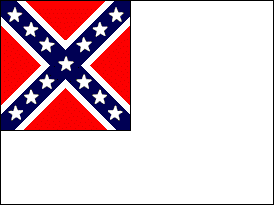
The designer of the second Confederate National Flag, which incorporated the Battle Flag as its jack, the so-called “Stainless Banner” which was introduced in 1863 was quite clear on the meaning and heritage of that flag. William T. Thompson, designer of the Second Confederate National Flag and editor of the Savannah Morning News wrote in 1863:

“As a people we are fighting to maintain the heavenly ordained supremacy of the white man over the inferior or colored race; a white flag would thus be emblematical of our cause. Such a flag would be a suitable emblem of our young confederacy, and sustained by the brave hearts and strong arms of the south, it would soon take rank among the proudest ensigns of the nations, and be hailed by the civilized world as THE WHITE MAN’S FLAG.”

“As a national emblem, it is significant of our higher cause, the cause of a superior race, and a higher civilization contending against ignorance, infidelity, and barbarism. Another merit in the new flag is, that it bears no resemblance to the now infamous banner of the Yankee vandals.”

The latter comment was due to many Confederate’s unhappiness with the Stars and Bars, the first national flag of the Confederacy, which to some too closely resembled the American flag that they admittedly hated.

Confederate Vice President Alexander Stephens in his Cornerstone Speech 1861boldly proclaimed:

“Our new Government is founded upon exactly the opposite idea; its foundations are laid, its cornerstone rests, upon the great truth that the negro is not equal to the white man; that slavery, subordination to the superior race, is his natural and normal condition.”

Since it is late and I have an early day tomorrow, I will close by saying if you choose to fly this flag and shove it in my face at least have the intellectual honesty and integrity to admit what that heritage was; it was about White Supremacy and Slavery, and the only state right that the South fought to protect was to ensure that slavery could not only continue to expand. The rights of Free States did not matter to them as was evidenced in the Congressional Gag rule of 1836 which forbade the discussion of slavery in the congress, something that John Quincy Adams fought for years until it was lifted. They had no problem with censoring Northern newspapers, which criticized slavery in the 1830s and 1840s. The Fugitive Slave Act of 1850 forced citizens of Freed States to deliver escaped slaves back to their Southern owners, and the Dred Scott decision denied that African Americans could be citizens.

I could go on but like I said I am tired. Have a great and hopefully thoughtful and reflective weekend.

Peace

Padre Steve+

2 Comments

Filed under civil rights, civil war, Political Commentary

Leave them on the Ice Floe to Die: Post Hospitalization Health Care in the United States

images-7

Friends of Padre Steve’s World

Thank you all for your expressions of support, kind thoughts, positive waves, and prayers over the past few weeks. My wife Judy is doing well, her wound is no longer draining, the sutures are healing and it looks like her staples will come out Monday. She is pretty much able to take care of herself and it looks like she will have a good number of visitors while I am in Gettysburg.

Now this has been an interesting experience. You see when someone leaves the hospital after major surgery insurance companies, even good ones are loath to pay for any in-home care, so everything falls on the family of the person, in our case since we don’t have 19 kids to saddle with the work, that person is me. In fact for most people the work falls on their spouse or their significant other, or possibly a teenage kid.

Now I am lucky, I am a fairly senior military officer and I work in an academic setting where I do not have to deploy and have a command that is very supportive of whatever time I need to care for Judy. I don’t have to worry about my paycheck getting docked ort losing my job. Sadly, a majority of Americans have to worry about that if their family member is sick, or needs post surgery care. I think that is a terrible situation if you ask me; condemn Europeans as socialists who pay too much in taxes, but at least they get something for what they pay, most European countries have effective health care and social service systems that do not let people fall through the crack.

For a nation that considers itself the pinnacle of humanitarianism and which is supposedly “pro-life” the situation is shameful, and frankly I think we should be ashamed. We are not pro-life at all, even the people that call themselves that tend to be pro-birth and the hell with you after that, unless you are rich.

Interestingly enough the Commonwealth Fund, hardly a liberal institution, ranked the United States 11th of 11 developed western countries in terms of health care, including accessibility and outcomes, of course all of those countries are willing to have universal health care, and sorry even Obamacare is not socialized medicine, it is simply a modified version of the Heritage Foundation’s plan that they touted over a decade ago and similar to Romneycare. It still keeps the insurance companies in control of most healthcare decisions. If you want to see where the United States ranks here is the listing:

  1. United Kingdom
  2. Switzerland
  3. Sweden
  4. Australia
  5. Germany & Netherlands (tied)
  6. New Zealand & Norway (tied)
  7. France
  8. Canada
  9. United States

The link to the Forbes Magazine article where you can find the report is here: http://www.forbes.com/sites/danmunro/2014/06/16/u-s-healthcare-ranked-dead-last-compared-to-10-other-countries/

But anyway, I digress. When a person leaves the hospital the family, with very few exceptions is lead to fend for themselves. Post hospital prescriptions may be covered by insurance, ours are, but nothing else is. If you need surgical pads, gauze, bandages, antiseptic wipes or a host of other potential needs, they come out of your pocket, thankfully mine are deep enough to handle these expenses, but think of the person who lives paycheck to paycheck and because they have to take unpaid leave are not getting a paycheck during their loved one’s illness.

When your loved one is recovering you become all the things that the hospital provides while they are an inpatient. You are nursing services, you get to check, clean and dress their wounds, make sure they get their medicines and monitor them for anything that might be going wrong. Now for me this is not a problem, I have a significant amount of medical background as a Medical Service Corps officer in the Army as well as a hospital chaplain working trauma, critical-care and ICUs. Blood, guts, bodily fluids, I can handle them; spot infection, got it; change dressings, and do other things that gross people out, can do. Again, I am lucky; I have training and experience but sadly when most people leave the hospital their untrained and inexperienced relatives get to do this. The family also is the nursing aid, the dietary service, rehab service, housekeeping and laundry service. It is a full time job, which most families are not, trained to deal with and many do not have the resources to do. Let’s say that because they have to pay rent the caregiver has to leave the recovering patient alone, they are hosed unless perhaps a friend or neighbor volunteers to do this, once again at no cost to the insurance company of the health care system.

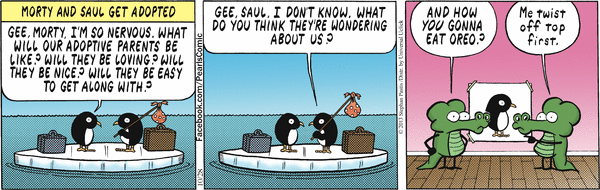
For those that do not think that nurses earn their money they are sadly mistaken, nursing is hard, it is physical and emotional. I know why nurses only work 3-4 days before they get a break, it is demanding. Judy often tells me from previous experiences with me as her nurse that I graduated from the Leave Them on the Ice Floe to Die School of Nursing. Now with global warming and the ice flows all melting I had no place to put her so I really had to work hard. Actually, I didn’t mind it, I wanted to make sure that there were no complications and that nothing happened to her I really worked hard to care for her, and I wanted to do it. However, that being said that is what our health care system does to people when it puts them out of hospital, it leaves them and their families out on the ice flow and sadly the ice floes are disappearing. We need to really change how we do health care in this country before they are gone.

PearlsBeforeSwine-28Oct2013


So anyway, I am now on the way to Gettysburg to lead 20 students as well as some faculty and family members on my third staff ride of the year. Tomorrow and Sunday I will be out and about the battlefield teaching. I’ll post something short tomorrow night.

Again thank you and blessings

Peace

Padre Steve+

Leave a comment

Filed under healthcare, News and current events, Political Commentary

The Long Shadow of Hiroshima

Cloud

Friends of Padre Steve’s World

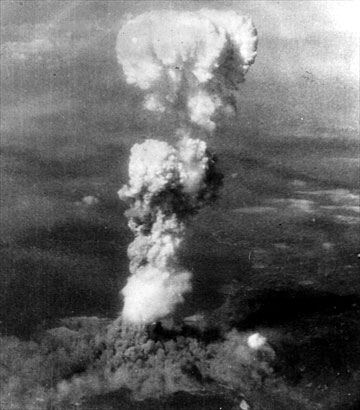
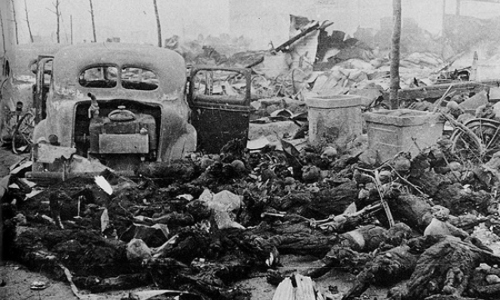
Seventy years ago the world changed. A remarkably destructive weapon was introduced in combat, a single bomb that annihilated the city of Hiroshima Japan. The effects were immediate, 70,000 to 80,000 people were killed, tens of thousands of others wounded, many of whom would suffer from the effects of radiation and radiation burns the rest of their lives. Within days a second bomb was dropped on Nagasaki with similar results, and Japan sued for peace. The Second World War was over and a new world was born, a world under the shadow of nuclear weapons.

John Hersey in his book on Hiroshima wrote: “The crux of the matter is whether total war in its present form is justifiable, even when it serves a just purpose. Does it not have material and spiritual evil as its consequences which far exceed whatever good might result? When will our moralists give us an answer to this question?” I have to echo his thoughts.

I teach the ethics of war to senior military officers at a major US. Military Staff College. One of the things that we do in the class is to have the officers do presentations on different historical, or potential ethical problems faced by national policy makers, military commanders and planners. The goal is to have these men and women dig deep and examine the issues, and think about the implications of what they will do when they go back out to serve as commanders, staff officers, advisors to civilian leaders and planners.

In each class at least one student deals with the use of the Atomic bombs, often these are Air Force or Navy officers who have served with nuclear forces. Unlike the depiction in the classic movie Dr. Strangelove or other depictions that show officers in these forces as madmen, the fact is that I have been impressed with the thoughtfulness and introspective nature of these men and women. The sincerely wrestle with the implications of the use of these weapons, and many are critical of the use of them at Hiroshima and Nagasaki. That is comforting to me to know that at least in the U.S. military that there are many who can reflect and do try to look at things not just from a purely military standpoint. Of course since I know humanity I figure that there are others in our ranks who are not so reflective or sensitive to the moral implications of the use of these weapons.

I am no stranger to what these weapons, as well as chemical and biological weapons can do. Thirty years ago when I was a young Army Medical Service Corps lieutenant I was trained as a Nuclear, Chemical and Biological Defense Officer. I learned the physical effects of exposure to these weapons, how many Rads of radiation a person could receive before they became sick and died. I learned what radiation exposure does to people at each stage. We trained with maps to chart fallout patterns, and the maps had the cities and towns that we lived in, this was Cold War Germany and yes both NATO and the Warsaw Pact expected that tactical nuclear weapons and chemical weapons would be used and we had to be able to operate in contaminated environments. We operated under the idea of Mutual Assured Destruction or MAD as a deterrent to war. It was chilling and made me realize that the use of these weapons today would be suicidal. When Chernobyl melted down we were in the fallout zone and were given instructions on what we could and could not do in order to minimize any possible exposure to radiation poisoning.

So when it comes to the first use of the Atomic bomb I am quite reflective. As a historian, military officer, chaplain and priest who has been trained on what these weapons can do I have a fairly unique perspective. Honestly, as a historian I can understand the reasons that President Truman ordered its use, and I can understand the objections of some of the bomb’s designers on why it should not be used. I’ve done the math and the estimates of casualties had there been an invasion of the Japanese home islands is in the millions, most of which would have been Japanese civilians.

9674_Photo_5

My inner lawyer can argue either point well, that being said the manner in which it was used at Hiroshima and Nagasaki troubles me. Hiroshima did have military targets, but a big part of the choice was its location, surrounded by hills, which created a bowl that would focus the explosion and maximized its effect. Many of the larger military and industrial targets lay outside the kill zone. The designers and officers on the committee wanted to show the Japanese, as well as the world the destructive power of the weapon. Those who opposed its use hoped that it would convince the leaders of nations that war itself needed to be prevented. The recommendation of the committee can be found here:

http://www.atomicarchive.com/Docs/ManhattanProject/Interim.shtml

Of the 150 scientists who were part of the bomb’s design team only 15% recommended the military use without a demonstration to show the Japanese the destructive power of the bomb and a chance to end the war. The poll of the scientists can be found here:

http://www.atomicarchive.com/Docs/ManhattanProject/Poll.shtml

Leo Szilard wrote a letter to Edward Teller seeking his support in sending a petition to President Truman regarding his opposition to the use of the weapon based on purely moral considerations. Szilard wrote:

“However small the chance might be that our petition may influence the course of events, I personally feel that it would be a matter of importance if a large number of scientists who have worked in this field wont clearly and unmistakably on record as to their opposition on moral grounds to the use of these bombs in the present phase of the war.

Many of us are inclined to say that individual Germans share the guilt for the acts which Germany committed during this war because they did not raise their voices in protest against those acts, Their defense that their protest would have been of no avail hardly seems acceptable even though these Germans could not have protested without running risks to life and liberty. We are in a position to raise our voices without incurring any such risks even though we might incur the displeasure of some of those who are at present in charge of controlling the work on “atomic power.”

The entire text is here:

http://www.atomicarchive.com/Docs/ManhattanProject/SzilardTeller1.shtml

The two petitions of the scientists to the President are here, the second letter concludes with this recommendation:

“If after the war a situation is allowed to develop in the world which permits rival powers to be in uncontrolled possession of these new means of destruction, the cities of the United States as well as the cities of other nations will be continuous danger of sudden annihilation. All the resources of the United States, moral and material, may have to be mobilized to prevent the advent of such a world situation. Its prevention is at present the solemn responsibility of the United States–singled out by virtue of her lead in the field of atomic power.

The added material strength which this lead gives to the United States brings with it the obligation of restraint and if we were to violate this obligation our moral position would be weakened in the eyes of the world and in our own eyes. It would then be more difficult for us to live up to our responsibility of bringing the unloosened forces of destruction under control.

In view of the foregoing, we, the undersigned, respectfully petition: first, that you exercise your power as Commander-in-Chief to rule that the United States shall not resort to the use of atomic bombs in this war unless the terms which will be imposed upon Japan have been made public in detail and Japan knowing these terms has refused to surrender; second, that in such an event the question whether or not to use atomic bombs be decided by you in the light of the consideration presented in this petition as well as all the other moral responsibilities which are involved.”

http://www.atomicarchive.com/Docs/ManhattanProject/SzilardPetition.shtml

http://www.atomicarchive.com/Docs/ManhattanProject/Petition.shtml

Ralph Bard, Undersecretary of the Navy wrote to Secretary of War Stimson his opinion on July 17th 1945:

“Ever since I have been in touch with this program I have had a feeling that before the bomb is actually used against Japan that Japan should have some preliminary warning for say two or three days in advance of use. The position of the United States as a great humanitarian nation and the fair play attitude of our people generally is responsible in the main for this feeling.”

I think that those who debate the history of this need to look at the entire picture and read the letters, the documents and take into account everything. My hope is that leaders, policy makers, legislators and we the people continue to work to eliminate nuclear weapons. It is true that the nuclear stockpiles of the United States and Russia are significantly smaller than when the Cold War ended, but even so what remain are more than enough to extinguish human life on the planet. Add to these the Chinese, French, British, Indian, Pakistani and the hundreds of undeclared weapons of Israel the fact is that there remains the possibility that they could be used. Likewise there are nuclear programs in other nations which given enough time or believing them necessary could produce weapons, including Iran and Saudi Arabia. Add to this the possibility of a terrorist group producing or acquiring a weapon the world is still a very dangerous place.

26362hiroshima_shame

That is the world that we live in and the world in which policy makers, legislators and educated people who care about the world must attempt to make safe. If you asked me I would say outlaw them, but that will never happen. Edward Teller wrote Leon Szilard:

“First of all let me say that I have no hope of clearing my conscience. The things we are working on are so terrible that no amount of protesting or fiddling with politics will save our souls…. Our only hope is in getting the facts of our results before the people. This might help to convince everybody that the next war would be fatal. For this purpose actual combat use might even be the best thing…. But I feel that I should do the wrong thing if I tried to say how to tie the little toe of the ghost to the bottle from which we just helped it to escape…”

The ghost is out of the bottle, and nothing can ever get it back in. We can only hope and pray that reasonable people prevent any of these weapons from ever being used and that war itself would end.

Peace

Padre Steve+

2 Comments

Filed under ethics, History, Military, News and current events, Political Commentary, world war two in the pacific

Corporate Slavery & the Black Codes

Friends of Padre Steve’s World

A couple of weeks ago I posted a part of my Civil War and Gettysburg Staff Ride text about the Infamous Black Codes which appeared in the South following the Civil War. These codes were oppressive and for all practical purposes sought to return newly freed African Americans to a a state of slavery by another name. These codes were followed by policies which did just that. States leased or sold African American men who had been arrested under the codes to corporations, planters and other businesses, entities which without oversight denied these men, including juveniles every right to life, liberty or the pursuit of happiness. The condition lasted until World War Two, when Franklin Delano Roosevelt ordered his Attorney General to end these practices. 

Personally, every time I read the accounts of White Supremacists who ignore, deny or defend the practices of slave owners before the war, the argument that the war had nothing to do with slavery, and that the era of Jim Crow was not that bad and even helpful to blacks, I get more motivated to expose their lies. The fact is that the Black Codes enacted by Southern States and the rulings of the Supreme Court and the legislation of Congress during and after Reconstruction I get more motivated. This is a new sub-section of the section on the Black Codes in my text. I hope that it if nothing else, helps you look to the facts and not to buy the myths posited by current neo-Confederates and whitewashing of the past by state school boards and the publishers of our textbooks.

Peace

Padre Steve+

14-1_Page_43_Image_0001

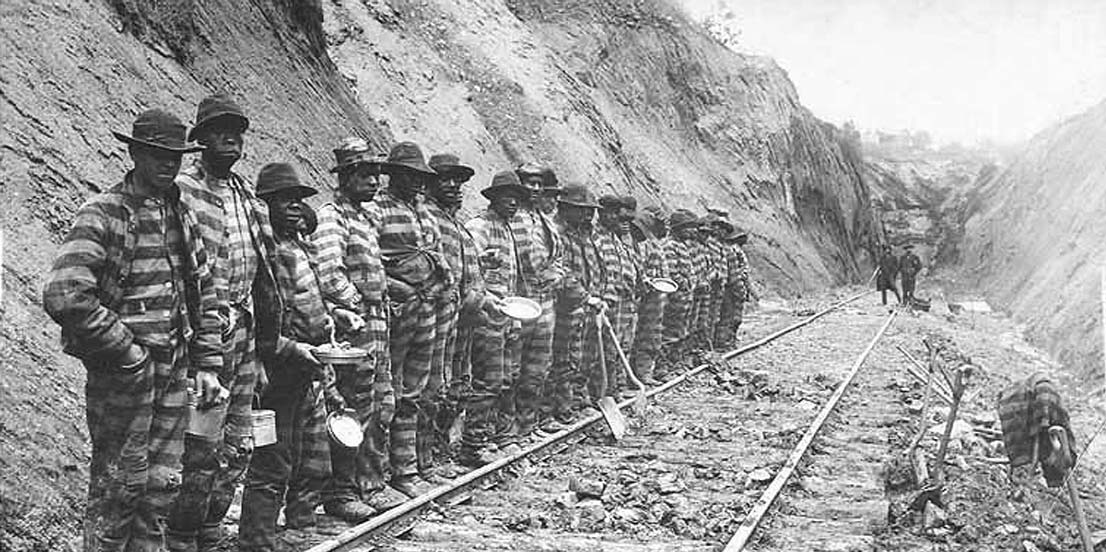
Re-enslaved Blacks building a railroad near Asheville North Carolina 

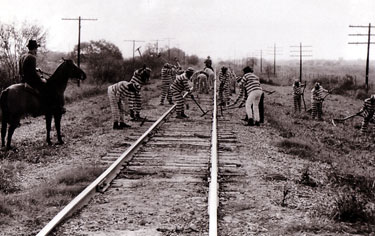
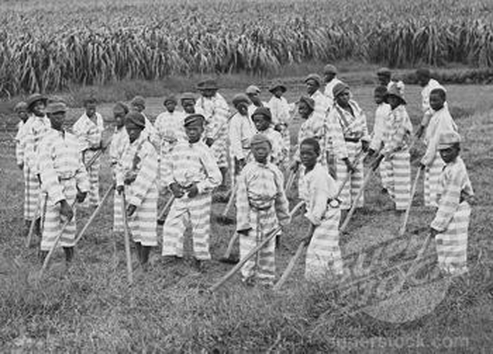
Another lesser-discussed aspect of the Black Codes was their use to return African Americans who had been convicted under the “vagrancy” statutes to a new type of slavery in all but name. The state governments then leased the prisoners to various corporations; railroads, mines and plantations, even former Confederate General and founder of the Ku Klux Klan Nathan Bedford Forrest received his share of prisoners to work his land.

The practice became a lucrative source of revenue, for not only did the states collect the fees from the companies, but did not have to spend tax dollars to incarcerate, feed or otherwise care for the prisoners. Mortality rates were very high among the prisoners in private custody and the regulations, which stipulated that prisoners would be adequately fed, housed and treated, were not enforced.

By 1877 “every former Confederate state except Virginia had adopted the practice of leasing black prisoners into commercial hands. There were variations among the states, but all shared the same basic formula. Nearly all the penal functions of government were turned over to the companies purchasing convicts. In return for what they paid each state, the companies received absolute control of the prisoners… Company guards were empowered to chain prisoners, shoot those attempting to flee, torture any who wouldn’t submit, and whip the disobedient – naked or clothed – almost without limit. Over eight decades, almost never were there penalties to any acquirer of these slaves for their mistreatment or deeds.” [1]

parks_chain_gang

The profitability of these ventures brought Northern investors, including the owners and shareholders of U.S. Steel into the scheme allowing financial houses and Northern corporations to grow their wealth, as they had during the pre-war days off the backs of slaves. However, the practice was also detrimental to poor Southern Whites who could not compete fairly in the labor market. In 1891 miners of the “Tennessee Coal Company were asked to sign an “iron-clad contract”: pledging no strikes, agreeing to get paid in scrip, and giving up the right to check the weight of the coal they mined (they were paid by weight). They refused to sign and were evicted from their houses. Convicts were brought in to replace them.” [2] The company’s response brought about an insurrection by the miners who took control of the mine and the area around it and freed 500 of the convict-slaves. The leaders were primarily Union Army veterans and members of the Grand Army of the Republic veteran’s organization. The company backed down, but others learned the lesson and began to employ heavily armed Pinkerton agents as well as the state militias to deal with the growing labor movement, not only in the South but also in the North.

7100338_orig

Non-convict black laborers as well as poor white “sharecroppers” on the large plantations were forced back into servitude of another manner, where legislatures gave “precedence to a landlord’s claim to his share of the crop over that of the laborer for wages or a merchant for supplies, thus shifting the risk of farming from employer to employee.” Likewise, “a series of court decisions defined the sharecropper not as a partner in agriculture or a renter with a property right in the growing crop, but as a wage laborer possessing “only a right to go on the land to plant, work, and gather the crop.” [3]

The practice did not end until Franklin Delano Roosevelt ordered his Attorney General Francis Biddle to order Federal prosecutors who had for decades looked the other way begin prosecuting individuals and companies involved in this form of slavery. Biddle was the first U.S. Attorney General to admit the fact that “African Americans were not free and to assertively enforce the statutes written to protect them.” [4] Biddle, who later sat as a justice at the Nuremberg trials of major Nazi War Criminals commented during the war “One response of this country to the challenge to the ideals of democracy made by the new ideologies of Fascism and Communism has been a deepened realization of the values of a government based on a belief in the dignity and the rights of man.” [5] Biddle charged the newly formed Civil Rights Division of the Justice Department to shift its focus from organized crime to cases of discrimination and racial abuse. Biddle repudiated the rational that allowed for the practice and wrote that the “law is fixed and established to protect the weak-minded the poor, the miserable” and that the contracts of the states that allowed the practices were “null and void.” [6] It was the beginning of another twenty-year process in which African Americans and their allies in the Civil Rights Movement worked to bring about what Lincoln referred to as “a new birth of freedom.”

Notes

[1] Blackmon, Douglas A. Slavery By another Name: The Re-enslavement of Black Americans from the Civil War to World War II Anchor Books, a Division of Random House, New York 2008 p.56

[2] Ibid. Zinn A People’s History of the United States p.275

[3] Ibid. Foner A Short History of Reconstruction p.250

[4] Ibid. Blackmon Slavery By another Name pp.378-379

[5] Ibid. Blackmon Slavery By another Name p.378

[6] Ibid. Blackmon Slavery By another Name p.379

6 Comments

Filed under civil rights, civil war, History, Political Commentary

A Wrong Turn, a Holy Cause and Two Bullets: The Assassination of Archduke Franz Ferdinand

Friends of Padre Steve’s World

Well it has been a busy day combining my nursing duties at home with a couple of trips in to work, the last where I did my last lecture before the Gettysburg Staff Ride which I lead on Friday.

That being said, though I have some things I am working on, including a little piece about the part of health care that no-one wants to pay for, that what happens when someone is discharged from the hospital still needing a pretty significant amount of care. I can tell you about that first hand. But I digress…

Tonight since I am too tired to put anything new out I will re-post an article from about 13 months ago about the assassination of Archduke Franz Ferdinand and his wife Sophie, an act which triggered the First World War. The assassination, an act by radical Serbian nationalists killed the only man in the Austro-Hungarian Empire who might have prevented the war, and even been favorable to the Serbs. But then such is the mindset of fanatics, and don’t we have a lot of them in our world today, including non-Moslem Americans.

So anyway, I hope you like this. Have a great night.

Peace

Padre Steve+

padresteve's avatarThe Inglorius Padre Steve's World

clive-uptton-the-assassination-of-archduke-franz-ferdinand

“The muffled tongue of Big Ben tolled nine by the clock as the cortege left the palace, but on history’s clock it was sunset, and the sun of the old world was setting in a dying blaze of splendor never to be seen again.” Barbara Tuchman

Archduke Franz Ferdinand, the heir to the throne of the Austro-Hungarian Empire was eager to leave Sarajevo. He had opposed the empire’s annexation of Bosnia-Herzegovina when it occurred in 1908 as a “needless provocation of the South Slavs” and their Russian supporters, he knew that the action was “a diplomatic time bomb that could go off at any time.”He had come to Bosnia to help win over the loyalty of the resentful populace and in a sense to consecrate Austrian rule over Bosnia-Herzegovina.

archduke_ferdinand

Franz Ferdinand 

The visit included military maneuvers in the western part of the province away from Serbia to be less…

View original post 922 more words

Leave a comment

Filed under Loose thoughts and musings

The Night the Lights Went Out in Europe: August 3rd 1914

Friends of Padre Steve’s World

Another day at home taking care of my wife following her surgery. She is doing better which is good. We also had a dear friend, her daughter and grand-daughters visit last night on their way to Georgia. It was so wonderful to see her and talk about the good times we had when I was serving as Chaplain at Fort Indiantown Gap Pennsylvania back in 1997 and 1998.

Anyway, I am preparing some new material but thought in the interest of history to continue and re-post a third article that I wrote a year ago about the outbreak of World War One.

I think this is important, first because that war still shapes so much of the world that we live in. Likewise there are the diplomatic lessons decisions of leaders who brought about a war that was in none of their nation’s long term interests.

Then there are the lessons of the military planners on all sides who envisioned a short and glorious war in which they would vanquish their enemies and be home before the leaves fall. The same leaders seemed to ignore the history of the real first modern war, the American Civil War, discounted the technological advances that made war much more lethal, and did not adjust their tactics to those facts. The result was that on the Western front the Germans, British, French and Belgians lost about 670,000 in a period of about five weeks. In the east the Russians lost 320,000 troops and the Germans about 67,000 between August 17th and September 14th, while in Galicia the Russians eliminated a third of the Austrian forces facing them, some 320,000 troops for the loss of 225,000 soldiers, while in Serbia the Austrians, who brought about the war by their harsh demands on Serbia suffered about 225,000 casualties inflicting 170,000 on the Serbs, with no gain in territory. All told nearly 1.9 million men, killed, wounded, missing or captured in just over a month of combat.

On August 3rd 1914, the leaders of Europe went to war, and the lamps went out over Europe, and much of the world.

Have a great day and never forget.

Peace

Padre Steve+

padresteve's avatarThe Inglorius Padre Steve's World

grey-bastard

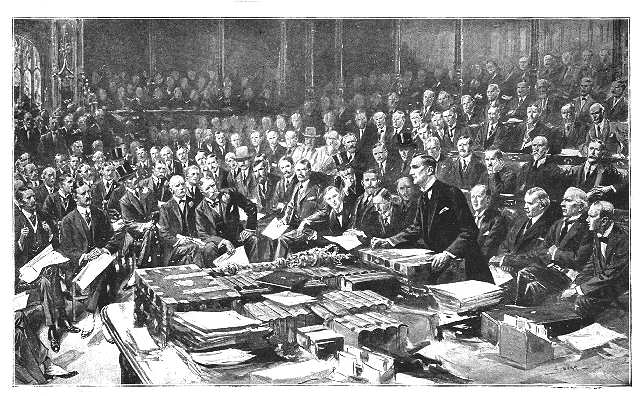
Sir Edward Grey addressing the House of Commons 

The mobilization of millions of soldiers across Europe was moving rapidly as the sun set on the night of August 2nd 1914 when the German Ambassador to Belgium Klaus Bulow-Selaske delivered an ultimatum to the Belgian government. The ultimatum gave the Belgians 12 hours to decide if they would allow the German armies free passage through the country. The Belgians, treasuring their independence and led by a truly heroic leader, the young and humble King Albert refused the German ultimatum and vowed to fight.

The next morning the British House of Commons met and for the first time since 1893 every member was present, with many spectators in attendance, Britain’s participation in a war on the European Continent in nearly 100 years was being contemplated. Britain was divided between interventionists and non-interventionists, and the pressure was on the government.

The British Foreign…

View original post 762 more words

Leave a comment

Filed under Loose thoughts and musings

Winston Churchill, Turkey and the High Cost of Two Dreadnoughts

Friends of Padre Steve’s World

Another manic Sunday. I am doing my best as a nurse to Judy, went in to conduct Chapel services and then came home to discover our air conditioner is not working. Fun city, temperature about 90 degrees and a heat index close to 100. Anyway, that being said I am republishing an article I wrote a year ago bout how one short-sighted decision, based on military expediency had an effect on history that still continues to this day.

Have a great day,

Peace

Padre Steve+

padresteve's avatarThe Inglorius Padre Steve's World

churchill1914

One of the more interesting and overlooked factors in the days leading up to the First World War, which had significant ramifications in the Middle East involved Winston Churchill. Churchill was serving as First Lord of the Admiralty and made a decision which ensured the Ottoman Empire would be pushed into an alliance with Germany.

For many years Britain had been the chief supplier of ships for the Ottoman Navy. In fact in the years leading up to World War One the Ottomans had purchased over 40 ships from Great Britain and on August 2nd 1914 was expecting to take delivery of two, extremely modern Dreadnoughts, the Sultan Osman I and the Reshadieh. The Sultan Osman was armed with fourteen 12” guns, the Reshadiehwith ten 13” guns, making them the equal or superior to most battleships afloat. The Turkish Government had paid over 4 billion Pounds for the…

View original post 573 more words

Leave a comment

Filed under Loose thoughts and musings

The Beginning of the Never Ending End: August 1914

Friends of Padre Steve’s World,

Things have been quite busy as finally my wife Judy is out of the hospital and on the road to recovery following surgery for endometrial cancer. As such I have had little time or energy to do much new writing. However, some topics are still relevant as is this topic which I wrote about a year ago.
It is hard to believe that 101 years ago the leaders, the statesmen and the military men of Europe were about to begin a war which not only cost tens of millions of lives, spawned another world war and forever changed the world. The effects are still being felt in Europe, the Middle East and Africa.

We should not forget it, nor should we forget the actions of those leaders.

Have a great night,

Peace

Padre Steve+

padresteve's avatarThe Inglorius Padre Steve's World

wwimobilization

“An event of great agony is bearable only in the belief that it will bring about a better world. When it does not, as in the aftermath of another vast calamity in 1914-18, disillusion is deep and moves on to self-doubt and self-disgust.” Barbara Tuchman

On August 1st 1914 the armies of Europe were mobilizing for war. The last feeble efforts at diplomacy were failing as leaders, and diplomats sought a way out of the situation that their policies had brought about. They had allowed the military instrument to drive policy, rather than for policy to dictate how the military should be employed as an instrument of national strategy. As such they became prisoners to their military mobilization plans, all of which depended on speed in order to gain advantage over their adversaries.

The nations and militaries of Europe were devoted to the “cult of the offensive” by which…

View original post 542 more words

Leave a comment

Filed under Loose thoughts and musings