Author Archives: padresteve

padresteve's avatar

About padresteve

I'm a Navy Chaplain and Old Catholic Priest

Power and Folly

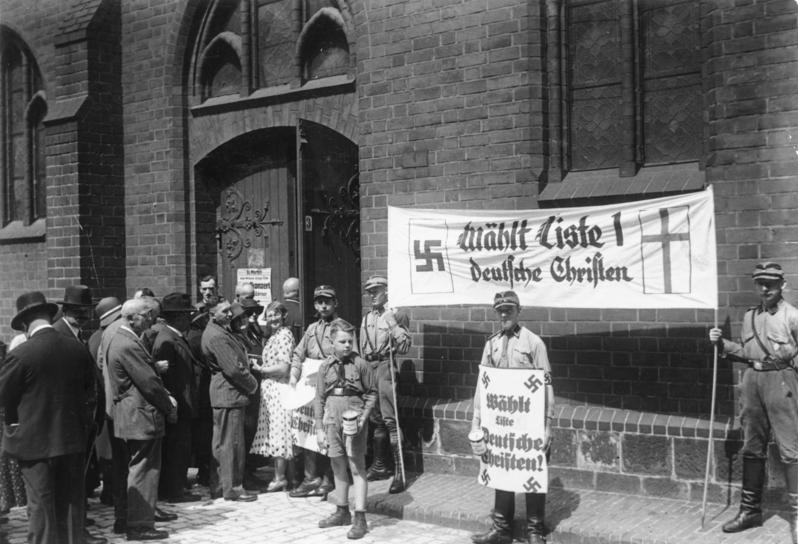
ADN-ZB/Archiv Kirchenwahl am 23.7.1933 in Berlin. Wahl in der Marien Kirche am Neuen Markt. Nazistische Wahlpropaganda unter Maske des Christentums.

I have refrained from tackling any politics for over a week now, and that was a good thing. My time of deliberate rest from jumping into any of the major political, judicial, or social controversies the past week has been good. It has allowed me to re-center myself. As I have done so I have taken a step back just to observe, to watch and listen, and to continue to read, study, reflect, and yes, to relax. .

Of course, much of that study and reflection turns back to history. Barbara Tuchman wrote, “Chief among the forces affecting political folly is lust for power, named by Tacitus as “the most flagrant of all passions.” One go a minute without observing this.

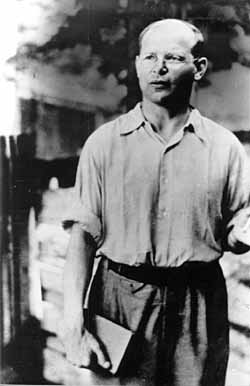
Dietrich Bonhoeffer was a German pastor and theologian who openly opposed Hitler and his policies in an age when the bulk of German Christians either threw their wholehearted allegiance behind Hitler, or simply did nothing. Bonhoeffer wrote about the violence of Nazi power, and how it, like other brazen displays of power produces outbursts of folly. He noted:

“If we look more closely, we see that any violent display of power, whether political or religious, produces an outburst of folly in a large part of mankind; indeed, this seems actually to be a psychological and sociological law: the power of some needs the folly of others. It is not that certain human capacities, intellectual capacities for instance, become stunted of destroyed, but rather that the upsurge of power makes such an overwhelming impression that men are deprived of their independent judgment, and…give up trying to assess the new state of affairs for themselves.”

It is important for all of us, no matter what our political ideology, or who our chosen candidate is, not to get caught up in the violence of power. We must retain our capacity for independent judgment and never give up our individual and collective responsibility to assess what is going on and make informed judgments.

Unfortunately, that can be quite an undertaking when we are bombarded with an endless assault by politicians, pundits, and preachers, and their media allies and enablers every minute of the day. Even so, we cannot abandon our duty to think and ask the hard questions, even of those we agree with and support.

Anyway, until tomorrow,

Peace

Padre Steve+

Leave a comment

Filed under ethics, History, News and current events, Political Commentary

Living Completely in the World

bonhoeffer-standing

Friends of Padre Steve’s World,

The past week I have shared by thoughts about faith and doubt, and life, and I have been taking some time to recharge my batteries so to speak after all the turmoil; that which was within me, and that which keeps coming at us all in the media.

Not long before he was killed at the Flossenberg Concentration Camp, Dietrich Bonhoeffer wrote,

“I discovered later, and I’m still discovering right up to this moment that is it only by living completely in this world that one learns to have faith. By this-worldliness I mean living unreservedly in life’s duties, problems, successes and failures. In so doing we throw ourselves completely into the arms of God, taking seriously, not our own sufferings, but those of God in the world. That, I think, is faith.”

To live unreservedly in life’s duties, problems, successes, and failures; I guess that is another aspect of faith.

I should be writing some more about current events in relation to history in the coming days and as more of my Civil War and Gettysburg text is ready you will see some of that as well, and maybe even some other history that still matters today.

Peace

Padre Steve+

Leave a comment

Filed under christian life, faith, History, nazi germany

Paralyzed by Doubt

403194_10150592726767059_1694849983_n

Friends of Padre Steve’s World

Just another short thought as I continue to read, reflect and recharge this week. I am all too certain of my doubts and fears, and I do try to be honest about them. That being said, over the years I try not to let them rule me, or keep me from living life. I think that it is possible to live a life that understands the connection between faith, doubt, hope, and love; life that is full of meaning and purpose. Yes, even in the most times of abject depression, despair, and when it seems that I am looking into the abyss, it is always the most important to continue to move forward, and to live.

In the Star Trek the next Generation the character Q chastises Captain Picard when Picard complains about the loss of some of his crew in the first encounter with the Borg, “If you can’t take a little bloody nose, maybe you ought to go back home and crawl under your bed. It’s not safe out here. It’s wondrous, with treasures to satiate desires both subtle and gross. But it’s not for the timid.”

I have had a number of people at various times in my life tell me that I should quit, pack up my bags and go back to some supposed place of safety were doubt, danger and risk are minimized. But what kind of life is that? Just because danger, rejection, and even failure and defeat are possible; why quit?

When I go through weeks like last week I am reminded that I cannot quit, and that I cannot allow doubt, even legitimate doubt in myself and what I believe about God, or my experiences with others, to paralyze me, to keep me from moving forward.

Paul Coelho wrote, “You must be careful never to allow doubt to paralyze you. Always take the decisions you need to take, even if you’re not sure you’re doing the right thing. You’ll never go wrong if, when you make a decision, you keep in mind an old German proverb: ‘The devil is in the detail.’ Remember that proverb and you’ll always be able to turn a wrong decision into a right one.”

So until tomorrow,

Peace

Padre Steve+


1 Comment

Filed under Loose thoughts and musings

What We Owe Others

1625727_10152283192447059_782802676_n

Friends of Padre Steve’s World,

Another short thought as I continue my recharging myself. I am doing a lot of reading, doing some research for my Gettysburg and Civil War text, as well as preparing some new material for the Ethics elective that I teach, and those are all good things for me to be doing right now. As I do them I am reminded of how fortunate I am to be serving where I am, what I get to teach, write and study and to realize that even though I wanted the position, that someone had to select me for it, and get higher approval in order to do so. That I could not engineer. Neither could I engineer on my own going from the Army to the Navy when I had already spent almost a full career in the Army and Army Reserve, nor could I engineer my last minute selection for the Clinical Pastoral Education residency at Parkland Memorial Hospital in 1994, or the times when people who believed in me, paid my seminary tuition when I saw no hope to continue. I can go on and on and on about such things. I look at the things that I have been able to do in life, the things that I have learned, and I am reminded that others helped get me here.

Dietrich Bonhoeffer wrote, “In normal life we hardly realize how much more we receive than we give, and life cannot be rich without such gratitude. It is so easy to overestimate the importance of our own achievements compared with what we owe to the help of others.”

The fact is that I owe almost everything to people who have given me chances to succeed, and thankfully though many times have been difficult I did not give up. I was persistent but so much I what I can call “my” accomplishments, I owe in large part to others, and sometimes what seems like dumb luck or good fortune and just being at the right place at the right time.

So anyway, I hope that you have a great day, and please take the time to remember those who helped you.

Peace

Padre Steve+

Leave a comment

Filed under christian life, faith

Frantic Fanatics

WCPO_Fort_Thomas_Kim_Davis_rally5_1441659156589_23696760_ver1.0_640_480

Friends of Padre Steve’s World,

Like yesterday just a short post that comes out of my reflections following for what was for me, a difficult Holy Week. As I was sorting through my own issues, and trying to make sense of what I was going through I remembered a saying by a Spanish (Basque) philosopher named Miguel de Unamuno who lived in the late 1800s and during the Spanish Civil War, he noted that “Faith which does not doubt is dead faith,” and in that moment my mind was flooded with the examples of so many characters in the Bible, as well as those who have shaped what Christians believe for two millennia.

In turbulent times like those in which we live, many people seek some kind of religious certitude, and grasp for some kind of orthodox that they can cling. This is a universal condition which can be found in the lives of people of all religions. The great American theologian Reinhold Niebuhr wrote something that I think is a good point of reflection to close today’s thought, “Frantic orthodoxy is never rooted in faith but in doubt. It is when we are unsure that we are doubly sure.” That is demonstrated daily by people who need to suppress, discriminate against, and even kill those whose existence threatens their certitude.

Until tomorrow,

Peace

Padre Steve+

1 Comment

Filed under christian life, faith

Uncomfortable but Necessary

IMG_1915.JPG

Friends of Padre Steve’s World,

I am going to take a few days to read and recharge, and just put up some short thoughts or re-post older articles. It is a good thing, as I mentioned that last week was difficult, but I think that like many difficult things that it was probably necessary for me to go through. I guess in a way, my Christian faith, my faith in Jesus the Christ is like that of Fyodor Dostoyevsky who noted that his “hosanna is born of a furnace of doubt.”

So anyway, have a good day and enjoy living.

Peace

Padre Steve+

4 Comments

Filed under christian life, faith

Essential Elements of Faith: Doubt, Brokenness and Hope

lent

Friends of Padre Steve’s World,

Paul Coelho wrote, “None of us can know what tomorrow will hold, because each day has its good and its bad moments.”

So, a short note on this Easter Tuesday, and thankfully I did survive Easter and even Easter Monday. It was admittedly quite a difficult week. I for the first time that I can remember actually dreaded Easter, and as it and my birthday, which fell on Easter drew closer I felt as if I was hurtling toward the abyss. It has been a few years since I felt that bad, and every passing day I was reminded of haunting doubts, of abandonment, of painful events from the past. The worst day was Easter Sunday morning, when I felt like Charlie Brown, standing alone on the pitcher’s mound in the pouring rain, and yes it was raining, and I was alone in the chapel.

Thankfully, that moment passed, and even though the rain continued to fall, my mood was cheered by Judy, and our dogs, my brother and my mom, as well as our friends, local ones, and those around the world who wished me very kind thoughts, words, prayers, and love for my birthday.

I feel a lot better than I did on Easter morning, and I seem to be getting back to my normal self; not that I will ever stand accused of being normal, but normal for me.

As far as Easter, and faith, and doubt, I am no longer hurtling toward the abyss, but I am pretty much back to my normal continuum of faith and doubt, and yes hope for a better day and tomorrow. I don’t think that I ever will return to an easy faith, I think that Paul Tillich got it right when he said, “Doubt isn’t the opposite of faith; it is an element of faith.” That seems to be borne out in scripture, Saint Thomas, Jeremiah the prophet, and even Saint Paul all seem to have struggled with that existential question, as well as the struggle if feeling abandoned, and having known the pain of defeat. Likewise, the French Christian mystic Simone Weil noted in her book Grace and Gravity, “He who has not God in himself cannot feel His absence.”

But without pain, without doubt, without defeat, we can never experience the exhilaration of victory, we can never know love. As Paul Coelho wrote in his novel Manuscript Found in Accra, “I am here to tell you that there are people who have never been defeated. They are the ones who never fought. They managed to avoid scars, humiliations, feelings of helplessness, as well as those moments when even warriors doubt the existence of God.’’

As far as my struggles with faith, calling, and my priestly vocation, I’ll have to continue to deal with them on a daily basis; of this, I am sure, because as Coelho noted, “What was broken will never be the same again.” That my friends is true, but it does not rule out the fact that in life, what was broken can by transformed and be made better than it was in the first place, and I guess that is why we hope, and why Easter only comes after the anguish of Good Friday and the fearful solitude of Holy Saturday. Otherwise it would have no meaning.

I think that in a way, what I experienced last week, allows me to take God more seriously, less frivolously, and allows me to empathize with those who struggle, who feel the pain of defeat and failure, and to be there for them, as much as others are for me.

So, until tomorrow,

Peace

Padre Steve+

Leave a comment

Filed under christian life, faith

An Easter Alleluia?

rubensresurrection1

Friends of Padre Steve’s World,

I am glad that Easter Sunday is over. Of course in my tradition, the Catholic-Orthodox-Anglican tradition, there are 49 more days left in the Easter Season, but who is counting?

I dreaded Easter this year, more than I ever have. I think it is because that for only the second time in my life, Easter Sunday coincided with my birthday. The only previous time that it did was in 2005, when I stilled lived in a cloud-cuckoo-land of unquestioned belief before I went to Iraq, before my crisis in faith, before I was cast aside by most of the clergy of my former church, and abandoned by men, fellow priests, chaplains, and clergy, who I thought were my friends. Interestingly enough, the current head of that church continues to stay in contact with me, and sent me a nice birthday greeting this morning. We may not agree on some of our theology, but I can respect and love him. For that I am grateful, and interestingly enough, many of those who I thought were my closest friends in that church,and in the military chaplaincy, abandoned it, just as they did me, because it wasn’t good enough for them either.

This year, for me, Easter became something existential. I did not think that I was going to live through it. Now, as far as I know there is nothing physically wrong with me that, and in fact I want to live, more than life itself. I want to live to be at least 105 years old so I can lead a staff ride on the 200th anniversary of the Battle of Gettysburg in 2063. I may need one of those hi-tech exoskeleton units to accomplish that should I live that long, but that is my goal.

I love life, but I struggle with faith. This week, in fact the whole season of Lent that preceded Holy Week was a struggle for me. Week after week I showed up to conduct services, to celebrate Eucharist, and no one came, until the last week of the previous class when one student came by. I was thrilled when it did, but truthfully, in the past two and a half years at the Staff College, my most faithful parishioners have been Lebanese Catholic officers, and there were none of them in the winter class. So despite the fact that we are kind of in a between class limbo, I was wondering, “why do I even bother to show up?”

I mean really… on Easter Sunday morning, my birthday to make matters worse, all I wanted to do was die. On the way home from work all I could feel was heaviness, and the only thing that kept me from driving my car off the road was that I didn’t want to put Judy through that pain. What I was feeling was not her fault; she had done all that she could to make this a good week and good birthday. I could not ask for more. But if you say you have faith, and have never been to the point of despair that I have been, please abstain if you can from judging me, and spare me your sermons.

Eventually, we got out to or friends at the Gordon Biersch brewery restaurant. After the horrible morning, the afternoon was good. My mood has lifted considerably. I have been treated with great kindness by hundreds of friends who have wished me well, by phone, e-mail, or on social media. Other friends were kind to me today. My Turkish friend at Biersch, his wife, made me a small cake; others were just kind to give me a hug, spend some time in conversation, or to share a laugh with me over a beer. While there I found that one of my friends here in Virginia Beach was in an automobile accident, and suffered some injuries this morning, and I pray, to the God that I so struggle to believe in, that he will be okay.

But that being said, I wonder at times, what Dietrich Bonhoeffer asked, is not true for me: experience has made us suspicious of others and kept us from being truthful and open; intolerable conflicts have worn us down and even made us cynical. Are we still of any use?”

I admit that I have been worn down, that I am suspicious, and that I struggle. I wonder, as far as my calling and vocation as a minister, priest and chaplain goes, if I am of any use.

If I am, I am glad for that. If I have even helped someone in some small way, in his or her time of crisis, or doubt, I am glad for that. If not, then that is something to be decided not by me, nor by the Church, but by God, and such decisions are way above and beyond my pay grade. As far as the men that I feel who abandoned me when I struggled, and when my questions could no longer be tolerated; men who I did all that I could do to help to where they are today, and men who I thought were my friends and brothers; for that I have no answer. So I guess that too is well above and beyond my pay grade.

As far as yesterday morning, Easter Sunday, I guess I am glad that no one showed up at my chapel. I was so far from even believing, I was so far from the hope of the resurrection, that to cry out “Alleluia! He is risen! The Lord is risen indeed!” would have been blasphemy. So in a sense, as hard as today was, I was glad that I was spared from that.

When I thin that I am reminded of the words of he great German theologian Jurgen Moltmann;

“Believing in the resurrection does not just mean assenting to a dogma and noting a historical fact. It means participating in this creative act of God’s … Resurrection is not a consoling opium, soothing us with the promise of a better world in the hereafter. It is the energy for a rebirth of this life. The hope doesn’t point to another world. It is focused on the redemption of this one.”

I am hoping that this week will be better and that if anyone darkens the door of my chapel this coming Sunday, that I might actually join in the Easter alleluias. I want to experience that rebirth again, I want, not to simply assent to a dogma, but instead to participate in the creative act of God, and maybe to find redemption in this world whatever the next world may bring.

I hope that this makes sense, and even if it doesn’t, please, pray for me a sinner,

Peace

Padre Steve+

3 Comments

Filed under christian life, ethics, faith

Politics and Empty Tombs

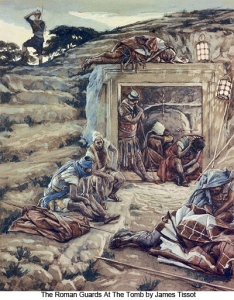
roman-soldiers-guard-james-tissot-1

Friends of Padre Steve’s World,

Those who follow my writings know that I struggle with faith. Since my return from Iraq in 2008 I have found a certain kinship with soldiers who have been assigned the unthankful and trying tasks of dealing with occupation duties or fighting insurgencies. 

In the case of the story of Easter it is all too common that writers, theologians and others focus on the story of Jesus and his disciples, or conversely, if they explore anyone else, they focus on the Jewish religious leaders of the time. 

After Iraq I had a harder time relating to Jesus and his followers, or the religious leaders of Jerusalem. That being said, coming home from Iraq, struggling to believe, I find a tremendous affinity with the officers of the Roman Legions serving in Judea and Samaria in the 1st Century A.D. 

This is the final chapter of a series that I have been writing about the Roman Centurion known as Longinus, who according to tradition, was at the cross when Jesus was crucified. I have tried to weave other characters from the Gospel narratives, including the Centurion whose “beloved servant” was healed by Jesus an account mentioned in both Matthew and Luke, where the Greek word for servant “Pais” is only found in these accounts and is different from the word commonly used in the New Testament “Doulos.” The difference leads to some interesting and potentially powerful understandings about the people that Jesus interacted during his earthly ministry.

The reason I am doing this is because I believe that many Christians cannot imagine what it must have felt like to be the Roman occupiers of Judea in a time where they were hated and deep divisions, religious, cultural and political complicated the lives of Roman officers like the Centurion known as Longinus.

I do hope that you enjoyed the series and that it and the Gospel narratives challenged you whether you are a Christian or not. I know from my time in Iraq serving with our advisors to the Iraqi forces that what the Roman officers dealt with was more difficult than any of us could imagine, unless you have been a soldier or officer of an occupying power, which I have been.

Peace and Happy Easter…

Padre Steve+

The pounding on his door awakened Longinus before he expected on this day after the Jewish Passover. He was hoping perhaps beyond hope that the worst was over and that in a few days he could take his soldiers back to the confines of Caesarea and away from the troubled city of Jerusalem. He was tired of this duty and longed for service with a real Legion with real Roman soldiers.

The pounding continued and the weary centurion wiped the sleep from his eyes, rolled out of his bed and went to the door of his quarters in Fortress Antonia. He opened the door to find his Optimo, or second in command Decius standing there, his fist ready to continue pounding, with a look of near panic on his face.

Startled, Longinus asked the young officer to come into his quarters and take a seat at his table. They like the other officers had seen events that they could barely explain over the past week, and some of those events had troubled Longinus in a manner in which he was not accustomed to, or prepared for.

Longinus took a wineskin and poured the contents into two cups. He asked Decius what was so urgent and frightening that he had to be at his quarters well before the duty day began. The young man took off his helmet to reveal a crop of blondish brown hair common to the Tyrol in the northern part of Italy.

The young officer took the cup of wine and downed it in one motion. Longinus, pureed and another as the young Tyrolean told an almost unbelievable story. Wiping his brow and taking a drink from the cup he explained that there was trouble at the tomb of the itinerant preacher named Jesus.

Longinus listened to his report:

The two guards from Longinus’s unit who had relieved the previous watch at the tomb had evidently fallen asleep. While they were asleep there had been a break in. The soldiers claimed that they had been overcome when some kind of “angelic being” descended in front of them. They reported that some of the women who had been at the execution site previously had been near the tomb. They said that when they awakened the body of this Jesus was no longer in the tomb.

The story seemed preposterous, but Longinus could not believe that his soldiers had fallen asleep on duty, as such an act could be punished by a death sentence. Adding to the confusion was a report that two of the preacher’s “disciples” had reportedly entered the tomb and claimed that the body was gone as had some of the women that had been there at the crucifixion.

Longinus took a drink from his cup of wine and thought for a moment. He had to admit that the story was unbelievable, but yet in light of the strangeness of the man and the events surrounding his execution Longinus, was no longer surprised at anything. Longinus looked at his young executive officer and said:

“Optimo, there has to be a logical explanation for what happened, and we need to find the truth. I do not like to think that our soldiers were asleep on duty, and I don’t think that the High Priest would not attempt to use this against us. Please have the soldiers and the Sergeant of the Guard report to me.”

Longinus had Decius bring the two soldiers to him along with the Sergeant of the Guard to explain what had happened.

The two soldiers, one a Samaritan and the other a Greek had good reputations in the unit. Neither had given him cause for concern and the terrified expression on their faces as they explained what happened at the tomb gave Longinus reason to believe them. Yes, it was possible that they were lying but Longinus believed their story because in spite of his threats they stuck to it. He threatened them with death if they had fallen asleep and were lying. When that did not produce results he promised a light punishment if they only told the truth, but despite his efforts to get them to testify to something rational they stuck with this outrageous story.

Longinus was not much of a believer in miracles angels or any sort of magic hocus-pocus purveyed by seers, magicians or fortunetellers. He did not believe in the state “gods” of Rome and likewise had little respect for the Jewish God, not so much because he understood the theology of the Jews, or even might believe in some sort of all-powerful being, but because he was disgusted by their use of their god for their political purposes.

All that being said, Longinus was inclined to believe his solders. When his friend Flavius had told him about his servant being healed by the Jesus fellow he found it hard to accept. That being the case here he was now beginning to believe this outlandish story. It was preposterous, but he could not accept the alternative. To disbelieve his men would mean that there was a serious breakdown of discipline by two outstanding soldiers. Longinus had some soldiers that he wouldn’t believe for an Athenian minute if they told him such a tale, but he believed these men. The terror on their face as they told the story led Longinus to believe that they had to be telling the truth as improbable as it was.

Longinus again thought of his words as the darkness enfolded the city and the earth quaked preacher hung dying on the cross on that evil hill just two days before. He dismissed the soldiers and as they left he prepared himself to tell the scheming governor they latest “good news.” If only Rome had let these people stew in their own mess. Longinus shook his head as he wondered about the wisdom of attempting to police such fouled up lands.

After he washed and put on his uniform, Longinus went to Pilate’s headquarters where he and the other Centurions, including his friend Flavius participated in a meeting with Pilate and his staff, the Jewish High Priest and his representatives and two of Herod’s people.

The meeting reminded Longinus  of a meeting of criminals. The High Priest and his representatives were livid at the report he delivered and demanded that Pilate take immediate action to solve their problem. Herod’s henchmen voiced their displeasure regarding the lapse of the Roman soldiers that allowed this to happen.

Longinus spoke up for his men and said that as improbable as the story was, that he believed his men. That only made the non-Romans angrier and they began not only calling for punishing the soldiers, but Longinus as well. Longinus thought that they were engaging Pilate in yet another histrionic episode in order to force Pilate to do their bidding, if not today, in the future.

The High Priest and Herod’s men insisted that Longinus’ soldiers had to have fallen asleep and or that they had conspired with the preacher’s followers to remove the body from the tomb. This angered Longinus to the point that he interrupted their ranting to defend his men’s honor. Pilate finally ordered Longinus and the High Priest to be silent. He asked the non-Romans to step outside while he conferred with Longinus and the other Centurions. The High Priest objected, but decided not to press the point and left the room.

Pilate explained his dilemma. He was afraid that if he sent the High Priest away by supporting his soldiers that there would be a revolt in the streets. He had seen the tumult on the streets by the supporters of the High Priest when he tried to release the “King of the Jews” and felt that this would be worse for security. He advised the Centurions that while he had no reason to doubt them or their men that he had to placate the High Priest and Herod in order to avoid chaos, chaos that could lose him his job if he wasn’t careful. Likewise he did not feel that he had the military manpower in the city to handle a full-fledged revolt and that he would have to call for reinforcements from the Legions based in Syria. Pilate was loath to do as this as it would get back to the Emperor, and the Emperor did not take kindly to governors who could not manage their provinces.

Longinus thought back to the day of the execution. Pilate had agreed to place a guard at the tomb at the urging of the High Council. Longinus had argued against placing any soldiers at the tomb as he felt that since the “King of the Jews” was the problem of the Jews and since man that he had called the so called  “son of God” was dead that Rome’s obligation was over. Let the Jews handle their own problems.

The whole thing reeked of politics and Longinus did not like it, but on Friday Pilate had overruled him. Then Pilate explained that Roman soldiers needed to guard the tomb because the High Priest insisted that Jesus’ followers would attempt to steal the body and then claim that he this Jesus had been raised from the dead. That insisted the High Priest would lead a revolt against the Jewish council and eventually Rome itself.

Another actor who added to the Judean witches’ cauldron was the Herod Antipas, the corpulent and corrupt “King” of Judea. If Longinus detested Pilate and the Jewish High Priest he hated Herod and all that he stood for even more. The presence of Herod made Longinus wonder why Roman lives and treasure were spent to solve the problems of this God-forsaken land; a land that Longinus believed would still be trouble two millennia from now if the world lasted that long.

Longinus believed that as long as Rome allowed the High Council and Herod to rule the region by proxy that the troubles would never end. He believed that it was only a matter of time before these people, mobilized by the passion of the Zealots would revolt as they had against the Seleucids nearly 200 years before. He knew if that happened that Rome would mobilize more the  enough legions to crush the revolt, and when they were done would not leave as much as a house standing. Longinus hated this occupation and all that it stood for, especially when he saw a good and innocent man like this Jesus fellow killed for no good reason other than the politics of it all. It sickened him.

When Pilate was done explaining his decision to Longinus and the other Centurions Pilate called the quite irate non-Romans back into the proceedings. He told the High Priest and Herod’s men that he would discipline the soldiers involved. He also explained that he would assist them in finding just what parties removed the body from the tomb. In the mean time he would suppress any stories coming from the soldiers about this supposed “resurrection” of this Jesus character from the dead.

The High Priest and Herod’s men agreed that this would suffice and thanked Pilate for his time and effort. Longinus and the other Centurions quietly seethed as this took place. When the non-Roman parties had left Pilate, knowing how his officers hated his decision called them to him. He told the officers that no action would be taken against the men and that he would not actively assist the Jews in trying to find the perpetrators of the event. He had in fact deceived the High Priest and Herod’s men.

Pilate then let the officers know that they and their units would remain in Jerusalem for another week to allow the multitude of pilgrims to leave the city. Once the Jewish festivities were over and the people had departed, they would return to Caesarea. Longinus thought about it and for a brief moment he admired Pilate’s duplicity. Pilate the consummate politician had again found a way to defuse the situation, deceive the local leaders and protect his soldiers, and as much as Longinus and the other Centurions despised the deal it was better than trying to deal with a full fledged rebellion with so few troops available in Jerusalem.

Longinus left with the others and met Decius and Flavius when he stepped into the court of the fortress. He was very unhappy with the deal that Pilate made with the High Priest and Herod even though he understood the reality of the politics behind it. Longinus felt that he had dishonored his soldiers and the unit for the sake of political expediency. He felt ashamed of the Empire for what Pilate had done in cooperating with these people from beginning to end during this affair. He would not forget.

MLPPT_CenturionCross_1

When Longinus returned to his quarters he again looked at his blood stained lance and thought about the man who was put to such an ignominious death for such putrid reasons. Surely something had to be different about him and there had to be some purpose to this injustice. Longinus again mused quietly, “truly this was the Son of God…”

Whatever that meant…


Leave a comment

Filed under faith, History, Religion

The Morning After a Crucifixion

Friends of Padre Steve’s World

Today is what Christians call “Holy Saturday.” It is a day of reflection between the death of Jesus on Good Friday and his Resurrection. So unless something really unusual and earth shattering occurs I am going to take the Easter weekend to do some reflection, including on some spiritual topics. In light of that I am simply going to post three of my older fictional accounts of that weekend today, tomorrow and Sunday.

As a genre this series falls in the realm of historical fiction, which means that while they may be set in a historical event, that they are fiction. Likewise, I admit that they and the main character are more a reflection of me, and my journey, and my over-active imagination, than my cursory study of Roman and New Testament History.

That being said, have a nice weekend, and if you do it, have a nice Easter.

Peace,

Padre Steve+

holy-saturday

The horrible day was passed and a new morning greeted Longinus as he arose. The sun rising over the escarpment in the east that overlooked the Jordan River cast a warm red and yellow glow as its rays infiltrated the window overlooking the courtyard of Fortress Antonia. It seemed an eternity since he watched the sun rise as Pilate debated what to do with that Jesus fellow.

Longinus and his fellow officers Flavius and Decius had spent much of the previous evening in the tavern following the executions. It was not a typical night for them. There was little frivolity, few jokes and none talked much about the events of the day, which had begun for Longinus not long after midnight. Flavius, whose servant had been healed by Jesus in Capernaum had briefly discussed the meaning of Longinus’s comments as the Galilean preacher died upon the cross. Longinus pondered the words again. “Surely this man is the son of God” or something to that effect. He didn’t remember his exact words and he couldn’t even remember why he had said them, but then the day was long and the events struck a nerve. He had seen or taken part in many executions as well as difficult battles. He disliked executions in general but until now he had managed to keep his soul protected from from what he felt on Golgotha by the wall that he had built around his heart.

Longinus looked out the window and then at his desk. He would need to call his officers together soon. He was sure that even though it was the sabbath that those that plotted against Roman rule, as well as the various factions at work in Jerusalem were still plotting, scheming and at work. He wondered how in such a climate anyone could call the day “holy.”

He did not like what had happened the previous day. When Pilate gave in to the Jewish leaders in regard to killing the Galilean he very uneasy. Pilate should have damned the whole politics of the situation and let the man go. The events still bothered him. The man was innocent. Pilate knew it, Longinus knew, hell they all knew and yet all of them had aided and abetted those that wanted the man named Jesus dead. Longinus felt a shame that in all of his years of soldiering he had never before felt. Pilate was able to wash his hands of responsibility. Longinus wished he could do so for himself, but the blood of the innocent man, which still stained the tip of the lance that Longinus had plunged into him, would not let him. Longinus shook his head in disgust.

Just then Decius knocked and entered with the news that Pilate had ordered a guard set at the tomb of Jesus. Supposedly the Jesus fellow had said that he would rise from the dead and the Jews wanted to make sure that no one tried to make off with the body of Jesus.

Longinus was not surprised, somehow as strange as the week had been it made perfect sense. Set a guard over the tomb of a man who was betrayed by one his own, denied by others and abandoned by all but one? It was ridiculous; people don’t rise from the dead. Dead is dead. Longinus thought rather cynically that it was a waste of his troops time and effort. If the Jews were so concerned why didn’t they send their Temple Police to guard the tomb? But then he realized that such duties were beneath the Temple establishment. The dead were unclean, so get the infidel Romans to do the dirty work, that way if something went wrong they could take the blame. It figured.

14_2009_da_02_int

He ordered Decius to set the guard. As he did this he received a report that two of his Samaritan soldiers had been brought in by a patrol dead drunk late in the evening. He would have to discipline them later, that was the lot of a commanding officer. How he wished that he was commanding a unit of Italians in a home province or on a campaign rather than these Samaritan and Syrian cast offs in this God forsaken backwater of the Empire. At least he had a number of good officers under his command, perhaps if he remained in Palestine he could organize a transfer of he and his officers to the Italian Cohort stationed in Caesarea where his friend commanded one of the units. Though he too was based in Caesarea it was much better to be assigned to that Italian unit rather than the locally recruited units.

Flavius joined them as they set down to eat breakfast. Outside Quentin and other sergeants mustered the men, and proceeded to carry out the order of the day. Patrols were dispatched to remind any Zealots or sicarii that even if they had gotten Pilate to do their bidding regarding the Galilean that Rome was still in charge of their capital.

The officers discussed details of the planned movement that would take them back to Caesarea in the next couple of days, whenever Pilate decided that the situation in Jerusalem was calm enough to leave. That would be a day or two at least as the multitudes that had come to observe Passover from the diaspora returned to their homes about the Empire and beyond.

The sun now shown brightly through the window and Pilate looked at the still menacing hill known as Golgotha, now devoid of crosses. He thought about that final scene yesterday amid the gloom as the tree men including the Galilean hung suspended between the heavens and earth. It was a sight that he would not soon forget.

Flavius and Longinus hoped for an uneventful couple of days in order to prepare for the always-dangerous trip through Judea. The Zealots, the Sicarii and other insurgents always hoped to kill Roman soldiers. But tonight, the Gods willing Longinus and his comrades would meet over a cup of ale in the tavern and maybe things would begin to return normal, whatever that meant in this place.

To be continued…


1 Comment

Filed under faith, History, Religion