Author Archives: padresteve

padresteve's avatar

About padresteve

I'm a Navy Chaplain and Old Catholic Priest

The Evolving Faith of a Miscreant Priest

“Practically speaking, your religion is the story you tell about your life.” Andrew A Greeley 

Three years ago I had an emotional physical and spiritual breakdown as the life and faith that I had known for many years came apart at the seams as I was overcome with the full blown effects of PTSD a bit over four months after my return from Iraq.  I should have seen the collapse coming as a vainly struggled to maintain control of my emotions, thoughts and faith.  Nothing made sense as I drifted in and out of flashbacks, night terrors and sunk into depression isolated from my faith community which by and large did not understand and other clergy who didn’t seem to care enough to listen.

I tried; I maintained the discipline of praying the Daily Office and reading the Scriptures, I tried to attend church but it was too much. Church with all the people and crowded noisy space with lots of light and sound was too much. I was hyper-vigilant and didn’t feel safe in crowds except at the ballpark where somehow the sight of that magical diamond brought me peace.

June 16th 2008 was the day that the wheels came off. The nightmares, night terrors and flashbacks came together with fires in the Great Dismal Swamp which shrouded the Tidewater in a thick brown haze which looked and smelled like Iraq and a seminar on battlefield trauma.  At the end of the day when the seminar was over my unit Medical Officer looked at me and said “Chaplain are you okay?” I replied in a broken voice “no, I’m not.” I briefly explained what I was going through and he asked if I was safe to go home. When I assured him that I thought that I could make it to the next day he agreed to let me leave and saw me the next morning. After his evaluation he set me up to see a Psychologist at the Naval Medical Center Portsmouth Deployment Health Center.

Looking back he made the right choice. I was very apprehensive as I had never been to a shrink before though I had referred many service members and their families to shrinks when I knew that I was in over my head.  I was lucky because I got Dr. Elmer Maggard from Hazard County Kentucky. I soon developed a rapport with him because I knew that he was real. What convinced me was when he asked me “Well there Padre how are you doing with the Big Guy?” I hadn’t expected that question because no ministers, Priests or chaplains had ever broached the subject.  I was falling apart and when I brought things up to ministerial colleagues about what I was going through including my assessment of my spiritual life I was ignored.  It was like I was radioactive.  I simply told Elmer that “I didn’t even know if the Big Guy even cared about me or existed anymore.”  He didn’t flinch and he walked with me through the darkness until and after what I call my “Christmas Miracle” in December of 2009.

During that painful and lonely time where I was for all intents an agnostic struggling with faith and even the existence of God it seemed that contact with the Divine was sporadic at best and either came through baseball or the Fr. Andrew Greeley Bishop Blackie Ryan murder mysteries. I had started reading them in Iraq because I was somewhat familiar with Greeley’s writing although I had never read any of the Blackie Ryan series. The first book that I read was The Bishop Goes to the University and others rapidly followed as I rummaged through the giveaway paperbacks in the small MWR library at Al Taqaddum in between missions to the hinterland of Al Anbar Province.

It was the grace and love of God in those books that even in the worst of times gave me a fragment of hope as my life collapsed.  I found in Bishop Blackie a kindred though fictional spirit who embodied what I thought the Priesthood should be.  In those books I came to understand that the grace of God along with the practical expressions of compassion, mercy and love were much more compelling than pounding people into submission with my rather rich knowledge of theology, philosophy and Church history. I also found that they were necessary for me to be healed.

My recovery of faith came unexpectedly much like how it happens to the characters in the Bishop Blackie mysteries.  It came in the middle of giving the last rites to a patient in our Emergency Department at Portsmouth.  The man a physician was a veritable saint whose life and faith had touched his community for over 50 years.  As I prayed the commendation prayers at the close of the rite following the anointing he breathed his last and it was almost if the cloud of unbelief melted away and the realization that God indeed was a God of love and that Jesus was actually to quote the Gospel exactly what his opponents called him “a friend of sinners.” In that moment it was if I had been reborn.

Now since then my faith has been evolving, not that I have surrendered the faith proclaimed in the Gospel or the Creeds but in the way that faith works itself out in relationship to others.  I have to say that it hasn’t been easy and I still have times where I doubt but not like when I was falling apart. I think that the doubt is there to remind me not to become arrogant or exude a toxic triumphalism in my faith or proclamation.  I read something that Greeley wrote which perfectly expressed my understanding of Christian witness going back to the persecuted Catholic Church of the Roman Empire.  “People came into the Church in the Roman Empire because the Church was so good-Catholics were so good to one another, and they were so good to pagans, too. High-pressure evangelization strikes me as an attempt to deprive people of their freedom of choice” or as Saint Francis said “Preach the Gospel at all times, use words when necessary.” It is amazing the diverse people, many hurt and wounded by war, abuse or even the Church and its ministers wander into my life at work and here on Padre Steve’s World. It doesn’t matter if they are conservative or liberal, Christian or not they tell me that “you’re different” and “I know that you will listen to me.” These people have become my parish. Greeley said it well “I wouldn’t say the world is my parish, but my readers are my parish. And especially the readers that write to me. They’re my parish. And it’s a responsibility that I enjoy.” 

I used this site to work through many of the things that I struggled with during the process and eventually that ran me afoul of my former Church, the Charismatic Episcopal Church which through my Bishop asked me to leave in September 2010 because I was “too liberal.”  I knew that it had been coming for some time and had been making preparations and had been working with the local Episcopal diocese but the transition to that church could not be accomplished for at least a year and a half.

I was referred to my present Church, the Apostolic Catholic Orthodox Church an Old Catholic denomination by the Episcopal Church which once again seemed to be a miracle. Though small the Church embodies the faithfulness to the Gospel and the Catholic Faith with an inclusiveness and love of God for people that was exactly what I had become during my “dark night of the soul” and rebirth.  There are still things that I am working out both in the personal aspects of my faith and how it works itself out in life.

But I do have faith again; faith in Jesus the Christ and the Triune God reveled in Scripture, Tradition and Reason and in the lives of the faithful.  This belief is that God is love and is present and active in the world.  This love of God is seen in the Sacraments, the Eucharist and in the lives of those dear to us, our families, friends, neighbors and those that we seem to randomly encounter.  It is shown in the care of people who will sit with us in our pain and doubt, listen, care and lovingly put their arms around us or hold our hand.  It is shown in the faith that others show to us when others are willing to cast us aside, those that see the potential of God’s creation in each of us in a rediscovered love that God is there.

Yes my faith is still evolving but I think that is what Paul meant when he said “I want to know Christ and the power of his resurrection and the sharing of his sufferings by becoming like him in his death, if somehow I may attain the resurrection from the dead. Not that I have already obtained this or have already reached the goal; but I press on to make it my own, because Christ Jesus has made me his own.” (Phil. 3:10-12)

Peace and Blessings

Padre Steve+

2 Comments

Filed under christian life, faith, Pastoral Care, PTSD, Religion, Tour in Iraq

Till the Smoke Clears: A Reflection on PTSD and Faith

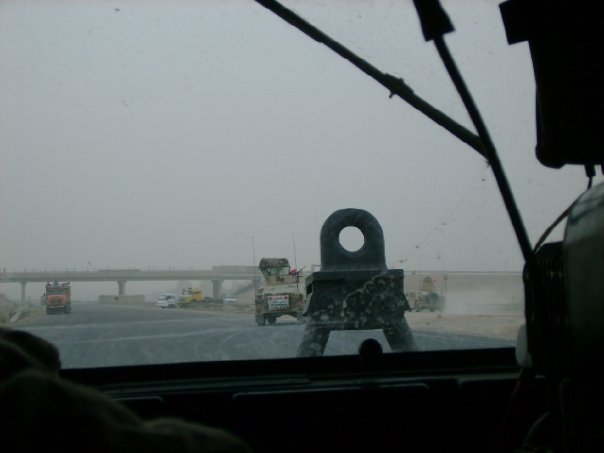
A morning drive in Iraq, looks like that here too

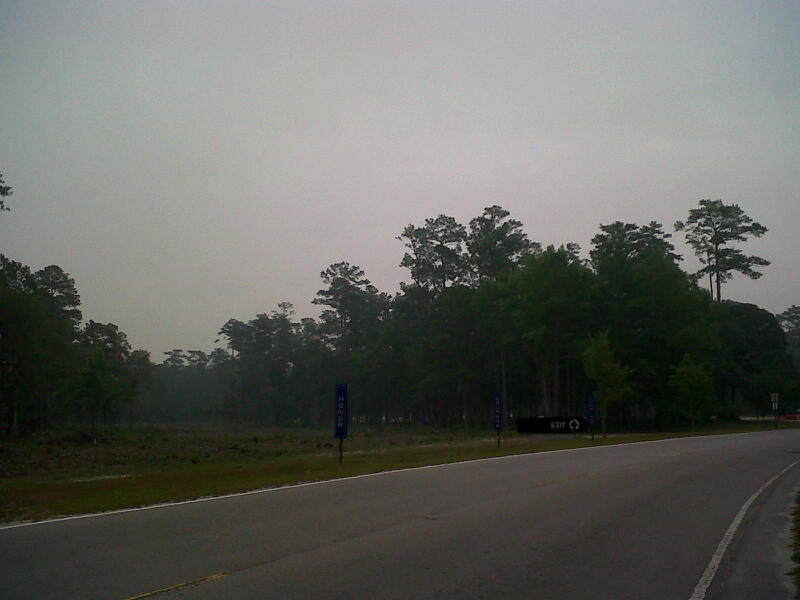
We are in a drought in Eastern North Carolina and with that drought have come forest and peat fires in the areas surrounding the Crystal Coast. The fires have now shrouded the summer sky with a layer of dense smoke and the National Weather Service is predicting poor air quality and visibilities of a mile or less.

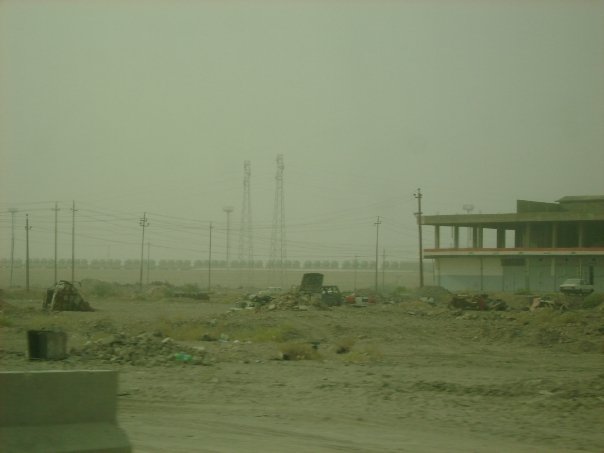
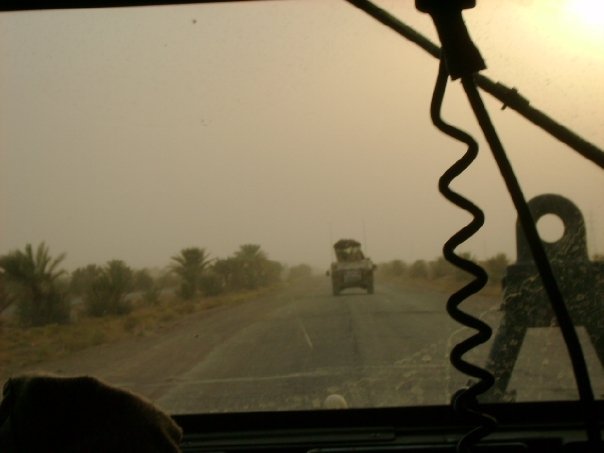
I had been noticing it periodically over the past few weeks and occasionally the stench from the fires would catch me unsuspecting and send me back to Iraq. Anyone that has served in Iraq can testify of the pall of smoke from burn pits and in locations around the cities and countryside of Iraq. Those afflicted with PTSD often have a heightened sense of awareness to things that most people take for granted such as noise, light and smell.  Having experienced this myself and talked to many more men and women that served in Iraq, especially those with PTSD these normal parts of everyday life now seem to be hard wired into our brains along with a need for safety and a certain level of hyper-vigilance.

Sand smoke and clouds

I had to drive to the Marine Corps Air Station at Cherry Point for my BLS recertification at the Medical Clinic this morning and the sky was weird hue. It reminded me somewhat of Iraq and the smell of the smoke hit me as did the sound of helicopters and jets taking part in a large exercise.  For a fair amount of the trip I was back in Iraq.  When I returned to LeJeune I had to stop by the UPS Store for a simple transaction and as I was filling out the paperwork someone barged in and slammed the door to the store as the sound of bombs exploding on the bombing ranges of the coast of Camp LeJeune went off. About that time a police car roared by with its siren wailing, just like they did in Iraq. I had to about put myself back into my skin as I remembered a morning doing PT near the perimeter of Taqaddam air base when an explosion rocked the town of Habbinyah less than a mile away with gunfire and sirens following the explosion. That’s some good living.  Hurriedly paying I got out of the store got in my trusty 2001 Honda CR-V and got on the road. As I drove west toward the base the smoke was worse in places as was the stench.

Sunset in the smoke and sand and a smoky day in ENC

I got back to the Hospital and took care of what I needed to do and went home. On the way out the door I could not find my Blackberry. It was nowhere. Not in my uniform, my desk or anywhere. I wracked my brain wondering where it could be.  Then I thought that it had to be at the UPS store, the Cherry Point Clinic or the Cherry Point base gas station.  I was beginning to hit panic mode but was able to calm down and as I drove back home toward the UPS store I just prayed that I had left it there. Thankfully I had and the very kind lady that runs the store had safeguarded it.  Evidently when the other customer had slammed herself through the door I had dropped it out of my hand without even noticing.  That old startle response is still there and thank God for life in small towns.

I finally arrived at home relatively calm and turned on baseball. As I fixed dinner I could hear more bombs exploding on the ocean bombing range which is only about 6 or 7 miles away from my apartment.  Meanwhile the aircraft were much more active even deep into the night. I turned up the television and hunkered down on my big bean bag, finished an article that I began yesterday about the Battle of the Philippine Sea and tried to tune out the aircraft and the occasional explosion.

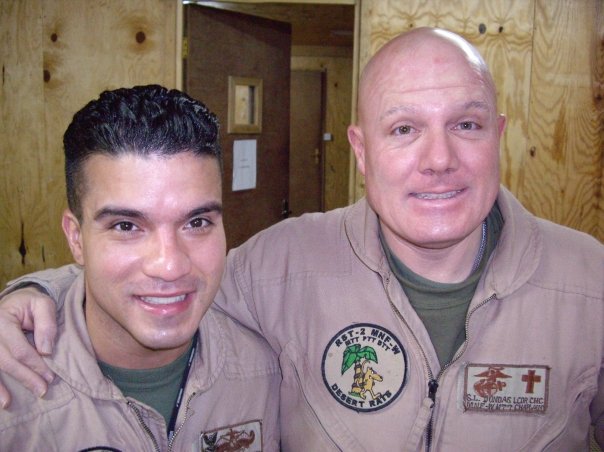
Hanging on at the end of the Iraq deployment with RP1 Nelson Lebron

A friend of mine recently wrote about the “tentacles of PTSD” which I think is an apt description of the neuro-sensory reactions that are part of life with PTSD.  While I have had a lot fewer reactions over the past few months I have noticed an increase of hyper-arousal and hyper vigilance as these stimuli trigger physical responses to perceived danger.

I remember when I was collapsing in the summer of 2008 there was a rather large and long burning fire in the Great Dismal Swamp. I walked out one morning and the smoke was so thick that the sky looked just like Iraq between the smoke and sandstorms.  That was the day that after a daylong seminar on combat and trauma that my medical officer looked at me and asked if I was okay and I said that I wasn’t. In fact that was around June 16th 2008.  It marked the beginning of me recognizing that I was different and damaged and that nothing was the same including my faith which was shattered to the point that for all practical purposes I was an agnostic. But that day was also my first step to healing.

Now I do not expect a major crash because I am a lot more aware of what is going on and what triggers me. At the same time I do feel less safe in large part due to the sights sounds and smells that are running rampant and reminding me of Iraq. They say that the smoke will be worse tomorrow and the temperatures will also rise into the mid-90s, low by Iraq standards but enough to increase sensitivity to the sights sounds and smells that I and thousands of other Iraq and Afghanistan veterans in the area will experience.

Eventually the smoke from the fires will clear away and with it the neuro-stimuli should decrease and life will return to my “post Iraq normal” where the hyper-vigilance will subside a bit. In the mean time I have the wonderful privilege of caring for and providing ministry to those who like me have returned from war changed.

My faith which was shattered when I returned from Iraq has returned and while I still have days where I have doubts I am no longer an agnostic.  I am able to be with those that doubt and even those that have “broken up with God” to use the term of Sarah Sentilles, especially those who had their faith damaged by war. I see a lot of that here as well as a lot of men and women that have doubts but try to hold onto faith while battling PTSD, TBI, depression, substance abuse and even suicidal thoughts.  Many like I did probably have to lie to their friends and families about their doubts, fears and struggles because most people don’t want to hear them.  When people do start talking they become “radioactive” to use the term of Dr. Robert Grant.  For me that openness cost me friends in my former denomination and led to me being asked to leave it in September of last year. I am better for the experience but it is still somewhat painful as I see more young men and women coming home from war not only injured or damaged in mind body and spirit but also wondering about the war itself and feeling cut off from their countrymen.  No one likes to talk about that but there are tens of thousands of veterans including many still on active duty that struggle with all of this.

Yes the smoke will clear someday, I am confident that somehow God’s grace mercy and love shown to us in Jesus will get us all through.  Until then we wait for that day when the smoke clears and we can see clearly.

Peace

Padre Steve+

4 Comments

Filed under Loose thoughts and musings

The Great Marianas Turkey Shoot

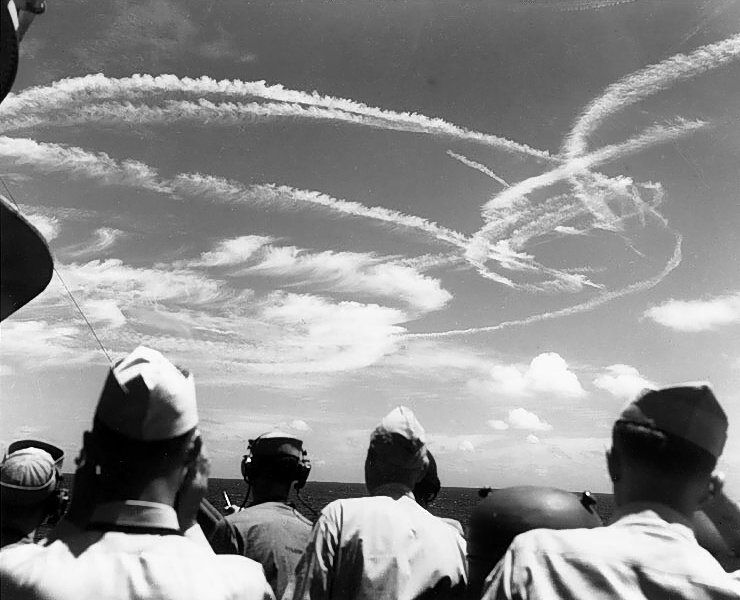
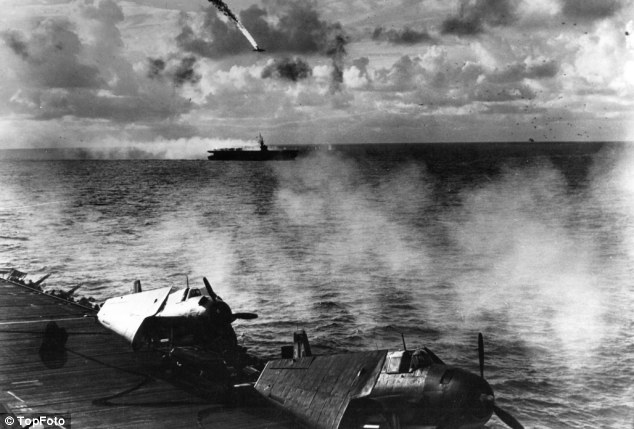
U.S. Navy personnel observe the Air Battle from a Carrier

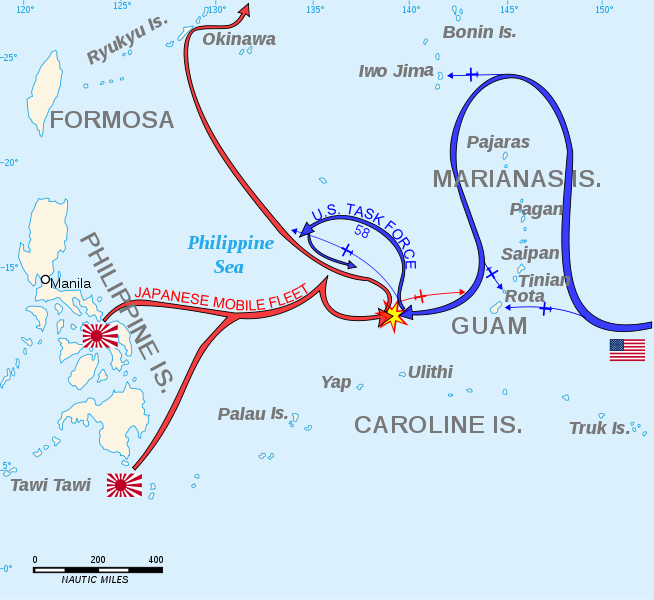
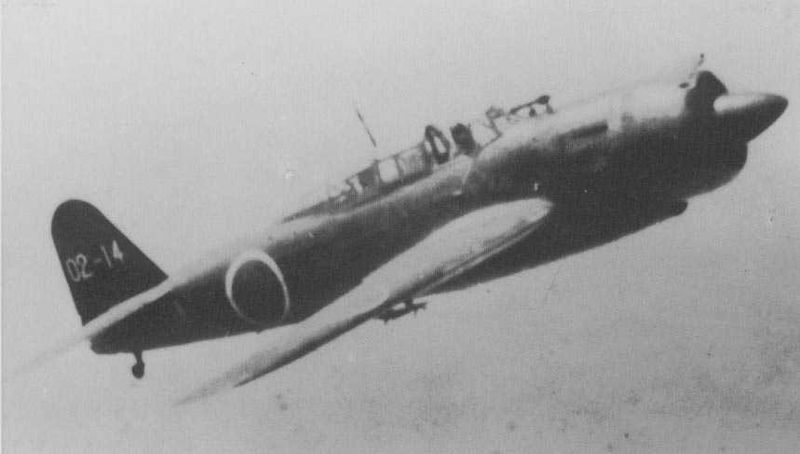
The Battle of the Philippine Sea of 19-20 June 1944 was the largest carrier battle in history.  Twenty four aircraft carriers, 15 American and 9 Japanese embarking over 1400 aircraft dueled in the Central Pacific in a battle that so decimated Japanese Naval Aviation that it never recovered. The battle and the subsequent fall of Saipan brought down the government of General Tojo and was the beginning of the collapse of the Japanese Empire and the “Greater Asia Co-Prosperity Sphere.”  

http://dsc.discovery.com/videos/destroyed-in-seconds-marianas-turkey-shoot.html

In late 1943 the Japanese realized that they needed to recover the initiative in the Pacific.  Between the Battle of the Coral Sea and the Battle of Santa Cruz Japanese Naval aviation suffered crippling losses especially among the elite pilots and aircrews with who they had begun the war.  These losses were compounded when the Navy attempted to support the operations of the Army to defend the Solomons and New Guinea.  Squadrons sent to battle the United States Navy, Marine Corps and Army Air Corps suffered at the hands of the every more skilled and well equipped American fighter squadrons the victims of which included Admiral Isoruku Yamamoto the Commander of the Combined Fleet when the Betty bomber that he was traveling on was ambushed by U.S. Army Air Corps P-38 Lightening fighters.

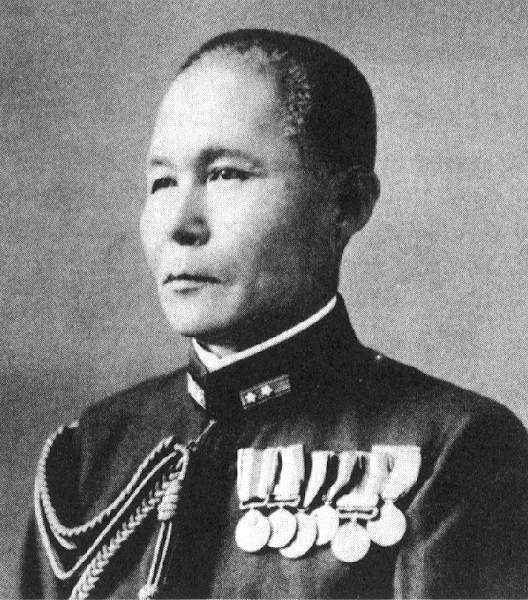
Vice Admiral Jisaburō Ozawa

By late 1943 the Japanese were attempting to train new pilots and aircrews to man the carriers of the Combined Fleet’s Carrier Striking Forces.  Admiral Soemu Toyoda, the new commander of the Combined Fleet and its third commander in less than a year developed “Plan A-Go” as a means to mass carrier and land based aviation assets to defeat the Fast Carrier Task Forces of the United States Navy.  The rebuilt Carrier Striking Groups built around 9 carriers embarking 473 aircraft was commanded by Vice Admiral Jisaburō Ozawa who had taken over from Vice Admiral Chuichi Nagumo.

D4Y3 “Judy” Dive Bomber

The Japanese discerned the intentions of the Americans when American Carrier aircraft struck Saipan and Guam. The Japanese had expected the Americans to strike further south and the Marianas had few land-based aircraft in the area. Toyoda made the decision to engage the Americans and ordered the fleet to attack. American submarines discovered the gathering Japanese forces. The Japanese forces were assembled by the 17th and by the 18th the 5th Fleet under the command of Admiral Raymond Spruance spearheaded by Task Force 58 Commanded by Vice Admiral Marc Mitscher had assembled west of Saipan to meet the Japanese.  The Americans fielded 15 carriers including 9 Fleet Carriers of which 6 were the new Essex Class Fleet Carriers which embarked 956 aircraft.

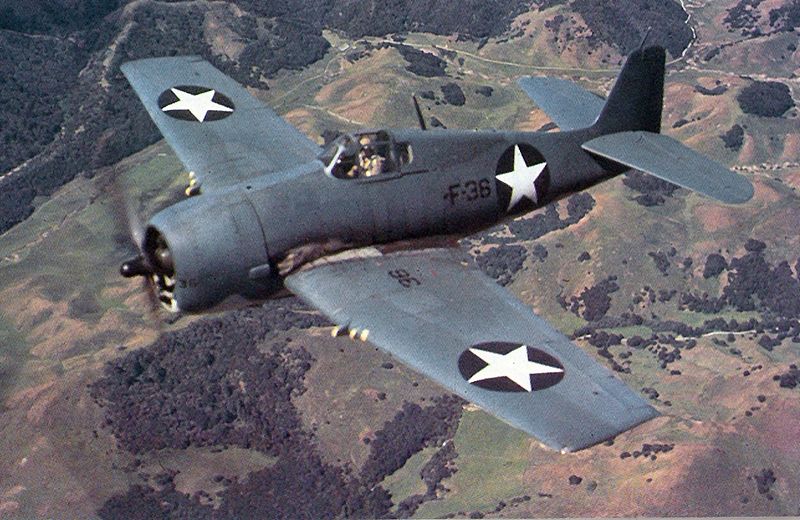
The F6F Hellcat cemented its place as the premier fighter plane of the Pacific war during the “Turkey Shoot”

The Americans held both a quantitative and qualitative advantage against the Japanese. The American fighter squadrons were equipped with the F6F Hellcat which was far superior to the now obsolescent Japanese Zero fighters and their pilots and aircrews were now more experienced and proficient than the newly minted Japanese aviators who by and large had little combat experience and were flying inferior aircraft.  The Japanese had not planned for a long war and had done little to systemically address the heavy losses that their force experienced during 1942 and 1943 at Coral Sea, Midway, Eastern Solomons, Santa Cruz and in the Solomons campaign.

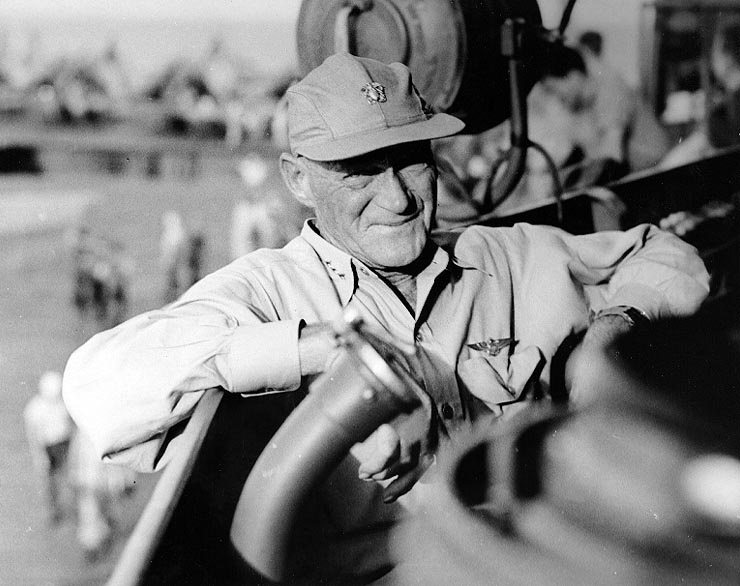
Vice Admiral Marc Mitscher aboard the USS Lexington

Mitscher desired to move aggressively against the Japanese. However he was overruled by Spruance who acting on the advice of his Battle Line Commander Vice Admiral Willis Lee decided that a possible night surface action with the Japanese was not desirable. Spruance instead directed Mitscher to be ready to defend against Japanese air strikes knowing that his carriers and carrier based air groups was more than a match for the Japanese air groups.   Spruance has been criticized for his decision but the words of Willis Lee, a veteran of the Naval Battle of Guadalcanal where he defeated a Japanese force sinking the Battleship Kirishima.  He prevailed in his flagship the USS Washington but losing three of four escorting destroyers and seeing his second battle wagon the USS South Dakota heavily damaged. A night surface engagement was not worth the risk as in Lee’s eyes it evened the playing field for the Japanese and took away the American air power advantages.

A Japanese aircraft goes down in flames

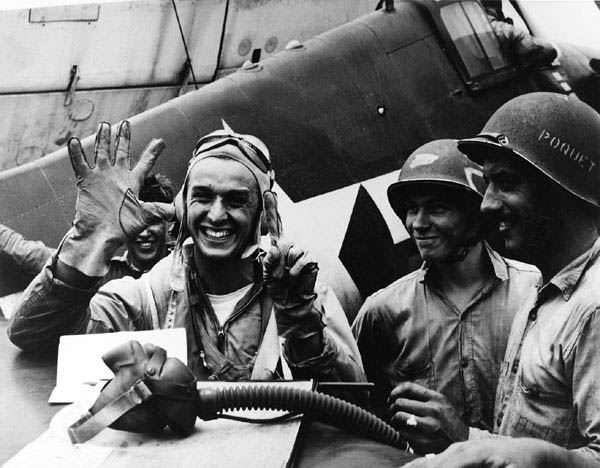
The Japanese began the action on the 19th sending successive attack waves against Task Force 58. They were met by massed formations of Hellcats vectored in by air controllers in the Combat Information Centers of the American carriers using their superior air search radar systems.  In less than two hours well over 200 Japanese aircraft were downed by the Hellcats.  Lieutenant Alexander Vraicu shot down 6 “Judy” dive bombers in minutes before low on fuel he returned to the USS Lexington.

Lieutenant Alexander Vraicu holds up six fingers on board the USS Lexington

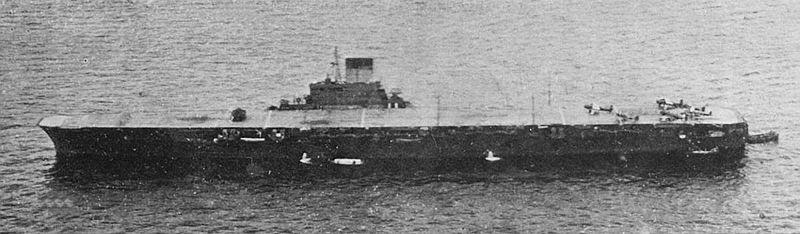
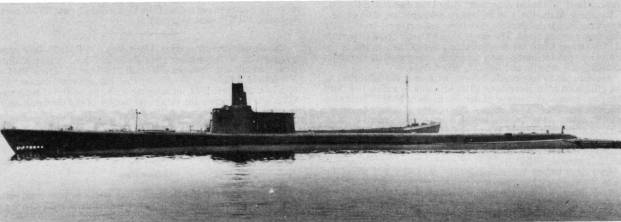
While the Hellcats were chewing up the Japanese squadrons the American submarines USS Albacore and USS Cavalla each sank a Japanese Fleet Aircraft Carrier.  The Albacore hit the Ozawa’s flagship, the new Tiaho with a torpedo which caused minimal damage, but ruptured fuel lines. The Japanese damage control officer opened vents in the ship which allowed the fumes to spread throughout the carrier. They were ignited by a generator causing massive explosions and forcing Ozawa to abandon his flagship. Tiaho would sink by late afternoon after being ripped apart by a series of massive explosions taking with her 1650 of 1750 officers and crew. Cavalla hit the Pearl Harbor veteran Shokaku with a spread of three torpedoes causing that ship to burst into flames with aircraft and ordnance adding to the conflagration. A massive explosion ripped through the ship causing her to sink with a loss of over 1200 officers and crew.

The Japanese flagship Tiaho and her killer the USS Albacore

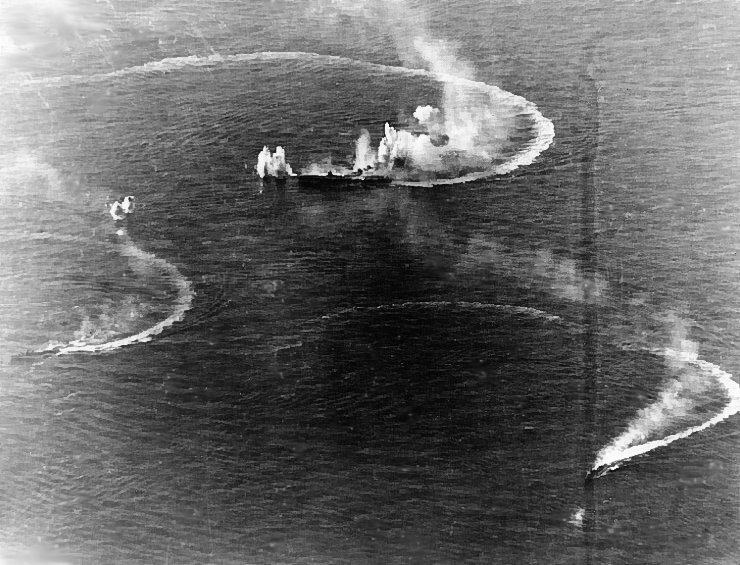
Toyoda desired that Ozawa retire from the battle before he suffered more losses but Ozawa wanted to stay around and hit the Americans with everything that he had left. The Americans sailed west during the night to seek out the Japanese Fleet. It took the majority of the day to find the Japanese. With only 75 minutes of daylight remaining Mitscher launched a strike despite the risk to his aircrew the majority whom were not trained in night landings.  The American strike sank the carrier Hiyo and two tankers and damaged the carriers Zuikaku, Chitoyda and Junyo as well as the battleship Haruna.  By the end of the day Ozawa had 35 aircraft in flyable condition.

The Japanese Fleet under attack, carrier Zuikaku and two destroyers on June 20th

The final part of the drama was the return of the American strike group to the carriers. Knowing that if he maintained darken ship he would lose many aircraft and the men that flew them Mitscher ordered that the fleet turn on its lights. This act though incredibly risky helped bring the majority of the aircraft to land or ditch near the task force.  The Americans lost less than 100 aircraft many due to the night landings and many of the aircrew were rescued. The Japanese also lost nearly 200 land based aircraft.

Admiral Raymond Spruance

The battle was the death-kneel of Japanese Naval Aviation. Later in the year the carriers again under Ozawa sailed against the Americans only this time they were a decoy force at the Battle of Leyte Gulf, a role that they succeeded in admirably. The American carriers now had free run of the Pacific only opposed by land based aircraft many used in a Kamikaze role until the end of the war. These would cause fearful losses among the American ships heavily damaging a number of carriers.

The battle is often forgotten by due to its proximity to the Normandy landings but was a significant step in the fight against Japan. The islands captured by the Americans, Saipan, Tinian and Guam would provide major sea and air staging areas for the final assault against Japan. Tinian would become the base of many Army Air Corps B-29 “Superfortress” bombers including those that dropped the Atomic bombs less than 14 months later. It was a turning point both militarily and politically. With the fall of the Tojo government the Japanese leaders began to slowly tell the truth about wartime setbacks and losses to a people that it had lied to since their invasion of China and occupation of Mongolia.  It was a setback that even Tojo and the highest leadership of Japan knew that they could not recover.

5 Comments

Filed under History, Military, US Navy, world war two in the pacific

Pinning on the Gold Bars: 28 Years Later

On June 19th 1983 I was sworn in as a Second Lieutenant in the United States Army at the University of California Los Angeles.  I was a history major in college and had actually completed my degree the year prior and played around with Masters level classes as I took my last year of ROTC. I was commissioned into the Medical Service Corps and would report for active duty 22 days later at Fort Sam Houston Texas where I would complete the Army Medical Department Officer Basic Course for Medical Service Corps officers, go on to Fort Know Kentucky for the Junior Officer’s Maintenance Course and then in January 1984 head to Germany where I was assigned to the 557th Medical Company Ambulance in a little Kasserne on the Nahe River called Neubrücke.  The rest is history.

Looking back at what the world was like in 1983 is rather interesting. Ronald Reagan was President of the United States and George Herbert Walker Bush his Vice President. Thomas “Tip” O’Neill was Speaker of the House.  The internet and the TCP/IP was beginning to take flight as a program of the Department of Defense, Sally Ride had just become the first female Astronaut and the United States sent the Marines into Lebanon as part as a peacekeeping force.  The Soviets were deeply embroiled in Afghanistan while Jedi returned, destroyed the new Death Star, killed the Emperor and Darth Vader while redeeming Anakin Skywalker.

The Cold War was reaching its zenith as the United States using its great economic power built up its military and developed technologies that the Soviets went broke trying to keep up with.

We still wore Olive Green fatigues; the BDUs were just being introduced and the Army still worn Greens sans jaunty Black Beret.

The Billboard Top Singles were led by Michael Jackson who released Billie Jean http://www.youtube.com/watch?v=aBIfLxi5dLo, Culture Club with Karma Chameleon http://www.youtube.com/watch?v=JmcA9LIIXWw, Irene Cara joined in with Flashdance What a Feeling http://www.youtube.com/watch?v=ILWSp0m9G2U, David Bowie came out with Let’s Dance http://www.youtube.com/watch?v=OyVjdQXNs9sand the Police had Every Breath You Take http://www.youtube.com/watch?v=OMOGaugKpzs.

The Baltimore Orioles won the 1983 World Series taking down the Philadelphia Phillies in 5 games, Rick Dempsey was the MVP hitting .385 in the series and having a .923 slugging percentage. Dempsey who played across 4 decades as a catcher only hit .233 for his career.  Cal Ripken Jr. made the final putout of the series which was the last that the Orioles have won since then.  In the NFL the Washington Redskins defeated the Miami Dolphins in the Super Bowl. Larry Nelson edged out Tom Watson in the PGA U.S. Open while Jimmy Conners won the U.S Open Men’s Singles championship.

Terrorism, nuclear crises, political scandals and Tsunami in Japan were all part in the news.  AIDS was rearing its ugly head and by 1987 I was working with AIDS patients and dealing with personnel policy for HIV infected Soldiers.

Since that day I can only quote Jerry Garcia of the Grateful Dead that my life and career has been “a long strange trip.” I continue to serve in the military only having switched services to the Navy and going from being in the Medical Service Corps where I was a platoon leader, company XO and company commander as well as Brigade Adjutant to being a Chaplain.

Back in 1983 I had no intention of going into the ministry but somehow the Deity somehow worked that out much to my surprise.

Finally a mere six days after being commissioned I would marry the love of my life Judy Keiser and well somehow she has put up with me 28 years and hasn’t killed me yet, not that she didn’t want to a few times. Now we deal with a geographic separation due to my assignment after missing far more wedding anniversaries and birthdays than we have been together in our 28 year marriage.

Anyway, the future is still to be written and this long strange trip promises to go on. As Captain Kirk said in Star Trek VI “People think the future means the end of history, well, we haven’t run out of history just yet.” I don’t think that I have either.

Peace

Padre Steve+

3 Comments

Filed under Baseball, Batlimore Orioles, film, Military, movies, music

The Banal Immorality of Targeted Advertising on Father’s Day

I am approaching the first anniversary of my Dad’s death and missing him.  Dad was really good to me and gave me a lot of what I needed to succeed in life. He died of complications of Alzheimer’s disease on June 22nd of 2010.

The past couple of weeks I have been getting a bombardment of e-mail offers from various merchants asking me to think of them when purchasing a gift for dad this year.  In the past they were just junk mail as I knew what I would get dad, usually a polo shirt or baseball hat, both of which I knew that he would wear around town or when he was still capable of doing so when he went golfing. This year they serve to remind me that dad is dead.  It makes me see just how crass that mass marketing of retailers has become and the banal immorality and lack of respect that they have for people as they seek to sell their wares.  I know that these businesses don’t know that my dad is dead but when I get offers from every type of retailer known to humanity to shop with them for him it just bothers me.  It just seems that they are using my dad to try to get my money and that bothers me and maybe it should bother all of us. Just think retailers of all types prey upon us using the lives or the memories of our loved ones without any real personal connection to us. We are simply a target audience for them to sell their wares, it is called targeted advertising and while it is common now throughout the world it just seems to me that it is a type of not so subtle psychological manipulation, but I digress…

This year Father’s Day will be celebrated in June 19th which holds a special meaning to me. It was on that day that I was commissioned as a Second Lieutenant in the United States Army and my dad and soon to be wife Judy pinned on my “gold bars” after I had sworn the oath to “Support and defend the Constitution of the United States against all enemies foreign and domestic.” They had driven 350 miles that morning to be there since I was in transition and didn’t have a place of my own.

My dad was proud of me but wondered why the Army. He was a retired Navy Chief Petty Officer and Navy through and through. He had hoped though that I would take a path to civilian life and my mom hoped that I would come back home to teach history in a local high school. However that would not be the case because I had longed to serve in the military since I was a young boy knowing that I didn’t have the talent to be a professional baseball player.  I loved the travel, adventure and military lifestyle and hated having to settle down after dad retired. This was not a problem for my mom and brother but I have always had the military wanderlust deep in my soul.

When I transferred to the Navy in 1999 it was one of the happiest moments of my dad’s life. When I was promoted to Lieutenant Commander in 2006 he was elated although his struggle with Alzheimer’s was becoming apparent to all of us.  He died the day after my selection for promotion to Commander was announced without knowing about it.  We buried him a few days later with full military honors.

He was sweet to Judy, especially as he became worse off because she took the time to include him in what she was doing, showing him things on the computer and talking with him. He would always tell her that he loved her and if talking to me, even late in life before his ability to communicate was completely gone would tell me to tell Judy that “I love her.”

Dad gave me many gifts especially the love of baseball, interest in world affairs and love of the military, though I don’t think that the last was his intention, though he accepted it at first and then embraced it as time went on. He and my brother became very close as Jeff stayed in our home town becoming a teacher and later school administrator. He doted on his grandchildren and I think that they helped keep him engaged during his battle with Alzheimer’s.

This is a rather melancholy weekend for me as I remember and reflect on my dad. I miss him but know that he is in a better place.

To those that have recently dealt with the loss of your dad I hope that your remembrance of Father’s Day is special. I know that not all dads are good dads and that some inflict terrible things on their children that scar them for life.  For the victims of such abuse Father’s Day is painful and brings back memories that they don’t want to relive and I imagine that the barrage of advertisements must bring back terrible memories to the victims of abuse.  The advertisements just serve to remind me that the dad who loved and raised me is dead, but for the victims of abuse they must only add to their pain. Maybe that is the banal immorality that I see in targeted marketing.

Anyway, I do pray that we all somehow have a happy Father’s Day.

Peace

Padre Steve+

2 Comments

Filed under marriage and relationships, remembering friends

The Unassuming Miscreant: How Padre Steve got his Driver’s License

Who would think that the Young man in the Aviator Sunglasses could be so devious? 

Note to Parents: While this article talks about my own misdeeds it is not an endorsement or blessing of your kid doing such things unless they do it with more style and flair than me.  In which case I need to meet them, as I do appreciate genius and want to make sure that they have the opportunity to school them in the ways of the “Farce.”This is just the first installment of my high school follies so look for more in the future.

I was a quiet and unassuming high school delinquent back in the 1970s and I love the classic 80’s comedy Ferris Buehler’s Day Off.  When I watch it I always reminisce about the good and not so good times that I enjoyed and did not enjoy in high school.  When I watch the movie I am reminded of so of my own sneaky misdeeds which included weaseling my way through or out of classes, escaping school to get my driver’s license by playing dead and cutting Geometry class so often by hiding in the library that the library staff thought it was my assigned class.

You see no one suspected me of such behavior because of my shy nice guy persona. Now to be fair I was pretty introverted most of the time. To top it off I was a NJROTC cadet in the years following Vietnam which was not the place one hung out if one was in the real “in crowd.” I sacrificed my love of baseball to appear cool by playing on the Sophomore Football team, albeit not very well. I was active in church and I was a pretty nice guy.  I look in some of my yearbooks and see the comments inscribed by friends and they all pretty much reflect the image that I put out. Thus while I was a complete goof off or no show in some classes I was a show off in other classes that I was good at which gave people the illusion that I was a really good student.  I was in those classes but image is everything and my High School GPA was just a bit above 3.0.

Now most people never suspected me of anything devious except my little brother Jeff who had me nailed though he was still in elementary school.  Little brothers and sisters have that ability.

I found that by masquerading as a serious student was far better cover to get away with things than being an in your face rebel like some of my other classmates were.  The fact that I carried a large stack of books with me everywhere I went added the image.  It did make my arms tired but when you have little else to use you take advantage of what you have.  I looked the part of the serious student thus that was what most people assumed that I was.

All of us at Edison High School had a common core of classes to prepare us for life. One of them was a class in health which also included some of the academic preparations for drivers training.  I was in a class with a bunch of folks that I have had contact with even today which was taught by Mrs. Davenport.   During the class we got to see two of the best “scare the shit out of you” films of all time.  They were Wheels of Tragedy produced in 1963 by the Ohio State Patrol and Red Asphalt produced in the early 1970s by the California Highway Patrol. Wheels of Tragedy can be seen in its entirety by following this link: http://video.google.com/videoplay?docid=6728780942571899981# while Red Asphalt can be seen here:http://www.documentingreality.com/forum/f166/red-asphalt-18740/

These are some of the creepiest films ever made and I’m sure that the girls were really grossed out by them.  When Mrs. Davenport left the room a couple of us played these films backwards on the 16mm projector, which led to images of dead people’s heads reappearing on their shoulders.  If these films were shown in theaters today they would get an “R” rating for violence due to the close up depictions of dead bodies.  I don’t know if they are still shown as they are somewhat dated, but they are pretty cool in kind of a retro-creepy way.

Once we got through that class which took place in the fall we started the actual driver’s education portion in the spring. The idea was that when we turned 16 we would be able to take and pass written and the road test administered at the Department of Motor Vehicles, better known as the DMV.  This class was taught by Mr. Allerdice, a stocky retired Marine with a close cropped hair and a growling who seemed out of place in the school but who was a great teacher.   He was like having a drill sergeant, albeit a nice drill sergeant but a drill sergeant nonetheless.  The Driver’s Education classes were limited to 3 students and included classroom instruction, a bunch of time behind the wheels of a simulator followed by supervised driving.   Our class had an orange Chevy Nova which had two sets of controls, one for the student and the “My God we’re about to die!” controls on the right side of the car at which Mr. Allerdice sat.   This was somewhat intimidating but still kind of fun, especially because we knew that if we were successful we got our learners permit and were pretty much golden for the DMV.  I had no problems with the class, really sailed through it and got ready for the real deal training on my parents 1972 Chevy Impala which was about the size of a small armored vehicle.

When the day came for my driver’s test I had to find a way out of school when my mom could take me to the DMV.  This came shortly after my 16th birthday at the end of March 1976.  That morning I told my mom to be ready to meet me about 10 AM because I needed her to take me to the DMV. She assumed like everyone else that I had permission to do the things that I said that I needed to do.  However I was flying by the seat of my pants and was about to embark on a gamble that if discovered would get me in trouble with the school and even worse at home. I was going to fake being deathly ill.

In my second period I told the teacher, whoever it was as I cannot remember what class I was taking that I was feeling sick. I told the teacher that I felt feverish and that I might throw up.  Since I had finished gym class the period before I was still somewhat sweaty which provided the cover for the fever, a sweaty and flushed face is great cover and prerequisite when feigning illness.  The teacher wrote me a pass to the school nurse.  I trudged down the hallway like I had the plague until I got to the nurses’ office which was in the main lateral hallway of the school where many of us had our lockers.  The corridor was empty except for staff policing the hallways for the miscreants hoping to cut class or escape for the day. They saw me but saw my pass to the nurse and assumed that I was deathly ill.

The nurse was a middle aged and a bit heavy set African American woman who was known for being wise to students feigning illness.  She was no dummy, had been a school nurse forever and didn’t take any shit but she was a most genial person.  I entered the office doing my best to look like I had the plague or other life threatening malady and prayed that I could pull off my escape with the unwitting permission of the Stockton Unified School Disctrict.  I told the nurse my story but she was not convinced.  However since I was still sweaty and flushed and she took my temperature.  I prayed that I would actually have one….and thankfully the temp was there, 99.1, not too high but still febrile.  How I pulled that off the temperature I don’t know to this day because I didn’t expect to have it taken.

The nurse then looked at me and said “Young Man, you do have a mild fever, do you still feel like you are going to throw up?”  I nodded meekly and replied that I thought that I was going to throw up, careful not to look her in the eye because I wanted to look really sick.  She went to the sink and got a paper cup and filled it with warm water.  She then said “You drink this; it will either settle your stomach or bring up whatever is down there.” I had not expected such good fortune; she had given me exactly what I needed to pull off my stunt.  I walked into the adjoining rest room and closed the door.  I looked down and the toilet and looked at the cup up water and smiled. With a grotesque simulation of an episode of projectile vomiting I tossed the water into the toilet.  I did this again and again for about 5 minutes.  When I was done I flushed the toilet, rinsed my face off with warm water and looking even more ill than I had went back into the nurses office.  By that time she was already on the phone with my mom.  “Ma’am, your son is really sick, and throwing up. You need to come and get him now.” The time was 9:30 AM.  She wrote me a note which bought my freedom and told me that she “hoped that I felt better.” I thanked her in a most sincere way saying that “I hoped that I did too,” thanked her and walked slowly to the main entrance of the school on South center Street.

About 9:55 mom came pulling up to the school, she was very concerned and asked “Steven, are you okay? The nurse said that you were really sick.” I said coyly, “Mom, I told you that I would be ready to take my driver’s test, let’s go.”  She gave me the most puzzled expression and said, “But she said that you were really sick.” I simply said, “I know mom, I told you that I would be here.”  Years later I told her the details of how I pulled it off details which totally amazed and disgusted her.

We went to the DMV where I passed the written and the driving test and posed for my first driver’s license picture.  I was street legal and had brazenly pulled off a stunt which not only got me my driver’s license but got me out of school early on a Friday.

I guess that it’s like Ferris Buehler said: “The key to faking out the parents is the clammy hands. It’s a good non-specific symptom; I’m a big believer in it. A lot of people will tell you that a good phony fever is a dead lock, but, uh… you get a nervous mother, you could wind up in a doctor’s office. That’s worse than school. You fake a stomach cramp, and when you’re bent over, moaning and wailing, you lick your palms. It’s a little childish and stupid, but then, so is high school.”

Peace

Padre Steve+

2 Comments

Filed under Just for fun, purely humorous, School stories

Hating Lebron: The New State Sport of Ohio

The dethroned “King” AP Photo

I am not a fan of Lebron James. I also think that his juvenile actions have served to increase the public invective against him. In other words I think that he has been “deep throating” his size 16 Nike’s since last summer when he went on ESPN to announce his move to Miami.  At the same time I am not a Lebron “hater” and think that some have gone overboard in turning him into the most hated man in sports.

Of course the media and his fans had a lot to do with how Lebron is perceived. When he was in Cleveland they hailed him as “King James” and extolled everything about him. In fact they pretty much put his basketball abilities up with King James the First who I understand could put a heretic’s head through a basket from half court three out of four times. Since there were a lot of heretics in those days he got a lot of practice. Of course James as most young and relatively emotionally immature do got a big head.  Now he elected to go for less money to Miami to try to win a NBA title. Is there anything wrong with that?  Not necessarily but he could have left in a much more classy fashion. He would have still been disliked by Cleveland’s championship deprived fans and much of the rest of Ohio, but there were better ways of making his announcement.

His next faux pas was his landing in Miami where he promised big things, “not one, not two, not three, not four, not five, not six, not seven…” championships.  The one thing about this is that it is very easy to get carried away on the big stage and promise things that you do not have ultimate control over. This was once again a sign of Lebron’s immaturity.  Let’s face it Lebron was drafted out of High School and we all know the maturity level of most high school graduates which is somewhere above a house broken puppy but lower than a person that has taken some setbacks in life.  Getting knocked on your ass is the beginning of wisdom.

Of course the Lebron haters have been nasty all year, yes I understand the connection that many fans feel toward professional ball players and how they feel when their idol leaves their team for greener pastures. But I’m sorry but professional and often collegiate sports are a business and the players are the commodities that bring in the bucks. So when a player leaves a city for another that it life, you have to deal with it.  Unfortunately a lot of people in Ohio including the Governor John Kasich have spent entirely too much energy on Lebron when their state has a lot more pressing issues.  Instead of making the Dallas Mavericks honorary citizens and poking the defeated “king” in the eye Kasich could have issued a “Bull” of excommunication” for Jim Tressel who has probably helped sink the Ohio State University football program.  That Ohio State is probably going to go down hard is not a problem for me, I even root for the USC “Troy Tech” Trojans against them and being a UCLA Army ROTC alum that says a lot.  But give me a break, why does a governor have to sink to this level? It seems below the dignity of the office but then what the hell, just how many politicians in the country are even acting like they have any dignity in office?

So for a year Lebron has been a rich target for his haters and they got their revenge through the efforts of Dirk Nowitzky and Mark Cuban’s Dallas Mavericks who shut James and the Heat down hard.  “King James” got to eat some humble prairie shit pie, not just a piece but the full pie.  He should have simply congratulated the Mavericks, promised to work hard in the off season and work hard to win next year. Instead he poured gasoline into the ring of his hater’s fire by saying this when asked if the he was bothered by those that want him to fail:

 “at the end of the day, all the people that was rooting on me to fail, at the end of the day they have to wake up tomorrow and have the same life that they had before they woke up today. They have the same personal problems they had today. I’m going to continue to live the way I want to live and continue to do the things that I want to do with me and my family and be happy with that. They can get a few days or a few months or whatever the case may be on being happy about not only myself, but the Miami Heat not accomplishing their goal, but they have to get back to the real world at some point.”

Personally I have no issue with the point that he makes, but it was dumb for him to come out and say it. I know that he felt the need to defend himself and he later sort of apologized but again it was a case of his immaturity as a person that caused an even bigger fire.

But when he left Cleveland Lebron became the most hated athlete in sports overnight.  Before that he had been considered a good guy and my friend Carl Long who played in the Negro Leagues and was a civil rights pioneer who has met Lebron says that is the case. He is a good guy that has made some decisions and said some things that have made him look like the bad guy.  That transition, going from being the good guy hero to the evil villain is a hard thing for anyone, except pro wrestlers who seem to be able to do it at will. Lebron will simply have to get used to the black top hat and handlebar moustache that comes with being the villain even though that is not the man that he is. Like Anakin Skywalker he will have to get used to being on the Dark Side of the Force. The sooner he gets used to it the better, Darth Vader doesn’t need to talk much, and he just goes out and crushes people and destroys planets.   Lebron needs to shut up and concentrate on what he needs to do on and off the court to win and remember that even Darth Vader finds redemption.

In the mean time Lebron will have to get used to the late night comedian jokes and even legitimately funny things like the Peoria Chief’s “Lebron James 2011 NBA Championship Replica Ring Giveaway.”

As far as the haters, whatever, there is a real world and we all got to live in it. The same and even more applies to Governor Kasich who has sullied his office by acting the fool.  Governor; go fix your state and excommunicate Jim Tressel for the mess he allowed to develop at the Ohio State University. As for me I don’t have time to hate, well maybe the Los Angeles Dodger’s but that’s different. I am a San Francisco Giants fan and the Dodgers are evil.

Peace

Padre Steve+

1 Comment

Filed under philosophy, sports and life

Where Everybody Knows Your Name: The Importance of Community for Military Families

Some years ago the theme song of the television show “Cheers!” struck a chord with people, because it expressed the desire of many people.

Making your way in the world today takes everything you’ve got.
Taking a break from all your worries sure would help a lot.
Wouldn’t you like to get away?

We live in an increasingly disconnected world despite the proliferation of devices designed to make communication easier. Our dependence on these devices often serves to disconnect us from community because we use them to accomplish things without any human contact.  I mean really, what percentage of our Facebook “friends” really know us and how many can we go to when the chips are down.

We shop in massive stores, attend mega-churches, exist on fast food bought at a drive through and we don’t know our neighbors. To most organizations we are not real life human beings but statistics whose only value is in profit and market share.  And we wonder why so many people are depressed, lonely and even despair of life.

Sometimes you want to go, Where everybody knows your name,
and they’re always glad you came.
You wanna be where you can see, our troubles are all the same
You wanna be where everybody knows Your name.

Having a place where people know you and care about you matters. It is important to us as individuals and it is important to the people that come to us for their medical care. Cheers was a neighborhood bar where people from all walks of life knew and cared for each other. We miss that a lot and we often suffer because of it, especially those that go to war and their families.

You wanna go where people know, people are all the same,
You wanna go where everybody knows your name.

In our military communities be they Army, Navy, Marine Corps or Air Force we have shared hardships and culture but even with that it is a difficult life. The military does its best to provide a multitude of support services including unit based Family Support Groups, family service centers as well as centers and associations for single servicemen and women.

But even still those support structures often are insufficient due to the transitory nature of military life, changing and sometimes uneven leadership of these organizations. Add to this the unrelenting demands of the wars and deployments and the wounds of war brought home which affect even the most resilient families.  PTSD, Traumatic Brain Injury, traumatic amputations, substance abuse, domestic violence, high divorce rates and suicide are everyday parts of the military family and community life.

One of the other aspects not directly attributable to the wars is how the communities around the bases treat the military.  In some major metropolitan areas the military simply blends in to the civilian community, even where there are large bases such as in the Hampton Roads area of Virginia.  In such places there may be a large military footprint but it is easy to blend in.  In other areas where the military installations are the sole reason that the areas have large populations such as Killeen Texas, the home of Fort Hood, Jacksonville North Carolina the home of Camp LeJeune and Fayetteville the home of Fort Bragg the military presence is loved and loathed. There are many retired military in these areas as well as many veterans and often they are supportive. However in each of these cities there exists a large contingent of individuals and businesses who take advantage of military personnel and their families and some of these are former military personnel. Sometimes people in these communities despite their outward show of support for the troops do all they can to make the military personnel unwelcome.  Now this is not helped by the bad behavior of some military personnel and their family members which is then used to discriminate against good and law abiding military personnel.

But there are good people, organizations and businesses which do their best to help make these “strangers in a strange land” welcome.  For me that welcome has been often linked to people that I know at minor league ballparks such as Harbor Park in Norfolk and Grainger Stadium in Kinston. There is a special church, Saint James Episcopal in Portsmouth Virginia that I enjoy on the rare times that I have to visit it is a place I can call home and my friends at the Gordon Biersch Brewery Restaurant in Virginia Beach.

Community really matters because as Americans we are all in this together.  While I have focused on military communities large numbers of American cities and towns are enduring great hardship, and this disconnect between people, evidenced by the fact that we often don’t even know our neighbors has created a social isolation that only breeds hatred and discontent.  With this true lack of community we should be surprised with increasing crime, violence, discrimination and prejudice.

Community doesn’t happen overnight and sometimes illusion of perpetual prosperity only serves to drive us apart.  However, sometimes communities are reborn when facing crisis, people begin to look out for one another again and the welcome sign means that you really are.

But, what is neat is when we do find that special place for ourselves and when we can provide that kind of home to others we can really understand the last stanza of the song from Cheers which never aired on television.

Be glad there’s one place in the world
Where everybody knows your name,
And they’re always glad you came;
You want to go where people know,
People are all the same;
You want to go where everybody knows your name.

Peace

Padre Steve+

3 Comments

Filed under Loose thoughts and musings, philosophy

What if Hitler was assassinated in 1943? An Alternative History of Kursk and the End of World War II in Europe

This is an alternative history of how the Germans might have avoided the disaster at Kursk. It looks at what might have happened if an actual assassination attempt on Hitler had succeeded in March 1943 and how Manstein might have been able to execute the “backhand” strategy that he favored using a mobile defense.  This is predicated by Hitler’s death, based on Hitler’s actions and control of operational decisions Manstein would never have been allowed the freedom to conduct operations in this manner.  In eliminating Hitler I have also included personnel changes and the overall strategy for the German High Command, and the probable response of Stalin to Hitler’s death had it occurred in the spring of 1943. I have tried to be faithful to known historical opinions and actions of the participants and likely reactions to such a situation although one cannot predict precisely what people would have done.  Thus I have documented the article with footnotes as if it were an actual history. It would have been interesting to be able to lengthen this and included sections on tactical actions based on memoirs of German and Russian soldiers. I wrote it as at the behest of one of my Master’s Degree Professors and first published it in August of 2009 on this site under the title of Operation “Dachs” My First Foray into the Genre “Alternative History.” I believe that history is history and this despite what the term “alternative history” implies is fiction.  Though it is based on my belief of how German leaders might have reacted in the spring of 1943 and references actual events that I have altered for the sake of the story it is not history. But one has to wonder what would have happened had the plot to kill Hitler by blowing up his aircraft on its return to Germany from a conference with the commanders of Army Group Center succeeded.


Background: The Strategic Situation Spring 1943

In April 1943 the German High Command faced a decision on which the fate of Nazi Germany would hinge, but for the first time in the war it was not under the thumb of Adolf Hitler. Following Manstein’s counter-stroke following the Stalingrad disaster there was considerable pressure to follow up with that success with a continued offensive. Manstein himself had proposed this but Field Marshal Von Kluge refused to agree to an immediate offensive because he felt his troops needed rest and refitting.
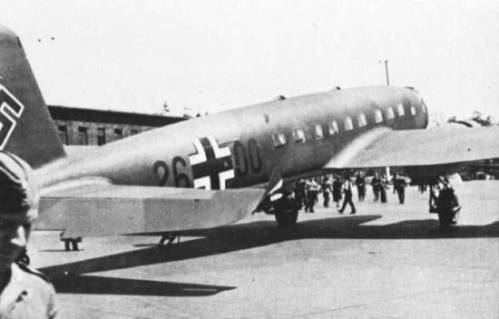
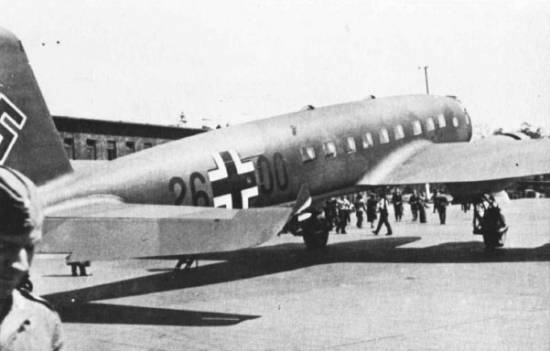
Hitler’s Fw-200 “Condor” before its fatal flight

On March 13th Hitler flew out to meet with Von Kluge at Army Group Center HQ at Smolensk.  On the flight back Hitler’s FW-200 was racked by an explosion crash landing near Minsk, taken down by a bomb planted on the plane by Colonel Henning Von Trescow of Kluge’s staff.[i] While Hitler survived, he remained in critical condition, barely alive at a SS hospital until his death on 20 April 1943, his 54th birthday. The crash landing was reported by the escorting ME-109s of JG-53, and a Alarm Company from a Security Division at Minsk rescued Hitler but were driven off the crash site by a large force of Soviet Partisans who destroyed the aircraft and any evidence to the cause which the escorting fighters attributed to mechanical problems. 

There were no other survivors. Von Kluge, expecting to be implicated the Fuhrer’s death committed suicide after visiting troops on the front line, and was succeeded at Army Group Center by Field Marshal Model the commander of 9th Army. The other conspirators were frozen into inaction when Hitler survived the crash and made no attempt to take over the government, realizing that “our plans for seizing power in Berlin and other large cities were still not adequate to the task.”[ii] In the absence of Hitler Reichsmarschall Goering, Hitler’s designated successor, took action to secure his power and using contacts in the GESTAPO accused Himmler of treason for making contact with Neutral intermediaries in Sweden[iii] and replaced him with SS General Kurt Wolfe, and reappointed Rudolf Diels, the former head of the GESTAPO when it was still under his control[iv], to head it again.  Himmler attempted to flee and was caught near Luneburg when he committed suicide with a cyanide capsule before he could be interrogated. Other potential rivals were eliminated; Martin Bormann, who Goering hated, was arrested on charges of exceeding his authority, embezzlement, and harming the war effort and was executed.[v] Joseph Goebbels swore his loyalty to Goering even before Hitler’s death.  He and Albert Speer were directed to arrange the state funeral for the late Fuhrer. Berlin Radio announced the Fuhrer’s death on the 21 April, Hitler’s body was prepared and lay in state at the Chancellery.   A period of mourning was declared 21 April to 1 May on which the State Funeral took place. On 2 May Goering announced that Field Marshal Von Rundstedt was the new Chief of OKW and would coordinate strategy on all fronts. The next day Goering called together a meeting of the heads of OKH, OKW, the Inspector General of Panzer Troops, and the commanders of the Eastern Front Army Groups, Western Europe and Africa as well as Reichsfuhrer Karl Wolff, Admiral Donitz and Field Marshal Von Richthofen[vi] representing the Luftwaffe to decide on a course of action for the summer. It was the first time that all had been called together to discuss the overall situation since Barbarossa began in 1941, and the first true attempt to formulate a grand strategy during the war.

Options and Decision: The Zossen Conference 3 May 1943[vii]
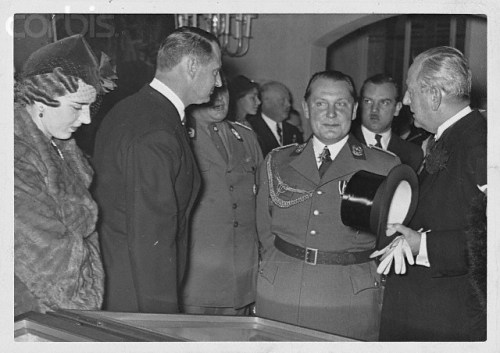
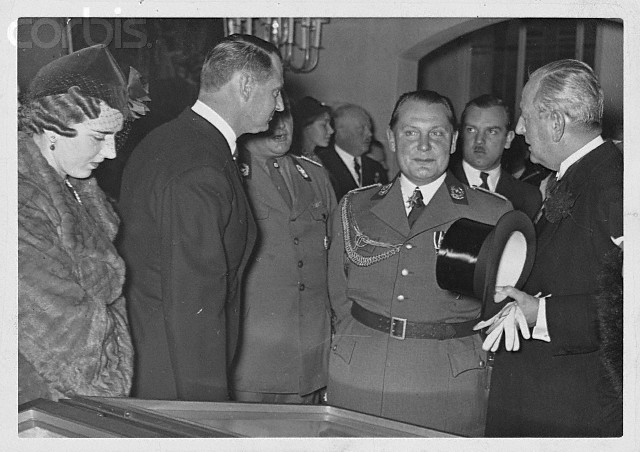
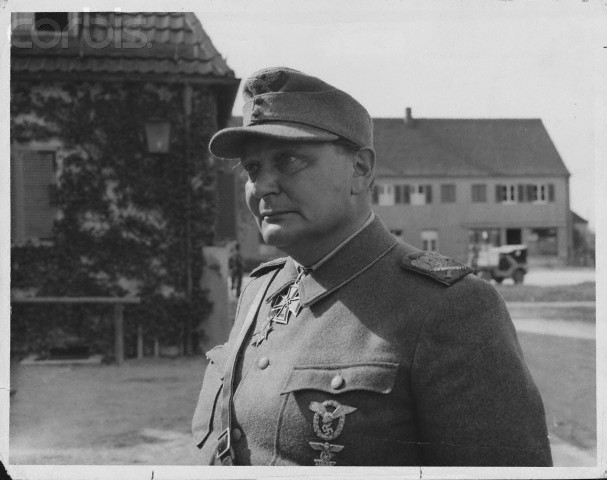
Goering meeting Diplomats following Hitler’s State Funeral

Herman Goering looked up from the maps spread out on the conference table.  He looked surprisingly fit, somehow between the crash of Hitler’s aircraft and his death he had pulled himself together and out of his drug induced malaise.  It was as if he again had a purpose. Field Marshal Von Rundstedt now Chief of OKW following Goering’s relief of Field Marshal Keitel, and General Jodl had just finished briefing the situation in western and southern Europe, following briefings by Colonel General Zeitzler of OKH, the Inspector General of Armored Troops, General Guderian and Field Marshal Von Manstein of Army Group South.  Albert Speer briefed tank and aircraft production numbers while the Chief of the Army personnel office noted the requirement for 800,000 replacements “but even the most ruthless call-up was able to produce only 400,000.”[viii] Looking from the table he spoke: “Gentlemen, the situation is critical and I have to admit that I have thought so for a number of months but have been unable to speak out.   Our political situation is perilous, the Italians are ready to abandon our cause. Our forces in North Africa will soon be unable to hold out as our Italian friends have let us down again.[ix] I expect that if Jodl and Kesselring are right about Allied intentions that we will have our hands full in the west shortly.  Kesselring and Arnim, you need to evacuate as many German soldiers from Africa as possible,[x] use all air and naval forces that you can, I know it will be difficult, especially with the heavy losses we have taken in transport aircraft and the pathetic Italian Navy.”  Goering paused, his gaze passing around the room.  “In the west we need to assume that the Allies will invade and the ‘very real danger that the enemy may turn against Brittany and Normandy,’ Field Marshal Rommel will take command of OB West to build up the Atlantic Wall in these sectors.”[xi] “Zeitzler, Manstein, we need to shore up the eastern front.”

“Herr Reichsmarschall, the Fuhrer had approved the plan called ZITADELLE, to attack the Russians here in the Kursk salient.” responded Zeitzler.[xii] “We should be ready to begin the offensive this month.”  Goering raised his hand stopping Zeitzler.  “I know, but I have considered that plan and I cannot support it. Richthofen briefed me on it prior to the Fuhrer’s death and general, we must have another plan, and an attack on Kursk is so obvious the Russians will be ready to meet it.  I have considered what the General Guderian and Minister Speer said regarding tank production and the state of the Panzer arm.  I cannot approve Zitadelle, but we must find a way to deal the Russians a defeat without squandering our strength attacking such an obvious target. Model too is dubious of the prospects; he believes that the Russians know our intentions and has requested a delay to strengthen his forces.”[xiii] “Reichsmarshall.” chimed in Jodl. “You are correct, the premature commitment of central reserves in such an offensive will not help our cause, in fact only local success is what can be expected from Zitadelle.”[xiv]
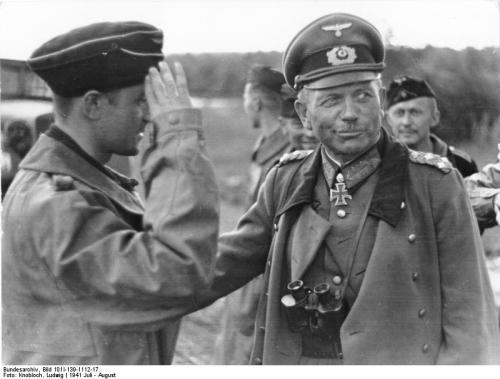
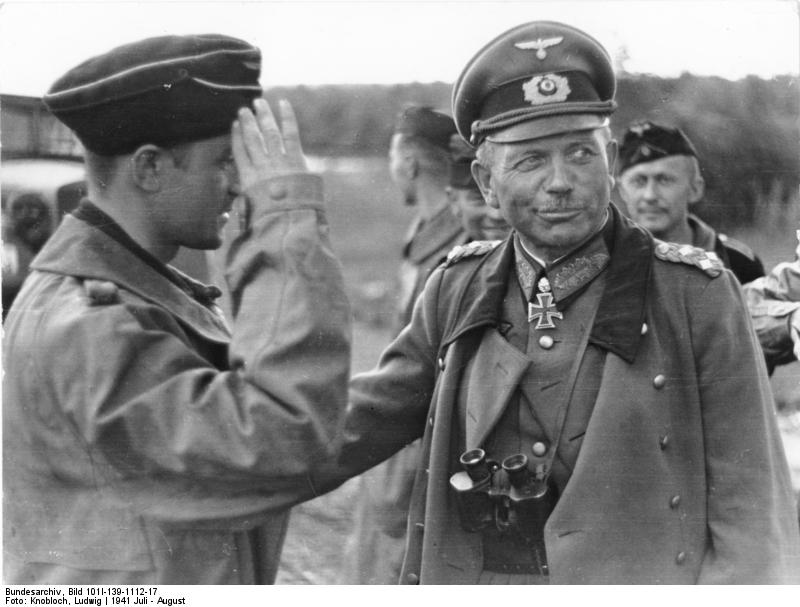
Colonel General Heinz Guderian 

“But Reichsmarshall, we must recapture the initiative in the east, we must take the offensive!” retorted Zeitzler. “Our new units of Panthers and Tigers will give us a decisive technical advantage.”[xv] Guderian now joined in. “But the Panthers still have many technical problems, it would be better to wait until they are worked out before we commit them to a major offensive, and besides, how many people do you think even know where Kursk is?”[xvi]

“Zeitzler, I appreciate your zeal.” Interrupted Goering, “But Jodl and Guderian are correct, even a successful attack at Kursk will not alter the strategic situation. We must work to stave off defeat.  Manstein has a plan that may help, there is some risk, but I see no other way. An offensive at Kursk would require tanks and aircraft that must be used to combat the Allied bombing of the Reich and to safeguard withdraw of our units from Africa, it would force us to commit everything with little gain.” Goering paused and said to Manstein, “Go ahead Manstein.”

“Reichsmarshall, Gentlemen.  Our situation in the east is not hopeless, in March I felt that an immediate offensive would succeed in pinching off the Kursk bulge, but I think now that the moment of opportunity has passed for such an attack.  Instead we should fight a defensive battle of maneuver as called for byTruppenführung that we have developed from the days of the Reichswehr.  We should build up our forces; give ground where we can, and when we have the chance strike the enemy on the backhand, as we did at Kharkov.”[xvii]

Zeitzler jumped in. “But how can we do that? If we don’t strike now while we have the opportunity the Russians will grow stronger, and how can we know where they will strike?”[xviii]

“General Zeitzler, the Russians are already building up heavy armored forces in the area of Kursk, and diverting forces from other sectors of the front to that area.  The south offers them the best opportunity to finish what they started in the winter.  They will come and it will be in the south, they will want Kharkov and they will again attempt to envelop our forces in the south. If they succeed they will follow up and rapidly move into the Balkans, Romania and Hungary will turn on us and it will be a disaster, we cannot afford that.”  Manstein looked up, Jodl nodded and Model said “Once that is done they will push to Kiev and Poland.” Goering interjected “Thank you Model, you are right, Field Marshal Manstein; please go on with your plan.”

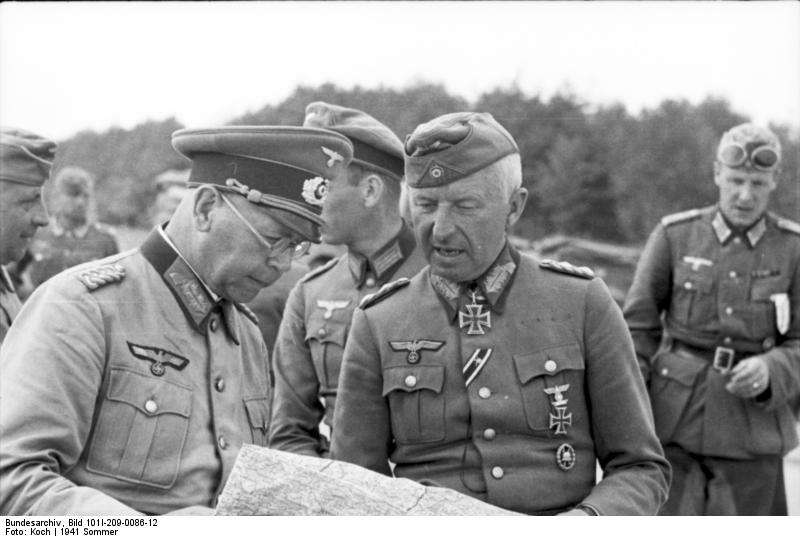
Field Marshal Erich Von Manstein at the Front

Motioning to the map Manstein continued. “We will concentrate the majority of our Panzer forces here, just west of Kharkov and another group here west of Orel.  We will also build fall back positions for our infantry forces here along the Dnieper.  We should be ready to withdraw from the Crimea should the need arise, we cannot afford another encirclement.  When the Russians attack we will give ground, even Kharkov if needed. Our infantry divisions will fight a delaying action supported by Jagdpanzer and Sturmgeschutzen, the Luftwaffe will need to give us good close air support from Stukas and as the Russians outrun their supply depots and their offensive loses momentum we will attack, like a badger defending itself.  Our Panzers will cut off their spearheads west of Kharkov while we bleed them dry in the north; we will then roll them up, stabilize the line and prepare for the winter.”  Manstein sounded confident; those in the room began to sense that his plan could work.  Rundstedt spoke up: “That will give us the chance to transfer forces to other fronts and, maybe, since Hitler is dead there might be a chance for Reichsmarschall to negotiate a settlement,[xix] otherwise gentlemen the Allies will destroy our cities from the air and grind our armies down until we have no recourse but surrender.”

“Right” added Goering, making eye contact with each man in the room. “We must have success in the defense, we must buy time and we must work to end this war before Germany is destroyed. ‘We will have reason to be glad if Germany can keep the boundaries of 1933 after the war.”[xx] He paused and said “General Zeitzler, you are relieved of your duties at OKH, General Guderian, you are now the Chief of OKH.[xxi] Manstein, you will command the East, General Hoth will take your Army Group. You will work with Guderian and Model to flesh out this plan.  We must get the Panther, Tiger and Ferdinand units operational as soon as possible.  I believe that the Russians will attack by June. Richthofen, I need you to look to the Luftwaffe. We have not had a good year and we have to succeed in defending the Reich from Allied bombers and provide support to the ground forces. Of course flak needs to be built up. The Luftwaffe Field Divisions with the exception of the Fallschirmjaeger and Herman Goering Panzer Division need to be transferred to Army control.”  He looked at Speer: “Herr Speer, the Fuhrer entrusted you with our war production program, you must increase production of tanks and aircraft. Speed the production of the ME-262 and cancel all programs that take away from the panzers, fighters and ground support aircraft that we need now.” He put his hands on his hips and took a deep breathe. He looked at Wolfe, Himmler’s successor.  Wolff, the Reich needs the Waffen SS, the Panzer troops are exceptional, but I want all Waffen SS Formations, with including the Panzers turned over to Army control, we cannot keep dividing our resources. With the personnel from the Luftwaffe Field Divisions we should be able to provide the Army with excellent troops to rebuild experienced formations.”  Goering looked around the room; “Are there any questions Gentlemen?” Putting his arm across Manstein’s soldier and said: “I think that Badger is a fitting name for your plan. Our little Dachs will tear them to pieces.”   Later, Goering met with Foreign Ministry officials emphasizing the need to strengthen German Allies and seek peace with the west. He “admitted that he was worried about the future. ‘It’s not quite clear to me how we are going to end this war.’”[xxii] Those present could not believe how Goering had conducted himself, and all left the meeting thinking that it might be possible to stave off defeat.  It was an incredible performance. After Hitler’s crash he had secretly undergone a “systematic withdraw cure which had ended his drug addiction.”[xxiii] The change was marked.

STAVKA Headquarters Moscow: 7 May 1943

Josef Stalin was ecstatic.  His agents reported that Hitler was dead even before the announcement from Berlin.  Partisans had confirmed that it was Hitler’s aircraft that they found and recovered some of Hitler’s personal belongings, including his cap, which they presented to Stalin.  Intelligence reported that Goering had taken power, and Stalin was sure that his position was weak and many believed that Goering, was not up to the task, and that a renewed offensive could bring down the Nazi regime.  Now was the time to bring the Nazi terror to an end and Stalin called his key leaders together.  While Stalin wanted an immediate offensive his generals wanted to wait just in case the Germans attacked Kursk.  “Zhukov, Vasilevsky, and various General Staff officers urged caution and recommended that the Red Army remain on the defensive until the Germans expended their offensive strength.”[xxiv] Stalin supported by commanders, like Vatutin, “argued for a resumption of offensive action in early summer to preempt German action and regain the momentum lost in March 1943.”[xxv] In the end a compromise was reached and despite the temporary defensive stand “Russian strategic planning in the summer of 1943 was inherently offensive in nature.”[xxvi] The new offensive would be launched on 15 June if the Germans had not attacked before.  It would be named Operation Kutuzov[xxvii] and be aimed at the Orel salient and Kharkov.  The northern prong under Rokossovsky’s Central Front would destroy the Germans around Orel and drive west while Vatutin’s Voronezh and Konev’s Steppe Front would take Kharkov and drive toward the Dnieper.[xxviii] The Southwest Front and South Fronts would attack and destroy the German forces along the Mius, the goal: “collapse of the German defenses and an advance to the line of the Dnieper River from Smolensk in the north southward to the Black Sea.”[xxix]
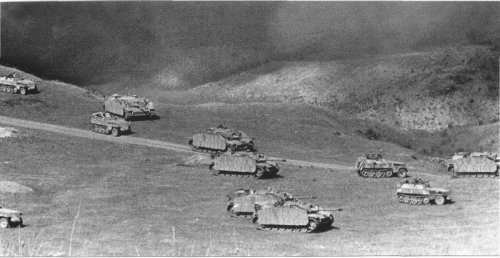
Sturmgeschutzen and SdKfw 251 APCs moving into position

Manstein met with Model, Hoth and Guderian to develop DACHS. They had  to play for time and deceive the Russians as to their true intent so they could build up their forces.  Deception operations were mounted on both sides of the Kursk bulge to give the impression of attack preparations.  1st Panzer Army and Army Detachment Kempf  were to launch a diversion called Operations HABICHT and PANTHER southeast of Kursk  “designed to push the Soviets back from the industrial area of the Donets River.”[xxx] The defensive plan called for the infantry supported by tank destroyers, assault guns the heavy Ferdinands as well as mobile Pioneer units to conduct a withdraw to delay and disrupt the Russian attack.  Bridges were prepared for demolition, defensive positions constructed at choke points which would be defended and then abandoned when no longer defensible, and minefields laid to slow the Russian advance.  This was critical for 9th Army now commanded by General Henrici in the Orel salient north of Kursk.  Henrici, a defensive master constructed a series of defensive belts to allow his army to withdraw from the bulge without being cut off and inflict heavy casualties on the Russians through skillful deployment of anti-tank weapons, especially self propelled guns.[xxxi] In the south 4th Panzer Army, now commanded by SS General Paul Hausser[xxxii] and Army detachment Kempf made preparations to allow the Russians to advance past Kharkov using the same defend and delay tactics and then counterattack. As the armies prepared, Speer and Guderian’s efforts to rebuild the Panzer force were bearing fruit.  By 15 May the first brigade of Panther tanks was activated and began training west of Kharkov.[xxxiii] Two battalions of Ferdinands, one for 9thArmy and one for 4th Panzer Army were activated.[xxxiv] Sturmgeschutzbattalions were assigned to each infantry corps. Panzer divisions built up so that all had an average of 130 tanks, with the SS Divisions and Gross Deutschland receiving more.  Tiger battalions were assigned to each Panzer Corps.

The Summer Campaign

German Infantry

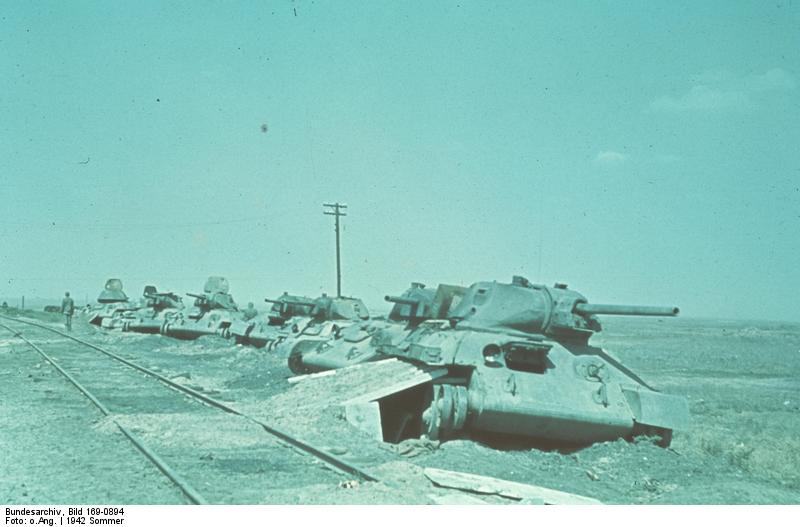
On 1 June Operations PANTHER and HABICHT hit the unfortunate Soviet 6thArmy, which had been victimized by Manstein’s counter-stroke in March.  III Panzer Corps of Army Detachment Kempf supported by Corps Raus (IX Corps) linked up with 1st Panzer Army at Kupiansk on 3 June.  The Russian counterattacked with 8th Guards Army and the 2nd and 23rd Tank Corps. The battle of Kupiansk resulted in the destruction of 6th Army and the 23rd Tank Corps which was surprised by the 503rd Panzer Detachment’s Tigers. 2nd Tank Corps received a similar mauling at the hands of the 6th Panzer Division.  On 9 June the Germans returned to their start positions.

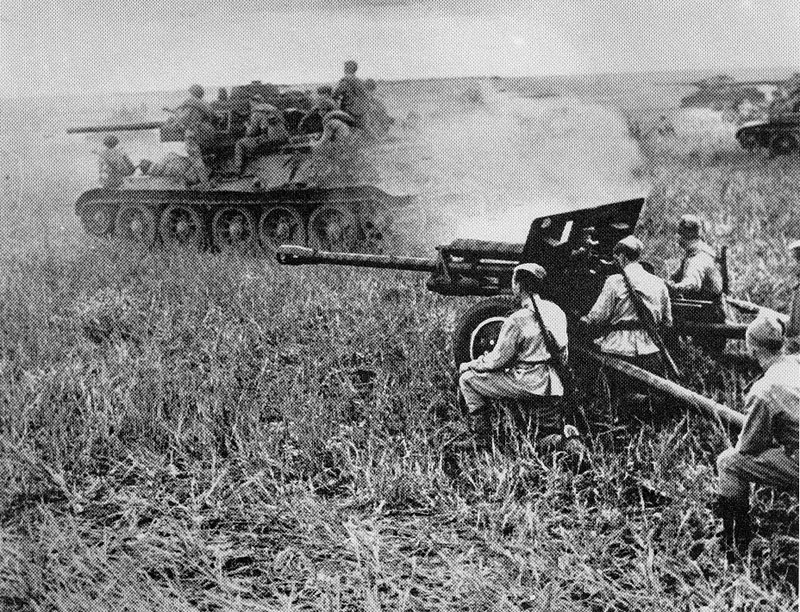
Soviet Tanks and AT Guns at Kupiansk

The attack at Kupiansk surprised STAVKA which had been deceived by the build up of Panzers around the Kursk salient.  Stalin continued to hound his generals to begin Kutuzov on time, but the generals were “chastened” by the defeat at Kupiansk and “earlier experiences”[xxxv] and wanted to delay. Stalin forced them to begin Kutuzov on 22 June, the 2nd Anniversary of Barbarossa.  Manstein and his Eastern Front commanders held their breath.  Teams of Brandenburger commandos operating in the Soviet rear and Luftwaffe reconnaissance aircraft reported Russian units moving to advanced positions to the north and south of Kursk.  Vatutin commanding the Voronezh Front was ambushed and killed by a Brandenburger detachment supporting Ukrainian irregulars[xxxvi] as he returned from visiting 69th Army near Prokhorovka station on 19 June and was replaced by Lieutenant General Katukov of 1st Tank Army.  Katukov “was one of the Red Army’s most accomplished and experienced armor officers.”[xxxvii]

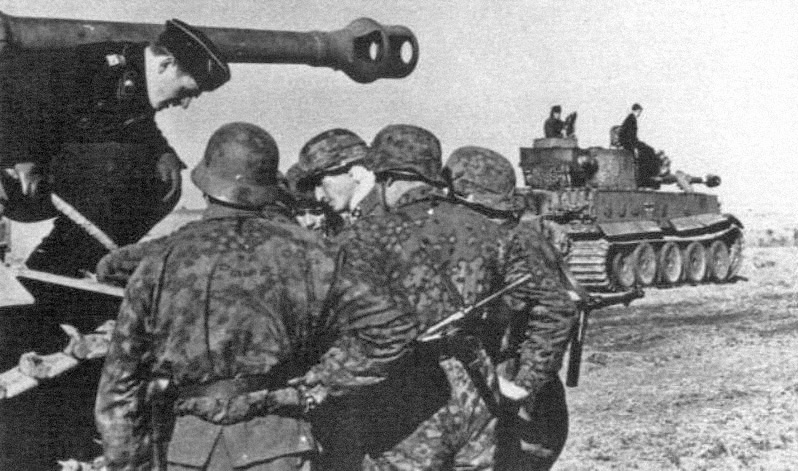
Manstein with Tigers

In the north Rokossovsky’s Central Front and Popov’s Bryansk Front supported by 11th Guards Army[xxxviii] began concentric attacks on the German 9th and 2nd Panzer Armies and ran into Henrici’s labyrinth on 22 June.  They hit the first line they found it empty, the Germans having repaired to secondary positions,[xxxix] German 88’s and self propelled guns took a heavy toll on the tanks of 2nd Tank Army.  The 3rd Tank Army under General Rybalko’s army committed after the initial assault “attempted a fresh penetration instead of exploiting the earlier efforts of the 3rd and 63rd Armies… Rybalko’s force included 698 serviceable tanks…but lacked the artillery and engineers for such a deliberate assault.”[xl] Popov telephoned Stalin at noon on 25 June “to report that Rybalko was practically stalled and suffering heavy losses in tanks.”[xli]The Germans committed the 5th and 8th Panzer divisions[xlii] against 3rd Tank Army. The fresh Panzers inflicted painful losses on Rybalko.  On 27 June Stalin called to complain about the handling of the army, demanding a direct assault.[xliii] The battle turned into a “grinding battle of armored attrition.”[xliv] After “a few bloody days bereft of any success, Rybalko’s tank formations had to be pulled out of the line into reserve.”[xlv] The “battle for the Orel salient ended three weeks later with a German defensive victory, as Army Group Center extricated its two armies from the box prepared for them while inflicting heavy casualties on three Soviet Fronts.”[xlvi] The Soviets lost over 629,000 men and 3,500 tanks.[xlvii] In comparison German losses were light and by falling back they shortened their line freeing units for other operations.  Stalin had Orel but failed to destroy the Germans and lost heavily in the attempt.

Panzer IV’s engaging Soviet forces

In the south Konev’s Steppe and Katukov’s Voronezh Fronts prepared their assault on Kharkov.  They attempted to deceive the Germans by simulating the massing of a “notional tank and combined-arms army” in the western side of the Kursk bulge.[xlviii] The deception was unsuccessful as reconnaissance by Luftwaffe aircraft and Brandenburgers failed to uncover any troop concentrations and Russian deserters, talked of a strike at Kharkov. The offensive “Rumiantsev” was opened by the 5th and 6th Guards armies supported by 53rd and 69th Armies on 21 June; a day later 7th Guards Army jumped off, two additional armies supported the west flank of the offensive.[xlix] The Russians in the two fronts began the operation with 980,000 men and 2,500 tanks.[l] Opposing them were 4th Panzer Army and Army Detachment Kempf’s 350,000 men and 1,750 tanks and assault guns including 100 Tigers and 192 Panthers.[li]
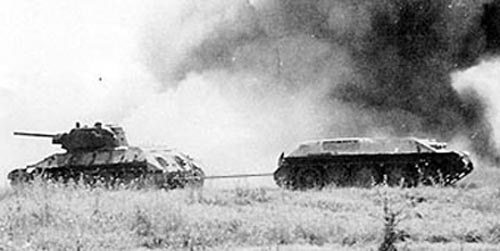
T-34 towing disabled T-34 near Orel

STAVKA “chose to strike the strongest portion of Hoth’s defense head-on, to engage and defeat the German force and avoid the problems of flank threats.”[lii] Unfortunately they complicated the attack by focusing it at “precisely the boundary between the Voronezh and Steppe Fronts, causing increased coordination problems from the start of the operation.”[liii] The Germans used Ferdinands, Jagdpanzers and Sturmgeschutz in a mobile defensive role, as infantry fought delaying actions as they withdrew to successive defensive lines, inflicting brutal losses on the Russians.  Aided by massive artillery preparation the Russians broke through the weakened Army Detachment Kempf near Belgorad[liv] taking the city on 24 June.  Corps Raus’ 167th Infantry Division was taken on its exposed left flank forcing Raus to “fight a delaying action…until the withdraw reached Kharkov.” [lv] The Germans reacted to the threat by committing the “veteran 5th SS Panzer Grenadier Division Wiking” to reinforce Army Detachment Kempf.[lvi] Despite the success “the German defenses proved so tenacious that the leading brigades of the two tank armies had to enter the fray.”[lvii]
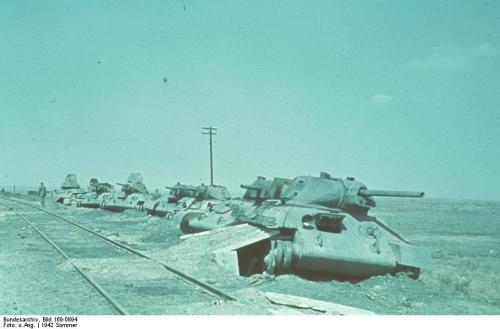
Destroyed column of T-34s

As the Russians advanced the German fell back.  Hoth directed Hausser to wait before counterattacking with XLVIII Panzer Corps and II SS Panzer Corps.  Katukov pushed the 1st and 5th Tank Armies into the hole in the German lines and moved toward Kharkov which was liberated by the 89th and 183rd Guards Divisions[lviii] on 2 July.  The liberation of Kharkov and Belgorad while exhilarating had cost Katukov over 250,000 casualties.  Skillful employment of mobile defense and local counterattacks by mixed Panzer battlegroups, such as one by Grossdeutschland on the flank of 5th Tank Army caused panic and some units withdrew “leaving behind masses of equipment of every description.”[lix]The tank armies had lost upwards of 50 percent of their tanks, infantry divisions were now down to half strength, some down to 3000 men.[lx] Yet the Soviets attempted to drive south to trap the Germans.  They were hit by XLVIII Panzer Corps and II SS Panzer Corps, both of which had seen little action thanks to Hoth’s conservation of strength. XLVIII Panzer Corps hit the 1st Tank Army at the “key road junction of Bogodukhov, 30 kilometers northwest” of Kharkov “severely mauling the leading three brigades”[lxi] forcing 1st Tank Army to withdraw towards Kursk. 5th Tank army moved to support but was taken in the flank by II SS Panzer Corps.  The SS Corps encircled the remainder of 5th Tank Army. Hunted by the SS on the open steppe the survivors slipped through gaps in the encirclement but both armies were ravaged.  By 15 June 1st Tank Army was down to 120 tanks and 5th Tank Army had “50 of its original 503 tanks and self-propelled guns serviceable.”[lxii] XLVII Panzer Corps took Kharkov on 18 July.
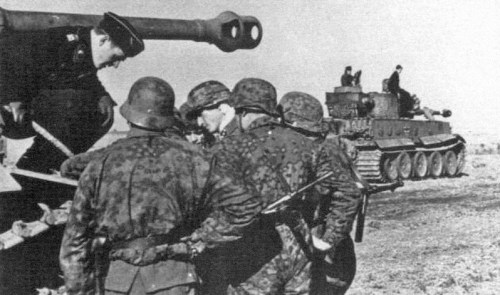
SS Panzer Grenadiers and Panzertrüppen Tigers of 3rd SS Panzer Division prepping for battle

The victory paid dividends for the Germans. The Front held and the Russians had taken nearly a million casualties and lost almost 6000 tanks and self-propelled guns.  Three Tank Armies had been smashed, 5th Tank Army would not be fit for field duty for two months.[lxiii] 3rd Tank Army earned a Guards designation but was withdrawn from combat.[lxiv] 6th Army, victimized by PANTHER was destroyed while the 5th, 6th and 7th Guards Armies were shattered. Additionally, the Germans decimated two independent tank corps.  Stalin reacted by halting operations, cancelling follow on offensives and rebuilding the Red Army’s tank armies and mechanized forces.  He realized that his Generals had been right in not wanting to undertake offensive operations until the Germans had been weakened, but the German insistence on not going on the offensive caused him to ignore their arguments. He decided to wait until winter to launch his next offensive, but that offensive would never be launched as by the time he was ready the war was over.
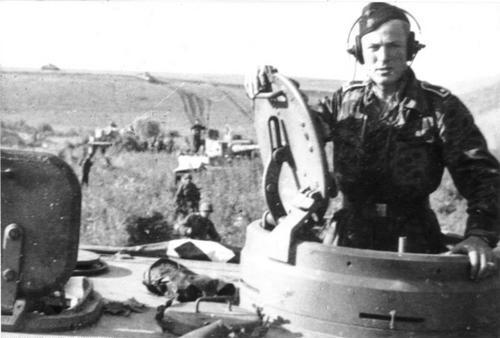
German Tank Commander as Panzers mop up

The elimination of the Russian threat enabled Italy to be reinforced as well as the reinforcement of the Atlantic Wall.  The Salerno landings were a disaster, the Allies driven into the sea by Panzer Divisions released from the Eastern Front.  The disasters at Salerno and the Russian debacle brought overwhelming domestic political pressure on Roosevelt and Churchill to end the war. Clandestine talks began in Switzerland between Avery Dulles and Karl Wolff[lxv] while Walter Schellenberg met with Count Bernadotte.[lxvi] Despite the previous demand for unconditional surrender the Allies decided to negotiate with the new German leadership might end the war in Europe.  Goering surrendered power to General Beck and gave himself and other accused war criminals up to the Allies. Beck took power, withdrew to 1939 borders, dismantled the death camps and disbanded the Nazi Party, and its police apparatus.[lxvii] Peace came to Europe on 9 November 1943, 25 years after Kaiser Wilhelm’s abdicated his throne.

Goering Surrenders to the Allies


[i] Clark, Alan. Barbarossa: The Russian German Conflict, 1941-45. Harper Collins Publishers, New York, NY 1965. Pp.307-311. There was an attempt on Hitler’s life on his return from Kluge’s headquarters.  Only the bomb did not go off, all components had worked but the detonator did not fire.  Clark notes that “the Devil’s hand had protected Hitler.” (p.311)

[ii] Galante, Pierre. Operation Valkyrie: The German Generals’ Plot Against Hitler. Translated by Mark Howson and Cary Ryan. Harper and Row Publishers, New York, NY 1981. Originally published as Hitler est il Mort? Librairie Plon-Paris-Match, France. 1981. p.167

[iii] Padfield, Peter. Himmler. MJF Books, New York. 1990. p.474.  Himmler had a number of contacts and intermediaries who he used to attempt contact with the Allies as early as 1943.

[iv] Höhne, Heinze. The Order of the Death’s Head: The Story of Hitler’s SS. Translated by Richard Barry. Penguin Books, New York and London, 2000. First English edition published by Martin Secker and Warburg Ltd. London 1969. Originally published as Der Orden unter dem Totenkopf, Verlag Der Spiegel, Hamburg 1966.  Diels remained an ally of Goering even marrying his sister in 1943.

[v] Von Lang, Jochen. The Secretary: Martin Bormann: The Man Who Manipulated Hitler. Translated by Christa Armstrong and Peter White. Random House Inc. 1979. Originally published as Der Secretär. Deutsche-Verlags-Anstalt, Stuttgart. 1977 p.9.  At his trial Goering remarked to other defendants. “If Hitler had died sooner, I as his successor would not have had to worry about Bormann. He would have been killed by his own staff even before I could have given the order to bump him off.”

[vi] Irving, David. Göring: A Biography. William Morrow and Company, New York, NY 1989. Richthofen had succeeded Jeschonnek in March when Goering relieved him. Goering believed that Jeschonnek “was too pliable at the Wolf’s Lair.” Goering had actually considered this a number of times but postponed it several times. p.388

[vii] Guderian, Heinz. Panzer Leader. (abridged) Translated from the German by Constantine Fitzgibbon, Ballantine Books, New York 1957. pp.244  Hitler conducted a similar conference involving many of the same people in Munich.

[viii] Carell, Paul. Scorched Earth: The Russian German War 1943-1944. Translated by Ewald Osers, Ballantine Books, New York, NY 1971, published in arrangement with Little-Brown and Company. p. 336

[ix] Ibid. Irving. pp. 377-379.

[x] Ibid. Guderian. p.243

[xi] Ibid. Irving. p.378

[xii] Glantz, David M and House, Jonathan. The Battle of Kursk.  University Press of Kansas, Lawrence, KS. 1999. pp.21-25.  Operations order 5 had been approved by Hitler on and issued by OKH on 13 March. It was followed by Operations Order 6 on 15 April.

[xiii] Ibid. Clark. p.324.

[xiv] Warlimont, Walter. Inside Hitler’s Headquarters 1939-45. Translated by R.H. Berry, Presido Press, Novato CA, 1964. p.334 These objections of Jodl were from June, but indicate the feeling of Jodl for the Zitadelle as planned and when would have likely been his response in such a situation.

[xv]Glantz, David M. and House, Jonathan. When Titans Clashed: How the Red Army Stopped Hitler. University Press of Kansas, Lawrence, KS. 1995. p.157 Zeitzler had been a consistent advocate for Zitadelle since he heard Manstein’s initial proposal in March.

[xvi]Macksey, Kenneth. Guderian: Creator of the Blitzkrieg. Stein and Day Publishing, New York, NY 1975 p.206

[xvii] Ibid. Clark. p.322

[xviii] Ibid. Clark. p.323.  Zeitzler made this argument with Jodl during a briefing in April 1943.

[xix] Shirer, William L. The Rise and Fall of the Third Reich. A Touchstone Book published by Simon and Schuster, 1981, Copyright 1959 and 1960. p.1115.  Hitler had told Keitel and Jodl that “When it comes to negotiating [for peace]…Goering can do much better than I. Goering is much better at those things.”

[xx] Speer, Albert. Inside the Third Reich. Collier Books, a Division of MacMillan Publishers, Inc. New York, NY 1970. p.245.  From a conversation with Speer in late 1942.

[xxi] Ibid. Glantz and House. Clash of Titans. pp. 216-217. Hitler would replace Zeitzler with Guderian in June 1944.

[xxii] Ibid. Irving. p.379 From a conversation with State Secretary Ernst von Weizäcker 11 February 1943.

[xxiii] Ibid. Speer.  p.512. The ending of the addiction took place at Nurnberg and Goering surprised many of his co-defendants with his “remarkable energy.”

[xxiv] Ibid. Glantz and House. Kursk. p.28

[xxv] Ibid. Glantz and House. Kursk. p.28.

[xxvi] Ibid. Glantz and House. Kursk. p.264

[xxvii] Overy, Richard. Russia’s War: A History of the Soviet War Effort: 1941-1945. Penguin Books, New York NY and London, 1997. pp.211

[xxviii] Erickson, John. The Road to Berlin. Cassel Military Paperbacks, London, 2003. First Published by Weidenfeld and Nicholson, 1983. p.76

[xxix] Ibid. Glantz and House. Kursk. p.265

[xxx] Ibid. Glantz and House. Kursk. p.23.

[xxxi] Liddell-Hart, B.H. The German Generals Talk. Quill Publishing, New York, NY. 1979. Copyright 1948 by B.H. Liddell-Hart. p.215  Henrici describes the methods that he used in 1944 as Commander of 1st Panzer Army and as Commander of Army Group Vistula during the defense of Berlin.

[xxxii] Hausser would actually command 7th Army in Normandy in 1944.

[xxxiii] Ibid. Glantz and House Kursk. p.53 This was the 10th Panzer Brigade assigned to XLVIII Panzer Corps.  Additionally Clark notes production figures for Panthers from Speer that indicate that 324 Panthers would be available by 31 May. (Clark. p.325)

[xxxiv] Ibid. Glantz and House. Kursk. p.52.  At Kursk the two Ferdinand detachments were both assigned to 9th Army.

[xxxv] Ibid. Glantz and House. Kursk. p.28.

[xxxvi] Ibid. Carell. p.510.  Vatutin was killed by Ukrainian irregulars in April 1944.

[xxxvii] Ibid. Glantz and House. Kursk. p.62

[xxxviii] Newton, Steven H. Hitler’s Commander: Field Marshal Walter Model, Hitler’s Favorite General. DeCapo Press, Cambridge MA 2005. p. 256

[xxxix] Ibid. Liddell-Hart. p.215.

[xl] Ibid. Glantz and House. Kursk. p.236

[xli] Ibid. Erickson. p.113. At Kursk the call took place on 20 July when Rybalko was in this situation.

[xlii] Ibid. Newton. p.256

[xliii] Ibid. Erickson. p.114

[xliv] Ibid. Glantz and House. Kursk. p.236

[xlv] Ibid. Erickson. p.114

[xlvi] Ibid. Newton. p.256

[xlvii] Ibid. Glantz and House. p.345. The actual losses were 429,000 men and 2,500 tanks against a German force significantly weakened by Zitadelle.  Had the Russians attacked the Germans rather than receiving the German attack first their losses in men and machines would have been far higher.  I have reflected that in the alternative numbers.

[xlviii] Ibid. Glantz and House. When Titans Clashed. p.168  The Soviets did try this in their counter offensive following Zitadelle.

[xlix] Ibid. Glantz and House. When Titans Clashed. p.169

[l] Ibid. Glantz and House. Kursk. p.344. Actual figures for beginning of offensive.

[li] Ibid. Glantz and House. Kursk. p.338.  Figures from beginning of Zitadelle.

[lii] Ibid. Glantz and House. Kursk. p.244 The actual text reads “Manstein’s defense” not Hoth’s.

[liii] Ibid. Glantz and House. Kursk. p.244

[liv] Von Mellenthin, F.W. Panzer Battles: A Study of the Employment of Armor in the Second World War. Translated by H. Betzler, Ballantine Books, New York, NY, 1971. Originally Published University of Oklahoma Press, 1956. p.286

[lv] Raus, Erhard. Panzer Operations: The Eastern Front Memoir of General Raus, 1941-1945. Compiled and Translated by Steven H Newton. Da Capo Press a member of the Perseus Book Group, Cambridge, MA 2003. p.214

[lvi] Ibid. Glantz and House. Kursk. p.247

[lvii] Ibid. Glantz and House. When Titans Clashed. p.169

[lviii] Ibid. Erickson. p.121  These were the actual divisions that liberated Kharkov.

[lix] Ibid.  Von Mellenthin . p.287

[lx] Ibid. Glantz and House. p.252

[lxi] Ibid. Glantz and House. When Titans Clashed. p.170

[lxii] Ibid. Glantz and House. Kursk. p.252

[lxiii] Ibid. Glantz and House. Kursk. p.252

[lxiv] Ibid. Glantz and House. Kursk. p.237

[lxv] Ibid. Hohne. p.572

[lxvi] Ibid.  Hohne. p.570

[lxvii] Ibid. Galante. pp 69 and 207

Bibliography

Carell, Paul. Scorched Earth: The Russian German War 1943-1944. Translated by Ewald Osers, Ballantine Books, New York, NY 1971, published in arrangement with Little-Brown and Company

Clark, Alan. Barbarossa: The Russian German Conflict, 1941-45. Harper Collins Publishers, New York, NY 1965

Erickson, John. The Road to Berlin. Cassel Military Paperbacks, London, 2003. First Published by Weidenfeld and Nicholson, 1983

Galante, Pierre. Operation Valkyrie: The German Generals’ Plot Against Hitler.Translated by Mark Howson and Cary Ryan. Harper and Row Publishers, New York, NY 1981. Originally published as Hitler est il Mort? Librairie Plon-Paris-Match, France. 1981.

Glantz, David M and House, Jonathan. The Battle of Kursk.  University Press of Kansas, Lawrence, KS. 1999.

Glantz, David M. and House, Jonathan. When Titans Clashed: How the Red Army Stopped Hitler. University Press of Kansas, Lawrence, KS. 1995

Guderian, Heinz. Panzer Leader. (abridged) Translated from the German by Constantine Fitzgibbon, Ballantine Books, New York 1957

Höhne, Heinze. The Order of the Death’s Head: The Story of Hitler’s SS. Translated by Richard Barry. Penguin Books, New York and London, 2000. First English edition published by Martin Secker and Warburg Ltd. London 1969. Originally published as Der Orden unter dem Totenkopf, Verlag Der Spiegel, Hamburg 1966.

Irving, David. Göring: A Biography. William Morrow and Company, New York, NY 1989

Liddell-Hart, B.H. The German Generals Talk. Quill Publishing, New York, NY. 1979. Copyright 1948 by B.H. Liddell-Hart

Macksey, Kenneth. Guderian: Creator of the Blitzkrieg. Stein and Day Publishing, New York, NY

Newton, Steven H. Hitler’s Commander: Field Marshal Walter Model, Hitler’s Favorite General. DeCapo Press, Cambridge MA 2005

Overy, Richard. Russia’s War: A History of the Soviet War Effort: 1941-1945.Penguin Books, New York NY and London, 1997

Padfield, Peter. Himmler. MJF Books, New York. 1990

Raus, Erhard. Panzer Operations: The Eastern Front Memoir of General Raus, 1941-1945. Compiled and Translated by Steven H Newton. Da Capo Press a member of the Perseus Book Group, Cambridge, MA 2003

Shirer, William L. The Rise and Fall of the Third Reich. A Touchstone Book published by Simon and Schuster, 1981, Copyright 1959 and 1960.

Speer, Albert. Inside the Third Reich. Collier Books, a Division of MacMillan Publishers, Inc. New York, NY 1970.

Von Lang, Jochen. The Secretary: Martin Bormann: The Man Who Manipulated Hitler. Translated by Christa Armstrong and Peter White. Random House Inc. 1979. Originally published as Der Secretär. Deutsche-Verlags-Anstalt, Stuttgart. 1977

Von Mellenthin, F.W. Panzer Battles: A Study of the Employment of Armor in the Second World War. Translated by H. Betzler, Ballantine Books, New York, NY, 1971. Originally Published University of Oklahoma Press, 1956.

Warlimont, Walter. Inside Hitler’s Headquarters 1939-45. Translated by R.H. Berry, Presido Press, Novato CA, 1964.

15 Comments

Filed under alternative history, Military, world war two in europe

An Evening in the Minor Leagues with Carl Long

Me with Carl Long

On Friday, after a long and stressful week at work I decided to head to Kinston to see a ball game.  It was a rough week, my staff and I dealt with the death of an 11 year old girl that came through our ER on Monday morning.  I found that a Marine that I had served with while serving with 3rd Battalion 8th Marines in 2000-2001.  Staff Sergeant Ergin Osman was killed around Memorial Day with 7 of his fellow soldiers in Afghanistan. His death hit me hard.  I remembered the great Marine and wonderful young man that I knew back then.  That night I went out and sat in the light of the half moon and cried. Some other things went on and I finished work Friday caring for a family that lost their unborn baby and knowing that I was going to have to come in during the early morning hours Saturday for another still-birth.  I needed something and for me that “something” is baseball.

So when I was done with work I loaded up my trusty 2001 Honda CR-V and drove from LeJeune to Kinston. The trip across rural Eastern North Carolina was relaxing, there was little traffic and despite a passing thunder shower was uneventful, not even a driver doing well less than the speed limit in a no-passing zone to annoy the spit out of me. Eastern North Carolina has its own charm, small towns and settlements dot the farm fields and forests of the area. It is not uncommon to drive by a former plantation or to pass gas stations and country stores that seem to have stopped in time.

Kinston is one of those towns that have seen better times, the outsourcing of the garment industry to Central America and Asia has hit the town hard.  While a budding aviation industry promises better times many of the poorer and less educated people in the city have little opportunity.  While there are some very nice areas in town the central part of the city, especially downtown shows the real effect of what economic damage has been done to our country by the actions of industries to relocate overseas and actions by successive administrations and congresses to help them abandon Americans in order to increase profits.

However Kinston has had a team in the Carolina League for years and Minor League Baseball has been in the city continuously since 1937, with a four year break between 1958 and 1962 when the Kinston Eagles became part of the Coastal Plains League.  Grainger Stadium was built in 1946. The team became part of the Carolina League in 1956. Over the years the Kinston team has had various affiliations with Major League teams as well as various names.  The Team was called the Eagles until 1982 when they became the Blue Jays until 1986 when they again became the Eagles. Then in 1986 they became the affiliate of the Cleveland Indians, a relationship that they maintain until this day. Before the 2011 season it was announced that the team had been sold and was being moved to Zebulon North Carolina to replace the Carolina Mudcats which are moving to Pensacola Florida. The team owner is seeking to bring another team to Kinston in time for the 2012 season.  It will be a sad day if a team cannot be found to bring to Kinston which has one of the nicest parks in Class “A” ball.

I got to the game and was able to relax talking with new friends and moving around the ballpark to take pictures. When I moved back to the first base line I saw a man that I had watched a game with earlier in the year in his season ticket box. John is a retired Navy Supply Corps Officer and really nice to spend time with. This particular evening he was sitting beside a heavy set older African American man wearing a Negro League cap.  I came up and John invited me to sit with them and I got to meet the man, Carl Long.

Carl had played ball in the Negro Leagues with the Birmingham Barons and played with Willie Mays and for legendary manager Buck O’Neal and he was the first black player in the Carolina League playing with the Kinston Eagles when they were with the Pittsburgh Pirate organization.  In 1956 he led the team in home runs with 18, hit .299 and had 111 RBIs a season record that still stands in Kinston.

It was really nice just to be able to listen and to spend time with one of those great men of the Negro Leagues and pioneers of baseball integration. He played with Mays, McCovey, Clemente and against Aaron and even country and western singer Charlie Pride.  He played on a number of minor league teams until the end of 1957.  He was 22 years old and had a lot of good years left in him but he had married the woman of his dreams and he elected to settle in Kinston with her.  They are still married and went on to become the first black deputy Sheriff and first black Detective on the Kinston Police Department and even the first black commercial bus driver.

Carl is part of the Living Legends of surviving Negro League players and makes many appearances, the most recent at Rickwood Field in Birmingham the oldest ballpark in the country and home of the Barons.  He will be honored on July 22nd in Kinston with other Negro League players, including Sam Allen who I know from Norfolk.

I plan on visiting more with Carl as I enjoyed the man immensely. When he found my interesting in baseball history and the Negro Leagues he gave me an autographed baseball card.

I drove home through the night feeling much better even knowing that I would be called in to deal with sad situations at the hospital, but once again I was blessed to have the opportunity to spend time with Carl and John and to meet some other really nice people.

Thank God for baseball and the Church of Baseball, Grainger Stadium Parish.

Peace

Padre Steve+

3 Comments

Filed under Baseball, History