Category Archives: Foreign Policy

All necessary Measures….the Coming End of the Gaddafi Regime

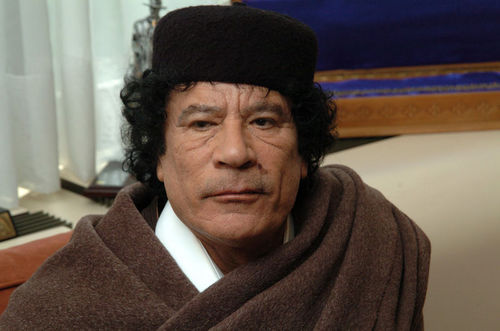
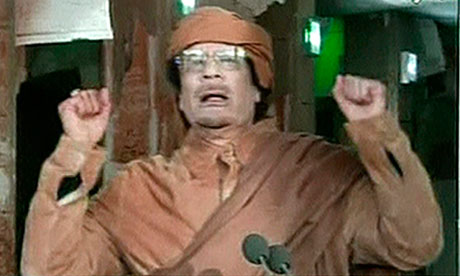
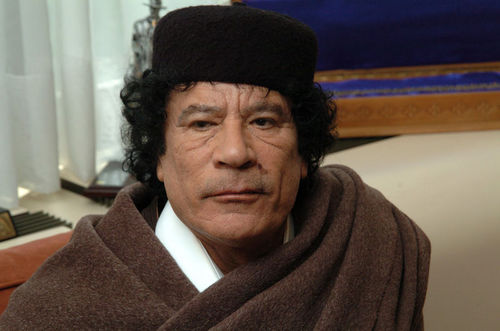
Gaddafi (Reuters photo)

After weeks of dithering the United Nations Security Council has authorized a “No Fly Zone” and authorized “all necessary measures” to protect civilians from the onslaught of Muammar Gaddafi’s military.  The vote came after days of urging by the French, British, the Gulf Cooperation Council, the Arab League and belatedly the United States. The vote of 10 for and 5 abstentions authorizes member nations to act together to protect civilians in Libya and comes as Gaddafi has threatened to attack the rebel capital of Benghazi and to “show no mercy” in doing so. Gaddafi responded to the vote by proclaiming “The UN Security Council has no mandate. We don’t acknowledge their resolutions” and he promised to respond harshly to any UN-sponsored attacks stating “If the world is crazy, we will be crazy too.”

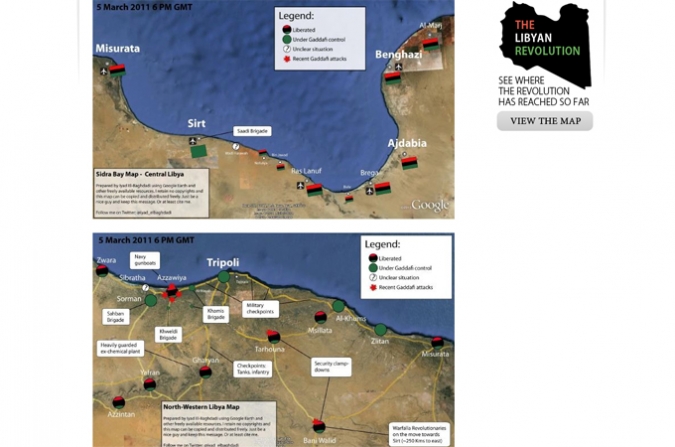
While Gaddafi pledged to mount an attack against Benghazi tonight his forces were repulsed for the first time by rebel forces at Ajdabiya with the rebels using tanks and artillery of their own for the first time. Gaddafi’s air force launched attacks on Benghazi but it is my assessment that these strikes were to instill terror in the civilian population and break the back of rebel supporters. His announcement that his forces were coming “tonight” was obviously a propaganda claim.

It is true that the situation on the ground has shifted in favor of Gaddafi’s forces and that they have enjoyed a run of success over the past week and a half. However the success is illusory as it came at the expense of ill equipped and trained rebel forces in the western part of the country near the main operating bases of the forces that Gaddafi has employed with the greatest effect. Likewise his success east of his tribal home of Sirte has come against rebel forces which had advanced too far and had neither the training or firepower to hold the ground that they had taken. Deployed on open ground with no air support they were no match for Gaddafi’s forces. The further east Gaddafi’s forces go the more that they will face military forces which went over to the rebels, forces that will do better than those in the west and this was evident today at Ajdalbiya.

The repulse at Ajdabiya is significant and more significant than some people will believe. Gaddafi’s Army is now operation far from their home bases and the trek across the Libyan Desert is probably facing logistical problems. The first is that they have had to advance hundreds of miles. His armored forces are probably not well maintained and likely are experiencing mechanical difficulties especially since logistic support in most of the Arab World’s militaries is not a high priority. Lacking skilled mechanics and technical personnel they have probably lost a good number of vehicles. Photos of Libyan forces show no military cargo trucks accompanying the Army which indicates to me that the pro-Gaddafi forces are operating at the edge of their logistical support system.  Anyone who has operated in a dessert war can testify to this fact. Should the rebels yield to him at Ajdabiya they will fall back to far more defensible terrain to the southwest of Benghazi, the heavily forested and mountainous uplands of the Jebel Akhdar which would even the playing field in favor of the rebels who until now have been fighting in open terrain which would even the playing field.  To further help the rebels the first confirmed shipments of Egyptian arms have reached rebel forces.

Another component to the story is that Gaddafi’s forces are divided. He has a significant number of troops attempting to overcome rebel forces at the town of Zindan about 120 kilometers southwest of Tripoli.  These forces are operating in a region less hospitable than those near Ajdabiya but because they are closer to their supply base have a better chance of success than those in the east.

However all of this goes away once the airstrikes from American, French, British and Arab air forces start pounding his exposed forces at Ajdabiya. These forces are operating outside of the range of the Libyan air defense network. What little anti-aircraft capability they have will not protect them against modern air forces. As soon as Gaddafi’s tanks and APCs start getting “brewed up” by air attacks the forces manning them will give up the fight.  Likewise the air defenses that Gaddafi has in his arsenal are antiquated and no match for what will be coming after them. The fact is that many of the officers in command of these forces only stayed loyal because it appeared that the world would not stand up to Gaddafi and until today they were correct. This marriage of convenience will end once the bombs start falling.

What looked like a certain victory for Gaddafi will disappear as fast as a mirage in the Libyan Desert. At some point the officers that had reluctantly supported Gaddafi will turn against him as they would have weeks ago had the actions of world leaders matched their words. There will not be a need for ground troops and thankfully the U.N. authorization does not authorize occupation.  The Libyan’s military and people knowing that Gaddafi stands alone will topple his ruthless regime on their own and because the west, led by the French acted to support them Al Qaeda and its allies who were hoping to commandeer this revolt will be left in the dust. As for Gaddafi he will be luck not to avoid the fate of another dictator who ruled Libya, Italy’s Benito Mussolini and end up handing from a meat hook.

Of course I could be wrong, but I expect that within a week the situation which looked so bleak for the rebels will look very different and Gaddafi will be fighting not for the survival of his regime but for his life. But it has to go down this way. Neither Egypt Tunisia nor Europe can handle the influx of refugees should Gaddafi survive. They all have a vested interest in stopping Gaddafi now as do we as we cannot let Gaddafi remain in control and turn Libya into a haven for Al Qaeda and other terrorist groups.

One can hope that the carnage in Libya will end soon and that something of a democratic and peace minded Libya will be the result.  Somehow I think that there is a chance for this now.

Peace

Padre Steve+


2 Comments

Filed under Foreign Policy, middle east, national security

Gaddafi Taunts the West and Kills his People: Our inaction speaks so loud he can’t hear a Word that we are Saying

Back when I was a sophomore in high school I played my one and one season of organized tackle football. I wasn’t very good and after seven weeks of not getting to play in a game, the last of which was a blowout where everyone got into the game but me I went to the coaches’ office in a rage. I confronted Coach Duke Pasquini demanding to know why I didn’t get in the game and he simply said “I can’t hear you.” So I complained louder and he repeated what he had said. That angered me so I was screaming and he finally said “your actions speak so loud I can’t hear a word you are saying.” I was dumbfounded as he told me that the reason that I wasn’t playing was that I my words didn’t match my play during practice.  It wasn’t until I took my anger out on the practice field and pushed harder than I ever thought possible that I got to play. Coach Pasquini taught me a valuable lesson with a lot of application for Western Leaders including President Obama.

That lesson is not to make pronouncements that you are not willing to back up with force. Unfortunately over the past two weeks statements by Western leaders as well as their actions of freezing assets and investigating the Gaddafi’s for war crime charges has emboldened the rebels and hardened the resolve of Gaddafi and his family.  In a nearly euphoric advance the rebels advanced to areas that they could not control if Gaddafi offered real resistance. Likewise when Gaddafi realized that the West was divided and unlikely to take action be it a no-fly zone or any assistance to the rebels he began an offensive that has devastated cities that the rebels had controlled and caused grievous casualties to civilians.  Gaddafi’s son Saif al Islam Gaddafi promised that the regime was coming after the rebels even the eastern part of the country using ground forces and air power.  He knows that he has a free hand until NATO and the Arab League or African Union decide to act even without a UN mandate as NATO did in Bosnia and Kosovo or the United States did in Iraq. He is openly taunting the United States, NATO and the international community and reveling in it. He has called our bluff.

The tide has turned against the rebels and in a war of attrition they cannot win unless the Libyan military switches sides, which does not seem likely in the light of international dithering.  The Libyan military after a period of wavering and defections appear to have fallen in line with Gaddafi even if they despise him.  Since that is the case Gaddafi now has the upper hand and unless Western Leaders, including President Obama back up their words the rebellion will be crushed a humanitarian catastrophe unleashed and a brutal dictator validated.

Now it is true that the United States above all nations must act with prudence because of our Iraq and Afghanistan adventures which have made the Administration shy away from any more military actions in the Muslim World. In fact we are overcommitted everywhere and there is a good reason militarily and politically not to go in.  That reason is simply that many radicals in the Islamic World will use it against us in a propaganda campaign and that is exactly how Gaddafi is already portraying the situation. Of course an air campaign which would begin with a no-fly zone should one be authorized would likely end up in bombing Libyan air defense installations and bring about what Gaddafi rightly calls a war. As a result the administration has for now decided not to act and to wait for the Europeans and the United Nations to take the lead. That inaction has emboldened Gaddafi and that inaction will turn Libya into a more important conflict than we ever wanted it to be.

If we do nothing after making a big show of calling Gaddafi a war criminal, freezing his assets and boldly stating that he has to go and the revolt fails then we will be seen by the same people that would condemn military action as weak.  This result would embolden tyrants and give our real enemies, Al Qaeda and Iran new life. Al Qaeda had been frozen out of the revolutions to this point but when those dying for freedom realize that we are all talk they will turn to the radical side to overthrow despotic regimes and when those regimes fall those that take power will not be our friends.

While doing something is fraught with peril the cost of inaction is worse and we could lose every Arab Ally that we have had for decades in a very short time. It will mean astronomical oil prices and collapse economies already weakened by the world wide banking and real estate crises. Israel will then be in the middle of a potential regional war because anti-western zealots will certainly carry their crusade against the Jewish state. There will be no more cold peace between the Arabs and Israel.

At least in the absence of US or NATO action French President Nicholas Sarkozy has recognized the provisional rebel government and is setting up an embassy in Benghazi and suggesting air strikes. British Prime Minister David Cameron is also pushing for action. The possibility is that some parts of the international community will take action but that is not certain. There are reports that the Libyan Provisional council is in clandestine talks with the United States.  If so that would be a start.

The reality is that this situation will not end well no matter what course of action is taken. The fact is that no matter which course the situation in Libya takes is that it is likely to spiral into a regional war with terrible consequences for everyone.  Americans will feel the pain of this in a big way when the oil prices go through the roof and the economy tanks.

Yes, our actions speak so loud that Gaddafi and the world can’t hear a word that we are saying.

God help us.

Peace

Padre Steve+
 

2 Comments

Filed under Foreign Policy, middle east, Military, national security

The Guns of March

“War is the unfolding of miscalculations” Barbara Tuchman

Libya Revolt (Al Jazeera)

In 1914 an assassination in Bosnia-Herzegovina led to the First World War. In 2011 a civil war in Libya may lead to the destabilization of an entire region and to a regional conflict. A few weeks ago many thought that Libya would take the same course as Egypt and Tunisia. That was before Muammar Gaddafi began to launch an organized campaign of slaughter against his own people using members of his clan as well as African, Arab and Eastern European mercenaries.  Now we wonder what will happen as many actors try to discern courses of action praying that their calculations are correct.

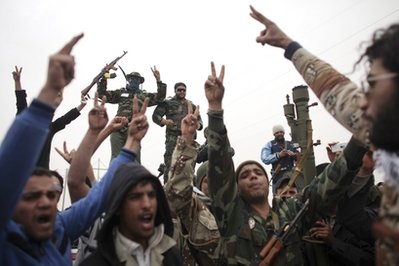
Defecting Libyan Soldiers with protesters (AFP Photo)

If we look at the players we see the Gaddafi clan and its allies who include mercenaries from Africa, other Middle Eastern nations and Eastern Europe battling in a life or death struggle with a disparate and not yet very organized revolutionary movement which has taken many key cities in Libya. Gaddafi’s forces have become quite brutal in their response even as Gaddafi denies attacking his own people and appear in some places to be gaining the upper hand. The rebels have a limited amount of arms and ammunition and few heavy weapons but have given a good account of themselves against Gaddafi’s forces.

The USS Enterprise CVN-65

The United States is really too heavily committed to do much and even if NATO and or the UN agree to establish a no-fly zone over Libya it is doubtful if it will do much to much good on the ground against Gaddafi’s mercenary army and party thugs.  President Obama has asked Saudi Arabia to help arm the rebels and the Saudis and the Gulf Cooperation Council states have asked the United States and NATO to establish a no fly zone to at least protect the rebels from Gaddafi’s helicopter gunships and attack aircraft. Gaddafi has stated that such a no-fly zone would be an act of war.

The words of Western leaders to include President Obama, British Prime Minister David Cameron and France’s Nicholas Sarkozy announcing that Gaddafi has to step down has hardened Gaddafi’s resolve and have whether we want it or not signaled that we are about to engage in another war. Military forces from NATO including the USS Enterprise Carrier Battle Group are being moved to positions that they can either enforce a no-fly zone or assist in humanitarian operations.

While the West debates what to do the fighting continues and Gaddafi’s military unhindered by anyone continues its attacks others in the region seek to gain from the Chaos. Syria has been supporting the Gaddafi regime and it is likely that Iran is seeking to gain more influence in Arab countries that have been hostile to it.  The presence of the two Iranian warships in the Eastern Mediterranean added to the tensions but those ships have now returned to the Red Sea after passing through the Suez Canal after exercises with the Syrians.

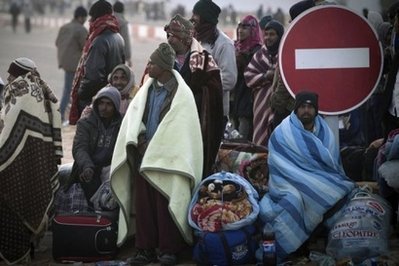
Refugee Crisis (AP Photo)

The fact is that this is a chaotic and ever changing situation. NATO will meet on Thursday to discuss possible courses of action.  Adding to the crisis is the specter of NATO’s abysmally slow response to the Bosnia crisis as well as the United Nation’s, American and European response to the Rwandan genocide. Since the ongoing battle in Libya to include Gaddafi’s slaughter of his own people and the massive refugee crisis on Libya’s borders is televised like the previous crises is in Bosnia and Rwanda Western Leaders are caught in a bind. They can turn a blind eye and chose to let the rebels die on the vine attempting to overthrow Gaddafi and be accused of ignoring crimes against humanity as were their predecessors during the Bosnian and Rwandan events.

There are many possibilities for the situation in Libya to get worse and potentially engulf the region in a war that no one wants or really is prepared for.

We can only see what develops but there are no good options only options of bad or worse. Will the region like Europe in 1914 be engulfed in war where there are no winners or will somehow the situation be resolved before it can get that far? Those are very real questions.

Peace

Padre Steve+
 

5 Comments

Filed under Foreign Policy, History, middle east, Military, national security

No Illusions: The Cost of the Long War and its Potential impact on the United States

Libya: One of Many unanticipated Crises

There has never been a protracted war from which a country has benefited. Sun Tzu

Don’t fight a battle if you don’t gain anything by winning. Erwin Rommel

The United States and its Allies have been at war for over 10 years and that war has worn us down. Even as we battle for minimal gains in Afghanistan while attempting to finish withdrawing from Iraq the costs of this war are now becoming evident to the most casual observer.

Over 5900 U.S. Military personnel have died in the Iraq and Afghanistan campaigns and over 40,000 wounded. Add to this over 2000 contractors, mostly foreign killed or died or wounds or illness and over 16,000 wounded while employed by firms contracted by the U.S. Government. This does not count Allied military personnel. Thousands more suffer from Traumatic Brain Injury or PTSD or moral injuries that impact their lives and those of their families’ years after serving and the necessary billions of dollars to pay for the medical and psychological wounds of war. Despite increases in funding and personnel the Veterans Administration has been overwhelmed by the numbers of discharged veterans requiring medical or psychological care.

The financial cost of the current wars is astronomical. The official cost is a trillion dollars since 2001 in excess of regular defense spending with Afghanistan costing over 190 million dollars a day. Military equipment including high end equipment such as aircraft are reaching the end of their service lives sooner that planned due to the high operations tempo and sustained combat operations in inhospitable climates. An ossified defense bureaucracy which Defense Secretary Robert Gates says had an “overwhelming tendency of our defense bureaucracy to focus on preparing for future high-end conflicts – priorities often based, ironically, on what transpired in the last century – as opposed to the messy fights in Iraq and Afghanistan,” and a military procurement system laden with pet projects pushed by legislators influenced by lobbyists from defense industries pushing the most expensive and often problem laden systems imaginable. Even those which eventually turn out to be great weapons come in way over budget and take far too long to go from the drawing board to the battlefield. Others turn out to be money pits which sometimes never enter production after years and sometimes decades of development.

Because of the national economic and financial crisis and huge national debts the military is being cut back even as the wars continue and more crises arise in critical regions.  Because of the commitments in Iraq and Afghanistan the United States is now lacking strategic and operational depth to react to new situations. We are fortunate that the ferry sent to rescue American citizens in Libya was not attacked while trapped in Tripoli harbor. The Marine Expeditionary Unit which would normally be at sea for contingency or humanitarian operations is engaged in Afghanistan and the Amphibious Group that supports it is operating east of the Suez.  Two Carrier Battle Groups are now required in the 5th Fleet Area of Operations putting additional strain on our ability to respond to other situations.

Defense Secretary Robert Gates

Very bluntly the long ground wars in Iraq and Afghanistan are taking away from our ability to respond if need be to situations in areas that are actually more important to us and the world in a strategic and economic way.  Secretary Gates knows how much these wars have weakened the military and the nation and in a speech to cadets at the United States Military warned his successors “Any future defense secretary who advises the president to again send a big American land army into Asia or into the Middle East or Africa should ‘have his head examined,’ as General [Douglas] MacArthur so delicately put it.”

The fact is that we are hamstrung by the ongoing wars which limit our ability to respond to rapidly changing situations. We are in a similar situation to the Germans in 1942 and 1943 overcommitted, overstretched and lacking true strategic depth to respond to unanticipated situations as are now occurring across the Middle East. In 1942 and 1943 the Germans were always just just short of the forces that would have turned the tide.

Gates said of our situation:

“We can’t know with absolute certainty what the future of warfare will hold, but we do know it will be exceedingly complex, unpredictable, and – as they say in the staff colleges – ‘unstructured’. Just think about the range of security challenges we face right now beyond Iraq and Afghanistan: terrorism and terrorists in search of weapons of mass destruction, Iran, North Korea, military modernization programs in Russia and China, failed and failing states, revolution in the Middle East, cyber, piracy, proliferation, natural and man-made disasters, and more.”

In September 1944 with the Western Front in ruins Field Marshal Gerd Von Rundstedt was appointed to command German forces in the West. After receiving a briefing from his staff about the situation a senior staff officer asked what they should do. Von Rundstedt reportedly said “Make peace, you fools.” I have placed a link to that incident from the film A Bridge too Far here.

http://www.youtube.com/watch?v=ch56NAL1C-I

I’m not arguing for a precipitous withdraw that would leave an even more chaotic situation in Afghanistan but we have to decide what the end game is there and how we will adjust our strategy to meet reality.

The long war in Afghanistan and the war which we are leaving in Iraq have hurt us in the long run in many ways.  We have to ask hard questions about the war as to whether the continued sacrifices of the Marines, Soldiers, Sailors and Airmen that fight it and the impact on our ability to respond to other crises are something that we think are in our best interests as a nation. At least Secretary Gates is asking the hard questions.

It was Britain’s involvement on the European Continent during the First World War which impoverished her and doomed the Empire. Britain was traditionally a naval power that tried not to become involved on the Continent whenever possible. It is entirely possible that our long war in Afghanistan and Iraq will reduce us as an economic and military power and leave our interests around the world vulnerable just as the World Wars did to Britain.

Peace

Padre Steve+
 

2 Comments

Filed under Foreign Policy, History, iraq,afghanistan, middle east, Military

Göttdammerung in Libya: Shades of Hitler as Gaddafi Promises to Die as a Martyr

“Muammar Gaddafi is not the president, he is the leader of the revolution. He has nothing to lose. Revolution means sacrifice until the very end of your life”

“I am a fighter, a revolutionary from tents … I will die as a martyr at the end… I have not yet ordered the use of force, not yet ordered one bullet to be fired … when i do, everything will burn.”

Muammar Gaddafi on Libyan State TV 22 February 2011


Libya’s brutal dictator of over 40 years Muammar Gaddafi has cast the die in favor of destroying his country in order to save his regime. In a speech that conjures up visions of Hitler in 1945 a rambling madman blaming external enemies and equating him with the nation while demonizing his own people who have risen up in revolt against him.

Gaddafi Speech

http://english.aljazeera.net/news/africa/2011/02/201122216458913596.html

The speech was surreal as it was translated with Gaddafi standing in the remains of his home that was bombed by the United States in 1986.  Alone at a podium without the usual crowd of adoring sycophants delivered a rambling narcissistic speech that bordered on the absurd while at the same time making credible threats against the protestors and anyone who opposes him which were already being backed up by Mercenaries and pro-Gaddafi thugs using heavy weapons and helicopter gunships. So far at least 300 people have been killed with unconfirmed reports that many more have died in opposing Gaddafi.  With the eastern part of the country now in rebel hands with the support of military units it remains to be seen how Gaddafi sends his loyalists and mercenaries against the still fragile control of his opponents.

His speech appeared to be devoid of reality when he stated that “I haven’t even started giving the orders to use bullets” but then said that “any use of force against authority of state will be sentenced to death”

He has promised harsh retribution and made a very pointed reference to the Chinese suppression of the 1990 Tiananmen Square protests promising to “fight to the last drop of blood” stating:

“When Tiananmen Square happened, tanks were sent in to deal with them. It’s not a joke. Do whatever it takes to stay united… People in front of tanks were crushed. The unity of China is more important than those people in Tiananmen Square.”

His remarks about his opponents were even more macabre and almost seemed to be snatched out of the Bizzaro World of delusions and contradictions. Some of those comments are

“They are a group that are sick, taking hallucinatory drugs… They were given drugs, like in Tunisia, are just imitating… We won’t lose victory from these greasy rats and cats…. They should be given a lesson and stop taking drugs. They’re not good for you, for your heart. Don’t destroy the country… Shame on you, you gangsters. Surrender, give up all weapons, or they’ll have massacres, drugged kids with machine guns… tonight and tomorrow, youth, all of you, not those who are rats on drugs–form committees for security.”

Speaking of the protestors he claimed that “They are just imitating Egypt and Tunisia” and that they “want to turn Libya into an Islamic state” even going so far as the say “They are turning Libya into an (Islamic) emirate of Zawahri and Bin Laden, a new Afghanistan.”

His megalomania and narcissism was on display as he spoke of Libya’s newfound prominence in the news “Libya wants glory, Libya wants to be at the pinnacle, at the pinnacle of the world.”

Gaddafi cajoled his supporters into taking action against his opponents in a display of self adulation by speaking of himself in the third person:

If you love Muammar Gaddafi you will go out and secure Libya’s streets”

“You men and women who love Gaddafi …get out of your homes and fill the streets,” he said. “Leave your homes and attack them in their lairs … Starting tomorrow the cordons will be lifted, go out and fight them.”

“If weapons are not handed over… we will announce the holy march, I will call on millions from one desert to another to cleanse Libya house by house…”

Göttdammerung on the Streets of Tripoli (ABC News)

This is a tremendously dangerous situation for the Middle East as well as the world economy.  If this escalates into a full blown civil war between Gaddafi’s tribe and its dwindling number of allies and the other Libyan tribes that Gaddafi has previously been able to rely on to secure his power there could be great destruction in Libya.  It is believed that many of the larger tribes are now supporting Gaddafi’s overthrow even tribes that are historic rivals in tribal politics. Even more than the military, tribal support is of the utmost importance in the success of any revolt against him.

Libya at one time had WMD and it cannot be ruled out that Gaddafi has not clandestinely acquired some types of chemical agents which could be used against his own people. Additionally Libyan agents loyal to Gaddafi could undertake terrorist attacks on countries that he believes are against him as well as Libyan dissidents abroad. Other anti-Western regimes in the region and the world have much to fear as what happens in Libya could happen in them, the Syrians and Iranians have to be watching this with concern as well as their South American ally Hugo Chavez.

All of this impacts the world in many ways particularly in the oil and natural gas prices but also a direct financial impact in Africa where Libya has supplied funding that supports a number of critical African nations.  The east where the protestors have taken control is the home of much of its oil production which oil workers have promised to curtail if Gaddafi continues his attacks on the Libyan people. Robert Baer in Time Magazine http://www.time.com/time/world/article/0,8599,2052961,00.html reports that Gaddafi has stated that he knows that “he knows he cannot retake Libya with the forces he has. But what he can do is make the rebellious tribes and army officers regret their disloyalty, turning Libya into another Somalia.” He quotes a source that quotes Gaddafi as saying “I have the money and arms to fight for a long time.”  Of the measures Baer’s source reports is that “Gaddafi has ordered security services to start sabotaging oil facilities. They will start by blowing up several oil pipelines, cutting off flow to Mediterranean ports.”  One can only imagine the chaos that this would sow in the country, the region and in the oil markets.

As the flames of protest and revolution gain intensity throughout the region it is important to realize that things will not go back to what they were. We are facing one of the most dangerous situations with a myriad of possible outcomes many of which will bring about more instability, possible terrorism and maybe a regional war or series of wars. Russian Federation President Dmitry Medvedev commented on the situation saying that “this will mean fires for years and the spread of extremism in the future. We need to look this straight in the eyes.”

In the midst of Gaddafi’s macabre Göttdammerung the flames or protest, revolution and possibly even freedom continue to spread and no one knows what country that they will ignite next. Somehow I do not think that this will remain an isolated Middle Eastern phenomenon but will spread. I believe that many nations where peoples are repressed, poverty stricken or feel alienated from their governments will see such movements with very unpredictable consequences. This is beginning to shape up like the post World War One period of the breakup of empires, the post colonial chaos and the fall of the Iron Curtain coupled with a world-wide economic crisis that has the world teetering on the brink of a financial crisis on the order of the Great Depression all wrapped into one.

My we live in interesting times.

Peace

Padre Steve+
4 Comments

Filed under Foreign Policy, middle east, national security

To the Shores of Tripoli: The Flames of Revolution Spread to Libya as Gaddafi Fights Back

Muammar Gaddafi: A Fight to the Finish

The regime of Colonel Muammar Gaddafi is now in a fight to the death against the Libyan people in the streets of the capitol Tripoli.  In the eastern part of the country it appears that the revolutionaries have gained control of major cities including Libya’s second largest city Benghazi.

Gaddafi has ruled his own country with brutal force and exported terrorism throughout the Middle East and Europe for decades. When I served in Germany during the Cold War it was Libyan agents that attacked American servicemen and women and blew up Pan Am Flight 103 over Lockerbie Scotland.

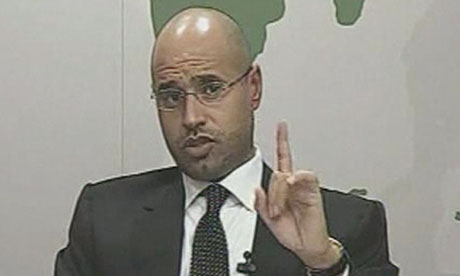
Saif El Islam Gaddafi: Civil War

The Gaddafi regime has turned to brutal force to attempt to curb demonstrations that began in the wake of the successful Tunisian and Egyptian revolts that overthrew Ben Ali in Tunisia and Hosni Mubarak in Egypt. Gaddafi is a ruthless animal when it comes to his readiness to violently crush any dissent against his regime and has not hesitated to use political assassination on Libyan dissidents abroad.  However he is survivor who knows how to use money and oil to get his way with governments. He has occasionally reached out to appear in a more moderate and reasonable persona such as when he gave up his Weapons of Mass Destruction to the Americans and British in 2004 and when he paid 271 million dollars to the victims of the Lockerbie attack.


Libya is different than Tunisia, Egypt and Bahrain. The rulers of those countries, Ben Ali in Tunisia and Mubarak in Egypt while dictators they were not psychopaths and ceded power peacefully. Likewise the Bahraini leaders have backed down to opt for negotiations over the heavy handed force that they employed last week. Gaddafi has long viewed himself as the leader of the Arab World and Africa although his stock has fallen in recent years. He will not go peacefully.  His son Saif El Islam a Western Educated Ph.D. went on state television last night and predicted thousands would be killed in a prolonged civil war and said that “Libya is at a crossroads. If we do not agree today on reforms, we will not be mourning 84 people, but thousands of deaths, and rivers of blood will run through Libya…” He further said “We will take up arms… we will fight to the last bullet… We will destroy seditious elements. If everybody is armed, it is civil war, we will kill each other.”

Saif’s threats are being taken seriously. Since the protests broke out Gaddafi’s security forces have launched vicious attacks on protests and even the funerals of those killed. Using heavy weapons, aircraft and helicopter gunships Gaddafi has turned dogs of war against his people, reportedly using mercenaries from other nations to do what native Libyan soldiers and airmen will not do.

Protesters are being joined in some places by Libyan soldiers and elsewhere two Libyan Air Force Colonels defected with their fully armed Mirage F-1 fighter aircraft to Malta stating that they refused to fire on their countrymen. Around the world Libyan diplomats are condemning the regime and even in the country the Justice Minister and many judges in Benghazi have joined the protests. Other reports suggest that Libyan Border Guards and Coastguard personnel have left their posts along the Egyptian frontier. Libya’s Deputy Ambassador to the United Nations Ibrahim Dabbashi, Libya’s told reporters on Monday that Libyan leader Moammar Gadhafi has “declared war on the Libyan people and is committing genocide.”

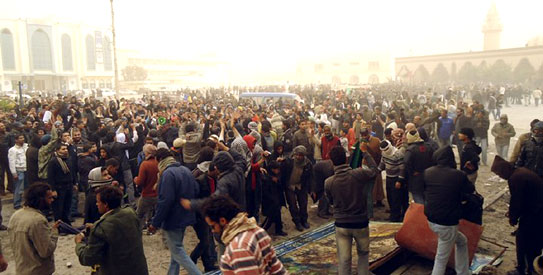
Protests in the city of Tobruk (Reuters Photo)

The situation is escalating. On Tuesday the United Nations Security Council will meet for the first time to discuss the issue. Some have suggested that the Security Council impose a no-fly zone over Libyan airspace to keep Gaddafi from flying in more foreign mercenaries or use his air force against the protesters.

What is certain is that blood will continue to flow and that if Gaddafi goes down he and his sycophants will kill as many of their own people as they can.  The most interesting thing about this whole situation is that if Gaddafi falls it will be the first time an anti-Western or American regime has fallen signifying that the flames of protest and revolution are much more about overthrowing despots and bringing the people some measure of freedom than anything else. The situation is dangerous, fraught with peril and fluid but it could be the start of a change in the Middle East that takes the wind out of the sails of Al Qaeda and other terrorists groups who draw their support from those repressed by dictators.

It shall be interesting to see how this continues to develop. Pray for the people of Libya.

Peace

Padre Steve+
7 Comments

Filed under Foreign Policy, History, middle east, Military, national security

The Iranian Navy in the Mediterranean: Looking for War in all the Right Places

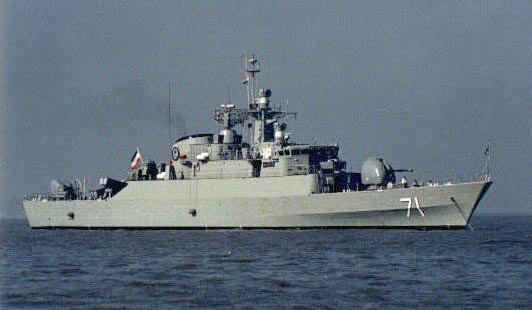
Iranian Frigate Alvand

For the first time since the Iranian Revolution Iranian warships have permission to transit the Suez Canal, an international waterway.  The Frigate Alvand and the supply ship Kharq passed inspection to ensure that no contraband or illegal weapons were aboard and should pass through the canal in the coming days. The Iranians clam that the ships will sail to Syria where they will operate from in the coming months.

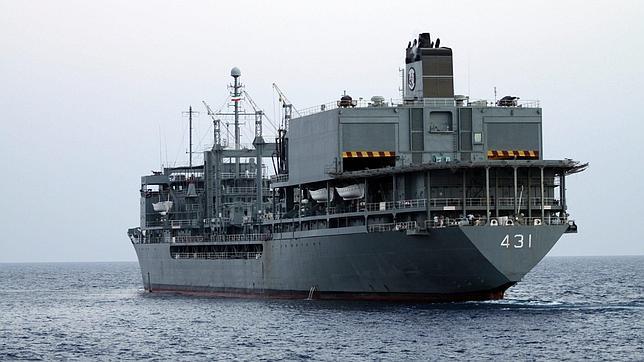
Iranian Supply Ship Kharq

To me the move by Iran appears to be an attempt to provoke Israel into a war. Israel views the move with suspicion and calls it provocative. In that they are right. It is suspicious that the Iranians would send ships to the Mediterranean and one wonders what they are up to. Based in Syria the ships can support pro-Iranian Hezbollah forces in Lebanon and show the Iranian flag in countries that are slipping into the throws of revolution.  As such the two ships are a provocative presence that Israel has a right to be concerned about. At the same time the ships themselves pose no threat to Israel in any way shape or form.

The Frigate Alvand is a Vosper Mark V Frigate commissioned in 1971. It is small (1,540 tons full load) and fast but old and not heavily armed. Alvand and its two sister ships are armed with 4 C-802 Anti-Ship cruise missiles and a 4.5” gun was well as various light anti-aircraft weapons and anti-submarine torpedoes. The electronics suite on Alvand class is not state of the art by any sense and they are of limited combat value despite Iranian claims otherwise.

The 40 year old  Alvand is accompanied by the Supply Ship Kharq which is a 1960s British design which the Iranians commissioned in 1980. It has a light armament and is of negligible combat value. The two ships paid a recent port call at Jeddah Saudi Arabia while conducting operations in the Red Sea.

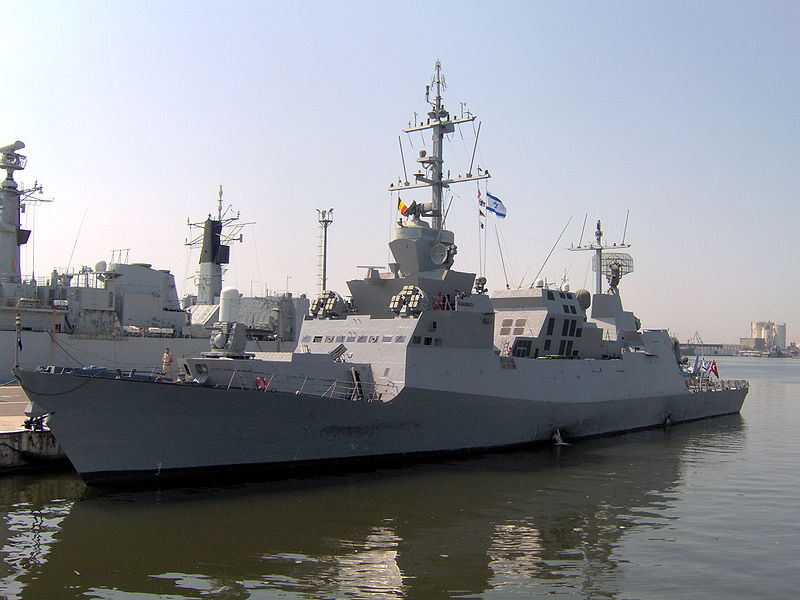
Israeli Navy Corvette Eilat a very modern and deadly SAAR V Class ship

Both the Alvand and the Kharq are totally outclassed by the Israeli Eilat Class (Saar V) Corvettes and have no defense to speak of against Israeli surface units, submarines or air forces.  They are of propaganda value only and if as some suggest they would attempt to escort convoys into Gaza they would probably be sunk by the Israelis before they could get off a shot. The danger of course is that the Iranians are purposely sending the ships to the Mediterranean to provoke an Israeli response and ignite a conflict between the two nations to further destabilize the region.

The Israeli Navy has a first strike capability against Iran itself in its three modern German built Dolphin Class submarines which are believed to be capable of launching nuclear capable cruise missiles and which have been deployed in waters near Iran.

Israel’s Defense Minister Ehud Barak said in an e-mail statement: “Israel is closely following the movements of the Iranian ships and has updated friendly states on the issue. Israel will continue to follow the ships movements.”

While the movement of the two ships through the Suez which is an international waterway is provocative and comes at a time of increasing tensions they pose little threat to Israel. However as part of a broader view taking into account the activities of Hezbollah in Lebanon, instability in Israel’s Arab allies Egypt and Jordan and Iran’s military buildup and nuclear program it is obvious that Iran has a purpose in deploying the two ships to the Mediterranean and that the purpose includes upping the pressure on Israel and perhaps provoking a military response. Whatever the actual purpose we can be sure that Iran’s intentions are not peaceful and the only purpose for the ships to be in the Mediterranean is to provoke a clash with the Israelis or to offer direct support to the actions of Hezbollah and Hamas against the Israelis or in the case of Hezbollah to ensure the complete hegemony of Iran, Syria and Hezbollah in Lebanon.

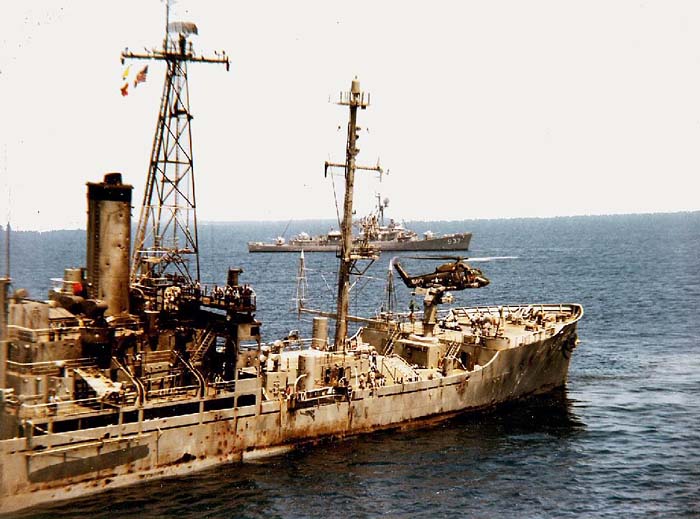
The USS Liberty AGTR-5 after being attacked by Israeli Air and Naval Units on 8 June 1967

Israel’s Navy while the smallest of the Israeli armed forces is quite capable and combat proven over the years. It has shown that it is not afraid to engage in combat with what Israel perceives to be threats, even the United States Navy as it did in the 1967 Six Day War where it launched a devastating prolonged attack on the USS Liberty AGTR-5 killing 34 and wounding 171 of its crew. The Israelis have long contended that the attack was a case of mistaken identity but the preponderance of evidence makes it look like the attack was deliberate.

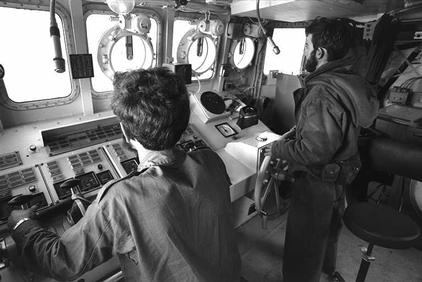
Israeli Sailors during the Battle of Latakia

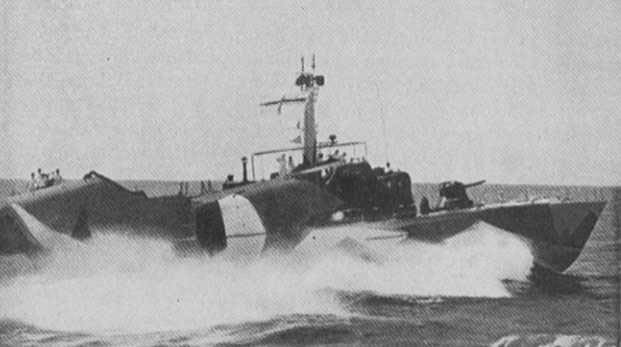
Egyptian Osa Class Missile Boat during 1973 War. The Israeli Navy sank 8 Egyptian and Syrian ships at the Battle of Latakia and Battle of Baltim with no losses to themselves in the first battles between guided missile ships

During the Yom Kippur War of 1973 the Israeli Navy destroyed 5 out of 5 Syrian Komar and Osa Class Missile Boats at the Battle of Latakia and 3 of 4 Egyptian Osa Class Missile Boats at the Battle of Baltim. Should the Iranian ships even look like they are threatening Israel the Israelis will have little patience and the ships will have an incredibly short combat life.  If that happens then expect a regional war to follow as Hezbollah, Iran and possibly Syria respond.

The clip below is from Iran’s English Language Press TV and is an Iranian assessment of their naval capabilities.

http://www.youtube.com/user/PressTVGlobalNews#p/u/13/doiWKWz4ZN8

Peace

Padre Steve+
10 Comments

Filed under Foreign Policy, History, middle east, Military, national security, Navy Ships

Damned if you do…Damned if you Don’t: The Middle East Protests and U.S. Foreign Policy

Stark Choices for U.S. Diplomacy in the Middle East

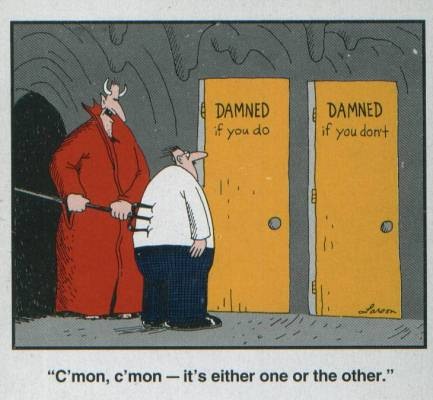
I have always loved the “Far Side” cartoon that serves as the theme for today’s short essay. I have been thinking about this ever since the fall of Ben Ali in Tunisia and comments from a couple of my regular readers regarding yesterday’s post about Bahrain brought the cartoon to mind.

In the Middle East the United States as well as most of the Western World is caught in the horns of a dilemma of our own making. Ever since the Iranian revolution we have chosen to ally ourselves with despots and dictators because they promoted stability in the region. To some extent this is good, stability and having allies that have an interest in ensuring that no more radical religious regimes such as Iran’s is in our interest. However this stability has come at a cost. We have betrayed the ideals that we have promoted in our Declaration of Independence, Constitution and even what we have partnered with other Nations in the U.N. Declaration of Human Rights.

We have backed rulers of countries that while they to some degree support our foreign policy aims have in many cases repressed the legitimate political, economic and social desires of their people.  Finally after many decades we are seeing the end of regimes that we have supported and face the uncertainty of what comes next.

In a sense we face a conundrum. If we continue to wholeheartedly support the leaders and governments that have been for the most part reliable allies in the region we will be seen by the majority of the people in the region as siding with oppressors. On the other hand if we elect to abandon them we will be seen as an untrustworthy ally by others that we have depended on in our attempt to contain the influence of Iran, contain the spread of militant revolutionary Islam, keep the fragile “Cold Peace” that Israel has enjoyed with Egypt and Jordan intact and in our war against Islamic Terrorism spearheaded by Al Qaeda.

On one hand we have our ideals on the other we have legitimate foreign policy, economic and security concerns. If we fall too far to either side we run significant risks. If we try to maintain a balance between these interests and ideals we run the risk of appearing to stand for nothing and be despised by those that we have allied ourselves for decades and those who desire the same freedoms that we have enshrined for ourselves and which we have held out as a beacon to the world.

There is also the reality that not all of the protestors are actually protesting for freedom and democracy but simply to overthrow regimes that they disagree with in order to establish radical anti-western and anti-Israeli regimes which support the overthrow of the West and the establishment of a new Caliphate.

While this is going on we are divided at home and have little in the way of a national consensus in our foreign policy and in fact are doing all that we can to destroy each other in the name of our own political and social agendas.  Meanwhile American and NATO troops are engaged in a bitter struggle against the Taliban in Afghanistan which is not going well.

I think that we are damned if we do and damned if we don’t. It is a classic “lose-lose” situation. I only hope that we are able to ensure that no matter what happens that our losses are kept to a minimum.

Peace

Padre Steve+
 

1 Comment

Filed under Foreign Policy, national security, Political Commentary

Danger in the Arabian Gulf: The Fires of Protest Spread to Bahrain

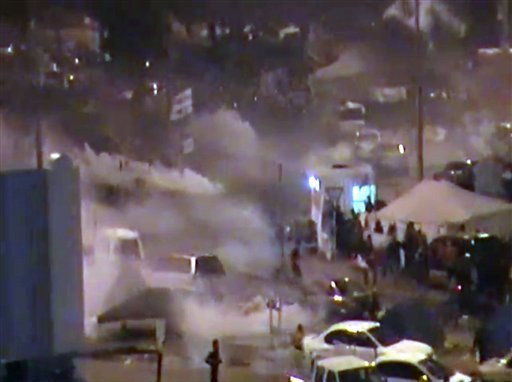
Protesters attacked in Bahrain (AP Photo)

It is weird when you see a place that you have been many times explode into massive protests, violence and potential revolution. That I have been to Bahrain many times and it is strange to see what is going on there. My first couple of times I was assigned to a ship, the cruiser USS HUE CITY on port calls while deployed in the Arabian Gulf. Later I would make frequent trips there as chaplain for the Marine Security Forces.

In the days following the downfall of Tunisia’s President Ben Ali and Egypt’s Hosni Mubarak the flames of revolution have spread across the Middle East. Protests have taken place in Yemen, Libya, Jordan and Bahrain and the situations have become violent as security forces attempted to put down the protests. Even Iran is beginning to boil over as protestors who feel cheated by the results of the contested 2009 elections rise up against the Iranian regime. However, the situation in Bahrain is the most troubling if one looks at the potential impact on US strategy in the Arabian Gulf and always tense situation with Iran.

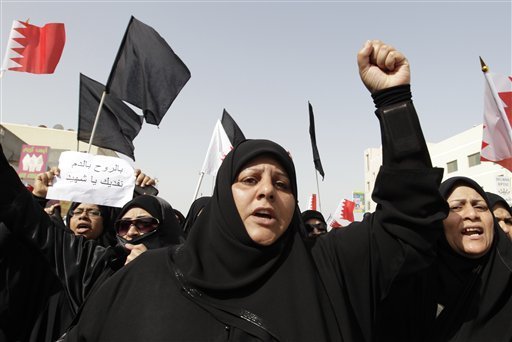
Bahraini Shia women with black flags. The Black flag is commonly flown in Shia neighborhoods and villages in Bahrain (AP Photo)

As I said before I have been to Bahrain many times. It is one of the most socially progressive countries in the Middle East and unlike most other Arab nation’s alcohol can be purchased in stores and not just upscale hotels that cater to foreigners, businessmen, military personnel and diplomats. It is a wealthy nation which though not prosperous as Qatar or the United Arab Emirates, Bahrain has managed to diversify its economy with a per capita income of $25,420.  It is a frequent vacation destination of many well off Saudis and has over 230,000 expats from other countries who call Bahrain home. According to a United Nations report Bahrain has 807,000 residents including the expats.

One thing that I remember about Bahrain is that the wealth is not very evenly divided. For the most part the Shia population is incredibly poor and their villages stand in stark contrast to the wealth of the Sunni. This is one of the biggest causes of the tensions which have brought about the protest movement which was ignited by the success of the revolts in Tunisia and Egypt.

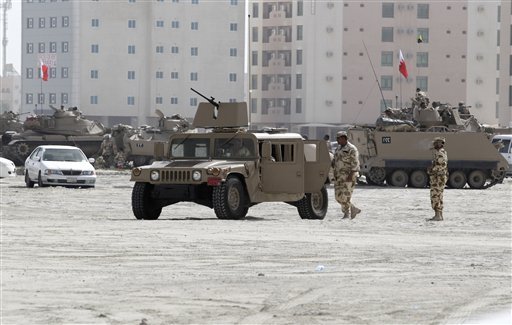
Bahrain Army units deployed in Manama (AP Photo)

The population of Bahrain is divided between the Sunni ruling class which comprises approximately 30% of the population and a less well off Shia population. The Khalifah family has ruled the country since driving out the Persians in 1783. It became a British protectorate in 1861 and the Kingdom attained its independence in 1971 and became a constitutional Monarchy in 2002 with some elected representatives.  The current King Sheikh Hamad bin Isa Al Khalifah is a graduate of Cambridge University and the U.S. Army Command and Staff College. He has reigned since March of 1999 when his father died.

Iran considers Bahrain a rebel province and is viewed as a threat by Bahrain has sought over the years to foment dissent in Shia community which believes that it is discriminated against by the Sunni rulers.

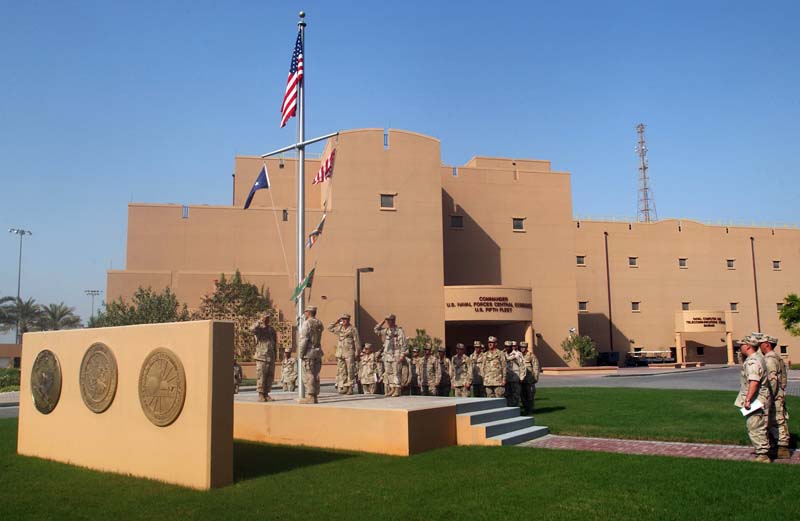
NAVCENT Headquarters in Bahrain (Navy Times Photo)

Bahrain is a vital part of the U.S. strategic presence in the region as a counter to the Iranian threat. It hosts the headquarters of the U.S. 5th Fleet, Naval Forces Central Command (NAVCENT) and Marine Forces Central Command (MARCENT). It is a frequent port of call for U.S. and Allied Navy ships that operate in the Arabian Gulf.  As such the current instability and violence is a matter of grave concern for the United States and its Allies in the Gulf.

As I said I have been to Bahrain numerous times in 2002, 2003, 2004, 2005 and 2006. I would stay in hotels with the best security which happened to be the 5 Star locations and dine at various Irish, British or Arab restaurants mostly with fellow Marine or Navy Officers or expats.  The difference between that world and the Shia villages and neighborhoods is amazing the contrast between the vast wealth of some and the absolute poverty of the other troubled me because I could see that it was a ticking time bomb. The Shia population also has limited political rights and is often targeted by the police.  They are certainly infiltrated by Iranian agents who I would guess are helping to stir things up.

The violence that has overtaken Bahrain does not surprise me. The Bahraini military is primarily composed of Sunnis from other Arab countries and has little love for the Shia. They are basically a mercenary force absolutely loyal to the government. There will be no Egyptian style coup in Bahrain. Since the population is small and the Army, police and other security forces wedded to the government I expect that the protests will be put down and that the regime will survive.  It will not be pretty and could well have an impact on U.S. Forces in Bahrain.

Back after 9/11 military dependents were sent home and force protection increased. A couple of years ago dependants were allowed back in but I think that we will see them extracted again. The security forces at the base are robust and work closely with the Bahraini security forces. I would expect that whatever Marine Expeditionary Unit is in theater will be on alert and that additional Fleet Anti-Terrorism Security Teams could be flown in to reinforce the base.

The broader ramifications of a continued violent crackdown on the protestors will be felt throughout the region. With the success of the Tunisian and Egyptian revolts people in many parts of the Arab World are now boiling over as protests and revolts against the old authoritarian regimes spread. As the situation continues to build I expect the probability of more regimes being overthrown with very unpredictable consequences. What may be true for Egypt may not be true anywhere else. What is for sure is that the Middle East that existed in December will look far different by the end of this year and that could be a good thing or a bad thing depending on just how it all shakes out and the possible impact on American and NATO operations in the region as well as impact on American overseas counter-terrorism operations especially in Yemen.

We can only wait and see and hopefully influence peaceful and democratic change in the area, but revolutions in countries that repress their populations tend not to be peaceful.  Egypt so far is an exception to that. If you believe in prayer I recommend that we pray hard my friends.

Peace

Padre Steve+
 

11 Comments

Filed under Foreign Policy, History, Military, national security

Egypt: As Mysterious as the Sphinx and as Dangerous as a Cobra….What Next?

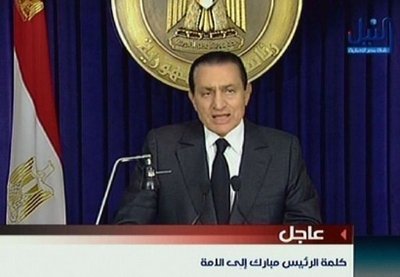
Hosni Mubarak delivers his speech (AFP Photo via Yahoo News)

Today after hours of speculation fueled by senior Egyptian Army officers demonstrators in Tahrir Square believed that Hosni Mubarak was about to leave office. The Army High command convened without Mubarak present and issued statement which said:

“In the name of God, Statement No 1, issued by the Higher Council of the Armed Forces, stemming from the armed forces’ responsibility and committing to the protection of the people, safeguarding their interest and security, and keen on the safety of the homeland, the citizens and the achievements of the great Egyptian people, and asserting the legitimate rights of the people, the Higher Council of the Armed Forces convened today, Thursday 10 February 2011, to deliberate on the latest developments of the situation and decided to remain in continuous session to discuss what measures and arrangements could be taken to safeguard the homeland and its achievements, and the aspirations of the great Egyptian people. Peace, mercy and the blessings of God.”

The Army with the Protesters in Tahrir Square (Reuters Photo via Yahoo News)

It appeared that the Army was forcing Mubarak’s hand as earlier in the day General Hassan al-Roweni, an Egyptian army commander went to Tahrir Square and told protesters in the square that “everything you want will be realized.”

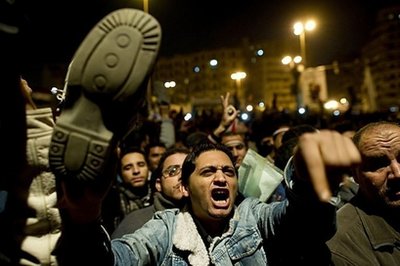
It was announced that Mubarak would address the nation in the evening and other reports indicated that he would step down.  Mubarak announced his intention to remain as President while handing over the some responsibilities to Vice President Omar Sulleimen.  His tone was defiant although he said that he is “totally committed to fulfilling all the promises” that he has earlier made regarding constitutional and political reform. Both Mubarak and Sulleiman addressed the crowd saying that they understood them and promised justice for those martyred.  After the initial shock wore off the demonstrators began to shake their shoes a sign of disrespect and some broke away from the main demonstration heading in the direction of the Presidential Palace. The Egyptian Ambassador to the United States Sameh Shoukry said “The vice president is the de facto president.”

Protesters wave their shoes at Mubarak (AFP Photo via Yahoo News)

None of this has swayed the demonstrators and the expectation is that even larger demonstrations will occur tomorrow.  Some believe that Mubarak is baiting the protestors hoping that they will become violent so he has reason to use massive force against them. The Vice President is also in charge of the Interior Ministry which controls the Police, the Secret Police and a vast network of paid informants with an estimated one million men at his disposal. Mohammed El Baradei tweeted “Egypt will explode. Army must save the country now.”  Despite their chants for Mubarak to “go” the other chant was “peace.” It does not appear that the protesters will resort to violence with the mood still upbeat.

The question mark is still the Army which appears to have been blindsided by Mubarak’s announcement. Unlike those under Sulleiman’s command the Army contains large numbers of young people who likely have very similar sentiments to the protestors. I am sure that the Army High Command understands that fact.  It is very possible that the Army is at loggerheads with Mubarak and Sulleiman.

Tomorrow will be critical.  We do not know what will happen. As mysterious as the Sphinx itself the situation in Egypt remains a mystery to many observers.  Will the Army take control? Will it stand by and do nothing? Will the Police take action? Will a civil war break out between the Army and the Interior Ministry forces?

We don’t know. However one thing can be certain if there is a crackdown on the demonstrators, which decapitates the movement the only benefits the Moslem Brotherhood which has been conspicuously absent from the demonstration and would be poised to take over leadership of the revolution should the Mubarak-Sulleiman government fall quickly.  I do not expect the Army to lead any such crackdown but it is conceivable that the same thugs who attacked last week could do so again.

This was a very dangerous situation. I pray that the end will be peaceful.

Peace

Padre Steve+


4 Comments

Filed under Foreign Policy, national security