Category Archives: History

Directions for a Criminal War of Annihilation

Hv1MLdJ

Friends of Padre Steve’s World,

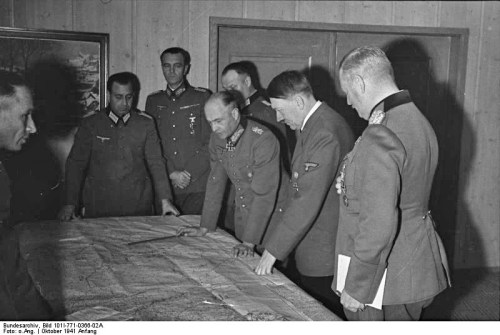
Today marks the 76th anniversary of the German invasion of the Soviet Union in 1941. The German war was unlike any in modern military history. It was not just a war to defeat the Soviets militarily or to overthrow Stalin’s regime of terror. It was a war conceived to conquer as well as to exterminate and enslave. The Nazis believed the Slavic peoples of the Soviet Union to what the referred to as untermenschen or sub-human and the plan was designed to provide the German master race with the necessary Lebensraum, or living space. The plan called for ethnic cleansing, the deliberate starvation of 30 million people in the Soviet Union, the destruction of the Jews of the Soviet Union, and the elimination of anyone associated with the Soviet government or Communist Party. It was an ideological war without mercy in which civilized norms that governed the conduct of war were defied and trampled.

The German war in the east would differ from any previous war.  Its underlying basis was ideological. Economic and geopolitical considerations were given importance in relationship to the understanding of the German “Master Race.”  Race and Lebensraum was the goal of the State that “concentrates all of its strength on marking out a way of life for our people through the allocation of Lebensraum for the next one hundred years…the goal corresponds equally to the highest national and ethnic requirements.”

Hitler set the stage on March 3rd 1941 when he told confidants: “the forthcoming campaign is more than a mere armed conflict; it is a collision between two different ideologies…this war will not be ended merely by the defeat of the enemy armed forces” and that “the Jewish-Bolshevist intelligentsia must be eliminated….”

On March 30th 1941 Hitler addressed 250 Generals about the nature of the war to come:

Shortly before the order was issued, Hitler previewed it to the generals saying that the war in Russia “cannot be conducted in a knightly fashion” and that it would have to be waged with “unprecedented, unmerciful and unrelenting harshness. Hitler told the Generals that they would have to “dispense with all of their outdated and traditional ideas about chivalry and the generally accepted rules of warfare: the Bolsheviks had long since dispensed with them.” He explained that his orders were beyond their comprehension, he told them “I cannot and will not change my orders and I insist that that they be carried out with unquestioning and unconditional obedience.” Few questioned the order and few protested, those that did were told by the Army Commander, Field Marshal Von Brauchtisch “the he would express their opinion to OKW and Hitler respectively.”

But Von Brauchitsch refused to protest to Hitler and instead issued an order on his own authority “threatening dire penalties for excesses against civilians and prisoners of war” which he maintained at Nurmeberg “was sufficient to nullify the Commissar Order.” Yet Von Brauchitsch’s hands were not unsoiled and he later told his commanders to “proceed with the necessary hardness.” He knew what that meant as he was present.

General Franz Halder, Chief of the OKH, or the Army High Command took notes on Hitler’s speech. They are chilling to read as none present could have understood them in any other way than Hitler meant:

“Clash of two ideologies. Crushing denunciation of Bolshevism, identified with asocial criminality….We must forget the comradeship between soldiers. A Communist is no comrade before nor after the battle. This is a war of extermination….We do not wage war to preserve the enemy….War against Russia: Extermination of the Bolshevist Commissars and of the Communist intelligentsia….this is no job for military courts. The individual troop commanders must know the issues at stake. They must be leaders in the fight….This war will be very different from war in the West. In the East harshness today means leniency in the future. Commanders must make the sacrifice of overcoming their personal scruples.”

General Erich Hoepner, commander of Panzer Group Four who would be executed following the attempt to assassinate Hitler in 1944, told his commanders that the invasion was “an essential part of the German people’s struggle for existence” and stated, “the struggle must aim at the annihilation of today’s Russia and must therefore be waged with unparalleled harshness”.  Hoepner told his officers that they were fighting for “the defense of European culture against Moscovite–Asiatic inundation, and the repulse of Jewish Bolshevism … No adherents of the present Russian-Bolshevik system are to be spared.”

The German Army as well as the SS Einsatzgruppen and the German Order Police launched their attack in the early hours of June 22nd and did not lack the hardness required to commit war crimes and atrocities that are unimaginable, and which can never be allowed to happen again.

I could go on but I will end for now.

Peace

Padre Steve+

1 Comment

Filed under History, Military, world war two in europe

Burning Again: The Resurgence of Hate and Southern Justice

normanrockwellsouthernjustice-2

Friends of Padre Steve’s World,

Fifty-three years ago three young men working to register blacks to vote as part of the Freedom Summer in Mississippi were brutally murdered by members of the Ku Klux Klan. As a historian I am troubled as I see an increase in racially motivated hate crimes and displays of nooses left as threats at historically black institutions or places dedicated to remembering the Civil Rights movement. When I see the lack of empathy and the lack of concern shown for these crimes by white people, especially Evangelical Christians I wonder if we are sinking back into the abyss of Jim Crow.

The fact that the Southern Baptist Convention, the nation’s largest Protestant denomination had to struggle with the issue of civil rights and the race hatred of the Alt-Right last week showed me that the toxin has not been purged from the Convention, or for that matter much of America. The fact that a man who is active in White Supremacist movements murdered two men and wounded a third as they defended Muslim women on a Portland Oregon commuter train was disturbing, as was the murder of a newly commissioned African American Army Lieutenant by a White Supremacist on the campus of the University of Maryland. Likewise there has been a spate of nooses being placed on college campuses, historically Black institutions, Civil Rights sites, and at the offices or residences of people who support civil rights, including professors.

southern justice 4

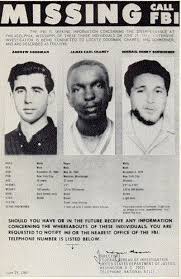
These troubling incidents have again reminded me of the events of June 21st 1964 when three men, Andrew Goodman, Mickey Scherner, and James Chaney were murdered by Ku Klux Klansmen. Twenty year old Andrew Goodman was from New York City. He was a progressive activist and Anthropology student at Queens College. Twenty-four year old Mickey Schwerner was a graduate student at Columbia University’s School of Social Work. Both Goodman and Schwerner were Jewish and had come South to work with others for Civil Rights in Mississippi. The third man, James Cheney, was a twenty-one year old Black Mississippian. Chaney was from Meridian Mississippi and was a volunteer with CORE, the Congress of Racial Equity. All three men were there to assist community leaders with voter registration and education in conjunction with local churches.

On June 21st 1964 the three men were in Philadelphia Mississippi where they were investigating the burning of Mount Zion Methodist Church. The church had been working with CORE’s voter registration and education programs. In the wake of the church being burned, many black citizens and church members were beaten by whites, rumored to be aided by members of the local Sheriff’s office. They specifically accused Sheriff’s Deputy Cecil Price of abuse.

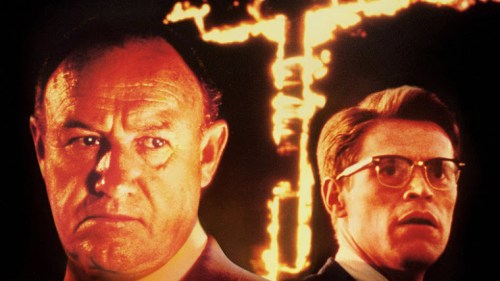
When Goodman, Schwerner, and Chaney were marked men from the moment they arrived. As they left the town the three were arrested for an alleged traffic violation. They were briefly jailed and released that evening, but were not allowed to make any phone calls. On the way back to Meridian, two carloads of Klan members forced their car off the road and then abducted them and murdered them. The bodies were not discovered for 44 days. Their disappearance brought national attention and a major investigation to the town. Eventually seven men, including Deputy Price were convicted of the murders. The murders and the investigation became the subject of the movie Mississippi Burning.

MississippiBurningPressRelease

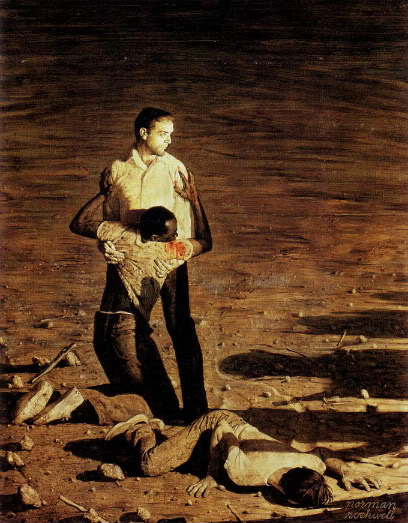
Iconic American artist Norman Rockwell who was well known for his portraits of American life as well as his support for the Civil Rights movement, painted “Southern Justice” which is sometimes known as “Murder in Mississippi” in 1965. This was not long after passage of the Voting Rights Act of 1964, which over the past decade has been under attack in many southern states and a key provision on racial gerrymandering was gutted by the Supreme Court in 2012.

Fifty-three years ago the murders of these three young men brought national attention to the pervasive racism and discrimination in the country. Before this event most murders, lynchings, as well as the burnings of homes businesses were left uncovered by the media, the victims forgotten and the perpetrators unpunished.

I do hope and pray that we never go back to those days, but there are a number of troubling issues for us in the United States today. The first is that there have been quite a few laws passed to limit voting rights in various states. Some of these have been successfully challenged in the courts and eventually one may make its way to the Supreme Court. Then there is the rapidly growing number of racially motivated hate crimes against Blacks and other minorities as well as the threat of nooses being placed in trees around historic sites and museums dedicated to minorities or civil rights. The Southern Poverty Law Commission monitors the activities of hate groups across the political, religious, and racial spectrum and has noted a sharp increase in attacks over the past year.

I wonder if we will see a return to the commonplace violence and silence that characterized the nation’s treatment of minorities before the Civil Rights movement. You think that we have moved the chains so far and that it cannot happen again when before our very eyes it rises like an undead specter to claim new victims. Eternal vigilance is the guardian of freedom; we cannot allow the thousands who died before, and those who have died since these three young men to be forgotten. Too much is at stake.

In memory of Andrew Goodman, James Chaney and Mickey Schwerner and others of the Freedom Summer and the Civil Rights movement who died or suffered to peacefully bring about change to our society, I leave you until tomorrow.

Peace,

Padre Steve+

1 Comment

Filed under civil rights, History, laws and legislation, News and current events

The Dangers of Political Violence: The Lesson of the Reichstag Fire


Friends of Padre Steve’s World,

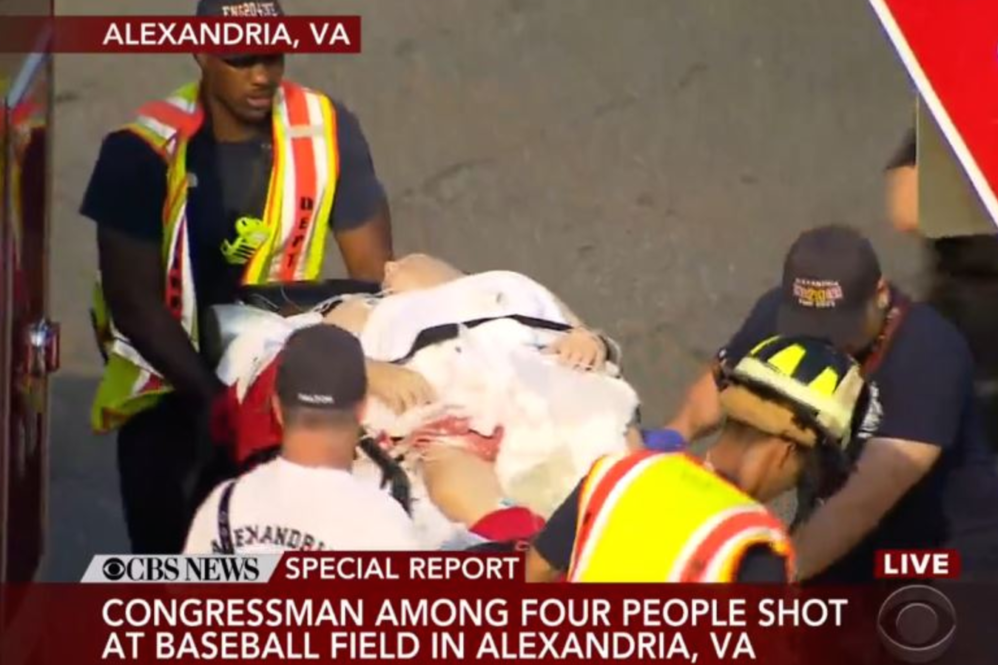
Yesterday a man named James T. Hodgkinson opened fire on members of the Congressional Republican baseball team as they practiced for their annual game against the Congressional Democrats which is a charitable event that helps a number of local agencies that help children. House Majority Whip Steve Scalise was critically wounded and several police officers were wounded during the exchange of fire in which Hodgkinson was killed. I was shocked and infuriated by his actions. Political violence and the attempted assassination of any elected official in a democracy where we still have the ability to remove people or parties from office at the ballot box is never justified. I would call his act an act of terrorism just as I have other acts by so many others. 

But unlike other times when a white shooter killed or wounded multiple people based on their race, religion, or politics I was joined by many GOP leaders. Sadly, some like Newt Gingrich, Repreantive Steve King and a host of Right Wing pundits blamed it on “typical left wing violence” while ignoring the constant attacks and threats from Right Wing extremists including members of the militia movement, the KKK, and various new-Nazi and Alt Right groups and individuals. 

At least President Trump, for the first time in his presidency urged unity and extolled the best part of Americans working together. I was pleased to here his words which I think were genuine, and I hope that this will be a moment that defines his presidency in a positive way for all Americans. That being said I have reasons to doubt, not that I want to but because of his past actions which I will mention later in the article. 

From was we know Hodgkinson was very active politically and quite angry at the GOP and President Trump but until today no one, even friends who knew him well would have expected him to cross the line to commit political violence. The congressman from his district from Illinois said that Hodgkinson was angry in his communications about issues but never crossed a line for the office to think that he was potentially dangerous. However, he had a history of domestic violence, destruction of property and a number of other issues. One of Hodgkinson’s Facebook posts from 2015 was a editorial cartoon criticizing Scalise. Hodkinson had been in the D.C. area a couple of weeks and had been spending time at the YMCA near the ball field where the shooting occurred. The former Mayor of Alexandria saw him a number of times and reported that he appeared to be living out of a gym bag and had offered to help Hodgkinson get a job.

I’m sure that there will be more information about Hodgkinson coming out so I will not go into any more detail or speculate why he committed this act, but I will discuss the very real dangers to civil liberty and legitimate peaceful political dissent that his act could lead.

Despite my initial optimism about how the President Trump responded today and many of his advisors have shown spoken in very authoritarian language about political dissent, demonizing their opponents, first during their GOP opponents in the primaries, then all who opposed them during the general election and afterwards. The president even blessed violent acts committed by his supporters during the campaign. Any time a protester physically responded to bullying or intimidation at Trump rallies they were set upon and then were blamed for the resulting violence even if they were the victims.

But what I am afraid is that acts such as Hodgkinson’s will result in draconian measures to limit dissent. People forget that it was the action of a single Dutch Communist acting on his own to burn down the Reichstag that gave Hitler the ability to pass the Enabling Act in March of 1933. That act gave his government unprecedented authority to arrest and detail opponents without due process rights, as well as to shut down opposition newspapers. It was followed up by other laws during the course of the Third Reich which further restricted political opposition. Often people arrested in the round ups would be acquitted of any crime but then upon release would be taken by the SA or SS to concentration camps.

Another incident was the assassination of a junior German diplomat at the German embassy in Paris in November 1938. When he died Hitler gave Josef Goebbels permission to launch a pogrom against the Jews now known as Kristallnacht. Hundreds of synagogues were burned, thousands of Jewish businesses looted, and hundreds of Jews killed, with thousands rounded up and sent to concentration camps.

The problem is that individual acts of violence against leaders who are predisposed to authoritarian responses give those leaders license to suspend laws and civil liberties on what are called exceptional circumstances. The attack by Hodgkinson could easily be construed as an act of political terrorism. As Timothy Snyder noted in his book On Tyranny:

“Modern tyranny is terror management. When the terrorist attack comes, remember that authoritarians exploit such events in order to consolidate power. The sudden disaster that requires the end of checks and balances, the dissolution of opposition parties, the suspension of freedom of expression, the right to a fair trial, and so on, is the oldest trick in the Hitlerian book. Do not fall for it.”

That is a warning to all who think that individual acts of political violence can be excused or tolerated, they end up threatening the liberties of all. While I do not think this particular attack is a Reichstag Fire moment, the next one might be and anyone who thinks that their act of violence will help the country is sadly mistaken. For that matter it is also possible that a group or individual sympathetic to Trump could create a false flag incident in order to prompt him to suppress legitimate dissent. 

Like I said we will find out more as the days go by about the shooter, the attack, and the possible executive or legislative responses to it, not to mention possible violence against protestors or politicians committed by armed Trump supporters who have often threatened to respond violently to any attack against Trump or the GOP.

This is a very dangerous moment. I do pray that Representative Scalise will recover from his wounds and hope that I will not see progressives rejoice regarding the crime committed by Hodgkinson. Likewise as I mentioned earlier in the article I am heartened by President Trump’s response yesterday and I pray that it will be something that defines the rest of his presidency. I may oppose many, if not most of his policies and actions, as well as hoping that the investigation of his advisers interactions with the Russians goes forward; but I will never continue to hope and pray for the best for our country and yes even for him. That being said I am very wary based on his past words and actions and will never give up my right as an American to speak openly and honestly. I learned that lesson from many great American military men including General Smedley Butler and Colonel David Hackworth. Dissent is still an act of patriotism no matter what some people claim. 

Until tomorrow,

Peace

Padre Steve+

1 Comment

Filed under History, nazi germany, News and current events, Political Commentary

A March for the Civil Rights of LGBTQ People in the Nation’s Capital 


Friends of Padre Steve’s World,

Yesterday I posted an article that I think is one of the most important that I have ever written and the heart of it came from the sermon of Rabbi Roland Gittlesohn, a Navy Chaplain serving with the 5th Marine Division on Iwo Jima. It is one of the most remarkable sermons that I have ever heard or seen. It says far better than I think I ever have just how important the rights of every American citizen no-matter what their race, creed, ethnicity, religion, sex, gender, sexual orientation, or political beliefs have a right. It is the promise of the preamble of the Declaration of Independence that “all men are created equal, that they are endowed by their creator with certain unalienable Rights, that among these are Life, Liberty, and the pursuit of happiness…” That statement is the bedrock of the American ideal, an ideal that we as a people have often fallen far short of embracing too many times, but it is still the idea that was so revolutionary for its time that even Americans, especially slave owners condemned it. 


When one actually looks at those speeches and writings, by slave power proponents as well as others who legislated against liberty for anyone but White Protestant men, they are chilling. Sadly, the same philosophy of trampling the liberty of all but a few remains a part of our national fabric. We see that manifested daily by people, including politicians, preachers, and pundits in regard to people of color, Muslims, women, and of course the LGBTQ community. Alone of all minorities the LGBTQ community is often attacked by others who are also the victims of racial, ethnic, or religious discrimination, often because their religion informs them that Gays are deserving of damnation. Sadly those who do such things cannot see that LGBTQ civil rights are part of the same struggle that their ancestors pioneered and that they still face themselves. 


But the fact is, that if you are an American, that these rights have been paid for by the blood of Americans of every race, religion, and ethnicity, including Gays. Rabbi Gittlesohn said it so well at Iwo Jima. He spoke for the rights of every American at a time when many ministers, including his fellow Chaplains would never have the courage to do. He spoke for Protestant, Catholics, Jews, Blacks, Asian Americans, Mexican Americans, and Native Americans. He recognized that fighting for freedom and democracy” abroad does not automatically guarantee that those rights will be protected at home. He said: 

Any man among us the living who fails to understand that will thereby betray those who lie here dead. Whoever of us lifts his hand in hate against a brother, or thinks himself superior to those who happen to be in the minority, makes of this ceremony and of the bloody sacrifice it commemorates, an empty, hollow mockery. To this, them, as our solemn, sacred duty, do we the living now dedicate ourselves: to the right of Protestants, Catholics and Jews, of white men and Negroes alike, to enjoy the democracy for which all of them have here paid the price….

We shall not foolishly suppose, as did the last generation of America’s fighting men, that victory on the battlefield will automatically guarantee the triumph of democracy at home…. 

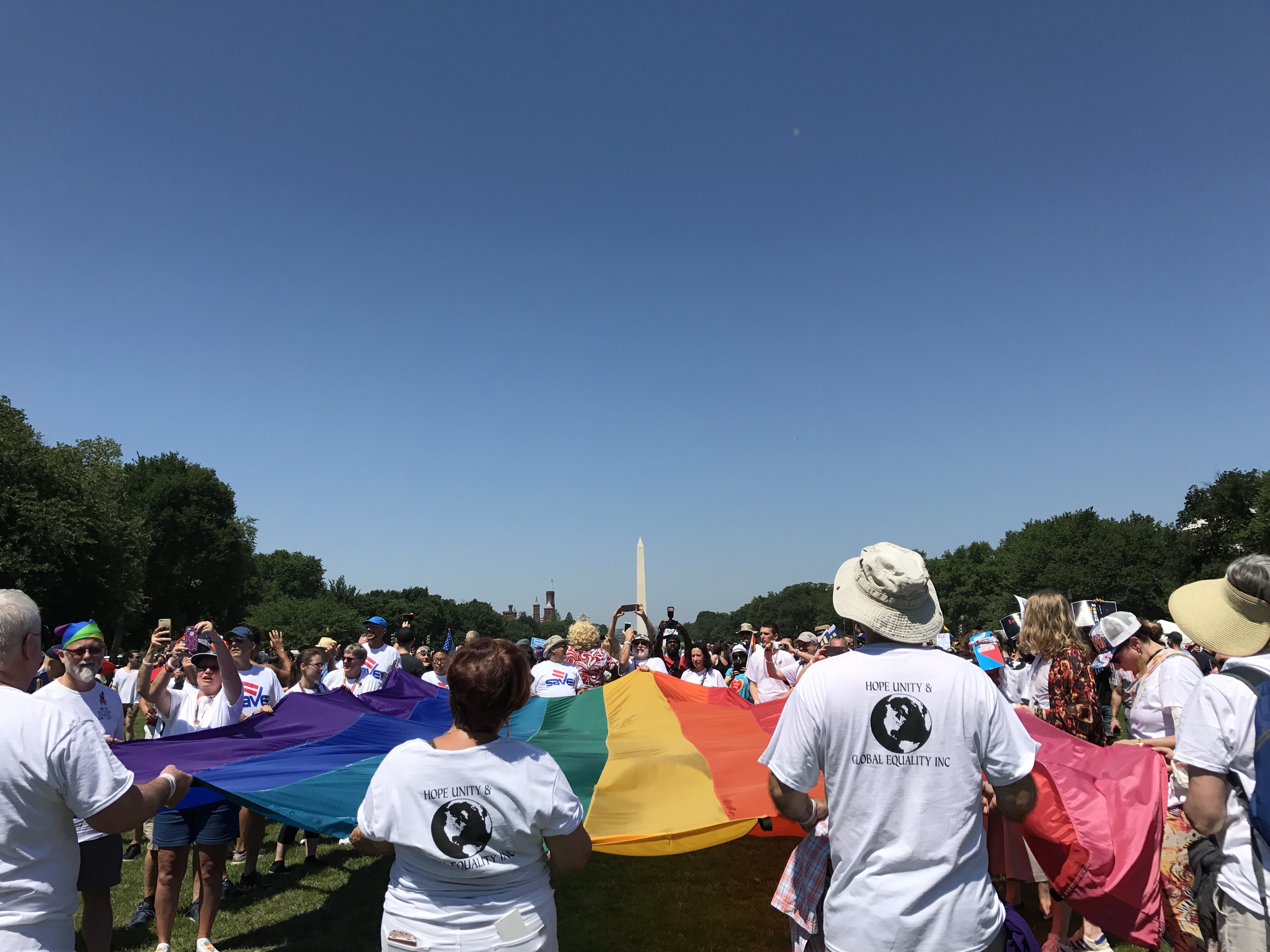
I am a Navy Chaplain, a career officer of almost 36 years of service. I am a Christian and I am a straight ally of my LGBTQ friends. I marched in the nation’s capital yesterday with and for my fellow citizens in support of full equality for my LGBTQ friends. I marched with Section 93 of the Key West Coast to Coast flag, the largest and most historic artifact of the modern LGBTQ rights movement. It is known by many victims of anti-LGBTQ violence and discrimination as The Sacred Cloth and it has symbolized the struggle for LGBTQ rights around the world. Today my friend Mark Ebenhoch will take it to Orlando to commemorate the victims killed in the massacre at the Pulse nightclub. It is a part of American history now, not just LGBTQ history. 

I have continued to read Rabbi Gittlesohn’s sermon over the weekend. Like him, I am determined not to let prejudices spawned by ill-informed minds not to stand in the way of equal rights for anyone. As Rabbi Gittlesohn and Abraham Lincoln noted, it is for all of us to labor for a new birth of freedom, one that encompasses every American as well as those people who come to the United States yearning to be free. If I cannot do that, if you cannot do that then we are a contemptible lot and do not deserve the liberties that far too many men and women have sacrificed their lives, reputations, and sacred honor to defend. 

This my friends is all about the liberties that so many others have done their best to defend. If someone wants to espouse the race based White Supremacy that has been a part of our nation since the beginning, that is their right: but history, liberty, and equality show that theirs is a misguided and immoral philosophy doomed for the ash heap of history. I cannot state that in any clearer terms. The rights and civil liberties of LGBTQ people need to be defended by everyone, even those that do not agree with their lifestyles or sexual preferences, especially those that will fight for their so called religious freedoms that they would deny to others simply because their faith or lifestyle is different. I believe that people who do this either have no concept of civil rights, the Declaration, or the Constitution, or that they fully understand them but willingly would trample them in order to secure their primacy. Either way it is not good.

I was pleased to march for civil rights with my LGBTQ friends yesterday. This really is the crux of them matter. If we believe in the American experiment it is either for all of us or none of us. Rabbi Gittlesohn understood that; the question today is will we? 

So until tomorrow I wish you the best.

Peace

Padre Steve+

2 Comments

Filed under civil rights, dachshunds, ethics, faith, History, laws and legislation, LGBT issues, News and current events

“Theirs is the Highest and Purest Democracy…” The Sermon of Rabbi Roland Gittelsohn at Iwo Jima

39GittelsonIwoJima2

Friends of Padre Steve’s World,

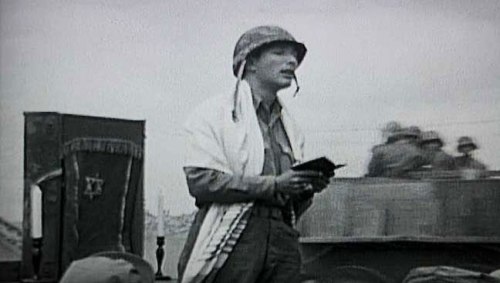
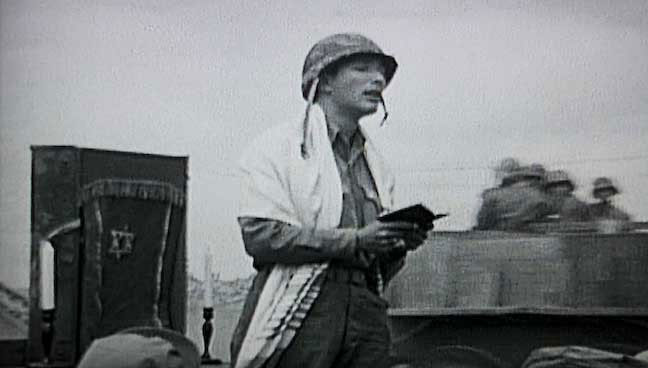
I have been serving in the military for almost 36 years between the Army and the Navy, and I have been a chaplain for almost 25 of those years. Over six of those years as a Navy Chaplain were spent serving with the Marine Corps. Rabbi Roland Gittelson volunteered to serve as a Navy Chaplain in the Second World War and like many Navy Chaplains he was assigned to serve with the Marines. He was the first Rabbi to serve with the Marines.

He went ashore with the 5th Marine Division at Iwo Jima. The battle was one of the most brutal ever fought by the Marines. In the month long battle for the 8.1 square mile island the Marines and Navy suffered nearly 7,000 men killed and 19,000 wounded. Over 18,000 of the island’s Japanese defenders died. On March 21st 1945 the Rabbi was one of the Chaplains to dedicate the cemetery for the fallen. The prejudice was such that many of his Christian colleagues wanted nothing to do with him and nothing to do with any service that he conducted. Though the division Chaplain had wanted him to conduct the main service to commemorate all of the fallen: Protestant, Catholic, Jewish, White, Black, and Mexican because no one else would conduct an ecumenical service, but both realized that the push back would be too much, so Gittelsohn conducted the Jewish service, expecting little to come of it except for the spiritual impact that it might have on his Jewish Marines, but unbeknownst to him a few Protestant Chaplains watched the service and then distributed it throughout the division and back to home.

Rabbi Gittelsohn’s message is one of the most remarkable that I have heard or read by any Chaplain and is very similar to the message of Abraham Lincoln’s Gettysburg Address. It is a message that needs to be heard today. That is why I am posting it here.

Have a great weekend,

Peace

Padre Steve+

This is perhaps the grimmest and surely the holiest task we have faced since D-day. Here before us lie the bodies of comrades and friends. Men who until yesterday or last week laughed with us, joked with us, trained with us. Men who were on the same ships with us and went over the sides with us, as we prepared to hit the beaches of this island. Men who fought with us and feared with us. Somewhere in this plot of ground there may lie the man who could have discovered the cure for cancer. Under one of these Christian crosses, or beneath a Jewish Star of David, there may rest now a man who was destined to be a great prophet—to find the way, perhaps, for all to live in plenty, with poverty and hardship for none. Now they lie here silently in this sacred soil, and we gather to consecrate this earth in their memory.

It is not easy to do so. Some of us have buried our closest friends here. We saw these men killed before our very eyes. Any one of us might have died in their places. Indeed, some of us are alive and breathing at this very moment only because men who lie here beneath us had the courage and strength to give their lives for ours. To speak in memory of such men as these is not easy. Of them, too, can it be said with utter truth: “The world will little note nor long remember what we say here. It can never forget what they did here.”

No, our poor power of speech can add nothing to what these men and the other dead of our division who are not here have already done. All that we can even hope to do is follow their example. To show the same selfless courage in peace that they did in war. To swear that, by the grace of God and the stubborn strength and power of human will, their sons and ours shall never suffer these pains again. These men have done their job well. They have paid the ghastly price of freedom. If that freedom be once again lost, as it was after the last war, the unforgivable blame will be ours, not theirs. So it is the living who are here to be dedicated and consecrated.

We dedicate ourselves, first, to live together in peace the way they fought and are buried in war. Here lie men who loved America because their ancestors, generations ago, helped in her founding, and other men who loved her with equal passion because they themselves or their own fathers escaped from oppression to her blessed shores. Here lie officers and men, Negroes and whites, rich men and poor—together. Here are Protestants, Catholics, and Jews—together. Here no man prefers another because of his faith or despises him because of his color. Here there are no quotas of how many from each group are admitted or allowed. Among these men there is no discrimination. No prejudice. No hatred. Theirs is the highest and purest democracy.

Any man among us the living who fails to understand that will thereby betray those who lie here dead. Whoever of us lifts his hand in hate against a brother, or thinks himself superior to those who happen to be in the minority, makes of this ceremony and of the bloody sacrifice it commemorates, an empty, hollow mockery. To this, them, as our solemn, sacred duty, do we the living now dedicate ourselves: to the right of Protestants, Catholics and Jews, of white men and Negroes alike, to enjoy the democracy for which all of them have here paid the price.

To one thing more do we consecrate ourselves in memory of those who sleep beneath these crosses and stars. We shall not foolishly suppose, as did the last generation of America’s fighting men, that victory on the battlefield will automatically guarantee the triumph of democracy at home. This war, with all its frightful heartache and suffering, is but the beginning of our generation’s struggle for democracy. When the last battle has been won, there will be those at home, as there were last time, who will want us to turn our backs in selfish isolation on the rest of organized humanity, and thus to sabotage the very peace for which we fight. We promise you who lie here; we will not do that! We will join hands with Britain, China, Russia—in peace, even as we have in war, to build the kind of world for which you died.

When the last shot has been fired, there will still be those whose eyes are turned backward not forward, who will be satisfied with those wide extremes of poverty and wealth in which the seeds of another war can breed. We promise you, our departed comrades: this, too, we will not permit. This war has been fought by the common man; its fruits of peace must be enjoyed by the common man! We promise, by all that is sacred and holy, that your sons, the sons of miners and millers, the sons of farmers and workers, will inherit from your death the right to a living that is decent and secure.

When the final cross has been placed in the last cemetery, once again there will be those to whom profit is more important than peace, who will insist with the voice of sweet reasonableness and appeasement that it is better to trade with the enemies of mankind than, by crushing them, to lose their profit. To you who sleep here silently, we give our promise: we will not listen! We will not forget that some of you were burnt with oil that came from American wells, that many of you were killed by shells fashioned from American steel. We promise that when once again men seek profit at your expense, we shall remember how you looked when we placed you reverently, lovingly, in the ground.

This do we memorialize those who, having ceased living with us, now live within us. Thus do we consecrate ourselves, the living, to carry on the struggle they began. Too much blood has gone into this soil for us to let it lie barren. Too much pain and heartache have fertilized the earth on which we stand. We here solemnly swear: this shall not be in vain! Out of this, and from the suffering and sorrow of those who mourn this, will come—we promise—the birth of a new freedom for the sons of men everywhere.

Amen.

4 Comments

Filed under faith, History, Loose thoughts and musings, Military, world war two in the pacific

The Battle of Brandy Station

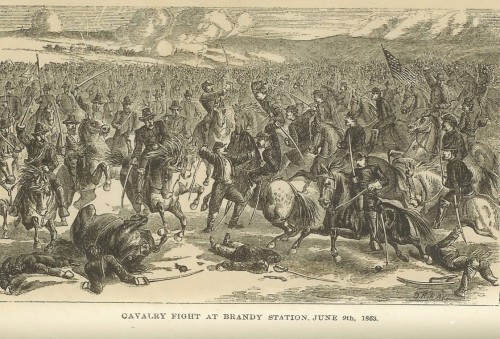
Cav Fight at Brandy Station

Friends of Padre Steve’s World,

Today I take a look back at the battle of Brandy Station, the largest cavalry battle every fought on the North American continent. This is a section of my draft Gettysburg campaign text.

Have a great day,

Peace

Padre Steve+

Movement to attain operational reach and maneuver are two critical factors in joint operations. In the time since the American Civil War the distances that forces move to engage the enemy, or maneuver to employ fires to destroy his forces have greatly increased. Movement may be part of an existing Campaign Plan or Contingency Plan developed at Phase 0; it also may be part of a crisis action plan developed in the midst of a campaign. Lee’s movement to get to Gettysburg serves as an example of the former, however, since his forces were already in contact with the Army of the Potomac along the Rappahannock and he was reacting to what he felt was a strategic situation that could not be changed but by going on the offensive that it has the feel of a Crisis Action Plan. Within either context other factors come into play: clarity of communications and orders, security, intelligence, logistics and even more importantly the connection between operational movement and maneuver; the Center of Gravity of the enemy, and national strategy. Since we have already discussed how Lee and the national command authority of the Confederacy got to this point we will now discuss the how that decision played in the operational and tactical decisions of Lee and his commanders as the Army of Northern Virginia began the summer campaign and the corresponding actions of Joseph Hooker and the his superiors in Washington.

“One of the fine arts of the military craft is disengaging one’s army from a guarding army without striking sparks and igniting battle.” [1] On June 3rd 1863 Robert E. Lee began to move his units west, away from Fredericksburg to begin his campaign to take the war to the North. He began his exfiltration moving Second Corps under Richard Ewell and First Corps under James Longstreet west “up the south bank of the Rappahannock to Culpepper, near which Hood and Pickett had been halted on their return from Suffolk.” [2] Rodes’ division of Second Corps followed on June 4th with Anderson and Early on June 5th. Lee left the three divisions of A.P. Hill’s Third Corps at Fredericksburg to guard against any sudden advance by Hooker’s Army of the Potomac toward Richmond. Lee instructed Hill to “do everything possible “to deceive the enemy, and keep him in ignorance of any change in the disposition of the army.” [3]

The army was tremendously confident as it marched away from the war ravaged, dreary and desolate battlefields along the Rappahannock “A Captain in the 1st Virginia averred, “Never before has the army been in such a fine condition, so well disciplined and under such complete control.” [4] Porter Alexander wrote that he felt “pride and confidence…in my splendid battalion, as it filed out of the field into the road, with every chest & and ammunition wagon filled, & and every horse in fair order, & every detail fit for a campaign.” [5] Another officer wrote to his father, “I believe there is a general feeling of gratification in the army at the prospect of active operations.” [6]

Lee’s plan was to “shift two-thirds of his army to the northwest and past Hooker’s flank, while A.P. Hill’s Third Corps remained entrenched at Fredericksburg to observe Hooker and perhaps fix him in place long enough for the army to gain several marches on the Federals.” [7] In an organizational and operational sense that Lee’s army after as major of battle as Chancellorsville “was able to embark on such an ambitious flanking march to the west and north around the right of the army of the Potomac….” [8]

However, Lee’s movement did not go unnoticed; Hooker’s aerial observers in their hot air balloons “were up and apparently spotted the movement.” [9] But Hooker was unsure what it meant. He initially suspected that “Lee intended to turn the right flank of the Union army as he had done in the Second Bull Run Campaign, either by interposing his army between Washington and the Federals or by crossing the Potomac River.” [10] Lee halted at Culpepper from which he “could either march westward over the Blue Ridge or, if Hooker moved, recontract at the Rappahannock River.” [11]

Hooker telegraphed Lincoln and Halleck on June 5th and requested permission to advance cross the river and told Lincoln that “I am of opinion that it is my duty to pitch into his rear” [12] possibly threatening Richmond. Lincoln ordered Hooker to put the matter to Halleck, with whom Hooker was on the worst possible terms. Hooker “pressed Halleck to allow him to cross the Rappahannock in force, overwhelming whatever rebel force had been left at Fredericksburg, and then lunging down the line of the Virginia Central toward an almost undefended Richmond.” [13] On the morning of June 6th Hooker ordered pontoon bridges thrown across the river and sent a division of Sedgwick’s VI Corps to conduct a reconnaissance in force against Hill.

Lincoln and Halleck immediately rejected Hooker’s request. Lincoln “saw the flaw in Hooker’s plan at once” [14] and replied in a very blunt manner: “In one word,” he wrote “I would not take any risk of being entangled upon the river, like an ox jumped half over a fence and liable to be torn by dogs front and rear, without a fair chance to gore one way or kick another.” [15] Halleck replied to Hooker shortly after Lincoln that it would “seem perilous to permit Lee’s main force to move upon the Potomac [River] while your army is attacking an intrenched position on the other side of the Rappahannock.” [16] Lincoln, demonstrating a keen regard for the actual center of gravity of the campaign, told Hooker plainly that “I think Lee’s army and not Richmond, is your objective point.” [17]

The fears of Lincoln and Halleck were well founded. In stopping at Culpepper Lee retained the option of continuing his march to the Shenandoah and the Potomac, or he could rapidly “recall his advanced columns, hammer at Hooker’s right flank, and very possibly administer another defeat even more demoralizing than the one he suffered at Chancellorsville.” [18] Hooker heeded the order and while Hooker maintained his bridgehead over the Rappahannock he made no further move against Hill’s well dug in divisions.

Meanwhile, J.E.B. Stuart and his Cavalry Corps had been at Brandy Station near Culpepper for two weeks. Culpepper in June was a paradise for the cavalry, and with nearly 10,000 troopers gathered Stuart ordered a celebration, many dignitaries were invited and on June 4th Stuart hosted a grand ball in the county courthouse. On the 5th Stuart staged a grand review of five of his brigades. Bands played as each regiment passed in review and one soldier wrote that it was “One grand magnificent pageant, inspiring enough to make even an old woman feel fightish.” [19] The review ended with a mock charge by the cavalry against the guns of the horse artillery which were firing blank rounds. According to witnesses it was a spectacular event, so realistic and grand that during the final charge that “several ladies fainted, or pretended to faint, in the grandstand which Jeb Stuart had had set up for them along one side of the field.” [20] That was followed by an outdoor ball “lit by soft moonlight and bright bonfires.” [21] Stuart gave an encore performance when Lee arrived on June 8th, minus the grand finale and afterward Lee wrote to his wife that “Stuart was in all his glory.” [22]

Hooker received word from the always vigilant John Buford, of the First Cavalry Division on the night of June 6th that “Lee’s “movable column” was located near Culpepper Court House and that it consisted of Stuart’s three brigades heavily reinforced by Robertson’s, “Grumble” Jones’s, and Jenkins’ brigades.” [23] Hooker digested the information and believed that Stuart’s intent was to raid his own rear areas to disrupt the Army of the Potomac’s logistics and communications. The next day Hooker ordered his newly appointed Cavalry Corps Commander, Major General Alfred Pleasanton to attack Stuart.

After Chancellorsville, Hooker had reorganized the Union cavalry under Pleasanton into three divisions and under three aggressive division commanders, all West Pointers, Brigadier General John Buford, Brigadier General David Gregg and Brigadier General Judson Kilpatrick. While Stuart conducted his second grand review for Lee Pleasanton quietly massed his cavalry “opposite Beverly Ford and Kelly’s Ford so as to cross the river in the early morning hours of June 9th and carry out Hooker’s crisp orders “to disperse and destroy” the rebel cavalry reported to be “assembled in the vicinity of Culpepper….” [24] Pleasanton’s cavalry was joined by two mixed brigades of infantry “who had the reputation of being among the best marchers and fighters in the army.” [25] One brigade, commanded by Brigadier General Adelbert Ames consisted of five regiments drawn from XI Corps, XII Corps, and III Corps was attached to Buford’s division. The other brigade, under the command of Brigadier General David Russell was composed of seven regiments drawn from I Corps, II Corps and VI Corps. [26]

Stuart’s orders for June 9th were to “lead his cavalry division across the Rappahannock to screen the northward march of the infantry.” [27] The last thing that Stuart expected was to be surprised by the Federal cavalry which he had grown to treat with distain. Stuart who was at his headquarters “woke to the sound of fighting” [28] as Pleasanton’s divisions crossed the river and moved against the unsuspecting Confederate cavalry brigades.

The resultant action was the largest cavalry engagement of the war. Over 20,000 troopers engaged in an inconclusive see-saw battle that lasted most of the day. Though a draw “the rebels might have been swept from the field had Colonel Alfred N. Duffie, at the head of the Second Division acted aggressively and moved to the sounds of battle.” [29] The “Yankees came with a newfound grit and gave as good as they took.” [30] Porter Alexander wrote that Pleasanton’s troopers “but for bad luck in the killing of Col. Davis, leading the advance, would have probably surprised and captured most of Stuart’s artillery.” [31] Stuart had lost “over 500 men, including two colonels dead,” [32] and a brigade commander, Fitzhugh “Rooney” Lee, General Lee’s son, badly wounded. While recuperating at his wife’s home a few weeks later Lee “was captured by the enemy.” [33] Stuart claimed victory as he lost fewer troops and had taken close to 500 prisoners and maintained control of the battlefield.

But even Confederate officers were critical. Lafayette McLaws of First Corps wrote “our cavalry were surprised yesterday by the enemy and had to do some desperate fighting to retrieve the day… As you will perceive from General Lee’s dispatch that the enemy were driven across the river again. All this is not true because the enemy retired at their leisure, having accomplished what I suppose what they intended.” [34] Captain Charles Blackford of Longtreet’s staff wrote: “The fight at Brandy Station can hardly be called a victory. Stuart was certainly surprised, but for the supreme gallantry of his subordinate officers and men… it would have been a day of disaster and disgrace….” The Chief of the Bureau of War in Richmond, Robert H.G. Kean wrote “Stuart is so conceited that he got careless- his officers were having a frolic…” [35] Brigadier General Wade Hampton had the never to criticize his chief in his after action report and after the war recalled “Stuart managed badly that day, but I would not say so publicly.” [36]

The Confederate press was even more damning in its criticism of Stuart papers called it “a disastrous fight,” a “needless slaughter,” [37]and the Richmond Examiner scolded Stuart in words that cut deeply into Stuart’s pride and vanity:

The more the circumstances of the late affair at Brandy Station are considered, the less pleasant do they appear. If this was an isolated case, it might be excused under the convenient head of accident or chance. But the puffed up cavalry of the Army of Northern Virginia has twice, if not three times, surprised since the battles of December, and such repeated accidents can be regarded as nothing but the necessary consequences of negligence and bad management. If the war was a tournament, invented and supported for the pleasure of a few vain and weak-headed officers, these disasters might be dismissed with compassion, But the country pays dearly for the blunders which encourage the enemy to overrun and devastate the land, with a cavalry which is daily learning to despise the mounted troops of the Confederacy…” [38]

But the battle was more significant than the number of casualties inflicted or who controlled the battlefield at the end of the day. Stuart had been surprised by an aggressively led Union Cavalry force. The Union troopers fought a stubborn and fierce battle and retired in good order. Stuart did not appreciate it but the battle was a watershed, it ended the previous dominance of the Confederate Cavalry arm. It was something that in less than a years’ time would cost him his life.

Notes

[1] Sears, Stephen W. Gettysburg, Mariner Books, Houghton Mifflin Company, Boston and New York, 2003 p.59

[2] Foote, Shelby, The Civil War, A Narrative. Volume Two Fredericksburg to Meridian Random House, New York 1963 p.436

[3] Trudeau, Noah Andre. Gettysburg: A Testing of Courage, Harper Collins Publishers, New York 2002 p.25

[4] Wert, Jeffry D. A Glorious Army: Robert E. Lee’s Triumph 1862-1863 Simon and Schuster, New York and London 2011 p.218

[5] Alexander, Edward Porter. Fighting for the Confederacy: The Personal Recollections of General Edward Porter Alexander edited by Gary Gallagher University of North Carolina Press, Chapel Hill 1989 p.221

[6] Ibid. Wert A Glorious Army p.219

[7] Ibid. Sears Gettysburg p.60

[8] Korda, Michael. Clouds of Glory: The Life and Legend of Robert E. Lee Harper Collins Publishers, New York 2014 p.530

[9] Ibid. Foote The Civil War, A Narrative. Volume Two p.436

[10] Wert, Jeffry D. The Sword of Lincoln: The Army of the Potomac Simon and Schuster, New York and London 2005 p.260

[11] Dowdy, Clifford. Lee and His Men at Gettysburg: The Death of a Nation Skyhorse Publishing, New York 1986, originally published as Death of a Nation Knopf, New York 1958 p.37

[12] Ibid. Sears Gettysburg p.61

[13] Guelzo, Allen C. Gettysburg: The Last Invasion Vintage Books a Division of Random House, New York 2013 p.50

[14] Ibid. Wert The Sword of Lincoln p.260

[15] Fuller, J.F.C. Decisive Battles of the U.S.A. 1776-1918 University of Nebraska Press, Lincoln 2007 copyright 1942 The Royal Society for the Prevention of Cruelty to Animals p.223

[16] Ibid Trudeau Gettysburg a Testing of Courage p.26

[17] Ibid. Guelzo Gettysburg: The Last Invasion p.50

[18] Coddington, Edwin B. The Gettysburg Campaign: A Study in Command, A Touchstone Book, Simon and Schuster New York, 1968 p.53

[19] Davis, Burke J.E.B. Stuart: The Last Cavalier Random House, New York 1957 p.304

[20] Ibid. Foote The Civil War, A Narrative. Volume Two p.437

[21] Ibid. Sears Gettysburg p.63

[22] Ibid. Wert A Glorious Army p.221

[23] Ibid. Coddington The Gettysburg Campaign p.54

[24] Ibid. Sears Gettysburg p.64

[25] Ibid. Coddington The Gettysburg Campaign p.54

[26] Petruzzi, J. David and Stanley, Steven The Gettysburg Campaign in Numbers and Losses: Synopses, Orders of Battle, Strengths, Casualties and Maps, June 9 – July 1, 1863 Savas Beatie LLC, El Dorado Hills CA 2012 p.7

[27] Ibid. Sears Gettysburg p.64

[28] Ibid. Davis JEB Stuart p.306

[29] Ibid. Wert The Sword of Lincoln p.261

[30] Wert, Jeffry D. General James Longstreet The Confederacy’s Most Controversial Soldier, A Touchstone Book, Simon and Schuster, New York and London 1993 p. 251

[31] Ibid. Alexander Fighting for the Confederacy p.223

[32] Ibid. Davis JEB Stuart p.310

[33] Ibid. Wert A Glorious Army p.221

[34] Ibid. Coddington The Gettysburg Campaign p.59

[35] Ibid. Davis JEB Stuart p.310

[36] Ibid. Coddington The Gettysburg Campaign p.60

[37] Ibid. Guelzo Gettysburg: The Last Invasion p.57

[38] Ibid. Davis JEB Stuart p.311-312

Leave a comment

Filed under civil war, Gettysburg, History, leadership, Military

Have You no Sense of Decency, Sir?

welch

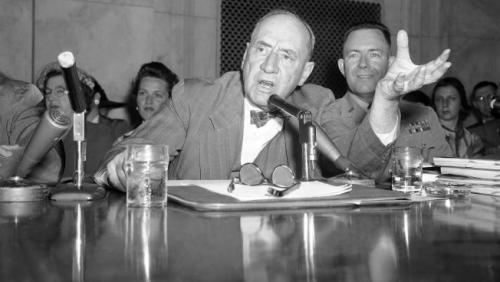
Joseph Welch during the McCarthy Hearings

Friends of Padre Steve’s World,

Sixty-three years ago today, Joseph Welch, the Chief Counsel for the United States Army during Senator Joseph McCarthy’s anti-Communist hearings uttered a phrase that shook the Senator and stopped the momentum of McCarthy’s far ranging political crusade to impinge the honor and integrity of Americans who he accused of being Communists on live television, with no chance for rebuttal, knowing that even the hint of being associated with the Communists would ruin their lives, even if it proved to be unfounded.

On the 30th day of the hearings, fed up with McCarthy’s tactics, Welch stopped McCarthy in his tracks.   Welch challenged McCarthy’s Counsel, Roy Cohn to provide the Attorney General with McCarthy’s list of 130 Communists or subversives in defense plants “before the sun goes down.”

(Note: Cohn later became Donald Trump’s lawyer in the first series of lawsuits against the future President for racial discrimination in violation of the Fair Housing Act in the early 1970s before his disbarment)

McCarthy interrupted and began an ad homonym attack on one of Welch’s legal associates. Welch stopped him and said:

Until this moment, Senator, I think I have never really gauged your cruelty or your recklessness. Fred Fisher is a young man who went to the Harvard Law School and came into my firm and is starting what looks to be a brilliant career with us….Little did I dream you could be so reckless and so cruel as to do an injury to that lad. It is true he is still with Hale and Dorr. It is true that he will continue to be with Hale and Dorr. It is, I regret to say, equally true that I fear he shall always bear a scar needlessly inflicted by you. If it were in my power to forgive you for your reckless cruelty I would do so. I like to think I am a gentleman, but your forgiveness will have to come from someone other than me.

McCarthy charged ahead only to be stopped by Welch.

Senator, may we not drop this? We know he belonged to the Lawyers Guild … Let us not assassinate this lad further, Senator. You’ve done enough. Have you no sense of decency, sir? At long last, have you left no sense of decency?

Even so McCarthy went back on the attack and was repulsed yet again.

Mr. McCarthy, I will not discuss this further with you. You have sat within six feet of me and could have asked me about Fred Fisher. You have seen fit to bring it out. And if there is a God in Heaven it will do neither you nor your cause any good. I will not discuss it further. I will not ask Mr. Cohn any more witnesses. You, Mr. Chairman, may, if you will, call the next witness.

The chamber exploded in cheering and applause as McCarthy sat silent. It was a moment that McCarthy and his hearings never recovered from. “Tail gunner Joe” would be censured by the Senate and die just three years later from acute hepatitis.

Over the past two years we have seen the President, his aides, his political hatchet-men in the pulpits and the media, and even sitting GOP Congressmen and Senators go out of their way to impugn the honor and integrity of anyone who criticizes the President or who seems to stand in his way, be they the Acting Attorney General, the FBI Director, and even members of the Federal Courts.

As the Senate hearings investigating the Russia scandal that is rapidly encompassing a large number of Trump aides continue, I wonder if in the midst of them someone will have their Joseph Welch moment and challenge those in the Senate, from the White House, or in the media impugn the integrity, motives, and honor of Comey and others during the hearings this week.

Until tomorrow,

Peace

Padre Steve+

1 Comment

Filed under civil rights, History, News and current events, Political Commentary

What Can You Do for Your Country? Thoughts on the Passing of the Greatest Generation and an Unending War

tumblr_lahyzakLSB1qbjz0go1_500

Marine Colonel Francis I. Fenton, kneeling prays at the foot of his son’s grave on Okinawa 1945

Friends of Padre Steve’s World,

Tom Brokaw wrote:

“At the end of the twentieth century the contributions of this generation would be in bold print in any review of this turbulent and earth-altering time. It may be historically premature to judge the greatness of a whole generation, but indisputably, there are common traits that cannot be denied. It is a generation that, by and large, made no demands of homage from those who followed and prospered economically, politically, and culturally because of its sacrifices. It is a generation of towering achievement and modest demeanor, a legacy of their formative years when they were participants in and witness to sacrifices of the highest order. They know how many of the best of their generation didn’t make it to their early twenties, how many brilliant scientists, teachers, spiritual and business leaders, politicians and artists were lost in the ravages of the greatest war the world has seen.”

I was born in 1960 and thankfully for whatever reason I developed a love of history and heritage. I began reading history books as early as second and third grade. The American Heritage Publishing Company had a Junior Library series that I could not get enough of awhile another publisher (it may have also been American Heritage) had a series of biographies which drew me into the lives of many famous people. From 3rd grade on I spent every spare moment at school in the library, even frequently cutting geometry class in 10th grade to explore the history reference books that I could not check out and take home.

I think that anyone that knew me then could probably associate me with a big stack of books that I lugged to and from class and back and forth from home to school. The ironic thing is that as I pack for work or to come home every day my back pack from my tour in Iraq is filled with the books that I am reading or using for research. Maybe it is not ironic, maybe it is the fact that some things never change. For me the quest for knowledge and historical, philosophical, or scientific truth is something that I cannot get enough of, nor be content to think that I know everything on any given subject.

This little introduction takes me into today’s subject. For those that don’t know we are coming up on the anniversaries of two of the most amazing historical events of the past 100 years next week. They are the battles of Midway, June 4th through June 6th 1942 and the invasion of France, or D-Day, June 6th 1944.

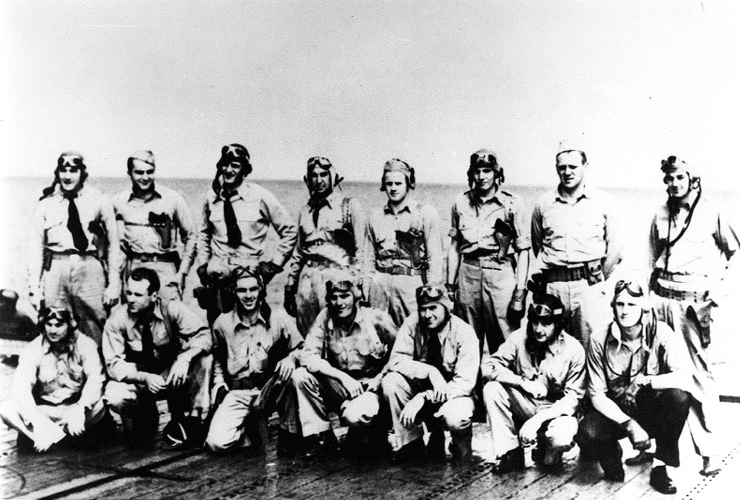
The Pilots of Torpedo Eight, only one Survived

I have always been amazed by the men who faced the Japanese at Midway, a battle that by any reasonable means should have resulted in a Japanese victory as well as them men that stormed the beaches at Normandy just two years later. When I first started reading about these battles many of the veterans were still alive, many not much older than I am today. However today not many are left, and the few that remain generally served as junior officers or enlisted personnel, none in high command.

Both battles are remarkable because an American or Allied loss could have changed the course of history. If the United States Navy been defeated at Midway it could have brought about a Japanese victory, or more likely made the ultimate American victory much more costly and taken far longer to achieve. If the Allies had been repulsed at Normandy it could have split the allied coalition or given the Germans the chance to renew their fight against the Soviet Union and possibly change history.

Thus when I look at these two events, battles that for most are now ancient history I am in awe of the men who fought them. They are not academic exercises for me, but as someone who has served at sea and on land in war I feel camaraderie with these men.

I remember reading Cornelius Ryan’s classic book “The Longest Day” and seeing the movie of the same name in grade school, and reading Walter Lord’s classic on Midway “Incredible Victory” when I was in 7th grade. Both are excellent books which have stood the test of time and though I have read and done much more research and writing on both battles I still keep a copy of each book and probably re-read each every few years and consult them for any new projects. Likewise have been fortunate enough to meet some of the men who served in both of these battles, and even in my time as an Army chaplain be with them in their declining years. Men like Frank Smoker and Henry Boyd, both Normandy vets who have since passed away mean much to me.

The 442nd Regimental Combat Team

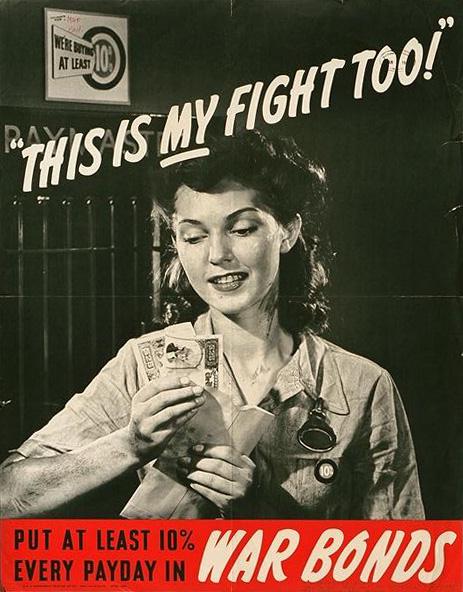
Today when I see a World War Two veteran, no matter where I encounter them, I make sure that I thank them for their service. They are part of an amazing generation of Americans who bequeathed those of us who live today so much, both during the war and after the war. Many millions served in the military, while many more served in war industries. All contributed to war bond drives, victory gardens and yes even increased taxes and decreased civil liberties to win the war.

The fact that Japanese Americans served in the most highly decorated Army units of the war despite their families being incarcerated in American versions of concentration camps is a testimony to sacrifice.

Likewise the efforts of African Americans who went to war despite being second class citizens and discriminated against under the Jim Crow Laws, which even Nazis like Hermann Goering recognized were only different from the Nazi anti-Semitic laws and persecution in manner of degree.

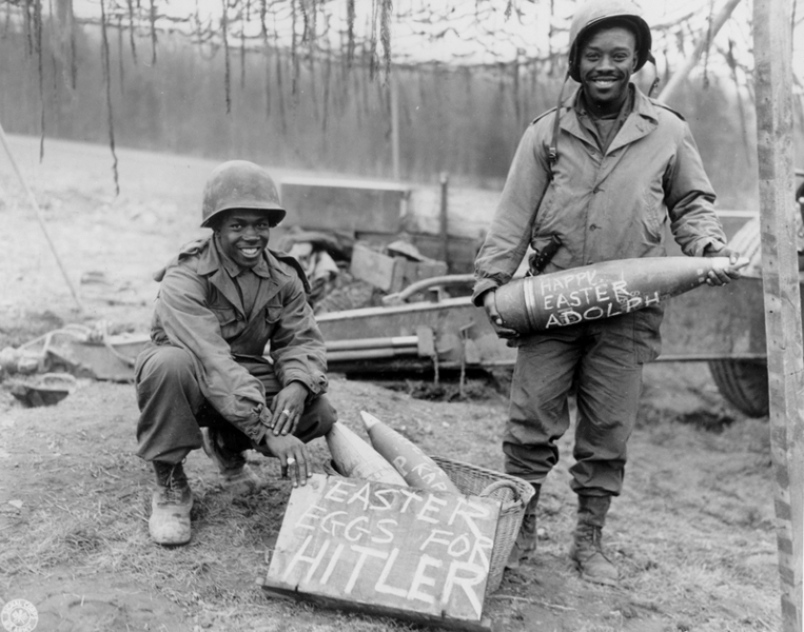
African American Artillerymen in France 1944

That was an amazing and unique generation of Citizen Soldiers. With few exceptions they were not the professional career soldiers, sailors, marines and airmen who serve today. Most would not have considered themselves “warriors.” They were there to do a job, win a war and go home. It was part of who they were as Americans.

How many today would do any of those things? Today we have well under one percent of the population who have served in the wars of the past 16 years, fewer who have served in combat or in a combat zone. Likewise the population in general and in particular the bankers, businesses, lobbyists and defense contractors are not asked to sacrifice anything, instead when the country was attacked the President and others decried the fact that war might prevent people from doing business, shopping or living a normal life. For God’s sake, were at war and that attitude would have been incomprehensible to those of the Greatest Generation who for the most part either went to war, or supported the war effort with their work and other contributions. For them patriotism was not a bumper sticker.

Rachel Maddow said it well in her book Drift: The Unmooring of American Military Power:

“When civilians are not asked to pay any price, it’s easy to be at war – not just to intervene in a foreign land in the first place, but to keep on fighting there. The justifications for staying at war don’t have to be particularly rational or cogently argued when so few Americans are making the sacrifice that it takes to stay.”

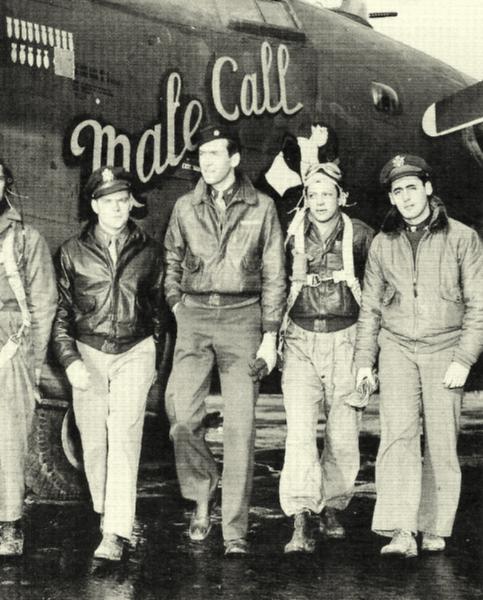
Jimmy Stewart and his Bomber Crew

Because of the sacrifice of people of the Greatest Generation I am grateful for them. I believe that we can learn so much from them. Even A-List Hollywood stars and professional sport heroes left their careers to serve their country. Clarke Gable, Audie Murphy, Glenn Miller, Jimmy Stewart, Bob Feller, Ted Williams, and Joe DiMaggio; just to name a few sacrificed major portions of their careers to serve. With the exception of Pat Tillman who died in a friendly fire incident in Afghanistan which was covered up by the Army and Bush administration, how many of the 1%, the A-List, or professional athletes can you name that have sacrificed their fortunes to serve in the front lines? I can’t name any others, but in the Second World War even the 1% had skin in the game so to speak, the Kennedy’s, Roosevelt’s and the Bush’s to name just a few.

I think that is why I am in awe of those of the Greatest Generation and why as the anniversaries of Midway and D-Day approach I am extra thoughtful, quite reflective and very thankful for those who through their sacrifice made so much of what we have today possible. What bothers me today is how few, especially of those who either advocate for war, lobby for it or profit from it no matter what their political, economic or religious persuasion is, offers to serve or pay for the cost of war.

Today those costs are borne by a tiny minority of Americans, military professionals of the all-volunteer military, both active duty and reserve who have endured deployment after deployment as the bulk of the nation stood by, mostly cheering them on. Of course as one who had his father serve in Vietnam and entered the military not long after had to endure the jeers of Americans, cheers are nice. They are much better than being called a “Nazi” for wearing your uniform to class. However, sometimes I think that many that cheer us on are able to do so because vicarious patriotism is easy. Vicarious patriotism anything, someone else serves, and someone else dies while they “support the troops” without actually doing anything.

Now please don’t get me wrong. There are a lot of good people who have never served in the military and who do care. There are men and women who take action to support the troops, both those serving and the veterans, including those disabled in some way by war. For them I am grateful, they donate time, money and personal effort to care, and I do not care if they are conservatives or liberals, Republicans, Democrats or Independents, religious or atheist. They are Americans who are doing something. Likewise I do not disparage those who take the time to learn the issues that the nation faces and the domestic policies that impact the country and in a healthy body politic it doesn’t mean that we have to completely agree with each other to be patriots. Such an understanding would have been unthinkable to our founders much less most of the Greatest Generation. Veteran’s issues are important but national security also involves so much more, everything from the infrastructure that the Greatest Generation had the vision and wherewithal to build to the environment.

I have been to Normandy as well as other World War II battlefields in Europe and the Pacific. I can only agree with Tom Brokaw who wrote: “there on the beaches of Normandy I began to reflect on the wonders of these ordinary people whose lives were laced with the markings of greatness.”

So, when you read anything I write or re-publish during the next couple of weeks, be it about D-Day, Midway or even Gettysburg, please read what I write though those lenses. It is not that I am bitter. I have chosen my life in the military, but I wonder why so few of us bear the burden. It is a question that every citizen must ask themselves and their political representatives.

Rabbi Roland Gittlesohn, a Navy Chaplain serving with the Marines, recalled Lincoln’s Gettysburg Address when gave a eulogy at the dedication of a cemetery on Iwo Jima that puts it all in perspective.

“Here lie men who loved America because their ancestors generations ago helped in her founding, and other men who loved her with equal passion because they themselves or their own fathers escaped from oppression to her blessed shores.

Here lie officers and men, Negroes and whites, rich men and poor . . .together. Here are Protestants, Catholics and Jews together. Here no man prefers another because of his faith or despises him because of his color. Here there are no quotas of how many men of each group are admitted or allowed. Among these men there is no discrimination. No prejudices. No hatred. Theirs is the highest and purest democracy.

Whosoever of us lifts his hand in hate against a brother, or who thinks himself superior to those who happen to be in the minority, makes of this ceremony and the bloody sacrifice it commemorates, an empty, hollow mockery. To this, then, as our solemn duty, sacred duty do we the living now dedicate ourselves: to the right of Protestants, Catholics and Jews, of white men and Negroes alike, to enjoy the democracy for which all of them have here paid the price.

We here solemnly swear that this shall not be in vain. Out of this and from the suffering and sorrow of those who mourn this will come, we promise, the birth of a new freedom for the sons of men everywhere.”

Since the last members of the Greatest Generation are passing away at an ever increasing rate and few will remain among us; I will ask you to ask yourself the question posed by the World War II veteran and hero John F Kennedy: “Ask not what your country can do for you; ask what you can do for your country.”

Peace

Padre Steve+

4 Comments

Filed under History, iraq,afghanistan, Military, national security, Political Commentary, World War II at Sea, world war two in europe, world war two in the pacific

A D-Day Requiem: The Beginning of the End of the Atlantic Alliance

imagesCA580JS0

Friends of Padre Steve’s World,

It is hard to believe now as we look at the serene beaches of Normandy that seventy years ago they were places of desperate combat in which hundreds of thousands of Allied and German soldiers, sailors, airmen and marine-commandos battled in a contest that helped free Europe of Nazi tyranny and changed the course of history. What they did helped change the world and brought about a measure of peace and security unparalleled in modern history as the free nations of the Atlantic Alliance charter a course for democracy and freedom. Unfortunately it seems that now the United States led by a President who cares nothing for the alliances so carefully built over the past seven decades has set a course to abandon that work, and our long time allies have come to realize that under this President that the United States is an unreliable partner. They have forgotten the words of Ronald Reagan who said: “From a terrible war we learned that unity made us invincible; now, in peace, that same unity makes us secure.”

The men who fought there were young, most in their twenties, but some in their teens or thirties as well as a smattering of senior leaders or old career soldiers in their 40s and 50s. When I first began to read about and study the battle a good number were still alive, most about the same age as I am now. Today, their ranks thinning they are passing into history. When the 80th anniversary is celebrated, the few that remain will all be about 100 years old, and even now, the youngest of these men are over 90 years old.

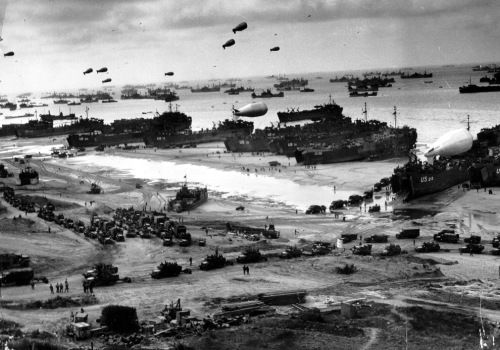
On June 6th 1944 the Allies invaded German controlled France on the beaches of Normandy. By that evening the Allied Expeditionary Force had landed six infantry divisions on five invasion beaches and the bulk of three airborne divisions on the approaches to those beaches. Near 175,000 Allied Soldiers, Sailors, Airmen and Marine Commandos were involved in the attack and nearly 10,000 would listed be as killed, wounded or missing by the end of the day, over half on Omaha Beach.

General Dwight D. Eisenhower sent them forward with this message:

You are about to embark upon the Great Crusade, toward which we have striven these many months. The eyes of the world are upon you. The hopes and prayers of liberty-loving people everywhere march with you.  In company with our brave Allies and brothers-in-arms on other Fronts, you will bring about the destruction of the German war machine, the elimination of Nazi tyranny over the oppressed peoples of Europe, and security for ourselves in a free world….

The names of the invasion beaches and the units involved have been immortalized in history, in film and literature. The American 101st Airborne “Screaming Eagles,” the “All American” 82nd Airborne Division and British 6th Airborne Division “Red Devils” made the largest night airborne drop and battled Germans, the elements as the struggled to reorganize on the heels of widely scattered drops.  The Americans battled the German 91st Airlanding Division and the crack 6th Parachute Regiment, while the British faced men of the 716th “Static” Infantry Division and battle groups of the nearby 21st Panzer Division.

On Sword Beach men of the 3rd British Division and 27th Armored Brigade teamed with the 1st Special Services Brigade composed of Army and Royal Marine Commandos made the assault, to their right on Juno Beach the Canadians of the 3rd Canadian Division, 2nd Canadian Armored Brigade and two Royal Marine Commandos (battalions) while to their right on the middle invasion beach, God Beach the British 50th (Northumbrian) Infantry Division and 8th Armored Brigade went ashore with elements of the British 79th Armored Division and the 47th Royal Marine Commando.

To the right of the British landed the American V Corps on Omaha Beach, the 1st Infantry Division, the famous “Big Red One” and the 29th “Blue and Gray” Infantry Division of the Virginia and Maryland National Guard. They would fight the most seasoned Germans on the beaches that day, the hardened combat veterans of the 352nd Infantry Division.  The battle of Omaha was nearly a disaster and a one point General Omar Bradley contemplated withdraw from the beach.  The American troops, including the men of the 2nd Ranger Battalion who scaled the cliffs of Point du Hoc to protect the beach from enfilade fire from German artillery mounted on the point, yet the German guns had not yet been emplaced and the Rangers fought a bitter battle against strong German resistance on that rugged mount.  On the far right the American VII Corps led by the 4th Infantry Division assaulted Utah Beach; fortunately the Americans landed away from their planned point of assault and faced little resistance. Had they landed in the correct location they might fared as their neighbors on Omaha Beach.

Offshore the venerable battleships HMS Warspite and HMS Ramillies and the USS Texas, USS Nevada and USS Arkansas provided fire support to the beaches aided by the Free Naval Forces of France, the Netherlands, Poland and Norway.  The French forces included the cruisers Montcalm and Georges Leygues.

Names such has St Mere-Eglise and Pegasus Bridge, the Merville Battery, Point du Hoc and Bloody Omaha remain etched in the minds of the dwindling number of surviving veterans as well as historians, military personnel and others that take the time to remember the sacrifices of these men.

The Men came from all parts of the United States and the British Commonwealth. Additionally personnel from France and other countries occupied by Nazi Germany were represented in the land, air and naval forces involved.  For the French, humiliated by their defeat in 1940 and divided by the Vichy and Free French divide were determined, despite their small numbers to liberate their homeland.

They were opposed by four German Divisions, a Luftwaffe Fallschirmjaeger regiment and elements of the 21st Panzer Division.  The Germans with nothing in the way of air support and no significant naval forces were on their own. Hitler had refused Rommel’s request to deploy Panzer divisions near the beaches and was not awakened when word came of the invasion.  German soldiers fought with considerable valor and would do so throughout the Normandy campaign, even if they fought for a regime that was evil at its core.

As the battle continued President Franklin Delano Roosevelt addressed the nation and asked all Americans to join him in this prayer:

My Fellow Americans:

Last night, when I spoke with you about the fall of Rome, I knew at that moment that troops of the United States and our Allies were crossing the Channel in another and greater operation. It has come to pass with success thus far.

And so, in this poignant hour, I ask you to join with me in prayer:

Almighty God: Our sons, pride of our nation, this day have set upon a mighty endeavor, a struggle to preserve our Republic, our religion, and our civilization, and to set free a suffering humanity.

Lead them straight and true; give strength to their arms, stoutness to their hearts, steadfastness in their faith.

They will need Thy blessings. Their road will be long and hard. For the enemy is strong. He may hurl back our forces. Success may not come with rushing speed, but we shall return again and again; and we know that by Thy grace, and by the righteousness of our cause, our sons will triumph.

They will be sore tried, by night and by day, without rest — until the victory is won. The darkness will be rent by noise and flame. Men’s souls will be shaken with the violences of war.

For these men are lately drawn from the ways of peace. They fight not for the lust of conquest. They fight to end conquest. They fight to liberate. They fight to let justice arise, and tolerance and goodwill among all Thy people. They yearn but for the end of battle, for their return to the haven of home.

Some will never return. Embrace these, Father, and receive them, Thy heroic servants, into Thy kingdom.

And for us at home — fathers, mothers, children, wives, sisters, and brothers of brave men overseas, whose thoughts and prayers are ever with them — help us, Almighty God, to rededicate ourselves in renewed faith in Thee in this hour of great sacrifice.

Many people have urged that I call the nation into a single day of special prayer. But because the road is long and the desire is great, I ask that our people devote themselves in a continuance of prayer. As we rise to each new day, and again when each day is spent, let words of prayer be on our lips, invoking Thy help to our efforts.

Give us strength, too — strength in our daily tasks, to redouble the contributions we make in the physical and the material support of our armed forces.

And let our hearts be stout, to wait out the long travail, to bear sorrows that may come, to impart our courage unto our sons wheresoever they may be.

And, O Lord, give us faith. Give us faith in Thee; faith in our sons; faith in each other; faith in our united crusade. Let not the keenness of our spirit ever be dulled. Let not the impacts of temporary events, of temporal matters of but fleeting moment — let not these deter us in our unconquerable purpose.

With Thy blessing, we shall prevail over the unholy forces of our enemy. Help us to conquer the apostles of greed and racial arrogances. Lead us to the saving of our country, and with our sister nations into a world unity that will spell a sure peace — a peace invulnerable to the schemings of unworthy men. And a peace that will let all of men live in freedom, reaping the just rewards of their honest toil.

Thy will be done, Almighty God.

Today we remember those men who were a part of the Great Crusade to liberate Europe from the Nazi oppressors. On the 40th anniversary of the invasion President Ronald Reagan eulogized those who fought and died for the freedom of the world:

Today, in their memory, and for all who fought here, we celebrate the triumph of democracy.  We reaffirm the unity of democratic people who fought a war and then joined with the vanquished in a firm resolve to keep the peace.

From a terrible war we learned that unity made us invincible; now, in peace, that same unity makes us secure. We sought to bring all freedom-loving nations together in a community dedicated to the defense and preservation of our sacred values.  Our alliance, forged in the crucible of war, tempered and shaped by the realities of the post-war world, has succeeded.  In Europe, the threat has been contained, the peace has been kept.

Today, the living here assembled:  officials, veterans, area citizens, pay tribute to what was achieved here 40 years ago.  This land is secure.  We are free.  These things are worth fighting and dying for.

President Obama continued in the tradition of President Reagan when he noted on the 70th anniversary of the landings:

“We are on this Earth for only a moment in time.  And fewer of us have parents and grandparents to tell us about what the veterans of D-Day did here 70 years ago.  As I was landing on Marine One, I told my staff, I don’t think there’s a time where I miss my grandfather more, where I’d be more happy to have him here, than this day.  So we have to tell their stories for them.  We have to do our best to uphold in our own lives the values that they were prepared to die for.  We have to honor those who carry forward that legacy, recognizing that people cannot live in freedom unless free people are prepared to die for it.”

The words of Roosevelt, Reagan, and Obama are powerful reminders of what was accomplished on that fateful day, June 6th 1944. I hope and pray that as we remember that day and those brave men that we will never forget. Sadly, it appears that President Trump, his advisors, and many of his followers have forgotten just how important this is and I’m sure that if he were still alive that Ronald Reagan himself would agree with me.

Peace

Padre Steve+

3 Comments

Filed under History, News and current events, Political Commentary, world war two in europe

People Cannot Live in Freedom Unless Free People are Prepared to Die for It: D-Day at 73

img_0061

Friends of Padre Steve’s World,

I find the days around Memorial Day and the anniversaries of the Battle of Midway and the D-Day landings to be a time when I become quite reflective about what it means to be a career American military officer, combat veteran, and the son of a Navy Chief who was also a combat veteran. I am also an uncle to a young man who likely will be enlisting in the Army in the coming weeks.

When he spoke on Omaha Beach during the ceremony marking the 70th Anniversary of the D-Day landings President Barak Obama said:

“We are on this Earth for only a moment in time.  And fewer of us have parents and grandparents to tell us about what the veterans of D-Day did here 70 years ago.  As I was landing on Marine One, I told my staff, I don’t think there’s a time where I miss my grandfather more, where I’d be more happy to have him here, than this day.  So we have to tell their stories for them.  We have to do our best to uphold in our own lives the values that they were prepared to die for.  We have to honor those who carry forward that legacy, recognizing that people cannot live in freedom unless free people are prepared to die for it.”

All of my adult life I have striven to uphold those values that those men were prepared to die for, and for almost 36 years of Army and Navy service that I have been prepared to do so at a moment’s notice.

Seventy-three years ago the liberation of France began on the beaches of Normandy.  Soldiers from 6 Allied Infantry and 3 Airborne Divisions supported by an Armada of over 5000 ships and landing craft and several thousand aircraft braved weather, heavy seas and in places fierce German resistance to gain the foothold on beaches named Omaha, Utah, Gold, Sword and Juno.  Over the next seven weeks the Allied soldiers advanced yard by yard through the hedgerows and villages of Normandy against ferocious German resistance before they were able to break out of the lodgment area and begin the drive across France. In his D-Day message to his troops General Dwight Eisenhower reminded them that their mission was the elimination of Nazi tyranny over oppressed peoples of Europe, and security for ourselves in a free world.” There are still those in the world who subject their people to tyranny and attempt to destabilize and overthrow the governments of liberty loving peoples, likewise Eisenhower knew that security for ourselves meant close alliances with those who have our values and not isolating ourselves from the world.

The fighting was bloody, most American, British and Canadian infantry battalions and regiments suffered nearly 100% casualty rates in Normandy.  Replacements were fed in at a cyclic rate to make up the losses even as fresh divisions flowed ashore, but the losses were terrible.  By the time the landings took place, the British having been at war for nearly five years were bled out.  They had little left to replace their losses.  From Normandy on the British were losing combat power at a rate that they could not make up.

For the Americans there was another problem.  The US High command decided to limit the Army to 90 Divisions.  Many of these were committed to the Pacific and Mediterranean theaters.   Likewise, American Infantry units were generally made up of the lowest caliber of recruits, led often by the poorest officers; the best went to either the Air Corps or technical branches of the Army.

Now this is not to criticize veterans, but it is a factor in the campaign.  Most US Infantry Divisions with the exceptions of those previously blooded in North Africa and Sicily often performed badly in action.  Some, after being manhandled by the Germans had their leadership replaced and became excellent combat units.  However, every new division that arrived in France after D-Day always got the worst of their initial engagement against German forces.

While performance suffered there was another problem for the Americans.  With the limitation in number of divisions, they stopped building infantry divisions, upon whom the bulk of the campaign depended. Thus they had little in the way of trained infantry replacements to make up heavy losses in Normandy.  By late 1944 during the Battle of the Bulge the American infantry crisis was so bad that 30,000 Air Corps candidates were trained as infantry and soldiers support units such as Ant-Aircraft battalions were used to bolster infantry units.

Had the Germans been able to hold out and had they not been bled white by the Red Army on the Easter Front, had they not lost the nearly their entire Army Group Center in the Red Army offensive of 1944 it is conceivable that the British and American offensive in the West would have ground to a halt for lank of infantry in 1945.  In spite of this there was no lack of individual courage among the troops engaged; the courage and sacrifice of all who fought there should not be forgotten.

The human toll among the combatants both Allied and German, as well as the local populace was especially traumatic.  While the American, Canadian and British people are keen to remember the sacrifices made by our soldiers we often forget the toll among the French civilian population of Normandy as well as the German soldiers, mostly conscripts, sacrificed by the Nazi regime.  Normandy suffered more than any part of France during the liberation.  In the months leading up to D-Day Allied Air Forces unleashed hell on Normandy to attempt to lessen potential German resistance.  The Allied Naval bombardment added to the carnage ashore and once the campaign began the combined fires of both Allied and German forces devastated the region.  Whole cites such as Caen were destroyed by Allied Air forces and an estimated 30,000 French civilians were killed during the Normandy campaign, 3000 on D-Day alone.  I think it can be said that the blood of the civilians of Normandy was shed for the freedom of all of France.

The campaign in Normandy was one of the most viciously contested in western military history.  German forces, especially Paratroops of the 2nd, 3rd, 5th and 6th Fallschirmjager Divisions, German Army Panzer Divisions such as the 2nd, 21st, 116th and Panzer Lehr and those of the Waffen-SS, especially the 1st, 2nd and 12th SS Panzer Divisions held the line against ever increasing Allied forces.  As they sacrificed themselves Hitler refused to commit more forces to Normandy and insisted that his Army contest every meter of ground.  He forbade his commanders to withdraw to more defensible positions along the Seine.

Hitler’s decisions actually shortened the campaign.  Whatever the crimes of the Hitler Regime and Nazism, which were among the most heinous in history, one can never question the valor, courage and sacrifice of ordinary German soldiers.  For those Americans who lump all Germans who fought in World War II with the evil of the Nazi regime, please do not forget this fact:  There are those today, even in this country that make the same charge against Americans who have fought in Iraq and those at home and abroad who have labeled the US as an aggressor nation. As President Trump continues to go his own way to make the United States a pariah nation we have to be very aware of the costs of it and also remember that the Americans who went ashore on D-Day did so to help defeat a pariah nation that had flaunted every standard of justice in attempting to make Germany Great Again. When you judge others, know that the same standard will be applied to you someday and it is possible that our day may come sooner than we think. It is as Justice Robert Jackson who served as the Chief Prosecutor at the Nuremberg War Crimes Tribunal wrote:

“If certain acts of violation of treaties are crimes, they are crimes whether the United States does them or whether Germany does them, and we are not prepared to lay down a rule of criminal conduct against others which we would not be willing to have invoked against us.”

Normandy was a near run thing for the Allies.  First the weather almost delayed it by 2 to 4 weeks.  Had that happened the Germans might have been even better prepared to meet the invasion.  Likewise, the Red Army’s devastating offensive which annihilated Army Group Center in June kept the Germans from transferring additional forces from the Russian Front to Normandy.  On D-Day itself there were a number of times where Lady Luck, or maybe the Deity Herself, saved the Allies from disaster.

Any person who has seen Saving Private Ryan, The Longest Day or Band of Brothers knows a little bit about how close Overlord came to failure.  Allied Airborne units were dispersed throughout the region after they drooped.  Many units were not fully operational for more than a day as they sought to organize themselves and gather their troops.  At Omaha Beach the Americans had not counted on the presence of the first rate German 352nd Infantry Division.  This division, despite being pounded by naval and air forces almost cause General Bradley to withdraw from Omaha.  At Utah the soldiers of the 4th Infantry division escaped a similar mauling by landing on the wrong beach.  Had they landed at the planned beaches they would have ran into the same kind of resistance from well dug in German forces.  At Gold Juno and Sword British forces benefited from confusion in the German command which kept the 21st Panzer Division from descending on the British forces and quite possibly splitting the British zones.

The Allies benefited from the absence of Field Marshall Erwin Rommel, Commander of Army Group B who because of the ad weather assumed no invasion was possible and traveled to German to celebrate his wife’s birthday.  Finally, and perhaps most important they benefited by Hitler’s refusal to immediately commit forces, including his Panzer reserve to defeat the invasion at the beachhead.

For those who fought in Normandy and those civilians who lived through it the memories are still vivid. Many suffer the effects of PTSD, grief and other wounds, physical, emotional and spiritual.  When one is exposed to the danger and destruction of war, the smell of death, the sight of burned out cities, vehicles and the suffering of the wounded and dying, it makes for a lifetime of often painful memories.

For some of the German, British and American veterans, the struggle in Normandy has given way to long lasting friendships.  Many of those who fought against the Allied onslaught became fast friends after the war. Those who fought against each other were soon allies as part of NATO and soldiers of nations which were once bitter enemies serve together in harm’s way in Afghanistan.  The generation that fought at Normandy is rapidly passing away, their numbers ever dwindling they remain a witness to courage, sacrifice and reconciliation.

In the end it is reconciliation and healing that matters. Some scars of war never pass away; some memories are far too painful to release.  Yet we who serve often strive to reconcile.  In 2002 while deployed at sea for Operation Enduring Freedom I was an advisor to a boarding team from my ship.  It was our job to make sure that impounded ships which were breaking the UN embargo on Iraq were not in danger of sinking, and that their crews had food, water and medical care.  Since many of these ships remained at anchor for 2-4 weeks in the heat of the Arabian Gulf, this was important.

The delays imposed by UN rules sometimes meant that the sailors of these ships grew resentful.  It was my job to spend time with the Masters of these ships to keep things calm and work out any issues that arose.  On one of these ships I met an Iraqi merchant skipper.  The man was well traveled, educated in the U.K. in the 1960s and in his career a frequent visitor to the US. In 1990 he was the senior captain of the Kuwaiti shipping line.  Then Saddam Hussein invaded Kuwait.  As a result of this when Kuwait was liberated he lost his job.  His nation was an international pariah.  Since his life was the sea he took up the only job possible to support his family, what he knew best, captaining ships.  He was most apologetic for the trouble that he and others like him caused us.  We shared much during those visits.   One of his daughters was in medical school and other children in university.  He longed for the day when Iraq would be free.  On our last talk before his ship was released he remarked to me “I hope one day we will meet again.  Maybe someday like the American, British and German soldiers after the war, we can meet in a pub, share a drink and be friends.” 

I too pray for that, especially after my tour in Al Anbar five years after I encountered that Iraqi Merchant Captain.  Maybe someday we will. I thought of him almost every day that I was in Iraq. I only hope that he and his family have survived the war, the continuing violence in Iraq and are doing well. There is hardly a day that goes by that I do not think of this man or the Iraqis that I had the honor of serving alongside in Al Anbar in 2007 and 2008.

President Obama remarked in Normandy last week about the veterans of the 9-11 Generation of service members, of which I and so many others like me are part:

“And this generation — this 9/11 Generation of service members — they, too, felt something.  They answered some call; they said “I will go.”  They, too, chose to serve a cause that’s greater than self — many even after they knew they’d be sent into harm’s way.  And for more than a decade, they have endured tour after tour.”

The survivors of the D-Day landings and those on the other side of the hill are continuing to pass from the bonds of this earth and into eternity. We owe it to them and to the world to make what they sacrificed themselves to do into reality, battling tyranny and striving for peace and security.

Peace,

Padre Steve+

Leave a comment

Filed under History, Military, world war two in europe