Category Archives: Military

Going to War: Flying Into Baghdad and a Blast from the Past

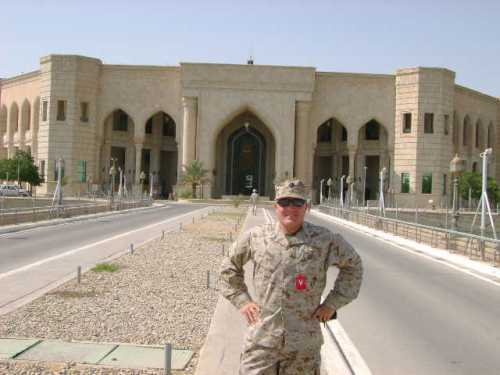
050Outside the Al Faw Palace, Camp Victory the HQ of US Forces and Former Haunt of Saddam Hussein, the Palace was Named after the Victory of the Iraqis over the Iranians on the Al Faw Peninsula toward the end of the Iran-Iraq War.  The Palace sits in the middle of a lake

We made the trip from Camp Virginia to the Ali Al Salim airbase to catch our flight to Baghdad.  As usual there was the seabag drag to the waiting baggage trucks, an accountability formation in the blazing sun and the shuffle, this time in full protective gear to our buses.  Riding in a foreign tour bus in full “battle rattle” is even more uncomfortable than the regular ride.  Packed tightly into the buses the air conditioning of which did little to help after coming in out of the heat, we took our places jammed into the bus and once again with armed personnel in the bus and convoy escorts as we pulled out of the high security entry control point at Camp Virginia and drove to Ali Al Salim.  The trip was uneventful and rather boring as there is not much to see between the two bases except sand and occasional nondescript buildings.

Ali Al Salim is a large Kuwaiti and American air base and logistics hub for air movement operations in the Arabian Gulf.  We arrived there and once again formed up, went through a staging area where were we were able to pick up some water from one of the ubiquitous pallets of bottled water and waited inside the terminal.  Some folks grounded their packs and used them as pillows or recliners, others found seats in the waiting area and others looked around to see how the Air Force lived.  A couple of TVs set to AFN played as we chatted, wandered or dozed.  It was not long before we were moved to yet another staging area and began to get our aircraft briefing and manifested for the flight.  Our group that had began the trip at Fort Jackson was a lot smaller now as the sailors who had gone on to the Horn of Africa, Afghanistan and those assigned to Kuwait were no longer with us.  As we trundled down the tarmac we were guided into position directly behind the aircraft.  We filed into a waiting C-17 Globemaster and sat down in airline style passenger seats which can be added or subtracted by in 10 passenger pallets as needed for the particular mission.  Additional permanent seats lined the bulkhead.  Our gear was loaded at the aft end of the aircraft as we took our seats.  We pretty much filled the seating which at maximum load is 134 passengers and we waited for the aircraft to load.  A loadmaster came through to check that we all were wearing our personal protective gear and had our seat belt fastened.  The C-17 unlike many military aircraft has at least an asthmatic air conditioning capability once the cargo door is closed.   Unfortunately when the door is open it is pretty much like whatever conditions are outside, in our case 130 degree heat with the exception that the sun was not beating down on our heads and that there was no air movement.  It was just a tad hot inside the aircraft.  Eventually the cargo ramp and door were closed and the aircraft prepared for takeoff.  With the door closed we began to feel a little bit of relief from the air conditioning.

For a large cargo aircraft the C-17 has a pretty smooth take off, the four Pratt and Whitney PW2040 engines producing 40,400 pounds of thrust each pushing the hug aircraft which is capable of transporting an M1A2 Abrams Main Battle Tank or 3 Bradley Fighting vehicles into the blue Kuwaiti sky.  In a few minutes the pilot announced that we had crossed into Iraqi Airspace and that it would take us about 45 minutes to arrive in Baghdad.  When the announcement was made there was an almost collective deep breath knowing that we were now going into the war, this was no longer in our future we were there.  I could feel the adrenalin being released into my body and can remember how quickly I became instantly aware of every noise or movement on the aircraft.

Arriving in the skies above Baghdad International Airport our aircraft circled and received permission to land.  Due to the possibility of enemy fire the approach to airports in Iraq is not like you would experience at a commercial airport in the United States, Europe or most other parts of the world.  Unlike most airports where there is a long and slow approach to the runway the descent is a steep spiral as the aircraft comes down from altitude to land.  If the airfield is under fire the aircraft will not land.  Once we were down we had been briefed to be able to move at a brisk pace in case the airfield came under fire, something that was happening on a relatively frequent basis in 2007.

The tail ramp and door opened as if they were a gigantic rearward facing mouth, or maybe like one of those weird fish that have teeth in their ass.  I think I remember some weird science show that talked about such a creature, if there isn’t one there should be.  As soon as the ass-backward maw opened a rush of hot air killed any semblance of what had been an almost bearable air conditioned compartment. Gear in hand we filed out of the aircraft heading for the ramp. Just for your information, it is easy to slip on these ramps; I came close to such an event but caught myself just in time so I didn’t go ass over tip down the ramp.  Nelson certainly would have made me pay for such a breach of protocol.  As we left the aircraft a ground crewman directed us out of the jet blast area and another led us to the terminal.  At the terminal we were greeted by Staff Sergeant Assi, the Chaplain assistant for the Iraq Assistance Group and an RP assigned to the Multi-National Corps Iraq Chaplain Office.  Sergeant Assi was a mobilized reservist  originally from Nigeria.  At least here our gear was palletized and was brought to a gear staging area.  Once it arrived we gathered a total of 4 EOD Issue super-seabags, two regular seabags, our packs, Nelson’s rifle case and my computer bag.  We were assisted by Sergeant Assi and the RP who helped load our stuff into the back of the white Chevy SUV that they were driving.  One thing about military vehicles in Iraq that are not tactical vehicles  is that there is a strong chance that they are the color white. The white paint contractor at GM must be making a killing on vehicles destined for the Middle East.  Once we were checked off the manifest as having a ride were able to depart walking out through rows of Califonia and Jersey barriers.

The ride was interesting as we wove our way around the ever present California and Jersey Barriers as well as “HESCO’s,” which are large wire and canvas containers standing anywhere from5 to 8 feet tall filled with dirt, rock and sand.  All of these are designed to minimze the effects of incoming ordnace by preventing the explosive force of them and teh associated shrapnel from spreading outward. We transitioned through a number of checkpoints where armed soldiers kept a wary eye out on our way to Camp Victory.  Victory which is the home of Multi-National Force and Multi-National Corps Iraq lies next to  Camp Liberty.  They are on the north side of Baghdad International Airport.  As we looked across the runway the only aircraft visible were military transports and contracted cargo carriers.  Unlike a major airport its size anywhere else in the world Baghdad did not have regularly scheduled airline service from any major carrier yet.   We wound our way around the compounds which blended together almost as one, much like the suburbs of the San Fernando Valley in Los Angeles.  Passing palaces and villas that ringed a lake in the center of the compound we continued on.  In the center of the lake connected by a causeway sat the massive Al Faw Palace, built by Saddam Hussein to commemorate Iraq’s victory in retaking the Al Faw Peninsula at the close of the Iran-Iraq War, a victory that resulted in Iran deciding to cut a peace deal with the Iraqis.  Despite a Shi’te majority in Iraq there is no love lost between Iraqis and Iranians.  Iraqi Arabs refer to the Iranians almost contemptuously as the Persians. This goes back centuries to the times when Persian occupied parts of Iraq and treated the Arabs badly.

We turned down an asphalt road which quickly became a packed clay and gravel road over which a tanker truck sprayed water to keep the dust down.  into a pulled up to a wooden building near a tent city where personnel coming in and out of theater were billeted at Camp Victory.  Row upon row of tents, each surrounded by a HESCO barriers were to our right. The ground was a mixture of hardened clay and rock which when driven over or walked upon emitted a cloud of dust which Sergeant Assi told us turned to a sticky goo which is almost impossible to get off of boot when it rains. Overhead helicopter gunships patrolled the skies occasionally flying quickly to the sounds of gunfire just off the base not far from where we were. In the background we could hear the sound of heavy machine guns and automatic weapons.  Not far from our billeting area sat a Navy Manned CWIS, or as we call tehm Sea Whiz.  This is a 20mm gatling gun which directed by radar is designed to shoot down incoming missiles or rockets. Nelson and I looked at each other and almost on cue he said, “Chaps I think there might be a war going on out there.”  I looked back and said, “Don’t you know it partner.”   The area to the east of the tent city was bordered by a line or shower trailers and heads, all protected by the large 15 foot high California barriers.  To the north of the tents lay a large Dining facility or as the Army calls them, a DFAC.  After getting signed in we drew an odd mixture of linen for our beds. I ended up with a couple of sheets, pillow cases and a multi-colored comforter. If I recall Nelson got some superhero on his blanket, which suits him fine as he is a big comic fan and can tell you more than you can imagine about all the different super-heroes. Instead of being together Nelson was assigned to a tent for NCOs and I ended up further away in a tent for field grade officers.

Once we had secured our stuff we met back together and walked to the DFAC for dinner.  This DFAC was not as large as it appeared as it had a large protective roof designed to keep mortar shells and rockets from impacting the building itself.  Two Ugandan soldiers working for security on the base checked our ID’s after which we washed our hands as we entered the building.

Upon entry we were almost overwhelmed by the amount of food present.  These DFAC’s were definitely feeders and the number of soldiers that should have been wearing wide-load signs across their asses was amazing.  But then who could blame them, many were on a second or third trip to Iraq of 12-15 months each. Maybe for the first time they were not in some isolated FOB with a poor quality of life, in a place which all things considered safe except for the occasional incoming rockets and mortars.  The quality of the food was better than in Kuwait as was the dinning area.

As I was finishing stuffing my gear underneath my bed a young Army Major came into the tent.  He looked at me and I looked at him as if we had met before and we greeted on another politely.  I saw his shoulder patch which identified him as a member of the Maryland Army National Guard.  We struck up a conversation and I asked to what unit he was assigned.  He replied  that he worked at the National Guard Bureau and had been attached to the Maryland unit as an operations officer for the deployment.  He remarked that I looked somewhat familiar and I asked if he had ever served in the Virginia National Guard.  He replied that he had and I asked what unit.  His response about floored me “1st Battalion 170th Infantry” located at Fort Belvoir, Virginia just south of D.C.  I told him that I too had been in the battalion and then he figured out where he knew me from.  With a look of near amazement on his face he replied “You were our Chaplain back in 1995!”   I patently acknowledged this fact  while he continued saying that he had been the TOW Anti-Tank Missile  Platoon Leader in our Headquarters Company. Our conversation meandered through old times at AP. Hill Virginia, talking about our careers, people that we knew and life in general.  After a couple of hours we both realized that we needed to take care of a few personal things to settle in for the night.  Eventually my old lieutenant fell asleep and I began what was to become a persistent pattern of insomnia which plagues me to this day.  Since I couldn’t get to sleep I walked through the darkness to the DFAC which had a late meal.  I was standing  in line amid a few Americans, some British soldiers and contractors when Nelson appeared beside me. He said “Hey boss, can’t you sleep?”  I said “nope” he said “me too, so I thought I would get some chow in this place.”  We had our meal together and when we were done picked our way through the darkness over the rough ground to our tents aided by our red lens flashlights.  After looking for about 5 minutes we found Nelson’s place and I headed off to my hooch only becoming disoriented once. Patently the Deity Herself must have kept me from tripping on a tent rope or some hole in the ground and I arrived back in my place at about 0145 and finally got to sleep.

Leave a comment

Filed under iraq,afghanistan, Military, Tour in Iraq

Operation “Dachs” My First Foray into the Genre “Alternative History”

For a change of pace I have pulled up something that one of my professors allowed me to do in my Military History Masters Program.  This was my first foray into historical fiction, or as it is known sometimes as “Alternate History.”  This is actually a growing genre among military writers and others who have vivid imaginations as to what might have happened if….

I hope you enjoy.  Peace, Steve+

This is an alternative history of how the Germans might have avoided the disaster at Kursk. It looks at what might have happened if an actual assassination attempt on Hitler had succeeded in March 1943 and how Manstein might have been able to execute the “backhand” strategy that he favored using a mobile defense.  This is predicated by Hitler’s death, based on Hitler’s actions and control of operational decisions Manstein would never have been allowed the freedom to conduct operations in this manner.  In eliminating Hitler I have also included personnel changes and the overall strategy for the German High Command, and the probable response of Stalin to Hitler’s death had it occurred in the spring of 1943. I have tried to be faithful to known historical opinions and actions of the participants and likely reactions to such a situation although one cannot predict precisely what people would have done.  Thus I have documented the article with footnotes as if it were an actual history. It would have been interesting to be able to lengthen this and included sections on tactical actions based on memoirs of German and Russian soldiers.

hitlers fw-200Hitler’s FW-200 Prior to his Ill-fated vist to Army Group Center

Background: The Strategic Situation Spring 1943

In April 1943 the German High Command faced a decision on which the fate of Nazi Germany would hinge, but for the first time in the war it was not under the thumb of Adolf Hitler. Following Manstein’s counter-stroke following the Stalingrad disaster there was considerable pressure to follow up with that success with a continued offensive. Manstein himself had proposed this but Field Marshal Von Kluge refused to agree to an immediate offensive because he felt his troops needed rest and refitting. On March 13th Hitler flew out to meet with Von Kluge at Army Group Center HQ at Smolensk.  On the flight back Hitler’s FW-200 was racked by an explosion crash landing near Minsk, taken down by a bomb planted on the plane by Colonel Henning Von Trescow of Kluge’s staff.[i] While Hitler survived, he remained in critical condition, barely alive at a SS hospital until his death on 20 April 1943, his 54th birthday. The crash landing was reported by the escorting ME-109s of JG-53, and a Alarm Company from a Security Division at Minsk rescued Hitler but were driven off the crash site by a large force of Soviet Partisans who destroyed the aircraft and any evidence to the cause which the escorting fighters attributed to mechanical problems.  There were no other survivors. Von Kluge, expecting to be implicated the Fuhrer’s death committed suicide after visiting troops on the front line, and was succeeded at Army Group Center by Field Marshal Model the commander of 9th Army. The other conspirators were frozen into inaction when Hitler survived the crash and made no attempt to take over the government, realizing that “our plans for seizing power in Berlin and other large cities were still not adequate to the task.”[ii] In the absence of Hitler Reichsmarschall Goering, Hitler’s designated successor, took action to secure his power and using contacts in the GESTAPO accused Himmler of treason for making contact with Neutral intermediaries in Sweden[iii] and replaced him with SS General Kurt Wolfe, and reappointed Rudolf Diels, the former head of the GESTAPO when it was still under his control[iv], to head it again.  Himmler attempted to flee and was caught near Luneburg when he committed suicide with a cyanide capsule before he could be interrogated. Other potential rivals were eliminated; Martin Bormann, who Goering hated, was arrested on charges of exceeding his authority, embezzlement, and harming the war effort and was executed.[v] Joseph Goebbels swore his loyalty to Goering even before Hitler’s death.  He and Albert Speer were directed to arrange the state funeral for the late Fuhrer. Berlin Radio announced the Fuhrer’s death on the 21 April, Hitler’s body was prepared and lay in state at the Chancellery.   A period of mourning was declared 21 April to 1 May on which the State Funeral took place. On 2 May Goering announced that Field Marshal Von Rundstedt was the new Chief of OKW and would coordinate strategy on all fronts. The next day Goering called together a meeting of the heads of OKH, OKW, the Inspector General of Panzer Troops, and the commanders of the Eastern Front Army Groups, Western Europe and Africa as well as Reichsfuhrer Karl Wolff, Admiral Donitz and Field Marshal Von Richthofen[vi] representing the Luftwaffe to decide on a course of action for the summer. It was the first time that all had been called together to discuss the overall situation since Barbarossa began in 1941, and the first true attempt to formulate a grand strategy during the war.

Options and Decision: The Zossen Conference 3 May 1943[vii]
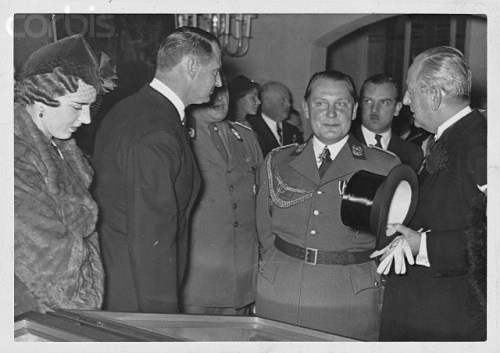
HU010919Goering meeting Diplomats following Hitler’s State Funeral

Herman Goering looked up from the maps spread out on the conference table.  He looked surprisingly fit, somehow between the crash of Hitler’s aircraft and his death he had pulled himself together and out of his drug induced malaise.  It was as if he again had a purpose. Field Marshal Von Rundstedt now Chief of OKW following Goering’s relief of Field Marshal Keitel, and General Jodl had just finished briefing the situation in western and southern Europe, following briefings by Colonel General Zeitzler of OKH, the Inspector General of Armored Troops, General Guderian and Field Marshal Von Manstein of Army Group South.  Albert Speer briefed tank and aircraft production numbers while the Chief of the Army personnel office noted the requirement for 800,000 replacements “but even the most ruthless call-up was able to produce only 400,000.”[viii] Looking from the table he spoke: “Gentlemen, the situation is critical and I have to admit that I have thought so for a number of months but have been unable to speak out.   Our political situation is perilous, the Italians are ready to abandon our cause. Our forces in North Africa will soon be unable to hold out as our Italian friends have let us down again.[ix] I expect that if Jodl and Kesselring are right about Allied intentions that we will have our hands full in the west shortly.  Kesselring and Arnim, you need to evacuate as many German soldiers from Africa as possible,[x] use all air and naval forces that you can, I know it will be difficult, especially with the heavy losses we have taken in transport aircraft and the pathetic Italian Navy.”  Goering paused, his gaze passing around the room.  “In the west we need to assume that the Allies will invade and the ‘very real danger that the enemy may turn against Brittany and Normandy,’ Field Marshal Rommel will take command of OB West to build up the Atlantic Wall in these sectors.”[xi] “Zeitzler, Manstein, we need to shore up the eastern front.”

“Herr Reichsmarschall, the Fuhrer had approved the plan called ZITADELLE, to attack the Russians here in the Kursk salient.” responded Zeitzler.[xii] “We should be ready to begin the offensive this month.”  Goering raised his hand stopping Zeitzler.  “I know, but I have considered that plan and I cannot support it. Richthofen briefed me on it prior to the Fuhrer’s death and general, we must have another plan, and an attack on Kursk is so obvious the Russians will be ready to meet it.  I have considered what the General Guderian and Minister Speer said regarding tank production and the state of the Panzer arm.  I cannot approve Zitadelle, but we must find a way to deal the Russians a defeat without squandering our strength attacking such an obvious target. Model too is dubious of the prospects; he believes that the Russians know our intentions and has requested a delay to strengthen his forces.”[xiii] “Reichsmarshall.” chimed in Jodl. “You are correct, the premature commitment of central reserves in such an offensive will not help our cause, in fact only local success is what can be expected from Zitadelle.”[xiv]

“But Reichsmarshall, we must recapture the initiative in the east, we must take the offensive!” retorted Zeitzler. “Our new units of Panthers and Tigers will give us a decisive technical advantage.”[xv] Guderian now joined in. “But the Panthers still have many technical problems, it would be better to wait until they are worked out before we commit them to a major offensive, and besides, how many people do you think even know where Kursk is?”[xvi]

“Zeitzler, I appreciate your zeal.” Interrupted Goering, “But Jodl and Guderian are correct, even a successful attack at Kursk will not alter the strategic situation. We must work to stave off defeat.  Manstein has a plan that may help, there is some risk, but I see no other way. An offensive at Kursk would require tanks and aircraft that must be used to combat the Allied bombing of the Reich and to safeguard withdraw of our units from Africa, it would force us to commit everything with little gain.” Goering paused and said to Manstein, “Go ahead Manstein.”

“Reichsmarshall, Gentlemen.  Our situation in the east is not hopeless, in March I felt that an immediate offensive would succeed in pinching off the Kursk bulge, but I think now that the moment of opportunity has passed for such an attack.  Instead we should fight a defensive battle of maneuver as called for by Truppenführung that we have developed from the days of the Reichswehr.  We should build up our forces; give ground where we can, and when we have the chance strike the enemy on the backhand, as we did at Kharkov.”[xvii]

Zeitzler jumped in. “But how can we do that? If we don’t strike now while we have the opportunity the Russians will grow stronger, and how can we know where they will strike?”[xviii]

“General Zeitzler, the Russians are already building up heavy armored forces in the area of Kursk, and diverting forces from other sectors of the front to that area.  The south offers them the best opportunity to finish what they started in the winter.  They will come and it will be in the south, they will want Kharkov and they will again attempt to envelop our forces in the south. If they succeed they will follow up and rapidly move into the Balkans, Romania and Hungary will turn on us and it will be a disaster, we cannot afford that.”  Manstein looked up, Jodl nodded and Model said “Once that is done they will push to Kiev and Poland.” Goering interjected “Thank you Model, you are right, Field Marshal Manstein; please go on with your plan.”
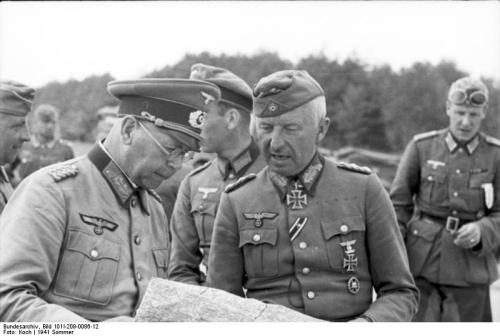
Bild 101I-209-0086-12Erich Von Manstein at the Front

Motioning to the map Manstein continued. “We will concentrate the majority of our Panzer forces here, just west of Kharkov and another group here west of Orel.  We will also build fall back positions for our infantry forces here along the Dnieper.  We should be ready to withdraw from the Crimea should the need arise, we cannot afford another encirclement.  When the Russians attack we will give ground, even Kharkov if needed. Our infantry divisions will fight a delaying action supported by Jagdpanzer and Sturmgeschutzen, the Luftwaffe will need to give us good close air support from Stukas and as the Russians outrun their supply depots and their offensive loses momentum we will attack, like a badger defending itself.  Our Panzers will cut off their spearheads west of Kharkov while we bleed them dry in the north; we will then roll them up, stabilize the line and prepare for the winter.”  Manstein sounded confident; those in the room began to sense that his plan could work.  Rundstedt spoke up: “That will give us the chance to transfer forces to other fronts and, maybe, since Hitler is dead there might be a chance for Reichsmarschall to negotiate a settlement,[xix] otherwise gentlemen the Allies will destroy our cities from the air and grind our armies down until we have no recourse but surrender.”

“Right” added Goering, making eye contact with each man in the room. “We must have success in the defense, we must buy time and we must work to end this war before Germany is destroyed. ‘We will have reason to be glad if Germany can keep the boundaries of 1933 after the war.”[xx] He paused and said “General Zeitzler, you are relieved of your duties at OKH, General Guderian, you are now the Chief of OKH.[xxi] Manstein, you will command the East, General Hoth will take your Army Group. You will work with Guderian and Model to flesh out this plan.  We must get the Panther, Tiger and Ferdinand units operational as soon as possible.  I believe that the Russians will attack by June. Richthofen, I need you to look to the Luftwaffe. We have not had a good year and we have to succeed in defending the Reich from Allied bombers and provide support to the ground forces. Of course flak needs to be built up. The Luftwaffe Field Divisions with the exception of the Fallschirmjaeger and Herman Goering Panzer Division need to be transferred to Army control.”  He looked at Speer: “Herr Speer, the Fuhrer entrusted you with our war production program, you must increase production of tanks and aircraft. Speed the production of the ME-262 and cancel all programs that take away from the panzers, fighters and ground support aircraft that we need now.” He put his hands on his hips and took a deep breathe. He looked at Wolfe, Himmler’s successor.  Wolff, the Reich needs the Waffen SS, the Panzer troops are exceptional, but I want all Waffen SS Formations, with including the Panzers turned over to Army control, we cannot keep dividing our resources. With the personnel from the Luftwaffe Field Divisions we should be able to provide the Army with excellent troops to rebuild experienced formations.”  Goering looked around the room; “Are there any questions Gentlemen?” Putting his arm across Manstein’s soldier and said: “I think that Badger is a fitting name for your plan. Our little Dachs will tear them to pieces.”   Later, Goering met with Foreign Ministry officials emphasizing the need to strengthen German Allies and seek peace with the west. He “admitted that he was worried about the future. ‘It’s not quite clear to me how we are going to end this war.’”[xxii] Those present could not believe how Goering had conducted himself, and all left the meeting thinking that it might be possible to stave off defeat.  It was an incredible performance. After Hitler’s crash he had secretly undergone a “systematic withdraw cure which had ended his drug addiction.”[xxiii] The change was marked.

STAVKA Headquarters Moscow: 7 May 1943

Josef Stalin was ecstatic.  His agents reported that Hitler was dead even before the announcement from Berlin.  Partisans had confirmed that it was Hitler’s aircraft that they found and recovered some of Hitler’s personal belongings, including his cap, which they presented to Stalin.  Intelligence reported that Goering had taken power, and Stalin was sure that his position was weak and many believed that Goering, was not up to the task, and that a renewed offensive could bring down the Nazi regime.  Now was the time to bring the Nazi terror to an end and Stalin called his key leaders together.  While Stalin wanted an immediate offensive his generals wanted to wait just in case the Germans attacked Kursk.  “Zhukov, Vasilevsky, and various General Staff officers urged caution and recommended that the Red Army remain on the defensive until the Germans expended their offensive strength.”[xxiv] Stalin supported by commanders, like Vatutin, “argued for a resumption of offensive action in early summer to preempt German action and regain the momentum lost in March 1943.”[xxv] In the end a compromise was reached and despite the temporary defensive stand “Russian strategic planning in the summer of 1943 was inherently offensive in nature.”[xxvi] The new offensive would be launched on 15 June if the Germans had not attacked before.  It would be named Operation Kutuzov[xxvii] and be aimed at the Orel salient and Kharkov.  The northern prong under Rokossovsky’s Central Front would destroy the Germans around Orel and drive west while Vatutin’s Voronezh and Konev’s Steppe Front would take Kharkov and drive toward the Dnieper.[xxviii] The Southwest Front and South Fronts would attack and destroy the German forces along the Mius, the goal: “collapse of the German defenses and an advance to the line of the Dnieper River from Smolensk in the north southward to the Black Sea.”[xxix]

German Preparations
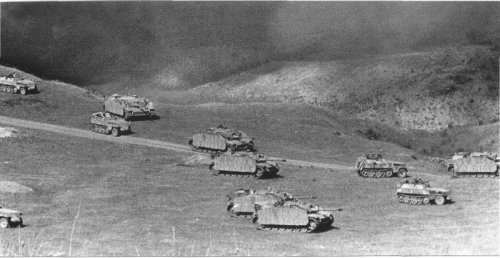
sturmgeschutzSturmgechuten and SdKfw 251 APCs moving into position

Manstein met with Model, Hoth and Guderian to develop DACHS. They had  to play for time and deceive the Russians as to their true intent so they could build up their forces.  Deception operations were mounted on both sides of the Kursk bulge to give the impression of attack preparations.  1st Panzer Army and Army Detachment Kempf  were to launch a diversion called Operations HABICHT and PANTHER southeast of Kursk  “designed to push the Soviets back from the industrial area of the Donets River.”[xxx] The defensive plan called for the infantry supported by tank destroyers, assault guns the heavy Ferdinands as well as mobile Pioneer units to conduct a withdraw to delay and disrupt the Russian attack.  Bridges were prepared for demolition, defensive positions constructed at choke points which would be defended and then abandoned when no longer defensible, and minefields laid to slow the Russian advance.  This was critical for 9th Army now commanded by General Henrici in the Orel salient north of Kursk.  Henrici, a defensive master constructed a series of defensive belts to allow his army to withdraw from the bulge without being cut off and inflict heavy casualties on the Russians through skillful deployment of anti-tank weapons, especially self propelled guns.[xxxi] In the south 4th Panzer Army, now commanded by SS General Paul Hausser[xxxii] and Army detachment Kempf made preparations to allow the Russians to advance past Kharkov using the same defend and delay tactics and then counterattack. As the armies prepared, Speer and Guderian’s efforts to rebuild the Panzer force were bearing fruit.  By 15 May the first brigade of Panther tanks was activated and began training west of Kharkov.[xxxiii] Two battalions of Ferdinands, one for 9th Army and one for 4th Panzer Army were activated.[xxxiv] Sturmgeschutz battalions were assigned to each infantry corps. Panzer divisions built up so that all had an average of 130 tanks, with the SS Divisions and Gross Deutschland receiving more.  Tiger battalions were assigned to each Panzer Corps.

The Summer Campaign

On 1 June Operations PANTHER and HABICHT hit the unfortunate Soviet 6th Army, which had been victimized by Manstein’s counter-stroke in March.  III Panzer Corps of Army Detachment Kempf supported by Corps Raus (IX Corps) linked up with 1st Panzer Army at Kupiansk on 3 June.  The Russian counterattacked with 8th Guards Army and the 2nd and 23rd Tank Corps. The battle of Kupiansk resulted in the destruction of 6th Army and the 23rd Tank Corps which was surprised by the 503rd Panzer Detachment’s Tigers. 2nd Tank Corps received a similar mauling at the hands of the 6th Panzer Division.  On 9 June the Germans returned to their start positions.
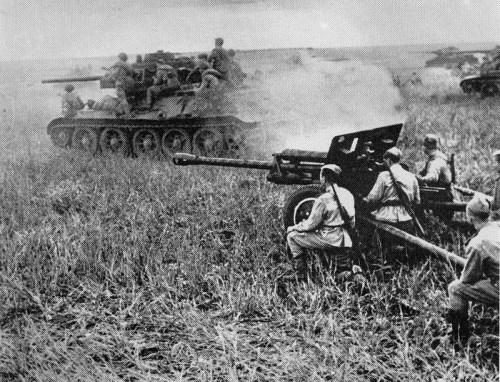
Kursk_T34_and_Fieldgun-px800Soviet Tanks and AT Guns at Kupiansk

The attack at Kupiansk surprised STAVKA which had been deceived by the build up of Panzers around the Kursk salient.  Stalin continued to hound his generals to begin Kutuzov on time, but the generals were “chastened” by the defeat at Kupiansk and “earlier experiences”[xxxv] and wanted to delay. Stalin forced them to begin Kutuzov on 22 June, the 2nd Anniversary of Barbarossa.  Manstein and his Eastern Front commanders held their breath.  Teams of Brandenburger commandos operating in the Soviet rear and Luftwaffe reconnaissance aircraft reported Russian units moving to advanced positions to the north and south of Kursk.  Vatutin commanding the Voronezh Front was ambushed and killed by a Brandenburger detachment supporting Ukrainian irregulars[xxxvi] as he returned from visiting 69th Army near Prokhorovka station on 19 June and was replaced by Lieutenant General Katukov of 1st Tank Army.  Katukov “was one of the Red Army’s most accomplished and experienced armor officers.”[xxxvii]
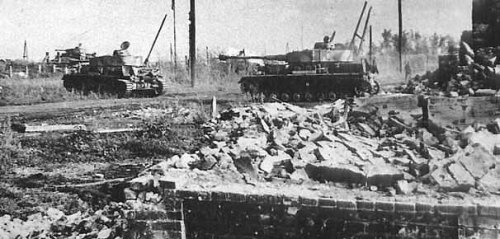
kursk_tanksMk IV Panzers

In the north Rokossovsky’s Central Front and Popov’s Bryansk Front supported by 11th Guards Army[xxxviii] began concentric attacks on the German 9th and 2nd Panzer Armies and ran into Henrici’s labyrinth on 22 June.  They hit the first line they found it empty, the Germans having repaired to secondary positions,[xxxix] German 88’s and self propelled guns took a heavy toll on the tanks of 2nd Tank Army.  The 3rd Tank Army under General Rybalko’s army committed after the initial assault “attempted a fresh penetration instead of exploiting the earlier efforts of the 3rd and 63rd Armies… Rybalko’s force included 698 serviceable tanks…but lacked the artillery and engineers for such a deliberate assault.”[xl] Popov telephoned Stalin at noon on 25 June “to report that Rybalko was practically stalled and suffering heavy losses in tanks.”[xli] The Germans committed the 5th and 8th Panzer divisions[xlii] against 3rd Tank Army. The fresh Panzers inflicted painful losses on Rybalko.  On 27 June Stalin called to complain about the handling of the army, demanding a direct assault.[xliii] The battle turned into a “grinding battle of armored attrition.”[xliv] After “a few bloody days bereft of any success, Rybalko’s tank formations had to be pulled out of the line into reserve.”[xlv] The “battle for the Orel salient ended three weeks later with a German defensive victory, as Army Group Center extricated its two armies from the box prepared for them while inflicting heavy casualties on three Soviet Fronts.”[xlvi] The Soviets lost over 629,000 men and 3,500 tanks.[xlvii] In comparison German losses were light and by falling back they shortened their line freeing units for other operations.  Stalin had Orel but failed to destroy the Germans and lost heavily in the attempt.

In the south Konev’s Steppe and Katukov’s Voronezh Fronts prepared their assault on Kharkov.  They attempted to deceive the Germans by simulating the massing of a “notional tank and combined-arms army” in the western side of the Kursk bulge.[xlviii] The deception was unsuccessful as reconnaissance by Luftwaffe aircraft and Brandenburgers failed to uncover any troop concentrations and Russian deserters, talked of a strike at Kharkov. The offensive “Rumiantsev” was opened by the 5th and 6th Guards armies supported by 53rd and 69th Armies on 21 June; a day later 7th Guards Army jumped off, two additional armies supported the west flank of the offensive.[xlix] The Russians in the two fronts began the operation with 980,000 men and 2,500 tanks.[l] Opposing them were 4th Panzer Army and Army Detachment Kempf’s 350,000 men and 1,750 tanks and assault guns including 100 Tigers and 192 Panthers.[li]
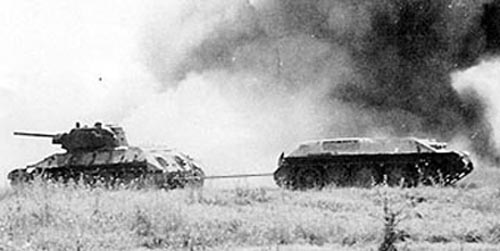
Sovietic_T34_battle_of_kurskT-34 towing disabled T-34 near Orel

STAVKA “chose to strike the strongest portion of Hoth’s defense head-on, to engage and defeat the German force and avoid the problems of flank threats.”[lii] Unfortunately they complicated the attack by focusing it at “precisely the boundary between the Voronezh and Steppe Fronts, causing increased coordination problems from the start of the operation.”[liii] The Germans used Ferdinands, Jagdpanzers and Sturmgeschutz in a mobile defensive role, as infantry fought delaying actions as they withdrew to successive defensive lines, inflicting brutal losses on the Russians.  Aided by massive artillery preparation the Russians broke through the weakened Army Detachment Kempf near Belgorad[liv] taking the city on 24 June.  Corps Raus’ 167th Infantry Division was taken on its exposed left flank forcing Raus to “fight a delaying action…until the withdraw reached Kharkov.” [lv] The Germans reacted to the threat by committing the “veteran 5th SS Panzer Grenadier Division Wiking” to reinforce Army Detachment Kempf.[lvi] Despite the success “the German defenses proved so tenacious that the leading brigades of the two tank armies had to enter the fray.”[lvii]

As the Russians advanced the German fell back.  Hoth directed Hausser to wait before counterattacking with XLVIII Panzer Corps and II SS Panzer Corps.  Katukov pushed the 1st and 5th Tank Armies into the hole in the German lines and moved toward Kharkov which was liberated by the 89th and 183rd Guards Divisions[lviii] on 2 July.  The liberation of Kharkov and Belgorad while exhilarating had cost Katukov over 250,000 casualties.  Skillful employment of mobile defense and local counterattacks by mixed Panzer battlegroups, such as one by Grossdeutschland on the flank of 5th Tank Army caused panic and some units withdrew “leaving behind masses of equipment of every description.”[lix] The tank armies had lost upwards of 50 percent of their tanks, infantry divisions were now down to half strength, some down to 3000 men.[lx] Yet the Soviets attempted to drive south to trap the Germans.  They were hit by XLVIII Panzer Corps and II SS Panzer Corps, both of which had seen little action thanks to Hoth’s conservation of strength. XLVIII Panzer Corps hit the 1st Tank Army at the “key road junction of Bogodukhov, 30 kilometers northwest” of Kharkov “severely mauling the leading three brigades”[lxi] forcing 1st Tank Army to withdraw towards Kursk. 5th Tank army moved to support but was taken in the flank by II SS Panzer Corps.  The SS Corps encircled the remainder of 5th Tank Army. Hunted by the SS on the open steppe the survivors slipped through gaps in the encirclement but both armies were ravaged.  By 15 June 1st Tank Army was down to 120 tanks and 5th Tank Army had “50 of its original 503 tanks and self-propelled guns serviceable.”[lxii] XLVII Panzer Corps took Kharkov on 18 July.

Totenkopf-Kursk-01SS Panzer Troops and Tigers prepping for battle

The victory paid dividends for the Germans. The Front held and the Russians had taken nearly a million casualties and lost almost 6000 tanks and self-propelled guns.  Three Tank Armies had been smashed, 5th Tank Army would not be fit for field duty for two months.[lxiii] 3rd Tank Army earned a Guards designation but was withdrawn from combat.[lxiv] 6th Army, victimized by PANTHER was destroyed while the 5th, 6th and 7th Guards Armies were shattered. Additionally, the Germans decimated two independent tank corps.  Stalin reacted by halting operations, cancelling follow on offensives and rebuilding the Red Army’s tank armies and mechanized forces.  He realized that his Generals had been right in not wanting to undertake offensive operations until the Germans had been weakened, but the German insistence on not going on the offensive caused him to ignore their arguments. He decided to wait until winter to launch his next offensive, but that offensive would never be launched as by the time he was ready the war was over.

Bild 101III-Zschaeckel-206-34German Tank Commader as Panzers mop up

The elimination of the Russian threat enabled Italy to be reinforced as well as the reinforcement of the Atlantic Wall.  The Salerno landings were a disaster, the Allies driven into the sea by Panzer Divisions released from the Eastern Front.  The disasters at Salerno and the Russian debacle brought overwhelming domestic political pressure on Roosevelt and Churchill to end the war. Clandestine talks began in Switzerland between Avery Dulles and Karl Wolff[lxv] while Walter Schellenberg met with Count Bernadotte.[lxvi] Despite the previous demand for unconditional surrender the Allies decided to negotiate with the new German leadership might end the war in Europe.  Goering surrendered power to General Beck and gave himself and other accused war criminals up to the Allies. Beck took power, withdrew to 1939 borders, dismantled the death camps and disbanded the Nazi Party, and its police apparatus.[lxvii] Peace came to Europe on 9 November 1943, 25 years after Kaiser Wilhelm’s abdicated his throne.
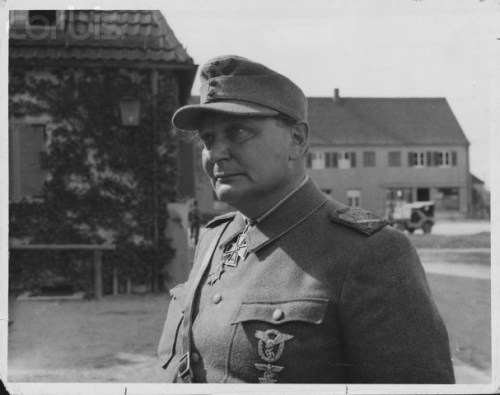
HU048801Goering Surrenders himself


[i] Clark, Alan. Barbarossa: The Russian German Conflict, 1941-45. Harper Collins Publishers, New York, NY 1965. Pp.307-311. There was an attempt on Hitler’s life on his return from Kluge’s headquarters.  Only the bomb did not go off, all components had worked but the detonator did not fire.  Clark notes that “the Devil’s hand had protected Hitler.” (p.311)

[ii] Galante, Pierre. Operation Valkyrie: The German Generals’ Plot Against Hitler. Translated by Mark Howson and Cary Ryan. Harper and Row Publishers, New York, NY 1981. Originally published as Hitler est il Mort? Librairie Plon-Paris-Match, France. 1981. p.167 

[iii] Padfield, Peter. Himmler. MJF Books, New York. 1990. p.474.  Himmler had a number of contacts and intermediaries who he used to attempt contact with the Allies as early as 1943.

[iv] Höhne, Heinze. The Order of the Death’s Head: The Story of Hitler’s SS. Translated by Richard Barry. Penguin Books, New York and London, 2000. First English edition published by Martin Secker and Warburg Ltd. London 1969. Originally published as Der Orden unter dem Totenkopf, Verlag Der Spiegel, Hamburg 1966.  Diels remained an ally of Goering even marrying his sister in 1943.

[v] Von Lang, Jochen. The Secretary: Martin Bormann: The Man Who Manipulated Hitler. Translated by Christa Armstrong and Peter White. Random House Inc. 1979. Originally published as Der Secretär. Deutsche-Verlags-Anstalt, Stuttgart. 1977 p.9.  At his trial Goering remarked to other defendants. “If Hitler had died sooner, I as his successor would not have had to worry about Bormann. He would have been killed by his own staff even before I could have given the order to bump him off.”

[vi] Irving, David. Göring: A Biography. William Morrow and Company, New York, NY 1989. Richthofen had succeeded Jeschonnek in March when Goering relieved him. Goering believed that Jeschonnek “was too pliable at the Wolf’s Lair.” Goering had actually considered this a number of times but postponed it several times. p.388

[vii] Guderian, Heinz. Panzer Leader. (abridged) Translated from the German by Constantine Fitzgibbon, Ballantine Books, New York 1957. pp.244  Hitler conducted a similar conference involving many of the same people in Munich.

[viii] Carell, Paul. Scorched Earth: The Russian German War 1943-1944. Translated by Ewald Osers, Ballantine Books, New York, NY 1971, published in arrangement with Little-Brown and Company. p. 336

[ix] Ibid. Irving. pp. 377-379.

[x] Ibid. Guderian. p.243

[xi] Ibid. Irving. p.378

[xii] Glantz, David M and House, Jonathan. The Battle of Kursk.  University Press of Kansas, Lawrence, KS. 1999. pp.21-25.  Operations order 5 had been approved by Hitler on and issued by OKH on 13 March. It was followed by Operations Order 6 on 15 April.

[xiii] Ibid. Clark. p.324.

[xiv] Warlimont, Walter. Inside Hitler’s Headquarters 1939-45. Translated by R.H. Berry, Presido Press, Novato CA, 1964. p.334 These objections of Jodl were from June, but indicate the feeling of Jodl for the Zitadelle as planned and when would have likely been his response in such a situation.

[xv]Glantz, David M. and House, Jonathan. When Titans Clashed: How the Red Army Stopped Hitler. University Press of Kansas, Lawrence, KS. 1995. p.157 Zeitzler had been a consistent advocate for Zitadelle since he heard Manstein’s initial proposal in March.

[xvi]Macksey, Kenneth. Guderian: Creator of the Blitzkrieg. Stein and Day Publishing, New York, NY 1975 p.206

[xvii] Ibid. Clark. p.322

[xviii] Ibid. Clark. p.323.  Zeitzler made this argument with Jodl during a briefing in April 1943.

[xix] Shirer, William L. The Rise and Fall of the Third Reich. A Touchstone Book published by Simon and Schuster, 1981, Copyright 1959 and 1960. p.1115.  Hitler had told Keitel and Jodl that “When it comes to negotiating [for peace]…Goering can do much better than I. Goering is much better at those things.”

[xx] Speer, Albert. Inside the Third Reich. Collier Books, a Division of MacMillan Publishers, Inc. New York, NY 1970. p.245.  From a conversation with Speer in late 1942.

[xxi] Ibid. Glantz and House. Clash of Titans. pp. 216-217. Hitler would replace Zeitzler with Guderian in June 1944.

[xxii] Ibid. Irving. p.379 From a conversation with State Secretary Ernst von Weizäcker 11 February 1943.

[xxiii] Ibid. Speer.  p.512. The ending of the addiction took place at Nurnberg and Goering surprised many of his co-defendants with his “remarkable energy.”

[xxiv] Ibid. Glantz and House. Kursk. p.28

[xxv] Ibid. Glantz and House. Kursk. p.28.

[xxvi] Ibid. Glantz and House. Kursk. p.264

[xxvii] Overy, Richard. Russia’s War: A History of the Soviet War Effort: 1941-1945. Penguin Books, New York NY and London, 1997. pp.211

[xxviii] Erickson, John. The Road to Berlin. Cassel Military Paperbacks, London, 2003. First Published by Weidenfeld and Nicholson, 1983. p.76

[xxix] Ibid. Glantz and House. Kursk. p.265

[xxx] Ibid. Glantz and House. Kursk. p.23.

[xxxi] Liddell-Hart, B.H. The German Generals Talk. Quill Publishing, New York, NY. 1979. Copyright 1948 by B.H. Liddell-Hart. p.215  Henrici describes the methods that he used in 1944 as Commander of 1st Panzer Army and as Commander of Army Group Vistula during the defense of Berlin.

[xxxii] Hausser would actually command 7th Army in Normandy in 1944.

[xxxiii] Ibid. Glantz and House Kursk. p.53 This was the 10th Panzer Brigade assigned to XLVIII Panzer Corps.  Additionally Clark notes production figures for Panthers from Speer that indicate that 324 Panthers would be available by 31 May. (Clark. p.325)

[xxxiv] Ibid. Glantz and House. Kursk. p.52.  At Kursk the two Ferdinand detachments were both assigned to 9th Army.

[xxxv] Ibid. Glantz and House. Kursk. p.28.

[xxxvi] Ibid. Carell. p.510.  Vatutin was killed by Ukrainian irregulars in April 1944.

[xxxvii] Ibid. Glantz and House. Kursk. p.62

[xxxviii] Newton, Steven H. Hitler’s Commander: Field Marshal Walter Model, Hitler’s Favorite General. DeCapo Press, Cambridge MA 2005. p. 256

[xxxix] Ibid. Liddell-Hart. p.215.

[xl] Ibid. Glantz and House. Kursk. p.236

[xli] Ibid. Erickson. p.113. At Kursk the call took place on 20 July when Rybalko was in this situation.

[xlii] Ibid. Newton. p.256

[xliii] Ibid. Erickson. p.114

[xliv] Ibid. Glantz and House. Kursk. p.236

[xlv] Ibid. Erickson. p.114

[xlvi] Ibid. Newton. p.256

[xlvii] Ibid. Glantz and House. p.345. The actual losses were 429,000 men and 2,500 tanks against a German force significantly weakened by Zitadelle.  Had the Russians attacked the Germans rather than receiving the German attack first their losses in men and machines would have been far higher.  I have reflected that in the alternative numbers.

[xlviii] Ibid. Glantz and House. When Titans Clashed. p.168  The Soviets did try this in their counter offensive following Zitadelle.

[xlix] Ibid. Glantz and House. When Titans Clashed. p.169

[l] Ibid. Glantz and House. Kursk. p.344. Actual figures for beginning of offensive.

[li] Ibid. Glantz and House. Kursk. p.338.  Figures from beginning of Zitadelle.

[lii] Ibid. Glantz and House. Kursk. p.244 The actual text reads “Manstein’s defense” not Hoth’s.

[liii] Ibid. Glantz and House. Kursk. p.244

[liv] Von Mellenthin, F.W. Panzer Battles: A Study of the Employment of Armor in the Second World War. Translated by H. Betzler, Ballantine Books, New York, NY, 1971. Originally Published University of Oklahoma Press, 1956. p.286

[lv] Raus, Erhard. Panzer Operations: The Eastern Front Memoir of General Raus, 1941-1945. Compiled and Translated by Steven H Newton. Da Capo Press a member of the Perseus Book Group, Cambridge, MA 2003. p.214

[lvi] Ibid. Glantz and House. Kursk. p.247

[lvii] Ibid. Glantz and House. When Titans Clashed. p.169

[lviii] Ibid. Erickson. p.121  These were the actual divisions that liberated Kharkov.

[lix] Ibid.  Von Mellenthin . p.287

[lx] Ibid. Glantz and House. p.252

[lxi] Ibid. Glantz and House. When Titans Clashed. p.170

[lxii] Ibid. Glantz and House. Kursk. p.252

[lxiii] Ibid. Glantz and House. Kursk. p.252

[lxiv] Ibid. Glantz and House. Kursk. p.237

[lxv] Ibid. Hohne. p.572

[lxvi] Ibid.  Hohne. p.570

[lxvii] Ibid. Galante. pp 69 and 207

Bibliography

Carell, Paul. Scorched Earth: The Russian German War 1943-1944. Translated by Ewald Osers, Ballantine Books, New York, NY 1971, published in arrangement with Little-Brown and Company

Clark, Alan. Barbarossa: The Russian German Conflict, 1941-45. Harper Collins Publishers, New York, NY 1965

Erickson, John. The Road to Berlin. Cassel Military Paperbacks, London, 2003. First Published by Weidenfeld and Nicholson, 1983

Galante, Pierre. Operation Valkyrie: The German Generals’ Plot Against Hitler. Translated by Mark Howson and Cary Ryan. Harper and Row Publishers, New York, NY 1981. Originally published as Hitler est il Mort? Librairie Plon-Paris-Match, France. 1981.

Glantz, David M and House, Jonathan. The Battle of Kursk.  University Press of Kansas, Lawrence, KS. 1999.

Glantz, David M. and House, Jonathan. When Titans Clashed: How the Red Army Stopped Hitler. University Press of Kansas, Lawrence, KS. 1995

Guderian, Heinz. Panzer Leader. (abridged) Translated from the German by Constantine Fitzgibbon, Ballantine Books, New York 1957

Höhne, Heinze. The Order of the Death’s Head: The Story of Hitler’s SS. Translated by Richard Barry. Penguin Books, New York and London, 2000. First English edition published by Martin Secker and Warburg Ltd. London 1969. Originally published as Der Orden unter dem Totenkopf, Verlag Der Spiegel, Hamburg 1966.

Irving, David. Göring: A Biography. William Morrow and Company, New York, NY 1989

Liddell-Hart, B.H. The German Generals Talk. Quill Publishing, New York, NY. 1979. Copyright 1948 by B.H. Liddell-Hart

Macksey, Kenneth. Guderian: Creator of the Blitzkrieg. Stein and Day Publishing, New York, NY

Newton, Steven H. Hitler’s Commander: Field Marshal Walter Model, Hitler’s Favorite General. DeCapo Press, Cambridge MA 2005

Overy, Richard. Russia’s War: A History of the Soviet War Effort: 1941-1945. Penguin Books, New York NY and London, 1997

Padfield, Peter. Himmler. MJF Books, New York. 1990

Raus, Erhard. Panzer Operations: The Eastern Front Memoir of General Raus, 1941-1945. Compiled and Translated by Steven H Newton. Da Capo Press a member of the Perseus Book Group, Cambridge, MA 2003

Shirer, William L. The Rise and Fall of the Third Reich. A Touchstone Book published by Simon and Schuster, 1981, Copyright 1959 and 1960.

Speer, Albert. Inside the Third Reich. Collier Books, a Division of MacMillan Publishers, Inc. New York, NY 1970.

Von Lang, Jochen. The Secretary: Martin Bormann: The Man Who Manipulated Hitler. Translated by Christa Armstrong and Peter White. Random House Inc. 1979. Originally published as Der Secretär. Deutsche-Verlags-Anstalt, Stuttgart. 1977

Von Mellenthin, F.W. Panzer Battles: A Study of the Employment of Armor in the Second World War. Translated by H. Betzler, Ballantine Books, New York, NY, 1971. Originally Published University of Oklahoma Press, 1956.

Warlimont, Walter. Inside Hitler’s Headquarters 1939-45. Translated by R.H. Berry, Presido Press, Novato CA, 1964.

2 Comments

Filed under alternative history, History, Military, world war two in europe

Yet another Unexpected Death of a Shipmate and Probable Rough Seas Ahead

SCPO3DIn Memorium Senior Chief Hospital Corpsman D’Juana Hayes-Jones

This has been another difficult week at Portsmouth Naval Medical Center.  Once again we experienced the unexpected and unsettling death of a beloved Shipmate. HMCS D’juna Hayes-Jones, the Senior Enlisted Advisor for the Director of Nursing Services passed away early Wednesday morning of a massive Heart attack or another sudden catastrophic event.

I was just coming off of duty and conducting the duty turnover when the pager went off.  The chaplain relieving me took the page and came back saying that he had just been informed that we had lost yet another Shipmate and said that he had to go get more information.  I looked at our Deputy Department director and said: “I pray someone that I don’t know; I’m really tired of losing people that I know.”  A few minutes later my friend came back and gave us Senior Chief’s name.  I was pretty tired having come off a night with little sleep.  Initially I looked at him and the deputy and said; “I’m sure I know her but am trying to picture her face.”  We finished the turnover and I started to walk back up to the ICU when I clearly saw and remembered her face, which always had a friendly and caring expression.  I had just seen her and said hello the day before in one of the main hallways.  When this registered I simply said “shit, not another one, damn.”  This was the 5th active duty death that we have had since December.  I had met all five and had a decent number of interactions with three of the five.  Senior Chief was one that I had met a lot in the hallways, had frequent small conversations with and was involved quite heavily with when Senior Chief Pam Branum passed away on June 2nd of this year.  Additionally we had a civilian RN pass away and several civilians in our clinics.  The active duty deaths were all unexpected and tragic.  We have come close to losing a number of other shipmates who were very close to death but have since recovered.  With all the deployments added in we are all showing some strain with the loss of our friends and shipmates, so it is important to take care of each other because we don’t know what tomorrow brings.  With more deployments coming, a flu season that never ended and H1N1 looming on the horizon I fear that this will not be the last shipmate we lose this year.  I pray that I am wrong but my intuition tells me something different.  In the midst of this I am reminded that we must live to the fullest and not waste the life that God has given us. As Marcus Aurelius said “Execute every act of thy life as though it were thy last.”

Losing good people, who care for others, strive for excellence and serve faithfully who are younger than me, is getting old.  Senior Chief from what I had seen and heard was a great leader who really cared for her corpsmen and the nursing Staff.  She could always be found out among her corpsmen on the nursing units and clinics.  She was kind, fair and a caring teacher, coach and mentor to many corpsmen and nurses.  Her loss was met with stunned disbelief by those who knew her and who really have not yet fully recovered from the loss of Chief Branum.  Her death has shaken all of us who knew her, from the most senior officers and Chiefs, to the most junior corpsmen as well civilian staff.  I and most of our other chaplains have spent significant time with our shipmates since this happened.

Senior Chief Hayes-Jones would have had her retirement ceremony on August 28th.  She leaves behind two children, her husband and her shipmates.  We will have a memorial service for her next week; the date is still to be announced as of this post.

God bless you all and take care of each other as we once again walk through the valley of the shadow of death.

Peace, Steve+

3 Comments

Filed under healthcare, Military, Pastoral Care

Going to War: This isn’t Kuwait it’s Tatooine

tatooineCamp Virginia aka Tatooine

Note: This is installment eight of my series “Going to War” which chronicles my deployment to Iraq working with our advisers to the Iraqi Army and Security Forces in Al Anbar Province.  To see the others in the series go to “categories: and click on the “Tour in Iraq” link.

We flew from Leipzig to Kuwait.  Flying into Kuwait in mid- afternoon is an interesting sight.  The azure waters of the Northern Arabian, or the Persian Gulf, the terminology depends on who your Ally is, hug the coast where Kuwait City, a sits ensconced at the tip of the Gulf.  The azure waters and the almost overwhelming sand that predominate this area of the world stand in stark contrast.  The city itself, full of modern luxury hotels, home of business and oil conglomerates and resorts for those who can afford them, seems a foreign intrusion.  The brightness of the sun reflecting off of the concrete of the tarmac was nearly blinding to us and I was very thankful for my sunglasses.   The aircraft taxied to its position and as the door opened the heat rushed in.  We deplaned and walked single file in the searing heat with our covers removed to a line of white tour buses of various Asian and European manufactures.  Drivers, guest workers from India, Pakistan or elsewhere on the sub-continent or eastern Africa sat in them or stood beside them smoking or talking with one another.  Our bags were moved to waiting tractor trailers and a small shaded area was close by where liter bottles of drinking water and MREs were available for any who wanted one.

We were loaded onto the buses for the trip to our in processing station where our ID cards were scanned and we officially entered the theater.  If you have never ridden on a tour bus manufactured in a country us than the United States they are not quite designed for people of our more fully shaped asses and longer legs.  This means that unless you are short and twig like that you will be rather cozy with the person sitting next to you, especially if they are well fed.  Thankfully Nelson and I were together as usual and since neither of us are terribly large, though I might be referred to as “stocky” and we watched in almost horrified fascination as rather some rather large folks squeezed in together.  Since we were pretty hot and sticky and previous busloads of rather stinky people had left their stench on the seats before us, the odor in the buses was rather strong and vibrant.  Unfortunately my allergy medicine cocktail of Allegra and Flonase allows me to smell the stink.  15 years ago I would have not noticed the smell because of what were then severe allergic symptoms when exposed to things like…. let’s say…dust.   Lots of that in the desert, and there is plenty of dust in Kuwait.  But this time for me there was no escaping the smell.  It took a couple of hours going at what seemed to be an ungodly slow pace to get to what is known as Camp Virginia, a place which bears little resemblance to any locale in its namesake, save for the McDonald’s sign which lit the food court area since it was now night.   Tents with plywood floors were our quarters and large air conditioning units on each end of the tent were used to try to cool it down.  We got our gear off of the baggage trucks and did the “Sea Bag Drag” of our gear into our tents.  This was no easy task, we all had three sea bags or their equivalent all packed with a deployment’s worth of gear.  One thing about going to war as opposed to flying commercial is that you are often the baggage crew as well as your own “Skycap.”  The smaller and older you are the bigger more painful the load seems.  I was in better shape than many of my fellow sailors because of consecutive tours with the Marines and EOD, but three  massive bags, a 3 day pack and case for the computer that I had been issued by EOD for the trip combined with the heat and the effects of our extended trip to get across the pond had kicked my ass.

camp virginiaCamp Virginia

The time we spent in Kuwait accomplished a number of things.  It allowed us to get acclimatized to the region. It also was a place where we completed various administrative and training evolutions including a couple of days on a place in the middle of the fricking desert called the Buehring Range complex and specifically an inhospitable site known as the Udari Range..   I think that Buerhring  is named for an Army Soldier killed during the war.  I’m sure that he was a gallant soldier, but the Navy does far better in naming things for our heroes, we name ships after them, or nice buildings, not a hellhole in the desert.  I do hope that the Army will decide to name something nice for him someday.  It kind of remeinds me of the movie The Green Berets where one of John Wayne’s sergeants asks for a latrie, or “privvy” to be named after him.

Udari  is a live fire range where more advanced weapons skills are taught as well as convoy procedures and IED drills which are as realistic as you can get outside of hte real thing.  It also forces you to realize that danger is not far off, Weapons are carried at all times, security forces man checkpoints, guard posts and patrol the area, buses and convoys are escorted by armed vehicles.  Despite the creature comforts provided on Tatooine by the US Government it is still both a harsh and inhospitable place as well as a dangerous place.  The MREs, heated by the oven like heat were more tasty than usual, a culinary delight if you may.  We only had a couple of heat related casualties while there and lost a Air Force sergeant to renal failure for which he was evactuated to the States, but apart from that the training was uneventful.

Udari Range Aug07bUdari Range August 2007, about the time I went through

I am convinced that Buerhing and Camp Virginia are actually not on this earth and that they are actually the planet Tatooine, the home of Luke Skywalker and his trusty droids R2D2 and C3PO.  I have seldom seen a more desolate and God forsaken place on earth, even in New Jersey.  Thus somehow we must pass through some interspatial portal while driving from Kuwait City to Virginia and Buerhing, possibly like a “wormhole” in Star Trek.   Temperatures while we were there were 130 degrees plus in the heat of the day and the lows were in the cool 90’s.  It was so hot that the air bubbles in my Nike 180’s melted and lost their bounce, becoming compleely flat.  Likewise the glue on my Blackhawk boots melted and the soul began to separate from the boot.  Thankfully it took a while for it to get really bad and my e-mail to Blackhawk netting me a new pair of boots with their apologies once I arrived in Iraq.  I wrote Nike but got no response.  Everywhere one looks there is nothing but heat and sand.  Yes, you can see the heat.  I am not making this up.  As on Tatooine, Camp Virginia hosts a remarkably diverse transient population from numerous countries.   Some of these are from former Soviet Republics such as Georgia.  There was a Georgian Brigade processing through on its way to Iraq that was like a hoard of Jawas.  2,500 Georgian soldiers including female troops who we were informed served as ‘comfort women” for the Georgian men were everywhere, the Post Exchange, Chow Hall, or as the Army calls it the DFAC as well as the gym, the MWR computer room and food court.  Of course I do not begrudge any ally a meal, a bed and a place to stay but the Georgians descended like locusts.  If you got to the PX after them it was empty. Nelson and I would almost race the 500 meters to the Chow Hall to get in line ahead of the Georgians.  They were amazing; they filled their plates higher than Bluto Blutarsky (John Belushi) in the movie Animal House.  Breakfast was especially amusing from my point of view.  They would have eggs, bacon, sausage, grits, topped with pancakes and waffles covered in syrup and two to three donuts stacked on top.  All of this on one plate.  I am sure that when these soldiers returned home to Georgia that its obesity rates spiked in a rather remarkable manner.  The lady that ran the internet café constantly chased them off of porn sites, even the women.  In addition to the Georgians we had Brits and Aussies, Poles, South Koreans, Brazilians and a number of other nation’s soldiers passing through on their way to various places in the Middle East, but it was the Georgians that I remember most.

The other two chaplains, Kyle and Rick and I ensured that spiritual and emotional needs were met during the stay, for me this was usually with sailors who would pull me aside informally just to talk or ask for prayer or advice.  There is something about the final stage of a journey into a combat zone that pulls at you as you think about what might be faced on the other side.  Since most places in Iraq were still pretty sporty with huge numbers of attacks and many personnel killed or wounded, even in supposedly “safe” areas.  Kyle and Rick would remain in Kuwait to run the Warrior Transition program while Nelson and I loaded our gear prepared for our flight into Iraq.

048Padre Steve at the Udari Range

Eventually we competed a very good cycle of training at Buerhring and Virginia and once again loaded our gear on trucks, made accountability checks, got our signed copies of our orders and headed off to a joint Kuwaiti and US Air Force Base for our flight to Baghdad.

5 Comments

Filed under iraq,afghanistan, Military, Tour in Iraq

Going to War: Planes, Pit Stops, Patriots and Pubs… the Flight to Kuwait

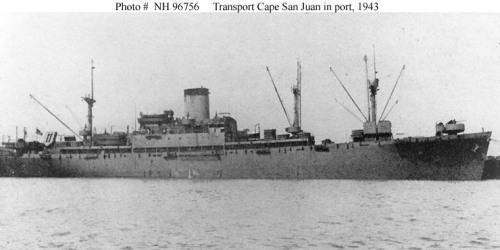
cape san juanWWII Troopship USS Cape San Juan 1943

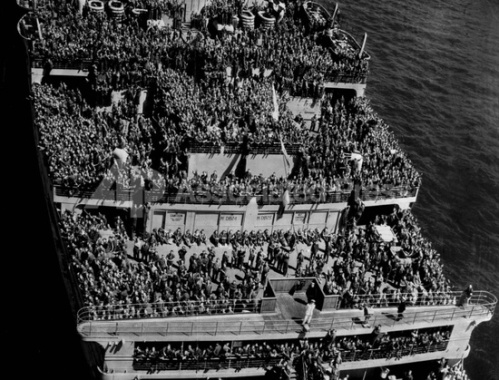
Going to war now days is certainly different than it was a generation or two back.  Back in World War II and Korea the primary manner in which troops deployed to and returned from war was on a troopship.  Troopships in the Second World War ranged in size from the great British Ocean Liners the Queen Elizabeth and Queen Mary down to small and often ancient passenger ships.  As the war went on the United States adapted a number of ship designs to serve as troop transports as well as built ships specifically designed to transport troops to combat.  There was one thing that all of these ships from the might Queen’s to the lowliest tramp steamer had in common was that they were really crowded.  Every in of space that could be made to fit a bunk was used.  The Queens, which in peacetime might carry 1500-2000 passengers routinely carried up to 15,000 troops.  Talk about cramped quarters, these ships made the steerage passengers on the Titanic look like executive class travelers.  The smaller the ship the worse the ride and many times soldiers would spend their entire voyage seasick.

qeen mary troopsTroops on RMS Queen Mary

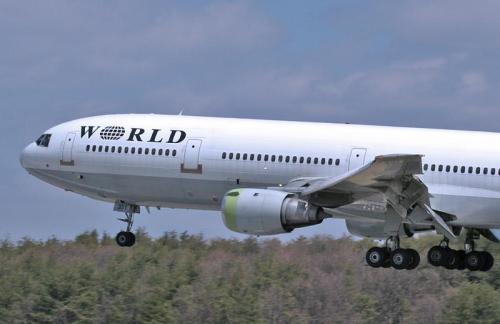
Well times have changed.  We still have ships that carry troops, amphibious ships that can hit from both sides of the plate which carry the Marine Corps Expeditionary Units on their deployments.  However, it is seldom that much more than a MEU is ever carried to a war zone.  In the Gulf War and Build up from OIF a good number of Marines were brought over that way, however many of these in the Gulf War never went ashore and were kept at sea to keep the Iraqis thinking that they would be used in an amphibious operation.  The bulk of the troops who have deployed since Vietnam have done so by air, either military aircraft operated by the Air Force such as C-130s, C-141’s, C-5A Galaxy’s and C-17 Globemaster’s or alternatively civilian contract aircraft mostly run by non-scheduled airlines which specialize in just this sort of thing.  Airlines such as World Airways, North American Airlines, Miami Air, and the now defunct ATA have been the primary carriers of troops dating back to Vietnam while other commercial airlines also do charter work.  When large numbers of aircraft the DOD activates the CRAF, the Civilian Reserve Air Fleet, which is composed of aircraft from the major airlines used on an emergency basis.

world airways dc10World Airways DC-10

The military and chartered aircraft are the closest things now in the world of transportation to the old troopships.  On military aircraft troops often fly with cargo in large cavern like fuselages on seats that can be reconfigured to about any way imaginable.  The -17 is the luxury bird of the military air fleet, but certainly not a paragon of comfort when fully load with troops and gear.  Of course the military aircraft were designed for utility and maximum use of passenger and cargo space.  The charter aircraft are a different matter.  Most of the aircraft used regularly by the charter carriers for deployments are older DC-10s, B-757s and occasionally a B-767 or L-1011.  With rare exception these aircraft are configured to get the most passengers on the aircraft, comfort is not terribly important.  There is no such thing in these aircraft as a true “First Class or Business Class section, merely front of the aircraft or back.  The seats are the same and as far as leg room there is no such thing as “Economy Plus.”  Simply put we are in steerage almost any time we get on one of these aircraft.

We loaded our gear onto waiting trucks at Fort Jackson and boarded military operated “Blue Bird” buses like you send your kids to school on.   Unlike your kid’s bus these are white and driven by soldiers that are in some kind of transient status or Army civilians.  The air conditioning on a hot and humid southern day is asthmatic at best, especially when the busses are full of troops who are much bigger than the kids these buses are designed to carry.  I guess it could be worse; we could be traveling in the old un-air conditioned cattle cars.  When we got to the airport we did not go to the commercial side, but rather to the private side.  Our aircraft, a white World Airways DC-10 sat on the strip in front of the tiny and woefully undersized terminal where most of us ended up waiting in the open and un air conditioned hanger, our Desert Uniforms sticking to our bodies in the sultry South Carolina summer.  We formed up, the baggage trucks arrived with our sea bags and we were organized into teams to load the aircraft.  You guessed it, no airline staff to do this, just us.  Now since there were a couple of hundred of us finding enough people to do the work was not much of a problem.  Nelson and I both volunteered and with the others we stripped off our tops and in our brown t-shirts we organized for the task.  The small guys like me and Nelson got to go up into the belly of the aircraft where we waited for guys on the ground to send the bags up the conveyor.  Bag after bag they came, most were the tradition sea bag or duffel bag, but others like Nelson and my bags were oddly shaped and some were even large cases issued by individual’s units.  Weapons cases were also loaded, each weapon locked inside a lowest bidder plastic case that certainly would not last more than a few trips across the pond.  As we loaded the aircraft a rain shower passed by, the humidity was atrocious and the heat did not subside very much.  Eventually Nelson looked at me and asked, “Boss you alright?”  I assured him that I was and we kept loading the aircraft until there were no more bags to load, shoving bags and stacking them so that nearly every inch of space was taken in the baggage compartment.

One done loading we mustered again.  The pilots arrived and began their inspection of the aircraft.  At this point we were informed that there was a mechanical problem and that we would have to wait.  A couple of more hours waiting around the terminal we finally began to board the aircraft.  Finally we got underway and found that we had to make another stop.  We had to land at Pope Air Force Base in order to pick up an Army Transportation unit heading into theater.  The flight up was short and we expected that after a short delay we would again be in the air.  We were wrong.  We de-boarded the plane to allow it to be fueled.  As we waited in the terminal, once again a rather Spartan affair we found that the crew had exceeded their allowed flight or work hours and that we would have to remain overnight.  Unfortunately the contracting staff at the Air Mobility Command had not anticipated this situation and we were stuck.  We had already been up most of the day and there were no sleep facilities in this terminal except wooden benches and concrete floors.  With our gear loaded aboard the plane and unavailable it looked like things would not go well.  Vending machines were quickly emptied and like any sailors marooned anywhere we made the best of things.  Sailors broke out decks of cards, DVD video players, made phone calls home or found places to try to sleep on the benches or against terminal walls.

At first it didn’t look like we would be getting any assistance from the Air Force.  However, we were fortunate to have as our senior officer and Officer in Charge a Navy Captain who was a jet fighter pilot and wasn’t going to let “his” sailors let overnight in such conditions while still in the United States.  After a while our Captain secured box lunches and pillows.  He then continued to push and eventually some contracting weenie was rustled out of his waterbed and got us rooms at a Hampton Inn somewhere in Fayetteville.  As the hands on the dial of my watch worked their way past midnight the ubiquitous Blue Bird buses pulled up to the terminal.  A few people elected to stay behind and for some unknown reason the Air force required some of our sailors to watch the aircraft.  Mind you they could only watch it.  Our weapons were stowed in the belly of the aircraft.  The irony was that the airfield a Pope is secured by USAF Air Police and probably one of the most secure places in the area.  The Captain lost that argument and a number of sailors volunteered to remain along with sailors who had somehow made themselves comfortable and didn’t want to move.  In my younger days I would have been with them, but I had tried to sleep on those same benches when I went to Jordan earlier in the year I knew that I couldn’t hang with them.

The rest of us mustered again, accountability checks were made and we loaded ourselves on the buses.  T rip took about 15 minutes and we were deposited at the hotel.  It was about 0130 by this time.  The hotel staff was great.  Since like our toiletries like most everything else we owned were safely secured in the belly of our aircraft we were now tired, hungry again and pretty stinky. The hotel night manager opened up his stocks and gave us toothpaste, tooth brushes and shavers. He also gave away snacks.  I think I got a muffin out the deal. We stood in line and since there were a lot more of us than rooms we were assigned 4 to a room and at 0200.  My roommates were four youngish junior officers.  There were two beds and a cot in the room, and since none of us wanted to share a full size bed, something I think was a good idea not to do, two got the beds, one got the cot and the third grabbed all the extra linen and a comforter and lay down on the floor.  The young guys deferred to my age when I volunteered for the floor, they told me that “because you are a lot older than us sir you get a bed.”  I felt like applying for the AARP at that moment but I took a bed which felt really good as I sunk into it and passed out.

We had to be up early to head back to the airfield, the time in bed was too short but better than I had hoped and the shower was great.  I felt almost human and was glad that I had packed a clean undershirt socks and briefs in my backpack.  We got back to the terminal and box lunch breakfasts were on hand. We still had about 4 hours before the flight and it was Sunday morning so Chaplain Fauntleroy and Chaplain Rodriquez and I arranged to conduct two services.  Kyle and Dave did a more Evangelical style service while I celebrated a short field Eucharist.  We did this outside the terminal, the weather was not too bad, and probably half of the sailors as well as a good number of the soldiers who had joined us participated.  Since there was no Catholic Priest my service was better attended than I thought it would be as in such times I usually pick up a few Episcopalians, Anglicans and Lutherans and maybe a stray Catholic.  In these settings I do not interrogate the people that show up as to their background, I do ask that if they are not baptized Christians not to partake of the Eucharist, but figure that God and His grace in the Sacrament will do what needs to be done.  I learned this from a Missouri Synod Lutheran Chaplain in Germany supporting the Bosnia operation. Since the Missouri Synod practices “closed communion” meaning that you have to be Missouri Synod to take communion in their church I asked what he did in field settings or chapels where it was not a denominational service.  He told me, with great wisdom “Steve, you have to trust that God’s grace in the Sacrament will do His work.”  That was an epiphany and I have never forgotten it.

The services concluded we again mustered and finally were able to board the aircraft.  We had a stop at Portland Maine to refuel the aircraft in preparation for the trans-Atlantic flight.  Now this is a highlight for any serviceman or women being deployed or returning home.  The folks in Portland, veterans groups like the VFW, American Legion, Fleet Reserve and Marine Corps League have banded together to meet flights as they come in.  They have been given a space in the terminal in which they have computers, cell phones, land line phones and calling cards for troops.  They also hand out small “goodie” bags with snacks and home baked cookies.  These folks and their counterparts at the former Pease Air Force Base are amazing.  It is an example of small town America at its best.  Some are World War II vets, others from Korea, Vietnam and Desert Storm.  They are still others who have never served but feel an obligation to help.  They span the political, religious and ethnic spectrum of the country.  After they personally greeted each of us as we entered the terminal, they had a small ceremony and thanked us for our service.  Many engaged us in conversation and their hospitality was simply amazing.  The Maine Troop Greeters have greeted over 800,000 troops from over 4000 flights in the past six years.  They are Patriots in their own right and what they did for us was amazing.  I felt a wave of emotion go across my and my eyes get a bit moist as these wonderful people, young and old greeted us, shook our hands and blessed us.  It is something that until you experience it you cannot comprehend and I wish that the  men and women who served in Vietnam had been greeted like this.  It makes you feel that you are not completely alone.

maine troop greeters 1

maine troop greeters 3Maine Troop Greeters

Eventually I decided to wander the terminal to see what was available.  I saw a small pub which featured the local micro-brew ale which our good Captain permitted us to have since we were still in the Continental United States.  I had a sandwich and chips as well as two pints of this local Amber Ale which would be my last drink until the Marine Corps Birthday in Ramadi.  The brew was quite good and if I saw it again I would probably buy some.  We were then called back to the aircraft.  Our flight to Germany was uneventful and we landed deep in the night in Leipzig where a small area had been set up for refreshments, souvenirs, television, games and internet access.  We were not allowed any alcohol at this stop as we were now under an 8 hour flight to Kuwait.  Our stop completed we got back on the aircraft for the flight to Kuwait which awaited us with temperatures of 120-135 degrees.  Something that I wonder how the Deity Herself allows unless it is to give us a chance to preview hell.

2 Comments

Filed under iraq,afghanistan, Military, Tour in Iraq

Going to War: Ministry amid Training

Two years ago my group of Individual Augmentees was leaving Ft Jackson South Carolina on the way to Kuwait, which was our final training site before going on to our assignments in Iraq, Afghanistan, Kuwait and other locations in the CENTCOM Area of Operations.  In the two weeks prior to our departure  we received training in a number of areas, especially weapons which I was exempted from as a Chaplain, though I did fire the crew served weapons for the fun of it.  I wasn’t always a chaplain and have a hard time not enjoying a Mk 19 Automatic Grenade Launcher, M-240 series machine gun or the classic .50 caliber Machine Gun.  Since I used to call in 155mm Artillery fire these are little guns, but still fun to play with.  When you are chaplain and are exempted from actual training it does not mean that it is time to go to the Food Court at the Post Exchange to chow down on Pizza and Ice Cream.  Ministry abounds if you want to go hang out.  One of the fun things about hanging out with Navy guys unfamiliar with small arms is to watch them trying to clean them and get them past an Army armorer in an Arms Room.  To see the looks of shock as my fellow sailors brought back their M-16s and M-9s for more cleaning.  They had not yet learned the dirty little secret that a good armorer can find things dirty on a weapon that you didn’t even know existed.    It was at this point with me calmly pointing out tricks of the trade that a physician who I had gotten to know looked at me and said: “Chaplain, you were in the Army weren’t you?”  He looked at me as several others who had just had their weapons rejected stopped what they were doing and waited for my response.

I was kind; I acknowledged that indeed I had served in the Army and that I was not always a Chaplain.  I then looked at the physician and said “Give me the weapon.”  I took it from him, broke it down and gave a quick lecture on how to clean a weapon of the M-16 series.  The dirty secret on these things is that you almost never get your weapon through the inspector on the first try.  There are more places for carbon to hide on an M-16 than places you can find Waldo.  Thus a good inspector knowing that he has a bunch of novices coming through simply rejects every weapon.  I think that it builds character.  I showed those around me all the little places where carbon was hiding on this officer’s weapon and how to get it clean to pass inspection.  Knowing such things gives you additional “street cred” as a chaplain as you go off to war.  It shows that you care about what your guys have to do enough to teach them.  This is really vital when your Navy or Air force guys are training with the Army.  It opened doors to ministry with these men and women.  So if any of my deploying friends need some pointers on the care and feeding of an M-16 let me know.

Additionally, ministry seems to happen when you stay engaged with people.  I was blessed that two additional chaplains, Commander Kyle Fauntleroy and Command Dave Rodriguez who were heading off to manage the “Warrior Transition” program in Kuwait.  Together we figured out how best to care for our sailors including how we did services as well as counseling.  We had a pretty good amount of business.  It seems that life and tragedy happens even in training. We had a young hospital corpsman who was diagnosed with Leukemia during our first week there. Both the Navy chain of command and Army trainers expected us, in between and after training to make sure that she and her family were cared for.   Other sailors found out that their husbands, wives or significant others were cheating on them.  Still others were hurt in training accidents and could not deploy.  In every case one or more of us took care of the sailor in question.  It was a community of individuals that for a brief two weeks began to gel together despite the fact that when the training was completed we would go separate directions, some for more training at other bases and others directly to the Middle East.

Apart from the young woman with Leukemia the most notable thing that I got to do was baptize a young Navy Reserve Intelligence Officer who had been raised in the Episcopal Church but who’s parents had forgotten to have him baptized…oops.  The subject came up when he became engaged to a Catholic girl. He needed to prove that he was a baptized Christian, only problem when he went to his parish they could find no record.  So he inquired of his parents when he learned of the “oops we should have done that” situation.  I like to baptize people, they way we do it you don’t have to wear hip-waders or make up anything because it is all in the Prayer Book so it’s not that hard.   So I did it on our last Sunday morning with his fiancé present.  It was really cool.  The young officer had the bunk next to me in the barracks so we had gotten to know each other during conversations as we checked or put together equipment, packed gear, washed clothes or went to chow.  He was very smart and friends as well as unassuming.  When asked what he did in civilian life he simply said that he worked intelligence and foreign policy in DC.  I figured as most would infer that the young man was with the CIA or DIA or some other outfit.  We saw each other a couple of times as Nelson and I traveled about Al Anbar Province the last time in the Wal-Mart sized chow hall number three at Al Asad as we waited for a flight out west.  After I returned and was having my PTSD meltdown I found that the young man was then Senator Barak Obama’s senior National security adviser.  We had stayed in touch in the following months but finding out this was a surprise. We have remained in touch and he now serves as Chief of Staff for the National Security Council.  I think it’s cool that he is up there working with General Jones on the NSC.  He’s a good man who despite his high position remains active in the Naval Reserve.  He is doing well in his marriage and remains in contact with guys like me.  It makes me even more prayerful for him as he advises the NSC and President.   It was one of those moments when I knew that the Deity Herself had placed me in a person’s life that due to his office needs prayer more than we can imagine.

Ministry of all types continued to happen our entire time at Fort Jackson, we dealt with family deaths, birth notifications and medical emergencies.  We counseled, prayed and assisted sailors in need and looked out for each other.  Nelson was engaged not only receiving training but also giving it having run something like 400 convoys in Afghanistan.  He ended up as one of the honor graduates and won a leadership award from the Army staff.  It is really great to have an assistant of Nelson’s caliber when you go to war.  As we got ready to leave Ft Jackson my young friend went off for more specific training at another base with many of the other Intelligence Officers and specialists.   Nelson and I packed up our gear, stacked it and helped load trucks which would take us to our flight.

Leave a comment

Filed under iraq,afghanistan, leadership, Military, philosophy, Tour in Iraq

The Forgotten Cold Warriors

CheckpointCheckpoint Charlie in the Berlin Crisis

Note: As a follow up to this Article I posted “20 Years: The Fall of the Berlin Wall and the End of the Cold War” to this site.  The link to that article is here:

https://padresteve.wordpress.com/2009/11/08/20-years-the-fall-of-the-berlin-wall-and-the-end-of-the-cold-war/

From the Berlin Blockade and until the collapse of the Soviet Union in 1991 American, British, NATO and Asian Allies waged a Cold War against their Soviet and Warsaw Pact Countries, North Korea and at times China and Vietnam.  The war was a world war, fought by the major powers, their alliances and proxies throughout the world.  It was a world of gray areas where soldiers, sailors, airmen as well as Special Forces and intelligence agencies from both sides attempted to gain dominance over the world through political, military, economic, diplomatic and intelligence means and through use of surrogates.  Sometimes the war turned hot as in Korea, Vietnam and for the Soviet Union Afghanistan.

The conflict found its way to almost every corner of the earth and the world lived on edge wondering if the superpowers and their allies would end up in a hot war.  US and NATO Navies played a cat and mouse game with the Red Navy both under the sea and upon the waters.  Sometimes this war turned deadly as US and Red Navy Submarines disappeared and were never heard from again amid circumstances like those of the USS Scorpion that are still debated.  On the high seas US and NATO ships shadowed each other and occasionally played a game of chicken where ships collided attempting to gain advantage as they undertook surveillance missions or shadowed task forces.  Spy ships from both sides plied the seas collecting any type of information on their opponent’s operations.  In the air spy aircraft maintained a ready vigil with US SR-71s and U-2s flying missions over the Soviet Union.  Soviet Bear and Backfire Bombers probed the airspace of the United States and Canada and NATO forces at sea who responded by sending up interceptors.   In the closed confines of the Mediterranean the Navies sparred while a in the Middle East and North Africa both sides sought dominance through treaties with the surrounding nations who moved from Western to Soviet and Soviet to Western orbit as they deemed fit. Ideology and behavior of these client regimes was less important than having them in your camp, creating a surreal world of moral ambiguity in the shadow realm of alliances.

In divided Germany NATO and Warsaw Pact Forces faced off in a tense standoff along the inter-German Border and where millions of troops planned and trained for a hot war on the Fulda Gap and Northern German Plain which would include the use of Nuclear, Biological and Chemical weapons.  West Berlin was an island surrounded by the Olive uniformed Red Army and Field Gray of the German Democratic Republic.  A similar watch was maintained on the Korean DMZ.  In Africa, Asia, South and Central America, the Indian Subcontinent and the Middle East forces of the major powers worked with allies and surrogates to gain advantage.   The Soviets blockaded West Berlin while in response to the placement of Soviet missiles in Cuba the US imposed a naval blockade.  The CIA sponsored a failed attempt by Cuban expatriates to land at the Bay of Pigs.  The Soviets toppled governments and put down revolts in Hungary and Czechoslovakia while maintaining a system of Gulags at home.  Even international sporting events became occasions where each side used propaganda to show itself off to the world as the ideal society.  All of this occurring while the world lived under the constant threat of intentional or unintentional nuclear war.   In  missile silos and aboard Nuclear Ballistic Missile Submarines and manned bombers men stood by to push buttons and turn keys that could have ended the world as we know it.

763px-USS_Yorktown_collisionSoviet Krivak Class Frigate Intentionally Colliding with USS Yorktown CG-48 in the Black Sea 1988

Casualties were taken, even in places where the war was not “hot.”  Soldiers, Sailors, Marines, Airmen and Intelligence Service personnel undertook missions that are still classified the details of which they cannot reveal to this day.  Some suffer from PTSD from their involvement in and guilt over missions that they cannot reveal.  Men from both sides know that the weapons systems that they were involved with killed men on the other side in operations that will never be known.  American Veterans of the Cold War have been ignored by the country.  Russian Veterans have been forgotten as the Soviet Union crashed down on itself.  Countries spanning the globe bear the scars of the “hot” Cold War waged on their soil.  The results of the Cold War are still with us.  The West celbrated the collapse of the Soviet Empire but failed to make the new Russia a full member of the new world causing resentment which still boils today influencing Russian policy toward the West.

I met a man recently in hospital who was one of these veterans.  Tormented by the demons of operations he cannot reveal he suffers from physical and emotional wounds.  He is not alone.  There are many like him.  I do not suffer from my Cold War Service.  I served as a platoon leader, company executive officer and company commander in Germany in the mid-1980s.  If a war had broken out along the Fulda Gap my Chrysler Corporation bailout Dodge M-886 Ambulances with no communications systems adorned with bright red “mobile registration points’ were to be involved with reconstituting units which were expected to take 90% casualties.  We trained for chemical and biological warfare.  The maps used in my NBC defense officer course showed the housing area in which I lived.  We lived in a world of alerts where within two hours we had to be ready to head to war.  A world where Soviet spies operated and recruited Americans and where the German Red Brigade Terrorists bombed housing areas, clubs and even the Main Frankfurt PX, where we were on our way to when Judy felt sick and we had to return home.  Occasionally American Servicemen were murdered by Soviet Agents or Red Brigade Terrorists.  This was life for those stationed in Germany as well as South Korea.

I have been in East Berlin and was surprised as hell to see the Berlin Wall come down.  I have been to the Korean DMZ and the Northeast Gate of Guantanamo Bay Cuba.  I call it the “Commie trifecta.”  Without the Berlin Wall there are only two places where the US faces a Communist state directly.   Yet my time in a “hot” war has been in Iraq, I remember the days of the Cold War from childhood through my early Army career.

Cold War Veterans are the last forgotten Veterans group in the United States or even Russia.  Their sacrifices are not recognized.  The US belatedly issued a Cold war Service certificate for its veterans, but vets have to deal with a system that makes it difficult to even obtain a piece of paper that says “thank you” which gives them no other benefit.  The certificate is available to any person who worked for the Federal Government, including temporary holiday employees of the US Postal Service and does not mention military service. A Cold Service Medal was constantly fought by DOD during the last administration as too costly to support at this time.  The Cold War Service Medal last appeared in the FY 2008 DOD spending bills but was cut.   With the present demands on the military in the current wars and the fact that the cost of any award would come out of DOD’s budget it is unrealistic to expect this any time soon as it would cut into the funds needed to fight this war. At the same time these Veterans have no memorial and no status.  While their war was not “hot” it was world wide, lasted 40 years with many casualties.  Yes I agree it was not a hot war and that many who served in it were not in combat.  At the same time the Cold War veterans helped give the world a chance at a new beginning in 1991, unfortunately that has been squandered by governments around the world including the US government, but that is not the fault of those who stood the watch.  Someday they should be recognized.

Berlin WallMe on the East German Side of the Berlin Wall, November 1986
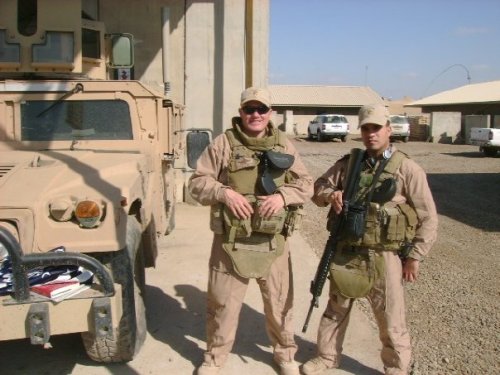
I have my medals from Iraq, the War on Terror and Korean Defense service.  I do believe that those men who stood the watch and many times paid with their lives or health should be recognized.  Other countries have done so.  I wonder why a few dollars per medal cannot be spent on men and women who served on the front line of freedom for 40 years. At the same time I understand that the costs of any such Medal would be born by DOD which is strapped to fight the ongoing wars.  I don’t think it realistic to have the money spent now, but maybe when the dust finally clears and these conflicts subside someone will take the time to remember these men and women.

The gentleman I saw recently never got a thank-you, never got a parade, and never was able to talk about the things that haunted him.  I wonder just how many more are waiting for the chance to come in from the cold.  If you know one of them, thank them for thier service and if they are one of those suffering from their service take care of them.

Peace, Steve+

Leave a comment

Filed under History, Loose thoughts and musings, Military, national security

My Brotherhood of War

Dynamic DuoRP2 Nelson Lebron and Me- The RST-2 “Desert Rats”
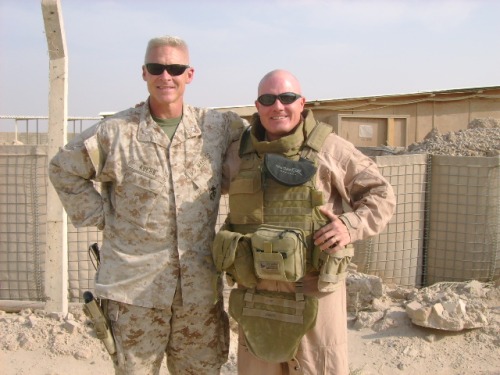
Back in the mid 80s shortly after I was commissioned as an Army Officer there was a series of historical novels by W.E.B. Griffin called the Brotherhood of War. The series traced the paths of several Army officers as well as family and friends beginning in World War II. I am not much of a reader of fiction, but this series, as well as Anton Meyer’s Once an Eagle well captured the unique culture of the career professional soldier through both war and peace.  They treated their subject respectfully while also dealing with the effect of this lifestyle on families as well as the soldiers, reading Once and Eagle I feel that connection with the fictional Sam Damon, the hero of the story and revulsion for the character of the self serving careerist Courtney Massengale.

I’ve been a military officer in both the Army and Navy now for almost 26 years with nearly 28 years total service. It is part of my heart, soul and being.  I was born for this, just as Babe Ruth, Willie Mays and Ted Williams were born to be baseball players.  I grew up in a Navy family as a Navy “Brat” living up and down the West Coast and the Philippines and all I can remember from the earliest age wanted to be in the Navy Officer and later Navy Chaplain.  My dreams came true.  The first 17 ½ years of my service was in the Army, something that that initially my retired Navy Chief Dad had problems with, however he made his peace with it and was proud that I served and proud of the fact that I had made Major.  However, in 1999 in order to return to active duty I resigned my Army Reserve commission as a Major and entered the Navy Chaplain Corps as a Lieutenant with no time in grade.  Outside of marrying my wife Judy, who somehow did not kill me when I did this, going in the Navy was the best thing that ever happened to me.

134LtCol David Kuehn and Me

Part of my time in the Army and Navy has been my time in the Chaplain Corps of each service.  I have been a chaplain for 17 years come September.  My best friends in the military are other chaplains, some from my own church and some from other communions.  The ones that I have the most connectedness to are those who have served in combat, especially those who served in Iraq, or ships in the war zone conducting various combat and maritime operations even when we were in different places.  In Iraq I was blessed to have Fr Jose Bautista-Rojas and Chaplain Pat McLaughlin supporting me at my base of operations.  There were others besides these men and many who were not chaplains. In Baghdad I had the staff of the Iraq Assistance Group Chief of Staff Colonel David Abramowitz and Chaplain Peter Dissmore and Captain Mike Langston at II MEF Forward.  Likewise I had Colonel Scott Cottrell and Colonel John Broadmeadow at 7th Iraqi Division Military Training Team, my friend LtCol David Kuehn at 3rd Brigade 1st Iraqi Division Military Training Team, LtCol Stephen Bien with the 2nd Border Brigade and a host of others about Al Anbar Province. As important if not more was my assistant RP2 Nelson Lebron, a true hero and friend.

chaplains and rp2 lebron at TQNelson, Fr Jose Bautista-Rojas, CDR Pat MCLaughlin and Me at TQ
Back in March of this year I was with a number of chaplains from my church gathered for our annual conference.  Some of these men I have now known for at least 10 years, some more.  I’ve seen the young guys start to age and others retired from the service.  We have grown together; we at least in most cases have come to love each other as brothers and friends.   What has made this conference different from past gatherings is that all of us have had one or more combat deployments or are getting ready to go for the first time or back for another tour.

nelson and me flight homeNelson and Me in the Air Everywhere

We have shared our stories but now they are the stories of men who have all seen war.  In our careers we have all experienced success, as well as heartache.  Due to our duty we have been often isolated from the church and each other.  We all came back from the war changed in some way.   Some of this is due to health related issues stemming from our service and for others things that we have seen or experienced.  Of course each of us has had different types of experience in country, but nonetheless our experienced changed all of us in some way or another.  For me the events have been trying to make sense of the torrent of emotional, physical and spiritual distress that I have had to deal with.  While I have made a lot of progress in some areas, there are a lot of places where I’m still sorting through things as are a number of my friends.  I can say that I often feel alienated from my own church.  When I read things that some of our bishops write or say I know that I do not belong.   Based on my service in combat and to my country for almost 28 years  and 13 years as a faithful priest I have tried.  The fact that with the exception of some of my fellow military priests I have no relationships with anyone in my church,   I was at one time banned from publishing by a former bishop.  I was forbidden to have contact with the priests of a my old diocese when I was stationed in it by the same man.  The civilian diocese that I transferred  to has had nothing to do with me for the most part since I was transferred to Virginia and since I moved here no one has bothered to say a thing to me.   None of this was because I didn’t try and the thing is I don’t care anymore.  I just plan on caring for God’s people where I’m at and building relationships with people who bother to invest in my life here. I haven’t the spiritual or emotional energy to keep trying to make something happen with people who obviously don’t care about me and haven’t for years.

This year our gathering was marked by a lot less light heartedness.  There was a lot less bravado than years past, more reflection, less intense discussion of the theological issues that have divided the Christian Church for centuries.  I know for myself I don’t have the energy to spend battling people over things that the rest of Christendom hasn’t been able to settle on.  For me I’m okay with the Canon of Scripture, the Creeds and the first 7 Ecumenical Councils, though I have a great love of the Second Vatican Council.  If people want to fight the other fights they can go ahead without me how many pins you can stick in the head of an Angel.

As far as health concerns I know that at least two of us have confirmed real live PTSD, and one with a case of TBI.  Based on the way others act I’m sure that almost all have at least a combat stress injury, and maybe a couple more have PTSD.  One young Army Chaplain has an Iraq acquired constrictive bronchiolitis, or bronchiolitis obliterans which has no cure. This young man has won two Bronze Stars and now has the lung capacity of a 70 year old man.  At best he can hope that his lungs will not worsen and only age at a normal pace, which means in 10 years he has 80 year old lungs.  This young man is a Priest who I have mentored, coached and been a friend and colleague of since before he was ordained.  He is looking at something that will kill him; it is just a matter of when.  He is going through all of his medical boards now at Fort Hood and expects that in six to eight months that he will be medically retired.  It seems to me that a hero is being kicked to the curb by the Green Machine after laying himself on the line for his country.  He was treated by many people in the Army Medical system with suspicion and made to prove that he was sick at almost every point until a high ranking medical officer found out about his case and sent him to civilian specialist for evaluation.

While I was at our conference I had a major PTSD meltdown where I basically hid in my room of a day and a half, sneaking out at night to gather with just a couple of my friends by the pool for beer and Krispy Kreme Doughnuts.  Unfortunately we could only get the store bought ones because the hot and fresh glazed go great with a good pilsner or lager.

We have several Chaplains who have won Bronze Stars for their service in combat. I was awarded the Defense Meritorious Service Medal for what I did in Iraq.  I treasure that award because it cost me something to get, I still have a lot of Iraq with me and I always will.  Some day when all is said and done I want to see some of my Iraq military friends again and visit the country as part of a journey of discovering the ancient.

Some of my friends and I have experienced the indifference of the medical and administrative parts of the DOD and VA systems, including sometimes people in our own military service.  When I returned I found my personal and professional belongings crammed into a trailer with those of my assistant because the office space was needed and we were deployed.  There are things which I considered important that are still missing and likely never to be found.  I know that it was not intended to hurt because the space was needed because of major unit re-stationing. If I was the Commanding Officer I would have probably done the same thing and since I have had command I know that mission comes first. You try to take care of people but some things fall through the crack. That is simply part of life.

On the other hand some of my friends have had experiences where they felt the cold indifference of bureaucratic systems often staffed by personnel, military, DOD Civilians or contractors who act if the returning or injured vet is there so they can have a job. To be sure there are a lot of very caring people in our organizations, but these coldly indifferent people seem to show up all too frequently. This unlike what happened at my unit is intolerable.

What touched me about my unit was once it became clear that I was a PTSD casualty they did everything to try to get me help.  My first Commodore, now Rear Admiral Frank Morneau pulled me into his office to make sure that I was alright and that I was getting the help that I needed.  The man who replaced him Commodore Tom Sitsch asked me a question that was totally legitimate.  “Where does a Chaplain go for help?”  When I went to Portsmouth Naval Medical Center I was strongly supported by both my department head and his deputy.  I wish that everyone who came back like I did had the support of both line officers and Chaplains in their immediate chain of command.  It makes all the difference in the world.

The chaplains that I have served with in Iraq are part of my brotherhood, be they from my church or not. I believe that most of us who have gone to war have by and large matured. We saw death and destruction and were exposed to danger from enemies that could strike in the most unexpected moments in the most unexpected ways.  We have experienced sometimes difficult adjustments to life back home, a knowledge that we are different and that we are even more cognizant of our own obligation to care for God’s people.  Our brotherhood has deepened as a result of war, of that I am sure.  We are truly brothers.

Peace, Steve+

3 Comments

Filed under healthcare, iraq,afghanistan, Military, PTSD, Religion, Tour in Iraq

Revisiting the Demons of PTSD: Returning to Iraq in Virginia a Year and a Half Later

Today I am attending a conference on Caregiver Operational Stress Control.  This brought out my “demons” as I was faced with the stories of others who had been to the same places that I have been in Iraq, and experienced similar things that I experienced on my return.  This is a re-posting of something that I wrote in March at the very beginning of this blog.  At that time I had very few readers.

I am glad to be at this training today.  I needed to take a Xanax when I arrived because I don’t do well with these kind of events anymore.  The intial session and a video of Dr Heidi Kraft talking about her expereinces at Al Taqaduum where I was based out of.  I was scheduled for another meeting but I knew that I needed to be here.  So I asked my Department Head who was going to the meeting if I could stay and he allowed me to do so. God bless him.

I received a note from a new friend in another country’s military, a physician with multiple tours in Afghanistan.  He is dealing with many of the things that I discuss in this essay and had a bad day that took him back to Afghanistan.  I am sure that he is not alone as I deal with many people in my Medical Center who have similar experiences.  Yesterday I was walking down a hallway near our Operating Room and I saw a pretty good sized blood spill on the floor. I was surprised at my reaction as I kept seeing it in my mind the rest of the day and flashbacks to Iraq and the TQ Shock Surgery Trauma platoon where I was pulled into a couple of the last major mass casualty events where 10-15 Marines or soldiers came in at a time. I began to see those wounder Marines on the tables and can visibly see those Marines, their wounds, even tattoos… I hope this helps break the code of silence.  I wrote this on a particularly rough day and will repost some of those early essays as they are still very relevant.  Peace, Steve+

964Trying not to Show my Stress and Exhaustion after 2 weeks out while in between flights at Al Asad

The feeling of abandonment and aloneness, separation and disconnection run deep for those returning from unpopular wars in which the majority of the citizens take no part.  The effects are devastating.  It is estimated that at least 100,000 Vietnam veterans have taken their lives in the years after that war.  Last year the Army had its highest number of active duty suicides ever recorded, January and February of 2009 have been banner months for Army suicides.  Of course as I noted in my previous post these numbers don’t include reservists and Guardsmen who have left active duty or veterans dischaged from the service.  Neither do they include the host of service men and women who died from causes undetermined.

Many veterans attempted to return to “normal life” and family following the war. Many only to have marriages fall apart, continue or leave untreated alcohol and drug addictions acquired in country which often follow them back destroying lives, families and careers.  Most felt cast aside and abandoned by the goverment and society. Many got through and return to life with few visible effects, but the scars live on.  My dad would never talk about his experience in the city of An Loc in 1972 where he as a Navy Chief Petty Officer was among a small group of Americans operating an emergency airstrip in the city which was besieged by the North Vietnamese and Viet Cong for 80 days.  I do know that it affected him, he wasn’t the same when he returned, he was a lot more tense and had some problems initially with alcohol.  He never talked about his time there.

I have seen the effects of this in so many lives,  I remember a Vietnam vet who attempted to kill himself with a shotgun blast to the chin in Dallas during my hospital residency.  He forgot to factor in recoil and blew off his face without hitting his brain or any major arteries.  He survived…talk about having something to be depressed about later.  I have seen the tears as veterans rejected by the country during and after than war begin to seek community with their wartime brothers, men who had experienced the same trauma followed by rejection and abandonment by the people that sent them to Southeast Asia.  One only has to talk to veterans of the Ia Drang, Khe Sahn, Hue City, the Central Highlands and Mekong Delta or read their stories to know what they have gone through.  LTG Hal Moore and Joseph Galloway in We Were Soldiers Once..and Young and We are Soldiers Still have deeply penatrating and soul searching views of Vietnam as does Bing West in The Village. Bernard Fall does the same from a French perspective in Hell in a Very Small Place and Street Without Joy. Alistair Horne’s book A Savage War of Peace discusses and tells the story of many French soldiers in Algeria, who fought a war, won it militarily and had their government abandon them, bringing out a mutiny and coup atempt by French Soldiers who had fought in Indochina, were almost immediately back in action in Algeria with little thanks or notice from thier countrymen.  Abandonment is an ever present reality and “demon” for many of us who have served regardless of our nationality, French, Canadien or American who have fought in wars that have not engaged the bulk of our fellow citizens. Go to the Vietnam Veterans Memorial in Washington DC and tocuh it, trace the outline of a name, look upon the makeshift memorials and tokens of remembrance left by comrades who came home and understand the sorrow and the sacrifice.

Unfortunately we would like to think that this is something out of history that we have learned from and applied the lessons and in doing so no longer have an issue.  Unfortunately this is not the case.  There are many, depending on the study anywhere from8-20 percent of returning Iraq and Afghanistan veterans who suffer from some type of PTSD, Combat Stress reaction or other psychological malady incurred during their tour. Similar numbers are reported by the Israeli Armed Forces in from the 1973 War forward.   The British are seeing the same now as their veterans return from war.  Canadian Forces assigned to the UN command during the Rwanda genocide suffer horribly from PTSD. The mission commander, LTG Romeo Dalliare now a Senator in the Canadian Parliament is a leading spokesman for those who suffer from PTSD. His book Shake Hands with the Devil is a study of how military professionals were exposed to atrocities that they either were forbidden to stop or lacked the combat power to do so even if they wanted to.  These men and women tell their story in a video put out by Canadian Armed Forces.

105Convoy along Route Uranium

I am not going to rehash stories that I have recounted in my other posts dealing with PTSD here, but both I and many men and women that I know are scarred by the unseen wounds of this war.  We gladly recognize, and rightfully so, those who suffer physical wounds.  At the same time those who are dying inside are often ignored by their commands or if they come out are shunted into programs designed to “fix” them.  In other words make them ready for the next deployment.  I am not saying here that there is an intentional neglect of our service men and women who suffer from PTSD and other issues.  I do not think that is the case, but it is a fact of life. The military is shorthanded and stretched to the breaking point. Many Army Soldiers and US Marines have made 3-5 deployments since 2003. The Navy has sent over 50,000 sailors, not including those assigned with the Marines into “Individual Augmentation” billets in support of operations in Iraq, Afghanistan, the Horn of Africa and other fronts in this war.  The Navy personnel, as well as Air Force personnel who perform similar missions often do not have the luxury of going to war and coming home with a particular unit.  We serve often in isolation and incredibly disconnected from our commands, our service is often misunderstood.  Now there are efforts by the services and some commands to do things better to support our sailors, some of these at my own hospital.  However as an institution the military has not fully made the adjustment yet.

Many sailors feel abandoned by the country and sometimes, especially when deployed by the Navy itself.  I have debriefed hundreds of these men and women.  Almost all report anger and use terms such as being abandon, cut off and thrown away by the service and the country.  Those from all services who work in unusual joint billets such as advisers to local military and police forces in Afghanistan and Iraq feel a sense of kinship with each other, often feel a connection to the Iraqis and Afghans but are often not promoted or advanced at the same rate as others who have served in conventional forces in traditional jobs.  There was a film called Go tell the Spartans staring Burt Lancaster about Army advisers in the early stages of Vietnam.  If you see it and have been to Iraq with our advisers you can see some of the same dynamics at work.

At this point we are still engaged in Iraq and Afghanistan.  These wars divided the nation and the veterans, though better treated and appreciated by society than most of thier Vietnam counterparts have no memorial.  Words of thanks uttered by politicans and punits abound, our Vietnam era and other fellow veterans in their latter years come to the airports that we fly in and out of to say thank you, but our numbers are rising, the war rages on both in country and in our minds and lives are being lost long after soldiers have left the battlefield.

not a happy camperNot Doing Well on Leave about 5 months After my Return from Iraq

We have to do a better job of ensuring that those who sacrifice so much do not feel that they have been cut off and abandoned while they are in theater and especially when they return. When it is time we need a memorial on the Capitol Mall for those who served in these wars.  I don’t know when that will be, but I do hope to see it in my day.  Sure it’s only symbolic, but symbols can be healing too, just look at the black granite wall rising up from the ground and going back down into it, filled with the names of those who gave their lives and made the supreme sacrifice in Southeast Asia.  Simply known by most as “the Wall” it has become a place of healing and rememberance.  A place to say thank you, goodbye and amen.

Peace and blessings, Steve+

5 Comments

Filed under healthcare, iraq,afghanistan, Military, PTSD, Tour in Iraq, vietnam

Roster Moves: No Game, Series or Season in Baseball or Life Goes Without Them

046Norfolk Tides Manager Gary Allenson making a Slight Adjustment to the Outfield with 1 Out in the 9th Inning

Larry: Who’s this? Who are you?
Crash Davis: I’m the player to be named later.

From Bull Durham

Sometimes I feel like the player to be named later.  I am amazed at the changes on a baseball team’s roster during the course of a season.  At the same time being in the military for almost 28 years I have some understanding of them in daily life.  This season with the Norfolk Tides and my place of work at a Major Naval Medical Center has been a perfect example of how no roster survives intact.

Now this is nothing new, as long as there have been baseball teams and militaries there have been personnel changes.  In baseball as in the military there is constant moves of personnel as people are transferred, promoted, demoted, are injured or retire from either the service or the game.  Sometimes roster moves are part of a natural process as an organization decides how it wants to chart its future. Other times they are dictated by a need that occurs that has not been anticipated such as injuries, trades, transfers, retirements or personnel or budget constraints, either expected or unexpected.

In the Minor Leagues the Minor League affiliates exist to supply their Major League organization with young talent, player development, rehabilitation and depth to meet the demands of a long season.  It is similar in the military where support and training organizations exist to meet the needs of the operating forces.  This is true regardless of military branch of service.   When the Major League Team or the operating forces are stretched, experience losses or suffer setbacks it is common for them to draw upon the support and training organizations to fill the holes and meet the needs of the larger organization.

I have watched this close up in two worlds this year both where I work and where I watch the Tides play ball.  At work this has occurred where due to retirements and transfers our department has lost a lot of people who have not yet been replaced, creating a lot of pressure on those who remain, likewise we are tasked with more missions to support the operating forces.  The same is true of the rest of the Medical Center where many physicians, nurses, corpsmen and other sailors have been deployed to meet the demands of the expanding war in Afghanistan while still supporting other worldwide commitments and our own home town mission.  While this is going on other needs have come up in caring for returning warriors, wounded warriors and their families as well as the rest of the military community that depends on us for their primary and specialized medical care.  I have seen more colleagues and friends than I can count be deployed from what is supposedly a pretty safe “non-deploying” shore billet to support the operating forces, Navy, Marines and Joint or NATO.  I have watched the organization adapt to the call ups by moving people around as well as finding people to fill the void, even if they are only on contract.

Our Norfolk Tides began the season with a very solid roster and within two months the big club, the Baltimore Orioles had called up several pitchers as well as the heart of the batting order, Outfielder Nolan Reimold, Catcher Matt Wieters and Infielder Oscar Salazar.  Meanwhile the Tides lost several players to injuries which forced Manager Gary Allenson and the Orioles organization to fins personnel both within and outside of the organization to fill the gaps created by call ups to the big team and injuries.  To do this they brought up players from AA Bowie, moved players down from Baltimore and found and traded for players outside of the Orioles system.  At first the adjustment was difficult but now the new players and those who were left are coming together to keep the team, at least for now in first place in the International League South.   Yet with every move the organization has to decide how to best utilize the players that it has.  In the case of the Tides this comes down to Manager Gary Allenson and his coaches working together with the rest of the Orioles organization.

Even in the midst of a game there are roster changes, sometimes for pitchers, sometimes hitter and sometimes even for running or defense.  Some of the changes are for injuries, or situational based on statistics of what you have empirical evidence to show that one course of action is better than another.  Thus you have relief pitchers and pinch hitters or runners.  No at bat or even pitch is the same, which is like life, nothing remains the same so you must make the adjustments on every play.

At the personal level changes affects everyone in the organization even if their job in the organization does not change.  At the minimum the changes affect the dynamics of the work environment, the chemistry between teams and the concern for friends who have left the organization with whom we have invested significant amounts of time and emotional energy.  Thus when Oscar Salazar was called up by Baltimore it left a huge hole in the team because Salazar was not only a leading contributor on the field but his tremendously positive attitude off the field in energizing the team and working with younger players.  Individual losses while seemingly statistically insignificant can be magnified by the intangibles of what a person brings to the team.  Some who seem to have all the right stuff may not be missed, while others who maybe don’t have the same talent level as others might be more sorely missed.  Since a team depends on the efforts of everyone, especially in baseball where the game is both immensely individual and absolutely interdependent personnel changes must be weighed carefully in the overall mission of the team or organization.  The Tides are fortunate to be with Baltimore as the organization is not only scouting talent for the O’s but their Minor League affiliates.  I met a Baltimore Scout at a Tides game over the weekend who said they were out seeking hitters for Norfolk due to call ups to the O’s and injuries to members of the Tides.  The larger organization, though a work in progress recognizes that its future lies in its Minor League system.  Thus over the past couple of weeks they have picked up Michael Aubrey from the Cleveland organization and Victor Diaz, a former Tides Outfielder when they were in the Mets organization and who later played in New York, Texas and the Houston organization before playing with the Hanwha Eagles in South Korea before being signed by the Orioles and assisted to the Tides.  A good organization not only looks to the situation they are currently facing u to the future.  A bad organization does not plan for the future but only concentrates on the present.  In the case of the Tides we are prospering under Baltimore but suffered for almost 20 years under the Mets, who have continued to neglect and abuse their farm system, especially their AAA affiliates.  The fans in Buffalo despise the relationship.

On the personal level this also means that individuals can be moved around to meet the needs of the organization.  This does not always make players happy be they ball players or military personnel.  There have been times in my career that I did not like what was happening to me in the organization, not so in the Navy but definitely in hte first part of my Army career. Such unhappiness when left unchecked can lead to blow ups.  The movie Bull Durham has a great example where Crash Davis, played by Kevin Costner complains about his reassignment from an AAA team back to a single A team.

Crash Davis: You don’t want a ballplayer; you want a stable pony.
Skip: Nah.
Crash Davis: Well, my triple-A contract gets bought out so I can hold some flavor-of-the-month’s dick in the bus leagues, is that it? Well, f— this f—ing game!
[pause]
Crash Davis: I quit, all right? I f—ing quit.
[Crash exits the office and stands in the clubhouse for a minute before sticking his head back through the door]
Crash Davis: Who we play tomorrow?
Skip: Winston-Salem. Batting practice at 11:30.

I cannot say that in my Navy career I have ever felt like Crash Davis,  in fact I have even when doing a lot of “relief” work and been moved around sometimes faster than I wanted to be because I was needed to put out a fire. At the same time I have  always been dealt with well.  I have not been sent back down in the organization, but have been moved up or laterally to do different jobs, like I said often on short notice like the time when two different chaplains were fired and I went from one job to the next and ended up nine or ten weeks at 29 Palms prior to a 7 month deployment in two different battalions. Those were stressful, but not bad and the organization treated me well.  Some people don’t have that experience however and roster moves on short notice can be a source of consternation, anger and discord if not handled well by the team manager or the command.

However I did come into the Navy at a lower rank than I left the Army in 1999 just to get back in the show that was the cost of getting back in the game full time, something I am amazed that I got the chance to do and every grateful to the Navy, my Bishop and the Deity Herself.   In my current billet I love what I do and who I do it with, but the organization will be making some changes as we graduate our current residents, gain new residents, gain and lose other personnel and adjust to meet an ever changing and increasing mission.  While we do this we seek to set the standard of professional competency not only in the Navy but the civilian world.  For me this will involve changes, changes that on one level I resist, but on another level completely understand and agree with as the way to help the organization move forward.  Come September those changes will be made.  I can say that I don’t feel like Crash because this involves things that I have always wanted to do but unless I am adaptable will not be able to do, unless the Deity Herself creates a couple extra days to the week and makes every day a 32 hour day.  Thus I will adjust as will the rest of the organization as we collectively work together to ensure that we are taking care of those that God has given us.

So far as the story goes tonight, the one constant in the season is change, teamwork and adjustment to change. As Sparky Anderson once said “If a team is in a positive frame of mind, it will have a good attitude. If it has a good attitude, it will make a commitment to playing the game right. If it plays the game right, it will win—unless, of course, it doesn’t have enough talent to win, and no manager can make goose-liver pate out of goose feathers, so why worry?”  Thankfully, our leadership seems to be rising to the task and and we have the talent, so why worry?

Peace, Steve+

2 Comments

Filed under Baseball, leadership, Loose thoughts and musings, Military, philosophy