Category Archives: Military

More on our Unsung Heroes-Military Advisers, Past and Present

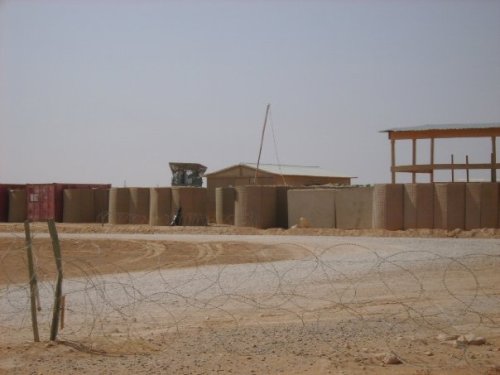
cop-south

Iraqi COP on Syrian Border

While many people know about conventional military campaigns through the plethora of books, articles and electronic media outlets, the subject of advisers is on that is seldom touched upon.  This is true in history, journalism and media. It is not a glamorous subject.  There are few books, articles or movies on the subject.  Part of this is because advisers don’t have all the heavy duty gear that looks good in print or on TV.  They serve with foreigners, and unfortunately, many Americans have no interest in other people, their history or their culture.  So the advisers labor in obscurity.  Living among the soldiers of the nations that they are in they serve in small teams, often far from any support if they get in trouble. Advisers have often stayed after the bulk of American forces leave.

This is not new.  It was the case in Vietnam.  Take the story of Captain, later Colonel John Ripley, adviser to a Vietnamese Marine Battalion, Ripley was awarded the Navy Cross for his actions on Easter Sunday 1972.  This was hte day that the North Vietnamese opened their Easter offensive.  Ripley under intense fire blew up major highway bridge over the Dong Ha.  Supported by fires from his Vietnamese Marines he would dangle under the bridge for three hours, rigging 500 pounds of explosives to it.  His actions prevented 20,000 NVA soldiers and over 200 tanks from crossing the river near the DMZ.  His actions are recorded in The Bridge a Dong Ha. Similarly, Captain, later Major General Ray Smith was awarded the Navy Cross for his actions with a small Vietnamese Marine unit on April 1st 1972. These men’s exploits were not uncommon.  Unfortunately the majority of the Vietnam era advisers have been forgotten.  The film Go Tell The Spartans starting Burt Lancaster told the story of a team of advisers at the beginning of the Vietnam War.

Unfortunately the military itself doesn’t always treat these men and women with the respect that they deserve. Adviser tours are often not treated the same as service with “big battalions.”  The duty is not glamorous.  Many times advisers and trainers are chosen from men passed over for higher level command at the Lieutenant Colonel and and Colonel level. In the current wars I have met many of these men.  Devoted, honorable and professional, they serve in places where their decisions and example will impact Iraq and possibly Afghanistan in ways that the big battalions can never will.  Many of these men are in the twilight of their careers and many times volunteer for one last chance to serve in combat.  Others are pulled from the Reserves, and some even pulled out of retirement.  I knew men in each category.  Younger officers and staff non-commissioned officers are often pulled out of traditional assignments for adviser duty.  They often assume greater responsibility, advising and sometimes even directing units far larger then they would in a normal assignment.  They have to be diplomats, trainers, mentors, and advisers to foreign officers senior in rank to them.  In the case of some Iraqi officers, men who have served in several wars commanding troops on the front lines.  To do the job right advisers have to learn the language, culture and traditions of the units that they advise.  It takes maturity, wisdom and tact to do this work.  Junior officers and non-commissioned officers also serve in these capacities at the battalion and company level.   I had the opportunity to serve with many of these men in isolated camps, they are to be admired and congratulated for the tremendous work that they do.

Navy and Air Force personnel often are found advising medical, logistics and civil engineering units.  Likewise they are also found in reconstruction and development teams.  In these places women as well as men advise the indigenous personnel.  They often, especially in Afghanistan share the same dangers of those who advise combat  units. This was the capacity that LT Choe and LTJG Toner were killed.  She was a Medical Service Corps officer.  LTJG Toner was a Civil Engineer Corps Officer.
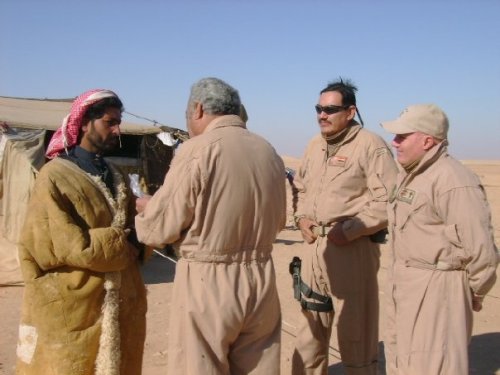
bedouin-meeting

Meeting with Bedouin Family

Before I went to Iraq in 2005 I knew a Marine Corps Captain who was pulled from our unit to serve as a battalion level adviser in Iraq.  In Iraq this young Marine Officer had a bounty on his head.  A Chechen sniper attempted to take him out.  The bullet hit the lip of Kevlar helmet, just above his left eye. less than an inch lower it would have gone through his forehead.  The Iraqis found and eliminated the sniper. The Captain survived and finished his tour.  He kept the helmet.  A Gunnery Sergeant serving with an Iraqi infantry company was wounded in a convoy action.  He told me his stories and how his return back to the states was.  It was difficult, but he said that he would not have missed the assignment, saying that “his Iraqis” were like brothers to him.

As a chaplain in the largest operational area I was able to see the diversity of our teams, the conditions that they lived and the people that they worked with.  I prepared by reading about the Army Chaplains who served in this role during the Vietnam War.  It was actually just part of a chapter of the Army Chaplain Corps History of the Vietnam War.  However, that chapter taught me something that I figured would have to be true.  I had to be out and about with them. I good friend of mine followed me into Iraq.  He went to a different area with Army advisers in Mosul.

My tour not only allowed me to serve with these men and women but to work with the Iraqis and see things that many Americans never get to see.  One of the more interesting events was getting to speak to the first class of female Iraqi Police Officers in Ramadi.  There were also the foot patrols with the Port of Entry teams at Al Waleed on the Syrian Border.  Our little team met with Iraqi officials and mingled among a crowd of several thousand Iraqis waiting to be processed back into the country.  Since this was the busiest port of entry into the country it was the site of a lot of terrorist activity, weapons and currency smuggling.  In another place we were with a Brigade senior adviser who had to have a Iraqi Colonel who had just taken command of a unit fire his logistics officer who was selling coalition fuel on the black market. It was a very tense exchange.  The accused officer even tried to involve me in the conversation, saying that if people followed God that they would be honest.  Our senior adviser asked him if God would approve of him betraying his country.  The officer was fired.  The senior adviser later told us that this officer had put a price on his head before this confrontation.  All through the meeting my assistant, RP2 Lebron sat menacingly to the side enforcing peace in the the tense moment.  Thankfully the new Iraqi commander, who had taken over from a corrupt General was an old pro and had the job of cleaning house.  Things got better after that.  I was with one team when one of their favorite Iraqi officers was killed while out with his troops.  Our guys were saddened by the loss.

Like I said on my previous post, these are the unsung heroes of the Iraq war and the war in Afghanistan.  Their sacrifice and service needs to be vocalized.  This part of the war is now part of my life. The story of these men and women needs to be told.  I will not let them be forgotten.
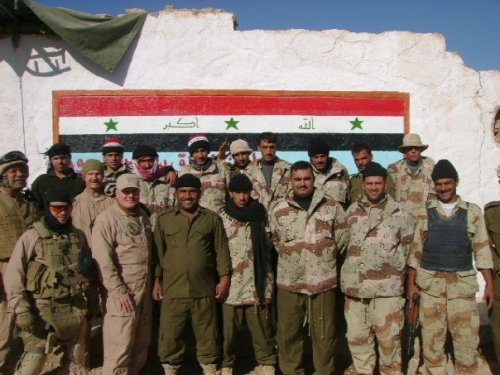
iraqi-border-troop

With Advisers and Iraqi Border Troops
Leave a comment

Filed under Foreign Policy, History, Military

The Dangerous and Often Thankless Duty of Military Advisers

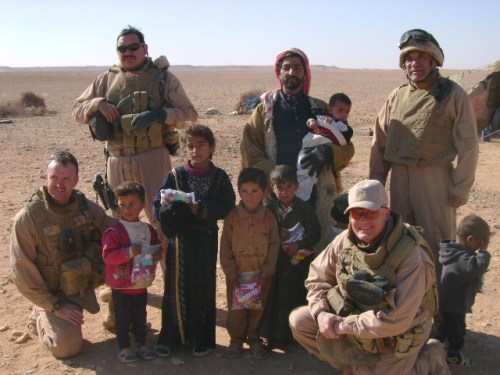
me-and-btt-with-bedouin-kids1 Me with Advisers to the 2nd Border Brigade with Bedouin Family on Syrian Border 23 December 2007
There are a group of US Military personnel that are seldom thought of or mentioned in the wars that we are waging in Iraq and Afghanistan. These men and women from all branches of the military are those who serve as advisers, trainers and mentors to these nations security forces.  The duty is dangerous.  The advisers, be they to the military, police, or civil administrations often work in the most isolated places in these countries and are stationed in small teams with the Iraqis and Afghans that they advise.  The are often far from the “big battalions” that have lots of firepower available and often operate out of larger and more secure bases with air support close at hand.

Recently there have been a number of incidents where advisers have been killed by either renegade soldiers or police, or by infiltrators posing as security force personnel.  In one humanitarian operation a couple of Army advisers were killed in Iraq.  These men were working with an Iraqi unit in doing humanitarian work in a village. On March 27th Navy LT Florence Choe and LTJG Francis Toner IV were killed by an Afghan insurgent posing as an Afghan Army soldier.  For me these events triggered some anxiety as I remembered how many times I was incredibly exposed to danger from the same kind of events.  A couple of days ago I mentioned that I had been feeling some anxiety that I could not explain.  I finally figured it out.  It began after I read about the death of these Naval Officers serving in Afghanistan. Since then every siren, loud noise and helicopter has raised my alert level.

The advisers are drawn from all services.  They are all Individual Augments that come from both the Active and Reserve components.  They do not deploy with their own units, which means that they go to war with people that they might have trained alongside getting ready for the mission, but otherwise have not served with.  When they come home they go back to their old assignments or new orders and are separated from the men and women that they served alongside for 7 to 15 months.  In other words they are isolated when they return home and go back to places where the majority of personnel, even those who have been “in country” have no earthly idea or appreciation of the conditions that they served in and dangers that they faced.  This happened to me when I returned and I went through an emotional collapse as the PTSD that I did not know I had kicked my ass.  Sights, smells, noises, crowds, airports and in fact almost everything but baseball diamonds caused me to melt down as they all brought the danger back to me. Don’t get me wrong, my tour in Iraq was the highlight of 27 plus years in the military, the part of which I am the most proud.

I have a special place for these men and women.  I served with them in Iraq’s Al Anbar Province as the first Navy Chaplain, and on of the first chaplains of any service to be assigned to cover these teams since Vietnam.  My assistant, RP2 Nelson Lebron and I deployed together from out unit.  I had prepared well.  I had been on the bubble to deploy for months.  My background in military history and past service with both the Army and Marines helped me. Likewise my military and civilian education helped me.  Shortly before we were notified of the deployment I went to the Jordanian Army Peace Operations Training Center course on Iraqi culture, religion and society.  I had served as a chaplain in the trauma department of one of the largest trauma centers in the country.  RP2 Lebron had deployed multiple times to Iraq, Beirut and Afghanistan where he was awarded the Defense Meritorious Service Medal (no small feat for an E-5).  He is also an incredibly gifted boxer, kick boxer and martial artist who has fought on Team USA and holds more title belts than I can count.  He most recently won the Arnold Schwarzenegger Classic. I had served with him before and he knew that his mission was to keep me safe.  I don’t want to sound arrogant, but the Chief of Staff of the Iraq Assistance Group said that we were “the best ministry team he had seen in 28 years in the Army.”

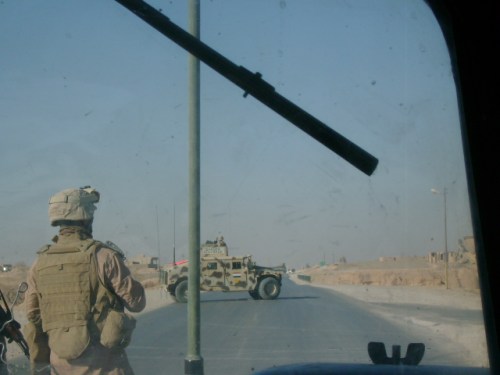
When we went to Al Anbar we were sent out with the Marines and Soldiers advising the 1st and 7th Iraqi Army Divisions, The Iraqi Police, Highway Patrol, the 2nd Border Forces Brigade and Port of Entry Police.  We operated in a area the size of the state of Oregon.  In some cases it would take us 2 days by air and convoy to reach isolated teams on the Syrian border.  When you travel by air in Iraq you are always at the mercy of the weather and aircraft availability. I had the rare privilege as a Lieutenant Commander to be able to arrange all of my own air transportation.  Most people, including people higher ranking than me had to depend on others to do this for them.  We worked with our advisers to get out to them.  We would be out 5-12 days at a time with anywhere from 4 to 7 days between missions.  In our 7 months we traveled over 4500 air miles and 1500 ground miles.  Almost all of our air travel was rotor wing. We flew in CH-46, CH-47 and MH-53s and the MV-22 Osprey.  Our convoys were usually not larger than 3 American HUMMVs and sometimes a few Iraqi vehicles.  Our biggest guns were .50 cal or M240B machine guns.  Most of the time we were in places that had no large forces in position to help us if we got in trouble.  Even on the bases we were isolated.  Our teams were with the Iraqis in almost all cases.  We often ate in Iraqi chow halls and used Iraqi shower trailers.  Our advisers had us meeting their Iraqi counterparts.  We met and dined with Iraqi Generals, had ch’ai (tea) with small groups of Americans and Iraqis and got out with the Bedouins. We were in a number of particularly sensitive and dangerous situations with our advisers.  It was an incredible, once in a lifetime tour serving with some of the greatest Americans and Iraqis around. Iraqi soldiers in with our convoys would ask me to bless their trucks with Holy Water like I was doing with the American trucks.  I came to admire many of the professional Iraqi officers that I came to know and pray for the people of Iraq, that God would grant them peace. They are wonderfully hospitable and gracious.  We were often treated to food and tea by Iraqi soldiers, and civilians.  After nearly 30 years of nearly continous war, dictatorship and terrorism, they deserve peace and security.

iraqi-army-hummv-in-convoy-paused-at-road-junctionCombined US Iraqi Convoy

I had one Iraqi operations officer, a Sunni Muslim tell me that he wished that his Army had Christian priests because they would take care of his soldiers and had no political axe to grind. He said that the Army did not trust most Imams or Mullahs because they had compromised themselves during the civil war.  Another officer, a Shia Muslim came to me to thank me for being there to take care of our Marines.  He said that he, an Iraqi Shia Arab, hoped that if they had any problems from the Persians (Iranians), that we would help them.  These is little truth to what is floated that Iraqi and Iranian Shia like each other.  The memories of the past die hard in the Middle East.  When Persia ruled Iraq they treated the Arabs like dirt. Likewise the memories of the Iran-Iraq war are still alive.  Iraqi Arabs, Sunni, Shia and even Christian have little love for the “Persians.”  General Sabah of the 7th Division had us to his quarters for dinner. We had a wonderful and friendly discussion about similarities and differences in Christianity and Islam. We departed friends. The last time I saw him ws in the Ramadi heliport.  He saw me, ran up to me in from of his staff and Americans in the little terminal and gave me a bear hug, telling all that I was his friend. Another Iraqi General told me just before we left to come back as a tourist in 5 years because everything would be better.  I honestly think that he is right.  I hope to go back someday.  It would be a privilege to see my Iraqi friends again.

This is what our advisers get to do every day. Yes they are exposed to great danger, but they are building bridges between peoples of different history and culture.  They are the unsung heroes of these wars and will likely never get credit for all that they have done.  They have my highest admiration and I hope that if you know one of these men or women that you will thank them.  I pray that they will all come home safe and be blessed with success.  I would certanly serve with them again at any time and in any place.

Please keep the families of LT Choe and LTJG Toner in your prayers. A link about these fine Naval Officers is below. Peace, Steve+

http://afghanistan.pigstye.net/article.php?story=FlorenceBChoe

3rd-bn-mtt-group-with-chaplainWith “Ronin” Advisors to 3rd Bn 3rd Brigade 7th Iraqi Division

2 Comments

Filed under Foreign Policy, Military, PTSD

The NWU- Now we all have different camouflage

Back in the early 1980s the Army adopted the BDU, or the Battle Dress uniform.  I was issued my first sets back in late 1981 along with the old green permanent press fatigues. The old fatigues were phased out in 1985 and I wore mine up to the last day.  The were comfortable, you could starch the hell out of them to the point that you would “break starch” to get into them in the morning.  The BDUs initially were pretty sorry looking.  You were not even allowed to iron them and the material never came out of the wash unwrinkled. Eventually ironing but no starch was allowed. Rebellion broke out in the ranks. A general showed up in a badly wrinkled uniform for a speech and angered a lot of soldiers. He looked terrible. People who couldn’t stand to look like dirt bags started with sizing and then graduated to starch.  Eventually realizing that no one was obeying the order anyway the Army modified the design and allowed soldiers to starch the uniform.  The other services adopted this uniform in the 1980s and 1990s along with its desert counterpart, the DCU. Pressed and starched with spit shined boots the BDU finally looked pretty good.

These were the standard uniforms until about 2000 when the Marines decided that they were tired of being mistaken for soldiers due to the BDU.  It was in 2000 that the Marine Pattern (MARPAT) Digital Camouflage uniform test and evaluation designs were introduced.  I was with 3rd Battalion 8th Marines in Okinawa when they were field tested.  Several variations were tried and eventually the current Desert and Woodland uniforms were introduced.  To keep the Army from simply appropriating the design the Marines put little Eagle Globe and Anchor insignia in the digital pattern.  The uniform is well designed and functional and the suede boots made life easy.  The Marines also kept their tradition of pin on rank insignia that could be taken off in field environments if needed.  It became the envy of the rest of the US services and the military services of other nations soon went to variations of digital camouflage. As a Navy Chaplain assigned with the Fleet Marine Forces I found it to be a great improvement over the old BDUs.

The Army was the next service to make the change.  Thus was born the ACU, or Army Combat Uniform, not that anyone else would have it, but the Army made it their own.  The ACU is kind of an off green or light green and nearly puke colored uniform that was designed to be worn in either the desert or the woodlands.  In the desert it stands out, it is simply too dark and the wrong color.  Likewise I don’t think that it blends in that well in the woods havinf seen soldiers walking through the woods in them.   The  Army did a couple of things that broke tradition big time on this uniform.  First they changed the location of the insignia from the collar to a tab on the chest.  The placement of it on the chest and the subdued color make them hard to see. Soldeirs have to gaze at the chest of the other soldier to see if they need to salute.  I’m sure many male soldiers have used this excuse to scope out female officers.  “Sorry ma’am, couldn’t see your rank.”  They changed the manner in which insignia were applied from sewing to Velcro.  There is Velcro all over this uniform. Children have been known to have their hair get stuck in the Velcro and pulled down hallways and driveways. Soldiers have bumped into each other and become stuck like Siamese twins while marching. Pranksters find the placement of “hit me” or “kick me” stickers much easier.  The front pockets are angled so oddly that it looks unnatural.  The collar is not symmetrical, supposedly so it more easily can be buttoned around the neck. I wonder when the Army will modify this uniform to make it look better  I admit that  looks aren’t everything, but the Army at one time had some pretty great looking uniforms.  Frankly we have to do better.  I saw my first pair in about 2004 when visiting a Marine in an Army Medical Center. Seeing me in my Marine uniform an officer remarked about his ACUs: “Yes they do look as bad in person as they do on TV.”

So the Air Force came next and fielded their Airman Battle Uniform or ABU.  It was the product of several failed attempts to get an acceptable design.  It has a “tiger stripe” pattern similar to a pattern worn in Vietnam It is is a combination of light green, tan, gray and Air Force Blue.  In my humble opinion it is better looking than the Army uniform.  The Air Force at least did keep to their tradition in placement of insignia and name tapes for both officer and enlisted personnel.

The Navy was the last to join the parade.  It began testing the Navy Working Uniform (NWU) a few years back. Two patterns were tested a Blue,, gray, gray green and black; and a gray and black pattern. Sailors allowed to vote for their favorite.  The gray and black uniform was in my opinion a better color scheme.  That design could be worn on ships and shore stations and if need be could have been used in the field.  We would have looked like the Wehrmacht but who worries about that.  The Blue pattern was voted in by the sailors and it  is now in the process of being fielded throughout the fleet.  It is not a field uniform.  It is a work uniform and will replace a number of other work uniforms found throughout the Navy.  The Navy will field woodland and desert versions as well for units like the Expeditionary Forces, Riverine, EOD, SEABEES and SEALS.  The camouflage includes a Navy Eagle and USN in the digital pattern similar to the Marine design.  It is a similar fabric to Marine woodlands, permanent press and wash and wear.  It has smooth leather boots for sea platforms and optional suede boots for shore commands. I got the suede because I got spoiled by the Marines.  The Navy has kept tradition in some parts of this uniform. The lettering for the name tapes is silver for enlisted and gold for officers and Chief Petty Officers.  Officer and enlisted qualification devices are the appropriate color.  We have kept the traditional 8 point cover (hat to non-sailors). It is actually a nice looking uniform, a little strange at first but decent looking.  I sometimes joke and call the NWU the New Weird Uniform, but after my first day I confess that I like it.  However, if you fall overboard in this uniform you will blend in to the vast expanse of the ocean and never be seen again. The blue camouflage may not be that great on land, but hopefully sharks will have a harder time picking you out while you wait to be rescued.

So we now all have our own pattern, at least no one will confuse us for the Army.  In good fun,

Peace, Steve+

6 Comments

Filed under Loose thoughts and musings, Military

Bull Durham- Crash Davis and Journeymen Like Me

I’ve always related to the characters in Kevin Costner’s baseball films, Bull Durham, Field of Dreams and For the Love of the Game. The main characters in each of the films touch me each in a different way.

The character of Crash Davis strikes a particular chord in me.  Crash is a journeyman minor league catcher with the dubious distinction of having the most minor league homers. He also played by the way 3 weeks in “the show. ”   He is a consummate professional, loves the game and actually cares about the development of the young guys, even if they try his patience.  His dealings with Ebby Calvin “Nuke” LaLooche (Tim Robbins) is case in point.  Crash is demoted by the big team from a AAA contract to a single A contract to develop the young bonus baby.  He’s not happy with the job, he’s proud, but he takes it on with a mixture of skill and humor in a manner that benefits not only the young pitcher but motivates the rest of the team.  It does not matter that he is in the minor leagues as he still plays his heart out and spends his time teaching the next generation.  He even gets thrown out of a games if it helps motivate his team and let’s his young charge learn the hard way when young “Nuke” decides to ignore his advice.

My life is like a journeyman ball player.  I started in the Army,and to use the baseball journeyman analogy I played one position for a number of years and then so to speak left the big team to train for a new position while playing in the minors.  When I graduated from seminary and becoming a National Guard and Reserve Chaplain  while doing my hospital residency and first hospital chaplain jobs it was like working my way up through the minors.  When I was promoted to the rank of Major in the Army Reserve it was like moving up to Triple A ball.  When I got mobilized it was like getting promoted to the majors.  When that time ended and I returned to the reserve it was like being sent back to the minors.  I honestly thought that I would spend the rest of my career there, maybe getting called up for brief periods of time but knowing that my career was destined to end in the minor leagues.  That changed when I was given a chance to go into the Navy.  I reduced in rank and came in with no time in grade meaning that I was starting from scratch with a new slate.  Now all of my experience was still there, but I was starting over.  It was like when a player gets traded between from the American League to the National League in mid season, or is called up from the minors to play on the big team.  His slate is clear, it is a new start.

I’ve been blessed, I got a chance to go back and live my dream serving as an active duty Navy Chaplain.  I’ve gotten to serve on ship and with the Marines and EOD.  I’ve travelled the world and I’ve gone to war.  I’m not the same as I was as when I started.  I have issues, maybe even the full subscription.  I have streaks where I am hot and when I am not, I have my slumps.  I’m somewhat superstitious but I make do.  However, what drives me now is twofold; first to care for those in my ICUs, patients, families and staff.  Second to help the young guys and gals along.  I’ve been in the military since before many of them were born.  In a sense I’m a Crash Davis kind of guy.  I love the movie and the character. I hope we can all find something or someone to help connect us to what we do in life.  Somehow in Her grace the Deity allows me to find this in baseball.

Peace, Steve+

Leave a comment

Filed under Baseball, Military, Religion

The Practical Side of Gays in the Military

Note:  This is not a political or social screed.  I am not advocating immediate changes in law. this is really how I have seen military culture evolving over the 27 plus years of my career. These patently are simply my observations and have both a bit of seriousness as well as humor.  I am most definitely a dyed in the wool heterosexual, not that there’s anything wrong with that, but I think that someone without a political axe to grind on either the gay rights or anti-gay rights movement who is in the military have to have a say.  I know that I could be wading into Vietnam here but here I go….

When I enlisted in August of 1981, gays were not allowed to serve in the military.  It was even on the recruiting form. Applicants were asked under the penalty of making a false official statement “Are you a homosexual?”  Who can forget the scene in Stripes where Bill Murray and Harold Ramis are asked by the Army recruiter “Are either of you homosexual?” Their reply was a hoot.  They looked at each other and Bill Murray replied “you mean like flaming or…” The recruiter then said “It’s a standard question we have to ask.” Harold Ramis then quipped “We’re not homosexual, but we’re willing to learn.” Bill Murray adding “Would they send us to someplace special?”  The recruiter then ends the exchange  “I guess that’s a no on both.”  It was a hilarious scene as we all had to answer the question.

Plain and simple if a person lied about being homosexual and was later discovered he was in deep dung, even an accusation of being gay could result in being charged under the UCMJ or at the very least investigated.  Soldiers could be taken to Article 15 proceedings  (Captain’s Mast in the Navy, Office Hours in the Marines) or possibly even a courts-martial. Depending on the charges one could recieve a punitive discharge, such a Bad Conduct Discharge, or administrative discharge under a General, General under Other than Honorable, or Other than Honorable conditions.

Back in my days as a company XO and company commander in the 1980s I had a number of soldiers, male and female who I knew that were gay.  I had grown up in California, had gay friends and even when someone was hiding it I pretty much knew.  If I was homophobic I could have made accusations, began investigations and made these soldiers lives hell.  At that point in time there were a good amount of people in the military who would of done just that.  These soldiers were exemplary in the way that they conducted themselves at work.  They were professional, knowledgeable and I never once had to take any of them to article 15 proceedings for any reason. They never refused missions, they were exceptionally responsible, and good leaders.  As far as their personal lives they were discreet. I am sure that if they stayed in the military that they probably maintained that balance.  I don’t know what happened to them later on, but they were great.   I took over company command as a very junior 1st Lieutenant. The unit had the highest drug abuse rate in Europe with more disciplinary problems than you could shake a stick at. I wasn’t about to go after soldiers who were not giving me problems, I had far more pressing matters on my plate.  I guess you could say that I was exercising the “Don’t ask, don’t tell” policy 7-8 years before it became policy.  My philosophy then as is is now, is that if someone is willing to serve honorably and endure the hardships and dangers of the lives of military professionals then they should be able to regardless of the way that they are wired.  My issue then and now applies to both homosexuals and heterosexuals who are predatory or push themselves sexually on other soldiers causing problems with good order and discipline and unit cohesion. I have to say had far more problems with my heterosexual soldiers in this regard than my homosexual soldiers. My homosexual soldiers were discreet in their personal lives and very professional, some of my heterosexuals were neither discreet nor professional in thier sexual lives and relationships.

When I served as a personnel officer at the Academy of Health Sciences I became CINC AIDS.  I was the most junior of the Medical Personnel Officers, serving as the Training Brigade Adjutant.  It was at this time that we began having soldiers test positive for HIV and develop AIDS.  I worked with representatives of the Army Surgeon General’s Office to develop personnel procedures for HIV positive soldiers.  These policies gave them the opportunity to serve honorably and at the same time ensured that they did  not endanger others through their sexual conduct.  Since I was the junior guy I got to deal with all the cases of officers who had been diagnosed with HIV.  No one else wanted anything to do with them. While the world around me raged with apocalyptic screeds of those convinced that this was God’s judgment on homosexual; those who prophsyed how this virus would become a pandemic infecting people willy-nilly through casual contact, I dealt with real people.  These officers who wore the same uniform as me.  Some I knew were gay, but some were straight.  When an officer came to my office who was not on our brigade staff and the door closed, there was a good chance that the visitor had just received the news that they had an infection that would cause a process that would kill them.  They had received a death sentence.  I was a Christian and knew that I was going to be going to seminary after this assignment.  I could not see how Jesus could reject these folks.  While assigned there we had the first trial of a soldier who was intentionally attempting to spread the HIV virus among his coworkers.  He was a heterosexual and was a sexual predator.  He was taken to courts-martial and convicted.  As he was now in the latter stages of the disease process and battling the opportunistic infections which actually kill you he was sentenced to 6 months in Leavenworth.  I doubt that he lived that long. The experience of dealing with these officers taught me the torment that many homosexuals go through.  Following my time in the Army while in seminary and after it I worked in a variety of social service organizations and hospitals.  I knew many and work alongside many gays without a problem.

When President Clinton enacted the “Don’t ask, don’t tell” policy there was public outcry, especially in the military,  I had no problem with the policy as I think that everyone should be somewhat discreet in their sexual habits, especially in the military. Regardless of sexual orientation it is always important for military members to conduct themselves in professional manner, and  not only in sexual matters.  It is always a matter of good order and discipline.   While the policy made no one happy, gay activists did not think it went far enough and anti-gay forces hated it, I think it was a wise policy.  The President may have erred in the way that he announced it, but I think it was still the right thing to do at the time.

Since then our society as a whole has changed in its view and treatment of homosexuals.  There is a lot more acceptance of them now and many more people are openly gay.  I think that those who hid that aspect of their lives in earlier times now feel safe enough to come out.  Yes there are those who vehemently oppose any form of equal treatment for homosexuals, but there is a lot more acceptance. There have been famous military leaders who were gay  including Frederick the Great who was forced to marry but kind of liked other guys better.  Lord Kitchner and Sir Hector Archibald MacDonald, both distinguished officers were homosexual, MacDonald committed suicide when notified that he would be courts-martialed for his homosexuality.   There were constant rumors when I was in the Army about senior leaders who were suspected of being gay.   While a majority of military members polled opposed the Clinton administration change of policy, it seems to have worked.  There still are objections by gay rights activists that the policy is too restrictive and opponents who desire for it to be repealed, but in large part there is no problem.  Other countries  the British, Canadians and Israelis and a number of other European nations all allow homosexuals to serve in the military. Contrary to claims that the policy would destroy the military there is nothing to support that.  In fact the US Military has been more heavily engaged on multiple fronts since the policy went into place and done well despite being undermanned and often over-committed.

The Rand Corporation had a study of how allowing gays to serve would impact the military suggested the following was of ensuring that such a change would not endanger good order and discipline or unit cohesion, the two most critical aspects of any change.  They suggested:

  • A requirement that all members of the military services conduct themselves in ways that enhance good order and discipline. Such conduct includes showing respect and tolerance for others. While heterosexuals would be asked to tolerate the presence of known homosexuals, all personnel, including acknowledged homosexuals, must understand that the military environment is no place to advertise one’s sexual orientation.
  • A clear statement that inappropriate conduct could destroy order and discipline, and that individuals should not engage in such conduct.
  • A list of categories of inappropriate conduct, including personal harassment (physical or verbal conduct toward others, based on race, gender, sexual orientation, or physical features), abuse of authority, displays of affection, and explicit discussions of sexual practices, experience, or desires.
  • Application of these standards by leaders at every level of the chain of command, in a way that ensures that unit performance is maintained.

It has been over 15 years since the “don’t ask, don’t tell” policy went into effect.  I have noted that while some military members still vehemently oppose gays serving in the military, that quite a few, officer and enlisted, especially those under the age of 30 are much more tolerant than were those of my era.  I was talking with a couple of military doctors and a hospital corpsman, all of us committed heterosexuals, not that there’s anything wrong with that the other day and the subject came up in a humorous way when discussing ways to get out of the military.  The corpsman noted that saying you were gay was one way, and I said, at least for now it was.

As we talked we all agreed that anyone willing to serve in the military at this point of time should be able to so long as they meet the professional standards of the services.  This is no gravy train.  Soldiers, Sailors, Marines and Airmen are constantly deployed and putting themselves in harms way.  If a gay wants to commit his or her life to the service of this country, who am I to object?

From a practical and somewhat humorous standpoint we have to acknowledge a number of things about gays, especially gay men.  Many are very well educated successful professionals.  Most seem to have a far better sense of taste and style than most of us on the heterosexual team and quite a few are very physically fit and health conscious. Anyone who has ever served in the military knows that we are not known for the greatest living conditions, food or ascetics.  Military housing, both barracks and family quarters tend to be rather boring, and often substandard.  There is not a lot of imagination in most military dining facilities, and the ascetics and design of many of our buildings and bases leaves a lot to be desired. Can you imagine if we let these guys serve.  Our bases would look a lot better and well kept.  Our living quarters would be nicer and more ascetically pleasing. The food would definitely go up in quality and we would get some highly qualified folks in the service, especially in some of the more scientific and medical specialties.  As a married heterosexual who is a uniter and not a divider I see all of this as a win win situation.  Who could be against that? I would have loved to drive onto bases where buildings and landscaping were done well, where you didn’t feel like you were driving onto a prison.  I’d love to work in buildings where there was some sense of style and artistry, where when you walked in you didn’t think you had walked onto the set of a WWII movie.  I would love a nice selection of food that was both healthy and tasty.

Will this happen anytime soon? I don’t know.  I suspect that at some point the President and Congress will address the issue and if it is changed I expect little practical change in the military.  We will keep deploying and doing our job, some people will be upset and some won’t, but I think there has been enough societal change over the last 27 years to allow this to happen relatively smoothly.  Will some people be unhappy, will crusades be mounted against it by some?  I think that there will be and some of this may take an ugly turn.  However I think that this will come more from the outside, but that in the end the military will survive and continue to do well.  After all, this is all well above my pay grade.

Peace, Steve+

1 Comment

Filed under Military, Political Commentary

The Demons of PTSD: Abandonment

The feeling of abandonment and aloneness, separation and disconnection run deep for those returning from unpopular wars in which the majority of the citizens take no part.  The effects are devastating.  It is estimated that at least 100,000 Vietnam veterans have taken their lives in the years after that war.  Last year the Army had its highest number of active duty suicides ever recorded, January and February of 2009 have been banner months for Army suicides.  Of course as I noted in my previous post these numbers don’t include reservists and Guardsmen who have left active duty or veterans dischaged from the service.  Neither do they include the host of service men and women who died from causes undetermined.

Many veterans attempted to return to “normal life” and family following the war. Many only to have marriages fall apart, continue or leave untreated alcohol and drug addictions acquired in country which often follow them back destroying lives, families and careers.  Most felt cast aside and abandoned by the goverment and society. Many got through and return to life with few visible effects, but the scars live on.  My dad would never talk about his experience in the city of An Loc in 1972 where he as a Navy Chief Petty Officer was among a small group of Americans operating an emergency airstrip in the city which was besieged by the North Vietnamese and Viet Cong for 80 days.  I do know that it affected him, he wasn’t the same when he returned, he was a lot more tense and had some problems initially with alcohol.  He never talked about his time there.

I have seen the effects of this in so many lives,  I remember a Vietnam vet who attempted to kill himself with a shotgun blast to the chin in Dallas during my hospital residency.  He forgot to factor in recoil and blew off his face without hitting his brain or any major arteries.  He survived…talk about having something to be depressed about later.  I have seen the tears as veterans rejected by the country during and after than war begin to seek community with their wartime brothers, men who had experienced the same trauma followed by rejection and abandonment by the people that sent them to Southeast Asia.  One only has to talk to veterans of the Ia Drang, Khe Sahn, Hue City, the Central Highlands and Mekong Delta or read their stories to know what they have gone through.  LTG Hal Moore and Joseph Galloway in We Were Soldiers Once..and Young and We are Soldiers Still have deeply penatrating and soul searching views of Vietnam as does Bing West in The Village. Bernard Fall does the same from a French perspective in Hell in a Very Small Place and Street Without Joy. Alistair Horne’s book A Savage War of Peace discusses and tells the story of many French soldiers in Algeria, who fought a war, won it militarily and had their government abandon them, bringing out a mutiny and coup atempt by French Soldiers who had fought in Indochina, were almost immediately back in action in Algeria with little thanks or notice from thier countrymen.  Abandonment is an ever present reality and “demon” for many of us who have served regardless of our nationality, French, Canadien or American who have fought in wars that have not engaged the bulk of our fellow citizens. Go to the Vietnam Veterans Memorial in Washington DC and tocuh it, trace the outline of a name, look upon the makeshift memorials and tokens of remembrance left by comrades who came home and understand the sorrow and the sacrifice.

Unfortunately we would like to think that this is something out of history that we have learned from and applied the lessons and in doing so no longer have an issue.  Unfortunately this is not the case.  There are many, depending on the study anywhere from8-20 percent of returning Iraq and Afghanistan veterans who suffer from some type of PTSD, Combat Stress reaction or other psychological malady incurred during their tour. Similar numbers are reported by the Israeli Armed Forces in from the 1973 War forward.   The British are seeing the same now as their veterans return from war.  Canadian Forces assigned to the UN command during the Rwanda genocide suffer horribly from PTSD. The mission commander, LTG Romeo Dalliare now a Senator in the Canadian Parliament is a leading spokesman for those who suffer from PTSD. His book Shake Hands with the Devil is a study of how military professionals were exposed to atrocities that they either were forbidden to stop or lacked the combat power to do so even if they wanted to.  These men and women tell their story in a video put out by Canadian Armed Forces.

I am not going to rehash stories that I have recounted in my other posts dealing with PTSD here, but both I and many men and women that I know are scarred by the unseen wounds of this war.  We gladly recognize, and rightfully so, those who suffer physical wounds.  At the same time those who are dying inside are often ignored by their commands or if they come out are shunted into programs designed to “fix” them.  In other words make them ready for the next deployment.  I am not saying here that there is an intentional neglect of our service men and women who suffer from PTSD and other issues.  I do not think that is the case, but it is a fact of life. The military is shorthanded and stretched to the breaking point. Many Army Soldiers and US Marines have made 3-5 deployments since 2003. The Navy has sent over 50,000 sailors, not including those assigned with the Marines into “Individual Augmentation” billets in support of operations in Iraq, Afghanistan, the Horn of Africa and other fronts in this war.  The Navy personnel, as well as Air Force personnel who perform similar missions often do not have the luxury of going to war and coming home with a particular unit.  We serve often in isolation and incredibly disconnected from our commands, our service is often misunderstood.  Now there are efforts by the services and some commands to do things better to support our sailors, some of these at my own hospital.  However as an institution the military has not fully made the adjustment yet.

Many sailors feel abandoned by the country and sometimes, especially when deployed by the Navy itself.  I have debriefed hundreds of these men and women.  Almost all report anger and use terms such as being abandon, cut off and thrown away by the service and the country.  Those from all services who work in unusual joint billets such as advisers to local military and police forces in Afghanistan and Iraq feel a sense of kinship with each other, often feel a connection to the Iraqis and Afghans but are often not promoted or advanced at the same rate as others who have served in conventional forces in traditional jobs.  There was a film called Go tell the Spartans staring Burt Lancaster about Army advisers in the early stages of Vietnam.  If you see it and have been to Iraq with our advisers you can see some of the same dynamics at work.

At this point we are still engaged in Iraq and Afghanistan.  These wars divided the nation and the veterans, though better treated and appreciated by society than most of thier Vietnam counterparts have no memorial.  Words of thanks uttered by politicans and punits abound, our Vietnam era and other fellow veterans in their latter years come to the airports that we fly in and out of to say thank you, but our numbers are rising, the war rages on both in country and in our minds and lives are being lost long after soldiers have left the battlefield.

We have to do a better job of ensuring that those who sacrifice so much do not feel that they have been cut off and abandoned while they are in theater and especially when they return. When it is time we need a memorial on the Capitol Mall for those who served in these wars.  I don’t know when that will be, but I do hope to see it in my day.  Sure it’s only symbolic, but symbols can be healing too, just look at the black granite wall rising up from the ground and going back down into it, filled with the names of those who gave their lives and made the supreme sacrifice in Southeast Asia.  Simply known by most as “the Wall” it has become a place of healing and rememberance.  A place to say thank you, goodbye and amen.

Peace and blessings, Steve+

2 Comments

Filed under Military, PTSD

The Demons of PTSD

Just a quick note this evening in between tragedies here at the Medical Center, taking a few minutes off my feet and clearing my mind.  What I have been thinking about in relationship to last week and some events this week with people that I know, what kind of stuff we bring back from war.  I know that I have changed a lot and I know many others who have gone through those life changing situations.  It seems that many of us have stuff that we continue to deal with long after the event.  It is though the war is not over for us.  We have left something behind and at the same time something left incomplete.  I was told by one person that for our minds the war is still raging.  We haven’t had any victory parades this time, nothing like WWI, WWII and the First Gulf War.  We are are still there as much as we are here.

I wonder how many of the suicides experienced by our active duty force and former military members who served in these recent wars, and I will throw in Vietnam as well, have some form of PTSD, Combat Stress, Operational Stress or Traumatic Brain injury.  There are some studies that indicate that PTSD may actually be the result of damaged neuro pathways in the brain and not simply an emotional or psychological issue.

I wonder how many of the suicides, unexplained single vehicle accident deaths and other violent acts committed by otherwise law abiding and honorable men and women are related to PTSD or one of the other processes that I mentioned.  I see a lot of people who have had depression, suicidal gestures and attempts, legal problems and disciplinary problems and damages family lives who when I talk to them have all seen time in Iraq or Afghanistan and almost all still struggle.

For me I have my ups and downs which sometimes are overwhelming and the pain does not go away.  I hate going to bed, it is perhaps the worst time of day for me, I can actually feel the anxiety and it takes a long time to get to sleep, sleep which often is restless or full of dreams and sometimes disturbing images.  I do pray that one day I will go to bed in peace without anxiety.  I know so many others who are like this it is not funny. Being hypersensitive, hyper vigilant, tense, anxious, depressed and feeling rage is so common.  It is scary, for us and those that we love.   These are our “demons.”

One of the things that most people I have talked to is isolation and being disconnected from family, community and even faith.  The feeling of being alone is one of the greatest contributors to the problem.  If you know a vet or current active duty member who is struggling let them know that you care.  Don’t try to fix them or try to pray them out of it.  Just be there for them.  They may not let you into their world right away but just knowing that someone cares and is willing to be there for us is enough.  I do weird things now, and I know others who do as well.   For us this war may never be over and we need to know that we are still part of this society, part of family, part of community.  If you are a leader in a military unit and have service men and women struggling, please, give them a chance, don’t abandon them when they don’t do as well as they used to. I have mentioned in some of my other posts that I went through on my return from Iraq I won’t rehash those in this post, but I will say that is was the knowledge that my command supported me and valued my work when I came to Portsmouth Naval Medical Center, even when I was pretty down that has started me on a path to doing better.  Please take the time to listen and care even if you can’t fix someone.  It may be the one thing that keeps them from committing an irrational act that kills or harms them or someone else.

Keep us all in your prayers,

Peace, Steve+

Leave a comment

Filed under Military, PTSD

Lies and Damned Lies of World Net Daily

I am starting a new category today.  This is the “Lies and Damned Lies of World Net Daily.”  I am only going to focus on comments by that website regarding military matters.  I have noticed over the years that they tend to sensationalize and distort military reporting in regard to their particular political bent.  They and other allegedly “conservative” websites like to bash the “left-wing bias” of the traditional or “mainstream” media but are not unbiased in their own reporting.

The editor of the site, Joseph Farah and one of his chief correspondents Bob Unruh are particularly good at this.  I first noticed their extreme bias when covering the case of a former Navy Chaplain a few years back.  Knowing the case I was appalled at their coverage and actually contacted the reporter concerning the case.  They were both unapologetic and unresponsive.  When I realized that they were not interested in the truth and only in using this unfortunate man’s case to showcase themselves I knew that the supposed “new conservative” media was even more corrupt than the mainline press.   The mainstream press has been no paragon of virtue in reporting about the military based upon my point of view as a career military man and military dependant, but this reprehensible.  This realization about the new media and “conservative media” came hard for me because up until that point I had classified myself as a conservative.  These people have hijacked conservatism and hijacked Evangelical Christianity.

What got me today was a article by the aforementioned Bob Unruh entitled “Military Demands Details on Private Guns: Fort Campbell Command reversed under pressure.”  To read the headline one would think that the Commanding General of the base had implemented a policy.  Playing upon the unfamiliarity of the majority of its readership with the actual organization of the military as well as military policy or military law this writer publishes articles designed to incite and deliberately misinform readers in order to promote their political and social goals.  The actual article was about a single company commander, probably a 25 or 26 year old Army Captain in charge of a 120 soldier infantry company who got in way above his head and demanded information from his soldiers that was not in compliance with DOD or Department of the Army regulations.  The story was not even newsworthy as this young man was likely slammed hard for this dumb decision.  I have been a company commander and at the age of 24 or 25 you can make some dumb decisions.  They however do not become Army policy and yes my dear reader they will destroy the young company commander.  I had my ass handed to me on more than one occasion by my Group CO or XO for getting in above my pay grade.   Mr Unruh has taken this non-story and blown it incredibly out of proportion attempting to link it with legislation in the Washington State Legislature on gun control and President Obama’s inauguration in their words “the most anti-firearm President in history.”  Such is not the case, it is bad reporting and worse ethics to try to link the stupid decision of an Army Captain, or maybe even First Lieutenant with actions of a state legislature or possible yet un-enacted policies of the President.  World Net Daily has no shame in its reporting and unfortunately many of its conservative sister sites are no better.   From now on if I see examples of this crap I will report it here. People who are not interested in the truth need to be exposed especially when they present themselves as champions of truth and integrity.

Leave a comment

Filed under Lies of World Net Daily, Military

The Brotherhood of War Part Three: Beer, Donuts and Cigars

My conference is over and I fly home tomorrow.  I have found what happens in the informal sessions,  actually the unsanctioned and unsupervised sessions is actually of more benefit to us old combat vets than any formal program or presentation.  Maybe it’s the manner in which we do so. Most of my friends smoke cigars, I don’t, but I love a good beer. We have happened upon a great combination for late night discussions.  Beer, Krispy Kreme donuts, cigars and for the classy folks a good Port wine.  There is something about discussing experiences and really important stuff in a relaxed atmosphere as friends who each bring strengths to the table.   Some of what we discuss is related to practical matters in military ministry as well as sucecess and survival in the institution.  Likewise we discuss practical things which impact our lives in dealing with the institution of the Church.

The best of these times are wehn four to six of us can sit around and talk.  We spend time discussing our lives, ministry, tell war stories and and simply be there to help each other out, sometimes to provide a safe place to vent.  Tonight was good for me.  I was still pretty ragged from the past day and pretty much opted out of our morning session and lunch.  I needed this time in order to regroup.  One of the things that I have learned the hard way is to know my limitations.  As one of my favorite theologians, Harry Callahan says: “A man’s got to know his limitations.”  There is a lot of good theology in Dirty Harry.  I’ve learned that when my mind and body say I’m done, I am, unless of course it is a combat situation or I am in some other mortal danger.  Knowing this I knew that I could not last another day of regular sessions, even taking account of the good will and intentions of those around me.

It has been a rough week but I am glad that I came.  The bonds formed through years of friendship and shared experiences both in war and peace make this a unique fellowship.  This is our brotherhood, this is our fellowship.  We depart tomorrow and many of us will not see each other again for at least a year, maybe more. Some are already preparing for deployments to Iraq of Afghanistan and others could be called their or elsewhere at a moments notice.  This is the life that we have chosen, we and many who serve with us and those who have gone before us. There was a time a number of years ago when many civilian clergy in our church quoted the speech in Henry V quite often.  As a career military officer at the time I had problems with many who had never seen combat or lived the life of a soldier quoting that speech.  I think it is really something for us who have served, especially those who have done so in combat.  For us this has real meaning.

“This day is called the feast of Crispian:
He that outlives this day, and comes safe home,
Will stand a tip-toe when the day is named,
And rouse him at the name of Crispian.
He that shall live this day, and see old age,
Will yearly on the vigil feast his neighbours,
And say ‘To-morrow is Saint Crispian:’
Then will he strip his sleeve and show his scars.
And say ‘These wounds I had on Crispin’s day.’
Old men forget: yet all shall be forgot,
But he’ll remember with advantages
What feats he did that day: then shall our names.
Familiar in his mouth as household words
Harry the king, Bedford and Exeter,
Warwick and Talbot, Salisbury and Gloucester,
Be in their flowing cups freshly remember’d.
This story shall the good man teach his son;
And Crispin Crispian shall ne’er go by,
From this day to the ending of the world,
But we in it shall be remember’d;
We few, we happy few, we band of brothers;
For he to-day that sheds his blood with me
Shall be my brother; be he ne’er so vile,
This day shall gentle his condition:
And gentlemen in England now a-bed
Shall think themselves accursed they were not here,
And hold their manhoods cheap whiles any speaks
That fought with us upon Saint Crispin’s day”

This is for all my friends, and all who serve and have served.  We few we happy few, we band of brothers.

Leave a comment

Filed under History, Military, PTSD, Religion

The Brotherhood of War: Part Two, Taking Chance

Today has been a difficult day, no one did anything nasty to me,  no angry outbursts, in fact a pretty good day spent with friends and brothers.  I had the privilege of being the celebrant at our morning Eucharist, following which we discussed what returning Soldiers, Sailors, Marines and Airmen returning from combat tours in Iraq, Afghanistan or other areas of operations have to deal with.  As people talked, my emotions got the best of me, I hadn’t slept well and had gotten up with what feels like a low level electrical current running through my body.  My friend David and I had talked well into the night so long that I had forgotten to take my meds. Not a good start. My stomach has been somewhat gooned up, I figure due to the schedule and a different diet than I normally maintain,  as well as my emotional state.  Funny just how much mind and body are connected.

During the session one of my friends described his experience receiving the bodies of over 250 service members with mortuary affairs in Kuwait.  In fact the last time I saw him was for about two minutes on the tarmac at Kuwait International as I was getting ready to board my flight out of theater as he was getting ready to great another flight of “Angels.”  As people shared their experiences my mind and emotions were cascading.  I had to leave that session to walk and eventually sit down in my rental car in the driveway.   Afterward we went to lunch, two of us  took my friend David back to the airport so he could head back to Fort Hood.  David the the friend that in his short military career has spent most of it in Iraq winning two Bronze Stars and having done more than many get to do in a career.  He is the one that I mentioned with the irreversible lung damage who will most likely within the next six months to a year be medically retired.  It was a sad parting, he is a dear friend and I admire his courage, faith and desire to serve both his country and God’s people.  The rest of the group went to dinner while we found a little Irish pub and continued our time with Yuengling Beer and Krispy Kreme donuts out at the hotel pool.  Two Iraq vets trying to get through another day dealing with our own stuff.  The good thing is that we have each other.

I came up to my room and turned on the TV.  HBO was airing Taking Chance about a Marine officer who volunteered  to escort the body of a fallen Marine back to his home following his death in Iraq in 2004.  The film, if you have not seen it is incredibly powerful and triggered for me a very intense emotional reaction.  I have made death notifications, done memorial services and military funerals for a good number of servicemen over the years.  I’ve also been in hundreds of end of life situations in hospitals, including many traumatic deaths of young people.  The movie brought back memories of some of these occasions.  It also showed the simple yet profound thanks that so many Americans express for our servicemen and women, which were portrayed in the film, as well as some of the idiocy that travelers in uniform occasionally have to deal with from some TSA agents.  I and probably most military members have experienced much of what LtCol. Stroeble, portrayed by Kevin Bacon in the film experienced. It is a part of the brotherhood, a brotherhood that extends across generations and even across national and cultural divides. God bless Mr. Bacon and the people who made this film and Lt.Col. Stroebel who wrote this story.

Today was a tough day, but it brought new insights and as well as appreciation of my journey.  Peace, Steve+

1 Comment

Filed under Military, PTSD