Category Archives: Military

To Iraq and Back: A Bus Ride to Carolina

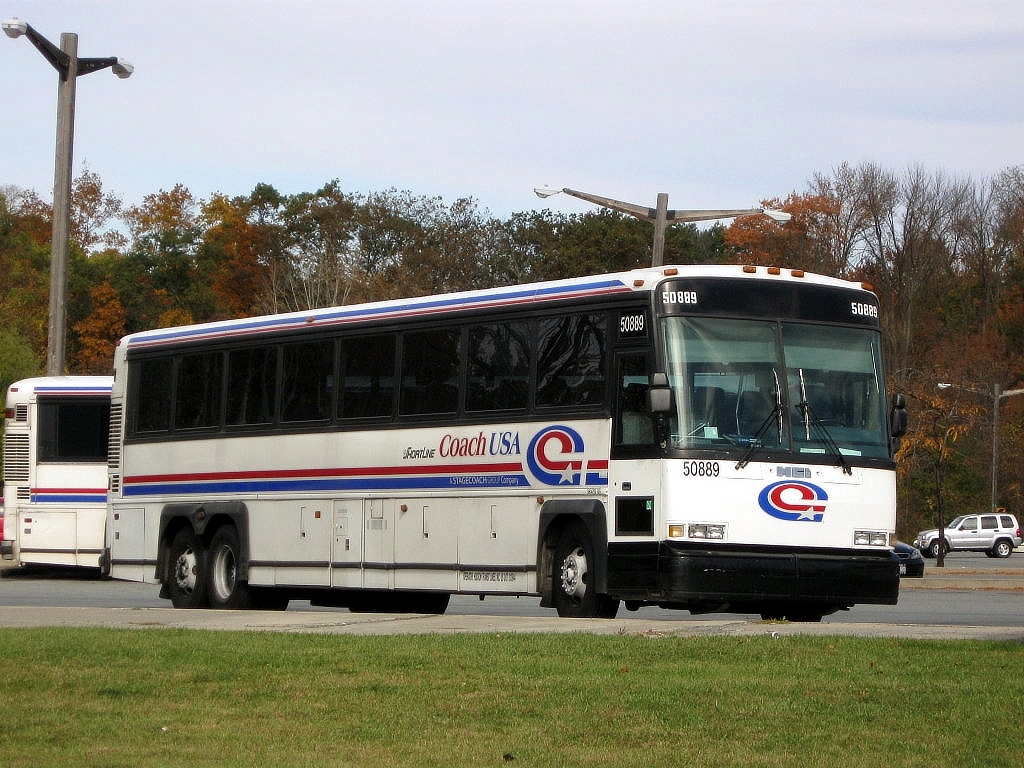
Coach_USA_ShortLine_50889

This is another installment of my To Iraq and Back series.

My CRV with Judy in it pulled away and Nelson and I went about our business. We staged our gear as we waited for the buses to arrive to take us to Fort Jackson South Carolina where we were to receive our training for the deployment.  As we talked other sailors arrived and soon the gear of over 100 sailors was stacked in rows of sea bags just off of the sidewalk.

Nelson’s parents, brother and sister had come to see him off.  His brother is a Navy First Class Petty Officer. His dad a former Vietnam era Marine Recon NCO who made several deployments “in the shit” as many Vietnam vets call tours in that combat zone.  They were really nice folks. Over the years I had heard much about them. They are close to each other and all are supportive of Nelson.

Nelson is a career amateur boxer; kick boxer, martial artist and more recently MMA fighter. He is active in children’s martial arts instruction and has been on Team USA and fought internationally.  During his previous deployment to Afghanistan he helped coach the fledgling Afghan National Boxing Team. A couple of months before this deployment he won the Arnold Schwarzenegger Classic.

So we waited while the other sailors gathered, some individually and some with family.  Some stood alone as couples while others mingled with each other.  For most this was a new way to see their sailor deploy.  No pier side goodbyes, no banners, no manning the rails by the crew as the ship was nudged away from the pier by tugs.

When you have a “normal” deployment of a ship or something like a Marine battalion it is a big deal. Many times media is there, sometimes there are speeches, but most of all there is the understanding that we are all in this together. We are going in as a unit.

In such times families say goodbye to their Sailors, Marines or Soldiers who are going to war together.  When you deploy as a unit there is familiar support system for the families we leave behind. This is not so when you deploy individually.  Those leaving on this day were very much strangers. We would train together, but few would stay together on the deployment.

If you are a ship or unit chaplain and deploy with your people there is a relationship. Generally you know each other, in this case we were strangers.  I was going to war with Nelson but we would not remain with any sailors we were with today when we got to Iraq. This was also the case for others who would serve in isolated posts, mostly working with the Army in support roles. Some would serve in specialized roles such as the Electronic Warfare Officers detailed to work on defeating IEDs and roadside bombs.

As others said their goodbyes and hugged each other I thought of Judy and knew that she was going to be down for some time but I felt that for once that she had an adequate support network. I was right about her being down for a while but this deployment would be harder on her than others and the support network proved woefully inadequate. So much for assumptions.

I looked at our gear as opposed to the others. Our gear was in large and rectangular bags of coyote or sand color. Most everyone else had traditional green sea bags, or what are known in the Army as “duffle bags.”  We already had our personal protective equipment of the EOD/Special Warfare type while others would receive Army issue at Fort Jackson. There are pros and cons to such a arrangement.  The pro is that we had great gear certainly some of the best in theater. The con was that we had to lug the great gear everywhere we went going to and coming back from war.  This would get old, but the benefits do outweigh the advantages when you are actually in a combat zone.

Finally an officer came out and began calling role and giving us our signed “official” orders.  After this we loaded our gear on the buses that would take us to Fort Jackson. These were the first of many buses we would ride and the first of many roll calls and gear load outs in the coming months.

Nelson and I got on the same bus which was not full and took seats near the front.  I got a seat alone because I was the senior officer on the bus and a chaplain to boot. This was not because I asked for it or hogged the seat.  It is actually fairly typical in such a setting where young enlisted guys don’t want to sit next to an officer they don’t know and some are afraid of chaplains because of experiences that they have had in civilian churches.

Many of the sailors had ever darkened the door of a church and many of those that have been in church have been burned in relationships with pastors or religious people.  I have found that many times, even those with a vibrant faith are hesitant to approach a chaplain that they do not know. Some are afraid that the chaplain might try to convert them be judgmental about of the manner in which they live their lives. So as a chaplain I try to be cognizant of this and be friendly and caring without scaring them away.  Of course I did build relationships with a quite a number of these sailors during the next few weeks but on this bus ride I was still an unknown quantity to them.

Sitting alone however was good for me since I general despise bus travel regardless of the company I keep.  For some reason my height works against me, I can never get my feet comfortably on the ground on these new tour buses and I have a terrible time getting comfortable.  Since bus travel takes forever to get anywhere the discomfort is palpable. Now I did a three month tour on buses in 1979 while touring as a spotlight tech for the Continental Singers and Orchestra across the US and in Europe.  Somehow the old Greyhound buses were more comfortable than the new tour buses.  Maybe I’m just nostalgic but they somehow fit people like me better than the fancy new buses.

When you travel by bus with a bunch of sailors, the majority of whom are at least 20 years younger than you, the experience can be entertaining. Part of course is a generational thing. I grew up and came of age the 60’s 70’s and 80’s. The majority of these sailors from the 90’s and 2000’s.

The trip was a chance for me to observe a lot about these sailors just by watching.  Some had their portable i-pods and MP-3 players going, others spent time talking on cell phones, a few read or talked among themselves, but the sailors near me gravitated to the DVD movie which was 300 the comic book style account of the Spartan’s defense of Thermopylae against the Persians.  As the Spartans made their stand I could see the young sailors who were going to war take inspiration from King Leonditis of Sparta.   Since we were going into a place where 50-100 Americans a month were being killed and hundreds more wounded I could understand the need for inspiration along with entertainment.

The bus ride itself was a lot like what I imagine that Minor League teams take in the Carolina League. Our journey reminded me of the bus rides in the movie Bull Durham.  The older guys staying pretty quiet and to themselves and the young guys having fun, playing games and joking around with each other,  We made a couple of stops, one at some little Interstate town with a fair amount of gas stations and a few fast food places.  About half the sailors went to the McDonalds while the rest ran down the street to the Burger King and Taco Bell. Once everyone had their fill the buses pulled back out onto the interstate.

When we finally got near Columbia the buses got of the Interstate highway and onto some small two lane state highway.  We drove down this road about twenty to thirty minutes and pulled into what appeared to be a tiny out of the way base. I wondered where the hell we were. Fort Jackson is a fairly large training base where thousands of recruits are trained every year.  Where we were certainly was not the Fort Jackson that I had imagined.

Instead of the main post we were at the South Carolina National Guard training facility called Camp McCready.  It is here that the Naval Expeditionary Combat Command has a training center set up with the Army to train sailors in basic combat tasks.

Our welcome that first night was simple.  We formed up, checked in, got our linens for our standard issue military beds and were marched to dinner at the chow hall or in the Army vernacular the DFAC by our newest and bestest buddies, our Army Drill Sergeants.  We were met at the DFAC by a civilian.  I can’t remember his name but this guy was most congenial and he put the RED in “Redneck.” He joked with everyone that came through the line, asked where people were from and what they did.  When he found out that I was a chaplain he began to ask me for a joke every meal thereafter. As such nearly every meal would be entertaining.

As Nelson and I sat down for chow with a couple of other sailors we looked at each other.  He said: “Boss I don’t think some of these guys know what is coming.”  I said “I think that your right partner, hopefully they adjust and do well.”  The other sailors, both more senior petty officers nodded in agreement.

Going back to the barracks I met some of the other officers enjoying their first night at Camp McCready.  More sailors from NMPS San Diego were due in later. I introduced myself to a number of the officers near me and engaged in some rather surface pleasantries. When lights out was called lay down on the same type of Army bunk bed that I had first encountered some twenty five years before at Camp Roberts California and Fort Lewis Washington.  I swear the sheets, blankets and pillowcases were of the same vintage.

Much was still on my mind when I laid down and my mind was still thinking about the trip to base with Judy and the final kiss goodbye. I was troubled by it and how I had handed things. Despite that I fell asleep fairly quickly. It had been a long day and coupled with the lack of sleep and stress of the previous couple of days I was tired.

Peace

Padre Steve+
Leave a comment

Filed under iraq,afghanistan, Military, ministry, Pastoral Care, to iraq and back, Tour in Iraq, US Navy

To Iraq and Back: A Last Night Together and a Kiss Goodbye

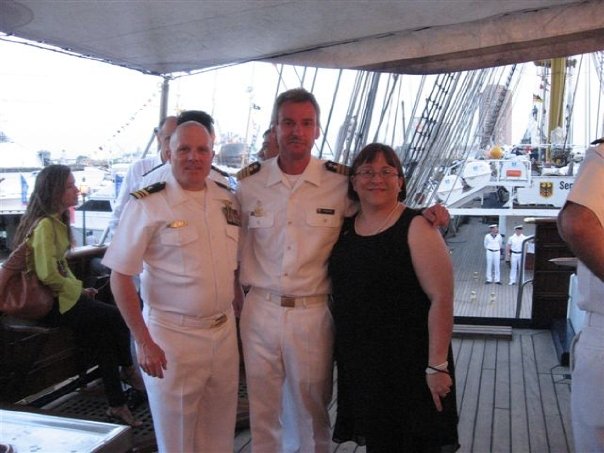
295_27076787058_8676_nJudy and I on the German Sail Training Ship Gorch Fock at the Norfolk Harbor Fest a couple of weeks before deployment

This is another of my “To Iraq and Back” articles about my deployment to Iraq in 2007 and 2008 with RP1 Nelson Lebron. 

Now the time has come to leave you
One more time Let me kiss you
And close your eyes and I’ll be on my way
Dream about the days to come, When I won’t have to leave alone
About the times, That I won’t have to say

Oh, kiss me and smile for me
Tell me that you’ll wait for me
Hold me like you’ll never let me go
Cause Im leavin’ on a jet plane
Don’t know when I’ll be back again
Oh babe, I hate to go

From “I’m Leaving on a Jet Plane” by John Denver

http://www.youtube.com/watch?v=vLBKOcUbHR0

The night before leaving on deployment and the actual day of departure are some of the hardest that any military couples or families experience. In time of war it is even more difficult. Judy and I have done this too many times in peace and war.

As I went through all of my preparations to go to Iraq in some was it was a replay of past pre-deployment situations. However, this time I was not merely deploying on a peacetime assignment or supporting a peace making operation, or even deploying on a ship and being part of a boarding team after the 9-11-2001 attacks. In that last instance  Judy did not know that I was part of the boarding team until about halfway through the deployment.

But this time going boots on ground into the most bitterly of Iraq’s contested provinces, Al Anbar. That lent at certain dark pallor to the occasion.

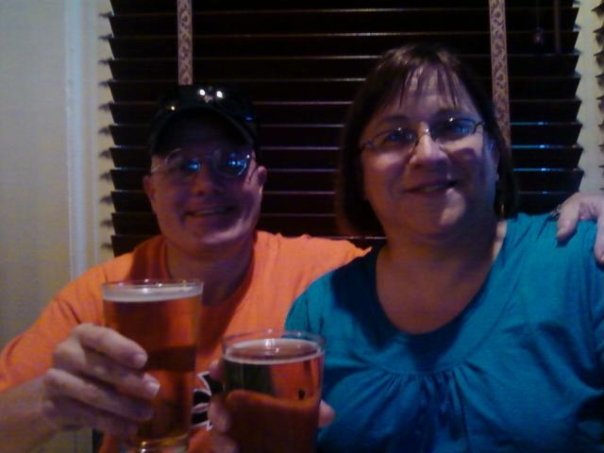
Our last night together was rather somber to put it mildly. Judy and I went out to dinner on Friday night. Since I knew that I would not be having a good beer for quite some time we went to the Gordon Biersch Brewery Restaurant in Virginia Beach. For us Gordon Biersch is generally a good time kind of place, it has become over the years our version of Cheers a place where everyone knows our name.

That last Friday before the deployment to Iraq it was not a festive occasion, it was almost a wake. Judy and I were both quite subdued. In between the silence Judy talked about her fears about the deployment while I tried to reassure her that everything would be fine. I am a man who is somewhat Vulcan in my use of logic. I figured that even though things were bad in Iraq that my chances of returning were quite high, even of something happened to me. I tried to be calm and reassuring and no matter what I tried it didn’t work, human emotions are quite intense at times.

I also reasoned that since I had taken out the extra life insurance that I would be okay.  For me such logic makes sense. I kind of believe that if I don’t get it I will need it and if I do get it I won’t. It’s kind of like Yogi Berra’s logic when he said “You should always go to other people’s funerals; otherwise, they won’t come to yours.”

After dinner and several half liter glasses of Gordon Biersch Märzen amber lager we went back home. Judy watched quietly while I finalized my packing. I ensured that all my field gear, uniforms and clothing were packed and rechecked my EOD issue protective gear.

I then packed my Mass kit, Bible, Prayer Book and my Marine Pattern camouflage reversible desert/woodland stole. The stole was special as Judy had made me a few years back from woodland and desert pattern shirts which were way too big for me. They are one of a kind items. I have seen similar, but what Judy made were far better than any others that I have seen. I still use that stole even when I am not deployed. It is simple but quite exquisite, adorned with an embroidered Maltese Cross in tan on the desert side and black on the woodland side it is unique and I treasure it.

The last items I packed were my books on counterinsurgency, a few DVD movies, music CDs and my hygiene items. It is funny to think that now all of this would be stored on my iPad which if I ever make such a deployment again will significantly simplify my life.

I wrestled the big bags down the stairs and put them in the back of my Honda CR-V so I wouldn’t have to fight them in the morning. That accomplished Judy and I just sat together, she was feeling pretty low, the look one of despair.

On the other hand I was a mix of conflicting emotions. I was excited by knowing that I was going to get to do what I had trained all of my life to do. However I was very cognizant of the reality that it would be tough on Judy and that it was a dangerous deployment.

My last couple of deployments had been very tough on her. When I deployed to support the Bosnia mission as a mobilized Army Reservist and newly ordained Priest three of my relatives in Huntington West Virginia where we were living died. One was my maternal grandmother “Ma Maw” who Judy had become very close to over the past couple of years. They had become buddies and Ma Maw had taken Judy in not as my wife, but as “her” granddaughter.

Ma Maw’s death hit Judy very hard and my mom and uncle in the midst of their grief over the loss of their mom they did not understood the depth of the relationship between Judy and Ma Maw. As a result, I was absent and there was much tension, misunderstanding and hurt feelings between them. In the week before Ma Maw’s death Judy tried repeatedly to get her to go to the doctor only to be ignored. The morning Ma Maw died Judy called me in Germany. She was frantic that I call Ma Maw and insist that she go to the doctor. I made the call and insisted that she go to the Emergency Room but she refused and said she would call her doctor. That night she died. I had lost my grandmother and could not go back to help and Judy had lost a woman who had become closer to her than her own grandmothers ever had been.

In 2001 during my deployment with 3rd Battalion 8th Marines to Okinawa, Japan and Korea we lost our 16 ½ year old Wire Haired Dachshund Frieda. Judy did her nest to keep Frieda alive for me, but there was nothing that could be done and finally with Judy being worn down to nothing herself, she was persuaded to have Frieda put down. The interesting thing is that after Frieda died she visited me in Okinawa and Judy about the same time in dreams. Frieda was always a weird animal and even in death has continued to find ways to remind us of her presence.

My 2002 deployment on USS HUE CITY to the Middle East and Horn of Africa came less than six months after my return from my deployment with 3/8. That deployment, coming on the heels of the 9-11-2001 attacks was also very difficult on her. In the space of 6 years we had been apart almost 4 1/2 years. Much of the time following that last deployment was spent on the road as I travelled to visit Marine Security Force and Navy EOD Mobile Units in the Middle East, Europe, the Far East and the Continental United States. In a four year period I averaged 1-3 weeks a month away from home.

With all of this in the background we spent our last night together. That night neither of us slept very well. When we got up I had a light breakfast and then accompanied by a friend from Judy’s Church choir we drove to the base.

Saturday morning traffic is generally not too bad so our trip was uneventful, but tense.  You could cut the tension between us by now with a knife.  It was about the time that we were nearing the base Judy said something about our relationship that I took really wrong. I sarcastically snapped back “Well I’ll just get blown up by an IED then.”

That sarcastic comment really hit her hard and I knew immediately that I had blown myself up with it. The words were harsh and devastating. I should have known better and should have kept my moth shut. After all I’d deployed a lot and taught pre-deployment classes talking about the emotional cycle of deployments. I was supposed to be an expert at this sort of thing, but instead my comment was very cruel.

To be sure the stress on both of us the preceding weeks had taken its toll and both of us were on edge.  For two months we had each in our own way imagined the deployment, me as a great adventure and her as a threat to our mutual existence. I wondered just what I would face when I got to Iraq and those were unanswerable questions. Judy’s great fear that something might happen to me and that she would be alone, not just for the time of the deployment but for the rest of her life.

That is one of the tensions in a military marriage that many people who have not lived it fail to understand. It is not just the wartime deployments it is the cumulative effects of multiple short and long term separations on the health of a relationship.

We got to the base pretty quick, maybe 15-20 minutes but the tension made me feel that the trip was three times as long. As we pulled up in a parking spot near the baggage drop off area we sat there for a few minutes. I got out of the car as did Judy.  I asked if she wanted to wait a while with me and with tears in her eyes said that she couldn’t handle the wait.

I unloaded my gear with the help of Nelson. He looked at Judy and said, “Don’t you worry ma’am we’ll do good and I’ll keep him safe.” Judy gave a soft “thanks” and gave him a hug.

With my gear unloaded I went back to Judy.  We looked at each other, embraced and kissed each other, each of us wondering if it was possibly the last time. We parted our embrace, and she the turned and walked back to the car, handed her friend the keys and they drove off.  It was a moment that I will not forget as long as I live. As she left I said a prayer under my breath and asked God to keep her safe while I was gone.  Then I turned to Nelson and said, “Okay partner, let’s get this done.”

Peace

Padre Steve+

2 Comments

Filed under iraq,afghanistan, marriage and relationships, Military, to iraq and back, Tour in Iraq

Muddling Through PTSD Recovery: A Chaplain’s Story of Return from War

400236_10151328400862059_541742014_n

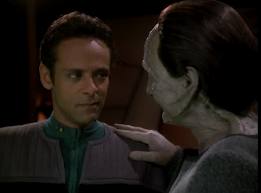
“Captain, you do need time. You cannot achieve complete recovery so quickly. And it’s perfectly normal after what you’ve been through, to spend a great deal of time trying to find yourself again” Counselor Troi to Captain Picard in Star Trek the Next Generation after his encounter with the Borg.

Coming home from war can be harder than going. At least it was for me. I have always been a hard charger. When I was at war in Iraq I was at the top of my game but when I came back I was broken. I experienced things there that changed me forever and it has taken a long time to find myself again.

I came home with chronic, severe PTSD, anxiety and depression. I suffer severe Tinnitus and pathetic speech comprehension. The ringing in my ears is non-stop and in any kind of group setting or conference I struggle to understand what is going on even though my hearing loss measured in decibels is minimal. The loss is neurological and when tested I measured in the third percentile of people, meaning that 97% of people understand speech better than me.

I still suffer from chronic insomnia, vivid nightmares and night terrors. I still struggle with agoraphobia, hyper-vigilance and occasional road rage. Thankfully none of them are as bad as they used to be but they are ever present. I have had my ups and downs with prescription medications that were used by my doctors to manage my PTSD symptoms and sleep disorders.  For a while drank too much just to help me make it through the nights. I am told that this is common for many who return from war.

When I came home I felt abandoned, especially by church leaders and many chaplains, many who I had thought were my friends. That is understandable as I was radioactive.  My faith had collapsed and for two years I was an agnostic desperately hoping to find God. As such I have a certain bond with those that struggle with God or even those that do not believe. This makes a lot of religious people uncomfortable, especially ministers. I think the reason for this is that is scares the hell out of people to think that they too might have a crisis of faith because they too have doubts. 

The first person who asked me about how I was doing spiritually was not anyone from my church or a chaplain, but rather my first shrink, Elmer Maggard. When faith returned around Christmas 2009 it was different and so was I. I tried to express it and began to write about it. For my openness I got in trouble with my old denomination and asked to leave because I was “too liberal.” Thankfully a bishop from the Episcopal Church who knew me recommend that I seek out Bishop Diana Dale of the Apostolic Catholic Orthodox Church. Thanks to that I have a loving new denomination and since we do not have a local parish of the ACOC I have found  St James Episcopal Church in Portsmouth Virginia as a place of refuge. It is the historically African American parish in the area and I love the people there. They helped me when I was in my deepest times of struggle. 

6095_128718107058_2713239_n-1

My struggle was really hard on my wife Judy. Before I deployed I was the strong one. Afterward my contribution to our marriage was minimal and I was often a complete ass. I was in survival mode and and barely making it. I couldn’t reach out to her, I was collapsing on myself and she felt it as rejection. Our marriage suffered terribly and both of us thought that it might not survive. But over the past 18 months or so it has been getting better. I can share with her again and she has become a source of added strength. We enjoy being together again and we recently celebrated our 30th anniversary with many of the friends who helped us make it through the hard times. 

In time I gathered a support network. There are some Chaplains that I can be absolutely honest with, as well as my Command Master Chief, Ed Moreno. Likewise I have friends outside the military, including people I have known for years who still, despite all my flaws care for me. I have found other places of refuge where I have relationships with people, one is Harbor Park, home of the Norfolk Tides Baseball team, another was Grainger Stadium, former home of the Kinston Indians. I have a couple of places as well that are like my real life version of the TV show Cheers

Baseball brings me a great deal of peace, especially when I can go to the ballpark. When I was in dire straits the management of the Tides allowed me to go wander Harbor Park during the off season, just to take it in.  Running on the beach is something that I have come to cherish here in North Carolina, I will miss the easy access that I have here when I return home to Virginia in two weeks. 

Writing on my blog has been good therapy. As an introvert I process information by taking things in. Being constantly around people wears me out. I am good at what I do but it takes a great deal of effort to do it. 

941704_10151661130572059_1706100059_n

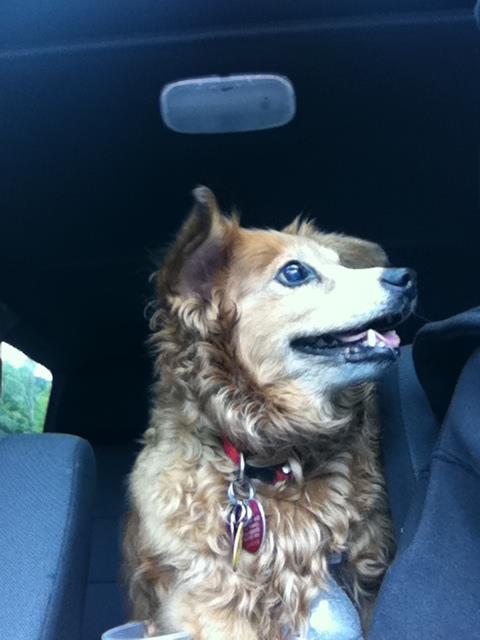
My unflappable little dog Molly has been a life saver, she insisted on coming to stay with me about halfway through my tour. She helped me recover my humanity and her presence gave me something outside of me to care for and because of that I ended up seeking out people again instead of holing up in my apartment.

My spiritual life still has its ups and downs and I discovered that I am far from perfect, and I hate that sometimes. However, that being said I do feel more connected with God, people and at peace despite my ongoing struggles.

images-53

Picard breaking down

It has not been an easy road, but it has been worth it. I find it interesting that the Star Trek the Next Generation, Deep Space Nine and Voyager series help me process many of my feelings, thoughts and emotions. I quoted part of a Next Generation episode at the beginning of this article, one where Captain Picard is recovering from the trauma of being abducted by the Borg. I find the episode compelling on many levels. Part of that episode deals with Picard trying to figure out his life again. After a tumultuous visit with his family he and his older brother engage in a fight, during which he breaks down. Picard’s brother realizing the importance of what was happening said to him “So – my brother is a human being after all. This is going to be with you a long time, Jean-Luc. A long time. You have to learn to live with it…”

Peace

Padre Steve+

3 Comments

Filed under faith, iraq,afghanistan, Military, PTSD, Tour in Iraq

To Iraq and Back: Living Wills, Immunizations Gone Bad and More Sleepless Nights

images-52

This is another installment of my To Iraq and Back series which tells of my deployment to Iraq with RP1 Nelson Lebron in 2007 and 2008.

One of the sobering things as you get ready to go to war are administrative issues that deal directly with your mortality. They are mundane actions when we do them in peacetime but chilling when you put them in context of going to war.

In our society in which people do all they can to push back even thinking about death discussing the issues that deal with your possible dismemberment, disability or your death are taboo. The month before I deployed  Iraq Judy had me take out an additional life insurance policy that doubled what the military would provide in the event of my demise.  At that point Iraq was a cauldron, hundreds of casualties each month and I was going to the heart of the action in Al Anbar province.

Part of our processing to go to combat was a will and power of attorney update.  We had not updated our wills since well before coming to the Hampton Roads area so I took advantage of this time to get it done.  The will itself was pretty easy since we have no children and have not been married to anyone else.  That was the easy part.

The next part was dealing with various powers of attorney, a general power of attorney and a medical power of attorney. The medical power of attorney is something that I routinely deal with at the hospital. I have dealt with them before in other places.  At the same time they become somewhat disconcerting when you are getting to go into a combat zone where there is heavy fighting going on. For most that is disconcerting enough, but chaplains go into action unarmed.

Sometimes when I fill out one of these I pray that I don’t end up like Karen Anne Quinlan or Terri Shaivo.  When I did it this time all I could think about was me being so badly wounded that it would be like the movie The Naked Gun.  I someone telling Judy “Doctors say that Dundas has a 50/50 chance of living, though there’s only a 10 percent chance of that.” While this is going on I could just see me unable to respond trying to say “give me one more at bat skip, just one more chance…please.”  This may not seem like the most spiritual thing for a Priest to be saying but I don’t want to be in the afterlife before my time. It would be bad form.

Legal matters finished we had to get our immunizations. When you deploy the military always ensures that you are vaccinated against about everything imaginable. These include typhoid, anthrax, smallpox, malaria, yellow fever, certain regional diseases and probably others that I have forgotten.

I had received many of these before at various times. This included my first Anthrax vaccine. On this second occasion something happened and ti had a reaction to it.  My bicep felt like someone had shoved a baseball in it and the sucker hurt like hell. By the next morning I knew that my reaction was not “normal” because the first one I had did not do this.

I thought back to the Anthrax scare right after September 11th 2001 and I didn’t want to take any chances regarding something that the media said could be dangerous. What if they had messed up and given me a bad batch of the vaccine. Hell, just because I’m paranoid doesn’t mean that they are not out to get me. Besides if I was going to die for my country I didn’t want it to be from a reaction to a vaccine and not something heroic.

So I went back to the immunization section. Like a typical officer I simply “excused” my way past the queue of sailors waiting to get PPDs read and went to the desk. I figured that I wasn’t going to wait in line behind people with routine stuff when things looked like they were getting sporty for me.I call it “self-triage.”

????????????????????????????????????????????????????????????

The Corpsman at the desk was polite and asked what he could do.  I told him that “I think I’m having a reaction to the Anthrax vaccine.”  He gave me a funny look and asked which one in the series this shot was. It was the second and since I figured that the next question would be “did you have a reaction the first time?” I continued “This didn’t happen the first time.”

The Corpsman looked at my arm and said “Obviously sir the first time you had no antibodies to Anthrax so it had nothing to react to….”  I was thinking “no shit Sherlock” when the young man went to get his Chief. The Chief came in, looked at my arm and said: “Gee sir it looks like you are having a reaction to the shot.”

I was thinking well no shit but didn’t say it. So the Chief took me back to his office and started having me checked to make sure that I didn’t have a fever or a number of other things, like if I was dizzy or was having trouble breathing. No I was neither dizzy nor experiencing breathing difficulties but was simply in pain, a bit scared and really pissed.

After his battery of questions and a couple of phone calls asked me “do you think that you are safe to drive?”

At that point I would have said anything to get the hell out of there and get on with what I needed to do to make sure that I wasn’t going to die.  So I said “of course I am.”

He asked if I was sure and I reaffirmed this to him in a convincing enough manner for him to send me over to Portsmouth by ambulance.

Portsmouth Naval Medical has a small office manned by a couple of nurses whose job it is to report bad vaccine reactions up to the FDA and God only knows who else. These ladies were very pleasant and when they got a look at my arm they were impressed.  Once again I heard “Yes sir you are having a reaction.”

I got to answer yet another battery of questions and they took a couple of pictures of the baseball sized knot on my left bicep.  One of them made a couple of phone calls and a few minutes later I was told that I would be okay. The explanation was that the subcutaneous injection had caused the vaccine to be encapsulated in my arm rather than doing what it needed to be doing. I was told to inform whoever gave me my next shot in the series to make sure that they got in the muscle. I was told to take some Motrin for the pain and swelling and do a lot of push-ups, pull-ups and massage the bicep to help the swelling dissipate faster. My fears eased and I left the hospital and reported back to the processing site where all of my fellow sailors had already left for the day.

I spent another tense and sleepless night with Judy, the emotional distance still there.  We talked about various things but nothing serious. I don’t think that either of us was able to vocalize well what we were feeling.

Even Molly seemed differed, I’m sure that she sensed that something was going on as I had continued to pack and re-pack my gear from EOD. Molly does not like it when either of us pack as it usually means that one or both of us is leaving.

The next morning I repeated my “Groundhog Day” trek back to Norfolk Naval Station fighting the idiots driving to work on the I-264, I-64 and I-564 battle zone where matching wits with the witless I safely picked my way through traffic while drinking my black coffee.

This was our next to last day of processing and we checked and re-checked paperwork, received our signed wills, living wills and powers of attorney. That morning I met with Father Pat Finn a mobilized reservist and Episcopal Priest from South Carolina and we had a nice chat where we were joined by Fr Steve Powers a retired Navy Chaplain and Rector of St. Brides Episcopal Church in Chesapeake.

Following that I was asked to assist with a sailor who was having some personal difficulties getting ready for the deployment.  These tasks completed I went back to muster with the others and sat down next to Nelson. Following this we went out where the Storekeepers and other supply staff had our gear.

We gathered outside where we lined up and given a sea bag in which to put our issue.  There were boxes of stuff everywhere and a couple of civilians and sailors stood by to ensure that we got what we were going to get.  Uniforms with all of our name tapes rank insignia and qualification pins sewn on were there as well as more socks, t-shirts and other assorted gear.

Our stash was a bit lighter than the others as we already had much of what was being issued. When this was done and we were released. I told Nelson to go home as his family was coming into town from New York.  Taking the newly issued gear home I again went about packing and repacking and took Judy out to dinner after which we spent our time alone together pondering the future.

Peace,

Padre Steve+

Leave a comment

Filed under iraq,afghanistan, Military, ministry, to iraq and back, Tour in Iraq

Monday Musings: The War at Home

me contemplative

Last week was quite challenging at work with sequester and other things going on. Needless to say I was busy but it was at the same time quite rewarding, though not without pain of seeing a number of people that I know, respect, care for and even love go through their own various hell on earth. That I guess is part of ministry, being connected to people in good times and in bad and even when you have no answers, can provide no healing or effectively change their situation. All I could do in each case was to be there for them, with them and where possible provide assistance however limited.

The events of the week coupled with my own impending transfer to a new duty assignment have left me even more introspective than usual. I have been thinking about those times in my life where things were happening that I had little control of, or where maybe even my my choices or decisions brought about difficult times.

I began to think about the time just before I reported to my current billet. I was still struggling with PTSD and though faith had returned it was still quite fragile. I was selected for promotion on the 22nd of June, my dad died of complications of Alzheimer’s Disease on the 23rd, we had his memorial in California on the 26th and the day before I returned to Virginia I was told that I was coming to Camp LeJeune and that I had no choice in the matter. Promotion sometimes brings unexpected change.

At the time I really didn’t want to come. I wanted to finish my last year at the old billet and move on to a ship or possibly something that would get me to Afghanistan, where I believed that I would be “back in the fight.” Instead I went from one hospital serving as a staff chaplain to another serving as the director of Pastoral Care. It was a move up, but not the one that I wanted.

However I was in the front lines, just in a different way. Camp LeJeune and the Marines and Sailors who serve aboard it has been part of the war since the beginning. We have many wounded warriors, men and women, wounded in mind, body and spirit. To see the young men and women with prosthetic limbs, walking in pain with canes or crutches, others with facial disfigurement, blindness, massive scars from burns is humbling. To see these young men and women wearing the Purple Heart Medal, or awards with a “V” device for valor in combat action is truly humbling. To see others suffering in mind and spirit, many struggling with PTSD, TBI, and dealing with various forms of depression, despair and sometimes succumbing to alcohol or drug abuse, including prescription pain medications for chronic pain and even attempting or completing suicide has shown me that the effects of war extend far beyond the battlefield and that this war will go on far longer than the wars in Iraq or Afghanistan.

Major General Smedley Butler wrote in 1932:

“But the soldier pays the biggest part of this bill.

If you don’t believe this, visit the American cemeteries on the battlefields abroad. Or visit  any of the veterans’ hospitals in the United States….I have visited eighteen government hospitals for veterans. In them are about 50,000 destroyed men- men who were the pick of the nation eighteen years ago. The very able chief surgeon at the government hospital in Milwaukee, where there are 3,800 of the living dead, told me that mortality among veterans is three times as great as among those who stayed home.” 

Yes this will be with us a very long time.

In a sense I was again in the front lines, this time seeing a part of war that will need to be addressed for a very long time. It has made me much more sensitive to the victims of war and suspicious of people who have no “skin in the game” who constantly advocate war as first response. This will be with me and influence my life and ministry for the rest of my life even after I retire from the Navy in a few years.

I am down to a few weeks left in this assignment before I go to teach mid-grade and senior officers going on to important Joint billets, men and women who have been likewise in the fight for the past dozen years and many of whom will rise to senior leadership before their careers are over. It is a once in a lifetime opportunity. I hope to make the most of it.

Anyway, I have an earlier than normal day tomorrow I shall close for the night.

Until tomorrow,

Peace

Padre Steve+

1 Comment

Filed under iraq,afghanistan, leadership, Military, ministry, Pastoral Care, PTSD, Tour in Iraq

To Iraq and Back: Days at the Deployment Processing Center

295_27076832058_495_n

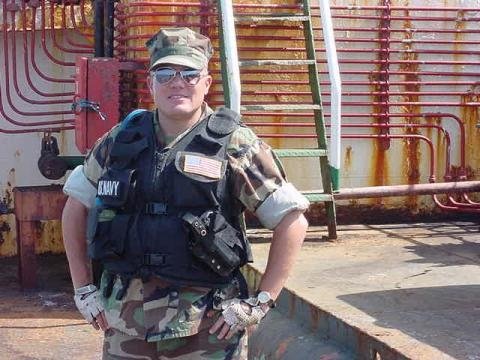
Me Aboard an Iraqi Oil Smuggler in 2002

This is another installment of my account of my account of mine and RP1 Nelson Lebron’s deployment to Iraq in 2007.

By the time the first day had ended there were nearly 120 of us being processed to serve in individual augment positions in Iraq, Afghanistan, Kuwait and Djibouti. Most of us were going to Iraq at this time since the “surge” was at its peak.

NMPS was just the first stop on the way to Iraq, for us it was the initial administrative processing that we would receive on the to Iraq. Most of our compatriots, save a few Seabees or Medical types who had served with the Marines had neither been on a deployment like this, been trained for land warfare of had served in a combat zone except aboard ship. After Norfolk we would receive more specific training and equipment at Fort Jackson South Carolina and then Kuwait.

603036_10200446098660478_1730640134_n

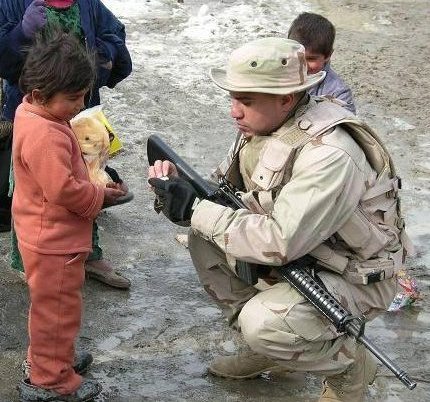
Nelson with an Afghani child in 2005

When compared to many of our fellow sailors Nelson and I had a lot of experience. I had served in the Army and both of us had served in infantry units of the Fleet Marine Force. Additionally Nelson had served with Naval Special Warfare Group Two, and the Marine 3rd Recon Battalion. He had previously served in Iraq, Afghanistan and Lebanon. I had much field experience with the Army and Marines and had been a part of a boarding team from the USS HUE CITY which conducted boarding operations supporting the UN Oil Embargo on Iraq in 2002. Likewise, Nelson is an accomplished martial artist, boxer, kick boxer and MMA fighter who has competed at many levels, while I am a military historian and theoretician  with much advanced education in both on top of my theological and pastoral care training and experience.

Our mobilization processing proceeded the next couple of days as we received our immunizations, were issued DCUs and other clothing needed for the deployment.  Nelson and I of course were already well outfitted by our unit, EOD Group Two, much more so than our counterparts reporting from other fleet units or the reserves.

In spite of this we drew additional DCU uniforms, brown t-shirts, socks and a host of miscellaneous gear. Thankfully as I have mentioned, EOD had outfitted us well including boots of our choosing, not the standard uncomfortable Army issue desert boots being provided to the rest of the sailors. I had a pair of Blackhawks and a pair of Magnum 5.11’s, both much more comfortable than those being issued. As far as other gear we already had much of it, and because it was EOD issue it was superior quality to  much of what was being issued.

Wills and powers of attorneys were drawn up by JAG officers. We updated our “page 2s” the record of who we wanted notified in the event of our demise were verified. Additionally new dog tags ordered and a myriad of forms were filled out, in typical military fashion often for the second or third time.

Of course even before we reported to NMPS we had we had completed numerous online pre-deployment courses on Navy Knowledge Online or NKO to orient us to operations, health and safety issues and for Nelson classes on the M-16A2 and M9 Pistol. Some were good but many were of dubious value especially in the online format.I could have taught many of them. Obviously some contractor got rich selling them to the Navy, but such is war and the activities of war profiteers who make their living inferior products to the military.

Both of us had the additional advantage of living in the Norfolk area so we could spend times with friends or family.

At the end of each day we were able to go home while our companions who had come from other locations were staying in transient quarters on base.

Since we had the 4th of July off we would both take advantage of it.

Peace

Padre Steve+
4 Comments

Filed under iraq,afghanistan, middle east, Military, to iraq and back, Tour in Iraq, US Navy

To Iraq and Back: Reporting for Duty

183241_1857288917425_1495714_n

In July 2007 my assistant at EOD Group Two, RP1 Nelson Lebron and I began our Iraq adventure.  This is one of a series of posts which will be published periodically to tell our story.  While they will not be daily posts, they will be sprinkled in on this site on a regular basis.  Hopefully they will be something that will help those who have not been in the remote parts of either Iraq or Afghanistan what it is for Navy personnel to go to war, not as ship’s company, not with their own unit, but as individual augments to other commands.  This is a different way to go to war…this is our story.

July 2nd 2007: I rolled into the parking lot for the Naval Mobilization Processing Site (NMPS) Norfolk.  As usual parking on Norfolk Naval Station was a bitch to find.  It had been a number of months since I had to make this commute.  I transferred from the Marine Security Force Battalion where I had served from 2003 to October 2006 and had not made the trip since. Thankfully I remembered to leave early because traffic was as gooned up as ever going down I-264, I-64 and I-564 to head into the base.

As I looked for a parking space I really missed my designated parking spot back at Security Forces. I drove around for a while and finally found a spot, then after wandering around a found the NMPS offices.

I walked upstairs to the classroom in which we were to meet was located and found it empty, save for a couple of NMPS staff members.  I reported there in my DCU’s, or Dessert Camouflage Uniform issued to me by EOD Group Two. They are an older type uniform similar to the old BDUs and unlike the Marine Pattern Digital Camouflage are not wash and wear. I still have a few sets in my deployment bag but figure that if I every get deployed to such a situation again that I will be wearing whatever Army or Marine Corps uniform the Navy sailors are wearing unless serving with the Seabees, Naval Special Warfare or an actual Navy command.

295_26911967058_7489_n-1

Camp Zarqa Jordan March 2007

I had worn them in March when I went to Jordan for the Jordanian Army/ UN Peace Operations Training Center course on Iraqi Culture, Religion, Politics and Language. Until the Marines came out with their digital uniforms they were common to all of the services. Now in 2013 I think there are 10 different camouflage uniforms in use among the armed forces and Congress is about to force us in the military to find a common uniform again. Not a bad idea if you ask me.

I looked around the empty classroom with every table stacked with folders filled with a huge amount of paperwork.  I found a seat which is not hard to do with so many to empty seats choose from and sat down. I took an aisle seat about three rows back and plunked my EOD issue Blackhawk backpack down, grabbed my Book of Common Prayer and did the morning office before anyone else arrived while drinking the large cup of black coffee I had gotten across the street.

Shortly thereafter other people began to arrive in twos and threes, most enlisted dressed in utilities (the successor to dungarees) while most of the Chiefs and officers were dressed in khakis. A few Seabees had woodland BDUs on and a couple of folks wore DCUs which were obviously from previous deployments to the sandbox.  RP1 Lebron, then an RP2 then showed up and we waited for the orientation and administrative stuff to start moving.  We surveyed the situation and looking upon our fellow sailors realized that this would be a different deployment.

What we noticed as we talked the varying ranks and uniforms really jumped out at both of us.  Most of our fellow sailors had never been deployed even in peacetime in such a manner.  Most of those who had deployed had done so on ship with the exception of the Seabees and a Corpsman or two.

The sailors spanned the spectrum of age, rank and rating. There were the officers, mainly Lieutenants, Lieutenant Commanders and Commanders, Surface Warfare, Aviators, Supply Corps, Civil Engineering Corps and Medical Officers.  The highest ranking officer was a Navy Captain. I was the only Chaplain.

The enlisted sailors also spanned the spectrum of the Navy. Fire Control Technicians, Operations Specialists, Gunners Mates, Boatswains, Yeomen and Storekeepers, Intelligence Specialists, Corpsmen, and even Culinary Specialists.  They had qualifications as Submariners, Enlisted Surface Warfare, Aviation Warfare among others.  Some like me and Nelson had volunteered, others were voluntold. The one that brought us all together was that we were US Navy Sailors and going to war and not with the Navy or our shipmates. We were strangers to each other and would be strangers to Soldiers, Airmen, Marines and Sailors that we would serve with overseas.

Nelson and I have deployed a lot. We had served together in Okinawa and at EOD where I did a “drug deal” with his chaplain and the RP detailer to get him to EOD.  The guy is a hero. I think he has deployed about 10 times in his 20 year career from which he will retire this fall.

The year and a half prior to our deployment Nelson had been deployed to Afghanistan where he as an E-5 was awarded the Defense Meritorious Service Medal.  On his way back from Afghanistan he was pulled off of his flight to the states and sent back to his old ship, the USS Trenton to assist in the evacuation of Americans and others from Beirut.

I think to some extent his frequent deployments actually hurt his career since the biggest part of making rank as a Navy enlisted man is to do well on the advancement exam. Unfortunately there were many times when he was forbidden to test because he was deployed, and when eventually allowed to test during a deployment was not provided the appropriate materials to study. That would happen again during the coming deployment and lead to a pretty funny incident on one of our trips in Iraq, but that story will be told later.

Nelson is a NY Rican and both a New York Golden Gloves boxing champ, a high school valedictorian, a full contact  kick boxer, martial artist, MMA fighter and has fought on Team USA and won the 2005 Arnold Schwarzenegger Classic.   He is the real deal.  Proficient in many weapons systems from his service with the 3rd Recon Battalion, 4th Marine Regiment and Naval Special Warfare he is the ideal body guard for any Chaplain going to do the job we had been given to do, to work with Marine and Army advisers supporting two Iraqi Divisions.  Our mission would evolve and expand once we got there, but we didn’t know that yet.

As people filed in a Chief Petty Officer brought us to attention and the processing site Commanding Officer came. He spoke with us a few minutes and then led us in the Sailors Creed. With that we set down and began to get our orientation to how our mobilization, training and movement would unfold as we got ready to go to Iraq.

Peace

Padre Steve+
Leave a comment

Filed under iraq,afghanistan, Military, to iraq and back, Tour in Iraq, US Navy

Writing My Way Home: Iraq, Faith PTSD and Life

295_26912012058_78_n

“Many people are looking for an ear that will listen. They do not find it among Christians, because these Christians are talking where they should be listening.But he who can no longer listen to his brother will soon be no longer listening to God, either; he will be doing nothing but prattle in the presence of God, too. This is the beginning of the death of the spiritual life, and in the end there will be nothing left but spiritual chatter and clerical condescension arrayed in pious words… never really speaking to others.” Dietrich Bonhoeffer

Since I returned from Iraq I have grown weary of Christians that have all the answers and are more interested in promoting their agenda than actually listening or caring for those wounded in spirit from various forms of trauma including war. I returned from Iraq and went through what amounted to a crisis in faith, belief and experienced what I felt to be abandonment by God and many Christians.

481801_10151367001287059_1003164983_n

As such I elected to travel down a path that has been one of paradox. I have benefited from this but the path has been filled with much difficulty and pain. I walked through the psychological, spiritual and physical effects of my time in Iraq as well as the moral injuries that I incurred.  Over the years I have seen the effects of these crisis on my life and relationships. It has become important to tell my story, in as sense as a Canadian Chaplain in our Pastoral Care residency said to “write my way home.”

After Iraq I began to write. I did so initially because it was therapeutic and helped me to begin to start sorting out what was going on with me. It also helped me, especially when I went public on this site about my experience to get outside of my normally severely introverted self. As I began to write regularly it became a part of my life as I struggled to deal with PTSD and the spiritual and emotional crises following my tour in Iraq.

I began to understand the importance of my stories, in fact all of our stories in the way that we understand reality what we believe to be true and what really is true about ourselves and the universe that we are a part.

I experienced this to some degree in my own pastoral care residency at Parkland Memorial Hospital in the 1990s. My supervisor challenged be to stop living in the past and begin to imagine a future that was not a prisoner of my past disappointments and failures. That was a watershed experience for me and I began to realize that I did not need to live my life in a constant repetition of the past. That realization did not always find a place in my life but in a gradual process I began to escape that past and begin to live in the moment with an eye to the future.

Iraq changed that to a large degree. What I experienced there and upon my return to the States shook many of my beliefs about the world, faith and life. The images of American Marines wounded by IED attacks, wounded children and destruction of vast areas of cities, towns and villages coupled with having HUMMVs and Helicopters that I traveled on shot at and having rockets fly over my head changed me.  That was magnified when I saw how the war was being covered by both the liberal and conservative media which bore little resemblance to my first hand observations.

Even worse was the feeling of being isolated and abandoned when I returned home.  I experienced a crisis in faith that left me a practical agnostic even as I desperately prayed for God to show up.  In fact my psychotherapist was the first person to even address my spiritual life after my return.

When Elmer Maggard asked me: “How are you and the big guy?” I could only say “I don’t know I don’t even know if he exists.”

For a priest and chaplain that was a harrowing admission. I had entered a world of darkness that I did not believe was possible. I would struggle for another year and a half until during Advent of 2009. It was then, after what I refer to as my “Christmas Miracle” that things began to change and I began to sense the presence of a loving God again.  My faith began to return but it was and is not the same as before I went to Iraq.  I still struggle at times, though not as much. I still question God, the Church and faith in general. I believe and often must pray “Lord help my unbelief.” My faith is still in the realm of Christian orthodoxy but more negotiable.

This might sound confusing so let me explain. I admit that I do not have the answers that I used to think that I had. The late great manager of the Baltimore Orioles, Earl Weaver once said “it’s what you learn after you know it all that counts.”

The fact is I know a whole lot less than I used to. This has made me more apt to actually listen to people when they tell their stories and when they ask questions that I can’t answer I say “I don’t know” or “I struggle with that too” people trust me with their faith struggles or even the existence of God.

dinner-w-bg-sabah

I refuse to pass judgment on someone’s faith journey, even if they question God’s existence because I have been there and it is not a comfortable place to live.  I am far more willing to walk with someone thorough that valley of doubt or unbelief because I lived in that valley for over a a long time and sometimes pay it a return visit.

I don’t like to attribute normal experiences in life to being “God’s will” or “an attack of the Devil.” I recognize that as human beings that we live in a fallen state and that sometimes things just happen. To put in in the vernacular “Shit Happens.”

That being said I believe that the real miracle is that God can give us the grace to go through the most difficult times even when we have no faith at all.  I think that the experience of Jesus on Good Friday and the testimony of many saintly people tells me that this is true. The miracle in my mind is not being “delivered” from crisis or unbelief but making it though the crisis and return to faith, even if that faith takes a different form.

For me the act of writing both about my experiences, writing about history, faith, ethics and even baseball has been therapeutic and forced me out of my comfort zone.  When I  began to tell my story my friend Elmer the Shrink asked me if I was really sure that I wanted to open up and become vulnerable.

I said that I thought that I needed to because people needed to know the reality of what many Iraq and Afghanistan veterans experience.  He told me that what I was doing was risky but let me make the call. Almost 1500 posts later, not all of course dealing with what I and other veterans have gone through I can say that it was the right decision.

295_26912097058_4309_n

My story is paradoxical. I am a man of faith, a Christian and Priest. I believe but I also question and doubt and sometimes still feel a twinge of agnosticism. I am much more prone to give the benefit of the doubt to people who struggle with life, faith and the existence of God. Andrew Greeley wrote that is was possible for a priest to lose their faith “no more often than a couple of times a day.” I figure that God is big enough to handle doubt and unbelief while still loving and caring for the person experiencing them, even those whose beliefs that may not fit the definition of Christian orthodoxy.

I am a passionate introvert in an extroverted world both in ministry and the military. I am an intuitive “out of the box” thinker and somewhat a rebel. Yet in spite of this I willingly volunteer to serve the church and the military. It is interesting because both institutions prize loyalty to the institution, obedience and staying within the lines of prescribed beliefs and traditions. I believe yet question.

I think that there is a healthy tension in this type of life. Though I fully subscribe to the Creeds, the first 7 Ecumenical Councils of the Church an Old Catholic understanding of the Christian faith tempered by some Anglican flavors, I am not a legalist when it comes to faith.

This also applies to the rest of life because I don’t think that faith should influence how we treat people, even in politics. I cannot allow any political ideology to hold my faith captive, nor can I cast aside the essence of the Christian faith even when I doubt. My political views could be described as a moderate progressive liberalism tempered with the demands of the Gospel, the top two commandments that Jesus talked about, the whole love God and love your neighbor thing.

I have discovered that for the most part I can comfortably live in this tension and actually believe that writing about it has been a big part of my recovery. The fact is that I think that it is okay to live life in balance and with a health appreciation of creative tension.

262_29132382058_5961_n

I continue to emerge from the darkness of my post Iraq experience and I know that I am still wounded. I still struggle but I now see this as a gift from God. My faith is not the same as it was and I am not satisfied with simplistic answers or the party lines of people that only care about their agenda especially when they decide that their agenda is God’s will, even if it has nothing to do with the Gospel. That may sound snarky but I really want to be an authentic Christian not some caricature that is more a picture of the American perversion of the faith than anything found in Scripture or the 2000 year history of the Church.

I believe but I struggle. I will listen to other points of view, including those of people that are not Christian. In fact when I was in Iraq I found that my Iraqi Muslim friends were much easier to dialogue with and have deep and respectful theological discussions with than many American Evangelicals. That was a watershed moment.  T. E. Lawrence wrote in Seven Pillars of Wisdom that “The Beduin could not look for God within him: he was too sure that he was within God.” After having been with the Bedouin I think that I understand.

This is the dialogue that has been going on in me since my return from Iraq. I know other Chaplains and other people of faith that have returned from Iraq or Afghanistan who have experienced similar feelings.

Unfortunately many do not have a safe place in their churches to heal and are afforded little time to do self care. I am concerned for our caregivers that care of veterans like me.  I wonder how many can be real in their faith community without having people run away from them as if they were radioactive, a feeling that many veterans and other trauma victims experience when they attempt to tell their story.

6095_128718117058_1466465_n

I just hope that I will be able to be there for others who are wounded and suffering as a result of what they experienced in war. T. E. Lawrence wrote: “The rare man who attains wisdom is, by the very clearness of his sight, a better guide in solving practical problems than those, more commonly the leaders of men, whose eyes are misted and minds warped by ambition for success….”

Maybe that is why I went through what I did in Iraq and after my return. If that is the case it is a good thing and I will continue to write.

That is all for tonight.  Blessings and peace my friends,

Padre Steve+

5 Comments

Filed under christian life, faith, iraq,afghanistan, Military, Pastoral Care, Tour in Iraq

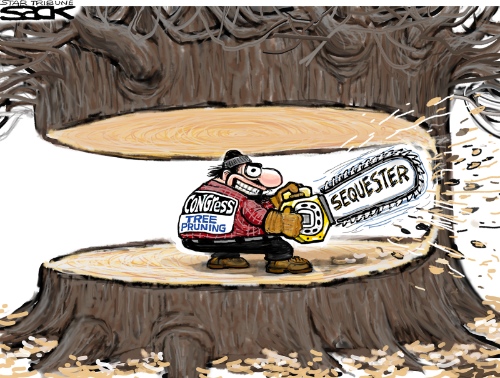
Sequester Is Here and I Feel a Sermon Coming On: Padre Steve Hammers the War Profiteers and their Political and Religious Supporters

url Well the effects of the great sequester foisted on us by Congress in 2011 are finally starting to be felt. In my little part of the world they are impacting the health care needs of Marines and Sailors and their families. In fact our hospital will be having to cut over 800 mental health appointments in the next 11 weeks. Many other services will be impacted. The probability is that should this continue that the effects will be even more severe on the current active duty force as well as veterans being care for in military or VA facilities, this my friends is just the beginning.

So much for supporting the troops who are dealing with PTSD, Traumatic Brain Injury, crippling wounds that leave them dependent on pain killers, narcotics which in previous wars they would not have survived. Let’s not forget the suicide epidemic and sexual assault crisis, as well as collapsing families due to to the repeated stress of deployments and a system that is already struggling to cope with all of this. But that doesn’t really matter as long as corporate profits from war remain high and political contributions come rolling in. Thank you Congress, while you continue to get the best health care imaginable, take no cuts to your salary, and get more vacation days than anyone else employed by the government, even deciding when to not do business so you can take a paid holiday at taxpayer expense while the people that you have sent to war for the last 12 years pay the price, but I digress…

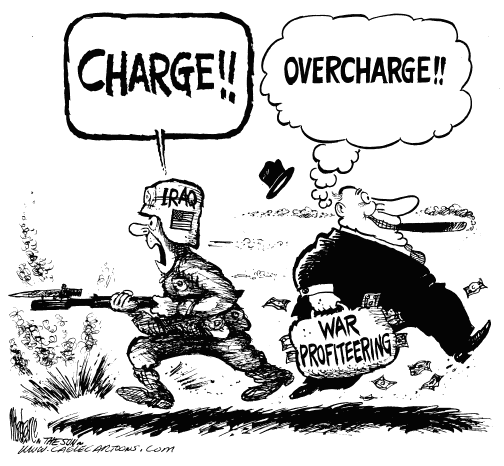
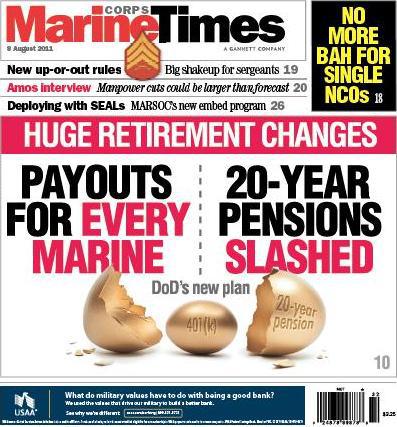
The K Street Lobbyists that advocate for all of the big defense industries whose programs and profits are getting relief from sequestration at every turn because their Congressional lackeys ensure it happens aren’t suffering. Their stocks and profits are going through the roof, even as they still sell things to the military that quite often we neither do not want or do not need. However, because the contractors and lobbyists have made sure that they located their programs in every Congressional district it takes an act of Congress that you can’t get to cut them. profiteering Meanwhile, those poor districts that only service the people of the military get hammered. Yes, all of those troop laden bases that don’t require big aerospace or shipyard investments in those southern Red States that take the hardest hits. You know, the really patriotic ones North Carolina, Texas, Georgia, Louisiana, Missouri, Kentucky and South Carolina where such bases as Fort Hood, Fort Bragg, Fort Bliss, Fort Polk, Fort Benning, Fort Knox, Fort Campbell, Fort Jackson and Camp LeJeune are located. It is they who take the biggest cuts to personnel and programs both the active duty military as well as our DOD civilian workers and personnel working for us employed by contractors. Of course these cuts affect other areas in Blue States or Swing States but I find the irony that those pushing hardest for sequester affecting military personnel and operations tend to be from those same Red States and those fighting hardest for the benefits to troops and veterans over weapons programs and industry are those that are traditionally called anti-military liberal Democrats. mct_cover_080811 Likewise those pushing for the most severe cuts in personnel and benefits are mostly men appointed to their advisory positions by Donald Rumsfeld. Men who have a decided interest in pushing for the profits of corporations that they are connected. The sad thing is that some of these men are former senior officers. (See my article The Disdain of American Business for Military Personnel and their Benefits and Follow the Money: The Real Motives behind those Seeking to Radically Change the Military Retirement System). There is more irony. Back in the early days of the Bush administration even after we went to war in Afghanistan and Iraq Defense Secretary Rumsfeld worked hard to civilianize military positions, especially medical billets. Those medical personnel billets were downsized and replaced by civilians or contractors. Of course the Federal civilians are now sequestered meaning that military personnel including wounded warriors will face even more hurdles to obtain needed medical care. Throw in the fact that even without the sequester the Veteran’s Administration system is broken and that many “conservative” politicians and their business allies want to reduce the Tricare health insurance coverage for service members, retirees and their families and it all adds up to betrayal.

But the sad thing is that none of this is new. The irony is that Marine Corps icon and two time Medal of Honor winner Major General Smedley Butler wrote about the very same thing when he retired from the Marine Corps in 1932. He wrote a little book that I highly recommend called War is a Racket. It is a damning indictment of American politics and business. It shows just how callous, brutal and truly traitorous political and business interests can be when it comes to the trust of the nation and those that serve it in time of war. I quote the entirety of Chapter Two of Butler’s Book because rings so true today.
Who Makes the Profits


The World War, rather our brief participation in it, has cost the United States some $52,000,000,000. Figure it out. That means $400 to every American man, woman, and child. And we haven’t paid the debt yet. We are paying it, our children will pay it, and our children’s children probably still will be paying the cost of that war.
The normal profits of a business concern in the United States are six, eight, ten, and sometimes twelve percent. But war-time profits — ah! that is another matter — twenty, sixty, one hundred, three hundred, and even eighteen hundred per cent — the sky is the limit. All that traffic will bear. Uncle Sam has the money. Let’s get it.

Of course, it isn’t put that crudely in war time. It is dressed into speeches about patriotism, love of country, and “we must all put our shoulders to the wheel,” but the profits jump and leap and skyrocket — and are safely pocketed. Let’s just take a few examples.

Take our friends the du Ponts, the powder people — didn’t one of them testify before a Senate committee recently that their powder won the war? Or saved the world for democracy? Or something? How did they do in the war? They were a patriotic corporation. Well, the average earnings of the du Ponts for the period 1910 to 1914 were $6,000,000 a year. It wasn’t much, but the du Ponts managed to get along on it. Now let’s look at their average yearly profit during the war years, 1914 to 1918. Fifty-eight million dollars a year profit we find! Nearly ten times that of normal times, and the profits of normal times were pretty good. An increase in profits of more than 950 per cent.

Take one of our little steel companies that patriotically shunted aside the making of rails and girders and bridges to manufacture war materials. Well, their 1910-1914 yearly earnings averaged $6,000,000. Then came the war. And, like loyal citizens, Bethlehem Steel promptly turned to munitions making. Did their profits jump — or did they let Uncle Sam in for a bargain? Well, their 1914-1918 average was $49,000,000 a year!

Or, let’s take United States Steel. The normal earnings during the five-year period prior to the war were $105,000,000 a year. Not bad. Then along came the war and up went the profits. The average yearly profit for the period 1914-1918 was $240,000,000. Not bad. There you have some of the steel and powder earnings. Let’s look at something else. A little copper, perhaps. That always does well in war times.

Anaconda Copper for instance. Average yearly earnings during the pre-war years 1910-1914 of $10,000,000. During the war years 1914-1918 profits leaped to $34,000,000 per year. (One should read their history of strip mining massive pollution, ARCO bought them in the 1970s but was stuck with massive environmental problems, such that the company is only on the books to show the losses)

Or Utah Copper. Average of $5,000,000 per year during the 1910-1914 period. Jumped to an average of $21,000,000 yearly profits for the war period.
Let’s group these five, with three smaller companies. The total yearly average profits of the pre-war period 1910-1914 were $137,480,000. Then along came the war. The average yearly profits for this group skyrocketed to $408,300,000. A little increase in profits of approximately 200 per cent.

Does war pay? It paid them. But they aren’t the only ones. There are still others. Let’s take leather. For the three-year period before the war the total profits of Central Leather Company were $3,500,000. That was approximately $1,167,000 a year. Well, in 1916 Central Leather returned a profit of $15,000,000, a small increase of 1,100 per cent. That’s all.
The General Chemical Company (now part of Honeywell) averaged a profit for the three years before the war of a little over $800,000 a year. Came the war, and the profits jumped to $12,000,000. a leap of 1,400 per cent.

International Nickel Company — and you can’t have a war without nickel — showed an increase in profits from a mere average of $4,000,000 a year to $73,000,000 yearly. Not bad? An increase of more than 1,700 per cent.

American Sugar Refining Company (largest Sugar refining company in the world, name brand Domino Sugar) averaged $2,000,000 a year for the three years before the war. In 1916 a profit of $6,000,000 was recorded.

Listen to Senate Document No. 259. The Sixty-Fifth Congress, reporting on corporate earnings and government revenues. Considering the profits of 122 meat packers, 153 cotton manufacturers, 299 garment makers, 49 steel plants, and 340 coal producers during the war. Profits under 25 per cent were exceptional. For instance the coal companies made between 100 per cent and 7,856 per cent on their capital stock during the war. The Chicago packers doubled and tripled their earnings.
And let us not forget the bankers who financed the great war. If anyone had the cream of the profits it was the bankers. Being partnerships rather than incorporated organizations, they do not have to report to stockholders. And their profits were as secret as they were immense. How the bankers made their millions and their billions I do not know, because those little secrets never become public — even before a Senate investigatory body.

But here’s how some of the other patriotic industrialists and speculators chiseled their way into war profits.
Take the shoe people. They like war. It brings business with abnormal profits. They made huge profits on sales abroad to our allies. Perhaps, like the munitions manufacturers and armament makers, they also sold to the enemy. For a dollar is a dollar whether it comes from Germany or from France. But they did well by Uncle Sam too. For instance, they sold Uncle Sam 35,000,000 pairs of hobnailed service shoes. There were 4,000,000 soldiers. Eight pairs, and more, to a soldier. My regiment during the war had only one pair to a soldier. Some of these shoes probably are still in existence. They were good shoes. But when the war was over Uncle Sam has a matter of 25,000,000 pairs left over. Bought — and paid for. Profits recorded and pocketed.

There was still lots of leather left. So the leather people sold your Uncle Sam hundreds of thousands of McClellan saddles for the cavalry. But there wasn’t any American cavalry overseas! Somebody had to get rid of this leather, however. Somebody had to make a profit in it — so we had a lot of McClellan saddles. And we probably have those yet.
Also somebody had a lot of mosquito netting. They sold your Uncle Sam 20,000,000 mosquito nets for the use of the soldiers overseas. I suppose the boys were expected to put it over them as they tried to sleep in muddy trenches — one hand scratching cooties on their backs and the other making passes at scurrying rats. Well, not one of these mosquito nets ever got to France!

Anyhow, these thoughtful manufacturers wanted to make sure that no soldier would be without his mosquito net, so 40,000,000 additional yards of mosquito netting were sold to Uncle Sam.

There were pretty good profits in mosquito netting in those days, even if there were no mosquitoes in France. I suppose, if the war had lasted just a little longer, the enterprising mosquito netting manufacturers would have sold your Uncle Sam a couple of consignments of mosquitoes to plant in France so that more mosquito netting would be in order.
Airplane and engine manufacturers felt they, too, should get their just profits out of this war. Why not? Everybody else was getting theirs. So $1,000,000,000 — count them if you live long enough — was spent by Uncle Sam in building airplane engines that never left the ground! Not one plane, or motor, out of the billion dollars worth ordered, ever got into a battle in France. Just the same the manufacturers made their little profit of 30, 100, or perhaps 300 per cent.

Undershirts for soldiers cost 14¢ [cents] to make and uncle Sam paid 30¢ to 40¢ each for them — a nice little profit for the undershirt manufacturer. And the stocking manufacturer and the uniform manufacturers and the cap manufacturers and the steel helmet manufacturers — all got theirs.

Why, when the war was over some 4,000,000 sets of equipment — knapsacks and the things that go to fill them — crammed warehouses on this side. Now they are being scrapped because the regulations have changed the contents. But the manufacturers collected their wartime profits on them — and they will do it all over again the next time.
There were lots of brilliant ideas for profit making during the war.

One very versatile patriot sold Uncle Sam twelve dozen 48-inch wrenches. Oh, they were very nice wrenches. The only trouble was that there was only one nut ever made that was large enough for these wrenches. That is the one that holds the turbines at Niagara Falls. Well, after Uncle Sam had bought them and the manufacturer had pocketed the profit, the wrenches were put on freight cars and shunted all around the United States in an effort to find a use for them. When the Armistice was signed it was indeed a sad blow to the wrench manufacturer. He was just about to make some nuts to fit the wrenches. Then he planned to sell these, too, to your Uncle Sam.

Still another had the brilliant idea that colonels shouldn’t ride in automobiles, nor should they even ride on horseback. One has probably seen a picture of Andy Jackson riding in a buckboard. Well, some 6,000 buckboards were sold to Uncle Sam for the use of colonels! Not one of them was used. But the buckboard manufacturer got his war profit.
The shipbuilders felt they should come in on some of it, too. They built a lot of ships that made a lot of profit. More than $3,000,000,000 worth. Some of the ships were all right. But $635,000,000 worth of them were made of wood and wouldn’t float! The seams opened up — and they sank. We paid for them, though. And somebody pocketed the profits.
It has been estimated by statisticians and economists and researchers that the war cost your Uncle Sam $52,000,000,000. Of this sum, $39,000,000,000 was expended in the actual war itself. This expenditure yielded $16,000,000,000 in profits. That is how the 21,000 billionaires and millionaires got that way. This $16,000,000,000 profits is not to be sneezed at. It is quite a tidy sum. And it went to a very few.

The Senate (Nye) committee probe of the munitions industry and its wartime profits, despite its sensational disclosures, hardly has scratched the surface.
Even so, it has had some effect. The State Department has been studying “for some time” methods of keeping out of war. The War Department suddenly decides it has a wonderful plan to spring. The Administration names a committee — with the War and Navy Departments ably represented under the chairmanship of a Wall Street speculator — to limit profits in war time. To what extent isn’t suggested. Hmmm. Possibly the profits of 300 and 600 and 1,600 per cent of those who turned blood into gold in the World War would be limited to some smaller figure.

Apparently, however, the plan does not call for any limitation of losses — that is, the losses of those who fight the war. As far as I have been able to ascertain there is nothing in the scheme to limit a soldier to the loss of but one eye, or one arm, or to limit his wounds to one or two or three. Or to limit the loss of life. There is nothing in this scheme, apparently, that says not more than 12 per cent of a regiment shall be wounded in battle, or that not more than 7 per cent in a division shall be killed.

Of course, the committee cannot be bothered with such trifling matters.

But still even so the real costs of the actions of the vultures of business and their political lackeys in both major parties impact military personnel and their families and devastate the nation as a whole. Butler wrote: “What is the cost of war? what is the bill? Major General Smedley Butler wrote: “This bill renders a horrible accounting. Newly placed gravestones. Mangled bodies. Shattered minds. Broken hearts and homes. Economic instability. Depression and all of its attendant miseries. Back -breaking taxation for generations and generations. For a great many years as a soldier I had a suspicion that war was a racket; not only until I retired to civilian life did I fully realize it….” warracket1-1 The sad thing is that the “racket” that Butler wrote about hasn’t changed an iota. In fact it has gotten worse because the profiteers and politicians have shuffed off the actual war fighting on a tiny part of the population, barely half a percent. They don’t even need to draft people to serve in war anymore and risk a political blowback.

It’s really quite a system, the profiteers get the profits and political support and have almost no risk because it is other people’s money, you know, the taxpayers money and when the cuts come they still make a profit while the military personnel get thrown under the bus. It is wonderful business but really quite immoral even if they have the blessing of the political preachers.

Butler talked about those guys too. Butler wrote: “So vicious was this war propaganda that even God was brought into it. With few exceptions our clergymen joined in the clamor to kill, kill, kill. To kill Germans. God is on our side…it is his will that the Germans be killed.”

Substitute “Islamists” for “Germans” and the message from the Right Wing Preachers is the same. Not very Jesus like, but hey, the peace and love stuff doesn’t rake in the big bucks for the big politically driven “ministries.” Get people angry, sow fear and distrust, convince people that they are threatened and even civilized “Christian” people will commit genocide, all in the name of Jesus.

Enough for tonight.

Peace Padre Steve+

2 Comments

Filed under Military, national security, News and current events, Political Commentary

The More Things Change and What You Leave Behind…

images-50

“It’s like I said. The more things change, the more they stay the same.” Quark (the final line of Star Trek Deep Space Nine)

Today has been one of those weird, somewhat challenging, a bit difficult on an emotional level and at the same time rewarding days. It was a day that involved dealing with people that I care for, that work for me that within a bit over a month I will be leaving. Men and women that have impacted my life and from what I understand will miss me, as one said “my quirkiness and all.”

This happened to be the second day of the sequester which will impact me and my staff and will ensure that my last month in my current billet will be challenging and meaningful. What I hope is that the things that I am able to do in the next month will not only survive me but help provide the resources, structure and environment to allow my successor to take things to the next level in providing spiritual care for the diverse population of Sailors, Marines, their families, veterans, retirees and their families, as well as our civilian employees.

You see ultimately, the show here will go on without me and the best that I can do besides caring for those in my charing in the here and now is to help ensure that I leave something behind that others can build on. That too is something that you learn in this military life, that what you do is not ultimately about you.  It is about service to the nation and to the people that you have the privilege to serve alongside no matter what the duty station.

When one lives their life in the military these transitions happen all too often. In a sense our lives in the military are very transitory, maybe more so than many would be comfortable with. For relatively short periods of our lives, maybe months, or a few years or in the case of deployments in combat zones sometimes days, hours or even minutes. But in those transitory times our lives can be bound together in ways unimagined by most people that do not share this military life or experience.

My regular readers know that I grew up in this environment as a child and that as an adult I have always felt the strange call to serve. What I find amazing is that after nearly 32 years of service between the Army and the Navy, active, reserve and National Guard around the world in peace and war is that I am still serving and will be, Lord willing for a number of years more and truthfully God only knows when this rather lengthly chapter of my life ends and another begins.

In light of the events of the past few days, the situations that I am dealing with at work, what I am trying to wrap up even as next month promises to be busy I found it fascinating that I was completing the viewing of the final episode of Star Trek Deep Space Nine called What You Leave Behind. I found the title of the episode to be serendipitous with my recent experiences and feelings about my impending transfer.

Despite how much I have moved around in life I find that I do not do “goodbyes” well. I like to imagine that I will see people again and I do, as many of the people that I have gone to school with, served with in the military or in the ministry together know I am one that treasures relationships. Heck, I look on my Facebook page there are people from almost every era of my life, many who I have served alongside dating to the very beginning of my military career. There are many others that I would dearly love to find and meet again.

In one of the final scenes of the episode Dr Bashir and the Cardassian tailor and former spy Garak part ways after a devastated Cardassia is liberated from the Dominion. Bashir as is typical of many of us is attempting to off some consolation to his friend who is grieving what has happened to his planet.

images-51

BASHIR: You and I both know that the Cardassians are a strong people. They’ll survive. Cardassia will survive. 

GARAK: Please, Doctor. Spare me your insufferable Federation optimism. Of course it will survive, but as not the Cardassia I knew. We had a rich and ancient culture. Our literature, music, art were second to none. And now, so much of it is lost. So many of our best people, our most gifted minds.
BASHIR: I’m sorry, Garak. I didn’t mean
GARAK: Oh, it’s quite all right, Doctor. You’ve been such a good friend. I’m going to miss our lunches together.
BASHIR: I’m sure we’ll see each other again.
GARAK: I’d like to think so, but one can never say. We live in uncertain times.

As I approach my last month before my transfer I will certainly be experiencing many feelings that tend to bring a certain amount of sentimental melancholy. I will miss the people I have come to know here even as I rejoice in being able to return home and live with my wife Judy again full time.

There are times that I feel like Garak and Bashir. I like to believe, I like to be optimistic like Bashir, but there is a certain amount of sometimes cynical realism that pervades my thoughts, like Garak. I can understand both men. But as much as I understand them I also understand the military and like Quark have to admit “that the more things change the more they stay the same.”

But regardless of that, I can say about those that I have the the honor of working with, like Captain Sisko in that last episode of Deep Space Nine: “This may be the last time we’re all together, but no matter what the future holds, no matter how far we travel, a part of us, a very important part, will always remain here…”

Peace

Padre Steve+

Leave a comment

Filed under leadership, Military, philosophy, remembering friends, star trek