Category Archives: Navy Ships

237 Years of Service: Happy Birthday US Navy!

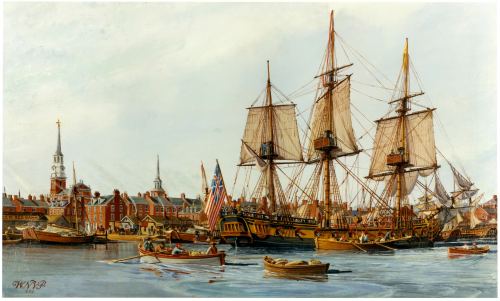
Raising the Flag Aboard the USS Alfred 

“It follows than as certain as that night succeeds the day, that without a decisive naval force we can do nothing definitive, and with it, everything honorable and glorious.” George Washington 15 November 1781 to the Marquis de Lafayette

On October 13th 1775 the Continental Congress passed legislation to establish a Navy for a country that did not yet exist.  It was the first was the first in a long line of legislative actions taken by it and subsequent Congresses that helped define the future of American sea power.

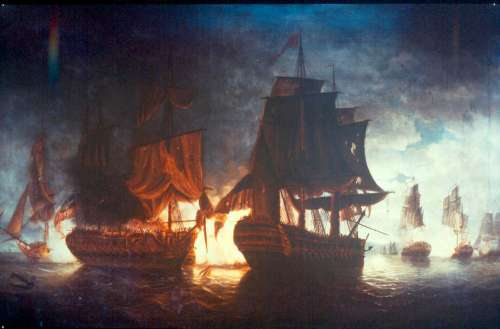
The Battle of Flamborough Head

The legislation was the beginning of a proud service that the intrepid founders of our nation could have ever imagined.  Less than two months after it was signed on December 3rd 1775 Lieutenant John Paul Jones raised the Grand Union Flag over the new fleet flagship the Alfred. The fleet set sail and raided the British colony at Nassau in the Bahamas capturing valuable cannon and other military stores.  It was the first amphibious operation ever conducted by the Navy and Marines.

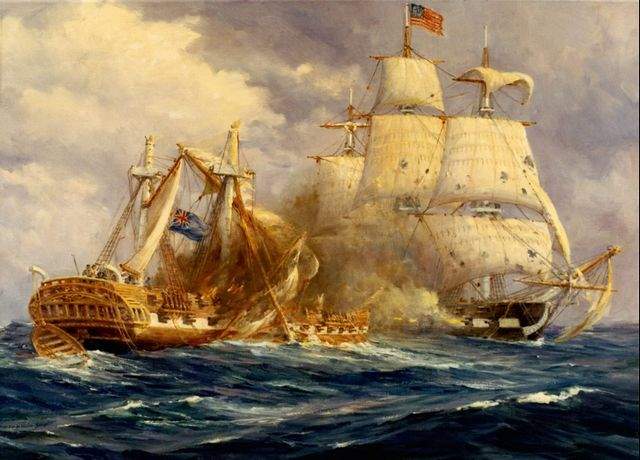
USS Constitution and HMS Guerriere

Jones received the first recognition of the American flag shortly after France recognized the new United States.  In command of the Sloop of War Ranger his ship received a nine-gun salute from the French flagship at Quiberon Bay.

Oliver Hazard Perry at the Battle of Lake Erie

Jones would go on to to greater glory when he in command of the Bonhomme Richard defeated the HMS Serapis at the Battle of Flamborough Head. During the battle when all seemed lost and the colors had been shot away he replied to a British question if he had surrendered replied “I have not yet begun to fight!”

Admiral David Farragut at the Battle of Mobile Bay

When the war ended very few of these ships remained most having been destroyed or captured during the war. But these few ships and the brave Sailors and Marines who manned them blazed a trail which generations of future sailors would build on.  The Navy has served the nation and the world as a “Global Force for Good” for 237 years.

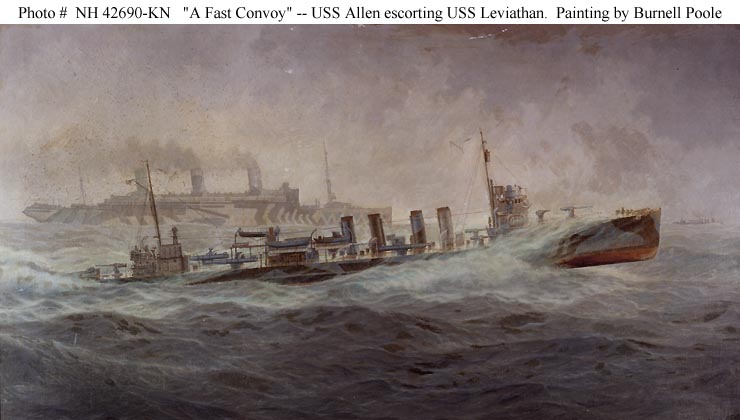
World War One: Convoy Escort USS Allen

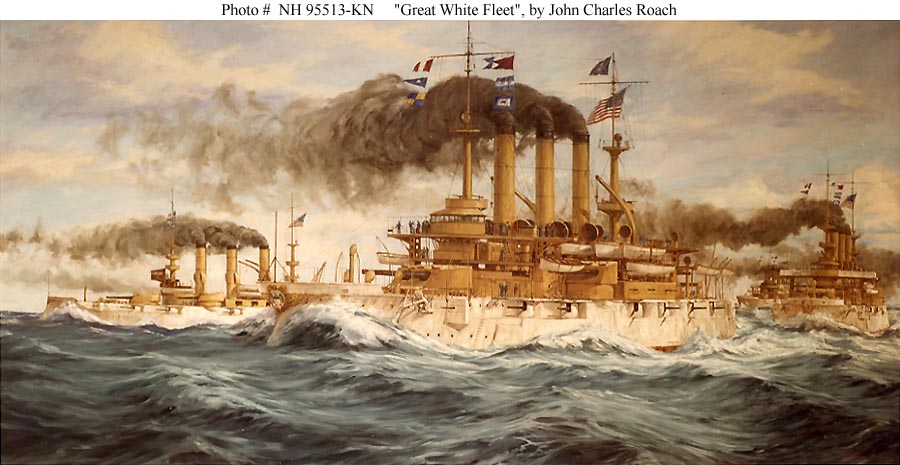
The Great White Fleet

This force for good is on duty today and those that have served over the past 237 years are part of a tradition that is more than honorable. President John F. Kennedy who served as a PT Boat Commander in World War Two remarked:

“I can imagine no more rewarding a career. And any man who may be asked in this century what he did to make his life worthwhile, I think can respond with a good deal of pride and satisfaction: ‘I served in the United States Navy.'”

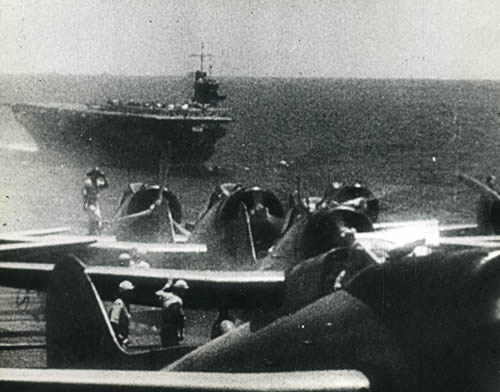
The Battle of Midway

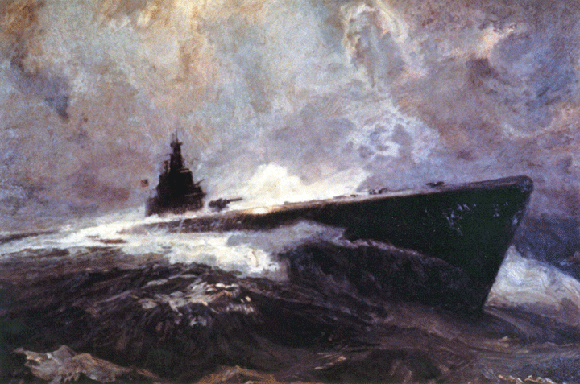
USS Growler

Tonight as you go to bed and sleep soundly after eating well and spending time with family, friends or enjoying some form of entertainment remember those of our Navy who serve at sea at the ready in the Straits of Hormuz, in the mountains and deserts of Afghanistan, the desolation of the Horn of Africa and around the world defending our interests, caring for our military personnel and their families and deploying to serve in harm’s way and in areas of devastation.  They are America’s “Global Force for Good.”  They are my shipmates they are your fellow citizens.  They are the United States Navy.

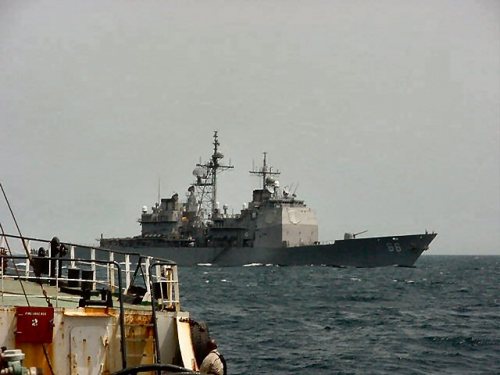
USS Hue City CG-66

Happy Birthday Shipmates.

Peace

Padre Steve+

1 Comment

Filed under History, Military, Navy Ships, US Navy

The Battle of Cape Esperance: October 11-12 1942

Naval battles between U.S. Navy and Imperial Japanese Navy surface forces around Guadalcanal in 1942 were almost always brief and bloody. The number of ships sunk in the area around Guadalcanal, Tulagi and Savo Island led to the area being nicknamed “Iron Bottom Sound.”

The battles around Guadalcanal occurred in a time of technical transition as radar became better at detecting ships and fire direction systems advanced. By October 1942 the U.S. Marines battling on Guadalcanal were fighting an enemy growing in numbers and felt the effects of the the predatory Japanese surface raiders that routinely bombarded their positions and endangered U.S. resupply efforts.

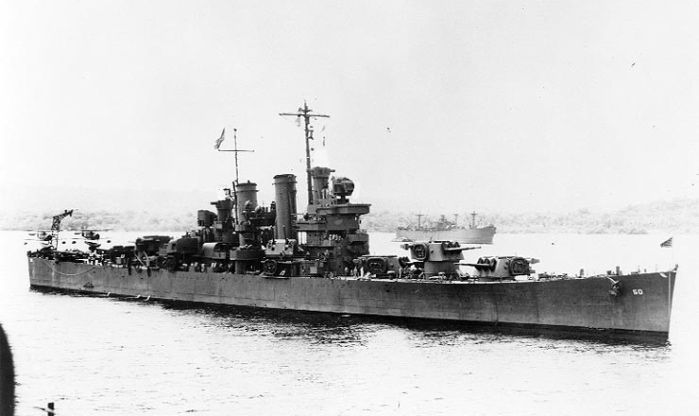
USS Helena

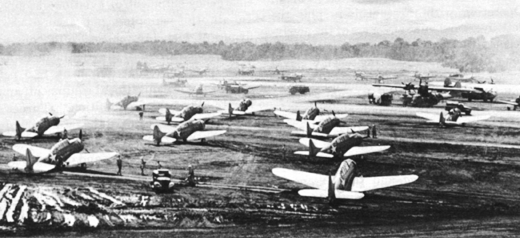
Since the Marine, Navy and Army Air Force Squadrons based on Guadalcanal maintained air superiority in the nearby waters during the day the Japanese were limited to night surface operations against the island, operations involving the reinforcement and resupply of Japanese Forces on the island as well as offensive operations to aid the land forces by attempting to make the U.S. airstrip, Henderson Field inoperable.

Henderson Field

The first of their major operations was in early August when a Japanese cruiser destroyer force ravaged the U.S. cruiser forces off Savo Island sinking 3 American and one Australian Heavy cruiser while damaging another. The Battle was a disaster for the U.S. forces and led to the early withdraw of ships of the invasion force before many could finish unloading the equipment and supplies that were critical to the operation.

The Tokyo Express Route along the Slot

Japanese resupply and reinforcement operations were so frequent that the Japanese forces were nicknamed the Tokyo Express by the Americans. Knowing that the Marines who had been in bitter combat with the Japanese needed reinforcements the U.S. sent a convoy to land the 164th Infantry Regiment of the Americal Division on October 13th and sent a surface task force TF-64 composed of the Cruisers USS San Francisco, USS Boise, USS Salt Lake City and USS Helena and 5 destroyers under the command of Rear Admiral Norman Scott to protect it from any Japanese surface threats.

IJN Heavy Cruiser Aoba after the battle

The U.S. moves coincided with a Japanese reinforcement effort which was covered by a force of three heavy cruisers, the Aoba, Furutuka and Kinugasa and two destroyers under the command of Rear Admiral Arimoto Goto. The Japanese cruisers were to bombard Henderson Field as the Japanese were not expecting any American surface forces to oppose their effort.

Rear Admiral Arimoto Goto

The Japanese were detected by aerial reconnaissance on the afternoon of the 10th when they were about 200 miles from Guadalcanal. Scott, whose forces lacked experience in night surface combat made a simple plan to “cross the T” of the enemy force in a single line formation with three destroyers in the van, the cruisers in the center and two destroyers in the rear.

Rear Admiral Norman Scott

U.S. floatplanes from the cruisers detected the Japanese at 2300 hours and at 2322 the radar of the USS Helena picked up the Japanese force at a range of about 27,000 yards. However misunderstandings of Scott’s orders broke his formation and put the van destroyers out of position in the poor visibility of the moonless night caused Scott to believe that the radar contacts were his own destroyers.

The Japanese still did not realize that an American force was near them and continued on. At 2345 the ships were only about 5,000 yards apart when Helena radioed asking permission to fire. The message was received by Scott who did not grant permission but acknowledged receipt of the message. Mistaking this as permission Helena, followed by the other cruisers opened a devastating fire on the Japanese force. Goto’s lookouts had sight the Americans at 2343 but assumed that they were friendly. The result was heavy damage to the Japanese flagship Aoba and left Goto mortally wounded.

IJN Heavy Cruiser Furutaka

Scott. taken by surprise ordered ceasefire at 2347 thinking that he was shooting at his own destroyers, but resumed fire at 2351. At 2349 Furutaka was heavily damaged by American fire and at 2358 was hit by a torpedo fired by the destroyer Buchanan. The Japanese destroyer Fubuki was mortally wounded about the same time and began to sink. The U.S. destroyers Duncan and Farenholt were both damaged in the crossfire with Duncan so badly damaged that she would be abandoned and sunk.

USS Duncan

The American cruisers turned on their searchlights which provided the last Japanese cruiser, Kinugasa the opportunity to hit them hard. Kinugasa heavily damaged Boise forcing her out of the battle. As Boise sheared away from the action Kinugasa and Salt Lake City exchanged fire hitting each other before the Japanese cruiser broke off the action.

The commander of the Japanese reinforcement group, his mission completed dispatched destroyers to assist Goto’s force at it withdrew and rescue survivors. However these ships were caught by U.S. aircraft from Henderson Field as the light of the dawn lit the sky. The destroyers Murakumo and Natsugumo were heavily damaged and scuttled.

On the 13th the American reinforcements arrived, as did Japanese reinforcements that night. On the night the 13th Japanese battleships Kongo and Haruna almost destroyed Henderson Field. However the resilient Marines kept the airfield operational and the Marines of the 1st Marine Division and the nearly arrived soldiers of the 164th Regiment held off a major Japanese assault from 23-26 October, known as the Battle of Henderson Field or Bloody Ridge.

Task Force 64 lost one destroyer sunk and two cruisers damaged while the Japanese lost one cruiser and three destroyers sunk and two cruisers damaged, with Aoba taking severe damage from nearly 40 6” and 8” shells that knocked her out of the war for four months. The battle had lasted less than 50 minutes from the time Helena picked up the Japanese force on her radar.

The battle was a tactical victory for the U.S. Navy but the lessons of the battle about the power of Japanese torpedoes and effectiveness in night combat were not learned causing other U.S. task forces to have to learn the hard way in subsequent engagements. Rear Admiral Scott would not long survive his victory being killed in action aboard the USS Atlanta during the Naval Battle of Guadalcanal just a month later.

Peace

Padre Steve+

6 Comments

Filed under History, Military, Navy Ships, US Navy, world war two in the pacific

The Advent of Submarine Warfare: Otto Weddigen the U-9 and the Sinking of the Aboukir, Cressy and Hogue

“There was a fountain of water, a burst of smoke, a flash of fire, and part of the cruiser rose in the air. Then I heard a roar and felt reverberations sent through the water by the detonation.” Otto Weggigen’s account of sinking the HMS Aboukir.

In September 1914 most naval experts held the submarine was not much of a threat. The submarines of the day were limited in range, diving depth, speed, armament and endurance. The U-9 was powered by kerosine engines on the surface which charged batteries which were used when the boats were submerged. Later submarines would be powered by diesel engines.

U-9 was small, displacing only 543 tons on surface and 674 submerged. 188 feet long and just 19.7 feet in beam the conditions for her crew of 4 officers and 25 enlisted men were less than spartan. She was armed with four 17.7 inch torpedo tubes, two forward and two aft and carried six torpedoes, four in the tubes and two reloads for the forward torpedo tubes.

The boat had been commissioned in April 1910 and on the outbreak of the First World War she was commanded by Kapitänleutnant Otto Weddigen.  On September 22nd 1914 with enormous battles raging on the Western Front and the High Seas Fleet in port the soon to be famous submarine was patrolling in the North Sea. The U-9 was about 18 miles off the Dutch Coast near the Hook of Holland when she encountered three ships of the Royal Navy’s 7th Cruiser Squadron.

The squadron was composed of three obsolete Cressy Class Armored Cruisers, the HMS Cressy, HMS, Aboukir and HMS Hogue displacing 12,000 tons and mounting two 9.2” and 12 6” guns. Manned primarily by recently called up reservists the ships were derisively known as the “Live Bait Squadron” and on that September morning they would unfortunately live up to that title.

The ships were steaming in a line ahead formation when Weddigen on the U-9 spotted them about 0600. They were not zig-zagging to lessen the chance of submarine attack and thought they had posted lookouts had no idea that U-9 was stalking them.

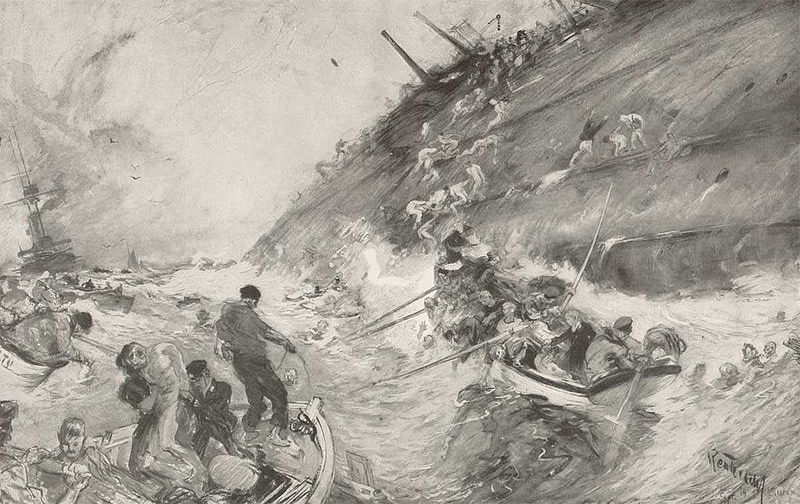
Weddigen on worked the boat into what he felt was a better firing position and launched his first torpedo at the center cruiser, the Aboukir at 0620 from a distance of just 550 yards. The torpedo struck her midships and broke her back. She began to sink and within 25 minutes capsize taking 527 of her crew of 760 down with her.

Thinking that Aboukir had struck a mine the Cressy and Hogue moved in to rescue survivors. Weddigen had surfaced to observe the British and then fired two torpedoes into Hogue from a range of just 300 yards and then dived with Hogue opening fire as she did so. Hogue capsized and sank in 15 minutes.

The British now knew that a submarine was responsible for the attack and the last ship and after reloading his forward tubes attacked Cressy at 0720 firing two torpedoes from her stern tubes. Weddigen then surfaced to bring his bow tubes into action and fired another shot, as he dis so the British cruiser opened fire and attempted to ram. Cressy was struck by two torpedoes during the attack capsized and then sank at 0755.

In little more than an hour and a half U-9 had sunk three cruisers with a loss of 1459 British sailors. Only 837 crew members from all three ships survived.

Weddigen then moved off as he knew that the British would be looking for the U-9. When the boat returned to port Weddigen  and his crew were hailed as heroes. Weddigen was awarded the Iron Cross First Class and the boat was one of only two ships of the Imperial Navy awarded the Iron Cross, the other being the Light Cruiser Emden.

The plucky U-9 would survive the war, sinking another cruiser, the HMS Hawke in 1915 and 13 other merchant ships or fishing boats. She was withdrawn from front line service in 1916 and assigned to training duties. Weddigen was killed on March 18th 1915 when his new command the U-29 was sunk.

Future First Sea Lord Dudley Pound then serving on the Battleship St. Vincent wrote: “Much as one regrets the loss of life one cannot help thinking that it is a useful warning to us — we had almost begun to consider the German submarines as no good and our awakening which had to come sooner or later and it might have been accompanied by the loss of some of our Battle Fleet”.

Submarines would go on to be one of the most feared and effective weapons developed for naval warfare. German U-Boats nearly brought Britain to its knees in both World Wars and the submarines of the US Navy’s Pacific Fleet decimated the Japanese merchant fleet and inflicted great losses on the Imperial Japanese Navy. While the US Navy replaced its losses in early 1942 it was the submarine force that according to Admiral Chester Nimitz “held the lines against the enemy.”

Today the most deadly submarines ever built prowl underneath the surface of the world’s oceans. Nuclear powered and advanced diesel electric boats armed with torpedoes and cruise missiles, and giant nuclear powered ballistic missile submarines armed with long range nuclear ballistic missiles provide an invisible deterrent.

Unlike 1914 today all navies take the submarine threat seriously. Should any significant naval war be fought in the Persian Gulf or the Pacific submarines will certainly have an impact not only at sea but in strategic strikes on enemy installations and land based units.

In 1914 no one would have thought that the success of the tiny U-9 would eventually lead to such a dominating weapon.

Peace

Padre Steve+

1 Comment

Filed under History, Military, Navy Ships

The Naval Balance in the Arabian Gulf

USS Eisenhower and a Ticonderoga Class Cruiser

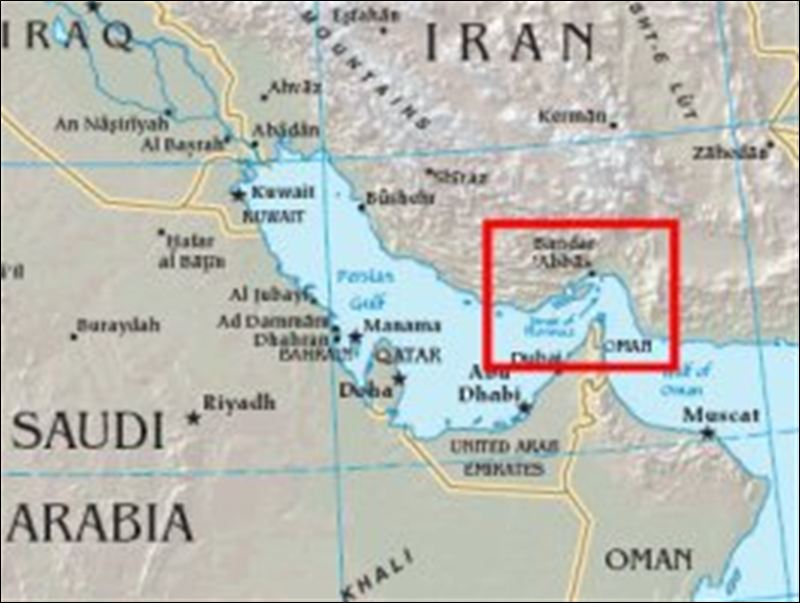
The tension in the Arabian Gulf and the Strait of Hormuz continues to build with every passing week. With the imposition of additional sanctions on Iran and its oil industry, tensions over Iran’s Nuclear program and threats by Iran to close the Straits it is important to know what naval forces are in the area to counter any Iranian action.

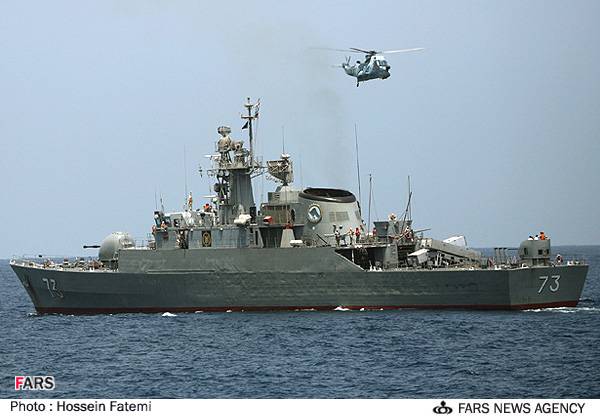
Iranian Alvand Class Frigate

The Iranian propaganda machine continues to promote the idea that its Navy is a major threat, not only in the region but around the world. However despite a number of high publicly deployments to the Mediterranean it is small coastal defense force. It has the capability to disrupt traffic in the Straits of Hormuz and is supported by land based Surface to Surface Missile batteries. However should a real shooting war break out it would be destroyed in short order, although it could inflict some damage on allied shipping if it was able to mount a surprise attack against an isolated ship.

The Islamic Republic of Iran Navy

Iranian Kilo Class Sub

3 Kilo Class Attack Submarines (Built in Mid 1990s in Russia)

Ghadar Class Submarine

19 Ghadar Class Coastal Submarines (120-150 ton built in Iran)

4 Yugo Class Coastal Submarines (90 ton built in North Korea)

3 Alvand Class (Vosper Type 5) Frigates (All are 40 years old and lightly armed)

1 Jamaran Class (Modified Iranian Built Vosper Mark V)

2 Bayador Class Patrol Frigates (US PF 103 Class) built in 1964

10 Houdong Type Missile Attack Boats (Operated By Revolutionary Guards Corps)

14 Kaman/Sina Class Missile Attack Boats

5 Coastal Patrol Boats

Numerous inshore patrol craft and auxiliary ships many capable of laying mines. The patrol craft could be used in “swarm” attacks against larger surface targets which Allied navies practice to defend against.  The larger Iranian ships are armed with C802 Surface to Surface Missiles.

US and Allied Navies in the Region are Commanded by Combined Task Force 150. 

Arab and Gulf State Navies

Omani Khareef Class Corevette

Oman (Royal Navy of Oman)  Oman has 5 very modern Corvettes. 2 Qahir Class which are British built Vosper Mark 9 and three new ships of the BAE Systems Khareef Class are entering service. These ships displace 2660 tons and are more modern, stealthy and heavily armed than most ships their size in the Gulf. The Omanis also have 8 modern patrol ships or craft and several amphibious ships and a number of smaller craft and auxiliaries.

Saudi Arabian Frigate Al Riyadh 

Saudi Arabia (Royal Saudi Navy) The Saudis boast a modern Navy built around three French Built Al Riyadh Class (La Fayette Class) Frigates, 4 Al Madina Class Frigates and 4 US Built Badr Class Corvettes, 9 Patrol Boats and 3 British Built Sandown Class Mine Hunters and numerous support vessels.

UAE The UAE Navy is small with only 2 small Swedish Built Corvettes and 14 Fast Attack or Patrol Craft, 2 Mine Hunters and numerous small patrol craft and amphibious craft.

Bahrain Bahrain has a former U.S. Navy Oliver Hazard Perry Class Guided Missile Frigate the Al Sabha and a number of patrol and fast attack craft.

Kuwait 10 Guided Missile Fast Attack Craft

US Allies in Gulf (current) 

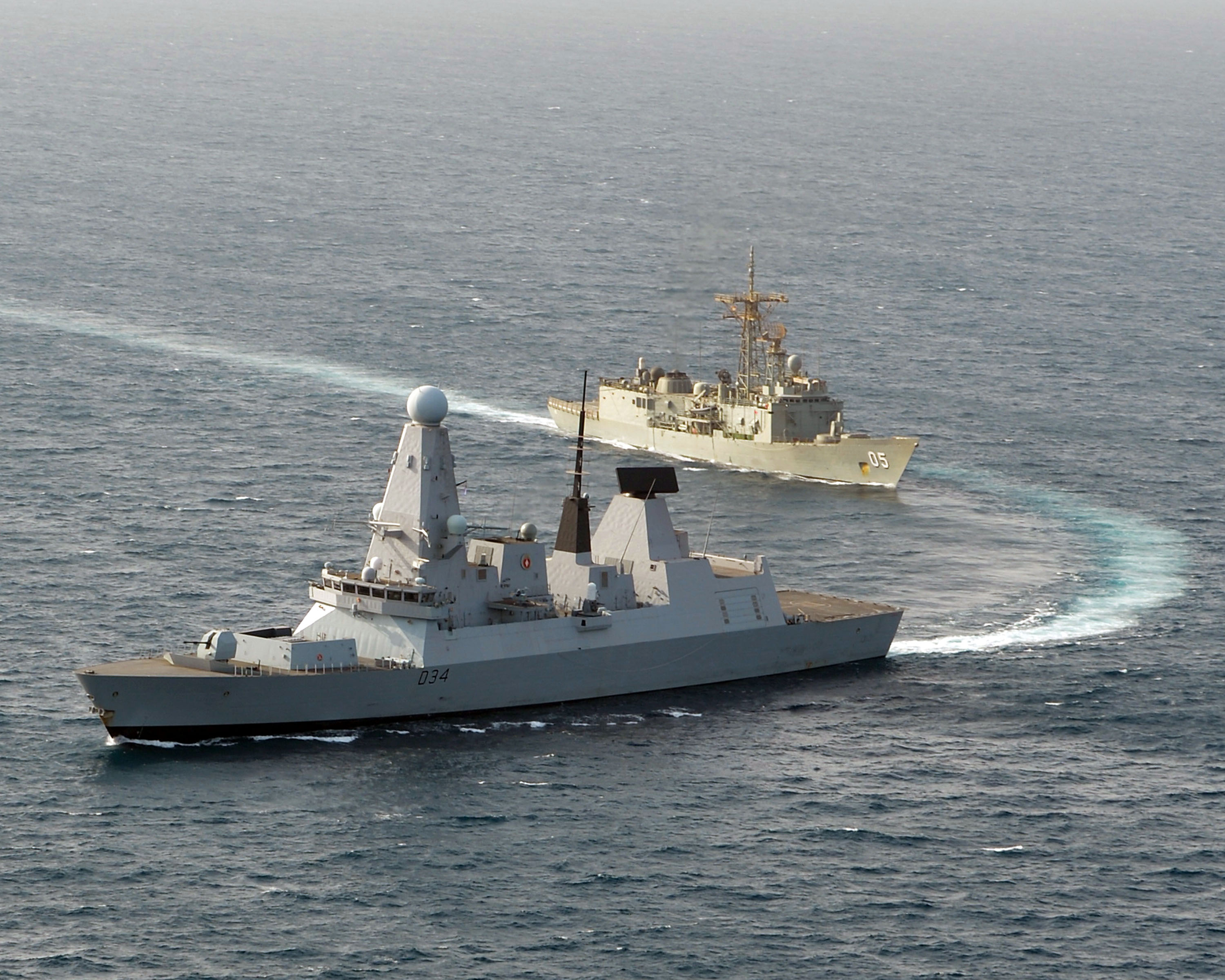
HMS Daring and HMAS Stuart

Britain: HMS Daring Type 45 DDG

Canada: Frigate HMCS Regina which is relieving the HMCS Charlottetown

France: Frigate La Motte Picquet


South Korean Destroyer Wang Geon

South Korea: Destroyer Wang Geon

Australia: Guide Missile Frigate HMAS Stuart

The United States Navy

USS Enterprise

2 Carrier Strike Groups (USS Eisenhower and USS Enterprise) with supporting Guided Missile Cruisers, Guided Missile Destroyers and Attack Submarines. The Navy now has 8 Mine Countermeasure Ships in the region and deployed the USS Ponce as a Floating Base for Special Operations Forces and Mine hunting helicopters. An Amphibious Ready Group with an Embarked Marine Expeditionary Unit (MEU) is also usually deployed in the region.

USS Ponce

Note that Allied ship movements and deployments change frequently and other nations not listed here frequently contribute ships to this mission.  Other US and Allied ships are deployed near the Horn of Africa. It is believed that the Israel Navy maintains a Dolphin Class submarine capable of launching nuclear cruise missiles within range of Iran.

Carrier based and land based US and Saudi Aircraft vastly outnumber and outclass the Iranian Air Force.

Conclusion

I do not believe that the Iranians are foolish enough to actually try to close the Strait of Hormuz, but would attempt to make enough threats to force oil prices up and get nations to attempt to skirt the trade and oil sanctions levied against it. That being said there is no accounting for an unforeseen or accidental incident or series of incidents that escalate the situation into a war. The Revolutionary Guards naval forces are particularly aggressive. There is also the possibility of an Israeli strike against Iran’s nuclear facilities that could trigger a regional war and naval battle over the Strait of Hormuz. If war comes it will probably be because a miscalculation that spins out of control.

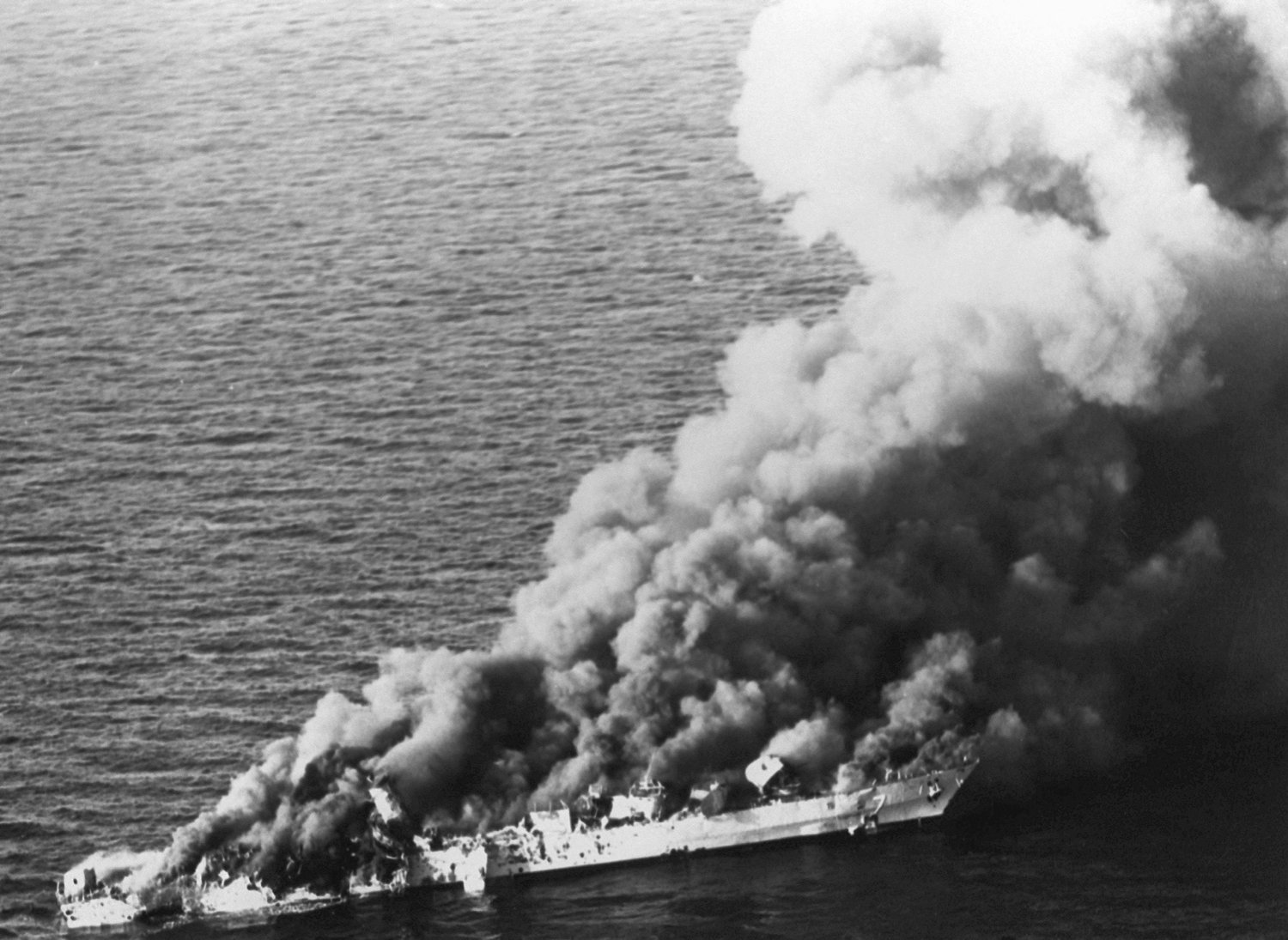
Tanker Burning and Sinking during 1988 Tanker War

Should a war begin for whatever reason it would still be disastrous. Hundreds of thousands of people could be killed or wounded and countries in the region devastated. Iranian Allies in the region especially the Iranian proxy Hezbollah could cause major problems. I don’t believe that Syria is in any shape to assist Iran due to its ongoing civil war but instability in it could give Hezbollah additional room to maneuver in Lebanon and against Israel.

Iranian Frigate Sahand Burning and Sinking following US Attack in 1988

If war was to break out it would be costly and the Iranians would cause damage to the world economy by attacking the oil infrastructure of its neighbors and attempting to close the Strait of Hormuz. However when all is said and done the Navy of the Islamic Republic and its air forces would be devastated in relatively short order.  That does not mean that such a war would be contained or limited. It could become a regional war where Iran launches missile strikes against Israel as well as the U.S. and its Gulf Allies. Terrorist and commando raids could also be part of any Iranian response to an Israeli strike or as part of any offensive operations that they decide to undertake. The fragile world economy could take a big hit with unknown political, social and economic effects.

In spite of how bad it would be I am of the opinion that someone will miscalculate and that war will ensue. Exactly how it will happen I am not sure. But it will not take much to ignite the powder keg that is the Middle East.

Peace

Padre Steve+

Leave a comment

Filed under Foreign Policy, History, middle east, Military, national security, Navy Ships

Requiem of Empire: The Yamato Class Battleships

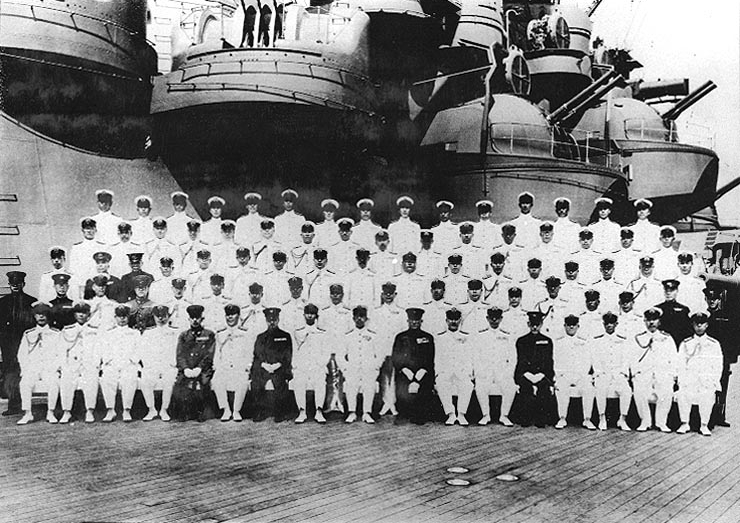
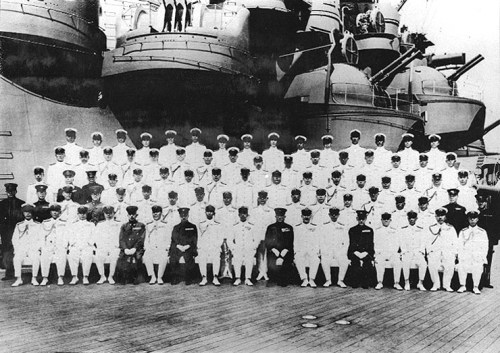
Emperor Hirohito on Musashi in 1943

The is a long delayed installment of my series on Battleships. Previous were about the Battleships constructed under conditions of the London Naval Conference.  These have dealt with the British King George V Class, French Dunkerque and Richelieu Classes, Italian Vittorio Vento Class and the American North Carolina and South Dakota ClassesI then wrote an introduction to the Post Treaty Super-Battleships. This article is the first in that series which will include articles on the German Bismarck and Tirpitz, British Vanguard and American Iowa Class.

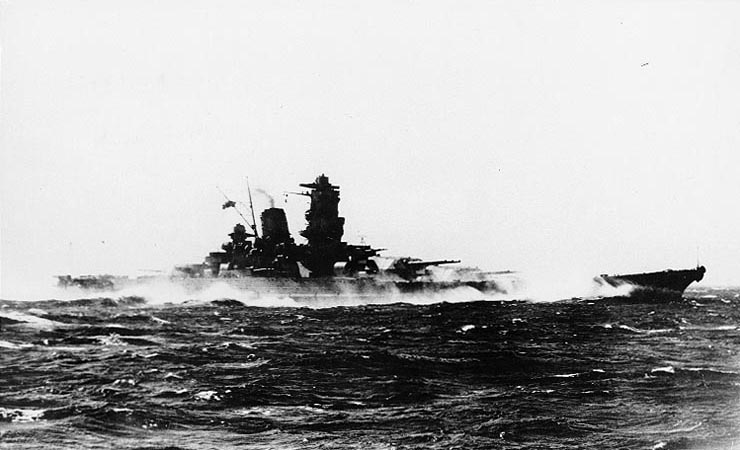
They were the largest and most heavily armed battleships ever built. Shrouded in secrecy by the Imperial Japanese Navy and Government the ships were designed to offset projected American numerical superiority. Their names were symbolic of Japan’s history. Yamato was named after Yamato Province, the ancestral home of the Yamato People, the dominant native ethnic group in Japan. Musashi was named after Musashi Province in which lays Tokyo Prefecture.  A third ship of the class, Shinano, was named after Shinano Province in central Japan which was the home of the prestigious Taketa Shingen family during the Senguku period.

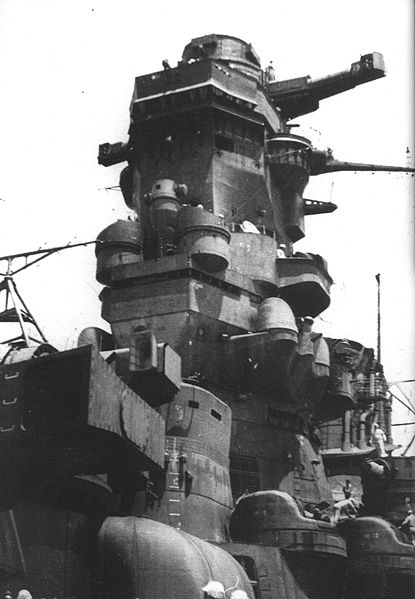
The Conning Tower and Bridge of Musashi

The secrecy surrounding their design and construction was unprecedented. Those charged with their deign and construction were thoroughly checked out by Japan’s secret police and sworn to an oath of secrecy. The oath sworn by builders of Musashi at the Mitsubishi Heavy Industries  Nagasaki Shipyard were sworn to the oath shown below:

I am aware that all work work involving the construction of the No. 2 Battleship is vital to national security. I will make utmost effort to maintain the  secrecy of the project, and swear that I will leak no information relating to the said battleship, even to relatives and close friends. In the event I violate this oath,  I will submit to the punishment determined by the company and the Navy.  
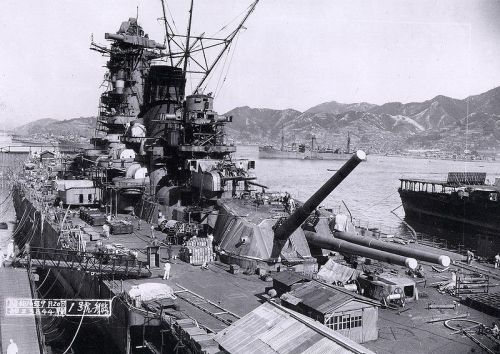
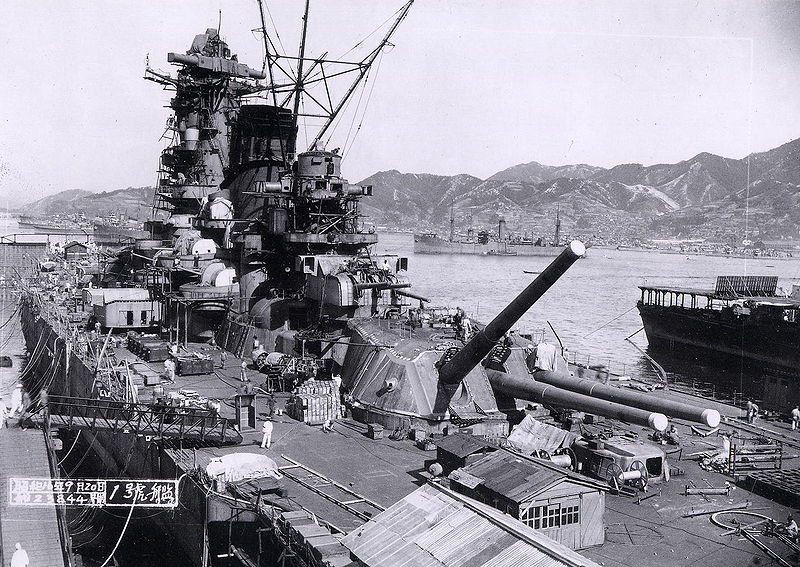
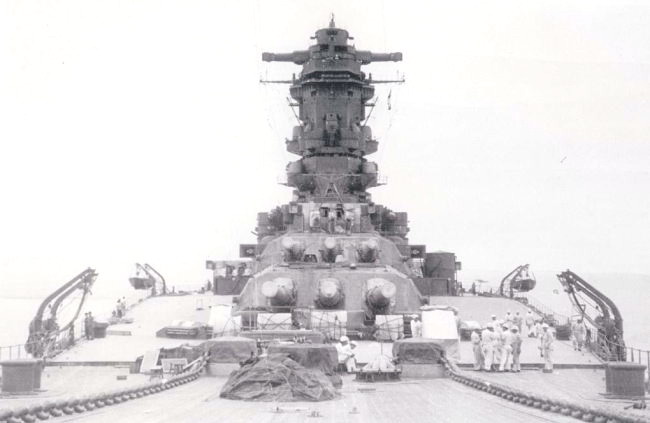
Yamato during Consrtuction

Security measures around the shipyards where Yamato and Musashi were constructed  were immense. At Nagasaki where there was a large foreign business and missionary population where the shipyard was visible from most of the city at hemp screen of 75,000 square meters was constructed to shield the ship from prying eyes and spies.

Musashi under Construction

When actual preparations for construction were taken in 1937 secret police swept the areas of foreign, especially Chinese workers. Security was increased inside and outside the shipyard, all blueprints accounted for and placed under strict guard while all shipyard workers were photographed with any having knowledge of the plans or supervising the construction sworn to the secrecy oath.

When a top secret blueprint went missing in 1938 at Nagasaki an intense investigation that included the torture of numerous suspects and the jailing of a blueprinter who accidentally swept the document into the trash was sentenced to 3 years in prison.
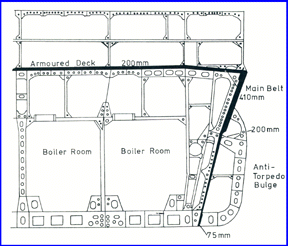
Armor and Protection of Yamato Class

Few pictures exist of the ships and Japanese Naval Officers destroyed many of the records of the ships design and construction just prior to the end of the Second World War. Throughout their existence they were a mystery to the American Navy. During the war the U.S. Navy estimated them to carry nine 16” guns and displace between 40,000-57,000 tons. Even the highly regarded Jane’s Fighting ships listed them at just 45,000 tons.

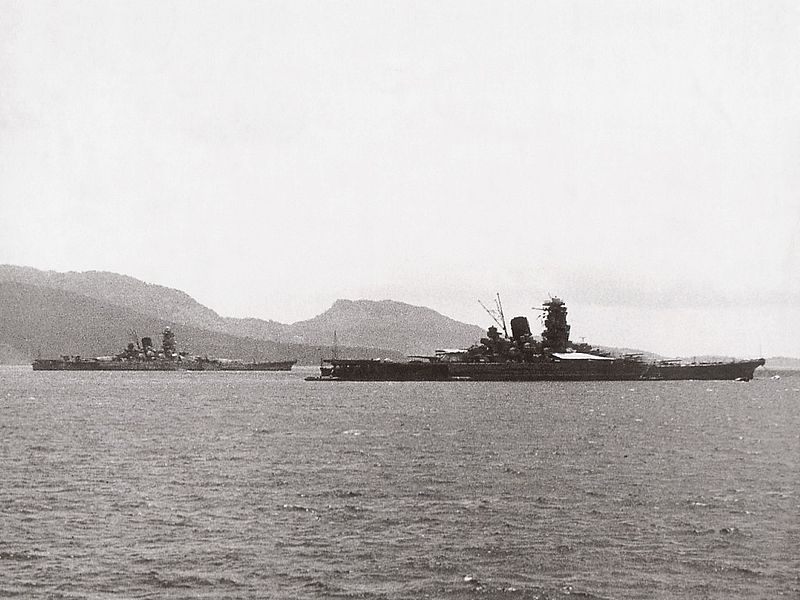
Yamato and Musashi together in 1943

Preliminary design work began in 1934 and progressed rapidly following Japan’s withdraw from the League of Nations and renunciation of the Washington and London Naval Treaties and withdraw from the 1936 naval talks in London. The early designs varied in the caliber of guns, size and armor, propulsion systems and endurance. Gun calibers ranged from 16” to 18.1” and a combined diesel-turbine system was considered but rejected in favor of traditional steam turbines.

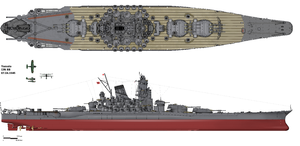
The final design was for a class of five ships. Each would displace 64,000 tons standard displacement and 72,000 tons at full load. They were 862 feet long with a beam of 127 feet.  They were so large that the docks they were built needed to be expanded and special extra large launch platforms had to be built.  At Nagasaki the dock at to be expanded by cutting into the hill adjacent to it.

They were armed with nine 18.1 inch guns in triple turrets which could fire a projectile weighing over a ton. The secondary armament consisted of 12 6.1 inch guns mounted in triple turrets formerly mounted on the Mogami Class cruisers when those ships were equipped with 8” guns. Anti-aircraft defense included twelve 5” guns and twenty-four 25mm anti-aircraft guns. During the war two of the 6.1 inch turrets were removed and replaced with twelve more 5” guns and the 25mm battery was raised to 162 guns. Fire control systems were designed in such a way that the ships could engage multiple surface targets at the same time.

The ships were protected by a massive armored belt ranging from 16 inches to 8 inches with 26 inch armor on the face plates of the main gun turrets. The armor was advanced with excellent sloping but had a flaw where the upper and lower belts connected just below the waterline which exposed them to damage from torpedoes.

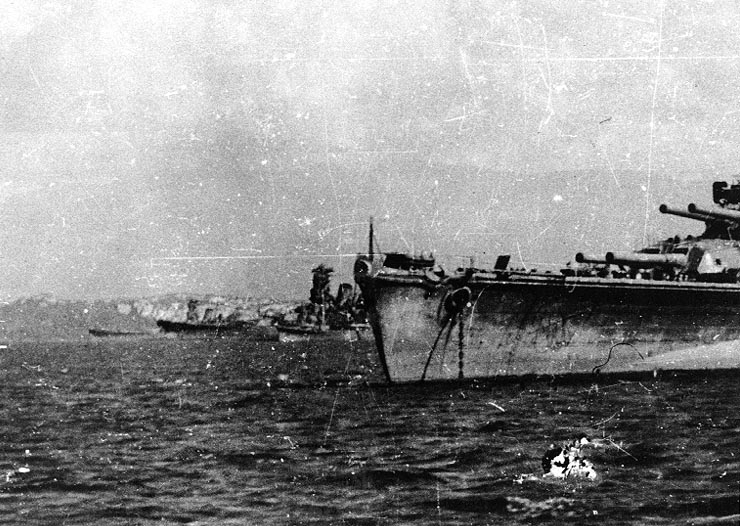
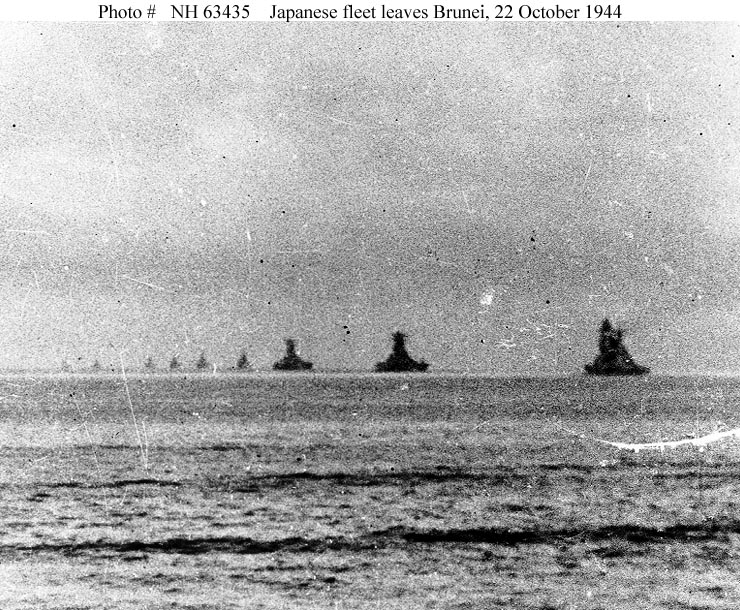
Yamato and Musashi viewed beside Battleship Nagato (foreground) just before the Battle of Leyte Gulf

They were powered by 12 Kampon boilers which powered 4 steam turbines and four three bladed propellers. These developed 150,000 shp and could drive the ship at a top speed of 27 knots.
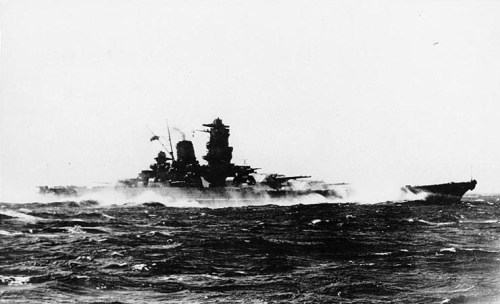
Yamato

Construction of Yamato began on November 4th 1937 at Kure Naval Shipyard. Musashi on March 28th 1938. Traditionally such events were large public ceremonies but these were limited to just a few Naval Staff and Shipyard executives.  Yamato was Launched on August 8th 1940 and commissioned on December 16th 1941, just 9 days after Pearl Harbor. Musashi was launched on November 8th 1940 and commissioned on August 5th 1942 just two days before the U.S. Marines invaded Guadalcanal and two months after the disaster at the Battle of Midway.

Yamato served as Admiral Yamamoto’s flagship at Midway where she saw no action. The next two years she was and Musashi alternated as fleet flagship and conducted operations with Battleship Division One in operations between Mainland Japan and the major Japanese base at Truk. On December 25th 1943 while escorting a convoy she was torpedoed by the submarine USS Skate and suffered heavy damage which flooded a magazine.  On March 29th while underway Musashi was struck near the bow by a torpedo from the USS Tunny.

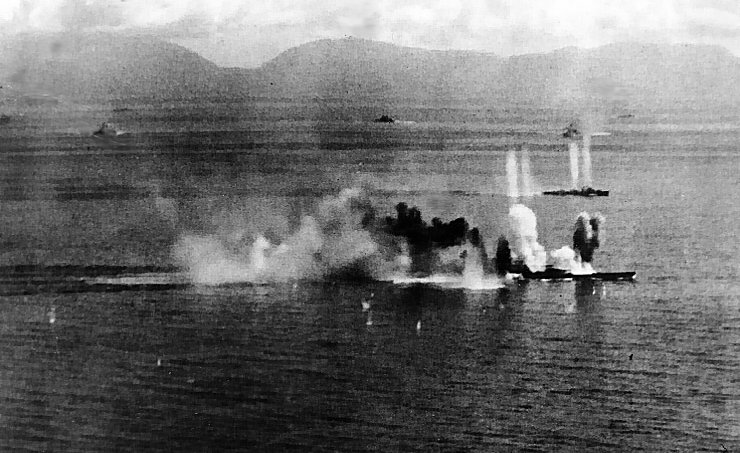
Musashi Under Attack at the Battle of Sibuyan Sea

Both ships participated in the Battle of the Philippine Sea and were part of Vice Admiral Takeo Kurita’s Central Force in the Battle of Leyte Gulf. Musashi was sunk by U.S. Navy Carrier aircraft from the Third Fleet on October 24th 1944 during the Battle of the Sibuyan Sea. Hit by 17 bombs and 19 torpedoes she sank with the loss of nearly 1100 of her crew of almost 2400 men. The survivors were rescued by destroyers and disembarked at Corregidor. Some were sent by troop transport to Japan but one of the ships was torpedoed and sunk leaving her survivors adrift for 19 hours before rescue. Those who reached Japan were isolated from the population while about half of the survivors remained in the Philippines where 117 of 146 of those assigned to the defense of Manila were killed in action.
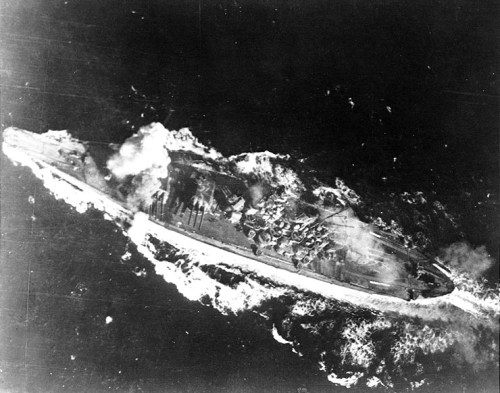
Yamato or Musashi under air Attack

Yamato saw action in the surface engagement on October 25th against the Escort Carriers and Destroyers of Taffy-3 during the Battle off Samar. Her guns helped sink the Escort Carrier USS Gambier Bay but was forced away from the action by torpedo attacks from the valiant destroyers of Taffy-3.
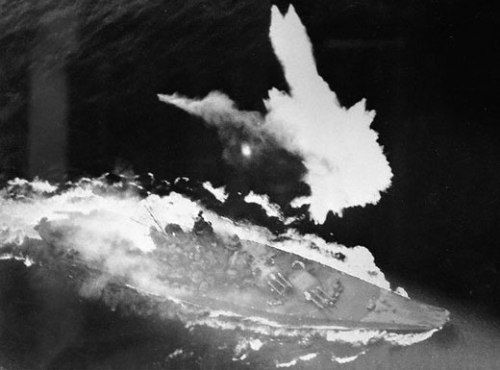
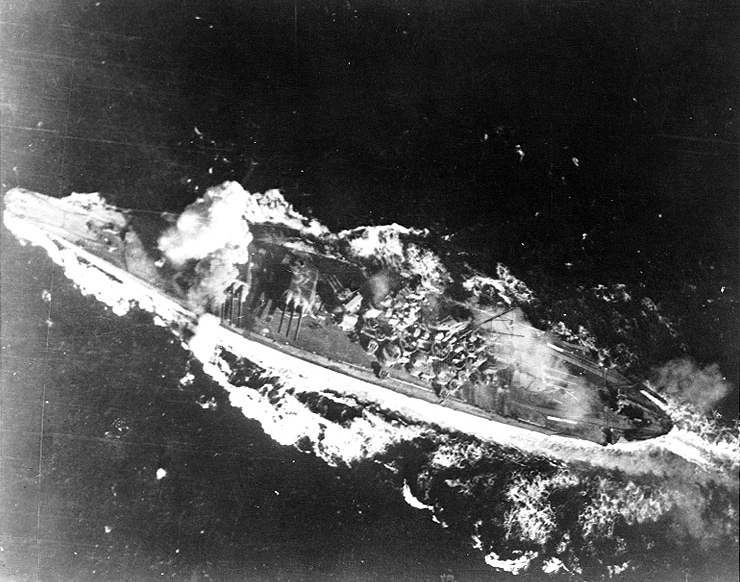
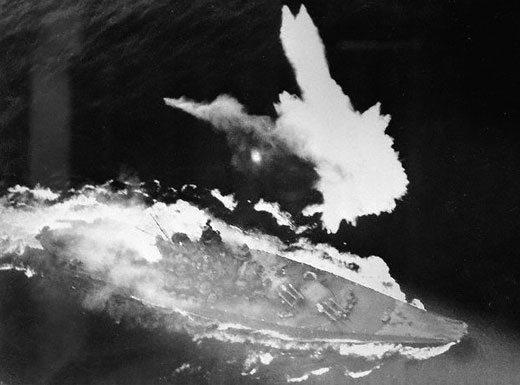
Yamato under Attack April 7th 1945

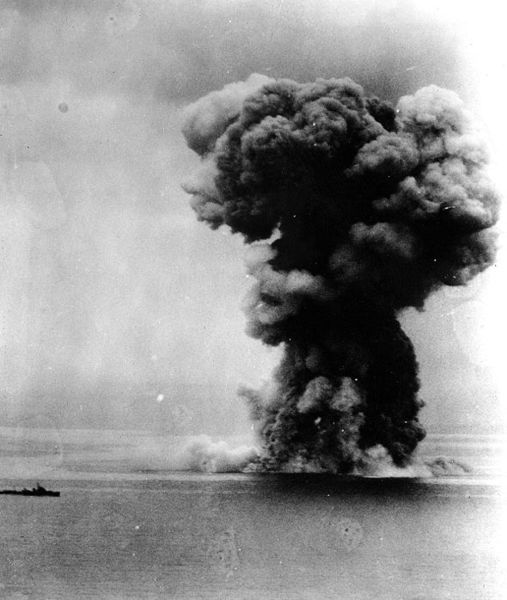
By April 1944 Japan’s Navy was decimated and U.S. Naval Forces were raiding Mainland Japan. When the United States landed on Okinawa the Japanese Navy and air force launched wave after wave of Kamikaze attacks on the ships in the waters around the island. Yamato, along with Light Cruiser Yahagi and eight destroyers were designated the Surface Special Attack Force and loaded with a full load of ammunition but only enough fuel for a one way trip got underway on April 6th. The mission was for Yamato to reach Okinawa, beach herself and serve as an “unsinkable” gun battery until she was destroyed. The force was spotted by U.S. Navy flying boats hours after their departure and on April 7th over 400 aircraft launched from Task Groups 58.1 and 58.3. The first wave began its attack at 1230 and by 1400 the ship was mortally wounded. Stuck by at least 8 torpedoes and 11 bombs she was dead in the water and began to capsize at 1405. At 1420 she turned turtle and at 1423 exploded when her forward blew up sending up a mushroom cloud nearly 20,000 feet.  Under 300 of her crew of nearly 2400 were rescued.
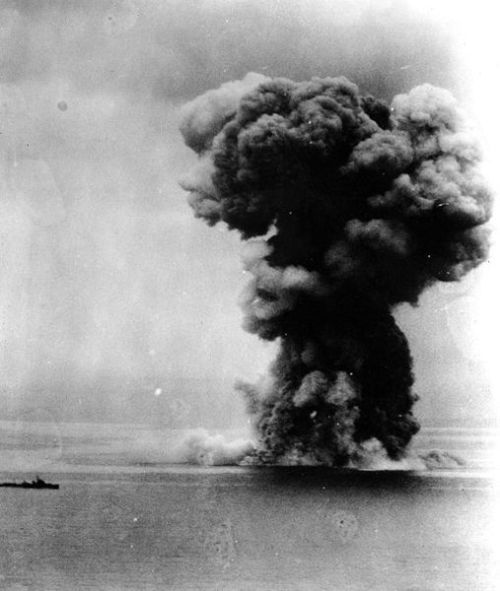
The End: Yamato Explodes

The ships were the largest battleships ever built, designed when naval experts planned for a war where the battleship would rule and aircraft carriers play a supporting role. Instead both never faced enemy battleships in combat and both were destroyed by the weapon that the battleship admirals had discounted. It is somewhat fitting that each was commissioned shortly after the triumphs of Japanese and American Naval air power at Pearl Harbor and Midway. However they have attained an almost mythic status in naval lore and are symbols to many Japanese of the sacrifice and futility of the war. Both of the cities where the ships were constructed were destroyed by Atomic bombs. They are tragic reminders of the cost of war in human lives, suffering, economic cost and destruction.

In a sense their poetic names and the myth ascribed to them are a tragic requiem to the Japanese Empire and the cost of war. They and their brave sailors were sacrificed when the war was already for all intents and purposes lost. They, especially the Yamato were sacrificed for no military purpose save a convoluted sense of honor.

Let us pray that it never happens again.

Peace

Padre Steve+

3 Comments

Filed under Military, Navy Ships, world war two in the pacific

The Battleships of D-Day

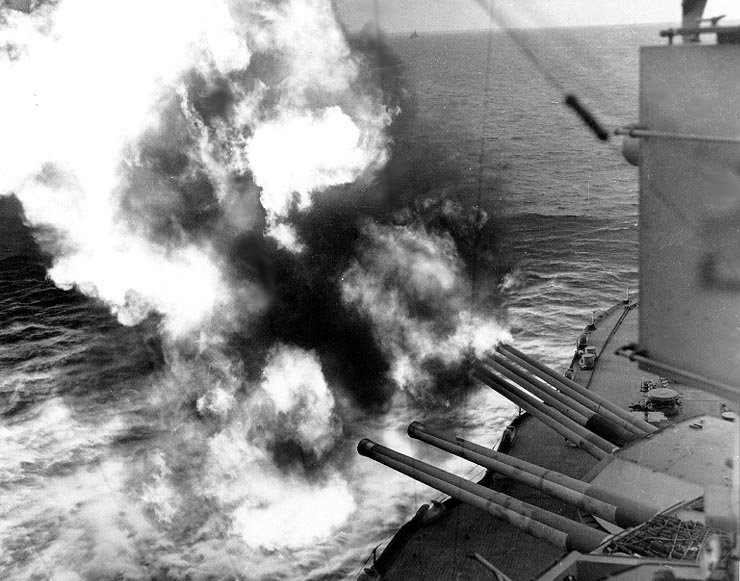
The 14″ Guns of USS Nevada in action at Normandy

On June 6th 1944 Allied Forces landed on the beaches of Normandy. Six American, British and Canadian Infantry Divisions, three Airborne Divisions and numerous supporting units came ashore in landing craft or were airdropped into Normandy. Backing them was an immense Naval Task Force which provided naval gunfire support, screened the force from German U-Boat or surface naval forces and transported the massive ground force.  It was an amazing armada.

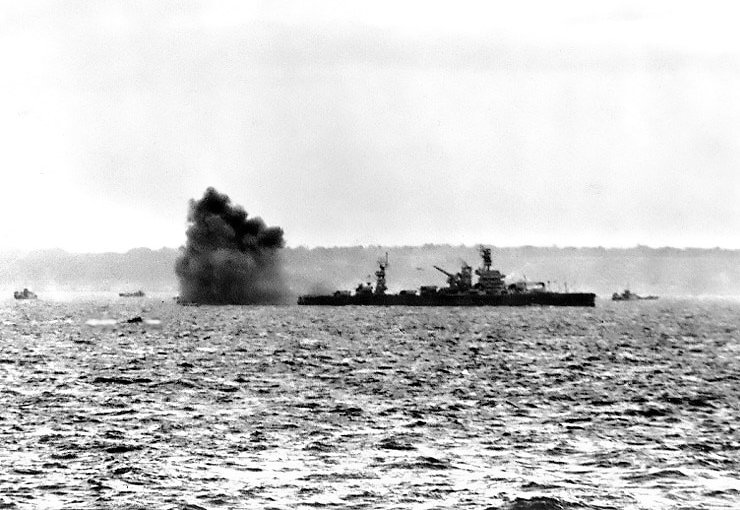
HMS Rodney bombarding German positions off Caen

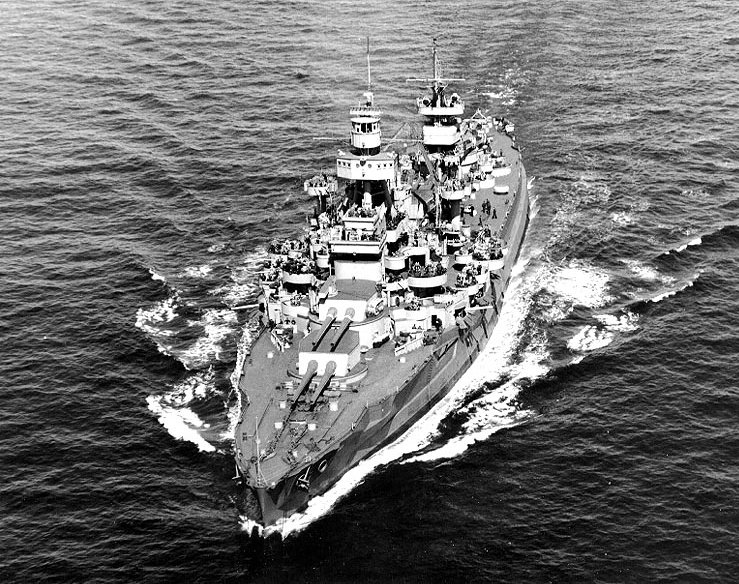
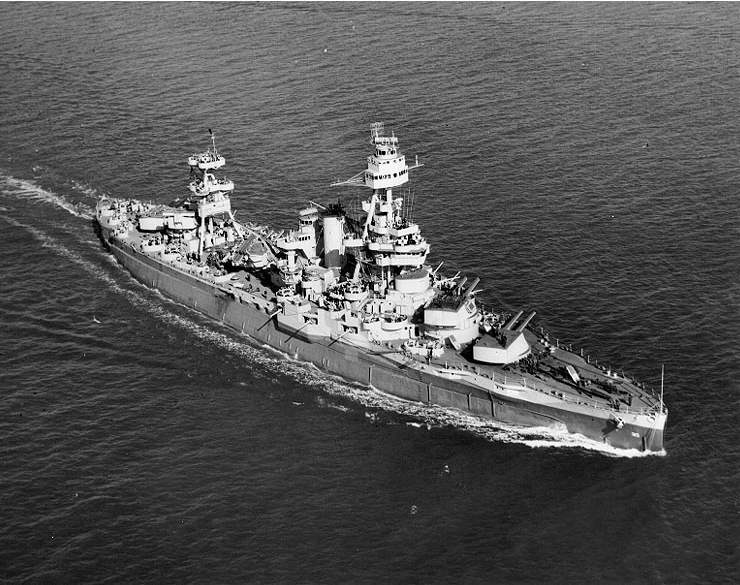
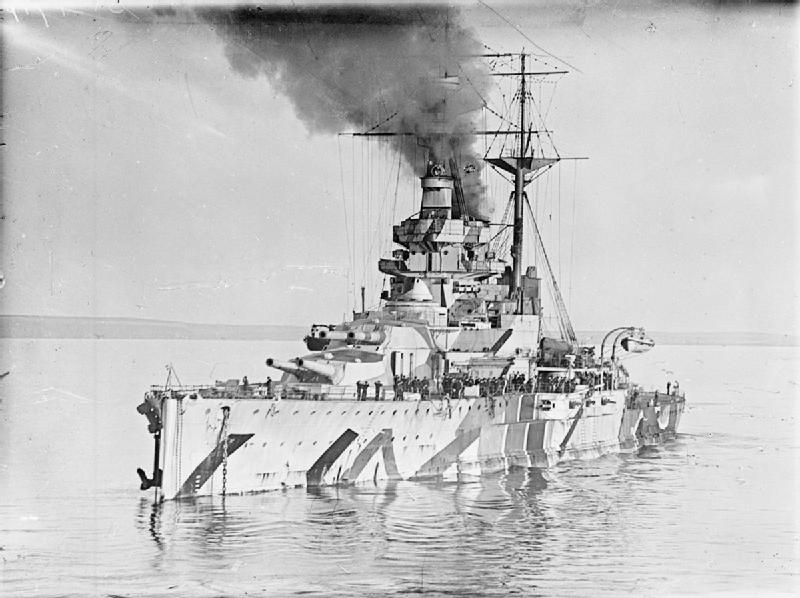
It was an armada that also is forgotten by many who read about Normandy or whose only exposure to the landings are films such as Saving Private Ryan. Today I think it is fitting to remember Battleships that served at Normandy, USS Arkansas, USS Texas, USS Nevada, HMS Warspite, HMS Ramillies and HMS Rodney.

USS Arkansas off Omaha Beach

The naval gunfire support force included Battleships, Cruisers and Destroyers as well as specialized gunfire support ships.  The largest and most powerful ships were the six American and British Battleships.  These ships were important in providing the heavy firepower needed to destroy the strongest fortifications and shore batteries and to fire at targets far beyond the shoreline that were vital for German reinforcements.

However the ships involved were not the modern behemoths which were built in the 1930s and since the beginning of the war but rather among the oldest ships still active in either the United States or the British Royal Navy. At one time they had all been the hearts for their navies but now old, slow and with less than modern armament and fire control systems they were regulated to supporting amphibious forces or escorting convoys.

USS Arkansas BB-33

The oldest of these venerable ships was the USS Arkansas BB-33 which was commissioned in 1912. A Wyoming Class Battleship she mounted twelve 12” guns in six twin turrets, two forward, two aft and two midships. She displaced just over 27,000 tons. She had spent most of the war escorting convoys in the Atlantic before being assigned to the Normandy landings. She stood off Omaha Beach dueling with German shore batteries and pounding the German troops who were making Omaha a living hell for the men of the US 1st and 29th Infantry Divisions.  She would continue her valuable service off of Normandy and would do the same in to support the landings in Southern France before steaming to the Pacific where she would do the same at Iwo Jima and Okinawa.

USS Texas BB-35

The USS Texas, BB-35 of the New York class had been in commission since 1914. She mounted ten 14” guns in 5 twin turrets, two forward, two aft and one midships and was slightly larger than the Arkansas.  More modern she was more extensively modernized between the wars than was Arkansas and was one of the first US ships to carry experimental radar sets.  She also conducted convoy operations but was used to bombard Vichy French troops and positions during Operation Torch, the Allied invasion  of North Africa.  At D-day she was in the western sector of Omaha and bombarded Point Du Hoc and cruised to within 3000 yards of the beach to clear the western exits of the beach near Vierville.  She remained in the area a number of days and would subsequently support the attack on Cherbourg, the invasion of South France and then serve in the Pacific at Iwo Jima and Okinawa.

USS Nevada BB-36

The USS Nevada BB-36 was the first of a new class of battleships which set the basic pattern of US Battleship design through the ratification of the Washington Naval Treaty. Her main battery of ten 14” guns was mounted in four turrets, mounted fore and aft two triple and 2 twin turrets.  She was he powered by oil fired boilers as opposed to coal and   was designed with a longer cruising radius to meet the demands of War Plan Orange.  Nevada received major upgrades between the wars and on December 7th 1941 was moored on Battleship Row when Peal Harbor was attacked by the Japanese. The only Battleship to get underway during the attack Nevada was set upon by Japanese aircraft as she steamed toward the harbor entrance. Heavily damaged she was grounded off Hospital Point. She was re-floated and sailed to the United States where she was heavily modernized with a modern AA battery of twin 5” 38 caliber guns, and fire direction radars. She was modernized to the point that she no longer resembled the ship sunk at Pearl Harbor. After her repair and modernization she participated in the invasion of Attu Island and did convoy escort duty before reporting for the invasion of Normandy. Nevada supported the US 4th Infantry Division at Utah Beach and subsequently served with Texas and Arkansas in South France before going to the Pacific to support the invasions of Iwo Jima and Okinawa. Had the war continued she would have been involved in the invasion of the Japanese Mainland.

HMS Warspite

The Royal Navy Battleships of D-Day were also elderly veterans. The eldest was the heroic HMS Warsipte commissioned in 1915 and a veteran of the Battle of Jutland and numerous actions during the Second World War including the slaughter of the German Destroyers at Narvik, the Battle of Cape Matapan and the invasion of Sicily and Italy.  The Queen Elizabeth Class Battleship mounted eight 15” guns in twin turrets and was extensively modernized between the wars. At Salerno Warspite was hit by three of the earliest guided missiles, the Fritz-X type launched by Luftwaffe Aircraft. She was heavily damaged and required major repairs before returning to service at Normandy. She supported British troops at Sword Beach and later Gold Beach. She again was heavily damaged by a magnetic mine and received temporary repairs to allow her to continue bombardment duties against German positions France and Belgium before being placed in reserve in January 1945.

HMS Ramillies

The HMS Ramillies was a Revenge Class Battleship commissioned in 1917. These ships were a compromise design that was smaller, slower and cheaper than the Queen Elizabeth Class but had the same main battery of eight 15” guns.  The compromises prevented them from receiving significant upgrades between the wars and limited their employment. Ramillies operated as a convoy escort and was also involved in action in  the Mediterranean and Indian Ocean. She participated in the hunt for the German Pocket Battleship Graf Spee and shielded Convoy HX-106 from the Scharnhorst and Gneisenau and later took part in the hunt for the Bismarck. However she but was not engaged against any of the German ships but her presence prevented Admiral Lutjens from risking Scharnhorst and Gneisenau to attack the convoy. She took part in the initial battle between the Royal Navy and the Italians at the Battle of Cape Spartivento getting off several salvos before her slow speed forced her out of the action. She was heavily damaged by a torpedo from a Japanese mini-submarine in Diego Suarez harbor during the invasion of Madagascar in May 1942. Following repairs and the addition of extra deck armor and modern anti-aircraft guns she returned to action at Normandy were she supported British troops ashore and drove off an attack by German Destroyers. She stayed in action firing over 1000 shells at Normandy before supporting the invasion of Southern France. Too slow to be of use in the Pacific she was placed in Reserve in January 1945.

HMS Rodney

The youngest of the Battlewagons at Normandy on June 6th was the HMS Rodney which was commissioned in 1927. She and her sister ship HMS Nelson were to be the first of the post WWI super battleships and was designed as a larger and more powerful ship. With the limitations of the Washington Naval Treaty the ships were “cut down” and reduced in size and speed. Her armament made her one of the most powerful battleships of period but her engineering plant was not always reliable. Since she was relatively modern she did not receive any major refits before the war and apart from a repairs to her engines in Boston in 1941 (before the US entry into the war) and a brief refit in 1942 she received no further refits during the war. With the HMS King George V she helped sink the Bismarck and would escort convoys and participate in the Allied invasions of North Africa, Sicily and Salerno before being assigned to the Normandy invasion force attacking targets near Caen.  Her sister HMS Nelson was held in reserve and joined the battle on June 10th but she was not present on D-Day.

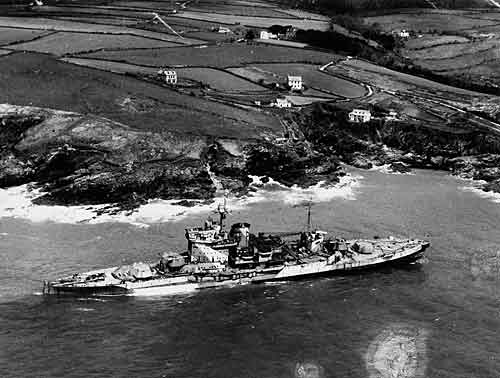
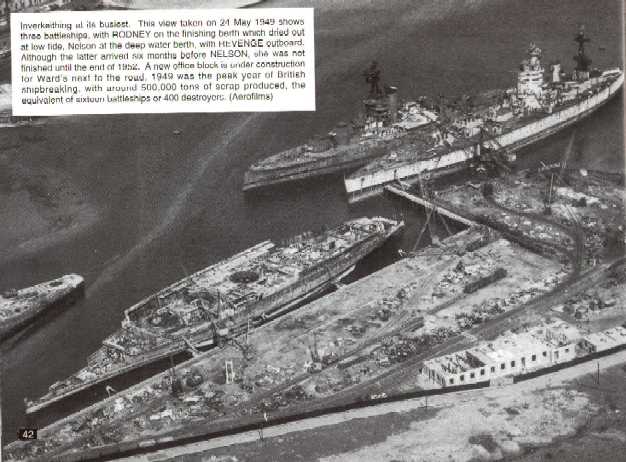
Warspite aground and Rodney being scrapped (below)

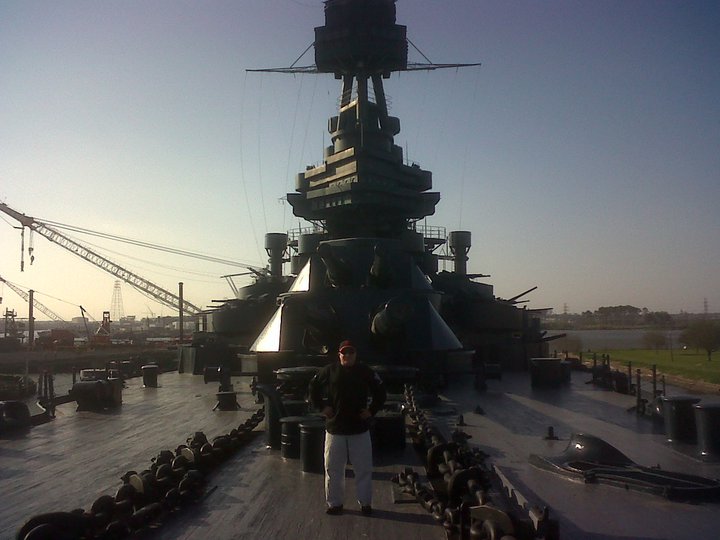
Despite their age and limitations all of these ships and their performed heroically during the war. The post war period was not as kind to the ships. Arkansas and Nevada were used in the Atomic Bomb tests at Bikini Atoll. Nevada survived and was expended as a target in 1948. All of the British ships were scrapped following the war due to their age, wear and damage incurred during the war. Warspite was being towed to the breakers when she broke a tow line and went aground. She ended up being partially scrapped in place.  Mementos of all these ships remain including a gun from Ramillies at the Imperial War Museum. The lone survivor was the USS Texas which became a museum ship and memorial at the San Jacinto battlefield in 1948. She is the last of the Dreadnought ships remaining. Other more modern US Battleships have been preserved but only Texas remains from those ships that at one time ruled the waves and pounded the Germans at Normandy.

The author aboard USS Texas in March 2011

The fire support provided by these proud ships and their consorts ensured the success of the Normandy landings. Without them it is very possible that the landings would not have succeeded and many more Allied soldiers would have died and the war extended.

To these great ships and all their heroic crews…

Peace

Padre Steve+

28 Comments

Filed under History, Military, Navy Ships, US Navy, world war two in europe

Compounding Disaster: The Loss of the Mikuma at Midway

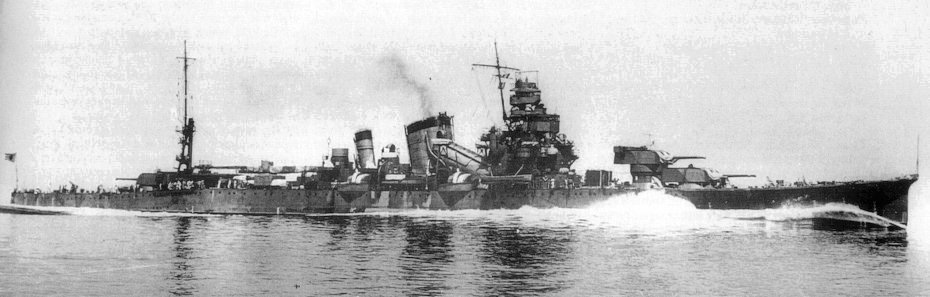
Mikuma as Built

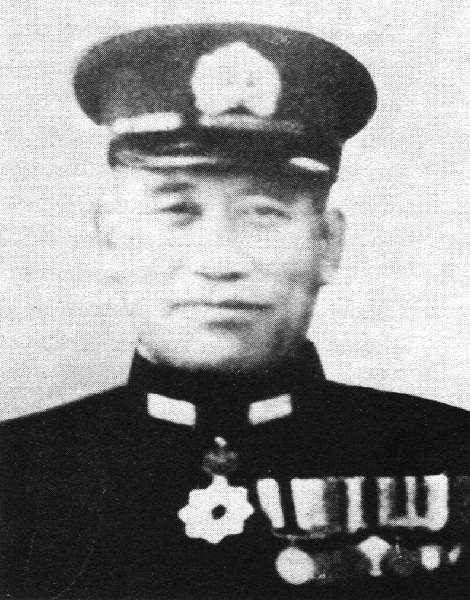
Admiral Isoroku Yamamoto was still attempting to digest the calamity that had befallen Admiral Nagumo’s carrier task force. In the shocked atmosphere of the mighty Super Battleship Yamato’s command center the Staff of the Combined Fleet was hastily attempting to arrive at a solution which might reverse the disaster and bring victory.  Admiral Ugaki, Yamamoto’s Chief of Staff despite his personal doubts ordered Vice Admiral Nobutake Kondo to prepare for a night surface engagement with the US Fleet and to dispatch a strong surface force to bombard Midway in order to prevent the Americans from reinforcing it and to prevent its further use against his forces should the invasion move forward.  Kondo organized his fleet to attempt to find the American carriers and bring them to battle before dawn.

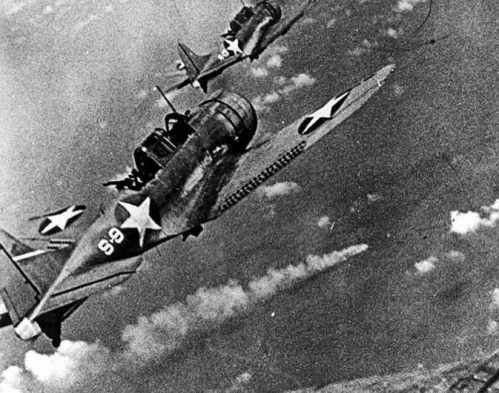
SBD Dauntless Dive Bombers from Hornet attacking Mogami and Mikuma 

Kondo detached Vice Admiral Takeo Kurita’s Close Support Group composed of Cruiser Seven, the fastest and most modern cruisers in the Imperial Navy proceed at full speed to attack Midway.  Kurita’s cruisers, the Kumano, Suzuya, Mikuma and Mogami were each armed with 10 8” guns and were escorted by the two destroyers.

Kurita’s force was 80 miles from Midway when Yamamoto realizing that his plan was unrealistic ordered Kondo’s forces to retreat and rendezvous with his main force shortly after midnight. The order was met with a measure of relief by most officers in the force and the force turned northwest and steamed at 28 knots to meet the Main Body.  At 0215 lookouts on Kumano sighted a submarine on the surface which turned out to be the USS Tambor which had been shadowing the group, and made a signal for the force to make a emergency 45 degree turn to port.

During the process Mogami’s Navigator took over from the watch to oversee the tricky maneuver. In doing so he thought that there was too much distance between him and the ship ahead, the Mikuma. So he adjusted his course to starboard and then realized his mistake. The ship he thought was Mikuma was actually Suzuya and Mikuma was directly ahead. As soon as he recognized his mistake Mogami’s Navigator ordered a hard turn to port and reversed the engines but it was too late. Mogami’s bow crashed into Mikuma’s port quarter. The impact caused minimal damage to Mikuma but Mogami was heavily damaged. She lost 40 feet of her bow and everything else was bent back to port at right angles to her number one turret.

Ariel Photo of Mikuma damaged

Mogami’s damage control teams isolated the damage and worked the ship up to 12 knots. This was not fast enough for Kurita to make his rendezvous so he left Mikuma and the destroyers to escort Mogami while he steamed ahead with Kumano and Suzuya.

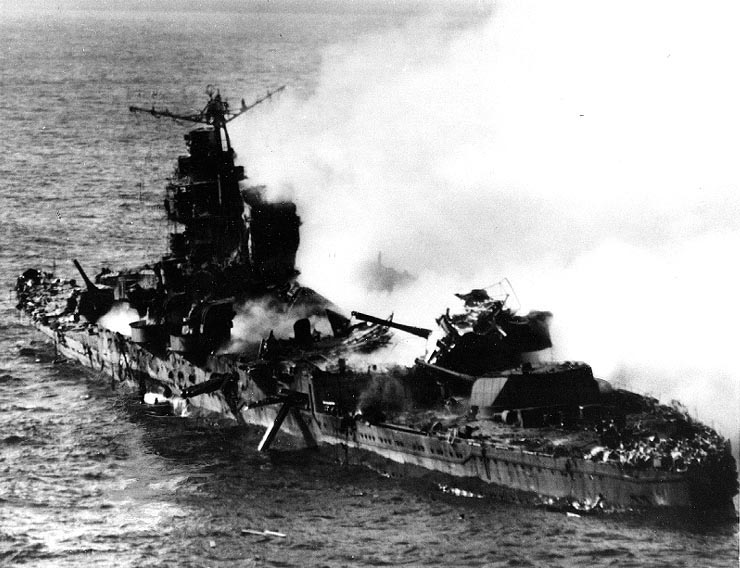
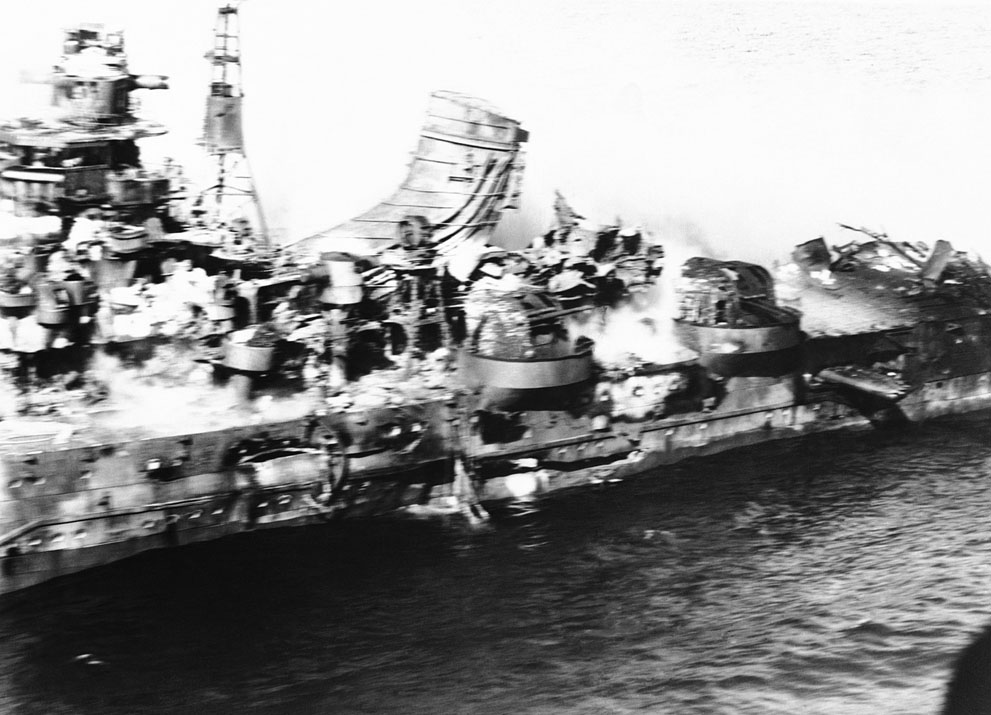
Mikuma adrift and sinking. The wreckage of Captain Fleming’s Vindicator can be seen on X- Turret 

Tambor’s skipper LCDR John W Murphy sent a contact report at 0300 reporting “many unidentified ships.” He followed this with more detailed information and the Americans on Midway began to launch its remaining serviceable aircraft to attack the threat. A flight of B-17 Bombers launched at 0430 could not find the Japanese ships but at 0630 a PBY Catalina found the Japanese and radioed Midway “two Japanese battleships streaming oil.”  The remaining 12 aircraft of VSMB-241 under command of Captain Marshall Tyler a mix of SBD Dauntless and SB2U Vindicators took off at 0700. His force attacked at 0808 scoring no hits but Captain Richard Fleming, his Vindicator on fire dropped his bomb and then crashed his aircraft into Mikuma’s after turret. The fire was sucked down air intakes into the starboard engine room with disastrous results. The engineers were suffocated by the smoke and fumes and Mikuma was greatly reduced in speed.

Close up shot of Mikuma with survivors visible 

The two ships limped northwest at 12 knots escorted by the destroyers and were unmolested through much of the day with the exception of an ineffective attack by the B-17s at 0830. The following morning the Dive Bombers of Enterprise and Hornet were at work and found the crippled Japanese ships. Waves over US Dive Bombers attacked the cruisers throughout the morning and into the afternoon. Mikuma was hit at least 5 times and secondary explosions of ammunition and torpedoes doomed the ship. Mogami was also heavily damaged but remained afloat while both destroyers received bomb damage.  At sunset the tough cruiser rolled over to port and sank into the Pacific. Mogami whose damage control teams had performed miracles to keep their ship afloat helped the destroyers rescue survivors from Mikuma.  Only 240 were rescued with 650 officers and sailors going down with the ship.

The action against the cruisers ended the combat operations at Midway. The Japanese ships were doomed by Yamamoto’s decision to try to salvage victory from defeat and the error of Mogami’s Navigator during the emergency turn when Kumano sighted Tambor. The only thing that kept the result from being total was the efficacy of Mogami’s damage control teams.  Mogami was out of the war for 10 months following repairs and conversion to an Aircraft Cruiser in which her aft turrets were removed to increase the number of float plane scouts that the ship could carry. She rejoined the fleet in April 1943 and was sunk following the Battle of the Surigao Strait on 25 October 1944.

The Mogami and Mikuma proved to be tough ships to sink. Unprotected by friendly aircraft they fought hard against the unopposed American Dive Bombers. They suffered massive damage from 500 and 1000 pound bombs, both direct hits and near misses. Mogami was saved by the skill of her damage control teams and the foresight of her Damage Control Officer to jettison her torpedoes so that they did not explode and compound the damage wrought by the American bombs.

For the Americans it was a fitting end to the Battle of Midway and revenge for the Battle of the Sunda Strait where Mikuma and Mogami sank the USS Houston.

Peace

Padre Steve+
3 Comments

Filed under History, Military, Navy Ships, US Navy, world war two in the pacific

70 Years: Celebrating the Miracle at Midway

It is hard to imagine now but in June of 1942 it seemed a good possibility that the Americans and British could be on the losing side of the Second World War.

In June 1942 the Japanese onslaught in the Pacific appeared nearly unstoppable. The Imperial Navy stormed across the Pacific and Indian Oceans in the months after Pearl Harbor decimating Allied Naval forces that stood in their way.  The British Battleships HMS Prince of Wales and HMS Repulse were sunk by land based aircraft off of Singapore. A force of Royal Navy cruisers and the Aircraft Carrier HMS Hermes were sunk by the same carriers that struck Pearl Harbor in the Indian Ocean.  Darwin Australia was struck with a devastating blow on February 19th and on February 27th the Japanese annihilated the bulk of the American, British, Dutch and Australian naval forces opposing them at the Battle of the Java Sea. American forces in the Philippines surrendered on May 8th while the British in Singapore surrendered on February 15th.

In only one place had a Japanese Naval task force been prevented from its goal and that was at the Battle of the Coral Sea.  Between 4-8 May the US Navy’s Task Force 11 and Task Force 17 centered on the Carriers USS Lexington and USS Yorktown prevented a Japanese invasion force from taking Port Moresby. Their aircraft sank the light carrier Shoho, damaged the modern carrier Shokaku and decimated the air groups of the Japanese task force. But it was the unexpected raid by US Army Air Corps B-25 Bombers launched from the USS Hornet under command of Colonel Jimmy Doolittle on April 18th 1942 which embarrassed Yamamoto so badly that he ordered the attack to take Midway and destroy the remaining US Naval power in the Pacific.

In May US Navy code breakers discovered the next move of the Imperial Navy an attack on Midway Island and the Aleutian islands.   Since the occupation of Midway by Japanese forces would give them an operational base less than 1000 miles from Pearl Harbor Admiral Chester Nimitz committed the bulk of his naval power, the carriers USS Enterprise CV-6, USS Yorktown CV-5 and USS Hornet CV-8 and their 8 escorting cruisers and 15 destroyers.  His force of 26 ships with 233 aircraft embarked to defend Midway while a force of 5 cruisers and 4 destroyers was dispatched to cover the Aleutians.  Midway itself had a mixed Marine, Navy and Army air group of 115 aircraft which included many obsolete aircraft, 32 PBY Catalina Flying Boats and 83 fighters, dive bombers, torpedo planes and Army Air Force bombers piloted by a host of inexperienced but resolute airmen.

The Japanese Fleet was led by Admiral Isoroku Yamamato and was built around the elite First Carrier Striking Group composed of the Pearl Harbor attackers Akagi, Kaga, Soryu and Hiryu. Led by Vice Admiral Chuichi Nagumo its highly trained and combat experienced air groups composed of 273 aircraft. This force was escorted by 2 Battleships, 3 Cruisers 12 Destroyers. Yamamoto commanded a force of  2 light carriers, 5 Battleships, 11 cruisers and 27 destroyers.  Meanwhile a  force of 4 battleships, 12 destroyers assigned screen to the Aleutian invasion force which was accompanied by 2 carriers 6 cruisers and 10 destroyers. The other carriers embarked a further 114 aircraft.  The Japanese plan was ambitious but it was so ambitious that the Japanese Task forces were scattered over thousands of square miles of the Northern Pacific Ocean from which they could not rapidly come to the support of each other.

With the foreknowledge provided by the code breakers the US forces hurried to an intercept position northeast of Midway. They eluded the Japanese submarine scout line which the Japanese Commander Admiral Yamamoto presumed would find them when they sailed to respond to the Japanese attack on Midway.  Task Force 16 with the Enterprise and Hornet sailed first under the command of Rear Admiral Raymond A Spruance in place of the ailing William “Bull” Halsey. Task Force 17 under Rear Admiral Frank “Jack” Fletcher was built around the Yorktown which had been miraculously brought into fighting condition after suffering heavy damage at Coral Sea. Fletcher assumed overall command by virtue of seniority and Admiral Nimitz instructed his commanders to apply the principle of “calculated risk” when engaging the Japanese as the loss of the US carriers would place the entire Pacific at the mercy of the Japanese Navy.

On June 3rd a PBY Catalina from Midway discovered the Japanese invasion force and US long range bombers launched attacks against but inflicted no damage. On the morning of the 4th the Americans adjusted their search patterns in and the Japanese came into range of Midway and commenced their first strike against the island.  In response land based aircraft from Midway attacked the Japanese carrier force taking heavy casualties and failing to damage the Japanese task force.

The American Carrier task forces launched their strike groups at the Japanese fleet leaving enough aircraft behind of the Combat Air Patrol and Anti-submarine patrol.  As the Americans winged toward the Japanese fleet the Japanese were in confused.  A scouting report by an aircraft that had been delayed at launch discovered US ships but did not identify a carrier until later into the patrol.  This was the Yorktown and TF 17. The Japanese attempted to recover their strike aircraft and prepare for a second strike on the island and then on discovery of the carrier embarked on the task of unloading ground attack ordnance in favor of aerial torpedoes and armor piercing bombs.  The hard working Japanese aircrew did not have time to stow the ordnance removed from the aircraft but by 1020 they had the Japanese strike group ready to launch against the US carriers.

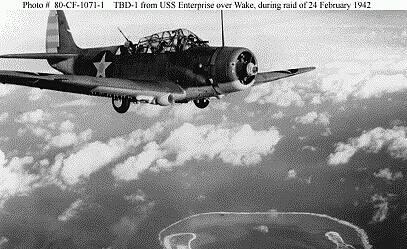
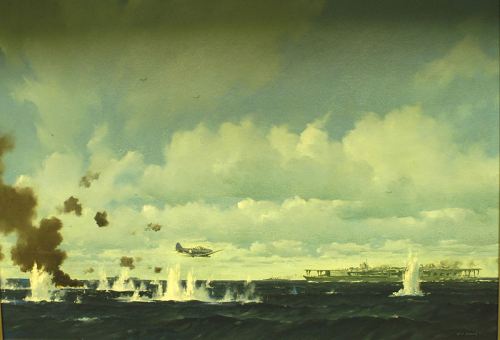
As the Japanese crews worked the Japanese carriers were engaged in fending off attacks by the US torpedo bomber squadrons, VT-6 from Enterprise, VT-8 from Hornet and VT-3 from Yorktown.  The Japanese Combat Air Patrol ripped into the slow, cumbersome and under armed TBD Devastators as they came in low to launch their torpedoes.  Torpedo Eight from Hornet under the command of LCDR John C Waldron pressed the attack hard but all 15 of the Devastators were shot down.  Only Ensign George Gay’s aircraft was able to launch its torpedo before being shot down and Gay would be the sole survivor of the squadron.

Torpedo 6 under the command of LCDR Eugene Lindsey suffered heavy casualties losing 10 of 14 aircraft with Lindsey being one of the casualties.  The last group of Devastators to attack was Torpedo 3 under the command of LCDR Lem Massey from the Yorktown.  These aircraft were also decimated and Massey killed but they had drawn the Japanese Combat Air Patrol down to the deck leaving the task force exposed to the Dive Bombers of the Enterprise and Yorktown.

There had been confusion among the Americans as to the exact location of the Japanese Carriers, the Bombing 8 and Scouting 8 of Hornet did not find the carriers and had to return for lack of fuel with a number of bombers and their fighter escort having to ditch inn the ocean and wait for rescue.  The Enterprise group under LCDR Wade McClusky was perilously low on fuel when the wake of a Japanese destroyer was spotted.  McClusky followed it to the Japanese Task Force.  The Yorktown’s group under LCDR Max Leslie arrived about the same time.  The found the skies empty of Japanese aircraft. Aboard the Japanese ships there was a sense of exhilaration as each succeeding group of attackers was brought down and with their own aircraft ready to launch and deal a fatal blow to the American carrier wondered how big their victory would be.

At 1020 the first Zero of the Japanese attack group began rolling down the flight deck of the flagship Akagi, aboard Kaga aircraft were warming up as they were on the Soryu.  The unsuspecting Japanese were finally alerted when lookouts screamed “helldivers.” Wade McClusky’s aircraft lined up over the Akagi and Kaga pushing into their dives at 1022. There was a bit of confusion when the bulk of Scouting 6 joined the attack of Bombing 6 on the Kaga.  The unprepared carrier was struck by four 1000 pound bombs which exploded on her flight deck and hangar deck igniting the fully fueled and armed aircraft of her strike group and the ordnance littered about the hangar deck.  Massive fires and explosions wracked the ship and in minutes the proud ship was reduced to an infernal hell with fires burning uncontrollably. She was abandoned and would sink at 1925 taking 800 of her crew with her.

LT Dick Best of Scouting 6 peeled off from the attack on Kaga and shifted to the Japanese flagship Akagi. On board Akagi were two of Japans legendary pilots CDR Mitsuo Fuchida leader of and CDR Minoru Genda the architect of the Pearl Harbor attack and subsequent string of Japanese victories.  Both officers were on the sick list and had come up from sick bay to watch as the fleet was attacked.  Seeing Kaga burst into flames they stood mesmerized until Akagi’s lookouts screamed out the warning “helldivers” at 1026.  Best’s aircraft hit with deadly precision landing tow of their bombs on Akagi’s flight deck creating havoc among the loaded aircraft and starting fires and igniting secondary explosions which turned the ship into a witch’s cauldron.  By 1046 Admiral Nagumo and his staff were forced to transfer the flag to the cruiser Nagara as Akagi’s crew tried to bring the flames under control. They would do so into the night until nothing more could be done and abandoned ship at 2000.  Admiral Yamamoto ordered her scuttled and at 0500 on June 5th the pride of the Japanese carrier force was scuttled.

VB-3 under LCDR Max Leslie from the Yorktown stuck the Soryu with 17 aircraft, only 13 of which had bombs due to an electronic arming device malfunction on 4 of the aircraft including the squadron leader Leslie.  Despite this they dove on the Soryu at 1025 hitting that ship with 3 and maybe as many as 5 bombs. Soryu like her companions burst into flames as the ready aircraft and ordnance exploded about her deck. She was ordered abandoned at 1055 and would sink at 1915 taking 718 of her crew with her.

The remaining Japanese flattop the Hiryu attained the same fate later in the day after engaging in an epic duel with the Yorktown which her aircraft heavily damaged. Yorktown was abandoned after a second strike but when she did not sink her her returned to attempt to save her. However despite their efforts she and the destroyer USS Hamman DD-412 were torpedoed by the Japanese Submarine I-168. Hamman sank almost immediately with heavy loss of life while Yorktown sank on the morning of the 7th.

It was quite miraculous what happened at Midway in those five pivotal minutes.  Authors have entitled books about Midway Incredible Victory and Miracle at Midway and the titles reflect the essence of the battle.  A distinctly smaller force defeated a vastly superior fleet in terms of experience, training and equipment and when it appeared that the Japanese Fleet would advance to victory in a span of less than 5 minutes turn what looked like certain defeat into one of the most incredible and even miraculous victories in the history of Naval warfare.  In those 5 minutes history was changed in a breathtaking way.  While the war would drag on and the Japanese still inflict painful losses and defeats on the US Navy in the waters around Guadalcanal the tide had turned and the Japanese lost the initiative in the Pacific never to regain it.   The Japanese government hid the defeat from the Japanese people instead proclaiming a great victory while the American government could not fully publicize the information that led to the ability of the US Navy to be at the right place at the right time and defeat the Imperial Navy.

When one looks at implications of the victory it did a number of things. First it changed the course of the war in the Pacific probably shortening it by a great deal.  Secondly it established the aircraft carrier and the fast carrier task force as the dominant force in naval warfare which some would argue it still remains.  Finally those five minutes ushered in an era of US Navy dominance of the high seas which at least as of yet has not ended as the successors to the Enterprise, Hornet and Yorktown ply the oceans of the world and the descendants of those valiant carrier air groups ensure air superiority over battlefields around the world.

Peace

Padre Steve+

4 Comments

Filed under History, Military, Navy Ships, US Navy, world war two in the pacific

Salvaging the Costa Concordia: An Immense and Potentially Impossible Task

The wreck of the giant cruise liner Costa Concordia could be in danger of sinking deeper into the sea off of Giglio Island or even breaking up.  As of the moment the Italian authorities are still calling the operation a rescue operation but that could change to a salvage operation in the coming days.

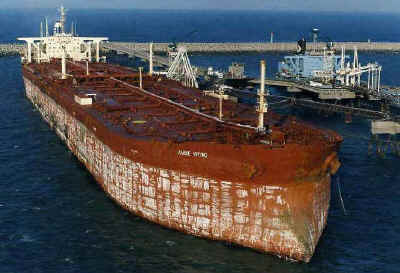
The Salvaged Seawise Giant

Provided that the wreck stays intact and does not sink in deeper water the chance of salvaging the ship will be immense. It will not be an easy task.  Only one ship larger than Concordia has been salvaged, the massive oil tanker Seawise Giant which was sunk in very shallow water off of Kharg Island Iran during the Iran-Iraq war.  That ship was only salvageable because she was intact and in the placid shallow waters of the Persian Gulf.

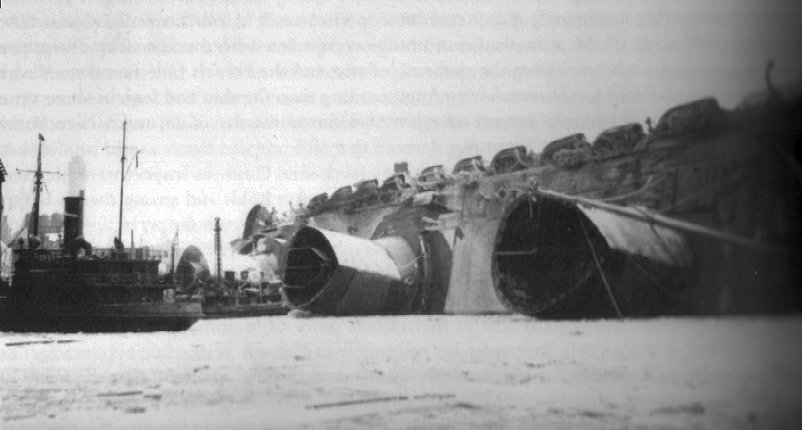
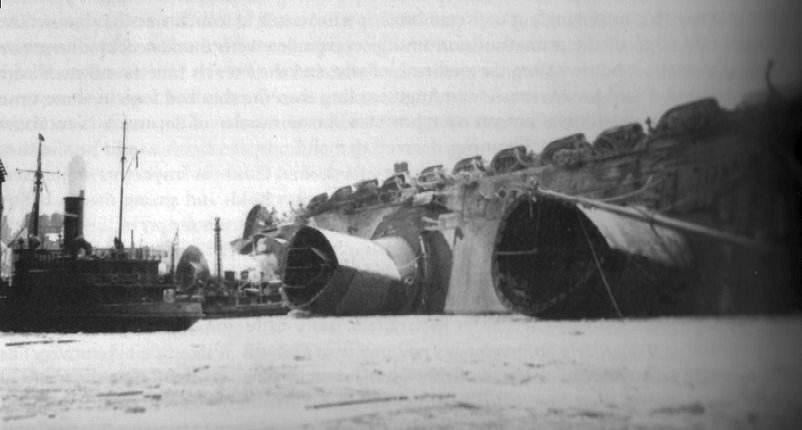
Wreck of the ex SS Normandie

The other ships successfully salvaged and returned to service were the US Navy Battleships USS West Virginia and USS California which were sunk at Pearl Harbor.  Both ships had settled upright in the shallow and calm waters of Pearl Harbor.  The battleship Oklahoma which capsized was refloated but never returned to service.  Other large ships have been salvaged but not returned to service, the great French liner Normandie which burned and sank pier side in New York Harbor was raised but the damage caused by the fire made her not economical to put repair and put back into service.  The battleships and battle cruisers of the German High Seas Fleet were salvaged over a period of nearly 20 years following the “Great Scuttle” following the signing of the Treaty of Versailles in a remarkable operation at Scapa Flow.  Many were difficult to salvage and although all were scrapped  the fact that they were raised was engineering triumph.

Raising the USS Oklahoma

One thing that works against a successful salvage operation is the fact that she is on her side and perched atop a number of rocks fully exposed to wind and waves.  Ships, especially merchant ships which are more lightly built than the great battleships do not tend to hold up well when in such a position.  They tend to get battered and break up due to the great stress put on their hulls which they were not designed to endure.

Drawings of High Seas Fleet wrecks at Scapa Flow

Those trying to save the Costa Concordia will first need to ensure that she does not sink into deeper water or break up. If they can do that they will then need to remove her fuel and other hazardous materials.  Once that is completed the massive gash in the hull will need to be repaired and and the hull checked for other damage.  Then she will have to be successfully righted and pumped out. This will not be easy, every step will have to be carefully done to ensure that they salvers do not want her to sink again.  Working against them will be the forces of nature, wind, tides and waves.  These factors will complicate any salvage efforts and it is entirely possible that the wreck will need to be scrapped in place.

The immediate concern is the search for survivors and next the avoidance of an environmental disaster should the ships diesel fuel leak into the ocean and preventing the ship from sinking into deeper water or breaking up. Only then will it be possible to begin salvage operations.  From a technical perspective it is interesting to think about just how the massive ship will be raised.

Peace

Padre Steve+
5 Comments

Filed under Navy Ships, News and current events

The Costa Concordia Disaster Compared with Other Maritime Tragedies

The story of the sinking of the RMS Titanic with the loss of nearly 1500 souls mesmerizes those that imagine the worst disasters involving cruise liners or other passenger vessels.  Conveyed by motion pictures the story reaches into the hearts of people, especially romantics and maritime enthusiasts a century after her demise.  The story is legend. The largest ship then in existence, called “unsinkable” she was the symbol of pre-World War One hubris. The arrogance of her owners, the hubris of her Captain and the storied passenger list which included some of the wealthiest and most famous people of her time lend themselves to a romantic tragedy at sea brought to us by Hollywood.

RMS Titanic

However as great of tragedy as was the Titanic disaster the great liner was neither the largest passenger vessel to sink nor the most souls lost at sea. The Costa Concordia now has the dubious distinction of being the largest passenger vessel to ever sink but comes in very low on the scale for number of fatalities.

SS Sultana disaster

The ships with the greatest number of lives lost came in much more obscure disasters.  The greatest loss of life on a passenger vessel during peacetime was the SS Sultana, a side-wheel steamer returning Union Soldiers home following the end of the Civil War. Grossly overcrowded, the ship which was designed to carry under 400 passengers had nearly 2400 souls aboard when one of her boilers exploded causing a fire which consumed the ship. Only 741 people were rescued.

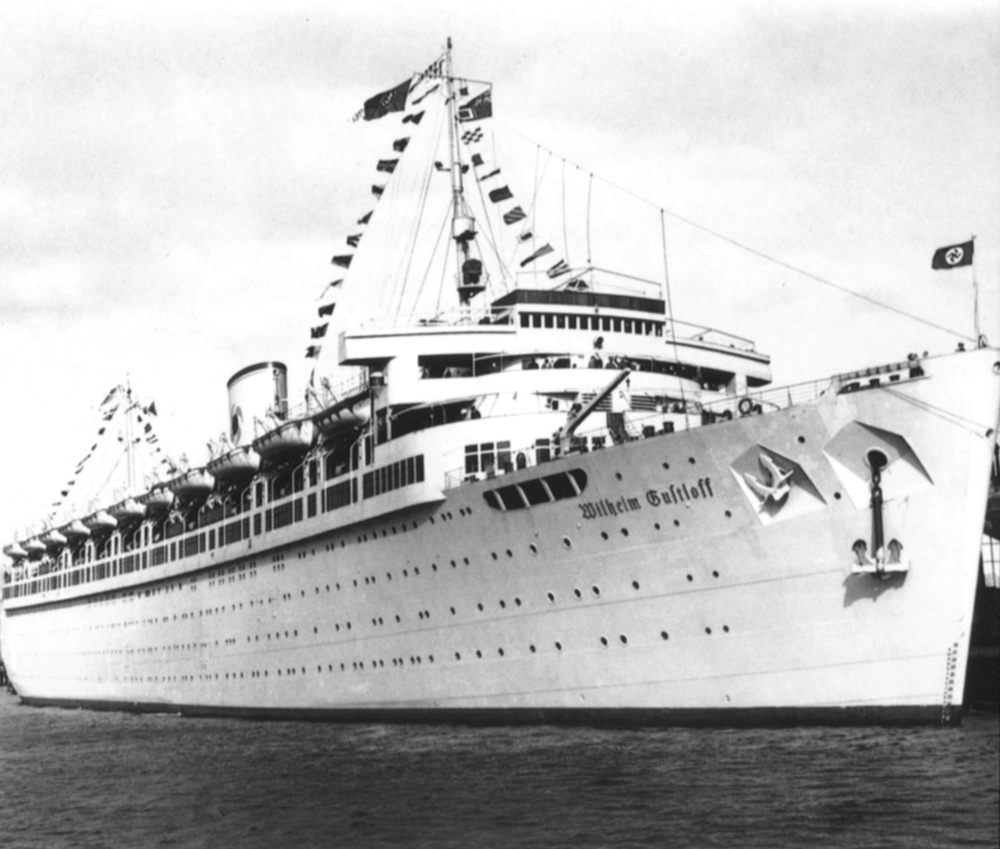
Yet as bad as this tragedy was the worst disaster in maritime history occurred near the end of the Second World War when the SS Wilhelm Gustlaff, a 26,000 ton 684 former cruise liner in the service of the German Navy was torpedoed by the Soviet Submarine S-13 on the night of 30 January 1945. Over 9000 souls, the vast majority civilians or military dependents fleeing the Red Army went down with the ship.  Another great ship, the 38,000 ton RMS Lusitania was sunk by the German U-boat U-20 on May 7th 1915 with the loss of 1198 lives including 128 Americans.

RMS Lusitania (above) and MV Dona Paz (below)

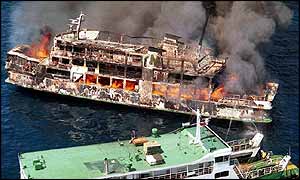
The MV Dona Paz, a ferry with Sulpicio Lines in the Philippines collided with the tanker MT Vector on 27 December 1987 with a loss of over 4000 souls. Called the “Asian Titanic” it was one the worst maritime disasters of modern times.

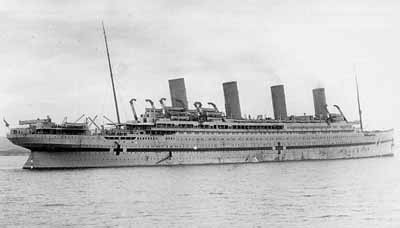
HMHS Britannic

Titanic’s sister the RMS Britannic was serving as a hospital ship in the First World War when she struck a mine in the Aegean Sea sinking in 55 minutes with the loss of only 30 of over 1100 souls aboard.

Andrea Doria sinking off of New York-New Jersey

Another well known wreck was that of the beautiful Italian liner Andrea Doria which collided with the MV Stockholm and sank on July 26th 1956 with the loss of 46 passengers. The sinking was one of the most memorable of all time because of how it was filmed and the heroism of her Captain who unlike Captain Schettino of the Concordia did not leave the ship until he was sure that all passengers and crew were off  and was willing to go down with the ship.

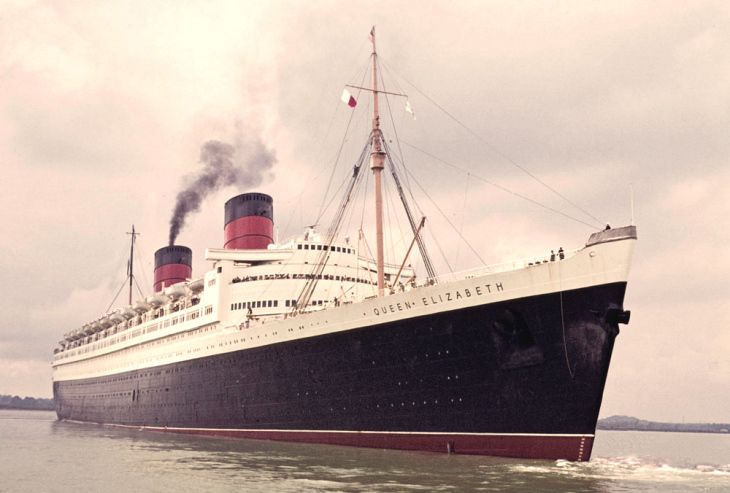
RMS Queen Elizabeth

Yet the largest liners ever sunk were two of the most glorious of their era the RMS Queen Elizabeth and the French SS Normandie.  Both sank under different names and both were due to fires while in port. The the 83,673 ton Queen Elizabeth was retired from the Cunard Line in the late 1960s and taken to Hong Kong where she was renamed SS Seawise University and burned and sank in Hong Kong harbor on 9 January 1972.

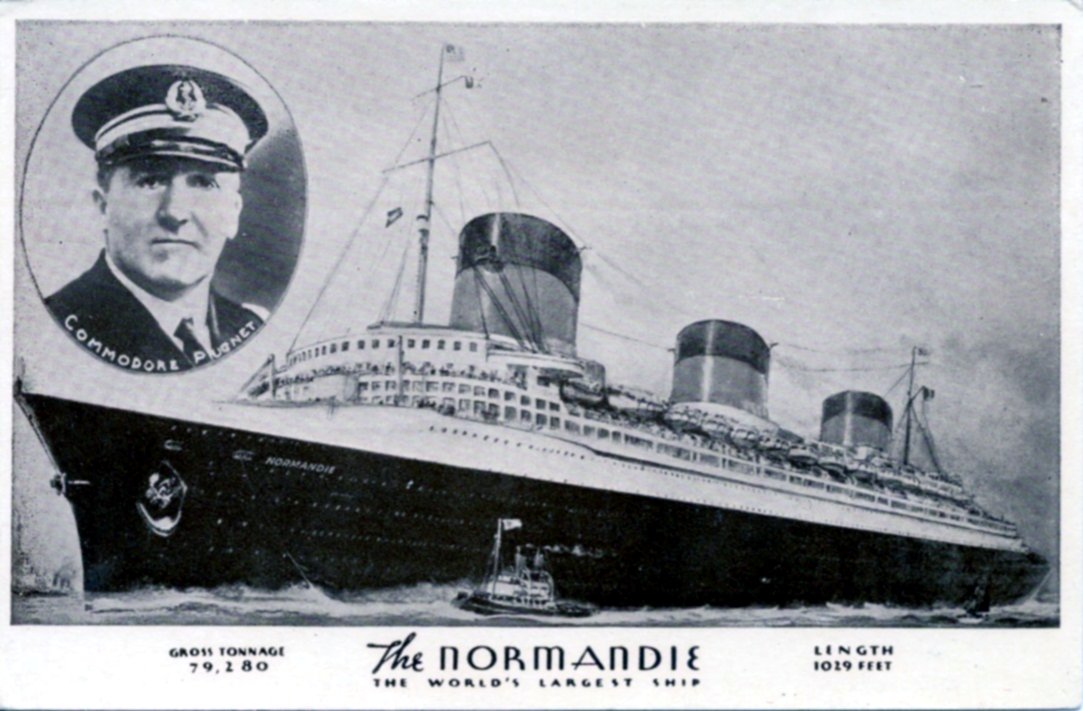
The 83,423 ton SS Normandie, one of the most beautiful ships ever to grace the sea and was the first ship of over 1000 feet long. She was taken over by the US Navy after the French surrender to the Germans. She was renamed was renamed USS Lafayette and while undergoing conversion to a troopship in New York on burned and capsized on the 9-10 February 1942.

SS Normandie/USS Lafayette sunk 

Costa Concordia now lies a few hundred yards off Giglio Island and could either break up or sink into deeper water before she can be salvaged.

All of these events were tragic in their own way be they in war or peace.  Some claimed vast numbers of lives while others resulted in the loss of the most significant ships of their day.  The Costa Concordia is the largest liner ever to go down and things being what they are may not be the last.  Her loss was avoidable by all accounts and hopefully will result in owners, captains and governments doing more to ensure the safety of all that sail the high seas.

For those in peril on the sea….

Peace

Padre Steve+

4 Comments

Filed under History, Navy Ships, News and current events