Category Archives: Pastoral Care

Christmas 2007 in Anbar: My Last Mass to Love…

lastmass

“It’s my last mass, my last mass to love…”

It’s funny how a slight twisting of the lyrics of a classic Disco song can blend with one’s wartime experience, instead of my last dance, it was my last mass, to love….

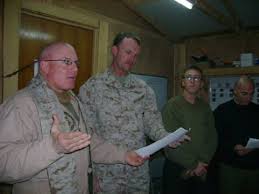
I was in Iraq in December 2007 on an 11 day expedition to American advisors to Iraqi Army and Border units in Al Anbar Province toward the end of my tour in Iraq. The mission was to provide chaplain support and spiritual succor to the American soldiers, marines, sailors, airmen and civilians, as well as the Iraqi and other Arab interpreters and contractors serving in incredibly isolated parts of the province near the Syrian border.

For me it was one of the last magical times in my life. I was exhausted and already suffering from insomnia and nightmares caused by PTSD that I was unaware of having, but while I was there that didn’t matter, in fact if I would have been allowed to extend in Iraq back then I would have. It was my life and the men and women that I served mattered more to me than anything. It still does…

copsouth

COP South

After a number of visits with other elements we traveled out to a small base near the Syrian border called COP South. It was the location of two teams of advisors, one which supported elements of the Second Border Brigade and one which supported the 3rd Battalion of the 3rd Brigade of the 7th Iraqi Army Division. We were not strangers to either team. Following the vista there we made our way to COP North, also along the Syrian border to do the same for two other advisor teams, one supporting a different Border unit and and the 2nd battalion of the 3rd Brigade of the 7th Division.

10400534_29132407058_7347_n

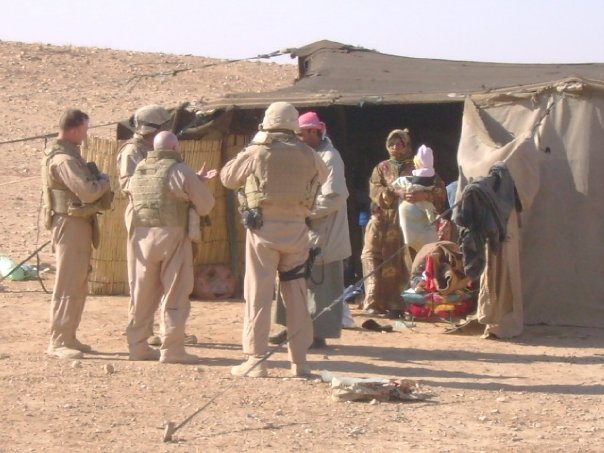
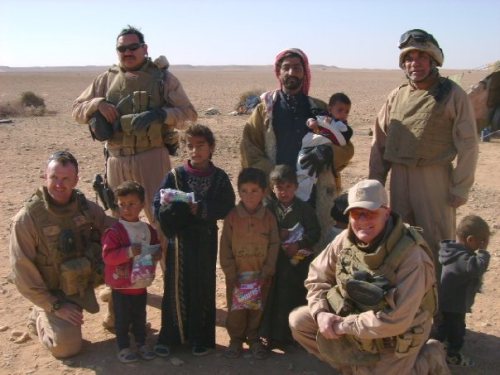
With the Bedouin on the Border, I’m the bald guy without the helmet. 

These outposts were terribly isolated. The men who served there served in incredibly austere conditions where danger lurked just beyond the sand berms that were the boundaries between them and the Islamist extremists of Al Qaeda Iraq and their supporters. The berms were not much comfort to anyone on either of the two most west most COPs in theater. Just to the west was Syria, a haven and support to the Al Qaeda Iraq insurgents and their supporters. All around were Iraqi Sunnis who many only recently had changed their allegiance to support the Americans against the largely foreign AQI forces.

The men that I served were not a typical congregation that you would find in the states. Methodists, Baptists, Presbyterians, Charismatics, Catholics, non-denominational types, Latter Day Saints and even a few Iraqi Christians, some who had not received Eucharist from any priest for years gathered for mass at COP South and COP North that Christmas of 2007. Iraqi Moslems wished us well. Peace on earth in the midst of war.

lastmass2

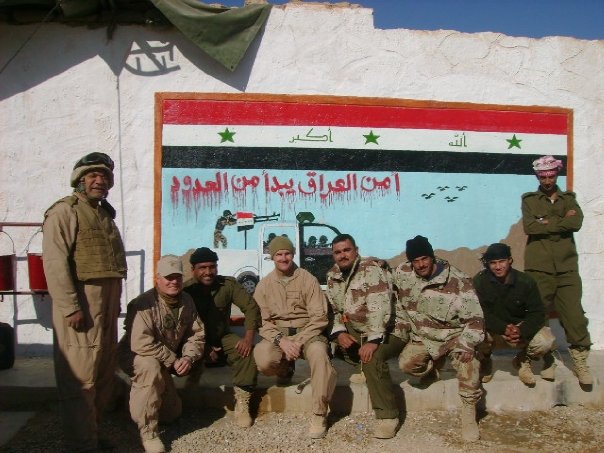
At Border Fort Five on the Syrian Border

As I mentioned I was exhausted. We had been on the road, flying and in small convoys of just a few vehicles since we arrived in theater, I was also on my last legs. I had stood with and stayed with the wounded, I had seen the destruction wrought on Iraqi facilities and people by both sides. All that mattered was to get out with the men and women who had no other formal spiritual support. I would have stayed another year to provide that support, but I knew that would not happen.

When they were done and we headed back to Ta’Qaddum, the base that we operated from I realized that the support we had provided was the high point of my military Chaplain career as well as my priesthood. Instead of my “last dance” as Dona Summer’s song said, it was my “last mass” to love.

Since then things have not been the same for me. I have talked and written about this before on this site, but those masses with those small groups of Americans and Iraqis meant more to me than any I have ever celebrated, especially those after my return from Iraq in 2008. For me, the magic and mystery have disappeared. I struggle with faith and belief even as I chose to believe in spite of my doubts.

There are times I wonder if it would have been better to have been killed by a rocket, an IED, an ambush or to have been shot down in Iraq, rather than to have to deal with this seemingly endless crisis of faith and to inflict my shit on those that I love. But then such is life and such is war.

Honestly I have to say that I believe again, but I am not sure why. I have to say that while I believe my doubts encompass me.

Christmas will never be the same for me. Yes, I have celebrated man masses since I returned, but to quote the Barry Manilow song, I’m “trying to get the feeling again” and sadly, despite my efforts I don’t think that will ever happen. If it does I will rejoice. If it doesn’t I will persevere just hoping and praying that feelings and facts matter less than faith and doing the best that I can.

Anyway. I am tired and just hoping that this Christmas will be different and that maybe I will get that feeling again, if not now, maybe someday….

Peace

Padre Steve+


Leave a comment

Filed under christian life, faith, iraq,afghanistan, Military, ministry, Pastoral Care, Religion, Tour in Iraq

AIDS, Death, Cold Religion and Simple Christian Love

IMG_1915

Friends of Padre Steve’s World

I have to admit I never know what will get me going and what will trigger memories of different events in the past. The situation with the Ebola outbreak flooded me with memories, memories of my experiences as a hospital chaplain and as a medical personnel officer dealing with those afflicted with HIV/AIDS. I have shared those over the last two nights. So tonight I will finish that story line with two very different experiences with dying AIDS patients from my Clinical residency at Parkland Memorial Hospital in Dallas. Tomorrow I will be posting a newly written except from a chapter of my Gettysburg text dealing with emancipation and the contributions of African American soldiers in the Civil War.

Peace

Padre Steve+

For me it is still hard to comprehend, a young chaplain; two relatively young men dying of AIDS, two partners, two families and two radically different experiences of humanity, faith, religion and authentic loving relationships.

I was still a relatively inexperienced minister and chaplain back when I was doing my Pastoral Care residency at Parkland Memorial Hospital in Dallas Texas back in 1993 and 1994. Yes I had graduated from seminary. Yes I had a bit of chaplain experience as an Army National Guard chaplain and as a counselor at a major evangelical Christian ministry, and yes I had experience in dealing with AIDS as a Medical Service Corps officer in the Army.

Despite that, I was so ill prepared to deal with the massively different treatment of people dying from AIDS from their families. Families that in some cases shared the same Christian faith as me. I think that is one of the things that young ministers struggle with when they enter the nether world between life and death, mortality and immortality, faith and unbelief in the real world. When I was in seminary the senior pastor of the mega-church that I attended told a story about being approached by a family member of someone who was very sick and in hospital. The person wanted him to visit them while they were a patient. He had been their pastor for years. When they ask him if he would come, he refused. He recounted that the “parishioner asked just how sick he would have to be to get a hospital visit?” The pastor told us his response. He laughed and said “you don’t want to be that sick.” The congregation laughed and I was devastated.

The pastor was a leader in the New Apostolic Reformation, a friend of John Wimber, Rick Joyner and others who helped to pave the way to the heartless, unfeeling, political “Christianity” and “Dominion theology” that is in vogue with the Tea Party and Religious Right today. When I questioned him about his comments later he told me that thought that pastoral care of those in his congregation, especially in regard to hospital visits was “below his office as an apostle, that others had that responsibility.” The thing that disturbed me the most was that he had ordained me as an Evangelical minister in that church to be a chaplain barely two years before this. I had respected him and now I felt a tremendous sense of emptiness when I left his office.

So when I began my pastoral care residency at Parkland I found that I had a lot to learn about the real world of religious faith, religious hypocrisy and religious hatred and intolerance.

Early in my residency I dealt with a number of AIDS cases. I wrote about one of those cases last night, although that was not really early in my residency, it was closer to the end of it. There were two cases besides that one that made such deep impressions on me that I can never forget them. Both involved young, white, homosexual men dying of the complications from full blown AIDS. Both came from very “Evangelical Christian” families (both were Southern Baptist) and both were being grieved by what we called then, their “significant others” as well as their biological families. But that was where the similarities ended.

The first case was in the second month of my residency, when I was the chaplain for the Medical ICU, before the Pastoral Care Director wisely moved me to the Trauma and Surgery department. A patient came to us, a man, about my age, a successful architect with many friends who was experiencing pneumonia brought about by his immunodeficiency brought about by HIV.

When he arrived he was still able to communicate and he had many of his friends as well as his significant other visiting him. They loved him and he loved them. There was a sense of community and if I dare say real family as they visited. In those first few days I got to know him and these people, most of who were homosexual but not all. There were a number of women there, who I am sure had the patient, who was a remarkably handsome man, been a heterosexual, would have loved to have been his wife.

My encounter with him, before his condition worsened to the point that he had to go on a ventilator and was sedated was transforming. He grew up in the church, knew that he was homosexual, attempted to live with it and finally came out as gay, and was disowned by his family. Despite this he became a highly successful architect, had many friends, was active in charitable works, and still maintained his faith in Jesus. I came to appreciate him, the man who for was for all purposes his spouse and his friends.

However, when his condition deteriorated his estranged family, the people who had disowned him, rushed to his “rescue.” In good Christian form they brought their pastor who though their son was unconscious proceeded to preach at him regarding his need to “repent” and “to come back to Jesus.” The family also took advantage of the law. They were his biological family and next of kin. They banned the man’s partner and friends from his room as he lay dying.

The family’s  pastor preached at the dying man and glared at the people closest to him while he was present.  I was appalled by his, and their behavior. While they isolated their son from those closest to him and allowed their pastor to condemn him as he died, I remained with his partner and friends. I prayed with them, I cried with them, I embraced them. When the family left I went with them to be with this young man’s mortal body. We prayed and after the nurses prepared his body and the doctors completed their final notes, I walked with them as we took his body on that long trip from the ninth floor to basement, where the morgue awaited. I still cry when I think of this encounter, of how supposedly Christian people would not only keep their son, who they had rejected and condemned from those who loved him the most as he lay dying.

A couple of months later I was in my element as the Trauma and Surgery Department Chaplain, but I still had on call duty where I was responsible for crisis situations anywhere in the house. One of those wild nights I got a call from the nursing staff of Nine South, the Medical Step Down unit where the lady that I wrote about last night had passed away, but that was still in the future.

This time there was another young white man, another partner, another family. This young man was not in the ICU fighting for his life, he was passing away in the quiet solitude of his room with his mother and father, his partner and his friends at his side. Like the other young man he was a man of faith. He loved Jesus, he loved his family and he loved his partner.

He was from the area west of Dallas, the area between Fort Worth and Abilene. His mom and dad were ranchers, dad was wearing his cowboy hat, a plaid shirt, classic western Levi’s jeans and cowboy boots. His mom was wearing a simple dress. Both were thing, tanned and their faces lined by the sun and weather and from being out on the range with their cattle. The young man who was with them, the dying man’s partner was casually dressed but though he was from the same area was not a rancher.

I spent time with all of them. The contrast between the “Christian” parents and pastor of the first young ma could have not been more profound. Like the architect’s parents, they were Christians. In fact they were Southern Baptists who attended a small country church in the town that they lived. By any sense of the word they could be described as “Fundamentalist” Christians, but unlike so many fundamentalists they focused on loving God and loving people, even people that so many Christians reject out of hand.

I arrived as the patient was breathing his last. I remained with him, his parents, partner and friends as he passed away, and when his parents asked I offered a prayer commending his soul to God. As I did this his partner was in a state of near collapse, exclaiming “I have no one now, I am alone!” His grief was overwhelming, he had no legal status, in the eyes of the law he meant nothing, though the man that he loved had just died. My heart was rent, and I held on to him.

As I did, the patient’s father came alongside of us. The father said to the young man “You are not alone, you are our son now, we love you.” When this dear man said this we all were in tears, as I am right now. I stayed with all of these dear people as the nursing staff prepared the young man’s body to go to the morgue. At some point the parents escorted their son’s now widowed partner out of the hospital. Mom and dad walked on either side of him as they left the ward. If there was anyone couple on this either who were true Christians, it was this dear couple. As we parted I could not hold back the tears, and the father of the deceased gave me a hug and thanked me for being with them and honoring his son.

I remained with the nursing staff and the internal medicine resident as they complete their duties and took the young man’s body to the morgue. After that I went back to the emergency room where some of the nursing staff, including a RN who at one time had been an Assemblies of God pastor, but was now an avowed atheist who loved to torment chaplains, except me, comforted me in my grief. It is funny that an atheist would be comforting the chaplain after such an event, but then if I do believe in God, why can’t I believe that anyone cannot share in the grief of others and of comfort and care.

It was a story that I could only share with my pastoral care residency supervisor, in our residency group and with my wife Judy, as I knew if I shared my experience at church that at best I would only be humored, and most probably be ostracized.

But, in a way it was a step to freedom because I realized that what I had been taught for so long was so horribly at odds with the message of Jesus.

Two deaths, two men, two partners, two families, two experiences of God’s grace, two experiences of a common humanity and the experience of one very flawed, but no longer confused chaplain…

Peace

Padre Steve+

Leave a comment

Filed under christian life, faith, healthcare, Pastoral Care

The Enduring Mystery of an Encounter with an AIDS Patient

lent

Last night I wrote about my early experience dealing with AIDS while serving as an Army Medical Service Corps personnel officer in 1987. In the 1990s that experience changed as I began to deal with men and women who were dying of the effects of full blown AIDS while serving as a hospital chaplain. The experiences of being with those men and women, and in some cases with their families, or loved ones was another chapter in my acceptance of Gays as well as other people marginalized and abandoned by my fellow Christians.

This is an account of one of those encounters at Parkland Hospital in Dallas where I was doing my Clinical Pastoral Education residency, it is not about the politics of AIDS, instead it is about humanity, connection, faith, mystery and things that I cannot explain. Those who know me or have followed my writings on this site know my struggles with faith and God, belief and unbelief.

Even today thinking about this encounter brings tears to my eyes and makes me wonder about faith, life, reason and mystery. Frankly, it is something that I cannot explain, nor do I care to. I am content to live with the mystery of something that I cannot explain, but then at the same time, I am not.

As Anais Nin wrote: “The possession of knowledge does not kill the sense of wonder and mystery. There is always more mystery.”

Peace

Padre Steve+

Sometimes death comes unannounced but other times it sounds a warning.  Most of the time we think of such warnings as what our body is saying to us, maybe someone is having chest pains or that we know of a terminal condition which is getting worse and the doctors say that there is nothing else that they can do.  Other times it appears that some people almost have a sixth sense about their impending death and leave notes or say “goodbye” to loved ones in a different way than they would normally do.

When I see or hear about the sixth sense kind of incident I find that I am intrigued.  As a student of history I have read countless accounts where soldiers know that they will not survive a particular battle and leave things or messages for their friends to give to loved ones.

There have been times when I have had a sixth sense about what was going to happen to someone and the feeling is like you are watching something unfold in slow motion but can do nothing to stop it.

This story is a bit different and took place during an overnight as the “on call” chaplain at Parkland Memorial Hospital in Dallas during my Clinical Pastoral Education Residency. Parkland is a rather large, at the time of my residency a 940 bed county hospital and Level One Trauma center.  The “on call” chaplain after normal hours was the only chaplain in the hospital to cover all emergencies in the house.  Usually I stationed myself in the ER area as that was the “hottest” place for ministry at any given time.  I would always take a spin around our 9 ICUs sometime in the evening to make sure that nothing was brewing; but unless something was going bad on one of them would always end up back in the ER.

One night I had just finished with a situation involving a violent death in the ER when about Nine PM I got a page from “9 South” our General Medicine Step-Down ward. This was a ward that not much usually happened on, in fact as a critical care and trauma type I considered it and other wards like it as a bit boring as nothing much usually happened there.

The nurse that I talked to when I returned the page told me that I needed to come up right away. She said that she had a patient who was convinced that she was going to die that night.  Intrigued, I told the nurse, that I would be right up and made my way up to the ward.

I got to the ward about 9:15 PM and met the nurse who further explained the situation to me while I reviewed the chart.  The nurse was an RN who had come to the United States from India and she was obviously unnerved by what was going on. She told me about the patient, I reviewed the chart as is my normal procedure and then went in to visit the lady. There was nothing in the chart to indicate any problems, in fact she was listed as improving enough to go home the next day, discharge orders were already in the chart.

The lady was in her mid-30s and she was HIV positive. She was married, and her husband who was also HIV positive and in a more advanced stage of the disease had been discharged from the hospital the day before. She had come in for a few day stay as she had been spiking a fever but that was under control, and she had no other medical issues. She was not at the point of having any of the major opportunistic infections or diseases associated with full blown AIDS, her T-Cell count was good.  Clinically she was stable and expected to do well for a number of years to come.

But despite all the good numbers, stable condition and good prognosis the woman was convinced that she was going to die, this very evening.

Just after the evening shift change the patient had told the nurse that “the Lord was going to take her home tonight.”  This troubled the nurse as it would any normal rational person, so she called the duty Internal Medicine resident physician to come and speak with the lady. The resident could not convince here that she was going to be okay and that she told both of them that she was going to die that evening and “go home and be with Jesus.”

Now for those who have never lived in the south “going home” is not like leaving the office at the end of the day.  Elvis “went home” wherever that was (see “Men in Black”) and if you are talking with someone raised in the South and they start talking about “going home” you better stop and clarify to make sure that they are going home to watch the Braves on television and drink a beer, or if they are planning on dying.

I had a grandmother who told me from the time that I was 5 years old that she was either “going home” or “wasn’t going to be around much longer.” Of course she was convinced that she was going to die, and once I stirred up a hornet’s nest when after she told me that “she wast going to be around much longer  So I asked her “where are you moving to?” Granny was not impressed and gave me an earful. Granny lived to be almost 90 years old when she finally “went home”  when I was 40 after giving me 35 years worth of warning, but I digress…

Now patently I am of the mind that if the numbers say that you will live I believe the numbers.  I’m a baseball guy, God speaks to me through baseball and I play the percentages. It is the rational thing to do, which means that while I believe that God can intervene in situations I don’t bet on that happening. I read the chart. I talk to the nursing staff, and I talk with the physicians.

After talking with the resident and nurse I was convinced that this lady would walk out of the hospital in the morning and probably outlive her husband. Then I met the lady.

I walked into her room. She was sitting up in bed with her Bible open beside her on her mattress. She appeared to be very calm and there was a peaceful sense about her.  She was from Jamaica and very polite and when I introduced myself to her she greeted me warmly with the accent characteristic of that island nation.

“So you are the pastor?” she asked.

I replied that I was the Chaplain and that the nurse and doctor had asked me to spend some time with her.

She then said “Ah yes, they do not believe me because I told them that Jesus told me that he will take me home tonight.”

So I asked her what she believed was going on with her. She then described to me what had occurred that evening to make her think that she was going to die. “You see pastor, the doctors say that I will go to my house tomorrow but I will not.”

She paused and even more curious I nodded for her to go on and said “really? Tell me more.”

She continued “Pastor you see this evening Jesus came to me, he visit me and tell me that I will go and be with him tonight.”

Now I have to admit that I was skeptical. However, she was not acting emotional or even bothered about what she just said. Normally I might ask for a psychiatric consult, but she seemed to be completely rational, and her chart made no mention of any mental illness or psychological issues.

I was fascinated and asked her to tell me more. She then went on a fairly long recitation of her faith journey from the time that she was a young girl. She told me how she frequently would sense God’s presence and hear his voice at different points in her life. She told me how she had gotten HIV from her husband, who had been a drug abuser and how much it meant for her to be right with others and God.

So I asked her about the specifics of “why she thought that she would die tonight?”

Calmly she explained. “The doctors tell me that I will be well and go home tomorrow. They tell me that I am in good condition and that I will live a long time, but that does not matter to me because Jesus told me today that he will take me home to be with him….tonight.” 

The word tonight was said with a confidence that stunned me. She talked as if this was a regular every day occurrence and her face was radiant.  She continued “I love Jesus and know that he will not lie to me so I know that I will be with him tonight.”

Her faith was touching and powerful in its simplicity and the amount of trust that she showed even to a message that she believed to be from Jesus that was completely different than the news of the doctors. After our conversation, which lasted about 30 minutes involved me probing her faith, asking what she understood about her condition and talking about her family. It seemed to me that our visit was a time for her to tie up the loose ends of her life and that I was the person that she was taking the time to share them with.

As we closed she asked me if I would pray with her and give her a blessing which I did.  She thanked me, reached out and asked for a hug. She embraced me weakly and then let go, and she thanked me again.  I was moved by this, still not convinced that Jesus would take her home. I didn’t she was going to die but there was a certain finality in her words and actions that gave me a bit of doubt about the facts and numbers that I trusted in.

When I left her room, I charted my visit, wrapped things up with the resident and the nurse and went back down to ER where more carnage was waiting, shootings, motor vehicle accidents and drug overdoses.

About 2:30 AM my pager went off. It was the nurse’s station on Nine South. I returned the call and the nurse that I had talked with earlier was on the line.

She was nearly frantic and said: “Chaplain, please come quick, I went in to check her vitals and she is dead!”  I put on my best calm voice and said “Who is dead?” 

The nurse nearly in a panic said “The lady that said that God was going to take her home, she died!”  I looked up from the Trauma ER nurses’ station and realized that there was nothing immediate and told the nurse  “Okay I’ll be right up” and went up to the ward as quickly as I could.

When I got to the ward to find the nurse pacing anxiously outside the door of the patient’s room.  I asked if the nurse if she was okay, meaning her and not the now deceased patient. The poor nurse replied that she was upset by the death because the lady should not be dead. She was frightened and that she didn’t understand how the patient could calmly know that she was going to die.  Now the nurse was not a southerner unless it was the south part of the Indian subcontinent.  She was relatively new to Texas and the American South she was not as attuned to some of the religious and cultural aspects of either the South or some of the Caribbean islands, where the lady had come.

After helping the nurse calm down I met the resident who was in the room looking perplexed, when I walked in he said “This women shouldn’t be dead.” 

I couldn’t think of much else to say so I just said to him “sometimes it’s just someone’s time even if the numbers don’t say so.” 

He said: “Yeah, I know, but this was really freaky because she told me that she was going to die tonight and she did.”

I did concur with this young doctor that what had happened was a bit on the unusual side but that we couldn’t discount what she believed especially since she had been correct. As the resident went to finish up paperwork I looked at the woman. It looked like she had simply fallen asleep. Her Bible was on her lap and opened to the book of Revelation, the 21st chapter. Although I cannot be sure exactly what she was reading can only imagine that it was this verse “See, the home of God is among mortals. He will dwell with them as their God; they will be his peoples, and God himself will be with them; he will wipe every tear from their eyes. Death will be no more; mourning and crying and pain will be no more, for the first things have passed away.” (Revelation 21:3b-5 NRSV)

This dear woman had passed away, gone home looking forward to a place where whatever tears or sorrows she had experienced would be wiped away. I closed her Bible, gently placed her hands together over it and prayed a prayer of commendation before pulling the bed sheet over her face and body.

On leaving the room I spent a bit more time with the nurse who was beginning to gather herself after this unusual death.  A couple of hours later I would escort the body of this woman to our morgue accompanied by the nurse and a LVN.

If you have never made the walk to a morgue it is always the longest walk you will ever make. At Parkland it seemed that no matter where you were coming from the walk took forever as it is a massive facility, and in the wee hours of the morning while most of the world sleeps, that walk is an eternity.

As we rode the elevator down to the basement where the morgue was located we continued to talk a bit more. When we got to the basement and commenced the walk down the long and empty corridor to the morgue we did so in silence. I unlocked the door and then the door to the walk in refrigerator, which could hold up to eight adult bodies on cold stainless steel gurneys at any given time. Dimly lit and damp the morgue has a truly macabre ambiance which is magnified by the sight of bodies of the deceased wrapped in body bags and covered by white sheets.

Once I had admitted the body and locked the door to the morgue the two nurses left to head back to the 9th floor. I took the chart and other paperwork up to our office where our decedent affairs clerk would complete the death certificate. The daytime duty chaplain would have the responsibility of discharging the woman’s body after an autopsy was conducted and a funeral home came to take her body to her final resting place.

I thought how unusual this case was as I sat for a while in the office. I had heard of similar things but had never seen something like this before where the person in question made such a claim and was right defying the numbers that said she would walk out of the hospital. After a the rest of the evening, or rather the early morning was relatively uneventful and my shift came to an end as the rest of the staff came in for the day. I briefed the chaplain who was taking the pager, did my debriefing with my fellow Pastoral Care residents and went home, wondering what had happened.

Physicist Max Planck who originated Quantum Theory said: “Science cannot solve the ultimate mystery of nature. And that is because, in the last analysis, we ourselves are a part of the mystery that we are trying to solve.”

It is a mystery, so I guess I should leave it there…

Peace

Padre Steve+

Leave a comment

Filed under christian life, faith, healthcare, ministry, Pastoral Care, philosophy, Religion

Faith and Doubt on a Sunday Afternoon

shakethefinger


“Most priests, if they have any sense or any imagination, wonder if they truly believe all the things they preach. Like Jean-Claude they both believe and not believe at the same time.” Andrew Greeley “The Bishop and the Beggar Girl of St Germain”

Many off my readers as well as people I deal with on a regular basis struggle with faith and doubt. Today I was reading a column in the New York Times that brought up a very interesting article called Where Reason Ends and Faith Begins  by T.M. Luhrmann, http://www.nytimes.com/2014/07/27/opinion/sunday/t-m-luhrmann-where-reason-ends-and-faith-begins.html?hp&action=click&pgtype=Homepage&module=c-column-top-span-region&region=c-column-top-span-region&WT.nav=c-column-top-span-region a professor at Stanford. It talked about the point in different where individuals make a decision of what they chose to believe because it is reasonable and what they chose to believe by faith. I also read an article by Bishop Gene Robinson called Hope When the World’s Gone off the Rails  http://www.thedailybeast.com/articles/2014/07/27/hope-when-the-world-s-gone-off-the-rails.html Both were excellent articles because they deal with a reality that many religious people don’t want to deal with. Something that I have struggled with most of my life, but especially after I returned from Iraq in 2008.

When I returned from Iraq in 2008 I was a mess. I had gone to Iraq thinking that I had the answers to about anything and that I was invincible. I felt that with years of experience in the military and in trauma departments of major trauma centers that I was immune to the effects of war and trauma. Likewise I had spent years studying theology, pastoral care and ethics as well as military history, theory and practice. I had studied PTSD and Combat Stress and had worked with Marines that were dealing with it. If there was anyone who could go to Iraq and come back “normal” it had to be me.

Of course as anyone who knows me or reads this website regularly knows I came back from Iraq different. I collapsed in the midst of PTSD induced depression, anxiety and a loss of faith. For nearly two years I was a practical agnostic.
During those dark days, particularly the times where I was working in the ICU and Pediatric ICU at Naval Medical Center Portsmouth attempting to have enough faith to help others in crisis, be they patients at the brink of death or families walking through that dark valley even though I did not have any faith to even believe that God existed.

It was during those dark days that the writings of Father Andrew Greeley, mainly his Bishop Blackie Ryan mysteries that provided me with one of the few places of spiritual solace and hope that I found. Baseball happened to be the other.
During those dark times when prayer seemed futile and the scriptures seemed dry and dead I found some measure of life and hope in the remarkable lives of the people that inhabited the pages of the Bishop Blackie Ryan novels. Through them I learned that doubt and faith could co-exist and that there was a mystery to faith in Jesus that defied doctrinal suppositions as well as cultural, political and sociological prejudices.

I did learn something else, something that makes many people uncomfortable and that took me a long time to accept. That was that doubt and faith could co-exist and as I read Greeley’s stories I began to see scripture in a new light, especially the stories of men and women that we venerate for their faith who doubted and even when they believed often disputed God. The Old Testament is full of their stories and there are even some in the New Testament. Greeley wrote that is was possible for a priest to lose their faith “no more often than a couple of times a day.”

Thus I find it hard to deal with preachers and others who are so full of certitude that they are full of shit, no matter what their faith tradition. God is too big for that.

I rediscovered faith and life as I anointed that man in our emergency room in December 2009. To my surprise faith returned. I believe again but I also doubt, at least a couple of times a day, it keeps me humble. And for that I’m grateful.

Peace and have a wonderful rest of your weekend,

Padre Steve+

1 Comment

Filed under christian life, faith, Pastoral Care, PTSD

Churches that Ignore: The Mega-Church and the Least, the Lost and the Lonely

Lakewood-Church-1024x768-2

“Every sacramental encounter is an evangelical occasion. A smile warm and happy is sufficient. If people return to the pews with a smile, it’s been a good day for them. If the priest smiles after the exchanges of grace, it may be the only good experience of the week.”  (The Archbishop in Andalusia p.77)

Back when I was doing my Clinical Pastoral Education Residency at Parkland Memorial Hospital I was astounded to hear my pastor make a comment which I think was one of the most heartless that I have ever heard said from a pulpit.  The church was a large and trendy Evangelical-Charismatic Church which I had attended throughout seminary and had ordained my in October 1991.  The Pastor was recounting an incident where one of our members had been critically ill in hospital and had not been visited by him.  After the parishioner was released from hospital he asked the pastor: “How sick do I have to be for you to visit me in the hospital?”  The pastor told us his response: “Sir, you don’t want to be that sick.”

The congregation laughed at the pastor’s story and he went on to talk about how he and other senior pastors should not be doing that kind of work because it “distracted them from bigger Kingdom tasks.”  You see according to the pastor the care of sick parishioners did not contribute to the “growth” of the church and thus was a “distraction and better left to others.”

The comment struck a raw nerve now that I was dealing with the suffering and death every day of people who had been abandoned by the churches and pastors.  I lost all respect for him as a man and pastor during that sermon.  My philosophy of religion professor at Southwestern Baptist Seminary, Dr. Yandall Woodfin said: “You have not done Christian theology until you have dealt with suffering and death.”

Unfortunately my old pastor, and many more like had stopped doing Christian theology in order to be an “Apostle” and CEO.  He was “growing” the church and managing programs, but had for the most part stopped caring as in being a pastoral care giver.

Now this pastor is not alone and nor is the issue of the lack of care confined to Evangelical or Charismatic churches. The trend has has found its way across the denominational spectrum.  Sometimes this is by design as is the case of the Mega-churches.

Pastors of mega-churches are for all practical purposes CEOs of large organizations and have a multiplicity of specialized staff, but often which do little for pastoral care. Having attended a number of these churches, and worked for a prominent television evangelist I can sadly report seeing this first hand many times.

Sometimes this problem it is by default in cases such as the Roman Catholic Church.  In that church the ever worsening shortage of Priests is forcing the closure of smaller parishes and the increase of large parishes with a corresponding decrease in what Priests can do for their people.   Even very good Priests cannot keep pace with the demand of both Sacramental needs as well as pastoral care.

No matter if it is by design or default the result is similar.  The least, the lost and the lonely those “lambs” that Jesus talks about who need care and feeding are shunted aside.  In one case, that of the Catholic Church it is primarily a lack of Priests, Deacons and Sisters to provide this care, although sadly there are Catholic priests who do not see themselves as care givers.

The “by design” issue is more far more troubling as the focus of the church is growth, sustaining numbers, programs and buildings.  This requires that pastors spend their time with members who can supply the vast financial need that those plans require.  I have seen this in numerous congregations across the spectrum, which sometimes as was the case at a church that I attended in Florida results in a financial meltdown and collapse of the congregation, many of whom gave up and went elsewhere when the extent of the scandal became known.  Likewise the ripple effects that this caused in the denomination were like a Tsunami, it was disastrous and the church is still in recovery mode.  Going back to my pastor back when I was in residency I got the feeling that had he been the shepherd in the Parable of the lost sheep (Luke 15) that he would have let it go as hunting for it might have distracted him from the others.

When I was in seminary there were quite a number of my fellow students who chafed about having to take courses on pastoral care.  I remember friends and fellow students complaining that what they needed were more “practical courses” such as “church growth, evangelism and Sunday School program management.”  Courses dealing with Pastoral Care were seen as a bother and distraction.  Not to mention academic courses such as Systematic Theology, Philosophy of Religion and Church History which offer timeless lessons for pastors.  One friend talked about his Master of Divinity only having a “shelf-life of 5 years” because what he learned would be outdated.

Well in a way he was right.  His focus was on classes that dealt with programs and methods of church growth, programs and management.   From that perspective his degree would rapidly be obsolescent as soon as the next trend in church growth came along and everyone jettisoned the last method in favor of the new.

With the ubiquity of the Mega-church which unlike the Leisure Suit is not going away anytime soon.  The rise of the “Superstar” Pastors such as Bill Hybels, Joel Osteen and Rick Warren and the proliferation of massive “Ministry Media” conglomerates and stand-alone television ministries are actually dangerous to the vitality and health of the Christian Church in the United States.  They propagate methods which have the sole intent of getting people into church or giving to a ministry and keeping them there, doctrine, worship, sacraments or ordinances, and pastoral care of the least, lost and lonely be damned.  The methods are pragmatic and impersonal.   Numbers and crowds define expertise, credibility and worth. The bigger the church the better the church, it’s that simple.

Unlike others who pick these ministers apart for their theology or business practices my problem with what is happening is what happens to regular people in these large and often very impersonal churches.  It is easy for people to get lost, forgotten and when they are going through difficulty abandoned when the church stops making a conscious effort to do real pastoral care and focus purely on the programs which lend to growth.  Often the substitute for pastoral care is found in the home cell group, or care group or whatever cute name a church can pin on a meeting at a member’s house.
The home groups or cell groups have a noble intention.  They attempt to build community in an otherwise very impersonal organization.  There are some really good things that can come out of healthy home groups as well as long lasting friendships.  We have a couple from our time in San Antonio that is still a very real part of our lives, they showed us genuine love and care and we remain friends.  Of course this couple had an advantage over most home group leaders; he was a clinical social worker by trade who was heading off to seminary.

Most home groups are not that fortunate.  There are unhealthy groups which are led by people who are poorly trained and equipped to deal with broken people.  The good group leaders recognize their limitations and try to get help for those who are really hurting.  Others who do not know their limitations end up abusing these dear lambs of God. Often this is because sick, depressed or lonely people take too much time, are too needy, or that their problems don’t match up with their church theology.

My wife and I know this from personal experience as my wife suffered from a number of ailments throughout seminary and we were going through tremendous health and financial difficulties and in some places we felt cast aside and like we did not matter.  We were fortunate that some people did care and we did make it through, however it was not something that I would ever want to repeat.  I have heard similar stories from hundreds of people that I have come across in my life and work over the years.

I don’t care what you call it, but any church which has multiple services of several thousand or a major service of close to 20,000 as occurs at Osteen’s Lakewood Church is no longer focused on caring for people but sustaining their growth and market share.

I remember reading Charisma Magazine back in the mid-1990s when I still read it regularly about a church in North Dallas that has a period of incredible church growth in which it grew from 1,200 members to well over 7,000.  In the article the pastor touted the church programs which drew people to the church.  What the dirty little secret which was not mentioned was that two exits south of this church a Mega-church of some 10,000 members imploded when the Pastor, one Bob Tilton got caught doing some pretty bad stuff.  This church despite its claims of great programs simple picked up about 6,000 of these people because they were close by and a similar type of church.

All of this is dangerous as to its impact on people.  One only has to look at the latest Barna Polls about what is going on in churches to see that these large churches are alienating people even as they grow.  People come, but others either burn out trying to keep pace with the manic pace of programs proliferated by these churches or they get lost in the crowd and forgotten.  I meet a least a person every day who is a displaced Christian, often hurt, lonely and broken, not only by what they have experienced in life, but by the cold emptiness that they feel when a church surrounded by thousands of people who don’t even know their name.

Some churches do recognize that people have issues that need to be addressed and have in-house Christian counseling programs or refer members to Christian counseling services.   I think that there certainly is a place for clinically trained therapists in the life of a church; however this is not really pastoral care, even when they use “Biblical” methods.   In a sense it is the outsourcing by pastors of one of the most vital missions entrusted to a church, the pastoral care of the flock of God to others, in a sense, “hirelings.”  Again my issue is not with the therapists or Christian counselors, but rather pastors who refuse to do pastoral care as part of their ministry.

Ultimately it is people that are important, even those who are not rich, powerful and who have problems that don’t fit nicely into theological boxes or paradigms promoted by church growth experts. It is high time that churches start reclaiming one of the most vital missions given by Jesus to his Disciples, to care for the least, the lost and the lonely.
The onus for this falls on pastors who cannot simply outsource one of their primary missions as given by Jesus himself to others.  If pastors do not set the example of being caring pastoral care givers, it will not matter that they are supposedly “empowering” laypeople to do ministry.  Instead it sends another more ominous message, that if it is not important for the pastor, why should it be important to me?

Every member of the church at some time goes through a crisis when their faith, family, health or vocation.  Sometimes these are not isolated events but rather prolonged periods of anguish, as what Saint John of the Cross described as “the Dark Night of the Soul” where it seems that God has even abandoned the person.  Unfortunately people in this situation are often abandoned by their church as things fail to improve.  Despairing they become the lost sheep whose shepherd has abandoned.  This is the hardest time for pastoral care, the times where we as pastors are called to stand with someone as Mary the Mother of Jesus did at the Cross, just simply being there though nothing else can be done.

Now do I understand that the demands of running a large church can be sometimes become such that pastors have difficulty making time for pastoral care?

Of course I understand this, at the same time pastors, even those who function primarily as pastor-teacher/CEOs still have the responsibility of caring for people, not simply administering programs and preaching.  Pastors need to set the example of care for people, real people, the regular people who populate their pews, by their books and give to their ministry, even if it is only in small ways, not just the super-givers or the wealthy and powerful.

James’s “right strawy epistle” (Martin Luther’s words) has much to say about favoring the rich and powerful and neglecting the poor and seemingly insignificant people hanging about the peanut galleries of their large “Worship Centers.”  Even if the pastor has limited time he or she must be about the flock, or they will forget what the needs of the flock really are and instead of the People of God, the lambs who Jesus says to care for they will simply be the consumers of a religious message who we have to keep coming back to keep the operation going.

Peace,

Padre Steve+

2 Comments

Filed under christian life, faith, leadership, Pastoral Care

The Closet of Anxieties and Maybe a Good Night Sleep: Inshallah, (إن شاء الله) God willing…

295_26912097058_4309_n-4

Not much to write tonight. I thought of re-posting an older article but I figured instead just a few words.

Last night I didn’t sleep well, and then my older dog Molly woke me up an hour early and remained restless. When I got to work I felt anxious for no real reason as life is pretty good for me. Perhaps the anxiety was the fact that I went to get back in therapy for PTSD and insomnia and the visit, which was an intake visit caused me to have to re-visit a lot of memories from Iraq.

Likewise I think that much of what I am feeling has a direct like to Iraq. Whenever bad things happen there I get upset and anxious. I left so much of myself in that country and I have been even more concerned and even upset about what is going on in Iraq the past few weeks, especially this week.

When I got to work this morning I was replying to a text message and saw my hand trembling. When I am anxious it feels like there is an electrical current running through my body. I find the experience to be distinctly disturbing. I worry so much about Iraq, the Iraqis that I served alongside and get angry about the terrible cost borne by the Iraqi people and the U.S. and coalition forces who fought and sacrificed their after the ill-advised and stupid decision of the Bush Administration to attack Iraq. That administration sowed the wind and now we and the Iraqis are reaping the whirlwind. It is a massive human tragedy and I cannot shake the memories of my time there, likewise I so wish that there was something that I could do to help other than pray. When I think about my time in Iraq I feel much like T.E. Lawrence who wrote:

“We had been hopelessly labouring to plough waste lands; to make nationality grow in a place full of the certainty of God… Among the tribes our creed could be only like the desert grass – a beautiful swift seeming of spring; which, after a day’s heat, fell dusty.” 

Today was also a day where I did a lot of counseling with staff members at the college. Those events triggered ideas about doing an article on the experiences of my friends that are Christians but happen to be gay. For those that have never met a gay Christian, or rather don’t think that you know any this might not be something you want to read when I get around to doing it. 

I did the invocation at the 239th Birthday celebration for the U.S. Army at the Staff College. That was kind of cool because I spent the first 17 1/2 years of my military life in the Army before I transferred with a reduction in rank to the Navy in 1999.

This afternoon I got together with my old assistant who kept me safe in many sporty situations in Iraq. He has since retired from the Navy and the visit was awesome.

Tomorrow, Judy and I will be attending the Elton John Concert so I don’t know if I will put anything up tomorrow. If I do it will probably be the re-run that I almost ran tonight.

Since I have an early dental follow up appointment I will sign off for the night, unless something emerges out of my closet of anxieties to interrupt.

closet-of-anxieties1

Anyway, have a good night my friends.

Peace

Padre Steve+


2 Comments

Filed under iraq,afghanistan, Loose thoughts and musings, Pastoral Care, PTSD

Frightened by Christians

10151918_10152444030142059_7871957421917905974_n

“I like your Christ, I do not like your Christians. Your Christians are so unlike your Christ.” Mahatma Gandhi

I expect that this article might make some people uncomfortable but it is something that I need to write.

I am a Christian. I am a Priest and I am a Navy Chaplain. But for the most part I am afraid of Christians. There are many reasons for this. Some are more general in the way I see Christians treat others; their own wounded as well as non-believers, the political machinations of pastors and “Christian” special interest groups masquerading as ministries.

But most of why I am afraid is because what I have experienced at the hand of many Christians, some of whom I had counted as friends many of whom are pastors, priests or chaplains. To experience rejection or being shamed by people that you thought were friends is very hard, especially when that at one time you trusted them implicitly to care for you. However to be rejected by those that you trusted “in the name of God, ” or rather because you violated supposedly “correct” doctrinal beliefs about God is frightening.

It seems to me that with many Christians and churches that the “unconditional” love of God that they proclaim not really unconditional. It is totally conditional on believing what they believe or behaving in the way they think that you should.

For those that do not know me or my story I am a career military officer with over 30 years of service between the Army and Navy. I have been a chaplain since 1992 and served in the National Guard, Army Reserve, Active Duty Army and the Navy. I am a trained hospital chaplain; I have a great academic background. I went to Iraq in 2007 and came home with a terrible case of severe chronic PTSD. I still suffer from some anxiety, depression and plenty of insomnia. I find mental health care hard to get in my new assignment and I realize how woefully unprepared that our medical system, military, VA and civilian is to care for that vast numbers of veterans like me.

After Iraq I suffered a collapse of my faith and for close to two years was a practical agnostic. Only my deep sense of call and vocation kept me going and there were times that I wondered if I would be better off dead.

When faith returned through what I call my Christmas miracle it was different. I totally relate to author Anne Rice who said:

“My faith in Christ is central to my life. My conversion from a pessimistic atheist lost in a world I didn’t understand, to an optimistic believer in a universe created and sustained by a loving God is crucial to me. But following Christ does not mean following His followers. Christ is infinitely more important than Christianity and always will be, no matter what Christianity is, has been, or might become.”

I have always questioned a lot but after my crisis of faith I began to see through the bullshit. I began to not only question things my former church taught, but openly stated my convictions about how we treat others as Christians, the equality of people in general and tolerance for those different than us including gays and Moslems who for some Christians are rather low on the scale of those that God might love.

After Iraq I was sickened by the crass politicization of conservative American Christianity and many of its leaders. Men and women who advocate war without end, be it real wars against “enemies” of American, or promote a culture war even against other Christians that they do not like or agree with. Of course this is all done in “Jesus name.”

Likewise I question the opulence and materialism of the church. I question the nearly cult like focus and near worship accorded to the Pastor-CEOs of the megachurches and the television preachers and teachers. I wonder in amazement about how many of these leaders live like royalty and have devoted followers who despite repeated scandals treat them as the voice of God.

Along with the that I question the preference of many American Christian leaders for the rich and their disdain for the poor, the alien and the outcasts among us. I don’t know where where they get it.

All of that got me thrown out of a church that I had served 14 years a priest and chaplain back in 2010. I thought I had a lot of friends in that church. I still have some that keep in contact with me but after my dismissal most abandoned me. That hurts worse than anything.

In fact when I came home from Iraq in crisis and falling apart the first person who asked about how I was doing with God was not clergy. It was my first shrink. I was asked by a commanding officer after Iraq “where does a chaplain go for help?” I told him “not to other chaplains.”  The sad thing is that man who did care about me suffered untreated terrible PTSD and Traumatic Brain Injury and committed suicide earlier this year.

I have had a few experiences this week that have opened that wound again and reminded me of why I am afraid of many that call themselves Christians. I had a friend comment on some coarse language I used in a rant on a social media site, the friend noted a certain word that I used was used to silence others.

I replied that he was wrong, that the ultimate way to silence others was to invoke God and shame them. That is the ultimate trump card because no one is bigger than God.

The good thing is that when he realized why I had said the word and realized what he said had further wounded me and understood a bit of what I was going through he was quite gracious, sympathetic and apologetic. He is still a friend and he means a lot to me. Thankfully there was not another broken relationship.

But my friend’s initial comment made me realize how many of us as Christians, even well meaning people, focus on outward behaviors, words or actions of others without understanding what they are going through. Like Dietrich Bonhoeffer said:

“Many people are looking for an ear that will listen. They do not find it among Christians, because these Christians are talking where they should be listening.”

I am thankful that I have a number of friends including a good number of Christians from various backgrounds who have stood by me even if they disagree with my theology, politics or favorite baseball team.

That being said with the exception of such
people who have been with me through thick and thin I am almost terrified of being around Christians. Church in most cases is a frightening place for me, and the sad fact is that if I were not already a Christian there is little in American Christianity that would ever cause me to be interested in Jesus.  I can totally understand why churches are hemorrhaging members, especially young people and why the fastest growing religious preference in our society is “none” for I too am in some sense an outcast.

As Pedro Cerrano (Dennis Haysbert) said in the movie Major League: “I Like Jesus very much, but he no help with curveball.”

Pray for me a sinner,

Peace

Padre Steve+

13 Comments

Filed under christian life, faith, Military, ministry, Pastoral Care, Political Commentary, PTSD

Easter and the Outcasts: For Many the Season is Painful

barmherzigkeit

Sieger Köder
“Barmherzigkeit” (Mercy)

“Let us not underestimate how hard it is to be compassionate. Compassion is hard because it requires the inner disposition to go with others to place where they are weak, vulnerable, lonely, and broken. But this is not our spontaneous response to suffering. What we desire most is to do away with suffering by fleeing from it or finding a quick cure for it.” Henri Nouwen

It is now Holy or Maundy Thursday, the beginning of the Easter Triduum. Mid-way through Holy Week and I am doing some thinking about Christians that have suffered a crisis in faith or loss of faith. I meet them all the time and read their stories on blogs, books and social media. Of course I run across more now because I have gone through such a crisis and have written about it and through that had my story publicized. As a result I am contacted by people who have suffered trauma, especially related to PTSD as well as those that care for such people.

For many Christians Holy Week and Easter can be particularly painful. Having known plenty of these people I can say that this phenomenon is one of the more tragic aspects of the season. People who at one time felt the presence of God in their life only sense emptiness and loneliness. For some this loneliness can transition to a feeling of hopelessness where even death appears more comforting than life in the present.

I say this because so many people suffering people often go unnoticed or are ignored in church. Their loss could be that of a spouse or child, the loss of something else significant or another type of trauma that devastates them. Others find that they are rejected by the communities of faith that they had been part of all of their lives because of divorce or because of their sexual preference. However, no matter the cause of the suffering many people discover that they are outcasts in the place where they should be cared about more than anywhere else.

Many pastors and priests are either unaware of them, uncomfortable around them or irritated by them because they don’t respond like “normal” people to the message of Easter. I have found from my own experience returning from Iraq that Easter despite the message of resurrection and hope often triggers a despair of life itself. It is not so bad this year for me but I can remember coming home from Iraq and going through an extended period of time where I felt absolutely alone and no longer sensed the presence of God. I have to say that as a Priest and Chaplain that experience was one of the most frightening of my life.

Years ago I believed that if someone was in the midst of a crisis in faith if they read the Bible more, prayed more and made sure that they were in church that things would work out. I believed then that somehow with a bit of counseling, the right concept of God and involvement in church activities that God would “heal” them.

Call me a heretic but I do not believe that now. That line of thinking is nice for people experiencing a minor bump in their life. However it is absolutely stupid advice to give people who are severely traumatized, clinically depressed, and suicidal or who no longer perceive the presence of God in their lives. This is especially true for those abused by parents or clergy. That kind of wound does damage to the victim’s very concept and understanding of God which can last a lifetime, and in some churches leads to continued re-victimization as the victims are blamed for their plight.

Thus I cannot condemn those who have lost their faith or are wavering in their faith due to trauma, abuse or any other psychological reason. The numbers of people victimized by family, teachers, clergy other authority figures is mind numbing. Likewise we don’t even bother to count the vast numbers of people in our churches who have lost children or other loved ones, experienced some kind of physical trauma related to accidents, had near death experiences or combat deal with the wounds of war. They are all over the place and many go unnoticed in the church.

Sometimes the damage makes it nearly impossible for people to comprehend a God who both cares about them and who is safe to approach. To some God is at best a detached and uncaring being who allowed them to be hurt, and those that serve him in positions of authority are willing accomplices and are no safe.

My experience of coming home from Iraq and the trauma of my return and were absolutely frightening. I was in such bad shape that I left Christmas Eve Mass in 2008 before it started and walked through the dark wondering if God even existed. My isolation from other Christians and the church community and despair that I experienced showed me that such a loss of faith is not to be trifled with by care givers. Nor is it to be papered over with the pretty wallpaper or neat sets of “principles” drawn up by “pastors” who refuse to deal with the reality of the consequences of a fallen world and their impact on real people.

Those that I have talked to and read about who have suffered a crisis or loss of faith almost always express how they feel cut off and even abandoned by God. It is also something that I experienced, thus for me it is not an academic exercise. It is not simply depression that people are dealing with, but despair of life itself. Sometimes it seems that death or just going to sleep is preferable to living. This overwhelming despair impacts almost all of life. It is if they never are able to leave the “God-forsakenness” of Good Friday and cannot climb out of the tomb. For some the pain is so much that suicide becomes an option and the belief that their family, friends and loved ones would be better off without them. I have seen this too many times to count.

It is hard to reach for the person experiencing this pain to reach out but it is also difficult for those who care enough to reach out to them. I can say that I was not easy to deal with and because of my distrust it was hard to believe that anyone cared, even when they did. However the people who chose to remain with me and walk with me through the ordeal in spite of my frequent crashes, depression, anger and even rage helped get me through the worst of this. I’m sure that some who had to deal with me in that condition got burned out as I was not easy to deal with. Some chose not walk with me as I began to go down this road in early 2008 and the sad thing is that many were ministers and fellow chaplains. In some ways I don’t blame them. However it is telling that the first person that asked me about my spiritual life “or how I was with the Big Guy” was my first therapist.

The topic of a loss of faith or the reality of feeling God forsaken is had to deal with but is something that we need to face especially during Holy Week. The Cross necessitates this, Jesus was considered “God-Forsaken” and that is what is so perplexing about Good Friday. He is the battered and abandoned victim on that day, a day when all hope appears to be gone. German theologian Jurgen Moltmann wrote something quite profound:

“When God becomes man in Jesus of Nazareth, he not only enters into the finitude of man, but in his death on the cross also enters into the situation of man’s godforsakenness. In Jesus he does not die the natural death of a finite being, but the violent death of the criminal on the cross, the death of complete abandonment by God. The suffering in the passion of Jesus is abandonment, rejection by God, his Father. God does not become a religion, so that man participates in him by corresponding religious thoughts and feelings. God does not become a law, so that man participates in him through obedience to a law. God does not become an ideal, so that man achieves community with him through constant striving. He humbles himself and takes upon himself the eternal death of the godless and the godforsaken, so that all the godless and the godforsaken can experience communion with him.” 

Scripture plainly teaches that we are to “bear one another’s burdens, and in this way you will fulfill the law of Christ.” But this can be hard to do, we don’t like dealing with suffering. But as Dietrich Bonhoeffer said “We must learn to regard people less in light of what they do or omit to do, and more in the light of what they suffer.” It is our willingness to be with people in their suffering that is one of the true marks of the Christian. Being with someone in triumph is far easier than with walking with and holding on to those who suffer the absence of God. It is presence and love not sermons that people who have lost their faith need as Bonhoeffer so eloquently said “Where God tears great gaps we should not try to fill them with human words.”

I do pray that as we walk with Jesus this Holy Week that we will not forget those who despair of live and feel as if they are “God-forsaken.”

Peace

Padre Steve+

1 Comment

Filed under christian life, faith, Pastoral Care, PTSD, Religion

Sweet Dreams: The Desire of Those that Return Traumatized by War

947188_10151670056587059_1172426886_n

Sweet dreams are made of this

Who am I to disagree?

I travel the world and the seven seas

Everybody’s looking for something… (Sweet Dreams- Eurythmics) 

The night before last Judy woke me up as I was screaming. For her it was very real, her husband was screaming in his sleep. For me, I do remember her waking me, and I remember parts of the ream. I was being attacked in a small space and somehow it related to my time in Iraq. Unfortunately it was not an isolated occurrence. It is

My dreams are strange, parts are logical, other parts disjointed and disturbing, while other parts are frightening. My dreams and nightmares, the two are frequently indistinguishable have increased in intensity since I returned from Iraq in 2008. Sleep at best is fitful. Some nights I get a few hours of decent sleep, but most nights that is not the case.

The night before last the dreams, or as they might better be described as nightmares dealt with Iraq. They were not logical, parts of my tour blended into others but in my dreams, in my subconscious I was back in Iraq, with people familiar and unfamiliar. When Judy woke me I was screaming a a woman dressed in a hajib. The last place I encountered women dressed in such apparel I was at the border crossing between Iraq and Syria at Al Waleed.

Actually I don’t know why that incident and memory triggered my nightmare. At Waleed the scariest thing occurred when I was in a meeting where the senior Iraqi Officer and senior American officer. They had to confront and relieve of his duties the Iraqi senior logistics officer who had been selling coalition and Iraqi military fuel to the insurgents who were killing Americans and Iraqis in great numbers. No women were at that meeting, but many were at the crossing point. However, I was at the meeting and was the only unarmed man in a room which resembled a Mafia meeting more than anything I hand been trained to do or experienced before that time.

It was an interesting experience. I was one of three Americans in the room along with an interpreter. There were Iraqi officers and soldiers, most believed to be allies, but also the man who was playing both sides of the street and others that might or might have not been his confederates. The really scary thing that I remember to this day was the accused officer’s appeal to me as the Chaplain, Priest and Imam. It was the first time in my life where someone who was doing something so wrong appealed to me as a representative of God to defend him. I felt soiled, dirty and dishonored. How could a man involved in criminal activity appeal to an representative of God to defend his actions?

I did my best to to deflect the conversation back to the Iraqi Commander and his American, but to this day the incident haunts me. I am disturbed by how the man appealed to me as a representative of God to vouch for his malfeasance. That still frightens me because of how often I see religious people from every tradition and faith appeal to any representative of God to justify their misdeeds. It almost felt like I was a new Priest stuck in the middle of a meeting of Mafia types, each appealing to me as the representative of God. It makes me distrust all who would do the same to this day.

Sweet dreams would be so nice. A full night sleep without being woken up screaming would be incredible. Unfortunately it seems that my brain has been re-wired by PTSD. I know that there are studies that suggest that PTSD is both a psychological as well as physical condition, the physical being the changes wrought in the brain of the afflicted.

How often I long for a good night sleep. Unfortunately no matter what I do I do not think that I will ever enjoy sweet dreams again. That is something that I wold never want to contemplate, but six years after returning from Iraq I see little reason to thing that things will change. Nonetheless I will do my best.

Maybe the upcoming baseball season will help soothe my demons and allow me to sleep again.

At least I can hope…can’t I?

Peace

Padre Steve+


2 Comments

Filed under iraq,afghanistan, Pastoral Care, PTSD, Tour in Iraq

Padre Steve’s Christmas Journey of Healing

996759_10152169414832059_1833080489_n

“God weeps with us so that we may one day laugh with him.” Jürgen Moltmann

Christmas is a special time for me, it always has been but in spite of that there were times that I took the faith element for granted. I believed and my faith in God, for me the Christian God, Father, Son and Holy Spirit was unquestioned. I knew the Scriptures, the Creeds and the Councils and I felt that my faith in a sense was untouchable. I was sure of it, in fact almost cocksure or arrogant about it. That came out in published writings in a very conservative Catholic monthly, the New Oxford Review back in 2000-2001.

For me the elements of my faith were very much intellectual. I could see other points of view but if I disagreed with them enough I would engage them with the purpose of defeating them. Of course this usually went to theological methods, history and hermeneutics. As far as those that lost their faith it was something that I had difficulty comprehending. Not that I was unsympathetic or uncaring of them or their plight, but I didn’t see how it could happen to me.

But that was before Iraq. That was before PTSD, moral injury and my own crisis of faith when I returned from the Iraq War in 2008.  That changed me as war has changed so many others before. Guy Sager wrote of his return from war in his classic The Forgotten Soldier:

“In the train, rolling through the sunny French countryside, my head knocked against the wooden back of the seat. Other people, who seemed to belong to a different world, were laughing. I couldn’t laugh and couldn’t forget.” 

iraq christmas

My return instigated a crisis of faith, I felt like I still belonged in Iraq and home seemed like a foreign land.  In the crisis I was for all practical purposes I was an agnostic trying to believe and feeling abandoned by God and many of his people, especially clergy.  Commodore Tom Sitsch at EOD Group Two, a veteran of much combat asked me “where does a Chaplain go for help?” I told him “not to other Chaplains or clergy.”

That crisis etched a permanent scar in my soul which led to some fairly major changes in my life.  It forced me to enter what Saint John of the Cross called the “Dark Night of the Soul.”

I will not tell of how my great spiritual disciplines and intellect helped me get through the crisis, as they did not. I found it hard to pray or believe in anything for nearly two years as I struggled with abandonment. I felt that God, the Church and the Navy had abandoned me.  The only thing that kept me going was my profound sense of vocation as a Priest and Chaplain and commitment to others who were suffering.

I was losing my battle with PTSD during that time, depressed, anxious and despairing I threw myself into my work among the critically ill ICU patients and those that cared for them.  Christmas Eve of 2008 was spent in despair as I wandered through the darkness on a cold night after leaving Mass because I could not get through it.

Though I found a community and camaraderie among those that I worked with and tried to provide spiritual care,  my own condition grew worse.  I was so bad enough that my clinical duties had to be curtailed over my objections in September of 2009.

I still stood the overnight duty and filled in for others as needed, but for a number of months I had no clinical assignments.  That meant that others in our minimally staffed department had to fill in for me. I am sure that they resented that, especially because before this I often worked 80-90 hours a week mostly in our ICUs and the staff of the ICUs now expected that kind of intensive ministry and support.

But in my desperation I was greeted with a surprise. On one of the on call nights not long before Christmas I received a call to the ER to provide the last rites to an elderly retired Navy Medical Doctor.  The man was a saint, faithful to God, his Church and the community. For years he dedicated much of his practice to the poorest members of the community, delivering babies for women with no insurance and caring for prisoners in the Portsmouth City Jail.  He breathed his last as I prayed this prayed the prayer of commendation following the anointing and something strange happened. I felt the presence of God for the first time since Christmas of 2007 in Iraq. It is too this day hard to explain.

Something miraculous happened that night and by Christmas Eve I realized that something was happening to me. As I wrote in Padre Steve’s Christmas Miracle on Christmas Eve of 2009:

“Mid afternoon I was walking down the hall and I experienced a wave of emotion flood over me, and unlike the majority of emotions that I have felt in the past couple of years this was different.  It was a feeling of grace and I guess the presence of God.  I went up and talked with Elmer the shrink about what I was feeling and the experience was awesome, I was in tears as I shared, not the tears of sadness, but of grace.  I am beginning to re-experience the grace of God, something that has been so long absent that I did not expect it, at least right now.  I didn’t do anything differently; I certainly was not working extra hard to pray more, get more spiritual or pack my brain full of Bible verses.  I was too far gone to do those things.  It was all I could do many mornings just to get out of bed and come to work.”

Since that time I have continued to recover faith and belief. I cannot say that it is the same kind of faith that I had before Iraq. This was a different kind of faith.  It was faith born of the terrible emptiness and pain of abandonment and despair, a faith that is not content with easy answers and not afraid to ask questions.  It is a faith in Jesus Christ, the crucified one who’s image we see hanging from the crucifix and adorning icons of the Crucifixion. It is as Jürgen Moltmann wrote in The Crucified God:

“The Symbol of the Crucifix in church points to the God who was crucified not between two candles on an altar, but between two thieves in the place of the skull, where the outcasts belong, outside the gates of the city. It is a symbol which therefore leads out of the church and out of religious longing in to the fellowship of the oppressed and abandoned. On the other hand, it is a symbol which calls the oppressed and godless into the church and through the church into the fellowship of the crucified God”

My Philosophy of Religion Professor, Dr. Yandall Woodfin at Southwestern Baptist Theological Seminary told us in class that until we had “dealt with the reality of suffering and death we were not doing Christian theology.” At the time the words were offensive to me, but by the time I had graduated and also done a year of Clinical Pastoral Education they became a part of my experience. However that did not prepare me for the darkness that I lived in from February of 2008 until that Christmas Eve of 2009.  I would say that in addition to Dr Woodfin’s understanding of grappling with suffering and death that one has to add the abandonment of the outcast to the equation.

The “I Believe in God” of the Creed is no longer for me simply a theological proposition to defend, but rather an experience of God born out of pain, despair, anxiety, doubt, unbelief and abandonment. During my crisis I found almost no Christians willing to walk through the darkness with me, including clergy. The only clergy willing to were those who were walking the same path of the outcast with me, suffering from PTSD, TBI and other unseen wounds of war. It was if I was radioactive. Many people had “answers” for me, but none sought to understood my questions until my first  therapist Dr. Elmer Maggard asked me “how I was with the big guy?”

When I finally collapsed in the summer of 2008 and met with Dr. Maggard I made a conscious decision that I would not hide what I was going through.  I felt that if someone didn’t speak out that others like me wouldn’t seek help. In the nearly six years since I returned from Iraq I have encountered many people, men and women, current and former military personnel and families of veterans who came to me either in person or through this website. It led to me being interviewed in a newspaper and being featured on the Real Warriors website http://www.realwarriors.net , a program run by the Department of Defense to help reduce the stigma of getting help for PTSD which features the stories of military personnel suffering from it. My story can be found here: http://www.realwarriors.net/multimedia/profiles.php

I have had a number of military chaplains come to me also experiencing a  faith crisis. Most said that I was the first Chaplain or minister that they had met or who admitted that he struggled with faith and the existence of God.  For a minister to be open about such struggles is dangerous. When my faith returned and was different I was asked to leave my former denomination because I was now “too liberal.”

295_26912092058_3949_n

In each of those encounters with those suffering there was a glimmer of hope for me and I think for them.  It was as if for the first time we had people that we could be open with.  Co-workers and others said that I was “real.” I certainly do not boast of that because it was painful to be transparent with people while in the depths of doubt and despair while hoping that somehow God would touch them with some measure of grace when I found it hard to believe.  I guess it was the fact that I was willing to walk with them in their crisis and let them be honest even if it meant facing my own pain and doubt. I learned something about being what Henri Nouwen called a wounded healer.  Nouwen wrote:

“Nobody escapes being wounded. We all are wounded people, whether physically, emotionally, mentally, or spiritually. The main question is not “How can we hide our wounds?” so we don’t have to be embarrassed, but “How can we put our woundedness in the service of others?” When our wounds cease to be a source of shame, and become a source of healing, we have become wounded healers.”

I do still struggle with the continued effects of War and PTSD, but I am in a much better place. I also struggle with faith at times when I look at the actions of those who profess to believe but treat others with contempt. I can understand the quote from the Gospel “I believe, help my unbelief.”

379132_10150515338077059_671902058_10701625_1511457102_n

So today this wounded healer will celebrate a special Christmas at home. My wife and I will celebrate a Mass, enjoy a Christmas dinner with our dogs, Molly and Minnie. Depending on how she feels we will either go out to a movie or watch one at home.

I want to thank all of my readers, especially those who like or comment on these posts. You are appreciated, some are lengthly and you choose to take your time to read them and often share them. If you are walking the path of the outcast feel free to drop me a line here or on my Facebook page. My wish for you and for all is a Christmas of peace, reconciliation and love.

Peace and blessings,

Padre Steve+

16 Comments

Filed under faith, Military, ministry, Pastoral Care, PTSD, Religion, Tour in Iraq