Category Archives: Pastoral Care

Where I Belong: Padre Steve and the Christmas Truce

889

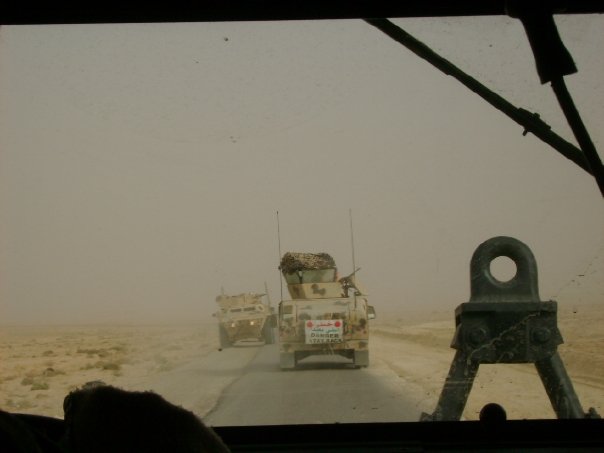
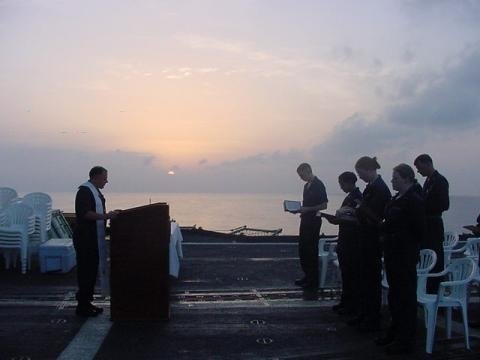
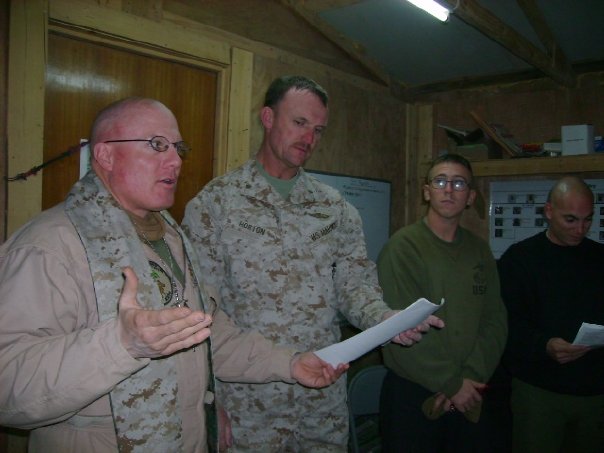
Christmas 2007 COP South, Al Anbar Province Iraq

“I belong with those who are in pain, and who have lost their faith, I belong here.” Father Palmer, the Chaplain in Joyeux Noel (Merry Christmas)

Last night I again watched the film classic Joyeux Noel (Merry Christmas) which is the story of the amazing and exceptional Christmas Truce of 1914. It is a film that each time I see it that I discover something new, more powerful than the last time I viewed it.

As a Chaplain I am drawn to the actions of the British Padre who during the truce conducts a Mass for all the soldiers, British, French and German in no-man’s land, who goes about caring for the soldiers both the living and the dead.  His actions are contrasted with his Bishop who comes to relieve him of his duties and to urge on the replacement soldiers to better kill the Germans.
palmer

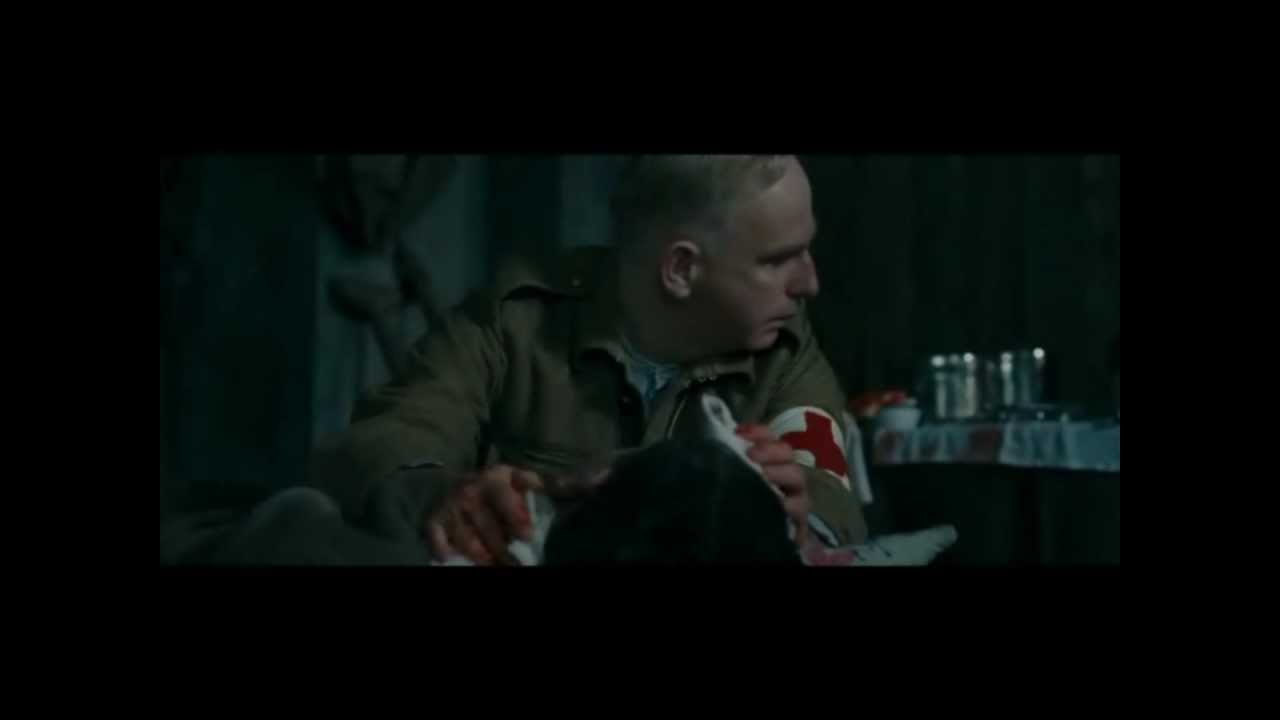
Father Palmer Tending the Wounded

As the Chaplain begins to provide the last Rites to a dying soldier the Bishop walks in, in full purple cassock frock coat and hat and the chaplain looks up and kisses his ring.

As the chaplain looks at his clerical superior there is a silence and the Bishop looks sternly at the priest and addresses him:

“You’re being sent back to your parish in Scotland. I’ve brought you your marching orders.”

Stunned the Priest replies: “I belong with those who are in pain, and who have lost their faith, I belong here.”

The Bishop then sternly lectures the Priest: “I am very disappointed you know. When you requested permission to accompany the recruits from your parish I personally vouched for you. But then when I heard what happened I prayed for you.”

The Priest humbly and respectfully yet with conviction responds to his superior: “I sincerely believe that our Lord Jesus Christ guided me in what was the most important Mass of my life. I tried to be true to his trust and carry his message to all, whoever they may be.”

The Bishop seems a bit taken aback but then blames the Chaplain for what will next happen to the Soldiers that he has served with in the trenches: “Those men who listened to you on Christmas Eve will very soon bitterly regret it; because in a few days time their regiment is to be disbanded by the order of His Majesty the King. Where will those poor boys end up on the front line now? And what will their families think?”

They are interrupted when a soldier walks in to let the Bishop know that the new soldiers are ready for his sermon. After acknowledging the messenger the Bishop continues: “They’re waiting for me to preach a sermon to those who are replacing those who went astray with you.” He gets ready to depart and continues: “May our Lord Jesus Christ guide your steps back to the straight and narrow path.”

The Priest looks at him and asks: “Is that truly the path of our Lord?”

The Bishop looks at the Priest and asks what I think is the most troubling question: “You’re not asking the right question. Think on this: are you really suitable to remain with us in the house of Our Lord?”

With that the Bishop leaves and goes on to preach. The words of the sermon are from a 1915 sermon preached by an Anglican Bishop in Westminster Abbey. They reflect the poisonous aspects of many religious leaders on all sides of the Great War, but also many religious leaders of various faiths even today, sadly I have to say Christian leaders are among the worst when it comes to inciting violence against those that they perceive as enemies of the Church, their nation or in some cases their political faction within a country.
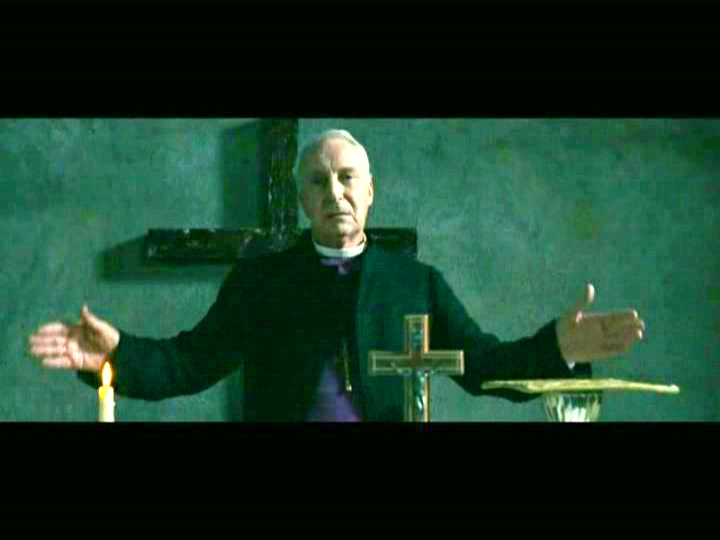
bishop

The Bishop Leads His “Service” 

http://www.youtube.com/watch?v=fMPxjUE40iw

“Christ our Lord said, “Think not that I come to bring peace on earth. I come not to bring peace, but a sword.” The Gospel according to St. Matthew. Well, my brethren, the sword of the Lord is in your hands. You are the very defenders of civilization itself. The forces of good against the forces of evil. For this war is indeed a crusade! A holy war to save the freedom of the world. In truth I tell you: the Germans do not act like us, neither do they think like us, for they are not, like us, children of God. Are those who shell cities populated only by civilians the children of God? Are those who advanced armed hiding behind women and children the children of God? With God’s help, you must kill the Germans, good or bad, young or old. Kill every one of them so that it won’t have to be done again.”

The sermon is chilling and had it not been edited by the director would have contained the remark actually said by the real Bishop that the Germans “crucified babies on Christmas.”  Of course that was typical of the propaganda of the time and similar to things that religious leaders of all faiths use to demonize their opponents and stir up violence in the name of their God.

When the Bishop leaves the Priest finishes his ministration to the wounded while listening to the words of the Bishop who is preaching not far away in the trenches. He meditates upon his simple cross, takes it off, kisses it hand hangs it upon a tripod where a container of water hangs.

The scene is chilling for a number of reasons. First is the obvious, the actions of a religious leader to denigrate the efforts of some to bring the Gospel of Peace into the abyss of Hell of earth and then to incite others to violence dehumanizing the enemy forces. The second and possibly even more troubling is to suggest that those who do not support dehumanizing and exterminating the enemy are not suitable to remain in the house of the Lord. Since I have had people, some in person and others on social media say similar things to what the Bishop asks Palmer the scene hits close to home.
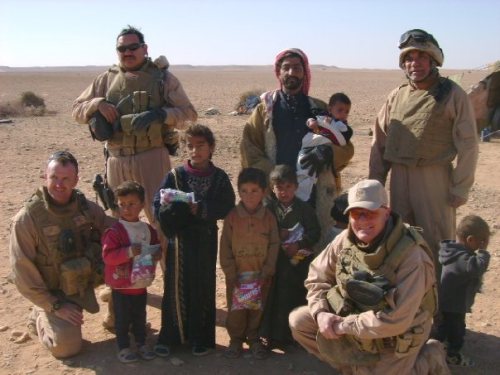
iraq bedouin

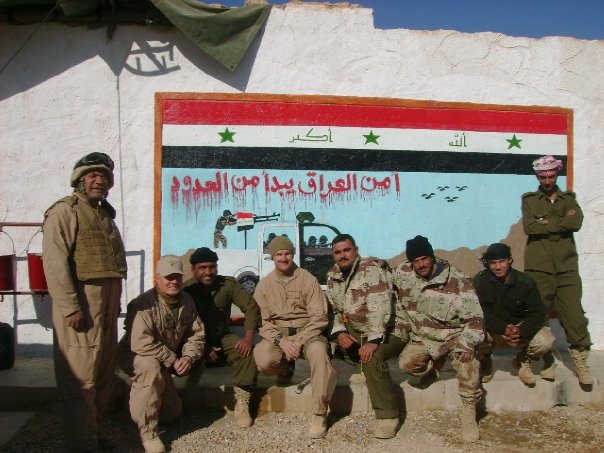
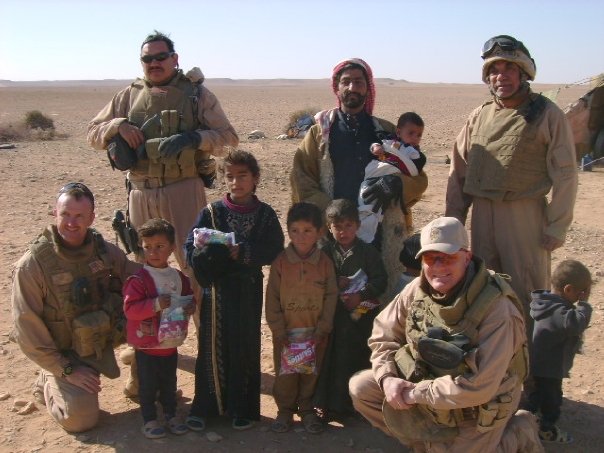
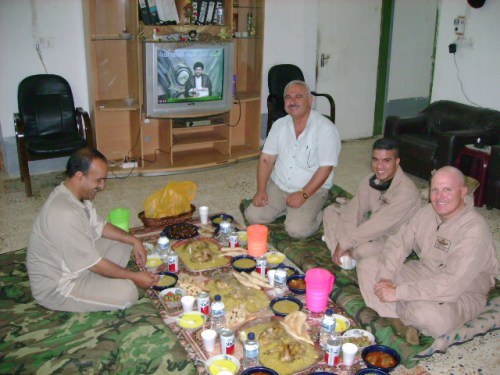
Christmas Eve 2007 with the Bedouin 

When I left Iraq in February 2008 I felt that I was abandoning those committed to my spiritual care, but my time was up. Because of it I missed going with some of my advisors to Basra with the 1st Iraqi Division to retake that city from insurgents. It was only a bit over a month after I had celebrated what I consider to be my most important Masses of my life at COP South and COP North on December 23rd as well as Christmas Eve and Christmas Day. When I left the new incoming senior Chaplain refused to take my replacement leaving our advisors without dedicated support. He then slandered me behind my back because what I was doing was not how he would do things and because I and my relief were under someone else’s operational control. It is funny how word gets back to you when people talk behind your back. Thankfully he is now retired from the Navy and I feel for any ministers of his denomination under his “spiritual” care.  So I cannot forget those days and every time I think about them, especially around Christmas I am somewhat melancholy and why I can relate so much to Father Palmer in the movie.

It has been six years since those Christmas Masses and they still feel like yesterday. In the intervening years my life has been different. Severe and Chronic PTSD, depression, anxiety and insomnia were coupled with a two year period where due to my struggles I lost faith, was for all practical purposes an agnostic. I felt abandoned by God, my former church and most other Chaplains. It was like being radioactive, there was and is a stigma for Chaplains that admits to PTSD and go through a faith crisis, especially from other Chaplains and Clergy.  It was just before Christmas in late 2009 that faith began to return in what I call my Christmas Miracle. But be sure, let no one tell you differently, no Soldier, Sailor, Marine or Airman who has suffered the trauma of war and admitted to PTSD does not feel the stigma that goes with it, and sadly, despite the best efforts of many there is a stigma.

Now that faith is different and I have become much more skeptical of the motivations of religious leaders, especially those that demonize and dehumanize those that do not believe like them or fully support their cause or agenda. Unfortunately there are far too many men and women who will use religion to do that, far too many.  

As for me I am in a better place now. I still suffer some of the effects of the PTSD, especially the insomnia, nightmares and anxiety in crowded places and bad traffic, but I do believe again. Like the Priest in the movie I know that my place is with those who are “in pain, and who have lost their faith.” Like Paul Tillich I have come to believe that “Sometimes I think it is my mission to bring faith to the faithless, and doubt to the faithful.” 

Praying for Peace this Christmas,

Padre Steve+

6 Comments

Filed under faith, film, History, Military, ministry, Pastoral Care, PTSD, Religion, Tour in Iraq

The Season of Hope: Advent and PTSD

2004weihnachtsbrief-2

“Totally without hope one cannot live. To live without hope is to cease to live. Hell is hopelessness. It is no accident that above the entrance to Dante’s hell is the inscription: “Leave behind all hope, you who enter here.” Jürgen Moltmann

Advent and Christmas are my favorite times of the Church year. But that being said I don’t see them in isolation from the rest of the Church year, especially Holy Week, Good Friday and Easter. In fact they cannot be divorced from them. However for me the mystery of the incarnation and the season of waiting in hope is incredibly important in a world that mystery is unappreciated and waiting is an annoyance.

The beginning of Advent stands in stark contrast to the false God of Black Friday. Black Friday is marked by a materialistic rush for all that satiates our desires. Waiting takes a back seat to the throngs of shoppers lined up for a mad rush at retail outlets.

Now before anyone gets the wrong idea I am not against business making profits or people saving money. However that being said the stark contrast between the crass materialism exhibited by our consumerist culture that is blessed by many Christian Conservatives and the message of Advent and Christmas.

n671902058_1153794_4301

The starkness between the two really became apparent to me when I returned from Iraq in 2008 suffering from severe and chronic PTSD. It  something that still plagues me though not to the extent that it did for a long time. During that terrible time hope was hard to come by. In the midst of the madness I was for all intents and purposes an agnostic just praying that God still existed. Only my deep sense of calling as a Priest and Chaplain kept me going as I served in the ICUs of a major medical center working with people facing death and their families.

On Christmas Eve of 2008 I was doing so bad that I handed my wife the keys to our car at the Christmas Eve Mass where she was singing in the choir and walked home in the dark and cold. If there had been a bar within a few blocks I would have walked in and poured myself out. I understood the depth of hopelessness that Dante wrote about.

But a year later I experienced what I call my “Christmas miracle” while administering the last rites to a dying patient in our emergency room. It was a miracle and for the first time since Iraq I felt the mystery and wonder of Advent and the Incarnation.

Faith returned, albeit different. In place of the certitude that marked my previous faith I was now open to new possibilities as well as being okay with doubt. I rediscovered, or maybe better put discovered the importance of being human, something that the Gospel makes so clear when it comes to the humanity of Jesus. Jürgen Moltmann wrote of the incarnation:

“God became man that dehumanized men might become true men. We become true men in the community of the incarnate, the suffering and loving, the human God.” 

In a sense I was born again in that emergency room that Advent night. Dietrich Bonhoeffer wrote that “Advent creates people, new people.” That I agree with.

kcm_barton_judgement_131031c

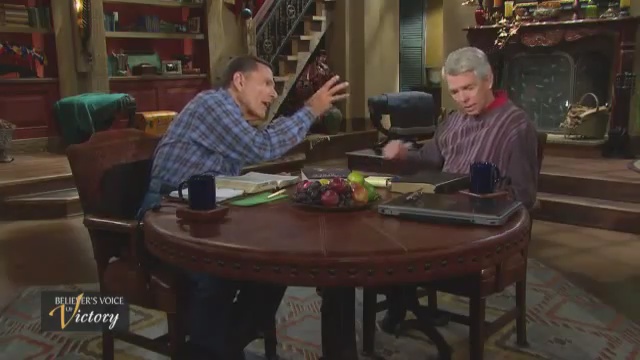
However there are some that profess to have a direct line to God who neither understand faith, life or humanity. On a Veteran’s day broadcast of The Believe’s Voice of Victory two of them made some incredibly ignorant comments about PTSD. Kenneth Copeland the host of the program a long time prosperity Gospel charlatan and huckster and the faux historian David Barton made the comments that real Bible believing Christians could not get PTSD. Copeland stated:

“Any of you suffering from PTSD right now, you listen to me. You get rid of that right now. You don’t take drugs to get rid of it, it doesn’t take psychology; that promise right there [in the Bible] will get rid of it.

But truthfully there is no promise in the Bible that says that you get rid of PTSD or any other neurological condition. The fact is that many Fundamentalist Christians believe that such conditions are a product of the sin of the individual. Something that they take from Douglas Adams’ “Nouthetic” or “biblical” counseling. Adams’ who believes that mental illness, including PTSD is not a “sickness” but due to the “sinfulness” of the afflicted person. This really is not much different than what Scientology preaches but it finds a home in many Evangelical and Fundamentalist Christian circles.

Barton added to Copeland’s ignorance showing that he is not only an ignorant pseudo historian but a danger to any person suffering from PTSD. Barton said:

“What we’re talking about, getting rid of the PTSD, guys who have been through battle, they need to understand that soldier’s promise, you come back guiltless before God and the nation…You’re on an elevated platform up here, you’re a hero, you’re put in the faith hall of fame if you take this [Bible],…We used to in the pulpit understand the difference between a just war and an unjust war. And there’s a biblical difference, and when you do it God’s way, not only are you guiltless for having done that, you’re esteemed.”

To cut to the chase these men believe that if you are a soldier suffering from PTSD it must be your sin causing it. Likewise if you are Barton you believe that if you kill in the name of Jesus it is not a sin, you are a hero of the faith. That sounds a lot like Al Qaeda’s understanding of killing in the name of Allah, and some people get mad at me when I call men like Barton “Christian Taliban.” But if the shoe fits they can eat it.

Barton, Copeland and their fellow travelers embody the worst of modern Evangelicalism and their type of Christianity is why young people in particular are leaving the church and not coming back. They are anti-science, anti-reason, anti-history and dare I say, Anti-Christ. Reducing the Bible to a technical manual they strip the mystery of faith and life out of the scriptures. Their certitude flows from a combination of arrogance and ignorance. Devoid of compassion, and love, consumed by the lust for power they are dangerous. Armed with money and air time they spread ignorance and hatred of others not like them and call it “the Gospel.”

Like Black Friday they too stand in stark contrast to the message of the Gospel proclaimed during Advent and Christmas as well as the week of the Passion.

For me, still suffering from PTSD I find great comfort and hope in the message of the season of Advent. It was during Advent that my faith and life returned.

barmherzigkeit

Paul wrote in his letter to the Galatians:

“But when the fullness of time had come, God sent his Son, born of a woman, born under the law, in order to redeem those who were under the law, so that we might receive adoption as children.” Gal 4:4-5

Now I look forward to the coming of Jesus, but on a daily basis, in the life I live in the real world where people like me struggle. It is the world that Jesus

I look forward to this time of hope and patient expectation.

Peace

Padre Steve+

Leave a comment

Filed under christian life, faith, ministry, Pastoral Care, PTSD, Religion, Tour in Iraq

Living the Nightmares: PTSD and Iraq Six Years Later

481801_10151367001287059_1003164983_n-1.jpg

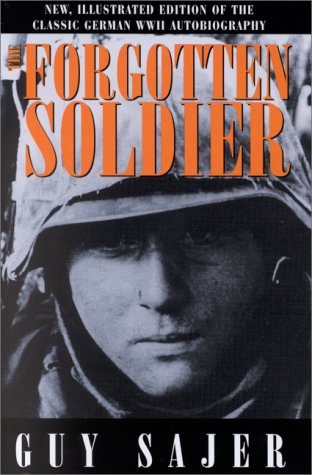
“Only happy people have nightmares, from overeating. For those who live a nightmare reality, sleep is a black hole, lost in time, like death.”  Guy Sajer, The Forgotten Soldier

Last week I woke up screaming thanks to some nightmare brought to me in high definition by PTSD. It woke Judy and both of the dogs up and well, it wasn’t exactly pleasant. Unfortunately this happens more often than I would like it to. When I was stationed away from home in North Carolina it was only Molly my faithfully dog who was disturbed by this, now I wake up Judy and our younger Papillon Minnie, or Minnie Scule as is her full name.

This afternoon I read a story of a Marine veteran who lost his battle with PTSD, taking his own life. I see a lot of these stories and each one makes me wonder what s going on and gives me pause when I think just how bad I was doing not too long ago.

It is hard for me to believe that nearly six years after I returned from Iraq that I still have a lot of trouble sleeping, though less trouble than a couple of years ago and that my nightmares associated with war still return with more regularity than I would like. Likewise it is hard for me to believe how much my life is impacted by this. I still experience a fair amount of hyper-vigilance, crowds of people are difficult and the craziness of traffic on the local freeways causes me a fair amount of distress.

n671902058_1153829_4642

Despite that I am doing a lot better than I was even a year or so ago when I was still struggling a lot more than I am now and let’s say 4 years ago when there were times I wondered why I was still alive. Of course the time from 2008-2010 was probably the worst time of my life when it seemed that everything that I had believed in had melted away. I didn’t know if God existed, I felt abandoned by my former Church and even by many peers. The only thing that kept me going was a deep sense of call and vocation as a Priest and Chaplain, even though I was for all practical purposes an agnostic who was praying that maybe God still might exist.

Those who have been with me on this blog over the years know how central that struggle has been. I have written about it many times.

Though I am doing much better than I was I still have my times of doubt, times of fear and times of absolute panic. I do what I can to manage but once in a while something will trigger a response. The biggest problem still is sleep and vivid dreams and nightmares. Once I finish the course I am in I am going to get back into therapy a couple of times a month. Thankfully my new job after I complete the school will be more academic with a small chapel where I serve the Students of the Joint Forces Staff College.

Physically I am doing much better, in terms of overall health and physical fitness. I am playing softball again and my PT regimen is much better. Spiritually I can say that being active in having a Chapel where I celebrate Eucharist in a small setting has been good for me. Having to preach again from the lectionary readings is a good thing. Likewise getting a break from five years of hospital ministry, dealing with death, suffering and psychological issues is good. After Iraq I threw myself into the most difficult areas of hospital ministry, the critical care Intensive Care Units hoping that such work would help bring me out of my own issues. Unfortunately, it made it more difficult.

Being at home again is good. I just wish that my nightmares would not cause distress to the rest of my little family. However, it is nice when after they look at me like I am nuts one or both dogs come to me and help calm me down.

I quoted Guy Sajer, the author of the classic book The Forgotten Soldier. If anyone wants to understand something about what war does to a person and see PTSD in non-clinical terms I think it is possibly the best book to read.

Forgotten_Soldier

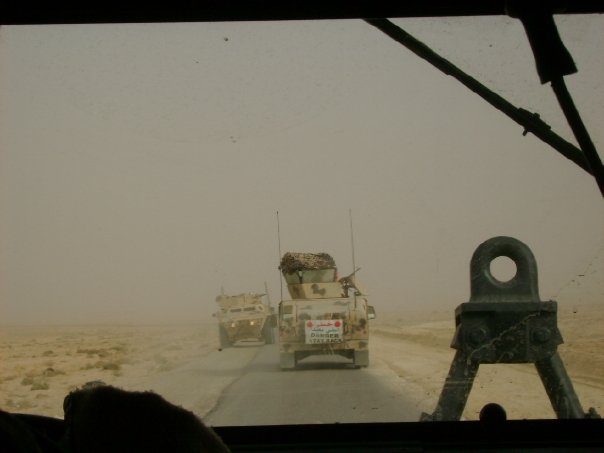
Since I have gone to war and experienced fear on a daily basis out in the hinterlands of Al Anbar Province with small groups of American Marines and Soldiers and Iraqi troops I understand a bit of what Sajer writes. My war was different, out with advisors on small Iraqi basis, traveling in dangerous areas far from any big American units, occasionally being shot at and seeing the devastation of war in that unfortunate country,  though my experience of war pales in comparison with what Sager describes.

That being said I do understand in ways that I never did before. Sajer makes a comment which I think is incredibly appropriate for those that read of war without having ever experienced it. too often is the case in the United States and Western Europe where very few ever put on a uniform and even fewer experience war. Sager wrote:

“Too many people learn about war with no inconvenience to themselves. They read about Verdun or Stalingrad without comprehension, sitting in a comfortable armchair, with their feet beside the fire, preparing to go about their business the next day, as usual.

One should really read such accounts under compulsion, in discomfort, considering oneself fortunate not to be describing the events in a letter home, writing from a hole in the mud. One should read about war in the worst circumstances, when everything is going badly, remembering that the torments of peace are trivial, and not worth any white hairs. Nothing is really serious in the tranquility of peace; only an idiot could be really disturbed by a question of salary. 

One should read about war standing up, late at night, when one is tired, as I am writing about it now, at dawn, while my asthma attack wears off. And even now, in my sleepless exhaustion, how gentle and easy peace seems!”

This weekend I will visit the Gettysburg Battlefield as part of a staff ride. I have been there a good number of times but not since I returned from Iraq. Thus in a sense it will take on new meaning, especially when I walk those hallowed fields of battle where so many died and so many more were maimed in our own terrible Civil War.

295_26911892058_4301_n

That being said I wonder if the solution to my nightmares is to go back to Iraq someday like so many WWII, Korea and Vietnam veterans have done to the places that they served. That has to remain in the future, but hopefully I will get the chance and maybe by then Iraq will at last be at peace.

Tonight I will attempt to sleep and hopefully what dreams I have, though they be high definition will at least not be nightmares that disturb Judy or the dogs.

Peace

Padre Steve+

2 Comments

Filed under civil war, faith, Military, ministry, Pastoral Care, PTSD

Letter to a New Military Chaplain Part IV: The Minefields of the Flesh, Sex, Alcohol and Money

1905_50393027058_1870_n

This is fourth part of a response to a question I had from a new Navy Chaplain. I have decided to post it here without any identification of the chaplain because I know that many men and women who are new to the military chaplaincy or who are exploring the possibilities of becoming a chaplain have the same questions. I was fortunate to have had a number of chaplains who at various points in my decision process and formation as a minister, Priest and Chaplain in both the Army and the Navy help me with many of these questions. Likewise I learned far too much the hard way and blew myself up on some of the “land mines” that almost all who serve as chaplains experience in their careers. This is the third of several parts to the letter and is my attempt to systematically explain my understanding of what it is to be a Chaplain serving in the military and in particularly the Navy. The first three parts are linked here:

Letter to a New Military Chaplain: Part One

Letter to a New Military Chaplain: Part Two The Minefields of the Heart 

Letter to a New Military Chaplain Part Three: The Minefields of the Soul: Power and Arrogance

Dear Chaplain

It has been about a week since my last letter concerning the minefields that so easily ensnare those in the various Military Chaplain ministries. This section of my letter to you will be of the more practical type of advice and less philosophical and theological than the first several installments even though at the heart these observations are both theological and philosophical.

I chose the title of this section carefully because I do think that the way a number of New Testament writers deal with the subject of sin, calling it “the flesh” as opposed to “the spirit” is appropriate to the topic.

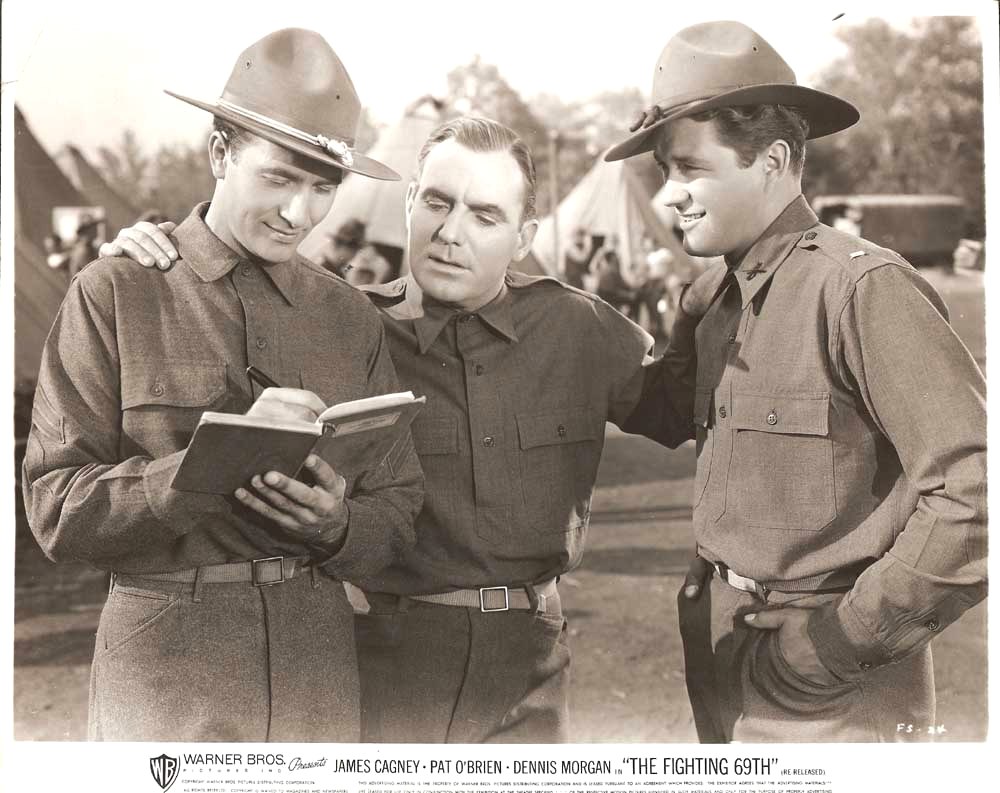
I think that people of my generation and earlier had a very high view of clergy. We didn’t think that they could do much wrong. Of course we all knew that they did but we didn’t like to talk about it, even productions such as Elmer Gantry did little to dissuade us from our beliefs that Ministers, Priests and Rabbis were somehow morally and certainly spiritually better than us. Even Hollywood maintained the myth, movies like The Bells of St Mary’s showed the essential goodness of the parish priest, while The Fighting 69th in which Pat O’Brien played the legendary Father Duffy, a man both streetwise and holy became the quintessential Chaplain of his generation.

18722 - The Fighting 69th

In fact the prayer that he prays in the movie is one that I have echoed in my career as a Chaplain and I am sure that many others have as well.

“Almighty God, in Thine infinite mercy grant me, thy servant, the wisdom to guide my young flock through the trials of war. Oh, Father, they’re so young. So young and they know so little of life and nothing at all of that terrible and bloody altar towards which they move, carrying so eagerly the bright sacrifice of their youth. Their need will be great, O Lord, and I am weak. Therefore, I beseech thee through Thy Son, Christ, our Lord, grant me the strength to keep them steadfast in the faith, in decency and courage to the glory of God, their country, and their regiment in the bad times to come. And if in battle you see fit to gather them to your protecting arms, thy will be done, but let them die like men, valiant and unafraid.”

Of course there is Father Mulcahy of the movie and television series M*A*S*H. I actually liked the portrayal of him by William Christopher in the series better than the movie, perhaps because he became more than a bit player, but like many real life chaplains of every denomination an integral part of the life of his unit. His struggles are the same that many of us who serve as chaplains. In one episode he says to Hawkeye “For some time now, I’ve been comparing the disparity of our callings – Doctor versus priest. You fellows are always able to see the end result of your work. I mean, you know immediately if you’ve been successful. For me, the results are far less tangible. Sometimes… most of the time… I honestly don’t know whether I’m doing any good or not.” 

father

The film and television portrayals of chaplains such as Father Duffy and Father Mulcahy are inspiring, as are the examples of so many good men and women who have served as military chaplains. Some of these even gave their lives in combat so others might live, or placed themselves in harms way to be the the visible representation of God’s presence in places that God himself seems to have abandoned.

That being said there are minefields that exist which even the most noble, caring  and committed Chaplains can fall victim. They primarily lie in the real of Sex, Alcohol and Money, what we referred to as “SAM” when I was an Army Chaplain. Those are general categories to which unfortunately we need to discuss, illicit drugs, disobeying lawful orders and simple rudeness. I will save the issues of disobeying lawful orders and simple rudeness for part five, or Part V as they say in Roman numerals.

At any given time there are between a half a dozen and dozen military chaplains serving time at either Leavenworth or one of the regional Brigs. Others end up in trouble, are disciplined and then discharged from the the service often after devastating the lives of those that they served with. Those numbers are not included in the numbers incarcerated.

You wouldn’t think that sex would be a big issue being that we are supposed to be better at keeping our zippers up than others, but this is not always the case. I can cite from personal knowledge case after case where chaplains that I have known from across the denominational spectrum conservatives and liberals alike. Those actions have included heterosexual and homosexual relationships, inside and outside their units and sometimes involved the spouses of their unit members or parishioners.

For some this is due to the isolation that many Chaplains experience, be they married or single. Some are sexual predators, loathsome and evil animals masquerading as good, while others in moments of weakness succumb to temptation. I have had to go into a number of billets where the chaplain just before me had been relieved of their duties for sexual misconduct. Regardless of the reason the real fact of the matter is that when a chaplain is relieved and disciplined for their sexual misconduct their actions radiate out and damage the ministry and reputations of Chaplains who are completely innocent of wrong doing. This is much like how the actions of disgraced televangelists, pastors of large churches and Bishops or Priests implicated in pedophile or other sexual crimes cause problems for others in similar positions who again are without reproach. In every case where I have had to go into such a situation the onus has been on me to help heal the wounds and rebuild the credibility of the Chaplain Corps. This is true for every Chaplain who has to take a job where his or her predecessor was a criminal.

bilde-2

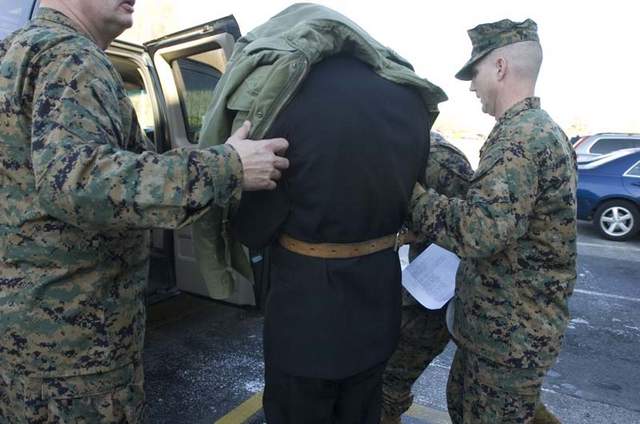
A Navy Chaplain being taken to the Brig after being convicted at Court Martial for sexual crimes (Marine Corps Times Photo)

Sexuality can be one of the greatest minefields that a military chaplain has to navigate, but there are others less visible that also trip men and women up.

The second major area is alcohol. I know a number of chaplains who have become alcoholics. I like to drink good craft beer, but I do know my limits now and am very careful about my consumption of alcohol. When I first came back from Iraq that was not the case. I did drink too much, mainly because I was in the process of coming apart with severe and chronic PTSD. I almost ended up in a bar fight one night and I am thankful that I never ended up in an accident or involved in any other alcohol related incident. There were times at various conferences that I would sit around and drink late into the night at the hotel with other chaplains going through similar problems as I was going through. For us it was safer than going to our superiors either in our churches or the chaplain corps.

That being said I have seen other Chaplains succumb to alcoholism and know one who in dealing with his own demons from service in Vietnam committed suicide while on active duty. Alcohol is also related to many of the incidents regarding sex, so even if it was not the primary issue it was a factor. I also know a number of chaplains who are involved with Alcoholics Anonymous and fight the battle of sobriety on a daily basis.

Related to alcohol are drugs. This is a relatively new phenomena and in most cases is related to prescription medicines, especially pain killers and anti-psychotics prescribed to treat the wounds of war, injuries and things like PTSD and TBI. Once again these are easy to become addicted to and chaplains are much like others when dealing with chronic pain, PTSD or TBI. Recently I saw something that I never thought I would see and that was a chaplain who tested positive for THC, the active ingredient in Marijuana. I figure that if there is one there probably are more that are using, many who battled addictions before their faith conversions and call to the ministry but when placed under the stress of this ministry go back to old friends.

The last component of SAM is money. I think this is a more difficult area in the Army than the Navy because in the Navy chaplains are not allowed to deal with the Religious Offering Fund, where in the Army a Chaplain at every installation is the Religious Offering Fund Manager. It is said by some that “money is the root of all evil” but I am not sure if that is exactly true in this case. I think that money and the power it brings sometimes reveals the inner character of a man more than anything. The great televangelist scandals of the late 1980s and early 1990s, the continuing saga of corruption at the Vatican Bank and the all too frequent revelations of ministers of all faiths misusing church finances are legend. When I had to manage a relative small installation chapel fund I lived in terror of making an innocent mistake, and thankfully I had an outstanding Chaplain Assistant and Parish Council to work with and maintained close contact with the fund manager at our higher headquarters.

Another issue dealing with money is what we are paid when in a travel status. I know that there are Chaplains who play fast and loose with this and I know people in the travel and disbursing offices who tell me about the actions of chaplains that they have to deal with who are not playing straight with the system. In my case I don’t make claims that I cannot substantiate even if it costs me money. I would rather be absolutely honest on a travel claim and lose money that claim something that I may or may not be entitled to that might cause scandal and bring disrepute to God, my church or the Chaplain Corps.

Money is a great temptation and more than one military Chaplain has fallen to it.

The sad thing about all of this is that most of our religious traditions deal explicitly with all of these matters as do our various Service Regulations and Defense Department Instructions. They are not rocket surgery but they are the downfall of far too many chaplains, many of whom actually came into the ministry and chaplaincy with good motives. Once again I lay a lot of this at the feet of our churches and theological schools which for decades have stressed how to run a church program over any real pastoral or theological formation process.

I am lucky. I have made mistakes but I have had numerous chaplains in both the Army and the Navy help me to see the blind spots and teach me about these things. They span the denominational, theological and even political spectrum. Conservatives, liberals, men and women, Protestants, Catholics, Later Day Saints, Jews and even a Moslem.

I could easily have gone into detail about the specific incidents where I knew the people involved or had to deal with them or follow in their footsteps. Some have made the national media, but somehow to do so would be unseemly, after all I do not work for the National Enquirer or for that matter the Navy or Army Times. That being said the Chaplain Corps of the various services all have by percentage among the highest incidences of misconduct of any officer branch or community and this has been a constant since I began my military career in 1981.

That should be a warning. If you know something is wrong don’t do it. If you are unsure about something ask someone. If you need help get it before your actions destroy the lives of those you serve and bring disrepute to your office, your religious body, the Chaplain Corps of your military service and yes even God. After all God does tend to get the blame for all of the actions of those in his service so be careful, guard your heart and mind and for God sakes keep your zipper up and all appearances thereof.

Until the next installment,

Peace

Padre Steve+

1 Comment

Filed under christian life, faith, leadership, Military, ministry, Pastoral Care

Letter to a New Military Chaplain: Part Two The Minefields of the Heart

295_27076892058_2637_n-1

This is second part of a response to a question I had from a new Navy Chaplain. I have decided to post it here without any identification of the chaplain because I know that many men and women who are new to the military chaplaincy or who are exploring the possibilities of becoming a chaplain have the same questions. I was fortunate to have had a number of chaplains who at various points in my decision process and formation as a minister, Priest and Chaplain in both the Army and the Navy help me with many of these questions. Likewise I learned far too much the hard way and blew myself up on some of the “land mines” that almost all who serve as chaplains experience in their careers. This is the second of several parts to the letter and is my attempt to systematically explain my understanding of what it is to be a Chaplain serving in the military and in particularly the Navy. The first part is linked here:

Letter to a New Military Chaplain: Part One

“There is a twilight zone in our hearts that we ourselves cannot see. Even when we know quite a lot about ourselves-our gifts and weaknesses, our ambitions and aspirations, our motives and our drives-large parts of ourselves remain in the shadow of consciousness. This is a very good thing. We will always remain partially hidden to ourselves. Other people, especially those who love us, can often see our twilight zones better than we ourselves can. The way we are seen and understood by others is different from the way we see and understand ourselves. We will never fully know the significance of our presence in the lives of our friends. That’s a grace, a grace that calls us not only to humility, but to a deep trust in those who love us. It is the twilight zones of our hearts where true friendships are born.”Henri J. M. Nouwen

Dear Chaplain

The next section of our discussion is about the “minefields” that we so often encounter as Chaplains and to some degree as Ministers, Priests or Rabbis or other religious leaders. As I noted in the first section I am dividing these “minefields” into three major areas; the personal, the behavioral and the professional.

This section is about the “personal” minefields which I call the “Minefields of the Heart.” I call it this because it seems from the Christian and Jewish Scriptures the heart is the figurative locus of what we are, good and bad alike as human beings.

Of course there is always some spillage between the areas personal, behavior and professional areas and our behaviors and professional relationships are certainly influenced by the things that we hide deep in our hearts. As human beings we may try to compartmentalize our life to keep things apart such as keeping our personal life separate from our professional life, or hide behaviors from our friends, families, peers or co-workers; but the cold hard fact is whether we are aware of it or not each area impacts the other. If we are not aware of this fact, if we have little self awareness, if we have self awareness but try to live our lives with the illusion that we can separate our lives into neat little boxes we will most undoubtedly hurt ourselves, and as spiritual leaders harm those that come to us.

q_who

There is a scene of the last episode of Star Trek the Next Generation entitled “All Good Things” that comes to mind.  In it the being known simply as “Q” helps Captain Picard discover how his actions influence human history.

Q: You just don’t get it, do you, Jean-Luc? The trial never ends. We wanted to see if you had the ability to expand your mind and your horizons. And for one brief moment, you did.

Capt. Picard: When I realized the paradox.

Q: Exactly. For that one fraction of a second, you were open to options you had never considered. That is the exploration that awaits you. Not mapping stars and studying nebulae, but charting the unknown possibilities of existence.

You may wonder where I am going with this but it has to do with the personal minefields, those that exist inside of us, those that lurk beneath the surface which if we are unaware wreak havoc on everything else that we do. In the episode of Star Trek that I am referring to Captain Picard is allowed by Q to see the effects of his actions and to see how limited his thinking was.  The challenge for us is chaplains are to be aware of what Nouwen calls “the twilight zone in our hearts” and how what is at the depth of our heart impacts everything else that we do.

Too often though, mostly because of our own personal limitations and serious lack of real theological and pastoral formation involving self reflection and exploration we fail to see them. Like an uncharted minefield we are unaware of them until we either discover their existence through accident and “blow ourselves and others up” or until we listen to those that can see those twilight zones, those minefields better than we ourselves. Of course the latter, especially when it comes from those who love us, care for us and have our best at heart is the preferable method to learn about these things.

943043_10151694525692059_632653331_n

However, that being said part of this can be done through reading. A lot of us simply read “how to” type books when it comes to ministry. We seek direct easy answers in how to run our programs be it in the church, in a para-church ministry or in the chaplaincy. Believe me there are plenty of those kinds of books out there, not only that but a plethora of “self help” books that tell us the “three things we must know” the “five whatever’s to success” or the Seven Habits of Highly Defective People.” The sad thing is, even when these books contain nuggets of truth, they serve it like fast food and reduce it to the lowest common denominator. In a sense, even the most well intentioned of these “how to” or “self help” books promote a reductionist view of faith, spirituality, psychology and in some cases ethics and doctrine.

Reading is important, especially the hard stuff, philosophy, history, moral theology, but also things that you might not expect science fiction for example. In addition classic literature from antiquity and from non-western traditions also sheds light on those personal minefields. Heck we can even find truth in television and film, note my continued references to Star Trek. I find that God can speak to us in many ways.

As Christians we may also find lessons, insights and inspiration from the Bible that can be quite helpful. Unfortunately most of us have so many theological filters in place that we often miss the very things that would be most helpful to us. They can serve as blinders that keep us from sensing what the Spirit of God is trying to teach us. Our church, denominational or theological traditions as well as our hermeneutical methods often cloud our minds to what God is trying so hard to say. It was a problem that the religious establishment of his time had with Jesus, and often with the various prophets that preceded him whose stories we read about in the Old Testament.

1905_50393137058_7454_n

I am sure that others who are not Christians can say similar things about their faith, traditions and holy books. I remember an Iraqi General who I met who took the time to show me his well worn and read Arabic-English Bible. He was a Moslem, but he said that he learned so much from it because it was different than what was in the Koran and he meant no disrespect of his own faith by saying that. He had opened his mind to truth that others turn a blind eye to.

Some of the personal issues that prove to be deadly include what we don’t know about ourselves, usually dating back to childhood, how were raised, how we see God, if we perceive ourselves to be worthy of God’s love or worthy of the love and respect of others.  Those attitudes, especially those created as a result of negative relationships or even physical, emotional or sexual abuse, abandonment and rejection are powerful. Many of us like to pretend that we have gotten past those things but few of us actually do. Unfortunately there is a tendency for those issues to raise their heads in often very ugly ways as we minister as Chaplains.

For example: Let us say that we are distrustful of authority because of having an abuse parent, that we fear that no matter how well we do that there is always someone waiting to take us down. Let us say that we had previous experiences in the church, at work or maybe in prior military service where we were mistreated by those in authority.

I have found that if that condition is not dealt with that in a hierarchical organization such as the Chaplain Corps and the military that it is almost always fatal to the ability of the chaplain to minister in the organization. That is because the military is based on trust, our lives and mission depend on it. We have to trust the chain of command, we have to trust those that serve alongside of us and we have to trust our subordinates. There may be times when the chain of command fails and things don’t go right. There are toxic leaders and there are also toxic chaplains, one has to be aware that they are out there, know how to deal with them or survive under their command but one cannot presume that everyone is like that, trust is essential.

father

I find it interesting that Jesus commended the faith of the Roman Centurion when instead of asking Jesus to come to his house and heal his servant simply said “But just say the word, and my servant will be healed. For I myself am a man under authority, with soldiers under me. I tell this one, ‘Go,’ and he goes; and that one, ‘Come,’ and he comes. I say to my servant, ‘Do this,’ and he does it.”Matthew 8: 8b-9 Jesus told the people around that “he had not seen such faith in all of Israel.” Jesus saw the virtue of the Centurion, a virtue that many of his own people were lacking.

That is just one of a myriad of personal issues that can trip up a Chaplain in the military. The fact is that issues of the heart those things that we don’t like to admit are true about us, things that we are unaware about or in outright denial about in our lives are the things that go to the “heart” of who we are.

As fa as the minefields of my heart, they too are many. However the one that gets me time and time again is my passion for justice and my visceral reaction to those that I believe are bullies. That comes from my childhood. As a Navy brat I was always the new kid in town, and being that I was kind of the short, shy and introverted kid I was also kind of a nerd, or geek. I was not gifted with speed or great athletic abilities and it took me a while to find my academic prowess. That meant that I often didn’t fit in and though I was generally well liked that I would on occasion be bullied and I learned to defend myself, not very well at times but well enough to as the Klingons say “to die an honorable death.”

Jeremiah the prophet, who admittedly was most certainly clinically depressed if you look at his writings did note that “The heart is deceitful above all things and beyond cure. Who can understand it?” Jeremiah 17:9 Depressed or not Jeremiah did seem to understand that what he and many writers of scripture call “the heart” is hard to understand, especially when it is our own.

Thus I go back to Nouwen’s comment about the “twilight zone of the heart” that we cannot see. That it is why as Chaplains we have to develop relationships with people who can help us see what is in the twilight zone of our hearts and lovingly come alongside of us, not just as colleagues but as friends.

Those people may be clergy or other chaplains, but then they may not be. Perhaps they are senior enlisted personnel, long time friends, teachers, spiritual directors, counselors or our God forbid our spouses, I jest about the latter because my wife can see things about things about me that I cannot see, she is incredibly wise.

The minefields that exist in our hearts are so varied, so diverse and so treacherous. They have the potential to affect so many other parts of our lives. Thus for us as chaplains if we are not careful they can be destructive not only to us, but to those that we serve as well as those that we presume to love.

295_26912097058_4309_n

When I look back at my career and I am honest about it, I can say without a doubt that most of the things that hurt me were a direct reflection of the minefields that were already present in my heart. When things that happened that I felt were unjust or threatening I reacted and quite often my reactions caused problems greater than what I was reacting to. All they needed was something to set them off. What I have come to understand is even though I have had a very successful and that I am now a Senior Officer that what lies in my heart can still blow me up and that I need to always be careful of those minefields that exist in the twilight zone of my heart.

Lao Tzu said: “Watch your thoughts; they become words. Watch your words; they become actions. Watch your actions; they become habit. Watch your habits; they become character. Watch your character; it becomes your destiny.”

That is the key, those things that emanate from the deepest recesses of our hearts are full of minefields and we need to guard our hearts and minds in this ministry that we are privileged to have as military chaplains.

Peace

Padre Steve+


4 Comments

Filed under christian life, faith, Military, ministry, Pastoral Care, philosophy, Tour in Iraq, US Navy

Letter to a New Military Chaplain: Part One

185615_1857288397412_3950321_n

Note: This is a response to a question I had from a new Navy Chaplain. I have decided to post it here without any identification of the chaplain because I know that many men and women who are new to the military chaplaincy or who are exploring the possibilities of becoming a chaplain have the same questions. I was fortunate to have had a number of chaplains who at various points in my decision process and formation as a minister, Priest and Chaplain in  both the Army and the Navy help me with many of these questions. Likewise I learned far too much the hard way and blew myself up on some of the “land mines” that almost all who serve as chaplains experience in their careers. It will be the first of several parts to the letter and is my attempt to systematically explain my understanding of what it is to be a Chaplain serving in the military and in particularly the Navy.

Dear Chaplain,

“Preach the Gospel at all times, use words when necessary.” Francis of Assisi 

I thank you for writing me about the questions that you have concerning ministry as a Navy Chaplain. They are incredibly good questions and I since you first asked me two days ago I have given them much thought before responding. I find that if I take the time to mull over such questions it is much more beneficial than simply spitting out whatever comes to mind first because if I don’t get the questions right my advice however good might be wrong. Of course even well thought out advice can be wrong in a given circumstance so you must contextualize the advice and adapt it to your own circumstances at any given time.

As a prologue to the actual questions that you ask I want to point you back to the words of St Francis. I think that they are they key to success in any ministry, but especially the chaplaincy.

As chaplains we are called by our churches or religious bodies to serve in an organization that is essentially secular. Our ordinations come from our churches or religious bodies and we are to be faithful to them. However our commissions as officers come from the President and this creates a dialectical tension that is hard to resolve for some. You will hear people talk about managing the “right and left side of our collars.” That of course is the fact that we wear our military rank on the right collar and the Cross that we wear as Christians or in the case of our Jewish, Islamic or Buddhist colleagues the Tablets of David, the Crescent or the Wheel of Life on the left.

Some attempt to seek a balance between the rank and the religious symbol. That is a bad model because but what typically happens is that chaplains become fall to one side or the other. By that I mean that they either place the military side higher and forget their call or minimize the military side and find that they have no voice in the system. I have seen many chaplains who have in their attempt to fit in with the military forgotten their call as ministers. On the other hand I have seen a number place such an emphasis on their own religious traditions and their perceived rights as ministers that they neglect the vast majority of the people that they are assigned to care for as chaplains. Both options are bad because ultimately we fail to serve those that we are called and given the privilege to serve.

A few years back I saw the travesty of trying to “balance” the two sides of the collar. From my observation those who tried this always end up becoming so military that they end up losing their faith distinctions or they never adapt to the military and even if they do “good ministry” they end up frustrated, are seen as an outsiders and have relatively short careers.

295_27076762058_7573_n-1

As such I went back to Christian theology to find a model of ministry and that is in the hypostatic union of Jesus the Christ. By our understanding as Christians Jesus is both fully God and fully Human, not half and half, or any other percentage, but 100% God and 100% human. The fact is that as Navy Chaplains we are 100% ministers of our own faith group and 100% Naval Officer. As such we need to be the best we can at both and cannot allow ourselves to settle for anything less. If we attempt to “balance” we will fail in being ministers or being officers.

The military is not the church, as such  In the United States our service in such a capacity is not a right, it is a privilege. The right is not ours, it is right of the people that we serve to have the Constitutional right under the First Amendment to their “Free Exercise” of religion. As chaplains we facilitate the religious rights and freedoms of those who wear the same uniform that we wear, whether they of our faith, another faith or even of no faith. This is not about being “politically correct” but rather being faithful to two callings, both of which must be valid and respected in order for us to do what we are called to do as Navy Chaplains and there is always a tension in this. If you take a look at the chaplains that have trouble it is most often because believe that their right to free exercise is greater than the people that they are called to serve or that they lack a sufficient understanding of their call as Ministers, Priests, Rabbis or Imams. That is why Francis’ words are so important.

I think that many ministers, not just chaplains have a terrible understanding of our calling and vocation. To many the ministry is simply a job, their ordination and theological education the necessary prerequisites to perform the task. It is an attitude that I noted in seminary back in the late 1980s and early 1990s and have continued to observe over time. In seminary I had fellow students tell me that they were just thier to get a more advanced degree to help them get a bigger and better paying church. I had others friends disparage their theological education. I had one friend tell me that our degree was “only good for 5 years.” Obviously he was only thinking about the “how too classes” and not the courses that are really important to theological and pastroral formation.

But such is the state of theological education in this country. The fact is that most churches, seminaries or religious bodies do a pretty bad job at pastoral formation. We do a great job on teaching people how to manage churches, direct programs, teach doctrine, evangelize, run media empires or even become social and political activists, but a terrible job at actual pastoral formation and the latter is actually the most important task. Formation is primarily about relationships and relationships are what the Gospel is all about, beginning with the relationship of God to humanity and all of creation.

That may sound like I chased the proverbial rabbit but the attitude has a decided impact on the chaplain ministry. What happens is that this simply becomes a job and “skill sets” take priority over our calling and our service to those who were are called to serve during the time that we are allowed to serve in the Navy. We must never lose sight of who we are called to be as ministers, including the vows the we took when we were ordained as well as the oath that we swore as Naval Officers.

All that being said back to your questions. You asked first about the minefields that you might encounter as a chaplain. In a sense I have described some of them, they are very often related to who we are on the inside. It is as Lao Tzu said: “He who knows others is wise; he who knows himself is enlightened.”

The minefields that you asked are varied but most are related to what I have already described. They are often directly related to our own understanding of ourselves, our calling and our relationship to those that we are called to serve.

But to get into some detail on real, perceived and potential “minefields” you might encounter let me break them into several categories.

The first is the personal. As I stated before we have to know ourselves. This takes time and many people remain oblivious to who they are and what they are about, sometimes for most of their lives. Where this comes into play as a chaplain is that if we do not understand who we are and what we are about we will fail either in regard to our ministerial calling, our military vocation or our familial or ecclesiastical relationships.

The second is behavior. This is directly related to our personal behaviors and as we were told back during my early times as a new Army Chaplain. Most chaplains who self destruct tend to do so through SAM. Sex, alcohol or money. At any given time there are anywhere between half a dozen and dozen chaplains of all services serving time in Leavenworth or a regional Brig most having been convicted of charges involving SAM.

The third is professional. This is the nuts and bolts of what you will face as a Navy Chaplain. This includes your service to your crew, relationships with the chain of command and your fellow chaplains, your peers, your superiors and eventually those that you supervise as well as your Religious Programs Specialists or Chaplain Assistants. Likewise it includes your continuing relationships with your endorser and church that ordained you.

n671902058_1153804_6925

I will continue the discussion of these three areas in the next couple of days. After those topics are address I will discuss the particularities of promotion and assignments in the Chaplain Corps. Since my experience includes 17 1/2 years  in the Army and 14 1/2 years in the Navy including service as a junior chaplain in both as well as service as a Field Grade Officer in the Army and now as a Senior Officer in the Navy Chaplain Corps my perspectives will be quite unique.

Thank you for your patience in reading through this as well as for asking your questions.  They have forced me to think about this subject in new ways and write in down my thoughts down ways that I never have before. Yes I have set down with and discussed these ideas and concepts with various chaplains but have never written them down in a systematic format until now. I do appreciate you giving me the chance to do this. It means a lot.

Until tomorrow,

Peace

Padre Steve+

5 Comments

Filed under faith, leadership, Military, ministry, Pastoral Care, philosophy

To Iraq and Back: A Bus Ride to Carolina

Coach_USA_ShortLine_50889

This is another installment of my To Iraq and Back series.

My CRV with Judy in it pulled away and Nelson and I went about our business. We staged our gear as we waited for the buses to arrive to take us to Fort Jackson South Carolina where we were to receive our training for the deployment.  As we talked other sailors arrived and soon the gear of over 100 sailors was stacked in rows of sea bags just off of the sidewalk.

Nelson’s parents, brother and sister had come to see him off.  His brother is a Navy First Class Petty Officer. His dad a former Vietnam era Marine Recon NCO who made several deployments “in the shit” as many Vietnam vets call tours in that combat zone.  They were really nice folks. Over the years I had heard much about them. They are close to each other and all are supportive of Nelson.

Nelson is a career amateur boxer; kick boxer, martial artist and more recently MMA fighter. He is active in children’s martial arts instruction and has been on Team USA and fought internationally.  During his previous deployment to Afghanistan he helped coach the fledgling Afghan National Boxing Team. A couple of months before this deployment he won the Arnold Schwarzenegger Classic.

So we waited while the other sailors gathered, some individually and some with family.  Some stood alone as couples while others mingled with each other.  For most this was a new way to see their sailor deploy.  No pier side goodbyes, no banners, no manning the rails by the crew as the ship was nudged away from the pier by tugs.

When you have a “normal” deployment of a ship or something like a Marine battalion it is a big deal. Many times media is there, sometimes there are speeches, but most of all there is the understanding that we are all in this together. We are going in as a unit.

In such times families say goodbye to their Sailors, Marines or Soldiers who are going to war together.  When you deploy as a unit there is familiar support system for the families we leave behind. This is not so when you deploy individually.  Those leaving on this day were very much strangers. We would train together, but few would stay together on the deployment.

If you are a ship or unit chaplain and deploy with your people there is a relationship. Generally you know each other, in this case we were strangers.  I was going to war with Nelson but we would not remain with any sailors we were with today when we got to Iraq. This was also the case for others who would serve in isolated posts, mostly working with the Army in support roles. Some would serve in specialized roles such as the Electronic Warfare Officers detailed to work on defeating IEDs and roadside bombs.

As others said their goodbyes and hugged each other I thought of Judy and knew that she was going to be down for some time but I felt that for once that she had an adequate support network. I was right about her being down for a while but this deployment would be harder on her than others and the support network proved woefully inadequate. So much for assumptions.

I looked at our gear as opposed to the others. Our gear was in large and rectangular bags of coyote or sand color. Most everyone else had traditional green sea bags, or what are known in the Army as “duffle bags.”  We already had our personal protective equipment of the EOD/Special Warfare type while others would receive Army issue at Fort Jackson. There are pros and cons to such a arrangement.  The pro is that we had great gear certainly some of the best in theater. The con was that we had to lug the great gear everywhere we went going to and coming back from war.  This would get old, but the benefits do outweigh the advantages when you are actually in a combat zone.

Finally an officer came out and began calling role and giving us our signed “official” orders.  After this we loaded our gear on the buses that would take us to Fort Jackson. These were the first of many buses we would ride and the first of many roll calls and gear load outs in the coming months.

Nelson and I got on the same bus which was not full and took seats near the front.  I got a seat alone because I was the senior officer on the bus and a chaplain to boot. This was not because I asked for it or hogged the seat.  It is actually fairly typical in such a setting where young enlisted guys don’t want to sit next to an officer they don’t know and some are afraid of chaplains because of experiences that they have had in civilian churches.

Many of the sailors had ever darkened the door of a church and many of those that have been in church have been burned in relationships with pastors or religious people.  I have found that many times, even those with a vibrant faith are hesitant to approach a chaplain that they do not know. Some are afraid that the chaplain might try to convert them be judgmental about of the manner in which they live their lives. So as a chaplain I try to be cognizant of this and be friendly and caring without scaring them away.  Of course I did build relationships with a quite a number of these sailors during the next few weeks but on this bus ride I was still an unknown quantity to them.

Sitting alone however was good for me since I general despise bus travel regardless of the company I keep.  For some reason my height works against me, I can never get my feet comfortably on the ground on these new tour buses and I have a terrible time getting comfortable.  Since bus travel takes forever to get anywhere the discomfort is palpable. Now I did a three month tour on buses in 1979 while touring as a spotlight tech for the Continental Singers and Orchestra across the US and in Europe.  Somehow the old Greyhound buses were more comfortable than the new tour buses.  Maybe I’m just nostalgic but they somehow fit people like me better than the fancy new buses.

When you travel by bus with a bunch of sailors, the majority of whom are at least 20 years younger than you, the experience can be entertaining. Part of course is a generational thing. I grew up and came of age the 60’s 70’s and 80’s. The majority of these sailors from the 90’s and 2000’s.

The trip was a chance for me to observe a lot about these sailors just by watching.  Some had their portable i-pods and MP-3 players going, others spent time talking on cell phones, a few read or talked among themselves, but the sailors near me gravitated to the DVD movie which was 300 the comic book style account of the Spartan’s defense of Thermopylae against the Persians.  As the Spartans made their stand I could see the young sailors who were going to war take inspiration from King Leonditis of Sparta.   Since we were going into a place where 50-100 Americans a month were being killed and hundreds more wounded I could understand the need for inspiration along with entertainment.

The bus ride itself was a lot like what I imagine that Minor League teams take in the Carolina League. Our journey reminded me of the bus rides in the movie Bull Durham.  The older guys staying pretty quiet and to themselves and the young guys having fun, playing games and joking around with each other,  We made a couple of stops, one at some little Interstate town with a fair amount of gas stations and a few fast food places.  About half the sailors went to the McDonalds while the rest ran down the street to the Burger King and Taco Bell. Once everyone had their fill the buses pulled back out onto the interstate.

When we finally got near Columbia the buses got of the Interstate highway and onto some small two lane state highway.  We drove down this road about twenty to thirty minutes and pulled into what appeared to be a tiny out of the way base. I wondered where the hell we were. Fort Jackson is a fairly large training base where thousands of recruits are trained every year.  Where we were certainly was not the Fort Jackson that I had imagined.

Instead of the main post we were at the South Carolina National Guard training facility called Camp McCready.  It is here that the Naval Expeditionary Combat Command has a training center set up with the Army to train sailors in basic combat tasks.

Our welcome that first night was simple.  We formed up, checked in, got our linens for our standard issue military beds and were marched to dinner at the chow hall or in the Army vernacular the DFAC by our newest and bestest buddies, our Army Drill Sergeants.  We were met at the DFAC by a civilian.  I can’t remember his name but this guy was most congenial and he put the RED in “Redneck.” He joked with everyone that came through the line, asked where people were from and what they did.  When he found out that I was a chaplain he began to ask me for a joke every meal thereafter. As such nearly every meal would be entertaining.

As Nelson and I sat down for chow with a couple of other sailors we looked at each other.  He said: “Boss I don’t think some of these guys know what is coming.”  I said “I think that your right partner, hopefully they adjust and do well.”  The other sailors, both more senior petty officers nodded in agreement.

Going back to the barracks I met some of the other officers enjoying their first night at Camp McCready.  More sailors from NMPS San Diego were due in later. I introduced myself to a number of the officers near me and engaged in some rather surface pleasantries. When lights out was called lay down on the same type of Army bunk bed that I had first encountered some twenty five years before at Camp Roberts California and Fort Lewis Washington.  I swear the sheets, blankets and pillowcases were of the same vintage.

Much was still on my mind when I laid down and my mind was still thinking about the trip to base with Judy and the final kiss goodbye. I was troubled by it and how I had handed things. Despite that I fell asleep fairly quickly. It had been a long day and coupled with the lack of sleep and stress of the previous couple of days I was tired.

Peace

Padre Steve+

Leave a comment

Filed under iraq,afghanistan, Military, ministry, Pastoral Care, to iraq and back, Tour in Iraq, US Navy

Monday Musings: The War at Home

me contemplative

Last week was quite challenging at work with sequester and other things going on. Needless to say I was busy but it was at the same time quite rewarding, though not without pain of seeing a number of people that I know, respect, care for and even love go through their own various hell on earth. That I guess is part of ministry, being connected to people in good times and in bad and even when you have no answers, can provide no healing or effectively change their situation. All I could do in each case was to be there for them, with them and where possible provide assistance however limited.

The events of the week coupled with my own impending transfer to a new duty assignment have left me even more introspective than usual. I have been thinking about those times in my life where things were happening that I had little control of, or where maybe even my my choices or decisions brought about difficult times.

I began to think about the time just before I reported to my current billet. I was still struggling with PTSD and though faith had returned it was still quite fragile. I was selected for promotion on the 22nd of June, my dad died of complications of Alzheimer’s Disease on the 23rd, we had his memorial in California on the 26th and the day before I returned to Virginia I was told that I was coming to Camp LeJeune and that I had no choice in the matter. Promotion sometimes brings unexpected change.

At the time I really didn’t want to come. I wanted to finish my last year at the old billet and move on to a ship or possibly something that would get me to Afghanistan, where I believed that I would be “back in the fight.” Instead I went from one hospital serving as a staff chaplain to another serving as the director of Pastoral Care. It was a move up, but not the one that I wanted.

However I was in the front lines, just in a different way. Camp LeJeune and the Marines and Sailors who serve aboard it has been part of the war since the beginning. We have many wounded warriors, men and women, wounded in mind, body and spirit. To see the young men and women with prosthetic limbs, walking in pain with canes or crutches, others with facial disfigurement, blindness, massive scars from burns is humbling. To see these young men and women wearing the Purple Heart Medal, or awards with a “V” device for valor in combat action is truly humbling. To see others suffering in mind and spirit, many struggling with PTSD, TBI, and dealing with various forms of depression, despair and sometimes succumbing to alcohol or drug abuse, including prescription pain medications for chronic pain and even attempting or completing suicide has shown me that the effects of war extend far beyond the battlefield and that this war will go on far longer than the wars in Iraq or Afghanistan.

Major General Smedley Butler wrote in 1932:

“But the soldier pays the biggest part of this bill.

If you don’t believe this, visit the American cemeteries on the battlefields abroad. Or visit  any of the veterans’ hospitals in the United States….I have visited eighteen government hospitals for veterans. In them are about 50,000 destroyed men- men who were the pick of the nation eighteen years ago. The very able chief surgeon at the government hospital in Milwaukee, where there are 3,800 of the living dead, told me that mortality among veterans is three times as great as among those who stayed home.” 

Yes this will be with us a very long time.

In a sense I was again in the front lines, this time seeing a part of war that will need to be addressed for a very long time. It has made me much more sensitive to the victims of war and suspicious of people who have no “skin in the game” who constantly advocate war as first response. This will be with me and influence my life and ministry for the rest of my life even after I retire from the Navy in a few years.

I am down to a few weeks left in this assignment before I go to teach mid-grade and senior officers going on to important Joint billets, men and women who have been likewise in the fight for the past dozen years and many of whom will rise to senior leadership before their careers are over. It is a once in a lifetime opportunity. I hope to make the most of it.

Anyway, I have an earlier than normal day tomorrow I shall close for the night.

Until tomorrow,

Peace

Padre Steve+

1 Comment

Filed under iraq,afghanistan, leadership, Military, ministry, Pastoral Care, PTSD, Tour in Iraq

Relearning Ministry Again For the First Time

198177_10151361204842059_1890411795_n

“Ministry means the ongoing attempt to put one’s own search for God, with all the moments of pain and joy, despair and hope, at the disposal of those who want to join this search but do not know how.” Henri Nouwen 

It was over 20 years ago that I graduated from seminary. I was a very good student and took every opportunity to learn, even when what I learned challenged my assumptions. Thus in a Southern Baptist seminary I basically came out as an Anglo-Catholic or progressive Vatican II type Catholic. But even so I was was still quite limited in my understanding of ministry.

My time in a Clinical Pastoral Education Residency a year after I graduated from seminary was filled with more discovery, much of it very painful as I confronted many of my own demons, But even what I learned there was just a chip off the top of the iceberg. While it was valuable it was something that took many more years to begin to fully grasp.

In each of these places and times of learning I discovered much, but like any novice my actual understanding of what I learned with limited by my own strengths as an analytical thinker and intuitive personality type. I was quite convinced of my competencies, skills and abilities, particularly in history and theology. I could wear people out picking apart arguments that I thought were flawed. Likewise on the occasions people came to me for advice I often would fall back on my strengths in analyzing their situation and giving them an answer. I was so obnoxious about it Judy would sometimes call me “the Great White One Who Knows it All.”

At various points in my life, seminary, preparation for the ordination to the Priesthood, during Clinical Pastoral Education and in the various military Chaplain school course that I have attended had to write and sometimes present a philosophy or theology of ministry. As I think about them most did talk about being present, but much more focus was on  programs and methods of teaching or even counseling from a cognitive behavioral theory method, but little to do with just being present and listening, presence was more about showing my face and being known that it was actually being with people. The changes in my “philosophy or theology of ministry” were honed in the crucibles of critical care ministry in hospital Trauma Departments and ICUs, and at war, deployed on ship or in Iraq. In those places I learned that between life and death that sometimes what matters most is just being there and not avoiding the pain by giving advice, offering a prayer, no matter how sincere and getting out of Dodge before the hard questions got asked.

I have found that young ministers or those new to ministry regardless of their age are often quite zealous and even when quite sincere often run roughshod over others. I think that is not so much a human failing but rather a result of our theological and ministerial training process. We focus on everything but being with real people, and among the professions we often are those among the least likely to truly listen to people before we diagnose a situation and give an answer. If we come from or are influenced by a tradition where what we believe that we are accurately discerning what the Holy Spirit is saying, or that we have the authoritative interpretation of Holy Scripture or that our theological premise is more correct than the others out there.

Please know this is not an attack on any particular denomination or theological school of thought. It just happens to be very common across the board in the way we do ministry as American Christians regardless of our denominational affiliation or whether we are liberal or conservative. It was bad enough when we all pretty much attended seminary in residence with other people and had to physically interact with other students or professors, some of whom challenged our views.

I believe that in the present reality of theological education in America, where online seminary programs are flourishing that an overall lack of contact and isolation is making the overall quality of ministry worse.  Simply put this is because we spend our time in a theological cocoon of our own making, deviod of relationships with people who really know us.  The result is that we become less attentive to others and more convinced of our own correctness and often suffer from a dangerous amount of narciscistic behaviors which are quite often displayed for the world to see.

 I wonder at times if the Jesuit formation process than anything that we do here.  While the 12 years long process done by the Jesuits is difficult and maybe even unworkable for some, I wonder if it is actually a better model for ministry.  I also wonder wonder if possibly we can learn from Buddhism. From what I see there appear many practices in it that are not antithetical to the Christian faith and may actually help us to be better spiritual directors, guides and care givers. I read a book by Wolfhart Pannenberg years ago about commonalities and where Christians and Buddhists could learn from each other. I still have it and when I return home I will have to take the time to re-read it. Part of my curiousity lies in the fact that I am also a military historian and theoritician and much as I see much complementary thought in the military theories of Sun Tzu and Carl Von Clausewitz, one who was Eastern in thought and the other a product of Classic Western Liberal thought and philosphy. Both understood the human dimension of life, war and statesmanship and as such their military theories are timeless. Could it be that Christians could learn from Buddhists. I know that some do and I wonder if because our God is bigger than our conception that his grace allows people outside the Christian tradition to understand his will better than us sometimes. I think of the encounters of Jesus with Roman officials who he complimented saying “I have not seen such faith in all of Israel.”

I know this because I lived my ministerial life in this manner for many years. In a sense I remained a novice so long as I thought that I knew everything. The late and great Hall of Fame Manager of the Baltimore Orioles, Earl Weaver said “It’s what you learn after you know it all that counts.” 

For me it took falling apart and feeling abandoned by peers, colleagues, the church institution and even God that took me to a new place ministry. Of course that came through the pain of loss, madness and abandonment that basically left me questioning everything, even the existence of God, I was for all practical purposes an agnostic. Coming back from war changed and suffering from PTSD and its effects makes more of an impact on faith than you can imagine. Since I have written about this part of my experience many times before so I won’t go into detail here.

295_27076762058_7573_n

Needless to say five years ago I began a journey that challenged my beliefs and changed me quite a bit as a Priest and Navy Chaplain. I won’t bore you with those changes either because I have written about them at length.

What I have learned and over the past five years is that Henri Nouwen who I quoted at the beginning of this article was correct. We as ministers frequently fail in this, instead we feel the need to say something, when often saying little or nothing but simply being with people and fully engaged in hearing them and whether through their words, expressions, tears or silence stay with them. Our words, suggestions and advice, even when theologically correct and in accordance with good counseling theory often are not heard by the suffering person because we are not listening and instead offering a diagnosis. Dietrich Bonhoeffer stated this Christian conundrum well:

“Christians, especially ministers, so often think they must always contribute something when they are in the company of others, that this is the one service they have to render. They forget that listening can be a greater service than speaking.”

I cannot tell you how many times that I have met people who have been hurt by well meaning ministers who simply cannot shut up and need to give advice. Let’s face it, the temptation is by virtue of our calling, our ordination or commissioning that we believe that words are essential. St. Francis of Assisi said “preach the Gospel at all times, use words when necessary.” Actions do speak louder than words and one of those actions is listening and maintaining a holy silence as we allow the Spirit of God to work in a life even as we remain present. Henri Nouwen wrote:

“Somewhere we know that without silence words lose their meaning, that without listening speaking no longer heals, that without distance closeness cannot cure.” 

n671902058_1153804_6925

For me though I have continued to evolve in ministry I do often feel like a novice. I have to fight the temptation to simply diagnose and give advice every day. That being said I am much more comfortable with listening and being present even more than I was a year ago. A lot of this credit goes to my Command Master Chief Ed Moreno, who I spend many hours a week with. He is a very spiritual person, a good listener and patient man who in a sense is a companion and fellow traveller on this spiritual journey.

For me it is almost as if I am relearning everything about ministry for the first time.

Well, that is enough for tonight. It is time that I shut up.

Blessings and Peace,

Padre Steve+

Leave a comment

Filed under christian life, faith, Pastoral Care, philosophy, PTSD, Religion

Writing My Way Home: Iraq, Faith PTSD and Life

295_26912012058_78_n

“Many people are looking for an ear that will listen. They do not find it among Christians, because these Christians are talking where they should be listening.But he who can no longer listen to his brother will soon be no longer listening to God, either; he will be doing nothing but prattle in the presence of God, too. This is the beginning of the death of the spiritual life, and in the end there will be nothing left but spiritual chatter and clerical condescension arrayed in pious words… never really speaking to others.” Dietrich Bonhoeffer

Since I returned from Iraq I have grown weary of Christians that have all the answers and are more interested in promoting their agenda than actually listening or caring for those wounded in spirit from various forms of trauma including war. I returned from Iraq and went through what amounted to a crisis in faith, belief and experienced what I felt to be abandonment by God and many Christians.

481801_10151367001287059_1003164983_n

As such I elected to travel down a path that has been one of paradox. I have benefited from this but the path has been filled with much difficulty and pain. I walked through the psychological, spiritual and physical effects of my time in Iraq as well as the moral injuries that I incurred.  Over the years I have seen the effects of these crisis on my life and relationships. It has become important to tell my story, in as sense as a Canadian Chaplain in our Pastoral Care residency said to “write my way home.”

After Iraq I began to write. I did so initially because it was therapeutic and helped me to begin to start sorting out what was going on with me. It also helped me, especially when I went public on this site about my experience to get outside of my normally severely introverted self. As I began to write regularly it became a part of my life as I struggled to deal with PTSD and the spiritual and emotional crises following my tour in Iraq.

I began to understand the importance of my stories, in fact all of our stories in the way that we understand reality what we believe to be true and what really is true about ourselves and the universe that we are a part.

I experienced this to some degree in my own pastoral care residency at Parkland Memorial Hospital in the 1990s. My supervisor challenged be to stop living in the past and begin to imagine a future that was not a prisoner of my past disappointments and failures. That was a watershed experience for me and I began to realize that I did not need to live my life in a constant repetition of the past. That realization did not always find a place in my life but in a gradual process I began to escape that past and begin to live in the moment with an eye to the future.

Iraq changed that to a large degree. What I experienced there and upon my return to the States shook many of my beliefs about the world, faith and life. The images of American Marines wounded by IED attacks, wounded children and destruction of vast areas of cities, towns and villages coupled with having HUMMVs and Helicopters that I traveled on shot at and having rockets fly over my head changed me.  That was magnified when I saw how the war was being covered by both the liberal and conservative media which bore little resemblance to my first hand observations.

Even worse was the feeling of being isolated and abandoned when I returned home.  I experienced a crisis in faith that left me a practical agnostic even as I desperately prayed for God to show up.  In fact my psychotherapist was the first person to even address my spiritual life after my return.

When Elmer Maggard asked me: “How are you and the big guy?” I could only say “I don’t know I don’t even know if he exists.”

For a priest and chaplain that was a harrowing admission. I had entered a world of darkness that I did not believe was possible. I would struggle for another year and a half until during Advent of 2009. It was then, after what I refer to as my “Christmas Miracle” that things began to change and I began to sense the presence of a loving God again.  My faith began to return but it was and is not the same as before I went to Iraq.  I still struggle at times, though not as much. I still question God, the Church and faith in general. I believe and often must pray “Lord help my unbelief.” My faith is still in the realm of Christian orthodoxy but more negotiable.

This might sound confusing so let me explain. I admit that I do not have the answers that I used to think that I had. The late great manager of the Baltimore Orioles, Earl Weaver once said “it’s what you learn after you know it all that counts.”

The fact is I know a whole lot less than I used to. This has made me more apt to actually listen to people when they tell their stories and when they ask questions that I can’t answer I say “I don’t know” or “I struggle with that too” people trust me with their faith struggles or even the existence of God.

dinner-w-bg-sabah

I refuse to pass judgment on someone’s faith journey, even if they question God’s existence because I have been there and it is not a comfortable place to live.  I am far more willing to walk with someone thorough that valley of doubt or unbelief because I lived in that valley for over a a long time and sometimes pay it a return visit.

I don’t like to attribute normal experiences in life to being “God’s will” or “an attack of the Devil.” I recognize that as human beings that we live in a fallen state and that sometimes things just happen. To put in in the vernacular “Shit Happens.”

That being said I believe that the real miracle is that God can give us the grace to go through the most difficult times even when we have no faith at all.  I think that the experience of Jesus on Good Friday and the testimony of many saintly people tells me that this is true. The miracle in my mind is not being “delivered” from crisis or unbelief but making it though the crisis and return to faith, even if that faith takes a different form.

For me the act of writing both about my experiences, writing about history, faith, ethics and even baseball has been therapeutic and forced me out of my comfort zone.  When I  began to tell my story my friend Elmer the Shrink asked me if I was really sure that I wanted to open up and become vulnerable.

I said that I thought that I needed to because people needed to know the reality of what many Iraq and Afghanistan veterans experience.  He told me that what I was doing was risky but let me make the call. Almost 1500 posts later, not all of course dealing with what I and other veterans have gone through I can say that it was the right decision.

295_26912097058_4309_n

My story is paradoxical. I am a man of faith, a Christian and Priest. I believe but I also question and doubt and sometimes still feel a twinge of agnosticism. I am much more prone to give the benefit of the doubt to people who struggle with life, faith and the existence of God. Andrew Greeley wrote that is was possible for a priest to lose their faith “no more often than a couple of times a day.” I figure that God is big enough to handle doubt and unbelief while still loving and caring for the person experiencing them, even those whose beliefs that may not fit the definition of Christian orthodoxy.

I am a passionate introvert in an extroverted world both in ministry and the military. I am an intuitive “out of the box” thinker and somewhat a rebel. Yet in spite of this I willingly volunteer to serve the church and the military. It is interesting because both institutions prize loyalty to the institution, obedience and staying within the lines of prescribed beliefs and traditions. I believe yet question.

I think that there is a healthy tension in this type of life. Though I fully subscribe to the Creeds, the first 7 Ecumenical Councils of the Church an Old Catholic understanding of the Christian faith tempered by some Anglican flavors, I am not a legalist when it comes to faith.

This also applies to the rest of life because I don’t think that faith should influence how we treat people, even in politics. I cannot allow any political ideology to hold my faith captive, nor can I cast aside the essence of the Christian faith even when I doubt. My political views could be described as a moderate progressive liberalism tempered with the demands of the Gospel, the top two commandments that Jesus talked about, the whole love God and love your neighbor thing.

I have discovered that for the most part I can comfortably live in this tension and actually believe that writing about it has been a big part of my recovery. The fact is that I think that it is okay to live life in balance and with a health appreciation of creative tension.

262_29132382058_5961_n

I continue to emerge from the darkness of my post Iraq experience and I know that I am still wounded. I still struggle but I now see this as a gift from God. My faith is not the same as it was and I am not satisfied with simplistic answers or the party lines of people that only care about their agenda especially when they decide that their agenda is God’s will, even if it has nothing to do with the Gospel. That may sound snarky but I really want to be an authentic Christian not some caricature that is more a picture of the American perversion of the faith than anything found in Scripture or the 2000 year history of the Church.

I believe but I struggle. I will listen to other points of view, including those of people that are not Christian. In fact when I was in Iraq I found that my Iraqi Muslim friends were much easier to dialogue with and have deep and respectful theological discussions with than many American Evangelicals. That was a watershed moment.  T. E. Lawrence wrote in Seven Pillars of Wisdom that “The Beduin could not look for God within him: he was too sure that he was within God.” After having been with the Bedouin I think that I understand.

This is the dialogue that has been going on in me since my return from Iraq. I know other Chaplains and other people of faith that have returned from Iraq or Afghanistan who have experienced similar feelings.

Unfortunately many do not have a safe place in their churches to heal and are afforded little time to do self care. I am concerned for our caregivers that care of veterans like me.  I wonder how many can be real in their faith community without having people run away from them as if they were radioactive, a feeling that many veterans and other trauma victims experience when they attempt to tell their story.

6095_128718117058_1466465_n

I just hope that I will be able to be there for others who are wounded and suffering as a result of what they experienced in war. T. E. Lawrence wrote: “The rare man who attains wisdom is, by the very clearness of his sight, a better guide in solving practical problems than those, more commonly the leaders of men, whose eyes are misted and minds warped by ambition for success….”

Maybe that is why I went through what I did in Iraq and after my return. If that is the case it is a good thing and I will continue to write.

That is all for tonight.  Blessings and peace my friends,

Padre Steve+
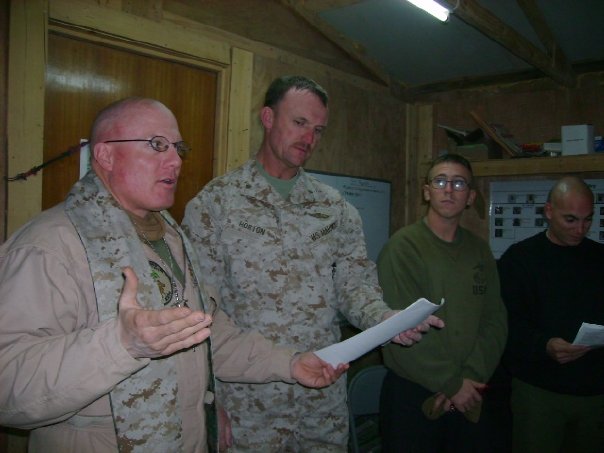
5 Comments

Filed under christian life, faith, iraq,afghanistan, Military, Pastoral Care, Tour in Iraq