Category Archives: philosophy

The Present Never Looks as Good…

Matt-Frewer-as-Berlingoff-Rasmussen-TNG-A-Matter-of-Time-7

Friends at Padre Steve’s World

I tend to become somewhat reflective as the New Year approaches. I am reminded of Peter Benchley, who wrote, “The past always seems better when you look back on it than it did at the time. And the present never looks as good as it will in the future.” Likewise, St Augustine of Hippo once asked “How can the past and future be, when the past no longer is, and the future is not yet?”

Augustine’s question is interesting, but I think that his question is flawed. I think that the past lives in the present much more than we would like to think and that our future, though unwritten can unfold in a multitude of ways and possibilities.

Many of us live in the past as if it were today. We, individually and collectively, as individuals and nations live in the past and look to it much more fondly than when it was our present. I think that historian Will Durant possibly said it the best: “The past is not dead. Indeed, it is often not even past.”

As a historian myself I value the past and seek answers and wisdom from it to use in the present because what we do in the present does, for better or worse defines our future. Confucius said “study the past if you would define the future.” He was quite wise, he said to study the past did not say to live in it.

That is something that I have been learning for close to 20 years now when my Clinical Pastoral Education Supervisor, using a Star Trek Next Generation metaphor from the episode A Matter of Time. In the episode a shadowy visitor claiming to be from the future refuses to help claiming that if he were to help that his “history – would unfold in a way other than it already has.”

Finally Picard is forced to make a decision and confronts the visitor, who turns out to be a thief from the past using time travel to collect technology to enrich himself. Picard responds:

“A person’s life, their future, hinges on each of a thousand choices. Living is making choices! Now, you ask me to believe that if I make a choice other than the one that appears in your history books, then your past will be irrevocably altered. Well… you know, Professor, perhaps I don’t give a damn about your past, because your past is my future, and as far as I’m concerned, it hasn’t been written yet!”

It was in telling me that my future did not have to be my past that opened a door of life and faith that I had never experienced before and which showed me that life was to be boldly lived in the present. While it meant a lot then, it means more now for the past according to William Shakespeare “is prologue.”

We cannot help being influenced by the past. We should indeed learn from it, but we cannot remain in it or try to return to it. Kierkegaard said that “Life can only be understood backwards; but it must be lived forwards.”

Since I am a Christian, at least by profession, my faith in that future is in the God who is eternal, the God of love. Victor Hugo in Les Miserables said “Love is the only future God offers.” That is the future that I want to envision.

Living is making choices and the future hinges on thousands of them. Many of these choices we make automatically without thought simply because we have always done them that way, or because that is how it was done in the past. However, if we want to break the cycle, if we want to live in and envision that future of the God of love then we have to live in the present though the past lives in us.

T.S. Elliot penned this verse:

“For last year’s words belong to last year’s language
And next year’s words await another voice.
And to make an end is to make a beginning.”

Peace

Padre Steve+

1 Comment

Filed under faith, philosophy, star trek

Christ & Christmas

996759_10152169414832059_1833080489_n

Friends of Padre Steve’s World,

Just a short thought today as we get ready for Christmas. Of course it is still the season of Advent, but no time like Advent to talk about faith, but as I mentioned at the beginning of the month, I plan on sharing some of my faith experience, and this is another one of those posts.

The great author and novelist Anne Rice wrote after leaving the Catholic Church a few years ago, “My faith in Christ is central to my life. My conversion from a pessimistic atheist lost in a world I didn’t understand, to an optimistic believer in a universe created and sustained by a loving God is crucial to me. But following Christ does not mean following His followers. Christ is infinitely more important than Christianity and always will be, no matter what Christianity is, has been, or might become.”

I can understand that feeling, and now over five years after being asked to leave my former church I am in a good place, and for the most part I am over the pain, hurt, and bitterness that I felt in the immediate aftermath of that experience. While I still experience a sense of loss due being rejected by men I thought were friends, I don’t feel the terrible pain that I used to feel, especially this time of year. But that being said what I feel now is much more about other people who may be going through similar experiences in their own churches or faith communities.

The fact is that I do not want others to have to go what I went through. I know that such things happen every day, but I would never wish what I went through on anyone. 

Sadly, it will happen. It will happen in churches across the theological and ecclesiolgical  spectrum. In one breath church leaders and members will extoll the love of God, and in the next condemn and reject people for a myriad of reasons; and they will use the most hate filled and vile terminology covered with a thin veneer of theological and biblical justification. They will turn their backs on people who simply want to be loved, cared for, accepted, and listened to in their spiritual quest. 

Dietrich Bonhoeffer said:

“Many people are looking for an ear that will listen. They do not find it among Christians, because these Christians are talking where they should be listening.”

This Advent I am thankful that I have a number of friends, including some Christians from variety of backgrounds, as well as some chaplains who have stood by me even if they disagree with my theology, politics, or my favorite baseball teams. That being said, with the exception of such people who have been with me through thick and thin I am mostly terrified of being around conservative Christians, and most of my closest friends are people who are not welcome in most churches due to their beliefs or lifestyles. But they are genuine and we honestly care for each other. 

Most churches are frightening places for me, and the sad fact is that if I were not already a Christian there is little in American Christianity that would ever cause me to be interested in Jesus. I can totally understand why churches are hemorrhaging members, especially young people whose religious preference is “none,” for I too am in some sense an outcast. I guess that is why I can relate to Anne when she wrote, “following Christ does not mean following His followers. Christ is infinitely more important than Christianity and always will be, no matter what Christianity is, has been, or might become.”

Have a great day,

Peace

Padre Steve+

2 Comments

Filed under christian life, faith, Pastoral Care, philosophy, Religion

Where Does Bitterness Lead?


20060719-sports-nlallstar-oneil-2-kc_l

Buck O’Neil

Friends of Padre Steve’s World

Just a brief thought as we get ready to enter the heat of the presidential primary season. We all know that our society has become increasingly divided among political lines as well as in so many other ways. The temptation is to allow that division to become part of our soul, and to leave us embittered. The legendary Negro League baseball player and manager Buck O’Neil penned this little verse, and I share it because I think, in a time like this it is so easy to become bitter that it is a remainder of all that we can aspire to be.

If you don’t know Buck O’Neil, you need to, he lived during Jim Crow, and knew what it was to be treated as a second class citizen, and to be hated and abused simply because he was African American. But he never let it destroy him, he became stronger and his tremendous grace under pressure taught many people how to live.

Where does bitterness take you?

To a broken heart?

To an early grave?

When I die

I want to die from natural causes

Not from hate

Eating me up from the inside

I may hold strong opinions, but I never want them to end up breaking my heart, eating me up from the inside, and taking me to an early grave.

Peace

Padre Steve+

Leave a comment

Filed under Baseball, faith, philosophy

If They Destroy Our History…

palmyra2

Destruction of Palmyra

Friends of Padre Steve’s World,

Note: I wrote and scheduled the posting of this article before the attacks in Paris. 

The great American writer John Steinbeck asked, How will we know it’s us without our past?”

I have a very profound sense of the necessity of preserving our culture and history, and not just American, European, or Christian history, culture, art and literature. Cultural monuments and the great works of art and architecture belong to all of us, regardless of our religion, ideology, race, or nationality. They are a part of our common humanity, our common heritage; they must be protected, and when they are destroyed, it impoverishes all of us. Thus when a group, be it a group of political, racial, or religious extremists, decide to erase those monuments to humanity, it is an assault on all of us.

This has been done numerous times throughout history by various conquerors. In the past century it has happened all too often, and it has been happening with startling regularity in the areas controlled by the self-proclaimed Islamic State. Shrines sacred to Moslems, Christians, and Jews; wonders of the ancient world that give us a glimpse of the magnificent past, are destroyed, while other artifacts are looted, and sold in order to fund even more cultural destruction.

pg-22-Palmyra-1-ap

The Islamic State are committing human atrocities that defy the imagination; ethnic and religious cleansing, forced conversions, rape and murder on a massive scale. In spite of that they can never succeed, unless they destroy the memory of the past.

1938_progrome1_synag_696724g

Kristelnacht

Hitler and other despots tried this. Hitler and his Nazi criminal state attempted to exterminate, and then eradicate the memory of the Jews from Europe. He was not successful, but given more time, he might have succeeded. I think that it speaks volumes about the real intent of the Islamic State. George Clooney, who plays the American professor Frank Stokes in the film told his team members:

“You can wipe out an entire generation, you can burn their homes to the ground and somehow they’ll still find their way back. But if you destroy their history, you destroy their achievements and it’s as if they never existed.”

That is why defeating the Islamic State matters. It is not just about geopolitics, or oil, it is about protecting who we are and human beings.

Have a great weekend.

Peace

Padre Steve+

Leave a comment

Filed under culture, historic preservation, History, iraq,afghanistan, middle east, philosophy, Religion

The Day After Veteran’s Day

american cemetery

Friends of Padre Steve’s World,

It is the day after Veteran’s Day and I still am in a reflective mood about it. Of course if there were no war, if war had become a thing of the past, a sad chapter in the course of human history, the day would be less personal. It would simply be a day where people looked back in time possibly honoring ancestors, but not to their left or right, remembering their family members, friends, and neighbors who fight the wars that most people avoid. Herman Wouk, in his classic novel War and Remembrance wrote:

“In the glare, the great and terrible light of this happening, God seems to signal that the story of the rest of us need not end, and that the new light can prove a troubled dawn. 

For the rest of us, perhaps. Not for the dead, not for the more than fifty million real dead in the world’s worst catastrophe: victors and vanquished, combatants and civilians, people of so many nations, men, women, and children, all cut down. For them there can be no new earthly dawn. Yet thought their bones like in the darkness of the grave, they will not have died in vain, if their remembrance can lead us from the long, long time of war to the time for peace.”

The First World War was supposed to be the war to end all war, instead became war to end all peace. That war ended at the eleventh day, of the eleventh month, and the eleventh day of 1918. However, the subsequent turmoil after that first “Armistice Day” which ended the fighting of the First World War, has birthed war without end. The Treaty of Versailles and the Sykes-Picot agreement ensured that war would be part of the last century and will be a part of life for the foreseeable future. Agatha Christie, the great English author who served as a volunteer nurse in the First World War, wrote, “One is left with the horrible feeling now that war settles nothing; that to win a war is as disastrous as to lose one.”

General Robert E. Lee wrote his wife Mary Custis Lee in 1864 as the bloodshed of the Civil War came to a climax, “What a cruel thing is war: to separate and destroy families and friends, and mar the purest joys and happiness God has granted us in this world; to fill our hearts with hatred instead of love for our neighbors, and to devastate the fair face of this beautiful world.”

As I noted, Veteran’s Day 2015 is over but I have not stopped reflecting on war and its cost. Having served in combat myself, and having stood over the wounded in field hospitals in Iraq and having seen the devastation of war up close and personal I have a hard time reducing war to the technology, the tactics and trivia that seem to satisfy the consumers of war porn. Call me whatever you want but I cannot get around the human cost of war. William Tecumseh Sherman reflected, “It is only those who have neither fired a shot nor heard the shrieks and groans of the wounded who cry aloud for blood, more vengeance, more desolation. War is hell.” 

One of my favorite historians of the Second World War, Cornelius Ryan who wrote the magnificent accounts of D-Day, The Longest Day, Operation Market Garden, A Bridge Too Far, and the Battle of Berlin, The Last Battle said about his accounts: “What I write about is not war but the courage of man.” I think that writing about courage is appropriate and I do a lot of that. But I think in addition to courage that we also must write about the frailty and fallibility of human beings, especially the leaders who plan and conduct war, as well as the ordinary men and women who serve during war.

When I teach or write about military history I find it important to make sure that the people who made that history are not forgotten.  After all, as the British military theorist Colin Gray says, “people matter most” when we deal with history, policy, or politics, especially in the matter of war. He is right of course; people are the one constant in war. Weapons and tactics may change, but people do not.

Likewise we cannot forget that war, even wars for the most excruciatingly correct and even righteous reasons are always tragic. The cost of war, even so called “good wars” is devastating. Ernest Hemingway wrote, “Never think that war, no matter how necessary, nor how justified, is not a crime.” To the war porn addicts the words of Sherman or Hemingway surely are offensive, but they provide a necessary warning to the politicians, pundits and preachers who cannot get enough war to satiate their bloodlust and need for power. Sadly, most of the men and women who revel in war without end have neither served in combat or have any skin in the game regarding the wars that they support and those which they work so hard to bring about. Maybe if they did then they would not be so quick to send young men and women to war.

Those who follow me on this site know that I write about war a lot, some might say too much, but I cannot help that. My life has been forever changed by war.  If you look back through my archives you can see how my writing has evolved when it comes to dealing with war and part of that is because I do not want the sacrifices of the men and women who fought those wars to be forgotten or cheapened by a society which from the very beginning of our history has done so. Lieutenant General Hal Moore who co-authored the book “We Were Soldiers Once, and Young” wrote: “in our time battles were forgotten, our sacrifices were discounted, and both our sanity and suitability for life in polite American society were publicly questioned.” By continuing to write and teach I hope to ensure that this does not happen. Maybe I am “pissing into the wind,” but I cannot stand by silently and pretend that war can be glamorized and glorified for the benefit people who never serve.

I am a combat veteran, I have seen the devastation of war, I have lost friends in war, men and women who did not come home. I have seen other friends struggle in the aftermath of war, and I have seen some lose that struggle. Because I am a military historian as well as a priest, I feel a sacred duty to ensure that people know the real cost of war.

I do this in my official capacity teaching ethics and leading the Gettysburg Staff Ride for the Staff College where I have the honor to serve as faculty. This itself is interesting as I am spending the final few years of a three and a half decade military career teaching the men and women who in not too long of time will be our nation’s senior military leaders. That is a responsibility that I take most seriously. Thus I always, whether it is in teaching the ethics of war, or about the Battle of Gettysburg I attempt to impress this on my students. I preach from day one to every class that their decisions in the planning process, their recommendations to senior political and military leaders, and their decisions on the battlefield impact real people, their soldiers, the people in the lands that they fight and on the home front.

I have been writing a text for the Gettysburg Staff Ride, which I believe, will eventually become at least two and maybe more books. I tie a lot of biographic material in with the text, again in order to make what could be a dry and mechanical affair more real to my students and readers. That is one of the reasons that I find going to Gettysburg and walking that hallowed ground so important.

I find that the lives, beliefs, motivations, relationships, and experiences of people to be paramount to understanding events. People are complex, multi-layered and often contradictory. All of my heroes all have feet of clay, which in a sense makes their stories even richer, and the events that they helped bring about far more fascinating. By not denying their humanity, by understanding and appreciating their flaws, even the flaws in their character, I gain a more holistic perspective and develop a greater appreciation and empathy for them and a deeper understanding of my own flaws. As T.E. Lawrence wrote, “Immorality, I know. Immortality, I cannot judge.” 

The complex and contradictory nature of humanity leads to a lot of confusion for people who see the world through the black and white lens of cosmic dualism where there is only good and evil and “if you’re not for us, you’re against us.”  Human nature shows us that things are much more complex, nuanced and blurry, there are far more than fifty shades of gray when it comes to humanity and the participation of men and women in war.

Because of this otherwise good and honorable people can find themselves for any number of reasons, fighting for an evil cause, while people who are more evil than good can end up fighting for a good cause. Now if you are one of those people who are trapped by an absolute ideological or religious certitude that cannot allow for such contradictions, that statement may confuse or even offend you. For that I do not apologize and I hope that you are offended enough to face the truth, for that is the human condition, and that my friends is what history, and especially that dealing with the most destructive and consequential issues involving humanity must deal with.

So I will continue to write about war and try in the process to humanize it for my readers and to tell the stories of the tragedy that is war in such a way that even those who have not been to war, can imagine it and in doing so make wise decisions if they are to send other people’s children to fight their wars. The subject is far too important to be left to the purveyors of war porn who seek to satiate the bloodlust of others. Thus I write to ensure people remember, so that those who do not know war will never have to experience it.

As for the form of my writing, I am becoming much more deliberate in trying to craft the story. Barbara Tuchman wrote something that I am now beginning to appreciate as I write my own book on Gettysburg and the Civil War, and other works that I plan on writing, “I have always felt like an artist when I work on a book. I see no reason why the word should always be confined to writers of fiction and poetry.” 

Anyway, that is all for today.

Peace

Padre Steve+


Leave a comment

Filed under books and literature, History, philosophy

History is the Witness: The Worth of Human Life

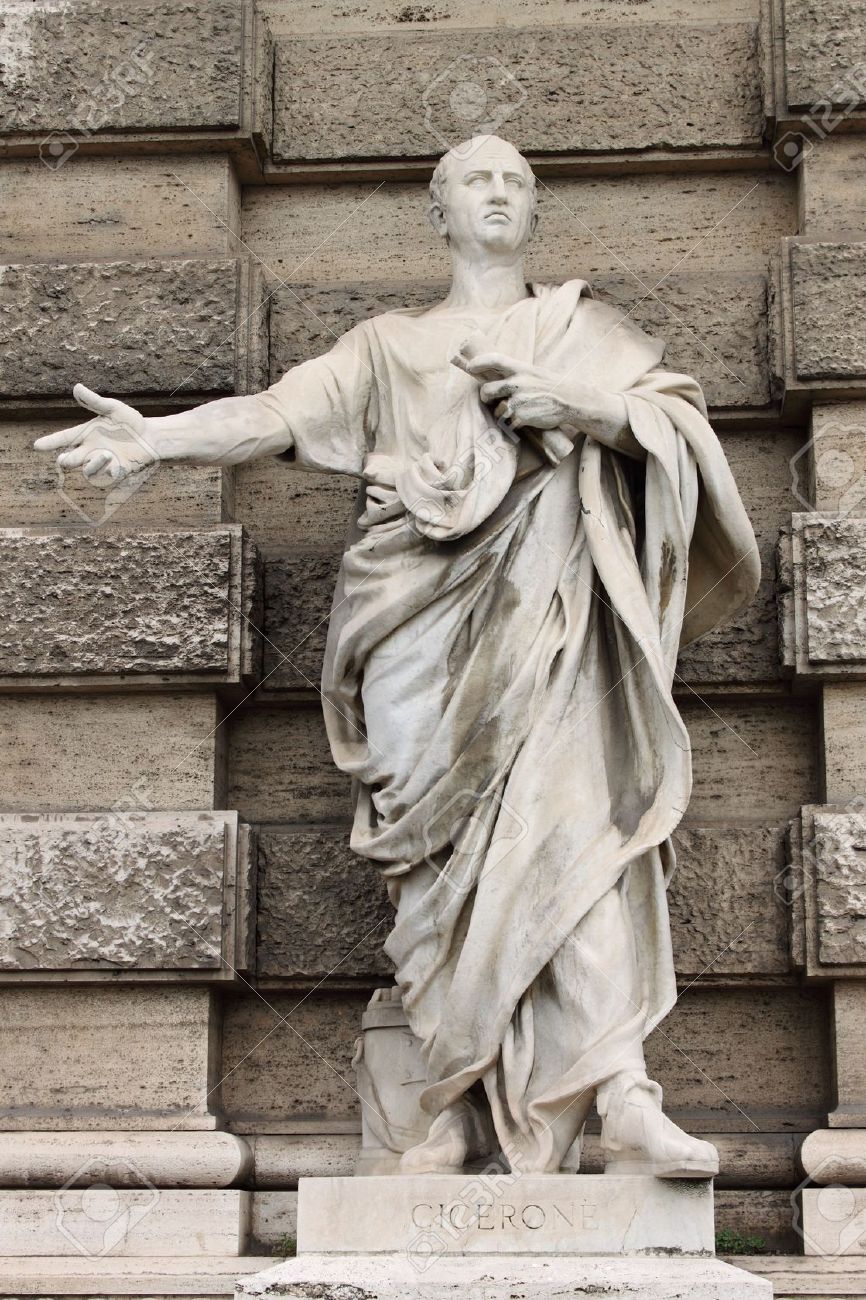
Statue-of-Cicero-Stock-Photo-rome

Friends of Padre Steve’s World,

The great Roman philosopher and political theorist Marcus Tullius Cicero wrote, “History is the witness that testifies to the passing of time; it illumines reality, vitalizes memory, provides guidance in daily life and brings us tidings of antiquities.”

Those who follow my writings here on this site know that I am a historian and that much of what I write, even regarding current events, is framed by history and the stories of those who came before us. That is one of my driving passions, a passion for historical truth, and a passion to ensure that the past is not forgotten. Sadly, it seems that our society, and even our education system is disconnecting itself from history. We have pretty much stopped teaching history in schools, and often what is taught is myth. As such we have become a society that through its ignorance of the past is ever repeating the worst aspects of our history. As a whole we are ignorant of our past, and that ignorance is demonstrated by many of our political, business, journalism, educational, and military leaders on a daily basis.

Cicero wrote “To be ignorant of what occurred before you were born is to remain always a child. For what is the worth of human life, unless it is woven into the life of our ancestors by the records of history?”

Our lives must be woven together with those who came before us, without that sacred connection to the past, we endanger the future, and doom those who follow us. Cicero wrote,The life of the dead is placed in the memory of the living.” Thus, it is for us the living to remember and never forget those who have gone before.

That is why I write.

Peace

Padre Steve+

4 Comments

Filed under History, philosophy, Political Commentary

Designed to Break Your Heart: Baseball Season Ends

DSCN9504

Friends of Padre Steve’s World,

The late commissioner of baseball and literary giant A. Bartlett Giamatti once wrote:

It breaks your heart.  It is designed to break your heart.  The game begins in spring, when everything else begins again, and it blossoms in the summer, filling the afternoons and evenings, and then as soon as the chill rains come, it stops and leaves you to face the fall alone.” (A. Bartlett Giamatti, “The Green Fields of the Mind,” Yale Alumni Magazine, November 1977)

Last night when the Kansas City Royals came back to defeat the New York Mets in extra innings, the won their first World Series in thirty years and ended the 2015 baseball season and with it a lot of hearts broke, as they do every year at this time. It is not just that somewhere along the way our favorite team loses, but it is the how for many people, like me, that baseball is more than a game, but has an incredible spiritual component.

This year none of my teams made the playoffs, except for our local Triple-A International League affiliate of the Baltimore Orioles, the Norfolk Tides. That being said the post-season was interesting and had a lot of great stories within the story of the post-season playoff series and the World Series. The Royals picked up where they did last year after they lost a heartbreaker to the San Francisco Giants and continued to win even when it looked like the opposition, whether it was the Astros, Blue Jays or the Mets was poised to win. I am not a Royals fan but as a lover of baseball I have to say that they are an amazing team.

However, the season is now over, and for me winter is now officially here, and yesterday was dreary with a lot of rain. The official beginning of winter for me starts with the end of the Fall Classic.

With the end of the season one of my places of solace from the cares of the world. Really, when I came home from Iraq, baseball was one of the few things that helped to calm my soul from the demons of PTSD, TBI, major depression, anxiety, and often-suicidal thoughts. I can agree with Sharon Olds who wrote back in the early 1970s “Baseball is reassuring.  It makes me feel as if the world is not going to blow up.”

In a world where so many things are unsettling baseball is reassuring. In the run-up to the 2016 general election where the politicians, pundits, and preachers, the “Trinity of Evil” use every means available to raise the levels of fear and anxiety of people, it is even more so. In such a world baseball is a safe-harbor for me, as Mark Kramer wrote, “Baseball is a harbor, a seclusion from failure that really matters, a playful utopia in which virtuosity can be savored to the third decimal place of a batting average.”

Now I wait for Spring Training 2016 begins and the pitchers and catchers, including a number of friends start reporting, and with that my spring will begin.

Peace

Padre Steve+

Leave a comment

Filed under Baseball, faith, philosophy

Wisdom & Empathy: Undoing the Cycle of Folly

n671902058_1153829_4642

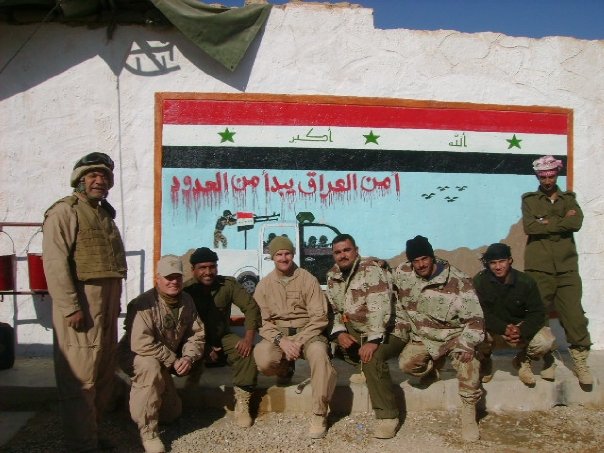
The Author on the Iraq-Syrian Border, December 2007

Friends of Padre Steve’s World,

I have been continuing to be a bit reflective and it seems with each day there is something to cause me to reflect on different aspects of life and the human experience. When I am in these reflective times I tend to look back at flawed, yet brilliant men who had unique insights into their times and even the future, but who were often ignored by those who supposedly knew better.

British military historian and theorist B.H. Liddell-Hart wrote:

“A study of history, past and in the making, seems to suggest that most of mankind’s troubles are man-made, and arise from the compound effect of decisions taken without knowledge, ambitions uncontrolled by wisdom and judgments that lack understanding.  Their ceaseless repetition is the grimmest jest that destiny plays on the human race. Men are helped to authority by their knowledge continually make decisions on questions beyond their knowledge. Ambition to maintain their authority forbids them from admitting the limits of their knowledge and calling upon the knowledge that is available in other men. Ambition to extend the bounds of their authority leads them to a frustration of others opportunity and interference with others’ liberty that, with monotonous persistency, injures themselves or their successors on the rebound.  

The fate of mankind in all ages has been the plaything of petty personal ambitions. The blend of wisdom with knowledge would restrain men from contributing to this endless cycle of folly, but understanding can guide them toward progress.” B.H. Liddell-Hart “Lawrence of Arabia” DeCapo Press, Reprint, originally published as “The Man Behind the Legend” Halcyon House 1937 

Over the past few days I have been thinking about the reaction to the near government shutdown, the latest mass murder in this country, and the latest events in Syria, Afghanistan and Iraq. I have found each of these events troubling in their own way, especially when I see the statements of powerful leaders, political, religious, military, and media about them. With the exception of the response of President Obama to the killings in Roseburg Oregon, I was troubled because it seemed like most commentators had no empathy about any of these events. Power, politics and ideology seem to obscure the pain and suffering of people.

Since I returned from Iraq I have become much more empathic regarding the suffering of others. In some ways this is good, but it also brings about a certain amount of pain as I feel that suffering. Some account that as wisdom and tell me so, though most of the time I feel painfully unwise. Even so I strive to seek wisdom even as I recognize my own limitations, and as such I look to history and the lives of others who seem to have struggled with some of the same issues that trouble me.

The ceaseless repetition of these tragedies and the lack of empathy of so many powerful political, media, and even religious leaders cause me a lot of pain, and sometimes I wish I did not feel so much. That is interesting because until I went to Iraq and came home I was very good at being able to compartmentalize my feelings. But that kind of compartmentalization is now very difficult for me, so I have to try to integrate them with reason and knowledge and act on them, and to do this I turn to books and history for lessons and examples.

The late James Baldwin, a noted African-American author and civil rights activist wrote, “You think your pain and your heartbreak are unprecedented in the history of the world, but then you read. It was books that taught me that the things that tormented me most were the very things that connected me with all the people who were alive, or who had ever been alive.” I can understands that, because when I find myself experiencing such feelings I turn to history, to books and the lives of people much like me.

One of my favorite flawed heroes is T.E. Lawrence, or as he is better known, Lawrence of Arabia. I think that Lawrence was gifted with profound insights and had a rare sensitivity to humanity, politics, conflict, and even peace than many people before or since. Lawrence wrote, “The rare man who attains wisdom is, by the very clearness of his sight, a better guide in solving practical problems than those, more commonly the leaders of men, whose eyes are misted and minds warped by ambition for success….”

Sadly, all too many of our leaders, and not just American leaders have eyes that are misted and minds warped by ambition for success. But as I mentioned yesterday, nothing that we despise in others is entirely absent from ourselves.

But that is a hallmark of our humanity.

Peace

Padre Steve+

4 Comments

Filed under ethics, History, iraq,afghanistan, philosophy

“Nothing that We Despise”

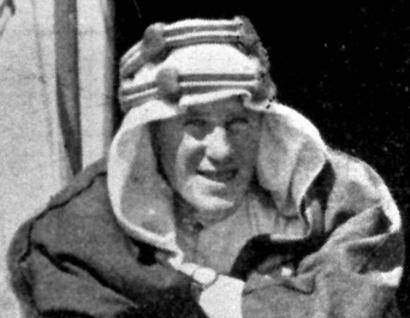
lawrence12

General Allenby: [leafing through Lawrence’s dossier] “Undisciplined… unpunctual… untidy. Knowledge of music… knowledge of literature… knowledge of… knowledge of… you’re an interesting man there’s no doubt about it.” 

Friends of Padre Steve’s World

As I noted yesterday I have been in a more reflective mood thinking about so many things, and some of my own inner conflicts and doubts. When I do that I tend to turn to history and muse about the lives of other people who seem to have shared to some degree my struggles.

Character is a terrible thing to judge. Mostly because those doing the judging also suffer from flaws in their own character and truthfully I don’t think that any of us are exempt from doing this at least sometimes. Dietrich Bonhoeffer noted: “Nothing that we despise in other men is inherently absent from ourselves.” I think is somewhat freeing to realize that.

Yet somehow the temptation is for us to stand as judge, jury and character executioner on those that we find wanting. As a culture we like tearing down those that we at one time built up, in fact we have industries that exist in order to build up and then destroy people.

It is a rather perverse proclivity that we have as human beings, especially if we can find some kind of religious justification for it.

I think that is part of the complexity of the human condition. As a historian I find that the most exalted heroes, men and women of often great courage both moral and physical, intellect, creativity, humanity and even compassion have feet of clay.

I find that I am attracted to those characters who find themselves off the beaten track. Visionaries often at odds with their superiors, institutions, and sometimes their faith and traditions. Men and women who discovered in themselves visions for what might be and pursued those visions, sometimes at the costs of their families, friends, and in quite a few cases their lives.

Throughout my studies I have been attracted to men as diverse as Peter the Apostle, Martin Luther, Thomas Aquinas, T.E. Lawrence, Dietrich Bonhoeffer, Erwin Rommel, Admiral Horatio Nelson, Abraham Lincoln, John F Kennedy, Dwight D Eisenhower, Franklin Roosevelt, Dr. Martin Luther King Jr, Jackie Robinson, Teresa of Avila, Nelson Mandela, Vaclav Havel and Emir Feisal Hussein of the Arab Revolt. All had flaws and the list could go on and on and on.

Some of these men and women, saints and sinners alike had fits of temper and violence, others sexual escapades, mistresses, affairs, greed, avarice, and a host of other unseemly characteristics.  Some of them stretched law and morality in their quest to achieve their goals. But all are considered great men and women.

Feet of clay. Who doesn’t have them? But then I think that I would rather have feet of clay than a heart of stone, unchallenged mind, or a lack of courage to do the right thing even when it does not directly benefit me.

I love the cinema classic Lawrence of Arabia. Peter O’Toole plays Lawrence in a most remarkable manner, showing his brilliance, courage, diplomatic ability and understanding of the Arabs with whom he served.

There are many people, leaders and others that we encounter in life or that we study. Even the best of the best are flawed and there is no such thing as a Saint who never sinned. But we love destroying them and their memory when to our “surprise” when we find that their hagiographers built them into an idol.

I am a great believer in redemption and the weight of the whole of a person’s life. Thus I try to put the flaws as they are called in perspective and their impact both positive and negative in history. Studying in this way gives me a greater perspective on what it is to be human and to place my own clay feet in appropriate perspective.

As Lawrence said: “Immorality, I know. Immortality, I cannot judge.”

Peace

Padre Steve+

Leave a comment

Filed under faith, film, History, philosophy

Ideas and Dreams

IMG_1249

“All men dream: but not equally. Those who dream by night in the dusty recesses of their minds wake up in the day to find it was vanity, but the dreamers of the day are dangerous men, for they may act their dreams with open eyes, to make it possible.” T E Lawrence

Friends of Padre Steve’s World,

I am in a reflective mood this weekend and just wanted to share a few thoughts for those who might be new followers of my blog; maybe just something for people to understand me a little bit and to understand some of my perspective on life.lao

I an out of the box thinker and when I am allowed to pursue my ideas I do my best. When I feel constrained or force myself to “stay between” the lines in order to fit in I get frustrated. When I was younger this lead to instances where I got in trouble for too aggressively pushing my ideas.

However as I have matured I have become more patient. When my ideas are shunned or pushed aside I will stay within the lines of the system but work through back channels, finding people who will listen and hope that they will take up the ideas, even if I do not get credit. This is often frustrating in its own right but it allows me to continue to develop the ideas and to propagate them among people who will listen and possibly will in their own way help see those dreams to fruition.

Many times I have been order to stand down and stay in my lane and been taken to task on more than one occasion for pushing too hard. This has actually happened a number of times in my military career dating back to my time as an Army Lieutenant serving in Germany, even to the point of having that noted as a point of criticism in an Officer Evaluation Report.

So over the years I have learned that the direct approach to trying to propagate ideas that are considered out of the mainstream, or even dare I say radical when compared with conventional doctrines is not always the best case. The truth is that many people consider dreamers and outside the box thinkers to be arrogant and dangerous. It took me many years to discover this fact.

Thus I have taken to being more patient and using indirect approaches to get ideas across. Part of this is in taking the time to get to know myself. Lao Tzu said “He who knows others is wise; he who knows himself is enlightened.” When I was younger I often acted on impulse thinking that my ideas needed to be implemented and fought for right then and there. Now I am willing to take more time, allow them to germinate and take form and if necessary allow other people to take credit as long as the ideas find a home.

I am a dreamer, one who dreams with my eyes open. Admiral James Stavridis said: “overall, I think that’s an obligation to share your ideas. It’s how we move forward with innovation.”

I think both Lawrence and Admiral Stavridis are right. Innovation and dreams are the key to the future. Those trapped in outdated orthodoxies be they military, scientific, philosophical or religious will find that they will be left behind in history. One once said that the seven last words of the church were “We’ve never done it that way before.” That being said, those words are the last words of any organization or culture that refuses to dream or think outside the box. Eric Hoffer wrote “In a time of drastic change it is the learners who inherit the future. The learned usually find themselves equipped to live in a world that no longer exists.”

In an age of decreasing resources, rapid social and technological change and ever increasing challenges we must heed the words of Admiral Stavridis who said: “Because we’re in an era of declining resources, and I think we need to be unafraid of and embrace change. That means listening to more junior people, who often have the best ideas, trying new things…”

It also means listening to people from different disciplines or even cultures than our own, military from civilian, civilian from military, science from religion, religion from science and so on. It may be necessary to look to times than our own, delving into history to find answers to current challenges. Likewise it may prove wise to look to the dreamers who write science fiction for answers. It is important for the dreamers as well allow themselves and ideas to be questioned or challenged and to keep an open mind. Ideas developed in the vacuum of self seldom hold up over the course of time and stubbornness and intolerance of contradiction of one’s ideas and dreams come from a type of ego that is often as destructive to the self as it is to others.

Military historian and theorist B. H. Liddell-Hart wrote about using the indirect approach in the realm of though and ideas and not just military strategy or tactics:

“Opposition to the truth is inevitable, especially if it takes the form of a new idea, but the degree of resistance can be diminished- by giving thought not only to the aim but to the method of approach. Avoid a frontal attack on a long established position; instead, seek to turn it by flank movement, so that a more penetrable side is exposed to the thrust of truth. But, in any such indirect approach, take care not to diverge from the truth- for nothing is more fatal to its real advancement than to lapse into untruth.”

But like Lawrence said, the dreamers must be the ones who dream with their eyes open in order to make those dreams possible. However, the dreamers need to know that their ideas may not be welcome and that patience the use of the indirect approach and willingness to let others receive credit in order to see those dreams fulfilled is essential. Truth matters over individual success or recognition and in a sense it alone is eternal while our lives on this earth are fleeting.

Peace

Padre Steve+

Leave a comment

Filed under History, Military, philosophy