Category Archives: PTSD

Passages: Thoughts on My Last Week at Naval Medical Center Portsmouth

“Andre Dawson has a bruised knee and is listed as day-to-day. Aren’t we all?” Vin Scully

“It’s a mere moment in a man’s life between an All-Star Game and an Old-timers’ Game.” Vin Scully

“The oldest pitcher acquires confidence in his ball club – he doesn’t try to do it all himself.” Burleigh Grimes

Every day is a new opportunity. You can build on yesterday’s success or put its failures behind and start over again. That’s the way life is, with a new game every day, and that’s the way baseball is.”  -Bob Feller

As any of my regular readers know I relate most of life to baseball. For me it resonates more than more than almost any other part of my life.  I think by now with over 29 years in the military that I count as a seasoned veteran who has been dinged up some and had to try to recover from injuries to his body but also to his self confidence and ability to stay in the game. My assignment at Naval Medical Center Portsmouth has been one of those assignments that was a lot like a rehab assignment to get me back in form for an assignment on a new team where I will be the number one starter in the rotation instead of a rehabbing pitcher making spot starts and relief appearances.

Today I finish up most of my administrative out processing from NMCP as I prepare to transfer to Naval Hospital Camp LeJeune. I have been at the command two years and it has been an eventful tour.  During the assignment I was forced to deal with the effects of my tour in Iraq, notably my PTSD and its related physical, psychological and spiritual impacts which included a loss of faith and absence of God that left me for a year and a half a practical agnostic. I also had to deal with the end stages of my father’s struggle with Alzheimer’s disease which culminated in his death in June of this year.  While this was going on I also dealt with a nasty Kidney stone that sidelined me from almost all human activity for over a month, a tooth that had abscessed and had to be replaced by an implant after a root canal failed and various nagging injuries to my shoulders, elbows, a knee and ankle from Iraq.  Most recently I have had to struggle with my hearing, I have something called Auditory Processing Disorder as well as some really annoying Tinnitus, I can hear lots of noise but somehow my brain is not processing it correctly. With all of this in the background and sometimes the foreground I worked and often struggled through the assignment which despite my skills as a critical care chaplain was more difficult than I could imagine.

I compare my time at Portsmouth to a baseball pitcher that goes to a new team but has injuries that he thought were manageable but which were severe enough to take him out of the game and into a rehab mode.  Of course not all teams give older pitchers that chance and that is true more often than not in the military when injuries to an officer are severe enough, especially emotional ones to keep him from functioning at top form.  I was fortunate as Chaplain Tate gave me the chance to heal and looked at my potential rather than my weaknesses when writing up my evaluation reports.  I can say that that is not the norm in much of the military where I probably would have been given reports that would have kept me from being promoted and resulted in me being placed in second tier jobs until I was able to retire.

I was fortunate however because during the assignment I was given time to recuperate and begin to heal.  That has not been easy by far but I am doing well enough now to handle things that would have sent me down the toilet of tears a few months ago. I give a lot of credit to Chaplain Jesse Tate and my therapist Dr. Elmer Maggard, better known as “Elmer the Shrink.”  I couple of retired Navy Chaplains on our staff also were men that helped me through the very rough times; Monsignor Fred Elkin and Reverend Jerry Shields gave me much spiritual support and provided me the opportunity to vent as I needed to during really difficult times.   As I got better and able to handle more responsibility Chaplain Tate started putting more responsibility on me, especially after I was selected for promotion to Commander.  It was like I was done with the rehab work and being put back into the game.  He held me accountable and was like a pitching coach or manager working with me, pushing my limits and making corrections even while encouraging me.  He did this with the purpose of getting me ready for my next assignment where I will be in charge of a staff of 6 personnel.  The past couple of months were high pressure due to all the activities the department was engaged in. These including a retirement, two major conferences and the transition of our Pastoral Care Resident Chaplains as one group finished their residency and a new group went through orientation.  In that time I had to deal with a lot more pressure than I had been exposed to most of my tour. After the last conference ended I realized that I could now function at a high level again and not just in my clinical areas.  I am now sure that I can do well in my new assignment and I am looking forward to the opportunity.

As I leave NMCP I will be leaving a lot of friends in my department as well as the rest of the hospital, especially the staff of our adult, pediatric and neonatal ICUs.  Some of these staff members will continue to serve at NMCP, others are now either deployed in harm’s way, have transferred to other commands or have left the service or retired.  I have to thank them as well because each in their own way has been a part of my recovery.

Most people do not get this kind of opportunity to serve and to heal at my age, rank or time in service. Most are put out to pasture until they can retire.  To quote baseball immortal Lou Gehrig “today, I consider myself the luckiest man on the face of the earth.” As I re-read his farewell speech a lot of it resonated with me even though I’m not to my knowledge dying and he was.  I’m blessed and somewhat lucky and I am grateful for all that I have experienced at NMCP.  I will leave many friends and if I am lucky enough hope to continue my career as a chaplain in Navy Medicine and return to Portsmouth, perhaps to finish my Navy career.  When I depart on Thursday it will be with a grateful heart and I will miss those that I worked with at NMCP. I am fortunate in one respect that my next assignment is a Naval Hospital and that I will know a good number of the staff at it from my time at NMCP or other duty stations.

Peace,

Padre Steve+

Leave a comment

Filed under Baseball, Military, Pastoral Care, philosophy, PTSD, remembering friends, US Navy

Raw Edges: Are there other Chaplains out there Like Me?

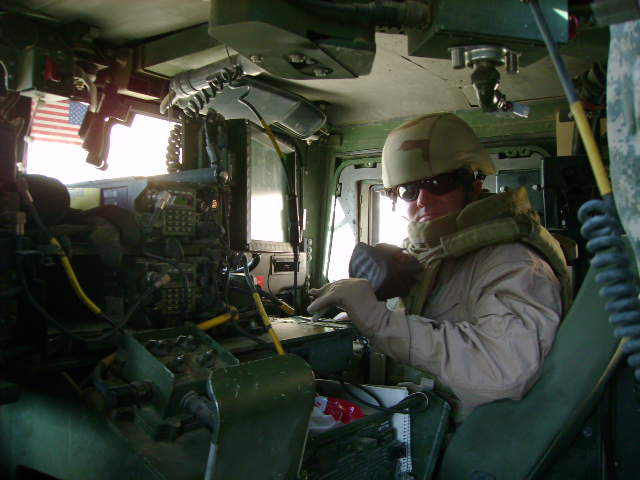
Before a Convoy

The past week or so I have had to go back and revisit my Iraq experience. Part of this is due to work, we have had seminars on the spiritual and moral affects of trauma, the challenge of forgiveness and most recently discussing best spiritual care practices for those who suffer from PTSD or Traumatic Brain Injury (TBI).  The training has been excellent but has kicked up a lot of stuff in me.  Added to this have been reports out of Afghanistan about more casualties in particular of a helicopter that crashed that killed 9 Americans, the Taliban claim credit for downing the aircraft but the circumstances are not fully known.

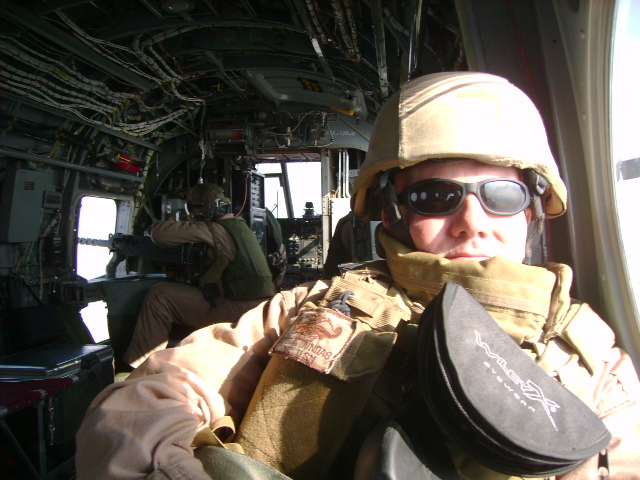
One of many helicopter flights, this a daylight flight in a Marine CH-46

The course last week on the spiritual and moral affect of trauma and the challenge of forgiveness brought up issues from Iraq but not upsetting.  In fact the seminar taught by Dr. Robert Grant author of The Way of the Wound was helpful to me in sorting out what I have been going through for the past couple of years.  The training this week is also good, good information but for me it is more unsettling because it deals with images, videos of convoys, burning vehicles and other things like that.  The convoy images coupled with the news of the helicopter crash actually had me pretty shaken as I spent a large amount of time in small convoys with small groups of Americans and Iraqis in pretty dangerous areas of Al Anbar Province stretching from Fallujah to the Syrian border as well as a couple of hundred hours in the air, usually at night in various Marine and Army helicopters as well as the MV-22 Osprey.  During those experiences we took fire a couple of times and had a few experiences on some of our flights that were a bit sporty.  So for a while I was lost in my own stuff but was able to pull out in not too long of time.

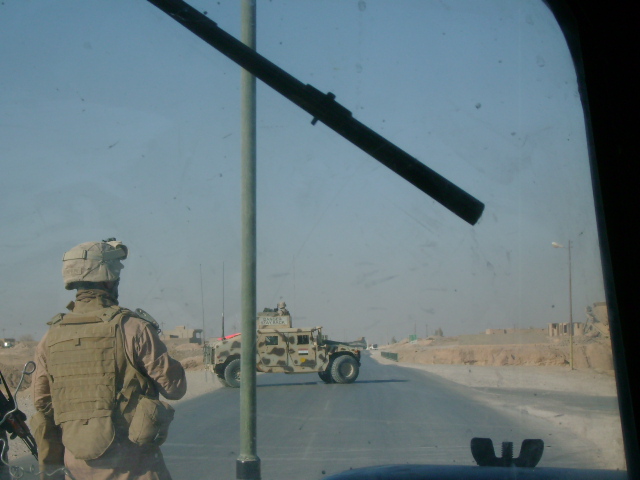
Convoy stopped near Al Qaim

Some of our discussions revolved around how trauma and war can impact a person’s image and relationship with God, whatever that may be.  The focus was on us as pastoral care givers caring for those in our charge.  Once again this really good information for me as I will be dealing with a lot of PTSD and TBI cases are Camp LeJeune.  But there was one thing that got me.  I came back from Iraq as most of my readers know in pretty bad shape dealing with PTSD and issues of abandonment feeling disconnected with the Navy and my church.  Part of that was what amounted to be a loss of faith so severe that I was for all practical purposes an agnostic for almost two years because I couldn’t make sense of anything to do with God, I felt God forsaken it was to use the image of St. John of the Cross, my Dark Night of the Soul.  I am doing better now and feel like my faith has returned to some degree, certainly not like it was before but while I have doubts I am okay with that part of the journey now.

Christmas Eve not far from Syria

I know a number of military Chaplains from the Navy and Army that have returned from Iraq or Afghanistan in some sort of faith crisis many suffering from PTSD or TBI.  I am actually wondering how many are out there.  I know that I am not alone, but I need to know if others are going through this experience too.  It was for me a desperate feeling to be the Chaplain, Priest, Pastor and spiritual care giver when I was struggling having no answers and only questions, when people asked me about God and I didn’t even know if God existed.  This is the unspoken cry of at least some and possibly quite a few Chaplains and other ministers who have experienced trauma and moral injury.  One thing my incoming CO at my old unit asked me was “where does the Chaplain go for help?”  At that point I said that I didn’t know.  The sad thing is that I know many chaplains and ministers that have a basic lack of trust in their fellow clergy and do not feel safe confiding in them because they feel that they will be judged, not listened to or blown off.

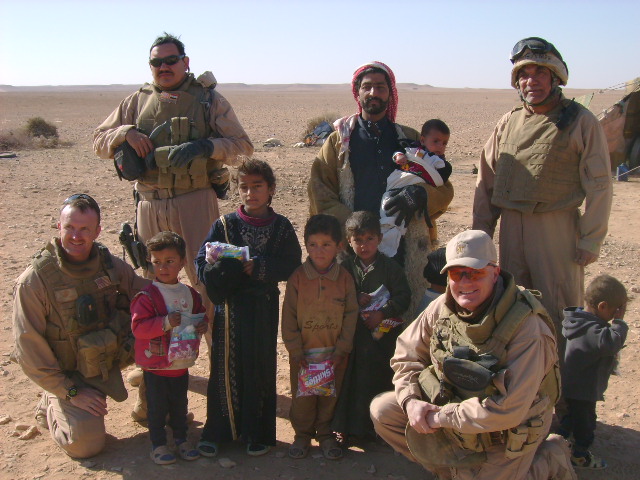
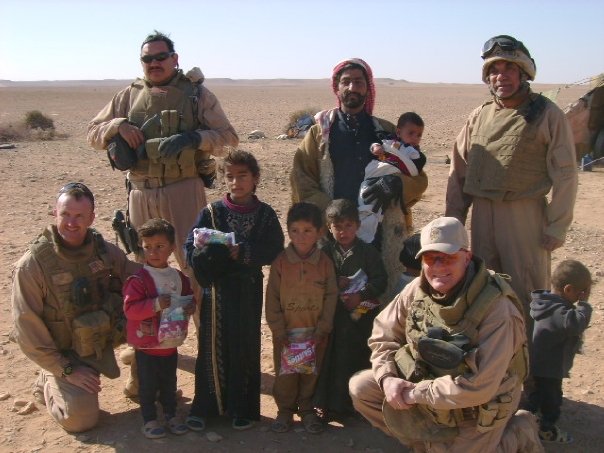
A different war with the Bedouin in the western desert of Iraq about 5 km from Syria.

When I was diagnosed with PTSD in the summer of 2008 I made it my goal to grow through this and hopefully as I go through this to be there for others. Part of my recovery came through sharing experiences, the good and the bad on this site.  Elmer the Shrink asked me back when I started this if I thought that it would be helpful to me in my recovery, but he also asked if I was okay in opening up about this topic.  Since I didn’t see many people writing about this from the perspective of being a “wounded healer” I told him that I thought that I had to do it.  The experience has been terribly painful but at the same time I think that it has been worth it because as a Priest and Chaplain I think now more than ever in my weakness I can be with people in their difficult times without trying to “fix” them.

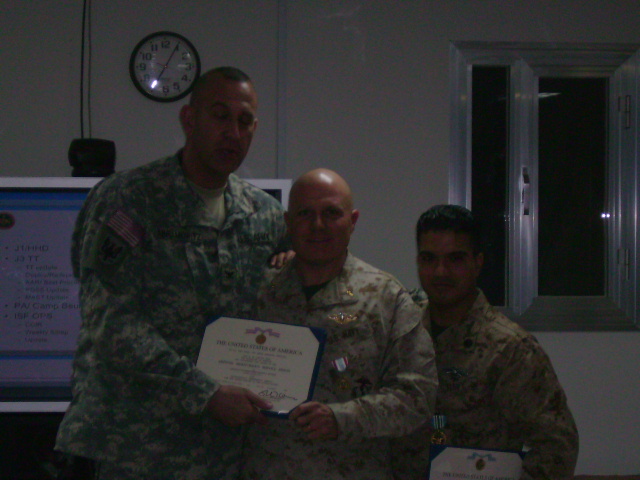
Colonel David Abramowitz with me and RP2 Nelson Lebron after presenting me with the Defense Meritorious Service Medal and Nelson the Joint Service Commendation Medal for our service with our advisors and Iraqis in Al Anbar with the Iraq Assistance Group. After this we both dealt with abandonment and other issues on our return home.

So who is there for “damaged” Chaplains? Who takes care of us? I was lucky or maybe blessed. I had Dr Chris Rogan ask me if I was okay. I had Elmer the Shrink do a lot of the hard work with me. At Naval Medical Center Portsmouth I had a Command Chaplain that was wise enough to protect me while I went through the deepest and darkest valley of my life.   As I recovered he challenged much like a Baseball Manager would challenge a pitcher who had been very successful on other clubs coming off the disabled list to regain his self confidence and ability to get back on the mound with a winning attitude. Not every Chaplain gets what I got and I am blessed.  I still have work to do and I need to recognize my limits, much as a pitcher who has recovered from Tommy John surgery makes adjustments.

So this is my question:  Are there others other there like me?  Are there other Chaplains experiencing such feelings after Iraq or Afghanistan? I’d really like to know because I believe that in what might be termed “a fellowship of the forsaken” that we can rediscover faith, belief and hope again and in doing so be there for others.

If you want please let me know if this encourages you or feel free to comment. Prayer is still hard for me but I promise that if someone asks that I will pray and to the best of my ability be available for them as others were for me because I don’t want any Chaplain to experience the abandonment that I felt went I returned from Iraq having felt that it was the pinnacle of my military career. To those Chaplains I just want to say that you are not alone.

Peace

Padre Steve+

4 Comments

Filed under faith, iraq,afghanistan, Military, Pastoral Care, philosophy, PTSD, Religion, Tour in Iraq, US Navy

Rehab Assignments

There are times in life that many of us experience some kind of injury; physical, emotional or spiritual that puts us in the position that we cannot function at the level that we are accustomed to doing. For some people this might be the result of some kind of traumatic event, perhaps a serious illness or physical injury or even something that causes us to lose faith in God or in whatever higher power that we ascribe meaning in our life.

As any regular reader of this site will recognize I interpret or frame much of my life experience through baseball and baseball analogies. In my case I frequently frame that through pitchers or older ball players that have encountered injury or rough spots in their careers.  I think about pitchers a lot because the craft of pitching involves such a degree of connection between the physical and mental dimensions of the game.  There are many times when a pitcher suffers a physical injury that requires changes in his delivery or the kinds of pitches that he throws.  When this happens it also affects his mind as he may lose confidence or over think what he is doing as he tries to make adjustments, also while experiencing residual physical pain.  Some pitchers are able to make the adjustment, for others the adjustment is more difficult and they are not as effective as they were previously. Still others either cannot recover from the physical injury or never make the adjustments and end up out of the game.

Those that experience injury as they recover are sent back to the minor leagues, or if they are in the high minor leagues to a lower level league in order to get back to the level that they were before the injury.  Even when they get back to the majors or to triple-A the pitching coach and manager may still go easy on them in order to ensure they are 100% and do not re-injure themselves.  This is called a rehab assignment and it is part of the game.

In the military we seldom get that chance unless the injuries are so significant that we need to put on some kind of limited duty and a placed in a non-deployable status until they are considered fully fit for duty. I returned from Iraq in February 2008 with several nagging chronic physical injuries to my ankles, knees and shoulders and an elbow which coalesced to sideline me from much physical activity. Even worse I was dealing with PTSD which was not recognized or diagnosed until late June of 2008 when I was falling apart having flashbacks, night terrors, chronic anxiety, insomnia and moods that alternated from anger to despondency.  When I left EOD Group Two I for my assignment to Portsmouth Naval Medical Center I was still in denial of sorts, though I knew that I was in ragged shape I went into the assignment trying to act as if and perform as if I was uninjured.  I threw myself into the job pouring working on the average 65-75 hours a week for almost a year mostly on the ICU and PICU before my boss finally stopped me and put me on more administrative duties with minimal clinical duties and plenty of time to get back in physical, emotional and spiritual shape.  Not many senior officers would give a subordinate that kind of grace nor would they rate an officer under them with an eye on their potential versus what they were doing for them at the moment.  Mine did, I will be forever grateful to Chaplain Jessie Tate for giving me that grace.

Eventually his patience as well as my hard work and a lot of God’s grace were rewarded. Things started to turn around in December of 2009 in what I call my “Christmas miracle.”   Slowly my physical injuries healed and I can now say that I am in as good or better shape than when I went to Iraq. I had to make some adjustments to my physical training regimen as well as confidence to believe that I was not going to re-injure myself.  My mindset in my physical training went from timid to confident as I gained in strength, speed, dexterity and endurance.  This was coupled with the loss of 16 pounds and a body fat percentage that went from 32% (when I ballooned from 167 to 194 pounds between April and November of 2009) down to 22% as of last week.  Spiritually I began to believe again. Most of the time after Iraq I struggled with faith sometimes even doubting the existence of God or at best feeling alienated and rejected by him and many of his people.  My spirituality has changed as has the way I approach my faith being much less doctrinaire to relational focusing on the grace, love and mercy of God and to trying to show that to others as St Francis said “preach the Gospel at all times, use words when necessary.”  Psychologically I was able to come to grips with my PTSD and make the adjustments that I needed so that I might be able to function.  I am much more in touch with feelings and what is going on in me than I was before and my observation of other people has improved, I guess once a person has had everything fall apart that they become more sensitive even to the unspoken things when they are around others.

In a sense this assignment became a rehab assignment for me. I was able to come back and become not only functional but able to be in the game again.  When I was selected for promotion my boss had no hesitancy in nominating me for the supervisory Chaplain at Naval Hospital Camp LeJuene. I can see the future again and it is good.  My plan was for Portsmouth to be an “All-Star” game for me where my clinical and academic skills would enable me to be a water walker but it was different, it was a fight to remain in the game a fight to regain confidence, overcome injury and return to relatively normal life.  My rehab assignment is over and I am back in the game performing at a level that I expect.

For those that are in similar circumstances I hope that you have a boss with the grace to help you through the difficult times and not abandon you as “broken” or of little use to the organization. I know that happens in the military and outside of the military, even in churches.

Peace and blessings,

Padre Steve+

2 Comments

Filed under Baseball, christian life, faith, Pastoral Care, philosophy, PTSD, Tour in Iraq

Thoughts on the Occasion of getting ready to Transfer

Two years ago I was preparing to leave EOD Group Two and getting ready to move over to Naval Medical Center Portsmouth.  At that point in my life I was falling apart. The ravages of PTSD, depression and chronic pain from shoulder, knee and ankle injuries sustained in Iraq had taken their toll. Chronic anxiety, flashbacks, night terrors, vivid and disturbing dreams of Iraq, nearly uncontrollable emotions that ranged from intense sadness complete with that girl thing of crying to intense anger and rage, especially in traffic were a daily staple of life. Fear of large crowds, noise and light sensitivity panic in airports and fear of new places brought me more isolation and pain.  I went to the new assignment with trepidation but with a desire to make an impact.

When I got to Portsmouth I did my best to cover up the affects of PTSD and everything else that I mentioned in my life for the sake of work. I threw myself into the job; especially the patient and staff care aspect of it.  I worked painfully long hours usually due to my own need to know that I was still of some use despite all that was wrong with me and I ended up getting worse and not better.  I was in therapy and most of my colleagues and my boss tried to take care of me although I’m sure that they probably wondered if I was salvageable at times. I am thankful for their support as it was needed and vital to getting me through but I still sunk down deeper into the abyss.  Nothing was getting better and I even doubted if God was even around, or if he was around if he even gave a damn about me. I was experiencing what I am now not afraid to call, not just PTSD but let me call it what it is, mental illness.  In addition I was in a full-fledged crisis of faith. During the year I had experienced the loss of a number of friends and colleagues and each one deeply affected me plunging me deeper into depression. Christmas of 2008 was the worst that I had ever experienced from a spiritual point of view. I left the Christmas Eve Mass at my wife’s church before the Mass began into the night for an hour before I got home. I looked up at the sky and cried much of the time wondering if God was there and if he was wondered if he had abandoned me.  As I got worse I stopped doing the things that I needed to do to take care of myself, good nutrition and exercise was out the door and I gained 25 pounds in 6 months and ended up on the fat boy program.  By late August I was in worse shape than I had been the previous September and it was in mind, body and spirit.

For someone like me this was almost more than I could handle and my boss, recognizing that I was not doing well pulled me kicking and screaming out of the ICU and PICU and pushed me to take care of myself and get help.  I began to do this but if you have been as down as I was you understand that recovery doesn’t happen in a day, or even a week.  It is a continuous and often painful process mixed with times where you begin to see occasional fleeting glimpses of hope.  I struggled for the next three months until a couple of weeks before Christmas I was called to the ER and in a moment of grace in the midst of my own despair I was called upon to perform Last Rites for a retired physician that was Episcopalian. As I performed the Sacrament he breathed his last, his wife and son said it was like he was waiting to receive that before he died.  Something happened that night and things began to turn around, unfortunately the young Intern physician that called me to the scene and with whom I took remedial PT tests and nutrition classes died a little over a month later.

However, Christmas of 2009 was different, for the first time since I was in Iraq I felt joy, and slowly things began to turn around.  The first part was spiritual, the next physical and psychological.  Each month I got a bit better and it was if a thick blanket of California Central Valley Thule fog was dissipating with the sun beginning to peek through.  In February I was felled by a kidney stone for a month, my physical recover was slowed but didn’t stop. Spiritually things were getting better, on the psychological side of the house my PTSD symptoms were evening out, panic attacks were going away and for the first time since before Iraq I was beginning to sleep.

In June I had three events that converged to change my life.  I was selected for promotion for Commander on June 22nd, or at least that was when the message was released.  The next day my dad who had been suffering from Alzheimer’s disease for nearly 7 years passed away and two days after his memorial service I found that I was being transferred to be the Command Chaplain of the Naval Hospital at Camp LeJeune North Carolina.

As far as promotion I am grateful to my boss because I showed up damaged and was not fully functional he chose to grade me on my potential for service on my fitness reports and made sure that what went to the promotion board was something that would help my selection.  I would guess based on my knowledge of the system that not many senior chaplains or for that matter senior officers would do the same thing.  I would have been dealt with like I was a broken piece of equipment and allowed to serve out my career but never rising to anything more than that.  This leads me into the transfer which will allow me to get my feet wet as the Command Chaplain of a decent sized hospital on a very busy base which is fully engaged in the war.  It will be challenging and I will supervise three chaplains and three enlisted religious program specialists.  Much of what I have learned recently will help me in that job and I hope to do well in it to serve the patients and staff in that hospital.  I want to be a good boss to the men and women that work in the department and hopefully am able to do some things that will knit pastoral care even more tightly into the interdisciplinary team for better care of patients, their families and hospital staff.

I have mixed feeling about leaving. I will really miss the people that I have worked with the past two years. I will not miss the perpetual staff shortages and having to be the go to guy so often, maybe even get to take some leave that is actually the kind for refreshment versus taking care of family emergencies.

My friends at Portsmouth will be that and I will miss them and keep up with as many as I can through e-mail and Facebook.  Some have been, are being or will be stationed in LeJuene and it will be great to be with them in North Carolina.

Today was a frustrating day that kept me going all day and with the exception of my PT test which I crushed with 100 sit ups, 70 pushups and just under 12 minutes for the 1.5 mile run, which I did on a stationary bike so the calorie count was converted to the run time. Not too bad for a 50 year old. I would have done the run as my ankle and knees are fully healed but I couldn’t do it until noon when the temperature was too hot.  When I get to LeJeune I will do the run. My interval training and PT program coupled with my diet is paying great dividends.  I have lost 4.5 inches around my belly since late November 2009, lost 16 pounds and 10% body fat, going from 32% body fat to 22%. I am not done as I want to lose 3 more inches around the belly and 10-12 more pounds of weight.  I’d like my body fat to be under 20% and keep it there, getting lower of I can.

I’ll have some more reflections over the next couple of weeks. My friends in the ICU are planning something for me and I am really blessed to have such great friends and colleagues. I am told that the pastoral care staff will have a good-bye as well, but that is kind of expected, the real joy for me comes from the people that I have gone through difficult times within the ICU in the high stress environment of live and death situations, ethical consults and pastoral care administering prayers, counsel and sacraments to our patients, their families and our staff, my friends.  That means more than almost anything to me as they have walked with me through the darkness.

Peace,

Padre Steve+

Leave a comment

Filed under faith, healthcare, Military, Pastoral Care, PTSD, Tour in Iraq, US Navy

Flickering Flames: Clergy Burnout in America in 2010

Father Mulcahy: What an ordeal. 72 hours straight. I’m prayed out – absolutely prayed out.
Hawkeye: Don’t forget, Father, God was on six days straight.
Father Mulcahy: He was a lot younger then
.

It doesn’t matter whether you feel useful or not when you’re moving from one disaster to another. The trick, I guess, is to just keep moving. Father Mulcahy, William Christopher M*A*S*H

A few days ago I read an article in the New York Times ( the link is here: http://www.nytimes.com/2010/08/02/nyregion/02burnout.html?_r=1&hp&adxnnl=1&adxnnlx=1280746899-Fj4AG+SysGvlJ/xdTT+ZZg ) about the large number of civilian clergy experiencing burnout, discouragement, disillusionment to the point that they end up developing chronic physical illnesses, psychological or psychiatric conditions, experience marriage or family difficulties or are so beaten down that they leave the ministry entirely.   Many clergy now suffer from high rates of obesity, hypertension and depression more so than most Americans. In the last decade, the use of antidepressants by clergy has risen and their life expectancy has fallen. Job satisfaction is down and many clergy would leave the ministry if they felt that they could. The issue cuts across denominational and even religious lines and is not bound by the depth of faith or the fervency of the minister in his or her pursuit of “doing good ministry” in whatever venue they are in.  It also impacts those of all sides of the theological spectrum from fundamentalists to progressives or in old time parlance “liberals” and everything in between.

Actually I am not surprised by the studies or the conclusions of the article. When I was in seminary back in the late 1980s and early 1990s the school that I attended was filled with pastors either those in ministry or those recovering from nasty church splits, or being fired for often trivial reasons. These were by and large good men, I say men because the Southern Baptist Convention then and now has few women in parish ministry.  Many of the men that I knew were broken; they had come back to school as a way to see if there was some way to find a safe place of ministry.  In the last years of seminary and the year prior to entering my clinical pastoral education residency I worked for a nationwide ministry and was assigned the task of assisting clergy that came to us for help or counsel.  One of the interesting things to note was that during this time the average longevity of a Southern Baptist pastor in his church was a dismal 18 months. Later I had a friend in another Baptist denomination accept a call to a church that had been through 33 pastors in 30 years.  He thought that he would be the exception, less than 8 months later a time that he and his new wife were harassed, abused and hounded by the congregation he quit. He ended up in my denomination as he was moving in a more liturgical and sacramental way of life and is now in the process of becoming a married Roman Catholic priest.

When I left the active duty Army to go to seminary I was under the impression that most clergy were relatively satisfied with life but the men that I met in seminary and those that I dealt with later showed me that all was not well for many good men and women doing their best to serve Christ and the people of God committed to their charge.  I never will forget men saying to me that they struggled with depression, alcoholism, sexual addiction, were being divorced by their wives or considering either leaving the ministry or changing the type of ministry that they served or even their denominational home.  Nearly all reported the stress that they experienced in their ministry, the unmanageable tasks of trying to compete for numbers, and in many churches it is all about numbers, see Chuck Colson’s book “The Body” cater to the nearly insatiable “needs” of parishioners who demanded more time, and investment in programs to keep them in the church, pressures resulting from the financial costs of trying to manage building programs, special ministries and programs and an every growing desire for more excitement and “thrills” in the church program.  Add to this the unrealistic expectation of parishioners, local and denominational leaders and the constant upbraiding to be more like Reverend so and so on television or the guy that wrote the latest book on church growth, spiritual warfare or whatever as the list goes on ad infinitum. Add to this the intrusiveness brought about by cell phones, texting, the internet which place clergy in a place where they have no place to go when they need a rest because there is always one more need to satisfy many of  which cannot be satisfied. One minister of a wel-known Mega-Church when confronted by Colson about not preaching on more controversial moral topics told Colson that “they pay me to get them in the door and keep them coming.”

The pastor of our age must become a teacher, preacher, counselor, evangelist, financer, program director, personnel manager, marketing executive and most of all be able to reinvent himself at a whim in order to remain relevant and in tune with the current “move of God.”  Those that don’t keep pace with whatever the latest “move of God” (read marketing ploy) is finds that they are out of a job faster than a Mob hit-man with ad aim. It is a recipe for disaster, not only for clergy and their families but for congregations which when their pastors burn out, divorce or become compromised do to sex, alcohol or money suffer the consequences of their own making  often losing members and sometimes even collapsing.

The pressures are immense and not just for married or single Protestant pastors but for Catholic Priests, Jewish Rabbis and even Moslem Imam’s all under some kind of unreasonable pressure.  It does not matter of it is trying to balance the competing theological factions present in their faith tradition from fundamentalists to progressives and everything in between, trying to meet unattainable goals set by congregational or denominational leaders or just to attempt to be all things to all people just to survive it is amazing that that any survive at all.  This is not the life of clergy even a generation ago, a generation that reported high job satisfaction, good health and congregations that would if possible strive to serve their pastor as much as he served them.

The world has changed and clergy are not doing well.  When a big name pastor, evangelist or leader of a church or denomination screws up perfectly the good men and women serving in ministry that don’t do those things are lumped in with those that commit various crimes or ethically challenged behavior.

In my chosen vocation within the vocation of being a priest and minister, that of a military Chaplain the pressures of service often exceed those that our civilian counterparts face. In a time where we have been at war almost 10 years with many chaplains making multiple deployments to the various combat zones the pressures are immense. The pressures on chaplains, their families as well as the men and women that they serve are unparalleled in civilian ministry, which as I describe above is no picnic, unless perchance you serve the fabulously well to do.

While I do not know statistics on Chaplains and burnout I can assure you that it is a concern of mine based on some that I have met.

In my service, the Navy we have battled shortages of Chaplains and the increasing demands necessitated by the war.  Likewise Chaplains in the Navy and Air Force face personnel cuts or elimination of billets due to cuts in their services personnel and more cuts are coming, at least to the billets that at one time offered chaplains the chance to recover from deployments and still serve God’s people. Most of the billet cuts are in shore commands, the places that at one time were the places that one could serve and recuperate after having done multiple operational tours.  As the force gets smaller and mission requirements increase these chaplains are deployed more often to combat zones and stress and family separation take their toll of chaplains.  Chaplains serving at bases and hospitals now serve large numbers of men and women traumatized by war and their families but have seen their own numbers shrink.  I work in a major medical center like all of the chaplains that serve in similar billets are caring for our wounded (in body, mind or spirit) warriors, their families those deploying or returning from deployment, are subject to deployment during our shore tours as Individual Augments to the operating forces all while dealing with life and death on a daily basis. In fact yesterday I came home from work at 5:30 PM after going to work at 6 AM Tuesday nearly 36 hours on duty in which time I was involved in multiple crisis situations, baptized a baby that was to removed from life support and care of patients their families and our staff.  This is not uncommon. What I described for me is typical of many Chaplains of all our military services serving in health care institutions.  It requires a tremendous sense of discipline to manage all of these competing demands and maintain ones physical, emotional and spiritual balance.

In fact when I came to my assignment I was suffering from PTSD and in an emotional and spiritual nosedive and in trying to meet the demands of the job did not take care of me and I fell apart physically, spiritually and emotionally.  It took a year and a half to start the recovery and I am now moving forward on all counts but some others don’t recover. I was fortunate, my boss knew well enough to shield me and let me recover and get the help that I needed to do so. Nonetheless it was not and is not easy to recover.

Add to this the pressure to perform and get promoted to stay in the military chaplain ministry.  Chaplains like all officers have to get promoted to stay in the military.  The promotion rate from the Captain/Navy Lieutenant rank to Major / Lieutenant Commander has been consistently in the 50-60% range for those being looked at the first time.  This basically means that 40-50% will not be retained on active duty long enough to qualify for retirement unless they had prior active service before becoming a Chaplain. Even if they have this the stigma of not being selected is something that is incredibly hard on chaplains just as it is for other officers.  Non-selection is considered failure even for those that have great ministries and are awesome ministers. Sometimes failure to select has nothing to do with how well you care for God’s people but simply comes down to numbers. When a military service contracts as all of our Armed Services did following Vietnam, the Cold War and today as personnel numbers are cut the respective Chaplain Corps or Services take their share of the cuts and this often means that men and women worthy of promotion are not selected and are eventually let go.  I have been fortunate during the cutbacks following the Cold War I was selected for Major in the Army Reserve and though I reduced in rank in 1999 to enter the Navy was promoted to Lieutenant Commander and recently selected for Commander and I am very grateful for the opportunity of both increased responsibility as well as the chance to care for God’s people in the Navy and Marine Corps.  Not everyone gets that chance.

Being a minister is no easy way of life if you are seeking to love and serve God and God’s people. Burnout, discouragement and depression are not uncommon.  Health problems for many are increasing and at younger ages. Many no longer have safe places that they can go for counsel and care because doing so might hurt their ministry.  I have seen much of this, good men and women doing their best to serve God and God’s people broken, depressed and sometimes addicted to behaviors that ultimately are destructive to their lives, families, congregations and ministries.

It is my opinion that while those that take on military ministry sort of ask for this because we know going in that we may be deployed to combat zones or separated from family for extended periods of time when we sign up. However many on the civilian side have no idea of the pressures that they will face and the tasks that will become theirs when they begin to work at a parish.  It is a tough life and I am not surprised to see so many broken, discouraged and disillusioned ministers just trying to survive instead of thriving in the field that God called them to serve.  I am blessed. Despite the hard work, separations from my wife and family and even the PTSD that I came back from Iraq with I am doing well. I get to serve people in a community that I love and in which I was born into.  I get to do what I believed that I am called to do in a venue that I am very comfortable in serving.  No everyone is so lucky or blessed. As Lou Gehrig said “I am the luckiest man alive.”

Please pray for your ministers and support them. Give them grace to serve knowing that they will not always make the right decisions, preach the best sermons or compete with the minister with the “hot hand” and latest “word from God” down the street or on television.  Ministers are certainly not perfect, some of us are pretty earthy. Don’t impose the culture of corporate America into the local church.  The vast majority of clergy really do care about the people that they serve even when they make mistakes and screw up. Give them the grace that you wish that your boss would give to you.  Of course there are exceptions, men and women with few people skills, with their own agendas and even with their own dark-side which shows up in how they abuse God’s people. However these people are the exception.  Don’t let the foibles or crimes of such people lead you to turn you back on good men and women that make mistakes common with the rest of humanity.

Peace

Padre Steve+

3 Comments

Filed under christian life, faith, Pastoral Care, philosophy, PTSD, Religion

Memorial Day Weekend 2010: We Happy Few, We Band of Brothers

On May 27th 2010 the US Military experienced the loss of its 1000th KIA in Afghanistan. The young man killed was Corporal Jacob C Leicht of Kerrville Texas.  Corporal Leicht was assigned to 1st Light Armor Reconnaissance Battalion, 1st Marine Division Camp Pendleton California. Corporal Leicht had previously served in Iraq where he had been badly wounded by an Improvised Explosive Device (IED) that hit the HUMMV that he was traveling in.  Pulled to safety by his Iraqi interpreter Leicht spent the two years recovering from those injuries engaged in a letter and phone call campaign to get back into the fight with his fellow Marines.  He was killed when he stepped on a land mine during that desperately sought after second tour. His younger brother Jesse Leicht who just 10 days ago enlisted in the Marines said “He said he always wanted to die for his country and be remembered, he didn’t want to die having a heart attack or just being an old man. He wanted to die for something.”  Please keep his family and his fellow Marines in your prayers this Memorial Day.

Last year I was very melancholy during Memorial Day and stories of young Marines, Soldiers and Sailors killed in the line of duty usually cause me to reflect on the sacrifice that the young men and women who volunteer to serve our country make on a daily basis while most of the country goes about its business often oblivious to the wars being waged by our sons, daughters, brothers and sisters and mothers and fathers in Afghanistan, Iraq and other lesser known fronts in this war.  Last year I was still very much in the midst of my PTSD crash and struggling with depression and faith.  At the same time I was still remembering all of the veterans who made a difference in my life.  That was covered in the posts Memorial Day 2009- Thoughts and Musings and Remembering the Veterans in My Life…Memorial Day 2009.

As we approach Memorial Day 2010 we must remember that while the war in Iraq is drawing down that the war in Afghanistan is heating up even as U.S. and NATO forces prepare to engage the Taliban in their spiritual home of Khandehar.  Likewise there is are rising tensions on the Korean peninsula where the Heavy Combat Brigade and Air Combat Brigade of the 2nd Infantry Division are based in support of Republic of Korea and UN forces in Korea backed up by Marines of the 3rd Marine Division and 3rd Marine Expeditionary Force in Okinawa and Hawaii that are not currently in Afghanistan. At sea U.S. Navy forces patrol strategic choke points including the Straits of Hormuz where an ascendant Iran continues to build up for forces that could threaten the Freedom of the seas.

How am I different this year? To answer the question I can only say that I have regained some measure of faith and community that had been absent in my life after I returned from Iraq.  This has made a lot of difference however it in no way takes the place of remembering those men and women that I have served with in harm’s way as well as the veterans who made an impact in my life and still do today.

Memorial Day, initially known as Decoration Day is a somber holiday in its truest sense however it is as Paul Reikoff of the Iraq Afghanistan Veterans Association notes is “One Country, Two Holidays.” http://www.huffingtonpost.com/paul-rieckhoff/memorial-day-one-holiday_b_592398.html For those that have served in war going back to our WWII veterans but also those of the not so popular wars, Korea, Vietnam and the current conflicts in Iraq and Afghanistan who have lost friends and sacrificed spending months and even years in combat zones and the work-ups and exercises that part and parcel to deployment.  There are the wounded in body, mind and spirit and those whose physical injuries who have killed them in previous wars but now live in tortured bodies somewhere in between life and death.  Likewise there are those whose injuries are invisible, the injuries of PTSD, TBI and other psychiatric or psychological disorders related to their time in combat.  I spent almost two years in PTSD hell and though I am making a good recovery now still am reminded of the fear, anxiety, depression, hopelessness, loneliness and an existential crisis of faith that came with my return.  I know too many Marines, Soldiers and Sailors that suffer much more than I have whose struggles pass unnoticed by most of society.  I am now working with our Substance Abuse Rehabilitation Program and it is hard to see the young men and women that are in the program whose problems either came in part from their combat experience or their experience upon returning home.  Likewise we are now receiving more of our combat wounded at the medical center and thus I am reminded of the sacrifices made by veterans every day.  For those who work to help these young men and women and in many cases have served alongside them in the combat zones it is a continual reminder of the cost of war.

For those of us that have served, not just in the current conflict but our brothers and sisters that served in previous wars, especially Vietnam and Korea there is one Memorial Day.  While we do attempt to do some things with families and friends the holiday is one of sober reflection as we count the cost of war in human terms, both in our lives as well as our families, the soldiers of our Allies that serve alongside of us and the populations of lands devastated by war.

But then there is another country.  A country consumed with materialism and for whom “heroes” are reality television “stars,” actors and actresses and sports figures.  There are those who while they profess to “support the troops” are the first to want to replace military personnel with contractors such as Halliburton and the company formerly known as “Blackwater” with often disastrous results. Political operatives and lobbyists support paying astronomical sums to corporations that often embarrass the country and make the  job in the military harder in Iraq and Afghanistan having done things that alienate those populations.  Then there is the cost for services delivered and the often terrible way that these corporations treat their employees, especially the third country nationals with working hours and living conditions that would be punishable he in the United States, but also Americans who gain employment but serve driving trucks or other hazardous duties that they have little combat training to do and receive little if the are wounded in action nor for their families if they are killed or disabled. That is part of the “other country.” About 1.8 million Americans have served in Iraq or Afghanistan less than 6/10ths of 1 percent. Unlike World War II where the war was truly a national effort this war is waged by a small minority of the population.

I do not have any problems with people enjoying a holiday but hope and pray that Americans will take at least a few minutes to pay their respects to the Veterans of wars past and present the honored dead as well as the living.  Say a prayer, visit a military or veteran cemetery, and pay a visit on a living vet or the family of one of those killed. Donate to reputable veteran organizations or charities and maybe take a vet out for a bite to eat or buy them a cup of coffee, Coke or a beer.  Don’t let the day pass by simply looking at the faded yellow ribbon “I support the troops” on your car but take a few minutes to thank and remember those that have served our country regardless of race, creed or color and pray that the fallen will rest in peace and the living will recover from all wounds.

Unfortunately for the country the President will not be at the wreath laying ceremony at Arlington Cemetery this year. Unlike some who are vehemently criticizing him I can only say that I am disappointed that the Commander-in-Chief will not be present because of what I feel is the tremendous symbolic importance of his presence at the event when we are at war. At the same time the President’s absence in emblematic of how much of the country “celebrates” Memorial Day.  Unfortunately as the number of men and women who have served our nation in time of war goes down in proportion to the population at large the day will become less significant to many, a curiosity that is quaint and nice but does not impact their lives.  I do not mean this in a bad way or with any malice; it is simply a statement of fact as for most the military and the war is not an everyday part of their lives. I think that the Previous President while understanding the significance of this day did not help the nation when after the September 11th attacks did not marshal the energy of the nation for a war which his administration readily acknowledged would be a “long war” but instead told people to “go shopping” to pump up the economy.  I think that was an act that has limited the personal effect of the human cost of these wars to a very limited segment of the population.

At the same time I as well as most veterans do appreciate the fact that we in the military are treated well by our countrymen even if they do not truly understand what we go through.  I for one am thankful to people who go out of their way to thank us in public places, those that take on hateful groups like the crowd at West Baptist Church that protests outside of military funerals and bases invoking God’s wrath on us.  Likewise there are the volunteers who meet returning servicemen and women at airports as the come home from war, the sports that honor the military before games or as in the case of most of Major and Minor League Baseball in the 7th inning stretch.  At the Church of Baseball, Harbor Park Parish in Norfolk they display the photos of servicemen and women currently serving overseas.  The Raley’s grocery store near my parents’ home in Stockton California has a display of hundreds of 8 x 10 photos of military personnel in the front of their store and a wide range of people and groups try to find ways to help.  This in is stark contrast to the treatment of our brothers and sisters who served in Vietnam and the attitudes and treatment of military personnel on college campuses that lingered far into the 1980s.  Thankfully the vast majority of Americans are appreciative of what we do.  At the same time most are not personally effected and as such will simply see Memorial Day as a three day weekend that kicks off the summer vacation season hardly pausing to think of the cost that has been born to ensure that Americans and people around the world have the opportunity to live in freedom.

Band of Brothers, Above Me and RP2 Nelson Lebron, below Foot Patrol Al Waleed Iraq

This weekend I pause to remember the veterans in my life, my father who remains in a nursing facility with dementia brought about by Alzheimer’s disease, men like my NJROTC instructors Senior Chief John Yarro and Buff Rambo who taught me in our FIST or Fire Support Team, SFC Harry Zilkan and CSM John Butler from my UCLA Army ROTC program and SFC Harry Ball my Drill Instructor in ROTC Advanced Camp. All were Vietnam Vets.  Then there were 1SG Jim Koenig of 557th Medical Company who was my 1st Sergeant when I was a new Lieutenant in Germany and Colonel Donald A Johnson the Commander of the 68th Medical Group and his successor Colonel Jim Truscott a high decorated Medevac or “Dustoff” helicopter pilot.  I cannot forget Chaplain (LTC) Rich Whaley a company commander in Vietnam who saved my ass as an aspiring Chaplain at the Chaplain School in 1990 and 1992.

Then there were the WWII and Vietnam Vets in my Chapel at Fort Indiantown Gap PA. USAF Major General Frank Smoker a B-17 pilot, Colonel Walt Swank who served at Normandy and SSG Henry Boyd one of the 101st Airborne Troopers epitomized by “Band of Brothers.” There were the Vietnam Vets in the congregation, Colonel Ray Hawthorne an artillery officer who served several tours in country including an advisor tour.  Charlie Kosko a helicopter pilot and Major Scotty Jenkes who served as a USAF pilot flying close air support in Vietnam.  Then there was Colonel Tom Allmon the Garrison Commander who served in the Gulf War as well as Iraq.

My life more recently has been impacted by others.  My friends of the veterans of the Battle of Hue City including General Peter Pace, Barney Barnes, Tony “Limey Cartilage” Sergeant Major Thomas and so many others have become close over the years, especially after I did my time in Iraq. They and all the Vietnam vets, including the guys from the Vietnam Veterans of America like Ray and Charlie who used man the beer stand behind the plate at Harbor Park until health issues kept them from continuing all mean a lot to me.  Likewise my friends at Marine Security Forces Colonel Mike Paulovich and Sergeant Major Kim Davis both Iraq Vets mean more than almost any people in the world.  We traveled the globe together visiting our Marines.  Both of these men are heroes to me as well as friends.

There are those that I served with at Navy EOD Group II that performed amazing feats in Iraq and Afghanistan and retired Command Master Chief Bill “Two Feathers” Tyrell an EOD tech that I came to know well working family issues and PTSD issues for our EOD sailors.  Bill was a tremendous help as I struggled with PTSD.  Likewise there are my shipmates and friends from the USS HUE CITY that I served with deployed to the Northern Arabian Gulf and Horn of Africa in 2002 including the men of the boarding team that I served as an advisor to on 75 boarding missions aboard impounded Iraqi Oil Smugglers.  Then there are the men that I served with in Iraq especially my assistant and body guard RP2 Nelson Lebron who is getting ready for his 10th deployment this time another trip to Afghanistan.  There are my friends that served in various locations with the Iraqi security forces that I was able to travel to, serve alongside and serve as a chaplain in remote areas of Iraq with the Iraqis. In my current assignment I have had many friends and colleagues deploy to Iraq and Afghanistan in some very “hot” zones caring for our wounded as well as local nationals and allied soldiers.  This is not stopping anytime soon.

These are my brothers and sisters and I remember all of them with fondness.  My thoughts are much the same as Henry V at Agincourt as depicted in Shakespeare’s Henry V:

What’s he that wishes so?
My cousin Westmoreland? No, my fair cousin;
If we are mark’d to die, we are enow
To do our country loss; and if to live,
The fewer men, the greater share of honour.
God’s will! I pray thee, wish not one man more.
By Jove, I am not covetous for gold,
Nor care I who doth feed upon my cost;
It yearns me not if men my garments wear;
Such outward things dwell not in my desires.
But if it be a sin to covet honour,
I am the most offending soul alive.
No, faith, my coz, wish not a man from England.
God’s peace! I would not lose so great an honour
As one man more methinks would share from me
For the best hope I have. O, do not wish one more!
Rather proclaim it, Westmoreland, through my host,
That he which hath no stomach to this fight,
Let him depart; his passport shall be made,
And crowns for convoy put into his purse;
We would not die in that man’s company
That fears his fellowship to die with us.
This day is call’d the feast of Crispian.
He that outlives this day, and comes safe home,
Will stand a tip-toe when this day is nam’d,
And rouse him at the name of Crispian.
He that shall live this day, and see old age,
Will yearly on the vigil feast his neighbours,
And say ‘To-morrow is Saint Crispian.’
Then will he strip his sleeve and show his scars,
And say ‘These wounds I had on Crispian’s day.’
Old men forget; yet all shall be forgot,
But he’ll remember, with advantages,
What feats he did that day. Then shall our names,
Familiar in his mouth as household words-
Harry the King, Bedford and Exeter,
Warwick and Talbot, Salisbury and Gloucester-
Be in their flowing cups freshly rememb’red.
This story shall the good man teach his son;
And Crispin Crispian shall ne’er go by,
From this day to the ending of the world,
But we in it shall be remembered-
We few, we happy few, we band of brothers;
For he to-day that sheds his blood with me
Shall be my brother; be he ne’er so vile,
This day shall gentle his condition;
And gentlemen in England now-a-bed
Shall think themselves accurs’d they were not here,
And hold their manhoods cheap whiles any speaks
That fought with us upon Saint Crispin’s day.

See the Kenneth Branagh’s rendition here: http://www.youtube.com/watch?v=NA3gOST4Pc8&feature=player_embedded

With crucial battles ahead in Afghanistan against the Taliban, the storm clouds of war gathering over Korea and the threat of terrorism and attacks around the world and at home it is indeed a dangerous world that our Soldiers, Sailors, Marines, Airmen and Coastguardsmen serve in.  Never before in our country have so many owed so much to so few.   Unfortunately there are those of us, men and women that have served our country from before Pearl Harbor to the present who who struggle and will spend this day alone and uncared for in isolation, anonymous to nearly everyone. Please, if you see such a man or woman do not let the opportunity pass to thank them and if need be do something to encourage or thank them for their service. Please remember and thank a Veteran this weekend and if somehow the spirit moves you to do more and you are capable of serving and join this new “Band of Brothers” please see a recruiter.  It is a noble profession that we, we happy few are proud to serve despite the cost.

Peace

Padre Steve+

3 Comments

Filed under iraq,afghanistan, Military, PTSD, shipmates and veterans

Back in Commission: Padre Steve’s Long Journey Back

Padre Steve is Back in Commission

Today I know that I am back fully in commission.  I have been feeling this for a while and have seen some extraordinary progress since my “Christmas Miracle” and even since Lent began.  Like an old battleship worn out by service and damaged in battle was for the better part of two years doing my best to stay afloat and survive after my return from Iraq.  During that time if something could go wrong with me it seemed like it did, physical, psychological and spiritual…such is PTSD and all the other stuff that one can return home from war with.  For those that are new to this website or just happened to stumble by I have a lot of stuff on that ordeal posted here.

I have felt good since Christmas and with the exception of being knocked down by a kidney stone for almost a month have been doing pretty good for the most part.  I have been very careful to make sure that I am not just entering a manic period but have been really to be careful so I don’t build myself up to crash later.  Since I have crashed hard a number of times at points during the aforementioned ordeal when I thought that I was doing better I am really conservative about such comments.

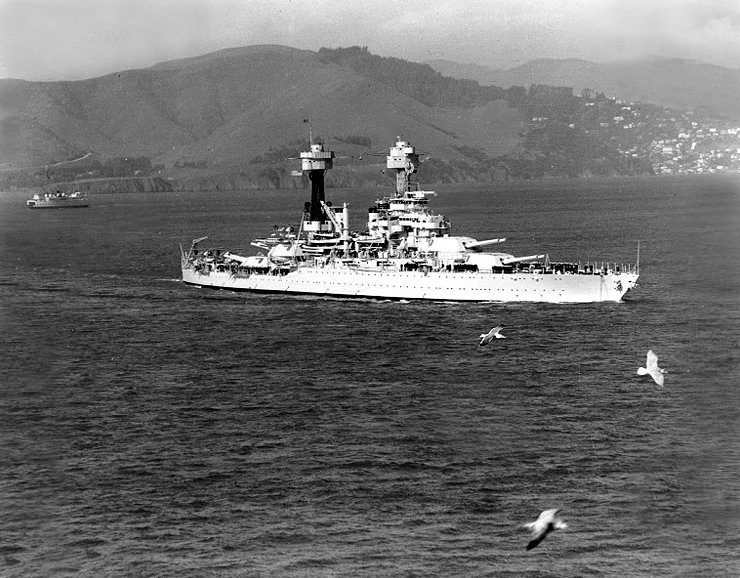
USS West Virginia in the 1930s

Personally I am lucky and blessed that I have good people at work who have kind of protected me from myself over the past year as it when apparent to them that I was going down.  In a sense I was like a damaged ship pulled out of action in order not only to be patched up but fully overhauled.  I was damaged and not a lot of my systems were working right.

Now of course even a ship that has been fully overhauled and even modernized to make it equal to new ships is immune from problems, after all there is only so much you can do with an older platform.  I am living proof of that fact; there are things that while better than they were are not up to the original design specs.  At the same time despite everything I am in remarkable health and my physical, emotional and spiritual life is coming back together faster than I thought it would even after the Kidney stone ordeal.

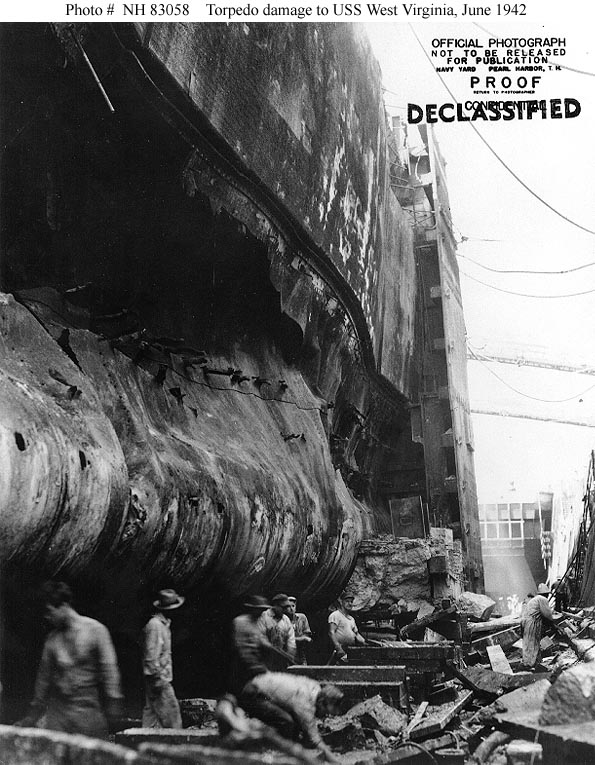
Damage to the West Virginia

I had a yearly physical health assessment last week and all of my numbers were those of a 30 year old so I guess fifty is the new thirty. Yesterday I weighed in and was found to be within the DOD body fat maximum which combined with a high score on my Physical Readiness Test (PRT) or what common is called a PT test.  It is funny, the numbers that I have to make on this at age 50 in the Navy are not much less than then what I was required to do as 21 year old in Army ROTC or 23 year old Army Second Lieutenant then was 68 push-ups, now 65, then 69 sit ups, now 85.  Then I needed a run time of about 12 minutes and 30 seconds for a two mile run to get the maximum points.  Now at age 50 I need slightly less than 10 minutes to get the maximum score on a mile and a half run.  Today I did 90 sit-ups, 61 push-ups and my run time was about 12:15 (converted from a Life Fitness bike.)  I did the bike because of the low number of people running the “early bird” session and because I still have occasional ankle and knee problems.  I need completion to do really well on the run as it motivates me better than running alone or with a small number of people. I came one push-up short of an overall outstanding on the test so I have something to shoot for next time.

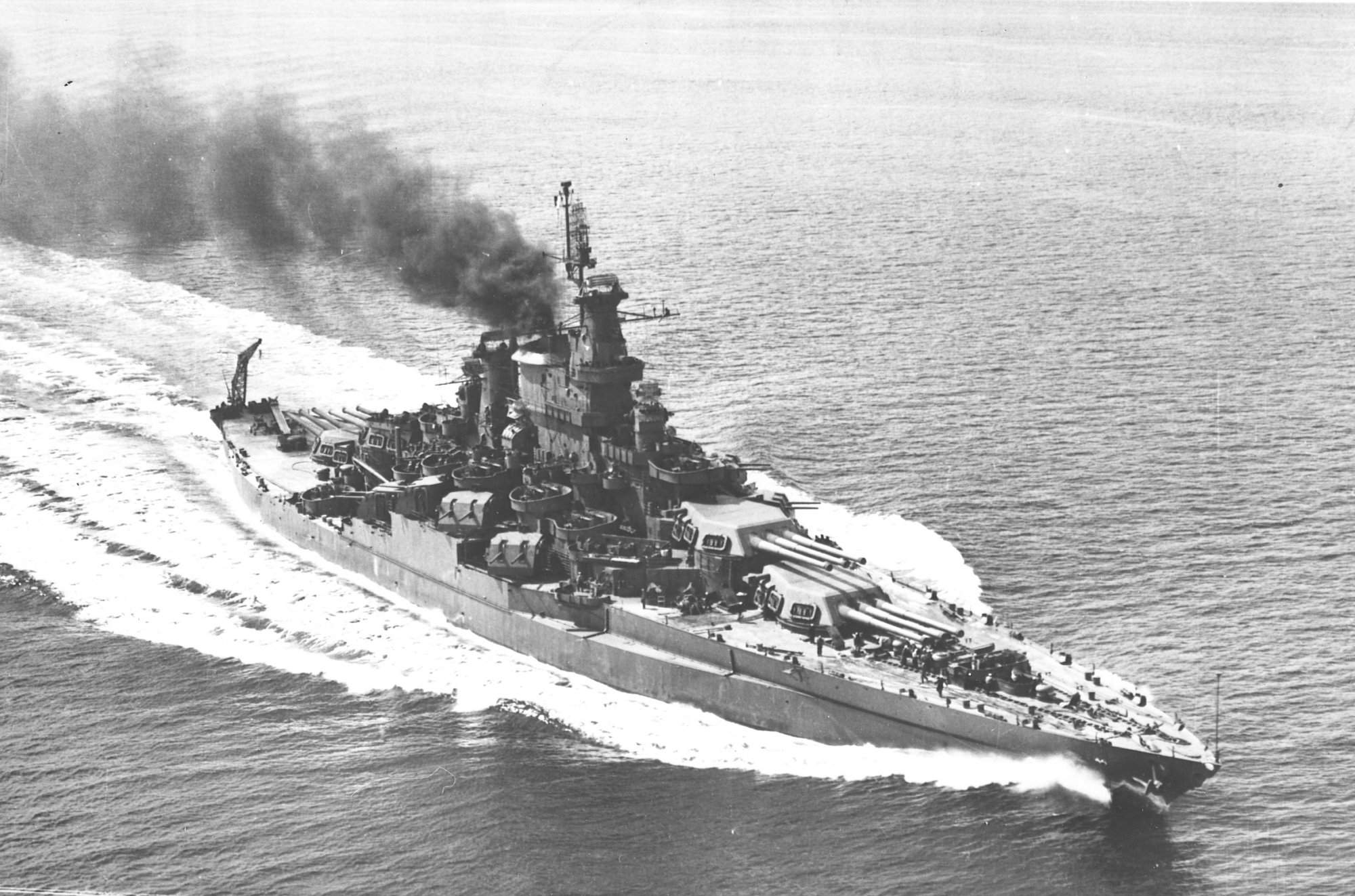
USS California 1945 after her rebuild

This will be enough to take me off of the “fat boy program” which I so ignobly entered last fall after my summer crash. Back then I was put on the “Fitness Enhancement Program” where I had weekly weigh ins and taping for body fat and a program called “Shipshape” which is about healthy living.  That was humbling and for me even humiliating because that has not happened to me in 28 years in the military and I pride myself in being in great shape, in fact the EOD techs that I was assigned with asked my assistant “what kind of steroids I was using” because of how I ran and how well that I did on the PRT.   Now I am not where I want to be on any of this yet, I think I have farther to go.  So I am working to keep my life in balance and take a lot better care of myself; especially in diet and exercise although I still have problems sleeping.  Part of what I learned over the past 5 months is that I have to be consistently consistent if I am to get the weigh off, lose body fat and both get back in shape and then keep it off.  I am not where I want to be yet but know that I am not going back to the way that I exercised self care prior to this as I never want to be in that situation ever again. My plan is to continue to lose about 2 to 3 pounds a month and take off about 4 inches from around my waist by late September or early October. I think this is totally doable doing what I am doing now and I plan on continuing to do it.

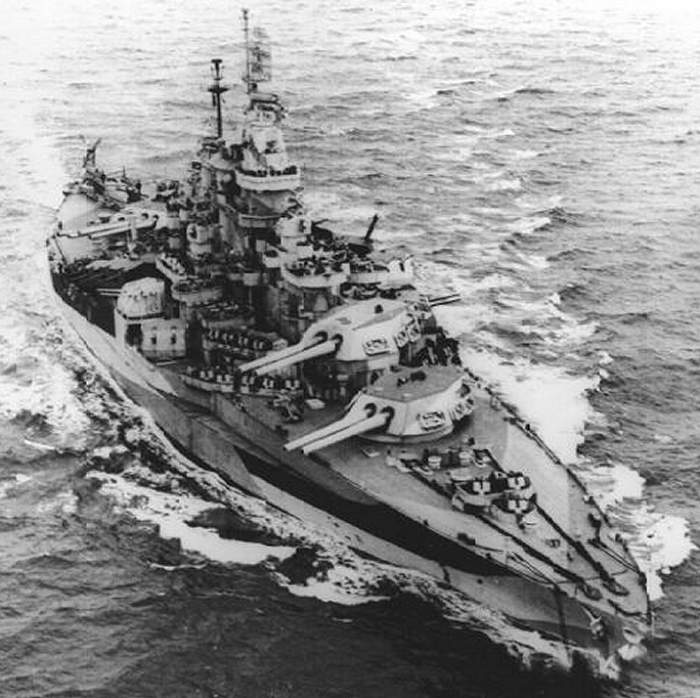
USS West Virginia 1944 after the rebuild

So anyway going back to the old battleship metaphor I have been thinking about that a lot. I wrote an article a while back titled “The Battleships of Pearl Harbor.”  Of course as almost anyone who has seen the movie “Tora! Tora! Tora!” knows that the attack on Pearl Harbor was pretty bad.  If you had the misfortune of watching “Pearl Harbor” sorry it does not do the story justice.  Anyway, I digress. The point is that there were two battleships in particular that were heavily damaged and sunk, The USS California and USS West Virginia. Both were salvaged, refloated and sailed to the West coast where they were not only repaired but modernized with the latest in air and surface search radar, fire control systems, formidable anti-aircraft batteries and large anti-torpedo bulges that increased their survivability.  When rebuilt they resembled the fast modern battleships of the South Dakota class. The two ships spent a long time in the yards but the price was worth it. At the Battle of Surigo Strait the West Virginia and California led the battleships of the US 7th Fleet in annihilating the Japanese Southern Force led by Admiral Nishimura and a follow up force of heavy cruisers. In the battle the two ships sank the Japanese Battleships Fuso and Yamashiro and most of their escorts with the exception of one destroyer the Shigure.  Later they participated in every major operation leading to the defeat of Imperial Japan.

Today I feel like the West Virginia or California. I am older than most of the people that I work with by a large margin, I came back damaged from Iraq and was not able to do half the things that I was capable of doing before Iraq.  Now I am out of the yards and have passed my builders trials and in action again and this my friends really makes me happy.

Peace,

Padre Steve+

2 Comments

Filed under faith, Military, philosophy, PTSD, US Navy

Dad’s Gift of Baseball to Me…a New Season Begins

Baseball, it is said, is only a game. True. And the Grand Canyon is only a hole in Arizona. Not all holes, or games, are created equal.” George Will
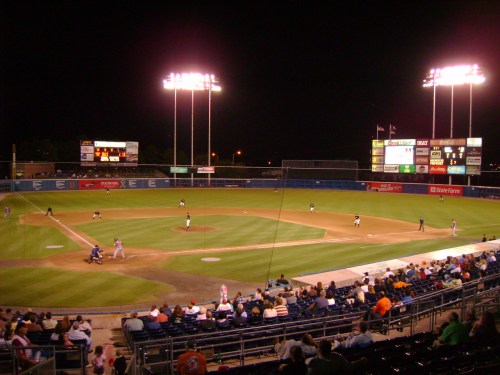
Harbor Park

Baseball has always been a source of enjoyment for me.  I’ve noted in numerous other posts that God speaks to me through baseball.  For me there is something mystical about the game.  It extends beyond the finite world in some respects and there is symmetry to the sport unlike any other.  George Will’s quote at the beginning of this post is dead on.  Not all holes or games are created equal and as Annie Savoy (Susan Sarandon) said in Bull Durham “the only church that truly feeds the soul, day in, day out, is the Church of Baseball.”

Though I had played Little League Ball in the 1960s and well as a lot of backyard or sandlot games, it was in 1970-1971 when my dad began taking us to California Angels games while stationed in Long Beach California that the game really captured me.  The seed of course had been planted long before watching games on a black and white TV and having my dad play catch, teach me to throw, field and run the bases.  In 1967 we even saw the Seattle Pilots in person while stationed in Washington State. While my dad thrived on all sports but baseball was the one that he gave me as a gift.  He gave my brother golf, another spiritual game, which Zen masters love, but which is not to be compared with baseball.  Golf it is an interior and individual game whereas baseball is a game where individuals depend upon one another in community much as in an ideal world Christians depend upon one another in the Church.
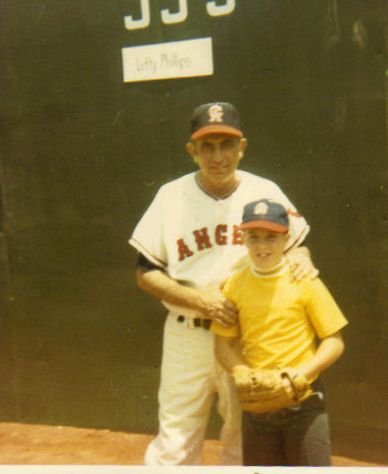
Me with Angels Manager Left Phillips 1970

Growing up with baseball was something that I cannot imagine not having done.  It was part of life from as far back as I can remember and this was because dad made it so.  I cannot remember a time that I did not have a ball, glove and bat as well as at least one baseball hat. It kind of reminds me of the beginning of the movie For the Love of the Game where home movies of a child playing ball with dad are shown during the opening credits and score.  I can close my eyes and remember vivid details of ball fields and backyards where dad would play catch with me play pepper and fungo and teaching me to pitch.  He never did much with hitting.  When I had him in a brief lucid moment when I visited in May of 2009 I thanked him for teaching me to love the game. I told him that I still heard his voice telling me to keep my butt down on ground balls but complained that he did not teach me to hit.  He simply said “you can’t teach someone to hit, it’s a gift, lots of people can’t hit.”  Obviously he understood that I would never hit much above the Mendoza Line and stuck to teaching me defense and pitching.
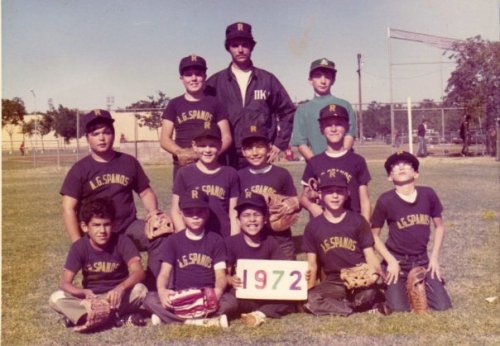
Oak Park Little League Rams Stockton CA, the Team Sponsor was San Diego Chargers Owner Alex Spanos

Back in the days at Anaheim Stadium when it was still called “the Big A” I really did fall in love with the game.  I met players, got signed balls and hats, and was even selected as a runner up in the “My Favorite Angel” contest.  For that I met my favorite Angel, First Baseman Jim Spencer a Golden Glove Winner who later played for the White Sox and Yankees, and two tickets behind home plate.  I met so many of the players on that team and those of opposing teams and it was that personal connection of ballplayers giving a 5th grade kid the time of day that endeared me to the game. Players like Jim Fregosi, Chico Ruiz, Andy Messersmith, Sandy Alomar and Ken McMullen as well as coaches and managers gave me some of the best memories of childhood.

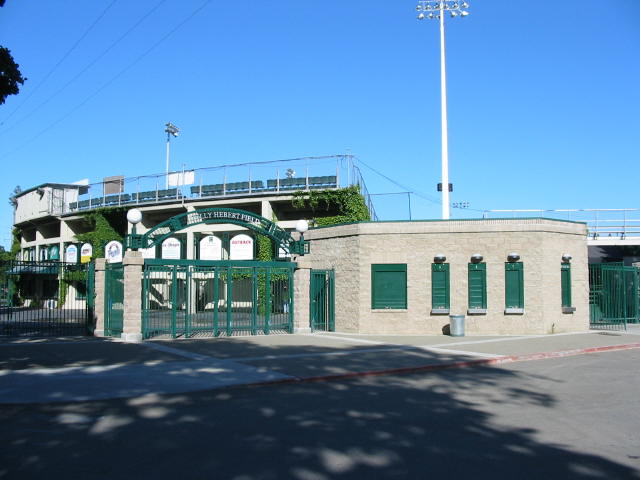
Billy Hebert Field

When we moved to northern California we reconnected with the San Francisco Giants and the Oakland A’s.  This was during the A’s dynasty years and we saw a number of games including an ALCS game against the Tigers.  Seeing the greats like Catfish Hunter, Reggie Jackson, Rollie Fingers, Campy Campaneris and Vida Blue was awesome.  However our first love was the Giants.  We only occasionally got to Candlestick Park where they played in those days because of the inhospitable location and added distance from home.   If you have ever seen a baseball game at Candlestick you will know that it is a perfectly miserable place to see a game as in that if nothing else that it is colder than hell, if hell were cold.  One game we did see was Ed Halicki’s no-hitter against the Mets in 1975.

While dad was deployed to Vietnam my mom would drop me off at Billy Herbert Field in Stockton California where we lived. In the summer she would let me see the Stockton Ports several times a week. Back then the Ports were the California League Single “A” affiliate of the Baltimore Orioles.  Those games were always fun, chasing balls down and chomping down peanuts that cost a quarter a bag.  I remember talking to Orioles great Paul Blair when he visited a military base that I was serving and he told me how he remembered playing in Stockton as a minor league player in the 1960s.

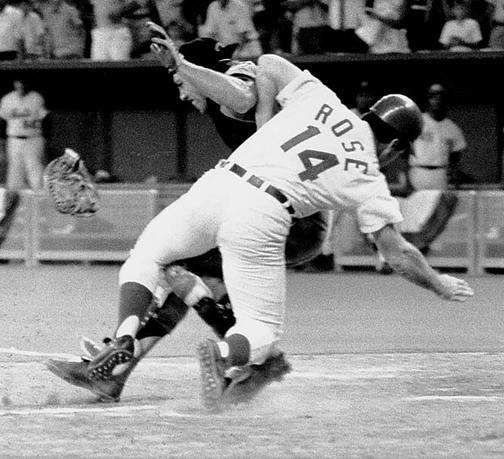
Pete Rose running over Ray Fosse to win the 1970 All-Star Game

http://mlb.mlb.com/media/video.jsp?content_id=5766041

In high school and college due to other diversions I stopped playing baseball and did not have as much contact with it.  However the call of baseball never completely left me and I always longed to be either playing in or watching a game. I think that the biggest mistakes that I ever made were taking on hockey for a couple of seasons and an ill-fated one year career in high school football. It was like I sold out baseball for games that seemed more exciting but were not me.  I have dreams of what it would be like to get the chance to play at my advanced age for one inning in a minor league game.

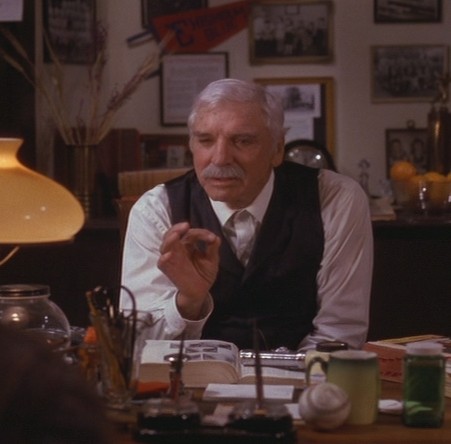
Moonlight Graham

I feel in a sense like Dr. Archibald “Moonlight” Graham in Field of Dreams when he tells Ray Kinsella:

“Well, you know I… I never got to bat in the major leagues. I would have liked to have had that chance. Just once. To stare down a big league pitcher. To stare him down, and just as he goes into his windup, wink. Make him think you know something he doesn’t. That’s what I wish for. Chance to squint at a sky so blue that it hurts your eyes just to look at it. To feel the tingling in your arm as you connect with the ball. To run the bases – stretch a double into a triple, and flop face-first into third, wrap your arms around the bag. That’s my wish, Ray Kinsella. That’s my wish. And is there enough magic out there in the moonlight to make this dream come true?” I can totally relate.

Other major sports do not hold me captive the way baseball does.  I think there is a spiritual dimension that the game has which makes it timeless.  Other sports such as football, basketball, hockey and soccer are limited to rectangular playing surfaces of set dimensions determined by their leagues. With the exception of a few old hockey rinks there are no individuality to these venues, save perhaps for team or sponsor logos.  Likewise all of the other sports play a set time clock.  If a team gets way ahead early, it is likely that the game will be over.  While it is possible that a game could go into “overtime” the overtime in these games has different rules than regulation time making them seem somewhat hypocritical to me.  “Sudden death” “Shootouts” and truncated times show that these games are not meant to go past regulation time.  It is an aberration from what is considered “normal.” In these games a team with a big lead can simply sit on the ball and run out the clock. Earl Weaver put it well: “You can’t sit on a lead and run a few plays into the line and just kill the clock. You’ve got to throw the ball over the damn plate and give the other man his chance. That’s why baseball is the greatest game of them all.”
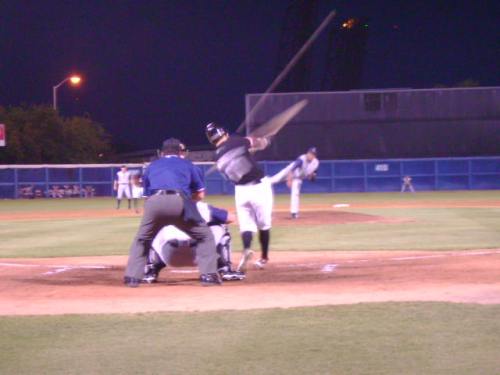
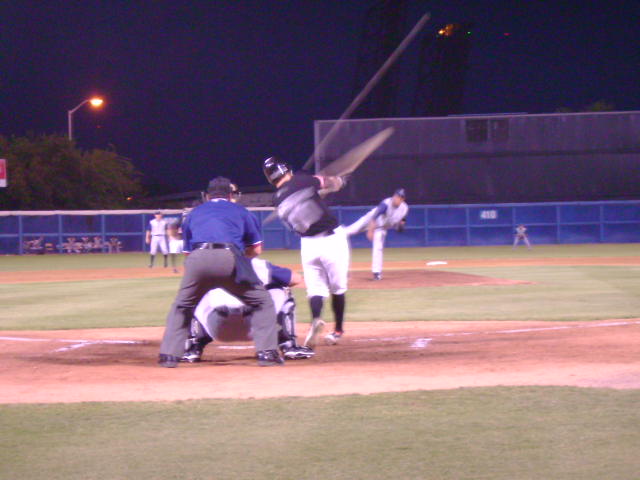
Jeff Fiorentino Going Yard at Harbor Park

Baseball is not like that.  In order to win you have to throw the ball over the plate and give the other team a chance to come back. The nine innings could in theory go on for eternity, as they nearly do in W.P. Kinsella’s The Iowa Baseball Confederacy, A story which is patently eschatological, though not in a pre-millennial dispensationalist manner.  Foul lines in theory go on for eternity, only the arbitrary placement of the outfield wall and the physical limitation of hitters keep the game within earthly limits.  I’m sure that outfields are a lot more spacious and have a wonderful playing surface in heaven.

I love baseball parks. I like their individuality and savor their differences and save for the late 1960s and early 1970s when fascists took over the design of stadiums in order to make them suitable to play football on, baseball parks have kept their individuality.  Outfield dimensions, type of grass, the kind of infield and warning track soil which is used, are all determined by the team.  Some fields cater to hitters, others pitchers.  And with the overthrow of the stadium fascists at Baltimore’s Camden Yards, the baseball park regained its dignity. Although the ivy of Wrigley Field, the Green Monster of Fenway are about all that are left of the great old ballparks however the new ballparks have returned to what makes every ballpark special in its own way.  Gone are the ugly drab oval stadiums with their fields covered in often shoddy artificial turf with only a small cut out for the bases.  The unsightly and even hideous venues such as Riverfront, Three Rivers, Veteran’s Stadium and others, even dare I say the Astrodome and Kingdome were demolished and made nice piles of rubble or retired to serve in other capacities and replaced by beautiful ballparks each with its own unique character that reflect the beauty of the game.
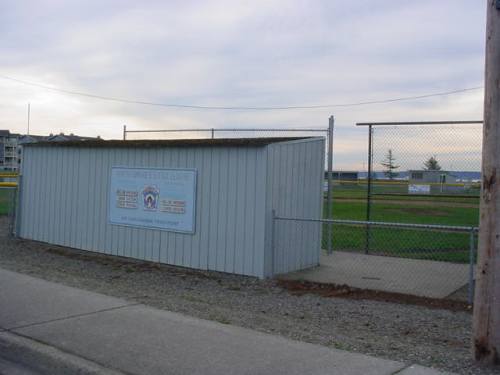
Oak Harbor Little League where I played my first organized baseball

Last year for the first time in my life I bought season tickets for my local AAA team, the Norfolk Tides who are the AAA Affiliate of the Baltimore Orioles. I also went Norfolk’s Harbor Park to see the Commonwealth Classic an exhibition game between the Baltimore Orioles and Washington Nationals.  The ballpark is a place of solace for me that was after I returned from Iraq one of the few places that I could have peace, even church was a dangerous place but walking onto the concourse and taking in the lush green diamond and immaculately trimmed infield there was a place of peace.  I found that watching the young players striving to reach or get back to the majors to stay helped motivate me as I recovered from PTSD, chronic pain, depression, anxiety and a crisis of faith that scared the hell out of me.  I appreciate the young pitchers that I have met behind home plate as the chart the game following their starts, and my hope and prayer for them is that they will see their dreams fulfilled and eventually make it to the show and stay there.  So Jim, Andy, Chris, Ross, David This year I look forward to again taking me seats in Section 102 Row B seats 1 and 2.  Opening day is the 8th of April and the Weather Channel’s 10 day forecast says that the weather should be good.  However this is Hampton Roads, opening day was rained out last year and in 2005 the temperature at game time was 38 degrees with winds of 25-40 knots coming out of center field.

Harbor Park was one of the first of the new generation of minor league parks and a wonderful place to see a game, or as I like to say “Worship at the Church of Baseball.”   When Harbor Park was built the Tides were affiliated with the New York Mets. As such the outfield dimensions are nearly identical to the former Shea Stadium, making it a very large yard and pitchers playground.  The outfield backs up to the East Fork of the Elizabeth River, shipyards and bridges dominate the view.  There is not a bad seat in the house.  My seats in Section 102 row 2 are right behind home plate and offer a field level view of all the action. I love the people in the section, Elliott and Skip the Ushers, Kenny the Pretzel Guy, Marty the Card Dealer, Ray, John and the Vietnam Veterans of America at the beer stand and of course legendary General Manager Dave Rosenfield and President Ken Johnson as well as Linda, Heather and the rest of the staff.

With every home game the gift that my father gave me begins to unfolds again as I gaze in wonderment at the diamond.  This year is different than last year but similar my dad is still in a nursing home in the end stage of Alzheimer’s disease, the disease is taking its time and now has robbed him of everything that he once was. In November I saw him and he did not know me.  It is so sad to see.  A year and a half to two years ago he still knew enough of what was going on to talk about baseball, especially the San Francisco Giants and bad mouth the American League. Dad was always National League fan and he loathes the designated hitter. He used to call the American League the “minor league.”  I never shared that opinion or the fact that I have been a closet Baltimore Orioles fan for years as he could barely handle my liking the Oakland Athletics.  He did not like Earl Weaver one bit but was a lot like him in his approach to the game and life…however he did admire Brooks Robinson and Frank Robinson.

Dad told me stories about the greats of his childhood and he made sure that there were books of baseball stories around the house.  I learned to read with books about Lou Gehrig, Babe Ruth and Bob Feller, Stan Musial, Rogers HornsbyJackie Robinson and Satchel Paige. Dad was an avid fan of Pete Rose; he loved “Charlie Hustle’s” high intensity play and hustle, something that he passed on to me. I can still recall dad yelling at me to “get your butt down,” “stay in front of the ball,” “hustle down the line any time you hit the ball” and “don’t be afraid to run over a catcher or go in hard at second base to break up a double play.”   Rose’s banishment from baseball for gambling hit him hard.  I guess it was for him like the banishment of “Shoeless Joe” Jackson and for me the agony of the Steroid Era where players who were Hall of Fame caliber sacrificed their reputations by doing steroids.
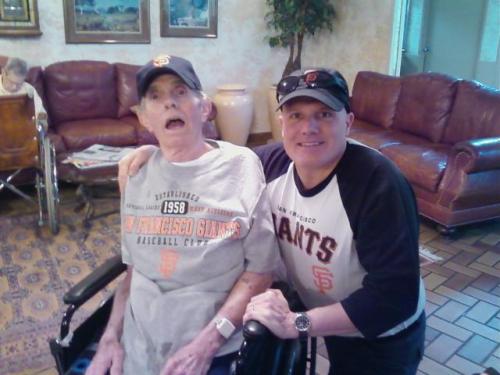
My Dad and I May 2009

I don’t know how long my dad will live. He has outlived his doctor’s expectations by well over a year maybe even a year and a half. He doesn’t know what is going on for the most part but somewhere in his Alzheimer’s ravaged brain he must still be there.  Dad gave me a gift, a gift called the game, the game of baseball.  Sure, it’s only just a game.  Right… Baseball is only a game in the sense of the Grand Canyon just being a hole in the ground and the Pacific Ocean a pond.  I’m sure that the Deity Herself must agree.

Play Ball!

Peace, Steve+

4 Comments

Filed under Baseball, faith, PTSD

Ash Wednesday…Padre Steve’s Lenten Survival Tips to Make this a Happy Lent

“God, deliver me from gloomy saints.” – – Saint Teresa of Avila

 We’ll it is here, my least favorite season of the liturgical year.  As I have mentioned before I do not do well, at the same time it is something that I need to commit myself to observing for the sake of actually wanting a better spiritual life that is not simply a way to make me feel better about life but help me more fully to love and serve God my neighbor with an attitude of thanksgiving and joy.

 Those who know me know that such is not an easy task and that for me no matter how hard I have tried Lent has always been painful.  By the end of Lent I am thankful for Easter not simply because of the resurrection and the promise of redemption, but frankly because I was glad that Lent was over.  In my early days as a Priest I tried to out do others on Lent doing not just Friday but Wednesday as meatless. I have even tried doing opposite of what I was doing and hope that it would work. Last year in the midst of my spiritual crisis I tried to go extra-lean on Lent and that didn’t help either.  Perhaps that was due to my overall poor emotional, physical and spiritual condition as I was trying to climb out of the abyss of PTSD but still, Lent was not very productive for me no matter what I did.

 So this year I’m going to be a good Anglican and find the via media where I actually gain some spiritual benefit, give up something that I can actually succeed at giving up for Lent and add or increase some spiritual discipline that I can succeed at doing not just for Lent but in real life too.  I realize that I can’t overdo it or I will simply give up when something keeps me from doing it and the same time I need to do something not too difficult but not so easy as to be meaningless.  The goal is to have a meaningful Lent that actually does me some spiritual good while not becoming any more of a pain in the ass to the people around me that have to endure me. 

 Today was Ash Wednesday and I had the responsibility for conducting the Protestant service which for me comes straight out of the Book of Common Prayer.  The Gospel lesson from Matthew chapter 6 was Jesus telling folks how to fast not be idiots about it, in other words to “Steveicize” the language Jesus wants his followers to be able to and pray without drawing attention to ourselves and actually look happy about it.  I figure and I assume that Jesus figured out that there were too many gloomy religious people around and that the disciples needed to get a life before he sent them out into the world; of course just like me and maybe you too made plenty of mistakes and at times made a mess of things in their time with Jesus and even after.  The disciples who with the exception of Judas who got hung up on the details all became Apostles still all finished well and most got schwacked by the Romans or others displeased with their message. 

So with this in mind here are a few hints on how to get through Lent, not that I have been successful at doing this but figure that through my failures I might have a few insights in how to navigate the often treacherous season of Lent. 

First there are the spiritual disciplines, like starting simple, go to church, pray every day, even if it is something short and sweet.  If you are a superstar Christian you can go onward and upward using spiritual steroids to improve your performance but I’m not there yet, I just use spiritual steroids to help my soul heal faster.   As Saint Bernard of Clairvaux said:

 “Wherever…thou shalt be, pray secretly within thyself. If thou shalt be far from a house of prayer, give not thyself trouble to seek for one, for thou thyself art a sanctuary designed for prayer. If thou shalt be in bed, or in any other place, pray there; thy temple is there.”

 Now to what to give up:  Most of the time for Americans this involved food, particularly meat on Friday’s and sometimes other things.  I’ve heard of people giving up chocolate or certain delicacies but most of the time it is meatless Fridays and sometimes Wednesdays and there have been some that I have met who have gone on 40 days fasts during Lent.  I can get the meatless Fridays and I am going to give up something that I love that I don’t eat much of normally, like maybe once a week after successful weigh-ins, but really enjoy…I mean really enjoy, the Gordon Biersch Cheeseburger cooked medium rare with everything on it and Garlic Fries on the side. Since there is not a lot else for me to give up being on the Fat Boy program, that once a week treat will be a sacrifice. 

 Now since I tend not too eat most things that swim in their own toilet such as fish the whole deal of fish on Friday is something that I don’t observe…now I still go meatless but find alternative ways to do it. In the past I have done bean burritos, meatless salads, meatless pasta usually with a Marinara sauce, pizza with tomatoes, garlic, olives and mushrooms, or something simple like red or black beans and rice, vegetable soup, pea soup, black bean soup and other things like that.  This makes meatless doable.  One year though I had to suffer for Jesus on the USS Hue City as Friday was “surf and turf.” Since the turf was definitely out for Lent I had to make due with Alaskan King Crab or lobster tails.  That was difficult but I did survive.

 I think one of the things that I missed during previous Lenten seasons was the grace of God, somehow in trying to jump through all the Lenten hoops I became so fixated on the actions that I forgot to experience the love of God and the joy that comes with that.  This year will be all about that process and discovering the joy in life that has been coming back to me after my “Christmas miracle.”

 Martin Luther the German reformer wrote something very appropriate about how to approach Lent,a s well as the rest of the Christian life which I think is pretty profound as Lutehr sees the process of the Christian life:

 “‘Be ye transformed by the renewing of your mind (Rom. 12:2).’ In this way the Apostle describes (Christian) progress; for he addresses those who already are Christians. The Christian life does not mean to stand still, but to move from that which is good to that which is better. St. Bernard (of Clairvaux) rightly says: ‘As soon as you do not desire to become better, then you have ceased to be good.’ It does not help a tree to have green leaves and flowers if it does not bear fruit beside its flowers. For this reason – (for not bearing fruit) – many (nominal Christians) perish in their flowering. Man (the Christian) is always in the condition of nakedness, always in the state of becoming, always in the state of potentiality, always in the condition of activity. He is always a sinner, but also always repentant and so always righteous. We are in part sinners, and in part righteous, and so nothing else than penitents. No one is so good as that he could not become better; no one is so evil, as that he could not become worse.'” (Commentary on Romans, by Martin Luther, Translated by J. T. Mueller, Kregel Publications, Grand Rapid MI 49501, reprinted 1976, page 167-168.)

 On a side note one cool thing about this Lent is that it is happening about as early in the year as it can, thus it will not affect the baseball season as opening day at Harbor Park is the week following Easter.  So anyway with all of this in mind I bid you a blessed Lent and hope and pray that you will come to experience the love of God in a special way this year that impacts you and those around you. Pray for me a sinner.

Peace, Padre Steve+
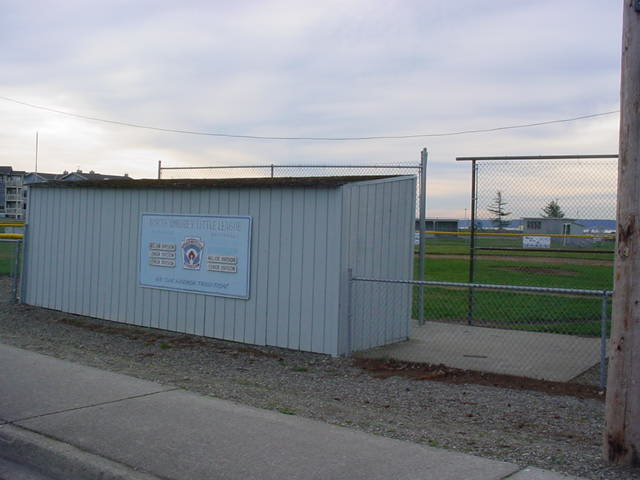
2 Comments

Filed under faith, Pastoral Care, philosophy, PTSD, Religion

God in the Empty Places…Padre Steve Remembers the Beginnings of Padre Steve’s World

The 16th will be the first anniversary of Padre Steve’s World…Musings of a Passionate Moderate. When I began the site it was about a year after I returned from Iraq.  When I began the site I was running pretty ragged from my PTSD, the deteriorating condition of my father who has end-stage Alzheimer’s disease and from throwing myself so intensely into work in the ICU and PICU at the Medical Center that I was operating on fumes.  This is one of my earliest posts and reflects to a large degree where I was in my life at the time.  It is a reflection on life, ministry and military history and identity.  For me the return from Iraq and the continued wars that we are engaged in bring to mind the experience of the French military in Indo-China and Algeria and as I note here it is my view that the current generation of American Soldiers, Marines, Sailors and Airmen have more in common with the career soldiers of the Foreign Legion, Paratroops and Colonials (Marines) who served in Indo-China and Algeria than we do with the men and women of the “Greatest Generation.”  Unlike those veterans who by and large were draftees and were able to fight a conventional war against nation state actors which they vanquished, the current generation serves against shadowy forces in counterinsurgency campaigns in wars that show no sign of ending soon. I came back feeling isolated and alienated from people who had not served in Iraq, Afghanistan or our predecessors in Vietnam. This is my reflection on that at the beginning of this website a year ago I have added pictures as well as some video links about the Battle of Dien Bien Phu but have not altered the post.

Peace,

Padre Steve+

Foreign Legion Troops in Indochina

I have been doing a lot of reflecting on ministry and history over the past few months. While both have been part of my life for many years, they have taken on a new dimension after serving in Iraq. I can’t really explain it; I guess I am trying to integrate my theological and academic disciplines with my military, life and faith experience since my return.

The Chaplain ministry is unlike civilian ministry in many ways. As Chaplains we never lose the calling of being priests, and as priests in uniform, we are also professional officers and go where our nations send us to serve our Soldiers, Sailors, Marines and Airmen. There is always a tension, especially when the wars that we are sent to are unpopular at home and seem to drag on without the benefit of a nice clear victory such as VE or VJ Day in World War II or the homecoming after Desert Shield and Desert Storm.

VJ Day…It will never happen again

It is my belief that when things go well and we have easy victories that it is easy for us to give the credit to the Lord and equally easy for others to give the credit to superior strategy, weaponry or tactics to the point of denying the possibility that God might have been involved. Such is the case in almost every war and Americans since World War Two have loved the technology of war seeing it as a way to easy and “bloodless” victory. In such an environment ministry can take on an almost “cheer-leading” dimension. It is hard to get around it, because it is a heady experience to be on a winning Army in a popular cause. The challenge here is to keep our ministry of reconciliation in focus, by caring for the least, the lost and the lonely, and in our case, to never forget the victims of war, especially the innocent among the vanquished, as well as our own wounded, killed and their families.

But there are other wars, many like the current conflict less popular and not easily finished. The task of chaplains in the current war, and similar wars fought by other nations is different. In these wars, sometimes called counter-insurgency operations, guerilla wars or peace keeping operations, there is no easily discernable victory. These types of wars can drag on and on, sometimes with no end in sight. Since they are fought by volunteers and professionals, much of the population acts as if there is no war since it does often not affect them, while others oppose the war.

Marines at Hue City

Likewise, there are supporters of war who seem more interested in political points of victory for their particular political party than for the welfare of those that are sent to fight the wars. This has been the case in about every war fought by the US since World War II. It is not a new phenomenon. Only the cast members have changed.

Foreign Legion in Algeria, the ancestral home of the Legion

www.youtube.com/watch?v=8YSsetJU-tU&feature=related

This is not only the case with the United States. I think that we can find parallels in other military organizations. I think particularly of the French professional soldiers, the paratroops and Foreign Legion who bore the brunt of the fighting in Indo-China, placed in a difficult situation by their government and alienated from their own people. In particular I think of the Chaplains, all Catholic priests save one Protestant, at the Battle of Dien Bien Phu, the epic defeat of the French forces that sealed the end of their rule in Vietnam. The Chaplains there went in with the Legion and Paras. They endured all that their soldiers went through while ministering the Sacraments and helping to alleviate the suffering of the wounded and dying. Their service is mentioned in nearly every account of the battle. During the campaign which lasted 6 months from November 1953 to May 1954 these men observed most of the major feasts from Advent through the first few weeks of Easter with their soldiers in what one author called “Hell in a Very Small Place.”

www.youtube.com/watch?v=th7tImvzutc

Another author describes Easter 1954: “In all Christendom, in Hanoi Cathedral as in the churches of Europe the first hallelujahs were being sung. At Dienbeinphu, where the men went to confession and communion in little groups, Chaplain Trinquant, who was celebrating Mass in a shelter near the hospital, uttered that cry of liturgical joy with a heart steeped in sadness; it was not victory that was approaching but death.” A battalion commander went to another priest and told him “we are heading toward disaster.” (The Battle of Dienbeinphu, Jules Roy, Carroll and Graf Publishers, New York, 1984 p.239)

Of course one can find examples in American military history such as Bataan, Corregidor, and certain battles of the Korean War to understand that our ministry can bear fruit even in tragic defeat. At Khe Sahn in our Vietnam War we almost experienced a defeat on the order of Dien Bien Phu. It was the tenacity of the Marines and tremendous air-support that kept our forces from being overrun.

Terrorism and the Battle of Algiers

You probably wonder where I am going with this. I wonder a little bit too. But here is where I think I am going. It is the most difficult of times; especially when units we are with take casualties and our troops’ sacrifice is not fully appreciated by a nation absorbed with its own issues.

French Chaplain and Soldiers Indochina 1950

For the French the events and sacrifices of their soldiers during Easter 1954 was page five news in a nation that was more focused on the coming summer. This is very similar to our circumstances today because it often seems that own people are more concerned about economic considerations and the latest in entertainment news than what is going on in Iraq or Afghanistan. The French soldiers in Indo-china were professionals and volunteers, much like our own troops today. Their institutional culture and experience of war was not truly appreciated by their own people, or by their government which sent them into a war against an opponent that would sacrifice anything and take as many years as needed to secure their aim, while their own countrymen were unwilling to make the sacrifice and in fact had already given up their cause as lost. Their sacrifice would be lost on their own people and their experience ignored by the United States when we sent major combat formations to Vietnam in the 1960s. In a way the French professional soldiers of that era have as well as British colonial troops before them have more in common with our force than the citizen soldier heroes of the “Greatest Generation.” Most of them were citizen soldiers who did their service in an epic war and then went home to build a better country as civilians. We are now a professional military and that makes our service a bit different than those who went before us.

Yet it is in this very world that we minister, a world of volunteers who serve with the highest ideals. We go where we are sent, even when it is unpopular. It is here that we make our mark; it is here that we serve our Soldiers, Sailors, Marines and Airmen. Our duty is to bring God’s grace, mercy and reconciliation to men and women, and their families who may not see it anywhere else. Likewise we are always to be a prophetic voice within the ranks.

Marine Advisers and Afghan Soldiers

When my dad was serving in Vietnam in 1972 I had a Sunday school teacher tell me that he was a “Baby Killer.” It was a Catholic Priest and Navy Chaplain who showed me and my family the love of God when others didn’t. In the current election year anticipate that people from all parts of the political spectrum will offer criticism or support to our troops. Our duty is to be there as priests, not be discouraged in caring for our men and women and their families because most churches, even those supportive of our people really don’t understand the nature of our service or the culture that we represent. We live in a culture where the military professional is in a distinct minority group upholding values of honor, courage, sacrifice and duty which are foreign to most Americans. We are called to that ministry in victory and if it happens someday, defeat. In such circumstances we must always remain faithful.

French Commanders at Dien Bien Phu

For those interested in the French campaign in Indo-China it has much to teach us. Good books on the subject include The Last Valley by Martin Windrow, Hell in a Very Small Place by Bernard Fall; The Battle of Dienbeinphu by Jules Roy; and The Battle of Dien Bien Phu- The Battle America Forgot by Howard Simpson. For a history of the whole campaign, read Street Without Joy by Bernard Fall. I always find Fall’s work poignant, he served as a member of the French Resistance in the Second World War and soldier later and then became a journalist covering the Nurnberg Trials and both the French and American wars in Vietnam and was killed by what was then known as a “booby-trap” while covering a platoon of U.S. Marines.

There is a picture that has become quite meaningful to me called the Madonna of Stalingrad. It was drawn by a German chaplain-physician named Kurt Reuber at Stalingrad at Christmas 1942 during that siege. He drew it for the wounded in his field aid station, for most of whom it would be their last Christmas. The priest would die in Soviet captivity and the picture was given to one of the last officers to be evacuated from the doomed garrison. It was drawn on the back of a Soviet map and now hangs in the Kaiser Wilhelm Memorial Church in Berlin where it is displayed with the Cross of Nails from Coventry Cathedral as a symbol of reconciliation. I have had it with me since before I went to Iraq. The words around it say: “Christmas in the Cauldron 1942, Fortress Stalingrad, Light, Life, Love.” I am always touched by it, and it is symbolic of God’s care even in the midst of the worst of war’s suffering and tragedy.

Peace

Padre Steve+

2 Comments

Filed under History, iraq,afghanistan, Military, PTSD, Religion, vietnam