Tag Archives: barbara tuchman

The Islamic State and the New, Old Nature of War

bilad ash shaam

I am a realist when it comes to human nature and the reality of the evil that human beings can do. I have been to war, and personally I can think of nothing worse than more war. For me war is part of the reality that I live with, and which I am reminded of every time I try to sleep. That being said, a new war is gaining in intensity and threatening to blow away what is left of the old world order.

For most modern Americans and others living in the West, war is an often abstract concept regulated to small bodies of professionals fighting actions far away, of which we only catch occasional glimpses of on television or the internet. For most Americans and others in the West, modern war has become a spectator sport, and one far less interesting to most than either American or European football matches.

We in the West have been protected from the savage nature of war for the better part of six decades, with the sole possible exception being Vietnam, when the press had nearly unfettered access to the battlefields and the troops fighting the war. That war was a staple of the six o’clock news on a daily basis for a decade, bringing the war home in almost real time, and that coverage as well as the large numbers of Americans killed and wounded coming home from the war triggered a public backlash against it that helped bring the American involvement to an end.

The government and the military changed the way that war has been covered since, now reporters are vetted and closely supervised, even when they are imbedded with the troops. When the war in Iraq began to go bad, even the return of those killed in action was largely off limits. During the Iraq War many news programs took on the character of cheerleaders as Saddam was toppled. The media only slowly adjusted to the reverses brought about by the failed strategy of the Bush administration in Iraq as the falsehoods that brought about the invasion were revealed and the Iraq Civil War and insurgency spread like wildfire.

As such most people, including political, business, media elites, and even military theorists fail to understand the essential and unchanging, character, nature and complexity of war. As British theorist Colon S. Gray so bluntly points out: “Some confused theorists would have us believe that war can change its nature. Let us stamp on such nonsense immediately. War is organized violence threatened or waged for political purposes.” 1 If we fail to understand that we cannot understand the ongoing wars, to include that being waged by the Islamic State, or Caliphate in Iraq and Syria.

This war that the Islamic State is waging is bigger than most of us understand or want to believe. It is not simply about toppling the Assad regime, nor even taking Baghdad, or even about gaining control of the oil of the Middle East, though each is a goal for the Islamic State.

The larger and much more ambitious goal of the ISIS leadership; that of toppling the Saudi monarchy, which ISIS feels is corrupt and heretical, and the occupation of Mecca, Medina and ultimately Jerusalem, the three most holy sites in Islam. The Puritanical and violent Wahhabi Islam practiced by ISIS rightly understands as so many other Wahhabi fundamentalists have throughout the years; that the possession of these sites, especially Mecca and Medina, give them both legitimacy and standing as the preeminent Islamic government in the World.

The House of Saud allied itself with the founder of Wahhabi Islam in the 1700s, but it was not until the 1920s when the British Indian Office backed the Saudi against the other tribes of the Arabian Peninsula that Wahhabi Islam had a stable base to reach out and touch the rest of the world. As the Saudis became more affluent and connected to the world through oil and the global economy some leading Saudis have tried to moderate their Wahhabi beliefs, modernize the Kingdom, even allowing women a few rights, and to accommodate more progressive beliefs. In the 1970s this brought about the assassination of King Faisal in March 1975 and the seizure of the holy sites of Mecca by extremists in November of 1979. That, coupled with their military alliance with the United States after the Gulf War brought about more opposition from the more radical Wahhabi including Osama Bin Laden whose Al Qaeda network spawned ISIS.

ISIS has found its greatest success in exploiting failures of many of the despotic and totalitarian leaders of Arab states, divisions in Islam, foreign influences and the seemingly hopeless plight of Arabs to overcome poverty and oppression in those countries to advance their cause and promote their ideology. Their brand of Islam which teaches that almost anything is an idol enables them to destroy historical sites, cemeteries, houses of worship and archeological treasures belonging to Christians, Jews, Buddhists and even to other Moslems.

Terrorism and terrorist groups have not generally been non-state actors in the world wide political drama, however, that being said, even non-state actors have strategic, ideological and political goals to which their violence is directed. The unique nature of ISIS is that what most of us assumed to be yet another non-state terrorist group is becoming an embryonic state with its own economic assets, media arm coupled with defined military and political-religious goals, both against other Moslems and the West. Is is morphing before our very eyes from a non-state entity to a hybrid entity with character traits of a non-state and a state actor, especially as it takes control of more and more territory in the Tigris-Euphrates basin of Syria and Iraq.

The message of ISIS to all, including other Moslems, is to convert to their understanding of Islam or die. It is the same kind of message that other religious extremists at the helm of governments have used for millennia, sadly including many Christians.

The fact that the Islamic State is aspiring to become not just a non-state actor, but to place itself as a dominant power on the world stage makes it different. It has the capability of operating in the open where it physically controls cities or regions, as well as in the shadows in countries viewed by them as the enemy. It will most likely adapt its tactics as the situation dictates. Against weaker, or politically unstable neighbors, it will use more conventional means and asymmetrical warfare. However, against enemies who have the power to strike them from afar such as the United States, they will use the asymmetrical means of various types of terrorism; traditional bombings, kidnappings, hijackings and assassinations, the use of any kind of WMD that they can obtain and even cyber-terrorism to attack financial institutions or critical infrastructure.

The war that the Islamic State is preparing for is a throwback to the heady days of Moslem conquest from the 7th to the 15th Centuries. But unlike those days where early Moslems were interested in such things as classical Greek learning, the preservation of historic sites or advances scientific or mathematical learning, the Islamic State is bent on destroying all vestiges of other peoples, groups or religions. Because their absolutist and apocalyptic beliefs allow no compromise, they can and will ruthlessly pursue their religious, ideological and political goals using terror as a tool.

We in the West have not faced something like this in a very long time. War is not just a military and political endeavor, “it is social and cultural… and must reflect the characteristics f the communities that wage it.” 2 The leaders of the Islamic State understand this fact all too well, that is a major reason why they are attracting new Jihadists around the world. However, we in the United States in Europe are on the whole, so detached from such matters that we do not understand the savage nature of war, or the motivations groups like the Islamic State. To us they are barbarous and a throwback to times where our ancestors waged wars of religion and ideology to conquer, convert and enslave unbelievers.

There are many politicians that seem to believe that the Islamic State can be crushed quickly by US and allied forces. However, history shows that such religious-political-ideological movements do not die easily, even when mercilessly attacked by superior military forces.

Those that think a series of surgical strikes by aircraft, cruise missiles or drones; or attacks by Special Forces will eliminate ISIS as a threat do not understand the nature of that beast. We have become enamored of the technology that we use to make war, and we often forget the preeminence of the human dimension. Technology changes rapidly, the nature of the people that employ it seldom changes.

The West must, for human rights and freedom and not for imperialist, economic or even the mission of spreading democracy, we must be prepared for a long and difficult war that will be waged in the most brutal of manners by all sides. We must realize that there will be a terrible cost such a war, economic and human to be sure, people will die and economies will suffer, but worse there will be a cost to our individual and corporate psyche.  This war will eventually have a profound effect on all  us.

We must realize as Helmuth Von Molkte told Kaiser Wilhelm II in 1906 that the next war “will be a national war which will not be settled by a decisive battle but by a long wearisome struggle with a country that will not be overcome until its whole national force is broken, and a war which will utterly exhaust our own people, even if we are victorious.” Von Molkte’s tragic mistake was that he did nothing to “follow through the logic of his prophecy” 3 and allowed his country to enter a war that it was not prepared to wage, and which caused its collapse.

Ultimately, despite our protestations this war, which has already started will become a war without mercy to use the words of John Dower. The West will be slow to move, and half measures will provoke more attacks and a further spread of the Islamic State. Alliances will have to be made with nations that we may despise, but who are also threatened by the Islamic State. Such is nothing new, the United States and Great Britain allied themselves with the Soviet Union to defeat Hitler.

However, when ISIS successfully attacks a major European or American city causing great loss of life, which they very probably will do, the gloves will finally come off. Then the only words to describe how the West will wage the war will be those of William Tecumseh Sherman who said: “You cannot qualify war in harsher terms than than I will. War is cruelty, and you cannot refine it and those who brought war into our country deserve all the curses and maledictions a people can pour out….” 4 The Islamic State is sowing the wind, and they will reap the whirlwind.

We must look to history, our own as well as Islamic and Arab to understand the new era we are entering, for in truth, despite all the technological advances and changes in strategy and tactics, the fact is that as Colin Gray writes “what changes about war and warfare, although it can be very obvious and can even seem dramatic, is actually overmatched by the eternal features of war’s nature.” 5

T.E. Lawrence wrote a memorandum to the British Foreign Office warning of what we are seeing today: “A Wahabi-like Moslem edition of Bolshevism is possible, and would harm us almost as much in Mesopotamia as in Persia…” T.E. Lawrence, Memorandum to Foreign Office 15 September 1919

Well, that vision is upon us, and with that I will close for today.

Peace

Padre Steve+
4 Comments

Filed under History, history, iraq,afghanistan, middle east, national security, News and current events, philosophy

The Misuse of Force: Shock and Awe Backfires in Ferguson

7d26d74bd316b81f5c0f6a706700affa_c0-48-4989-2956_s561x327

“When the gap between ideal and real becomes too wide, the system breaks down.” Barbara Tuchman

Not Iraq, not Syria or the Ukraine, but Ferguson Missouri, a suburb of St. Louis. The shooting of an unarmed black teenager, Michael Brown, by a white police officer was one of the most crass, unconscionable and violent over-reactions of a local government in the United States in years. When the peaceful protests began after the shooting Ferguson and St Louis County police deployed heavy weapons, armored vehicles and chemical weapons against the mainly peaceful protestors who simply sought answers and justice at yet another unjustified killing of a young black man by law enforcement.

The “shock and awe” displayed by the local police agencies had the opposite effect. Instead of defusing the crisis, it provoked violence, mainly from looters by also from young people fed up with police using tactics of fear and intimidation against citizens who have little opportunity. The economic and demographic inequities, including the de-facto segregation in Ferguson are stunning. Two thirds of the population is black and only one member of the city council and one member of the local school board are black. Likewise the police force in Ferguson is overwhelmingly white. It is almost like apartheid South Africa, but it is right here in the United States, and it’s not just a problem in Ferguson but in many other towns and cities in this nation.

After weeks of delay and after days of protests, demonstrations and riots, the Police Chief of Ferguson revealed the name of the officer who killed Brown. However, instead of discussing justice, or inviting an external investigation of the shooting the man took the time to praise and defend the officer and release surveillance video designed to demonize Brown in the eyes of the public. In fact there was no other reason to do it. It was designed to play in his narrative to smear a dead man, for the actions of his officer; and maybe, even more insidiously to possibly taint any jury pool that might have to sit in judgment on that officer. Now I believe in due process and that the officer is innocent until proven guilty, but the calculated actions of the Ferguson police chief were designed to convict a dead man who could not defend his own actions or reputation because his body had at been riddled by at least six bullets including two the to head. Now there may be mitigating circumstances that show that the officer felt that he was in danger, but still six bullets including two to the head.

No wonder instead of subsiding more protests, again mainly peaceful, but with some malicious actors as well have continued. One only has to look at what happened in Cairo’s Tahir Square at the beginning of the Arab Spring, or in Gaza to see why people risk their lives to face overwhelming militarized police forces or military forces deployed in such operations. There is a sense of inequity based on the proportionality of the forces used, and when that inequity becomes too great, revolutions occur.

Part of the problem is that police on every level have become extremely militarized. Local police departments only need to fill out a form to get the latest in surplus combat equipment from the military, thanks to policies enacted after the passage of the wonderfully Orwellian named Patriot Act. Once a department gets the new weaponry, why go back to the old way that police did things. In fact there is an almost a case of “penis envy” that local police departments have. If one department gets an armored MRAP or APC, then another, even if it has no legitimate use for one gets one. Instead of peacefully serving warrants by knocking on a door to confront a non-violent offender, it is time to deploy a platoon of tactical officers to do the same job.

Now I am not excusing looters, arsonists or other criminals that take advantage of unrest such as this to create havoc, and in fact many of the protestors attempted to keep businesses and other property safe from the criminals, even as they themselves were being targeted by the tear gas fired by police. Likewise the police arrested reporters and fired at other reporters covering the story. The reporters had every right to be there covering the protests and nothing in the Constitution excuses the behavior of police interfering with reporters conducting their business.

There is a quote from the most recent television adaptation of Battlestar Galactica where Commander Adama says something most relevant to this needless militarization of police power:

“There’s a reason you separate military and the police. One fights the enemies of the state, the other serves and protects the people. When the military becomes both, then the enemies of the state tend to become the people.”

The fact is that anybody with the slightest understanding of history, sociology, economics or group psychology should know this. It’s not that hard to defuse these kinds of situations before they reach a crisis. It simply takes the courage of leaders to meet people where they are and address their concerns without resorting to deploying heavily armed militarized police forces before any violence occurs. As a career military man who has served with our advisers in Iraq, and who has been an adviser on a boarding team keeping the peace on detained Iraqi oil smugglers in 2002, in both cases unarmed and the latter not even having the body armor of the rest of my team, and having been in a number of potentially violent close quarters situations with emotions running high I can safely say that listening and working to de-escalate the situations worked, and that was with Iraqis, not Americans.

When I was going to seminary and was serving in the National Guard, I worked in poor and crime ridden neighborhoods, homeless shelters and inner city public hospitals. I have seen the inequity and the results in broken homes, lives and communities. Likewise, because we were pretty broke and poor in seminary and in the couple years after it we experienced what is now called “profiling.” We lived on the edge of a very affluent suburb between Dallas and Fort Worth, for several years we had a series of crappy hand me down used cars that we used to go to school, work and church. Because some of those cars were so crappy looking we are frequently followed by the police, and every couple of months one of us would be pulled over.

I remember watching through the peep hole on my front door when a tactical team raided my across the hall neighbor late one night in 1991 of 1992. I remember being awakened by the crash of the team breaking through the door, and seeing their guns drawn. It scared the crap out of me, and in fact it made me feel less safe and more vulnerable. What if they had raided my house by mistake, like so often happens, I might have been gunned down at the door. You see, we were poor, and obviously poor people should not be in affluent areas, they are bad for property values. But, we often didn’t know where the next pay check, tank of gas, tuition payment, money for medications or or even groceries were coming from.

I cannot imagine what it would be like to not just experience that for a few years, but to have to live that way with little or no hope of the situation ever getting better. But, that being said, I think I can understand the pent up frustration and rage of those who live their whole lives in such conditions, where they are because of their race, the kind of car they drive or the way that they dress, are accosted and interrogated by the police as a matter of course.

To borrow from the movie Cool Hand Luke: “What we’ve got here is a failure to communicate.” The problem is that it’s the police who are not listening and they are being joined by the cacophony of Right Wing politicians, pundits and preachers blaming everyone but themselves and the long term, economic and social policies that have brought this to a head. The scary think is how the pundits on Fox News, at Townhall.com, World Net Daily and other “conservative” and allegedly “Christian” websites and “news” sources incessantly blame the victims of police violence and intimidation, and lack of opportunity and hope rather than looking at the real problems.

Barbara Tuchman was absolutely right. “When the gap between ideal and real becomes too wide, the system breaks down.” We are seeing that in Ferguson and I dare say that if we as a nation do not take action to solve these problems that this is just the beginning, and we will have no one to blame but ourselves.

Peace

Padre Steve+

4 Comments

Filed under civil rights, laws and legislation, leadership, Military, political commentary

The Beginning of the Never Ending End: August 1914

wwimobilization

“An event of great agony is bearable only in the belief that it will bring about a better world. When it does not, as in the aftermath of another vast calamity in 1914-18, disillusion is deep and moves on to self-doubt and self-disgust.” Barbara Tuchman

On August 1st 1914 the armies of Europe were mobilizing for war. The last feeble efforts at diplomacy were failing as leaders, and diplomats sought a way out of the situation that their policies had brought about. They had allowed the military instrument to drive policy, rather than for policy to dictate how the military should be employed as an instrument of national strategy. As such they became prisoners to their military mobilization plans, all of which depended on speed in order to gain advantage over their adversaries.

The nations and militaries of Europe were devoted to the “cult of the offensive” by which they would crush their enemy’s armies in a quick campaign. In Germany there was the modified Schlieffen Plan that was about to be executed by the army commanded by Von Molkte the younger in which Germany would violate the neutrality of Belgium in order to invade France, risking war with England in the process. In France, the offense was also the rule of the day, Plan 17 dictated an advance to recapture the Alsace and drive into the heart of Germany. Russia had “Plan 19” nicknamed by some “the Russian Steamroller,” while Austria-Hungary, the chief protagonist of the War dithered with plans to attack Serbia and defend against Russia, which her military commander Conrad von Hotzendorf neither shared with his German allies, or the politicians leading his country to war.

The numbers of troops were massive, the Germans mobilizing nearly four million troops in less than two weeks, the Austrians three point three million, the French over three million and the Russians nearly five million. Serbia, Belgium and Great Britain were mobilizing as well, but the numbers of soldiers that they mobilized were a fraction the size of the major land powers. Soon other nations would become involved, the Ottoman Empire on the side of Austria and Germany, Italy on the side of England and France. Bulgaria and Romania would become involved as well as far away Japan, which saw the opportunity to expand its empire and influence at the expense of Germany.

No leaders had planned for a long war; they did not believe such a war could last. “One constant among the elements of 1914—as of any era—was the disposition of everyone on all sides not to prepare for the harder alternative, not to act upon what they suspected to be true.”

But they were wrong and in the opening weeks and months of the war, every army lost massive numbers of troops ensuring that victory would not come quickly or cheaply. Between August and December 1914 the Germans had sustained about 800,000 casualties, the French about the same, the Austrians close to a million, the Russians at least 500,000 and the tiny British expeditionary force took about 87,000 casualties of the 110,000 troops deployed to France.

The war dragged on until November 1918. An armistice was signed; a peace treaty made, territory divided but the war never really ended, and in a way continues today in the Middle East, Africa and Eastern Europe. The “War to end all War” really never ended, it continues today in some many places. It really was a war without end.

Of course in August 1914 the leaders of Europe gambled everything on a roll of the dice. The decisions that they made were made deliberately and with forethought, but the logic of those leaders was fatally flawed, and the implications of their flawed decision making process are still haunting us today. Unfortunately it doesn’t look like the politicians, pundits and preachers, that “Trinity of Evil” that find glory and profit in war have learned anything. Like Conrad von Hotzendorf many leaders today believe that “the essence of politics lies in the use of the means called “war.” As Barbara Tuchman said “Learning from experience is a faculty almost never practiced”

Peace

Padre Steve+

1 Comment

Filed under Foreign Policy, History, leadership, Military, Political Commentary

The Unfolding of Miscalculations


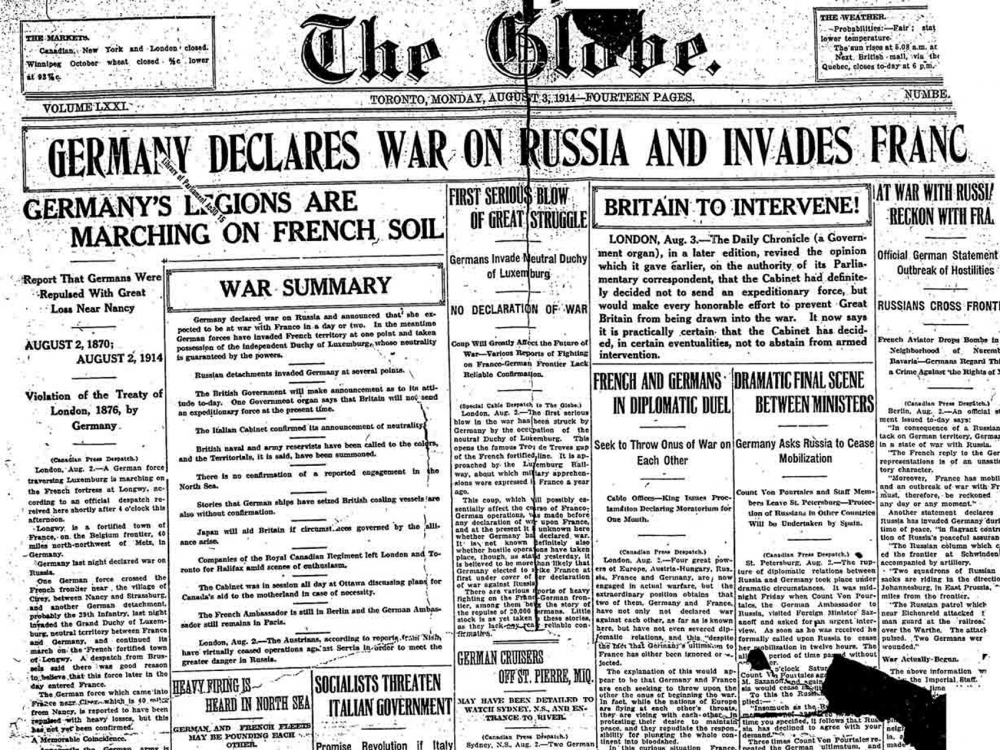
GM_Aug3_1914_Germany-Declares-war-on-Russia-invades-France

“The muffled tongue of Big Ben tolled nine by the clock as the cortege left the palace, but on history’s clock it was sunset, and the sun of the old world was setting in a dying blaze of splendor never to be seen again.” Barbara Tuchman, The Guns of August

It is now late July of 2014 and for the past month I have been reading about the events in Europe of 100 years ago, a time when the leaders of Europe were hurtling into a war which would change the world forever and the effects of which redound to our day. As I read each book I am always amazed at the hubris, vanity, ignorance and incompetence of the monarchs, prime ministers, foreign ministers and diplomats and military leaders. Men who managed to miscalculate their way into a war that was far larger, longer, destructive and earth shaking than most imagined at the time. As Barbara Tuchman wrote “War is the unfolding of miscalculations.”

Yes there were some who knew that a war would be longer, larger and more destructive than most expected, they were either ignored, or in the case of Field Marshal von Molkte of Germany and Joffre of France ignored their own predictions of a long costly war “made any allowance in their plans for the war of attrition which they both foresaw.” Lord Kitchener of Britain, who had no part in his nation’s planning for war and who was recalled to become War Minister on August 4th 1914 was the only military leader to act on his predictions. He predicted to a colleague that the war would last three years, but added that it might last longer, but “three years will do to begin with. A nation like Germany, after having forced the issue, will only give in after it is beaten to the ground. That will take a very long time. No one living knows.”

Of course few people, especially leaders learn from history, including Americans. In November 2002 Donald Rumsfeld predicted that the coming U.S. invasion of Iraq would “Five days or five weeks or five months, but it certainly isn’t going to last any longer than that….It won’t be a World War III.” Of course, he and those who led the United States into war were incredibly wrong, the American involvement lasted 8 years, cost about 4500 U.S. military dead and about 40,000 wounded and when all costs are factored in will have cost the nation trillions of dollars. It also helped bring into existence the group known as ISIL, or the Islamic State of Iraq and the Levant, which now controls vast swaths of Iraq and Syria and whose conquests may drag the United States back in to the Iraq conflagration, maybe even in concert with Iran. It may not be a “world war” but threatens to become global as the influence of ISIL is spreading to other parts of the Middle East, Africa and Asia.

There are also rumblings of war coming from Russia and the Ukraine, a conflict that has now claimed nearly 300 people who had no stake in it, the passengers and crew of Malaysia Air Flight 17, shot down by pro-Russian insurgents with a missile very probably supplied by Russia. Both Russia and Ukraine have begun limited mobilization of their militaries. While one would want to believe that neither Russia or Ukraine, or for that matter Europe or the United States has an interest in war one can never be sure. As Tuchman wrote “One constant among the elements of 1914—as of any era—was the disposition of everyone on all sides not to prepare for the harder alternative, not to act upon what they suspected to be true.”

In the weeks leading to the First World War, some nations were determined on war, others thrust into it by their perceived military interests and still others because they ignored the danger of the situation until it was too late. In all cases their actions and inaction led to disaster.

Peace

Padre Steve+

2 Comments

Filed under History, history, News and current events, world war one

A Wrong Turn, a Holy Cause and Two Bullets: The Assassination of Archduke Franz Ferdinand

clive-uptton-the-assassination-of-archduke-franz-ferdinand

“The muffled tongue of Big Ben tolled nine by the clock as the cortege left the palace, but on history’s clock it was sunset, and the sun of the old world was setting in a dying blaze of splendor never to be seen again.” Barbara Tuchman

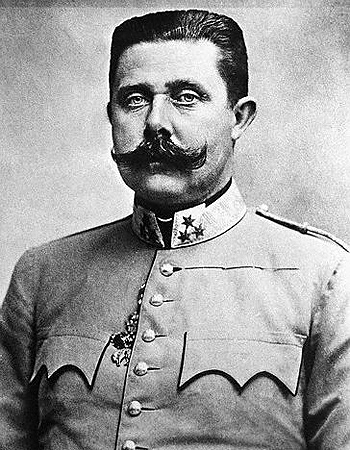
Archduke Franz Ferdinand, the heir to the throne of the Austro-Hungarian Empire was eager to leave Sarajevo. He had opposed the empire’s annexation of Bosnia-Herzegovina when it occurred in 1908 as a “needless provocation of the South Slavs” and their Russian supporters, he knew that the action was “a diplomatic time bomb that could go off at any time.” He had come to Bosnia to help win over the loyalty of the resentful populace and in a sense to consecrate Austrian rule over Bosnia-Herzegovina.

archduke_ferdinand


Franz Ferdinand 

The visit included military maneuvers in the western part of the province away from Serbia to be less provocative, as well as motorcades and official visits to political officials and cultural venues. The Archduke brought with him his beloved wife, Sophie. His marriage to her was looked upon with scorn by hie father Emperor Franz Josef I and the royal family. Sophie, though a child of obscure Czech nobility she and her family were too impoverished for the Hapsburgs, likewise the relationship was scandalous because Sophie had been the lady in waiting to the Hapsburg archduchess who Franz was supposed to marry. He was forced to sign an “Oath of Renunciation” in which he declared that their children would be excluded from imperial succession.

Franz Ferdinand in Sarajevo


Last Meeting with Sarajevo Mayor and Religious leaders 

The final day of the royal visit to the region was Sunday June 28th. The date coincided with the signature of the oath of renunciation as well as a Serbian holy day, the anniversary of the battle of Kosovo Polje in 1389. In that battle the Turks had destroyed independent Serbia. However, that it was and still considered a symbol of national pride and resistance for Serbians, as a Serbia knight had killed Ottoman Sultan Murad I during the battle. Likewise, June 28th 1914 was the celebration of St Vitus day, or Vidovdan, the day set aside by Serbian government and religious authorities as consecrated to all those who sacrificed their lives for the faith and the fatherland. For Serbian radials and nationalists the establishment of a Greater Serbia and the liberation of Bosnia from Austria was a holy cause, that they were willing to give their lives to achieve.

The visit and itinerary had been planned and published for months, and some Serbs began planning to assassinate the Archduke. Members of the militant-terrorist group the Black Hand and its Bosnian offshoot Narodna Odbrana assisted by Serbian military officers developed plans assisted three conspirators, Gavrilo Princip, Nedjelko Chabrinovitch and Trifko Grabezh with travel, weapons and training to accomplish their mission. Once across the border and in Bosnia they linked up with other conspirators where they planned the assassination attempt.

By the final night Franz was ready to leave, and was heard to say “thank God this Bosnian trip is over.” He would have left with the Austrian Chief of the General Staff Conrad von Hotzendorf, but stayed because he was “warned that breaking off the Sunday program would damage Austria’s prestige in Bosnia.”

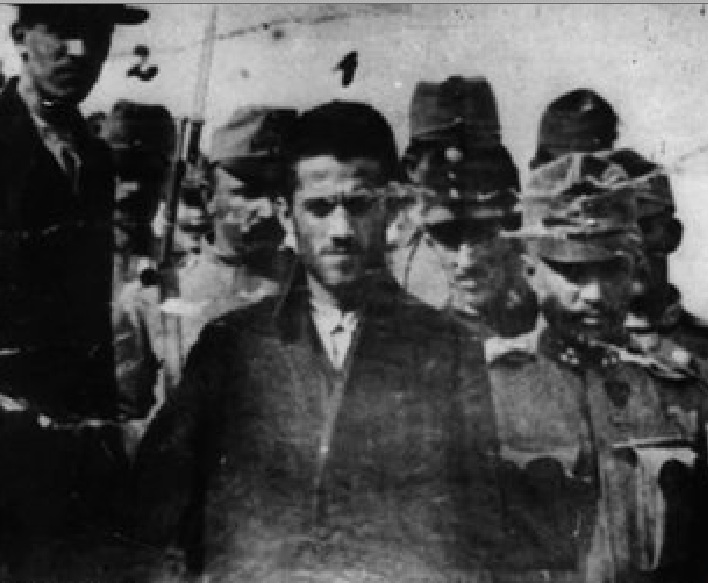
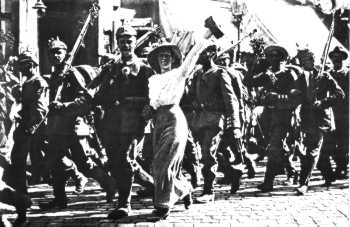
The next morning was uneventful until the Archduke’s motorcade was attacked by a local conspirator who threw a bomb which deflected off the Archduke and his car and blew up under the next car in the motorcade at 10 a.m. The Archduke stopped to check on the wounded and proceeded to city hall mayor and Christian, Moslem and Jewish religious leaders. It was an awkward meeting considering the attempt on his life and following it, he and his party left first to visit the military hospital where the wounded had been taken and then to a final luncheon, a last minute change to the itinerary, skipping a museum visit. However, the word of the route change did not reach the first two vehicles made a wrong turn, and in the confusion as the motorcade attempted to reverse course the Archduke’s vehicle stopped for a few seconds, not more than 8 feet from Princip just after 11 a.m. The Bosnia was surprised by the sudden opportunity and quickly fired two shots from his Browning FN Model 1910 pistol, one which struck Franz in the neck and the other which struck Sophie in the abdomen and by 11:30 both were dead.

princip-arested

Gavrilo Princip after his arrest

In the days and weeks that followed the nations of Europe, each for their own reasons negotiated, threatened and finally mobilized for war, a war that would destroy the political order of Europe that had existed since the end of the Napoleonic wars, kill nearly 17 million people and wound 20 million more. The peace that followed was fraught with peril and followed by a second even more destructive world war in which and estimated 50 to 80 million people were killed, and millions more wounded.

The consequences of those wars, and the Cold War that followed are with us even today. Among the empires that died in the First World War was the Ottoman Empire, whose remains were divided between the English and French in the Sykes-Picot Agreement. That agreement’s arbitrary and indiscriminate redrawing of national boundaries is a large part of the reason for the current unrest in the Middle East, especially the civil war in Syria and the Sunni-Shia war in Iraq.

A wrong turn and two bullets, followed by the and the rest is a century of war, desolation and carnage. Otto von Bismarck had said that “If there is ever another war in Europe, it will come out of some damned silly thing in the Balkans.” The results of the war caused by “some silly thing in the Balkans” are still felt, including the psychological and spiritual effects on peoples and nations. Barbara Tuchman wrote of the period after the First World War: “An event of great agony is bearable only in the belief that it will bring about a better world. When it does not, as in the aftermath of another vast calamity in 1914-18, disillusion is deep and moves on to self-doubt and self-disgust.”

It is sobering to think and reflect on how a wrong turn, a holy cause and two bullets can bring about so much death, destruction and instability.

Peace

Padre Steve+
7 Comments

Filed under History, News and current events

Nothing is as Clear and Certain as it Appears to Be: The Ukraine Crisis

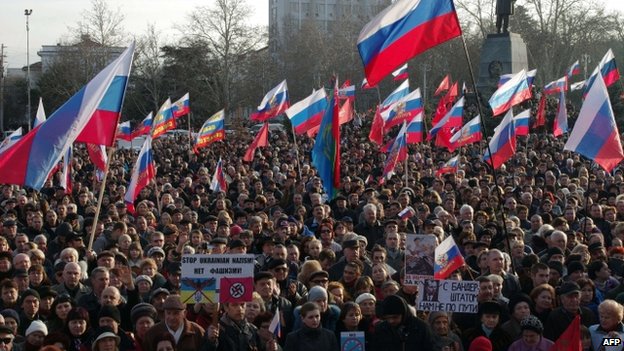
_73179624_021282371-1

“in the midst of war and crisis nothing is as clear or as certain as it appears in hindsight” Barbara Tuchman The Guns of August

There is nothing more uncertain than how leaders and people will react in crisis. We would like to think that we can be certain in our predilections, but we cannot because the reality is that human nature is always at play, and human beings have a penchant for doing things that are not expected.

030114_Breaking_ObamaPutin_640

It did not take long after the showcase of the Sochi Olympic Games for Vladimir Putin to move against the Ukraine and for all practical purposes annex the Crimea. But now after a few weeks it seems that the West is beginning to galvanize in its opposition to the Russian action. Germany is leading the charge from the side of the European Union, with Chancellor Merkel taking the lead. President Obama and Secretary of State John Kerry have been taking a hard diplomatic line while military forces gather.

It appears that targeted economic sanctions are in the offing while the European Union prepares to help supply the Ukraine’s energy needs.

140307064907-02-ukraine-0307-horizontal-gallery

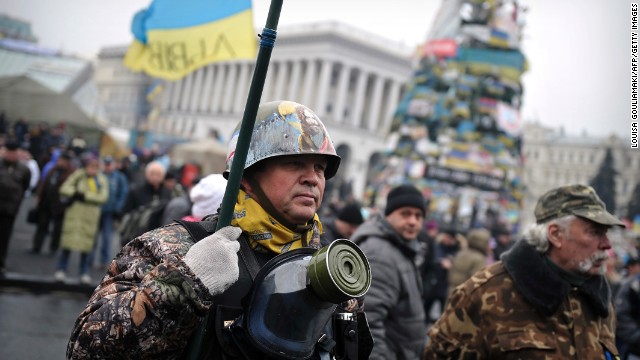
The Russians have blockaded the small Ukrainian Navy in its Crimean ports, it has an estimated 30,000 soldiers in the Crimea and other forces are conducting “exercises” near the Ukrainian border. The Provisional Government of the Ukraine has called up its reserve forces, the United States is deploying naval and air force units to the Black Sea, the Eastern Mediterranean as well as Poland and the Baltic States.

But at the same time this is not the Cold War where two ideological blocks wrestled for domination. Instead the motivations, geopolitical and economic factors that connect the West and Russia make this much more complicated. Money is a big factor and it is of interest to note that a good amount of the resupply of US and NATO forces in Afghanistan is conducted over what is called the Northern Route, which goes through Russia and the Ukraine.

Ethnolingusitic_map_of_ukraine

The situation in the Crimea and the Ukraine is potentially volatile. Any situation that costs the lives of Ukrainians of either Ukrainian or Russian background could spiral out of control. Passions on both sides are running high. We in the West also need to remember that many Russians and men like Putin still feel the humiliation of the end of the Cold War, the collapse of the Warsaw Pact and end of the Soviet Union. Many Russians who even now are not fans of the Soviet system long for the days of empire and Russian hegemony in Eastern Europe.

In 1914 France was motivated by the humiliation that she suffered in 1871 at the hands of Prussia and the loss of Alsace Lorraine. The Russians have a similar attachment to areas where sizable ethnic Russian populations live, including the Eastern Ukraine and the Baltic. One has to remember the words of Otto Von Bismarck who said: “A generation that has taken a beating is always followed by a generation that deals one.”

2014-03-08T151114Z_01_TPE13_RTRIDSP_3_UKRAINE-CRISIS-CONVOY-08-03-2014-17-03-33-245

When looking at why this is happening we have to remember history.  Likewise we have to also remember the historic Russian paranoia when it comes to the influence of Europe and the West on areas that they believe are still part of Greater Russia. Their memory is long and past wounds are still fresh. Thus the blundering of the EU during the Fall of 2013 in its dealings with Ukraine, dealings which looked to the Russians like an attempt to draw Ukraine further away from them helped cause this situation. Likewise the Eastward expansion of NATO in the 1990s and early 2000s following the collapse of the Soviet Union and Warsaw Pact is considered both an insult and threat. The same is true of the presence of the American Anti-Ballistic Missile system in Poland, which is considered by many Russians to be directed at them, not Iran.

The situation is complex and influenced by many factors, and unlike some American politicians and pundits say, it has nothing to do with Benghazi or even what they claim is the “weakness” of President Obama. The roots of this crisis are long standing and diverse and have almost everything to do Russia’s relationship with Europe and very little to do with the United States. Thus for American politicians and pundits to demonstrate their woeful ignorance of history by blaming this all on President Obama is so self serving and transparent that it is embarrassing. But then American politics is almost always a demonstration of ignorance and arrogance.

The problem for the United States is that we have little credibility when it comes criticizing nations like Russia when they do the same as we do. Our actions to invade Iraq in 2003, actions which under the criteria that we laid down at Nuremberg violated international law make it hard for any American leader to criticize another power. This is true even when Putin’s actions, also illegal under international law are no worse and certainly by the historic ties of Crimea to Russia are more justifiable than what we did in Iraq.

Thus the outright hypocrisy of the architects of that invasion like Dick Cheney and Donald Rumsfeld shamelessly attack President Obama for his “weak” response to Putin’s actions are in large part to blame for them. They squandered our international standing and credibility, broke the military and bankrupted the country. They then lay the blame on Obama. By the decisions that they made and the subsequent consequences they tied Obama’s hands.

2014-03-10T173616Z_1863090881_GM1EA3B04DT01_RTRMADP_3_UKRAINE-CRISIS-CRIMEA.r

Sometimes these crisis blow over. Sometimes they stabilize but cause problems that continue for some time after the initial crisis. But there are some times that they take on a life of their own and that the people who think they are directing events end up being caught up in them, often with tragic results. While I do not think this will end in war, the possibility of such cannot be dismissed.

Tuchman in her book The March of Folly: From Troy to Vietnam wrote:

“A phenomenon noticeable throughout history regardless of place or period is the pursuit by governments of policies contrary to their own interests. Mankind, it seems, makes a poorer performance of government than of almost any other human activity. In this sphere, wisdom, which may be defined as the exercise of judgment acting on experience, common sense and available information, is less operative and more frustrated than it should be. Why do holders of high office so often act contrary to the way reason points and enlightened self-interest suggests? Why does intelligent mental process seem so often not to function?”

Peace

Padre Steve+

3 Comments

Filed under Foreign Policy, History, national security, News and current events

Policies Contrary to Their Own Interests: Putin’s New Cold War

140303080112-01-ukraine-0303-horizontal-gallery

“A phenomenon noticeable throughout history regardless of place or period is the pursuit by government of policies contrary to their own interests.” Barbara Tuchman

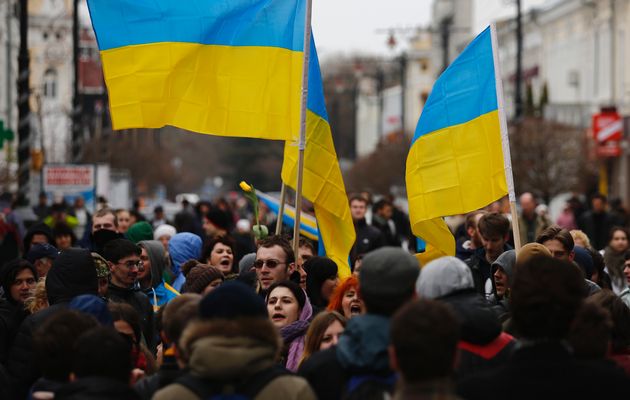
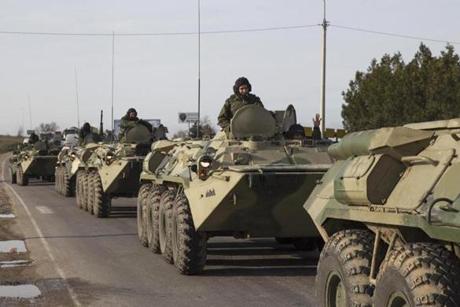
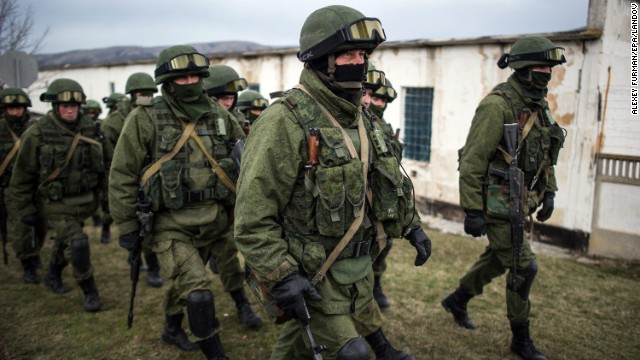
Today Russian forces continued their occupation of Crimea in spite of international outrage. Not only did they continue to build up their forces in Ukraine to the point that they operationally control the peninsula, they upped the ante demanding that Ukrainian army and navy units to surrender by Wednesday or face a “military storm.”

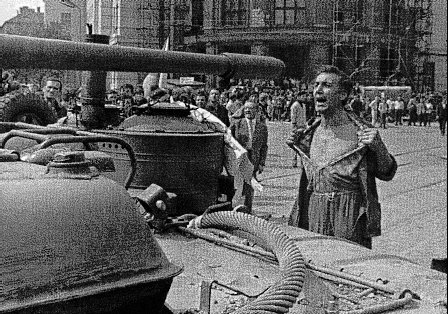
praguePrague 1968

It is something that Europe has not seen since the Cold War when the Soviet Union used military force and violence to put down revolts in Hungary and Czechoslovakia.

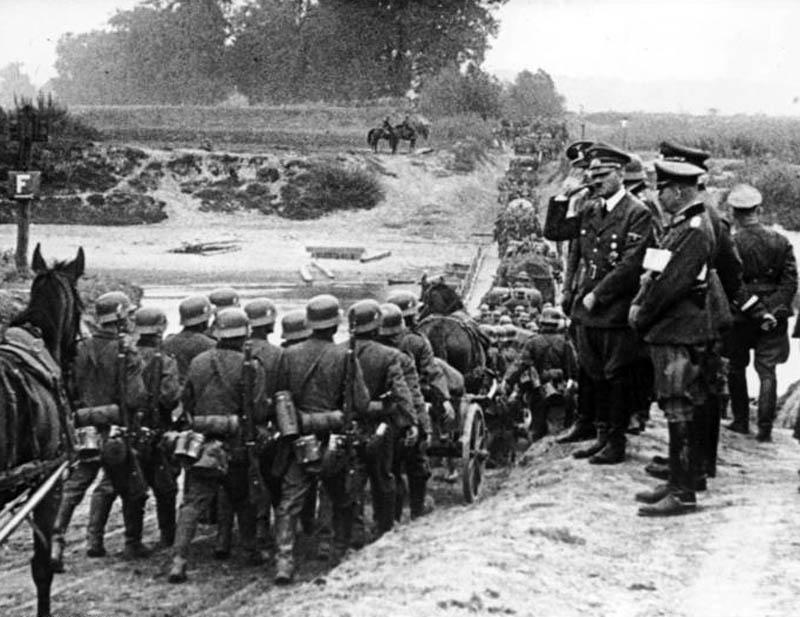
Polen, Parade vor Adolf HitlerCzechoslovakia 1939

However, I think in political terms it is much closer to Hitler’s invasion of Czechoslovakia in 1939 after Britain France and Italy stripped that country of its power by forcing the Czechs to surrender the Sudetenland to Hitler in October of 1938. Up to that moment the European powers bet on the appeasement of the Hitler regime. In a sense over the past decade the West has given Putin free reign to exercise his power over former territories, coercing them and occasionally using economic and even military power to bring them into line.

But now it is Ukraine. a complex region where Asiatic Russia meets Europe. The Ukraine is not Georgia or Chechnya. It is a region that has been a battlefield between Russia, the indigenous peoples as well as Germany, Poland, the Austro-Hungarian Empire and Turkey. It is the dividing line between western Catholicism and Russian Orthodoxy. In the 1850s even England and France found themselves intervening in the Crimea.

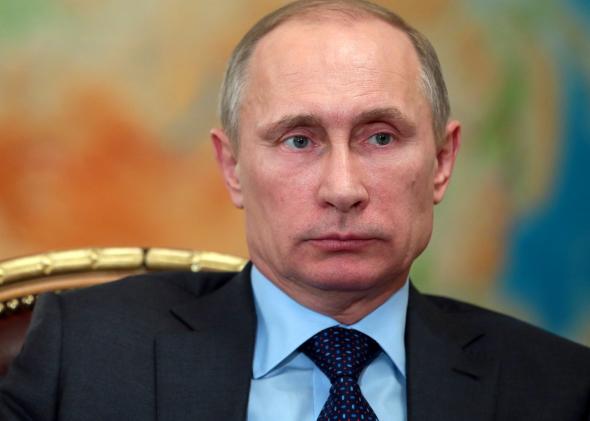
474933475-russias-president-vladimir-putin-attends-a-meeting-in.jpg.CROP.promo-mediumlarge

I believe that Putin under the flimsiest of pretensions has elected to use military force to attempt to coerce the Ukraine back under the thumb of a Russian Hegemon and to frighten the West into not intervening. It is a mistake. Just as in 1938 when Hitler believed that he could continue to steamroll the through Europe without war. In betting on the weakness of the West, Putin is playing the same game. Contrary to the speculation that Putin is doing this as a show of strength it is actually a display of Putin’s domestic insecurity.

Russia is not nearly as economically or militarily strong as Putin acts. There are serious ethnic and social divisions in the country and despite its assertions the Russian economy is much more dependent on the good graces of other nations as it is not. Already following Putin’s move into the Crimea the Russian currency and stock markets are tanking. I suspect that the West will soon impose sanctions that hit Russian economic and banking oligarchs where it hurts which will undercut support for Putin where he needs it most. Likewise I expect that Russia will be expelled from the G-8 and possibly cut off from other international banking and economic organizations.Likewise both the U.S. and the United Kingdom are bound by treaty to protect the territorial integrity of the Ukraine.

140302073009-03-ukraine-0203-horizontal-galleryPutin has had a run of success until now. However his crackdown against dissidents, campaigns against homosexuals and the state supported Russian Orthodox Church assault against other Christian denominations have already undermined his credibility as a world leader.

The invasion of the Ukraine will solidify opposition to Russia abroad, and increase anti-Putin sentiment in Russia. Should the Russian military attempt to invade other parts of Ukraine as they are threatening, Putin will find that he has bit off more than he can chew. His forces are certainly more than a match for the Ukrainian military, but he will not be able to hold or occupy the vast areas of the Ukraine in the face of opposition that will rapidly move toward a protracted insurgency. This insurgency will be supported by nations such as Chechnya which will take the war to the heart of Russia. It will turn out worse for Russia than the invasion of Afghanistan for the Soviet Union.

A new Cold War has already begun, Putin has made sure of that. The world that existed just three weeks ago when athletes from around the world gathered in Sochi for the Winter Olympics no longer exists. The only thing that we can hope is that the new Cold War does not become a hot war.

I am reminded of Barbara Tuchman’s words in The Guns of August: “The muffled tongue of Big Ben tolled nine by the clock as the cortege left the palace, but on history’s clock it was sunset, and the sun of the old world was setting in a dying blaze of splendor never to be seen again.” 

The world that we knew is now changed.

Let us pray for peace.

Padre Steve+


1 Comment

Filed under Foreign Policy, History, national security, News and current events

The Gathering Storm: Shades of 1914 as War Threatens in the Middle East

Israeli Navy Dolphin Class Submarine

“The world tells Israel ‘Wait, there’s still time.’ And I say, ‘Wait for what? Wait until when?’” Benjamin Netanyahu 

The question is not if but when. The tensions between Iran and Israel continue to boil over even as the rest of the Middle East begins to melt down.

Last week on the 11th anniversary of the September 11th attacks Al Qaeda backed forces attack the US Consulate in Benghazi Libya killing Ambassador Christopher Stevens and three others. Militants in Egypt laid siege to the US Embassy while newly elected Egyptian President and Moslem Brotherhood leader Mohammed Morsi dithered torn between his party ideology and the pragmatic reality of the dependency of Egypt on the United States for military and economic assistance. Throughout the region from Tunisia to Indonesia protests, some marked by violence broke out at United States and other Western nations diplomatic outposts.

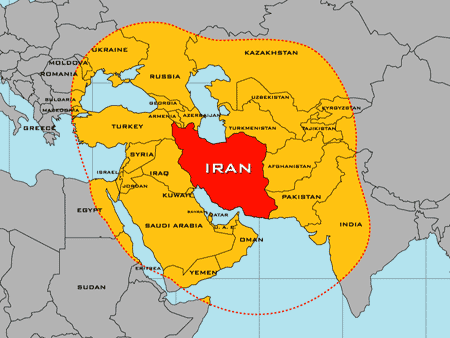
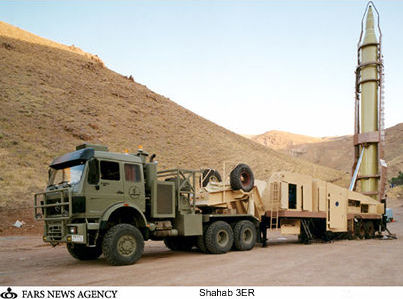
Shahab III Missile Ranges

The Iranians and their Hezbollah allies have repeatedly threatened Israel with destruction and have improved their missile forces significantly ever the past number of years even without nuclear weapons. Prime Minister Benjamin Netanyahu is demanding the United States and the west set “Red Lines” regarding the Iranian nuclear program that would trigger an automatic attack on Iran by the United States.

Like the First World War the tensions, provocations and rhetoric increase even as military forces mobilize and gather in the region. Iran is preparing for massive military exercises involving land, air defense and ballistic missile units from the Iranian military and Revolutionary Guards to begin in October.  Iran admitted this weekend that forces from their Revolutionary Guards are currently operating in Syria placing them in position to directly engage Israeli forces in the event of conflict.

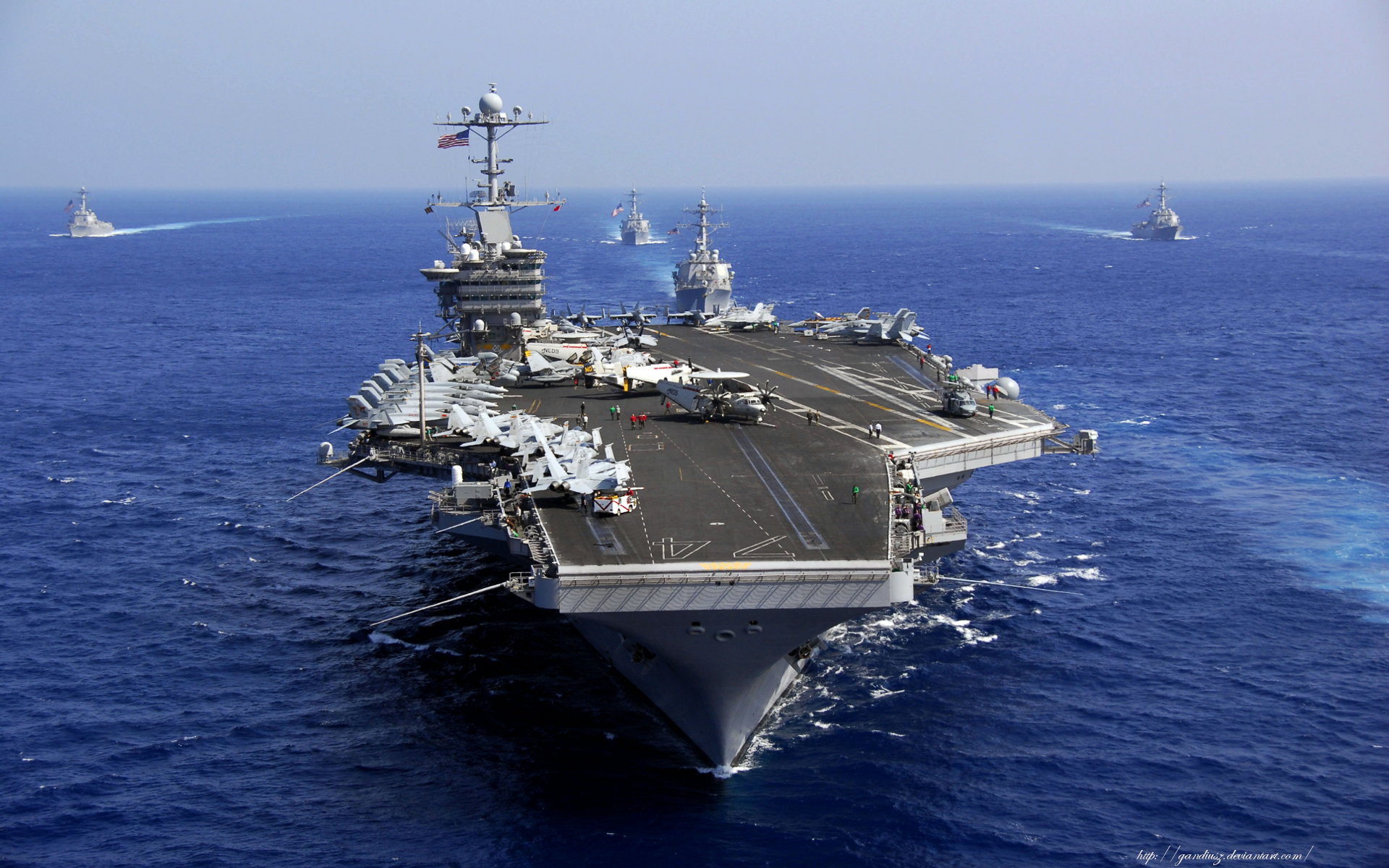
By October the United States will have three Carrier Strike Groups, the USS Enterprise, USS Dwight D. Eisenhower and USS John C Stennis and an Expeditionary Strike Group with an embarked Marine Expeditionary Unit in the region. Additionally warships from more than 25 countries are gathering for exercises designed to counter any blockade of the strategic Straits of Hormuz by Iran. Other ships, including the French Aircraft Carrier Charles DeGaulle battle group and the British HMS Illustrious  “Response Task Forces Group” are in the Eastern Mediterranean and could be in the region within a week. US Navy submarines, both attack and ballistic missile are never far from a threatened area. US Air Force  Fighter Squadrons have been reinforced and it is certain that strategic air force units of B-2, B-52 and B-1 bombers are certainly deployed where they can respond as needed. The build up by all sides is unprecedented.

The countries of the region are on hair trigger alert. Any act, intentional or unintentional by any party could trigger a war that would most certainly bring great destruction to the region but would likely sink the global economy and spread around the world through acts of terror and revolutionary violence.

Numerous reports and Israel government official statements indicate that Israel is ready, to strike Iran, if need be alone to prevent what they believe is an existential threat to Israel. While some believe that any Israeli attack on Iran would be precision strikes aimed at Iran’s nuclear program and ballistic missiles sites. However, most experts believe that an Israeli strike would at best set back the Iranian nuclear weapons program a couple of years and trigger a regional war with very unpredictable outcomes. If the Israeli strike is conventional in nature the Iranians will strike back against Israel, as well as US targets in the region. The US would certainly respond but any war would affect the region and the world economy as oil prices would rise exponentially.

With that in mind it is possible that the Israelis fearing the existential threat of Iranian nukes might use their nuclear forces in a first strike role.

Most experts believe that the Israelis would only use nuclear weapons in a retaliatory “second strike” capacity. The reasoning is that the first use of nuclear weapons by Israel would be against their national interests. That is logical but history is replete with times that nations have acted in ways contrary to logic because the action is deemed “necessary.” It is the same logic that said that the Germans would not violate Belgian neutrality in 1914 knowing that such an action would trigger British intervention on the side of France and Russia. It was believed by most that “the Germans are dangerous but they are not maniacs….” The Germans faced war on more than one front and felt that they had to deliver a swift blow to knock France out of the war in order to defeat Russia. It was a risk that they were willing to take and one which helped lose them the war and set about a series of events that made the 20th Century the bloodiest in human history.

In the current situation many in Israeli leadership may view the use of nuclear weapons to stop an existential threat as a legitimate use of the weapons. Israel does face real threats and those threats are increasing as Iran increases in strength and no longer has traditional rival Iraq to worry about. Likewise the instability of Egypt and the anti-Israeli animus of the Moslem Brotherhood which now leads Egypt has increased the real and perceived threat from that country. An Egypt openly hostile to Israel armed to the teeth with advanced American weapons is a dagger pointed at the heart of Israel. Israel’s leaders may be willing to suffer international condemnation in order eliminate what they consider an existential Iranian threat to ensure their survival and ability to defend against Egypt as well as conventional and unconventional Hizbollah forces operating out of Lebanon and those of Hamas in Gaza.

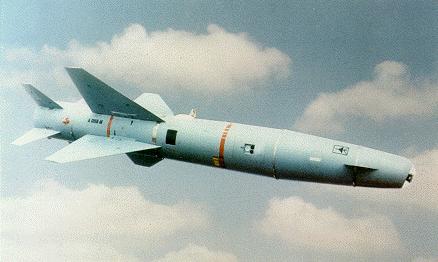
If they were to use nuclear weapons the primary delivery system in such a strike would most likely be Dolphin Class submarines armed with nuclear capable Popeye cruise missiles. These missiles have a 1500 km range and while the missiles could be used in a conventional strike their utility would be limited to precision strikes against unfortified headquarters buildings housing Iranian leadership, or command and control facilities. The numbers of Popeye missiles the Dolphins carry is limited since the majority of Iranian nuclear sites are hardened facilities or deep underground their use against them in a conventional manner would be a waste.

The threat to United States and NATO forces in Afghanistan is great if a broader war erupts. US and NATO forces, already fighting an increasing Taliban insurgency are for all practical purposes surrounded if a war spreads and Pakistan shuts down the southern supply route. Even this week Taliban insurgents scored a victory successfully attacking the strongly fortified joint US Marine and British base Camp Leatherneck-Camp Bastion destroying 6 AV-8B Harrier jets on the ground, damaging more aircraft, valuable hangers and support facilities while killing 2 Marines. A war with Iran would threaten to turn Afghanistan into a trap for nearly 100,000 US and NATO coalition troops.

It could as Barbara Tuchman said of the the Germans of 1914 that the Israelis have “staked everything on decisive battle in the image of Hannibal….” but that the ghost of Hannibal might have reminded the Germans and the Israelis that though Hannibal and “Carthage won at Cannae, Rome won the war.” In mid May and early June of 1914 even before the assassination of Franz Ferdinand Field Marshal Von Molkte and others felt that the scales were tipping against them. He told his Austrian counterpart Field Marshal Conrad Von Hotzendorf that “from now on ‘any adjournment will have the effect of diminishing our chances of success.’” On June 1st Von Molkte said to Baron Eckhardstein,“We are ready, and the sooner the better for us.”

The storm clouds of war are thickening and darkness hovers as the storm gathers. In 1914 the politicians, diplomats and soldiers that realized war would be disastrous were a minority in their respective governments and their warnings went unheeded. In 1914 “war pressed against every frontier. Suddenly dismayed, governments struggled and twisted to fend it off. It was no use….” As the sun set and the lamps of London were lit on August 4th 1914 Sir Edward Grey said to a friend “The lamps are going out all over Europe; we shall not see them lit again in our lifetime.” It is as if we are watching the same drama play out in the Middle East now.

Peace

Padre Steve+
 

3 Comments

Filed under Foreign Policy, middle east, Military, national security, News and current events

The Miscalculations of July

The Assassination of Archduke Franz Ferdinand 

“War is the unfolding of miscalculations.” Barbara Tuchman

Sometimes I miss the Cold War and the ever constant threat of Nuclear annihilation.  Not that I looked forward to getting nuked and having the world blown out from under us, but back in those days it was pretty much for sure that the United States and Soviets would keep their missiles in their silos no matter how much they jibber-jabbered. Things did get awfully sporting during the Cuban Missile Crisis and during the 1973 Yom Kippur War but cooler heads prevailed. Yes there were incidents but we survived. We fought proxy wars and helped despots that we liked while the Soviets did the same. There was an air of predicability as both sides restrained their client states. Those were the days, we only really had to worry about two sides keeping things under control. Yes, those were the days… not really but compared to now I wonder.

Now, it seems that the shit is really starting to hit the fan all over the world, especially in the Middle East, Southwestern and Central Asia and even Europe. As day does into day it is hard to keep track of all the boiling cauldrons of hatred and misery and the vast numbers of political, religious, military, economic and ideological “leaders” that pour gasoline on the fires that stoke them. While I cannot definitively predict exactly where the disaster of war will begin or what the reasons that men will justify it; I do know that whenever, wherever and for whatever reasons it will be because of a failure of political, religious, military and economic leaders to prevent it. Abba Eban said “History teaches us that men and nations behave wisely once they have exhausted all other alternatives.”

*Iran continues to threaten to close the Straits of Hormuz and unleash missiles on neighboring countries and Israel. 

*Israel is making plans for pre-emptive wars in Iran and Lebanon.

*The EU Oil Embargo on Iran has gone into effect.

*In Lebanon Hezbollah, the proxy army of Iran has made major strides in its ability to strike Israel and border skirmishes are now occurring between Israeli forces, Hezbollah fighters and even the Lebanese Army. 

*Syria’s Assad dictatorship is killing vast numbers of its own people and violence from its civil war is spreading to Lebanon. 

*Turkey has reinforced its borders with Syria after one of its aircraft was shot down by Syrian forces. 

*The United States sends additional naval and air forces to the Persian Gulf while maintaining a strong ground force in Kuwait. 

*Iraq, still beset by sectarian violence and undermined by Iranian agents is unable to maintain its traditional role as a balance to the Persians. 

*In Egypt a government led by the Muslim Brotherhood has taken power and threatens to end the peace with Israel even as they contend with the still powerful Egyptian military, and more secularist Egyptians for control of the country. 

*The United States and NATO are bogged down in a war in Afghanistan that cannot be won and works with a government that cannot be trusted and a military whose members are killing more NATO troops than actual “enemy” forces.

*Pakistan teeters on the brink and supports Taliban and Al Qaida forces even as the United States wages a clandestine war against those forces ensconced in their Pakistan bases. 

*The United States fights a drone war in Yemen as that country’s military fights Al Qaida Yemen forces, forces that are now more capable of harming the United States and its interests than those based in either Afghanistan or Pakistan. 

*Violence in the Horn of Africa spread by the Al Shabaab terrorist network threatens to spill over into neighboring countries. 

*In Nigeria Moslem extremists burn Christian churches and threaten that country’s oil production and economy. 

*European nations stand on the brink of disorder and anarchy should nations begin to default on their debts and abandon the Euro. 

*Simmering long term disputes in the Balkans continue to cause worry about more war and instability.

*Fascist political parties and movements are gaining momentum throughout Europe, especially in Eastern Europe.

*Leaders of all of nations make bellicose statements meant to stoke the passions of their most zealous political supporters often invoking apocalyptic visions of the future.

*Other leaders attempt to maintain a precarious balance in order to ride out the wave of change, hatred and discontent sweeping the Middle East and Europe.

*Religious and political leaders do their best to demonize anyone that does not agree with them or their version of “the truth.” 

*The war profiteers sell arms in abundance to every side to maximize their profits by legal and illegal sales and transfers.

I could keep going but the point is that eventually someone is going to miscalculate in one or more of these conflicts or situations and events will take on a life of their own. Leaders will commit themselves to wars that they think that they will be able to manage and like 1914 things will go horribly wrong. The hatreds of peoples, many which go back hundreds of years will spill out against their neighbors.  Martin Luther said “War is the greatest plague that can affect humanity; it destroys religion, it destroys states, it destroys families. Any scourge is preferable to it.”  Unfortunately it seems that we are heading down a path that will bring great suffering and misfortune all because of all types of leaders who are willing to take a chance on war rather than to do the hard work of peace. Confederate General Robert E Lee wrote about the American Civil War “The war…was an unnecessary condition of affairs, and might have been avoided if forbearance and wisdom had been practiced on both sides.” 

I wonder if any of the leaders now waging war or preparing for war will say the same when the coming wars are over, or if they will find words to justify the suffering that they have inflicted on millions of people. I imagine that it will be the latter.

Peace

Padre Steve+

1 Comment

Filed under History, middle east, national security, Political Commentary

Tension in the Gulf: Don’t Miscalculate; Speak Softly and Carry a Big Stick

“War is the unfolding of miscalculations.” Barbara Tuchman

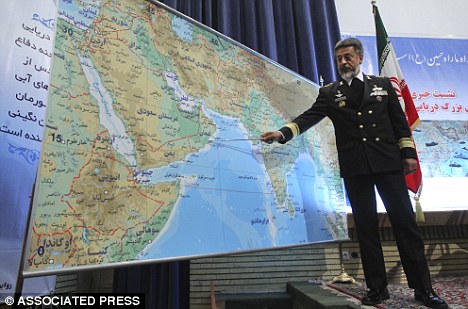
Iran’s navy chief Habibollah Sayyari briefs media on the naval exercise 

The greatest danger in the current war of words between Iran and the United States is the danger that the Iranians one side or the other will miscalculate the will, resolve and strength of the other.  Teddy Roosevelt made the comment “speak softly and carry a big stick.” The Iranians have been shouting loudly and brandishing a small stick and if they are not careful they will bluster their way into a naval war that they cannot win and that will cause significant economic and physical disruption in the region.

The Iranian Navy and Revolutionary Guards Naval Forces are about halfway into a 10 day series of exercises in the Gulf of Oman, the Strait of Hormuz and the Northern Arabian Gulf, or what they call the Persian Gulf. Iranian leaders have increased their rhetoric in regard to closing the Strait of Hormuz if more sanctions are leveled against them for their nuclear program.

The bellicosity of the Iranians comes at a time when they are feeling internal political pressure from Iranian young people, as well as external diplomatic and most likely espionage campaigns.  The latter are designed to slow down or halt their nuclear program which most analysts now believe to be designed to produce nuclear weapons.

For what it is the Iranian Navy can threaten the strait and maybe even close it for a limited time. It is possible if they ever launched a surprise attack on an isolated US or Western warship using their “swarm” tactics close inshore to Iran in the constricted waters of the strait or in a narrow part of the NAG that they could sink or cause severe damage to it.  They would probably mine the straits if they could do so before hostilities began or before sufficient forces could be deployed to stop them. Likewise their missile forces and special operations forces could cause some damage and chaos in the Gulf but the repercussions would isolate and devastate Iran.  However closing the strait or attacking a US or Western warship would be the end of Iran’s naval forces and cause more damage to the country than its leaders are willing to accept at least right now. The Iranians would find that they were fighting far more than the United States Navy should this happen and their Russian and Chinese supporters would more than likely do everything possible to dissuade them from trying this.  Since China imports the bulk of its oil from the Gulf it is unlikely that they would support the Iranians.

While such a direct attack is unlikely the possibility of an accidental war caused by miscalculation on the part of one side or the other is always real and should the Israelis strike Iran’s nuclear facilities Iran would certainly retaliate against Israel but also US Forces and installations in the Gulf and probably against the Gulf States and even Iraq.

USS John C Stennis (US Navy Photo)

Regarding how such a campaign would be fought the United States would stand off a safe distance and pound Iranian naval, air and coastal defenses and not allow Iranian surface ships to get close enough to make a swarm attack.  This is a big reason that the USS John C. Stennis transited the straits and entered the Gulf of Oman (GOO).  Operating in the open seas gives the blue water US Navy the edge. The Iranian navy’s ships lack the range and endurance for sustained operations at sea and could not sustain a blockade. US attack submarines would hunt down the Iranian Kilo class subs before they could become a threat and US Naval Aviation assets would sweep the surface assets of the Iranian Navy and Revolutionary Guard Naval Forces from the sea while destroying Iranian coastal defenses on the islands in and the Iranian side of the strait.  Once the strait was cleared tanker traffic would resume and Iran would be the biggest loser.  History shows time and time again that light coastal naval forces are no match for a professional seagoing navy even if they score an occasional victory.

Much has been made about Iranian claims to have tracked the USS John C Stennis as she transited the straits.  That is nothing new, the Iranians have air, sea and land surveillance of the narrow straits. The fact is that US ships transit the strait and its approaches on high alert and have done so since the Tanker Wars of the 1980s.  Every Iranian move is watched by the US Navy.  Likewise while transiting the strait the ships of both sides communicate with each other regarding navigation.  It is standard practice.

Since I believe that the Iranians despite their rhetoric are far more prudent than some believe and that they will not launch an unprovoked attack. Even if they succeeded in temporarily closing the straits and even scoring some kind of naval victory by sinking a US ship the victory would be extremely short lived. US and other forces would stream to the region and devastate all that is Iran. The costs for the Iranians and their long term goal of regional hegemony would be too great for them to intentionally start a naval confrontation in the Gulf.  However the chances of either side miscalculating and stumbling into war should not be underestimated.

The biggest danger now is the potential for miscalculation but Iran’s long term goal of dominating the Gulf and acquiring nuclear weapons will probably keep them from attempting anything of this sort. That said there are factions in Iran that could try to use the threat of new sanctions to force a confrontation in the straits and for that we must be ready to meet the threat.  Iranian threats should not be disparaged nor their political and military will underestimated. To underestimate an Iran’s capabilities and will are extremely dangerous. At the same time we should not overestimate their capabilities and yield to their threats when they threaten to cut off the flow of oil from the Gulf.

The United States needs to follow Theodore Roosevelt’s advice and remember history as we follow the situation and ensure that whatever Iran does that we will not be surprised or unprepared.

Peace

Padre Steve+
Leave a comment

Filed under Foreign Policy, History, middle east, national security, US Navy