Tag Archives: depression

Facing the Darkness that Lurks Behind Trauma

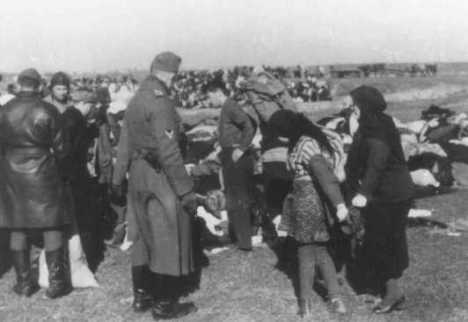
The Einsatzgrüppen: The Banality of Evil

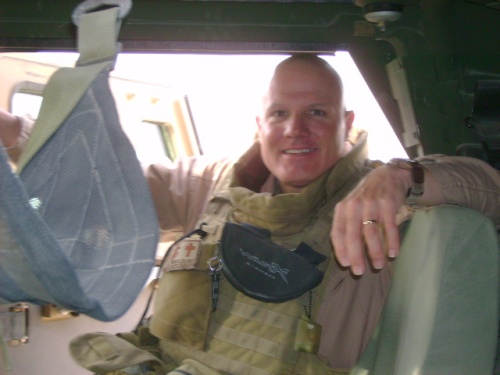
I am in the second day of my conference and as I noted yesterday that the presenter, Dr. Robert Grant is dealing with spirituality and trauma.  As was the last time I listened to him this conference is full of good information.  For me though it is not merely information for information sake, but something very personal having gone through the living hell of a psychological, spiritual and physical collapse following my tour in Iraq and battle with chronic PTSD.  For me it was passing though the abyss and when I emerged I was a changed man.

Today Dr. Grant began with some existential truths about life which have to be acknowledged.  The basic list is his but I have taken those thoughts and ran with them.

Everyone Dies…. We can’t get around this one a recent study said that 96% of Americans will die someday.

No Guarantees…. We are not guaranteed anything in this life. You can live right, maintain good health, treat others right but still can meet with tragedy, betrayal and abandonment. 

No one can cover all contingencies…. No matter how well we plan there will be unanticipated events in life that shred our plans.  The old saying that “no plan ever survives contact with the enemy” is true.

The things that we sometimes believe are solid and long lasting are often transitory in nature…. Even things that we think are solid and will last to the end of time change, deteriorate or dissolve over time

We and our world are finite…. We have a beginning and an end and our finiteness is sandwiched between the creation and the consummation. Dietrich Bonhoeffer talked about “living in the uncomfortable middle.” Bonhoeffer was right, we don’t know the beginning because we were not there and we do not know the end because it has not yet happened.

Evil and malevolence exists in individuals, organizations and systems, even those that we esteem highly…. One only has to look at the number of trusted people and organizations that have perpetrated and covered up their own evil acts to know the truth of this. 

Nothing exposes these truths faster than trauma.  It does not matter if the trauma is impersonal and the result of a natural disaster or the result of individual or corporate evil and malevolence, be it physical, psychological or spiritual trauma the effect is often destructive.

In response to these facts we all as well as our society and culture develop patterns of denial about these existential truths.  They are truths that most of us don’t want to face and which we often will do anything to avoid most often attempting to find meaning and comfort in materialism and consumerism. Others seek a “solid” faith in more fundamental branches of their religious tradition.  Still others see to recreate a world that supposedly existed before our time attempting to roll back the clock to a time when the world was right. This is true especially in our political life, progressives think back to the Great Society or the New Deal, while conservatives tend to look back to what the Founding Fathers wrote or the ones that they agree with wrote.  The overarching theme, be it in the life philosophy, religion or political-ideological arena people seek to create a world that is stable, where they can exist in their comfort zone free of trauma and free of anxiety.  However the experience of trauma often blows such constructs into a million pieces.

The fact is that the comforts and protections that we seek refuge in are often fleeting or the myth that we have created for our self protection.  Such beliefs are often illusions.  One thing about trauma is that it tends to shake one’s world.  In fact trauma can destroy long held belief structures including faith in God, humanity and deeply held beliefs about life and one’s place in the world. Religious beliefs, political ideologies and belief the righteousness of one’s country, friends, family and heroes can be devastated when trauma picks the lock of our soul and reveals our vulnerability.  Such events including war, natural and manmade disasters, the loss of loved ones to death, divorce or the loss of one’s position in life, work and safety net all can be events that trigger crisis and reveal the startling truth that we are not invulnerable.  The recent earthquake and Tsunami in Japan is a classic example as it has shaken the long held beliefs of the Japanese people regarding the respect that they have for their government and corporations.

Collectively as Americans we have experienced numerous national traumas in the past 10 years beginning with the 9-11 attacks.  We have seen war, financial disaster and numerous natural disasters which have impacted our collective psyche as a nation.  In response we elect to deny the effect of trauma on us as individuals and on our society.  Politicians seek to find quick material fixes to a greater problem which is both spiritual and existential.  Simply put we seek to treat the symptom rather than the greater problem which is that we have been so shaken that we have stopped believing in our nation, our fellow human beings and sometimes even the Divine.

We do the same as individuals because the darkness of trauma and the malevolence of those individuals and systems, governmental, corporate and ecclesiastical that inflict trauma on us is so great that we bear not to face them and face further trauma.  The impact on individuals is often devastating as the perpetrators often use their power to dehumanize people.  Thus facing the evil is to expose one to even greater danger.  Thus the more common reaction is to edit the trauma, sealing it off so that we can reenter the safety of our protected sandbox without having to face the darkness that exists.  The malevolence of evil, or what Hannah Arendt called the “banality of evil” manifests itself in ways that most of don’t ever want to face, thus the damage done by the trauma remains unhealed.

The problem is in order to really experience healing we have to be willing to face that darkness without succumbing to it.  To do this requires not only facing the existential truths about ourselves but also uncomfortable truths about respected individuals,  government, corporate and ecclesiastical organizations and systems which perpetuate trauma.   Most of us do not want to go there.  I know I didn’t until my crisis became an existential one where I had to face the darkness or try to cover it up.  For me it was a crisis of faith in God, my church and even in the actions of my government and the political party that I had been loyal to for 36 years.

The journey was painful but in time I began to recover beginning a process that continues to this day and which I expect will be part an ongoing part of my life.  In the process I know that I have changed hopefully for the better.   As I began my recovery I found that not everyone understood, in fact when I began to write about my faith journey it cost me friends and resulted in me being asked to leave my church.  To me it seemed that some people especially in the church were more comfortable with me being damaged and quiet than recovering and posing difficult questions especially when I deviated from the party line.

I found that many people did not want to walk with me through those dark times and I can understand why not.  To walk with someone through the darkness exposes us to that darkness and sometimes takes us to places that we would rather not go places that lay outside of our safety zone.  However those that did walk with me, those who held me but let me walk though the crisis without trying to force feed me formulas for success or what I needed to do to “be healed” when I was in free fall gave me the freedom to experience healing. Part of that was healing was spiritual, God’s grace became real again and not just a concept. Part was psychological as I became more stable and had fewer symptomatic episodes, and part was physical as the nagging injuries healed and I was able to reassert control over my diet and exercise.  Finally part has been relational as I have started to rebuild the relationship that I have with my wife Judy because I had neglected that relationship for far too long and when I came home from Iraq I did her no favors.   A few weeks ago she told me that she felt that she had me back for the first time since Iraq.

I have been through the abyss and have emerged from it different but I think better. I still have work to do because I know that I am still full of issues.  I still have anxiety at night, trouble sleeping, especially without medication.  Other times I can experience bouts of depression and anxiety and on some occasions still battle anger and occasionally rage when I feel endangered or see injustice being inflicted on others. I still have some measure of hyper-vigilance and hyper-arousal and I am much more aware of my surroundings than I used to be.  Even in ministry I am careful what I share with people. I figure on this website people can pick and chose what they want to read, but when counseling or teaching I have to be more careful.  I know that I have some deep work to do especially in relation to forgiveness of those people and systems that I felt hurt or betrayed me.  I don’t know how all of that will work out but that is part of the journey.

In the mean time I will walk in faith and hope even knowing that some of the answers that I seek will not always sit well with me or others. But then such is life.

Peace

Padre Steve+
5 Comments

Filed under film, PTSD, traumatic national events

Faith and Life: A Meditation for those that Doubt

Padre Steve gets a little advice from Molly

I am coming up on three years since I returned from Iraq and experienced my crisis in faith and belief that for nearly two years left me as a practical agnostic.  During that time when it was hard for me to even believe that God existed and if he did exist even cared about me or others I was forced to wrestle with faith and belief from the perspective of a doubter.  This was not comfortable from me because from an early age I had a real faith in God and in Jesus. Likewise I have always been one that tried to think through the implications of faith and belief but because I am a historian and theologian tended to look at things from the perspective of a historian or theologian trying to convince others of the truth using Scriptures, the Creeds, the Councils and what great theologians and Church leaders taught to convince people of that.  I was rather good at the art of polemics which I think was one of the reasons some of my seminary classmates asked me why I was in seminary and not in law school. That was not a compliment in my seminary.

Now I do not want to discredit the importance of history and theology or the roles of historians and theologians in the church.  Far from it, I still rely on that knowledge and seek to understand both better. In fact for me faith and life is connected with both and since coming back I have worked to better integrate these subjects into my spiritual life so that they are not simply something that I do but a part of who I am.

That being said as I dug my way out of my PTSD and anxiety ridden life, I felt alienated from God and God’s people.  In fact I felt abandoned by them I struggled to believe again. It seems to be my experience that Christians especially clergy seem to treat doubters and those in spiritual as if they are radioactive.  The only ones that seemed to understand were those going through similar trials and the first person who asked me how I was doing with God was not a pastor, chaplain or bishop but a psychotherapist. It was that therapist who made it one of his goals to help me be able to reconnect with God and was not threatened by the anger, frustration and alienation that I felt from God and the Church.

Eventually faith began to return but it was in the simple performance of the Sacrament of the Sick and Dying in the hospital that I worked where faith began to return.  I have written about that in a number of articles linked here so I will not rehash those details.

A Sea of Contradictions: My Life and Faith since returning from Iraq

Faith Journey’s: Why I am Still a Christian

God in the Empty Places…Padre Steve Remembers the Beginnings of Padre Steve’s World

Doubt and Faith: My Crisis in Faith and Why I am Still a Christian an Advent Meditation

Raw Edges: Are there other Chaplains out there Like Me?

The Church Maintained in Love: Maintaining Integrity and Preserving Relationships When Asked to Leave a Church

However there is a quote that I used to lead off one article that I will mention from the German Pastor, Theologian and Martyr Dietrich Bonhoeffer:

“Many people are looking for an ear that will listen. They do not find it among Christians, because these Christians are talking where they should be listening. But he who can no longer listen to his brother will soon be no longer listening to God, either; he will be doing nothing but prattle in the presence of God, too. This is the beginning of the death of the spiritual life, and in the end there will be nothing left but spiritual chatter and clerical condescension arrayed in pious words… never really speaking to others.”

Since I know that there are pastors, chaplains and other Christians out there who are experiencing a crisis in faith I just want to say that you are not alone and that there is life after the abyss.  I have faith again in God, working on that faith with God’s people and I believe again but I also doubt and have questions.

Faith and belief for me now is more in caring for God’s people and trying not cause further alienation to people who already struggle with faith, life, depression, anxiety and those that are often marginalized by the Church to include those not of the Christian faith, men and women that have experienced the trauma of war or crimes committed against them, abuse of all kinds as well as people of more “liberal” political beliefs and Gays and Lesbians.  Somehow I think the community of faith is enriched by those on the fringe of the “Christian” world and that God still cares even when Christians don’t.

Please know that while I am still in the process of recovering faith and reordering my spiritual life to make it less rote and more authentic that I believe that God cares for everyone. One of my favorite scriptural passages 2nd Corinthians 5:18 is included in the Lake George Benediction which I will close this article with:

“As you leave this place always remember the Gospel: God was in Christ reconciling the world to himself counting men’s sins not against them. God loves you, God is not mad at you and God will never leave you or forsake you. May Almighty God bless you, the Father and the Son and the Holy Spirit. Amen.”

Peace

Padre Steve+


18 Comments

Filed under christian life, faith, Pastoral Care, philosophy, Religion

Struggling with Faith and God at Easter

“God weeps with us so that we may one day laugh with him.” 
Jürgen Moltmann

Easter Sunday is past and we are now in the Easter Season I was thinking today on encounters that I have had with Christians of various denominations who have suffered a crisis in faith or loss of faith due to some kind of trauma in their lives which gets worse at Easter.  For these people the time in which their churches celebrate Christ’s resurrection becomes their own little acre of Hell on earth.  Having known plenty of these people I can say that this phenomena is one of the more tragic aspects of the season when people who at one time felt the presence of God in their life only sense emptiness and aloneness which sometimes becomes a feeling of hopelessness where even death appears more comforting than life in the present.  I write this because I really believe that these often very sensitive and wonderful people are either ignored or not even seen by most of their fellow church members and that many if not most pastors and priests are either unaware of them, uncomfortable around them or irritated by them because they don’t respond like “normal” people do to the message of Easter.  I have found from my own experience returning from Iraq that Easter despite the message of resurrection and hope often triggers a despair of life itself when one no longer senses the presence of God and feels alone against the world, especially in church.

Many times the crisis of faith is caused by prolonged depression, PTSD or other trauma often involving family members, clergy or other trusted authority figures in their lives.  Sometimes the trauma is due to a physical injury, perhaps a near death experience due to an illness, combat or accident and can be neurological as in the case of Traumatic Brain Injury or TBI not something that routine counseling either psychological or pastoral or an anti-depressant medication will correct.  In my case it was PTSD and chronic pain and insomnia which overwhelmed me and along with a crisis of faith triggered such hopelessness that I barely held on for almost two years.

I remember when I first started dealing with this in others while in seminary that I was of the mind that if someone was in the midst of a crisis in faith if they read the Bible more, prayed more and made sure that they were in church that things would work out.  I believed then that somehow with counseling, the right concept of God and involvement in church activities that God would “heal” them.  Call me a heretic but that line of thinking is nice for people experiencing a minor bump in their life but absolutely stupid advice for people who are severely traumatized or clinically depressed and suicidal who no longer percieve the presence of God in their lives.

I cannot condemn those who have lost their faith or are wavering in their faith due to trauma, abuse or other psychological reason. So many people like this have been victimized by family, teachers, clergy other authority figures or physical trauma related to accidents, near death experiences or combat that it is mind numbing.  The fact that I went through a period for the nearly two years where I was pretty much an agnostic praying to believe again because of my PTSD injury incurred in Iraq that felt hopelessly isolated for the first year after my return until I finally reconnected with others and began to feel safe again gives me just a bit of an idea at what these people are going through.  My isolation from Christian community and sense of despair during that time showed me that such a loss of faith is not to be trifled with or papered over with the pretty wallpaper or neat sets of “principles” drawn up in the ivory theological towers by theologians and “pastors” who refuse to deal with the reality of the consequences of a fallen world and their impact on real people.

Sometimes the damage wrought on people makes it nearly impossible to comprehend a God who both cares about them and who is safe to approach.  My experience came from Iraq and the trauma of my return and were absolutely frightening so much so that I left a Christmas Eve Mass in 2008 and walked through the dark wondering if God even existed.  Now with help and the deliberate action of my boss and co-workers to protect me as I recovered, received therapy and recover were key factors to being able to step back from the abyss. For those abused by parents or clergy this is I think an even deeper wound one in which the very concept and understanding of God becomes skewed in the minds and hearts of the victims.

The feeling that people who go through this crisis or loss of faith almost always mention to me is that God no longer speaks to them.  The feel cut off and even abandoned by God and it is not simply depression that they are dealing with but despair of life itself when death or just going to sleep is preferable to living.  This overwhelming despair impacts their relationships especially with their family and frequently will destroy families as the spouse grows weary and loses hope seeing their loved one get better.  It is if they never are able to leave the “God forsakenness” of Good Friday and cannot climb out of the tomb.   For some the pain is so much the last and previously unthinkable alternative of suicide becomes the only course of action that they think will help.  Such thoughts are not simply narcissism as some would believe but from the “logical” belief that their family, friends and loved ones would be better off without them.  I have seen this too many times to count. 

It is hard to reach out to people in this situation.  I have to admit in my case that it was only people who chose to remain with me and walk with me through the ordeal in spite of my frequent crashes, depression, anger and even rage that helped get me through the worst of this.  However I’m sure that my condition burned some people out.  There are some that would not walk with me as I first began to go down and the sad thing is that many were ministers and fellow chaplains.  In some ways I don’t blame them at the same time the first person that asked me how my spiritual life “or how I was with the Big Guy” was my therapist.  When I reported to my current duty station I was shocked to find Chaplains who were willing to come alongside of me, even when they didn’t have the answers and remain with me. 

The topic of a loss of faith or the reality of feeling God forsaken is had to deal with.  It is seldom dealt with in many seminaries or Bible schools because it is not comfortable or something that you can “grow your church” with.  But the reality is there are more people going to church praying for an answer who no one reaches out to, in fact they are often invisible amid the busyness of program oriented ministry. 

It is my prayer that this post will help people be able to reach out to those crushed under burdens that they can no longer bear.  It is not enough simply to tell them that “God won’t give you more than you can bear” when they have been beyond the “red line” longer than one can imagine.  They want to believe that scriptural principle but no longer believe because God is no longer real to them. 

Yet scripture plain teaches that we are to “bear one another’s burdens, and in this way you will fulfill the law of Christ.” As Dietrich Bonhoeffer said      “We must learn to regard people less in light of what they do or omit to do, and more in the light of what they suffer.”  It is our willingness to be with people in their suffering that is one of the true marks of the Christian.  Being with someone in triumph is far easier than with those who suffer the absence of God.  It is presence and love not sermons that people who have lost their faith need as Bonhoeffer so eloquently said “Where God tears great gaps we should not try to fill them with human words.”

I do pray that as we celebrate the joy of the Resurrection that we will not forget those who despair of live and feel as if they are “God-forsaken.”  It is not easy as those who walked with me can testify but in doing so there is the chance that such action will prevent tragedy.

Peace

Padre Steve+

So anyway, my best to everyone and please be safe….

Padre Steve+

7 Comments

Filed under christian life, faith, Pastoral Care, philosophy

Doubt and Faith: My Crisis in Faith and Why I am Still a Christian an Advent Meditation

Note to my readers. This is an older article that I wrote back in December 2009, when after nearly two years of struggle with the effects of PTSD, depression, anxiety, loss and a crisis of faith that made me for all practical purposes an agnostic. I think it is timely now, not because of what is currently going on in my life but rather because of the stories I hear from those that struggle with faith at Christmas. Peace, Padre Steve+

Lord I believe, help me in my unbelief.

A new liturgical year is upon us and with the season of Advent Christians look forward to the “Advent” of Christ both in looking forward to the consummation of all things in him as well as inviting him back into our lives as we remember his Incarnation, as the Creed says “For us and for our salvation he came down from heaven: by the power of the Holy Spirit he became incarnate from the Virgin Mary, and was made man.”

At the same time for a lot of people the season of Advent and Christmas are incredibly difficult and times where faith, already difficult becomes nearly impossible.  For many the season is not a time of joy but depression, sadness and despair.

For me Advent and Christmas were times of wonder and mystery and I really found it difficult to understand how anyone could be depressed during the season.  Until I came home from Iraq…

While I believe the Scriptures and the Creed this I have to admit that for the last 22 months since returning from Iraq I have doubted, been depressed and at times felt like God had abandoned me.  Things were so difficult last year that I went to the Christmas Eve Mass with the Abbess and was crashing so hard that I had to leave. I walked through the night for over an hour until I got home, a walk that is a maximum of 10 to 15 minutes from the church.  It was probably the lowest point of my life as a Priest, chaplain and Christian.

Since I returned from Iraq my life has been a series of ups and major downs. In dealing with PTSD, anxiety, depression and chronic insomnia as well as my dad’s painfully slow degeneration with Alzheimer’s disease to the point that he no longer recognized me on my last visit, I have struggled with faith.  Prayer became difficult at best and as I dealt with different things in life I knew that I didn’t have any easy answers.  Going to church was painful. Chaplain conferences even more so, except being with others who struggled like me.  About the only place that I could find solace was at a baseball park.  For some reason the lush green diamond comforts me.

I find that the issue of doubt is not uncommon for a lot of people, including ministers of all faiths. For those of us who are ordained and view our ministry or our Priesthood as a sacred vocation this is difficult to deal with.  Ministers and others who suffer a crisis in faith, depression or despair endure a hell because it is not supposed to happen to us. I do believe that for many people a religious leader who has doubts and struggles with his or her faith is disconcerting.  I can remember a myriad of situations where pastors due to a myriad of reasons experienced a crisis in faith many of which involved great personal loss such as the loss of a child, a failed marriage, being let go or fired by a church, or experiencing a major traumatic event.  These were good people and quite often instead of being enfolded by a caring community of faith they were treated as faithless, failed and worthless, often abandoned or excluded from their faith community as if they were criminals.

When I was younger I used to look askance at pastors who had given up, lost their faith, or abandoned the ministry for whatever reason.  As a young seminary student and later young chaplain I had a hard time with this, it made no sense to me and I was somewhat judgmental until I started to get to know a decent number of “broken” ministers from various faith traditions that a lot more went into their decision than simply not being tough enough to hang in there until things got better.  At the same time I never thought it would happen to me. I thought I was “bulletproof,” that it could never happen to me. And it did and I was stunned.

When I came back from Iraq I came home to find that my office had been packed up and many mementos lost, it took months to find most and there are still important documents that have never been recovered. My accomplishments went unrecognized on my return home.  As I crashed no one asked about my faith until Elmer the shrink did when he met me.  Later my Commodores, first Frank Morneau when he found out about my condition and Bob Sitsch when he took command of EOD Group 2 both asked me about my faith.  I told them that I was struggling. Commodore Sitsch asked me “Where does a Chaplain go for help?”  On the professional side I felt isolated from much of my church and many chaplains.  I was angry because I felt that I deserved better, because I had done all that was asked of me and more.  The Chaplains that I knew cared all worked in different commands and were not immediately available and I was ashamed to go ask them for help.

I appreciated simple questions like “How are you doing with the Big Guy?” or “Where does a Chaplain go to for help?” It showed me that people cared.  When I went to the medical center I dealt with many difficult situations and was haunted by my dad’s deterioration, the latter which I still deal with today.  To have a close family member mock my vocation, service and person and provoke me into rages was equally taxing.  Likewise the absolute hatred and divsion in the American political debate tore my heart out.  I felt like, and in some ways still feel like we are heading down a path to being “Weimar America.”

There were many times that I knew that I had no faith.  People would ask me to pray and it was all that I could do to do to pray and hoped that God would hear me.  Even the things that I found comforting, the Mass, the Liturgy and the Daily Office were painful.

This Christmas and Advent is better than last.  I am finding meaning again.  The little Episcopal Church that I attend helps me in this.  It is much like the churches that I grew up in.  The hymns and the liturgy are comforting.  I am beginning to rediscover faith.  A week and a half ago I was paged stat or our ER where an elderly man was dying.  He was 91 years old and had suffered a heart attack at his family home not far from the hospital.  He has served as a Navy Officer and later Navy doctor and had done his internship at our medical center in the 1940s.

I sprinted to the ER and when I got to his room was introduced to his wife.  She asked if I would pray and then asked if I was Episcopal.  I said I was a Priest in an Episcopal denomination and she asked if I could give her husband, a life-long Episcopalian the last rites.  The man was obviously in his last moments of life.  I performed the Rite and when I finished he passed away.  My hand was on his brow when he breathed his last and his body began to lose its warmth.  One of the Doctors said it was like he had waited until I got there.  The man died with his family, was at home in the house his father built and had eaten what he said was the best “stew of his life” before he passed out.  He died at the hospital he trained at and loved with his family at his side and received the last rites of the Church.  I left the ER after a wonderful chat with his wife, who reflected on his life and how blessed that he was to go out like this.  I left the ER knowing that I had been part of something miraculous.  My eyes were opened and for one of the few times in the past 22 months I felt the presence of God again.

I am still a Christian.  Why is sometimes hard to figure.  I am not a Christian because of the my Church, though I love the Church, it often has been for me a sourse of pain and rejection.  I am not a Christian because of what is called “Christian” nor can I ignore the injustice, violence and oppression wrought by those who called themsleves Christian throughout history.  Slavery, the subjectation and conquest of who peoples to take their land and resources and wars of agression blessed by “Christian” leaders are all part of history.  At the same time much progress has come through the work, faith and actions of Christians and the Church. Despite all of the warts I can like Hans Kung “I can feel fundamentally positive about a tradition that is significant for me; a tradition in which I live side by side with so many others, past and present.” (Kung, Hans Why I am Still a Christian Abingdon Press, Nashville 1987 p. 36)

Neither am I a Christian because I think that the Christian faith has “all” of the answers.  In fact coming through Iraq I understand what my Church History Professor, Dr Doyle Young said “all of people’s deepest needs are not religious.”  Nor am I a Christian because I think that Christians are somehow better or more spiritual than others.  In fact I find the crass materialism and self centered “What can God to for me?” theology and way of life to be deeply offensive.  People get sick, young children die, innocents are subjected to trauma even from their parents or siblings.  Good people endure unspeakable trials while sometimes it seems that evil people get away with murder.  I can’t chealk it all up to a naive “it’s God’s will” kind of theology.  I don’t presume to know God’s will and I can’t be satisfied with pat answers like I see given in so many allegedly Christian publications, sermons and media outlets.  Praying doesn’t always make things better. I remain a Christian in spite of these things.  I still believe that God cares in spite of everything else, in spite of my own doubts, fears and failure.  I still believe, Lord help me in my unbelief.

I look forward to Christmas this year. I look forward to the coming of Emmanuel, God with us.  We sang the hymn “O Come O Come Emmanuel” at Church Sunday.  It was what I needed to hear.

O come, O come, Emmanuel
And ransom captive Israel
That mourns in lonely exile here
Until the Son of God appear
Rejoice! Rejoice! Emmanuel
Shall come to thee, O Israel.

O come, Thou Rod of Jesse, free
Thine own from Satan’s tyranny
From depths of Hell Thy people save
And give them victory o’er the grave
Rejoice! Rejoice! Emmanuel
Shall come to thee, O Israel.

O come, Thou Day-Spring, come and cheer
Our spirits by Thine advent here
Disperse the gloomy clouds of night
And death’s dark shadows put to flight.
Rejoice! Rejoice! Emmanuel
Shall come to thee, O Israel.

O come, Thou Key of David, come,
And open wide our heavenly home;
Make safe the way that leads on high,
And close the path to misery.
Rejoice! Rejoice! Emmanuel
Shall come to thee, O Israel.

O come, O come, Thou Lord of might,
Who to Thy tribes, on Sinai’s height,
In ancient times did’st give the Law,
In cloud, and majesty and awe.
Rejoice! Rejoice! Emmanuel
Shall come to thee, O Israel.

For those that like me struggle with faith, feel abandoned by God, family and friends.  For those who have experienced the crisis of faith or even a loss of faith I pray that all of us will experience joy this season.  I’m sure that I will have some ups and downs, I certainly don’t think that I am over all that I am still going through.  However I know that I am not alone to face my demons and pray that by opening up that others who are going through similar experiences will find hope.  O come, Thou Day-Spring, come and cheer, our spirits by Thine advent here. Disperse the gloomy clouds of night, and death’s dark shadows put to flight.

Peace,

Padre Steve+

17 Comments

Filed under Pastoral Care, PTSD, Religion

PTSD²: Learning to Live Together When Both of You Have PTSD

Judy and Steve[1]_edited-1The Abbess and Me

The Abbess and I have been married 26 years.  We have dealt with PTSD for all of that time. Now we did not always know this was the case, not until she received the diagnosis back in 1989 and even then we did not really appreciate the effect that it was having on her and us.  She has written a wonderful piece over at her place, the Abbey Normal Abbess’s Blog entitled “The Abbess talks about a household with PTSDwhich I have linked here:  http://abbeynormalabbess.wordpress.com/2009/09/18/the-abbess-talks-about-a-household-with-ptsd/

Any regular reader of this website knows that the host, Padre Steve deals with PTSD, a gift that he brought home with him from Iraq.  There are a decent number of articles here that reference my struggles in coming to grips with this, how it affects me and how I am working with Elmer the Shrink to figure this surreal, confusing, illogical and sometimes frightening mess out.

Now before I came home with PTSD and actually figured out what the hell was going on with me and why I was falling apart I had little understanding of what the Abbess was going through.  She suffers from childhood PTSD, abusive father, generally un-protective mother who probably had her own childhood abuse issues going on and a sister who physically abused her.  She also was traumatized when she was between two and three years old when a Doctor removed a cyst from her face without anesthesia, that is one of her earliest memories and for many years caused her to fear going to the doctor.  When we started dating the family was probably in one of their more peaceful states but there were plenty of times where I saw some scary shit going on.  At the same time the Judy that I knew was the confident young college student, gifted artist and President of the Delta College German Club with a vibrant faith.  There were hints back then that she was damaged by her family of origin but I just took it as something that she would simply grow out of.  I had read about PTSD in Vietnam veterans but kind of brushed that aside and had no idea that someone who had not been to war could suffer from PTSD.

After she was diagnosed with childhood PTSD neither of us really knew what to do with it and most of her therapists did not deal with it and instead focused on depression and one even tried to diagnose her and turn her into a sufferer of Dissociative Identity Disorder the diagnosis formerly known as Multiple Personality Disorder.  That was a fiasco brought on by “Christian” therapists who tried to find demons in everything.  Of course if there were demons involved or Satanic ritual abuse that made it easy, you didn’t need to deal with the PTSD or any of the psychological components to what was going on.  I think that these therapists, one of who is now famous for his diagnoses of former NFL star Hershel Walker did great harm to Judy and others in making a psychological diagnosis based on unsupportable “spiritual” causes.  These spiritual “causes” were not based on fact, but rather the therapist’s suppositions which were based on conspiracy theories   usually involving how police worked with satanic groups to conduct satanic rituals and then return the victims to their homes.  If we know what we had known now we would have made a malpractice suit against the therapists and pastoral counselor involved in Judy’s treatment at the time.

It was not until I was on active duty in the Navy that a therapist began to work with Judy’s PTSD.  Even still with her getting treatment I was still learning how to grapple with all the reactions that I had seen for years because to me they were still not logical.  I am a methodical and logical person and if you know anything about PTSD you quickly find that much of what happens to a person has nothing to do with logic, but what the brain and the nervous system are doing and not how a person is deciding to act at a given point.  So when Judy would startle or have some kind of meltdown I would try to counter with logic.  This to my surprise never worked and I was always left frustrated.  Over the years I became a bit more understanding but still would have trouble with the severe startle reflex as well as the occasional meltdowns which over the past couple of years have gotten to be less severe because of a conscious effort to help her work through her PTSD symptoms and become more aware of what was happening and triggers.

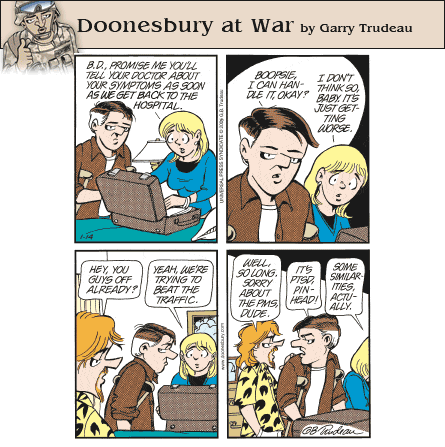
Doonesbury ptsd-pmsPMS -PTSD Judy’s Best friend said to me “You’re a girl now”
Then I went to Iraq and came back with PTSD with all the trimmings.  I think that she started figuring it before me so when I finally crashed on June 16th 2008, I do remember the date well, she was not surprised when I came back and told her that the doctors thought that I had PTSD and were referring me for treatment.  The good thing for me was that they did not refer to the Psychology or Psychiatry clinic but to the Deployment Health Office where I met and began to work with Elmer the Shrink.  My first visit to his office I got a copy of the Doonesbury book dealing with coming home from war and PTSD.  I laughed and cried all the way through the book.  Until I went to Iraq I had never been a big fan of Doonesbury but I really appreciate it now.  Military.com has a link to the Doonesbury at War series which I find quite nice to have.

http://www.military.com/warfighters

I appreciate the help and understanding of people that I work with.  That helps; I don’t have the sense of abandonment and isolation that I experienced the first 8 months that I was back from Iraq.  I think that my medications are getting managed a bit better as well.  One thing that is hard to understand when you first start getting treatment is that you are kind of an experiment in progress as the doctor’s figure out what works and what doesn’t work.  This I think can be very frustrating to people who want “fixed” right now.

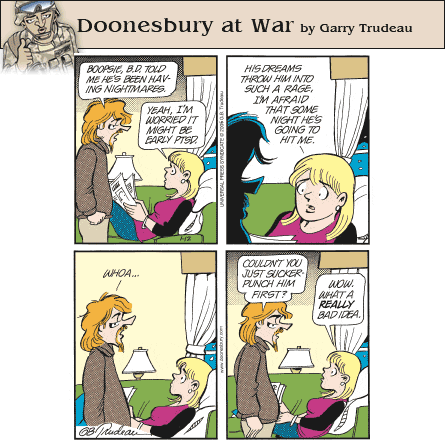
doonesbury ptsd onsetSome of my dreams get pretty physical

Before I went to Iraq she was the more observant one of us.  Now I am the more observant. The one value of PTSD that I don’t really want to lose is my awareness of what it happening around me.  It has I’m sure been more help than hindrance getting me out of dangerous situations quickly because in many cases I sense things even before I see or hear them.  As I have pointed out in other posts this has come in handy especially in our nutty Hampton Roads traffic and the “kill or be killed” mindset that you have to have to survive on I-64 or I-264.  While I like the ability to do this the startle response that I have now is really annoying.  We have a phone in our house that the ringer sends me into orbit.  If I am sitting in the living room when it goes off it scares the absolute shit out of me as it does Judy.  It is interesting to see both of us almost jump through our asses when that damned thing goes off. Inevitably it is the damned Rite Aide Pharmacy automated line or a equally damned telemarketer that does this.  Other loud noises get me.  I was driving to work and there was a vintage Chevy Camaro just ahead of me and in the adjacent lane to my right. It was still in that morning twilight when the Camaro started backfiring out of its twin exhaust pipes.  The backfire sounded like a burst of semi automatic weapons fire close up and the flashes from the pipes looked like muzzle flashes.  Other unexpected loud noises get me as does the sound of helicopters, especially at night.  I don’t do crowds well unless they are at a baseball game.  I went to do the invocation yesterday at the Norfolk Naval Shipyard to kick off the annual Combined Federal Campaign.  I was expecting a small rather sedate event.  It was nothing of the sort.  There were at least a couple of hundred people in a relatively small auditorium, a band, reports and photographers, a color guard and drill team from a local ROTC unit even balloons and banners.  The noise and light, many moving pieces gave the event a pep rally feel which drove up my anxiety level pretty bad. I was able to keep from having a panic attack or a meltdown, but it took work not to fall apart especially with the week that I had had and the fact that in the previous 31 hours I had only 3.5 hours of sleep.  I don’t like my outbursts of anger which can border on rage depending on the sense of danger that I feel although some expressions that I have come up with in these events are pretty funny as I question the parentage and oedipal tendencies of some people.  Anxiety, tremors, muscle tension, insomnia and nightmares are no fun either.

I guess for me that the war is not over and I know that if I was to go back I would do just fine. I almost think that another deployment to either Iraq of Afghanistan would help me in some ways. I guess I might get another shot at it as things continue to develop over there.  Personally I think I need it to close the loop and one day when peace comes to Iraq to go back there to visit some of the Iraqis that I got to know while there.

Dundas at HitSomehow I was More Relaxed in Iraq than I am Here

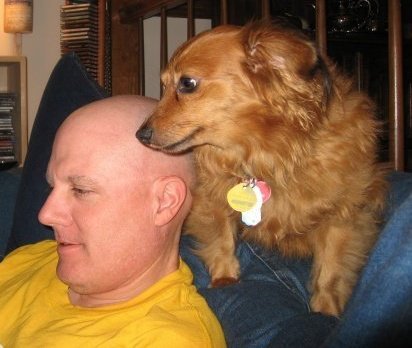
So now I am much more understanding of what Judy has lived with since childhood.  She has been a help to me in understanding my struggle as well and what I have experienced has helped me have a lot more compassion and understanding for her.  The only one without PTSD is our little dog Molly so it does make for interesting living around our little household.

Peace,

Padre Steve+

Leave a comment

Filed under iraq,afghanistan, PTSD

I Think I Feel a Sermon coming on…How Some Churches Stopped Caring and the Neglect of Pastoral Care

“When they had finished breakfast, Jesus said to Simon Peter, ‘Simon son of John, do you love me more than these?’ He said to him, ‘Yes, Lord; you know that I love you.’ Jesus said to him, ‘Feed my lambs.’ A second time he said to him, ‘Simon son of John, do you love me?’ He said to him, ‘Yes, Lord; you know that I love you.’ Jesus said to him, ‘Tend my sheep.’7He said to him the third time, ‘Simon son of John, do you love me?’ Peter felt hurt because he said to him the third time, ‘Do you love me?’ And he said to him, ‘Lord, you know everything; you know that I love you.’ Jesus said to him, ‘Feed my sheep.” John 21: 15-17

“Take care that you do not despise one of these little ones; for, I tell you, in heaven their angels continually see the face of my Father in heaven.” Matthew 18.10

Back when I was doing my Clinical Pastoral Education Residency at Parkland Memorial Hospital I was astounded to hear my pastor make a comment which I think was one of the most heartless that I have ever heard said from a pulpit.  The church was a large and trendy Evangelical-Charismatic Church which I had attended throughout seminary and had ordained my in October 1991.  The Pastor was recounting an incident where one of our members had been critically ill in hospital and had not been visited by him.  After the parishioner was released from hospital he asked the pastor: “How sick do I have to be for you to visit me in the hospital?”  The pastor told us his response: “Sir, you don’t want to b e that sick.”  The congregation laughed at the pastor’s story and he went on to talk about how he and other senior pastors should not be doing that kind of work because it “distracted them from bigger Kingdom tasks.”  You see according to the pastor the care of sick parishioners did not contribute to the “growth” of the church and thus was a “distraction and better left to others.”  The comment struck a raw nerve now that I was dealing with the suffering and death every day of people who had been abandoned by the churches and pastors.  I lost all respect for him as a man and pastor during that sermon.  The words of my Philosophy of Religion Professor at Southwestern Baptist Seminary Dr. Yandall Woodfin said: “You have not done Christian Theology until you have dealt with suffering and death.”  This pastor had stopped doing Christian Theology in order to be an “Apostle” and CEO.  He was “growing” the church and managing programs, but had for the most part stopped caring as in being a pastoral care giver.

Now this pastor is not alone and nor is the issue confined to Evangelical or Charismatic churches. The trend has has found its way across the denominational spectrum.  Sometimes this is by design as is the case of the Mega-churches.  Pastors of mega-churches are for all practical purposes CEOs of large organizations and have a multiplicity of specialized staff, but often which do little for pastoral care. Sometimes it is by default in cases such as the Roman Catholic Church.  Here the ever worsening shortage of Priests is forcing the closure of smaller parishes and the increase of large parishes with a corresponding decrease in what Priests can do for their people.   Even very good Priests cannot keep pace with the demand of both Sacramental needs as well as pastoral care.  No matter if it is by design or default the result is similar.  The least, the lost and the lonely those “lambs” that Jesus talks about who need care and feeding are shunted aside.  In one case, that of the Catholic Church it is simply a lack of Priests, Deacons and Sisters to provide this care.  The other is more troubling as the focus of the church is growth, sustaining numbers, programs and buildings.  This requires that pastors spend their time with members who can supply the vast financial need that those plans require.  I have seen this in numerous congregations across the spectrum, which sometimes as was the case at a church that I attended in Florida results in a financial meltdown and collapse of the congregation, many of whom gave up and went elsewhere when the extent of the scandal became known.  Likewise the ripple effects that this caused in the denomination were like a Tsunami, it was disastrous and the church is still in recovery mode.  Going back to my pastor back when I was in residency I got the feeling that had he been the shepherd in the Parable of the lost sheep (Luke 15) that he would have let it go as hunting for it might have distracted him from the others.

When I was in seminary there were quite a number of my fellow students who chafed about having to take courses on pastoral care.  I remember friends and fellow students complaining that what they needed were more “practical courses” such as “church growth, evangelism and Sunday School program management.”  Course such as Pastoral Care were seen as a bother and distraction.  Not to mention academic courses such as Systematic Theology, Philosophy of Religion and Church History.  One friend talked about his Master of Divinity only having a “shelf-life of 5 years” because what he learned would be outdated.

Well in a way he was right.  His focus was on classes that dealt with programs and methods of church growth, programs and management.   From that perspective his degree would rapidly be obsolescent as soon as the next trend in church growth came along and everyone jettisoned the last method in favor of the new.  With the ubiquity of the Mega-church which unlike the Leisure Suit is not going away anytime soon.  The rise of the “Superstar” Pastors such as Bill Hybels, Joel Osteen and Rick Warren and the proliferation of massive “Ministry Media” conglomerates and stand-alone television ministries are actually dangerous to the vitality and health of the Christian Church in the United States.  They propagate methods which have the sole intent of getting people into church or giving to a ministry and keeping them there, doctrine, worship, sacraments or ordinances, and pastoral care of the least, lost and lonely be damned.  The methods are pragmatic and impersonal.   Numbers and crowds define expertise, credibility and worth. The bigger the church the better the church, it’s that simple.

Unlike others who pick these ministers apart for their theology or business practices my problem with what is happening is what happens to regular people in these large and often very impersonal churches.  It is easy for people to get lost, forgotten and when they are going through difficulty abandoned when the church stops making a conscious effort to do real pastoral care and focus purely on the programs which lend to growth.  Often the substitute for pastoral care is found in the home cell group, or care group or whatever cute name a church can pin on a meeting at a member’s house.  The cell groups have a noble intention.  They attempt to build community in an otherwise very impersonal organization.  There are some really good things that can come out of healthy home groups as well as long lasting friendships.  We have a couple from our time in San Antonio that is still a very real part of our lives, they showed us genuine love and care and we remain friends.  Of course this couple had an advantage over most home group leaders; he was a Clinical Social Worker by trade who was heading off to seminary.  Most home groups are not that fortunate.  At the same time there are unhealthy groups which are led by people who are poorly trained and equipped to deal with broken people.  The good group leaders recognize their limitations and try to get help for those who are really hurting.  Others who do not know their limitations end up abusing these dear lambs of God. Often this is because sick, depressed or lonely people take too much time, are too needy, or that their problems don’t match up with their church theology.  We know this from personal experience as my wife suffered from a number of ailments throughout seminary and we were going through tremendous health and financial difficulties and in some places we felt cast aside and like we did not matter.  We were fortunate that some people did care and we did make it through, however it was not something that I would ever want to repeat.  I have heard similar stories from hundreds of people that I have come across in my life and work over the years.  Another thing some churches do is to either add a “Christian Counseling” program or refer members to “Christian Counseling” services instead of doing pastoral care.  In a sense it is the outsourcing of one of the most vital missions entrusted to a church, the pastoral care of the flock of God.

I don’t care what you call it, but any church which has multiple services of several thousand or a major service of close to 20,000 as occurs at Osteen’s Lakewood Church is no longer focused on caring for people but sustaining their growth and market share.  I remember reading Charisma Magazine back in the mid-1990s when I still read it regularly about a church in North Dallas that has a period of incredible church growth in which it grew from 1,200 members to well over 7,000.  In the article the pastor touted the church programs which drew people to the church.  What the dirty little secret which was not mentioned was that two exits south of this church a Mega-church of some 10,000 members imploded when the Pastor, one Bob Tilton got caught doing some pretty bad stuff.  This church despite its claims of great programs simple picked up about 6,000 of these people because they were close by and a similar type of church.

All of this is dangerous as to its impact on people.  One only has to look at the latest Barna Polls about what is going on in churches to see that these large churches are alienating people even as they grow.  People come, but others either burn out trying to keep pace with the manic pace of programs proliferated by these churches or they get lost in the crowd and forgotten.  I meet a least a person every day who is a displaced Christian, often hurt, lonely and broken, not only by what they have experienced in life, but by the cold emptiness that they feel when a church surrounded by thousands of people who don’t even know their name.  Some churches do recognize that people have issues that need to be addressed and have in-house “Christian Counseling” programs or refer members to “Christian Counseling” services.   I think that there certainly is a place for clinically trained therapists in the life of a church; however this is not really pastoral care, even when they use “Biblical” methods.   In a sense it is the outsourcing by pastors of one of the most vital missions entrusted to a church, the pastoral care of the flock of God to others, in a sense, “hirelings.”  Again my issue is not with the therapists or Christian counselors, but rather pastors who refuse to do pastoral care as part of their ministry.

Ultimately it is people that are important, even those who are not rich, powerful and who have problems that don’t fit nicely into theological boxes or paradigms promoted by church growth experts. It is high time that churches start reclaiming one of the most vital missions given by Jesus to his Disciples, to care for the least, the lost and the lonely. The onus for this falls on pastors who cannot simply outsource one of their primary missions as given by Jesus himself to others.  If pastors do not set the example of being caring pastoral care givers, it will not matter that they are supposedly “empowering” laypeople to do ministry.  Instead it sends another more ominous message, that if it is not important for the pastor, why should it be important to me?  Every member of the church at some time goes through a crisis when their faith, family, health or vocation.  Sometimes these are not isolated events but rather prolonged periods of anguish, as what Saint John of the Cross described as “the Dark Night of the Soul” where it seems that God has even abandoned the person.  Unfortunately people in this situation are often abandoned by their church as things fail to improve.  Despairing they become the lost sheep whose shepherd has abandoned.  This is the hardest time for pastoral care, the times where we as pastors are called to stand with someone as Mary the Mother of Jesus did at the Cross, just simply being there though nothing else can be done.

Now do I understand that the demands of running a large church can be sometimes become such that pastors have difficulty making time for pastoral care?  Of course I understand this, at the same time pastors, even those who function primarily as pastor-teacher/CEOs still have the responsibility of caring for people, not simply administering programs and preaching.  Pastors need to set the example of care for people, real people, the regular Joes and Jane’s who populate their pews, by their books and give to their ministry, even if it is only in small ways, not just the super-givers or the wealthy and powerful.  James’s “right strawly epistle” (Martin Luther’s words) has much to say about favoring the rich and powerful and neglecting the poor and seemingly insignificant people hanging about the peanut galleries of their large “Worship Centers.”  Even if the pastor has limited time he or she must be about the flock, or they will forget what the needs of the flock really are and instead of the People of God, the lambs who Jesus says to care for they will simply be the consumers of a religious message who we have to keep coming back to keep the operation going.

My sermon is over and I do hope that there will be more “amen’s” than calls for burning me as a heretic.

Peace, Steve+

3 Comments

Filed under Pastoral Care, philosophy, Religion