Tag Archives: doubt

I Belong Here With Those in Pain and Who Have Lost Their Faith

iraqchristmas

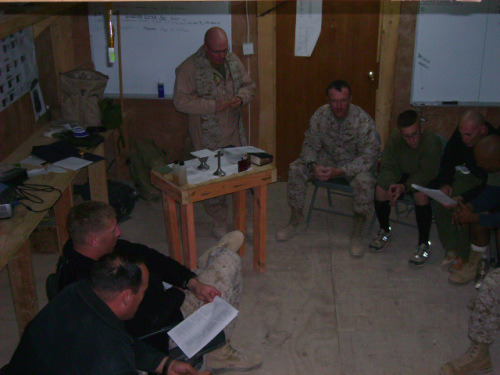
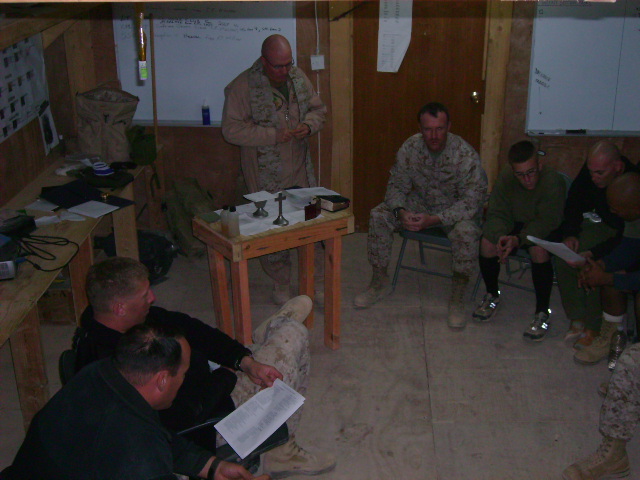
Christmas Eve at COP South 2007, the Most Important Mass of My Life

“I belong with those who are in pain, and who have lost their faith, I belong here.” Father Palmer, the Chaplain in Joyeux Noel (Merry Christmas)

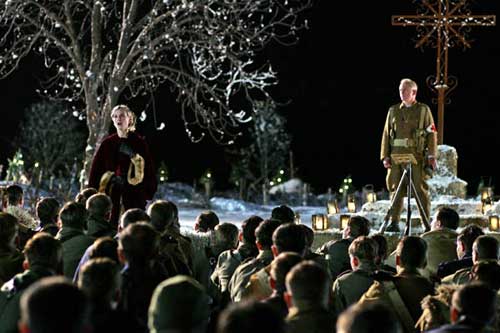
In the next day or two, certainly by Christmas I will again watch the film classic Joyeux Noel (Merry Christmas) which is the story of the amazing and exceptional Christmas Truce of 1914. It is a film that each time I see it that I discover something new, more powerful than the last time I viewed it. I will also be writing about Christmas from my perspective as a combat veteran and giving voice to those who serve now, as well as those who served God’s people in hellish places before me.

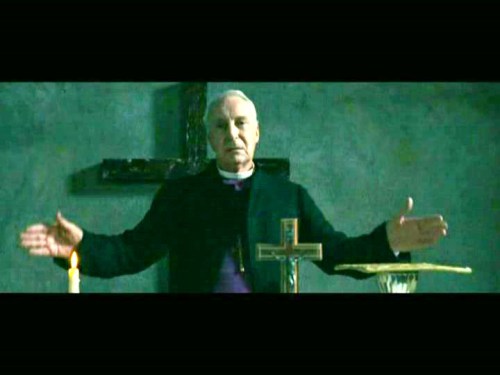
As a Chaplain I am drawn to the actions of the British Padre in the film, who during the truce conducts a Mass for all the soldiers, British, French and German in no-man’s land, who goes about caring for the soldiers both the living and the dead.  His actions are contrasted with his Bishop who comes to relieve him of his duties and to urge on the replacement soldiers to better kill the Germans.

palmer

Father Palmer Tending the Wounded

As the Chaplain begins to provide the last Rites to a dying soldier the Bishop walks in, in full purple cassock frock coat and hat and the chaplain looks up and kisses his ring.

As the chaplain looks at his clerical superior there is a silence and the Bishop looks sternly at the priest and addresses him:

“You’re being sent back to your parish in Scotland. I’ve brought you your marching orders.”

Stunned the Priest replies: “I belong with those who are in pain, and who have lost their faith, I belong here.”

The Bishop then sternly lectures the Priest: “I am very disappointed you know. When you requested permission to accompany the recruits from your parish I personally vouched for you. But then when I heard what happened I prayed for you.”

The Priest humbly and respectfully yet with conviction responds to his superior: “I sincerely believe that our Lord Jesus Christ guided me in what was the most important Mass of my life. I tried to be true to his trust and carry his message to all, whoever they may be.”

The Bishop seems a bit taken aback but then blames the Chaplain for what will next happen to the Soldiers that he has served with in the trenches: “Those men who listened to you on Christmas Eve will very soon bitterly regret it; because in a few days time their regiment is to be disbanded by the order of His Majesty the King. Where will those poor boys end up on the front line now? And what will their families think?”

They are interrupted when a soldier walks in to let the Bishop know that the new soldiers are ready for his sermon. After acknowledging the messenger the Bishop continues: “They’re waiting for me to preach a sermon to those who are replacing those who went astray with you.” He gets ready to depart and continues: “May our Lord Jesus Christ guide your steps back to the straight and narrow path.”

The Priest looks at him and asks: “Is that truly the path of our Lord?”

The Bishop looks at the Priest and asks what I think is the most troubling question: “You’re not asking the right question. Think on this: are you really suitable to remain with us in the house of Our Lord?”

With that the Bishop leaves and goes on to preach. The words of the sermon are from a 1915 sermon preached by an Anglican Bishop in Westminster Abbey. They reflect the poisonous aspects of many religious leaders on all sides of the Great War, but also many religious leaders of various faiths even today, sadly I have to say Christian leaders are among the worst when it comes to inciting violence against those that they perceive as enemies of the Church, their nation or in some cases their political faction within a country.
bishop

The Bishop Leads His “Service” 

http://www.youtube.com/watch?v=fMPxjUE40iw

“Christ our Lord said, “Think not that I come to bring peace on earth. I come not to bring peace, but a sword.” The Gospel according to St. Matthew. Well, my brethren, the sword of the Lord is in your hands. You are the very defenders of civilization itself. The forces of good against the forces of evil. For this war is indeed a crusade! A holy war to save the freedom of the world. In truth I tell you: the Germans do not act like us, neither do they think like us, for they are not, like us, children of God. Are those who shell cities populated only by civilians the children of God? Are those who advanced armed hiding behind women and children the children of God? With God’s help, you must kill the Germans, good or bad, young or old. Kill every one of them so that it won’t have to be done again.”

The sermon is chilling and had it not been edited by the director would have contained the remark actually said by the real Bishop that the Germans “crucified babies on Christmas.”  Of course that was typical of the propaganda of the time and similar to things that religious leaders of all faiths use to demonize their opponents and stir up violence in the name of their God.

When the Bishop leaves the Priest finishes his ministration to the wounded while listening to the words of the Bishop who is preaching not far away in the trenches. He meditates upon his simple cross, takes it off, kisses it hand hangs it upon a tripod where a container of water hangs.

The scene is chilling for a number of reasons. First is the obvious, the actions of a religious leader to denigrate the efforts of some to bring the Gospel of Peace into the abyss of Hell of earth and then to incite others to violence dehumanizing the enemy forces. The second and possibly even more troubling is to suggest that those who do not support dehumanizing and exterminating the enemy are not suitable to remain in the house of the Lord. Since I have had people, some in person and others on social media say similar things to what the Bishop asks Palmer the scene hits close to home.
iraq-bedouin1

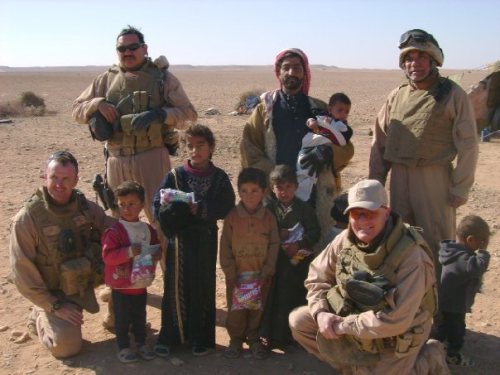
Christmas Eve 2007 with the Bedouin 

When I left Iraq in February 2008 I felt that I was abandoning those committed to my spiritual care, but my time was up. Because of it I missed going with some of my advisors to Basra with the 1st Iraqi Division to retake that city from insurgents. It was only a bit over a month after I had celebrated what I consider to be my most important Masses of my life at COP South and COP North on December 23rd as well as Christmas Eve and Christmas Day. In fact they were really the last masses that I felt the mystery and awe of the love of God that I used to so much feel.

When I left the new incoming senior Chaplain refused to take my replacement leaving our advisors without dedicated support. He then slandered me behind my back because what I was doing was not how he would do things and because I and my relief were under someone else’s operational control. It is funny how word gets back to you when people talk behind your back. Thankfully he is now retired from the Navy and I feel for any ministers of his denomination under his “spiritual” care.  So I cannot forget those days and every time I think about them, especially around Christmas I am somewhat melancholy and why I can relate so much to Father Palmer in the movie.

It has been seven years since those Christmas Masses and they still feel like yesterday. In the intervening years my life has been different. Just a year later I was walking home from church where my wife was to sing in the choir during the Christmas vigil mass. I couldn’t handle the crowds, the noise, and I felt so far away from God. That night I walked home in the dark looking up into the sky asking God if he still was there. If there had been a bar on the way home I would have stopped by and poured myself in.

Since Iraq I have dealt with Severe and Chronic PTSD, depression, anxiety and insomnia were coupled with a two year period where due to my struggles I lost faith, was for all practical purposes an agnostic. I felt abandoned by God, but even more so and maybe more importantly by my former church and most other Chaplains. It was like being radioactive, there was and is a stigma for Chaplains that admits to PTSD and go through a faith crisis, especially from other Chaplains and Clergy.  It was just before Christmas in late 2009 that faith began to return in what I call my Christmas Miracle. But be sure, let no one tell you differently, no Soldier, Sailor, Marine or Airman who has suffered the trauma of war and admitted to PTSD does not feel the stigma that goes with it, and sadly, despite the best efforts of many there is a stigma.

Now that faith is different and I have become much more skeptical of the motivations of religious leaders, especially those that demonize and dehumanize those that do not believe like them or fully support their cause or agenda. Unfortunately there are far too many men and women who will use religion to do that, far too many.

As for me, I thought that I was in a better place a year ago. I had the floor kicked from out from under me this summer and it has been a hard fight and while I am beginning to get back to some sense of normal it is a day to day thing. I still suffer the effects of the PTSD, especially the insomnia, nightmares and the nightmares which came back with a vengeance this summer. I also still have the anxiety in crowded places and bad traffic, but working with my new therapist I am coming up with some effective coping mechanisms. As for faith, I do believe again, though at the same time I doubt. I would have to consider myself a Christian Agnostic who echoes the cry of the man who cried out to Jesus, “Lord I believe, help my unbelief!” 

Like the Priest in Joyeux Noel I know that my place is with those who are “in pain, and who have lost their faith.” For me this may no longer be on the battlefield as I will retire from the Navy out of my current billet teaching at the Joint Forces Staff College in a couple of years. However, that being said I will strive to be there for those that struggle with faith and believe, especially those who struggle because of what they saw and experienced during war and when they returned home.
3670064wxkyb

Joyeux Noel Christmas Eve

Likewise I expect that I will do my best to speak truth to those in power and those whose faithfulness is more a product of their comfort with the God that they create in their own mind rather than the Crucified God wise death on the Cross s a scandal. For many Christians the scandal of the cross is too easy to avoid by surrounding ourselves with pet theologies that appeal to our pride, prejudice and power. The kind of malevolent power represented by the bishop in Joyeux Noel. Thus I take a measure of comfort in the words of Simone Weil who said “He who has not God in himself cannot feel His absence.” 

Thus, like Paul Tillich I have come to believe that “Sometimes I think it is my mission to bring faith to the faithless, and doubt to the faithful.”  In other words to become a complete pain in the ass until the day that I die.

Praying for Peace this Christmas,

Padre Steve+
1 Comment

Filed under christian life, faith, film, History, Military, PTSD, Tour in Iraq, world war one

An Advent of Doubt, Faith and Struggles

Lord I believe, help me in my unbelief.

A new liturgical year is upon us and with the season of Advent Christians look forward to the “Advent” of Christ both in looking forward to the consummation of all things in him as well as inviting him back into our lives as we remember his Incarnation, as the Creed says “For us and for our salvation he came down from heaven: by the power of the Holy Spirit he became incarnate from the Virgin Mary, and was made man.”

At the same time for a lot of people the season of Advent and Christmas are incredibly difficult and times where faith, already difficult becomes nearly impossible.  For many the season is not a time of joy but depression, sadness and despair. I know feeling well, for it has been the reality that I have lived with since returning from Iraq.

Before Iraq,  Advent and Christmas were times of wonder and mystery and I really found it difficult to understand how anyone could be depressed during the season.  Until I came home from Iraq. Now while I have faith again I struggle to find the same wonder and mystery of the season that I once experienced. I think that the last time I was truly joyful at Christmas and during Advent was in Iraq, celebrating the message of hope among our advisors up and down the Iraqi-Syrian border. I think the most special moment was serving Eucharist to an Iraqi Christian interpreter who had not received the Eucharist in years that Christmas Eve of 2007 at COP South. Somehow in that God forsaken land God seemed closer than any place I have been since.

Since I returned from Iraq my life has been a series of ups and major downs. In dealing with PTSD, anxiety, depression and chronic insomnia as well as my dad’s painfully slow death from Alzheimer’s Disease, I have struggled with faith.  Prayer became difficult at best and as I dealt with different things in life I knew that I didn’t have any easy answers.  Going to church was painful. Chaplain conferences even more so, except being with others who struggled like me.  About the only place that I could find solace was at a baseball park.  For some reason the lush green diamond comforts me.

I find that the issue of doubt is not uncommon for a lot of people, including ministers of all faiths. For those of us who are ordained and view our ministry or our Priesthood as a sacred vocation this is difficult to deal with.  Ministers and others who suffer a crisis in faith, depression or despair endure a hell because it is not supposed to happen to us. I do believe that for many people a religious leader who has doubts and struggles with his or her faith is disconcerting.  I can remember a myriad of situations where pastors due to a myriad of reasons experienced a crisis in faith many of which involved great personal loss such as the loss of a child, a failed marriage, being let go or fired by a church, or experiencing a major traumatic event.  These were good people and quite often instead of being enfolded by a caring community of faith they were treated as faithless, failed and worthless, often abandoned or excluded from their faith community as if they were criminals.

When I was younger I used to look askance at pastors who had given up, lost their faith, or abandoned the ministry for whatever reason.  As a young seminary student and later young chaplain I had a hard time with this, it made no sense to me and I was somewhat judgmental until I started to get to know a decent number of “broken” ministers from various faith traditions that a lot more went into their decision than simply not being tough enough to hang in there until things got better.  At the same time I never thought it would happen to me. I thought I was “bulletproof,” that it could never happen to me. And it did and I was stunned.

When I came back from Iraq I came home to find that my office had been packed up and many mementos lost, it took months to find most and there are still important documents that have never been recovered. My accomplishments went unrecognized on my return home.  As I crashed no one asked about my faith until Elmer the shrink did when he met me.  Later my Commodores, first Frank Morneau when he found out about my condition and Tom Sitsch when he took command of EOD Group 2 both asked me about my faith.  I told them that I was struggling. Commodore Sitsch asked me “Where does a Chaplain go for help?”  Sadly I had no idea how much Commodore Sitsch was going through as he ended his life on January 6th of this year, suffering the effects of untreated PTSD and TBI.

On the professional side I felt isolated from much of the clergy of my former church and many chaplains, something that I still feel to some extent today. I was angry then because I felt that I deserved better, because I had done all that was asked of me and more for both church and chaplain corps.  The Chaplains that I knew cared all worked in different commands and were not immediately available and I was ashamed to go ask them for help.

I appreciated simple questions like “How are you doing with the Big Guy?” or “Where does a Chaplain go to for help?” It showed me that people cared.  When I went to the medical center I dealt with many difficult situations and was haunted by my dad’s deterioration, the latter which I still deal with today.  To have a close family member mock my vocation, service and person and provoke me into rages was equally taxing.  Likewise the absolute hatred and divsion in the American political debate tore my heart out.  I felt like, and in some ways still feel like we are heading down a path to being “Weimar America.”

There were many times that I knew that I had no faith.  People would ask me to pray and it was all that I could do to do to pray and hoped that God would hear me.  Even the things that I found comforting, the Mass, the Liturgy and the Daily Office were painful, and they often still are.

That being said, I am still a Christian, or maybe as I noted last week a Follower of Jesus, since the Christian “brand” is so badly tarnished by the politically minded, hateful, power seeking, media whores that populate the airwaves and cyber-space.

Why I am is  sometimes hard to figure.  I am not a Christian because of the Church, though I love the Church, church bodies have often has been for me a sourse of pain and rejection.  I am not a Christian because of what is called “Christian.” Nor can I ignore the injustice, violence and oppression wrought by those who called themsleves Christian throughout history, including that wrought by current Christian leaders.  Slavery, the subjectation and conquest of who peoples to take their land and resources and wars of agression blessed by “Christian” leaders are all part of history.

At the same time much progress has come through the work, faith and actions of Christians and the Church. Despite all of the warts and the many sins and crimes committed by Christians, even genocide, I can like Hans Kung “I can feel fundamentally positive about a tradition that is significant for me; a tradition in which I live side by side with so many others, past and present.” (Kung, Hans Why I am Still a Christian Abingdon Press, Nashville 1987 p. 36)

Neither am I a Christian because I think that the Christian faith has “all” of the answers.

In fact after coming through Iraq and returning home I know that it is not so.

I have to be painfully honest and say that neither the Church nor Christians have all the answers, and those who think that they do, and claim that in the name of God or Jesus, are fundamentally deceived, and that I would not follow them across the street.

I now understand what my Church History Professor, Dr Doyle Young said in class that “all of people’s deepest needs are not religious.”  Likewise I certainly not a Christian because I think that Christians are somehow better or more spiritual than others.  In fact I find the crass materialism and self centered “What can God to for me?” theology and way of life to be deeply offensive.

People get sick, young children die, innocents are subjected to trauma even from their parents or siblings.  Good people endure unspeakable trials while sometimes it seems that evil people get away with murder.  I can’t chealk it all up to a naive “it’s God’s will” kind of theology.  I don’t presume to know God’s will and I can’t be satisfied with pat answers like I see given in so many allegedly Christian publications, sermons and media outlets.  Praying doesn’t always make things better. I remain a Christian in spite of these things.  I still believe that God cares in spite of everything else, in spite of my own doubts, fears and failures.

I still believe, Lord help me in my unbelief.

One of the verses of the Advent hymn O’ Come O’ Come Emmanuel is a prayer for me this year.

O come, Thou Day-Spring, come and cheer
Our spirits by Thine advent here
Disperse the gloomy clouds of night
And death’s dark shadows put to flight.
Rejoice! Rejoice! Emmanuel
Shall come to thee, O Israel.

So now, for those that like me struggle with faith, feel abandoned by God, family and friends.  For those who have experienced the crisis of faith or even a loss of faith I pray that all of us will experience joy this season.

I’m sure that I will have some ups and downs, I certainly don’t think that I am over all that I am still going through.  However I know that I am not alone to face my demons and pray that by opening up that others who are going through similar experiences will find hope.  O come, Thou Day-Spring, come and cheer, our spirits by Thine advent here. Disperse the gloomy clouds of night, and death’s dark shadows put to flight.

Peace,

Padre Steve+

2 Comments

Filed under christian life, faith, Religion, Tour in Iraq

Thursday Thoughts on Life, Faith, Doubt and Beer

1622612_10152232336042059_727365308_n

“There are moments, sure, where you think ‘Is there a God? Where is God?” Archbishop Justin Welby

Friends of Padre Steve’s World. Yesterday I promised you part two of the revised article on the American Civil War as the first modern war. I tried to get it done but since I am so unhappy with the previous edition of it I am tearing it apart and get it logically sorted out. I have been doing this for a while and finally got the first part of it done yesterday. I thought that I could get the rest done today but between a very busy day with multiple meetings and presentations at work as well as securing help for a sailor in a difficult crisis couldn’t get it done. Not only that I am busy getting ready to travel to Munich and the real Oktoberfest tomorrow. That will be fun, we have lived there before and travelled there many times, but never to Oktoberfest. In the week there my wife and plan on going to Salzburg and possibly Nuremberg or Wurzburg. We’ll get back next weekend and then I will get back to work on it.

But anyway, we are so looking forward to this trip, which we are making with a good number of friends from the Gordon Biersch Brewery Restaurant Stein Club. The trip is paid for by the Gordon Biersch Passport rewards program. Trust me it is the best rewards program of any restaurant anywhere, not only do they have great craft beer and food, but they reward you well, but I digress.

Just a few thoughts on the words of the Archbishop of Canterbury, Justin Welby who in an interview at the Bristol Cathedral. You can watch that interview here:

https://www.youtube.com/watch?v=exmHYXNEt9A&feature=youtu.be&t=11m52s 

The remarks shocked some because he quite honestly noted how: “There are moments, sure, where you think ‘Is there a God? Where is God?”

Of course clergy are no supposed to doubt but as I have noted before that I went through almost two years following my tour in Iraq suffering a complete emotional, spiritual and physical collapse from PTSD where I was for all intents and purposes an agnostic just praying that God still existed. So Archbishop Welby’s comments were absolutely refreshing to hear, because for a church leader to do so upsets the apple cart of blind certitude in doctrines that because they deal with God we cannot prove. As Dietrich Bonhoeffer said: “a God who would let us prove his existence is an idol.”

Archbishop Welby did note something that I also, at least, most of the time agree: “It is not about feelings, it is about the fact that God is faithful and the extraordinary thing about being a Christian is that God is faithful when we are not.”  Honestly I still doubt every day, but I also believe. Andrew Greeley’s fiction Bishop Blackie Ryan noted: “Most priests, if they have any sense or any imagination, wonder if they truly believe all the things they preach. Like Jean-Claude they both believe and not believe at the same time.”

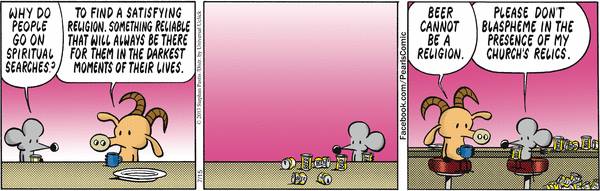
But since I am going to Oktoberfest one last thought on faith and beer.

church relics

So, since I am still busy and unlike my wife have done nothing to pack for the trip, I wish you a good night.

Peace

Padre Steve+

2 Comments

Filed under christian life, faith

Faith and Doubt on a Sunday Afternoon

shakethefinger


“Most priests, if they have any sense or any imagination, wonder if they truly believe all the things they preach. Like Jean-Claude they both believe and not believe at the same time.” Andrew Greeley “The Bishop and the Beggar Girl of St Germain”

Many off my readers as well as people I deal with on a regular basis struggle with faith and doubt. Today I was reading a column in the New York Times that brought up a very interesting article called Where Reason Ends and Faith Begins  by T.M. Luhrmann, http://www.nytimes.com/2014/07/27/opinion/sunday/t-m-luhrmann-where-reason-ends-and-faith-begins.html?hp&action=click&pgtype=Homepage&module=c-column-top-span-region&region=c-column-top-span-region&WT.nav=c-column-top-span-region a professor at Stanford. It talked about the point in different where individuals make a decision of what they chose to believe because it is reasonable and what they chose to believe by faith. I also read an article by Bishop Gene Robinson called Hope When the World’s Gone off the Rails  http://www.thedailybeast.com/articles/2014/07/27/hope-when-the-world-s-gone-off-the-rails.html Both were excellent articles because they deal with a reality that many religious people don’t want to deal with. Something that I have struggled with most of my life, but especially after I returned from Iraq in 2008.

When I returned from Iraq in 2008 I was a mess. I had gone to Iraq thinking that I had the answers to about anything and that I was invincible. I felt that with years of experience in the military and in trauma departments of major trauma centers that I was immune to the effects of war and trauma. Likewise I had spent years studying theology, pastoral care and ethics as well as military history, theory and practice. I had studied PTSD and Combat Stress and had worked with Marines that were dealing with it. If there was anyone who could go to Iraq and come back “normal” it had to be me.

Of course as anyone who knows me or reads this website regularly knows I came back from Iraq different. I collapsed in the midst of PTSD induced depression, anxiety and a loss of faith. For nearly two years I was a practical agnostic.
During those dark days, particularly the times where I was working in the ICU and Pediatric ICU at Naval Medical Center Portsmouth attempting to have enough faith to help others in crisis, be they patients at the brink of death or families walking through that dark valley even though I did not have any faith to even believe that God existed.

It was during those dark days that the writings of Father Andrew Greeley, mainly his Bishop Blackie Ryan mysteries that provided me with one of the few places of spiritual solace and hope that I found. Baseball happened to be the other.
During those dark times when prayer seemed futile and the scriptures seemed dry and dead I found some measure of life and hope in the remarkable lives of the people that inhabited the pages of the Bishop Blackie Ryan novels. Through them I learned that doubt and faith could co-exist and that there was a mystery to faith in Jesus that defied doctrinal suppositions as well as cultural, political and sociological prejudices.

I did learn something else, something that makes many people uncomfortable and that took me a long time to accept. That was that doubt and faith could co-exist and as I read Greeley’s stories I began to see scripture in a new light, especially the stories of men and women that we venerate for their faith who doubted and even when they believed often disputed God. The Old Testament is full of their stories and there are even some in the New Testament. Greeley wrote that is was possible for a priest to lose their faith “no more often than a couple of times a day.”

Thus I find it hard to deal with preachers and others who are so full of certitude that they are full of shit, no matter what their faith tradition. God is too big for that.

I rediscovered faith and life as I anointed that man in our emergency room in December 2009. To my surprise faith returned. I believe again but I also doubt, at least a couple of times a day, it keeps me humble. And for that I’m grateful.

Peace and have a wonderful rest of your weekend,

Padre Steve+

1 Comment

Filed under christian life, faith, Pastoral Care, PTSD

Faith and Doubt on a Friday During Lent

tom-clancy-look-2

William James wrote that “Faith means belief in something concerning which doubt is theoretically possible.”

Many religious people, be they Christians, Jews, Moslems or others equate their faith in what cannot be seen or proven to be a certainty. But faith, even as understood by someone like the Apostle Paul was something that was not provable in this life. In fact Paul is bold enough to proclaim that if Christians are not correct concerning their faith in the risen Christ that they are to be pitied among men.

Faith in something, even God is not proof. In fact faith can never be asserted to be fact until the final consummation. Dietrich Bonhoeffer in his classic Creation and Fall Temptation, Two Biblical Studies wisely noted that:

“Man no longer lives in the beginning–he has lost the beginning. Now he finds he is in the middle, knowing neither the end nor the beginning, and yet knowing that he is in the middle, coming from the beginning and going towards the end. He sees that his life is determined by these two facets, of which he knows only that he does not know them”

Bonhoeffer’s words show a wisdom often lacking in young theologians. No matter how firmly we believe the words of Scripture or the Creeds they are at their heart statements of faith, not fact. They may be true, and I believe them to be. That being said we cannot prove them  and simply making circular arguments about their truth does not make them true. Thus I always find that I am amazed when I see some Christians insist that what they believe is “absolute truth” even when they have no “proof” of its truth outside of their statements of faith. Such is the trap of circular logic. Bonhoeffer quite correctly noted that “A God who let us prove his existence would be an idol.”

I have learned to appreciate the struggle of faith. I believe, but I seek understanding. That being said I know that whatever I know, I only know in part, as Paul said I see “through a glass darkly,” but one day I shall see “face to face.”

Those that equate faith with certitude do so at their own peril, and often are willing to sacrifice others to ensure that their belief remains unquestioned.

The great American Jurist Oliver Wendell Holmes wrote:

“Certitude leads to violence. This is a proposition that has an easy application and a difficult one. The easy application is to ideologies, dogmatists, and bullies–people who think that their rightness justifies them in imposing on anyone who does not happen to subscribe to their particular ideology, dogma or notion of turf. If the conviction of rightness is powerful enough, resistance to it will be met, sooner or later by force. There are people like this in every sphere of life, and it is natural to feel that the world would be a better place without them!”

The fact is that there is nothing wrong with doubt. There is nothing wrong with struggle. In fact it is shown in the lives of those that we consider “saints” throughout both the Jewish and Christian scriptures.

Faith without doubt and faith without struggle is not faith, it is idolatry. Bonhoeffer expressed this well when he said “A God who let us prove his existence would be an idol.”

In fact absolute certitude masquerading as faith in the life of the faithful often leads to great violence and evil. One only has to look at what happened on September 11th 2001 to see the results of such violent certitude.

As for me I have faith, but at the same time I doubt. Sometimes doubts outweigh faith and at other times faith outweighs doubt. That being said I find comfort in the scriptures where Paul honestly and openly writes of his conflicts and doubts. Henri Nouwen had it right when he said:

“Theological formation is the gradual and often painful discovery of God’s incomprehensibility. You can be competent in many things, but you cannot be competent in God.”

That is the real fact of the matter. It is something that Christians more interested in truth rather than protecting their social position have believed for decades have died to proclaim.

None of us, no matter how learned we are, or how certain we believe, really know much about God. And that my friends is certain.

Peace

Padre Steve

Leave a comment

Filed under christian life, faith, Religion

What Do You Say When You’re Not Sure? An Essay on Doubt

doubt1-1

“Doubt can be a bond as powerful and sustaining as certainty. When you are lost, you are not alone.”

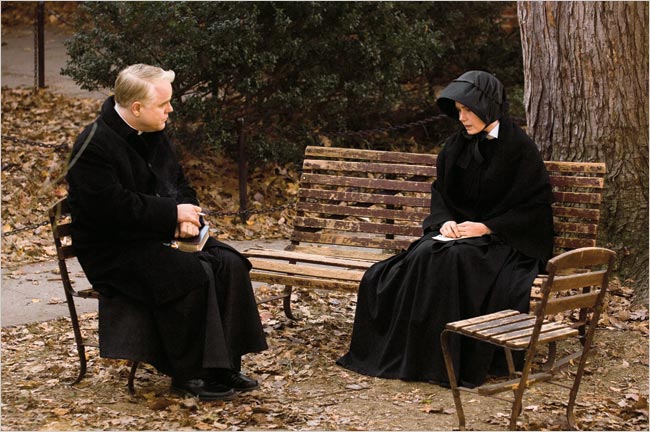
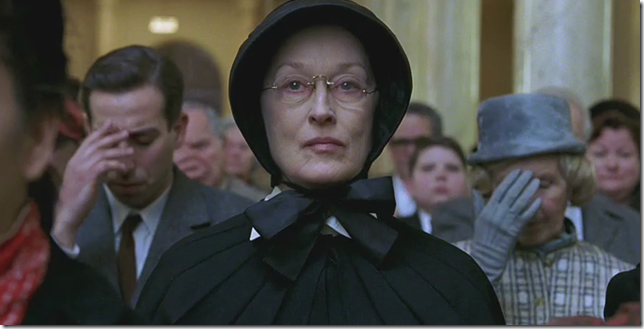
I am watching the movie Doubt tonight. It was a movie that came out when I was deployed to Iraq. I never had seen it before tonight. I purchased it after the death of the lead actor, Phillip Seymour Hoffman, when a friend of mine from my former denomination posted a remembrance about one of the scenes from this film. It was the sermon about gossip. That moved me, so after reading more about the film I purchased it. However, I was not prepared for the opening scene where Hoffman’s character in his homily speaks about doubt.

http://www.youtube.com/watch?v=YOSxGuUuvQY

http://www.youtube.com/watch?v=1OwpGUI-TAI 

“Last year, when President Kennedy was assassinated, who among us did not experience the most profound disorientation? Despair? Which way? What now? What do I say to my kids? What do I tell myself? It was a time of people sitting together, bound together by a common feeling of hopelessness. But think of that! Your bond with your fellow being was your Despair. It was a public experience. It was awful, but we were in it together. How much worse is it then for the lone man, the lone woman, stricken by a private calamity?

‘No one knows I’m sick.’

‘No one knows I’ve lost my last real friend.’

‘No one knows I’ve done something wrong.’

Imagine the isolation. Now you see the world as through a window. On one side of the glass: happy, untroubled people, and on the other side: you.

I want to tell you a story. A cargo ship sank one night. It caught fire and went down. And only this one sailor survived. He found a lifeboat, rigged a sail…and being of a nautical discipline…turned his eyes to the Heavens and read the stars. He set a course for his home, and exhausted, fell asleep. Clouds rolled in. And for the next twenty nights, he could no longer see the stars. He thought he was on course, but there was no way to be certain. And as the days rolled on, and the sailor wasted away, he began to have doubts. Had he set his course right? Was he still going on towards his home? Or was he horribly lost… and doomed to a terrible death? No way to know. The message of the constellations – had he imagined it because of his desperate circumstance? Or had he seen truth once… and now had to hold on to it without further reassurance? There are those of you in church today who know exactly the crisis of faith I describe. And I want to say to you: doubt can be a bond as powerful and sustaining as certainty. When you are lost, you are not alone.

In the name of the Father, the Son, and the Holy Ghost.”

Since Iraq I have experienced much doubt related to my experiences there, PTSD and Moral Injury. For nearly two years I experienced such a crisis of faith that for all practical intent I was an agnostic, praying to a God that I wasn’t sure existed hoping that there was a God.

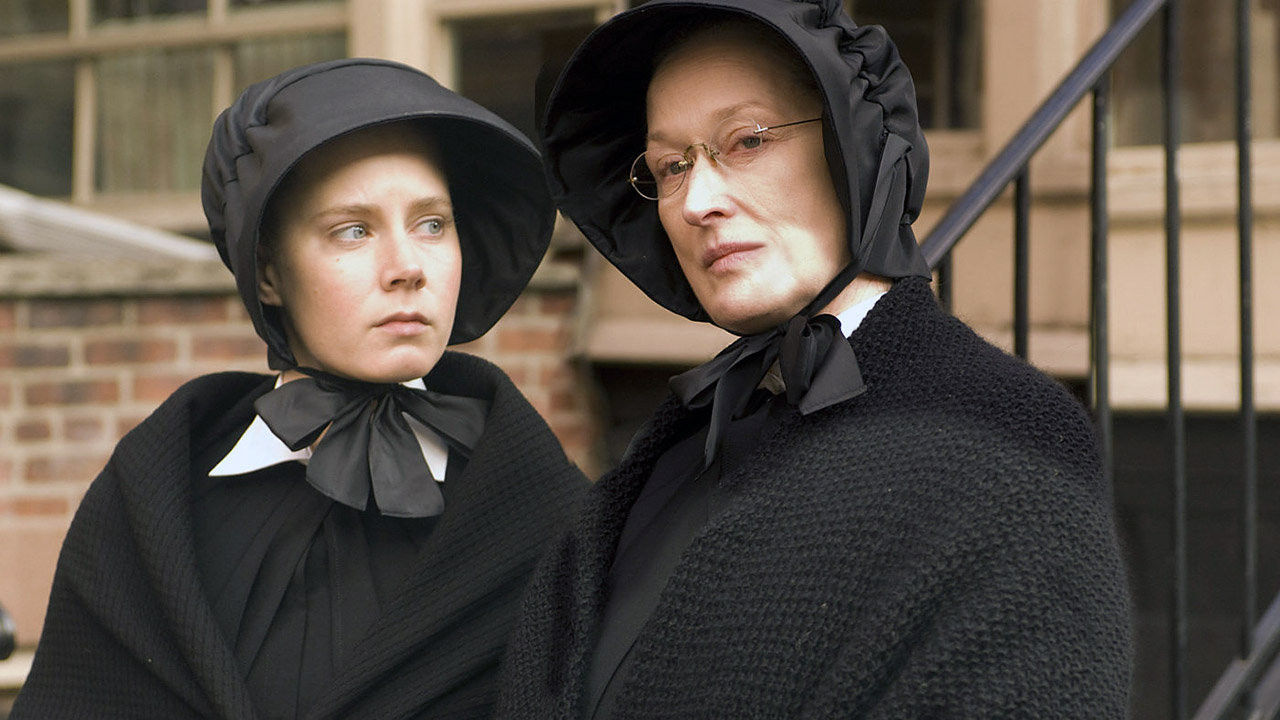
When I watched that opening scene, as well as many others I found that I was reduced to tears, uncontrollable, they flooded me. The actors in the film, Hoffman, Meryl Streep, Amy Adams and Viola Davis, brought a power to their performances that made it so real, and powerful. It has been a long time since a film affected me like this, perhaps the last two were We Were Soldiers and Taking Chance, both of which related directly to my military experiences.

The writing of the screenplay, adapted to from a play by John Patrick Shanley,in part based on growing up in a small Catholic School run by the Sisters of Charity. I found it fascinating because of the mystery involved in the story, there is so much uncertainty in the story, a Priest who may be doing something wrong, a Nun who has no proof but is determined to drive him out, young Sister who in her innocence wants to believe the best about both the Priest and her superior, and a mother who just wants her son to survive, despite the abuse of his father and the racial prejudice of the community.

For me the film stuck on two levels, one my logical, suspicious and oft judgmental spirit, and my desire to want to believe the best about people, even me. It is a tension that I live with on a daily basis. In a way I could understand all three of the major characters.

21hoffman.large2

There is a scene where Father Flynn (Hoffman) talks with Sister James (Adams) and he tells her:

“There are people who go after your humanity, Sister, that tell you that the light in your heart is a weakness. Don’t believe it. It’s an old tactic of cruel people to kill kindness in the name of virtue.”

I understand it, because I am both, I am the one who believes the best but is also able to see the same “light” in others as weakness. The juxtaposition was quite stunning, and took me by surprise and perhaps was part of my emotional response to the film.

Another thing that made the film especially pertinent to me were the people, and the parts of the Catholic Church they represented. The Priest played by Hoffman was a man who really believed in the reforms of the Second Vatican Council, like so many Priests who helped me along my way. The Sisters, played by Streep and Adams were from the Sisters of Charity, founded by Saint Elizabeth Ann Seton and headquartered in Emmittsburg Maryland. There was a sister that I met at that location, when I was stationed at Fort Indiantown Gap when I was still an Army Chaplain. Sister Cornelia Colgan, touched my life in a special way and I am sure is still offering prayers for me from heaven. She passed a way an number of years ago, but for about 5 years between 1997 and 2002 we maintained a close correspondence until deployments and war intervened and we lost contact. I still have a couple of mementos that she gave me and I remember her fondly.

doubt-movie

http://www.youtube.com/watch?v=1OwpGUI-TAI 

At an emotional level the sermons and words of Father Flynn and the final words of the film spoken by Sister Aloysius (Streep) speak to where I am still at in my faith. I believe, but I have such doubt.

Likewise there is a sense of aloneness, that still sometimes haunts me, despite close friendships and relationships. There are many times that I felt that I was alone when I returned from Iraq in 2008, but I have discovered that there are many like me.  Some of them like Sister Aloysius who despite her certitude also doubts, having not really gotten over her own grief and loss.

Doubt 1

At the end of the film there is a touching scene, Sister Aloysius has succeeded in forcing  Father Flynn out of the Parish and Sister James approaches her in the garden and a conversation ensues. Aloysius is alone, and appears quite vulnerable. Crying she admits to Sister James: “I have doubts. I have such doubts.”

 http://www.youtube.com/watch?v=TAOUtgdcjik 

I think that is reality for anyone who honestly wrestles with faith. I know that it is for me, for doubt reminds me that I am not alone. 

Peace

Padre Steve+

1 Comment

Filed under christian life, faith, film, Religion

Andrew Greeley: The Paradox of Faith and Unbelief in the Lives of God’s People

Old-Celtic-Church-1

“Most priests, if they have any sense or any imagination, wonder if they truly believe all the things they preach. Like Jean-Claude they both believe and not believe at the same time.” Andrew Greeley “The Bishop and the Beggar Girl of St Germain”

When I returned from Iraq in 2008 I was a mess. I had gone to Iraq thinking that I had the answers to about anything and that I was invincible. I felt that with years of experience in the military and in trauma departments of major trauma centers that I was immune to the effects of war and trauma. Likewise I had spent years studying theology, pastoral care and ethics as well as military history, theory and practice. I had studied PTSD and Combat Stress and had worked with Marines that were dealing with it. If there was anyone who could go to Iraq and come back “normal” it had to be me.

Of course as anyone who knows me or reads this website regularly knows I came back from Iraq different. I collapsed in the midst of PTSD induced depression, anxiety and a loss of faith. For nearly two years I was a practical agnostic.

During those dark days, particularly the times where I was working in the ICU and Pediatric ICU at Naval Medical Center Portsmouth attempting to have enough faith to help others in crisis, be they patients at the brink of death or families walking through that dark valley even though I did not have any faith to even believe that God existed.

It was during those dark days that the writings of Father Andrew Greeley, mainly his Bishop Blackie Ryan mysteries that provided me with one of the few places of spiritual solace and hope that I found. Baseball happened to be the other.

During those dark times when prayer seemed futile and the scriptures seemed dry and dead I found some measure of life and hope in the remarkable lives of the people that inhabited the pages of the Bishop Blackie Ryan novels. Through them I learned that doubt and faith could co-exist and that there was a mystery to faith in Jesus that defied doctrinal suppositions as well as cultural, political and sociological prejudices.

I did learn something else, something that makes many people uncomfortable and that took me a long time to accept. That was that doubt and faith could co-exist and as I read Greeley’s stories I began to see scripture in a new light, especially the stories of men and women that we venerate for their faith who doubted and even when they believed often disputed God. The Old Testament is full of their stories and there are even some in the New Testament. Greeley wrote that is was possible for a priest to lose their faith “no more often than a couple of times a day.”

I rediscovered faith and life as I anointed that man in our emergency room in December 2009. Faith returned to my surprise. I believe again but I also doubt, at least a couple of times a day. And for that I’m grateful. It keeps me humble and I am alive again.

Thank you Father Andy, rest in peace.

Peace

Padre Steve+

1 Comment

Filed under christian life, faith, PTSD, Religion

The Truth of Faith and Wisdom of Doubt

68136_10151386881662059_2126249630_n

“The truth of our faith becomes a matter of ridicule among the infidels if any Catholic, not gifted with the necessary scientific learning, presents as dogma what scientific scrutiny shows to be false.”  St Thomas Aquinas 

I am always amazed at Christians, of any denomination or people of other religions rush to proclaim belief as absolute dogma, even when it is contradicted by science and new learning. I think that such attitudes are based more on fear that somehow God is not big enough to withstand scrutiny and that if God cannot withstand scrutiny that what they believe is threatened.

Somehow I do not think that God in his wisdom determined that our faith as Christians was to remain unscrutinized and frozen in the time and culture of the ancient near east. I think that was part of St Thomas’ attraction to Aristotelian philosophy. For his day Thomas was a modern thinker, and from reading his works I cannot imagine him being afraid of any advance in science, nor being afraid to hold Christian, or Catholic dogma up to the lens of scientific scrutiny.    

I guess that is why I am not afraid of science, scientific advances, archeological or literary discoveries that shed new light on what we as Christians believe. Somehow I think that God is bigger than any paradigm that I or for that matter that we as human beings can describe or imagine. 

I am convinced that we have been given the Scriptures, the Creeds and the Councils as steps to understanding the revelation of God in Christ. That being said I cannot imagine that God has stopped revealing himself to people in various ways over the 2000 years of the Church, or that his spirt has not given men and women insight into both the Divine and human aspects of faith and life, to include the physical, the spiritual and the intellectual. 

When I look up at the sky on a clear night and see the multitude of stars and planets I cannot help but imagine that God is far bigger and more mysterious than any of us can explain in any number of volumes of theology or Biblical commentary. Nor do I believe that any one person, or for that matter any church as a certain point in time knows all truth. I know that doesn’t sound like a safe way to do “faith” but when was faith, or attempting to follow God in faith ever safe or belief completely certain? That is not the case with those that followed God whose accounts are in recorded in the canonized books of the Christian Bible, much less stories recorded the non-canonical books not included in the Bible or the writings of Jewish and early Christian writers that recorded the history and lives of the faithful as well as interpreted the Hebrew and Christian scriptures.  

In fact I believe that God allows us to navigate an often unsafe universe as we live and evolve as his people and that in our walk, in our faith, in our search for truth that God does not mind allowing us to get a bloody nose sometimes. That doesn’t mean that God does not love us, but like the people that we read about in our Scriptures, that none of us knows all truth and all of us are capable of misreading the mind of God. I am reminded of a quote from Star Trek the Next Generation where the being known as “Q” chastises Captain Picard and the crew of the Enterprise after their initial encounter with the Borg: “If you can’t take a little bloody nose, maybe you oughtta go back home and crawl under your bed. It’s not safe out here. It’s wondrous, with treasures to satiate desires both subtle and gross; but it’s not for the timid.” I think in his great mercy God also allows us to get a bloody nose once in a while as we attempt to navigate this life of faith.

Doubt and faith are inexorably linked, faith without doubt is not faith. Faith and belief always has to be held up under the scrutiny of the new knowledge that is acquired as human being explore the universe and human condition with instruments undreamed of by the writers of Scripture or those who came after them. I think that is what St Thomas meant when he wrote the passage that I quoted at the beginning of this little article. I think that is a key to having a living faith, not that we know everything now or even are sure that we have interpreted what has been handed to us by tens of generations of the faithful. I think when we approach God we must do so with the utmost of humility knowing that we can never fully understand all of God, the human condition or the universe. 

St Anselm of Canterbury prayed “My God, I pray that I may so know you and love you that I may rejoice in you. And if I may not do so fully in this life let me go steadily on to the day when I come to that fullness…” 

Peace

Padre Steve+


Leave a comment

Filed under christian life, faith, Religion

Faith and Doubt

270107_10151361199622059_1286921284_n-1

Those who believe that they believe in God, but without passion in their hearts, without anguish in mind, without uncertainty, without an element of despair even in thie consolation, believe only in the God idea, not God himself.” Miguel de Unanumo

The idea of God, any God is a wonderful idea. In fact when I read about the numbers of people in the United States who when polled say they they “believe in God,” or “believe the Bible” or claim to be Christian when answering poll questions I am always amazed. I say this because I am beginning to believe that what is being affirmed is not a belief in God, which presupposes all of the problems inherent in any real relationship.

If we truly believe in a personal God, or to use the Evangelical terminology to have a “personal relationship with Jesus,” such relationship cannot be reduced to mere intellectual assent or even fervent belief in impersonal dogma or fanatical orthodoxy.

Relationships are inherently messy. They involve risk and vulnerability and they evolve over time. That includes the relationship of the believer to God. The Christian and Jewish scriptures are full of the accounts of people, reckoned according to the various authors of scripture to be been found faithful or righteous by God. Doubts, faith, disappointment and anguish are shown to go both ways in the relationship of God to his people, individually and collectively. The Bible is actually quite an earthy book when it comes to these relationships. Abraham, Sarah, Jacob, Joseph, Jeremiah, Job, David, Peter, Paul and so many others and even God himself according to Scripture are shown to deal with disappointment, doubt and anguish in their relationships with one another.

Likewise there are numerous instances in the Old Testament of God’s stated disappointment and anger with his people, and even regret for delivering them from Egypt and other oppressors. The fact that Moses more than once has to talk God out of destroying the Israelites in the wilderness is evidence enough. But add to this the various times of national apostasy where God is claimed to have given Israel over to her enemies as punishment for rejecting him. Then consider the story of the prophet Hosea who is told to marry a harlot as a symbol of how God feels about his people and you get the point. If we as Christians believe our own Scriptures it is apparent that they record an often volatile relationship between God and his people. They record the story of a God who doubts and often regrets his own choices. I don’t think that I have heard anyone preach on that lately. Maybe God is admitting in this that he too makes mistakes and has doubts but in the end his love and grace prevail over his anger and wrath. I think that should give us some hope and consolation.

Some of the great Christian writers and thinkers echo this. Fyodor Dostoyevsky wrote “It is not as a child that I believe and confess Jesus Christ. My hosanna is born of a furnace of doubt.” Paul Tillich correctly noted that “doubt is not the opposite of faith; it is an element of faith.” I think that it is a pity that so many Christians as well as other religious people regard doubt as a sin, weakness or failing, when in fact the entire narrative of God’s people found in the Bible testifies that it is both normal and quite often an element of faith’s triumph.

This has been the case in my own life. I can safely say in my life that when I was a younger Priest and more cocksure about things I would write often fiery polemics mostly condemning the errors of others. I had studied scripture, the Church Fathers, knew the Creeds and Councils, historical and systematic theology, philosophy and was well schooled in history, including Church History. I was even published in a very conservative Roman Catholic journal, the New Oxford Review. I wrote with a bombastic certitude and since the church that I had been ordained in was going through its own theological conflicts, conflicts which eventually tore that church apart, I was willing to turn my guns on others in the church in defense of the institution.

When I eventually went through my own crisis of faith resulting from my time in Iraq and struggle with PTSD I found that the certitude with which I could enunciate my faith was not enough. As I went through that valley of dark despair in which I could safely say that I wasn’t even sure of the existence of God for nearly two years, years where working as a critical care chaplain in ICUs and dealt with death every day I had to re-discover faith. In my sea of doubt I had to be present with other people, all walking through their own “valley of the shadow of death.”

It was in that time that faith returned and when it did it was not the bombastic faith of one who fervently believed the dogmas of the faith but as one who had experienced the grace of God in that dark valley. Looking back I can see the wisdom of God to allow me this experience. I believe that my previous faith, the faith of a man consumed with such certainty that I felt compelled to attack or counterattack those that did not believe correctly was a compensation for my own doubts. I think that Reinhold Niebuhr made an accurate assessment of that kind of faith when he wrote that frantic orthodoxy is never rooted in faith but doubt.”

I have come to believe that faith is incomplete unless there is a corresponding doubt, because absolute faith is not really faith at all because it can only be faith in an idea, not in a relationship. In fact the late American Existential Psychologist Rollo May noted that the “relationship between commitment and doubt is by no means an antagonistic one. Commitment is healthiest when it is not without doubt, but in spite of doubt. Relationships be they with people or the Divine are dynamic or they are dead. There is a give an take in any relationship. The accounts in the Christian and Jewish scriptures attest to this time after time.

As I wrote in my previous essay Belief and Unbeliefthat some people substitute an absolute belief in an ‘orthodoxy’ of some movement…and cling to it with unbridled fanaticism,” as a substitute for their lack of belief in either themselves or the God that they cannot see. While this is seen most often among religious people non-believers as well can become fanatical in their commitment to other “orthodoxies” especially political and economic theories that they believe will usher in a new order. Communism, Fascism, Socialism and Capitalism are examples of such ideologies which when embraced with the fervor and certitude of a religious movement rapidly become intolerant of dissent and persecute those who disagree.

Doubt and faith. Belief and unbelief. Eric Hoffer wrote that it is startling to realize how much unbelief is necessary to make belief possible.” I think that is equally amazing how much doubt is necessary to make real faith possible.

Peace

Padre Steve+

1 Comment

Filed under christian life, faith, philosophy

Belief and Unbelief

198177_10151361204842059_1890411795_n

“Whether your faith is that there is a God or that there is not a God, if you don’t have any doubts you are either kidding yourself or you are asleep.” Frederick Buechner

I have always found that the story of the man who asks Jesus to heal his daughter in Mark 9:24 to resonate with me. The man cries out to Jesus “I believe, help my unbelief.”This has been part of my faith journey for decades. I think that it is one of the truest declarations of faith ever recorded. I know many people, believers of different faiths and unbelievers alike who believe with unrequited certitude. They outwardly proclaim what they believe as absolute and those who do mot believe like them are to be pitied or maybe even despised. While many will make that kind of proclamation I wonder how many believe with the certitude of their public statements be they a “believer” or an unbeliever.

Saint Anselm of Canterbury wrote “Faith seeks understanding. I do not seek to understand that I may believe, but I believe to understand.”

I confess that as much as I believe that I often doubt. Not that I doubt God, but rather that I doubt humanity’s capacity to truly understand the infinite possibilities of God or of human existence. I actually think that means that I believe in a pretty infinite kind of God. For me I have taken Anselm’s understanding of faith as any of us who profess to believe in God or something else as the closest thing to truth we will know in this present life. Our lives, our existence is shrouded in understanding that is at best “seen through a mirror darkly” in the words of Paul the Apostle.

Dietrich Bonhoeffer wrote “Man no longer lives in the beginning -he has lost the beginning. Now he finds himself in the middle, knowing neither the end or the beginning, and yet knowing that he is in the middle, coming from the beginning and going toward the end. He sees that his life is determined by these two facets, of which he knows only that he does not know them.

I love what some refer to as the Anglican Triad of belief, that the Christian faith is interpreted through Scripture, Tradition and Reason. But I also think that we as Christians also need to interpret it through our experience and humbly acknowledge that we do live in that “uncomfortable middle” neither knowing the beginning or the end.

This makes many if not most people uncomfortable. We want certainty. We want to be in control. However many no longer believe in themselves, much less a God that they cannot see and substitute an absolute belief in an “orthodoxy” of some movement, be it religious, philosophical, political or scientific and cling to it with unbridled fanaticism. That spirit is the genus of every mass movement and often the root of great evil. One only has to look at history to understand the truth of this.

Eric Hoffer wrote that “Even the sober desire for progress is sustained by faith- faith in the intrinsic goodness of human nature and the omnipotence of science. It is a defiant and blasphemous faith, not unlike that held by the men who set out to build “a city and a tower, whose top may reach into heaven” and who believed that “nothing will be restrained to them, which they imagined to do.”

Faith is important but regardless of what we put our faith in, God, humanity, science or materialism we have to own the limitations of our faith simply because of our existence in this uncomfortable middle. For me this limitation means that I believe in order to understand. My faith seeks understanding but understands that in this life I will not understand even the remotest amount of the vastness of creation, the spiritual aspects of life or even why there is the designated hitter rule, bats made of anything other than wood or artificial turf on a baseball diamond. But I digress…

My faith as it is as a Christian is in Jesus the Christ. It is stated in the Creeds and testified to in Scripture, tradition and history, but even those accounts are incomplete, John the Apostle says as much at the end of his Gospel as does Paul in Corinthians. Thus I believe that if Christians believe that we must honestly acknowledge the limitations that we have in understanding even what we claim to believe. We have to believe that there is in light of this limitation that we do not know “all truth” or even that we fully understand the limited amount that we actually can study or observe, or for that matter that we even correctly interpret those strongly held beliefs, be they religious, political, scientific or philosophical. That goes for the Christian, any other religious person, as well as the Pagan or the Atheist. Harry Callahan once said “a man’s got to know his limitations.”

Such a life does not lend itself to triumphalism of any kind, but rather in humility. Real faith in whatever we determine is truth is also is best demonstrated in our doubts and the honesty to admit our limitations. There is a prayer from Kenya that I found many years ago which says from the cowardice that dare not face new truth, from the laziness that is contented with half truth, from the arrogance that thinks it knows all truth, good Lord deliver us.

Peace

Padre Steve+

1 Comment

Filed under christian life, faith, philosophy, Religion