Tag Archives: faith

Faith, Doubt & Sacramental Encounters

IMG_0535

Friends of Padre Steve’s World

The late Father Andrew Greeley wrote in his mystery novel The Archbishop in Andalusia, “Every sacramental encounter is an evangelical occasion. A smile warm and happy is sufficient. If people return to the pews with a smile, it’s been a good day for them. If the priest smiles after the exchanges of grace, it may be the only good experience of the week.” 

I firmly believe that, and this week I had the opportunity to be present at one of thos sacramental encounters.

People who know me well, and people who have read what I have written on this site for the past six or so years know that I struggle with faith, belief, and doubt. I am a priest, and have been so for nearly twenty years, but faith for me is a constant struggle, and as such, I pray that in my seasons of doubt, and occasional unbelief that I won’t screw things up for others.

Over the past two years my academic duties have been more a part of my life than my priestly duties because of the nature of my assignment at the Staff College. I have a chapel, but attendance is always sparse and if I get more than five people in attendance it feels like a mega-church. I also do some counseling as well as care for students or those on our staff and faculty who need pastoral care, but the bulk of my duties are teaching and writing. This has been good as I spent the five previous years in hospital ministry and before that ten of twelve years doing operational duties and the other two in base chapels and congregations.

My current duties are refreshing, and despite my struggles with faith I attempt to be sensitive to what is going on around me, and the people who I come into contact with. This has been one of those kinds of weeks. We had a friend get ploughed over by an inattentive driver who cut across two lanes of traffic to strike my friend on his Harley. My friend was not at fault but is busted up pretty badly. His recovery will take six months to a year. Judy and I were visiting him on Thursday night and when we were going out on the elevator, it stopped and an older lady with two large bags asked if the elevator was going down. I said yes, held the door and had her come in. Since she was taking bags out I asked if she had family there and if she was going to be taking them home.

She looked up and told me that her husband was dying and had just days to live. I asked if I could carry her bags to her car and she told us what was going on. Her husband, a 30-year Navy veteran, who she had been married to for 46 years, was taken ill just a week prior after coming home from work. She took him to the hospital and after exploratory surgery they were informed that he had cancer throughout his body and just days to live, nothing could be done. It came as a shock as he had not missed a day of work for over ten years, and the illness was the first sign that he was sick.

We walked her to her car and I carried her bags and told her that I was a Navy chaplain. I have few words to describe what happened next. When I said that she was moved to tears, but they were not tears of sadness, she said that God must have meant for us to be on the same elevator. I wonder about such encounter, often, if not most of the time, I believe that what happens to us is not directed by God; but rather chance encounters that we are left to do the best we can in; but I was not going to argue. I realized that many military veterans and their families, especially older ones, are often more appreciative of chaplains than civilian clergy; so I offered to do anything that I could. I took a battered business card from my wallet, scribbled by cell phone number on the back and gave it to her, inviting her to call me any time. Judy and I left her as she went home to clean up and await the arrival of her children before she went back to the hospital.

That night she and her husband weighed on my mind and late last night she called me and asked if I could come by the hospital Saturday or Sunday. I told her that I would be there this morning. I again thought of her and her husband and what I would need, and tried to get some fitful hours of sleep. I got up, and went to the office to pick up my prayer book and hospital stole, made sure I had oil to anoint him and then drove the twenty-miles back across town from the base to the hospital, where I arrived at ten a.m. I knocked, and she greeted me, a social worker from the hospital palliative care was there, as was her son. She greeted me with a hug and introduced me and let me know that her husband had passed away not long before. He lay in the bed and she invited me to sit with her by him.

She then told me of his passing, how she saw the room filled with angels and a golden hue, she asked God to wait to allow her son and his brother to arrive. He hung on and shortly after they arrived she could see and feel the angels taking her husband to heaven. She then spoke of their life, and relationship and all the hopes, dreams and joys that they had experienced over the years, and how she had always been jealous that he had kept his youthful looks while she had obviously aged. She asked if I would pray and then I did so, commending his soul to God. I was reminded of Greeley’s words “We are born with two incurable diseases, life, from which we die, and hope, which says maybe death isn’t the end.” The encounter re-impressed those words on me. We all die, but we live in hope that death is not the end.

After a while longer I left and went to visit my friend who is being discharged today, though he will need several more surgeries over the coming weeks an months. We are going to do all that we can for him and his wife to help take up some of the burden, because they, like so many of our friends from the bar at Gordon Biersch are closer to us than any church people that we have known here; and they have been there for us when we needed them.

So now we are about ready to go to a birthday party for another friend. All part of the cycle of life, and perhaps the cycle of God’s grace, love, and presence, even in those times that we do not believe.

Peace

Padre Steve+

Leave a comment

Filed under christian life, faith, ministry

God’s Will?

battleofgettysburg-devils-den

Friends of Padre Steve’s World,

The late Father Andrew Greeley wrote, “We are born with two incurable diseases, life, from which we die, and hope, which says maybe death isn’t the end.”

With Judy recovering from her surgery and things looking much more positive than a few weeks ago I have been doing some reflecting. One thing that really impressed me was how Judy handled this from beginning to end. She was concerned and worried much of the time, of course, when you get diagnosed with Cancer you should be worried, because you never know what course the disease will take, and what might even happen during surgery or subsequent treatments. I know people who thought that they were on the way to recovery who died unexpectedly due to an adverse reaction to chemotherapy.

That being said Judy never asked “why me?” nor did she attribute this to “God’s will” or try to rationalize it by saying that “God was testing her faith” or any of this other quasi-providential but really fatalistic bullshit. Her reaction to this mirrored much of what I believed when I returned from Iraq when there were times that I easily could have been injured, wounded or even killed in incidents that were all too similar to others who were injured, killed or wounded. Of course here I am referring to visible physical wounds, not the Post Traumatic Stress and Traumatic Brain Injury that has so messed with my mind. Like Judy I never asked “why me?’ of attributed what happened to me to being “God’s will” or the “providence of God.”

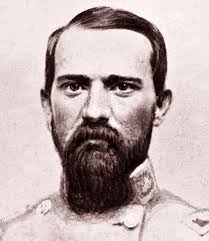
I tend to agree with Confederate Colonel William Oates whose 15th Alabama fought so bravely and unsuccessfully against Joshua Chamberlain and the 20th Maine at Little Round Top on July 2nd 1863 at Gettysburg. After the war, Oates, who was a Christian, reflected about God’s role in the battle and noted that he believed that God, “endowed men with the power of acting for themselves and with responsibility for their acts. When we went to war it was a matter of business, of difference of opinion among men about their temporal affairs. God had nothing to do with it. He never diverted a bullet from one man, or caused it to hit another, nor directed who should fall or who should escape, nor how the battle should terminate. If I believed in such intervention of Providence I would be a fatalist….”

I apply that to all of life, I do not believe that God intentionally afflicts people with disease, or directs events so they are killed. I don’t believe that it is God’s will for people to suffer from terrible diseases or directs bullets, speeding cars or other things which kill young men and women, children or other innocents.

I know that from the beginning of time that people have attributed things that they cannot endure to God, the Devil, or in some cultures gods and devils, or even to attribute such things as God’s punishment for the “sins” of individuals and even their descendants. I know that helps some people, sometimes I think even some of the writers of scripture to frame suffering; as a whole people need to credit or blame someone for terrible things that happen.

I cringe when I hear people say that they are suffering because it is God’s will, or that God is testing them, or I see something that a terrible natural disaster that kills thousands of people is an “act of God.” To be truthful I cannot believe that God is so cruel and capricious to be in that kind of business, and if indeed God is really that way I would rather be an atheist than go to seek a heaven ruled by such a being. And yes, I know that as a Christian that this puts me in a minority. I simply believe that as Jesus so wisely noted that “the rain falls on the just and the unjust alike,” in other words that it is called life, or the human condition, and all of us have to deal with it. To be somewhat crude I believe that shit happens and we have to deal with it.

I cannot imagine a God who wills, plans, and condones genocide, slavery,Infanticide, wars of aggression waged in his name, and every imaginable form of suffering known to humanity. I cannot image a God who so so earnestly believe inflicts such grievous suffering on his children. If we were to apply the standards of justice that we apply to human fathers who abuse or kill their children to God we would do ourselves good and we would probably lock him away for consecutive life terms, but our human need for explaining this prevents us from asking hard questions to the God that we claim to believe. Mark Twain wrote: “The best minds will tell you that when a man has begotten a child he is morally bound to tenderly care for it, protect it from hurt, shield it from disease, clothe it, feed it, bear with its waywardness, lay no hand upon it save in kindness and for its own good, and never in any case inflict upon it a wanton cruelty. God’s treatment of his earthly children, every day and every night, is the exact opposite of all that, yet those best minds warmly justify these crimes, condone them, excuse them, and indignantly refuse to regard them as crimes at all, when he commits them. Your country and mine is an interesting one, but there is nothing there that is half so interesting as the human mind.”

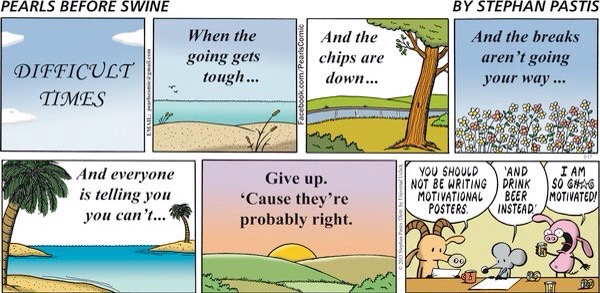
That being said I do live in hope, which is a part of my faith, a faith which is in things that I cannot understand nor can I prove. In this I do believe that God somehow gives people, even people that religious people call “non-believers” a grace to deal with tragedy, illness, suffering and death. I have to believe that because I have often seen non-Christians endure suffering and tragedy with a grace that many Christians, intent on finding a biblical or theological reason for such events do not display. When I think of this I am reminded of Jesus’s remarks about the Centurion who asked him to heal his servant and when Jesus offers to come tells Jesus that he is not worthy for Jesus to come under his roof, but to only speak the word and his servant should be healed (Matthew 8:5-13). The interesting thing about the passage is that the word used for servant is a Greek word for servant which only occurs once in the New Testament, the word Pais. In ancient Greek literature the term denotes a homosexual relationship, that of a man with his houseboy. In other words, Jesus healed a Roman, gentile, pagan Centurion’s homosexual lover, and had the nerve to say that he had “not seen such faith in Israel.” Since the writer of Matthew used the word Pais instead of the word doulos for servant it had to be deliberate and he had to know what he was doing, but I digress…

While I do not believe that God directs or permits death and suffering, I do believe that God is not absent in suffering that people endure, that God “Emmanuel” is with us, all of us; that God suffers with us, for that is the message of Jesus, the crucified one. I also believe that God who is with us, weeps with us as well as rejoices with us. That may not be a good answer for some who want to prove that God is behind everything, nor for those who do not believe in God at all.

I’m sure that some will consider what I wrote today as blasphemy, but then I have to agree with Mark Twain who wrote, “Blasphemy? No, it is not blasphemy. If God is as vast as that, he is above blasphemy; if He is as little as that, He is beneath it.”

Have a great night,

Peace

Padre Steve+

2 Comments

Filed under christian life, faith, Religion

My Faith: A Journey and Mission

IMG_0230

Friends of Padre Steve’s World

Today I am writing because a couple of days ago I celebrated the nineteenth anniversary of my ordination to the Priesthood. Likewise, I have a lot of new readers and subscribers to the site, as well as a lot of Twitter followers who maybe see the title of the page and wonder want I am about. So this is kind of an introduction to me and my faith journey, kind of how I view life. Paul Tillich once said, “Sometimes I think it is my mission to bring faith to the faithless, and doubt to the faithful.” Truthfully I have in large part adopted that as a model for life and faith as a rather miscreant priest, in large part because so many Christians, especially clergy seem too busy prattling on about programs, policies, politics and seem not to understand that most people, just want a listening ear, as Dietrich Bonhoeffer wrote:

“Many people are looking for an ear that will listen. They do not find it among Christians, because these Christians are talking where they should be listening. But he who can no longer listen to his brother will soon be no longer listening to God, either; he will be doing nothing but prattle in the presence of God, too. This is the beginning of the death of the spiritual life, and in the end there will be nothing left but spiritual chatter and clerical condescension arrayed in pious words… never really speaking to others.”

My experience of the Church is profoundly influenced by my life in the nether world of the military culture. My world view is shaped by a blending of various Christian traditions, mutual support and collaboration among believers of often radically different points of view. Because of the love, care and mentoring of people from a blend of different traditions I came to know God and survived a tumultuous childhood with many moves.

As a historian I have been blessed to study church history from the early Church Fathers to the present. As I look to church history I find inspiration in many parts of the Christian tradition. In fact rather being threatened by them I have become appreciative of their distinctiveness. I think that there is a beauty in liturgy and stability in the councils and creeds of the Church. At the same time the prophetic voice of evangelical preaching shapes me, especially the message of freedom and tolerance embodied in the lives and sacrifice of men like John Leland, the American Baptist who helped pioneer the concept of Freedom of Religion established in the Constitution of the United States, of William Wilberforce who labored to end slavery in England and, Martin Luther King Jr. who led the Civil Rights movement.

Likewise that prophetic message of the faith is demonstrated in the ministry, writing and martyrdom of Dietrich Bonhoeffer and his contemporaries Martin Niemoller and Jesuit priest Father Rupert Meyer. All three resisted and preached against the evils of Nazism. In a more contemporary setting I am inspired by Bishop Desmond Tutu who helped topple apartheid in South Africa.

Women like Teresa of Avila and St Catherine show me that women have a legitimate place of ministry and leadership in the Church. I am convinced through my study of Church history, theology and a deep belief in the power of the Holy Spirit that women can and should serve as Priests and Bishops in the church.

My theology has shaped by the writings of Hans Kung, Yves Congar, Jurgen Moltmann, Andrew Greeley, and Henry Nouwen. I’ve been challenged by St Francis of Assissi, John Wesley and Martin Luther. I am especially inspired by Pope John XXIII whose vision brought about the Second Vatican Council and I am inspired by Pope Francis.

I pray that Christians can live in peace with one another and those who do not share our faith. I pray that we can find ways to overcome the often very legitimate hurts, grievances and divisions of our 2000 year history. At the same time I pray that we can repent from our own wrongs and work to heal the many wounds created by Christians who abused power, privilege and even those who oppressed others, waged war and killed in the name of Jesus.

I do not believe that neither triumphalism nor authoritarianism has a place in in a healthy understanding of the church and how we live. I am suspicious of any clergy who seek power in a church or political setting. I profoundly reject any argument that requires the subjection of one Church with its tradition to any other Church. In fact I think that the arrogance and intolerance of Christians to others is a large part of why people are leaving the church in droves and that the fastest growing “religious group” is the “nones” or those with no religious preference. Andrew Greeley said something that we should take to heart:

“People came into the Church in the Roman Empire because the Church was so good — Catholics were so good to one another, and they were so good to pagans, too. High-pressure evangelization strikes me as an attempt to deprive people of their freedom of choice.”

I grew up in and have lived my life in a very open and ecumenical environment. I have lost any trace denominational parochialism and competition that I might have had if I had become a pastor of a civilian parish instead of a chaplain. It is interesting that the pastor that first ordained me in the evangelical tradition and the bishop that ordained me as a priest both did so with the intent that I serve as a chaplain. Whether it was the recognition of a gifting for the work or the fact that they didn’t want me messing up their civilian operations by asking hard questions I will never know.

I believe that my environment and the men and women who have helped shape my life have been a stronger influence in the way I think about ecumenical relations and ministry than my actual theology or ecclesiology. Whether they were Catholics, Anglicans, Lutherans, Methodists, Presbyterians, Evangelicals or even those considered by many to be outside the faith including Jews, Moslems, Buddhists, Mormons and even complete non-believers all have contributed to my life and faith.

I have grown weary of refighting theological debates that have divided the church for a thousand years. Since what we know of theology including our Scriptures and Creeds are based on faith and not science I see no reason to continue to battle.

That doesn’t mean that I think we should put our brains in neutral but rather we must wrestle with how to integrate our faith with science, philosophy and reason, otherwise we will become irrelevant. In that sense I identify with Saint Anselm of Canterbury who wrote about a faith seeking understanding and Erasmus of Rotterdam who very well understood the importance of both faith and reason. In that sense I am very much at home with the Anglican triad of Scripture, Reason and Tradition when it comes to approaching faith.

I struggle with faith and belief. After Iraq I spent two years as a practical agnostic. As Andrew Greeley wrote: “Most priests, if they have any sense or any imagination, wonder if they truly believe all the things they preach. Like Jean-Claude they both believe and not believe at the same time.” Andrew Greeley “The Bishop and the Beggar Girl of St Germain”

I am an Old Catholic and believe that inter-communion does not require from either communion the acceptance of all doctrinal opinion, sacramental devotion, or liturgical practice characteristic of the other, but implies that each believes the other to hold all the essentials of the Christian faith. I like to think that I embody what the early Anglicans referred to as the via media and that somehow my life and ministry has been about building bridges at the intersections of faith with a wide diversity of people.

When I have tried to embrace traditionalism or choose to fight theological battles I have ended up tired, bitter and at enmity with other Christians. In a sense when I tried those paths I found that they didn’t work for me. I discovered that I was not being true to who God had created and guided my life, education and experience. I feel like T. E. Lawrence who wrote:

“The rare man who attains wisdom is, by the very clearness of his sight, a better guide in solving practical problems than those, more commonly the leaders of men, whose eyes are misted and minds warped by ambition for success….”

My favorite theological debates have been with other chaplains over pints of good beer in German Gasthausen or Irish pubs. Those were good times, we argued but we also laughed and always left as friends and brothers. I believe since we are human that none of us will ever fully comprehend all of God or his or her truth. I believe that the Holy Spirit, God’s gracious gift to her people will guide us into all Truth. For me my faith has become more about relationships and reconciliation than in being right.

As far as those who disagree with me that is their right, or your right, if that is the case. I don’t expect agreement and I am okay with differences and even if I disagree with an individual or how another religious denominations polity, theology, beliefs or practices those are their rights. In fact I am sure that those that believe things that I don’t are at least as sincere as me and that those beliefs are important to them. I just ask that people don’t try to use them to force their faith or belief on others, be it in churches or by attempting to use the power of government to coerce others into their belief systems.

Have a great night,

Peace

Padre Steve+

3 Comments

Filed under christian life, ethics, faith, Religion

The Duggars & the Danger of Absolutism

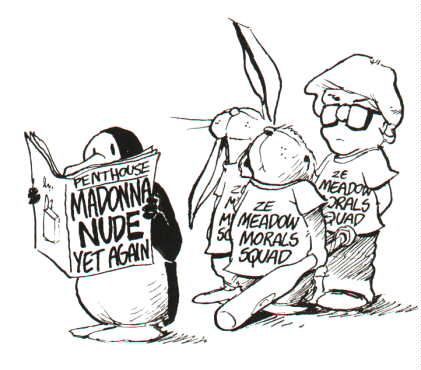
orange-BloomCounty-morals

“Religion carries two sorts of people in two entirely opposite directions: the mild and gentle people it carries towards mercy and justice; the persecuting people it carries into fiendish sadistic cruelty…” Alfred North Whitehead 

Friends of Padre Steve’s World,

Yesterday I wrote about my thoughts on the situation regarding the Duggar family and how I saw the incident as demonstrating the moral implosion of the Christian Right. As I wrote about it I began to think about the religious world of the Christian Right that I spent much of my life in before I returned shattered from my experiences serving in Iraq. For me the war was a watershed in my life and in my faith.

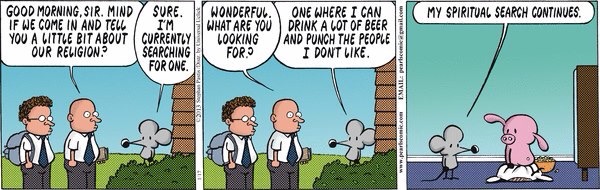
Those who follow my writings know how much I struggle with faith and doubt on a daily basis. I believe, but as the man told Jesus when he asked Jesus to heal his child “I believe, help my unbelief.” I no longer believe in the “absolute truths” that I once believed. Of course to some this makes me a heretic or worse. That being said, I have faith in a God I cannot see. I have faith in a God who clothes himself in human weakness and allows himself to be killed as a state criminal.

That being said I see many of my fellow Christians, not to mention those of other faiths who attempt to use their interpretation of what they believe are absolute truths and attempt to impose them on others. Using their houses of worship they indoctrinate believers into believing the “truth” including the judgment on non-believers. The Duggars and their stalwart supporters are prime examples of this. As I said yesterday, if the Duggars were simply minding their own business and raising their family according to their beliefs the story, while revolting and disgusting in its moral tenor would not have become a political issue. However, because the Duggars have used their fame to insert themselves and their ideology into the political arena where they routinely appear at the side of presidential candidates, influential congressmen and senators, governors and as keynote speakers at quasi-religious political events where they rail against liberals, gays, Moslems and others it has become precisely that.

But then I kind of understand the amount of indoctrination that it takes for people like the Duggars and their supporters to get where they are. I went to churches for much of my adult life where right wing politics was part and parcel of everything that these churches taught. The “voters guides” put out by the Christiian Coalition were not only distributed before, during and after worship services, but they were required reading. Pseudo-historians came and sold their wares about America’s Christian Heritage to people who devoured them. I remember going through mandatory classes for clergy in my previous denomination which were entitled “The Government of God” and utilized Robert Bork’s book Slouching Towards Gomorrah: Modern Liberalism and American Decline as its primary text. Obviously the class had little to do with faith, but was a tool by which we were indoctrinated to believe by the political-religious ideology of our church leaders. There were several more texts, which basically echoed Bork’s thought, but they were taught in a manner is if they were as important as the often contradictory Biblical tests or the writings of the church Fathers, the great saints, Scholastics or Protestant Reformers. It was an exercise in political indoctrination based on religious ideology. At the time I had no idea that what the church leaders were appealing to was nothing more than a variation on the Christian Dominionism ideology. 

Such ideology is incredibly dangerous because when people in power take it to heart and act upon it, all pretense of fairness, justice and integrity is lost. Those who are simply different are persecuted, those who do not tow a particular party or religious line are suspect, and the innocent are presumed guilty. It has happened throughout human history in every corner of the world, and it still goes on today especially in the religious and cultural world that the Duggars are a part. Their “faith” if you can call it that is built on the absolute certitude that they are right and thus even if they do wrong it is not as bad because they are standing for God.

This type of religious and moral absolutism is terrifying when it reaches its fruition, and so I ended up rejecting that view of faith and life after coming home from Iraq. For publicly voicing my disagreement on a number of issues retaliated to those matters I was asked to leave that denomination in 2010.

I believe again, but my doubts are real. But even more I have a belief in justice, and I believe that that justice itself cannot be built on absolutes. As Captain Jean Luc Picard (Patrick Stewart) noted in the Star Trek the Next Generation episode Justice: 

“I don’t know how to communicate this, or even if it is possible. But the question of justice has concerned me greatly of late. And I say to any creature who may be listening, there can be no justice so long as laws are absolute. Even life itself is an exercise in exceptions.”

I have found that as Picard said, “that life itself is an exercise in exceptions.”  We all make them, and the Bible and the history of the church is full of them. So I have a hard time with those who claim an absolute certitude in beliefs that are built on faith and treat them as fact, despite the fact that they are not provable. Dietrich Bonhoeffer noted the problem well when he talked of this problem and described the dilemma of so many believers:

“Man no longer lives in the beginning–he has lost the beginning. Now he finds he is in the middle, knowing neither the end nor the beginning, and yet knowing that he is in the middle, coming from the beginning and going towards the end. He sees that his life is determined by these two facets, of which he knows only that he does not know them”

Even so the Duggars and their supporters, like many believers of all faiths wrap themselves in the certitude of their faith. They espouse doctrines that at best are humanity’s best attempts to describe a God that is infinitely bigger and more complex than they believe. The contest then becomes not about God himself, but the manner that the human being who interprets God espouses as incontrovertible doctrine. Eric Hoffer wrote:

“A doctrine insulates the devout not only against the realities around them but also against their own selves. The fanatical believer is not conscious of his envy, malice, pettiness and dishonesty. There is a wall of words between his consciousness and his real self.”

That certitude and the belief that we absolutely know the mind of a God who claims that we cannot know is the height of arrogance and it ensures that when we speak in terms of absolutes that we do not understand God, nor do we believe in justice, because as Captain Picard so wisely noted “life itself is an exercise in exceptions.” Even the most devout of believers make exceptions, simply because they are human and can’t avoid it, unless they are sociopaths.

Henri Nouwen wrote something very profound that all who claim to know God’s absolute will or truth need to consider. Nouwen wrote: “Theological formation is the gradual and often painful discovery of God’s incomprehensibility. You can be competent in many things, but you cannot be competent in God.”

The fact is that no one can be competent in God, and that those who claim to are either hopelessly deluded by their ignorance, or worse, are evil men masquerading as good. Those who pro port to know absolutes and want to use the Bible or any other religious text as some sort of rule book that they alone can interpret need to ask themselves this question, posed by Commander Riker to Captain Picard when he talked about absolutes and life: “When has justice ever been as simple as a rulebook?” 

Sadly too many people the Duggars apply their own misconceptions and prejudices to their scriptures and use them as a weapon of temporal and divine judgement on all who they oppose. However, as history, life and even our scriptures testify, that none of us can absolutely claim to know the absolutes of God. As Captain Picard noted “life itself is an exercise in exceptions.” 

Thus our human justice, as feeble as it often is must take this into account: It takes true wisdom to know when and how to make these exceptions, wisdom based on reason, grace and mercy. Justice, is to apply the law in fairness and equity, knowing that even our best attempts can be misguided and if based on emotion, hatred, racism or vengeance all clothed in the language of righteousness can be more evil than any evil it is supposed to correct.

Does it matter if we are doing it the sake of law and order, or for love of country, or to defend the faith; if at the heart of it what we call justice, or moral absolutes is nothing more than the implementation of an agenda to crush the powerless under our heel and promote even more injustice? If we lean toward the view that we are implementing the absolute law and will of God then we had better be sure, as Nouwen so well noted we can be competent in many things, but we cannot, as much as we deceive ourselves, be competent in God.

But we see it all too often, religious people and others misusing faith to condemn those they do not understand or with whom they disagree. This is why the Duggar controversy is important. As Patrick Stewart playing Captain Jean Luc Picard noted in the Start Trek Next Generation episode The Drumhead:

“We think we’ve come so far. Torture of heretics, burning of witches it’s all ancient history. Then – before you can blink an eye – suddenly it threatens to start all over again.”

Peace

Padre Steve+

8 Comments

Filed under christian life, faith, News and current events, Political Commentary

Friends, Puppies & Laughter: the Cure for the Celtic Funk 


Friends of Padre Steve’s World

Last week really sucked and I do want to thank those of you who have been so kind to offer words of encouragement on the site or on other social media platforms. Last night was a contuation of the funk. I did not sleep well, had very strange dreams and nightmares and when I got up this morning I was in a deeper funk than I was anytime during the past week. So I just want to say thank you for the love, concern, support and prayers. 

For those that don’t know my family background, we are mostly Scotish, Irish and English with a little bit of French Hugenot and a smidgen of Scandnavian mixed in. Thus I am predominately of Celtic stock which can take a melancholy mood and make it worse, the only fixes for such a foul temper is some irreverent humor and beer. The humor I have enjoyed and I will enjoy the beer in not too long. 

Without reciting the litany of all the events that happened last week, including some that we will still have to face that could make last week look good, I have to say that I am in a far better state of mind that I was just a few hours ago. There are three things for this. First are the friends, many who have known me for years who have offered uncouragement and did not preach at me. Likewise there are my friends that I am getting to know who follow and comment on what I write here, as well as those on Twitter. It would take so much time to mention everyone who has been so kind and I fear that I would leave someone out. But you all know who you are and I have responded individually to all of you. God bless you and thank you. 


That being said last week I felt like my life was a bad country and western song and kind of reminded me of the opening scene of the movie “Stripes” starring Bill Murray. After losing his job, his car, his girlfriend and having dropped his pizza on the ground he simply said “and then depression set in.” I have been so depressed this past week, and I am sure that when I see her next that my shrink will note in my chart that I am officially suffering from clinical depression. But my friends I digress…

Today started out as crappy as any of the past week. I got in to work early, checked my e-mail and then went down to my empty chapel having locked my keys in my office. I had to get security to get the master key to let me in so I could open up the chapel for the throngs of people who do not show up. Then I had to get an external hard drive to take to the Apple Store as my old MacBook Pro went crazy and crapped out on me yesterday. I can either spend big bucks to have it repaired or pay a couple of hundred buck more for the new and improved model. 


I got to the mall where the Apple Store is located and found out that it did not open until eleven a.m. I mean that they don’t even unlock the doors until eleven. So I am standing in Barnes and Noble, which by the way is open wondering just why the hell I can’t walk the mall even if no stores are open. So in frustration I go to the Starbucks inside Barnes and Noble to get a cup of coffee. In front of me is a couple who looked far older than me though I am sure they were probably about my age. The difference is that they were dressed like grown ups, something that to Judy’s consternation I am incapable of doing. This couple were either on their way to or on their way from church and the wife was agonizing over what type of tea to purchase, maybe it was for a gift or for their own consumption by the woman was deeply serious about what would be a key decision in life. 

So the girl behind the counter, the barista, I think that is what we call them now asks me what I would like. 

I responded with my standard line, “plain black coffee.” When she asked if I wanted her to leave room for creame or sugar I responded “no I drink it dark and bitter like my life.” That was more true than usual this morning, usually I mean it as a joke, but today I was quite serious. When I said it the church lady looked up from her quest for the perfect tea and almost in shock said “you poor man.” Somehow that cheered me up a bit. I attempted to assuage her obviously genuine concern by giving her a big smile and a wink. gave her a big smile and wink. 

I sat down and had my dark and bitter coffee and as I did so my Facebook and Twtter friends were offering words of encouragement. Finally the mall open its doors and I was able to go to the Apple Store and drop off the external hard drive to get all my data from the old computer. 

When I got home I was treated by Minnie and Izzy. There is nothing like the greeting of sweet puppies to melt one’s heart and to cheer one up. That was nice. Of course Judy and I were able to talk about the week, reflect on Molly and our concerns about what she might face. We had some good laughs and then I saw a quote that made me laugh harder than I have all week. It is from Stephen King.

“When his life was ruined, his family killed, his farm destroyed, Job knelt down on the ground and yelled up to the heavens, ‘Why God? Why me?’ And the thundering voice of God answered ‘There’s just something about you that pisses me off.’

I about hurt myself laughing and now I feel so much better. I’m sure I will quote it the next time Job is in the lectionary readings for a Sunday. Perhaps a tiny bit of blasphemy is the best medicine after all. 


Have a great Sunday, and thank you for everything.

Peace

Padre Steve+ 


1 Comment

Filed under dogs, faith, ministry

Pious and Conflicted: General Dorsey Pender

pender

Major General Dorsey Pender C.S.A.

Friends of Padre Steve’s World

I am continuing to periodically intersperse and publish short articles about various commanders at Gettysburg on the site. These all are drawn from my student text and may become a book in their own right.  The reason is I am going to do this is because I have found that readers are often more drawn to the lives of people than they are events. As I have noted before that people matter, even deeply flawed people, and we can learn from them.

Today’s article is about Major General Dorsey Pender who commanded A.P. Hill’s old “Light Division” in Hill’s Third Corps at Gettysburg. Pender is interesting, young an pious, but often conflicted in his faith. His questions are similar to those asked by those who want to believe but struggle with believing. His relationship with his wife, a very strong believer was often marred by differences in belief. I hope you enjoy.

Peace

Padre Steve+

Dorsey Pender was a “pious, serious North Carolinian” [1] born in Edgecomb County in 1834 who received “his early education in the common schools of the county” [2] before he was appointed to West Point. He graduated with the class of 1854, a class that included Custis Lee, Oliver O. Howard, J.E.B. Stewart, S.D. Lee, John Pegram, and Stephen Weed. He graduated nineteenth of the forty-six cadets in that class.

He married his wife Fanny in 1859. She was the sister of one of his academy classmates Samuel Shepperd who died a year after graduating from the academy. She accompanied Dorsey to the Pacific Northwest where he was serving at the outbreak of the war. They had been married two years when he volunteered to serve the Confederacy, he was just twenty-seven and she just nineteen and already a mother expecting a second child when he went to war. Like many young couples separated by war theirs was often plagued by misunderstandings and highly emotional, something that is evidenced in their correspondence.

Pender is often described as devout in terms of his religious beliefs but his devoutness was in large part due to the spiritual conflict that he was going through. Pender was a tremendously proud man but felt the need for some kind of salvation and while he “sincerely tried to be a good Christian” but could not understand why good works did not earn salvation.” [3] The young general sought the counsel of a chaplain, but this did not ease his mind. Eventually he was baptized and confirmed in the Episcopal Church, but even this brought conflict with his wife who was not able to be with him. Despite these attempts he still doubted and months later still “considered himself a “perjured” sinner, having made vows that he could not keep.” [4] This type of religious experience, that of men who question their faith was not unique to Pender and is not unusual today.

Prior to the war he served on the frontier and in California with the artillery and dragoons. During the secession crisis he “offered his services to the Confederacy even before most of the states, including his own, had seceded.” [5] He was appointed to command the 6th North Carolina where he “earned the everlasting respect and admiration” of his men. [6] After the Battle of Seven Pines he was made an acting Brigadier General and given command of Johnston Pettigrew’s brigade. [7]

As he gained more experience Pender became a favorite of Robert E. Lee who admired him for his competence as well as forthrightness. “At Harper’s Ferry and Shepherdstown Pender had shown himself qualified to handle more than one brigade.” [8] Pender was “only seven years out of West Point” [9] in May of 1863 when he was promoted to Major General and given command of his division. He was only twenty-nine years old, and the “youngest of that rank in the army.” [10] The young general was deeply loyal to Powell Hill and a partisan of the Light Division which he now commanded. Though he was young he had risen “on first rate ability, steadfast ambition and a headlong personal leadership in battle which gave a driving force to his brigade” [11] which he considered “the best brigade of the best division” [12] in the army.

Lee praised him as “a most gallant officer” and was deeply sensitive about keeping Pender with the troops that found him so inspiring, noting “I fear the effect upon men of passing him over in favour of another not so identified with them.” [13] Pender was an “intelligent, reflective man, deeply religious and guided by a strong sense of duty.” [14]

When the army marched north into Pennsylvania had to write to “relieve the concern of his young wife that the Lord will not bless the Southern cause if the Confederacy does more than defend its own territory.” [15] Fanny was not convinced by her husband’s attempts to justify as she believed that such an endeavor “was unjust and illegitimate, and tempted God.” [16]

Pender’s four veteran brigades were commanded by three experienced officers and one new to brigade command. However, the young general would not get to lead them into action for long as he was mortally wounded by a shell fragment before the division was to go into action on July 2nd at Gettysburg. Though surgeons believed he would recover he succumbed to his wound during the Confederate withdraw from Gettysburg. “In his dying moments, he asked that Fanny be told that he had no fear of dying.” [17] He continued and said “I can confidently resign my soul to God, trusting in the atonement of our Lord Jesus Christ. My only regret is to leave her and our children.” [18]Evidently, he finally found a measure of peace in the faith that had eluded him in life. Fanny never remarried and became an independent women serving as the head of a school and as Postmistress of Tarboro North Carolina where she died in 1922 at the age of eighty-eight.

Notes

[1] Ibid. Guelzo, Gettysburg: The Last Invasion p.23

[2] Ibid. Warner Generals in Gray p.233

[3] Rable, George C. God’s Almost Chosen People’s: A Religious History of the Civil War The University of North Carolina Press, Chapel Hill 2010 p.244

[4] Ibid. Rable God’s Almost Chosen Peoples p.244

[5] ibid. Tagg The Generals of Gettysburg p.325

[6] Ibid. Glatthaar General Lee’s Army from Victory to Collapse p.196

[7] Ibid. Freeman Lee’s Lieutenants p.146

[8] Ibid. Freeman Lee’s Lieutenants p.387

[9] Ibid. Dowdy. Lee and His Men at Gettysburg p.85

[10] Ibid. Sears Gettysburg p.47

[11] Ibid. Dowdy. Lee and His Men at Gettysburg p.85

[12] Ibid. Freeman Lee’s Lieutenants p.45

[13] Ibid. Sears Gettysburg p.47

[14] Ibid. Dowdy. Lee and His Men at Gettysburg p.85

[15] Ibid. Freeman Lee’s Lieutenants p.45

[16] Ibid. Guelzo. Gettysburg: The Last Invasion p.66

[17] Ibid. Wilson and Clair They Also Served p.113

[18] Ibid. Dowdy Lee and His Men at Gettysburg p.226

1 Comment

Filed under christian life, civil war, faith, Gettysburg, History, Military

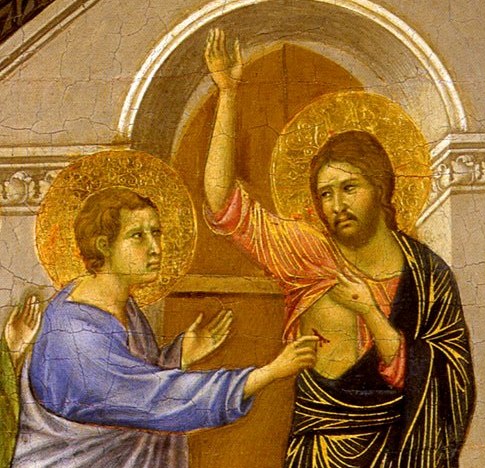
Doubt, Faith and Realism: Doubting Thomas

jesusthomas

Yesterday I celebrated Eucharist on the Second Sunday of Easter its a number of m students and their families at our Staff College Chapel. I have to say that I love what do, I never will regret following the call that I first felt aboard the USS Frederick (LST-1184) back in 1978 to become a Navy Chaplain.

Of course was with everything in my life it has not been easy, and to quote Jerry Garcia I have to admit “what a long strange trip it’s been.” Bug my friends I digress…

That being said, today was a specially day. I was able to celebrate Eucharist with some very nice people and today the Gospel lesson, from the final chapter of John centered on the story of St. Thomas, or he is better know among most people today, “Doubting Thomas.”

The interesting thing is that unlike most “true believers” today Thomas was not rejected by the other disciples as they testified to the resurrection, nor by Jesus himself. Thomas you see was a realist who wanted proof. Thomas wanted to put his hand in the wounds of Jesus, the same Jesus who he knew was crucified and dead. As a realist, Thomas know that dead is dead and unless as he told the other disciples, unless he could put his hand in the wounds of Jesus he would not believe.

Personally, I admire that, more than most people could imagine. Faith is faith, it is not about having to absolutely know, but is about trust, about belief even when you cannot prove it, otherwise it would not be faith. That is why when I see those who have to prove that the absolute certitude that they call “faith” is “absolute truth” I realize that they have totally missed the point of the Gospel.

Having gone through a period of almost two years where as a priest and chaplain I was for all practical purposes an agnostic hoping that God existed I understand this. In fact I have to admit that even today I doubt as much as I believe. I totally understand Thomas, and in fact not only understand, but feel a special kinship with this much maligned follower of Jesus.

Truthfully I think that doubt is a very good thing, it keeps us honest, it keeps us from becoming pious, arrogant, religious assholes who think that they know it all.

Truthfully, I don’t know it all. In fact, as the late Earl Weaver said, “it’s what you learn after you know it all that counts.” At least that seems to be the case for Thomas and the other disciples because what happened with Jesus and the resurrection blew their minds, it was not anything that they could fathom.

Perhaps Thomas, having not been one of the first witnesses to the resurrection was actually more circumspect and a bit more like us than the disciples who first saw Jesus following his crucifixion and resurrection. I would actually saw more honest, for in fact Thomas was a realist who refused to believe unless he had some kind of physical evidence. That my friends I appreciate more than I ever did, because even though Thomas saw Jesus, talked with him and had Jesus show him his wounds, Thomas only believed when he saw and touched those wounds. I cannot condemn nor can I question the faith of the man who is most identified with doubt.

Doubt is not bad. As the late Father Andrew Greeley wrote in his novel The Bishop and the Beggar Girl of St. Germain: 

“Most priests, if they have any sense or any imagination, wonder if they truly believe all the things they preach. Like Jean-Claude they both believe and not believe at the same time.” 

That my friends is faith. That is Easter, if we knew it absolutely it would not be faith and that would be against everything proclaimed by those that first followed Jesus. In fact if we claim with absolute certitude that we know everything needed to be right with God and that we know exactly what God desires, we are probably liars, or at the minimum sadly deluded. As the late Father Henri Nouwen wrote:

“Theological formation is the gradual and often painful discovery of God’s incomprehensibility. You can be competent in many things, but you cannot be competent in God.”

I think this is something that Thomas and the other disciples came to understand. All of them had their moments of faith, and certainly their times of unbelief, even after the resurrection. Maybe that is why Jesus told Thomas “Have you believed because you have seen me? Blessed are those who have not seen and yet have come to believe.”  

Thomas was a realist. Even though the other disciples testified to Jesus being alive, Thomas knew that dead, was dead. He knew that Jesus had died on that cross and that it would take more than words to make him believe that Jesus was alive.

Faith is not about certitude as much as the apologists and propagandists of any faith may say, faith always has to have an element of doubt, otherwise it cannot legitimately be called faith. In fact sincere faith admits that it could be wrong, and as the Paul the Apostle said “If Christ has not been raised, your faith is futile….”

Personally, I find nothing wrong with that. For me that is honest faith, that is Easter faith.

So, have a great day.

Peace

Padre Steve+


1 Comment

Filed under christian life, faith, Religion

“You Must Have Faith…” RIP Leonard Nimoy

Today we lost a great human being and wonderfully actor who playing the Vulcan “Mr Spock” in Star Trek help to teach us to be better human beings. As I mentioned earlier I am on the way to Gettysburg and I found out as my iPhone lit up with news alerts. Thankfully I am not driving. 

Those who follow my writings know just how much Star Trek in all its forms means to me, it is one of the constants in my life, which along with baseball and history has helped make me who I am today. 

One of the key players in that show, who I have always had a certain fondness for was Mr Spock, played by Leonard Nimoy. Nimoy played a character who could have been a one dimensional caricature with a depth, sensitivity, and complex subtlety that enriched us who watched him. 

Of course Nimoy was much more than Spock, he was a tremendously gifted actor and his career even without Star Trek would have been considered quite successful. But it was his portrayal of Spock in the original series, the films that flowed from that series and his reprise of the role in Star Trek the Next Generation and Star Trek: Into Darkness which made him an icon of film and television, and made me look for something higher, better and more noble in life. I’m sure others who grew up with him would agree with me in that. 

I was thinking about the many things that Nimoy said, as Mr Spock as well as out of character which were so rich. One of the most fascinating is in the movie Star Trek VI The Undiscovered Country where Captain Spock startles a young Vulcan Lieutenant when discussing a possible peace treaty with the Klingon Empire. 

Spock: History is replete with turning points, Lieutenant. You must have faith.” 

Valeris: Faith?

Spock: That the universe will unfold as it should

Valeris: But is that logical? Surely we must….

Spock: Logic, logic and, logic….Logic is the beginning of wisdom, Valeris, not the end…

I am a terribly logical person, I doubt at least as much and often more than I have faith. Sometimes I have a hard time getting around my logical side to believe, to have faith. Thus the exchange is something that resonates with me. 

Nimoy, as Nimoy had a profound wit, as well as wisdom. Nimoy tweeted his last tweet on February 23rd it is quite profound.

“A life is like a garden. Perfect moments can be had, but not preserved, except in memory. LLAP” 

For those who don’t get the last bit of that LLAP is the line that Spock and Nimoy are both most remembered for, live long and prosper. 

It is a fitting benediction. I shall miss him. 

Live long, and prosper.

Peace

Padre Steve+ 

2 Comments

Filed under faith, Loose thoughts and musings, philosophy, star trek

Heresy, Love, and Faith: My Journey

IMG_1915

I like hard questions and hard cases. My life has been quite interesting and that includes my faith journey as a Christian and human being. It is funny that in my life I have as I have grown older begun to appreciate those that do not believe and to rather distrust those who proclaim their religious faith with absolute certitude, especially when hard questions are asked.  I was reminded of this by an Orthodox Christian internet “troll” this week.

Paul Tillich once said “Sometimes I think it is my mission to bring faith to the faithless, and doubt to the faithful.” 

I find it amusing when trolls come by to condemn my “heresy” and I realize that most have some kind of psychological need to be right, as well as a deep fear, despite their certitude, that they might be wrong, that causes them to do this.

I think that the quote by the late theologian is quite appropriate to me and the ministry that I find myself. I think it is a ministry pattern quite similar to Jesus in his dealings with the people during his earthly incarnate ministry.

Jesus was always hanging out with the outcasts, whether they be Jewish tax collectors collaborating with the Romans, lepers and other “unclean” types, Gentiles including the hated Roman occupiers, Samaritans and most dangerously, scandalous women. He seemed to reach out to these outcasts while often going out of his way to upset the religious establishment and the “true believers” of his day.

There is even one instance where a Centurion whose servant he healed was most likely involved in a homosexual relationship, based on the writer of the Gospel of Matthew’s use of the Greek word “Pais” which connotes a homosexual servant, instead of the more common “Doulos.” That account is the only time in the New Testament where that distinction is made, and Pais is used throughout Greek literature of the time to denote a homosexual slave or “house boy” relationship. Jesus was so successful at offending the profoundly orthodox of his day that his enemies made sure that they had him killed.

I think that what has brought me to this point is a combination of things but most importantly what happened to me in and after my tour in Iraq. Before I went to Iraq I was certain of about everything that I believed and was quite good at what we theologians and pastors call “apologetics.” My old Chaplain Assistant in the Army, who now recently serves as a Lieutenant Colonel in the Army Chaplain Corps called me a “Catholic Rush Limbaugh” back in 1997, and he meant it quite affectionately.

I was so good at it that I was silenced by a former Archbishop in my former church and banned from publishing for about 7 years after writing two articles for a very conservative Roman Catholic journal, the New Oxford Review.

The funny thing is that he, and a number of my closest friends from that denomination are either Roman Catholic priests or priests in the Anglican Ordinariate which came into communion with Rome a couple of years back. Ironically while being “too Catholic” was the reason I was forbidden to write it was because I questioned certain traditions and beliefs of the Church including that I believed that there was a role for women in the ordained ministry, that gays and lesbians could be “saved” and that not all Moslems were bad that got me thrown out in 2010.

However when I returned from Iraq in the midst of a full blown emotional, spiritual and physical collapse from PTSD that certitude disappeared. It took a while before I was able to rediscover faith and life and when I did it wasn’t the same. There was much more mystery to faith as well as reason. I came out of that period with much more empathy for those that either struggle with or reject faith. Thus I tend to hang out at bars and ball games more than church activities or socials, which I find absolutely tedious. I also have little use for clergy than in dysfunctional and broken systems that are rapidly being left behind. I am not speaking about belief here, but rather structure and methodology.

I think that if there is anything that God will judge the American versions of the Christian church is our absolute need for temporal power in the political, economic and social realms and the propagation of religious empires that only enrich the clergy which doing nothing for the least, the lost and the lonely. The fact that the fastest growing religious identification in the United States is is “none” or “no preference” is proof of that and that the vast amounts of money needed to sustain these narcissistic religious empires, the mega-churches and “Christian” television industry will be their undoing.  That along with their lack of care for anyone but themselves. Jesus said that his disciples would be known by their love for one another, not the size of their religious empire or temporal power.

The interesting thing is that today I have friends and colleagues that span the theological spectrum. Many of these men even if they do not agree with what I believe trust me to love and care for them, even when those most like them in terms of belief or doctrine, both religious and political treat them like crap. Likewise I attract a lot of people who at one time were either in ministry or preparing for it who were wounded in the process and gave up, even to the point of doubting God’s love and even existence. It is kind of a nice feeling to be there for people because they do not have to agree with me for me to be there for them.

In my darkest times my only spiritual readings were Father Andrew Greeley’s Bishop Blackie Ryan mysteries which I began reading in Iraq to help me get through the nights in between missions in Iraq and through the nights when I returned from them.  In one of those books, the last of the series entitled “The Archbishop goes to Andalusia” the miscreant Auxiliary Bishop to the Cardinal Archbishop of Chicago goes to Seville Spain.  In the novel Bishop Blackie makes a comment after celebrating Mass in the cathedral at Seville. He said “Every sacramental encounter is an evangelical occasion. A smile warm and happy is sufficient. If people return to the pews with a smile, it’s been a good day for them. If the priest smiles after the exchanges of grace, it may be the only good experience of the week.”  (The Archbishop in Andalusia p.77)

That is something that I try to do now on a regular basis. Sure most of my sacramental encounters as a hospital chaplain do not occur during the liturgy, but often in the life and death moments and times of deep discouragement felt by the wounded, ill and injured. In that ministry I have found that there are many hurting people, people who like me question their faith and even long held beliefs.

I like the old song by Nazareth called Love Hurts. The song always gets me. It is one of those “real” songs from the 1960s and 1970s that nails how life can be sometimes.

Love hurts, love scars
Love wounds and mars
In any heart not tough
Nor strong enough
To take a lot of pain
And love is like a cloud
Holds a lot of rain
Love hurts

I’m young and I know
But even so, I know a thing or two
I have learned from you
I’ve really learned a lot
And love is like a stove
Burns you when it’s hot
Love hurts

Some fools rave of happiness
Of blissfulness, togetherness
Some fools fool themselves, I guess
But they’re not fooling me
I know it isn’t true
Love is just a lie
Made to make you blue
Love hurts

Love does hurt, and well deciding to love can bring a lot of pain, but I do think that it is worth it. Well, that is all for tonight. Until tomorrow.

Blessings and Peace

Padre Steve+

Love Hurts lyrics © Kobalt Music Publishing Ltd., Warner/Chappell Music, Inc., EMI Music Publishing, Sony/ATV Music Publishing LLC, HOUSE OF BRYANT PUBLICATIONS


2 Comments

Filed under christian life, faith, LGBT issues, mental health, Military, ministry, Religion

My New Year’s Resolution: The Passionate Pursuit of Truth

10570298_10152872503382059_5058681841617456899_n

“If someone is able to show me that what I think or do is not right, I will happily change, for I seek the truth, by which no one was ever truly harmed. It is the person who continues in his self-deception and ignorance who is harmed.” – Marcus Aurelius 

Friend’s of Padre Steve’s World. Before I say anything else tonight I just want to thank you for taking the time out of your schedule to read, comment and even share what I write. That matters to me and a good number of you have followed my writings for years. So I truly thank you from the bottom of my heart, and if you like what you see please comment and share with others.

As I get older I realize how valuable time is. There are few commodities that truly cannot be replaced or conserved, time is one that is always fleeting. As Dr. Suess said:

“How did it get so late so soon? It’s night before it’s afternoon. December is here before it’s June. My goodness how the time has flewn. How did it get so late so soon?”

That being said I am not a fan of New Year’s resolutions, in fact I generally don’t make any because frankly I think that most are a waste of time. However, I do not think that the pursuit of truth is a waste, and as Benjamin Disraeli noted so wisely; “Time is precious, but truth is more precious than time.”

To that end I am going to endeavor this year to commit myself to continue to seek truth and to speak truth. Truth matters to me. In my life I have seen so many lies, especially by political and religious leaders that I trusted that I now devote myself to the pursuit of truth. As Captain Jean Luc Picard told the young Cadet Wesley Crusher in Star Trek the Next Generation episode The First Duty: “the first duty of every Starfleet officer is to the truth, whether it’s scientific truth, historical truth or personnel truth…” 

So, I will continue to write, especially about historical subjects that have an impact today: civil rights and social justice, faith, military issues, PTSD and military health issues, the Middle East conflicts and a number of other topics. Of course I will write about baseball, which is often my refuge when things are too much for me and music. I may do more regarding music as I was asked to do an article for a journal about liturgical music, stress and resiliency.

I will continue to be as transparent as I can about my own struggles withPTSD and faith in the hopes that my journey will help others who struggle like me. In fact this was a major reason that I started this site back in February of 2009.

Expect more writing about the Battle of Gettysburg and the Civil War. I have a feeling that that is going going to become a life work, even after I retire from the Navy. The American Civil War is so pertinent to who and what we are as a nation and the more I study it, the people, the issues and the ideologies involved I see many parallels with today; some of which are positively frightening. So expect a lot more about these subjects. In fact the Civil War is one in which debunked myths still hold sway over many, especially among the defenders of the Lost Cause who predominate the Christian Right.

While lies are dangerous the myths can be more so, and the proliferation of lies, half-truths and myth have shriveled the brain cells of those who enjoy the comfort of opinion without the benefit of thought. President John F. Kennedy spoke of this in 1962, and his words are timely, especially when hoards of preachers, pundits and politicians, the Trinity of Evil, do this with abandon:

“The great enemy of truth is very often not the lie–deliberate, contrived and dishonest–but the myth–persistent, persuasive and unrealistic. Too often we hold fast to the cliches of our forebears. We subject all facts to a prefabricated set of interpretations. We enjoy the comfort of opinion without the discomfort of thought.” 

To do this I have to constantly challenge my own thoughts. Even in my work on my Gettysburg and Civil War text I uncover information that points out mistakes in previous editions of my work, and I am not so arrogant that I cannot admit making a mistake or changing my conclusions on a subject. I am actually doing that now on a chapter revision to that work.

As far as other goals, I want to get a publisher for the Gettysburg text, who knows, what I have already written might be two or three books. If you know someone who can help, let me know. I also plan on beginning work on a doctorate to take with me into retirement.

So until tomorrow.

Peace

Padre Steve+

4 Comments

Filed under History, philosophy, Political Commentary