Tag Archives: france

Unequal Allies: Lessons from The German’s and Their Allies on the Eastern Front for Today

patton with french tankPatton with French Renault F1 Tank in WWI

One of the problems that any coalition of unequal partners as is the case in Afghanistan is the role of the lesser partners, their capabilities and limitations imposed on them by their own governments.  When NATO joined the US led effort in Afghanistan a number of NATO allies contributed troops to the effort.  The same was true of the “coalition of the willing” in Iraq.  While obviously the US appreciated and continues to appreciate the efforts of its allies in both theaters the unique problems associated with coalition warfare are often not appreciated until the strengths and weaknesses of each junior partner in the coalition are shown to include the effect of each nation’s choice of units sent, logistics capability and rules of engagement.  Thus when some Americans are critical of the contribution of some allies, or the limitations imposed by their governments they should remember that in the First World War the United States was dependant on France and Britain for the majority of the Artillery, all of the tanks and aircraft as well as instructors and training facilities for the rapidly recruited American Expeditionary Force.

RickenbackerUS Ace Eddie Rickenbacker with French Supplied Nieuport 28

Every nation works within its own national interests and domestic political situation as well as its military capabilities. Unfortunately many people do not look at history to see how a coalition of a major power allied with a number of minor powers each with their own limitations as well as motivations for entering the war execute that war after the initial plan is foiled.  This is something that has happened in Afghanistan after the initial success disappeared with the corrupt and ineffective Afghan government, the resurgent Taliban and the resiliency of Al Qaida in their bases in the remote border areas of Afghanistan and Pakistan.
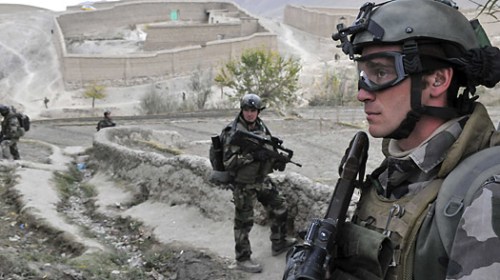
nato_france_a_0403French Troops in Afghanistan: The French, British and Canadians have the most Robust Rules of Engagement of Non US NATO Forces (Time Magazine Photo)

One of the best places to find such an example is the German relationship with their allies on the Eastern Front.  The question of the German dominated European Axis alliance in the Second World War is one of the more neglected subjects of World War Two II. In most accounts of the war, the relationship of the Germans to their coalition is minimal.  This includes the works of B.H. Liddell-Hart, Williamson Murray, Chester Wilmot and David M Glantz.   Italy usually receives some attention in the context of the campaign in North Africa and Mediterranean.  Hungary, Romania and Finland receive scant attention from anyone except as to how their armies were overrun during the Stalingrad campaign. Popular German memoirs provide little substantive help. Field Marshal Albert Kesselring’s memoirs and Erwin Rommel’s papers give some views of the Italian efforts in North Africa and the Mediterranean and Erich Manstein gives a limited amount of attention to the Italians, Finns, Hungarians and Rumanians in Russia.
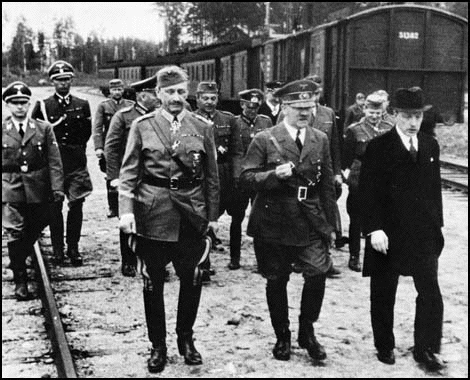
Finland-HitlerConflicting War Aims: Hitler with Finland’s Field Marshal Von Mannerheim

In his essay The Dysfunctional Coalition Robert Di Nardo examines the relationship of Germany to her allies on the Eastern Front where the Germans due to their own limitations were forced into a coalition war with weak allies of uncertain reliability. This is a subject that Di Nardo expanded on in his book Germany and the Axis Powers: from Coalition to Collapse (University of Kansas Press, 2005).  Di Nardo believes that there are important lessons to be learned from the failure of Germany and its coalition. Unfortunately we in the west are more often than not content to judge coalitions by the success of the Allies in the Second World War.  Di Nardo’s work on the subject is something that the United States must learn from as it works with coalitions whose members have significant military weaknesses often magnified by the domestic political climates in their own country. The situation, especially in Afghanistan places he United States in a similar position to Germany in relation to the current wars on terror and campaigns in Iraq and Afghanistan.
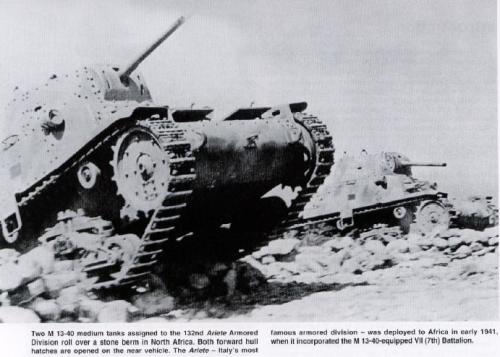
m 13-40 tankItalian M 13-40 tanks were the mainstays of Italian Armored Units, Slow, Undergunned and Poorly Armored they were No Match for Soviet T-34s

Di Nardo asserts “the way in which Germany conducted coalition warfare was reflective of the manner in which Hitler and the German military looked at the world, as well as the war in general.”  Germany often displayed a haughtiness toward its allies and even knowing their weaknesses was both unable and often unwilling to do much to strengthen them for the fight against the Soviet Union.  Di Nardo believes that the German attitudes were “a significant factor that contributed to the ultimate defeat of Nazi Germany.” (p.712)  In the essay Di Nardo notes the few successes of the coalition. In particular he looks at the German work with Rumanian air defense around the Ploesti oil refineries and the German-Finnish Winter Warfare School.  Apart from these instances he characterizes Axis coalition warfare on the eastern front as “poor” with “failures at every level.” (p.713)

italian troops stalino

Di Nardo analyzes the problems with language barriers, the wide differences of modernity of the armies and levels of technology and training of the coalition partners many of which are common to the war in Afghanistan. Germany’s failure to become the “arsenal of Fascism” which the United States became “the Arsenal of Democracy” for its allies hindered the Germans in their relationship to their poorly equipped allies.  Likewise, the lack of understanding of all the partners regarding the “relationship between national objectives, strategy and the morale of soldiers of officers and soldiers alike”(p.713) was a major obstacle.

finnish at gun

Di Nardo provides a good description of the German liaison detachments allotted to the coalition armies.  These teams functioned as advisors to their allies as well as liaisons between the German army and the allies. These teams dealt with language, tactical communications weaknesses and often displayed the generally haughty attitude that the Germans displayed to their partners. There is an excellent illustration of this in dealing with the failure of XLVIII Panzer Corps at Stalingrad when the German Liaison to the Romanian 1st Panzer Division was wounded.  At the operational and strategic levels Di Nardo describes the German policies and attitudes toward their allies as “imperialist.” (p.718)

He examines the wide gap in transportation capabilities of the various armies and the failure of the Germans to better provide for the needs of their partners in contrast to the United States assistance to her allies.   Germany provided obsolete captured Czech and French weapons and vehicles to her allies.  They refused to supply the Romanians and Hungary with the plans to build German tank and aircraft in Romanian and Hungarian industrial concerns capable of their manufacture. (pp.718-719) Di Nardo notes how this lack of modern equipment impacted the allies operations against the Red Army and their defeat at the hands of the Soviets.  Although Di Nardo alludes to how even elite German formations had substandard equipment he does not explain principle reason for this.   This was due to the fact that the Germans did not go to a “total war” footing in regard to industrial production until Albert Speer took over as Armaments Minister in 1943.
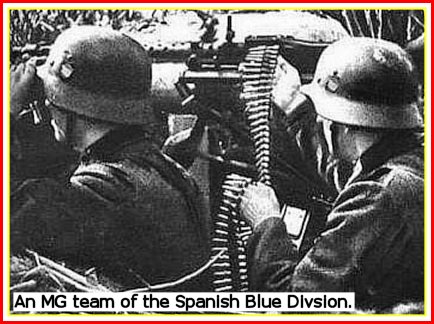
spanish blue divsion

The number of troops contributed by the German Allies was substantial. Hungary began Barbarossa with two corps, including its Mobile Corps and in 1942 supplied their 2nd Army which was composed of 1 Armored and 9 Infantry Divisions. 2nd Army was crushed by the Soviet offensive against Stalingrad. The Italians began with an expeditionary corps of 2 Semi-Motorized and 1 Light Infantry Divisions. In early 1943 they added 4 Infantry and 3 Alpine Divisions and a number of other smaller formations. This force became the 8th Army. It fought well during the advance toward Stalingrad but spread out over a wide front with little armored or air support was decimated by the Soviet offense against the city.  The remnants were no longer battle worthy and were evacuated to Italy.  Most of the Finnish Army was engaged in the war but after September 1939 made no major offensive contribution to the war. In 1944 following a major Soviet offensive which forced them to withdraw from the territory that they had captured in 1941 the Finnish government sued for peace. The Russians occupied a number of border provinces and islands and Finland was obliged to expel German Forces.  This resulted in the “Lapland War” between the Finns and the Germans with the Germans adopting a scorched earth policy as they withdrew from the country. The quality of the Finnish forces was generally higher than that of Germany’s other Allies.

romanian r35Obsolete French Built Romanian R-35 Light Tank

The Romanians contributed 19 divisions organized into 3 Armies to Barbarossa. They were limited by their equipment and logistics. The 3rd and 4th Romanian Armies were shattered at Stalingrad forcing a major reorganization as they continued the war.  In August 1944 with the Soviets pressing their border King Michael led a coup to overthrow the Fascist dictatorship of Antonescu. The Germans elected to fight and the Romanians changed sides and joined the Russian advance to the end of the war with their 1st Army taking part in the Prague offensive. Another contributor of troops was Franco’s Spain although it was a neutral country. Spain provided a division of volunteers which became the famous “Spanish Blue Division” or the 250th Infantry Division. It was outfitted as a German unit and received additional training from the Germans before it went into action. The division fought near Leningrad and was engaged in many tough fights.  A Spanish “Blue” Fighter squadron allotted to and equipped by the Luftwaffe also distinguished itself. In October 1943 Spain under allied pressure withdrew the division from the front although many soldiers volunteered to remain and fight on as smaller units attached to German formations. One volunteer company became part of the 11th SS Panzergrenadier Division Nordland at Berlin.  One thing that probably was a factor in the Spanish effectiveness as well as commitment to to German cause was their genuine loathing of the Soviets following the Spanish Civil War.

The final part of Di Nardo’s essay deals with the strategic goals and conflicts among the Axis coalition which were never worked out.  Examples of this include how the Finns never signed a formal alliance with Germany and how their national strategy did not allow them to deeper into the Soviet Union instead settling on recovering territory lost to the Soviets in 1939 with a few minor gains.  There was also the problem that the Romanians and Hungarians distrusted each other so much that they could not work together over their own territorial disputes.  The Italians joined the campaign late and their 8th Army participated in the German advance toward Stalingrad protecting the German flank.  While the Italians provided their own equipment including armor and aircraft they and their weapons were woefully suited for the war that they faced on the Eastern Front.  Di Nardo finishes his essay noting morale problems in the Hungarian, Italian and Romanian armies, the lack of understanding and general lack of motivation for the campaign.
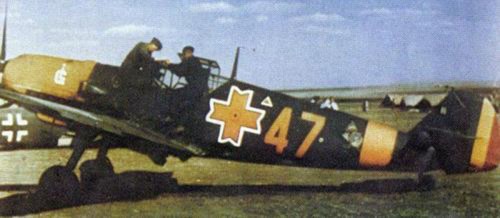
Romanian_Me109-px800Romanian ME-109 E4, The Romanian Air Force Was One of the Axis Success Stories

This article is well sourced. Di Nardo uses histories, archival sources, operational orders and analysis by the various armies as well as interviews with participants. Of particular note is that he goes to sources of the coalition partners and not just German sources.  This allows him to be far more nuanced and detailed in his discussion as opposed to others who simply ignore the contributions of the Axis partners.  His footnotes provide added detail and provide and lend support to his arguments.

The importance of this essay is twofold.  First it provides a look at the relationship of German to her coalition partners on the Eastern Front.  This is important from a historic standpoint simply because it is such a neglected topic in most histories of the period and gives added depth to the reasons for Germany’s defeat.  One has to ask the “what if questions” in regard to had the Germans better treated, equipped and recognized their allies’ contributions to the war effort.

The second and probably more important for Afghanistan is that it provides lessons to any nation which has to engage in coalition warfare.  In particular it has lessons for the United States which has found itself as the senior and vastly superior partner in a war which has multiple coalition partners in several theaters of operations.  Each coalition partner has certain military strengths and weaknesses in relationship to the United States, national interests, geo-political and economic relationships with competitors to the United States and internal political realities which impact their cooperation in the war.  As such the United States cannot allow itself to be cast in the role of a haughty imperialistic senior partner as did Germany.  The US instead must cultivate an attitude of assistance, respect and trust among its partners to assure their full cooperation and assistance in relation to U.S. goals in the war. This is particularly important now was it appears that the Afghan war is reaching a point where the deteriorating situation on the ground could invite the early withdraw of allies and necessitate either the addition of more US troops or a strategic withdraw which would be for all intents and purposes a defeat for the US and NATO. The consequences would not be good and while the Taliban may be able to be contained they undoubtedly would invite Al Qaida back and provide them with a sanctuary just as Pakistan has stepped up its efforts on the border.

Leave a comment

Filed under History, iraq,afghanistan, world war two in europe

A Trip to the Home World, Tithing on the Speed Limit, a Tooth Joins the Ranks of the Undead and a Giant No Hitter

Yesterday we made a trip back to my family’s home world, also known as Huntington West Virginia. As far as home worlds go it is probably on no one’s top ten lists, probably ranking about as high as Qo’noS, the Klingon home world in terms of places that you would go to on holiday.  However it is my family’s ancestral home for the past 200 plus years since coming from Scotland, Ireland and France.  Now I was not born in West Virginia, though my parents were born there as were three of my four grandparents.  I was actually the first of my generation born outside of the state as my dad was still in the beginning stages of his Navy career and was stationed at Naval Air Station Alameda California and I was born at Oak Knoll Naval Hospital in California.  Even so Huntington was a place that served as a touchstone for our lives as my dad was transferred from one place to another on the west coast.  We would return almost every summer, usually travelling by train in the days before Amtrack.  Back then three of four grandparents as well as one set of great grandparents we still alive along with a butt-load of aunts, uncles and cousins.  In 4th grade we lived there while my dad found us suitable housing in Long Beach California after being transferred from Washington State. That was the year of three schools and four teachers for me, but I digress.

It was during that year that my great grandfather died and my grandfather was diagnosed with a golf ball sized yet benign brain tumor.  It was also the adjustment form the kinder and gentler west coast schools to a much stricter standard in Huntington.  I was also as we had come in from Long Beach I was nicknamed “City Slicker” and had to fight for my life.  A couple of school yard brawls later which I cannot say that I won but in which I gave good account of myself I was accepted so far as a “City Slicker” could be.  The thing was though that I had lived in a town of only about 8,000 inhabitants for 4 years prior to moving to Long beach for just over a month.  The kids in Huntington were far more “City Slicker” than little old me.  I had poor penmanship because in Kindergarten my teacher took the pencil out of my left hand and stuck it in my right hand.  This was of no comfort when my teacher whacked my hand with a steel ruler since my penmanship was so bad.  What good this did I have no idea except to maybe set me back two more years.  I don’t think I ever left the dining room table due to the amount of homework that she assigned.  During my time in Huntington we lived across from the old Fairfield Stadium where the Marshall University football team played.  I saw the team work out in the spring practices of 1970, the same team killed in the plane crash on 14 November of that year.  We returned to Long Beach that summer where when I started 5th grade I was known as “Kentucky Fried.”  Despite that I was happy to get back out west.  After my Clinical Pastoral Care Education Residency in Dallas I got my first full time hospital chaplain job at Cabell-Huntington Hospital which I held as a full time contractor until I was mobilized for the Bosnia mission in 1996.  During this time and while I was deployed Judy got to know my relatives better than me.  I went into the Navy in West Virginia and due to this we remain West Virginia residents for Tax and Voting purposes.  We came back to get our driver’s licenses renewed and see our dear friend Patty.

The visit this time has been pretty miserable for me as last night the tooth which was recently excavated for the second time as discovered to be cracked beyond repair decided to come back from the dead.  I didn’t get to sleep until about 0230 and woke up again at 0415 before getting back to sleep at 0600. The alarm rank at 0700 and after getting Judy up, we talked and I went back to bed where I slept until 1230.  It took 2 Ultram, 1 800 mg Motrin and a couple of beers with lunch to get the pain under control.  Tonight I will probably do the same and go to bed early.  In the morning I will have to call the Dental Department at the hospital to see what they want me to do.  We don’t travel back until Wednesday and I don’t know if I can take much more of this.  It seems to me that my tooth has taken a page from Dracula and joined the ranks of the undead.  This really sucks like a Hoover.

The trip here was long, we had the usual snarl on I-64  from Newport News until past Williamsburg, and thankfully the HRBT was not congested.  We picked up more slow traffic between Staunton and Lexington.  Now I am bothered by people who drive slower than the posted speed limit in the fast lane.  I trained on the Los Angeles Freeways and the German Autobahn.  My view is that the speed limit is a suggestion for the less skilled drivers and those who have trained on high speed roads should be exempt from it.  Now I am not a total scofflaw. I do not drive unsafely, weave in and out of traffic or fail to signal.  Likewise I know about how fast I can go without drawing the attention of the State Police.  Since radar detectors are illegal in Virginia one has to become very adept at this cat and mouse game and I am amazed at the number of people who get pulled over because they don’t understand the simple art of nuance.  In most states you can safely drive about 10 percent over the speed limit on the Interstate without getting ticketed.  This is a little different on the major travel holidays in Virginia where there is about a 5 mph tolerance.  I do this routinely and refer to it as “tithing” on the speed limit.  Of course there are times that I need to give more than my tithe and go a bit faster.  Our GPS “Lilith” has a conscious about such things and would alarm when I did this forcing me to silence her.

There was also cause for rejoicing as the first half of the baseball season came to an end.  The Norfolk Tides are tied for fist in the International League South, the San Francisco Giants have surprised everyone by playing great ball with solid pitching and now are in second place in the National League West and currently have the 3rd best record in the league behind the Evil Dodgers and one percentage point behind the East leading Phillies.  To really make things great Giants pitcher Jonathan Sanchez pitched a no-hitter against the San Diego Padres.  It was almost a perfect game save for a booted ground ball and error by Giants Third Baseman Juan Uribe with 1 out in the bottom of the 8th and Center Fielder Aaron Rowland saved the no-hitter with a leaping catch at the wall for the second out in the top of the ninth.  Both of these show that even when a pitcher pitches a no-hitter it is a team effort.  I had seen the next to last Giant no-hitter in person with my dad and brother back on August 24th 1975 when Ed Halicki shut down the New York Mets at Candlestick.  Not a bad way for the Giants to go into the All-Star break.

Anyway it is time to self medicate for the night and try to get some sleep.  Pray for me a sinner.

Peace, Steve

Leave a comment

Filed under Baseball, healthcare, Loose thoughts and musings, star trek, travel

Always on the Road…Memories of a Marriage Spent Apart Together

anniverary 200926 Years Together: At Murphy’s of DC

The 1980s super-group Journey had a song called Faithfully. It is to this day one of my favorite songs for though it is about the life a travelling musician the lyrics are quite fitting for a military family.

Highway run
Into the midnight sun
Wheels go round and round
You’re on my mind
Restless hearts
Sleep alone tonight
Sendin’ all my love
Along the wire

They say that the road
Ain’t no place to start a family
Right down the line
Its been you and me
And lovin’ a music man
Ain’t always what it’s supposed to be
Oh girl you stand by me
I’m forever yours…faithfully

Circus life
Under the big top world
We all need the clowns
To make us smile
Through space and time
Always another show
Wondering where I am
Lost without you

And being apart ain’t easy
On this love affair
Two strangers learn to fall in love again
I get the joy
Of rediscovering you
Oh girl, you stand by me
Im forever yours…faithfully

Oh, oh, oh, oh
Faithfully, Im still yours
Im forever yours
Ever yours…faithfully

If your read yesterday’s post you know that we have only spent 10 of 26 anniversaries together.  In those years we have often been apart.  In fact a mere 3 ½ weeks after we started dating I left on a 3 month tour with a Christian singing group called the Continental Singers and Orchestra.  Fort those that have heard me sing there is nothing to fear as I was the spotlight tech.  In this position I got to sing along without anyone having to hear me as I trained my Strong Trouperette III spotlight on the various soloists and while in Europe on the whole group.  This continued on multiple occasions after we were married during my military career, periods of 6-9 months were common, once a 15 month separation with a three week period together.  From May of 1996 until August 2003 we spent 43 out of 63 months apart.  This did not include the period of my hospital residency and civilian hospital chaplain jobs working many second shifts and overnights in addition to National Guard and Army Reserve exercises, training, official travel or schools.  Of course this put strain on both of us yet somehow we survived.

It is in the times like these that you find out what you as a couple are made of.  Both of us are somewhat independent spirits and though both natural introverts have strong personalities.  At the same time we both see the world through a somewhat warped prism and both have strong senses of irony which is strange because I take my clothes that need pressing to the cleaners.  I think a lot of what besides the grace of God, which the Deity Herself has seemed to has given both of us a lot of, many times in spite of me.

In the course of our marriage we have lived quite a few places and of course I have been to even more.  We were married in Stockton California, aka “Mudville” of Casey at the Bat fame or more recently the birthplace of the drive by shooting and 2500 square foot two story suburban marijuana farms and the highest home foreclosure rate in the country.  Stockton is a great place to be from and a nice place to visit family.  If the economy wasn’t so sucky and the crime rate so high it would be a really awesome place to live only a couple of hours from the San Francisco and the Northern California coast, the Sierra Nevada Mountains and Lake Tahoe, the California Wine country, Redwood Groves, Yosemite and many historic or natural venues.

That rabbit chase we first set up house in a little town called Eckelhausen Germany in the Saarland when my first unit the 557th Medical Company (Ambulance) was based at a little Kaserne called Neubrücke.  Eckelhausen and Neubrücke  were ideal small bases in West Germany during the Cold War.  We lived off base in a small town overlooking a resort lake called the Böstalsee.  The town was so small that it only had a small Postamt (Post office) and one Gästhaus. The people spoke a strong dialect of German that approximated Appalachian English.  Not long after settling there the unit was moved to Wiesbaden, the state capital of Hessen.  We got our first dog in Wiesbaden, the little Wire Haired Dachshund named Frieda, or sometimes “Dammitt Frieda” or simply “little shit.”  In Wiesbaden The Deity presumed to started meddling in my life and renewing a call to ministry that I knew that I had back before I went on tour with Continentals.  I successfully parried the Deity’s call until we moved to San Antonio Texas when I was the Adjutant of the Academy Brigade of the Academy of Health Sciences.  This was where the Deity really began to rain on my parade and Judy of course was affected as well.  She was supportive of the call to ministry and what we hoped would be the Army Chaplaincy, but really had not signed up for this.  She had in fact signed up to be the wife of a regular active duty officer who would spend 20 or so years in and retire at a comfortable pay grade.  Nope, the Deity had other plans.

Seminary as I hinted in other posts was hell for us.  We lost pretty much everything and it was only the grace of God and the people of God who saw some glimmer of hope in me that we made it through.  Now true, I worked my ass off in school and always at least one job plus the National Guard, often more than one job.  We saw what only can be described as miracles as we fought our way through seminary.  Those are enough themselves for another post.  We did seminary in Fort Worth Texas and lived there and in the Mid-Cities of Hurst-Euless-Bedford.  The entirety of seminary and my hospital residency was spent at the poverty line and we often didn’t know where the next meal, tank of gas or tuition payment would come from.  We then moved to Huntington West Virginia where I was a full time contract hospital Emergency Department Chaplain following my residency.  We thought that Huntington would be the final stop as it was the city and area that my family came from, I being the first born on the West Coast.  That changed in June 1996 when I was mobilized the support the Bosnia Operation.  When that happened my contract was terminated and another minister of the Pastoral Care Department’s Chief was hired.  After the 9 month deployment I went on very little notice for 6 months at Fort Indiantown Gap PA.  This morphed into a civilian position during the transition of the base from the Active Army to the Pennsylvania Army National Guard.  This position was a yearlong and I was able to move Judy up with me.  Following this it was back to unemployment and poverty in Huntington.

That changed in December 1998 when I was offered the chance to become a Navy Chaplain.  Now mind you back in our courtship Judy said that she would not marry me if I joined the Navy, so I did it without consulting her.  Now men this is not a smart move, if I had asked her nicely and explained things she probably would have signed off on it.  However, like an idiot I nearly blew the marriage apart by doing it my way.  I wanted to go back on active duty and the Army told me that I was too senior to go back on active duty.  It was like I declared free agency and was picked up by another team, like going from the American League to the National League.  It was nearly 8 months later that Judy finally relented and moved to Swansboro North Carolina with me.  I really don’t blame her, she had a life and friends in Huntington, in fact far more than me and to move was painful and what I did by not being gentlemanly and asking her was both unfair and stupid.  It is my biggest regret in our marriage. At the same time Judy rapidly adapted to the life of a Navy Chaplain on a Marine Corps base and even at a Chaplain wives meeting helped break into the chapel so that it could be set up for the meeting when a Religious Program Specialist did not show to open it up.  Never underestimate a Navy wife and her best friend and evil twin, though they might contest which one is actually the “evil” twin.

From Swansboro and Camp LeJeune we went to Mayport/Jacksonville Florida where I was chaplain of a guided missile cruiser.  I arrived just prior to deployment and Judy remained in North Carolina until I returned.  This was kind of funny because I was calling the US looking for an apartment from a port call in Croatia.  Making a call I found out that the place I wanted had already been rented.  I can’t remember my exact words when I got this news but be assured that they were a colorful metaphor.  I called Judy totally disappointed on to find it was she who had scored the apartment.  Our stay in Jacksonville was only about 13 months after the deployment ended when we moved to the Hampton Roads area.  It finally looks like we are in the place we will stay after the Navy.

Judy has been with me across country, and a lot of places in Europe to include Germany, the Netherlands, Belgium and Luxembourg, France, Spain and the UK. She made it to East Berlin as well as Guantanamo Bay Cuba.  We have met many people and seen many interesting things.  Likewise we have experienced the reality of God’s grace in our lives.

Ours has been strange journey to say the least, but every day I know that it is worth it.  Today we had or 26th wedding anniversary.  We drove to DC.  One of the cool things was that Judy is trying out a pair of new hearing aids, which she hopes that Tricare will purchase when the time comes due.  The hearing aids are remarkable.  For the first time in her life she can hear words in songs played on a radio or stereo.  She can hear conversations going on behind her without having to look and she has heard for the first tie sounds like the letter “S” a pen scratching on paper, rain dripping down a drain spout and the richness of her guitar.  It has been quite an emotional day for her.  She is continuing to notice the nuances of sound and every so often she is overcome with all that she has missed over the years.  One of the things that she is discovering as she hears the lyrics to songs for the first time without having to read them is that I am a hopeless romantic.  A lot of my CDs are compilations of my favorite songs, many of which were picked with Judy in mind.   It was quite an emotional ride for both of us as she really experienced what is that hearing people hear on a daily basis.

She is beginning to write about in on her blog, the Abbey Normal Abbess which is on my links menu.  We would both appreciate your prayers as Tricare eventually makes the decision as to whether she will get them.  Tonight we had dinner with Judy’s cousin Becky who works for the US Department of Fish and Game Law Enforcement at Murphy’s of DC.  While on the way there we heard that Michael Jackson had died quite unexpectedly not long after Farrah Fawcett had passed away from Cancer earlier in the day.  I guess that we will remember this anniversary.

Anyway, it has been a long day.  Judy has passed out a while ago and it is time for me to get some sleep.

Peace and blessings,

Steve+

Leave a comment

Filed under Loose thoughts and musings, marriage and relationships, Military
